e99 Online Shopping Mall

Geometry.Net - the online learning center Help  
Home  - Basic A - Army Us (Books)

  1-20 of 100 | Next 20
A  B  C  D  E  F  G  H  I  J  K  L  M  N  O  P  Q  R  S  T  U  V  W  X  Y  Z  

click price to see details     click image to enlarge     click link to go to the store

$16.09
1. US Army Infantry Divisions 1944-45
$7.00
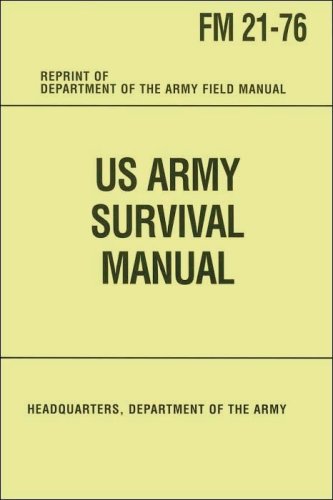
2. US Army Survival Manual: FM 21-76
$8.43
3. US Army Survival Manual: FM 21-76
$6.95
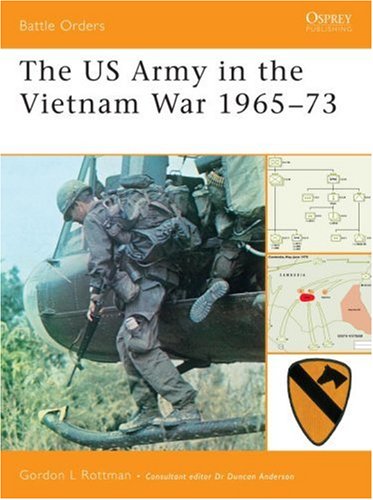
4. US Army Infantryman in Vietnam
$9.99
5. US Army Special Forces 1952-84
$10.67
6. The US Army of World War I (Men-at-Arms)
$11.31
7. Modelling US Army Tank Destroyers
$4.95
8. US Army Tank Crewman 1941-45:
$10.59
9. Modelling the US Army M4 (76mm)
$9.00
10. US Army Air Force (1) (Elite)
$11.30
11. US Army Rangers & LRRP Units
 
12. The Official Monogram US Army
 
$2.47
13. Us Army Survival Manual
$9.95
14. Survival Handbook: The Official
$11.48
15. The US Army of World War II, Volume
$5.85
16. US Commanders of World War II
$5.00
17. The US Army in World War II, Volume
$19.77
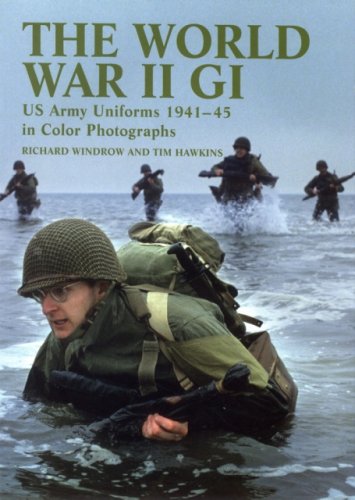
18. World War II GI: US Army Uniforms
$5.80
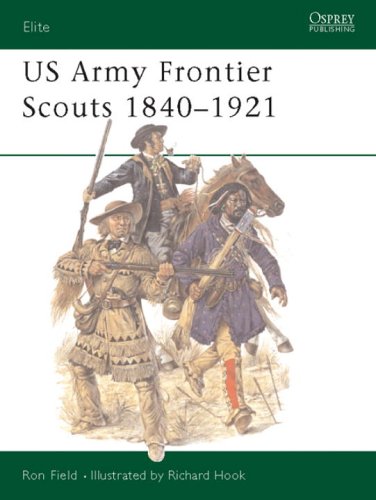
19. Elite 91: US Army Frontier Scouts
$21.75
20. US ARMY'S FIRST, LAST, AND ONLY

1. US Army Infantry Divisions 1944-45 (Battle Orders)
by John Sayen
Paperback: 96 Pages (2007-02-27)
list price: US$25.95 -- used & new: US$16.09
(price subject to change: see help)
Asin: 1846031192
Average Customer Review: 4.5 out of 5 stars
Canada | United Kingdom | Germany | France | Japan
Editorial Review

Product Description
U.S. Army Infantry 1944-1945 ... Read more

Customer Reviews (2)

5-0 out of 5 stars A specialty title recommended for any in-depth World War II collection.
John Sayen's US ARMY INFANTRY DIVISIONS 1944-45 reviews the organization, tactics, and military doctrine of the U.S. Infantry from 1944-45, surveying a period when many major changes were made to an army structure which resisted changes. All divisions are outlined and resources and changes surveyed in a specialty title recommended for any in-depth World War II collection.

4-0 out of 5 stars the building block of the Army...
The infantry division was the basic building block of the US Army in WW2.Armored Divisions had more dashing stories, the airborne units have developed a mythic legend, but the standard infantry division was always there in any theater of war, in attack or defense.They took the best the Axis could throw against them or put in their way and usually came out on top.This book from Osprey takes a look at the structure of the division. The same basic divisional structure worked in the heat of the Pacific islands, in the maountains of Italy, through the bocage of France right to the gates of Berlin and Tokyo. Supporting arms are examined and explained, the command structure is listed and many of the weapons are listed.The informative text is backed up with photos, charts, maps, and full-color drawings.A useful guide to the WW2 buff, military historian, wargamer, or someone who enjoys looking at the structure of large organizations.A good book and quite reasonably priced. ... Read more


2. US Army Survival Manual: FM 21-76
by Department of Defense
Paperback: 285 Pages (1970-10)
list price: US$14.95 -- used & new: US$7.00
(price subject to change: see help)
Asin: 0967512395
Average Customer Review: 4.0 out of 5 stars
Canada | United Kingdom | Germany | France | Japan

Customer Reviews (49)

5-0 out of 5 stars Survival Guide
A needed reference for any one who is into survival. Written for the solder in all of us.

3-0 out of 5 stars It IS a military manual after all
As a civilian I found myself filtering a lot of the information and wondering how I would adapt if I ever encounter any of the scenarios.I did enjoy the information on the psychology of survival. It gave me food for thought in rounding out my emergency gear.

4-0 out of 5 stars Why buy what you can get for free!?
I would recommend, as another poster has, to download this book for free just by using google and inserting Fm 21-76, then print in out.Don't waste your money.

3-0 out of 5 stars Excellent Information and Presentation BUT Needs To Be Updated!
This book is very interesting. I started out planning to give it a quick look and ended up reading it almost cover to cover. It contains a lot of very useful information; however, it has a 1970's copyright date and some of the information seems to be outdated. For instance, with respect to snake bites, it still recommends cutting the bite to suck out the venom and applying a tourniquet. Most authorities now indicate that these practices are not only no longer recommended but are actually now considered to be the cause of most of the serious injuries (at least from the venomous snakes in my area).

With a simple update to insure that all information reflects current knowledge, I would feel comfortable giving this book 5 stars and recommending it to everyone. That said, it is still chock full of valuable and potentially life saving information and at the price, it is still a good investment.

5-0 out of 5 stars If YourGPSBroke, Would You Be Able To Find Your Way?
This manual is very extensive.Its range of topics include survival medicine, to creating emergency shelter in the field, to foretelling weather and how to find direction.It includes full color images of poisonous snakes and edible as well as poisonous plants to avoid.

While I haven't been in situations that tested virtually most of these methods, as many are geared toward survival in extreme circumstances, I always take this with me when I hike.I have, however, needed the info on tying knots, have used the pictures to identify snakes, and I often peruse the descriptions of first aid to keep familiar with it.

---*** THE BOTTOM LINE ***---

If you are someone who regularly spends time outdoors, even if it's just a dayhike or camping close to other people, you should really have this book that could help in many situations. ... Read more


3. US Army Survival Manual: FM 21-76 , Illustrated
by Department of Defense, The United States Army, Us Army
Paperback: 288 Pages (2007-05-27)
list price: US$13.99 -- used & new: US$8.43
(price subject to change: see help)
Asin: 9562914488
Average Customer Review: 1.0 out of 5 stars
Canada | United Kingdom | Germany | France | Japan
Editorial Review

Book Description
The US Army Survival Manual: FM 21-76 is a good basic guide, standard reading for our troops, and unlike some survival manuals, it is fairly well written and organized. ... Read more

Customer Reviews (3)

1-0 out of 5 stars Not the real deal.
I wonder when I purchase this book about the cover becuase I had never seen a military manual with such a nice looking cover.Well you know the saying don't judge a book by it's cover.This is not a new book from the Army I found out.Should have just gotten a real military manual.
Buyer Beware.

1-0 out of 5 stars Close to the Army Survival Manual, the only thing new is the cover.
I think you will be wasting your money on this one.It's pretty on the outside but what is inside is what matters.Save your money buy used.

1-0 out of 5 stars NOT THE ARMY'S MANUAL BUT A PUBLISHING COMPANY.
FIRST THERE IS NO 2007 ARMY SURVIVAL MANUAL OUT, DON'T GET TRICK INTO THINKING THIS IS THE NEWEST.IT'S JUST THE YEAR THE BOOK IS PRINTED IN AND THEIR MAKING YOU THINK IT'S THE NEWEST.IF YOU ARE GOING TO BUY A MILITARY MANUAL BUY THE ARMY'S YOUR BETTER OFF GETTING IT FROM THE ARMY. ... Read more


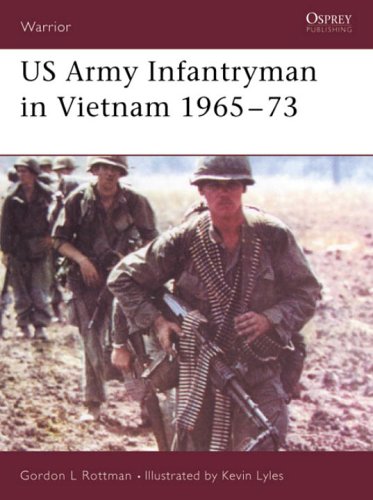
4. US Army Infantryman in Vietnam 1965-73 (Warrior)
by Gordon Rottman
Paperback: 64 Pages (2005-07-13)
list price: US$17.95 -- used & new: US$6.95
(price subject to change: see help)
Asin: 1841768871
Average Customer Review: 4.0 out of 5 stars
Canada | United Kingdom | Germany | France | Japan
Editorial Review

Book Description
This book tells the compelling story of the average US infantryman in Vietnam. Beginning with conscription, enlistment, Basic Training, and Advanced Individual Training at the Armed Forces Induction Center at Fort Polk (the infamous “Tigerland”), it goes on to explore the day-to-day realities of service in Vietnam, from routine tasks at the firebase to search-and-destroy missions, rocket attacks, and firefights in the field. Weaponry, clothing, and equipment are all described and shown in detailed color plates. A vivid picture of the unique culture and experiences of these soldiers emerges – from their vernacular to the prospect of returning to an indifferent, if not hostile, homeland. ... Read more

Customer Reviews (1)

4-0 out of 5 stars A good primer but skewed toward the US Military
This book gives one a good feel of what it was to be an Infantry man in the Vietnam war. From basic training to combat and being a short-timer.However it only seems to use the testimony of those who voluntarily enlisted rather than unwilling draftees therefore providing the views of professional soldiers.It also only scratches the surface when broaching the subject of American troop atrocities, and nobody from the "rear" is ever mentioned in this or any other book about Vietnam.It feels like a slightly sanitised official version of events.For the flipside of this account read Nam by Mark Baker ... Read more


5. US Army Special Forces 1952-84 (Elite)
by Gordon Rottman
Paperback: 64 Pages (1985-05-23)
list price: US$17.95 -- used & new: US$9.99
(price subject to change: see help)
Asin: 085045610X
Average Customer Review: 5.0 out of 5 stars
Canada | United Kingdom | Germany | France | Japan
Editorial Review

Book Description
From its very inception the United States Army Special Forces has been enmeshed in controversy, its mission misunderstood to varying degrees, and its very existence opposed by some of the Army hierarchy. Nevertheless it continues to serve in a highly specialised role in all manner of differing conditions. There can be few better qualified to chronicle the history of this unique organisation than former Special Forces Group weapons specialist Gordon Rottman, whose expert knowledge is clearly evident in this authoritative text. This volume also contains 12 full page colour plates by one of the world's most respected military artists, Ron Volstad. ... Read more

Customer Reviews (2)

5-0 out of 5 stars Excellent reading on early Special Forces history
Gordon Rottman is retired Special Forces and does a thorough job of covering early Special Forces history back to the days of the OSS and the WWII Ranger Battilions.He shows the different paths of development that have evolved into todays Green Berets and Ranger Battalions.There is good coverage given to the uniforms, various unit flashes and insignia on the color plates.
A worthwhile read for anyone interested in Special Forces history.

5-0 out of 5 stars Thorough, Meticulous and fascinating!
The author - a former Special Forces Soldier and combat veteran himself has done a fine job in presenting the Special Forces of the world in an interest and informative manner.A must read for anyone researching theSpecial Forces of the world - their missions and capabilities.

The bookis written with an understanding that comes from being an insider to the SFcommunity as well as a long time soldier.It is not only a fascinatingread - it is also a valuable research tool.Highly recommended! ... Read more


6. The US Army of World War I (Men-at-Arms)
by Mark Henry
Paperback: 48 Pages (2003-06-20)
list price: US$17.95 -- used & new: US$10.67
(price subject to change: see help)
Asin: 1841764868
Average Customer Review: 5.0 out of 5 stars
Canada | United Kingdom | Germany | France | Japan
Editorial Review

Book Description
When the USA entered World War I in April 1917 her Regular Army counted just 128,000 men and lacked all the necessary equipment and training for modern trench warfare. By the Armistice of November 1918, General John J.Pershing's American Expeditionary Force in France had more than 2 million men and was holding 25 per cent of the Western Front. They had helped smash Ludendorff's brilliant Operation "Michael" in the lines before Paris; had turned onto the offensive themselves at St Mihiel and the Meuse-Argonne; and if Germany had not negotiated peace with unexpected speed the US Army would have taken over from their tired Allies an even greater share of the planned 1919 campaign. This concise account of America's first world class army, its organization, uniforms, weapons and character, is illustrated with rare photos and eight full color plates. ... Read more

Customer Reviews (1)

5-0 out of 5 stars Another Useful Work by An Excellent Writer
Mark Hwney has recently come to the Osprey table of writers. As a professional historian, he has access to many sources. Henry's three volume set on the WWII US infantryman is outstanding. (c.f.)
I found rhia volume ti be a highly useful overview. It should be referred to in conjunction with the newly published "U.S Doughboy, 1916-1919" (c.f.) which is focused on the experiences of a representative infantry man of the AEF.
This volume covers the whole story of the mobization, organization, and training of the army which was the source of the AEF. ... Read more


7. Modelling US Army Tank Destroyers of World War II (Osprey Modelling)
by Steven Zaloga
Paperback: 80 Pages (2004-09-23)
list price: US$18.95 -- used & new: US$11.31
(price subject to change: see help)
Asin: 1841767999
Average Customer Review: 3.5 out of 5 stars
Canada | United Kingdom | Germany | France | Japan
Editorial Review

Product Description
US Tank Destroyers ... Read more

Customer Reviews (2)

4-0 out of 5 stars Excellent for intermediate and experienced model builders
If you are looking for a step-by-step guide to building and finishing models, then tryModeling Realistic Tanks and Artillery: An Illustrated Guide, or picking up an issue of Fine Scale Modeler. I'm not shilling for Kalmbach Publishing, I simply think much of the material contained within these would appeal more to a novice.

I found much of this book in the Osprey Modeling series to be an excellent overviewof US tank destroyers of the period. Mr. Zaloga is a skilled scratch builder, modeler and painter, and many of the techniques he uses are clearly presented in the text, using different kits and scales, in three separate projects of varying degrees of difficulty and scales. Resin after market parts are utilized, as well as various painting techniques (a salt mask was used in one project, for example.) Avery useful paint color chip chart is included in the back. A comparison is given on the accuracy of kits available on the market, as well as a brief overview of what kits should be avoided due to inaccuracy and poor fit(very useful information.)

As I stated before, novice builders may become frustrated trying to use photo-etched brass, resin parts, and scratch built appendages for figures. Those looking for an easy step by step should look elsewhere, I found that this book and others in the series gave me many great ideas for my next projects, as well as some great information.

3-0 out of 5 stars OK but not as you would be led to believe
Typical Osprey book.
The book's description alludes to the techniques of modeling.
It's not there.
Makes a good reference book though ... Read more


8. US Army Tank Crewman 1941-45: European Theater of Operations (ETO) 1944-45 (Warrior)
by Steven Zaloga
Paperback: 64 Pages (2004-06-24)
list price: US$17.95 -- used & new: US$4.95
(price subject to change: see help)
Asin: 1841765546
Average Customer Review: 3.0 out of 5 stars
Canada | United Kingdom | Germany | France | Japan
Editorial Review

Book Description
Revealing what it was like to live and fight in a medium tank this book is structured around the career of a single tanker from 37th Tank Battalion, 4th Armored Division. The focus is largely on the crew of an M4 Sherman, though light tank service is also studied. Tank operation required a well- trained and well-coordinated crew. The crew positions and roles of tank commander, gunner, driver, loader, and assistant driver are all covered in detail, together with recruitment procedure, specialist training, and the variety of specialized clothing and personal weaponry. ... Read more

Customer Reviews (1)

3-0 out of 5 stars Over-Focus on a "Celebrity" Tanker
Normally, Stephen G. Zaloga, well-known US armor expert, produces volumes for Osprey that are incisive, well-written and on-target. Unfortunately, Zaloga's latest volume - US Army Tank Crewman 1941-45 - does not live up to expectations, primarily due to a single defect: instead of attempting to portray tankers of various ranks and units, Zaloga focuses on a single individual: LTC Creighton Abrams of the 37th Tank Battalion. As soon as I read that this was Zaloga's intent in the introduction, I realized that the volume was in trouble. Essentially, Zaloga focuses on a "celebrity" tanker who went on to four-star rank in the 1970s and had a highly publicized career. While there is no doubt that Abrams made a major contribution in the European Theater of Operations in 1944-45, it is a mistake to try and focus so heavily upon a single battalion commander and portray him as "typical" of the breed. Furthermore, as a former tanker myself, I found that the volume did not adequately portray the feel of platoon and company-level armor operations. Zaloga begins with a short introduction on the US armor force, followed by brief sections on recruiting and enlistment, training for combat and equipment and weapons. The rest of the volume is essentially a campaign narrative of the 37th Tank Battalion in Normandy, Lorraine, the Battle of the Bulge and the Hammelburg Raid. The color plates are: US Army tanker, summer 1944 with helmets and small arms; the turret interior of a Sherman tank; the Battle of Arracourt; organization of B Company/37th Tank Battalion, July 1944; Thunderbolt at Bastogne; interior of a M5A1 turret; US tanker, winter 1944 with main gun rounds; M4 medium tank crew layout. Zaloga does provide some incisive comments, such as noting that the US introduction of FM radios in their tanks gave them an advantage over the German tanks with AM radios (that couldn't transmit on the move). On the other hand, I wonder about some of Zaloga's details, like the gyrostabilizer on the M4 Sherman tank. A few tankers in 1944-45 may have attempted to shoot on the move but the vast majority probably fired only from stationary positions and it was not until the M1 tank appeared in the 1980s that the US armor force had a tank that could really shoot effectively on the move. Readers should note a few facts about Abrams career as a tanker: he started as a general's aide in 1938, transferred to the new armor branch in 1940, served on regimental staff for much of 1941-1942, served eight months as a tank battalion commander in CONUS in 1942-1943, returned to regimental staff and then was given command of the 37th Tank Battalion in late 1943. Just before the end of the war, Abrams took over a combat command [brigade]. Apparently, Abrams never served as a company level officer in a tank unit (platoon leader, company XO or company commander), or even battalion S-3 or XO in a tank battalion. Just where did Abrams learn to maneuver armor units or about maintenance? Starting as a battalion commander, he must have had a very steep learning curve and it might explain some of his "wackier" ideas like putting the battalion S-2 and S-3 in their own tanks (Zaloga might have noted that German armor battalions usually let staff officers do their jobs, instead of trying to command their own tanks). Zaloga makes the claim early in the volume that Abrams may have been one of the highest-scoring US tankers in the war. I find this very suspect, since battalion commanders were supposed to be employing their entire 700+ man task force, not fighting as an individual tank commander. Furthermore, if Abrams was such an "up-front" leader, why was he never wounded or his tank hit, for that was certainly the norm for US tank platoon leaders and company commanders who spent 6-9 months in combat. It is also highly unlikely that Abrams spent much time doing maintenance on his tank, unlike lower ranking tankers. Frankly, Zaloga's account of Abrams wartime exploits - which focuses heavily on the Arracourt and Bastogne fighting - skews this toward a gung-ho account that ignores the daily facets of life in a tank battalion. What was Abrams' relationship with his XO (never mentioned), his S-3 operations) and S-4 (logistics) - all key individuals in a tank battalion? Most of being a tanker is about keeping your beast running, not glorious tank charges as Zaloga seems to suggest. Zaloga does provide a few photos depicting track maintenance, pulling a power pack, vehicle recovery and loading ammunition, but very little of the text is concerned with logistics. I wonder just how many of Abrams' tanks were "deadlined" for parts (and what specific parts were critical shortages - there is always some) or running in "degraded mode?" There is also precious little information here about armor tactics (did they use some type of overwatch?), armor training (did they do individual, section and platoon gunnery?) or armor-infantry-artillery combined arms tactics. Key individuals like the tank company first sergeants, the mechanics and the lowly tank crew drivers and loaders just don't appear much in these pages. What Zaloga delivers is a portrayal of US tank combat through the eyes of a field grade officer, not the typical platoon and company-level tankers who bore the brunt of the fighting. ... Read more


9. Modelling the US Army M4 (76mm) Sherman Medium Tank (Osprey Modelling)
by Steven Zaloga
Paperback: 80 Pages (2007-10-23)
list price: US$18.95 -- used & new: US$10.59
(price subject to change: see help)
Asin: 1846031206
Average Customer Review: 5.0 out of 5 stars
Canada | United Kingdom | Germany | France | Japan
Editorial Review

Product Description
Modeling the US Army M4 Tank ... Read more

Customer Reviews (5)

5-0 out of 5 stars M4 (76mm) Sherman Medium Tank review
Very helpful manual for the advanced modeler.I am not an advanced modeler but even I found the book helpful.So it is suitable for all skill levels.

5-0 out of 5 stars Zaloga Has Two Sherman Modeling Books, actually...
Steve Zaloga is a superb historian of US and Soviet military equipment, and a very capable model builder, as well as an extremely talented writer, so you really cannot go wrong with any title he has written. Where Amazon has gone wrong is that they have confused his two books on "Modelling the US Army M4 Sherman Tank" as different editions of the same book. If you click on the "paperback" edition link above, you'll find the companion volume, which deals with building the early variants of the Sherman family with the 75 mm gun. This second volume deals with the later, 76 mm gun versions.
Since space is at a premium in these little booklets, Zaloga just addresses variants actually used by American forces (some, like the M4A4, and late M4A2 versions were used only by Allied troops). He points up some basic improvements needed to make the available kits accurate, and includes very helpful "in progress" photos to illustrate the fixes. He also shows the novice how to deal with the individual link tracks included in some Sherman kits, which are challenging to assemble, unless you build a simple jig. And since he likes to display completed models in small vignettes, you get some nice tips on producing dioramas, as well.

5-0 out of 5 stars For advanced Modelers
This book is really geared for advanced modelers. It does have some nice color photos including some beautiful models by the author. But the modeling tips are really more advanced and are a bit beyond my current abilities. Maybe someday I'll be able to put this to better use.

4-0 out of 5 stars Sherman tank
I am an experienced armor modeler but I am always looking for new painting and weathering techniques.I found this book to offer several color schemes and painting approaches for the Sherman tank.I have been able to take and adapt the author's ideas to my work on some recent models.My litmus test for modeling books is simple: whether it helps me improve my skills in the hobby or not. This book did.

I do not have the time or patience for scratch building using styrene plastic and I seldom use aftermarket parts on my models--in part because I have a hard time making large cuts on a $40 plus tank model that I may or may not be able to repair.The author provided information about upgrading Sherman tank models with aftermarket parts and scratchbuilding parts.That is not, as stated, my interest, albeit it may be interesting or valuable to another modeler with different skills.

I have three other books of the same genre by the same author; I have ordered another.My opinion is that these are good products for the serious modeler and worth the money.

Dr. Mark McDonald

5-0 out of 5 stars An excellent modeler's resource
Mr. Zaloga, a noted armor historian, strikes again with this volume in the Osprey Modelling series.This volume is themed around the famous M4 "Sherman" tank with the 75mm gun.The later "Shermans" with 76mm guns will be in a follow-on volume.This voluime has a brief overview and several model projects in different scales.The quality of workmanship is tremendous and each chapter has lots of historical information as well as modelling techniques.Each model has in-progress photos as well as descriptions and photographs of the finished project.This book is very handy for beginners as well as advanced modelers and should be in the collection of any person who enjoys military vehicle modeling. ... Read more


10. US Army Air Force (1) (Elite)
by Gordon Rottman
Paperback: 64 Pages (1998-04-24)
list price: US$17.95 -- used & new: US$9.00
(price subject to change: see help)
Asin: 1855322951
Canada | United Kingdom | Germany | France | Japan
Editorial Review

Book Description
In June 1941 the US Army's air organisations were consolidated under a single command, the Army Air Forces or AAF. Its expansion was rapid and massive, and its contribution to the war effort was substantial. Books abound describing the AAF's impressive combat record, but little has been published to record what the men inside the machines wore to stay alive and effective in the air and on the ground, or, as often as not, in the water. Gordon L. Rottman's detailed treatment discusses the flying clothes, accessories and equipment worn and used by individual airmen fighting their often desperate battles in the sky. ... Read more


11. US Army Rangers & LRRP Units 1942-87 (Elite)
by Gordon Rottman
Paperback: 64 Pages (1987-09-24)
list price: US$17.95 -- used & new: US$11.30
(price subject to change: see help)
Asin: 0850457955
Average Customer Review: 5.0 out of 5 stars
Canada | United Kingdom | Germany | France | Japan
Editorial Review

Book Description
Ranger - the very word conjures up visions of small, highly trained units executing lightning-fast raids on an unexpecting enemy. It is also synonymous with high esprit de corps and excellence at arms. The US Army Rangers provide units of well-disciplined soldiers who possess the knowledge and courage to operate on their own, deep behind enemy lines. Gordon L. Rottman explores the history of these unique troops, starting with the original 'Rogers' Rangers' company of 1756, whose daring operations and deep penetrations of enemy-held country laid down the pattern for all subsequent Ranger units to follow. ... Read more

Customer Reviews (3)

5-0 out of 5 stars Good attention to detail !
An excellent about the very complex story of the US Army Ranger and Long Range Recon Patrol units. Coupled with some outstanding illustration this is a good deal for those who are interested.

5-0 out of 5 stars Fantastic research and comprehensive details.
As a member of one of the units covered in this book by Gordon Rottman, I can say that the attention to detail is flawless and well researched.The artwork by Ron Volstad is impeccable - from the color of uniforms and equipment down to the handles on smoke grenades, nothing is in error.

Having served with Sergeant Major Rottman (aka 'Gordo'), I can say that he is nothing if not thorough.His no-nonsense approach to all details is in keeping with the highest traditions ofArmy Special Operations.

SSG Al Lorentz

5-0 out of 5 stars Excellent, a must for those interested in Ranger and LRRP.

A more compact, its is 64 pages, well written and illustrated book on the Ranger and Long Range Reconnaissance Patrol (LRRP) units of the period will be hard to find.According to the author information, Gordon Rottman was a Special Forces weapons specialist in the 5th SF Group in Vietnam in 1969-1970.At the time of publication in 1987, he was a civilian contract Special Operations Intelligence Specialist at the Army Joint Readiness Center, Fort Chaffee, AK and, as a Reserve MSG, the Operations Sergeant of the Opposing Forces Group of the 75th Maneuver Area Command.Ron Volstad did the illustrations and, not to take anything away from the text, the illustrations alone are worth the price of the book.

The book contains 10 pages of full color plates with 55 artist renderings depicting uniforms and equipment of Ranger and LRRP units of all eras from 1942 to 1987.The artist is very faithful in his capturing of the uniforms worn, including insignia, and the equipment carried by particular individuals.The artists illustrations are described in the last section of the book.Each picture has the specific items of clothing and equipment identified including the year of introduction of the item and its supply system designation (e.g. "M1 rifle with M7A1 grenade launcher and M15 grenade sight").In addition to the artist pictures, the book includes numerous photographs of the Ranger and LRRP units and individuals from the years covered.

The section on the Korean War period is not as complete as it could be.However, the author did not have Bob Black's book "Rangers in Korea" (published in 1989) for reference.As it is, the book covers the Korean War period in about four pages and is a good summary.

The author begins by relating the problems of Ranger organizations in all the eras covered in the book."Their missions and capabilities have often been misunderstood, and their personnel misused.Ranger organization and missions have changed with each war, which has led to an additional problem - lack of continuity between the wars."The author also illuminates the difference between Ranger-type organizations and LRRP units.Ranger-type units are intended for direct action missions against the enemy such as raids and ambushes.LRRP is used as a generic term to describe units tasked with passive deep penetration reconnaissance and surveillance missions.

I am very impressed by the book and recommend it to anyone that wishes to get a concise look at Ranger and LRRP units and a brief summary of their history from 1942 to 1987.

Ranger Walt Eckhardt, President, Ranger Infantry Companies (Airborne) of the Korean War (RICA) ... Read more


12. The Official Monogram US Army Air Service & Air Corps Aircraft Color Guide, Vol 1, 1908-1941
by Robert D. Archer
 Hardcover: 242 Pages (1995-07-28)

Isbn: 0914144464
Average Customer Review: 4.0 out of 5 stars
Canada | United Kingdom | Germany | France | Japan

Customer Reviews (1)

4-0 out of 5 stars A thorough work on early US army aviation colors and marking
Although the structure is slightly awkward, with each chapter covering a single topic (markings, camouflage, colors etc) for the entire period covered, it is full of information. The layout is rather cluttered, whichmakes some of the information hard to decipher. However, the appendix withactual color chips alone makes it worth it. It is a good companion to DanaBell's books on Air Force Colors. ... Read more


13. Us Army Survival Manual
by Department Of Army
 Paperback: Pages
-- used & new: US$2.47
(price subject to change: see help)
Asin: 1566190223
Average Customer Review: 2.5 out of 5 stars
Canada | United Kingdom | Germany | France | Japan

Customer Reviews (3)

1-0 out of 5 stars Not up to date
This book does not address current survival situations (Natural or manmade). I recommend a book which would be fresh and offer tips on urban and rural survival as most will not have access to wilderness to "live off the land".

Mr. Ron Foster offers a guide of firsthand knowledge (he is a first responder and trainer of such) that could save your life wherever you live when catastrophy hits without tons of survival gear. Just google Rural Ranger and read about it. Amazon carries it also. BE PREPARED PROPERLY!

Seriously,
David Highum

1-0 out of 5 stars This book was printed in 1969
If you look at what the publishers says: Publisher: Barnes & Noble (August 15, 2003) This book was NOT printed in 2003 the book is from 1969.Don't let them take your money for nothing!

5-0 out of 5 stars Like the outdoors??? Hiking, camping, fishing, backpacking?
You need this book with you at all times when you are out there. It contains all kinds of life saving information that is invaluable if something bad were to happen to you out in the wilderness.

The appendix features full color pictures of both edible and dangerous plants, poisonous snakes, and cloud types for forecasting impending weather conditions.

The book includes first aid information, hunting techniques, shelter plans, and survival information for all types of weather conditions. ... Read more


14. Survival Handbook: The Official US Army Guide
by Department of the Army
Paperback: 400 Pages (2008-08-11)
list price: US$9.95 -- used & new: US$9.95
(price subject to change: see help)
Asin: 048646184X
Canada | United Kingdom | Germany | France | Japan
Editorial Review

Book Description

No one knows more about survival than the U.S. Army. Their field manual, encompassing all-climate, all-terrain tactics, is the most authoritative guide to toughing it out on unfamiliar turf. This special edition for civilians is an essential companion for campers and other lovers of the outdoors.
... Read more

15. The US Army of World War II, Volume 1: The Pacific (Men-At-Arms Series, 342)
by Mark R. Henry, Mike Chappell
Paperback: 48 Pages (2000-07-25)
list price: US$15.95 -- used & new: US$11.48
(price subject to change: see help)
Asin: 1855329956
Average Customer Review: 5.0 out of 5 stars
Canada | United Kingdom | Germany | France | Japan
Editorial Review

Book Description
When World War II broke out in September 1939 the US Army – starved of resources since 1919 – numbered just 174,000 men. By VJ-Day, 2 September 1945, a total of 8.3 million had served in an army which had risen to a stable strength of 91 divisions. The Army's contribution to the war against Japan – 20 divisions and numerous smaller units – has tended to be overshadowed by the exploits of the much smaller Marine Corps. This first of three titles describes the organisation, uniforms and equipment of the US Army in the CBI and the Central and South-West Pacific from 1941 to 1945. ... Read more

Customer Reviews (2)

5-0 out of 5 stars Useful Introduction to the Subject
This work is a splendid example of the new emphasis of the publisher on producing comprehensive works in a handy cheap format compared with the earlier broad brush treatments which covered too much in too little detail.
The new emphasis is on setscovering various national armed forces in as much detail as is available, consistent with the current purpose of theworks in the series, which have evolved from an original emphasis on serving the military miniature maker market into works intended to enlighten the general reader in enough detail to satisfy the merely curious and to point the way to further reading.
Most of us, including myself, have little need for, or the patience to read, voluminous studies, often in foreign languages, covering many eras and nations. My main interest is in the US forces, their allies and their enemies in the twentieth century.
That said, these works should be purchased as presented, in sets within the series. Since they are produced as a set, the volumes cover only relevent parts of the general history and the clothing and individual equipment is covered as it appears in each period. The French Army, US Army, British Army, and Italian Army series all have three volumes, covering the major theatres and time periods of the war. The German set has five.
If you want more detail on Army clothing then see Shelby Stanton's World War II work reviewed on this site. Unfortunatly I have yet to find a comprehensive study of US individual equipment which is not riddled with errors of omission, misidentification, and unproved speculation. Though a great exception is Scott Meadow's work on holsters which is more than most want to know and is expensive to boot. Not for the general reader.
If you want an introduction to the fascinating variety of clothing and equipment of the forces covered, this set is for you.

5-0 out of 5 stars Great Improvement on Earlier Volumes Covering this Period
This book is part of a set covering the US Army of WW II. The set covers the clothing, individual equipment, small and heavy arms, vehicles, and campaigns.
Of course, much more detailed information can be found in other works such as Shelby Stanton's definitive work on clothing but a complete collection covering these items would cost several hundred dollars at least and still not cover everything in detail.
Compared to the earlier volumes published by Osprey, it is an A compared to a D. The other volumes were superficial and suffered either from trying to cover too much or too long a period or written by authors who simply were not familiar enough with the period covered.
This is written by a knowledgable author and is superbly illustrated by the magnificent Mike Chappell. Drawing on multitudinous sources, these three volumes will satisfy those who want to know what grandaddy looked like in the war and give a useful overview for those not needing more detailed knowledge.
As a long time specialist in the period, I learned things and recommend this highly.
See my reviews of the other two volumes in this set. ... Read more


16. US Commanders of World War II (1) Army and USAF
by James Arnold
Paperback: 64 Pages (2002-09-18)
list price: US$17.95 -- used & new: US$5.85
(price subject to change: see help)
Asin: 1841764744
Average Customer Review: 3.0 out of 5 stars
Canada | United Kingdom | Germany | France | Japan
Editorial Review

Book Description
To be a successful commander requires experience, character, tenacity and boldness: the ability to establish a good rapport with both your staff and your men is also vital. The real test comes in combat though, where a large proportion of luck is involved - the luck to be in the right place at the right time - and lasting reputations can be formed in a very brief and frenetic period. The key US commanders of World War II were subject to (and often gratuitously fostered) the projection of their 'characters', exploiting the growing power of the media. This title examines the careers, personalities and fortunes of the key US Army and Air Force commanders of World War II. ... Read more

Customer Reviews (1)

3-0 out of 5 stars If Patton Were Alive, He'd Slap the Authors !
What could have been an excellent book fails to pass muster on a few counts......For one there are only 8 pages of color plates as opposed to 10 which is the norm for the Elite Series by Osprey. There are quite a few generals in the color plates such as John Wood & Anthony McAuliffe who don't warrant a biography or even a mention in the main text. McAuliffe isn't even mentioned for his "Nuts" ! reply to the Germans at the Battle of the Bulge. Most of the biographies don't tell us anything new & the entry on Patton looks like an essay I did in 5th grade ! General "Jumping Jim" Gavin is depicted in the wrong uniform for the Arnhem operation as the M1942 Paratrooper's uniform had been replaced by Fall of 1944 & is shown as much older than his 37 years at the time. He was after all the youngest US General of WW2, why do you think Ryan O'Neal played him in "A Bridge Too Far" ? & Of course......Pacific Theater commanders get lesser coverage in this lesser volume in the Osprey Series. Recommended, but with reservations. ... Read more


17. The US Army in World War II, Volume 3: North-West Europe (Men-At-Arms Series, 350)
by Mark Henry
Paperback: 48 Pages (2001-03-25)
list price: US$15.95 -- used & new: US$5.00
(price subject to change: see help)
Asin: 1841760862
Average Customer Review: 4.5 out of 5 stars
Canada | United Kingdom | Germany | France | Japan
Editorial Review

Book Description
The GIs who struggled ashore through the surf of Omaha and Utah Beaches on 6 June 1944 were members of the best-equipped army ever assembled up to that date. It was in the NW Europe campaign of June 1944-May 1945 that the US Army was finally able to show its full potential for fluent mechanised warfare. This title describes both combat and service uniforms worn in the ETO, from the assault troops on the D-Day beaches to bemedalled veterans celebrating VE-Day; other subjects covered include artillery, tanks, anti-tank weapons, the engineers, the replacement system; and the insignia of the divisions committed to this front. ... Read more

Customer Reviews (3)

5-0 out of 5 stars Useful Overview of a Vast Subject
This work is a splendid example of the new emphasis of the publisher on producing comprehensive works in a handy cheap format compared with the earlier broad brush treatments which covered too much in too little detail.
The new emphasis is on setscovering various national armed forces in as much detail as is available, consistent with the current purpose of theworks in the series, which have evolved from an original emphasis on serving the military miniature maker market into works intended to enlighten the general reader in enough detail to satisfy the merely curious and to point the way to further reading.
Most of us, including myself, have little need for, or the patience to read, voluminous studies, often in foreign languages, covering many eras and nations. My main interest is in the US forces, their allies and their enemies in the twentieth century.
That said, these works should be purchased as presented, in sets within the series. Since they are produced as a set, the volumes cover only relevent parts of the general history and the clothing and individual equipment is covered as it appears in each period. The French Army, US Army, British Army, and Italian Army series all have three volumes, covering the major theatres and time periods of the war. The German set has five.
See my review of part one for more commentary.
If you want an introduction to the fascinating variety of clothing and equipment of the forces covered, this set is for you.

5-0 out of 5 stars It's mike Chappell's illustration!!
(...)eventhough it's men at arm series which tend to give us only
intrinsic information about particular armed forces, it was
beautifully illustrated and well searched book of this size very
concise and informative.
the biggest reason I purchase this book
is Mr.Chappell's acurate illustration and it is worth of paying
if
you alredy had variuos informations about U.S. Army in WW II,
this
book wouldn't help you any more, yet. if you were a bigginer and a
modeler . it would be a gem

3-0 out of 5 stars An interesting Overview of a Major Theatre.
(...)It is good to see the publisher is now publishing works of finer
detail than the early volumes in this series which tried to cover the
whole of the US Army and others for the whole period of WW II and
other eras. The subject matter is just too vast for such broad
treatment and the tactical and environmental conditions so different
from theatre to theatre.
As to the content I have perused several
works written and or illustrated by Mike Chappell and have found him
to be a sound researcher and a meticulous illustrator. I make it a
point to buy everything he does covering my period of interest, the
Twentieth Century. I have bought almost all of the available works in
his personally published series British Soldier in the Twentieth
Century. I have yet to find a mistake in his work.
As to the
author I have not read much of his work but the table of contents is
thorough and covers a mass of material gleaned from obscure official
histories that never were widely circulated especially the material on
the ETO jacket and other overseas procurements. The major problem with
the soldier's clothing and equipment in the Northern European winter
was the totally inadequate footwear of a flimsy nature compared to the
ammunition boots worn by the British and Canadians and the lack of
warm clothing which due to the amazing progress of the campaign across
France led to overconfidence that the war would be over before the
fall and such clothing would not be needed. So it was not shipped in
mid summer but was left in the US or in Britain. Also the shipping
priorities were such in France that ammunition and fuel for the
vehicles were first.
Though the bombing campaign against the
French railways stalled the majority of the German army in the south
of France from arriving before Normandy and reinforcing the garrison
troops, it was successful to such a degree that the railroads were
useless to the Allies and great quantities of fuel had to be used up
in the famed Red Ball Express trucking system instead of using it for
the attacking forces. Thus the famed Third Army stalled before the
German frontier for lack of fuel. And you cannot drive tracked
vehicles all the way across France without wearing them out.
All
of these factors combined with the worst winter weather in years to
stall the Allies short of clearing the sea approaches to Antwerp where
they could have had access to a major port and the Allied offensive in
the West bogged down until the spring.
... Read more


18. World War II GI: US Army Uniforms 1941-45 in colour photographs
by Richard Windrow
Paperback: 144 Pages (2008-11-15)
list price: US$29.95 -- used & new: US$19.77
(price subject to change: see help)
Asin: 1847970338
Canada | United Kingdom | Germany | France | Japan
Editorial Review

Book Description

The widespread interest in the American soldier's dress and equipment in World War II has never before been served by a major book recreating the GI's appearance by color photography. A striking study that takes techniques to a new level; live models, wearing an enormous range of authentic surviving uniforms. This book will be hailed as a "bible" by militaria collectors, modelers, illustrators, film wardrobe departments and anyone with an interest in World War II soldiers. Superbly illustrated with 280 color photographs. Richard Windrow is a life-long military modeling hobbyist and Tim Hawkins is an experienced military photographer. New in paperback for 2008.
... Read more

19. Elite 91: US Army Frontier Scouts 1840-1921
by Ron Field
Paperback: 64 Pages (2003-07)
list price: US$17.95 -- used & new: US$5.80
(price subject to change: see help)
Asin: 1841765821
Average Customer Review: 5.0 out of 5 stars
Canada | United Kingdom | Germany | France | Japan
Editorial Review

Book Description
The role of the Frontier scout in the US Army during the period of westward expansion, was often far more important than that of the commanding officer. They possessed a priceless knowledge of the geography, people and characteristics of the great, unknown American hinterland and from the earliest days of exploration, the US Army depended on its scouts to guide troops across the plains and through the mountains as they guarded the nation's frontier settlements. This book tells the colourful story of these frontier men, covering many famous scouts such as 'Wild Bill' Hickok and 'Buffalo Bill' Cody. ... Read more

Customer Reviews (1)

5-0 out of 5 stars Another outstanding effort from Osprey
This gem of a book is packed with rare photographs and details the colorful careers of dozens of famed and little known scouts and their backgrounds.
While only 64 pages, these books are a wealth of information and this one is no exception. Splendid artwork and excellent research, this one belongs on anyone's shelf that enjoys reading about the scouts of the Indian Wars. ... Read more


20. US ARMY'S FIRST, LAST, AND ONLY ALL-BLACK RANGERS, THE: The 2nd Ranger Infantry Company (Airborne) in the Korean War, 1950-1951
by Edward L. Posey
Hardcover: 336 Pages (2008-06)
list price: US$32.95 -- used & new: US$21.75
(price subject to change: see help)
Asin: 1932714456
Canada | United Kingdom | Germany | France | Japan
Editorial Review

Book Description
The 2nd Ranger Infantry Company (Airborne) was the first and only all-black Ranger unit in the history of the United States Army. The company's life span covered ten months, from selection and training through a seven-month combat deployment in Korea, after which the unit was deactivated. The 2nd and 4th Rangers were among the units initially assigned to the Eighth Army and were considered to be "combat ready."

The 2nd Ranger Company battled North Korean and Communist Chinese Forces near Tangyang, Majori-ri, and Chechon. The 2nd Ranger Company conducted the first airborne assault in Ranger history near the town of Munsan-ni and executed the heroic attack and defense of Hill 581. The men of the 2nd Ranger Company demonstrated courage, served with honor, and achieved a magnificent combat record.

Edward Posey's The US Army's First, Last, and Only All-Black Rangers: The 2nd Ranger Infantry Company (Airborne) in the Korea War, 1950-1951 is the first complete history of this elite all-volunteer unit whose members were drawn from the 3rd Battalion of the 505th Airborne Infantry Regiment and the 80th Airborne Anti-Aircraft Battalion. As a member of the unit, Posey bases his account on firsthand experience, official records, interviews with survivors, and other material to produce a rich and worthy addition to the growing literature on the Korean War. Posey's study explains the obstacles these patriotic men faced, their sacrifices, and their courageous actions on the far side of the world.

Finally, more than fifty years after the end of the war, the world will learn the true story of the United States Army's first, only, and last all-black Ranger unit.

About the Author: Master Sergeant (Ret) Edward L. Posey joined the US Army in 1947. After serving with Company L, 3rd Battalion, 505th Airborne Infantry Regiment, he volunteered for airborne training with the Rangers in 1950 and served with distinction in the Korean War (where he was wounded). Sergeant Posey retired from the service in 1969. In 2002, he was inducted in the Ranger Hall of Fame for his dedication to duty and distinguished military career. ... Read more

  1-20 of 100 | Next 20
A  B  C  D  E  F  G  H  I  J  K  L  M  N  O  P  Q  R  S  T  U  V  W  X  Y  Z  

Prices listed on this site are subject to change without notice.
Questions on ordering or shipping? click here for help.

site stats