
|
Help |
| Home - Basic F - Forensic Entomology (Books) | |
e99 Online Shopping Mall
|
|
Help |
| Home - Basic F - Forensic Entomology (Books) | |
| Back | 21-36 of 36 |
click price to see details click image to enlarge click link to go to the store
| 21. At the Controls: Questioning Video and Computer Games (Forensic Crime Solvers) by Anderson, Neil | |
| Paperback: 32
Pages
(2007-01-01)
list price: US$7.95 Isbn: 0736878734 Canada | United Kingdom | Germany | France | Japan | |
|
Editorial Review Product Description | |
| 22. Forensic Entomology: an Introduction by Gennard | |
| Unknown Binding:
Pages
(2007-01-01)
Asin: B0049VG3HK Canada | United Kingdom | Germany | France | Japan | |
| 23. Forensic Entomology: Arthropod, Insect, Home stored product entomology, Francesco Redi, Jean Pierre Mégnin, Decomposition, Forensic entomological decomposition, Insect development during storage | |
 | Paperback: 108
Pages
(2009-08-25)
list price: US$56.00 Isbn: 6130043287 Canada | United Kingdom | Germany | France | Japan |
|
Editorial Review Product Description | |
| 24. FORENSIC ENTOMOLOGY by Jason H. Byrd | |
| Paperback:
Pages
(1980)
Asin: B000N665S2 Canada | United Kingdom | Germany | France | Japan | |
| 25. A bibliography of forensic entomology by C Vincent | |
| Unknown Binding: 8
Pages
(1985)
Asin: B00070TD74 Canada | United Kingdom | Germany | France | Japan | |
| 26. A Manual of Forensic Entomology. by Kenneth G. V. Smith | |
| Hardcover:
Pages
(1986)
Asin: B000O2P2RK Canada | United Kingdom | Germany | France | Japan | |
| 27. Forensic insect identification cards by James L Castner | |
| Unknown Binding: 418
Pages
(2001)
Asin: B0006RQ2R2 Average Customer Review: 
Canada | United Kingdom | Germany | France | Japan | |
|
Editorial Review Product Description Customer Reviews (3)
| |
| 28. Medical and Veterinary Entomology | |
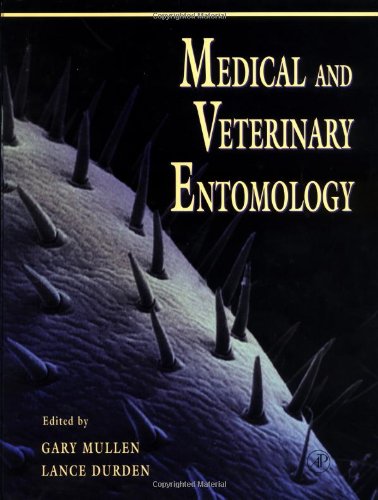 | Hardcover: 597
Pages
(2002-09-28)
list price: US$145.00 -- used & new: US$35.00 (price subject to change: see help) Asin: 0125104510 Average Customer Review:
Canada | United Kingdom | Germany | France | Japan |
|
Editorial Review Product Description Customer Reviews (2)
| |
| 29. A Fly for the Prosecution: How Insect Evidence Helps Solve Crimes by M. Lee Goff | |
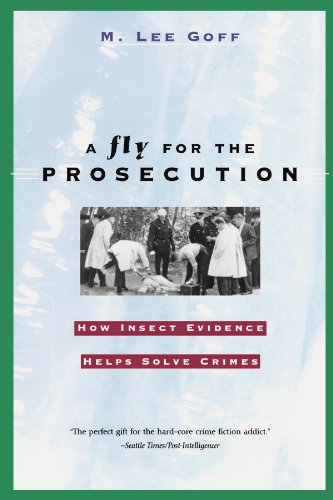 | Paperback: 240
Pages
(2001-09-01)
list price: US$16.95 -- used & new: US$6.95 (price subject to change: see help) Asin: 0674007271 Average Customer Review: 
Canada | United Kingdom | Germany | France | Japan |
|
Editorial Review Product Description Customer Reviews (13)
His style is clear and frequently understated, as when he relates that some of his colleagues were somewhat put out when it was found that one of his labs did not vent to the outside as it was supposed to. Anyhow, this is a fascinating if somewhat grisly read about an unusual but surprisingly significant subject. Just don't read it when you're eating! ... Read more | |
| 30. First the Dead (Bug Man Series #3) by Tim Downs | |
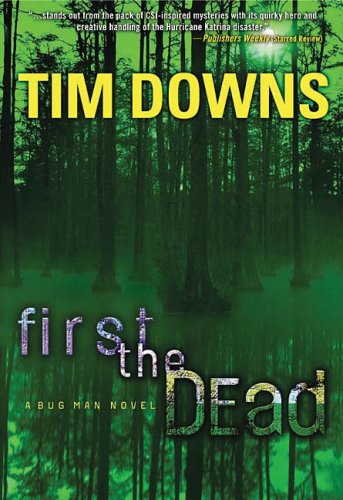 | Paperback: 320
Pages
(2008-09-09)
list price: US$14.99 -- used & new: US$5.45 (price subject to change: see help) Asin: B002YNS256 Average Customer Review:
Canada | United Kingdom | Germany | France | Japan |
|
Editorial Review Product Description Customer Reviews (27)
| |
| 31. Chop Shop (Bug Man Series #2) by Tim Downs | |
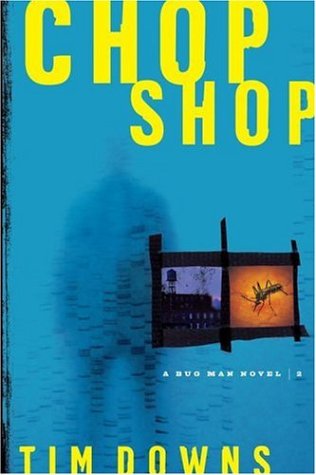 | Paperback: 352
Pages
(2004-07-01)
list price: US$14.00 -- used & new: US$6.45 (price subject to change: see help) Asin: 1582294011 Average Customer Review:
Canada | United Kingdom | Germany | France | Japan |
|
Editorial Review Product Description Young Dr. Riley McKay has worked hard toward her career in pathology-and now she has secured a fellowship at the renowned Allegheny County Coroner's Office in Pittsburgh. But her promising future is threatened when suspicious activities incriminate her supervising pathologist, Dr. Nathan Lassiter. Bungled autopsies, concealed evidence, and unexplained wounds accumulate at an alarming rate. When Riley is ignored by her seniors and threatened by Dr. Lassiter, she turns in desperation to Dr. Nick Polchak, the Bug Man, to help her uncover the truth. From a handful of tiny maggots, Nick and Riley begin to unearth the facts, and together they discover that these blunders are not accidents but part of a larger evil that threatens their very lives. Customer Reviews (15)
| |
| 32. Blackflies: The Future for Biological Methods in Integrated Control by Marshall Laird | |
| Hardcover: 399
Pages
(1982-01)
list price: US$109.00 Isbn: 0124340601 Canada | United Kingdom | Germany | France | Japan | |
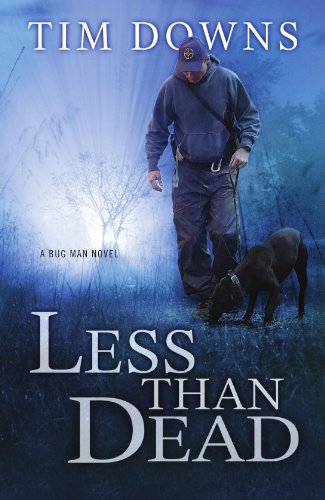
| 33. Less than Dead: A Bug Man Novel (Bug Man Novels) by Tim Downs | |
 | Paperback: 352
Pages
(2009-07-14)
list price: US$14.99 -- used & new: US$3.04 (price subject to change: see help) Asin: 1595545778 Average Customer Review:
Canada | United Kingdom | Germany | France | Japan |
|
Editorial Review Product Description Dogs have long been man's best friend, but the Bug Man's friend is a rare breed . . . the cadaver dog. All roads lead to the White House for John Henry Braden, the charismatic senator from Virginia aristocracy whose beautiful wife Victoria is the talk of Washington and the crown jewel of Endor, her backwoods Virginia hometown. But when bodies turn up on Braden's property--the site of a multimillion dollar construction project he's spearheading--the senator's spin doctors, led by his future first lady, must act quickly to quell a conspiracy before it blemishes their presidential campaign. Enter entomologist Nick Polchak, the quirky bug expert enlisted to determine if the senator's bone yard is a forgotten cemetery or a crime scene. To help with the investigation, Polchak follows local legend to Alena Savard, a mysterious woman known for her ability to turn mongrels into the best search dogs around. They soon find themselves on the trail of a desperate individual bent on protecting a terrible secret. Less than Dead is an unforgettable tale of crime and concealment in the corridors of high-stakes politics--as well as in the deepest contours of the human heart. Customer Reviews (26)
| |
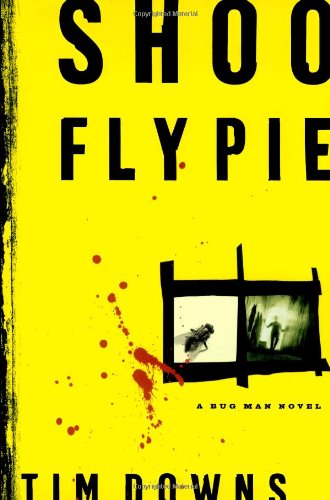
| 34. Shoofly Pie (Bug Man Series #1) by Tim Downs | |
 | Paperback: 384
Pages
(2003-07-01)
list price: US$12.99 -- used & new: US$6.99 (price subject to change: see help) Asin: 1582293082 Average Customer Review:
Canada | United Kingdom | Germany | France | Japan |
|
Editorial Review Product Description But there's a problem...Kathryn Guilford has a pathological fear of insects. Now she must confront her darkest fears to unearth a decade-long conspiracy that threatens to turn her entire world upside down. The flies on the wall can talk...and forensic entomologist Nick Polchak is listening. Customer Reviews (33)
| |
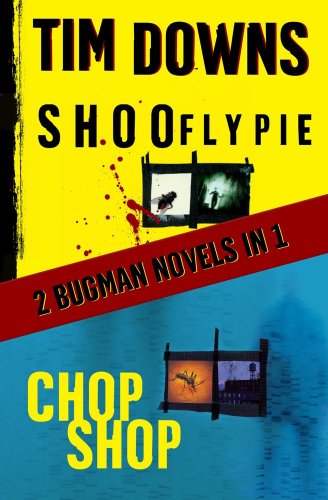
| 35. Shoofly Pie & Chop Shop: 2 Bugman Novels in 1 by Tim Downs | |
 | Paperback: 581
Pages
(2009-10-13)
list price: US$17.99 -- used & new: US$4.74 (price subject to change: see help) Asin: B003NHR6LI Average Customer Review:
Canada | United Kingdom | Germany | France | Japan |
|
Editorial Review Product Description In 2003, the Shoofly Pie introduced an intriguing and unique detective: forensic entomologist Nick Polchak. So popular did Polchak become that author Tim Downs has now published five Bug Man novels. And now for the first time: the first two Bug Man novels under one cover. Within minutes of a murder, the first fly arrives at the scene. Soon there are hundreds, then thousands, and each one knows the victim's story... Thirty-year-old Kathryn Guilford turns to Dr. Nick Polchak, the Bug Man, to help her learn the truth about the apparent suicide of her longtime friend and onetime suitor. Polchak introduces her to a mysterious world of blood-seeking flies and flesh-eating beetles. But there's a problem... Kathryn Guilford has a pathological fear of insects. Now she must confront her darkest fears to unearth a decade-long conspiracy that threatens to turn her entire world upside down. Young Dr. Riley McKay has worked hard toward her career in pathology. But her promising future is threatened when suspicious activities -- bungled autopsies, concealed evidence, and unexplained wounds -- incriminate her supervising pathologist at the Allegheny County Coroner's Office in Pittsburgh, Dr. Nathan Lassiter. When Riley is ignored by her seniors and threatened by Dr. Lassiter, she turns in desperation to Dr. Nick Polchak, the Bug Man, to help her uncover the truth. From a handful of tiny maggots, Nick and Riley begin to unearth the facts... The flies on the wall can talk. Forensic entomologist Nick Polchak is listening. Customer Reviews (3)
| |
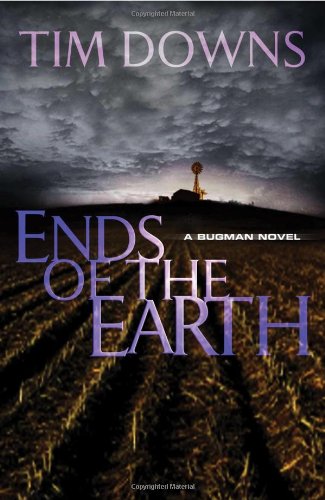
| 36. Ends of the Earth: A Bug Man Novel by Tim Downs | |
 | Paperback: 368
Pages
(2009-09-15)
list price: US$14.99 -- used & new: US$4.48 (price subject to change: see help) Asin: B003WUYSSU Average Customer Review:
Canada | United Kingdom | Germany | France | Japan |
|
Editorial Review Product Description Customer Reviews (54)
| |
| Back | 21-36 of 36 |
 A buzz-worthy Read
 Great beginning, then it drops away