e99 Online Shopping Mall

Geometry.Net - the online learning center Help  
Home  - Basic G - Gambia Culture Africa (Books)

  1-3 of 3
A  B  C  D  E  F  G  H  I  J  K  L  M  N  O  P  Q  R  S  T  U  V  W  X  Y  Z  

click price to see details     click image to enlarge     click link to go to the store

$7.95
1. Where techno-science meets poverty:
 
2. Our Grandmothers' Drums: A Portrait
 
3. Ndank-ndank: An Introduction to

1. Where techno-science meets poverty: Medical research and the economy of blood in The Gambia, West Africa [An article from: Social Science & Medicine]
by J. Fairhead, M. Leach, M. Small
Digital: 11 Pages (2006-08-01)
list price: US$7.95 -- used & new: US$7.95
(price subject to change: see help)
Asin: B000P6NX2Q
Canada | United Kingdom | Germany | France | Japan
Editorial Review

Book Description
This digital document is a journal article from Social Science & Medicine, published by Elsevier in 2006. The article is delivered in HTML format and is available in your Amazon.com Media Library immediately after purchase. You can view it with any web browser.

Description:
This paper considers how internationally supported medical research is understood and interpreted by its actual and potential study subjects, exposing the limits to bioethical discourses amidst economic inequalities and contrasting socio-cultural worlds. It focuses on the Medical Research Council (MRC) Laboratories in The Gambia and particularly their Pneumococcal Vaccine Trial (PVT) that was conducted jointly with the Gambian government during 2001-2004. In many respects this was an exemplar of international best practice in trial communication and informed consent procedures. Yet ethnographic and survey research finds that Gambian parents' perspectives on participation are shaped not by trial specificities, but by broader, historically shaped views and experiences of the MRC as an institution. There is a pervasive view that the MRC offers good, free medication to participants, but that it also 'steals blood'. Widespread concerns with blood-stealing emerge from local frames of understanding in which blood is treated as a tradeable good, in which blood accumulation and depletion in bodily processes relates to its exchange in hospital and medical research practices, and in which transactions can be more or less (un)reasonable. Yet such thinking, rooted in an 'economy of blood', has been overlooked by medical research staff and indeed by historians and anthropologists of Africa whose analyses of blood-stealing have been overly transfixed on rumour and the occult. This paper argues that such cultural framings, which guide local critical commentary on trans-national research orders, require serious attention and need to inform open dialogues between scientists and the public if medical research in resource-poor settings is to continue to be sustainable and politically legitimate. ... Read more


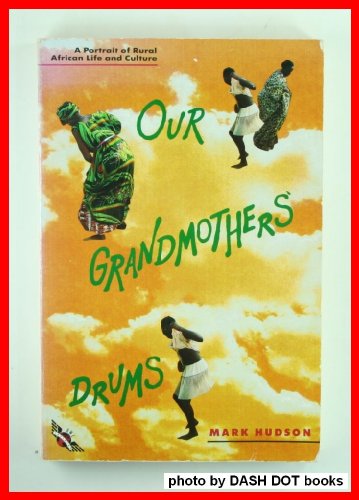
2. Our Grandmothers' Drums: A Portrait of Rural African Life & Culture
by Mark Hudson
 Paperback: 322 Pages (1991-04)
list price: US$13.95
Isbn: 0805016201
Average Customer Review: 4.5 out of 5 stars
Canada | United Kingdom | Germany | France | Japan

Customer Reviews (2)

5-0 out of 5 stars fascinating and funny
If you ever go to Gambia, this is the book to get, together of course with the ubiquitous Lonely Planet.Hudson, a young adventurer, spent 14 months in a Mandingko village, observing and commenting on the daily life. Amazingly, he was allowed to join one of the women's societies... so he followed them around, participated in their dances, field work and intrigues and documented this stuff in OGD. Hudson shows that African women are, although destined to a life of hard work, circumcission & mostly unhappy arranged marriages, far from helpless creatures. They are economically independent, they are free to choose their lovers, they sing and they dance:

"It was in the early hours of the morning before the dancing began in earnest, the figures of the women glowing as though golden in the light of the hurricane-lamp, as they came running towards the drummers, spinning around only at the last moment to dance. This was what they liked more than anything elese - the extremity of this total bodily exertion, this fervent, almost ecstatic unleashment of energy, in which every muscle, every last atom of their energy would be used. It was as though the rhythms of the drums..[...]... were touching something actually inside the women themselves, to which their frenetic shaking was an involuntary, though wholly pleasurable response. They called it dia - sweetness."

"Hear the sound of these drums!
Our own drums!
Here the sound of these drums!
Our grandmothers' drums!"

Hudson shows that African life can be strange beyond our imagining.The pragmatic and relaxed attitudes towards the body and sexual activity; the separatedness of women and men, who get together pretty much just for sex; the ancient initiation formulas and rites, the pragmatic interpretation of the Muslim religion mixed with animism and, above all, the aliveness of these people get through in this book really well. These Mandingko use their bodies for pleasure in a way which makes Westerners look like hollow emaciated specters lost in our greedy little calculating minds. There is much fun in African lives and much sadness - sadness that we have forgotten about.

We need to learn from Africans about how to inhabit our bodies and about how to live in the present moment and this book gives us first hand information on these topics.Highly recommended.

4-0 out of 5 stars OUR GRANDMOTHERS'DRUMS
This travel book does not move from the village of Dulaba in the Gambia but it uncovers a truly fascinating web of social life,customs,intrigue,obligation, initiation, sex and much more - it takes you to the heart of Africa .AMUST for anyone heading for the 'dark continent'. ... Read more


3. Ndank-ndank: An Introduction to Wolof Culture
 Paperback: Pages (1981)

Asin: B000F2VLX8
Canada | United Kingdom | Germany | France | Japan
Editorial Review

Product Description
Handbook written by American Peace Corps volunteer on the Wolof culture of Africa. Contains basic information on such things as greetings, meal etiquette, proper dress, religious holidays, superstitions, marriage and sexual customs, and a brief introduction to the language. Privately published 8 1/2 x 11 softcover, cover illustration shows a man attempting to catch a monkey in front of a baobab tree. ... Read more


  1-3 of 3
A  B  C  D  E  F  G  H  I  J  K  L  M  N  O  P  Q  R  S  T  U  V  W  X  Y  Z  

Prices listed on this site are subject to change without notice.
Questions on ordering or shipping? click here for help.

site stats