e99 Online Shopping Mall

Geometry.Net - the online learning center Help  
Home  - Basic G - Greek Mythology (Books)

  1-20 of 100 | Next 20
A  B  C  D  E  F  G  H  I  J  K  L  M  N  O  P  Q  R  S  T  U  V  W  X  Y  Z  

click price to see details     click image to enlarge     click link to go to the store

$23.32
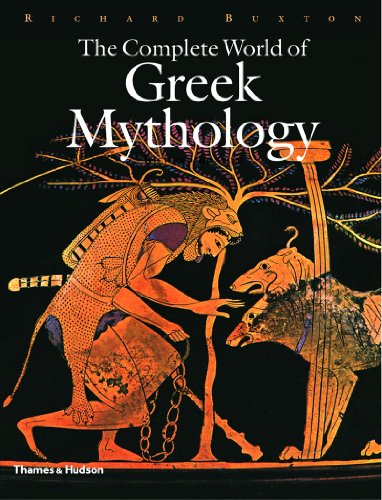
1. The Complete World of Greek Mythology
$7.05
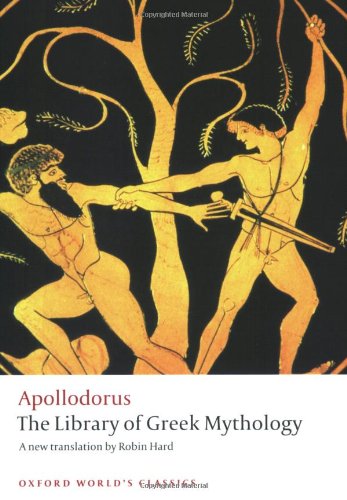
2. The Library of Greek Mythology
$7.80
3. Classic Myths to Read Aloud: The
$7.38
4. Greek Mythology Activities: Activities
$6.95
5. The Everything Classical Mythology
$18.78
6. D'aulaire's Book of Greek Myths
$7.27
7. Greek and Roman Mythology, Volume
$1.42
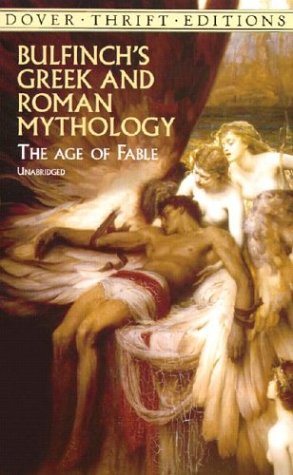
8. Bulfinch's Greek and Roman Mythology:
$12.42
9. Greek Mythology: An Introduction
$9.58
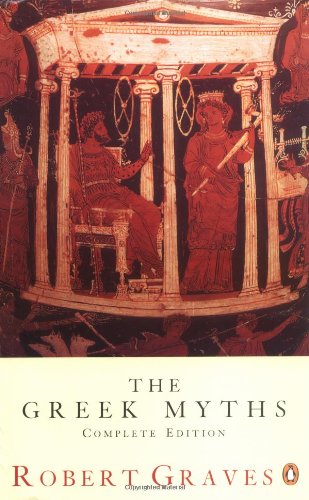
10. The Greek Myths: Complete Edition
 
11. Larousse Greek and Roman Mythology
$8.00
12. The Chiron Dictionary of Greek
$14.71
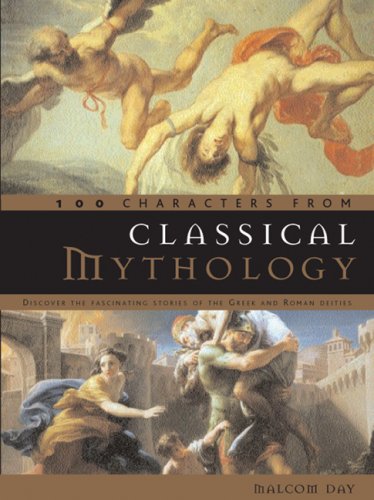
13. 100 Characters from Classical
$20.88
14. The Cambridge Companion to Greek
$14.53
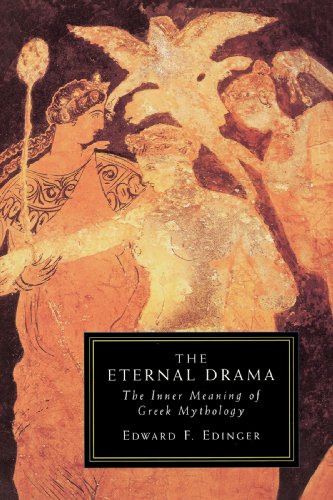
15. Eternal Drama: The Inner Meaning
$59.60
16. A Genealogical Chart of Greek
$1.39
17. A Wonder Book: Heroes and Monsters
$5.20
18. Heroes of Greek Mythology (Dover
$21.31
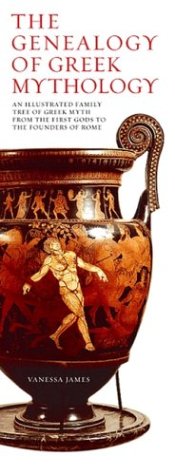
19. The Genealogy of Greek Mythology:
20. THE COMPLETE ENCYCLOPEDIA OF GREEK

1. The Complete World of Greek Mythology
by Richard Buxton
Hardcover: 240 Pages (2004-06-28)
list price: US$39.95 -- used & new: US$23.32
(price subject to change: see help)
Asin: 0500251215
Average Customer Review: 5.0 out of 5 stars
Canada | United Kingdom | Germany | France | Japan
Editorial Review

Book Description
A full, authoritative, and wholly engaging account of these endlessly fascinating tales and of the ancient society in which they were created.

Greek myths are among the most complex and influential stories ever told. From the first millennium BC until today, the myths have been repeated in an inexhaustible series of variations and reinterpretations. They can be found in the latest movies and television shows and in software for interactive computer games.

This book combines a retelling of Greek myths with a comprehensive account of the world in which they developed—their themes, their relevance to Greek religion and society, and their relationship to the landscape.

  • "Contexts, Sources, Meanings" describes the main literary and artistic sources for Greek myths, and their contexts, such as ritual and theater.
  • "Myths of Origin" includes stories about the beginning of the cosmos, the origins of the gods, the first humans, and the founding of communities.
  • "The Olympians: Power, Honor, Sexuality" examines the activities of all the main divinities.
  • "Heroic exploits" concentrates on the adventures of Perseus, Jason, Herakles, and other heroes.
  • "Family sagas" explores the dramas and catastrophes that befall heroes and heroines.
  • "A Landscape of Myths" sets the stories within the context of the mountains, caves, seas, and rivers of Greece, Crete, Troy, and the Underworld.
  • "Greek Myths after the Greeks" describes the rich tradition of retelling, from the Romans, through the Renaissance, to the twenty-first century.
Complemented by lavish illustrations, genealogical tables, box features, and specially commissioned drawings, this will be an essential book for anyone interested in these classic tales and in the world of the ancient Greeks. 250 illustrations, 120 in color. ... Read more

Customer Reviews (7)

5-0 out of 5 stars Greek Myths
Good book for young children interested in this subject since pictures abound and captions tell a clear story.the text is more for late teens and above so the book has a good shelf life if bought when kids are young.

5-0 out of 5 stars Like a lecture series sponsored by an art museum
This is a truly beautiful book, placing Greek myth in context. Well worth the price. The author's voice comes through quite nicely, and I do feel like I'm attending a lecture series at an art museum.

5-0 out of 5 stars text book
Reminds me of a college text book.It's very informative, so be prepared.It's not just a collection of the myths.

5-0 out of 5 stars Well Constructed and Visually Engaging
I've been picking through the gamut of Greek myth texts for an introductory course, and I was fortunate to come across this beauty.It's not just a mythology text that the art historian can use, it's the ONLY classical myth "textbook" I have encountered that could legitimately appeal to art history classes.There are illustrations (usually color photos) on every page.The quality of the pages and binding itself is also really quality stuff. The narration is pretty standard.It's more of a summary text kind of thing than the various excerpts you find in other classical myth texts.I wouldn't use any of the other mythology texts, but this one makes a wonderful supplement to primary source material such as Homer, Hesiod and/or the tragedians.This thing raises the bar for the presentation of classical myth books.

5-0 out of 5 stars The most beautiful book I have ever owned!
Not only does The Complete World of Greek Mythology give the reader a panoramic view of the major motifs of ancient Greek mythology, but there are breath-taking illustrations on every page.It is a magnificent book!And what a bargain.The publishers could easily charge twice as much.Tom Browder ... Read more


2. The Library of Greek Mythology (Oxford World's Classics)
by Apollodorus
Paperback: 336 Pages (1999-02-25)
list price: US$13.95 -- used & new: US$7.05
(price subject to change: see help)
Asin: 0192839241
Average Customer Review: 4.0 out of 5 stars
Canada | United Kingdom | Germany | France | Japan
Editorial Review

Book Description
The only work of its kind to survive from classical antiquity, the Library of Apollodorus is a unique guide to Greek mythology, from the origins of the universe to the Trojan War. Apollodorus' Library has been used as a source book by classicists from the time of its compilation in the 1st-2nd century BC to the present, influencing writers from antiquity to Robert Graves.It provides a complete history of Greek myth, telling the story of each of the great families of heroic mythology, and the various adventures associated with the main heroes and heroines, from Jason and Perseus to Heracles and Helen of Troy.As a primary source for Greek myth, as a reference work, and as an indication of how the Greeks themselves viewed their mythical traditions, the Library is indispensable to anyone who has an interest in classical mythology. Robin Hard's accessible and fluent translation is supplemented by comprehensive notes, a map and full genealogical tables. The introduction gives a detailed account of the Library's sources and situates it within the fascinating narrative traditions of Greek mythology. ... Read more

Customer Reviews (2)

5-0 out of 5 stars The Best Compilation of Greek Myths & Legends
Just like the playwrights, Ovid is great in his own sphere (get the Arthur Golding translation--"Shakespeare's Ovid"), but his Metamorphoses are an artistic presentation of a single poet, whereas Apollodorus (though he surely relies on the poets as well) gives the simplest and most demotic/standard versions of the stories. Ovid is Variations on a Theme, while Apollodorus is as close as we get to the theme itself.

Or rather, to the many themes, because his work covers so much more than is in any other work. Some of the more important parts included are: The Theogony (Creation of the Cosmos and Gods), "Rape" (=Abduction) of Persephone, War of Gods and Giants, Prometheus' Fire, the Calydonian Boar, Sisyphus, Jason and the Argonauts, Medea, Bellerophon, Perseus, Hercules (all the great stories) and his children, Europa, Minos, Cadmus, Oedipus and Aftermath, Atlanta and the Apples, Aesculapius and Chiron, Helen's Early Years, the Palladium, Peleus, the Kings of Athens, Theseus, Tantalus, Atreus/Thyestes and all that Mess, Helen and the Trojan War, Achilles and the Iliad, the Odyssey and the other Returns from Troy.

So it's well that this is called The Library, because Apollodorus compresses a huge amount of information into four short books. So rather than being some of the dullest of ancient writing, as one reviewer says, it both treats the greatest stories and does so with economy and swiftness. This is not only a valuable reference book (as is Robert Graves's Greek Myths), but the work I often recommend as the best presentation for anyone who wants a no-nonsense overview of the whole of Greek mythology (and nice because it's one of the ancient Greeks themselves retelling the stories).

Now, if you want a cheap copy, just get the Oxford one. But if you want really excellent notes, get the Loeb edition annotated by Sir James Frazer (author of The Golden Bough), which also has some excellent short essays by him on themes in the stories.

And if you've been studying Greek, get the Loeb one too, which is literal enough to work as a good "pony", though the Greek is quite easy Alexandrian and you won't have any problems with it: My own Greek is not nearly as good as I'd like it to be, but I could read the whole thing in a few days no problem. The only thing I couldn't do is put it down!

3-0 out of 5 stars Good for a reference
The World's Classics sereies has presented a fine new translation of theMythology Library of "Apollodorus" (a name of convenience for anauthor we know nothing about). Translator and editor Hard cleanly presentsthe writer's exhaustive compilation of Greek mythology, and through carefuldivision and labelling of the sections, reveals some of the author'smeticulous categorization.For hard-core mythology nuts, this is anindispensible reference: the Greek myths straight from a collector ofantiquity, and our only glimpse at some important lost works.But a wordof warning to the layman: Apollodorus is possible the most dull writer ofthe ancient world, and he make no attempts to create an entertaining oreven readable work.It's all dry and dense -- nothing a translator canreally do about that!If you're looking for a more entertaining ancientcompliation of mythology, try Ovid's delightful METAMORPHOSES. ... Read more


3. Classic Myths to Read Aloud: The Great Stories of Greek and Roman Mythology, Specially Arranged for Children Five and Up by an Educational Expert
by William F. Russell
Paperback: 272 Pages (1992-04-28)
list price: US$13.95 -- used & new: US$7.80
(price subject to change: see help)
Asin: 0517588374
Average Customer Review: 5.0 out of 5 stars
Canada | United Kingdom | Germany | France | Japan
Editorial Review

Book Description
The most complete collection of Greek and Roman myths specially arranged to be read aloud to children aged five to twelve. "Every child deserves this book. Those who do the reading aloud will be enlightened and rewarded, too."--Edwin Newman Line drawings. ... Read more

Customer Reviews (12)

5-0 out of 5 stars Classic Myths
Purchased as a gift for Christmas. We did not read this book ourselves, so can't review the quality of the composition. However, the book was well made and arrived on time from Amazon.

5-0 out of 5 stars Foundation for Classical Myths
I purchased this book for two reasons: 1. So I could provide myself with an easy, quick, review of the Classical Myths long forgotten since grade school and 2. to read to my grandchildren so they will have a better foundation of Classical Myths, which will help them to understand and enjoy the arts.I am very pleased with this text, especially the sytax as it does not 'dumb down' the storiesfor comprehension, but actually increases vocabulary and proper grammatical structure.This was an excellent purchase.

5-0 out of 5 stars One of the two books I'll be using
I read four books of Greek myths to determine which to use for my 7-year-olds.I will use this and the d'Aulaire's Book of Greek Myths.I like that this book has the pronuciation of the names right in the story (I hate flipping to the end of the book).Most of the stories are between 5 and 10 minutes long so you can read one to three a day fairly easily.This book does not contain any pictures - it is merely to be used for reading aloud.

The author did a wonderful job telling these stories to a younger audience.The language is rich and full and not dumbed down.He also doesn't go into inappropriate detail.

He tells the story of the Iliad and the Odyssey.I didn't want to go into that this year- I'll wait until they're a bit older - so we used the Trojan Horse by Emily Little.While he does a great job, I'll be using Rosemary Sutcliff's books when they're older (Black Ships Before Troy and The Wanderings of Odysseus), so for me, about a third of the book wasn't necessary.

4-0 out of 5 stars Great stories but maybe too advanced
I love all these classic stories but I dont think they keep a small child's attention. The book says five and up and I have a six year old who is very advanced in reading but she didnt know what a lot of the words mean. I had to pretty much retell the stories in my own words to get her into the story. Also she is visual and the book has no pictures. I do think she will love it when she's older though.

5-0 out of 5 stars An Excellent Book!
I homeschool my seventh grade son, and this book is an excellent tool, not only for mythology but language as well.Each chapter begins and ends with a discussion about the topic at hand, and words that are used in the English language today are explained as to how they come from Greek roots.We have been able to build vocabulary, geography and general knowledge.Also included are pronunuciations to difficult words which is very helpful.Many stories could be used for much younger students and they also can be used through high school.There are not graphic explanations or explicit use of violence which make it quite family-friendly, while still being educational and interesting to everyone from age 5 to adult.I highly recommend this book for anyone interested in Greco-Roman mythology or homeschooling. ... Read more


4. Greek Mythology Activities: Activities to Help Students Build Background Knowledge About Ancient Greece, Explore the Genre of Myths, and Learn Important Vocabulary
by Marcia Worth-Baker
Paperback: 80 Pages (2005-12-01)
list price: US$12.99 -- used & new: US$7.38
(price subject to change: see help)
Asin: 0439517885
Canada | United Kingdom | Germany | France | Japan
Editorial Review

Book Description

This teacher-written resource will help kids learn about the genre of mythology and build important vocabulary. Activities include a mock interview with a god or goddess, a reproducible board game, mapping activities, a read-aloud play, and lots more.
... Read more

5. The Everything Classical Mythology Book: Greek and Roman Gods, Goddesses, Heroes, and Monsters from Ares to Zeus (Everything Series)
by Lesley Bolton
Paperback: 291 Pages (2002-04)
list price: US$14.95 -- used & new: US$6.95
(price subject to change: see help)
Asin: 158062653X
Average Customer Review: 4.0 out of 5 stars
Canada | United Kingdom | Germany | France | Japan

Customer Reviews (3)

3-0 out of 5 stars HELP!Editors needed!
While this reference is quite basic, it is easy to follow the lineage and obtain a working knowledge of classical mythology from this book.HOWEVER, beware that there are several misprints that will confuse the reader, as well as references in the index to characters that do not appear on the mentioned page.Thus, the book is in dire need of a decent editor.

4-0 out of 5 stars Decent book for beginners.
This "Everything" guide is a good book for younger readers and those who are only starting to get into mythology.At over 290 pages, it covers the major players and who's who of Roman and Greek mythology (as in Jupiter/Zeus, Venus/Aphrodite, the Trojan War, Odysseus, et al).

However, more serious and 'seasoned' fans and scholars will likely prefer THE COMPLETE IDIOT'S GUIDE TO CLASSICAL MYTHOLOGY by Kevin Osborn.We're not idiots, of course, but this book is meatier and has more background information on the various gods/goddesses, heroes and stories. At over 350 pages, it is 60 pages thicker than the "Everything" book and has smaller text and less white space.For instance, an entire chapter is devoted to the Trojan War hero Achilles while the "Everything" book only has a few pages, at the most.

Fans who want more than classical mythology will want to explore MYTHOLOGY FOR DUMMIES by Christopher Blackwell.This book also delves into the Arthurian legend, Norse myths, Beowulf, as well as world mythology in general (Chinese, Jewish, Hindu, etc).

These 3 books are all excellent. The choice lies on the readers' level of interests.I would recommend the "Everything" book toyounger readers (middle or high schoolers, for instance) and those who just want the basics on classical mythology.

5-0 out of 5 stars Excellent Book!!!!
I relly enjoy reading this book.If you are interest in greek mythology, this is a must read book.It explains, all the gods, the goddesses, the monsters, the minor gods in detail.It tells everything about them, their parents, sons, love affairs, talents and the myths they participate in.If you rally whant to learn about greek mythology, read this book!!!! ... Read more


6. D'aulaire's Book of Greek Myths
by Ingri D'Aulaire, Edgar Parin D'Aulaire
Hardcover: 192 Pages (1962-10-19)
list price: US$29.95 -- used & new: US$18.78
(price subject to change: see help)
Asin: 0385015836
Average Customer Review: 5.0 out of 5 stars
Canada | United Kingdom | Germany | France | Japan
Editorial Review

Amazon.com
No education is complete without a large slice of Greek mythology. And there's no better way of meeting that literary quota than with the D'Aulaires' book. All the great gods and goddesses of ancient Greece are depicted in this big, beautiful classic, lovingly illustrated and skillfully told. Young readers will be dazzled by mighty Zeus, lord of the universe; stirred by elegant Athena, goddess of wisdom; intimidated by powerful Hera, queen of Olympus; and chilled by moody Poseidon, ruler of the sea. These often impetuous immortals flounce and frolic, get indiscreet, and get even. From petty squabbles to heroic deeds, their actions cover the range of godly--and mortal--personalities.

The D'Aulaires' illustrations have a memorable quality: once pored over, they will never leave the minds of the viewer. Decades later, the name Gaea will still evoke the soft green picture of lovely Mother Earth, her body hills and valleys and her eyes blue lakes reflecting the stars of her husband, Uranus the sky. No child is too young to appreciate the myths that have built the foundation for much of the world's art and literature over the centuries.This introduction to mythology is a treasure. (Ages 10 to adult) --Emilie CoulterBook Description
"For any child fortunate enough to have this  generous book...the kings and heroes of ancient  legend will remain forever matter-of-fact; the  pictures interpret the text literally and are full of  detail and witty observation."--Horn  Book.

"The drawings...are excellent  and excitingly evocative."--The New  York Times. ... Read more

Customer Reviews (135)

5-0 out of 5 stars Great bedtime stories
This was one of the books my mom read to me as a bedtime story. The pictures and stories were so memorable I wanted my own copy to read to my daughter.

5-0 out of 5 stars Greek Mythology
Written for the younger audience, this book is a great way for teens and under to learn about Greek mythology. There are nice illustrations to go with it. My nine-year-old loves it! He knows more about it now than I do.

5-0 out of 5 stars Great for all ages
I remember the summer I discovered this book over 30 years ago as a 10 year old. I was enchanted by the stories and the gorgeous illustrations, and after reading this book, I read D'Aulaire's "Norse Myths." I embarked on my own odyssey of reading most of the mythology books in our local library.

I recently finished reading "Greek Myths" aloud to my 7 and 9-year-old sons, and they loved it. My 9-year-old often borrowed the book and read ahead to himself, but he also stayed around to listen as I read the same selections to my 7 year old. We're now working our way through "Norse Myths."

5-0 out of 5 stars BOOK OF GREEK MYTHS byD'AULAIRE'S
Delightful story well told accompanied by excellent illustrations.
Those divine and mortals lived far away so long ago, yet they mirror our today's nature.I read twice in a row.

5-0 out of 5 stars My first Greek Myth primer
Glad I bought this book.The D'Aulaires also wrote one on Norse Myths (which I also bought) that sparked my interest as a child to read further into mythology.These types of stories used to fascinate me so much... like a whole other world from a whole other time.They still do, actually.The pictures were stylistic and vibrant.Although I have grown to understand that mythology is much more complex as an adult, this was still one of those oversized books that I, as a child, could sink into with just me and myself in a quiet corner of the library. ... Read more


7. Greek and Roman Mythology, Volume 3 (Greek and Roman Mythology (Graphic Novels))
by Cirro Oh
Paperback: 160 Pages (2005-10-01)
list price: US$12.95 -- used & new: US$7.27
(price subject to change: see help)
Asin: 9810527667
Average Customer Review: 5.0 out of 5 stars
Canada | United Kingdom | Germany | France | Japan
Editorial Review

Book Description
Greek and Roman myths retain an enduring fascination for children, who find these stories of super-powerful gods, flying horses, and mythic quests compelling. Using simple text and vibrant color illustrations, Greek and Roman Mythology, Vol. 3 makes these tales even more exciting. The book includes the timeless love affair of Eros and Psyche, mighty Zeus traveling incognito among humankind, the brilliant weaver Arachne transformed into a spider by a jealous Athena, King Midas whose greed for gold almost brings about his demise, and many more. ... Read more

Customer Reviews (1)

5-0 out of 5 stars Kids love this!
If you want to get kids excited about Mythology, this is the ticket. The format is prefect for the pre-teen group. My son had Vol. 1 - 3 of this series and reads them over and over again. His friends always want to borrow them and parents want to know where I got them. ... Read more


8. Bulfinch's Greek and Roman Mythology: The Age of Fable (Dover Thrift Editions)
by Thomas Bulfinch
Paperback: 320 Pages (2000-04-18)
list price: US$3.50 -- used & new: US$1.42
(price subject to change: see help)
Asin: 0486411079
Average Customer Review: 4.0 out of 5 stars
Canada | United Kingdom | Germany | France | Japan
Editorial Review

Book Description

Vivid, classic retellings of the myths of Greece and Rome, along with stories of the Norse gods and heroes. Zeus and Hera, Apollo, Jason and the golden fleece, the wanderings of Ulysses and Aeneas, the deeds of Thor, many more seminal stories underlying Western culture.
... Read more

Customer Reviews (6)

3-0 out of 5 stars Great Seller, OK book
It is to no offense to the seller- the book arrived on time and in great, promised condition (thanks!) but the book itself is a little confusing. I was shopping for a mythology book that was simple and really easy to read. This does the job, but still probably better from someone with a pre-understanding of mythology and a serious interest in learning more.

5-0 out of 5 stars Stimulating bedtime stories
This classic book on clasaical mythology is exceptionally well written.Each story is short, most only a page or two.The adventures are succinctly presented and the language used adds considerably to the readability and excitement of the myths.

As one untrained in mythology, I have often found Greek plays and Homer to be obscure.But now, I can reread those classics with far greater understanding.

For those, like me, who have an interest in Greece and Roman, but whose background is in other fields, Bulfinch's "Mythology" is an outstanding nightly read.Just a few stories at a time will suffice, and you will delight in the endeavor for many a month.

5-0 out of 5 stars A Mastery of Myth
Bulfinch's Greek and Roman Mythology, The Age of Fable, is an excellent source for understanding and appreciating the legends and myths of ancient Greece and Rome.Well researched, the book reviews the fables in clear, simple prose.An excellent source for students, writers, scholars, or the casual reader interested in classic mythology.Highly recommended.

5-0 out of 5 stars Makes the Obscure Become Meaningful - and Fun to Read
"The Age of Fable" is an enjoyable, easy to read introduction to Greek and Roman mythology.

Today we lament that people have little time for the classics and even less for mythology. Bulfinch, writing in 1855, said much the same, "To devote study to a species of learning which relates wholly to false marvels and obsolete faiths, is not to be expected of a general reader in a practical age like this."

And yet without some familiarity with Greek and Roman mythology we not only have little understanding of Greek and Roman civilization, we also limit our appreciation for some of the greatest English literature and poetry. Shakespeare, Keats, Milton, and other English writers have assumed that readers are acquainted with mythology. And more basic, we also deprive ourselves of some fascinatingand enjoyable stories and tales.

In writing "The Age of Fable" Bulfinch focused on "mythology as connected with literature", not just the fables themselves. He created a book that has remained easy to read and as well serves as an amazingly useful reference when reading 16th, 17th, and 18th century literature and poetry. I have repeatedly found that what was an obscure and murky reference to mythology took on meaning and significance by a quick visit to Bulfinch. I particularly appreciate his index of names: it really helps me track down those prolific deities.

I sometimes pick up "The Age of Fable" and simply browse a few pages, exploring a new tale, a new adventure by powerful deities with magnified human frailties.Buy a copy, you won't be disappointed.

4-0 out of 5 stars Still excellent
This book provides a succinct introduction to many of the stories that underlie Western culture.The main part of the book presents a digest of Greek myths, arranged in a loosely along the "genealogy" of theGreek Pantheon.Included are brief synopses of the Odyssey, the Iliad, andthe Aneid.These stories are no longer universally known as they were sucha short time ago, and this book provides an easy introduction to them.Atthe end of the volume are included some stories of the Hindu and Nordicgods, but these, especially the Hindu stories, are not as satisfying as theGreek stories.[...] this book is a great buy! ... Read more


9. Greek Mythology: An Introduction
by Fritz Graf
Paperback: 264 Pages (1996-05-09)
list price: US$21.00 -- used & new: US$12.42
(price subject to change: see help)
Asin: 0801853958
Average Customer Review: 4.5 out of 5 stars
Canada | United Kingdom | Germany | France | Japan
Editorial Review

Book Description

This revised translation of Fritz Graf's highly acclaimed introduction to Greek mythology offers a chronological account of the principal Greek myths that appear in the surviving literary and artistic sources and concurrently documents the history of interpretation of Greek mythology from the 17th century to the present. First surveying the various definitions of myth that have been advanced, Graf proceeds to examine topics such as the relationship between Greek myths and epic poetry, the connection between particular myths and shrines or holy festivals, the use of myth in Greek song and tragedy, and the uses and interpretations of myth by philosophers and allegorists.

... Read more

Customer Reviews (2)

5-0 out of 5 stars Outstanding historical approach to Greek Myth
I'm a bit puzzled by the previous review's claim that this book does not spend much time discussing different approaches to mythology.That's what the first two chapters ofthis book are all about!.Graf first provides a historical discussion of "myth", "mythology", and their meanings from ancient Greece up throught the end of the 19th century.The second chapter discusses the various approaches to myth that have been dominant in the 20th century-- the myth-and-ritual school, psychoanlalysis, structuralism, etc.For each of these, Graf provides both a discussion of the various approaches, as well as a critical discussion of their merits and shortcomings. (Perhaps the previous reviewer skipped these chapters?)

The remaining chapters of the book offer up a kind of intellectual and cultural history of Greek mythology from the Mycenean Age to the late Hellenistic era, discusing how the various stories that make up what we call "Greek Mythology"
were various understood, approached, told, retold, changed, transformed valued, revalued, etc., from approximately 1200 BC through the Roman era.One chapter deals with Homer, Hesiod, and the early poetic traditions.Another deals with the religious/ritualistic ue of myth, another with tragedy, another with history, and yet another with late "mythography" and criticism.

All in all, I'd say this is an excellent introduction to the study of Greek mythology within the historical, cultural, and literary context in which its stories emerged, were established, and were later fixed. Please be aware, however, that it is not a mere "handbook" (a la Edith Hamilton or the New Larousse Handbook of Mythology).Rather it is an scholarly analysis into the historical cultural function(s) of myth in ancient Greece-- but one which is presented on a general, survey level,.... so that it can easily be read and appreciated by
non-scholars.

4-0 out of 5 stars good general introduction
Graf's mythology handbook of the Classical world is a great begining text for undergraduates or those merely reading for their improvement.Howeer, he spents little time on comparative approaches between mythology whichmost textbooks at least pay lip service to. ... Read more


10. The Greek Myths: Complete Edition
by Robert Graves
Paperback: 784 Pages (1993-04-06)
list price: US$19.95 -- used & new: US$9.58
(price subject to change: see help)
Asin: 0140171991
Average Customer Review: 4.0 out of 5 stars
Canada | United Kingdom | Germany | France | Japan
Editorial Review

Book Description
Endymion, Pelops, Daedalus, Pygmalion -- we recognize the names, but what are the stories behind these and other familiar gods from the Greek pantheon -- names that recur throughout the history of European culture?

Drawing on an enormous range of sources, Robert Graves has brought together elements of these myths in simple narrative form. He retells the adventures of the most important gods and heroes of the ancient Greeks. His work has become the reference for the serious scholar as well as the casual inquirer. ... Read more

Customer Reviews (29)

3-0 out of 5 stars Outdated But Has Merit
This book was a revolutionary work in it's time. It examined the Goddess religion and pre-Greek beliefs in an objective and interesting way. The fundamental problem with it is that Graves was not an anthropologist. Helinks practically every Greek myth with Pelasgian/Minoan king sacrifice rituals. This is really irksome in that while the Pelasgian/Minoan model was neglected by chauvinist academics for years and years (and still is), he makes some statements about pre-Greek Aegean culture which is pure conjecture and presents them as fact. Also, he states that Orphism came about because of Egyptian refugees fleeing from the Amonist backlash against Ahkenaton. Never mind that the dating does not work and he presents absolutely no material proof for this. He does this type of thing through the whole work. The bottom line is that sometimes he is dead on the money and other times he could be talking about "Star Wars!" The basic problem is that Graves approached the subject inductively, rather than deductively. So, one MUST read this book with a critical mind.

5-0 out of 5 stars The Definitive Edition of the Greek Myths
Robert Graves is known for his eccentricities and eclectic readings of the classic Greek myths.But this is the definitive edition because it gives the literary sources, from Homer to Pausanias and many others.I also own the Folio Society's slipcased, handsomely illustrated edition of the same work.For reasons that I cannot even guess at, its editors decided to omit the sources, an omission that I believe destroys its value.The only problem with the paperback edition is that it wears out sooner rather than later, but the price is such that replacing it is affordable.

3-0 out of 5 stars Procrustes and Rorschach's Myths
Procrustes was a gentleman who made travel upon the byways of ancient Greece interestingly hazardous.He had an iron bed onto which he placed any traveler who fell into his hands.If the traveler was too long for the bed, jolly old Procrustes lopped off the excess.It the traveler was too short, Procrustes stretched him to fit.One day Theseus appeared before Procrustes' door and allowed the old bandit the opportunity to measure himself on his bed.

Robert Graves wrote with the intention of expounding and explaining Greek myths.Unstated but implicit in this intention were two ideas: that there is a more or less self-consistent thing called the Greek myths and that they have a more or less consistent meaning.Neither of these things is necessarily true.

The influence of Thomas Bullfinch is so all-pervasive that we are almost blind to it.He provided the English-speaking world with a convenient handbook of myths that made it appear that the Greek (and derivative Roman) world had a central core of beliefs as definable as the Bible, the Qur'an or, for that matter, the Book of Mormon.Admittedly, Graves offers some variant versions, but then, so does Genesis.Years later, Edith Hamilton, with more scholarship and a lot less charm, re-emphasized the lesson.

Was it Bullfinch's intention to assemble a handbook of Greek myths?Not really.In his preface, he makes his intention clear.He was a teacher whose students were unable to understandallusions made by great poets of the English language, Shelley, Byron, Wordsworth and their ilk.His handbook is not of Greek myths but of English poetical allusions to Greek myths.

In Bullfinch's time and for many generations before, classical learning consisted of a great deal of Latin and a few snatches of Greek, as demonstrated by the fact that Pope's great translation of Homer has Jupiter, Minerva and Neptune rather than Zeus, Athena and Poseidon.It followed, then, that the two primary sources of mythology for those boasting classical education were Ovid's Metamorphoses and Virgil's Aeneid, both of which were entirely artificial constructs assembled during the time of Augustus Caesar.By and large, that's where the poets found their allusions and, by and large, that's what Bullfinch gave us.

Even in Bullfinch's time, the amount of mythological material from ancient Greece was greater in scope, even though it was only a tiny fraction of what once had existed.That material had a characteristic that Bullfinch suppressed: it was wildly inconsistent and self-contradictory to the point of anarchy.What two sources could be more authoritative than the poets of the earliest dawn of classical culture, Hesiod and Homer?Hesiod unequivocally states that when the children of the Titan Cronus were born, he swallowed up all but the youngest of them, Zeus.Homer, with equal authority, says that the eldest of the children of Cronus was Zeus, and that it is because he is the eldest that he is king of the gods.Then there is Pausanias.He was a born tourist who traveled up and down the Greek speaking lands, putting in at every tourist trap that he could find while writing a popular guidebook.He was perfectly happy to accept that this hero or that as buried here, there, in another place or in as many places as you want.Sightings of the gods and the rituals associated with them were even more varied.Sometimes he heard a local story that is familiar to us from Homer, but almost invariably the local story is grimmer and bloodier than Homer's version.Clearly, Homer edited out the less respectable bits in exactly the same way that Disney edited the Brothers Grimm.

If there is not necessarily a consistent corpus of myths, what about their meanings?About 2000 BC, tribes of tallish, fair-haired people (see the physical descriptions in Homer of almost every Greek hero except Odysseus) who some generations earlier had bid farewell to their cousins who spoke a variant of their shared language that would evolve into Latin, moved southwest toward the Greek peninsula.They carried with them a god whose name was Zeus who undoubtedly had a consort or two or three (dozen) and a set of stories attached to him and his family.Around 1200 BC, their descendants who lived at a place called Pylos were overwhelmed by sea-borne raiders.In the burning of their palace, clay tablets bearing their routine administrative records were miraculously preserved.Their gods included Zeus, Potnia ("Our Lady") and Enyalios.Eight hundred years later, Socrates talked about "the god," presumably Zeus, as a moral figure, using words very like those Christians might choose for their God.In Roman times, the indefatigable Pausanias jotted down that Enyalios was a title of Ares and made references to Athena Potnia ("Our Lady Athena.")Is the truth of a tale of the Zeus of a proto-Greek speaker who has never even set foot in Greece the truth of Socrates' Zeus?Are the blood-soaked superstitions recorded by Pausanias more true than the rationalized heroic lays of Homer?Would Our Lady of Pylos even recognize Our Lady of Athens?

Procrustes had a number of Twentieth Century descendants.One was Robert Graves, who lopped and stretched the Greek myths onto the bed of his own imaginings.Scan down through these reviews until you come to "Green Melusine," who very cleverly applies Graves' technique to Cinderella with predictable result.(While you're at it, look up the tale of Melusine and wonder with me why anyone would adopt that particular moniker.)

The Greek myths are an intellectual and scholarly Rorschach test.In the Nineteenth Century whole universities of bearded German professors elaborately proved to their own complete satisfaction that the tale of Troy was nothing but an allegorical weather myth.They were much put out when Schliemann started digging up gold, not allegories.In the Twentieth Century Sir James Fraser, Edith Hamilton, Robert Graves and Joseph Campbell have all seen wonderful things in the Rorschach myths and have fitted them perfectly onto their Procrustean beds.

But Theseus always comes knocking at the door.

1-0 out of 5 stars This is no guide to Greek Myth!
Graves confirms that the only way to learn of the Greek myths is to read what the Greeks themselves wrote. If the desire is to understand what the Greek myths actually mean then Graves should be avoided.Robin Hard, in his translation to Apollodorus' Library of Greek Mythology, published by OUP, writes "the interpretive notes [to Graves' Greek Myths] are of value only as a guide to the author's personal mythology." (p.xxxiii). I cannot agree more.

Graves' immediate failure is that he remains oblivious to the ouranographic nature of Greek myth: their myths were related to the heavens. Further, Graves fails to understand the relationship of Greek myth to the development of Greek philosophy; that the key to understanding Greek philosophy, science (& hence mathematics & engineering), is the mythology. If you read Graves you will understand neither Greek myth or philosophy.

In Timaeus Plato wrote that when the creator "had compounded the whole he divided it up into as many souls as there were stars, and allotted each soul to a star." (Timaeus, 42).

In Apollonius' Argonautica we read of the argonaughts who paused as "the goddess Persephone sent up to them the mourning ghost of Aktor's son, who craved to see some men of his own kind ...[and having done so, he] Then sank down again into the great abyss." Book 2, lines 920.

In Homer's Odyssey we read that "Rose-fingered Dawn fell in love with Orion... outraged at her conduct... chaste Artemis rose from her golden throne, attacked him in Ortygia with her gentle darts and left him dead." Book 5, lines 121-124. When given directions for sailing, Odysseus kept his eyes "on the Pleiads...or the Great Bear [who] looks across at Orion the Hunter with a wary eye." Book 5, 272-274; and once in the Halls of Hades, which lie beyond the horizon, Odysseus' "eyes fell on the giant hunter Orion, ... armed with a club of solid bronze..." Book 11, 571-575

Aristotle explains to us what all this means: "From old - and indeed extremely ancient times there has been handed down to our later age intimations of a mythical character to the effect that the stars are gods... further details were added in the manner of myth." Metaphysics, Book Lambda, 1074b.

If you read Graves you will not encounter any understanding of the heavens, the basis of Greek myth, in which the planets and constellations were the detritus of times past, rendered immortal and writ large in the heavens. This absence is explained by Graves, when he extols his belief that even "the 13th century Excidium Troiae is, in parts mythically sounder than the Iliad." p. 13. What Graves claims is that an author who commented on the myths over 2000 years after Homer actually wrote down the myths, understood them better than the person who expounded them.

Instead of looking to the sky to understand these myths, Graves claims that the only way to properly understand them is when "archaeologists can provide a more exact tabulation of tribal movements in Greece and the dates." p.20; and that consequently "A large part of Greek myth is politico-religious history."(p.17). This is seriously misguided!

Graves as becomes evident has an agenda which he lays bare when he claims Greek & Jewish myth is a product of:
"The Jews as inheritors of the 'Pelasgian', or Canaanitish, creation myth.." p. 35; that is that the people of Greece, before the arrival of Greeks were the same people as those who peopled Canaan (Palestine, which is utterly unsupported by any archaeology). What Graves attempts with this ridiculous tome, is to provide a syncretist misinterpretation of Greek myth to reconcile it with the irreconcilable Biblical beliefs and he imagines he achieves this when he weaves into this his "matrilineal v patrilineal" theory as some sort of corroboration. This explains why Graves claimed that a later, Greek Christian from Byzantium, wrote a sounder mythology than Homer: the Byzantine, being Christian, had the same disposition to reinterpret Greek myths to make them more acceptable to a Christian viewpoint, as does Graves.

Greek myths are beautiful if they can be understood. Graves omits the ouranographic dimension of Greek belief because, as he makes clear, he is actually attempting to reconcile it with Jewish (hence Christian) belief. No such reconciliation can work if the author is honest. The Greeks studied the heavens; the Jews were forbidden to do so on pain of death, eg. Deuteronomy 17.2-5 & Jeremiah 10.2. Graves' book is embarrassingly silly.

(...)

5-0 out of 5 stars Very Important Resource in English on Greek Myths
`The Greek Myths' by Robert Graves is a perfect example of what poets do to pay the rent when they are not writing poetry. This is, of course, a gross simplification, as Graves was also a professor of poetry at Oxford University and the author of several relatively successful novels about the ancient world, the most successful of which was `I, Claudius', the semi-fictional story of the fourth emperor of Rome.

Robert Graves was also a great student of mythology and in addition to this great survey of myths, he has written volumes on the nature of myths, in much the same genre as the great work `The Golden Bough'. While these other works, such as `The Golden Ass' are pretty opaque to the non-specialist, his work on Greek myths is a great presentation of the material for the layman and a great antidote to famously popular works such as `Bullfinch's Mythology' and `Mythology' by Edith Hamilton. I read both of these works when I was in Junior High School and was initially enamored with the Greek myths. What these popular works failed to do was to give any connection to the sources of the myths. One gets the highly illusory sense of the myths' existing in some kind of Jungian collective consciousness, with no thought given to the documents where these were first written down and to variations in the myths' narrative from different sources.

One may ask why it is important to study myths, and therefore be careful about understanding the myth's documentary sources. Probably the most important reason for studying myths is that understanding them is simply necessary to understand a great body of world literature, including much of English literature beginning in the Middle Ages and continuing to the present day. I don't even need to cite Shakespeare, as there are two recent episodes of CSI which make reference to the Chimera, Icarus, and the Furies, three lesser figures from the Greek Myths. Just to include at least three more modern sources, there is a reference in a Woody Allen' film to both Narcissus and to Zeus, a major recent science fiction trilogy by John Varley is based on the names and characteristics of the twelve Titans, and a retelling of the Trojan War in `Troy' with Brad Pitt as the great Achilles himself.

Reference to myths is great cultural shorthand. Ezra Pound, a wealth of obscure literary references if there ever was one, stated that the value of writing could be measured by how much meaning can be packed into the fewest words. This, a reference to Achilles can evoke images of invulnerability, great prowess in combat, revenge, eventual graciousness to enemies, and being wronged by allies. All that from a reference to the legendary Achilles. Talk about a name to be conjured with. Don't get me started on Odysseus, especially since James Joyce already pretty well covered that subject in `Ulysses'.

One could write volumes on the definition of myths. In simple terms, they are stories of larger than life figures who may or may not be based on actual historical people. Some, but not all, myths arise out of religion and prescientific cosmology, as in the Greek creation myths. One sure sign of mythic quality is an intermixing of the human and the divine, as in the case of Achilles of the Iliad, who is a son of a mortal man and an immortal nymph, daughter of Zeus, Thetis. Some famous characters from Greek myths such as Theseus, Jason, Oedipus, and Odysseus may not have had divine parents, but they certainly had larger than live adventures with both assistance and interference from the Olympian gods or their surrogates.

The book is divided into 171 stories, although many of these individual sections may be part of a larger story such as the tale of the Trojan War that takes up fourteen (14) of these sections. This division is partly due to the fact that the full story of the figures in the Trojan war may include references to sources outside the Iliad, which was not a novel written by Homer like Hemingway's `For Whom the Bell Tolls'. It is much more like the New Testament gospels, written several hundred years after the historical events and based on oral tradition and documents since lost to history.

In addition to the Trojan war, which concludes the book, and the creation myths which open the book, there are stories covering the genealogy and carryings on of the Olympian gods, a flood legend, the story of Prometheus (see the stature in Rockafeller Center), Sisyphus, Perseus, Bellerophon, Midas, Narcissus, Minos, Daedalus, Theseus, Medea, Oedipus, Orestes, Heracles (Hercules) and his 12 Labors, and Jason and the Argonauts. A perfect example of an important function of some myths is the story of Orestes and Agamemnon, where a cycle of revenge comes to an end only after the intervention of divine authority.

If you are interested in this book and you happen to be looking at the two volume edition, it is essential that you buy both volumes at the same time, as the index to both volumes is at the end of volume 2. It is also important that all the scholarly trappings of footnotes, references, and alternate versions do not put you off. The stories are entirely readable without them, and you can go through them secure in the knowledge that this is how the Greeks, Chaucer, Spencer, and Shakespeare saw these stories. And, if by chance a reading takes you beyond the simple stories, there is more than enough to connect you to the original sources in Greek and Roman literature. And, as another reviewer notes, if there are questions about Graves' version, you have everything you need to check it out. You cannot say that about most other texts on these myths.
... Read more


11. Larousse Greek and Roman Mythology
by Joel Schmidt
 Hardcover: 310 Pages (1983-04)
list price: US$7.98
Isbn: 0070553424
Canada | United Kingdom | Germany | France | Japan

12. The Chiron Dictionary of Greek & Roman Mythology: Gods and Goddesses, Heroes, Places, and Events of Antiquity
Paperback: 312 Pages (1994-09)
list price: US$19.95 -- used & new: US$8.00
(price subject to change: see help)
Asin: 0933029829
Average Customer Review: 4.5 out of 5 stars
Canada | United Kingdom | Germany | France | Japan

Customer Reviews (5)

5-0 out of 5 stars This Is A Great Book and It's A Keeper!
I bought this book and I like it alot but I have to admit that I initially purchased the book The Chiron Dictionary of Greek & Roman Mythology because the TV shows Hercules and Xena with their storylines often being based on the Greek and Roman Myths had me me curious about Greek and Roman Mythology and I think this book was a very good purchase because I have really enjoyed reading it and now I really like the ancient myths and look forward to buying more mythology books and I definitely have to recommend this book to anyone interested in the Greek and Roman myths.

5-0 out of 5 stars "The Best Greco-Roman Mythological Dictionary Available"
This exemplary dictionary contains 1,600 entries and 225 vivid illustrations and charts, which describe and depict the famous gods, goddesses, heroes, places, and events of the Greco-Roman world.Foreign gods and goddesses, later adopted into the Greco-Roman cults such as Isis and Osiris are added here as well, along with the poets and playwrights, statesman and philosophers, kings, queens, and emperors of antiquity, making this the most comprehensive reference tool in its class.Adding still more luster yet, to the Chiron edition, is the fact that all this information, compacted into a short, concise, affordable, carry-it-anywhere dictionary, is a remarkable achievement not to be found elsewhere.This dictionary is certainly head and shoulders above all others, and is highly recommended for anyone interested Greco-Roman Mythology.

5-0 out of 5 stars This Is A Great Resource For Greek and Roman Mythology
This book is great, I like the fact that it's in dictionary form because it's easy to read and gives valuable info on Greek and Roman Mythology and is a great source for beginners who may be overwelmed by the longer more detailed books. This amazing book is very highly recommended!

2-0 out of 5 stars A wonderful book for Ancient Greek/Roman mythology.
I believe that this book is full of valuable information that can be used to understand Greek/Roman mythology. It has useful information and it is somewhat reliable. If you need information for a report, I advise for youto use another book for more thourough points.

5-0 out of 5 stars Detailed and thorough - an ideal reference
This is my favorite reference to Greek and Roman mythology. The dictionary has entries on religious festivals (Volturnalia), places (Pelion), well-known mortals (Odysseus), mortals few have heard of (Halirrhothius),and, of course, the Greek gods and the Roman gods. Each appellation has itsown entry, with a reference to one of its other counterparts in differentcultures. This also serves to keep the Roman versions of whatever divinityand the Greek versions of the same divinity straight. Definitely worth themoney. ... Read more


13. 100 Characters from Classical Mythology: Discover the Fascinating Stories of the Greek and Roman Deities
by Malcolm Day
Hardcover: 160 Pages (2007-01-26)
list price: US$22.99 -- used & new: US$14.71
(price subject to change: see help)
Asin: 0764160060
Canada | United Kingdom | Germany | France | Japan
Editorial Review

Book Description
Dating back roughly 3,000 years, the gods of the ancient Greeks—and later, of the Romans—have figured prominently in legendry, poetry, drama, and the visual arts. But today’s readers are often confused when they encounter the myriad names of those deities and try to understand their roles in mythology. This entertaining and mind-expanding book charts 100 of the most prominent characters from Greco-Roman mythology, including the primordial deities, the great gods of Olympus, and the shadowy inhabitants of Hades. Addressing universal themes such as love, jealousy, anger, ambition, deceit, and beauty, the stories told here make fascinating reading while they add significance to countless classical references in our civilization’s literature and art. Author Malcolm Day profiles each god with a short, very readable summary of that personage’s acts. He sets each deity’s storywithin the larger context of a “family tree” that encompasses all major gods. Full-color illustrations showing memorable scenes from classical mythology include reproductions from famous paintings and photos of statuary. Separate chapters are devoted to:

  • The Primordial Gods: Gaia, Uranus, Cronus, and others
  • The Gods of Olympus: Zeus, Poseidon, Athena, Apollo, and others
  • Descendants of the Titans: Iris, Nike, Helios, Eos, Atlas, and others
  • Legendary Heroes: Jason, Oedipus, Daedelus, Paris, Helen of Troy, and others
  • Figures from the Odyssey: Odysseus, Penelope, Circe, and others

    This virtual roadmap through the complexities of classical mythology features more than 100 full-color illustrations. ... Read more

  • 14. The Cambridge Companion to Greek Mythology (Cambridge Companions to Literature)
    Paperback: 568 Pages (2008-01-14)
    list price: US$29.99 -- used & new: US$20.88
    (price subject to change: see help)
    Asin: 0521607264
    Canada | United Kingdom | Germany | France | Japan
    Editorial Review

    Book Description
    The Cambridge Companion to Greek Mythology presents a comprehensive and integrated treatment of ancient Greek mythic tradition. Divided into three sections, the work consists of sixteen original articles authored by an ensemble of some of the world's most distinguished scholars of classical mythology. Section one provides readers with an examination of the forms and uses of myth in Greek oral and written literature from the epic poetry of the eight century BC to the mythographic catalogues of the early centuries AD.Section two looks at the relationship between myth, religion, art and politics among the Greeks, and at the Roman appropriation of Greek mythic tradition. ... Read more


    15. Eternal Drama: The Inner Meaning of Greek Mythology
    by Edward Edinger
    Paperback: 224 Pages (2001-05-01)
    list price: US$23.00 -- used & new: US$14.53
    (price subject to change: see help)
    Asin: 1570626731
    Average Customer Review: 4.5 out of 5 stars
    Canada | United Kingdom | Germany | France | Japan
    Editorial Review

    Book Description
    Zeus, Aphrodite, Apollo, Artemis, Athena—do the gods and goddesses of Greece have anything to say to us that we haven't already heard? In this book, based on a series of his lectures, the eminent Jungian analyst and writer Edward F. Edinger revisits all the major figures, myths, oracles, and legends of the ancient Greek religion to discover what they can still reveal—representing, as they do, one of the religious and mythic foundations of Western culture. Building on C. G. Jung's assertion that mythology is an expression of the deepest layers of mind and soul, Dr. Edinger follows the mythic images into their persistent manifestations in literature and on into our modern lives. He finds that the gods indeed continue to speak as we grow in our capacity to listen and that the myths express the inner energies within all of us as much as ever. Heracles is eternally performing his labors, Perseus is still confronting Medusa, Theseus is forever stalking the Minotaur, and Persephone is still being carried off to life in a new realm. ... Read more

    Customer Reviews (2)

    4-0 out of 5 stars Temenos
    This book is an excellent overview of the "inner meaning," thus the psychological value of the unconscious images that are represented in Greek Mythology.If the reader is not interested in that, I would not buy it.The material here is for learning more about the language of the psyche.The book covers all of the major figures of Greek Mythology that are most relevant to understanding the inner meaning of various symbolic forms as they might appear in dreams or other spontaneuous productions from the unconscious.Other reviews of mythology such as Bulfinch's or Edith Hamilton cover the basic "facts" or objective features of mythology, while this book again is focused on relating the figures of Greek Mythology as part of the living heritage of the psyche, the collective unconscious.In this respect, the book is most valuable.

    5-0 out of 5 stars The Psychology of Ancient Greece
    In addition to the Greek myths and heroes, the author analyzes the Trojan War, Greek drama (Oedipus), oracles, Dionysus, Orphism, and the Eleusinian Mysteries. Unfortunately, he does not always establish the psychological truth of his interpretations which therefore lack authority. Jungian psychology claims that our dreams are a form of personal mythology in which our private concerns are made into myth. I find this a credible arguement because my dreams frequently contain mythological content, usually a monster that I slay. ... Read more


    16. A Genealogical Chart of Greek Mythology
    by Harold Newman
    Hardcover: 252 Pages (2003-06-30)
    list price: US$80.00 -- used & new: US$59.60
    (price subject to change: see help)
    Asin: 0807827908
    Average Customer Review: 5.0 out of 5 stars
    Canada | United Kingdom | Germany | France | Japan
    Editorial Review

    Book Description
    This unique work is the first comprehensive genealogical chart of virtually all of the named figures of Greek mythology that can be shown to be related. The product of more than 35 years of research, the book includes a 72-page continuous chart that links 3,673 named figures into a single "family tree" spanning 20 generations and an 80-page index that provides a citation to an authoritative ancient source for each relationship.

    The genealogy begins with Chaos and--based on works by Hesiod, Homer, Aeschylus, Pindar, Bacchylides, Herodotus, Euripides, Apollodorus, Pausanias, Diodorus Siculus, and scores of other ancient poets, playwrights, and writers--continues down through the Titans, the gods, legendary kings, and such well-known figures of literature as Odysseus, Jason, Antigone, and Helen of Troy, as well as hundreds of obscure figures, including their spouses, paramours, children, and descendants.

    The chart shows all of the known relationships--parental, marital, and extramarital--of each figure. In addition to furnishing a citation for each relationship, the index provides brief descriptive information and indicates the quadrant and page of the continuous chart where the relationship is depicted. A two-page master chart illustrates the relationships among the principal figures. ... Read more

    Customer Reviews (2)

    5-0 out of 5 stars Excellent Source- Ties Information Together
    This beautifully bound masterpiece not only offers fans of Greek mythology an excellent source for information on thousands of figures, major and minor, it also ties information together by showing the genealogical connections between different members of greek myths.
    This book is an integral part of the library of anyone interested in Greek mythology, at any level. For an expert, it provides detailed genealogical charts. For those just starting out in their study of Greek mythology, it is an indespensible resource that helps everything make sense. Five stars

    5-0 out of 5 stars A Labor of Love and Beauty
    The New York Times recently ran a glowing front page story on this work, with almost a page more inside. Having received my copy, it is easy to see why. The book is beautifully produced. A sturdy orange and black hardcover protects 263 pages, each 16 inches long by 10 and a half inches high. This is a big book. The work was begun in 1964 by Harold Newman, an well-known and highly regarded attorney in Connecticut who died in 1993 at the age of 93. His son, Jon O. Newman, then took the book up and finished in it 2002. Jon Newman is one of the greatest jurists of our times, serving on the U.S. Court of Appeals for the Second Circuit. His reputation for brilliance and attention to detail are legendary, and are well-reflected in this work. Given that Judge Newman's father hand-lettered the copious charts on large cardboard sheets, the statement in the Preface that "appropriately for a work of genealogy, this has been a father-son project" hits the mark.
    But why would a busy, towering figure in law complete a genealogical chart on Greek mythological figures? One answer is that it was a great mitzvah for a son to complete a work his father spent almost 30 years on. A second answer is tradition; in circles of Jewish learning (a circle which certainly includes Judge Newman), there is a Hebrew saying "Lomdei Toratecha Lishmah," loosely translated as "the study of Torah for Torah's sake." One learns because it is one's obligation to. The subject of study may vary, but the obligation is always there. "A Genealogical Chart of Greek Mythology" is an exemplary work of Lomdei Toratecha Lishmah. Only a love of learning could lead to a work so thorough and beautifully presented. But there is a third reason, and one that should commend others to purchase the book. It is a really useful book, for serious and amateur students of Greek mythology, and for crossword puzzle fanatics, such as my wife. One need never miss a question about Greek mythology again.
    In an age when books have become a corporate commodity, "A Genealogical Chart of Greek Mythology" reminds of what it was once like, when great scholars labored for love and we the public could soak in that both the love and the learning they poured into their books. It was a mitzvah for Judge Newman to complete the work and it is a mitzvah for the rest of us to buy it support future projects (and five stars for the University of North Carolina Press for undertaking and publishing it): besides, you'll have a great time with it.
    William Patry ... Read more


    17. A Wonder Book: Heroes and Monsters of Greek Mythology (Evergreen Classics)
    by Nathaniel Hawthorne
    Paperback: 176 Pages (2003-12-12)
    list price: US$3.00 -- used & new: US$1.39
    (price subject to change: see help)
    Asin: 0486432092
    Average Customer Review: 4.0 out of 5 stars
    Canada | United Kingdom | Germany | France | Japan
    Editorial Review

    Book Description

    Evil creatures, magical feats, and adventure abound in this classic archive of 6 ancient tales. A captivating recounting for youngsters by one of America's greatest writers. "The Gorgon's Head," "The Golden Touch," "The Paradise of Children," "The Three Golden Apples," "The Miraculous Pitchers," and "The Chimaera."
    ... Read more

    Customer Reviews (1)

    4-0 out of 5 stars A great book about greek mythology.
    The book, A Wonder Book, is a good book about Greek mythology.This adventurous book includes Medusa, Perseus, Hercules, Pegasus and many more well known characters.The stories are told by a man named Eustace Bright.He is telling all the stories to a couple curious children.The children enjoy the stories a lot and always want to hear them.Each story is told in a different place and time. Each tale is different and interesting.I recommend this book to curious children and teens that are interested in Greek mythology. ... Read more


    18. Heroes of Greek Mythology (Dover Storybooks for Children)
    by Charles Kingsley
    Paperback: 240 Pages (2006-05-26)
    list price: US$8.95 -- used & new: US$5.20
    (price subject to change: see help)
    Asin: 0486448541
    Canada | United Kingdom | Germany | France | Japan
    Editorial Review

    Book Description

    The inspiring adventures and deeds of three great heroes spring to vivid life. One of the Victorian age's most brilliant storytellers recounts Perseus' quest to slay the Medusa; Jason and the Argonauts' search for the Golden Fleece; and Theseus' encounter with the deadly Minotaur. 60 illustrations.
    ... Read more

    19. The Genealogy of Greek Mythology: An Illustrated Family Tree Greek Myth from the First Gods to the Founders of Rome
    by Vanessa James
    Hardcover: 108 Pages (2003-09-01)
    list price: US$25.00 -- used & new: US$21.31
    (price subject to change: see help)
    Asin: B0009S5AJO
    Average Customer Review: 4.0 out of 5 stars
    Canada | United Kingdom | Germany | France | Japan
    Editorial Review

    Book Description
    A stunning, fully illustrated and comprehensively annotated genealogical map of the universe of Greek myth, presented in a unique, easy-to-use format.

    From the television hit Xena, to the Oscar-winning box-office smash Gladiator and to Broadway's Medea, the sagas of antiquity continue to attract avid audiences. Now the lore and legend of Ancient Greece have been distilled into one spectacularly illustrated resource. The Genealogy of Greek Mythology brings to life the complete cast of characters, mortal and mythic alike.

    Accompanied by more than 125 captivating full-color photographs of art and artifacts, the narratives and bloodlines mapped out in The Genealogy of Greek Mythology are wonderfully user friendly. Beginning with Chaos-the period before the Earth was born-Vanessa James traces the succession of gods and titans through to the first generations of historically verifiable people of the ancient Aegean. Packed with over 3,000 entries, this incredibly detailed resource also features a star chart, regional map, and who's who guide to the Olympian gods. Each side of the book's unique accordion-paged design can be perused section-by-section or fanned out to reveal the entire genealogy in more than seventeen elegant feet.

    Published just in time for the holidays, The Genealogy of Greek Mythology will be a necessity for all students and fans of the culture and literature of Ancient Greece, and a delight for anyone who enjoys an adventure. ... Read more

    Customer Reviews (4)

    5-0 out of 5 stars I was in awe from my first look at this incredible book
    The author spent 18 years researching her subject, consulting with many other experts on mythology, compiling and laying out this book, and creating what the cover accurately calls "The Ultimate Resource for Greek Mythology." It's a gorgeous tome, a scroll as much as a book. My oldest son has spent many fascinating hours poring over it, examining its myriad illustrations, and gaining an understanding of the depth and complexity of classical civilization that could not be acquired in any other way. A bargain at this price and a must for every home library.

    5-0 out of 5 stars Fine book, great resource
    I second the five-star review by Katherine Krassan.

    This is beautiful book.I taught Greek mythology for years and read extensively on subject and on the pre-Classical civilizations--Crete and Mycenea--that gave birth to the stories.Would that I had had this book.

    "Mistakes" perceived by what I take to be a very young reviewer come from not reading author Vanessa James' Introduction--excerpted below:

    "Ancient Greek and Latin authors often disagree about the ancestral histories of mythological characters.I have given preference to the Greek authors, except in cases were no Greek account exists or where common usage supports a Latin or Byzantine source.In some cases, where multiple genealogies exist for one person, my choices about their inclusion and placement in the chart could reasonably be debated...."

    5-0 out of 5 stars Beautifully written, well researched book.
    The "mistakes" referred to in the first review reveal the limited knowledge of the reviewer.Greek Mythology is ripe with contradictions and variations on popularly accepted myths depending on the source text utilized by the researcher.This author identifies her sources in this meticulously researched book and is clearly recognized as a specialist in this field.When a reader determines to delve into the specifics of this topic it is important to be prepared to recognize that many of the popular conceptions may be exposed in terms of "their" inaccuracy.I highly recommend this unique and beautifully presented book on Greek genealogy - it is a marvelous work on its own and an outstanding reference tool when reading (or re-reading) Homer, The Illiad,The Odyssey and other classics.

    2-0 out of 5 stars Not my idea of a good book
    As imprecise and different as many versions of Greek Mythology are, I would not recommend this book. When I bought it, eager to read and trace back the mythological families, I was rather disappointed. Of course, there are many different versions of each stories, but some of these "differences" are rather inaccurate. (ex: Here is a quote from the book "Hippolytus was appalled by her passion, he preffered to hunt at night with the virgin goddess Artemis) Now, I know the myths have many versions, but Hippolytus was a priest, according to Euripides, play, Hippolytus. Besides, Artemis' hunting companions were mainly nymphs, anyway. There were many "differences" such as this in the book. I would not recommend it. ... Read more


    20. THE COMPLETE ENCYCLOPEDIA OF GREEK MYTHOLOGY: The world of the Greek gods and heroes in words and pictures
    by Guus Houtzager
    Hardcover: 270 Pages (2004-02)
    list price: US$12.99
    Isbn: 0785818642
    Average Customer Review: 1.0 out of 5 stars
    Canada | United Kingdom | Germany | France | Japan

    Customer Reviews (1)

    1-0 out of 5 stars Find a better book!
    I received the 2003 edition (exact same cover) as a gift and although I absolutely love Greek mythology, I gave this book away because it was so poorly edited.The number of typos and misuse of punctuation completely ruined this book for me.I will be looking for one that's written / edited better! ... Read more


      1-20 of 100 | Next 20
    A  B  C  D  E  F  G  H  I  J  K  L  M  N  O  P  Q  R  S  T  U  V  W  X  Y  Z  

    Prices listed on this site are subject to change without notice.
    Questions on ordering or shipping? click here for help.

    site stats