e99 Online Shopping Mall

Geometry.Net - the online learning center Help  
Home  - Basic J - Japan Culture (Books)

  1-20 of 100 | Next 20
A  B  C  D  E  F  G  H  I  J  K  L  M  N  O  P  Q  R  S  T  U  V  W  X  Y  Z  

click price to see details     click image to enlarge     click link to go to the store

$5.31
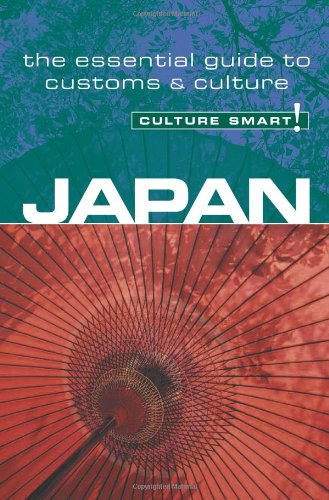
1. Japan - Culture Smart!: a quick
$4.60
2. Hands-on Culture of Japan: Grades
$10.00
3. Illness and Culture in Contemporary
$9.30
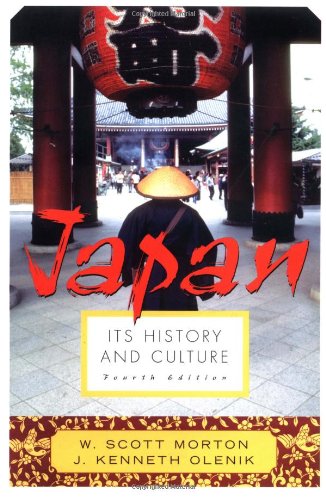
4. Japan: Its History and Culture
$27.19
5. Overcome by Modernity: History,
$62.21
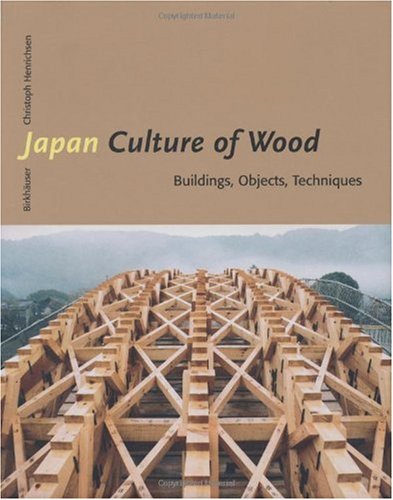
6. Japan - Culture of Wood: Buildings,
$28.55
7. Japan's Competing Modernities:
$2.94
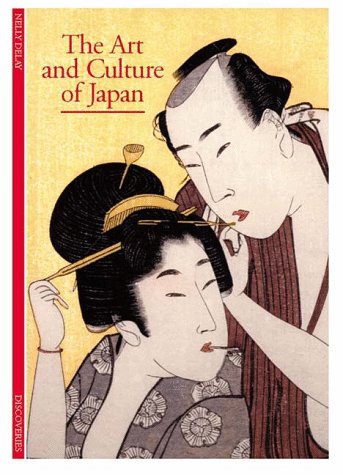
8. Discoveries: Art and Culture of
$15.99
9. China, Japan, Korea: Culture and
$39.99
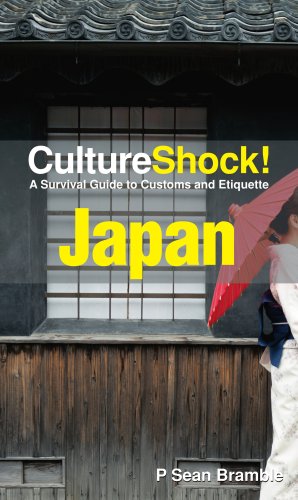
10. Culture Shock! Japan: A Survival
$28.00
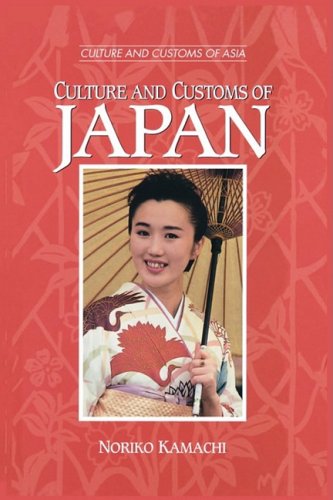
11. Culture and Customs of Japan (Culture
 
$8.49
12. When the Bamboo Bends: Christ
$19.50
13. Japan Pop!: Inside the World of
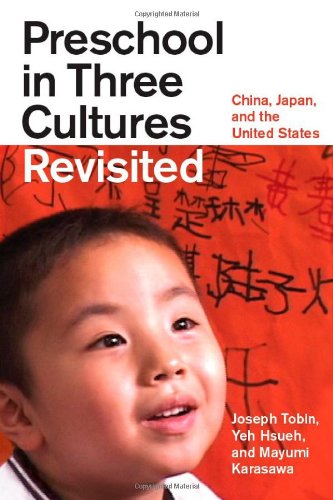
14. Preschool in Three Cultures: Japan,
$4.19
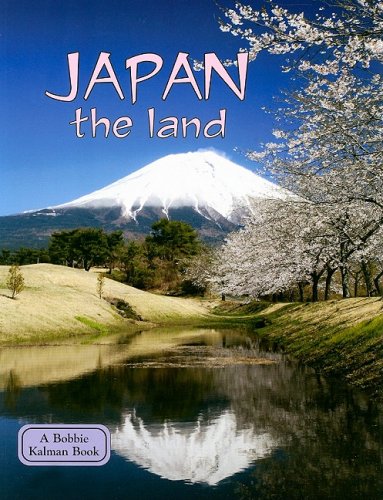
15. Japan: The Land (Lands, Peoples,
$13.50
16. Reasonable Men, Powerful Words:
 
$10.85
17. Culture Shock! Japan (Culture
 
$60.00
18. Women and Confucian Cultures in
$48.95
19. Food Culture in Japan (Food Culture
$12.55
20. Tokyo Underground: Toy and Design

1. Japan - Culture Smart!: a quick guide to customs and etiquette (Culture Smart!)
by Paul Norbury
Paperback: 168 Pages (2006-09-05)
list price: US$9.95 -- used & new: US$5.31
(price subject to change: see help)
Asin: 1857333098
Canada | United Kingdom | Germany | France | Japan
Editorial Review

Book Description
Culture Smart! provides essential information on attitudes, beliefs and behavior in different countries, ensuring that you arrive at your destination aware of basic manners, common courtesies, and sensitive issues. These concise guides tell you what to expect, how to behave, and how to establish a rapport with your hosts. This inside knowledge will enable you to steer clear of embarrassing gaffes and mistakes, feel confident in unfamiliar situations, and develop trust, friendships, and successful business relationships.

Culture Smart! offers illuminating insights into the culture and society of a particular country. It will help you to turn your visit-whether on business or for pleasure-into a memorable and enriching experience. Contents include


* customs, values, and traditions
* historical, religious, and political background
* life at home
* leisure, social, and cultural life
* eating and drinking
* do's, don'ts, and taboos
* business practices
* communication, spoken and unspoken


"Culture Smart has come to the rescue of hapless travellers." Sunday Times Travel

"... the perfect introduction to the weird, wonderful and downright odd quirks and customs of various countries." Global Travel

"...full of fascinating-as well as common-sense-tips to help you avoid embarrassing faux pas." Observer

"...as useful as they are entertaining." Easyjet Magazine

"...offer glimpses into the psyche of a faraway world." New York Times
... Read more


2. Hands-on Culture of Japan: Grades 4-6 (Hands-on Culture)
by Kate OHalloran
Paperback: 80 Pages (1997-01)
list price: US$18.99 -- used & new: US$4.60
(price subject to change: see help)
Asin: 0825130867
Canada | United Kingdom | Germany | France | Japan

3. Illness and Culture in Contemporary Japan: An Anthropological View
by Emiko Ohnuki-Tierney
Paperback: 250 Pages (1984-06-29)
list price: US$32.99 -- used & new: US$10.00
(price subject to change: see help)
Asin: 0521277868
Canada | United Kingdom | Germany | France | Japan
Editorial Review

Book Description
Health care in contemporary Japan - a modern industrial state with high technology, but a distinctly non-Western cultural tradition - operates on several different levels. In this book Emiko Ohnuki-Tierney provides a detailed and historically informed account of the cultural practices and cultural meaning of health care in urban Japan. In contrast to most ethnomedical studies, this book pays careful attention to everyday hygienic practices and beliefs, as well as presenting a comprehensive picture of formalized medicine, health care aspects of Japanese religions, and biomedicine. These different systems compete with one another at some levels, but are complementary in providing health care to urban Japanese, who often use more than one system simultaneously. As an unequalled portrayal of health care in a modern industrial, but non-Western, setting, it will be of widespread interest to scholars and students of anthropology, medicine, and East Asian studies. ... Read more


4. Japan: Its History and Culture
by W. Scott Morton, J. Kenneth Olenik, Charlton Lewis
Paperback: 336 Pages (2004-06-01)
list price: US$18.95 -- used & new: US$9.30
(price subject to change: see help)
Asin: 0071412808
Average Customer Review: 3.0 out of 5 stars
Canada | United Kingdom | Germany | France | Japan
Editorial Review

Book Description

Once a star of postwar industrial production and methods, Japan has encountered serious trouble with market forces in recent years. Social changes and departures from tradition are becoming more common in this conservative country. The revised edition of the popular work, Japan: Its History and Culture, Fourth Edition, documents and explains these changes. Seamlessly blending current events, politics, and cultural elements, the authors provide a riveting account of a nation often misunderstood by the West.

Download Description
Once a star of postwar industrial production and methods, Japan has encountered serious trouble with market forces in recent years. Social changes and departures from tradition are becoming more common in this conservative country. The revised edition of the popular work, "Japan: Its History and Culture, Fourth Edition, documents and explains these changes. Seamlessly blending current events, politics, and cultural elements, the authors provide a riveting account of a nation often misunderstood by the West. ... Read more

Customer Reviews (4)

1-0 out of 5 stars corruption of information
This book was written by W. Scott Morton and J. Kenneth Olenik.
I never want to purchase anything from these authors again. The
material in the book contains very incorrect and slanderous information, as well as a failure to provide relevant information, concerning Nichiren Daishonin and Nichiren Daishonin's Buddhism. I know this for a fact because I am a member of the Nichiren Shoshu Buddhism, which is True Mahayana Buddhism, with the Head Temple based in Japan. I have been to the Head Temple twice before, and to the temples in the United States, several times since joining in 1984. The Nichiren Shoshu is NOT political, as the authors present in their book.And Nichiren Daishonin was not political, either, as the authors present. Nor do the authors present the material in a responsible and informative manner, which would be the only suitable manner, especially for persons of their standing in the educational field. To understand the times and the culture of the country at the time, and the circumstances that Nichiren Daishonin was contending with, and to obtain CORRECT information on the actual beliefs and practice, the only reliable source would be the Nichiren Shoshu temples themselves.
Considering the interwoven relationships of religion and politics, and their supportive or non-supportive roles in research, science, medical, etc., fields and their overrall effect on influencing societal behaviors, this is an extremely serious error of the authors.
Not only am I so very dissatisfied with the information they presented, I am also very dissatisfied with their presentation of it.Based on this, I cannot trust their other information either, especially in reference to comments concerning the corruption of U.S. contractors, and the Japanese government, and similiar topics. Even if the information presented on those topics were correct, my question then becomes "Who is the corruptive force behind it all?".I refuse to provide support of any kind to the authors.

4-0 out of 5 stars A Short Cultural History
This books seeks to give the reader a broad grasp of the space of Japan's cultural history. Important names and dates are mentioned in connection with their cultural accomplishments. More than simply telling who killed whom in what war and when, this book gives the reader a vague understanding of how Japan's customs, architecture, art, and prose evolved into the form they are today.

This book is best for those who know next to nothing about the history of Japan and would like an outline with which to proceed to learn more.

4-0 out of 5 stars A short introduction to Japanese History
This book is perfect for anyone who knows nothing about Japanese history (as I did). It is short and easily readable (less than 250 pages for Japanese history to WWII). As an introduction to Japanese history it does just what it should.....inspire you to learn more....

4-0 out of 5 stars does pretty much what it sets out to do
Morton has made an effort to impart understanding of Japanese heritage and culture.For the most part, he succeeds; the historical survey has about the right amount of depth for this type of book, and cultural issues arediscussed.

What would have made it better would have been a section onspecifically Japanese concepts that are hard for non-Japanese to graspaccurately.Many are touched on throughout the book, but words such as'wa' and 'giri' really deserve a page or two each to go into fulldescriptiveness, and that doesn't happen.It is clear that Morton has theunderstanding of them to share; I wish he'd done so. ... Read more


5. Overcome by Modernity: History, Culture, and Community in Interwar Japan
by Harry D. Harootunian
Paperback: 480 Pages (2001-12-26)
list price: US$32.95 -- used & new: US$27.19
(price subject to change: see help)
Asin: 0691095485
Average Customer Review: 3.0 out of 5 stars
Canada | United Kingdom | Germany | France | Japan
Editorial Review

Book Description

In the decades between the two World Wars, Japan made a dramatic entry into the modern age, expanding its capital industries and urbanizing so quickly as to rival many long-standing Western industrial societies. How the Japanese made sense of the sudden transformation and the subsequent rise of mass culture is the focus of Harry Harootunian's fascinating inquiry into the problems of modernity. Here he examines the work of a generation of Japanese intellectuals who, like their European counterparts, saw modernity as a spectacle of ceaseless change that uprooted the dominant historical culture from its fixed values and substituted a culture based on fantasy and desire. Harootunian not only explains why the Japanese valued philosophical understandings of these events, often over sociological or empirical explanations, but also locates Japan's experience of modernity within a larger global process marked by both modernism and fascism.

What caught the attention of Japanese thinkers was how the production of desire actually threatened historical culture. These intellectuals sought to "overcome" the materialism and consumerism associated with the West, particularly the United States. They proposed versions of a modernity rooted in cultural authenticity and aimed at infusing meaning into everyday life, whether through art, memory, or community. Harootunian traces these ideas in the works of Yanagita Kunio, Tosaka Jun, Gonda Yasunosuke, and Kon Wajiro, among others, and relates their arguments to those of such European writers as George Simmel, Siegfried Kracauer, Walter Benjamin, and Georges Bataille.

Harootunian shows that Japanese and European intellectuals shared many of the same concerns, and also stresses that neither Japan's involvement with fascism nor its late entry into the capitalist, industrial scene should cause historians to view its experience of modernity as an oddity. The author argues that strains of fascism ran throughout most every country in Europe and in many ways resulted from modernizing trends in general. This book, written by a leading scholar of modern Japan, amounts to a major reinterpretation of the nature of Japan's modernity.

... Read more

Customer Reviews (4)

5-0 out of 5 stars an extremely difficult masterpiece
This book is essential reading for anyone trying to understand modernity and capitalism as a global phenomenon.However, if you are looking for information specific to Japan, this isn't the right book.Harootunian is consciously writing against area-studies specialization.Anyone trying to learn about the "Japanese case" will be disappointed.If you confront the book with an open mind (and a lot of patience to work through the myriad theoretical references), it could radically change the way you think.

1-0 out of 5 stars Waste of Time and Effort
The intellectual history of early 20th-century Japan is an important and understudied topic of great interest to me, and this book seemed like a promising contribution to that field. Unfortunately, it disappoints. Harootunian's pretentious, tortured prose in this book is perhaps meant as a smokescreen for the utterly vacuous nature of its argument--which is, after all, not much more than a slightly highbrow variant of character assassination. That is, a few radically leftist thinkers such as the Marxist philosopher Tosaka Jun are given preference and almost lionized, while non-Marxist philosophers and thinkers are consistently undercut and more or less blamed for the rise of "fascism" in Japan. Obviously in a book of this bulk the presentation is more complex, but it all seems to boil down to this simplistic, sweeping judgment--and, due to the regular citations of Western Marxist thinkers like Louis Althusser and Walter Benjamin, I can't help but suspect this analysis results more from the author's own political biases than from an even-handed attempt to understand the thinkers and philosophers in question within their actual context. This is especially a shame because many of the thinkers discussed here are important and fascinating; they deserve much further study in English, but the demonization perpetrated against them by Harootunian tends to discourage such inquiry as well as distort their image--they themselves are dead and gone and can't respond to such slander, and few Americans have access to enough other sources to make an informed judgment.

Furthermore, translation errors and general carelessness mar this work irreparably. There are some interesting arguments here and there in the book, but in general hardly anything reliable about Japanese intellectual life during this complicated and interesting time period can really be gained from this lackluster work.

1-0 out of 5 stars Totally incomprehensible
This book is totally incomprehensible; if you see it on a syllabus drop the course. Its a theoritical analysis of theoritical analyseses of art and history, and its incredibly poorly written. I think. I'm an undergrad a top 10 university, I've spent most of the last two days reading this book and I'm not even sure what its about, much less what he's actually trying to say.

5-0 out of 5 stars Try to get it, okay
Whoever wrote the review that calls this book an "evocation of Japan's attempt to come to grips with the modern world," which is one of the things Amazon puts in its list of editorial reviews, just does not get it.That is precisely the kind of sentiment Harootunian is working against, the assumption that Japan's problems with modernity are the product of Japan's exceptional, unique, or non-Western character.His brilliance is in seeing clearly that the modernity confronted by "the Japanese" was and is a global problematic, and any Japanese deformities vis-a-vis modernity are the products of a global unevenness that is a perpetual characteristic of that modernity, the social, political and cultural milieu of capitalism. ... Read more


6. Japan - Culture of Wood: Buildings, Objects, Techniques
by Christoph Henrichsen
Hardcover: 248 Pages (2004-10-01)
list price: US$90.00 -- used & new: US$62.21
(price subject to change: see help)
Asin: 376437022X
Canada | United Kingdom | Germany | France | Japan
Editorial Review

Book Description
Japan is synonymous worldwide with traditional timber construction and the diversified use of wood in every sphere. Out of a long-enduring tradition emerge products of unrivalled refinement, craftsmanship and minimalist design. From bridges, through dwellings, sliding doors and furniture, to receptacles, tools and musical instruments, this publication presents the technique, tradition, context and production of some 30 different kinds of objects, focusing on the genesis of each. Every step from material selection through to surface finish is captured directly by noted photographer Roland Bauer in fascinating sequences, which combine with the detailed drawings to make each item's composition and production easy to grasp. ... Read more


7. Japan's Competing Modernities: Issues in Culture and Democracy, 1900-1930
by Sharon A. Minichiello
Paperback: 412 Pages (1998-10-01)
list price: US$25.00 -- used & new: US$28.55
(price subject to change: see help)
Asin: 0824820800
Canada | United Kingdom | Germany | France | Japan

8. Discoveries: Art and Culture of Japan (Discoveries (Abrams))
by Nelly Delay
Paperback: 160 Pages (1999-09-01)
list price: US$12.95 -- used & new: US$2.94
(price subject to change: see help)
Asin: 0810928620
Average Customer Review: 3.5 out of 5 stars
Canada | United Kingdom | Germany | France | Japan

Customer Reviews (2)

3-0 out of 5 stars Beware of translations
This book was originally written in French and then translated into English. Considering the subject of this book is Japan, that's probably not the best way to go about things. Many of the Japanese words introduced in this book are written as they would be transcribed in French, not English, leading to possible confusion. In addition, the translation is at times not very good. The text gets quite clunky and seems poorly organized in places. The one thing this book has going for it is the abundance of high quality photographs. Visually, this book is stunning, filled with lots of slick, high-gloss images. So buy this book for the pictures, but if you're actually going to read it, beware the information. There are many other books that are much better.

4-0 out of 5 stars A Review on The Art and Culture of Japan
In The Art and Culture of Japan, the author describes the greater aspects of Japanese past and present art and culture.He touches on a wide array of cultural diffences and even explores the art of rock gardens. In thisbook, there is enough information on gardening to fulfill my horticulturalneeds and wants. He lividly descibes the samuri and their code of honor,while offering a view on the way that the Shintoreligion functions andtheir main beliefs. The only quam I have with this book is the lack of anin-depth look at the everyday life and funtions of the peasant life inancient Japan. ... Read more


9. China, Japan, Korea: Culture and Customs
by Ju Brown PhD., John Brown
Paperback: 192 Pages (2006-10-09)
list price: US$15.99 -- used & new: US$15.99
(price subject to change: see help)
Asin: 1419648934
Average Customer Review: 5.0 out of 5 stars
Canada | United Kingdom | Germany | France | Japan
Editorial Review

Product Description
This book takes an unprecedented comparative approach in examining East Asia. Part in-depth reference, part handy guidebook this manual serves both travelers and students of Mainland China, Japan, and South Korea. Blending detailed maps with history and contemporary cultural similarities and differences, this book provides the most up-to-date information on the pulse of East Asia. ... Read more

Customer Reviews (1)

5-0 out of 5 stars China, Japan, Korea Culture & Customs
Great read, provides a real world present day knowledge of Eas Asia, from a hands on perspective of a person who has lived there, without any political agenda.This book is perfect for those yearning for more indepth knowledge of what East Asis is really like and how it got to be this way, as well as for those planning to travel to the region.Finally, a book that can serve as a handy reference and a guide that is an easy and enjoyable read that will keep you turning pages. Highly recommended. ... Read more


10. Culture Shock! Japan: A Survival Guide to Customs and Etiquette (Culture Shock! Guides)
by P. Sean Bramble
Paperback: 286 Pages (2005-11-30)
list price: US$14.95 -- used & new: US$39.99
(price subject to change: see help)
Asin: 1558689354
Average Customer Review: 3.0 out of 5 stars
Canada | United Kingdom | Germany | France | Japan
Editorial Review

Book Description
Whether you're conducting business, traveling for pleasure, or even relocating abroad, one mistake with customs or etiquette can leave a bad taste in everyone's mouth. International travelers, now more than ever, are not just individuals from the United States, but ambassadors and impression makers for the country as a whole. Newly updated, redesigned, and resized for maximum shelf appeal for travelers of all ages, Culture Shock! country and city guides make up the most complete reference series for customs and etiquette you can find. These are not just travel guides; these are guides for a way of life. ... Read more

Customer Reviews (17)

5-0 out of 5 stars Very informative
I ordered several books for my grand daughter who was moving to Okinawa.She said that they were very helpful and made the transition easier.

5-0 out of 5 stars An excellent book with misunderstood humor
Having known Sean Bramble since 1989, when he got me hooked on Strat-o-Matic Baseball over the July 4 weekend as my co-worker for a newspaper in Maryland, I can safely say that anyone who thinks Sean does not like Japan, or the Japanese, is dead wrong.

Sean has a very acerbic wit, and most of what he says and writes is tongue-in-cheek. I also point you to his Japanese WIFE, daughter and son, whom I refer to as Mini-Gaijin-Me, as evidence that he most likely doesn't hate the Japanese. Sean is a lifelong Monty Python fan, just like myself, and his humor reminds me of it at some times. And yes, some of the things one sees in Japan are laughable by American standards (and vice versa, like our inability to work together when times get tough, at least since, say, 1945).

If he didn't like living there or interacting with the people of Japan, I don't think he'd have stayed there for 15 years. Just a guess.

The book (since this is a book review, after all) is well-written, typical of the way Sean describes things -- with a laugh waiting around every corner -- and covers a great variety of things. In having the chance to speak with him over the Christmas break about his work on it, I see just how much time he has devoted to explaining and describing the experience of a roundeyed galoot in the Land of the Rising Sun.

It's worth the time and money. Of course, having an autographed copy might make me a tad biased, but if this book stunk, I'd certainly tell you so. It's 240 or so pages of interesting and unseful information on what it's like to live in Japan as a westerner. While geared toward the British by its verbiage, it's still clear, understandable, and, as I've said, a good read. I finished it in two just-before-bed sessions, and was a real page-turner. Birnbaum sucks. Go Bramble!

PS - A note to Sean: I *WILL* bat Pee Wee Reese third, whether you like it or not. Nyaah!!

1-0 out of 5 stars Negative!!!
This *is* in reference to the P. Sean Bramble version.It's awful.I don't know why they would hire someone so disdainful to write a book about another culture.I find myself skimming this book just to find one comment that DOESN'T bash the Japanese.I read this book because I was excited to move to Japan and I think I am going to stop reading it because it is having the complete opposite affect on me.The author finds the need to commment endlessley on his opinions on Japan, which are 99% negative.I am reading the entertianment section now where he drones on about how much he hates Anime (um, I think most of the population disagrees with you there!) and how stupid Japanese TV shows are (as if American news is not as biased and gossipy as Japanese).Seriously, don't buy this book unless you want to be talked out of going to Japan!

2-0 out of 5 stars Author doesn't seem to like Japan very much
I'm an American, and I spent a few months living in Japan on my own a few years ago.I'm going back for a month-long trip soon.I picked up this book, thinking it would be helpful.Well, it does have some helpful information that you don't get from the usual Japan guides (such as the difference between uchi and soto), which is why I gave it 2 stars instead of 1 star.My complaint is that the author (P. Sean Bramble) doesn't seem to like Japan very much.The book is extremely negative about the Japanese.Yes, every culture has some downsides and Japan is no exception, but I found most of the book to be focused on the negative with very little written on the positive.I didn't realize it until I was 75% through the book and thought, "Why am I going to this awful place again?"Then it hit me, what a downer this book has been!I flipped back through what I had read and was surprised to see how much the author focused solely on negative aspects of Japan.So the problem is that I don't think he presents a realistic view of Japan and the Japanese culture - by overemphasizing the negative, he doesn't present a balanced view.For example, after you read the health care section (which says doctors suck and pharmacists are a joke and the dentists are awful), you would think Japan would be the worst place in the world for health care.That's simply not true - Japanese health care is excellent despite its flaws. Perhaps he was trying to injecting a little reality into the normally too-sunny descriptions of Japanese culture, but he goes too far the other way and in the process loses his ability to describe Japan accurately.I also question his ability to appreciate the nuances and beauty of Japanese culture -- this quote tells it all:"When people ask me to explain the real reason I've stayed here all these years, I shrug, scratch my head, and say 'Beer.'"

3-0 out of 5 stars Clarification re multiple editions
Note P. Sean Bramble's comment that his authorship of this book began in 2004.Amazon has scrambled his edition with what seems to be a previous edition by Rex Shelley in 1992.The images and the "look inside" links take you back and forth to wrong web pages...The Shelley book, which seems to be the one to avoid, is ISBN 1558680713.
I will order what I hope is the Bramble book, and hope that Amazon straightens out this mess. ... Read more


11. Culture and Customs of Japan (Culture and Customs of Asia)
by Noriko Kamachi
Hardcover: 224 Pages (1999-11-30)
list price: US$55.00 -- used & new: US$28.00
(price subject to change: see help)
Asin: 0313301972
Canada | United Kingdom | Germany | France | Japan
Editorial Review

Book Description
Their society has been changing rapidly in modern times, yet for most Japanese, cultural traditions retain their importance in daily life. This volume highlights those traditional Japanese elements in modern society, providing an engaging examination of religious rituals, classic and modern literature, performing arts, fine arts and handicrafts, housing, clothing, women's roles and family life, holidays and festivals, and social customs. The book gives students a deeper understanding of Japan beyond popular stereotypes of an Asian economic powerhouse. Japan has undergone a radical transformation in the twentieth century. A highly traditional society has been supplanted by a high-tech one while retaining significant vestiges of the past. Culture and Customs of Japan captures the essence of the ordered Japanese experience in all its many facets. An introductory chapter provides a brief overview of the land, people, language, and history of Japan. Then a chapter on thought and religion illuminates Buddhism, Shinto, and how religion is incorporated into daily life. The book goes on to detail the riches of Japanese literature, performing arts such as kabuki, noh, and puppetry, and fine arts like calligraphy, ikebana (flower arranging), and chanoyu (tea ceremony). Architecture, cuisine, clothing, and the changing dynamics of women, marriage, and family are examined, along with leisure activities and entertainment such as sumo wrestling, martial arts, and manga (comics). A final chapter on social customs, including giftgiving and business protocol, rounds out this portrait of everyday life in contemporary Japan. ... Read more


12. When the Bamboo Bends: Christ and Culture in Japan
by Masao Takenaka
 Paperback: 72 Pages (2002-01)
list price: US$8.50 -- used & new: US$8.49
(price subject to change: see help)
Asin: 2825413623
Canada | United Kingdom | Germany | France | Japan

13. Japan Pop!: Inside the World of Japanese Popular Culture
Paperback: 360 Pages (2000-06)
list price: US$27.95 -- used & new: US$19.50
(price subject to change: see help)
Asin: 0765605619
Average Customer Review: 4.0 out of 5 stars
Canada | United Kingdom | Germany | France | Japan

Customer Reviews (7)

1-0 out of 5 stars an academic tired of bad academics
In a word, this book is a mess.Methodologically suspect and theoretically uninformed, it relies on antiquated Orientalist assumptions of essential cultural identity and unchanging social forms to make the multifarious sources it cites all sound the same, which is too bad, because it is the only English-language 'scholarship' available at present on many of the topics covered.A wasted opportunity that makes me sad and mad.

5-0 out of 5 stars Japan Pop! Fascinating and entertaining
For anyone who has noticed the ubiquity of anime, sushi shops, Japanese style and other aspects of Japanese culture, this book provides a welcome and readable introduction to what Japanese popular culture is and where it comes from.I particularly liked the chapters on music but I probably learned more about Japanese culture and the mind set behind it from the chapters on television and anime.This book explains not only that there is a Japanese poular culture, but why it is the way it is.Highly recommended.

1-0 out of 5 stars Very poor introduction to the subject
Claiming to be a book which bridges the divide between the worlds of academia and populism, Japan Pop! gets off to a poor start with an absurdly high cover price likely to put it out of reach of the casual J-Pop Culture fan. The price might have been justified had this been a glossy, photo-packed book, but seems ludicrous given that it is merely a collection of 17 essays. The essays dwell on four major areas of contemporary J-Pop Culture: music, manga and animation, TV & film and the popularity of J-Pop Culture outside of the country. It comes as little surprise that Mark Schilling's contribution, about the Tora-san character in the Otoko wa Tsurai yo (It's Tough Being a Man) film series, is the most interesting - not necessarily because of the topic, but because Schilling is the only contributor who is a writer of any repute. The majority of these essays are written by academics and it shows: footnotes abound, the Mighty Morphin Power Rangers get analysed to the nth degree and claims are made that "Sailor Moon's rearrangement of the traditional superhero myth bears hints of not only a new social order, but also the kind of moral struggles, alliances, and identities that may create and accompany it." The book also contains a number of confidence-sapping factual errors (example: Osaka band Shonen Knife "started playing in the mid-1980s" which is not true, they started playing in December 1981). Schilling's Encyclopedia of Japanese Pop Culture (Weatherhill) remains the definitive starting point for those seeking a good, accessible introduction to the subject; Japan Pop! is only for the otaku completist, and a wealthy one at that.

5-0 out of 5 stars fascinating read
A fascinating and enjoyable read. "Japan pop" gave me a fresh and informitive insight into Japans modern culture and and in to the psychology of its people. Loved this book and I highly recommed it. ray brooks

5-0 out of 5 stars A "must" for students of Japanese studies & popular culture.
Japan Pop! considers various forms of Japanese popular culture, from popmusic and animated cartoons to films and television. The result is ananalysis of Japanese society, cultural identity, and daily life whichprovide absorbing surveys into Japanese psychology. A 'must' for anycollege-level student of Japanese studies. ... Read more


14. Preschool in Three Cultures: Japan, China and the United States
by Joseph J. Tobin, David Y.H. Wu, Dana H. Davidson
Paperback: 240 Pages (1991-01-23)
list price: US$55.00
Isbn: 0300050801
Average Customer Review: 5.0 out of 5 stars
Canada | United Kingdom | Germany | France | Japan

Customer Reviews (2)

5-0 out of 5 stars Groundbreaking video ethnography
Tobin's book has been around for a number of years now.Nevertheless, it continues to set the standard in the creation of video ethnography.Graduate students across the nation use this book for its brilliant methodology and for his insightful readings of culture.

5-0 out of 5 stars Idiosyncratic and utterly fascinating
Tobin et al compare preschools in Japan, the US and China in a fascinating cross-cultural study. What makes this study so compelling is that you hear not only the authors' interpretations of what they see, but also the opinions of the teachers, administrators and the parents OF ALL THREE CULTURES. By having parents, teachers and administrators watch video tapes of the preschools in the non-native country, you get an eye-opening assesment of what each preschool is trying to do in its culture and how it compares with what other preschools accomplish. I have my daughter enrolled in a Japanese preschool, and the opnions and analysis on what Japanese preschools are like is dead-on, as is the analysis of the American preschool.

The real eye-opener for those readers not familiar with preschools in Japan is how chaotic, loosely-structured, and easy-going they are. The 30-1 child-teacher ratio makes chaos inevitable, but it forces the kids to learn how to deal with each other, rather than an authority figure. Contrasted to the American pre-school style, where the teacher runs the show, enforces the rules and molds the kids to act in a manner that the teacher/school has decided is appropriate, Japanese kids actually get more practice resolving conflicts and taking responsibility for problem-solving.

This is actually one study that is fun to read, too! Highly recommended. ... Read more


15. Japan: The Land (Lands, Peoples, and Cultures)
by Bobbie Kalman
Paperback: 32 Pages (2000-12)
list price: US$7.95 -- used & new: US$4.19
(price subject to change: see help)
Asin: 0778797430
Canada | United Kingdom | Germany | France | Japan
Editorial Review

Book Description
This beautifully designed book covers every aspect of Japan - itsgeography, natural phenomena, resources, agriculture and history. ... Read more


16. Reasonable Men, Powerful Words: Political Culture and Expertise in Twentieth Century Japan (Twentieth Century Japan the Emergence of a World Power)
by Laura Hein
Hardcover: 345 Pages (2005-01-24)
list price: US$45.00 -- used & new: US$13.50
(price subject to change: see help)
Asin: 0520243471
Canada | United Kingdom | Germany | France | Japan
Editorial Review

Book Description
Reasonable Men, Powerful Words traces the development of political culture in twentieth-century Japan through a social and intellectual biography of six Japanese economists who influenced national political life in significant ways. The global ascendance of social scientists is one of the defining characteristics of modernity. They dedicated themselves to an extraordinary range of public policies, including eliminating poverty, reducing disparities of wealth, reshaping the relationship between government and citizen, building a strong economy devoid of a military component, and creating an educated and politically active populace in Japan. ... Read more


17. Culture Shock! Japan (Culture Shock! Guides)
by P. Sean Bramble
 Paperback: Pages (2008-07)
list price: US$15.95 -- used & new: US$10.85
(price subject to change: see help)
Asin: 0761454888
Average Customer Review: 3.5 out of 5 stars
Canada | United Kingdom | Germany | France | Japan

Customer Reviews (3)

4-0 out of 5 stars I've cut down a lot of my "ugly American" acts because I have more insight...
I was stationed overseas for about 1 1/2 years before I read the book. Many questions I had were answered. This book explains a lot of the everyday things you'll see/notice in Japan. Not much of a history book (which wasn't what I was looking for @ the time) but a very modern explanation of all the strange things Japanese people do.

I highly recommend this book for anyone that is going to live in Japan for an extended period of time.

2-0 out of 5 stars Disappointing

The book does contain usefull information, but it left me with an awkward feeling after reading.
It describes the 'typically Japanese things' from a personal western point of view, without explaining why, how, what, etc.
-Japan is a weird and silly country, but there are nice temples-
Or is it the writer that is the culture shock ?
If you want an objective book about Japan, keep searching.

5-0 out of 5 stars An insider's true advice
As an administrator in a ESL school, where 10% of our students come from Japan, and at least 10% of our ESL teachers trainees plan on going to Japan to teach English, Culture Shock Japan was an wonderful discovery for me!P. Sean Bramble unveiled the cultural mystery step by step from every aspect of life.It's a great reference book for anyone, no matter whether you are planning a trip to Japan, moving to Japan for a long period of time, your work involves dealing with Japanese culture like mine, or you are simply curious about this modern and ancient eastern country. One of my favorite things about the book are the hilarious little stories that Bramble collected from his own 12 years of experience living and working in Japan, which gave me many giggles through out the reading.

Those stories are particularly funny to me, because they often echo my own experience of of culture shock when I first immigrated to the United States from China 7 years ago.Although, I am completely annoyed when people get confused between Japan and China, there are after all lots of similarities when it comes to clashes between Asian and western cultures.

I also admire the fact that the author was willing to take the risk of being accused as negative or judgmental to honestly point out the frustrating reality of living and dealing with a new culture in a tongue in cheek manner.Unlike promotional travel books, which only portray the wonders of a destination, this book gives unvarnished insight into a country where modernity meets ancient traditions, efficiency is created by rules but also destroyed by rules.It gives insider's advices on how a new comer can be prepared to begin understanding, embracing, and even having a bit of fun with the culture he is about to clash into.As I closed the book, I felt as if I had just finished a tour lead by an experienced open heart with a true sense of humor.I am now much more ready for a real trip to Japan. ... Read more


18. Women and Confucian Cultures in Premodern China, Korea, and Japan
 Hardcover: 350 Pages (2003-08-28)
list price: US$60.00 -- used & new: US$60.00
(price subject to change: see help)
Asin: 0520231058
Average Customer Review: 4.0 out of 5 stars
Canada | United Kingdom | Germany | France | Japan
Editorial Review

Book Description
Representing an unprecedented collaboration among international scholars from Asia, Europe, and the United States, this volume rewrites the history of East Asia by rethinking the contentious relationship between Confucianism and women. The authors discuss the absence of women in the Confucian canonical tradition and examine the presence of women in politics, family, education, and art in premodern China, Korea, and Japan.
What emerges is a concept of Confucianism that is dynamic instead of monolithic in shaping the cultures of East Asian societies. As teachers, mothers, writers, and rulers, women were active agents in this process. Neither rebels nor victims, these women embraced aspects of official norms while resisting others. The essays present a powerful image of what it meant to be female and to live a woman's life in a variety of social settings and historical circumstances. Challenging the conventional notion of Confucianism as an oppressive tradition that victimized women, this provocative book reveals it as a modern construct that does not reflect the social and cultural histories of East Asia before the nineteenth century. ... Read more

Customer Reviews (1)

4-0 out of 5 stars Revisionist theory.
It is generally thought that Confucianism tends to subjugate women by promoting a patriarchal system and erasing them from official discourses and records. Revisionist Ko and collaborators attempt to show that women were "neither victims nor rebels within these Confucian societies (China, Japan, Korea) for they embraced aspects of official norms while resisting others." In other words, women were willing participants in the Confucian orthodoxy.

While agreeing with some of these thoughts, it comes to my mind that there is no mention in their book about Vietnam, which was a full-fledged Confucian society as of the first century B.C. Whether this omission is related to a lack of or difficulty in locating experts in the field of Vietnamese Confucian society is not known.

A cursory look at premodern Vietnam reveals that this brand of Confucianism had not only deprived women of their basic rights, but also promoted a strict Confucian patriarchal system that was not conducive to the recognition of their talents or dignity. The two best Vietnamese literary works "Luc Van Tien and Kim Van Kieu" were written by men who extolled the virtues of women faithful to Confucian norms. The patriarchal atmosphere was so overbearing that women had to embrace the norms in order to survive. Anyone who refused to comply with the rules could be dismissed as heretic or unfaithful and cast out of the society. Confucian Vietnamese women, therefore, cannot be described as willful participants of the Confucian system.

Ko and al. throughout their book have not convincingly dispelled the notion that Confucian women, except for Japanese women, were not victims in their societies. On the contrary, their discourses have only showed that women were relegated and confined to an "inner-domestic sphere" in all these Confucian societies. The fact that women accepted their assigned roles does not mean they liked it. Being subdued by males, they did the best they could: they collaborated with men so that they could survive within the male dominated society.

While disagreeing with the authors' conclusions, I believe their work is an important contribution to the study of Confucian women. ... Read more


19. Food Culture in Japan (Food Culture around the World)
by Michael Ashkenazi, Jeanne Jacob
Hardcover: 232 Pages (2003-12-30)
list price: US$56.95 -- used & new: US$48.95
(price subject to change: see help)
Asin: 0313324387
Average Customer Review: 3.0 out of 5 stars
Canada | United Kingdom | Germany | France | Japan
Editorial Review

Book Description
Americans are familiarizing themselves with Japanese food, thanks especially sushi's wild popularity and ready availability. This timely book satisfies the new interest and taste for Japanese food, providing a host of knowledge on the foodstuffs, cooking styles, utensils, aesthetics, meals, etiquette, nutrition, and much more. Students and general readers are offered a holistic framing of the food in historical and cultural contexts. Recipes for both the novice and sophisticated cook complement the narrative. Japan's unique attitude toward food extends from the religious to the seasonal. This book offers a contextual framework for the Japanese food culture and relates Japan's history and geography to food. An exhaustive description of ingredients, beverages, sweets, and food sources is a boon to anyone exploring Japanese cuisine in the kitchen. The Japanese style of cooking, typical meals, holiday fare, and rituals--so different from Americans'--are engagingly presented and accessible to a wide audience. A timeline, glossary, resource guide, and illustrations make this a one-stop reference for Japanese food culture. ... Read more

Customer Reviews (1)

3-0 out of 5 stars Astringent Aftertaste
Ashkenazi and Jacobs write a straightforward introduction to Japanese food culture.They present a brief analysis of the cultural, ecological, and historical factors shaping Japanese cuisine, which is helpful for someone writing a school report or something needing a basic survey such as this.However, they do not cite their sources, instead putting them in a brief but not very helpful bibliography in the back of the book, with hardly any Japanese sources!What's worse, they make careless mistakes, such as writing that the Heisei period began in 1991, when it began in 1989, and citing the origin of kasutera (castella) as the Spanish word for castle (castillo).While castella is indeed originally from Spain, it is named such after the Spanish kingdom of Castile. ... Read more


20. Tokyo Underground: Toy and Design Culture in Tokyo
by Brian Flynn, Joshua Bernard
Hardcover: 121 Pages (2007-09-25)
list price: US$19.95 -- used & new: US$12.55
(price subject to change: see help)
Asin: 0979667801
Average Customer Review: 5.0 out of 5 stars
Canada | United Kingdom | Germany | France | Japan

Customer Reviews (2)

5-0 out of 5 stars incredible book
amazing book. as someone who lives in tokyo and guides dozens of visitors, both personally and professionally, through this city every year, i promise you that this is one of the best guides i've ever come across. for anyone interested in the design, toy and misc subcultures in and around tokyo, this is a must-have.

5-0 out of 5 stars THE Source fo Tokyo
This is a MUST have if you are a toy nut and/or visiting Tokyo.I can not begin to relate how difficult this city is to navigate.T-Under cuts throught the language and concrete barriers.Bravo!

Ed ... Read more


  1-20 of 100 | Next 20
A  B  C  D  E  F  G  H  I  J  K  L  M  N  O  P  Q  R  S  T  U  V  W  X  Y  Z  

Prices listed on this site are subject to change without notice.
Questions on ordering or shipping? click here for help.

site stats