e99 Online Shopping Mall

Geometry.Net - the online learning center Help  
Home  - Basic L - Landscape Photos (Books)

  Back | 21-40 of 100 | Next 20
A  B  C  D  E  F  G  H  I  J  K  L  M  N  O  P  Q  R  S  T  U  V  W  X  Y  Z  

click price to see details     click image to enlarge     click link to go to the store

$17.37
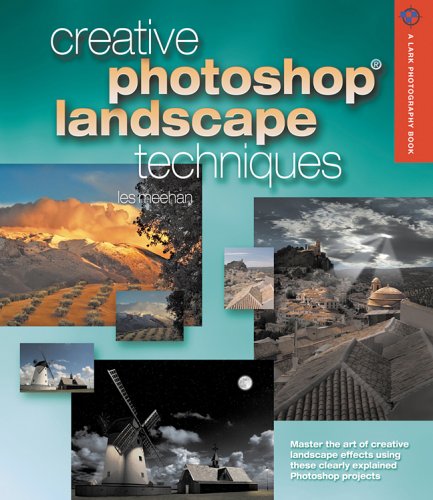
21. Creative Photoshop Landscape Techniques
$5.98
22. National Geographic: The Ultimate
$16.47
23. The Making of Landscape Photographs:
$10.61
24. Light and the Art of Landscape
$13.57
25. Digital Nature and Landscape Photography
$12.01
26. Tom Mackie's Landscape Photography
 
$37.97
27. Heart of a Nation: Writers and
 
$20.00
28. Landscape Photography
$9.95
29. Joan Fontcuberta: Landscapes Without
$3.50
30. Recent Terrains: Terraforming
31. Studio Photography & Design
 
32. Legacy: The Changing Face of the
$11.98
33. Digital Landscape Photography
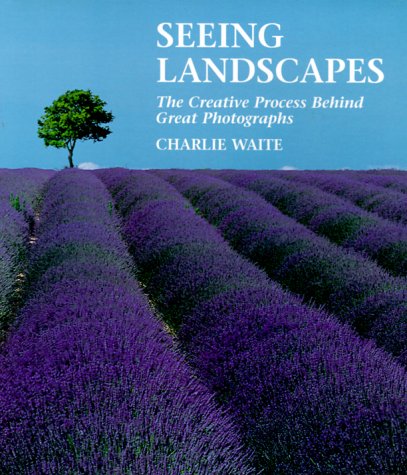
34. Seeing Landscapes: The Creative
35. Lakeland Landscapes
$44.99
36. The Romantic Landscape: Photographs
$18.91
37. Photographing Creative Landscapes:
 
$2.95
38. The Landscape of King Arthur
$17.30
39. Developing Vision & Style:
$11.90
40. A Comprehensive Guide to Digital

21. Creative Photoshop Landscape Techniques (A Lark Photography Book)
by Les Meehan
Paperback: 192 Pages (2006-03-28)
list price: US$29.95 -- used & new: US$17.37
(price subject to change: see help)
Asin: 1579907083
Average Customer Review: 3.5 out of 5 stars
Canada | United Kingdom | Germany | France | Japan

Customer Reviews (2)

2-0 out of 5 stars Phony-looking results
This book promises to enable the photographer to use Photoshop to not only enhance his or her photos, but create entirely new landscapes by integrating other images, creating "weather" that wasn't there at the time of shooting, etc., etc.

This could be an invaluable book if the results were credible-looking.Unfortunately, they aren't, with the final images looking much like something out of a computer-graphics-heavy fantasy epic movie from around a decade or more ago.Impressive just on the basis of effort, but still obviously fake.And while there may be enough of a willing suspension of disbelief for an audience watching "Beast Tamer XIV:The Final Battle," when it comes to a still photograph that can be lingered over, "kind of close (but not really)" just doesn't cut it.

5-0 out of 5 stars Great Examples for Landscape Photograhers
I saw this book at a retail store and then found it on Amazon.It is a great book with many examples that are customized for the photographer using Photoshop.Combine this book with your Scott Kelby books and you have a good library for a photographer.
... Read more


22. National Geographic: The Ultimate Field Guide to Landscape Photography (NG Photography Field Guides)
by Robert Caputo
Paperback: 160 Pages (2007-01-16)
list price: US$21.95 -- used & new: US$5.98
(price subject to change: see help)
Asin: 1426200544
Average Customer Review: 3.0 out of 5 stars
Canada | United Kingdom | Germany | France | Japan
Editorial Review

Book Description
Ever wonder how landscape photographers manage to capture every detail in a panoramic shot of the Grand Canyon? Want to make a waterfall look like velvet? Or highlight the shafts of sunlight in your pictures of forests? All these answers and many more can be found in this definitive new guide to landscape photography—a must-have resource for amateur and experienced shutterbugs alike.

In clear, straightforward language, master photographer Robert Caputo reviews the basics of landscape photography for both film and digital camera users. Using concrete examples, he reveals recent directions in style and sheds light on the latest technology, advising how and when to use it. For additional guidance and inspiration, every picture shown in the book includes specific details on shutter speed, aperture settings, ISO settings, lenses, and types of cameras. Profiles of top landscape photographers provide more innovative tips for making your pictures unique. And a hefty chapter shares up-to-the-minute, information on new equipment and software for creating better digital images.

Filled with practical information and step-by-step instruction, this 160-page volume will easily fit in a camera bag for handy reference in the field. A glossary of useful web sites and professional resources completes this authoritative guide from National Geographic—the ultimate "professor" for anyone eager to learn how to take better landscape photos. ... Read more

Customer Reviews (2)

1-0 out of 5 stars Very disappointing
With the title containing National Geographic, I had high expectations for this book.I am eagerly learning about Landscape Photography and wanted a book tilled with the technical details that would allow me to approach a certain level of professionalism in my photos.

Here's what you should know before buying this book:

1. The digital portion is only a few pages in the back.The book was clearly adapted from the film version of the book.When people started crying for digital info, they just stuck a few pages on.

2. The digital portion is also incorrect or misleading (shockingly).Here's one example from page 126:"More pixels usually means finer detail, and this holds true for both compact cameras and SLR's."Well...this isn't really true.It's the marketing hype that camera manufacturers are pushing.In reality, it's a combination of the size of the sensor, the megapixels and the ISO speed you set, along with the quality of the lens that means finer detail.If you squeeze 10 megapixels onto a tiny sensor, all you get is more noise.

3. 95% of the book is just talking about EXTREMELY basic stuff.Ie:The rule of thirds, including an "S" shape in your compositions, shoot at sunrise or sunset, etc.

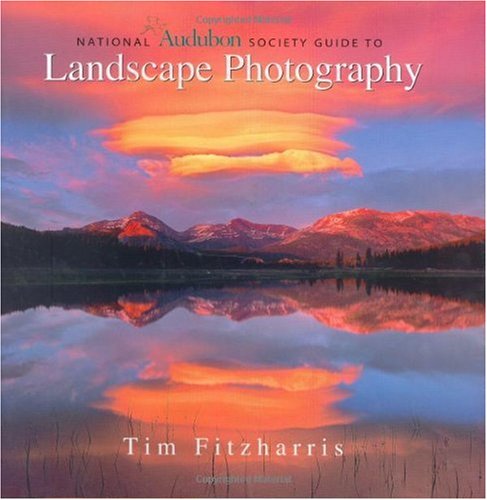
4. This is the biggie for me:THERE IS ABSOLUTELY NO TECHNICAL INFORMATION ABOUT HOW ANY PICTURE IN THE BOOK IS MADE.Other books, such as the excellent National Audubon Society Guide to Landscape Photography, include camera and exposure info, plus which filters are used and even how the filters are oriented in their holder!Filling a book with pretty pictures (as NG's guide does) teaches me nothing.Telling me how to orient and expose using a Graduated Neutral Density filter (a la Audubon Guide) will allow me to duplicate their results!

This book was a complete waste of money due to the above reasons.

5-0 out of 5 stars All Captured in This Book
Before a camping trip in the Boundary Waters of Minnesota, I invested in my first digital camera and read this book. This field guide was informative, interesting and inspiring. It provided useful tips on not only handling the camera itself, but also how to look at one's surroundings and be able to convey the sensations at that time to others viewing the photos later. The images throughout the text provided moving examples of Robert Caputo's and other professional photographers' pointers. Advanced photographers looking through this book would appreciate the mastery of these photos, and novices would gain confidence through this guide to eventually achieve this level of photography. ... Read more


23. The Making of Landscape Photographs: A Practical Guide to the Art and Techniques
by Charlie Waite
Paperback: 160 Pages (1993-04-01)
list price: US$24.95 -- used & new: US$16.47
(price subject to change: see help)
Asin: 1855851490
Average Customer Review: 4.5 out of 5 stars
Canada | United Kingdom | Germany | France | Japan
Editorial Review

Book Description

Using his own photographs to illustrate the text, Charlie Waite explains the basis of his success as a landscape photographer. From the choice of camera and lens to the subtleties of lighting and composition, from manipulating the image to extracting the essential elements of a scene, he brings his years of practical experience to bear on the subject. The book contains many practical tips for the budding landscape photographer, but technical mastery is only one part of the story. The author aims, above all, to instill in readers his own love of landscape, and to encourage them to respond to, and capture, the world around them. Charlie Waite's prize-winning books include Landscape in Britain, Landscape in France, and Landscape in Italy.
... Read more

Customer Reviews (10)

5-0 out of 5 stars Great book - beautiful and instructional as well
This is one of the better books on photography that I have read. As one other reviewer wrote, one of my favorite things about the book is where Charlie makes recommendations about things that could have improved in the pictures...he suggests certain cropping that might help, or certain items that could have been left out of a picture to improve it. Equally helpful are the little touches that he mentions that really "make" a picture.He'll suggest covering up a small section of the picture with your hand, and he's right...without the highlight here or the rock there, the picture isn't as strong.It helped me think a little differently about the importance of seemingly minor things in the composition.
One other small thing I like is that he includes not just the focal length of the lenses used in each picture, but also the types of filters used, shutter speed and aperture.
I really enjoyed reading this book, and look forward to reading more of his others.

5-0 out of 5 stars An Excellent Resource
This book has helped me immeasurably in deciding how to take certain photographs. His advice on the use of light and framing of the photographs is excellent. If you've been seriously into landscapes for a while, this probably won't have anything new for you aside maybe from some inspiration. If you are just starting out or unsure of your work in anyway, this book is a great reference. Either way, a well-written book with beautiful photographs in it.

2-0 out of 5 stars Average
Just an average book on landscape photography. Not much on technical aspects but lots of nice photos to look at. If you want to learn something about taking landscape photos, don't bother with this book.

5-0 out of 5 stars Magic ! ! ! This book captures you !
I have this book since around 4 years, and I always refer back to it. The notes are simple and straight to the point, and the photos are excellent. Full photographic details are there for each shot (aperture, shutter, film iso, lenses...).

This book is a must for every serious Landscape photographer.

4-0 out of 5 stars One of the better landscape photography books
Although much of the content in this book can be found in many other books on landscape photography, this book is better than most other such books.The images are very good, the writing is to the point, and the format and organization of the book make it easy to read and find information.It's worth a look. ... Read more


24. Light and the Art of Landscape Photography
by Joe Cornish
Paperback: 160 Pages (2003-04-01)
list price: US$29.95 -- used & new: US$10.61
(price subject to change: see help)
Asin: 0817441522
Average Customer Review: 4.5 out of 5 stars
Canada | United Kingdom | Germany | France | Japan

Customer Reviews (3)

5-0 out of 5 stars Amazing photographs. Amazing quality.
I spend so much time in book stores looking through photography books that it is rare these days for a book to grab my attention. One flip through this book, and I had to stop for a moment, sit down, and study closely each one of these photos.

The quality of these prints reproduced from large 4 x 5 inch negatives is unbelievable. It is like the first time you saw HD television after watching regular TV all your life.

Cornish's images are moody, often capturing the warm glow of sunrises and late afternoons. Besides each photo, Cornish explains the thought process and planning that was involved. At the end of the book there is a thumbnail of each photograph along the with the film, camera, lens, filter, shutter speed, and aperature used to shoot the photo.

If you are tired of the same old photography books showing the same places you have seen a hundred times over, then this book will knock your socks off.

5-0 out of 5 stars An excellent book on a way of 'seeing' the landscape
Joe Cornish has a growing reputation. Joe has been illustrating books and photographing the UK landscape for the National Trust of England and Wales for many years. After building his reputation in this way, he now focuses on landscape photography.
This collection of images gives the technical information that many photographers crave about each image. But more than that, it is a lesson in 'seeing'and can inspire you to gain confidence to develop your own way of seeing and to follow your own vision.
This is not a 'how to' book, but one that will inspire you because the way Joe has developed his own way of seeing and expressing that with the camera is so distinctive. I disagree entirely with the earlier review that gives this book only 3 stars. A photograph may be technically correct in its exposure and its time of day. But it is only as good in the eye of the beholder to the degree that it reflects your own taste. If it is not to the taste of the earlier reviewer, that view is to be entirely respected. But don't let that put you off looking at this book and making up your own mind. Joe really is just as artistic and able as William Neill, Jack Dykinga and any other of the top landscape photographers.

3-0 out of 5 stars Nice Pictures, but Not Great
This is a collection of Cornish's color landscape photographs taken around the world, mostly with a 4 by 5-inch view camera.Each picture is accompanied by a description of the circumstances under which the picture was taken.There is also a smaller picture taken of the same subject or at the same time that is contrasted with the larger photograph.

The photographer is clearly concerned with light in the landscape.Many pictures show the red glow of "magic hours" or reflections of water, or cloudy skies.Cornish's photographs are lovely, but there is nothing outstanding about them.Once upon a time this book might have been at the cutting edge.But we now live in a world where first-class landscapes are offered to us in every automobile advertisement so that to capture our eye, an image must be exceptional.

Nor is there any common theme among the landscapes that might lead you to look at them because you have an interest in the subject matter.I would have felt proud to have taken any of these pictures.However, I wouldn't expect many people to lay out good money for such a book when there are so many other outstanding works by world class photographers, unless they already owned everything by Ansel Adams or Galen Rowell or Art Wolfe.

I must confess that this book was not what I expected.The publisher, Amphoto Books, usually puts out "how-to" books, and I expected something like Galen Rowell's "Mountain Light" that would deal with using light to create better pictures while at the same time presenting a great portfolio.I am certain most serious landscape photographers would be highly interested in a new book on this subject.But the only way you are going to learn anything from this book is by analyzing each picture yourself at great length, and extracting some photographic principle from your analysis.To be fair, technical information is provided on each picture and the accompanying discussions occasionally present a few of the considerations in using light in landscapes, like the effect of long exposures and the special results of early morning and late day light.Unfortunately I don't find this information very educational for either the beginner or the more experienced photographer.For the beginner, I would recommend either John Shaw's "Nature Photography Field Guide" or his "Landscape Photography" (the former was recently printed and reflects the changes in technology of the last few years, but does not have quite as much detail about landscapes).The more experienced photographer will be more interested in "Fine Art Nature Photography: Advanced Techniques and the Creative Process" by Tony Sweet.Sweet's book also uses single pictures on a page with discussion, but the photos are extraordinary and the discussion instructive. ... Read more


25. Digital Nature and Landscape Photography
by Mark Lucock
Paperback: 176 Pages (2008-03-04)
list price: US$19.95 -- used & new: US$13.57
(price subject to change: see help)
Asin: 1861085141
Average Customer Review: 2.0 out of 5 stars
Canada | United Kingdom | Germany | France | Japan
Editorial Review

Book Description

Landscape photography is one of the last bastions of traditional film, but this is slowly changing, as more and more leading photographers adopt digital technology. This beautifully produced and illustrated reference outlines simple techniques for assuring that your nature images achieve both technical and creative excellence. Covering everything from using a digital camera in the field to image-editing methods in the digital darkroom, it elaborates on the best methods for working with tripods and flashes outside, the implications of using different exposure meters in certain lighting conditions, and a whole host of tips dedicated to gaining a proper understanding of the craft. With breathtaking images featured throughout, this resource is sure to inspire every amateur photographer eager to go digital outdoors.


... Read more

Customer Reviews (1)

2-0 out of 5 stars It Hurts My Eyes
As I read this book, I was reminded of a movie where one of the characters, a television personality, was killed because of low-ratings.I kept thinking that this book deserved a poor review because of typography alone.

The main text print is quite small, perhaps six or seven points, but worse, it is printed with grey ink on white paper, and still worse it uses a type without serifs.(Serifs are those little pointy things on the ends of letters; most experts agree that they contribute to readability in extended printed text.)Each page of this book was an effort to read.

The content of the book itself is a broad overview of digital nature photography in all of its aspects.After a brief history of digital photography, Lucock describes digital workflow and briefly discusses selection of a digital camera.He then discusses digital scanning, and fundamental topics like file formats and digital storage.He devotes a chapter to post-processing, telling the reader what a number of processes in image processing do.He then returns to a discussion of general principles of photography like exposure and composition.The author next discusses what he calls field craft, including such subjects as the use of tripods and flash in the field, as well as an unduly lengthy discussion of film medium- and large-format cameras that seems out of place in a digital photography book.He finishes up with a brief discussion of professionalizing one's photography.

The author speaks in generalities, without practical demonstration.If you want a broad overview of digital nature photography so that you can decide whether you wish to pursue it, this book will do, but if you are looking for specific techniques, look elsewhere.For example, he discusses curves, a procedure used to adjust digital pictures, and tells you that dragging the curve will make a picture darker or lighter.While that is true, it really doesn't begin to show the usefulness of curves in controlling tonality in a picture.

Occasionally some of the statements are just wrong.For example, after discussing levels and curves, he states that Photoshop CS3 combines levels and curves into a single tool.That isn't so.

If one expects to be more than just a snap shooter, the field of digital nature photography requires far more information than is contained in this book.People interested in this area would benefit by reading a book like "Digital Nature Photography: The Art and the Science" by John and Barbara Gerlach to learn about photographing nature and "Photoshop CS3 for Nature Photographers: A Workshop in a Book (Tim Grey Guides)" by Ellen Anon and Tim Grey for post processing.Read this book only if you want the broadest view of digital nature photography and have very sharp eyes.
... Read more


26. Tom Mackie's Landscape Photography Secrets
by Daniel Lezano
Paperback: 144 Pages (2005-12-01)
list price: US$24.99 -- used & new: US$12.01
(price subject to change: see help)
Asin: 0715323024
Average Customer Review: 3.5 out of 5 stars
Canada | United Kingdom | Germany | France | Japan
Editorial Review

Book Description
-A fascinating look at how this top photographer produces meaningful landscape images

-Covers all the different landscape genres from beaches to forests and everything in between

-A follow-up to the hugely successful Photos with Impact Taking and making a photograph that will have more impact than others, one that stands out from the crowd, takes skill and time. With this stunning new guide from world-renowned photographer Tom Mackie, readers will learn how to take the best landscape photographs possible -- photos with impact.

Rather than concentrating on techniques, Mackie breaks down all the different sub-genres of landscape photography and examines the challenges and particular processes involved with each specific environment. From the white sand beaches of Aruba, to the snow-capped peaks of the Alps, each chapter includes Mackie's best images with detailed captions that explain how the image was achieved. ... Read more

Customer Reviews (2)

2-0 out of 5 stars Average - Good Pictures
I could not find any secrets from this book.Since digital is now the new photgraphy this book is totally film.Even so it was not too helpful.

5-0 out of 5 stars There are No Secrets
There are no secrets in "Tom Mackie's Landscape Photography Secrets" except those encoded in Mackie's brilliant photographs.But for the photographer willing to take the time to decode them, Mackie's book will speak volumes.

The book is organized into different environments for landscape photography, including urban, rural, coastal, mountain, forest, desert, water and garden landscapes.The reader will find this approach convenient for review before entering one of these environments with his or her camera.

The pictures are spectacular.As I write, I've randomly opened the book to a winter picture of a crystal encrusted tree, set off against an intense blue sky, and framed by the ruins of a church.In front of the ruin and to the right is a lone crystal encrusted weed and set further back from the subject and to the left is a smaller encrusted tree.The ruins, the weed and the smaller tree and several other objects continually lead the eye back to the central subject.

Mackie loves the panoramic view that imitates the way we naturally see.There is a photograph of a snow-covered ridge moving from near left to far right, enclosing a green valley.And there in the left foreground is a highland sheep, like an exclamation point.

Mackie regularly uses filters to improve his pictures.Almost every photograph uses a polarizing filter to intensify colors.Mackie is not above using a coral filter to capture his vision.

This book was a twice eaten meal.The first time I read it I rushed from picture to text and back again.I must confess to being a little disappointed by the text.Then I went back over the pictures slowly, analyzing and comparing them.Each one was a mini-lesson in landscape photography.

Mackie's ghost writer did a competent job of writing but did not provide any illumination for the student landscape photographer.Rather than secrets, the prose contains a number of tips that are common in the literature but still bear repeating.It's no secret that returning to a photographic scene under different time and weather conditions will yield new material that will probably be enhanced by the light of experience or that wet rocks provide more dramatic subjects than dry ones.

I wish that Mackie had given us his own words, taking the time to shape and polish them the same way that he does with his photographs.It's hard work to apply writing techniques to explain your vision, but it's not something that someone else can do well for you.

As an instructional manual, this book is aimed at advanced photographers who are capable of analyzing the photographs and extracting lessons from them.Others readers may just have to sit back and enjoy the glorious landscape photographs. ... Read more


27. Heart of a Nation: Writers and Photographers Inspired by the American Landscape
 Hardcover: 240 Pages (2000-10)
-- used & new: US$37.97
(price subject to change: see help)
Asin: 0792279387
Average Customer Review: 5.0 out of 5 stars
Canada | United Kingdom | Germany | France | Japan
Editorial Review

Book Description

In this wonderful exploration of the American Landscape, 17 distinguished writers and photographers create a vivid, perceptive portrait of our nation's natural beauty. Highlighted by 120 breathtaking images and featuring thoughtful, evocative prose by award-winning authors, Heart of a Nation ranges from Vermont to Alaska, from the Appalachian foothills to the lofty peaks of the Sierra, from the still ponds of our southeastern wetlands to the stormy shores of the Pacific Northwest. It's a magnificent portrait of our majestic land -- and a journey of discovery no reader will ever forget. ... Read more

Customer Reviews (1)

5-0 out of 5 stars Inspirational
Photography has always been an outlet to certain visionaries in our society. Giving them a way to express to others the way they interpret somewhat ordinary and sometimes not so ordinary sights.This collection of images inspires all those who look at them. And then combining these with words of inspiratin and thought provoking prose makes it a treat to the soul as well as the eyes. ... Read more


28. Landscape Photography
by Gene Thornton
 Paperback: 144 Pages (1987-08)
list price: US$19.95 -- used & new: US$20.00
(price subject to change: see help)
Asin: 0817441530
Canada | United Kingdom | Germany | France | Japan

29. Joan Fontcuberta: Landscapes Without Memory
by Geoffrey Batchen
Hardcover: 96 Pages (2005-09-15)
list price: US$40.00 -- used & new: US$9.95
(price subject to change: see help)
Asin: 1931788790
Average Customer Review: 5.0 out of 5 stars
Canada | United Kingdom | Germany | France | Japan
Editorial Review

Book Description
Joan Fontcuberta tries to put the "real" in Dal''s surrealism. In this first major monograph to be published in the United States by one of Spain's most prominent and innovative artists, Fontcuberta subjects various imaginative landscapes--among them ones by Cezanne, Turner, and Weston in addition to Dal', as well as photographs of his own body--to the manipulation of landscape-rendering software originally designed for the military and scientific communities. The limited visual vocabulary of the programs translates contours (like floppy clocks) into natural elements such as hills, rivers, clouds, and the like. The result, actually, looks far from real. As Fontcuberta says, "In a typically surrealistic caper, introducing the critical-paranoid method in the technological heart of the computer, Dal''s dreams become equally impossible landscapes." And, he might have added, gorgeous black-and-white ones. ... Read more

Customer Reviews (1)

5-0 out of 5 stars What was that? An undergraduate paper?
It is unfathomable to me that someone so entirely untrained in the appreciation or analysis of 20th c. art was allowed to review this book for Publishers Weekly (Copyright © Reed Business Information, a division of Reed Elsevier Inc.) It is little wonder that the reviewer was too ashamed to sign his/her own name. I don't believe that I have ever read a less-reasoned, more personal attack outside of a pro-Bush anti-"liberal media" Op-Ed piece! Is this the type of review Publisher's Weekly is enlisted to provide? A mere venue to allow uninformed writers to vent their personal hostilities towards works they personally find distasteful or simply don't understand?

The first warning sign is that Caspar David Friedrich's "Wanderer in a Sea of Fog [sic]" (I mean, after all, if he was "in" the fog we couldn't see him could we?!) is characterized as a "depiction of a man trying to have a little quiet time in the mountains". Geez! The writer clearly does not understand the importance of the category of the Sublime for German Romantic painters, following from Kant's observations, and the examination of the place of the individual in Nature. Friedrich's "Wanderer" wasn't just hanging out at the KOA campground before he had to go back to the office!

Certainly the appreciation of artwork(s) is/are subjective--not everyone is aesthetically moved by the same works and/or artistic visions, but there *is* such a thing as reasoned critical analysis that doesn't just launch into full blown ad hominem (ad arte) attack! What kind of "Rape of the Masters" belief in the nature of art has to be blindly accepted such that it can be "ruined" by being referenced in another artist's work/vision? Can Friedrich's painting really be "ruined" by Fontcuberta? Is a hole being poked in its "aura"? What a priori judgment determines the truth of the proposition, "Computer Art Bad. Thomas Kincade Good"?

As if that is not enough, it then turns into a "class" argument! Invectives are flung at "Wealthy nerds" (to have "their own Thomas Kincade")! I am a student, living in a garrett on a meager stipend, in the winter the room is drafty and I have no heat. I do not own a car. I ride my bike everywhere I need to go. That said, the last time I checked I could easily afford this Phaidon 55 book, but could never begin to afford (even should I ever want to), the 1,000-30,000 dollar, DNA-infused, mechanically reproduced and lightly-respackled paintings by Monsieur Kincade, "Painter of Light"!

I'll admit that Fontcuberta is far far far from my favorite artist, although I think some of his 80s work like the cryptozoology installations and the false-scientific documentary work was interesting. I have no desire to personally run out and buy this book. But I am completely flabberghasted that this review was found to be acceptable as a review of the book. I grade over 200 undergraduate papers on art a year, and if any of them based their arguments on their personal distaste for the art, they would receive an "F". ... Read more


30. Recent Terrains: Terraforming the American West (Creating the North American Landscape)
by Laurie Brown
Paperback: 112 Pages (2000-11-06)
list price: US$35.00 -- used & new: US$3.50
(price subject to change: see help)
Asin: 0801864003
Canada | United Kingdom | Germany | France | Japan
Editorial Review

Book Description

In this book of sixty black-and-white panoramas, photographer Laurie Brown documents the changing landscape along the western edge of Southern California. These stark, compelling images reveal a world scraped and reshaped by construction equipment--boulders pushed aside, stretches of earth flattened and then measured with surveyor sticks. High-tech housing developments rise in these places, lines of identical homes that simultaneously offer a pleasing vision of order and a numbing prospect of sterile conformity. Recent Terrains: Terraforming the American West is a thoughtful sequence of photographs that consider how the planet's surface has been transformed to meet the needs of our consumer society.

The term terraforming originated in Kim Stanley Robinson's science fiction trilogy about the colonization of Mars, in which that planet is reshaped for human settlers. The panoramic format of Brown's photographs is partly inspired by space photography--with their long and low perspectives of the horizon, these photos give us views of our own planet as it might be seen by the Mars explorer. But if many of the images look like alien landscapes, they reveal a familiar shift in American geography: the wild, agricultural terrain of our early frontier gives way to densely built suburban communities.

Brown's photographs are neutral about what they record, dramatizing some of the tensions and dualities that comprise our society's complex relationship to nature. She shows the invasion of unspoiled territory by the high-tech developments we so often label with the pejorative term suburban sprawl. At the same time, however, she uncovers surreal stillness and beauty in the built environment, searching for a postindustrial idea of the sublime.

Taken during the last decade of the twentieth century, these photographs serve as an archive of change at a specific place on the coastal edge of California at the turn of the millennium. But these images have larger relevance for all of us, exploring our ideas about what constitutes a home and what defines our sense of community.

The book is divided into three sections, each prefaced by a poem by Los Angeles poet Martha Ronk; it concludes with an essay by renowned writer and conservationist Charles E. Little. Recent Terrains is a major photographic work--a thoughtful, serious book of time and place.

... Read more

31. Studio Photography & Design - March 2006: Elizabeth Carmel Cover Photo, Exploring Landscapes, & Much More
Paperback: Pages (2006)

Asin: B0014TQLTK
Canada | United Kingdom | Germany | France | Japan
Editorial Review

Product Description
Features: Elizabeth Carmel cover photo of the shore of Lake Tahoe, Nevada, Exploring Landscapes, Carefree Portraiture, Digital Workshop, and much more! ... Read more


32. Legacy: The Changing Face of the Landscape
by John Gibb
 Hardcover: 176 Pages (1990-12)
list price: US$55.00
Isbn: 022402681X
Canada | United Kingdom | Germany | France | Japan

33. Digital Landscape Photography
by Tim Gartside
Paperback: 224 Pages (2003-10-21)
list price: US$29.99 -- used & new: US$11.98
(price subject to change: see help)
Asin: 1592001076
Average Customer Review: 4.0 out of 5 stars
Canada | United Kingdom | Germany | France | Japan
Editorial Review

Book Description
"Digital Landscape Photography" looks exclusively at the art of landscape photography, focusing on the stages between image capture and output. Techniques for creating impressive landscape photographs are described and illustrated in detail. It also shows how landscape effects can be achieved through software manipulation of film camera images which have been scanned into a computer. Concentrating on image manipulation, the book underlines the importance of good composition and general photography concepts. It is aimed at those new to photography, enticed by the falling prices of basic, but efficient, digital cameras. With a full-color, portrait layout, this book truly brings its images to life. ... Read more

Customer Reviews (1)

4-0 out of 5 stars Excellent Landscape Techniques; Okay on Digital Stuff
I might disagree with a few minor things that I read in this book, especially in the section on digital manipulation. However, that is understandable as there are a million ways to create different digital effects. What's more, digital techniques go stale very quickly because Adobe and others keep changing the software on us.

So despite my occasional disagreements, I found Tim Gartside's book a extremely inspiring and helpful guide. With tips, step-by-step instructions, and stunning images throughout, Tim's book is beautifully designed and easy-to-read. If you are interested in landscapes and digital manipulation, this will take you up to the next level on your path to successful landscape photography. ... Read more


34. Seeing Landscapes: The Creative Process Behind Great Photographs
by Charlie Waite
Paperback: 160 Pages (1999-09)
list price: US$27.50
Isbn: 081745831X
Average Customer Review: 4.5 out of 5 stars
Canada | United Kingdom | Germany | France | Japan

Customer Reviews (6)

5-0 out of 5 stars Stunning Photographs and Essential Information
I think that C. Waite's intention was to create a coffee table book with useful advice for photographers. The result generally justifies his efforts. It's a great photo book with astonishing and inspiring landscape images along with short comments and on point information.
In my opinion the compromise between to presenting quality images and to avoiding long texts of technical advice was very successful.
I highly recommend it to the lovers of art photo books. It's, also, a must for photographers using medium format cameras.

5-0 out of 5 stars Superb.
This is one of the few books I've seen that details the creative process and technical methods involved in shooting professional-quality landscapes on a medium format camera. Most how-to landscape books are written by authors who shoot almost exclusively in 35mm (Rowell, Shaw, Wolf, etc.). It is quite refreshing to see so many beautiful places -- Spain, France, Italy, Africa -- captured in a square format.

Waite not only explainsthe underlying order in a seemingly unordered world -- every landscape can be seen as a collection of shapes, colors, textures and shades -- he gives the reader a vivid example of each visual concept. The photographs are truly exceptional to say the least. On top of this, the author provides key exposure data - such as focal length, shutter speed and aperture.

But perhaps the best feature of this book is not the stunning photographic works Waite has chosen, but the inclusion of the ones that were "almost stunning, but not quite." There are some truly excellent side-by-side comparisons.

Many pros will tell you they are lucky to find two or three marketable images in a roll of 36. It's the nature of the beast. However, by showing the reader some of the most common compositional mistakes (and how little they can vary from those shots we consider "exceptional"), Waite helps the reader to think through each composition more carefully. The bottom line is you will not only be inspired by the photos in this book, but you can learn alot from it- and from a different perspective than most how-to books as well.

Highly recommended for any landscape photographer.

3-0 out of 5 stars Less than Meets the Eye
We are surrounding by images waiting to be taken, some of which may make great photographs but most of which will not be worth the film or memory that will be committed to them.Mastering the technology is one thing, but selecting the part of the world to put a frame around is another.

When someone in an outdoor photography newsgroup recommended "Seeing Landscapes: the Creative Process Behind Great Photographs" by Charlie Waite, I got very excited.The title reminded me of one of my old favorites "Photography & the Art of Seeing" by Freeman Patterson.The title made me hope that this book would zero in on our way of looking at landscapes, on deciding what we should put the frame around.

I was disappointed."Seeing Landscapes" is a great collection of Waite's work.If you are the kind of person who can learn by just studying another's work, this book will do the trick.Otherwise the brief narrative that accompanies each picture will not help you develop a cohesive way of seeing landscapes.Oh, you will find a few "rules": be patient; look for strong lines; capitalize on color differences; don't let the near shore cut off a reflection in a body of water.But don't expect to come to the landscape with a new vision.Hopefully, that's in someone else's book.

5-0 out of 5 stars Get this one!
This book is a gem.I was about to ignore this book when browsing through Amazon.com myself (it drowns in mediocre books), but I took a chance on this one.I'm glad I did.Soon after I got this one, I just had to get Waite's other book; "The Making of Landscape Photographs".In my collection of photography books, these two are by far the best, both in text and photograpy. Unlike manyphotography books, "Seeing Landscapes" is not about the technical aspect of photography.This book is about what's more important.It's all about composition.It's all about seeing landscapes, just as the title suggests.So, even though technical details are found in the captions for all the photographs, this book won't teach you anything technical, such as exposure.For that, look elsewhere.

After about six pages of introductory text (double spaced), the rest of the book follows the format of showing a picture and some text about the picture, typically why it works (or doesn't), how it was done and how it could have been done better.I find the text exceptionally helpful and entertaining.Several nature photographers seem to have asomewhat arrogant tone (works demotivating) to their writing.Thankfully, you won't find that here.

Waite uses mostly 6x6cm, but there are also some 6x17cm and a few 35mm pictures.Expect great photography in square format.The pictures are of excellent quality and the difference between the few 35mm shots and the 6x6cm is obvious.The latter format is obviously superior in terms of image quality, making it great to print and present in book form.But you don't have to use medium format to find this book useful, although you might have a hard time matching his dedication; You'll find him referring to using a ladder (!) throughout the book, for example to avoid tilting a camera upwards when shooting a building (to keep the lines straight).

His photographs are mostly from Europe (France, Italy and England in particular, but also Greece and Spain) and a few shots from USA, Africa, India and China.As such, the scenery pictured is refreshingly different from what seems typical to find amongst American photographers.But it's not just because it's a different continent.It's also Waite's photographic style which I find quite unique.There is no postcard feel to any of Waite's photographs.You won't find cliched sunset (only one picture could perhaps be categorized as a "sunset" picture) or blurred waterfalls (only one waterfall) here.While many nature photographers go for the majestic and grand scenery, Waite takes a step pretty much in the complete opposite direction.His style is abstract.Simple and uncluttered landscapes.That makes his photographs calm, peaceful and harmonic.

At the end of the book, Waite tries something interestingly different; Introducing the unexpected into a scenery.He also goes for extreme abstraction which I don't think work all that well, but this is just at the very end of the book and is insignificant to the overall quality of the book.

The book is 160 pages long with 140 color photographs. Excellent print.

If you like this book, you can't go wrong with Waite's "The Making of Landscape Photographs".In fact, that one might be even better...

4-0 out of 5 stars Beautiful photos, but lacking on practical advice
This book is a real treat for the eyes, full of beatiful photos.My only significant complaint is that the information isn't presented in a manner which was useful for me -- I would have preferred a format oriented tospecific lessons, or at least clearly identifying the principles involved. Instead, the author discusses the qualities of each photograph and how hecreated the photo.Don't get me wrong, you can learn a lot from hisdescriptions, but it takes me some work to understand how to apply what hesays to my photographs.One feature of the book I really enjoyed is wherethe author contrasts two photos -- one good and one not-so-good -- andexplains the differences that make the one photo much better. ... Read more


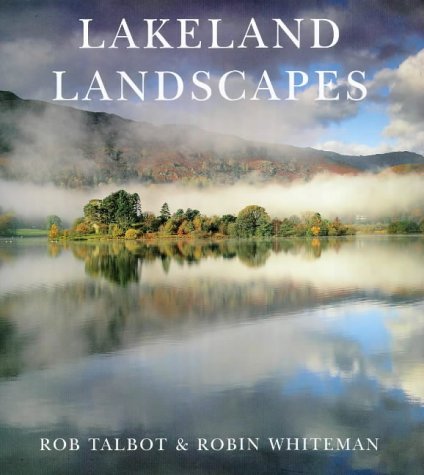
35. Lakeland Landscapes
by Rob Talbot, Robin Whiteman
Paperback: 160 Pages (1998-10-01)
list price: US$24.95
Isbn: 0753805111
Average Customer Review: 5.0 out of 5 stars
Canada | United Kingdom | Germany | France | Japan
Editorial Review

Book Description
"Presented here are 180 exquisite color photographs of the Lake District, the most scenic region of northwest England. Talbot aims his camera at the area's meadows and woodlands, at its lakes, mountains, hills, flowers, waterfalls, and valleys. There are photos of cobbled lanes and courtyards, swans, sheep, and farms. Talbot photographs the ruins of an abbey, a spectacular green cavern, and red sandstone cliffs. There are photos of castles, churches, and churchyards, a stone boathouse, stone bridges and walls, and stones placed in a circle more than 3,500 years ago. Whiteman's text describes the region's history, literary and artistic connections, geography, geology, architecture, and customs. The next best thing to being there!" -Booklist- ... Read more

Customer Reviews (1)

5-0 out of 5 stars Splendid, stunning landscapes, beautiful photography
The authors have visited one of the loveliest areas of England, the Lakelands, which I understand were popularized by Wordsworth in his poetry.Having been to England but always having missed this area, I am so pleasedto have this book.The scenes are gorgeous.The photography is true art,just beautiful. ... Read more


36. The Romantic Landscape: Photographs in the Tradition of the New York Hudson Valley Painters
by Stan Lichens
Hardcover: 88 Pages (2004-08)
list price: US$24.95 -- used & new: US$44.99
(price subject to change: see help)
Asin: 0764928899
Average Customer Review: 4.0 out of 5 stars
Canada | United Kingdom | Germany | France | Japan
Editorial Review

Book Description
The Romantic Landscape journeys through the four seasons of the Hudson Valley, immortalized by the Hudson Valley Painters. Through color- and computer-enhanced photographs, photographer Stan Lichens has captured the mystique and spectacular scenery of this historic region.

Sun-dappled valleys, rugged river terrain, vast mountains and forests, and gorgeous homes abound throughout the historic Hudson Valley. Among the residential portraits are The Locusts, a nineteenth-century estate in Staatsburg; the Vanderbilt Estate in Hyde Park; and Montgomery Place, one of the country's most beautiful estates, in Red Hook. Equally dramatic are Lichens' nature portraits of Haines Falls, farmland in Clinton Corners, the Rosendale Caves, wheatfields in Ancramdale, and a host of other inviting, perfect images captured at the perfect moment of the season.

Of all the scenery of the Hudson, the Kaatskill Mountains had the most witching effect on my boyish imagination. —Washington Irving

About the Author Stan Lichens teaches and works in graphic design, furniture, and architecture. Owner of the former Astor gatehouse in Rhinebeck, New York, he belongs to several historic preservation groups and is dedicated to documenting the architectural and natural environment of the Hudson Valley. He tints his ethereal photographs with pastels, watercolor pencils, and oil crayons and then enhances them with digital technology. ... Read more

Customer Reviews (3)

5-0 out of 5 stars A true acomplishment for images of the historic Hudson Valley
As the writer from Brooklyn has said the images are a little unrealistic but thats what makes the book so beautiful so enticing. I found the images inspiring and easy on the eyes. A true accomplishment in the world of photography.

A very beautiful introduction, by his spouse making you understand Lichens connection through the pictures he takes of the Hudson Valley.

5-0 out of 5 stars INCREDIBLE!
The views in this book are breathtaking and stunning. The Hudson Valley is truly a stunning place!

2-0 out of 5 stars The Beard Of Earth
Stan Lichens' The Romantic Landscape: Photographs In The Tradition of The New York Hudson Valley Painters (2004) presents a collection of seventy-five exceptional photographs of the New York State's Hudson River Valley. Grouped in accordance with the four seasons, the valley--a cradle of American history and folklore, and home to Ichabod Crane and Rip Van Winkle--is alternately revealed in all its lush beauty, majesty, and haunted, twilit power.

Originally taken in black and white, Lichens, inspired by the Hudson River School Painters, has hand tinted each with "French watercolor pencils, pastels, and oil crayons" and then further "digitally manipulated" the images.

The results would probably have been far more powerful had Lichens let the original photographs speak for themselves, since the enhancement process greatly reduces their overall power in every instance. Though the palate of the winter landscapes are suitably muted, the artifice is immediately and awkwardly apparent in most of the others. The overall effect is not one of subtle or studied romance, but of an easy-access pleasantness which reduces the images to the level of Sierra Club calendar art. Only tangentially do the colorized photographs, which fairly caricaturize the profound beauty of nature, have any genuine relation to the work of Thomas Cole, Fredric E. Church, and Robert Walter Weir.

Lichens has also allowed his spouse, Lois Guarino, to write the introduction, which suggests Guarino may have provided a less than objective appraisal and overview of the book's content.

... Read more


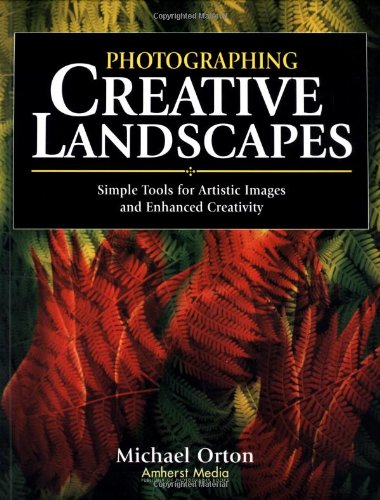
37. Photographing Creative Landscapes: Simple Tools for Artistic Images and Enhanced Creativity
by Michael Orton
Paperback: 125 Pages (2001-05)
list price: US$29.95 -- used & new: US$18.91
(price subject to change: see help)
Asin: 1584280484
Average Customer Review: 4.5 out of 5 stars
Canada | United Kingdom | Germany | France | Japan
Editorial Review

Book Description
Combining inspiration, experience, and technique, this guide to landscape photography goes beyond traditional realistic landscapes and teaches photographers to create their own impressionistic images of the natural world. Instructions are provided for such camera techniques as lens movement, lighting, filtration, and creative exposure, so that photographers can manipulate their images to have dreamlike qualities. Techniques such as sandwiching negatives, controlling contrast and grain, and color control can be used on their own or with the camera techniques to yield spectacular results. ... Read more

Customer Reviews (3)

4-0 out of 5 stars Photographing Creative Landscapes by Michael Orton
I found the book very interesting and helpful.It challenges and motivates the reader to be creative when indulging in photography, thus rising above the level of record-type shotmaking.It is not a technical "how-to" book although many technical guide lines are given, often succintly.
However, the book is somewhat dated in as much as it refers extensively to Orton's slide sandwiching techniques.More examples and discussion of digital photographic techniques would be welcome.
Overall it is a book that should be of value to any amateur landscape photographer.

5-0 out of 5 stars Great Book
This is a super book for the advanced photographer. I doesn't teach you nuts and bolts, but makes you think outside the box of normal photography. It teaches you the creative side of it. If you love photography this is a must have....

5-0 out of 5 stars Enthusiastically recommended for students of photography
In Photographing Creative Landscapes: Simple Tools For Artistic Images And Enhanced Creativity, professional landscape photographer Michael Orton shows how to expand one's creativity and learn to photograph artistic images drawn from the world that surrounds us. He shows how to develop a more artistic approach to photography, expand options for photographing the landscape, how to apply creative photographic controls to any image, as well as find sources of creative inspiration and using them to improve photographic works. Orton also draws upon his many years of expertise and experience to show how to use color to capture mood and emotion; add motion for dynamic images; capture subtle details; the dramatic use of natural light; adding flash for artistic effects; incorporation multiple exposures and sandwiched images for a "painterly" look. Photographing Creative Landscapes is enthusiastically recommended for students of photography in general, and photography buffs seeking to improve their images of natural landscapes in particular. ... Read more


38. The Landscape of King Arthur
by Geoffrey Ashe, Simon McBride
 Hardcover: 191 Pages (1988-03)
list price: US$24.95 -- used & new: US$2.95
(price subject to change: see help)
Asin: 0805007113
Canada | United Kingdom | Germany | France | Japan

39. Developing Vision & Style: A Landscape Photography Masterclass (Light & Land series)
by Charlie Waite, Joe Cornish, David Ward
Paperback: 160 Pages (2008-01-01)
list price: US$27.95 -- used & new: US$17.30
(price subject to change: see help)
Asin: 1902538498
Average Customer Review: 3.5 out of 5 stars
Canada | United Kingdom | Germany | France | Japan
Editorial Review

Book Description

Developing Vision and Style brings together three of Britain's best known and most respected photographers.In it they share their wide-ranging experience and expertise with those who aspire to create images that reflect their own visions of a chosen landscape and which have a distinctive personal style.

Alongside a portfolio of their latest work, each of the three authors writes about the genre for which they are so well-known: how they came to it, what inspires them and how each developed his own particular style. The book also features photographs submitted by participants in workshops run by the authors' company, Light & Land, and by readers of Amateur Photographer magazine, accompanied by comments, critiques and advice from the authors.

The combination of stunning imagery with inspirational and insightful advice makes this work a truly unique experience, which no landscape enthusiast will want to do without. This is the second book in the Light & Land series which was launched in 2006 with Working the Light.

... Read more

Customer Reviews (3)

2-0 out of 5 stars Not really a guide to vision & style
I bought this book wanting to learn how good photographers go about developing a vision and a style. I would use that information to develop a vision I could articulate, rather than just stumble around with my current vision, "I take photographs with bright, vivid, happy colors that make people excited." (Boy, does that sound weak. Now you know why I need help.)

I was very disappointed. Not a single photographer defined their vision or told how they developed their own vision, or, for that matter, gave any advice at all about what a vision is.

I had hoped we would be given many different perspectives on "vision"...something like, "Here are the elements and factors that I feel go into making a vision." Given this kind of starting point, I could then add to the list of elements and refine them into my own, private, creation.

Alas, the first paragraph on the back cover of the book really tells you what you will read about throughout the 156 pages:
"Photographic vision means seeing, as opposed to merely looking."

You hear this same theme repeated in a variety of ways by each of the contributors to the book. It is the closest any of them comes to defining "vision." I really learned very little in this book.

The photos were terrific, but I didn't want to buy a picture book. I really hoped to gain insight into how I could go about deliberately developing a vision that I could explain to others.

4-0 out of 5 stars Great Photographs; Less Satisfying Words
The title "Developing Vision & Style: a Landscape Photography Masterclass" sounds like it might be an instructional manual.But it is not, at least not in any conventional sense.Instead it is a collection of beautiful landscape photographs, along with a number of opinions, some of them profound and a few sophomoric, about the meaning of vision and style.

A substantial number of the pictures, although by no means a majority, were taken by the authors Joe Cornish, Charlie Waite and David Ward, who are numbered amongst Great Britain's most distinguished landscape photographers.The remaining pictures were submitted by "aspiring photographers" who were invited to submit their pictures.Most of the pictures are of the intimate landscape type rather than the grand view.It seemed to me that there were a great number of lovely pictures of wet rocks and rocky shores.

The photographers were asked a number of questions like "what does vision mean to you"; and "how would you describe your vision"; and "what does style mean to you"; and "how would you describe your style"?Some of the answers are printed in proximity to the photographers' pictures.

The editors claim that the book teaches by "encouraging students...to ask themselves critical questions and to take a fresh look at their personal vision, along with the style they select to express it."

Perhaps this format would have been more effective if there had been some back and forth debate rather than just a collection of statements.It might also have been more like a true master class if the three authors had offered a critique of the vision and style of the participating photographers.Alas, the authors only comment on each others work, and then only to say how good it is.

At the same time I realize that it would have been hard to get any photographer to agree to have his work published if it were to be the subject of a critique.I also recognize that while trying to define vision and style may be difficult for any photographer, trying to get photographers to agree on such a subject may be impossible.At the same time it may be useful for the individual photographer's development to come to his or her own definition of vision and style.

In many ways, readers interested in this topic might do better to read Ward's book "Landscape Within: Insights and Inspirations for Photographers" in which Ward's discussions of vision and style are articulated in a better fashion.For those who want a book to help them to develop their vision and style more than just to define the terms, I recommend an old favorite, Freeman Patterson's "Photography and the Art of Seeing".Moreover, because I believe that understanding the landscape will help one develop one's vision and style.I recommend Niall Benvie's "Creative Landscape Photography (Creative Photography)".

For the creative photographer, vision and style are important issues, even though they may never satisfactorily be defined.If this book can help the photographer toward a definition, it will have served a good purpose.If not, at least there are a lot of lovely pictures.


5-0 out of 5 stars Great book for photographers looking to create better images
This book, Developing Vision and Style, as with a former book in the series, Working the Light, provide guidance on producing great photographs. There is no discussion of how to operate your camera, or which filter to use, just good images with interesting insights.

This book is soemwhat different in format, as individual critiques by the authors is not present, as in the former book, but there is extended discussion by the authors and the individual photographers regrding vison, style. ... Read more


40. A Comprehensive Guide to Digital Landscape Photography
by John Clements
Paperback: 128 Pages (2003-05-28)
list price: US$21.95 -- used & new: US$11.90
(price subject to change: see help)
Asin: 2884790101
Average Customer Review: 3.5 out of 5 stars
Canada | United Kingdom | Germany | France | Japan
Editorial Review

Book Description

By thoroughly dissecting and annotating sumptuous digital landscapes, this second title in the Digital Photography series reveals the secrets of creating great landscape pictures. Find out how to manipulate point of view, light, arrangement, and timing for superb, artistic results. With a little imagination and digital retouching, it's possible to "change the weather" in a photo or produce dramatic effects. See how to get giant images and panoramas (great for mountain ranges or cityscapes), correct slants, boost a picture's brightness and sharpness, add layers of color, combine images in a montage, and more!
... Read more

Customer Reviews (5)

2-0 out of 5 stars Not Comprehensive
This is a hard book to get your mind around.It is so obviously well intentioned and aims at filling a real need.After all, digital media does offer tools to landscape and other photographers and has limitations that film doesn't have.

Moreover, the publishers, in this and other books in their photography series, have come up with a different approach to teaching photography.The usual approach has been to have a narrative about some aspect of photography and then to provide examples, with each part building on the material previously presented.The AVA books instead start with a picture and then try to show the decisions and processes that the photographer used to get the final product.But they've gone even further imposing a strict graphic format for each subject.They start with a relevant quotation from the photographer.Then across a two-page spread, that includes the photograph, they give general tips, Down the left hand of the spread a flow chart of the photographer's actions is provided from capturing the image to creating an ink jet print.The author divides the brief discussion of the picture into three sections entitled shoot, enhance and enjoy.

The problem for me was that the digital process was not developed coherently.Rather, the entire process was set forth again and again and again.But as it was set forth it never described the steps taken in anything but the most general way.If one is an advanced photographer and already knows what is involved, the picture and spread might serve as an idea book.But if that was the author's purpose, it might have helped to discuss where the photographer's ideas came from.

In addition, many of the pictures were composites or involved extreme manipulation of the image, such as by twisting it around.My guess is that the average landscape photographer is not interested in surrealism but wants to know how he can make a picture that he took look more like what he envisioned at the time of capture.

This book also gave me the impression that it was designed to provide its audience with small bits and pieces, as if that audience would be unable to grasp some larger, more comprehensive view.

For some one interested in learning about digital photography, this book is not the place to start.Instead I would suggest something like "Photoshop CS2 Workflow" by Tim Grey, or if one wanted a tutorial approach, Barry Haynes' "Photoshop Artistry" book.

3-0 out of 5 stars A lightweight...
After reading the review suggesting this book is a little too much and it involves throwing around large files etc, I thought that this would be a high end book and something I would be interested in. Well Im a bit sad to say its very light on material. If your a beginner you may get a kick out of it but anything more than that you will be very dissapointed in this title. Much better books out there.

3-0 out of 5 stars Beautiful, but sloppy.
A. The blow-by-blow accounts of the steps the photographers featured in this book use to create these stunning images are indeed comprehensive, and fascinating.There's stuff to be learned here, even for beginners, but almost all of the examples require access to some pretty serious cameras and computer hardware...the artists are regularly working with individual files of 50, 100, almost 200 mb in *.RAW format, and spending hours or days in Photoshop to achieve the effects illustrated.
B. For all its beautiful production values and technical sophistication, this thing was sloppily edited...words are missing, lead-on sentences go nowhere, and in at least one instance, "there" was unforgivably used when the author meant "their."If there's a second edition, let's hope some of the money gets thrown at a decent copyeditor.

4-0 out of 5 stars Not Quite Comprehensive
This book provides a terrific overview of digital manipulations of landscape photos using Photoshop.For each of the sample photos in the book, the author provides a step by step guide from camera to final print.

My major quibble is the actual format of the book.At 7.5 x 9 inches, the page size is much too small.The illustrations of the intermediate steps and some of the computer screenshots are too small to be effective.A larger format book would have been much better.

5-0 out of 5 stars a beautifully organized book
A book for digital landscape photography inspiration!!The book is organized in a very simple straightforward manner.Each page-spread has a sumptious photograph, comments from the author, comments from the photographer and a bullet recipe/list on how the photograph was accomplished.A strong knowledge of Photoshop is needed to understand the "how-to-do list."However, regardless of your Photoshop background, this is a book on landscape photography that you will keep returning to for inspiration and ideas. ... Read more


  Back | 21-40 of 100 | Next 20
A  B  C  D  E  F  G  H  I  J  K  L  M  N  O  P  Q  R  S  T  U  V  W  X  Y  Z  

Prices listed on this site are subject to change without notice.
Questions on ordering or shipping? click here for help.

site stats