e99 Online Shopping Mall

Geometry.Net - the online learning center Help  
Home  - Basic M - Math Software (Books)

  1-20 of 100 | Next 20
A  B  C  D  E  F  G  H  I  J  K  L  M  N  O  P  Q  R  S  T  U  V  W  X  Y  Z  

click price to see details     click image to enlarge     click link to go to the store

$4.90
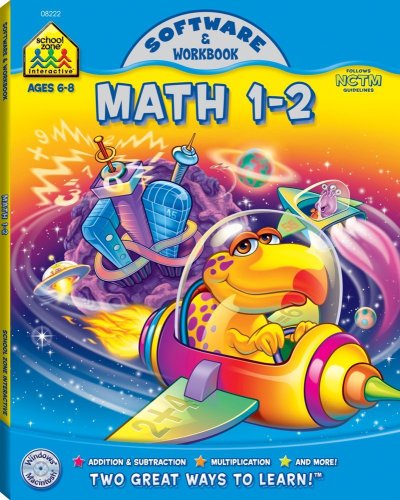
1. Math 1-2 Software
$95.00
2. Software Engineering: A Practitioner's
 
$5.95
3. Endmark's: MindTwister Math.(Software
$28.95
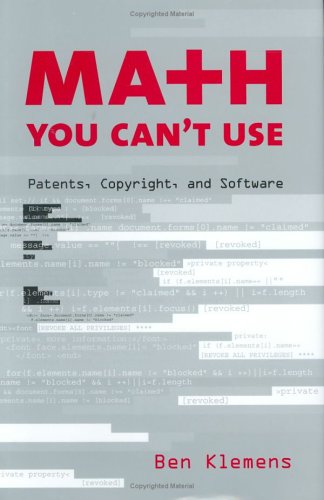
4. Math You Can't Use: Patents, Copyright,
 
$12.00
5. Math Word Problems: Decimals &
 
$5.95
6. Math software improves 'drudgery
 
$5.95
7. Math Type 4.0.(Design Science
 
$5.95
8. Jump Start Math for Kindergartners.(Software
 
$5.95
9. New programs help redefine math
 
$5.95
10. CALC 3D PRO MAKES ADVANCED MATH
 
$5.95
11. Focus on math software.(Buyers
 
$5.95
12. Onsite inservice at Nebraska high
 
$5.95
13. On the cusp of a revolution: new
 
$23.39
14. Powerprep Software: Math Review
 
$5.95
15. SW helps ESL students, increases
 
$5.95
16. Software focus on math and science.(Software
 
$5.95
17. software FOCUS ON MATH.(Software
 
$9.77
18. TestWorks Test and Practice Software
 
19. TestWorks Test and Practice Software
 
$5.95
20. Focus on math, statistics and

1. Math 1-2 Software
by School Zone Publishing Company Staff
Paperback: 64 Pages (2004-02-01)
list price: US$15.99 -- used & new: US$4.90
(price subject to change: see help)
Asin: 1589473698
Canada | United Kingdom | Germany | France | Japan

2. Software Engineering: A Practitioner's Approach
by Roger S Pressman, Roger Pressman
Hardcover: 880 Pages (2004-04-02)
list price: US$128.13 -- used & new: US$95.00
(price subject to change: see help)
Asin: 007301933X
Average Customer Review: 3.0 out of 5 stars
Canada | United Kingdom | Germany | France | Japan
Editorial Review

Book Description
For over 20 years, Software Engineering: A Practitioner's Approach has been the best selling guide to software engineering for students and industry professionals alike.

The sixth edition continues to lead the way in software engineering.A new Part 4 on Web Engineering presents a complete engineering approach for the analysis, design, and testing of Web Applications, increasingly important for today's students.Additionally, the UML coverage has been enhanced and signficantly increased in this new edition.

The pedagogy has also been improved in the new edition to include sidebars.They provide information on relevant softare tools, specific work flow for specific kinds of projects, and additional information on various topics.Additionally, Pressman provides a running case study called "Safe Home" throughout the book, which provides the application of software engineering to an industry project.

New additions to the book also include chapters on the Agile Process Models, Requirements Engineering, and Design Engineering.The book has been completely updated and contains hundreds of new references to software tools that address all important topics in the book.

The ancillary material for the book includes an expansion of the case study, which illustrates it with UML diagrams.The On-Line Learning Center includes resources for both instructors and students such as checklists, 700 categorized web references, Powerpoints, a test bank, and a software engineering library-containing over 500 software engineering papers.TAKEAWY HERE IS THE FOLLOWING: 1.AGILE PROCESS METHODS ARE COVERED EARLY IN CH. 4 2.NEW PART ON WEB APPLICATIONS --5 CHAPTERS ... Read more

Customer Reviews (66)

1-0 out of 5 stars Roger Pressman, thanks for Engineering Confusion!
I used this book in my Grad class and I'm still confused. I don't know what to make of this book. On the one hand, I think the author tries to cover most of the important topics, but on the other, the book falls short in intellectual substance.

Problems at the end of each chapter are very time consuming, and in some cases cannot be answered at all. This makes me wonder if the author can answer any of those tough questions that he wants you to ponder.

If you're looking for a good SE textbook, don't buy this one. You will regret it!

There is nothing much in this text that's closely related to what the author is asking you to consider. His book is based on fluff, and lacks the important stuff; just a bunch of snippets.

You will get an "F".

This is by far the worst textbook I have ever read, and isn't worth $128 dollars.

Thanks for nothing Roger, but you deserve at least 1 star!

4-0 out of 5 stars Worthy Tome
This is a good book. I have several editions of this book, including a very early one. In my view, in looking for a thorough perspective of software engineering, there are two major routes: McConnell/Weigers series or one of the comprehensive volumes by Pressman or Sommerville. McConnell's books (Code Complete, Rapid Software Development, and Software Estimation) and Weigers (Software Requirements) are each highly detailed. Hence, four-plus books. Pressman encapsulates (sic) the whole shebang into one big comprehensive volume. Not as detailed as those Microsoft Press authors, but that's not a drawback. If you've been practicing for a long time and you're the project manager, sometimes a substantive overview is what you need, not minute details. You're not living in the deep details anyway, your engineers are. Plus, the coverage of the more advanced development technologies, like formal methods, are very good and not included in the Microsoft Press books. Bottom line: if you're a technology director or project manager and want the big picture (in one place), get Pressman. If you're a systems analyst or software engineer and want the larger view, get McConnell and Weigers. (I have not read the Sommerville text, but from the table of contents there's a chapter on security which the other books only cover lightly.)

5-0 out of 5 stars Great for studying for the CSDP Exam
I had the 4th edition of the book back in college.When I started studying for the CSDP (Certified Software Development Professional) Exam, I ordered the 6th edition.The 6th edition is a huge improvement over the 4th.

This book covers just about everything you need to know on the subject of software engineering.Great book, great reading.Applying the concepts on the job will help out tremendously in your career.

5-0 out of 5 stars Excellent Source Material
I'm not a student. I am software development manager and have over 20 years of real-world experience developing sophisticated banking and financial applications. I have one of the original first addition books, and I have to say that this book was critical to my learning software engineering principles. The criticism of this book are unfounded in my opinion. This book contains the critical elements to implement SE principles.

The complaints seem to be from students and they seem to think it is a poor text book. Well, that's probably a good sign, as good text books are usually worthless for real world examples, and books that give you worthwhile information aren't usually good text books.

If you look through all the 5 star reviews, they are from Software Engineers working in the field. If you look at all the 1 star reviews, they are all from students who, frankly don't know what really is important and what isn't when it comes to developing quality software. (I know I didn't when i was a student). That alone gives speaks volumes about the book.

Some said that Code Complete is a better book. Where do you think the authors of Code Complete got their material? This book is first published 15 years before Code Complete. Code Complete is a good book, but doesn't explain the "why" of things, whereas this book does.Studying this book will give you the "why" on certain principles so you can enact them to whatever situation you are in. It is not an "ABC" book on how to do "XYZ."

The theories and examples on the programmer productivity were very valuable to me, and I have saved me countless hours and money on developers time because I learned how to maximize programmer productivity. This book is the framework on how to development high-quality software. I can speak from experience that the software I've been respopnsible for developing, using the priniciples I learned from this book, has been excellent. The software failure rates I have experienced are far lower than industry averages. I have some applications that have run for many years without any software failures. It can be done, but this doesn't garantee your success. This book shows you the blueprint. You still need experienced developers to be able to create high-quality code, but only by following the principles laid out in the book.

Perhaps if all you students had to see all the poorly written software in use in the world, you would appreciate this book more.This book is well worth it the price. If you plan on having anything to do with software development, keep this book, and don't sell back to a book store. I ordered the latest version and read it, and Pressman has done a good job in keeping up with the latest in software engineering. With out a doubt, the book is worth the price. My copy has paid for itself many times over.

2-0 out of 5 stars Too much borrowed material, not enough analysis
We are using this book as a textbook for a class I am in.I am not impressed with the quality of this book (except maybe the binding, that's nice.)The book is a strung-together list of passages from academic papers, books, and articles.It would be much improved if the author had digested and explained the sources he was quoting.There are boxed short quotes which are meant to be humorous, but are often off-target and distracting.This book doesn't so much elucidate and teach, as throw a bunch of primary source information at you, and leave you to sort it out.

Another feature of the book which didn't work for me was that there are imaginary conversations between the members of a software development team in every chapter.The dialogue was a little too expository, and somehow like an after-school special.As a female developer, I was annoyed that the developers in these dialogs had male names (except for the gender-neutral Jamie) and the person in marketing had a female name.I'm sure that the author did not intend to be exclusive, in fact he sprinkled the "she" pronoun throughout the text when referring to the developer as a generic entity.Still, there could have been some better choices made in the dialogues, or they could have been omitted entirely.

I gave this book two stars, because, as I mentioned, it does not do a very good job of teaching for a textbook.On the other hand, it does touch on a lot of important topics in the field of Software Engineering, so I can not fault the material that it attempts to cover. ... Read more


3. Endmark's: MindTwister Math.(Software Review)(Evaluation): An article from: T H E Journal (Technological Horizons In Education)
by Stefani Hite
 Digital: Pages (2000-06-01)
list price: US$5.95 -- used & new: US$5.95
(price subject to change: see help)
Asin: B0008GS1G6
Canada | United Kingdom | Germany | France | Japan
Editorial Review

Book Description
This digital document is an article from T H E Journal (Technological Horizons In Education), published by T.H.E. Journal, LLC on June 1, 2000. The length of the article is 568 words. The page length shown above is based on a typical 300-word page. The article is delivered in HTML format and is available in your Amazon.com Digital Locker immediately after purchase. You can view it with any web browser.

Citation Details
Title: Endmark's: MindTwister Math.(Software Review)(Evaluation)
Author: Stefani Hite
Publication: T H E Journal (Technological Horizons In Education) (Refereed)
Date: June 1, 2000
Publisher: T.H.E. Journal, LLC
Volume: 27Issue: 11Page: 82

Article Type: Evaluation, Product/Service Evaluation

Distributed by Thomson Gale ... Read more


4. Math You Can't Use: Patents, Copyright, and Software
by Ben Klemens
Hardcover: 181 Pages (2005-12)
list price: US$28.95 -- used & new: US$28.95
(price subject to change: see help)
Asin: 0815749422
Average Customer Review: 5.0 out of 5 stars
Canada | United Kingdom | Germany | France | Japan
Editorial Review

Book Description
The field of software is awash in disputes.Market participants and analysts routinely disagree on how computer programs should be produced, marketed, regulated, and sold.On one subject, however, just about everyone can agree:the current intellectual property protection regime for software is a mess.At present, all of the traditional means of delimiting intellectual property--patents, copyrights, and trade secrets--are applied to software in one manner or another.Congress has even invented a new type of law for cases in which these may be insufficient, with the Digital Millennium Copyright Act.

The result is widespread confusion, along with the proliferation of nuisance suits.To date, the U.S. Patent and Trademark Office has granted more than 170,000 software patents, some on applications as commonplace as the pop-up window.Each of these patents gives the holder the right to sue others where no such right existed before, and so gaming of the system abounds.Software providers are forced to funnel millions of dollars annually into defending themselves against lawsuits rather than developing better software.The wave of litigation may end up stifling innovation and hobbling the open source movement, one of the most promising developments of recent years.

How did the situation arise?And where should we go from here?In Math You Can't Use, Ben Klemens draws on his experience as both a programmer and an economist to tackle these critical issues.The answer to the first question, he explains, is simple:while patent laws are intended to apply to physical machines, software is something quite different.Software is not just another machine, and it is not Hamlet with numbers.It is a functional hybrid that can be duplicated at no cost, it is legible by computers in some forms and by humans in others, and it has a unique mathematical structure.All of these facts have to be taken into consideration in designing an appropriate intellectual property regime.

Designing such a system is a more difficult task. Klemens considers several alternatives, from modifying the existing rules to eliminating software patents in favor of a copyright-centered regime.Ultimately, he concludes, it is up to Congress to determine how software should be protected. ... Read more

Customer Reviews (3)

5-0 out of 5 stars Why modern intellectual property rights are in a big mess - and how to fix the problem
MATH YOU CAN'T USE: PATENTS, COPYRIGHT, AND SOFTWARE uses the author's experience as a programmer and an economist to describe why modern intellectual property rights are in a big mess - and how to fix the problem. MATH YOU CAN'T USE could also have been featured in our computer section, but is highlighted here for its wider-ranging interest to any college-level collection containing not only legal and computer books, but holdings considering intellectual property rights, issues, and development protection.

Diane C. Donovan, Editor
California Bookwatch

5-0 out of 5 stars Book Review
MATH YOU CAN'T USE
by Ben Klemens
pp. 181, Brookings Institution Press, Washington D.C., 2005


It is the ideas of inventors that drive the continuous technological progress in our societies. It then becomes important to ask if these inventors are getting the right incentives to innovate. What rights should an inventor be allowed to have over his invention/idea? Is his idea his alone? or is the idea anyone's who understands it? What does it mean to own an idea? The question of whether the "fugitive fermentation of an individual brain*" is a public good or the justifiably exclusive property of the individual brain is clearly an urgent one given the value we place on technological progress.

The subtleties of what constitutes an intellectual's excludable property and what constitutes the general public's property are usually outside the grasp of the general non-specialist crowd. Even amongst specialists (economists, computer people and so on) the discussions on the subject remain constrained by disciplinary boundaries and jargon in the blind men and elephant sort of way. Economists shy away from conversations with computer scientists who generously return the favour. Stated differently, the problem is that few economists write video games and even fewer video game writers would like to be spotted reading economics texts. This is a pity because if economists and software writers could talk to each other what else but the market for intellectual property in computer software would they talk about? The good news is that Klemens is at least, an economist and as he points out several times, he did write a video game.

To adequately understand the dynamics of the regulation of the market for software innovation, one needs to be a jack of several trades like, economics, computer science, law and even mathematics. In 'Math You Can't Use' Klemens brings this scarce combination of skills to bear upon this debate. His training as an economist as well as his facility with the arcane world of software programming puts him at a unique vantage point to survey the world of software patents. Add to this a knack for gentle humor and brevity of language and what you get is an immensely readable book that lays bare the economics, the math, the code and the legalese that underlie the mess that the world of patenting intellectual property in the software market involves.

Judging the book by its cover I expected the book to be a collection of mathematical theorems based on some abstract models of the software patenting business. I assumed that the theorems represented math I could not use simply because it was based on models that relied on unrealistic assumptions. Hence I expected the book to be the author's labor of love to mathematical reasoning that was in the end quite use-less for solving real world problems.

I was way off the mark there. The book's central claim is that there is a lot of math out there (theorems, lemmas, propositions, algorithms and so on) that you can't use because someone else came up with that math before you and now insists that the said math is his and his alone to cherish, protect and profit from. The main theorem that drives the ideas in this book is the Church Turing Thesis which allows us to show that a lot of software code is actually just a bunch of mathematical statements. Klemens creatively uses this thesis to argue his main points in the book.

'Math You Can't Use' actually reads like a generously embellished academic article which is a good thing as far as the pace at which ideas are presented in the book is concerned. For people interested in the area of software patents, this book will serve as a self-contained, down and dirty introduction to this area. From how computers work (for instance, how does a keystroke translate to text on the screen) to reporting rigorous economic theory, Klemens does an elegant job of walking the tightrope between academic rigour and readability. This book will be useful to students of the economics of innovation, computer scientists who read and policy makers.

(C)2005 ViSa

5-0 out of 5 stars a book you can use...
Klemens has a knack for bringing humour and spirit to a subject most people might be inclined to regard as dull (i.e., software patent policy) - as well as explaining why addressing that subject is crucial.His background as a trained economist and practicing computer programmer gives him inside understanding of both the theoretical policy debate as well as its practical impact on the work of coding.The book is an invaluable resource - and you'll love the banana protective device diagram. ... Read more


5. Math Word Problems: Decimals & Percentages (Level B)
by Anita Harnadek
 Paperback: 130 Pages (1996-01-02)
list price: US$13.99 -- used & new: US$12.00
(price subject to change: see help)
Asin: 0894558218
Canada | United Kingdom | Germany | France | Japan

6. Math software improves 'drudgery to insight' ratio. (Vanderbilt University uses Wolfram Research Inc's Mathematica software to boost mathematics studies): ... (Technological Horizons In Education)
 Digital: 5 Pages (1992-11-01)
list price: US$5.95 -- used & new: US$5.95
(price subject to change: see help)
Asin: B00092K3RY
Canada | United Kingdom | Germany | France | Japan
Editorial Review

Book Description
This digital document is an article from T H E Journal (Technological Horizons In Education), published by T.H.E. Journal, LLC on November 1, 1992. The length of the article is 1204 words. The page length shown above is based on a typical 300-word page. The article is delivered in HTML format and is available in your Amazon.com Digital Locker immediately after purchase. You can view it with any web browser.

From the supplier: Vanderbilt Univ in Alabama is using Wolfram Research Inc's Mathematica 1.2 mathematical software to revitalize its approach to the teaching of mathematics. The Mathematica program offers a combination of programming tools, graphical, symbolic and numerical capabilities. To alter the perceived 'drudgery to insight ratio' in the direction of student insight and enhanced motivation, twelve professors designed courses based on Mathematica. The course design was manifested in four stages. Instructors used the software to demonstrate, to develop materials on the Notebook interface, to develop homework assignments and to design a series of Lecture and Practice Notebooks. Currently, eight of the 30 teachers in Vanderbilt's Mathematics Dept are using the software, which, along with its Apple Macintosh hardware base, has been upgraded.

Citation Details
Title: Math software improves 'drudgery to insight' ratio. (Vanderbilt University uses Wolfram Research Inc's Mathematica software to boost mathematics studies)
Publication: T H E Journal (Technological Horizons In Education) (Refereed)
Date: November 1, 1992
Publisher: T.H.E. Journal, LLC
Volume: v20Issue: n4Page: p44(3)

Distributed by Thomson Gale ... Read more


7. Math Type 4.0.(Design Science software)(Software Review)(Evaluation): An article from: T H E Journal (Technological Horizons In Education)
by Stefani Hite
 Digital: 2 Pages (1999-11-01)
list price: US$5.95 -- used & new: US$5.95
(price subject to change: see help)
Asin: B00099J7CY
Canada | United Kingdom | Germany | France | Japan
Editorial Review

Book Description
This digital document is an article from T H E Journal (Technological Horizons In Education), published by T.H.E. Journal, LLC on November 1, 1999. The length of the article is 518 words. The page length shown above is based on a typical 300-word page. The article is delivered in HTML format and is available in your Amazon.com Digital Locker immediately after purchase. You can view it with any web browser.

Citation Details
Title: Math Type 4.0.(Design Science software)(Software Review)(Evaluation)
Author: Stefani Hite
Publication: T H E Journal (Technological Horizons In Education) (Refereed)
Date: November 1, 1999
Publisher: T.H.E. Journal, LLC
Volume: 27Issue: 4Page: 58

Article Type: Evaluation, Product/Service Evaluation

Distributed by Thomson Gale ... Read more


8. Jump Start Math for Kindergartners.(Software Review)(Evaluation): An article from: T H E Journal (Technological Horizons In Education)
by Linda Skinner
 Digital: Pages (2000-05-01)
list price: US$5.95 -- used & new: US$5.95
(price subject to change: see help)
Asin: B0008H6BK8
Canada | United Kingdom | Germany | France | Japan
Editorial Review

Book Description
This digital document is an article from T H E Journal (Technological Horizons In Education), published by T.H.E. Journal, LLC on May 1, 2000. The length of the article is 824 words. The page length shown above is based on a typical 300-word page. The article is delivered in HTML format and is available in your Amazon.com Digital Locker immediately after purchase. You can view it with any web browser.

From the supplier: Knowledge Adventure's Jump Start Math for Kindergartners employs a birthday theme to teach math concepts to young learners. The software covers several essential math skills for kindergartners, include writing numbers, sorting, problem solving and following directions, counting, addition, subtraction, sequences and patterns, and measurement. The software is easy for children to use and audible directions guide the user through the program. Children find the application entertaining and they will have fun while learning essential math skills. The software runs on both Windows 95 and a Mac Power PC. The boot CD includes and Activity and Discovery Workbook.

Citation Details
Title: Jump Start Math for Kindergartners.(Software Review)(Evaluation)
Author: Linda Skinner
Publication: T H E Journal (Technological Horizons In Education) (Refereed)
Date: May 1, 2000
Publisher: T.H.E. Journal, LLC
Volume: 27Issue: 10Page: 60

Article Type: Evaluation, Product/Service Evaluation

Distributed by Thomson Gale ... Read more


9. New programs help redefine math & statistics instruction. (educational software)(Buyers Guide): An article from: T H E Journal (Technological Horizons In Education)
by Jeff Carmona
 Digital: 9 Pages (1996-03-01)
list price: US$5.95 -- used & new: US$5.95
(price subject to change: see help)
Asin: B00096JIIA
Canada | United Kingdom | Germany | France | Japan
Editorial Review

Book Description
This digital document is an article from T H E Journal (Technological Horizons In Education), published by T.H.E. Journal, LLC on March 1, 1996. The length of the article is 2582 words. The page length shown above is based on a typical 300-word page. The article is delivered in HTML format and is available in your Amazon.com Digital Locker immediately after purchase. You can view it with any web browser.

From the supplier: Numerous new math and statistics software packages are available for use at all grade levels. The article discusses software programs and videodiscs suitable for a range of ages. Further, the packages range from highly sophisticated to basic.

Citation Details
Title: New programs help redefine math & statistics instruction. (educational software)(Buyers Guide)
Author: Jeff Carmona
Publication: T H E Journal (Technological Horizons In Education) (Refereed)
Date: March 1, 1996
Publisher: T.H.E. Journal, LLC
Volume: v23Issue: n8Page: p14(5)

Article Type: Buyers Guide

Distributed by Thomson Gale ... Read more


10. CALC 3D PRO MAKES ADVANCED MATH EASY.(Greuer Software's Calc 3D Pro for Windows 95/98/Me/NT/XP/2000)(Brief Article): An article from: GUI Program News
 Digital: 3 Pages (2003-04-01)
list price: US$5.95 -- used & new: US$5.95
(price subject to change: see help)
Asin: B0008DB8VE
Canada | United Kingdom | Germany | France | Japan
Editorial Review

Book Description
This digital document is an article from GUI Program News, published by Worldwide Videotex on April 1, 2003. The length of the article is 677 words. The page length shown above is based on a typical 300-word page. The article is delivered in HTML format and is available in your Amazon.com Digital Locker immediately after purchase. You can view it with any web browser.

Citation Details
Title: CALC 3D PRO MAKES ADVANCED MATH EASY.(Greuer Software's Calc 3D Pro for Windows 95/98/Me/NT/XP/2000)(Brief Article)
Publication: GUI Program News (Newsletter)
Date: April 1, 2003
Publisher: Worldwide Videotex
Volume: 14Issue: 4Page: NA

Article Type: Brief Article

Distributed by Thomson Gale ... Read more


11. Focus on math software.(Buyers Guide): An article from: T H E Journal (Technological Horizons In Education)
 Digital: 3 Pages (1997-08-01)
list price: US$5.95 -- used & new: US$5.95
(price subject to change: see help)
Asin: B00097P1TE
Canada | United Kingdom | Germany | France | Japan
Editorial Review

Book Description
This digital document is an article from T H E Journal (Technological Horizons In Education), published by T.H.E. Journal, LLC on August 1, 1997. The length of the article is 763 words. The page length shown above is based on a typical 300-word page. The article is delivered in HTML format and is available in your Amazon.com Digital Locker immediately after purchase. You can view it with any web browser.

From the supplier: A buyer's guide of mathematical software applications is presented. For each product listed, the guide provides the manufacturer's name along with brief product descriptions. The guide also features a table of respective manufacturer addresses and telephone numbers.

Citation Details
Title: Focus on math software.(Buyers Guide)
Publication: T H E Journal (Technological Horizons In Education) (Refereed)
Date: August 1, 1997
Publisher: T.H.E. Journal, LLC
Volume: v25Issue: n1Page: p28(1)

Article Type: Buyers Guide

Distributed by Thomson Gale ... Read more


12. Onsite inservice at Nebraska high school aids teachers' use of comprehensive math software. (Ralston High School successfully uses Spring Branch Software ... (Technological Horizons In Education)
 Digital: 3 Pages (1993-04-01)
list price: US$5.95 -- used & new: US$5.95
(price subject to change: see help)
Asin: B00092NS4O
Canada | United Kingdom | Germany | France | Japan
Editorial Review

Book Description
This digital document is an article from T H E Journal (Technological Horizons In Education), published by T.H.E. Journal, LLC on April 1, 1993. The length of the article is 734 words. The page length shown above is based on a typical 300-word page. The article is delivered in HTML format and is available in your Amazon.com Digital Locker immediately after purchase. You can view it with any web browser.

From the supplier: Ralston High School found that Spring Branch Software's MacNumerics-II high school mathematics instruction software was so useful that Spring Branch was hired to do two onsite in-service training sessions to enable teachers to fully understand and use the software's features. MacNumerics-II's 15 main tools provide great depth of study of the entire high school mathematics curriculum. The software is now being used on 60 machines in the school's math labs and on a Macintosh LC in each teacher's classroom. Classes employing MacNumerics-II include algebra I and II, pre-calculus and calculus. Examples of how teachers use the software are briefly discussed. Ralston director of technology Mike Burns, who initially recognized the potential of the software, finds that MacNumerics-II has improved the faculty's teaching of mathematics.

Citation Details
Title: Onsite inservice at Nebraska high school aids teachers' use of comprehensive math software. (Ralston High School successfully uses Spring Branch Software Inc's MacNumerics-II software) (MacAdemic)
Publication: T H E Journal (Technological Horizons In Education) (Refereed)
Date: April 1, 1993
Publisher: T.H.E. Journal, LLC
Volume: v20Issue: n9Page: p57(1)

Distributed by Thomson Gale ... Read more


13. On the cusp of a revolution: new software tools help students see and make connections in math classes and more. (PC Software).: An article from: District Administration
by Kate Beem
 Digital: Pages (2001-11-01)
list price: US$5.95 -- used & new: US$5.95
(price subject to change: see help)
Asin: B0008IQ7UQ
Canada | United Kingdom | Germany | France | Japan
Editorial Review

Book Description
This digital document is an article from District Administration, published by Professional Media Group LLC on November 1, 2001. The length of the article is 1512 words. The page length shown above is based on a typical 300-word page. The article is delivered in HTML format and is available in your Amazon.com Digital Locker immediately after purchase. You can view it with any web browser.

Citation Details
Title: On the cusp of a revolution: new software tools help students see and make connections in math classes and more. (PC Software).
Author: Kate Beem
Publication: District Administration (Magazine/Journal)
Date: November 1, 2001
Publisher: Professional Media Group LLC
Volume: 37Issue: 11Page: S26(1)

Distributed by Thomson Gale ... Read more


14. Powerprep Software: Math Review for the Gre General Test
by Educational Testing Service
 Diskette: Pages (1995-10)
list price: US$25.00 -- used & new: US$23.39
(price subject to change: see help)
Asin: 0446396087
Canada | United Kingdom | Germany | France | Japan

15. SW helps ESL students, increases self-esteem. (Turbo Math Facts software from Nordic Software boosts performance of English as Second Language students ... (Technological Horizons In Education)
 Digital: 3 Pages (1993-01-01)
list price: US$5.95 -- used & new: US$5.95
(price subject to change: see help)
Asin: B0008VCPCC
Canada | United Kingdom | Germany | France | Japan
Editorial Review

Book Description
This digital document is an article from T H E Journal (Technological Horizons In Education), published by T.H.E. Journal, LLC on January 1, 1993. The length of the article is 776 words. The page length shown above is based on a typical 300-word page. The article is delivered in HTML format and is available in your Amazon.com Digital Locker immediately after purchase. You can view it with any web browser.

From the supplier: Mary A Otondo Elementary School in Yuma, AZ is a school that makes exemplary use of computer technology. Each classroom is equipped with an Apple Macintosh computer, and there is an emphasis upon self-paced learning modules. In part, this is necessitated by the fact that 120 of the school's 970 students are in the English as a Second Language program; many of these students are the children of migratory workers. Using Turbo Math Facts, an imaginative mathematical software program from Nordic Software Inc, the school reports excellent results in both performance levels and overall self-esteem. This is particularly true of the ESL students, since the program is not a language-based one, but employs the metaphor of racing cars as a means of drawing students into a problem-solving matrix.

Citation Details
Title: SW helps ESL students, increases self-esteem. (Turbo Math Facts software from Nordic Software boosts performance of English as Second Language students at Mary A. Otondo Elementary School in Yuma, AZ) (Applications)
Publication: T H E Journal (Technological Horizons In Education) (Refereed)
Date: January 1, 1993
Publisher: T.H.E. Journal, LLC
Volume: v20Issue: n6Page: p54(2)

Distributed by Thomson Gale ... Read more


16. Software focus on math and science.(Software Review)(Evaluation): An article from: T H E Journal (Technological Horizons In Education)
by Jim Schneider
 Digital: Pages (2000-04-01)
list price: US$5.95 -- used & new: US$5.95
(price subject to change: see help)
Asin: B0008H3YG2
Canada | United Kingdom | Germany | France | Japan
Editorial Review

Book Description
This digital document is an article from T H E Journal (Technological Horizons In Education), published by T.H.E. Journal, LLC on April 1, 2000. The length of the article is 2949 words. The page length shown above is based on a typical 300-word page. The article is delivered in HTML format and is available in your Amazon.com Digital Locker immediately after purchase. You can view it with any web browser.

From the supplier: New technologies and products help young learners deal with the sometimes intimidating subjects of math and science. Edmark's MindTwister Math is a curriculum-based review of math concepts for 3rd and 4th graders. Knowledge Adventure's Math Blaster for ages 5 to 7 test student's math skills. Learning Advantage's MathStar offers practice in interactive, motivational math skills for elementary students without the need for a computer. SRA's Total Class Math offers video-enhanced lessons covering a variety of subjects for K-6 classrooms. The Denali Project's Summit Math offers more than 225 activities for grades six and eight.

Citation Details
Title: Software focus on math and science.(Software Review)(Evaluation)
Author: Jim Schneider
Publication: T H E Journal (Technological Horizons In Education) (Refereed)
Date: April 1, 2000
Publisher: T.H.E. Journal, LLC
Volume: 27Issue: 9Page: 72

Article Type: Evaluation, Product/Service Evaluation

Distributed by Thomson Gale ... Read more


17. software FOCUS ON MATH.(Software Review)(Evaluation): An article from: T H E Journal (Technological Horizons In Education)
by Sabrina Tillman
 Digital: 7 Pages (2001-04-01)
list price: US$5.95 -- used & new: US$5.95
(price subject to change: see help)
Asin: B0008HVYXC
Canada | United Kingdom | Germany | France | Japan
Editorial Review

Book Description
This digital document is an article from T H E Journal (Technological Horizons In Education), published by T.H.E. Journal, LLC on April 1, 2001. The length of the article is 1983 words. The page length shown above is based on a typical 300-word page. The article is delivered in HTML format and is available in your Amazon.com Digital Locker immediately after purchase. You can view it with any web browser.

From the supplier: Packages and services for teaching mathematics are reviewed. Educational Insights' Geosafari Knowledge Pad - The Math Series offers a Beginning Math course with 48 learning games focusing on a variety of basic skills. Prentice Hall's Interactive Math offers instruction based on the way individual students want to learn. Aleks is a Web-based solution for K-12 math delivering precise diagnostic assessments and delivering students to customized study material while reviewing their progress. Boxer Learning's BoxerMath presents a core algebra curriculum for teachers and learning tools for students and parents. The company has also launched its Boxermath.com Gymnasium Web site. Wolfram Research's Mathematica for Students 4.1 is an educational version of a well-known and powerful package used by technical professionals and is intended for students in accelerated math studies. Carnegie Learning's Cognitive Tutor software package follows students step-by-step through problem resolution.

Citation Details
Title: software FOCUS ON MATH.(Software Review)(Evaluation)
Author: Sabrina Tillman
Publication: T H E Journal (Technological Horizons In Education) (Refereed)
Date: April 1, 2001
Publisher: T.H.E. Journal, LLC
Volume: 28Issue: 9Page: 48

Article Type: Evaluation, Product/Service Evaluation

Distributed by Thomson Gale ... Read more


18. TestWorks Test and Practice Software Math Grade 4 (Plus User Guide, Grade 4)
 CD-ROM: Pages (2004)
-- used & new: US$9.77
(price subject to change: see help)
Asin: 0201318369
Canada | United Kingdom | Germany | France | Japan
Editorial Review

Product Description
For mac or Windows- User's Guide, dorrelation between Objectives and Model Problems , Model Problems. ... Read more


19. TestWorks Test and Practice Software Math Grade 2 (User's Guide) (TestWorks, Grade 2 MATH)
 Paperback: Pages (2004)

Isbn: 0201347938
Canada | United Kingdom | Germany | France | Japan
Editorial Review

Product Description
User's Guide includes sections on:Installation and Start-UpCreating and Modifying TestsUsing the Question EditorGraphics FilesIncludes OVER 15 sample tests in full-size layout ... Read more


20. Focus on math, statistics and data analysis.(10 computer programs) (Software)(Product Announcement): An article from: T H E Journal (Technological Horizons In Education)
by William Willis
 Digital: 6 Pages (1998-03-01)
list price: US$5.95 -- used & new: US$5.95
(price subject to change: see help)
Asin: B000988XA2
Canada | United Kingdom | Germany | France | Japan
Editorial Review

Book Description
This digital document is an article from T H E Journal (Technological Horizons In Education), published by T.H.E. Journal, LLC on March 1, 1998. The length of the article is 1718 words. The page length shown above is based on a typical 300-word page. The article is delivered in HTML format and is available in your Amazon.com Digital Locker immediately after purchase. You can view it with any web browser.

From the supplier: This Software section includes 10 computing programs focusing on math, statistics and data analysis and one astronomy package. Outstanding among them is Macsyma 2.2 from Macsyma Inc. The package contains powerful math software that is used frequently in the engineering and medical fields. One great feature is that the program is capable of answering plain-English questions. The BioBench from National Instruments can automatically configure and acquire data from various physiological instruments and sensors for data analysis. SPSS' SigmaPlot 4.0 is a highly technical graphing program that offers a new Regression Wizard that allows freedom and flexibility to fit almost any equations, automatically determine parameters, and adding results to new graphs. Mathematica 3.0.1 from Wolfram Research is significantly enhanced. Finally, the Scientific Astronomer from Wolfram Research is a regular astronomical software with a twist. It tells the user when and where a specific heavenly object is in the optimal viewing range.

Citation Details
Title: Focus on math, statistics and data analysis.(10 computer programs) (Software)(Product Announcement)
Author: William Willis
Publication: T H E Journal (Technological Horizons In Education) (Refereed)
Date: March 1, 1998
Publisher: T.H.E. Journal, LLC
Volume: v25Issue: n8Page: p27(3)

Article Type: Product Announcement

Distributed by Thomson Gale ... Read more


  1-20 of 100 | Next 20
A  B  C  D  E  F  G  H  I  J  K  L  M  N  O  P  Q  R  S  T  U  V  W  X  Y  Z  

Prices listed on this site are subject to change without notice.
Questions on ordering or shipping? click here for help.

site stats