e99 Online Shopping Mall

Geometry.Net - the online learning center Help  
Home  - Basic P - Philosophy History General (Books)

  Back | 21-40 of 100 | Next 20
A  B  C  D  E  F  G  H  I  J  K  L  M  N  O  P  Q  R  S  T  U  V  W  X  Y  Z  

click price to see details     click image to enlarge     click link to go to the store

$76.77
21. Philosophy: History and Problems
$75.90
22. The Cambridge History of Later
$36.51
23. Lectures On The Philosophy Of
$39.89
24. The Longman Standard History of
$9.56
25. History of Philosophy, Volume
$6.99
26. Introduction to the Philosophy
$12.35
27. Exploring the History and Philosophy
$6.49
28. The Philosophy of History (Great
$130.00
29. Philosophy of History: A Guide
$19.88
30. A Short History of Philosophy
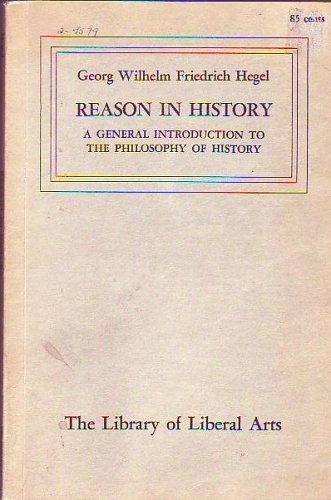
$8.98
31. The Columbia History of Western
$32.80
32. From the Beginning to Plato: Routledge
$25.31
33. History of Philosophy, Volume
$81.90
34. Central Readings in the History
$42.99
35. Philosophies of History: From
$44.44
36. Introduction to the Lectures on
$43.00
37. The Cambridge History of Classical
$71.74
38. A History of Western Philosophy:
$65.98
39. The History and Philosophy of
$19.86
40. Lectures on the Philosophy of

21. Philosophy: History and Problems
by Samuel Enoch Stumpf, James Fieser
Paperback: 960 Pages (2007-08-03)
list price: US$96.56 -- used & new: US$76.77
(price subject to change: see help)
Asin: 0072987820
Average Customer Review: 5.0 out of 5 stars
Canada | United Kingdom | Germany | France | Japan
Editorial Review

Book Description
This text brings together Stumpf's and Fieser's Socrates to Sartre and Beyond with an updated anthology of readings in one volume. It offers an accessible historical survey of philosophical ideas and a wealth of primary source readings at an excellent value.The text is a comprehensive, historically organized introduction to philosophy, which communicates the richness of the discipline and provides the student with a working knowledge of the development of Western philosophy. With a lively and approachable style it covers the principal contributions of Western civilization's most influential philosophers. The topically organized reader features a chronological organization within the topics and a wide selection of readings. Primarily a selection of Western philosophy, the fifth edition also includes classic Eastern philosophy texts. ... Read more

Customer Reviews (1)

5-0 out of 5 stars The Examined Life starts here...
This philosophy book by Stumpf and Fieser is used at Ivy Tech State College as the primary text for the introduction to philosophy courses (100 level).It is a good survey of all the major topics in philosophy (from a classical Western standpoint), and includes many of the major thinkers over time, both in the narrative discussion presented by the authors, as well as in primary source readings from major philosophers themselves.

As the book's self-description states, this is a combination of two previous texts - 'Socrates to Sartre and Beyond: A History of Philosphy' by Stumpf, and 'Philosophical Problems' by Fieser.These books are presented one after the other, both under one cover.The readings selected and edited by Fieser are grouped topically, generally following an early-to-late chronology of ordering.Thus, with judicious planning, the reader of philosophy can develop from both segments a good general survey from the earliest times (the timeline on the backplate begins with Thales, from 624-546 B.C.) to the present (again from the timeline, current thinkers listed include John Rawls, John Hick, and Carol Gilligan).

The Stumpf text is divided into five major sections:I - Ancient Greek Philosophy; II - Hellenistic and Medieval Philosophy; III - Early Modern Philosophy; IV - Late Modern and 19th Century Philosophy; and V - 20th Century and Contemporary Philosophy.Section I looks at the major ancient Greek thinkers, such as Socrates, Plato and Aristotle, as well as lesser-known important figures and schools such as Thales, Pythagoras, the Sophists, and more.This is the time that philosophy began to be broken into certain topical areas (ethics, politics, metaphysics, logic, etc.) but also a time when the disciplines of science, mathematics and what we would call social sciences and arts and humanities were all directly and explicitly tied to the overallphilosophical enterprise.

The section onHellenistic and Medieval Philosophy looks at later Greek schools (Stocism, Skepticism, Epicureanism) as well as the advent of Christianity and Christian influence in philosophical development.Key figures here include Augustine (heavily influenced by the twin sources of Christianity and Neoplatonism), Boethius, Anselm, Aquinas (influenced greatly by the European rediscovery of Aristotle), and late medieval figures such as Scotus, Ockham and Eckhart.

Early Modern Philosophy begins at the time the various Renaissance and Reformation periods began, looking at key philosophers such as Machiavelli, Bacon, Hobbes, Descartes, Spinoza, Leibniz, and the British Empiricists; this was also the advent of the scientific revolution and prelude to the Enlightenment, so there were philosophies of politics, religion, science, knowledge and ethics significantly different from anything before.

Late Modern and 19th Century Philosophy looks at primary Enlightenment figures such as Kant and Hegel, with fundamentally new ideas in the areas of metaphysics and epistemology (and, accordingly, new philosophies in other areas that reflect the new developments).This is also the period that saw the advent of Utilitarianism (Bentham, Mill, and Comte), and radical thinkers such as Kierkegaard, Marx and Nietzsche, whose direct influence in areas of religion, politics, and culture are still being felt.

Key areas covered in the final chapter on Contemporary Philosophy include Pragmatism (Pierce, James, Dewey, Bergson, Whitehead), Analytic Philosophy (Russell and Wittgenstein), Phenomenology and Existentialism (Husserl, Heidegger, Sartre, Merleau-Ponty), and very new ideas that are only now coming to full expression (postmodernism, structuralism and post-structuralism, mind-body problems, etc.).Overall, this text includes a 500-page narrative of the principle ideas and patterns of development that have shaped the many dimensions of Western philosophy.

Added to this narrative text is a 400-page collection of articles and edited tracts organised by Fieser into seven categories:I - The Meaning of Life; II - Philosophy of Mind; III - Philosophy of Religion; IV - Epistemology; V - Free Will and Determinism; VI - Ethics; and VII - Political Philosophy.Each of these sections is introduced by Fieser with a short essay (a few pages each, at most); these set the stage for the readings, and provide connecting material where appropriate, but for the most part, Fieser lets the primary documents speak for themselves.These sections include traditional philosopher-authors (Plato, Aristotle, Locke, Hume, James, Rawls), but also some authors/writings not generally included in such collections (Leo Tolstoy, Chuang-tzu, Katha Upanishad).

Together, these make a wonderful one-volume, portable philosophy library.Sufficient for an introductory course, it should also serve to whet the appetite of readers who are seeking more in particular philosophical areas.The combination of both Stumpf's and Fieser's texts means that the appeal and ease of use will be enhanced - those students who find primary documents difficult to follow can rely more on the narrative history/explanatory section; those who find the latter less gratifying and interesting can pay more attention to the primary documents.

In the Stumpf section, there is a useful glossary of key philosophical terms, a select bibliography arranged chronologically by chapter, divided into original documents and critical studies, and an index including names, terms and concepts.There are no such indexes or bibliographies following the Fieser section, but that section does list the citation for each excerpt at the beginning of each article, so that the reader may follow up with further reading in the same document.

Philosophy is rarely easy reading; there will be parts that appeal to a particular reader that will leave another bewildered or bored (or both!), but there tends to be in the philosophical discipline something somewhere of interest to most.This gives a good, broad layout of philosophy as done in the primary Western, academic tradition, and serves as a good text for classrooms, as well as use for a personal study.

... Read more


22. The Cambridge History of Later Medieval Philosophy: From the Rediscovery of Aristotle to the Disintegration of Scholasticism, 1100-1600
Paperback: 1056 Pages (1988-07-29)
list price: US$90.00 -- used & new: US$75.90
(price subject to change: see help)
Asin: 0521369339
Average Customer Review: 4.5 out of 5 stars
Canada | United Kingdom | Germany | France | Japan
Editorial Review

Book Description
This is a history of the great age of scholastism from Abelard to the rejection of Aristotelianism in the Renaissance, combining the highest standards of medieval scholarship with a respect for the interests and insights of contemporary philosophers, particularly those working in the analytic tradition. The volume follows on chronologically from The Cambridge History of Later Greek and Early Medieval Philosophy, though it does not continue the histories of Greek and Islamic philosophy but concentrates on the Latin Christian West. Unlike other histories of medieval philosophy which divide the subject matter by individual thinkers and emphasise the parts of more historical and theological interest, this volume is organised by those topics in which recent philosophy has made the greatest progress. ... Read more

Customer Reviews (3)

3-0 out of 5 stars average...but informative
the overall presentation and framework are sound, scholarly; perhaps due to different viewpoints from various authors, the materials are treated unevenly--some subject matters are in depth, captivating; others are sypnotic, dull at best. overall, this obscure topic was illuminated in a professional, responsible manner. contains a trove of great bibliography and references for research...

5-0 out of 5 stars A Massive Piece of Work
This book is a massive piece of work edited by Anthony Kenney, Jan Pinborg and the late Norman Kretzmann. Moreover, Eleonore Stump is an associate editor of this text as well. The book itself is over 1000 pages. It is a history of late medieval philosophy from about 1100 to 1600. The book is essentially a series of essays that deal with the various philosophical trends, ideas, issues, etc. that were prevalent within the aforementioned dates. The book deals with Aristotelian logic, logic in the middle ages (semantic theory), logic in the high middle ages, metaphysics and epistemology, natural philosophy, philosophy of mind and action, ethics, politics, and scholasticism. Thus, the reader of this text will gain a greater understanding about Abelard and old logic to free will and free choice to God's knowledge of future contingents, and much more. The Islamic philosophers and their influences and ideas are covered as well as the Jesus society philosophers of the late reformation period (i.e. Molina, Suarez, etc.). The text itself is not for the beginning philosophy student, thus the contributors expect their readers to have some back ground knowledge in the issues at hand. This book is meant for the serious student of this period. Therefore, if you love to study the philosophers of the Medieval period, then you will love the detail that this book provides. I highly recommend it.

5-0 out of 5 stars A Classic for Medievalists
Top medieval scholars edited this collection of essays by other top medieval scholars which brings to light some of the best thought regarding this important, but oft-neglected period in the history of philosophy.While nearly twenty years old, these essays are as enduring as the figures of which they are about. must for any serious student of the scholastic period of medieval philosophy. ... Read more


23. Lectures On The Philosophy Of History
by Georg Wilhelm Friedrich Hegel
Hardcover: 520 Pages (2007-07-25)
list price: US$55.95 -- used & new: US$36.51
(price subject to change: see help)
Asin: 0548170363
Average Customer Review: 5.0 out of 5 stars
Canada | United Kingdom | Germany | France | Japan

Customer Reviews (1)

5-0 out of 5 stars A great philosopher on importance of history!
I read this book for a graduate class in history.Hegel's philosophy of history is perhaps the most fully developed philosophical theory of history that attempts to discover meaning or direction in history.Hegel incorporates a deeper historicism into his philosophical theories than his predecessors or successors. According to Hegel, the events whose story is told by political and legal history can be given a philosophical interpretation that will bring out its philosophical meaning.He does this himself in his lectures on the Philosophy of History.He views it to be a central task for philosophy to comprehend its place in the unfolding of history.History is for Hegel the development of Freedom, or rather, of the consciousness of Freedom.History is the process by which Spirit becomes conscious of itself.Individual thinkers, artists, and historical actors are primarily the means or instruments by which the collective spirit (God in the world) becomes conscious of truth.

Hegel constructs world history into a narrative of stages of human freedom, from the public freedom of the polis and the citizenship of the Roman Republic, to the individual freedom of the Protestant Reformation, to the civic freedom of the modern state.He attempts to incorporate the civilizations of India and China into his understanding of world history, though he regards those civilizations as static and therefore pre-historical.He constructs specific moments as "world-historical" events that were in the process of bringing about the final, full stage of history and human freedom.For example, Napoleon's conquest of much of Europe is portrayed as a world-historical event doing history's work by establishing the terms of the rational bureaucratic state.Hegel finds reason in history; but it is a latent reason, and one that can only be comprehended when the fullness of history's work is finished.

Many in Western Europe saw Europe or the Western European nations as the pinnacle of historical development, poised to carry their mission civilisatrice to Asia, Africa, Oceania.Yes, they could say, ancient civilizations had contributed to the eventual emergence of modern European civilization, but Europe had integrated what was valuable in those ancient insights into a higher form and it could now turn around and offer this higher form of culture to the rest of humanity who had remained "backward" and "underdeveloped."Hegel has very little to say about the New World.He acknowledges that the Native Americans have been overtaken by Europeans, thus the New World is a continuation of the Old World in its civilization and culture.He sees history progressing in America (populated by Englishmen), but finds that it has not matured yet.He sees America as a growing, prosperous, and industrious nation with a population that is a federation of people who love freedom.However, the nation is not politically fixed yet and he thinks, "a real state and a real government will arise only after a distinction of classes has arisen, when wealth and poverty become extreme."However, this can't happen as long as America has vast territory for people to expand and populate, he thinks these changes can't come about until America is as crowded as Europe so that people agitate each other and clamor for change.I think Hegel foresaw the Civil War.I think the America he ultimately envisioned is finally here today.Our country seems to be equally divided politically and I am not sure our present political institutions can hold us together.

Hegel once described Napoleon, whom he observed in the flesh just before or after one of Napoleon's major victories, as "the world spirit on horseback."Napoleon at that time was a major expression of the dynamic process which was transforming Europe in a certain direction.When Napoleon had served his purpose, he was discarded by the World Spirit, which then adopted other political leaders as its means.

It is worth observing that Hegel's philosophy of history is not the caricature of speculative philosophical reasoning that analytic philosophers sometimes paint it.His philosophical approach is not based solely on foundational a priori reasoning.Instead he proposes an "immanent" encounter between philosophical reason and the historical given.His prescription is that the philosopher should seek to discover the rational within the real--not to impose the rational upon the real."To comprehend what is, this is the task of philosophy, because what is, is reason."Hegel's approach is neither purely philosophical nor purely empirical; instead, he undertakes to discover within the best historical knowledge of his time, an underlying rational principle that can be philosophically articulated.

Recommended reading for anyone interested in philosophy, political science, and history.
... Read more


24. The Longman Standard History of Philosophy
by Daniel Kolak, Garrett Thomson
Paperback: 1216 Pages (2005-07-21)
list price: US$73.80 -- used & new: US$39.89
(price subject to change: see help)
Asin: 0321235118
Canada | United Kingdom | Germany | France | Japan
Editorial Review

Book Description

Pedagogical notes, including Introductions, Prologs, Philosophical Overviews, Philosophical Bridges, and Codas, provide the reader support in understanding the often complex and abstract concepts encountered in philosophy. Ancient Philosophy, Medieval Philosophy, Modern Philosophy, 19th Century and 20th Century Philosophy. History of Philosophy or Introduction to Philosophy with a historical organization.

... Read more

25. History of Philosophy, Volume 4 (Modern Philosophy)
by Frederick C. Copleston
Paperback: 384 Pages (1993-12-01)
list price: US$19.95 -- used & new: US$9.56
(price subject to change: see help)
Asin: 038547041X
Average Customer Review: 5.0 out of 5 stars
Canada | United Kingdom | Germany | France | Japan
Editorial Review

Book Description
Conceived originally as a serious presentation of the development of philosophy for Catholic seminary students, Frederick Copleston's nine-volume A History Of Philosophy has journeyed far beyond the modest purpose of  its author to universal acclaimas the best history of philosophy in English.


Copleston, an Oxford Jesuit of immense erudition who once tangled with A.J. Ayer in a fabled debate about the existence of God and the possibility of metaphysics, knew that seminary students were fed a woefully inadequate diet of theses and proofs, and that their familiarity with most of history's great thinkers was reduced to simplistic caricatures.  Copleston set out to redress the wrong by writing a complete history of Western philosophy, one crackling with incident and intellectual excitement - and one that gives full place to each thinker, presenting his thought in a beautifully rounded manner and showing his links to those who came after him. ... Read more

Customer Reviews (3)

5-0 out of 5 stars The Best Introduction to Philosophy Ever!
Copleston's series, "The History of Philosophy", is quite possibly the best introduction to the history of philosophical thought that has ever been published and certainly the best currently in print.

You will be hard pressed to find a better collection of solid philosophical surveys in one place.The beauty of the series is that Copleston has clearly done his research on each period and each thinker of Western philosophy.

I cannot recommend this series any more highly.It is a must-have collection for anyone who is a scholar (professional or casual) of philosophy, theology or any of the arts.

If this isn't on your bookshelf, it should be!

5-0 out of 5 stars Comprehensive and enlightening
I read the whole series nine volumes twice. Being a business major in school I didnot have any true understanding of philosophy, but this book really got me interested and I started reading on philosophy. I definitely recommand it for anyone interested in serious reading.

5-0 out of 5 stars Great
This series is great. I have been reading the series over the past 3 years at irregular intervals.I am over halfway finished.It has been one of the most rewarding things I've ever done. ... Read more


26. Introduction to the Philosophy of History
by Georg Wilhelm Friedrich Hegel
Paperback: 106 Pages (1988-06)
list price: US$8.95 -- used & new: US$6.99
(price subject to change: see help)
Asin: 0872200566
Average Customer Review: 4.0 out of 5 stars
Canada | United Kingdom | Germany | France | Japan

Customer Reviews (3)

5-0 out of 5 stars An inconvenient truth
For me this book brought home an inconvenient truth. Let me try to explain by taking you through my thoughts upon reading the first few pages. Yes, I know these kinds of reviews are tedious, and usually little more than the ramblings of some poor soul who has no one within listening distance to dominate with their philosophical learning. Nonetheless the truth this book reveals is profound, so bear with me. Hegel begins by differentiating three approaches to history: original, reflective, and philosophical. The first two are easy enough. Original historians document the events themselves. The authors are not only present as the events unfold, but they participate in the spirit of the age. Reflective historians, however, are not present to the historical event as it unfolds and can take an external point of view on the spirit of the age and thus they have a broader grasp of history and are able to produce grand narratives and more general accounts of the relationship between events. Philosophical history is a bit more complicated. It begins with a basic thesis: 'Reason is the sovereign of the world; the history of the world, therefore, presents us with a rational process'. He gives two examples that suggest what he might mean, one physical, one theological. All matter necessarily follows natural laws. This history of natural events would thus be a rational history. This is close, but not quite what Hegel means by a rational process. He gives another familiar example: divine providence, the theological example. God is rational, and thus, if we took account of his dealings in the world, it would be a rational history. This is closer to what Hegel means, he just wants to rethink the notion of God. The philosophy of history, he says, is a theodicy.

This is where the inconvenient truth presented itself in all of its horrifying necessity. I looked at my watch. It was 4:30 pm. At 4:30pm for the past 10 years without exception I was either, necessarily, according to my nature, one of two things: stoned or funking. At 4:30 today, I was reading. No hos, no dope, just a book. The inconvenient truth: not only will Hegel get in the way of your ambitions, interrupt your plans, and prevent you from getting laid, reading Hegel will introduce an undeniableelement of contingency into the progressive development of spirit.

5-0 out of 5 stars A great philosopher on importance of history!
I read this book for a graduate class in history.Hegel's philosophy of history is perhaps the most fully developed philosophical theory of history that attempts to discover meaning or direction in history.Hegel incorporates a deeper historicism into his philosophical theories than his predecessors or successors. According to Hegel, the events whose story is told by political and legal history can be given a philosophical interpretation that will bring out its philosophical meaning.He does this himself in his lectures on the Philosophy of History.He views it to be a central task for philosophy to comprehend its place in the unfolding of history.History is for Hegel the development of Freedom, or rather, of the consciousness of Freedom.History is the process by which Spirit becomes conscious of itself.Individual thinkers, artists, and historical actors are primarily the means or instruments by which the collective spirit (God in the world) becomes conscious of truth.

Hegel constructs world history into a narrative of stages of human freedom, from the public freedom of the polis and the citizenship of the Roman Republic, to the individual freedom of the Protestant Reformation, to the civic freedom of the modern state.He attempts to incorporate the civilizations of India and China into his understanding of world history, though he regards those civilizations as static and therefore pre-historical.He constructs specific moments as "world-historical" events that were in the process of bringing about the final, full stage of history and human freedom.For example, Napoleon's conquest of much of Europe is portrayed as a world-historical event doing history's work by establishing the terms of the rational bureaucratic state.Hegel finds reason in history; but it is a latent reason, and one that can only be comprehended when the fullness of history's work is finished.

Many in Western Europe saw Europe or the Western European nations as the pinnacle of historical development, poised to carry their mission civilisatrice to Asia, Africa, Oceania.Yes, they could say, ancient civilizations had contributed to the eventual emergence of modern European civilization, but Europe had integrated what was valuable in those ancient insights into a higher form and it could now turn around and offer this higher form of culture to the rest of humanity who had remained "backward" and "underdeveloped."Hegel has very little to say about the New World.He acknowledges that the Native Americans have been overtaken by Europeans, thus the New World is a continuation of the Old World in its civilization and culture.He sees history progressing in America (populated by Englishmen), but finds that it has not matured yet.He sees America as a growing, prosperous, and industrious nation with a population that is a federation of people who love freedom.However, the nation is not politically fixed yet and he thinks, "a real state and a real government will arise only after a distinction of classes has arisen, when wealth and poverty become extreme."However, this can't happen as long as America has vast territory for people to expand and populate, he thinks these changes can't come about until America is as crowded as Europe so that people agitate each other and clamor for change.I think Hegel foresaw the Civil War.I think the America he ultimately envisioned is finally here today.Our country seems to be equally divided politically and I am not sure our present political institutions can hold us together.

Hegel once described Napoleon, whom he observed in the flesh just before or after one of Napoleon's major victories, as "the world spirit on horseback."Napoleon at that time was a major expression of the dynamic process which was transforming Europe in a certain direction.When Napoleon had served his purpose, he was discarded by the World Spirit, which then adopted other political leaders as its means.

It is worth observing that Hegel's philosophy of history is not the caricature of speculative philosophical reasoning that analytic philosophers sometimes paint it.His philosophical approach is not based solely on foundational a priori reasoning.Instead he proposes an "immanent" encounter between philosophical reason and the historical given.His prescription is that the philosopher should seek to discover the rational within the real--not to impose the rational upon the real."To comprehend what is, this is the task of philosophy, because what is, is reason."Hegel's approach is neither purely philosophical nor purely empirical; instead, he undertakes to discover within the best historical knowledge of his time, an underlying rational principle that can be philosophically articulated.

Recommended reading for anyone interested in philosophy, political science, and history.

2-0 out of 5 stars Probably Only for True Hegel Enthusiasts
Introduction to the Philosophy of History is a short posthumous publication of Hegel's lecture notes pertaining to the nature of history (There are several similar publications of Hegel notes, e.g. The History of Philosophy, The Philosophy of Art.Georg Hegel was one of the most popular and influential German idealists of the ninetieth century.This short book (approximately 100 pages also includes an excerpt from the The Philosophy of the Right.I offer the following thoughts to potential readers.

Rauch's translation is readable and makes Hegel about as accessible as he gets.Generally, my view is that readers should interact with historic thinkers through their own work - with Hegel this can be frustrating given his style.His use of ambiguous metaphysical terminology such as "the World Spirit" and his teleological or progressive view of history may be difficult for the contemporary reader.As a result, an overview German idealism may be helpful before approaching Hegel directly.

Personally, German idealism has always struck me as a somewhat tedious and uninteresting aspect of modern philosophy.Reading this short work was an attempt on my part to re-examine this period and challenge my assumptions - unfortunately it has only reinforced my earlier impressions.Depending on one's perspective Hegel either represents the zenith or nadir of German idealism.While there is no doubt that Hegel was an able thinker much of his written work comes across as empty and highly speculative.Although I am not a positivist Hegel's type of sophistry likely contributed to the appeal of analytical philosophy in the early twentieth century. To be fair to Hegel, however, his work did influence some significant later thinkers such as Marx and may be worth a look for that reason alone.

Overall, probably only for readers well versed with Hegel.For those interested in a survey of German Idealism, Pinkard's German Philosophy 1760-1860 is a solid book.
... Read more


27. Exploring the History and Philosophy of Christian Education: Principles for the Twenty-First Century
by Michael J. Anthony, Warren S. Benson
Paperback: 480 Pages (2003-11-01)
list price: US$25.99 -- used & new: US$12.35
(price subject to change: see help)
Asin: 0825420237
Average Customer Review: 4.0 out of 5 stars
Canada | United Kingdom | Germany | France | Japan
Editorial Review

Book Description
Written by two leading scholars in the field, this volume integrates the history and philosophy of Christian education and explores the contemporary applications. ... Read more

Customer Reviews (2)

4-0 out of 5 stars A Helpful Tool
The authors strive to make this book a very practical tool. They look upon the past to gather valuable insights to better equip the future servant. Having learned valuable lessons from those who have gone before them, the readers will be better prepared to meet the challenges that lay ahead.
Each chapter has three major emphases that are very helpful:
1.Historical context- Each chapter is introduced with a section titled "What in the World?" to introduce the reader to what else was happening in the world in the era being reviewed, beyond the scope of the particular chapter.
2.Frequent Summaries- The authors make frequent use of text boxes to provide a summary of the material being discussed. This is a very useful tool to refer back to in the future.
3.Contemporary relevance- Each chapter concludes with a section labeled "So What? Lessons from the past for 21st Century Christian Education" These sections draw out principles or lessons derived from the particular historical era.
In the final chapter the authors encourage the reader to develop a Personal Philosophy of Ministry divided up into seven categories and to support their view with scripture. The categories include the Role and Nature of the Teacher, Role and Nature of the Learner, Pupose and Goals of the Lesson, and Outcomes Assessment. This will help the servant to apply theory to practice.
The book ends with an Epilogue, which attempts to pull together the lessons learned from this study. It is broken down in seven summarizing points. It has an 8-page textbox titled "So What? Cumulative Lessons from the Past for 21st Century Education" which contains seven points. Among those summarizing points are that Ministry leaders should lead the way in demonstrating servant leadership (point 2),God's Word is preeminent (point3), and that change is necessary (point 7).
I definitely recommend the book as it is a very helpful tool in looking at the history and philosophy of Christian Education. As the authors state "The emphasis of this history book is the future." We will be able to learn from the lessons of the past and apply it to our future ministry.

4-0 out of 5 stars Not the perfect one
It is always gratifying to see attention paid to the perennial ideas and ideals, the importance of understanding the events and lessons of history, and to the appreciation of the classics in any educational enterprise. Perhaps more so today, it is cause to celebrate when that attention happens in the context of theological education. An informal survey of courses of study in theological schools will reveal a diminishing opportunity for being introduced in any systematic way to the history and philosophy of educational thought and Christian education.

So it was with some anticipation that this reviewer read Anthony and Benson's volume on the history and philosophy of Christian education. While the organization and coverage of the text offers a traditional Western approach that is recognizable to those who appreciate "old school," sadly, it has little to contribute by way of new insight, interpretation, or challenge to the contemporary reader. The coverage of history and philosophies which impact Christian education extends up to the twentieth century, but ends with a cursory treatment of the very influential impact of existentialism, and almost no treatment of substance of postmodernism, a school of thought that, regardless of what extent one sees as relevant, should nevertheless be dealt with critically by any student of history, philosophy, and education.

This is at best an introductory college-level textbook. The coverage and treatment of the subject at hand is much too simplistic, at times understated to the point of inaccuracy, to allow for deep understanding of the subject.For example, the extent of the reference to the Odyssey is the statement that it is "the account of Odysseus, the king of Ithaca, who makes an arduous journey home from the battlefield" (p. 47). There are too many oversimplifications like, "People worshiped Greek gods more out of fear for how the gods could hurt them than out of a genuine desire to express their appreciation and affection for the gods. They presented offerings more to avoid future punishment than to express heartfelt thanksgiving" (p. 48). The book also suffers from an over reliance on educational, theological, and philosophical dictionaries and general works as well as some puzzling sources like the All Color Book of Greek Mythology (Pattrick, London: Octopus, 1972).

The authors provide what they call "three major emphases" throughout the book. The first is the placing of the historical content under examination into a broader context through the use of a timeline list under the caption "What in the world?" This is a sidebar feature that is somewhat helpful. The second is the use of textboxes (sidebars) that provide an (overly) interpretive summary of the material under discussion. The third feature is a final chapter section labeled "So What?" in which the authors summarize and attempt to apply "principles or lessons" (hence the subtitle) from the material-a sort of whack on the side of the head for those who may have difficulty connecting the dots on their own. Unfortunately, the principles offered are not helpful generally. More often than not they seem disconnected from the content coverage and intended more to reaffirm a predisposed philosophical stance. For example, the "So What?" list for Chapter 1, Hebrew Origins of Christian Education includes, "1. God desires to use people to accomplish His purpose on earth," and "3. Ministry is about relationships." Likewise for Chapter 2, Greek Education and Philosophical Thought, the "So What?" list includes, "1. Christian education must be more than rote memory," "2. The curriculum of Christian education must be fully integrated," and "3. Scope and sequence of Bible-related curriculum must consider basic tenants of human development."

The book has a decidedly conservative evangelical perspective, including a lack of attention to inclusive language (God is always "He").This work may provide a good introductory text for Christian and parochial high schools or a college religion course. But we'll have to continue to wait for a more critical contemporary review treatment of the history and philosophy of Christian education for advanced programs of study.
... Read more


28. The Philosophy of History (Great Books in Philosophy)
by Georg Wilhelm Friedrich Hegel
Paperback: 467 Pages (1990-12)
list price: US$13.00 -- used & new: US$6.49
(price subject to change: see help)
Asin: 0879756314
Average Customer Review: 4.5 out of 5 stars
Canada | United Kingdom | Germany | France | Japan
Editorial Review

Book Description
It is not history itself that is here presented. We might more properly designate it as a History of History; a criticism of historical narratives and an investigation of their truth and credibility. Its peculiarity in point of fact and of intention, consists in the acuteness with which the writer extorts something from the records which was not in the matters recorded.Download Description
It is not history itself that is here presented. We might more properly designate it as a History of History; a criticism of historical narratives and an investigation of their truth and credibility. Its peculiarity in point of fact and of intention, consists in the acuteness with which the writer extorts something from the records which was not in the matters recorded. ... Read more

Customer Reviews (9)

3-0 out of 5 stars Gray on Gray
This is a work from the full flower of German Idealism. Hegel thought we could trace the history of consciousness by making a specialized study of the historical development of a few (hand selected) civilizations. Hegel makes history more fun, but proving a massive thesis with examples doubly selected to fit (only some facts matter, only some civilizations matter) is suspect. Any thesis based on history seems questionable, as the 'facts' of history are already considerably picked over. For example, historical 'facts' may survive because they are chosen to be recorded by the winners of wars. Some historical facts are survive by accident--depending on which written records still remain.

Marx turned Hegel on his head with dialectical materialism, a Marxist joke on Hegel's dialectical idealism. However, I think knowledge of Hegel isn't essential to understand Marxist philosophy. Hegel is essential background for Kierkegaard's works. Hegel is also a background source for deconstructionism, that modern haven of 'historical facts selected to fit the theory.'

5-0 out of 5 stars A great philosopher on importance of history!
I read this book for a graduate class in history.Hegel's philosophy of history is perhaps the most fully developed philosophical theory of history that attempts to discover meaning or direction in history.Hegel incorporates a deeper historicism into his philosophical theories than his predecessors or successors. According to Hegel, the events whose story is told by political and legal history can be given a philosophical interpretation that will bring out its philosophical meaning.He does this himself in his lectures on the Philosophy of History.He views it to be a central task for philosophy to comprehend its place in the unfolding of history.History is for Hegel the development of Freedom, or rather, of the consciousness of Freedom.History is the process by which Spirit becomes conscious of itself.Individual thinkers, artists, and historical actors are primarily the means or instruments by which the collective spirit (God in the world) becomes conscious of truth.

Hegel constructs world history into a narrative of stages of human freedom, from the public freedom of the polis and the citizenship of the Roman Republic, to the individual freedom of the Protestant Reformation, to the civic freedom of the modern state.He attempts to incorporate the civilizations of India and China into his understanding of world history, though he regards those civilizations as static and therefore pre-historical.He constructs specific moments as "world-historical" events that were in the process of bringing about the final, full stage of history and human freedom.For example, Napoleon's conquest of much of Europe is portrayed as a world-historical event doing history's work by establishing the terms of the rational bureaucratic state.Hegel finds reason in history; but it is a latent reason, and one that can only be comprehended when the fullness of history's work is finished.

Many in Western Europe saw Europe or the Western European nations as the pinnacle of historical development, poised to carry their mission civilisatrice to Asia, Africa, Oceania.Yes, they could say, ancient civilizations had contributed to the eventual emergence of modern European civilization, but Europe had integrated what was valuable in those ancient insights into a higher form and it could now turn around and offer this higher form of culture to the rest of humanity who had remained "backward" and "underdeveloped."Hegel has very little to say about the New World.He acknowledges that the Native Americans have been overtaken by Europeans, thus the New World is a continuation of the Old World in its civilization and culture.He sees history progressing in America (populated by Englishmen), but finds that it has not matured yet.He sees America as a growing, prosperous, and industrious nation with a population that is a federation of people who love freedom.However, the nation is not politically fixed yet and he thinks, "a real state and a real government will arise only after a distinction of classes has arisen, when wealth and poverty become extreme."However, this can't happen as long as America has vast territory for people to expand and populate, he thinks these changes can't come about until America is as crowded as Europe so that people agitate each other and clamor for change.I think Hegel foresaw the Civil War.I think the America he ultimately envisioned is finally here today.Our country seems to be equally divided politically and I am not sure our present political institutions can hold us together.

Hegel once described Napoleon, whom he observed in the flesh just before or after one of Napoleon's major victories, as "the world spirit on horseback."Napoleon at that time was a major expression of the dynamic process which was transforming Europe in a certain direction.When Napoleon had served his purpose, he was discarded by the World Spirit, which then adopted other political leaders as its means.

It is worth observing that Hegel's philosophy of history is not the caricature of speculative philosophical reasoning that analytic philosophers sometimes paint it.His philosophical approach is not based solely on foundational a priori reasoning.Instead he proposes an "immanent" encounter between philosophical reason and the historical given.His prescription is that the philosopher should seek to discover the rational within the real--not to impose the rational upon the real."To comprehend what is, this is the task of philosophy, because what is, is reason."Hegel's approach is neither purely philosophical nor purely empirical; instead, he undertakes to discover within the best historical knowledge of his time, an underlying rational principle that can be philosophically articulated.

Recommended reading for anyone interested in philosophy, political science, and history.

5-0 out of 5 stars Good place to start with Hegelian philosophy
Hegel's lectures on History (along with those of his on Law) probably represent the most accessible introduction to the thought of this very important German idealist.

Hegel's ideas on history and social organisation and Law had a critical influence on many key 19th and 20th century Philosophers, including Karl Marx, Isaiah Berlin and Karl Popper.While some philosophers followed Hegel, many also vigorously rejected his ideas and thought, and it is only more recently Hegel is undergoing a kind of rehabilitation in Philosophy.

This reaction though is understandable since Hegel is a very difficult philosopher to both read and understand.His prose is certainly in my experience the most awfully written and most obscure of any philosopher, and much of the time Hegel seems to be writing nonsense which makes little sense (especially in his more idealist works like phenomeology of spirit).It is understandable then why Schopenhauer called him a 'charlatan' who spouted nothing but 'sophistry' which ruined the intellectual background of Germany, and Bertrand Russell said his philosopy stems from a 'set of simple logical mistakes.'

Nevertheless Hegel is a great Philosopher, and the fact he is extremely obscure does not invalidate some very original and profound and interesting ideas which are to be found in his philosophy, especially in his notion of the dialectic, of Spirit manifesting itself through history and historical events, of his interesting reaction to Kant, his ideas on Art and the reactions to his philosophy from students like Marx.His idealism also influenced important philosophers like Fichte and Schelling in the 19th century, and in the 20th century idealists such as McTaggart,F.H. Bradley, and J.N. Findlay, who built on his thought and provided valuable new philosophical ways of thinking about the Absolute and in bringing religion and mystical experience back into a better relationship with Philosophy, given much of Philosophy since the time of Hume has savagely attacked religion as meaningless nonsense.In the 21st century, it is probably Hegel's thought on ethics, art, history and religion which have the most relevance.

4-0 out of 5 stars Hegel believes Hegel is the only one who got it right
The presumption and arrogance of Hegel's philosophical enterprise is apparent. A powerful and profound thinker he believes that he understands all. It is thesis- antithesis - synthesis and that synthesis is new thesis - antithesis - synthesis. And this logic of mind is the logic of history. And it is all coming to climax in the nineteenth century GermanyHegel is living in.
The method of course leads to Marx. Two dialectic dummies.
The 'system' is of course opposed by Kierkegaard who wants real life in his philosophy and not ' system' and ' endless abstraction'.
The world actual history with all its surprising turns and new developments simply makes a joke of the Hegelian analysis. Technical reality gives far too much to our world to take someone like Hegel who could not possibly have understood it as its leader.
We still have the idea of development today. We still too need real and deep thinkers.
But Hegel is outmoded, gone without the tools to help us contend with what we are contending.

4-0 out of 5 stars A view into the history of reason
This book was wonderful.It shouldn't be read as a history but more as a philosophy.Even there, it is a bit short of the greats.Why then do I call it wonderful?It is a view into the past intelligentsia.His history is antiquated; from a modern perspective some of it is wrong.However, it is great to see the history of views about history and the philosophy of them.I am not a pursuer of the P.C., and understand that the context of civilization, at his time, is the molder of his views.Old books such as this are windows into time and are treasures to be cherished.As far as his philosophy I intend to read more of his work in the future to get a better perspective, but I found it interesting.I am on board with Hegel in that we should pursue our Ideal of the Greek Golden Era to maintain a lofty goal for civilization.Which can be summed up by Thucydides in his description ofAthenian life; "We love the beautiful, but without ostentation or extravagance; we philosophize without being seduced thereby into effeminacy and inactivity (for when men give themselves up to Thought, they get further and further from the Practical--from activity for the public, for the common weal). We are bold and daring; but this courageous energy in action does not prevent us from giving ourselves an account of what we undertake (we have a clear consciousness respecting it); among other nations, on the contrary, martial daring has its basis in deficiency of culture: we know best how to distinguish between the agreeable and the irksome; notwithstanding which, we do not shrink from perils." ... Read more


29. Philosophy of History: A Guide for Students
by M.C. Lemon
Hardcover: 448 Pages (2003-06-10)
list price: US$130.00 -- used & new: US$130.00
(price subject to change: see help)
Asin: 0415162041
Canada | United Kingdom | Germany | France | Japan
Editorial Review

Book Description
This work is an essential introduction to the vast body of writing about history, from classical Greece and Rome to the contemporary world. M.C. Lemon maps out key debates and central concepts of philosophy of history placing principal thinkers in the context of their times and schools of thought. Lemon explains the crucial differences between speculative philosophy as an n enquiry into the course and meaning of history and analytic philosophy of history as relating to the nature and methods of history as a discipline. After providing a guide to the principal thinkers from pre-historical times to the present, the book goes on to present a critical summary of the leading issues raised by critical theorists of history, incorporating topics such as objectivity, ideology, historical explanation and narrative. ... Read more


30. A Short History of Philosophy
by Robert C. Solomon, Kathleen M. Higgins
Paperback: 329 Pages (1996-02-01)
list price: US$35.95 -- used & new: US$19.88
(price subject to change: see help)
Asin: 0195101960
Average Customer Review: 5.0 out of 5 stars
Canada | United Kingdom | Germany | France | Japan
Editorial Review

Book Description
In this accessible and comprehensive work, Robert Solomon and Kathleen Higgins cover the entire history of philosophy--ancient, medieval, and modern, from cultures both East and West--in its broader historical and cultural contexts. Major philosophers and movements are discussed along with less well-known but interesting figures. The authors examine the early Greek, Indic, and Chinese philosophers and the mythological traditions that preceded them, as well as the great religious philosophies, including Christianity, Hinduism, Judaism, and Taoism. Easily understandable to students without specialized knowledge of philosophy, A Short History of Philosophy demonstrates the relevance of philosophy to our times, illuminating the impact of the revolutions wrought by science, industry, colonialism, and sectarian warfare; the two world wars and the Holocaust; and the responses of philosophy in the schools of existentialism, postmodernism, feminism, and multiculturalism. In addition, the authors provide their own twists and interpretations of events, resulting in a broad view of the nature of philosophy as an intellectual discipline and its sometimes odd and dramatic consequences. ... Read more

Customer Reviews (9)

5-0 out of 5 stars A Perfect Second or Third Survey
This is a much better-written book than one would expect from philosophers.Considering the number of philosophers and complexity of their thought, A Short History of Philosophy is marvelously clear and concise.

Another plus to the book is that is really does give you the *whole* story.Normal surveys just handpick a few of the authors' philosophical favorites, but Solomon and Higgins give us just about everybody.Further, they don't rule out a thinker just because s/he doesn't fit within the bounds of what some narrowly define as real philosophy -- Confucius, Jesus, and Muslim theologians all get a place at the table, so there is no bias toward the West or against 'religion.'

This inclusiveness is part of the book's goal to constructively redefine philosophy.Our authors want philosophy to be ultimately about the love of wisdom, which gives them a very different agenda than that which is most common in America today.Pervasive Enlightenment rationalism often dismisses issues of wisdom and morality and trumpets reason and proof, but in so doing it must both cover up its foundations (which are terribly un-Enlightened) and, worse, give up the very reason for rational inquiry.This book's vision of/for philosophy and its subsequent treatment of the various philosophers is truly admirable.

Unfortunately, the problem with talking about everybody is that, well, you end up talking about *everybody*.That means that after you've put the book down you will have been so inundated with individuals that you won't remember anything in particular.For this reason, I highly recommend coming to this book with a bit of a background in philosophy.Grab an overview that will introduce you to a few of the big names -- Plato, Aristotle, and so on -- and then use this book to fill in that story.

In sum:The writing is readable, its orientation is commendable, and its content is superb.You can learn a lot from this book, even if you won't come away from it remembering all the details of which philosopher said what.

5-0 out of 5 stars Solomon Rocks!
This book is amazing and written extremely well. I would highly recommended it to anyone who loves philosophy!

4-0 out of 5 stars Philosophy to Go
Authors Solomon and Higgins have written a very readable history of philosophy matching philosopher's names with a brief explanation of their pet concepts. They cover too much ground really; by the time I finished the book, I had been exposed to so many ideas and philosophers that I remembered hardly any of them. They should have just covered the major philosophers of one period in depth if they expected many readers to remember anything. But this is a good reference book; I wrote some philosophers down and maybe I may read a couple of their primary works over a lifetime. This is also a good book for the intellectually lazy but mildly curious people who want to be exposed to philosophy without having to go through the pain of reading the profound primary sources. Higgins and Solomon have already done that for you; they have allegedly read these philosophers' books and have reported back with bit-sized morsels of information about their different philosophies. Some of the philosophies seem important, others might leave you wondering why anyone would waste a lifetime worrying about such a subject.

Many different kinds of philosphers are covered whether they be boring, charismatic, bolshevik, dangerous, obfuscating, bloodless, blasphemous, godly, mathematical, humanistic, elitest, egalitarian, arrogant, irritable, humble, obscure, famous, rich, poor, establishment, anti-establishment, heretical, dogmatic, flexible, incomprehensible, annoying, pleasant, hypocritical, scientific, kooky, or intellectually dishonest. I don't really have time to explain all of them in depth.

5-0 out of 5 stars Informative-Easy To Read-Worth Every Penny
For years I have gone about reading philosophy in a very haphazard fashion. Nietzche here, Plato there, Baudrillard here, you get the point. A Short History of Philosophy has helped me understand not only what the great (and minor) philosophers have said but in what conditions they lived. For those of you who have started as I, I can assure you that the puzzle makes much more sense when you start from the beginning. For a "Short History" this book packs an immense ammount of information. The text is very accessible, though I do recommend that you have a Dictionary of Philosophy to accompany your reading. If you have any interest in Philosophy please do yourself a favor and read this book. Solomon and Higgins have created a book worthy of its praise.

4-0 out of 5 stars For the ýWide-Eyed in Wonderý type
I could have chosen Bertrand Russell or Will Durant's books on the same topic, but I went with the Solomon and Higgins combo instead.They purposely write for the novice and include often-ignored philosophical traditions in the East and elsewhere.Unlike most accounts, the book is quick read at 300 pages.The curious reader will find it a thorough introduction to the "wonder" of philosophy. ... Read more


31. The Columbia History of Western Philosophy
Paperback: 864 Pages (2005-12-23)
list price: US$29.95 -- used & new: US$8.98
(price subject to change: see help)
Asin: 0231101295
Average Customer Review: 4.0 out of 5 stars
Canada | United Kingdom | Germany | France | Japan
Editorial Review

Book Description

Richard Popkin has assembled 63 leading scholars to forge a highly approachable chronological account of the development of Western philosophical traditions. From Plato to Wittgenstein and from Aquinas to Heidegger, this volume provides lively, in-depth, and up-to-date historical analysis of all the key figures, schools, and movements of Western philosophy.

The Columbia History significantly broadens the scope of Western philosophy to reveal the influence of Middle Eastern and Asian thought, the vital contributions of Jewish and Islamic philosophers, and the role of women within the tradition. Along with a wealth of new scholarship, recently discovered works in 17th- and 18th-century philosophy are considered, such as previously unpublished works by Locke that inspire a new assessment of the evolution of his ideas. Popkin also emphasizes schools and developments that have traditionally been overlooked. Sections on Aristotle and Plato are followed by a detailed presentation on Hellenic philosophy and its influence on the modern developments of materialism and scepticism. A chapter has been dedicated to Jewish and Moslem philosophical development during the Middle Ages, focusing on the critical role of figures such as Averroës and Moses Maimonides in introducing Christian thinkers to classical philosophy. Another chapter considers Renaissance philosophy and its seminal influence on the development of modern humanism and science.

Turning to the modern era, contributors consider the importance of the Kaballah to Spinoza, Leibniz, and Newton and the influence of popular philosophers like Moses Mendelssohn upon the work of Kant. This volume gives equal attention to both sides of the current rift in philosophy between continental and analytic schools, charting the development of each right up to the end of the 20th century.

Each chapter includes an introductory essay, and Popkin provides notes that draw connections among the separate articles. The rich bibliographic information and the indexes of names and terms make the volume a valuable resource.

Combining a broad scope and penetrating analysis with a keen sense of what is relevant for the modern reader,The Columbia History of Western Philosophy will prove an accessible introduction for students and an informative overview for general readers.

Download Description
Richard Popkin has assembled sixty-three leading scholars to forge a highly approachable chronological account of the development of Western philosophical traditions. From Plato to Wittgenstein and from Aquinas to Heidegger, this volume provides lively, in-depth, and up-to-date historical analysis of all the key figures, schools, and movements of Western philosophy. Each chapter includes an introductory essay, and Popkin provides notes that draw connections among the separate articles. The rich bibliographic information the and the indexes of names and terms make the volume a valuable resource. ... Read more

Customer Reviews (5)

2-0 out of 5 stars Very mediocre introduction to philosophical thought
When I was browsing on Amazon, I was surprised to see that this book (In Europe it is called 'The Pimlico History of Western Philosophy, edited by Richard H. Popkin and effectively written by -indeed- a 'small army of connaisseurs') had an average rating of 4.5 stars. To me the largest part of the book is utterly unreadable. Many sections seem like an endless row of quotations connected by lines of interpretative thought from each expert. No doubt that these people are experts in their field, but their capacity to transmit the basic ideas as intended by the philosophers discussed (or at least the interpretations of those ideas), is very poor. Nor do the discussions stimulate philosophical thought in the reader himself. Probably this might not be the purpose of this book, but in my personal opinion every history of philosophy should encourage the interested layman to contemplate on the big questions concerning metaphysics, ontology, epistemology and ethics. Or as Storig formulates it very well in his excellent 'Kleine Weltgeschichte der Philospie':

What can we do? What should we do? What may we believe?

If you are looking for the answers to these questions, do not read this book. The remark Popkin makes in the introduction of this book concerning 'History of Western Philosophy' by Bertrand Russell is really cheap: "Russell wrote his book hastily out of financial desperation while jobless in N.Y.C. at the beginning of WW II. Since Russell was a scholar of very few topics he covered, and uninterested or hostile to others, his opus is most engaging as Russelliana but hardly as history of philosophy". And further: "This work (Popkin's) is not intended to compete with this classic (Russell's)". Well, I read both and the conclusion is easily made. Pimlico doesn't come even close to Russell's. Indeed Bertrand Russell treats the history of philosophy in a very personal style and frankly ventilates his opinion on the great minds of western philosophy. But he does this in such a way, that it is still possible to get a clear picture of the original ideas unbiased by Russell's opinions. Also Russell's book does stimulate the educated reader to think and judge for himself. And, frankly, - but this is my personal opinion - although I do not agree with Russell's judgement in a number of cases, his statement that the philosophic ideas of some great men like Berkeley - who denied the existence of matter; material objects exist only through being perceived - are to be classified as insanity, despite the sometimes ingenuous arguments Berkeley made to support this view.

I would like to spare one section from Pimlico's from my harsh criticism. That is the one written by Avrum Stroll on 'Twentieth Century Analytic Philosphy'. The eleven chapters he wrote give a very accessible introduction to this difficult subject, although I feel he could have spent more words on the Tractatus in the Wittgenstein chapter. Stroll's contribution prevents the rating from dropping to one star.

3-0 out of 5 stars Where is the love of wisdom?
The Columbia History of Western Philosophy narrates western philosophy in a more collective way than traditional histories of philosophy, and, for related reasons, its editor, Richard H Popkin, has called upon a diverse group of specialists to edit the chapters.

This is both PoliticallyCorrect and academically conventional, but it means that the Columbiahistory is not a good introduction to philosophy for the general reader:instead it is an excellent reference book for someone already versed inphilosophy.

In former days, the history of philosophy was biographical,and focused on the thought of the major dead white males. .... Throughout his book, Popkin's authors provide this Politically Correct equal time and the general reader already well-versed in philosophy can learn much.But Popkin, in the selfsame interests of Political Correctness, fails to have his team judge, and for that matter, the judgements of a team are almost guaranteed to be a least common denominator.The sophisticated and academic reader can be left with more questions than answers, but the general reader is, I think, ultimately confused: did Plato mean what Plato said or was Plato messing with our minds?Should Spinoza have gotten married and settled down?Was Theodore Adorno a schnook or a good guy? ....

5-0 out of 5 stars Destined to become a classic
The Columbia History is destined to become a classic. Richard Popkin assembled a small army of experts to write this history. The result is a text that is useful not only to the scholar, but to the general reader andstudent as well. Although a book like this suffers the danger that it willbe simply a collection of unrelated essays on each philosopher or school ofphilosophy, Popkin provides notes that connect the separate articles. Thethorough bibliography and index make this book particularly useful. Everystudent of philosophy should own a copy. Highly recommended.

5-0 out of 5 stars Destined to be the subject's definitive treatment.
This book could have been just another collection of essays on Western philosophy. Instead, Popkin's masterful organization, editing and commentary produced a lucid, well-integrated work. Ideas are presented anddeveloped in the context of their times and mirrored against similar andcontrasting ones. The result, in my view, is as seamless as a treatment ofthis vast subject could possibly be. Any future attempt to tackle this areawill have to contend with this superb benchmark.

5-0 out of 5 stars The most up-to-date and inclusive history of philosophy.
In the line of one-volume histories of philosophy, Popkin's History will immediately take its place as a classic.He includes not only the latest scholarship on the familiar figures and debates, but we also broadens thescope of what ought to be considered and studied in the canon of Westernphilosophy. This is a summa for the end of the 20th-century. The chapter onanalytic philosophy is the most lucid treatment of that difficult topic Ihave ever read.Popkin has given us a gift in this volume. If you need abasic introduction to the field or if you need a large angle sub specieaeternatis view of philsophy, this is the book to buy. ... Read more


32. From the Beginning to Plato: Routledge History of Philosophy Volume 1
by C. Taylor
Paperback: 520 Pages (2003-05-01)
list price: US$38.95 -- used & new: US$32.80
(price subject to change: see help)
Asin: 0415308739
Average Customer Review: 5.0 out of 5 stars
Canada | United Kingdom | Germany | France | Japan
Editorial Review

Book Description
From the Beginning to Plato covers one of the most remarkable periods in human thought.In the space of two and a half centuries, philosophy developed from quasi-mythological speculation to a state in which many of the most fundamental questions about the universe, the mind, and human behaviour were vigorously pursued, and where some of the most enduring masterworks of Western thought were written. The essays present the fundamental approaches and thinkers of Greek philosophy in chronological order.From an introduction to the polis to the lasting contribution of Plato, each essay takes account of the large amount of high-quality work done in the last few decades on Platonic and pre-Platonic philosophy. ... Read more

Customer Reviews (1)

5-0 out of 5 stars Excellent introduction to Ancient Philosophy
This volume is the first in a series published by Routledge covering the history of Philosophy from its beginnings in Greece until the 20th century.

The volume contains about 20 essays from leading scholars in Ancient Philosophy covering the historical and cultural background to ancient Greece as well as essays on the main streams of thought from various Philosophers, including the Pre-Socratics, Socrates, and Plato.The volume also contains essays covering ancient Greek religion, science and mathematics and how these influenced philosophy.This series is essential background reading for any student of ancient Greek philosophy. ... Read more


33. History of Philosophy, Volume IX: Maine de Biran to Sartre
by Frederick Copleston
Hardcover: Pages (1975-07)
list price: US$39.00 -- used & new: US$25.31
(price subject to change: see help)
Asin: 0809101963
Average Customer Review: 5.0 out of 5 stars
Canada | United Kingdom | Germany | France | Japan
Editorial Review

Book Description
Prominent French philosophical thinkers of the 19th and 20th centuries. ... Read more

Customer Reviews (2)

5-0 out of 5 stars The Best Introduction of Philosophy Out There!
Copleston's series, "The History of Philosophy", is quite possibly the best introduction to the history of philosophical thought that has ever been published and certainly the best currently in print.

You will be hard pressed to find a better collection of solid philosophical surveys in one place.The beauty of the series is that Copleston has clearly done his research on each period and each thinker of Western philosophy.

I cannot recommend this series any more highly.It is a must-have collection for anyone who is a scholar (professional or casual) of philosophy, theology or any of the arts.

If this isn't on your bookshelf, it should be!

5-0 out of 5 stars Buy now/read now
Copelston is one of the pre-emienent thinkers of philosophical history. Every one should read his entire works including this fine volume. ... Read more


34. Central Readings in the History of Modern Philosophy
by Robert Cummins, David Owen
Paperback: 496 Pages (1998-08-27)
list price: US$97.95 -- used & new: US$81.90
(price subject to change: see help)
Asin: 0534523471
Canada | United Kingdom | Germany | France | Japan
Editorial Review

Book Description
In a single volume, this anthology provides the major texts of the most studied figures in the history of early modern philosophy. Biographies of each of the philosophers precede the readings. ... Read more


35. Philosophies of History: From Enlightenment to Post-Modernity
Paperback: 376 Pages (2000-09-20)
list price: US$52.95 -- used & new: US$42.99
(price subject to change: see help)
Asin: 063121237X
Canada | United Kingdom | Germany | France | Japan
Editorial Review

Book Description
This important book charts the development of philosophical thinking about history over the past 250 years, combining extracts from key texts with new explanatory and critical discussion. The book is designed to make the work of thinkers such as Hume, Herder, Hegel, Dilthey, Nietzsche, Heidegger and Foucault accessible to students with no prior knowledge of Western philosophy.An introductory section is followed by nine further chapters exploring contrasting schools of thought. The volume reveals the origins of contemporary trends in the discipline and relates wider philosophical reflections to the study of history itself. It also points to connections between philosophy of history and literary and cultural theory which have developed in recent decades. ... Read more


36. Introduction to the Lectures on the History of Philosophy
by G. W. F. Hegel
Paperback: 208 Pages (1987-09-17)
list price: US$60.50 -- used & new: US$44.44
(price subject to change: see help)
Asin: 0198249918
Average Customer Review: 5.0 out of 5 stars
Canada | United Kingdom | Germany | France | Japan
Editorial Review

Book Description
This new translation of the first volume of Hegel's Lectures on the History of Philosophy is a welcome and valuable addition to the new translations of Hegel's works, and now appears in paperback for the first time.Hegel's History of Philosophy has been described as perhaps one of his greatest achievements, and also as the first systematic history of philosophy since Aristotle.The translation included material from lecture notes taken by Hegel's pupils in 1923-4, 1925-6, and 1927-8. This material was not available to Haldane and Simson when they made their translation nearly 100 years ago.The present volume, which supersedes that earlier one, besides being indispensable for the professional student, will also introduce those unfamiliar with Hegel to his conception of philosophy. ... Read more

Customer Reviews (1)

5-0 out of 5 stars Misterious mistake
MISTERIOUS MISTAKE IN YOUR EDITORIAL REVIEW

There is no chance that --- "translation includes material from lecture notes taken by Hegel's pupils in 1923-4, 1925-6, and 1927-8" --- since Hegel was dead by then for a long long time!

--- I use this form because I could not find any feedback e-mail on your page --- bye ... Read more


37. The Cambridge History of Classical Literature: Volume 1, Greek Literature, Part 3, Philosophy, History and Oratory (The Cambridge History of Classical Literature)
Paperback: 224 Pages (1989-05-26)
list price: US$43.00 -- used & new: US$43.00
(price subject to change: see help)
Asin: 052135983X
Canada | United Kingdom | Germany | France | Japan
Editorial Review

Book Description
This volume ranges in time over a very long period and covers the Greeks' most original contributions to intellectual history. It begins and ends with philosophy, but it also includes major sections on historiography and oratory. Although each of these areas had functions which in the modern world would not be considered 'literary', the ancients made a less sharp distinction between intellectual and artistic production, and the authors included in this volume are some of Europe's most powerful stylists: Plato, Herodotus, Thucydides and Demosthenses. ... Read more


38. A History of Western Philosophy: The Twentieth Century of Quine and Derrida, Volume V
by W.T. Jones, Robert J. Fogelin
Paperback: 608 Pages (1996-11-22)
list price: US$80.95 -- used & new: US$71.74
(price subject to change: see help)
Asin: 0155003798
Average Customer Review: 5.0 out of 5 stars
Canada | United Kingdom | Germany | France | Japan
Editorial Review

Book Description
A HISTORY OF WESTERN PHILOSOPHY examines the nature of philosophical enterprise and philosophy's role in Western culture. Jones and Fogelin weave key passages from classic philosophy works into their comments and criticisms, giving A HISTORY OF WESTERN PHILOSOPHY the combined advantages of a source book and textbook. The text concentrates on major figures in each historical period, combining exposition with direct quotations from the philosophers themselves. The text places philosophers in appropriate cultural context and shows how their theories reflect the concerns of their times. ... Read more

Customer Reviews (2)

5-0 out of 5 stars Even more modern...
This book, 'The Twentieth Century to Quine and Derrida', is the revised fifth volume of a five-volume series on the history of Western Philosophy by W.T. Jones, professor of philosophy in California.For this edition of the fifth volume, Robert Fogelin helped in the recent revision.This series is a very strong, thorough introduction to the course of Western Philosophy, beginning at the dawn of the philosophical enterprise with the pre-Socratics in ancient Greece to the modern thinkers such as Wittgenstein and Sartre.It has grown, over the three decades or so of its publication, from one to four then to five volumes.It has remained a popular text, and could serve as the basis of a one-year survey of philosophy for undergraduates or a one-semester survey for graduate students.Even advanced students in philosophy will find this valuable, all major topics and most minor topics in the course of philosophy are covered in these volumes.

Jones states that there are two possible ways for a writer to organise a history of philosophy -- either by addressing everyone who ever participated in philosophy (which could become rather cumbersome if one accepts the premise that anyone could be a philosopher), or to address the major topics and currents of thought, drawing in the key figures who address them, but leaving out the lesser thinkers for students to pursue on their own.Jones has chosen the latter tactic, making sure to provide bibliographic information for this task.

This volume, 'The Twentieth Century to Quine and Derrida', starts where the last volume leaves off, as philosophy enters the turbulent twentieth century.The first major philosophical school Jones looks at is the idea of Process philosophy, which tends to take a nod from science and modern ideas of how we know things, and a realistic idea of what we do not, and perhaps cannot, know.Process philosophy often tends to get ignored now, save in theological circles, where the work of Whitehead have been taken on board.

Other philosophers covered in this volume on the twentieth century include Dewey, Bergson, Moore, Frege, Russell, Husserl, Heidegger, Sartre, Wittgenstein, Quine and Derrida.One of the primary fields of philosophy is epistemology -- how we know what we know, and do we know anything?All major philosophers have dealt with this, as metaphysics tended to take a back seat, and fields such as politics, ethics, and religion retr