e99 Online Shopping Mall

Geometry.Net - the online learning center Help  
Home  - Basic P - Photographic Techniques (Books)

  1-20 of 100 | Next 20
A  B  C  D  E  F  G  H  I  J  K  L  M  N  O  P  Q  R  S  T  U  V  W  X  Y  Z  

click price to see details     click image to enlarge     click link to go to the store

$79.99
1. Photoshop CS3 Creative Photographic
 
2. Technique of Photographic Lighting
$19.00
3. Lighting and Posing Techniques
$20.88
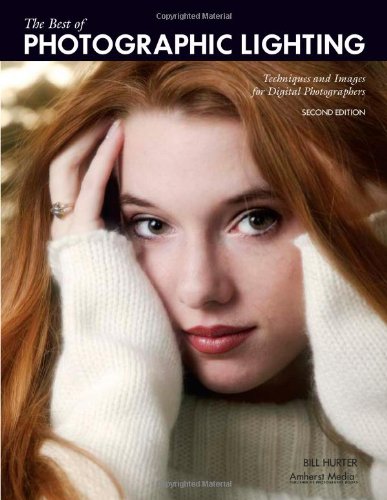
4. The Best of Photographic Lighting:
$7.36
5. 40 Digital Photo Retouching Techniques
$2.97
6. Photographic Portrait: techniques,
$17.97
7. Lighting Techniques for Fashion
$20.50
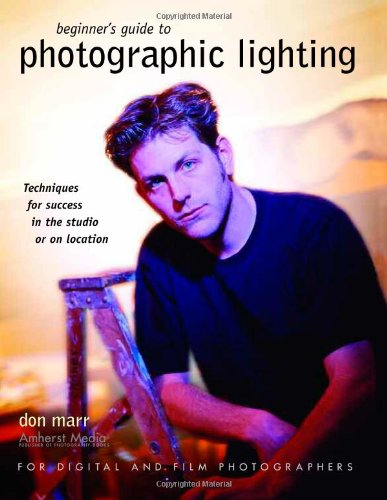
8. Beginner's Guide to Photographic
$2.19
9. 40 Digital Photography Techniques
$15.59
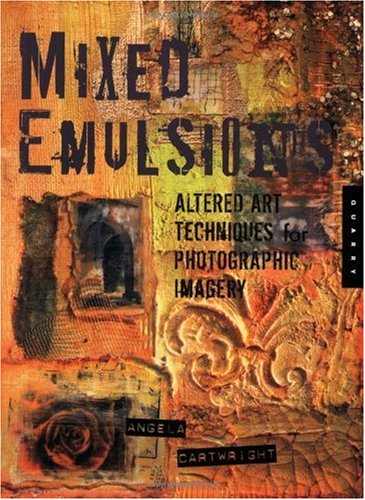
10. Mixed Emulsions: Altered Art Techniques
$38.78
11. Post Exposure: Advanced Techniques
$37.37
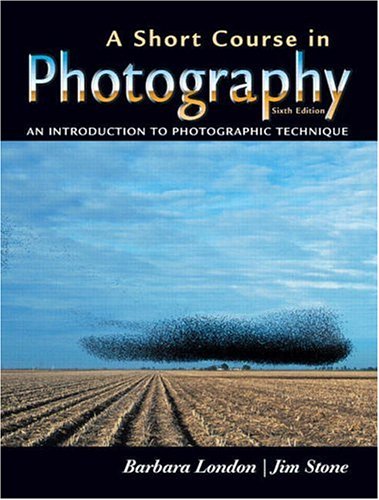
12. A Short Course in Photography:
$32.32
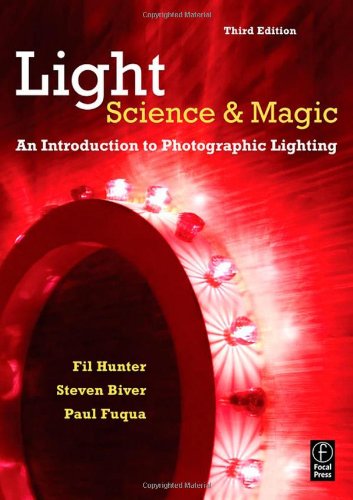
13. Light: Science and Magic: An Introduction
$6.23
14. 50 Fast Digital Camera Techniques
 
15. Photographic Perspective Drawing
$1.49
16. 50 Fast Digital Photo Techniques
$25.14
17. Scanning Negatives and Slides:
$9.85
18. Historic Photographic Processes:
$20.73
19. Jeff Smith's Posing Techniques
$21.96
20. Professional Portrait Lighting:

1. Photoshop CS3 Creative Photographic Techniques
by Chris Orwig
CD-ROM: Pages (2007-09-05)
list price: US$99.95 -- used & new: US$79.99
(price subject to change: see help)
Asin: 1596713488
Canada | United Kingdom | Germany | France | Japan
Editorial Review

Product Description
InPhotoshop CS3 Creative Photographic Techniques, professional photographer Chris Orwig goes beyond the basics, exploring the use of Photoshop to create beautiful and inspiring images. From first viewing a scene to preparing photos for expert output, Chris takes photographers through the whole process of creating great pictures. He also covers understanding color, making color corrections, working with special effects and filters, and much more. Exercise files accompany the tutorials.

Topics Include:

  • Creating compelling images
  • Enhancing and correcting color
  • Applying cross-processing effects
  • Exploring focus, infrared, and solarizing
  • Adding light
  • Actualizing vision with motion, color, and tone
  • Seeing photographically
  • Adding authenticity with film grain
  • Adding borders and edge effects
  • Blending layers to create visual impact
  • Adding shadows and tints
  • Combining multiple exposures
  • Correcting perspective
  • Recording custom actions and batch processing
  • Printing considerations and expert tips


Duration: 11 hours
On 1 DVD-ROM ... Read more

2. Technique of Photographic Lighting
by Norman Kerr
 Paperback: 208 Pages (1982-10)
list price: US$18.95
Isbn: 0817460241
Average Customer Review: 5.0 out of 5 stars
Canada | United Kingdom | Germany | France | Japan

Customer Reviews (2)

5-0 out of 5 stars Through and technical
This book is divided into two parts. The first covers theory and makes a thorough presentation of what light is, how to describe the various attributes and qualities of light, and how it interacts with. The author breaks it down into six terms and then describes the terms and how they affect a subject.

The second part of the book uses the topics covered in the first part of the book to show how these concepts are used in controlling light and making photographs.

I'm new to photography and have only read 8-10 books so far. This book, hands down, beats them all. The first section is a little deep and takes some re-reading to understand what's going on. But the benefit is profound. Understanding the concepts presented here gives me the ability to critically analyze photos and make some determination as to how light is working (or not working) in a photo and what actions I need to take as a photographer in order to get the results I want.

The style of some photos presented is dated, but the concepts and discussion is timeless.

Highly recommended!

5-0 out of 5 stars Is this the best photographic lighting book ever written?
Review of the 1979 hardback edition.
Included in this book are many of the lighting concepts that photographers may find familiar, but the author does an excellent job in delineating the differences in the qualities of light and explaining where they may be most appropriate.

He recommends a decision-making approach to lighting the subject based on six terms describing the qualities of light - brightness, contrast, diffuse, color, specularand direction.

Part 1 is concerned with the theory of light and covers vocabluary, light and shade realtionship, light and emotion and the control of light.

Part II (more than half of the book) is made up of illustrations of images with sidebar analyses of how lighting was used and why it seems to work well in the photo.

Several things I like about this book.The author goes back to art to illustrate the basis for several of the concepts explained in the book.The man is not a dictator - there is no certain way to present an image, there is the way you choose to do it but now you have some tools to understand why.Without being tech heavy he includes enough about lighting equipment to make it useful.He repeats concepts often enough and in different contexts so you understand them.

I have read many books on photographic lighting.If I could keep only one - this would be it.

Note 1: I understand that the first edition (which I have reviewed) is the better of the two.The second was written to a larger audience.

Note 2:This book was written before digital photography became so prevalent, but the concepts of lighting haven't changed - it still works. ... Read more


3. Lighting and Posing Techniques for Photographing Women (Pro Photo Workshop)
by Norman Phillips
Paperback: 128 Pages (2007-10-01)
list price: US$34.95 -- used & new: US$19.00
(price subject to change: see help)
Asin: 1584282215
Average Customer Review: 5.0 out of 5 stars
Canada | United Kingdom | Germany | France | Japan
Editorial Review

Book Description

Featuring 15 of the industry's top photographers, among them Monte Zucker, Michael Ayers, Dave Newman, and Kathleen Hawkins, this guide teaches professional photographers how to capture the most flattering views of the female form—and appeal to their largely female clientele—through careful lighting and posing. This reference emphasizes how from the very start of the process, certain techniques should be employed to create high quality images, such as using light to enhance a beautiful face and employing shadow and light to downplay any of the subject's percieved flaws or insecurities. With 36 detailed lighting and posing diagrams illustrating how to re-create the work of the pros, this handbook reveals numerous ways to create a technically flawless, saleable portrait of a female client.

... Read more

Customer Reviews (2)

5-0 out of 5 stars Approaches of a number of different pros outline different methods of achieving success.
Photographers who want to hone in on the lighting and poses that flatter women will love Lighting and Posing Techniques for Photographing Woman, covering a wide range of images from the traditional bridal image and business portraits to fashion shots, maternity images, and more. Posing techniques are presented to make women look their best, along with tips on using both studio and natural lighting, and different poses for business versus personal portraits. Approaches of a number of different pros outline different methods of achieving success.

Diane C. Donovan
California Bookwatch

5-0 out of 5 stars Worthwile
There are a lot of examples of lighting methods and styles to help you find the right light for the photographic look you wish to achieve. ... Read more


4. The Best of Photographic Lighting: Techniques and Images for Digital Photographers
by Bill Hurter
Paperback: 128 Pages (2007-11-01)
list price: US$34.95 -- used & new: US$20.88
(price subject to change: see help)
Asin: 1584282177
Average Customer Review: 4.5 out of 5 stars
Canada | United Kingdom | Germany | France | Japan
Editorial Review

Book Description

Bill Hurter explains the characteristics of light—both natural and artificial—in this in-depth guide. Fully exploring color balance, exposure, and light ratios, the handbook expands on skills learned in the studio to explain how to harness the beauty of less predictable lighting situations, like those shot outdoors or on location. Packed with tips from more than 30 top professionals on wedding, portrait, and commercial photography, this resource is sure to both educate and inspire.

... Read more

Customer Reviews (10)

5-0 out of 5 stars A must have!!!!
After reading this book i now have a broad range of new knowledge that I can use in my everyday shooting. Chapter one helped me out alot!!! Understanding lights "behavior" I do now. If any questions about lighting in various situations, this is the book of answers!

4-0 out of 5 stars Great read and instruction for those wanting to take their photos to the next level
Wow, who knew that lighting could be so simple, and yet so critical to the success of a shot. I've only started to put to work some of the techniques that were so clearly written and illustrated, but my shots have started taking on a whole new dimension. If you buy this book, you should also buy Bill Hurter's "Portrait Photographer's Handbook". There is some duplication of content, but each only enforces the other.

The most inspiring illustrations on how andy why strict attention to detail in lighting, and how to do it for next to nothing cost wise, was the numerous photographic references to the artistry of Fuzzy and Shirley Duenkel. Many of Fuzzy's images were used in both books, and are EXACTLY the quality images I seek to provide to my growning customer base.[...].

3-0 out of 5 stars Title should also include - How to abuse a picture with photoshop
Granted, there are some nice pics in this booklet and some useful techniques which would be helpful if I had more than one strobe, but I was looking more for practical lighting tips without over-abusing a digital image with Photoshop.Almost 2/3 of the sample photos have some kind of photoshop tampering.That's not photography, that's graphic design.Other than that, I'm glad that I didn't have to pay the $34.95 that was the suggested price on the actual booklet (I paid about $15).Overall, it's good for ideas on how to approach a situation with regards to lighting.

3-0 out of 5 stars Stuck in the 80's
As an overall guide to lighting techniques, this book gets all the basics right. However, when it comes to inspiring the reader it doesn't fare so well. Some of the photographs in "The Best of Photographic Lighting" are bordering on attrocious - many of them firmly stuck in the 80's tradition of painful soft lighting ala oldschool Playboy (maybe this shouldn't surprise me, since the cover is much lit this way). Too many tacky pictures of urban saxophone players lit "creatively".

In addition, the book has some pretty nasty examples of bad photoshopping - the winner must be the portrait by Monte Zucker on page 101, complete with jarring halo and stuff missing (in the image see how the lens is detached from the body - he simply just cut that detail out!) - I am shocked that this kind of sloppy work would make it into any book.

To sum up: solid basics, nifty tricks and diagrams - almost the opposite of inspiring in terms of imagery - a complete lack of punchy, modern work (as is the case in most of these books - though there should be no excuse in this case, seeing that it came out in 2005!)

I'd love to hear if anyone can recommend something a little more exciting and contemporary.. the closest I've come is "Lighting for Portrait Photography" by Steve Bavister.

4-0 out of 5 stars The Best of Photograpic Lighting: Techniques and Images for Digital Photographers
This is well written book with the basic lighting techniques for the motivated photographer. It is not a tutorial type of book but it provides a starting point which provides the reader the conceptual frame work in order to use lighting. This is a good book that is well illustraded. ... Read more


5. 40 Digital Photo Retouching Techniques
by Youngjin.com
Paperback: 176 Pages (2003-08-01)
list price: US$16.99 -- used & new: US$7.36
(price subject to change: see help)
Asin: 8931435029
Average Customer Review: 3.5 out of 5 stars
Canada | United Kingdom | Germany | France | Japan
Editorial Review

Book Description
"This dazzling, full-color book provides a fun, practical introduction to photo-editing with Photoshop Elements for both home and business users and anyone who wants to jump right in and enhance their images."
--Fred Showker, Editor/Publisher of DT&G Magazine

Are you new to digital photography and image editing software? This dazzling, full-color book provides a fun, practical introduction to photo-editing with Photoshop Elements for both home and business users--and anyone who wants to jump right in and enhance their images. Discover forty valuable techniques and hundreds of creativity-inspiring images, plus a CD filled with images for practice and a tryout version of Photoshop Elements 2--all at an exceptional price. You'll learn to use the File Browser, change image size, enhance faces, fix blurry images, correct under- and overexposed images, turn photos from color to black-and-white, remove people and objects from photos, add special effects, and much more.

Brought to you by Sybex and YoungJin.com, a leading South Korean book publisher founded in 1987. Youngjin.com is known for brilliant graphics and digital photography books, featuring exceptionally stylish designs and high-quality images.

40 Digital Photo Retouching Techniqueswill show you how to:
* Use Adobe Photoshop Elements 2.0
* Correct lighting and contrast
* Turn color photos into sepia-toned or black-and-white images
* Color black-and-white photos
* Remove red eye, eliminate blemishes, and enhance facial features
* Create studio backgrounds and professional picture packages
* Clean-up, combine, and resize images
* Create reflections and text effects
* Whip up photographic and other special effects
* Make a web banner
* Create a photo gallery for the web
* And more! ... Read more

Customer Reviews (2)

2-0 out of 5 stars Only for beginners
I can't say that this book helped me that much.The only reason I would give it a 3 is because the price, but part of the book was binded incorrectly.I mean honestly...who binds a book with an entire section upside down and backwards.I say save your money for a better book if you understand the difference between high and low resolution images.If you don't look it up...it will save you the money.

5-0 out of 5 stars Useful digital photographers handbook
40 DIGITAL PHOTO RETOUCHING TECHNIQUES.
YoungJin.com
Sybex Books http://www.sybex.com)
ISBN 89-314-3502-9

The fact that this book is not a large manual is a bit of a change from the norm, but then it doesn't have to be to do the job that it sets out to achieve. That is to give the reader exactly the information required to do the most common tasks that are required by the new user of digital cameras.

It does not go into lots of detail that is unnecessary for the audience that this book is aimed at, which is the new user of a digital camera who wants the best images they can achieve without a lot of learning.

It is not a dummies book, it just sets out the most common things that you may need to fix up after taking your photos with your new digital camera or scanned images.

Unfortunately the makers of the cameras do not tell you that there are generally certain steps which must be taken to improve the quality of your images once you have them in your computer. You can of course, take them to a photo shop to have the enhancements done for you, but this book helps you to do all those changes yourself. In effect it is a "User's Help Manual" in disguise.

Sensibly the book bypasses the complex learning curves and esoteric information that puts most learner users off even doing the most basic touch-ups that can turn an ordinary snapshot into a worthwhile image with much more of the detail enhanced, which is why the shot was taken in the first place.

Included with the book is a trial version of Adobe's Elements 2 which can be used to follow all the lessons in a simple, easy to follow fashion. This is a sensible way to market the program, and it certainly looks easy.

I would assume that unless you are studying photography and using a photographic manipulation program, all you want to do is have the best image you can get in the fastest time. After all, the learning curve is way to big for most users to bother with.

The book starts out introducing the user to the Elements 2 interface and explains what you are going to see, and what it means. This leads into opening files (images/photos for newbies) and is the only book that I have seen that lists double clicking the desktop to open the explorer panel as a shortcut.

Once you are familiar with that and can find your images you are given instructions on particular methods of saving your images once you have made your alterations, and why you use different methods for your final result, be it for print, slideshow or the web.

Web users need to be aware of file size constraints which are not considerations for other types of image storing, and this is something that gets overlooked very easily, especially when email is involved.

After that the reader is taken directly to the correction techniques for the most common problems to be encountered, and how to remedy them. This is the main body of the book and is where it shines.

The reader is shown, by means of simple instructions using screen captures, what it is that they need to do to get much more from a quick snap that didn't quite come out as planned. No need to understand what is behind the fix, just follow the instructions and if you can do what is explained, then you can apply the same fix to your own images, it is that simple.

Utilise this 200 page, glossy paper, almost pocket sized book to add makeup, take away blemishes, add and remove colour, change colour and antique images. You can also add special effects to enhance and alter images sensibly to achieve a totally different effect.

BOTTOM LINE.

This is a great book for the newcomer to digital photography, and the techniques will apply to almost every photo editing software, not just the Elements 2 program packaged as a trial.

The book is almost an ad for the program but that isn't a bad thing, just good marketing, and if it helps to get the most from your new images then it achieves what it set out to do.

This book is definitely a must for beginners to check out and keep beside the computer.

Tim Skyrme (2003)
http://www.artzend.com ... Read more


6. Photographic Portrait: techniques, strategies and thoughts on making portraits with meaning
by Robin Gillanders
Paperback: 144 Pages (2004-05)
list price: US$29.99 -- used & new: US$2.97
(price subject to change: see help)
Asin: 0715316524
Average Customer Review: 4.5 out of 5 stars
Canada | United Kingdom | Germany | France | Japan
Editorial Review

Book Description
In this comprehensive work, celebrated portraitist and teacher Robin Gillanders explores the subject in depth. Looking at all kinds of portraiture in both colour and black and white, he discusses how to set up the shot, how to pose the sitter, how to compose the photograph, how to light it, and ultimately how to give portraits real meaning. ... Read more

Customer Reviews (4)

4-0 out of 5 stars Good Starter Book
This is a great book for those just starting out in Portrait photography. The author spends more time explaining the philosophical and aesthetic approach to portraits as opposed to the technical side. All of the photographs included are by the author. Some of the photos are stunning while others are rather average. The images range from personal snapshots to formal commissions and editorial work. If you are already comfortable taking portrait photography and are interested in learning new lighting or darkroom techniques, look elsewhere. On the other hand, if you are timid about photographing living, conscious, subjects the author gives great insight to the interactions taking place between the photographer and his/her subject.

5-0 out of 5 stars Great portraits and interesting techniques
Gillanders is a solid photographer with a great portfolio of portraits AND he's able to talk about technique in an easy to grasp way. I found myself really studying this book and going back to it again and again for ideas. Glad I own it.

5-0 out of 5 stars Wonderful and inspiring
This is a wonderful book if you want a better understanding of portrait photography.The author gives his insight from teaching and working professionally into the psychology of the work.He explains not only how to achieve certain effects, but why he would do it that particular way.He even gives suggestions on how to work with your subject and perspective on what the portrait photographer is.Every page has beautiful portraits that he has done that have given me a great deal of inspiration.I don't know that I would consider myself as semi-pro yet, but this book was very helpful and inspiring.

4-0 out of 5 stars Aimed at the intermediate and advanced, but useful to the novice
I received this as a Christmas gift in 2004.It wasn't quite what I was hoping for at the time, which was a detailed how-to guide for the technical aspects of portrait photography.

There is some good material relating to that here, but as I read through the book, it became obvious that Gillanders' main goal was to share strategies for portrait-making with people who already know the technical end.The target audience could be described as the pro or semi-pro, which certainly describes me better now than it did in 2004.

As a result, I've gleaned more out of the book with subsequent readings.Now that I may actually have to deal with portrait clients, Gillanders' advice on the subject seems more poignant; likewise, since I have my own studio kit to set up, I can appreciate the beauty of his tricks for using fewer lights on location.

If nothing else, the book is useful as a source of inspiration for budding photographers.Gillanders' work is spread throughout and demonstrates an interesting blend of classical composition with a willingness to violate that same tradition.His photos are almost always locations shots too, so except in the most technical sections, you'll hardly ever see a face in front of a monochrome background.That alone is a nice reminder to the beginner that portraits don't always have to resemble your yearbook picture. ... Read more


7. Lighting Techniques for Fashion and Glamour Photography
by Stephen A. Dantzig
Paperback: 128 Pages (2004-12-01)
list price: US$29.95 -- used & new: US$17.97
(price subject to change: see help)
Asin: 1584281472
Average Customer Review: 4.0 out of 5 stars
Canada | United Kingdom | Germany | France | Japan
Editorial Review

Book Description

Addressing the unique challenges that come with photographing models, this guide provides advanced lighting techniques designed to improve the artistic quality and marketability of a photo shoot. The science behind lighting is explained, from wavelengths to exposure, all with an eye toward bringing each picture to its fullest potential. Metered lighting, the difficulties of working outdoors, and the importance of lighting each pose correctly are discussed in full. Detailed explanations of classic lighting setups are included.
... Read more

Customer Reviews (6)

2-0 out of 5 stars Uninspired Photos
The style of the photos are dated and not particularly inspiring. While the content and actual information is solid, I expect the photography books I purchase to have at least a passing ability to impress with photos of clarity and beauty.

4-0 out of 5 stars a book for amateurs/beginners
the book has good illustration to each different types of lighting equipments. but the pictures are a little out of current glamour trend, and the colors are not that good. it does not talk about how to work with your object - the FASHION and the model. it's more like a headshot tutorial. it's good for beginners to grasp essential knowledge of lighting equipments, but on top of that, you need a lot of studio work to testify your judgement of the effects of all these devices.

it's a good tutorial, but not yet leading you towards creating master pieces.

3-0 out of 5 stars more of the same but poor diagrams
I found this book to be ok but the diagrams for lighting set up are very poor- orinetation is not even correct and there is little to explain the finer details of the light positioning etc. Only some of the photos give a diagram/explanation of how lighting was achieved and even then its poor and difficult to replicate.Master lighting guide by christopher grey is a much better book in my opinion.

5-0 out of 5 stars Exactly what I needed
After reading Master Lighting Guide, I wanted to move to the next level. After looking at a few books, I got this one. It was just what I was looking for. The lighting calculations are a bit complicated, but it does help to explain how he set up the shots.

4-0 out of 5 stars the same
its a good one but it says the same like in others books, it talks about the nature of light, then of every type of photography you can make and the main characteristics of the light to get those.
I would have like it to talk more about the light ratio in each picture captured. ... Read more


8. Beginner's Guide to Photographic Lighting: Techniques for Success in the Studio or on Location
by Don Marr
Paperback: 128 Pages (2004-07-01)
list price: US$34.95 -- used & new: US$20.50
(price subject to change: see help)
Asin: 1584281332
Average Customer Review: 3.5 out of 5 stars
Canada | United Kingdom | Germany | France | Japan
Editorial Review

Book Description
Teaching beginner photographers how to create good, flattering light, this book discusses topics such as proper equipment, developing an eye for form, and positioning equipment to maximize the appeal of a subject. As studio photographers face a host of lighting challenges not often encountered outdoors-from lighting reflective objects to photographing food-this guide provides unexpected tips and surprising solutions for adding a jolt of creativity to images. Step-by-step guidance on using the ordinary to create the extraordinary is provided. With its dual focus on creating lighting styles that are both technically correct and creative, this book shows photographers how to effectively light everything from portraits to product shots with confidence. ... Read more

Customer Reviews (12)

5-0 out of 5 stars If i just had one book to learn this from...
I've taken a variety of classes and read a number of books to improve my lighting skills. i found this book to be the one that delivered the best "a-ha" breakthrough on understanding the basics of lighting--and then some. the author very systematically goes through metering and set-up for a single light shoot, and then adding additional lights and other techniques to produce cool results. he also provides some extremely useful methods for working with what you've got (boring backgrounds, mixed lighting conditions etc.) to produce some very interesting and satisfying results. all one really has to do is follow the exersizes that he demonstrates through diagrams and photo examples in order to learn the techniques he recommends.
I found this book to include more than enough--but not too much--information. it was neither too simplistic or too overwhelming. i recommend it to photographer friends who are strobe-phobic and thumb through it again periodically as a refresher.

3-0 out of 5 stars A Disappointment
Congratulations - you bought a fancy camera, purchase expensive lighting equipment, now you are searching for a book to help you learn the tricks of the trade.Sadly, you search DOES NOT end here.This book, if you want to read it is much better checked out from the free library than purchasing it.The author sorely misses the idea of what beginners need to succeed in studio photogrpahy.The images seem out dated and the author provides no diagrams.In an attempt to make his book readable to a larger audience he waste space assuming that his readers do not have the correct equipment for the job.Don't waste the money, but I cannot be too critical as there are some morsles of lighting wisdom scattered around.

3-0 out of 5 stars First few chapters
The first few chapters are ok for a beginner like myself but most of it is dealing with pro equipment which I dont have and studio which I dont have. I am not going to throw the book out it does have good points, but not really what I was looking for. I did like the light explantion with out all the math Hard and soft. I am still looking for the book that will tell me how to get good lighting at home with what I have on hand.

2-0 out of 5 stars Not for visual learners
I bought this book almost a year ago and really tried to make use of it.Although it's obvious that the author has extensive photography knowledge I don't think he did a very good job of passing it on to the beginner.He gives really no diagrams for lighting set up or any other beginning helps.If you are like me and really are a visual self learner and an absolute beginner to photography I would not recommend buying this book.

3-0 out of 5 stars This book is PRETTY useful for ADVANCED photographers
If you are new to photography you may find the first two chapters useful. However, if you are not fully comfortable with terms like exposure, highlights, and bracketing this book will be confusing if not intimidating.


The book covers all aspects of studio photography lighting. Here are some of the useful things I found in this book:

*A clear description of the basics of light (that was useful soft vs hard, etc)
*Why and how to use light meters (yes they can be useful for digital photography too!)
*Practical one light setups (I learned the classics light setups here)
*Using background lighting ( like white or black background)
*Various useful tips and information throughout the book like using gels to change color temperature and using fill lights to increase details in shadows

However the book comes with some weaknesses too, like:

*Its mainly written for film photography (you will have to be creative to use his tips with digital photography)
*The writing level is pretty average and at times boring
*The book needs to be better organized
*More pictures would help illustrate concepts and practices better (for God sake he is a photographer!)


The title of the book is missing one word, professional. The title should read Beginners Guide to "Professional" Photographic Lighting.

If you want a book that's truly for beginners then consider Photographic Lighting Simplified by Susan McCartney. ... Read more


9. 40 Digital Photography Techniques
by John Kim, Youngjin.com
Paperback: 176 Pages (2003-08)
list price: US$16.99 -- used & new: US$2.19
(price subject to change: see help)
Asin: 8931435010
Average Customer Review: 4.5 out of 5 stars
Canada | United Kingdom | Germany | France | Japan
Editorial Review

Book Description
"This friendly, full-color book will help you have fun with your digital camera right away."
--Fred Showker, Editor/Publisher of DT&G Magazine

Are you a new digital camera owner who wants to boost your picture taking skills and explore your creative side? This friendly, full-color book will help you have fun with your digital camera right away. You'll learn to compose good shots, play with light, shoot close-ups, capture objects in motion, experiment with filters, and much more. Discover forty valuable techniques and hundreds of creativity-inspiring images, and then test out the free software on the companion CD. You can get all this value at a remarkably affordable price with 40 Digital Photography Techniques for Beginners.

Brought to you by Sybex and YoungJin.com, a leading South Korean book publisher founded in 1987. Youngjin.com is known for brilliant graphics and digital photography books, featuring exceptionally stylish designs and high-quality images.

40 Digital Photography Techniqueswill show you how to:
* Choose, use, and accessorize digital cameras
* Take sharp, high-quality photos
* Understand and use various sources of light
* Capture great portraits of people and children
* Take interesting photos on vacation, on snowy or rainy days, at sunrise and sunset, and at night
* Shoot everything from panoramas and architecture to products, food, cars, and pets
* Transfer, edit, and print you images, or put them on the web
* And more! ... Read more

Customer Reviews (9)

5-0 out of 5 stars The best book for starters!
This book is great for starters in digital (or even film) photography. If you don't quite understand what all the settings in your digital camera are or used for, this book will open your eyes and will have you using all different settings really soon.
The book is very easy to read and explains a lot with pictures to show you the results.
Also, this books talks about lightining, how to take better photos of people, how to adjust the settings to take inside and outside photos. It gives plenty of neat tricks for you to try out with your camera without having to buy extra equipment.
Although if you really want to spend some money, this book also talks about good equipment, like lenses, light bouncers, and more.

5-0 out of 5 stars Great starter book
This book is written in simple lucid language, with good clear pictures makes it perfect for beginners and 'getting semi serious' photographers,
my pictures have become much better as result of the knowledge out of this book plus i have a better eye on photography on the whole, in the past had never put a thought on clicking a button on the camera..no complains

4-0 out of 5 stars An excellent overview for beginning digital photographers
As a semi-professional photographer I am often asked for camera and photography advice which I gladly provide.What I am more at a loss for is what you get is the best resource for someone trying to learn a little bit more of their own.This book is a great solution, for which I am keeping a copy around simply to loan out to those in this situation.

40 Digital Photography Technique is designed for the beginner and maturing intermediate photographer and does an excellent job covering everything from the basics of how to use your camera, to composition, how to shoot in various lighting situations, macro photography and much more.Though it does not go into great depth in any one of these subject areas, it is a great overview and touches on a lot of areas that new photographers may not think of.It attempts to be a beginner's guide and provide ideas and how to use on a wide variety of areas pertaining to photography, and it does a great job.

I highly recommend this title to anyone who has picked up a new digital camera or may have one laying around that they have not gotten as much use of as they thought they might have won about it.Your camera along with this book may become a new hobby and passion that you never knew you had within you.

5-0 out of 5 stars Great book for those with consumer point-and-shoot cameras
This book teaches the principles of digital photography--the quirks, the problems, the peculiarities, and how to work with these to get the most out of your camera.Most of the other books on the market spend one chapter on these fundamentals and then spend the next 400 pages discussing the functions of expensive, prosumer DSLR's like the Canon Rebel or Nikon D50/70, and post-processing on the computer.This is great if you have a DSLR and are looking to do a lot of post-processing.

However, if you have a consumer level point-and-shoot camera like the Canon Elph, Nikon Coolpix, Kodak Easyshare or Sony Cybershot, this extra material won't apply to your camera because it doesn't have these advanced manual controls.What this book does for the P&S user is teach you why some of your photos are coming out blurry, overexposed or dark.How to frame an exciting picture.How to use the flash to improve some pictures, and when the flash isn't appropriate.How to use the manual controls that are included on these cameras and how these controls can help you succeed in taking better pictures.

3-0 out of 5 stars Pretty basic
If you have a camera with manual controls and know how to use them, this probably isn't the book for you.If the extent of your photography experience is 110 Instamatic, this book is worth a look.If you're looking to buy a new digital camera the information is a little dated (the largest CF card is 512MB?), but the information on desirable features is still valid.Most of the images are OK, but it's occasionally difficult to discern the point being made.For example, you're not going to be able to tell the difference between Normal, Fine, and Super Fine JPEG compression levels on a 2" image of mediocre quality to begin with.Occasionally it's just wrong, like the discussion of pixels overlapping in the CCD causing noise--first, they can't possibly overlap, second noise is caused by the higher amplification needed due to the smaller pixel sizes.

The included CD isn't worth much, nothing at all if you're a Mac user.

A very quick read unless you're a beginner, but not a bad book if that's what you need. ... Read more


10. Mixed Emulsions: Altered Art Techniques for Photographic Imagery
by Angela Cartwright
Paperback: 144 Pages (2007-11-01)
list price: US$24.99 -- used & new: US$15.59
(price subject to change: see help)
Asin: 1592533698
Average Customer Review: 4.5 out of 5 stars
Canada | United Kingdom | Germany | France | Japan
Editorial Review

Book Description
Over 25 unique effects illustrated with process photos, finished examples, and variations.

Mixed Emulsions is a follow up to Karen Michel's book, The Complete Guide to Altered Imagery. Mixed Emulsions: Altered Art Techniques for Photographic Imagery takes a slightly different tact, bringing traditional and digital photography front and center, showing the many ways that photographic imagery can be manipulated, not electronically, but using various art materials and techniques. The chapters explore ways to add color (paints, oil sticks, watercolors, inks), ways to add texture (embossing powders, gessos, pastes, wax), and special effects (printing on unusual substrates, imprinting, photo mosaics, using tissue, fabric, cardboard).

Altered art continues to grow as an area of interest for many kinds of crafters.

  • A great technique book for artists looking to expand the creative possibilities for altered photography
  • A gallery of artwork by other well-known artists offers further inspiration
... Read more

Customer Reviews (10)

4-0 out of 5 stars An ideas book more than a practical book
I have long been enamoured with the concept of enhancing my photographs, but had no idea how to achieve the effects being showcased in this book until now. I realise a lot of the end results in this book can be visually achieved in Photoshop - but photoshop doesn't give you the 3D look that using mixed media and emulsions. Cartwright's book is fantastic for giving ideas, and showing you the end results of using mixed media to enhance and take your photograph to the next level. It is also very useful for giving you the names of the tools/media to achieve these spectacular results.

I did however find the book was rather low (OK, just about non existent) on telling you how to apply these techniques - effectively, and what not to do. I also observed a lot of it could be put down to 'layout' which she didn' discuss at all. A few simple exercises at the back would have been very helpful just to let us get our feet wet. I suspect it would have also bought the rather useful tip pointed out by a reviewer below that photos produced on your ink jet are not going to be good for having emulsions applied! Thank goodness for reviewers - I was about to buy a state of the art printer as well as various emulsions!

However, as this is the first book I have seen in this area and am now very relieved to know what types of paints and other media I should be purchasing to start dabbling in enhancing my photo's, I am truly grateful to Cartwright for at least introducing and providing the basic knowledge needed to get going. I am glad now I may be able to (eventually) create my 'enhanced' photographs without having to take a graphic arts degree. It is also simply a very inspiring book with lots and lots of beautiful images (and sparse descriptions so you have a vague idea how it was achieved). Ideas will abound from just looking through the pages!

5-0 out of 5 stars Great!
I love this book.A lot of the information is not new, but the book is inspiring and definitely worth the money.Great projects, great photography

5-0 out of 5 stars Good reference gu ide
This is a good reference guide for someone wanting ideas and explanations of how to create the ideas...I recommend it.

5-0 out of 5 stars Can't stop going through it.
One of the best how to books I have read in a while.Have been going through the chapters one at a time and applying the lessons. Will soon have to purchase another, because this one will be worn out.If you are looking for something new in the Mixed Media world, this is it.

3-0 out of 5 stars mixed emulsions
I think this book would be good for new folks wnating to get some ideas on how to use photos in mixed media art.
I was hunting for some ideas on how to use my digital photos with my hand made felt. I didnot feel i found this information but was interesting to see works of other artist. ... Read more


11. Post Exposure: Advanced Techniques for the Photographic Printer, Second Edition
by Ctein
Paperback: 192 Pages (2000-10)
list price: US$47.95 -- used & new: US$38.78
(price subject to change: see help)
Asin: 0240804376
Average Customer Review: 4.5 out of 5 stars
Canada | United Kingdom | Germany | France | Japan
Editorial Review

Book Description
Distilled from over thirty years experience and addressing both black-and-white and color printing, Post Exposure's purpose is to teach photographers the refinements of photographic printmaking, taking them from making merely competent prints to making excellent ones.


Post Exposure provides clear explanations of principles and theory, but the focus is on practical techniques and examples of fine printmaking. Post Exposure contains numerous photographic prints, including sixteen pages of color.

Covers the producing of prints with various enlarger heads
Updated "Tricks of the Trade" covering safelight fogging, adequate wash steps in reversal print processing, and litho film masks for dodging and burning in
Expanded coverage on how to do split-filter printing, how to use Sistan and color film masking ... Read more

Customer Reviews (7)

5-0 out of 5 stars just started to read
if all the information after page 20 is as valuable as what i have read i will say that this is one of the top books on the subject..not for the begining photographer...some darkroom work really adds impact to this book

5-0 out of 5 stars An indispensable photographic printmaker introduction
Now in an updated and expanded second edition, Post Exposure: Advanced Techniques For The Photographic Printer continues to be an indispensable photographic printmaker introduction and reference to the underlying principles and practices needed to produce professional quality photography prints. The clear text fully and cogently explains all of the principles and theories, with a "user friendly" focus on practical techniques illustrated with a number of examples of fine printmaking. All aspects of printmaking are covered included safelight fogging, adequate wash steps in reversal print processing, using litho film masks for dodging and burning-in, new coverage on split-filter printings, the use of Sistan, and more. Post Exposure is a "must" for any photographer aspiring to produce professional quality photographic prints.

5-0 out of 5 stars Full of tips for the serious printmaker
Do you know how to make an unsharp mask for your color negatives? How to evaluate your enlarging lens? Why your variable-contrast prints might be unsharp? These are just three of the unique tips I could found on Ctein'sbook and that made it worth its price but the whole book, from cover tocover, is superb reading material.

Although the book is assembled fromseemingly disconnect articles, it is an out of the ordinary collection oftechniques focused on improving your darkroom work.

A must for dedicateddarkroom workers.

5-0 out of 5 stars Excellent discussion of factors which enhance print quality.
Ctein indicates up front that this book is notdesigned as an introduction to printmaking, but is dedicated to teaching the refinements of printmaking.At this the book remarkably successful.Topics includefilm characteristics and calibration, enlarging lenses and the subject ofimage sharpness, black and white and color printing, and many tidbits ofuseful information gleaned form many years of experience andexperimentation.Those familiar with and comfortable with graphicalinformation will particularly like the book.From my perspective thesection on image sharpness was extremely well done, including a technicaldiscussion about what matters and what does not as well as a tabulation ofrecommended enlarging lenses and their characteristics.Another gooddiscussion is the thorough presentation of contrast and the effect ofvarious filters on different papers.Although color printing is alsocovered, even for those who limit themselves to black and white the contentin the color sections is interesting.Ctein presents facts for the mostpart, but on occasion also states his opinions.When he does, he makes itquite clear he is doing so.This is quite simply a superb book, one of thebest I have read, and filled with useful information.

5-0 out of 5 stars Excellent book for Advanced B&W printers.
A landmark book for serious black and white printers who have the basics under control.If you are ready to print truely excellent prints and want to know how to control sharpness and contrast, how to select the rightpaper for the difficult print, how to make your prints stand above allothers, then this book is for you.Ctein's book coupled with EdieEphraumus' "Gradient Light" will give you the confidence to knowyour prints are better than most anyone else on the block! ... Read more


12. A Short Course in Photography: An Introduction to Photographic Technique (6th Edition)
by Barbara London, Jim Stone
Paperback: 224 Pages (2005-03-27)
list price: US$46.20 -- used & new: US$37.37
(price subject to change: see help)
Asin: 0131933809
Average Customer Review: 4.5 out of 5 stars
Canada | United Kingdom | Germany | France | Japan
Editorial Review

Book Description
This easy-to-use, inexpensive book introduces beginning picture takers and makers to the fundamentals of photography and suggests ways in which they might create photographs that have meaning. Oriented toward traditional black and white photography, the book also explores digital techniques and web photography resources, equipment, cameras and camera accessories, the exposure and development of film, and the making and finishing of prints. All aspects of the process are explained and illustrated clearly in two-page spreads, each of which addresses a self-contained topic. For people who don't know anything about photography and would like to learn, and for those who want to make better pictures than they already do.
... Read more

Customer Reviews (7)

4-0 out of 5 stars A Good Introduction
This book was recommended for an introductory photography class that I am taking.I think it does a good job introducing certain aspects of photography.As some who has been taking pictures for years in digital, it was good to learn some of the fundamentals of Photography which help to explain some things which help you to understand some of the mechanics of Photography a bit better.

I would say this book is a stepping stone.It gets your feet wet in a bunch of aspects of photography (and a bit to much time on film and film processing if you are shooting digital) but this would be a good gateway book to a more extensive study of aspects of Photography.

I am particular fond of this book as a first step, followed by a few other books:

Understanding Exposure: How to Shoot Great Photographs with a Film or Digital Camera (Updated Edition)
Learning to See Creatively: Design, Color & Composition in Photography (Updated Edition)
Beyond Portraiture: Creative People Photography

What the "short course" spends a few brief pages on, these other books explore in much greater detail.

This is a good quick overview for a beginner or someone who needs a quick refresher course in Photography.

4-0 out of 5 stars Worth every penny!
A Short Course in Photography: An Introduction to Photographic Technique (6th Edition)

Great book!

5-0 out of 5 stars Perfect for the beginner student of photography
This book is the text used at Arapahoe Community College located in Colorado for the beginningphotography course. Material is presented in a logical order that can be clearly understood. In my case, I am taking the course as part of a study program to fill gaps in knowledge that I have not been able to fill through self study. The course includes black and white film; slr cameras; and darkroom developing.This book serves my purpose perfectly.

3-0 out of 5 stars No new info
I got this for my college class. I read the whole book in one night because there isn't much to it. There are lots of pictures which I liked to look at but I already learned everything in here from just photographing on my own. Luckily I got it new at a used price so I can sell it back to the bookstore and make some money.

5-0 out of 5 stars much better price than the college bookstore
My daughter needed this book for a community college Introduction To Photography class.I got it for a much better price than the college bookstore.We are keeping this excellent book after the class if over. Thanks! ... Read more


13. Light: Science and Magic: An Introduction to Photographic Lighting
by Fil Hunter, Steven Biver, Paul Fuqua
Paperback: 320 Pages (2007-03-21)
list price: US$39.95 -- used & new: US$32.32
(price subject to change: see help)
Asin: 0240808193
Average Customer Review: 5.0 out of 5 stars
Canada | United Kingdom | Germany | France | Japan
Editorial Review

Book Description
An amazing (and some would say magical) resource on photographic lighting that has been talked about in the community and recommended for years.This highly respected guide has been thoroughly updated and revised for content and design - it is now produced in full color!It introduces a logical theory of photographic lighting so if you are starting out in photography you will learn how to predict results before setting up lights. This is not primarily a how-to book with only set examples for you to copy. Rather, Light: Science and Magic provides you with a comprehensive theory of the nature and principles of light to allow you to use lighting to express your own creativity.

Numerous photographs and illustrations provide clear examples of the theories, while sidebars highlight special lighting questions.Expanded chapters on available light in portraiture, as well as new information on digital equipment and terminology make this a must have update!

*New four color art package with contemporary lighting examples
*Based on the behaviour of light
*Theory book for serious photographers ... Read more

Customer Reviews (73)

5-0 out of 5 stars must have book
no serious amatuer or prophotographer should be without this book on light and how to use it properly for better pictures.....film or digital it makes no difference

5-0 out of 5 stars Top notch
It would be hard to add much to what has already been said by so many.This is an excellent book on lighting for photography.I'd highlight again that this isn't a cookbook but instead focuses on the fundamentals.If you're looking for step by step instructions on how to reproduce the latest lighting gimmick you've seen in magazine ads then go elsewhere.If you're looking for a book on the fundamentals that will allow you to create your own lighting with ease and reverse engineer anyone else's lighting then this is the book you want.There are lots of books on photography and lighting out there and few that have much useful to say.This is probably one of the highest quality and most consistently useful books in the field of photography I've ever seen.

5-0 out of 5 stars Help for glass and metal photography
Recently, I was asked to photograph clear, glass dishware.My search for resources led me to "Light: Science and Magic: An Introduction to Photographic Lighting" by Fil Hunter, Steven Biver, and Paul Fuqua.My questions about glass photography were answered, and the examples and hints given were extremely useful.This text will not answer all your questions, and other sources are needed for detailed operational instructions for flash lighting.Hunter, Biver, and Fuqua will give you an excellent overview of concepts and "how to" for key lighting problems including shiny metal, glass and protraits. An excellent use is as a text for continuing education photography students, and as an addition to the library of advanced, non-pro photographers.

5-0 out of 5 stars Absolute must have
If you're just starting with photography and have mastered your camera, exposure basics and composition basics - it's time to read this book. If you're a professional or advanced amateur - it's time to read this book. Absolutely eye opening. Worth every penny. Enlightenment in every chapter.

5-0 out of 5 stars Don't be put off by appearances...
Okay so when I opened this book I wasn't too excited. There weren't a lot of pretty pictures... and there were (eek) diagrams. It looked like a text book, and an old fashioned one at that. But once I started reading it, everything began to come clear. For the longest time, lighting has been a mystery to me. And achieving acceptable lighting has been a guessing game because no one has ever explained it to me. This book explains it all. It covers some of the more notoriously difficult lighting scenarios on the premise that if can master those, you can photograph anything. It also lays the groundwork for you to make your own creative lighting choices. After reading a good portion of this book, I feel like I understand the science of lighting enough feel more confident in choosing appropriate lighting for many situations. If you are new to photography you can save yourself a lot of time and a lot frustration by reading this book. ... Read more


14. 50 Fast Digital Camera Techniques (50 Fast Techniques Series)
by Kevin L. Moss
Paperback: 295 Pages (2005-10-31)
list price: US$24.99 -- used & new: US$6.23
(price subject to change: see help)
Asin: 0764598066
Average Customer Review: 4.5 out of 5 stars
Canada | United Kingdom | Germany | France | Japan
Editorial Review

Book Description
Praise for 50 Fast Digital Camera Techniques

"Applying the lively techniques in this book will make anyone's digital camera a more productive tool."
-Al Francekevich, professional photographer, on the first edition

Your digital camera is an amazing and versatile creative tool, with features and capabilities you probably haven't even explored-until now. Here are step-by-step instructions for 50 hot new techniques that take advantage of all the latest camera features, fully illustrated with stunning color photos taken by the author. No matter what type of digital camera you have, this book will help you create more professional pictures.

Your guide to amazing results with your digital camera
* Select the right shooting mode and change critical settings in seconds
* Use exposure and focal length to get sharper photos
* Shoot fantastic candid, nature, and pet pictures
* Learn the secrets of shooting dramatic skyscapes and urban landscapes
* Plan shots for creative digital manipulation
* Download and print your photos or share them on the Web
* Create a photographic essay or convert color shots to artsyblack-and-white ... Read more

Customer Reviews (17)

5-0 out of 5 stars Useful Information
This book was very useful when I first started using a digital camera. I was fairly new to photography and had very little knowledge of the subject. Not only did this book help me to expand on technique, it also gave me inspiration to learn more about photography in general. I am hooked. Not obsessed but certainly inspired. I still page through it from time to time, always getting a new perspective.

4-0 out of 5 stars Useful for beginners and pro's alike.
I have been using digital cameras for the past five years and film for the 30 years before that.

I found this book to be very informative and up-to-date. The advice varies from very basic to advanced, but each technique is thoroughly explained and the pictures are well reproduced and seem reasonably current. As with most books like this, the eye-glazing point is approached quite early, but regular re-reading seems to allow the advice to "take." I feel this was a worthwhile addition to my technical library.

2-0 out of 5 stars Much ado about nothing
This is a rather useless book most of the techniques are known even to amateurs. Its title is misleading you think you will get something about digital cameras and instead you get techniques that have already been given for analog camera.

5-0 out of 5 stars Great book!!
I gave this book 5 stars as I enjoyed reading this book from the moment I got it in the mail. It cuts to the chase with how to get great animal, wedding, nature, people etc,..shots. It explains in detail what settings you should use for each shot as well as what settings the pros use for all the great magazine photos. I flip through this book about everyweek just for a refresher. I also take this book along with me in my camera bag too. Get this book!!!!!!

Jason Green Sr.
Franklin, LA

2-0 out of 5 stars Good book for beginners
I brought this book based on good review here and read it through.I found some mistakes, also disapointed for not going to details in other chapters or not talking some important things in photography.But I think for people never taking picture before, this is a good book to introduce photograph to them.

Now, I like to pointed one obvious mistake when author talked about the lens F/x.x aperture number.He said that F actually means 1. That is wrong.F means the focus length.The aperture number is an indication how much light can get through the lens. A f/2.8 lens will allow more light through than a f/3.5 lens when they have the same focus length.For build a compact camera, most manufactures try to build smaller and lighter camera.When you select a camera, select bigger aperture number on the lens will enable you take picture at lower light.

When author explains in the book why smaller pocket size camera has deeper field range, he also failed to explain that smaller pocket size camera also has smaller lens, sometimes the tiny lens has f/3.5 or even worse aperture number.The aperture number is causing the field depth to be deeper, which may not be a bad thing for point and shot camera, but not work well in low light.

The book did mentioned about aperture priority and shutter priority.But not in any depth at all, not enough for anyone to take advantage of the camera functions by following the book.I am really disapointed about that.It did not talk about lens filters at all, which is very important technique but totally ignored.

In the 50 techniques talked in this book, at least 10 of them is not related to the camera directly, rather is how to use photoshop element software, how to print.But in the how to print section, it did not discuss the paper differences.From my experience, using HP photo paper and Epson photo paper will produce different result in any printer. If anyone talks about printing photos, how to select paper to get best result should be discussed.But author did not get into that details either.

I give this book two stars because it does help people to learn how to select subject, which is also an important part of taking good picture. ... Read more


15. Photographic Perspective Drawing Techniques
by Sid Delmar Leach
 Paperback: 191 Pages (1989-12)
list price: US$39.95
Isbn: 0070368147
Average Customer Review: 5.0 out of 5 stars
Canada | United Kingdom | Germany | France | Japan

Customer Reviews (1)

5-0 out of 5 stars The Best & Only Book for Learning Perspective from a Master
Of all the books out there, and there are multitudes which purportedly teach the inquiring designer, architect and artisthow to sculpt shapein two dimensions with the appearance of three dimensionswith their own hands - this is truly the only book that delivers .......... on the basics of technique through the subtlties of style and nuance.There is no computer software that can replace the human response to the hand drawn line, and Mr. Leach is a master teacher who leads the student through a most deceptivelythorough training session which leaves no frustrating blanks in the process. It is such a shame this book is out of print now as well as the first one, for they are both treasures for the artist in all two dimensional media. ... Read more


16. 50 Fast Digital Photo Techniques with Photoshop Elements 3
by Gregory Georges
Paperback: 368 Pages (2004-12-03)
list price: US$24.99 -- used & new: US$1.49
(price subject to change: see help)
Asin: 0764572121
Average Customer Review: 4.0 out of 5 stars
Canada | United Kingdom | Germany | France | Japan
Editorial Review

Book Description
* This update features fifty fast and impressive digital photo techniques-eighty percent of which are new since the previous edition
* The CD-ROM includes a bonus e-book of the entire first edition-giving readers two books for the price of one
* Developed by professional photographer and eDigital Photo contributing writer Gregory Georges, the techniques are valuable to both pros and hobbyists alike
* Uses the latest version of Adobe Photoshop Elements in the examples, but the techniques are readily adaptable to most image-editing programs
* Includes techniques for traditional photo effects, combining photos, artistic effects, animations, digital photo blends, and much more
* Step-by-step details, in-depth instructions, and plenty of illustrations-including a full color insert-make it easy for people to apply the techniques to their own photos ... Read more

Customer Reviews (29)

5-0 out of 5 stars Fantastic! Step-by-Step Instructions
All of Gregory Georges books are concisely written so that even the novice can follow the steps. I have been teaching Photoshop and Photoshop Elements for several years and these 50 Fast Digital books are a must have for my students. If you are one of those people that needs to know the "Why?" as to how everything works, this might not be the book for you. If you want to know "How" to get something done-this is it!
Jacki Sutherland

5-0 out of 5 stars Inspirational and Good Value
I think that some of the reviews on this page are obviously for the previous edition, which I'm sure was getting quite dated by the time this one came out. However, I can attest that this book is generally superb. Georges' photos are very skilfull, his instructions clear. I've owned a copy for two days and my photos have already improved to the extent of getting "wows" from friends and family. My only criticism is that it would have been nice if the book was color throughout, but the 24 color pages that it does have certainly make an impact. I recommend this book, which is a great value for the price.

2-0 out of 5 stars You Can Do Better......
What a difference a year makes in digital photography! Or 5 years come to that. Having bought the book, 50 Fast Digital Photo Techniques, it was immediately clear that the techniques and tips were aimed at beginning photoshop workers. Nothing wrong with that. However, by today's standards, there are many more attractive books on the market that do the same thing so much better and with much better quality illustrations and colour photgraphs. I found the tips a bit 'old hat' and the illustrations very old hat, the sort of tips and techniques you could easily pick up in an hour's search on the net, AND with better colour examples.
Still, to keep things in perspective, the book IS 5 years old and it shows.
Buy it if you want a cheap second-hand book for your shelf. Otherwise, you can do much, much better with the scores ofother visually attractive beginner/intermediate books on today's market.

5-0 out of 5 stars The reviews posted for this book are not for this book
This new book has 50 entirely new techniques AND the CD includes all fifty of the techniques from the first edition for a total of 100 useful and fun techniques.

All other reviews (mostly 5-star reviews) that are posted here are for the first edition and most of those less than excellent reviews are by people who bought the first edition when it was three years old.

Amazon, please fix this!

The author...

2-0 out of 5 stars Dissapointed in cover and description
Looking at the book's cover and at the now defunct editor's description, there was no indication this book was primarily aimed at - and indeed was written for - Photoshop Elements users. The copy said it was also for Photoshop users but it only covers through version 6 and the introduction says using applications other than Elements for the actions described may not work.

I've not used Elements so I have no idea whether the book will be helpful there. It's certainly not helpful for me.

I'm a professional using Photoshop CS and thought some of the tips might be worthwhile. I also use PaintShopPro 8. I thought some of this book might be worthwhile for me but I'm nothing but dissapointed. ... Read more


17. Scanning Negatives and Slides: Digitizing Your Photographic Archives
by Sascha Steinhoff
Paperback: 249 Pages (2007-02-09)
list price: US$44.95 -- used & new: US$25.14
(price subject to change: see help)
Asin: 1933952016
Average Customer Review: 3.5 out of 5 stars
Canada | United Kingdom | Germany | France | Japan
Editorial Review

Book Description
A large number of contemporary photographers have either moved into digital photography exclusively or use both analog and digital media in their work. In either case, there is most likely an archive of slides and negatives which cannot be directly integrated into the new digital workflow, nor can it be archived in a digital format. More and more, photographers are trying to bridge this gap using high-performance film scanners.

How to achieve the best possible digital image from a negative or slide, and how to build a workflow to make this process efficient, repeatable, and reliable, is the subject of this book. The author uses Nikon's filmscanners throughout, but all steps can easily be followed using a different scanner. The most common software tools for scanning (SilverFast, VueScan, NikonScan) are not only covered extensively in the book, but are also provided on a CD along with other useful tools for image editing, as well as numerous sample scans.

... Read more

Customer Reviews (9)

2-0 out of 5 stars Scanning Slides and Negatives
While the book has some helpful information, it is all in all disappointing for readers who already own scanners and seek help in using them to best effect.Specifically, over 50 pages of the 230 in the book seem aimed at helping the reader decide WHETHER to digitize slides and negatives in the first place.I would have liked a clearer and more comprehensive explanation of whether, why, and how one can use the multitude of settings and tools on the better scanners.The writing, editing, and use of illustrations are passable but not as good as I had hoped and not nearly of the quality found, for example, in the Ben Willmore books on Photoshop.The Steinhoff book includes a DVD containing little of readily apparent value; the promised software turns out to be limited trial versions easily found on the web, should you want them.

2-0 out of 5 stars If you want some introduction to scanning, buy it. If you want to improve your scanning, search elsewhere
I'm an amateur photographer who is learning how to scan film. When I see this book I'm very excited and expect it can improve my skill in getting a better output. To be frank I'm totally disappointed when I read the book. The book gives you a very good introduction about scanners, basic scanning principle and terminology, and popular scanning software like Nikon Scan, Vuescan and Silverfast........and it ends here.

If you expect it teaches you how to tweaks options in these software? Look elsewhere. If you expect it teaches you how to extract every details from a film using a particular software? Look elsewhere. If you expect it teaches you how to handle a problematic film? Look elsewhere. If you expect it teaches you varies in-depth workflows in scanning film? Look elsewhere.

Even the pictures in the book are bad. e.g. How you can illustrate the sharpness effect of a curl film in scanning if your picture is not sharp in the first place?

Bottom line: If you know nothing about scanning, this maybe a good book for you to get "just" started. If you've been using your scanner already, skip this book and use the money to buy more film.

4-0 out of 5 stars Just Begining
Very well written book. Good for the beginner with limited knowledge of digital photography and scanning.

5-0 out of 5 stars Expertise, experienced and articulate
This knowlegdgable and articulate assessment of scanning, hardware and software is very targeted for the serious hobbists, diys as well as professional.I found numerous excerpts that matched perfectly with my semi-professional (small and local photo conversion business) level of experience, which added much credibility to the rest of the book.Especially strong, detailed and valuable information was presented on the Nikon Coolscan 5000, which is our scanner. This is the best of my scanner books and it gives us a few more accurate and helpful options in pulling out the best images from our scans.The printed photographs themselves were in such high detail that they clearly illustrated what the author was writing about.These photos coupled with the articulate text make this book a technical show and tell of scanning.I highly recommend this book as a valuable resource to my fellow photo scanners.

Jim Crawford
TuckerPhotoConversions

5-0 out of 5 stars Mail delevered it unreadable
The book seems to be very good but unfortunately the mail delivered it wet and with fungus all over the pages that became glued. It is impossible to read and then to have a further opinion. ... Read more


18. Historic Photographic Processes: A Guide to Creating Handmade Photographic Images
by Richard Farber
Paperback: 256 Pages (1998-10-01)
list price: US$29.95 -- used & new: US$9.85
(price subject to change: see help)
Asin: 1880559935
Average Customer Review: 4.5 out of 5 stars
Canada | United Kingdom | Germany | France | Japan
Editorial Review

Product Description
In this era of digital imaging there is a curious demand for original photographic processes used more than a century ago. In this new book, the author reveals the secrets of eight enduring antique processes, providing hard-to-find instructions and detailed supply lists for creating salted paper, albumen, cyanotype, kallitype, platinum/palladium, carbon/carbro, gum bichromate and bromoil prints. He explains each intricate step from selecting the appropriate paper and sensitizing it to exposing, developing and toning the final print, giving a short explanation of how each process was originally used and its significance in the evolution of photography. A treasure trove of dazzling images and straightforward information that will guide and inspire all alternative process practitioners. ... Read more

Customer Reviews (7)

4-0 out of 5 stars In Love with Photo Chemicals?
If so then this is certainly the book fo