e99 Online Shopping Mall

Geometry.Net - the online learning center Help  
Home  - Basic X - Xml Web Publishing (Books)

  Back | 21-40 of 100 | Next 20
A  B  C  D  E  F  G  H  I  J  K  L  M  N  O  P  Q  R  S  T  U  V  W  X  Y  Z  

click price to see details     click image to enlarge     click link to go to the store

 
$5.95
21. DataPower Technology delivers
 
$5.95
22. Watching over the Web: a new leader
 
$5.95
23. DataPower Technology delivers
$995.00
24. XML in the Content Lifecycle Report:
 
$100.00
25. Building Web Applications with
$101.85
26. SMIL 2.0: Interactive Multimedia
$97.68
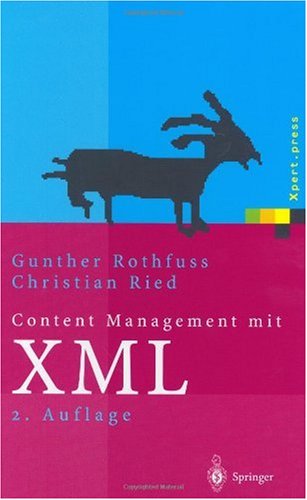
27. Content Management mit XML: Grundlagen
$19.98
28. Securing Web Services with WS-Security:
$1.75
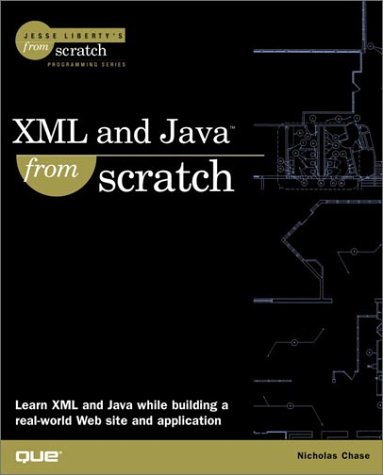
29. XML and Java from Scratch
$0.75
30. Teach Yourself HTML Publishing
$24.98
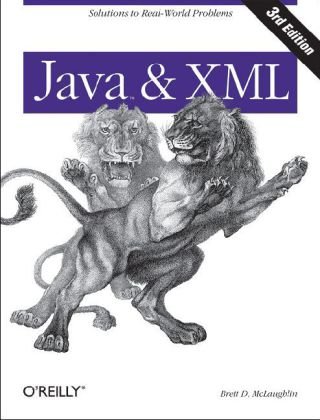
31. Java and XML
$14.99
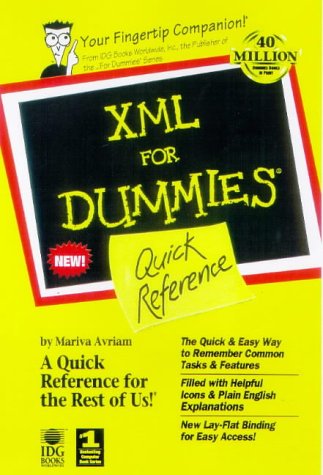
32. Xml for Dummies Quick Reference
$9.95
33. ZapNote: Advent Global Publishing
$395.00
34. ZapNote: PRISM ZapNote: Publishing
$3.26
35. XML from A to Z: A Quick Reference
$10.00
36. XML Bible
37. SVG Essentials (O'Reilly XML)
 
38. XHTML: Foundations for Internet
 
39. Introduction to XML and Web Technologies
 
40. New Perspectives on Creating Web

21. DataPower Technology delivers world's fastest XML Web Services Security Gateway.(DataPower XS40 XML Security Gateway): An article from: EDP Weekly's IT Monitor
 Digital: 3 Pages (2003-01-20)
list price: US$5.95 -- used & new: US$5.95
(price subject to change: see help)
Asin: B0008FZ4NU
Canada | United Kingdom | Germany | France | Japan
Editorial Review

Book Description
This digital document is an article from EDP Weekly's IT Monitor, published by Millin Publishing, Inc. on January 20, 2003. The length of the article is 777 words. The page length shown above is based on a typical 300-word page. The article is delivered in HTML format and is available in your Amazon.com Digital Locker immediately after purchase. You can view it with any web browser.

Citation Details
Title: DataPower Technology delivers world's fastest XML Web Services Security Gateway.(DataPower XS40 XML Security Gateway)
Publication: EDP Weekly's IT Monitor (Magazine/Journal)
Date: January 20, 2003
Publisher: Millin Publishing, Inc.
Volume: 44Issue: 3Page: 1

Distributed by Thomson Gale ... Read more


22. Watching over the Web: a new leader in XML Web Services security.: An article from: Utah Business
by Ben Ling
 Digital: 2 Pages (2003-12-01)
list price: US$5.95 -- used & new: US$5.95
(price subject to change: see help)
Asin: B0008GE1RY
Canada | United Kingdom | Germany | France | Japan
Editorial Review

Book Description
This digital document is an article from Utah Business, published by American Diversified Publishing Company, Inc. on December 1, 2003. The length of the article is 499 words. The page length shown above is based on a typical 300-word page. The article is delivered in HTML format and is available in your Amazon.com Digital Locker immediately after purchase. You can view it with any web browser.

Citation Details
Title: Watching over the Web: a new leader in XML Web Services security.
Author: Ben Ling
Publication: Utah Business (Magazine/Journal)
Date: December 1, 2003
Publisher: American Diversified Publishing Company, Inc.
Volume: 17Issue: 12Page: 42(1)

Distributed by Thomson Gale ... Read more


23. DataPower Technology delivers world's fastest XML web services security gateway.(DataPower XS40 XML Security Gateway): An article from: Software Industry Report
 Digital: Pages (2003-01-20)
list price: US$5.95 -- used & new: US$5.95
(price subject to change: see help)
Asin: B0008FZ4SU
Canada | United Kingdom | Germany | France | Japan
Editorial Review

Book Description
This digital document is an article from Software Industry Report, published by Millin Publishing, Inc. on January 20, 2003. The length of the article is 777 words. The page length shown above is based on a typical 300-word page. The article is delivered in HTML format and is available in your Amazon.com Digital Locker immediately after purchase. You can view it with any web browser.

Citation Details
Title: DataPower Technology delivers world's fastest XML web services security gateway.(DataPower XS40 XML Security Gateway)
Publication: Software Industry Report (Newsletter)
Date: January 20, 2003
Publisher: Millin Publishing, Inc.
Volume: 35Issue: 2Page: 8

Distributed by Thomson Gale ... Read more


24. XML in the Content Lifecycle Report: Creating, Managing, Publishing, Syndicating, and Protecting Content with XML
by ZapThink, Ronald D. Schmelzer
Digital: 57 Pages (2003-01-27)
list price: US$995.00 -- used & new: US$995.00
(price subject to change: see help)
Asin: B00078U6QS
Canada | United Kingdom | Germany | France | Japan
Editorial Review

Book Description
Key Findings:

  • The market for XML content lifecycle solutions is expected to grow from $1.8 Billion in 2003 to over $11.6 Billion by 2008.
  • Producers of content in the enterprise spend over 60% of their time locating, formatting, and structuring content and just 40% of their time actually creating it.
  • By 2008, about 60% of all content lifecycle products will be XML-enabled.
  • the primary challenge in the enterprise for producers of content -- information that is intended for human consumption -- is content reuse: the ability to integrate content from disparate sources.
  • Efforts to improve content processes have been slowed by efforts to extract and manipulate content from multiple, disparate data sources.

Table of Contents:

  • I. Report Scope
  • II. The Growth and Management of Content in the Enterprise
    • 2.1. Sources and Growth of Content in the Enterprise
    • 2.2. The Content Management Challenge
    • 2.3. The Evolution of the Content Management System (CMS)
    • 2.4. Markup Languages and Content
  • III. The Content Lifecycle
    • 3.1. Content Creation
    • 3.2. The Content Repository
    • 3.3. Content Management
    • 3.4. Content Publishing and Distribution
    • 3.5. Content Syndication
    • 3.6. Content Protection
  • IV. XML-Enabling the Content Lifecycle
    • 4.1. Is XML Necessary for Improving the Content Lifecycle?
    • 4.2. Content Creation: XML-based Authoring and Conversion
    • 4.3. Content Repository: Native XML Storage and Search
    • 4.4. Content Management: XML-based Content Componentization
    • 4.5. Content Publishing and Distribution
    • 4.6. Content Syndication: XML Standards and Products
    • 4.7. Content Protection: XML-powered DRM
  • V. The ROI of XML-enabling the Content Lifecycle
    • 5.1. Cost Savings: Content Reuse
    • 5.2. Cost Savings: Efficient Content Search
    • 5.3. Revenue Enhancing: Enabling Content Syndication
    • 5.4. Cost Savings: Integrating Islands of Content
  • VI. Challenges in Implementing an XML-enabled Content Lifecycle
    • 6.1. Metadata-encoding Content is Difficult
    • 6.2. XML May Not be Suitable as a Long-term Archival Format
  • VII. The Service-Oriented Vision of Content
    • 7.1. Shifting away from a Publish-oriented Mentality
    • 7.2. Content as Services: Service-Oriented Content
    • 7.3. Content Lifecycle Functionality as Services
  • VIII. Market for XML-enabled Content Lifecycle Products
    • 8.1. Market Sizing and Growth
    • 8.2. Vendor Market Segmentation and Positioning
    • 8.3. The Future of Content Management Systems
  • IX. Conclusions
    • 9.1. Key Notes
    • 9.2. Decision Points
    • 9.3. Figures
    • 9.4. Tables
  • X. Profiled Vendors
    • 10.1. Content Creation
    • 10.2. Content Repository
    • 10.3. Content Management
    • 10.4. Content Publishing / Distribution
    • 10.5. Content Syndication
    • 10.6. Content Protection
  • Related Research
  • Trademark Notice and Statement of Opinion
  • About ZapThink, LLC
... Read more

25. Building Web Applications with XML (Course ILT)
 Spiral-bound: 160 Pages (2001-11)
list price: US$100.00 -- used & new: US$100.00
(price subject to change: see help)
Asin: 061907373X
Canada | United Kingdom | Germany | France | Japan

26. SMIL 2.0: Interactive Multimedia for Web and Mobile Devices (X.media.publishing)
by Dick C.A. Bulterman, Lloyd Rutledge
Hardcover: 439 Pages (2004-06-14)
list price: US$59.95 -- used & new: US$101.85
(price subject to change: see help)
Asin: 354020234X
Average Customer Review: 5.0 out of 5 stars
Canada | United Kingdom | Germany | France | Japan
Editorial Review

Book Description

SMIL (Synchronized Multimedia Integration Language) is an XML-based language, which facilitates the construction of multimedia applications for the internet and mobile devices. SMIL 2.0 - Interactive Multimedia for Web and Mobile Devices gently introduces you to the Web multimedia standard SMIL 2.0. Written by world-renowned SMIL experts who helped to develop the language and software for it, this bookcovers all aspects of the standard in a knowledgeable yet accessible manner: the overall concepts, the technical details and the many facets of SMIL's current and expected use. It is written to serve as an introduction, a full manual and a detailed technical reference. The authors will maintain an additional website, with download areas for code examples, among others.

... Read more

Customer Reviews (2)

5-0 out of 5 stars Comprehensive, clear, and attractive
This is a colorful and attractive book that tells you everything you may ever need to know about creating multimedia presentations using SMIL 2.0, the second release of the World-Wide Web Consortium's (W3C) Synchronized Multimedia Integration Language Recommendation. SMIL is an XML language for creating multimedia presentations, integrating media, temporal control and interactivity. A SMIL presentation can contain a combination of any types of media. SMIL itself is media "agnostic", and includes most media types by referencing their URL's rather than embedding them in the SMIL file itself.

The authors, Bulterman and Rutlege, are respected multimedia researchers and were key contributors to both the SMIL 1.0 and SMIL 2.0 Recommendations. They were personally involved in drafting and testing a significant portion of the standard, and the company that Bulterman used to lead, Oratrix, developed one of the first full implementations of the SMIL 2.0 language, Grins. So these guys know what they are talking about.

While the W3C SMIL 2.0 Recommendation (http://www.w3.org/TR/2005/REC-SMIL2-20050107/) is primarily written for SMIL implementors and XML language designers incorporating SMIL features into their XML-based language, the book is written for multimedia content authors. The book begins with an overview of SMIL 2.0, with six example presentations that show how SMIL can be used, some history, and a guide to the organization of the SMIL 2.0 standard. The next chapter gives a brief but useful introduction to SMIL 2.0 code including the major components of the language: structure, media, layout, timing, linking, and control.

Further chapters go into each of these areas in much greater depth, explaining all of the options and features in each component (terms module in SMIL 2.0) of the language. And there are many! To support fully featured, interactive, and attractive multimedia features that allow infinite flexibility in the look and feel of a multimedia presentation, SMIL 2.0 has a ton of features and options. In addition to the components already listed, there is animation (my favorite), transition effects, media clipping, advanced layout, extended control, and metadata. Bulterman and Rutlege do a good job of presenting a lot of material in an organized and attractive manner, with lots of examples.

By and large, the features in SMIL 2.0 are straightforward and intuitive to use, However, as is true in any standard developed to meet the needs of many separate groups (SMIL 2.0, for example), SMIL 2.0 is a large language with some potential pitfalls, and there are some also "doozers" and "gotchas". By necessity, the SMIL timing model is complex. While usually intuitive, in some particular cases the timing elements and attributes can interact in initially surprising ways. For another example, there are two kinds of SMIL XML for representing transitions, and all transitions may not be available in all platforms. The authors calmly guide the reader through all this. Backward compatability between versions of SMIL, including the oddly named 'skip-content' attribute is another complex subject clearly presented.

This book is both more comprehensive and much more attractively presented than any other book on SMIL that I have seen. The "insiders" view of SMIL that authors have is used to round out the explanations and rationale for things to good effect. Overall this is a great book for any multimedia content developer who is using or considering using SMIL 2.0. It will also be useful to SMIL implementation developers as another source of information when reading and implementing the recommendation documents. Lastly it should be of interest to students studying multimedia as an in-depth guide to a specific comprehensive multimedia presentation architecture.

Aaron M. Cohen
Chairman of the W3C Synchronized Multimedia Working Group (produced the SMIL 2.0 Recommendation)

5-0 out of 5 stars An essential reference for authors and implementers
This is a remarkable book, and by far the most authoritative guide available for the SMIL languages. It serves a broad audience, and combines a readable style with complete expertise in the subject matter.

For authors, the book provides an easy-to-understand explanation of the language principles and syntax. Many useful examples illustrate the features, and provide useful authoring templates. Bulterman and Rutledge's experience with multimedia authors and authoring comes through in the many tips and hints for addressing real-world issues and avoiding potential pitfalls. All examples are provided online as well, along with demos and other resources.

For the serious student or implementer, the book provides detailed explanations of the underlying models for layout, timing and animation. These sections benefit from the combined experience of the book's authors as leading members of the W3C standards group that developed the SMIL languages. Their understanding of the details is clearly beyond that of most other authors on this subject.

The book design itself is interesting and fun. Graphics in the margins mark the chapters, with key chapters featuring flipbook-like graphic "animations". It has a comfortable layout and organization and an excellent index. If I have a complaint, it is that I do not find the graphics summarizing syntax features to be very intuitive. Fortunately, the text and examples provide sufficient syntax reference.

Authors of web multimedia as well as academics and professionals integrating or implementing SMIL language features will find this an invaluable addition to their reference bookshelf - I strongly recommend it.
... Read more


27. Content Management mit XML: Grundlagen und Anwendungen (Xpert.press)
Hardcover: 376 Pages (2002-11-28)
list price: US$79.95 -- used & new: US$97.68
(price subject to change: see help)
Asin: 3540438440
Canada | United Kingdom | Germany | France | Japan
Editorial Review

Book Description
"Content Management mit XML" wendet sich an Mediendesigner und Entscheider im Bereich Electronic Publishing, die eine fundierte Antwort auf die Frage benötigen, ob und in welchem Maße XML für Content Management-Aufgaben geeignet ist, also für die Erzeugung, Aufbereitung, Präsentation und Wiederverwendung von Inhalten. Hierzu werden die funktionalen, technologischen und konzeptionellen Grundlagen sowhl des Content Management-Prozesses wie auch des XML-Standards herausgearbeitet und präsentiert und damit verdeutlicht, warum XML die Schlüsseltechnologie beim Aufbau von Content Management-Prozessen aller Art ist. Vertiefte XML-Kenntnisse werden nicht vorausgesetzt. Ähnlichkeiten und Unterschiede zwischen XML, HTML und Datenbanken werden herausgearbeitet und der Einsatz von XML in kommerziell verfügbaren Produkten vorgestellt. In der 2. Auflage wurden die Neuerungen und Fortschritte besonders bei der Standardisierung berücksichtigt. ... Read more


28. Securing Web Services with WS-Security: Demystifying WS-Security, WS-Policy, SAML, XML Signature, and XML Encryption
by Jothy Rosenberg, David Remy
Paperback: 408 Pages (2004-05-22)
list price: US$39.99 -- used & new: US$19.98
(price subject to change: see help)
Asin: 0672326515
Average Customer Review: 3.5 out of 5 stars
Canada | United Kingdom | Germany | France | Japan
Editorial Review

Book Description
You know how to build Web service applications using XML, SOAP, and WSDL, but can you ensure that those applications are secure? Standards development groups such as OASIS and W3C have released several specifications designed to provide security - but how do you combine them in working applications?

"Securing Web Services with WS-Security" will help you take your Web services securely to production, with insight into the latest security standards including

- WS-Security, a model that defines how to put security specifications into practice
- XML Encryption to ensure confidentiality
- XML Signature to ensure data integrity
- Security Assertion Markup Language (SAML) to authenticate and authorize users
- WS-Policy to set policies across trust domains

Jothy Rosenberg and David Remy, both business, technology, and security visionaries, demystify these standards with practical examples including a fully developed case study application showing these tools at work. A pragmatic approach is taken showing which Web Services Security standards are needed when faced with a variety of security challenges. The authors understand that security remains one of the largest remaining impediments to deploying major Web services in business-critical situations. The goal of this book is to begin to remove those impediments by providing a detailed understanding of all the available security technologies and how and when to employ them.Download Description
The most up to date, comprehensive, and practical guide to Web services security, and the first to cover the final release of new standards SAML 1.1 and WS-Security. Comprehensive coverage and practical examples of the industry standards XML Signature and XML Encryption, and the first book to cover the final WS-Security and SAML 1.1 specifications Authors Jothy Rosenberg and David Remy are security experts who co-founded GeoTrust, the #2 Web site certificate authority and currently work for Service Integrity and BEA Systems, respectively. According to IBM, American Express, Sun Microsystems, and other industry leaders, well-defined security standards and procedures are a crucial element to the adoption of web services in industry. ... Read more

Customer Reviews (13)

1-0 out of 5 stars Worthless For Programmers
Agree completely with all of the other reviewers in respect to practical working examples and detailed information. This is nothing more than a high-level overview of documentation and specifications you can easily find yourself on the internet. Look elsewhere (and yeah, I'm still looking myself) for solid information about how to design and deploy WS-* applications.

2-0 out of 5 stars Weak examples.
This book delivers good introduction to WS-* specs beyond that I don't find much help. From a developer perspective, the book does'nt help with good examples, it is missing with coding guidance and also lacks detail about the PKI in Web services. Possibly this book is too early to market before the specs are endorsed by OASIS. It's time for a revision..otherwise I could've added two more stars.

4-0 out of 5 stars Good Overview of Web Services Security
This book is a good introduction to the application of security to Web Services and SOA. The authors focus on "message level" security versus "transport level" security, and its application to Web Services. The book explains standards: WS-Security, WS-Policy, WS-SecurePolicy and other current standards at the time of publishing (2004).

However these standards are constantly evolving and this book needs to be updated on a regular basis.

Gary E. Smith
SOA Network Architect
SOA Networks

3-0 out of 5 stars good intro book - need a revision
i am an architect working on large-scale web services on j2ee and .net ddevlopment and deplyment. I bought this book for getting myself introduced to ws-security and saml. if you would like to know the security specifications for web services at a high-level you may find this book useful. If you are looking at the practical aspects of how to implement them in a j2ee or .net web services you wil find limited help. The coverage on ws-* specs are little bit old as new revisions are already out.

3-0 out of 5 stars Good intro but needs an update
This book would help you if you need an introduction to Web services security standards. If you need to know the strategies for how to implement then this book may not help much. Some of the specifications discussed in the book is not complete and there is lot of confusion in the standards committee moving forward. I bought this book before I bought the Core Security Patterns which details both the standards and patterns-based implementation strategies for Web services security. This book also needs a revision in terms of updating to SAML 2.0, WS-Security 1.1, WS-I Basic Security profile. ... Read more


29. XML and Java from Scratch
by Nicholas Chase
Paperback: 496 Pages (2001-03)
list price: US$39.99 -- used & new: US$1.75
(price subject to change: see help)
Asin: 0789724766
Average Customer Review: 2.5 out of 5 stars
Canada | United Kingdom | Germany | France | Japan

Customer Reviews (10)

1-0 out of 5 stars TERRIBLE
This book trying to cover everything among three-tier design within 470 pages, which is impossible. In order to understand this book, I need to read other books, like "Javaservlet" and "Beginning XML". But after I finish those reading, this book is not necessary anymore, so why wast time on this book? Some of the programs in this book are not executable and even worse.....some figures (screen shot) are misplaced.
My opinion of this book is "terrible"!

2-0 out of 5 stars fustrating
I haven't finished the book yet but found it confusing. The examples are not completed, the reader doesn't have an example of the completed exersize. The author assumes the reader is using apache and tomcat servers. I don't know anyone using them, most developers I know use windows 2000 or NT, running IIS. JDOM is still beta and there's a whole chapter dedecated to JDOM, where it could have been spent on explaining SAX and DOM in further detail by applying useful simple examples. Overall I'm not impressed with the book. Better to read it at the book store and look for something better to purchase. Look for a text that uses IIS and not tomcat and apache, unless you are running those servers. This is not a beginners book, also purchase a JAVA/JSP text.

1-0 out of 5 stars Don't be amazed by this book.
This book tries to cover so many things at once --XML, Java, DB concepts, tools, Servlets, -- that it ends up teaching technically nothing. About half the contents of the book are XML non-related stuff.

The author tries to cover such a programming language like Java in 470 pages of so many things, that he even does some bad practice! For example, he starts teaching a way of reading the contents of a file in Java, and two pages after the example he explain the Exceptions issue. If you're a Java newbie, you'll be on a big trouble unless you read the whole chapter before typing anything. The author even tries to explain the relational database concept by ilustrating it with an Excel sheet!

I must confess that this book covers just the basics, since it wastes too much time in things it can't cover. This book would be better if it talks about XML only, and leaves Java and other subjects to the pros.

If you want to "get serious" (like the author says), then buy a book that goes deep into this matter, a book that doesn't talk about everything just to mention a bit of each.

1-0 out of 5 stars Good Concept, but
In my opinion, The concept would have been good if the content was not so inept. The source code that was associated with this book was dismal, virtually useless. Many times the source code would not give the results in the book, so I found myself doing more trobleshooting than learning.

Both Que and the author should be ashamed of distributing such an inferior product.

4-0 out of 5 stars Great book , but not really a intro book
The pace of this book was its best feature, starting with HTML and CSS and then slowly adding in XML & XSL before jumping into the enigma of server side transformations using Java. You may want to pick up "Java 2 From Scratch" or another intro to Java book prior to reading this. I think this book was a great attempt at fusing two complex languages and sets up a good foundation to move on to more detailed books. ... Read more


30. Teach Yourself HTML Publishing on the World Wide Web
by Mac Bride
Paperback: 200 Pages (2003-01-14)
list price: US$12.95 -- used & new: US$0.75
(price subject to change: see help)
Asin: 007141956X
Canada | United Kingdom | Germany | France | Japan
Editorial Review

Book Description

Updated to reflect the latest changes in a fast-moving field, this step-by-step guide teaches HTML, the coding system a Web user needs to create a website. Includes tips on images, text formatting and fonts, interactive elements, and more. Even a beginner will be able to produce a Web page after only a few hours of practice.

... Read more

31. Java and XML
by Brett McLaughlin, Justin Edelson
Paperback: 479 Pages (2006-12-08)
list price: US$49.99 -- used & new: US$24.98
(price subject to change: see help)
Asin: 059610149X
Average Customer Review: 3.5 out of 5 stars
Canada | United Kingdom | Germany | France | Japan
Editorial Review

Amazon.com
Two hot topics come together in this developer's guide from BrettMcLaughlin, Java and XML. Both Java and XML are cross-platformtechnologies; by using Java for code and XML for transporting data, you canbuild truly portable applications. This title is aimed at intermediate toadvanced programmers; while XML topics are explained more or less from scratch,readers will need prior knowledge of Java.

The book begins with an overview of XML and its uses, and goes on to explain howto parse XML by using the Simple API for XML (SAX 2). Next, there is coverage ofhow XML is validated by using Document Type Definitions (DTDs) and XML Schema,and transformed by using eXtensible Stylesheet Language (XSL). Brief coverage ofSun's Java API for XML is followed by a detailed look at the Java DocumentObject Model (JDOM), a new API devised by the author in association withO'Reilly, the publisher.

The last part of the book is more advanced, and covers applications of XML andJava. There are chapters on Web-publishing frameworks, XML Remote ProcedureCalls (RPCs), using XML to read and write configuration data, and generating XMLwith Java. There is also a short business-to-business example. Appendicesprovide an API reference to the various specifications discussed in the book.

The strengths of Java and XML include the author's deep knowledge of hissubject, and a writing style that is both clear and enthusiastic. If you happento know a lot about Java and not much about XML, this is the ideal title.Readers who already have a good grasp of XML basics might be frustrated by theamount of introductory material. --Tim AndersonBook Description

Java and XML, 3rd Edition, shows you how to cut through all the hype about XML and put it to work.It teaches you how to use the APIs, tools, and tricks of XML to build real-world applications.The result is a new approach to managing information that touches everything from configuration files to web sites.

After two chapters on XML basics, including XPath, XSL, DTDs, and XML Schema, the rest of the book focuses on using XML from your Java applications.This third edition of Java and XML covers all major Java XML processing libraries, including full coverage of the SAX, DOM, StAX, JDOM, and dom4j APIs as well as the latest version of the Java API for XML Processing (JAXP) and Java Architecture for XML Binding (JAXB).The chapters on web technology have been entirely rewritten to focus on the today's most relevant topics: syndicating content with RSS and creating Web 2.0 applications.You'll learn how to create, read, and modify RSS feeds for syndicated content and use XML to power the next generation of websites with Ajax and Adobe Flash.

Topics include:

  • The basics of XML, including DTDs, namespaces, XML Schema, XPath, and Transformations
  • The SAX API, including all handlers, filters, and writers
  • The DOM API, including DOM Level 2, Level 3, and the DOM HTML module
  • The JDOM API, including the core and a look at XPath support
  • The StAX API, including StAX factories, producing documents and XMLPull
  • Data Binding with JAXB, using the new JAXB 2.0 annotations
  • Web syndication and podcasting with RSS
  • XML on the Presentation Layer, paying attention to Ajax and Flash applications

If you are developing with Java and need to use XML, or think that you will be in the future; if you're involved in the new peer-to-peer movement, messaging, or web services; or if you're developing software for electronic commerce, Java and XML will be an indispensable companion.

... Read more

Customer Reviews (66)

4-0 out of 5 stars Un approccio pratico a JAVA+XML
Ho trovato questo libro molto interessante.

Copre le varie API disponibili per JAVA per gestire file XML: SAX, DOM, JAXP, StAX, JDOM, dom4j. Inoltre vengono trattati anche alcuni argomenti avanzati, utili per apprendere al meglio l'uso di queste API.

Il libro e' colmo di codice ed e' proprio il codice ad essere utilizzato come strumento didattico. Codice e diagrammi UML riempiono tutte le pagine.

E' un libro molto pratico, rivolto ai programmatori. E' necessario avere una piccola infarinatura riguardo l'XML: viene trattato brevemente nei primi capitoli.

E' consigliato a chi ama libri con un approccio pragmatico.

mircha

1-0 out of 5 stars Reads like a Dictionary
I'm almost finished with this book, but have yet to determine what its purpose is.There is a lot of code about a lot of APIs, but it is not clear how one should approach Java & XML using this book.I think this book was a product of O'Reilly's "Rough Cuts" program, and it is true the book is very roughly written and all the good stuff got cut.Maybe all the material which would make this a good book is on the website.

I must admit I'm very disappointed with O'Reilly as of late.Their books are going down hill rapidly, and I find I'm looking at other publishers (APress) much more often.I used to go to O'Reilly's website almost daily to see what is coming out next, but now I'm considering removing the Ora bookmark from my browser because of lack of use and to create space for other URLs.

I really wish O'Reilly would get their act together and start publishing some well written and well edited books again.

4-0 out of 5 stars Good, Informative, current
This edition was published in Dec. 2006, so when I bought it Jul. 2007 it was the freshest book on the topic that I found.There are a lot of different Java XML tools with overlapping funtions SAX, DOM, JAXP, JAXB, Castor, JDOM, dom4j . . .This really help sort them out.

5-0 out of 5 stars VERY VERY HIGHLY RECOMMENDED!!
Are you developing with Java and need to use XML? If you are, then this book is for you. Authors Brett McLaughlin and Justin Edelson, have done an outstanding job of writing a book that that cuts through all of the hype about XML and put it to work.

McLaughlin and Justin Edelson, begin with the basics of XML. Then, the authors cover three ways of defining the structure of XML documents. Next, they introduce the Simple API for XML (SAX). They also cover less-used, but still powerful items in the API. The authors continue by covering DOM basics. Then, they discuss the various Level 2 and Level 3 DOM modules like Traversal, Range, Events, Style, HTML, Load and Save, and Validation. Next, the authors examine the Java API for XML Processing. In addition, they also show you how to SAX and how it compares to both SAX and DOM. They continue by examining JDOM, a Java-specific object model API. Then, the authors examine another Java-specific object model API, dom4j. Next, they cover JAXB 1.0 and 2.0, as well as the general basics of data binding. Furthermore, the authors show you how to syndicate content. They continue by looking at a variety of techniques for using XML in the presentation, or visual portion of web applications. Finally, the authors provide some brief overview of technologies not covered in depth in this book.

This most excellent book shows you how to use the APIs, tools, and tricks of XML to build real world applications. Perhaps more importantly, this book offers a new approach to managing information that touches everything from configuration files to web sites.

1-0 out of 5 stars No longer useful
This book was probably useful back in 2000. Unfortunately, a lot has changed since then, and some of the information in this book is now flat our wrong.

For example the chapter about DOM objects was not updated to include information about recent api releases. So when the book says there is no simple way to serialize a DOM object, that simply is no longer true. You can now do it with the JAXP api.

The book has other problems as well. For example, the section that describes the difference between XSL and XSLT is extremely misleading and not helpful at all.

This is one of the few books that I intend to return ... Read more


32. Xml for Dummies Quick Reference
by Mariva H. Aviram
Paperback: 224 Pages (1998-05-08)
list price: US$14.99 -- used & new: US$14.99
(price subject to change: see help)
Asin: 0764503839
Average Customer Review: 3.5 out of 5 stars
Canada | United Kingdom | Germany | France | Japan
Editorial Review

Book Description
XML -- the new standard for creating interactive, cutting-edge Internet content -- promises to be an excellent bridge between differing technologies that are crowding for online attention.XML, which stands for eXtensible Markup Language, combines the dynamic power of SGML with the networking strengths of HTML in one new package that's compatible with a variety of programming languages, Web data formats, and Internet protocols. In short, it's the greatest invention since pizza.

Cut to the heart of XML's robust tools and open standards with XML For Dummies Quick Reference, simply the best and most effective one-volume guide to XML.Here, you discover all the tips and tricks you need to create your own markup language that works any time, anywhere, on the Web. Get fast answers on what you need to know, when you need to know it, with XML For Dummies Quick Reference.Plus, the book's compact, alphabetical design and lay-flat binding make it the perfect desktop companion. ... Read more

Customer Reviews (8)

3-0 out of 5 stars Good for reference, bad for trying to learn
This is entitled "Quick Reference" for a reason - it's just a reference. Don't try to use this to learn XML from scratch. It's not bad as a reference, but not superb either. I wouldn't highly recommend it, but if you need something that's inexpensive, small, and covers the basics, this would work for you.

5-0 out of 5 stars It's great to have around!
I disagree: this book is very useful. Of course, I have several, more comprehensive XML references, but this is a lightweight companion to the heavier books, and I use it all the time to look things up quickly. Unless you've completely memorized XML (have you?), it can be very convenient. It's like an abridged dictionary.

3-0 out of 5 stars Hard to Follow
I like the price, but this book is really only good for looking up thingsthat you already understand. I certainly was not able to understand what anXML entity is from this book.

1-0 out of 5 stars Difficult to read
I would not recommend this book for anyone who is starting to learn XML. This book is very difficult to read unless you are already familiar with XML terminology. If you are already familiar with XML terminology, then youdon't need to read this book.

5-0 out of 5 stars Well-worth the small price.
This book is worth buying for the step-by-step instructions on how to write any type of DTD alone. The descriptions and examples of attributes, elements, entities, and character entities are useful as well. I wassurprised to see a fair amount of space devoted to XML developments, suchas with Java, Perl, style sheets, and more--but it's there. I recommendthis quick reference as a starter or a companion to some of the larger XMLbooks on the market. ... Read more


33. ZapNote: Advent Global Publishing Solutions
by Ronald D. Schmelzer
Digital: 3 Pages (2003-01-29)
list price: US$9.95 -- used & new: US$9.95
(price subject to change: see help)
Asin: B00078U7L2
Canada | United Kingdom | Germany | France | Japan

34. ZapNote: PRISM ZapNote: Publishing Requirements for Industry Standard Metadata
by ZapThink, Ronald D. Schmelzer
Digital: 8 Pages (2001-12-24)
list price: US$395.00 -- used & new: US$395.00
(price subject to change: see help)
Asin: B00078U71M
Canada | United Kingdom | Germany | France | Japan
Editorial Review

Book Description
As companies increasingly partner and syndicate their content to other locations, the need to locate, reuse, and repurpose content in different forms and in real-time is becoming increasingly important. Today, repurposing consists mostly of cutting and pasting different content components. This simplistic mechanism has been the main way of accomplishing this goal not out of efficiency but out of necessity -- there simply are no reliable ways to automatically retrieve, aggregate, and reuse similar types of content. One of the efforts to solve these publishing issues is the Publishing Requirements for Industry Standard Metadata (PRISM) Working Group, which seeks to provide an extensible XML metadata standard for syndicating, aggregating, post-processing and multi-purposing content in both traditional and electronic publishing contexts. ... Read more


35. XML from A to Z: A Quick Reference of More Than 300 XML Tasks, Terms and Tricks
by Heather A. Williamson
Paperback: 208 Pages (2001-10)
list price: US$12.95 -- used & new: US$3.26
(price subject to change: see help)
Asin: 1931150451
Average Customer Review: 3.5 out of 5 stars
Canada | United Kingdom | Germany | France | Japan
Editorial Review

Book Description
Aimed at Web aficionados who want to create their own Web sites using the features and capabilities of XML, this reference's alphabetical reference style allows for quick location and assimilation of the XML data format. Topics covered include parsers, validators, schemas, DTDs, CSS and XSL, namespaces, Xlink, Xpointer, Xbase, and XML Queries. In addition, supporting standards such as RDF and XML Digital Signatures provide the developer with the information necessary to get started right away. ... Read more

Customer Reviews (2)

3-0 out of 5 stars XML from A to Z
As with all of Heather Williamson's books, this was easy to reference and very helpful.

4-0 out of 5 stars A Web Developers Best friend
The thing that most professional developers will love is its ease of use especially when looking for examples of how to do coding.I found it to be an excellent refernce guide that was easy to read for the beginner and the professional alike.Ms Williamson has taken great effort to ensure that anyone who uses this book will be able to understand and use it efficiently. ... Read more


36. XML Bible
by Elliotte Rusty Harold, Harold
Paperback: 1015 Pages (1999-07)
list price: US$49.99 -- used & new: US$10.00
(price subject to change: see help)
Asin: 0764532367
Average Customer Review: 4.0 out of 5 stars
Canada | United Kingdom | Germany | France | Japan
Editorial Review

Amazon.com
The emergence of XML is having an enormous impact on Web development, and scaling the learning curve of this new technology is a priority for many developers. The XML Bible offers a superb introduction to the subject and the groundwork to understand XML's future developments.

Author Elliotte Rusty Harold uses a patient, step-by-step discussion that clearly points out the potential of XML without boring his readership with tons of SGML spec-speak. Harold opens quickly with a "Hello World" example to get the reader coding early, and follows that with a simple but powerful example of XML's data management benefits--presenting baseball statistics. Once you've coded your first XML documents, you'll be hooked on the technology and motivated to learn about the more sophisticated topics.

Style sheet languages are covered comprehensively to illustrate the presentation possibilities and pitfalls. An unusually long list of real-life XML applications also shows how XML is already being used, and there is in-depth coverage of the Resource Description Framework, Channel Definition Format, and Vector Markup Language. The book wraps up with a section that helps you design your own XML application from scratch.

Titling a book a bible is a bold move, but this engaging and informative guide is entitled to make this claim. --Stephen W. Plain

Topics covered: XML background, example XML applications, type definitions (DTDs), style languages, Xlinks, Xpointers, Namespaces, application planning, and XML 1.0 specification.Book Description

XML is revolutionizing Web-site development by making difficult tasks easier -- and many new tasks possible. Based on the latest W3C standards, this thorough tutorial-plus-reference takes you step by step through everything you need to know to put XML to work, from the fundamentals of the XML language to document construction and simple XML-based solutions for specialized markup problems. Numerous examples, specifications, and addresses for relevant Web sites leave no questions unanswered.

Download Description
* Updated and better than ever, this more focused revision provides comprehensive coverage of XML to anyone with a basic understanding of HTML and Web servers * Featuring all-new examples, this book contains everything readers need to know to incorporate XML in their Web site plans, designs, and implementations * Continues expert Elliotte Rusty Harold's well-known track record for delivering the best XML guidance available * Includes coverage of the most recent XML 1.1 specification and the latest trends in XML Web publishing * Companion Web site includes additional examples and reference material found in previous editions that readers may find useful ... Read more

Customer Reviews (67)

3-0 out of 5 stars Verbose
I bought Harold's book to help me move from XHTML to XML and to handle data with PHP which does not fit well in a relational database / SQL.This book bogs down quickly in very long explanations & examples which could have been a fraction of the size.I think it has good coverage, but Harold uses too many words every time he approaches a subject.To paraphrase someone else, Harold could write 10,000 words on the color red.

The problem with Wiley's Bible series (I have several of them) is that the goal seems to be to make them as big and heavy as a boat anchor.This results in verbose books, which may be ok for use as a reference but way to hard to read cover to cover for initial learning.The time needed to read these books cover to cover exceeds the value of the book itself.If you buy books by the pound (or kilo), this is a good buy.But if you value your time more than you value impressive size, there are better alternatives.

On a positive note:I have not found a bunch of typo or editing errors and Harold seems to know the subject.I'm just frustrated by the slow pace, although I will continue trying to read it at least a little longer.

Warning: [Some opinions given here appear to be by paid reviewers.ie: Feb 3, 2005, and others.How many others are also raw attempts to sell books without honor?Can you trust anyone who writes hundreds or thousands of 5 star opinions??Heck no!Hint: Check out the person writing the review before actually reading it.Look for how many opinions he/she writes and how many stars.Distrust all high opinions in the first few months after publication, all high opinions by people who have only written a couple of opinions, and all high opinions from people who only write high opinions.Thanks for the lack of honesty Elliotte &/or Wiley &/or big A.(my opinion, 2 cma).]

2-0 out of 5 stars Doesn't cover DOM and SAX
I haven' read the book, only browsed its TOC. It doesn't cover the Document Object Model (DOM) and the Simple API for XML (SAX). It also discusses CSS in too much detail. These days, web development professionals will probably have a knowledge of both HTML and CSS before starting with XML.

Consider "Beginning XML" or "Professional XML" instead, both published by Wrow.

1-0 out of 5 stars Pulp paper
I have purchased many books from Amazon, but this one is printed on the lowest-quality paper I've ever experienced.Though it's relatively new, the yellowed pages look like a 1960's pulp novel.There is literally a 2mm yellow border surrounding each page.Come on "Hungry Minds" publishers, you can do better than this.

5-0 out of 5 stars Sola Scriptura
Review for XML 1.1 Bible (3rd Edition):

Elliotte Rusty Harold is that rare technical author who can write about anything and make it interesting.In this case, he has written 1,000 pages on XML providing us with an excellent guide book to this technology.Whether you are a beginner or advanced user of XML, there will be something in this book for you.

The book is divided into five parts.The first part discusses the basics of XML giving us an introduction to what XML is, what it is used for, and explaining the basics of creating a well-formed XML document.Part two discusses DTDs and explains how namespaces are used.Part three looks at various style languages including CSS and XSL.The section on CSS will be useful to anyone wishing to use CSS to format their HTML documents.Part four gives us a tour of some supplemental XML technologies including XLinks, XPointers, XInclude, and Schemas.The chapter that most interested me was on Schemas and the explanations were clear and complete, leaving no mystery about how to use this technology.The final part looks at a few XML applications including XHTML, RDDL, and SVG.The book does not cover writing programs to process XML documents using SAX or DOM, for example.The author has another book on that topic if that is of interest to you.

Each part of the book does an exceptional job of explaining the topic.The author gives us plenty of examples to make the text crystal clear.The author writes as a colleague helping out fellow programmers and not as an instructor droning away at a blackboard.You really get the idea that the author enjoys XML and enjoys explaining it.If you are interested in working with XML this book is truly an indispensable guide.

5-0 out of 5 stars Surprisingly Good, Surprisingly Useful
When I first saw this book I thought that someone must be kidding. There's no question that XML is clearly the language to use when you want to transfer data using the standard web communications protocols. But a book that's more than a thousand pages, get serious.

They I opened it, low and behold, links, style sheets, specialized forms of XML for specialized purposes that have been agreed upon by multiple competing companies. It turns out that there's a lot more to XML than I thought.

Then in conjunction with XML other languages have been developed, some have proved not so useful and have faded away, others have evolved and changed to be more useful.

All in all, this is a very useful book, well written and has given me some ideas about how to solve some problems. That's all you can ask out of a book.
... Read more


37. SVG Essentials (O'Reilly XML)
by J. Eisenberg
Paperback: 364 Pages (2002-02-05)
list price: US$34.95
Isbn: 0596002238
Average Customer Review: 4.5 out of 5 stars
Canada | United Kingdom | Germany | France | Japan
Editorial Review

Amazon.com
SVG Essentials opens the door to the rich language that underpins this emerging and fast-growing graphics language. Scalable Vector Graphics, which are described through text like a programming language and can be read on any computer platform with the appropriate viewer, hold great promise for the Web designer who knows how to take advantage of the latent power. This book helps to harness that power.

It's important to note that this book is not written for Web designers looking to add SVG graphics to their sites, but rather for Web programmers who need to add such graphics based on information extracted from a database, or who want to add them by hand. If you have or use an application that can export or embed SVG graphics, you may not need this book. However, if you are looking to create dynamic images that get created on the fly, or perhaps be able to draw graphics based on information from the user or from a database, you've come to the right book.

Although only 330 pages, the book offers 13 chapters and six appendices. Everything from a basic overview of the SVG language through practical examples to the finer points of serving SVG files over the Web is thoroughly detailed, and each chapter is concisely written and rich with screenshots, illustrations, and code examples.

O'Reilly has earned a positive reputation for publishing outstanding technical books, and SVG Essentials makes a fine addition to their lineup. The SVG graphics standard is rapidly gaining ground. Backed by important vendors as Adobe, SVG is poised to be a powerful tool in the arsenal of today's Web designer. Keep this book within arm's reach of any SVG developer or Web designer who wants to take advantage of this emerging and powerful technology. --Mike CaputoBook Description
Scalable Vector Graphics -- or SVG -- is the new XML-based graphics standard from the W3C that will enable Web documents to be smaller, faster and more interactive. J. David Eisenberg's insightful book takes you through the ins and outs of SVG, beginning with basics needed to create simple line drawings and then moving through more complicated features like filters, transformations, and integration with Java, Perl, and XSLT.

Unlike GIFs, JPEGs or PNGs (which are bitmapped), SVG images are both resolution- and device-independent, so that they can scale up or down to fit proportionally into any size display or any Internet device -- from PDAs to large office monitors and high-resolution printers. Smaller than bitmapped files and faster to download, SVG images can be rendered with different CSS styles for each environment. They work well across a range of available bandwidths.

SVG makes it possible for designers to escape the constant need to update graphics by hand or use custom code to generate bitmap images. And while SVG was created with the Web in mind, the language has a variety of other uses. SVG greatly simplifies tasks like:

Creating web sites whose graphics reflect the content of the page, changing automatically if the content changes

Generating graphs and charts from information stored in a wide variety of sources

Exchanging detailed drawings, from architectural plans to CAD layouts to project management diagrams

Creating diagrams that users can explore by zooming in and panning around

Generating bitmap images for use in older browsers using simple automatable templates

Managing graphics that support multiple languages or translations

Creatingcomplex animation

By focusing sharply on the markup at the foundation of SVG, "SVG Essentials" gives you a solid base on which to create your own custom tools. Explanations of key technical tools -- like XML, matrix math, and scripting -- are included as appendices, along with a reference to the SVG vocabulary.

Whether you're a graphic designer in search of new tools or a programmer dealing with the complex task of creating and managing graphics, SVG Essentials provides you with the means to take advantage of SVG. ... Read more

Customer Reviews (6)

5-0 out of 5 stars Sehr zufrieden mit dem Buch
Das Buch (in englischer Sprache) erklärt sehr genau die Details. Auch als Nachschlagewerk sehr gut geeignet.

4-0 out of 5 stars Good introduction, needs more recipes
The book provides a solid introduction to SVG through an increasingly complex set of examples of SVG use. It is well written and edited, it also provides a thorough description of the entirety of the standard. What it lacks is more depth in the area of recipes for commonly used image effects. It also needs more advice about how complex SVGs are organized and built for efficiency. I understand that SVG is still on the adoption curve, so perhaps we could see these improvements in a second version of the book when the standard has picked up a little more.

For the time being the book earns it's four stars by providing a nice learning curve and having high quality examples that demonstrates the concepts effectively.

5-0 out of 5 stars Best ORA book since HTML: The Definitive Guide
While it's difficult to separate my excitement over SVG from the contents of this book, it's quite possible that the two are so directly related as to be inseperable.Within a few hours of buying this book, I was producing and printing extremely high quality images that I had found all but impossible to produce w/other technologies (JPEG codecs, etc.).If you are familiar with the basic mark-up language concepts, then you should have no trouble gleaning the essential elements of SVG.

After an excellent introductory chapter that provides a general overview, subsequent chapters cover aspects of SVG in detail, such as how to create basic shapes or generate text.One thing I particularly liked was that the author mostly uses a single example (SVG code to create a picture of a cat) to illustrate new concepts, creating a sense of cohesiveness that tied the chapters together.This book is *not* just a scattershot collection of essays that characterizes so many other technical books -- the text is clear, concise, and to the point.Finally, there is a very uselful appendix that summarizes the most frequently used attributes.

Perhaps the only drawback is that if you are coming to SVG from a non-technical background, you might find this book a little too gear-headed for your liking.For technical readers that want a thorough introduction (i.e., not a PhD thesis) to this exciting and useful technology, however, this book is a must.

2-0 out of 5 stars Good starter book, but...
Not a bad book if you want to learn just the basics; however, I think you can easily find everything in this book on the Web if you take the time to dig around.If you're looking for a book to get you started, this one will do nicely.But if you're looking for more advanced/esoteric SVG material, I'd keep looking.

5-0 out of 5 stars In a Nutshell
This subject perfectly fits O'Reilly's "In a Nutshell" tradition, for SVG itself is just that: Web design, including text, graphics, animation, and programming, all in a nutshell -- concise, pithy, simple, and deep.

SVG, a refactoring of several generations of Web technology and a public standard approved by the World Wide Web Consortium, can be authored without any special tools and without any special background, other than the immediately productive background provided by this book.

Eisenberg swiftly, but with diverting variety,illuminates the process of drawing, assembling shapes, creating textures, transforming coordinates, structuring documents, enriching text, creating reusable components, fine tuning color, animating shapes and colors and structures, creating lighting effects, and programming user interactions.All of this is built upon the simple SVG architecture: arrange yourelements in a hierarchy and set their attributes.

There is an art to conveying important points without belaboring them and Eisenberg moves from example to example with perfect pitch.

The book also contains an eight page section with full color images.

Some people have complained about the lack of reference books on SVG.The SVG reference is in fact widely available, all 500+ pages of it, on the W3C site.What is really needed, and would have been useful in this or any SVG book, is a five page guide to using that reference -- how do I, in ten seconds or so, determine whether this element can be a child of that element, or if this element supports this attribute?

While I was developing SVG Composer the only book available was Watt's "Designing SVG Web Graphics" (another fine book with a rather different pitch)..When Eisenberg's work came out I happily relearned SVG, doing every example and picking up any number of new tricks.

I do have some reservations: I didn't care for the cat drawing (hated it!) and the final two chapters on generating and serving SVG seemed aimed at the wrong audience (adepts at Java, servlets, and Perl)though the material itself is perfectly fine.

At first I had the same feeling about the appendices, which include brief samples of subjects from programming to fonts to matrix algebra, that surely Eisenberg was misjudging his audience.However he may have things just right -- SVG may well become the greatest crossover hit ever in computer languages, a lingua franca for logic and art. ... Read more


38. XHTML: Foundations for Internet Publishing and Web Design
by Anthony (Tony) Sako
 Paperback: 850 Pages (2007-01-01)
list price: US$62.00
Isbn: 0131428543
Canada | United Kingdom | Germany | France | Japan
Editorial Review

Book Description
Designed to provide learners with a complete and solid understanding of XHTML, this book presents material in an easy-to-understand format, provides complete coverage of the theoretical as well as real-world application of the XHTML elements and attributes, and serves users as a complete reference. It includes important design reference showing browser sizes for margins, form input controls, fonts, etc. KEY TOPICS Specific chapter topics cover text formatting, colors, images, links, document structure, tables, image maps, frames, special effects, forms, cascading style sheets, and design.For Web Developers, Web Designers, and Internet Programmers or Developers. ... Read more


39. Introduction to XML and Web Technologies
by Anders Moller
 Paperback: Pages (2006)

Asin: B000OUG5BY
Canada | United Kingdom | Germany | France | Japan

40. New Perspectives on Creating Web Pages with XML Brief
by Neil Jackson
 Paperback: Pages (2002-01)
list price: US$23.95
Isbn: 0619020784
Canada | United Kingdom | Germany | France | Japan

  Back | 21-40 of 100 | Next 20
A  B  C  D  E  F  G  H  I  J  K  L  M  N  O  P  Q  R  S  T  U  V  W  X  Y  Z  

Prices listed on this site are subject to change without notice.
Questions on ordering or shipping? click here for help.

site stats