e99 Online Shopping Mall

Geometry.Net - the online learning center Help  
Home  - Basic Y - Yugoslavia Government (Books)

  1-20 of 100 | Next 20
A  B  C  D  E  F  G  H  I  J  K  L  M  N  O  P  Q  R  S  T  U  V  W  X  Y  Z  

click price to see details     click image to enlarge     click link to go to the store

 
$7.50
1. Other Governments of Europe: Sweden,
$32.50
2. The National Question in Yugoslavia:
$99.95
3. Yugoslavia Foreign Policy And
$99.95
4. Yugoslavia Government And Business
 
5. Memorandum of the Government of
 
$84.09
6. Mozambique - Yugoslavia (Marxist
 
$9.00
7. Exchange of Notes Between the
 
$5.95
8. ¡Dios, salva a Yugoslavia!(movimientos
$1.78
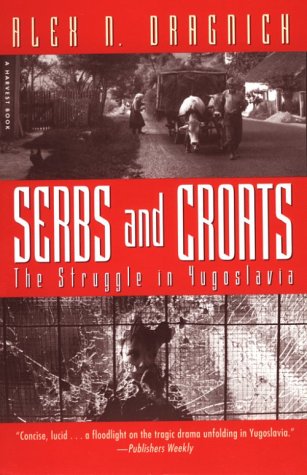
9. Serbs and Croats: The Struggle
 
$99.95
10. Yugoslavia Diplomatic Handbook
$85.01
11. NATO and the Former Yugoslavia
 
$229.00
12. Beyond Yugoslavia: Politics, Economics,
$19.52
13. Yugoslavia: An Avoidable War
 
14. The Death of Yugoslavia (BBC Books)
$34.67
15. The Fall of Yugoslavia: Why Communism
 
16. White Book on Aggressive Activities
$60.00
17. Yugoslavia and Its Historians:
 
18. The practice of socialist democracy
 
$153.41
19. Nationalism and Federalism in
 
20. Building a new Yugoslavia (Fabian

1. Other Governments of Europe: Sweden, Spain, Italy, Yugoslavia, and East Germany (Prentice-Hall contemporary comparative politics series)
by Michael Roskin
 Paperback: 182 Pages (1977-03)
list price: US$13.95 -- used & new: US$7.50
(price subject to change: see help)
Asin: 0136429599
Canada | United Kingdom | Germany | France | Japan

2. The National Question in Yugoslavia: Origins, History, Politics
by Ivo Banac
Paperback: 456 Pages (1988-03)
list price: US$36.95 -- used & new: US$32.50
(price subject to change: see help)
Asin: 0801494931
Average Customer Review: 4.5 out of 5 stars
Canada | United Kingdom | Germany | France | Japan

Customer Reviews (3)

4-0 out of 5 stars Interesting, but focuses upon short time period
Very interesting and useful, even though it focuses on the short (but pivotally important) time period of 1918-1921.

5-0 out of 5 stars A seminal work
This is perhaps one of the best books on thenational/nationalist problems that have beset the former Yugoslaviasince its formation after World War I. In fact, the author primarily analyzes the short period during and immediately after the establishment of Yugoslavia in 1918, his central thesis being that the overlapping nationalist ideologies and problems which appeared then were never directly addressed and continued to plague the country (all up until its disintegration in 1990 and even afterwards)."The National Question in Yugoslavia" extensively describes the nationalisms of all Yugoslav peoples, not just the Croats.Also, since the work focuses on the early 1920s, it would have been pointless to discuss the origins of the Croatian Ustasha, since this ultra-nationalist fascist movement only emerged about ten years later. In the same vein, one could criticize this book for not providing a deeper exploration of the origins of the Serbian Chetnik movement... This is definitely THE book to read if you want a better understanding of the problems and rivalries that existed in Yugoslavia and led to the violent break-up of that country twice: during World War II and at the beginning of the 1990s.

4-0 out of 5 stars Good detail on croation political dynamics upto WW2
A while since I read this book. Useful detail of croatian political dynamics dating from mid/late C19 to late 1930's. Avoids any real detail on the rise to power of the Ustashe movement.The content tries to be objective and suceeds to a certain extent. ... Read more


3. Yugoslavia Foreign Policy And Government Guide
Paperback: 384 Pages (2004-01-31)
list price: US$99.95 -- used & new: US$99.95
(price subject to change: see help)
Asin: 073979647X
Canada | United Kingdom | Germany | France | Japan
Editorial Review

Book Description
Basic information on foreign and domestic policy, national security, political system, parties and elections, government and administrative structure. Participation in international organizations, treaties and regional unions.International and foreign policy and more. ... Read more


4. Yugoslavia Government And Business Contacts Handbook (World Business, Investment and Government Library)
by USA International Business Publications
Paperback: 350 Pages (2006-01)
list price: US$99.95 -- used & new: US$99.95
(price subject to change: see help)
Asin: 0739761374
Canada | United Kingdom | Germany | France | Japan
Editorial Review

Book Description
Ultimate handbook on government and business contacts in the country. Government agencies, strategic, business contacts, international representations and more... ... Read more


5. Memorandum of the Government of the Federative People's Republic of Yugoslavia concerning the ethnical structure of the Julian March.
by Yugoslavia.
 Paperback: Pages (1945)

Asin: B000IVLX0C
Canada | United Kingdom | Germany | France | Japan

6. Mozambique - Yugoslavia (Marxist Governments : a World Survey, Volume 3)
by Bogdan Szajkowski
 Hardcover: Pages (1981-07)
list price: US$35.00 -- used & new: US$84.09
(price subject to change: see help)
Asin: 0312518595
Canada | United Kingdom | Germany | France | Japan

7. Exchange of Notes Between the Government of the United Kingdom of Great Britain And Northern Ireland And the Government of the Federal Republic of Yugoslavia ... Certain... (Treaty Series (Great Britain))
 Hardcover: 8 Pages (2005-06-22)
list price: US$9.00 -- used & new: US$9.00
(price subject to change: see help)
Asin: 0101658923
Canada | United Kingdom | Germany | France | Japan

8. ¡Dios, salva a Yugoslavia!(movimientos separatistas; política y gobierno)(TT: May God save Yugoslavia!)(TA: separatist movements; government and politics): An article from: Siempre!
by Alexander Serikov
 Digital: 6 Pages (1999-07-29)
list price: US$5.95 -- used & new: US$5.95
(price subject to change: see help)
Asin: B00099MOYC
Canada | United Kingdom | Germany | France | Japan
Editorial Review

Book Description
This digital document is an article from Siempre!, published by Edicional Siempre on July 29, 1999. The length of the article is 1545 words. The page length shown above is based on a typical 300-word page. The article is delivered in HTML format and is available in your Amazon.com Digital Locker immediately after purchase. You can view it with any web browser.

Citation Details
Title: ¡Dios, salva a Yugoslavia!(movimientos separatistas; política y gobierno)(TT: May God save Yugoslavia!)(TA: separatist movements; government and politics)
Author: Alexander Serikov
Publication: Siempre! (Refereed)
Date: July 29, 1999
Publisher: Edicional Siempre
Volume: 46Issue: 2406Page: 58

Distributed by Thomson Gale ... Read more


9. Serbs and Croats: The Struggle in Yugoslavia
by Alex N. Dragnich
Paperback: 228 Pages (1993-05)
list price: US$28.00 -- used & new: US$1.78
(price subject to change: see help)
Asin: 0156806630
Average Customer Review: 2.5 out of 5 stars
Canada | United Kingdom | Germany | France | Japan

Customer Reviews (11)

1-0 out of 5 stars A blatantly biased account
I was given a copy of this book in Belgrade one summer by a friend who hadn't yet read it, and never one to turn down a free book gladly took it. After the first few chapters I couldn't take it anymore and skipped to the end. I have no ethnic ties to any Balkan country and consider myself relatively unbiased. One need not know all the facts firsthand to recognize the bias in this book; it is in the language of the book. Simply the adjectives chosen paint a picture of noble victimized Serbs and blood-thirsty fascist Croats. (Sorry I don't have the book on hand to give a few quotes.) Serbs were the initial aggressors in Croatia and Bosnia. But attrocities were committed by all sides, and against all sides. Unfortunately, all sides seem most interested in continuing to play the victim (as nicely exemplified by this book), and few seem willing to own up to the wrongs done by their own side. I would say the only useful purpose for this book is analysis of subtle and not-so-subtle means of incorporating personal bias into "scholarly" writing.

1-0 out of 5 stars "The Serbs gave so much...
...and were stabbed in the back."

Much of what? I hope the author of this statement doesn't try to imply that the Serbs brought a higher level of education, culture and improvement of living standards with them when the Yugoslav state was formed?

Stabbed by whom? The Serbs shot themselves in the foot tenfold when treating the 'newly acquired areas' as Serbian Lebensraum, the last phase of which unfolded right in front of international cameras in the 1990's.

Serbian propaganda has vehemently been trying to cast especially Croats as being genocidal by nature and responsible for the breakup of Yugoslavia, and at the same time casting the Serbs in the role of benefactor and perpetual victim. This book fits nicely together with other publications from pathological Serb propagandists - scholars or non-scholars. It should not be used as a reference to neither Yugoslav history nor as a guide to understand the reason behind the breakup of Yugoslavia.

2-0 out of 5 stars The Serbs were the victims.
Dragnich's view is that the Serbs were the victims since the Ottomon Turks conquered Serbia.People with common sense would say that this view is not based on facts.Dragnich defends the Serbs even though most of the facts don't back him up.He simply ignores those facts, and digs up what facts and statistics do make the Serbs look good.
For instance, Dragnich maintains the Serb government had nothing to do with the assassination of the Archduke Franz Ferdinand.Of course he ignores the facts that the Black Hand terrorist group was supported by the Serb intelligence group of the Army.
Dragnich states Princip was just a fanatical Bosnian Serb.He also blames Franz Ferdinand because he should not have ventured to Bosnia during the time because of the Serb national holiday.
This is just one instance where Dragnich ignores the facts and says the victims were the Serbs and not the Archduke and his wife.
For the remainder of the book, Dragnich portrays the Croats, Slovenes, and Muslims as benefiting from Serb rule.This would be like equating a colony as a good experience for those ruled.
Atrocities, well the Croats and Muslims were more guilty than the Serbs.This is the context of this book.
At the very least, one gains an idea of what the Serbs have in their heads.This explains what happened in Croatia, Bosnia, and Kosovo.The Serbs say let us take back what we gave them.It might not be true, but this is how they explain their actions.

5-0 out of 5 stars An EXCELLENT study on Yugoslavia!
Recent events in the Balkans have shown that due to the ethnological, geopolitical and historical complexity of the region, in depth analysis is of paramount importance in understanding the truth.
Apart from the thousands that have died in the 1990's during the Yugoslav civil war, another victim of war has been the truth, as is the case in most wars, especially in the 20th century.
The truth is based on undisputed facts (dates, events etc), and in relation to opinion, the truth always lies somewhere in the middle. Unfortunately, the two previous "reviewers," instead of treating this book for what it is, i.e. a valuable primary source from the Serb point of view, they dismiss it on the grounds that is written by a University of Belgrade professor. A rather childish and yet dangerous reaction.
In a democracy all voices should be heard instead of being immediately disregarded on the basis of their origin. One cannot and should not silence another just because they disagree with them!
This book provides valuable and serious insight to the understanding of the Serbian psyche. It is a "must" for any serious historian or political analyst interested in the Balkan region.

2-0 out of 5 stars Biased and incomplete.
As a relatively young American, with little knowledge of the conflict in the Balkans, I decided to pick up a book that would give me an unbiased opinion on the conflict, so that I could form my own opinion.I thought that a book with the title, "Serbs and Croats: The Struggle in Yugoslavia" would be such a book.I was wrong.While informative, the information does have a very strong slant.This is probably due to the heavy influence the Serbs have on the media.It is the same influence that led to our nation's ignorance of the Concentration camps set up in Serbia and Croatia during the war.So, if you are looking for an interesting and quick read on the topic, this is a book to read, however, if you want an unbiased book, this is NOT the book to read.I have also picked up Croatia: A History, which is surprisingly much less biased, and much more thorough.I would recommend that book over Serbs and Croats, if you want something more substantial, and less biased. ... Read more


10. Yugoslavia Diplomatic Handbook (World Business, Investment and Government Library)
by USA International Business Publications
 Paperback: 350 Pages (2005-03-30)
list price: US$99.95 -- used & new: US$99.95
(price subject to change: see help)
Asin: 0739759744
Canada | United Kingdom | Germany | France | Japan

11. NATO and the Former Yugoslavia Crisis, Conflict, and the Atlantic Alliance
by Joyce P. Kaufman
Hardcover: 256 Pages (2002-08)
list price: US$89.00 -- used & new: US$85.01
(price subject to change: see help)
Asin: 0742510212
Canada | United Kingdom | Germany | France | Japan
Editorial Review

Book Description
Focusing on NATO's continued crisis of identity, Joyce P. Kaufman argues that the conflicts in Croatia, Bosnia-Herzegovina, and Kosovo have proven to be critical to an alliance that has not been able to define its roles and missions in the post-Cold War w ... Read more


12. Beyond Yugoslavia: Politics, Economics, and Culture in a Shattered Community (Eastern Europe After Communism)
by Sabrina P. Ramet
 Hardcover: 502 Pages (1995-05)
list price: US$95.00 -- used & new: US$229.00
(price subject to change: see help)
Asin: 0813379539
Canada | United Kingdom | Germany | France | Japan

13. Yugoslavia: An Avoidable War
by Nora Beloff
Paperback: 146 Pages (1997-01)
-- used & new: US$19.52
(price subject to change: see help)
Asin: 1872410081
Average Customer Review: 3.5 out of 5 stars
Canada | United Kingdom | Germany | France | Japan

Customer Reviews (6)

3-0 out of 5 stars An Important Dissenting View of the Bosnian/Croatian War
I'm actually reviewing the 3-part videotape series that was made from this book. The videotapes were produced by Film Humanities, dedicated to producing educational/documentary films for TV and libraries. The author of the book is extensively interviewed on the tapes, as are many of her sources. I initially found the film to be a little dry - heavy as it is with these talking heads. But I soon became absorbed in the rather startling, upending argument it presents about the Bosnian/Serbian War.

The book/film's first diverging contention is that the War was triggered by Croatia's and Slovenia's separatist bids. It further contends that Germany's and America's misguided and mendacious backing of these aspirations made war virtually inevitable.

The film then goes on to take the controversial view that the Serbs, under their leader Slobodan Milosevic, were more victims than perpetrators in the ensuing War. The author of this work attributes our false perceptions to the fact that the Serbs didn't practice the skillful PR that the other factions in the War did. They weren't as good at staging events and at massaging casualty statistics. The power structure encouraged the others' spin-doctoring in order to justify our support of the Muslim factions and to keep oil interests on our side.

This view is so contrary to the general picture the media painted - that I at first suspected this book/film must have been financed by some Serbian coalition, and was in fact just the work of apologists for Serbia. However, I again began to change my mind as I listened further.

One of the Balkan experts giving testimony is John Peter Maher, and his presence on the tapes made a difference for me. I recognized him as someone I knew. He had been my linguistics professor in college, and now was appearing as a knowledgeable witness who had served in counter-intelligence in Yugoslavia. As my teacher, I'd found him to be a perceptive, reliable guide through the warring factions of linguistic study. He didn't seem given to unfounded partisanships of any kind in this perennially contentious field. So Maher definitely added credibility to this film's premise that the Serbs were not the instigators of the War, or the perpetrators of its worst atrocities.

I can't say that "Yugoslavia, the Avoidable War" completely convinced me of its case. But it gives me pause. Made in 2001, it was certainly prescient in its criticisms of US tendencies to dismiss diplomacy in favor of the use of immediate military might.

And this work once again brought into serious question the reliability of our news coverage. A good follow-up movie to obtain on this issue would be "Live From Baghdad" starring Michael Keaton. This movie was praised by many as a depiction of the heroic coverage provided by CNN field reporters during the Desert Storm War. However, I saw the movie as a rather sad commentary on how often foreign correspondents operate on an adrenaline rush, going after news bites and "scoops" that have little substance and that leave the viewing public with skewed versions of what really happened. It seems this sort of aggressive push/shove culture of headline grabbing might have left the public similarly misinformed about what was really going on in the Bosnian/Serbian War.

5-0 out of 5 stars Absolute authority on Balkan affairs
This book is a real gem. It is factual scholary work of one of the greatest experts on Balkan affairs. However, young Bosnian muslims and Croats will definately not like it...You can see this in the negative reviews that follow this one. Brainwashed as they are, they try to discredit this book and the author by repeting false and malicius propaganda- for example that Serbs wanted "to create Greater Serbia" throughout last 6-7 decades and that "they are still trying to do so". It doesnt take a genious to know that Yugoslavia was rulled by Tito, an CROATIAN DICTATOR, for all these decades and if anything, he was very Anti-Serb. He broke Serbia into pieces, by creating new nation Macedonia( previously South Serbian disrict called "Chokalija") and by forming two authonomic regions within Serbia itself: Kosovo and Vojvodina. Furthermore, in 1974 Tito made Muslims a nation in Bosnia- yes you read it well- a NATION. Not religious group aS ANYWHERE in the world, but NAtion. With this he even more reduced number of Serbs, because todays Bosnian muslims, who are attacking this book here, were, until 1974, declairing themselves as "Serbs" of Islamic religion.So from 1974 until break up of Yugoslavia they were just Muslims. Now they will say of course that they are Bosnians....These are historical facts that can be easily checked: Turkey rulled Balkans for over 500 years and those Serbs and Croats who changed their religion and took Islam during this time, are todays Bosnian Muslims. So it remains a mistery how did Serbs tried to create a "Great Serbia" under rule of Croatian Dictator who hated them and who fought against them in the WWI ( Tito was an Austrian soldier)....Even Milosevic was not a nationalist, but a communist who stood for "brotherhood and Unity" and who wanted to preserve Yugoslavia, as opossed to radical Bosnian Muslim leader Alija Iztebegovic and even more radical nationalist in Croatia - Franjo Tudjman.Until he was in power Serrbia and Montenegro were still called "Yugoslavia" and his Serbia remained the most MULTI-ETHNIC state in Balkans (40% od citizens of Serbia are not Serbs). All this is well documented in this great book. Ms Beloff is not pro-Serbian but rather objective and after reading this book you will know why there are so many poor attempts to dicredit her and this book. This is pricesly why this book is hard to buy and find, as it exposes official Western propaganda and malicious policies of different powers in Balkans.

1-0 out of 5 stars Waste of time and money
Just another worthless propaganda book.It's overwhelmingly pro-serbian, portrays the serbs as almost the only victims of war in the former yugoslavia.Blames everybody except the serbs for starting the war.Ignores the fact that for centuries the serbs tried to enslave the region through force and establish a greater serbia, which is still their goal.

5-0 out of 5 stars An expert view on Yugoslav Wars
Nora Beloff was one of the greatest experts on Balkan affairs in UK (and Europe). She was editor of "THE GUARDIAN" papers and she was actively writting until her tragic death. Unlike many of her colleagues in Britain (and West in general), she actually knows very well what is she writting about! Her expertise on Balkans is unsurpassed and she has written several books on this matter. She states the facts, destroys propaganda and explains clearly who is who in Balkans and what was West's part in break up of Yugoslavia. If you are interested in Balkans, or you want to know how todays governments and media operate, function and create propaganda-this book is for you

5-0 out of 5 stars please read...
I respect the opinion of the person who wrote the review before me, but I urge you to read the book. I understand why Edo would not like the book. It is much different than anything else you can find in USA. The book shows the other side of the war and clearly states that there were three waring parties there. The book is filled with facts that show the numbers of serbian refugees from Bosnia (40%) which has been hidden to the West. The book gives a good idea of what really happened and all the reasons why the three nations didn't want to live together anymore. In any case, I can say that I feel wiser for have read it. Thank you. ... Read more


14. The Death of Yugoslavia (BBC Books)
by Allan Little, Laura Silber
 Paperback: 400 Pages (1995-07-09)

Isbn: 0140249044
Average Customer Review: 5.0 out of 5 stars
Canada | United Kingdom | Germany | France | Japan

Customer Reviews (1)

5-0 out of 5 stars documentary
I have not yet read the book, but seen the documentary made by BBC. This documentary gives a brilliant overview of what really happened in the Balkan. Impressive features ! ... Read more


15. The Fall of Yugoslavia: Why Communism Failed
by Svetozar Stojanovic
Hardcover: 341 Pages (1997-06)
list price: US$45.00 -- used & new: US$34.67
(price subject to change: see help)
Asin: 1573921467
Average Customer Review: 3.0 out of 5 stars
Canada | United Kingdom | Germany | France | Japan

Customer Reviews (1)

3-0 out of 5 stars Fall of Yugoslavia
The author, a professor from Serbia, analyzes his experiences as a dissident against the former Communist government of Yugoslavia, and the government of Slobodan Milosevic, emphasizing the required nationalism ofany viable opposition, and attempting to rehabilitate his academiccolleague Dobrica Cosic as well as other associates.At the same time, theauthor thoroughly and convincingly condemns exclusionary and militaristicnationalism, as obsolete and mortally dangerous tomankind.Not anarrative of the disintegration of Yugoslavia, this book insteadillustrates dilemmas facing Western-democratically inclined intellectualsin Serbia. ... Read more


16. White Book on Aggressive Activities by the Governments of the USSR, Poland, Czechoslovakia, Hungary, Rumania, Bulgaria and Albania towards Yugoslavia.
by Yugoslavia. Ministry of Foreign Affairs.
 Paperback: Pages (1951)

Asin: B000IVR4XC
Canada | United Kingdom | Germany | France | Japan

17. Yugoslavia and Its Historians: Understanding the Balkan Wars of the 1990s
Hardcover: 296 Pages (2003-02-19)
list price: US$60.00 -- used & new: US$60.00
(price subject to change: see help)
Asin: 0804745943
Average Customer Review: 5.0 out of 5 stars
Canada | United Kingdom | Germany | France | Japan
Editorial Review

Book Description

Most of what has been written about the recent history of Yugoslavia and the fierce wars that have plagued that country has been produced by journalists, political analysts, diplomats, human rights organization, the United Nations, and other government and intergovernmental organizations.Professional historians of Yugoslavia, however, have been strangely silent about the wars and the breakup of the country.This book is an effort to end that silence.

The goal of this volume is to bring together insights from a distinguished group of American and European scholars of Yugoslavia to add depth to our historical understanding of that country’s recent struggles.The first part of the volume examines the ways in which images of the Yugoslav past have shaped current understandings of the region.The second part deals more directly with the events of the recent past and also looks forward to some of the problems and future prospects for Yugoslavia’s successor states.

... Read more

Customer Reviews (1)

5-0 out of 5 stars Further Yugoslavia Question
Norman Naimark, famous author of Fires of hatred (trad. also in Italy), with other expert scholars (Vucinich, Emmert, Fine, etc)fill with that book a historiographic vacuum about a complex and unexplored question. A little bit space should devote to medieval origins of the conflicts.
In last analysis a beatyfull book. ... Read more


18. The practice of socialist democracy in Yugoslavia
by Edvard Kardelj
 Unknown Binding: Pages (1954)

Asin: B0007JLR5G
Canada | United Kingdom | Germany | France | Japan

19. Nationalism and Federalism in Yugoslavia, 1963-1983
by Pedro Ramet
 Hardcover: 299 Pages (1984-11)
list price: US$27.50 -- used & new: US$153.41
(price subject to change: see help)
Asin: 0253339723
Canada | United Kingdom | Germany | France | Japan

20. Building a new Yugoslavia (Fabian Society, London. Research series)
by Phyllis Auty
 Unknown Binding: 29 Pages (1972)

Asin: B0007AOKFY
Canada | United Kingdom | Germany | France | Japan

  1-20 of 100 | Next 20
A  B  C  D  E  F  G  H  I  J  K  L  M  N  O  P  Q  R  S  T  U  V  W  X  Y  Z  

Prices listed on this site are subject to change without notice.
Questions on ordering or shipping? click here for help.

site stats