e99 Online Shopping Mall

Geometry.Net - the online learning center Help  
Home  - Biology - Botany (Books)

  1-20 of 100 | Next 20

click price to see details     click image to enlarge     click link to go to the store

$8.10
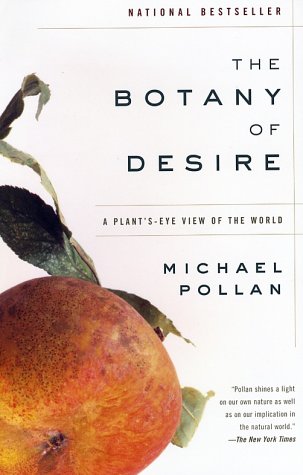
1. The Botany of Desire: A Plant's-Eye
$15.87
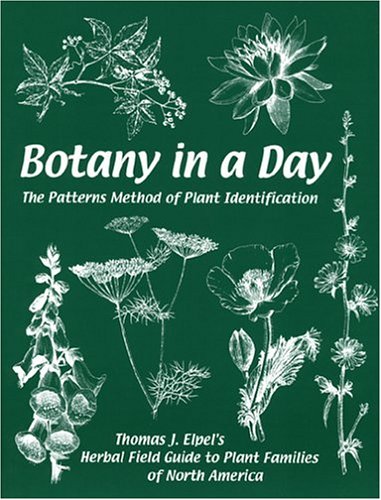
2. Botany in a Day:The Patterns Method
$11.45
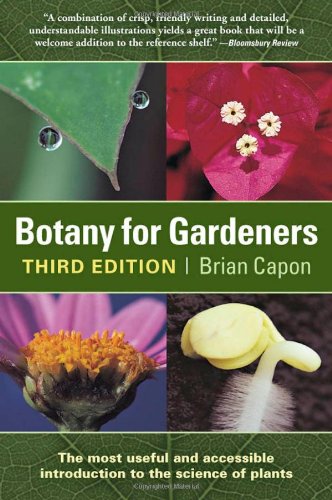
3. Botany for Gardeners
$29.51
4. Botany Illustrated: Introduction
$12.27
5. Botany Coloring Book (HarperCollins
$69.45
6. Introduction to Botany
 
$182.29
7. Photographic Atlas For The Botany
$14.87
8. Marijuana Botany: Propagation
 
$40.00
9. Photographic Atlas of Botany &
$69.99
10. Economic Botany: Plants in our
$9.27
11. Winter Botany
$36.00
12. Botany: An Introduction to Plant
$26.99
13. Exploring Creation With Botany
$2.28
14. The Girl From Botany Bay
$15.46
15. American Household Botany: A History
$3.79
16. Botany for Gardeners: An Introduction
$20.91
17. Colonial Botany: Science, Commerce,
$7.96
18. The Botany of Desire: A Plant's-Eye
$89.99
19. Introductory Botany: Plants, People,
$43.50
20. Introductory Plant Biology

1. The Botany of Desire: A Plant's-Eye View of the World
by Michael Pollan
Paperback: 304 Pages (2002-05-28)
list price: US$15.00 -- used & new: US$8.10
(price subject to change: see help)
Asin: 0375760393
Average Customer Review: 4.0 out of 5 stars
Canada | United Kingdom | Germany | France | Japan
Editorial Review

Amazon.com's Best of 2001
Working in his garden one day, Michael Pollan hit pay dirt in the form of an idea: do plants, he wondered, use humans as much as we use them? While the question is not entirely original, the way Pollan examines this complex coevolution by looking at the natural world from the perspective of plants is unique. The result is a fascinating and engaging look at the true nature of domestication.

In making his point, Pollan focuses on the relationship between humans and four specific plants: apples, tulips, marijuana, and potatoes. He uses the history of John Chapman (Johnny Appleseed) to illustrate how both the apple's sweetness and its role in the production of alcoholic cider made it appealing to settlers moving west, thus greatly expanding the plant's range. He also explains how human manipulation of the plant has weakened it, so that "modern apples require more pesticide than any other food crop." The tulipomania of 17th-century Holland is a backdrop for his examination of the role the tulip's beauty played in wildly influencing human behavior to both the benefit and detriment of the plant (the markings that made the tulip so attractive to the Dutch were actually caused by a virus). His excellent discussion of the potato combines a history of the plant with a prime example of how biotechnology is changing our relationship to nature. As part of his research, Pollan visited the Monsanto company headquarters and planted some of their NewLeaf brand potatoes in his garden--seeds that had been genetically engineered to produce their own insecticide. Though they worked as advertised, he made some startling discoveries, primarily that the NewLeaf plants themselves are registered as a pesticide by the EPA and that federal law prohibits anyone from reaping more than one crop per seed packet. And in a interesting aside, he explains how a global desire for consistently perfect French fries contributes to both damaging monoculture and the genetic engineering necessary to support it.

Pollan has read widely on the subject and elegantly combines literary, historical, philosophical, and scientific references with engaging anecdotes, giving readers much to ponder while weeding their gardens.--Shawn Carkonen Book Description
Every schoolchild learns about the mutually beneficial dance of honeybees and flowers: The bee collects nectar and pollen to make honey and, in the process, spreads the flowers’ genes far and wide. In The Botany of Desire, Michael Pollan ingeniously demonstrates how people and domesticated plants have formed a similarly reciprocal relationship. He masterfully links four fundamental human desires—sweetness, beauty, intoxication, and control—with the plants that satisfy them: the apple, the tulip, marijuana, and the potato. In telling the stories of four familiar species, Pollan illustrates how the plants have evolved to satisfy humankind’s most basic yearnings. And just as we’ve benefited from these plants, we have also done well by them. So who is really domesticating whom? ... Read more

Customer Reviews (155)

5-0 out of 5 stars Who wouldn't love this book?
You'll notice that a huge majority of readers found this book to be informative, thought provoking, and even enjoyable. It's the type of reading material that sticks with you, and changes your view of the world. It has changed my eating habits and gardening routines. A very few people felt the book was worthless. Hmmmmmmm. Once you read the book you'll probably be able to figure out who those people are. Gee, I don't know... maybe anyone connected with the Monsanto Corporation? Or other greedy monoagriculturalists? Anyone who doesn'tcare one bit about the future of the planet, or the health of its people? Yup, there is surely a population out there that would take exception to the facts presented in this eye-opening book.

5-0 out of 5 stars Such a good read for us beginners!
This was a gift,and what a great gift!I hear botanists say it is not a substantive book, but I am not a botanist!I loved it, everyone I loaned it to loved it.Made me look at my tulips and apples differently, and the birds and the bees and everything -- and as an organic gardener and cook it made me appreciate the natural thoughtfulness behind the varieties we grow and enjoy!Buy, read, and gift his book -- from 16 to 85 have enjoyed it!

5-0 out of 5 stars A mind-expanding change of perspective
The easy and subtle way this book allows readers to view life on earth from an entirely different perspective is unprecedented (at least I've never read anything like it.)Pollan's style is so smooth, so full of humor and humanity, it's impossible not to become totally captivated.Even for someone like myself who doesn't read a lot of non-fiction, this is a true page-turner.Pollan's hilarious and inspiring dissection of Johnny Appleseed, reality versus myth, is in itself worth the price of admission.

5-0 out of 5 stars one of the best books I've ever read
I can't say enough about this book. A history of four things that grow presented originally, thoughtfully, and thoroughly - as well as how they have influenced the culture of humanity (and the writing itself is excellent). Profound in many ways, this is a book that you will not be able to put down. Thank you, Michael Pollan.

5-0 out of 5 stars Fascinating reading
I have had this book since 2003 and loaned or recommended it to all my friends. It is a great story that I zipped right though.

Pollan's writing is informative and pleasurable. Second Nature & Botany of Desire provide an interesting perspective on our relationship with other living things in the garden and larger natural world. His insightful observations about nature and biology will ring true for many, especially organic gardeners.
... Read more


2. Botany in a Day:The Patterns Method of Plant Identification
by Thomas J. Elpel
Paperback: 221 Pages (2004-01)
list price: US$25.00 -- used & new: US$15.87
(price subject to change: see help)
Asin: 1892784157
Average Customer Review: 5.0 out of 5 stars
Canada | United Kingdom | Germany | France | Japan
Editorial Review

Book Description
Looking for a faster, easier, and fun way to identify plants? Botany in a Day teaches you the patterns method of plant identification, so that you can discover the wonderful world of plants around you, wherever you go.

Instead of trying to identify plants one-at-a-time, Botany in a Day give you a way to learn them by the hundreds, based on the principle that related plants have similar patterns for indentification, and they often have similar uses.

The one-day tutorial included in the text teaches you seven key patterns to recognize more than 45,000 species of plants worldwide. Master these seven patterns and you will be ready to use the included reference guide--Thomas J. Elpel's Herbal Field Guide to Plant Families of North America. Here you will find the patterns for indentification and the patterns of uses for the majority of plants across the continent.

Botany in a Day is used as a guide by thousands of individuals, plus herbal schools and universities across North America. ... Read more

Customer Reviews (6)

5-0 out of 5 stars Makes a great first book on the subject
This book ranks with such classics of plant indentification as Agnes Chase's A First Book of Grasses, or Donald Culross Peattie's books on tree indentification. Taking a bird's-eye view and then drilling down from there, it provides an overview of plant structure and evolution as well as many technical details relating to the structure and identification of plants. This would make an excellent first book for anyone wanting to know more about the subject. After this, you can try some of the more detailed field manuals and then try to get your feet wet with some of the real taxonomic keys. These require some knowledge of plant anatomy, but there's nothing that difficult about that, except that having a good memory is a help. But really, it doesn't take that much smarts and anyone can learn to identify the most common trees, flowers, and even fungi in their area with a little time and patience.

5-0 out of 5 stars Excellent Resource!
Botany in a Day provides an excellent overview to field botany.By learning plant characteristics by family, the reader can more quickly identify their plant by identifying the patterns each plant family presents.The book provides a page or two (or more!) on dozens of the most common families in the northern half of the US.Each plant family section contains additional information about the plant genera represented in this family.The keys to plant families allow the reader to quickly determine what section to turn to.This book is best coupled with a plant field guide to individual species that is grouped by family.You can use the Botany in a Day information to narrow your selection to the family and the field guide to identify the specific species.

I highly recommend this book to both lay and professional people who work with plants.

5-0 out of 5 stars botany in several months
This book lays out the general approach through which a beginner can make sense of the vast amount of information he or she faces in learning botany.I found it most helpful.

5-0 out of 5 stars Fantastic
Take a really dry subject and turn it into a book I couldn't put down!

Tom Elpel's style is right on target and his book is turning into a constant companion for my outings!

5-0 out of 5 stars Wonderful book for intuitive understanding of the subject
In the opening chapter, this book presents a wonderful simplified story of the evolution of plants, from a single cell to modern complex flowers.Both children and adults can gain a unique, intuitive understanding of this process from this explanation. My compliments to the author.He describes each plant family with interesting anecdotes and high quality line drawings.It's the first plant book whose lack of photographs didn't matter.Great tips for identifying families and individual plants have helped me enormously.Bravo! ... Read more


3. Botany for Gardeners
by Brian Capon
Paperback: 240 Pages (2004-12-01)
list price: US$19.95 -- used & new: US$11.45
(price subject to change: see help)
Asin: 0881926558
Average Customer Review: 4.5 out of 5 stars
Canada | United Kingdom | Germany | France | Japan
Editorial Review

Book Description
A bestseller since its debut in 1990, this indispensable and handy reference has now been expanded and updated to include an appendix on plant taxonomy and a comprehensive index. Two dozen new photos and illustrations make this new edition even richer with information. Its convenient paperback format makes it easy to carry and access, whether you are in or out of the garden. An essential overview of the science behind plants for beginning and advanced gardeners alike. ... Read more

Customer Reviews (11)

3-0 out of 5 stars basics, but could be more thorough
The book covered the major topics of botany, but tended to emphasize dicots, giving the impression all plants are like dicots.I use this for teaching a college course and need to add information on the notable exceptions for plants not used as examples.

5-0 out of 5 stars great
i recieved this book quickly and it ws in perfect condition i am very happy :) :)

5-0 out of 5 stars Botany textbook
book was shipped as promised and delivered in excellent condition. I would definitely buy from this source again

5-0 out of 5 stars Botany for Gardeners
This book met my needs perfectly.It is a brief but comprehensive and lively review of plant biology for the serious gardener.Well organized.Excellent illustrations.Appropriate references to the gardening environment.

It covers 50% of the material found in a definitive botany textbook in 25% of the space and 25% of the cost.

5-0 out of 5 stars Training Master Gardeners
I teach Master Gardeners.They get a manual plus this book.It greatly reinforces the botany section of the Master Gardener program.The pictures are much better than I could draw by hand....I have used it to teach at least 50 Master Gardeners. ... Read more


4. Botany Illustrated: Introduction to Plants, Major Groups, Flowering Plant Families
by Janice Glimn-Lacy, Peter B. Kaufman
Paperback: 278 Pages (2006-03-29)
list price: US$39.95 -- used & new: US$29.51
(price subject to change: see help)
Asin: 0387288708
Average Customer Review: 5.0 out of 5 stars
Canada | United Kingdom | Germany | France | Japan
Editorial Review

Book Description

This easy-to-use book helps you acquire a wealth of fascinating information about plants. There are 130 pages with text, each facing 130 pages of beautiful illustrations. Each page is a separate subject. Included is a coloring guide for the realistic illustrations. The illustration pages are composed of scientifically accurate line drawings with the true sizes of the plants indicated. Using colored pencils and the authors instructions, you can color the various plant structures to stand out in vivid clarity. Your knowledge of plants increases rapidly as you color the illustrations.

There is a balanced selection of subjects that deal with all kinds of plants. However, the emphasis is on flowering plants, which dominate the earth. Drawings show common houseplants, vegetables, fruits, and landscape plants. They also show common weeds, wild flowers, desert plants, water plants, and crop plants.

Botany Illustrated, Second Edition, has three sections. An Introduction to Plants gives you facts on everything from cells to seeds. The Major Groups section is from fungi to algae, ferns, conifers, and flowering plants. In Flowering Plant Families are magnolias to asters, and water-plantains to orchids, with the families of major interest included. You will find plants used for food, ornamentals, lumber, medicines, herbs, dyes, and fertilizers, whether wild or poisonous, or of special importance to our Earths ecosystem.

Topics that will be of interest to you include:

  • Why leaves turn color in autumn
  • How certain plants devour insects
  • How a flower develops into a fruit with seeds
  • Why some plants only flower at certain times of the year
  • How water, nutrients, and sugars move within a plant, including tall trees
  • How flowers are pollinated
  • The inside story of how plants manufacture their own food
  • How plants are named and classified
  • How vines climb
  • Why pinching makes plants bushy
  • How plants reproduce sexually
  • Why shoots grow towards light
  • How specific leaf colors can indicate specific mineral deficiencies

Botany Illustrated, Second Edition, is especially easy to use because of its great flexibility. You can read the text and look at the drawings, read the text and color the drawings, or just enjoy coloring the drawings. No matter where your interests lead you, you will quickly find your knowledge of plants growing! Thus, this beautiful book will be of great value to students, scientists, artists, crafters, naturalists, home gardeners, teachers, and all plant lovers.

... Read more

Customer Reviews (5)

5-0 out of 5 stars botany illustrated
This is an excellent coloring book with outstanding detail. Just be aware you need to purchase colored pencils. I spend an hour each evening coloring a few pages. Its a great learning tool!.

5-0 out of 5 stars Botany Illustrated:Introduction to Plants, Major Groups, Flowering Plant Families
I find this guide most helpful as a learning tool for the subject of Botany.The information set out is well presented along with the detailed illustrations which help further clarify the subject matter.Great study tool!

5-0 out of 5 stars Very user friendly botany book
Very pleased that this is both a botany book, covering basic principles of botany, and at the same time an 'adult' colouring book (a la Anatomy or Physiology colouring books), which allows you to actively reinforce your learning by colouring in the plant sections accompanying what you are reading.Very nice book.

5-0 out of 5 stars wonderful
very good book! enjoyed good illustrations
even can be used as a coloring book.
love it!

5-0 out of 5 stars interesting book
This book is wery interesting. There you can to colour the pictures. Colour the pictures you can learn wery fast botany. ... Read more


5. Botany Coloring Book (HarperCollins Coloring Books (Not Childrens))
by Paul Young
Paperback: 224 Pages (1982-04-21)
list price: US$21.95 -- used & new: US$12.27
(price subject to change: see help)
Asin: 0064603024
Average Customer Review: 5.0 out of 5 stars
Canada | United Kingdom | Germany | France | Japan
Editorial Review

Book Description
An exciting new approach to learning about botany. Teaches the structure and function of plants and surveys the entire plant kingdom. ... Read more

Customer Reviews (4)

5-0 out of 5 stars Botany Coloring Book
I found this extremely helpful for a Botany For Gardener's course I am taking.Even though it seems to take a long time to color each page, it really helps to visualize the material and remember it more easily.

5-0 out of 5 stars This study technique works well for me.
At first you have to hide the fact that at, age 53, you are using a coloring book!Nevertheless I have stuck with it through a number of pages and have found out that my retention and ability to recall through visualizing the diagrams increases many fold versus the read and think method.When I revisit the pages to study the topic it comes back much easier.The bookseems to be a good balance between the written text/descriptions and the illustrations.It takes a fairly big time commitment and at times you ask yourself, "Is this the best use of my study time?".Well after a few days the accuracy of my retention answered that question with a huge YES. It is much more technical than how one might visualize as 'coloring book'. I really do enjoy it and am learning the topics.

5-0 out of 5 stars Excellent forolder students including college age
This is an incredibly detailed and thorough examination of the anatomy andphysiology of plants. A great way to for visual learners to supplementtheir learning experience. I found it extremely helpful in my collegeIntroductory Botany course.

5-0 out of 5 stars This book is interesting and fun!
I wanted to know more about plants and how to look at plants. How do you start without to find out when you do not really want to commit time to doing a college course or reading technical books? I am more than pleased to find a book that is so complete and is written for adults. Can't belive how much fun I'm having with it. Thanks, Authors! ... Read more


6. Introduction to Botany
by Murray Nabors
Hardcover: 656 Pages (2003-12-18)
list price: US$124.00 -- used & new: US$69.45
(price subject to change: see help)
Asin: 0805344160
Average Customer Review: 4.0 out of 5 stars
Canada | United Kingdom | Germany | France | Japan
Editorial Review

Book Description
Introduction to Botany's comprehensive coverage captures readers' attention by showing them why plants are a fascinating and essential part of their everyday lives. The clear, concise text focuses on four major themesÑplants and people, conservation biology, evolution, and biotechnologyÑand gives readers practical and relevant information about the world of botany. Thematic boxes throughout each chapter further highlight the relationship between plants and readers' lives. Nabors' clear and engaging writing style keeps students interested in the science without ever becoming encyclopedic. Plants & people, conservation biology, evolution, and biotechnology.For college instructors, students, and anyone interested in plant biology or botany. ... Read more

Customer Reviews (1)

4-0 out of 5 stars Wonderful (except for the website)
This book is fantastic--very clear, concise, overall well-written.I have absolutely no background in botany but feel very satisfied and confident with what I've learned from this book.The illustrations are especially well done and are useful in understanding the nuts (no pun intended!) and bolts of plant structures and biological processes.

I gave it 4 stars instead of 5 because the website is often not functional or is down. ... Read more


7. Photographic Atlas For The Botany Lab
by Kent M. Van De Graaff
 Paperback: 186 Pages (1998-01)
list price: US$24.95 -- used & new: US$182.29
(price subject to change: see help)
Asin: 0895823837
Average Customer Review: 5.0 out of 5 stars
Canada | United Kingdom | Germany | France | Japan

Customer Reviews (3)

5-0 out of 5 stars Wonderfully illustrative and informative
This book has been a great help to me for Botany, especially Botany labs.It has pictures on the micro- and macroscopic levels of plants with captions that label and describe function.A great book to have because it increases course comprehension.

5-0 out of 5 stars Quick and Perfect
I would just like to say that the delievery on this item was wonderful, everything was prompt, and it was in perfect condition.

5-0 out of 5 stars thanx so much
i have a dumb teacher that is making me do a leaf project and this helpe ... Read more


8. Marijuana Botany: Propagation and Breeding of Distintive Cannabis
by Clarke
Paperback: 220 Pages (1993-01-01)
list price: US$24.95 -- used & new: US$14.87
(price subject to change: see help)
Asin: 091417178X
Average Customer Review: 4.0 out of 5 stars
Canada | United Kingdom | Germany | France | Japan
Editorial Review

Book Description
Cannabishas been cultivated for 10,000 years.In recenttimes, marijuana has undergone more genetic experimentation andcross-breeding than during the previous 10,000 years.This remarkablehybrid development was accomplished by thousand of individuals new to anykind of farming. Marijuana Botanyoffers accurate information about all aspects ofcultivation.It explains how quality is affected by climate andenvironment; identification and desirability of female plants;consideration for cultivating sinsemilla; THC production and peakpotency; producing desirable plants year after year. ... Read more

Customer Reviews (12)

4-0 out of 5 stars Old but still good
This is a good book about the marijuana plant itself but is a bit dated. Still if you want to learn more about breeding and plant physiognomy then this is a good choice.

4-0 out of 5 stars Excellent text on arranging a breeding environment
If you have read some other reviews posted for this book then it would seem as if this researcher was talking out his ass but if you bother to actually read the book at all then you will realize that the information provided may or may not be intended for either your level of education as far as cannabis goes or for the specific agenda behind your reasons for growing cannabis.
No it is not a book for the first hand grower, and No this book will not tell you specifically what you need to know for how to grow some "killer bud" but if you want basically a manual for how to develop a purposeful breeding growing regimine and the best way to establish a sterile environment and efficient pollen collection and cultivation techniques then this is the book upon which it wouldn't hurt to start your reading collection.
This book was written in the eighties as has yet to be updated but it is useful and informative. The research however outdated is still competant and unbiased and anytime that you have definative data you should try to learn from it. The stated research spans nearly half a century of labratory and field study from doctors, scientists, horticulurists, and regular old smokey joe from down the street, as a person who has spent a number of years in the research and breeding fields I appreciated the fact that someone else had done the grunt work.
As a person who done some research, here is one thing which I can tell you that is probably the single most important thing anyone can tell you, do your homework!, if growing cannabis is something that you want to do with success then wouldn't you want to find the best way to do it with as little effort and waste as possible the best way that you can do this is READ, books, magazines, college research papers, jotted notes, articles on the internet and do your own kind of gruntwork, talk to competant people who have grown and produced, but most of all don't make any hardcore decisions about who's word you are going to follow and don't take it all to heart.
There is all kind of hype out there and books that have been written by noted celebrity types and documented so called "authorities" on the subject for your sake don't decide to go with anyone specific person's material the more broad based your knowledge the better chance you have of starting the perfect crop.
Probably the single most important piece of information I gleamed from this book is how the plant reacts to environment, chemical, and altitudinal changes, this kind of detailed information is exactly what should be contained in a botany book, and in my humble opinion R.C. Clarke has done a tremendous job of putting this information together.

4-0 out of 5 stars Clarkeýs Marijuana Botany Review + What You Really Want!
The best place to start with this review is to tell you that you do not want this book if you are new to growing. This is not where you want to be going. Getting this book is a mistake which many new growers have made. So you have been warned!! There are other books that cover cannabis cultivation much more accurately like "The Cannabis Grow Bible" by Greg Green which I very highly recommend or "Indoor Marijuana Horticulture" by Jorge Cervantes a reasonably good grow guide. I find Ed Rosenthal's books a little wrong at times and Mel Franks work is far too old to be practical these days. So if you are looking for cultivation information go in that direction first but if you want some cannabis botany science and breeding information then carry on with this review.

The book is divided into four sections.The Sinsemilla Life Cycle of Cannabis, the Propagation of Cannabis, Genetics and Breeding of Cannabis, and finally Maturation and Harvesting of Cannabis.

The first section is very short and deals with the basic cycle of the cannabis plant from seed to the end of its life to the give the reader the basics of how the plant grows - however the botanical features of all the different strains in existence do vary from Clarke's basic descriptions, but at least his references are explained in extreme detail along with plant morphology.It is an important introduction chapter for what the rest of the book has to offer.

The second section is about the different ways that cannabis can be continued either by seeds or cloning and so this chapters covers both cloning and pollination but it is mostly concerned with pollen and manual pollination techniques. The seed selection part of this chapter is redundant and not really advised as a selection criteria for selecting seeds. There is only one way to know what a new hybrid seed can produce and that is to grow it out. The cloning section covers rooting and hormones, both important parts of the cloning technique for those who want to replicate their mother plant over and over again. The final part of this chapter deals with grafting, which is more of an experiment you can do but it is not used by cannabis cultivators. The chapter finishes with pruning, to help improve your yields.

The third section is really what this book is all about - the genetics of cannabis, and it can be confusing at the best of times because it dives right into it without much of a helper at the start, so be warned you will need something else to help you make head or tale of this section but I will come to that in a moment. After introducing us to the world of filial generations (F1, F2 ...) , heterozygous and homozygous, Clarke quickly turns to Polyploidy. Now this is a manmade condition which is inflicted on the cannabis plant to alter its chromosome number. The author believes this may increase potency but recent evaluation of Polyploidy cannabis and genetics have proven otherwise, but you will find this interesting all the same. The author then comes to meat of the book - breeding. Now this is 50/50 presentation. There is a whack load of breeding information that is extremely helpful and a ton of stuff that is very specialized towards strains that most of us will never see or work with because no one sells them anymore. You will also find references to the botanical aspects of the plant and how these traits can be mixed and fixed by breeding. Interesting and useful and this is probably the most important part of the book and the most often referred to by breeders.

The forth part of the book is about harvest times and how to judge them. The author also covers Cannabinoid Biosynthesis, but a lot of this has since changed since he wrote about it. Useful though, and you will reference it if you are interested in cannabinoids - but there are better books on cannabinoids out there. The book finishes by covering curing techniques and storage.

Now listen closely because this is exactly what I recommend you to do if you are interested in breeding cannabis. Do not get this book first. First of all you should take a look at "The Cannabible" by Jason King. It also contains an introduction by Clarke and will give you a look at the different cannabis strain, but forget the breeding section in that book because it has inaccuracies and is not the best. Your next move is a good grow book. Now you would do well to buy several but if you can only afford one get "The Cannabis Grow Bible" by Greg Green. Forget the garbage PDF that you might find on the internet of that book. It is old (2001) and is missing a lot. Get the 2003 paperback edition which is vastly superior and very different. "The Cannabis Grow Bible" has an excellent Chapter on Breeding and is an absolute `must have' for anybody interested in breeding. That chapter alone is sometimes more useful than this whole book from Clarke. Once you have that book and chapter you will be in a much better position to use this book from Clarke. I can guarantee you that now. Forget about the breeding chapter in "Marijuana Indoor Horticulture" by Jorge Cervantes. Its bunk. The author of that book claims that clones loose their genetic integrity with every generation. That is nonsense and voids that whole chapter of his book. If you are looking for a good book on cannabinoids then get "Marijuana Chemistry: Genetics, Processing & Potency" by Michael Starks. Okay this is the best I can do for you. Do get this book though. Just follow the path above and you will achieve your breeding goals. Good Luck.

5-0 out of 5 stars A Masters Thesis, Not a "How To Grow Really Strong Pot" book
First of all, if we stick to the facts, Robert Clarke wrote this text as his master's thesis to earn his graduate degree in botany from UC Berkeley, not so that a bunch of dopers could grow stronger weed.With that in mind, think about the subject material; this book was written for scientists and botanists with MSc and PhD level accreditations in botany, not Phineas, Freewheeling Franklin, or Fat Freddie and his cat...

I think that most reviews of this book are negative because they do not understand the nature of this work.In all actuality, it is a very important piece of work that quite thoroughly details genetic breeding of a particular species of plant, and that just so happens to be marijuana...

If you want a very good "how to grow kick-butt weed" book, pick up a copy of, "Indoor Marijuana Horticulture" by Jorge Cervantes; its better suited to the layperson who wants to try growing at home.Another book I found helpful for consulting was "Marijuana Grower's Insiders Guide" by Mel Frank...

5-0 out of 5 stars Read the FULL TITLE of the book!
Marijuana Botany: An Advanced Study In thePropagation & Breeding of Distinctive Cannabis

ADVANCED. This is NOT the book to read if you have never grown or have no knowledge of basic concepts of growing marijuana. This is not a BASIC 'How-To' book. It says ADVANCED and it means just that! This is a study in ADVANCED MJ techniques and information of selective genetic manipulation and breeding. If you want an 'I just need to know how to grow herb.' book, DON'T BUY THIS ONE. ... Read more


9. Photographic Atlas of Botany & Guide to Plant Identification
by James L. Castner
 Spiral-bound: Pages (2005-05)
list price: US$40.00 -- used & new: US$40.00
(price subject to change: see help)
Asin: 0962515000
Average Customer Review: 5.0 out of 5 stars
Canada | United Kingdom | Germany | France | Japan

Customer Reviews (4)

5-0 out of 5 stars Phototgraphic Atlas of Botany and Guide to Plant Identification
An excellent supplemental reference to other technical plant identification works.Pictures are crisp and clear.With this book one is able to review key diagnosic characteristics used for all plant families and then compare details with excellent pictures from each family.

4-0 out of 5 stars A great resource
THis is an outstanding resource in an easy to use format.The book is well designed with a wire binder so you can use it and fold it without harm to the book.

5-0 out of 5 stars Photo atlas of botany and guide to plant identification
I have struggled to learn some botany since retiring in 2004. I find this book uniquely helpful in connecting botanical descriptions with the corresponding aspects of the plants being described. The book has excellent photos of just the right features of the plants, and it has the right level of explanation.

5-0 out of 5 stars Good resource
Great book to id plants by family.Pictures and diagrams excellent - only problem is size - not usable in the field. ... Read more


10. Economic Botany: Plants in our World
by Beryl Simpson, Molly Ogorzaly
Hardcover: 544 Pages (2000-12-20)
list price: US$112.50 -- used & new: US$69.99
(price subject to change: see help)
Asin: 0072909382
Average Customer Review: 4.5 out of 5 stars
Canada | United Kingdom | Germany | France | Japan
Editorial Review

Book Description
Written for the introductory-level course in Economic Botany, this edition offers more emphasis on key topics like biotechnology and ethnobotany. ... Read more

Customer Reviews (2)

4-0 out of 5 stars Comprehensive
This book is a comprehensive introduction to the botany of economically important plants.Approximately half the book is devoted to food plants, with separate chapters for temperate fruits, tropical fruits, grains, legumes, and vegetables.In each of these chapters, a basic botanical description is provided for each major crop as well as snippets of information about this history or culture usage of the crop.The remainder of the book covers non-food uses of plants, with chapters devoted to spices, herbs, and perfumes; vegetable oils and waxes; hydrogels, latexes, and resins; medicinal plants; psychoactive drugs and poisons; stimulating beverages; alcoholic beverages; fibers, dyes, and tannins; wood, cork, and bamboo; ornamental plants; and economically important uses of algae.The text, especially in the later chapters, also explains how the plants are processed to form the finally product and includes numerous diagrams as well as pictures.The book includes suggested readings, a glossary, and an index, but it does not have study questions.The authors note that they saved money by not using any color photos, since they are so readily available on the Internet, but it would have been nice to point readers to specific sites to view such pictures if they so wished.

Overall, the text is fairly complete, although there are a few omissions and sloppy errors.For example, I was quite puzzled over lack of coverage of the entire ribes family in the temperate fruits section.Perhaps currants and gooseberries aren't well known in the US today, but they were in the past, and they are certainly important in Europe.In the vegetable section, the authors note that spinach is a good source of folic acid and they suggest that "It may have been the folic acid . . . as well as the iron that helped give Popeye his energy."Unfortunately, they didn't critically examine spinach as a source of iron; it is well known today that many other vegetables have much more iron and that the iron in spinach is not as readily absorbable as that found in other vegetables.Such cursory treatment will ensure that readers who are not aware of the limited value of spinach as a source of iron will continue to be misinformed.Rather than treating such subjects so briefly, it would have been better to set the facts straight.In addition to these minor problems, there were a few strange typos that should have been caught, especially in a third edition, such as "Uzbeckistan", and mis-converting Celsius to Fahrenheit "Deciduous trees on the south and west sides . . . reduce temperatures as much as 5 C to 5.5 C (41 to 42 F) inside."Wow!Those are some trees!

Aside from these small limitations, the book might be useful as a textbook for an undergraduateeconomic botany class.It might also be of interest to garden enthusiasts, although it's rather dry reading.

5-0 out of 5 stars Practical and Beautiful.
What might at first glance appear to be your basic botany book actually doubles as a beautiful "coffee table" book with the most splendid artwork you will ever see.Display it proudly. Use it wisely.Kudos mostespecially to M. Ogorzaly, her work is most impressive out of the bunch ofdistinguished collaborators! ... Read more


11. Winter Botany
by William Trelease
Paperback: 448 Pages (1967-06-01)
list price: US$14.95 -- used & new: US$9.27
(price subject to change: see help)
Asin: 0486218007
Average Customer Review: 4.5 out of 5 stars
Canada | United Kingdom | Germany | France | Japan
Editorial Review

Book Description

Identify over 1,000 species of vines, shrubs and trees in winter — most from northern U.S. with typical southern species — (including gingko, bald cypress, poplar) by examining twigs, bark, buds, leaf scars, berries, other characteristics. Includes excellent key and drawings of particular identifying characteristics for each species. Over 1,000 illustrations.
... Read more

Customer Reviews (2)

5-0 out of 5 stars Identify trees in winter?Impossible, not with this.
A lot of people find it near impossible to ID trees in winter.Ok, some have distinctive bark, or shape, but then there's the whole realm of trees out there that are just near impossible to identify without leaves.This really help work your way through tree taxonomy.

4-0 out of 5 stars good but older key, coniferous evergreens missing
I'm a gardener at a botanical garden, but I have no formal training in botany, so take my remarks accordingly.

I've found this book useful, although the key sequence is longer than the other two keys I use regularly. The book uses line drawings, which for buds & leaf scars actually works pretty well.

The keys use quite a bit of plant science terminology- most of it is covered in the glossary at the end of the book.

The biggest disappointment for me was the exclusion of coniferous evergreens from the book.

On a day to day basis, I used another book "Fruit & Twig Key to Trees & Shrubs" more often, but this one covers more species. ... Read more


12. Botany: An Introduction to Plant Biology, Third Edition
by James D. Mauseth
Hardcover: 864 Pages (2003-04-25)
list price: US$117.95 -- used & new: US$36.00
(price subject to change: see help)
Asin: 0763721344
Average Customer Review: 4.0 out of 5 stars
Canada | United Kingdom | Germany | France | Japan
Editorial Review

Book Description
A thorough overview of the fundamentals of Botany. ... Read more

Customer Reviews (4)

4-0 out of 5 stars The review by Tony Rpince was of the purchase, not the text
Sorry Tony, sounds like you got burnt by a seller.
Botany by Mauseth is a great introductory text - not a note book.

5-0 out of 5 stars Awesome
Thsi book was a perfect bookb for someone who wants to know the straight facts about Botany. For example, a college student might enjoy useing this book because it is packed with so much information.

5-0 out of 5 stars Excellent Introduction to Botany
This book is a must for anyone seriously interested in learning about plants and their relation to the other living kingdoms. It is richly illustrated and covers material clearly and in-depth. I have used the first edition for over eight years as 1) a good read and 2) a reference thatcontinues to inform me as a serious gardener as well as an educated layman.The book emphasizes the evolutionary adaptative aspects of plants to theirenvironment. Starting from the basics of chemistry, it covers plantanatomy, physiology, genetics, and taxonomy. It is a wonderful resource.

2-0 out of 5 stars U.C.Student
This was our text for Bis. 1C (Winter 98)at U.C. Davis.The book was well illustrated, but was far too in-depth for an intro course.I foundlecture notes more useful. ... Read more


13. Exploring Creation With Botany (Young Explorers)
by Jeannie Fulbright
Hardcover: 176 Pages (2004-06)
list price: US$35.00 -- used & new: US$26.99
(price subject to change: see help)
Asin: 1932012494
Average Customer Review: 4.5 out of 5 stars
Canada | United Kingdom | Germany | France | Japan
Editorial Review

Product Description
Second Book in the Young Explorer Series. A creationist world view is stressed throughout. ... Read more

Customer Reviews (13)

5-0 out of 5 stars From A Kid That Uses Apologia Elementary
My name is Windsor and I'm using my mom's account with permission.
I wanted to say something about this book. I really like it because I can understand it. I had to do this kind of science again this year because I didn't understand it last year in Abeka. I really like doing the projects with my mom and sister. Science is so cool and I really like how the book sounds in my head when I read it or my mom reads it to me. It's kind of like hearing somebody that really knows how to explain something say stuff that I need to know. I keep a notebook and am learning to draw cool nature stuff. I just wanted to say thank you to Mrs. Fulbright for writing something I can understand. Thank you. From Windsor a 9 year old science learner.

2-0 out of 5 stars What? We're through the book already?
Not a bad science curriculum, but you do the math. 13 lessons total. There are normally about 36 weeks in a typical school year. We tried to stretch it out as long as possible but we've already finished with this book in about 26 weeks....now what do we do for the other 10?Also, most of our projects either didn't work out (stuff died or didn't grow in the hut) or were so (yawn) that we didn't bother to do them. ( I find this to be true with most homeschool science curriculum, frankly.)

In northern climates, best to do this one over the spring/summer when there are plenty of materials available and the weather is fav for outdoor exploration.

2-0 out of 5 stars Nice, but not a Charlotte Mason style book...
I must express an opinion different from all the other reviewers so far. I purchased this book for our daughters to use, and came away very disappointed. Granted it has lovely pictures, and good diagrams and the activities are interesting....if you can make it long enough to get to one. The writing style is not what Charlotte Mason would have approved of. She had no patience for twaddly textbooks that moralised everything, which unfortunately this book does. The style is boring and pedantic, and even my younger children disliked it. I personally want to give the glory to God for His creation, but stressing every few lines the awesomeness of His creation soon becomes hallow. His creative glory should be self-evident to your children, because they are actually out there looking at it. This textbook requires you to read portions for days before you ever come to an activity. It especially bothers me that the book is written in a sing-songy conversational manner, as if the author were in the room leading a class. This annoys my kids, because when the text asks them if they've ever heard of a botanist ("BAW - tan - ist") they look at me like, "why are you asking us such a dumb question Mom?". Obviously, as their teacher I know what they've already studied, and it sounds really silly to be speaking to them as if I've never met them before.
Charlotte Mason would have had the children read a PRIMARY source work, not this kind of predigested moralised stuff, she would have had the children go outside and look at a flower, draw it, observe its changes, not sit for days on the couch reading from a textbook. We finally gave up on this book, as my girls were becoming very bored, and starting to dread "science" time.We decided to change to actually doing science, with activity based explorations they will remember as they grow up and will truly know that God is awesome from what they see before them. Reading eight pages and then doing a quiet notebook page is not doing science. If you decide to use this book, I strongly suggest you read it aloud, skipping all the pedantic nonesense, and get to the real subject matter, and then right away do an activity that will engage your children. I wish I could be more positive about this book, I had such high hopes for it.

5-0 out of 5 stars From a Jewish homeschooling perspective
I have been reading textbook after textbook trying to find a publisher that could meet my son's needs.My son is enthusiastic about science.He is entering the third grade, but reading on a fifth grade level.We are an observant Jewish family and I had not found what I was looking for in any secular text, but was skeptical to purchase a text from a Christian perspective.

My son wanted to study botany, so I decided to purchase this book and evaluate it myself before telling him about it.I devoured this book over one weekend.It was an interesting read.I know that it will captivate my son and keep my interest as well.

Since my son is going to be the one to do the reading of the text, I wanted to ensure that this was taught from the Jewish perspective.There were only a couple of changes that I made to the book to fit our families needs perfectly.

I am SO happy with this one, that I am going to purchase the General Science text for my 7th grader!

5-0 out of 5 stars We love Exploring Creation with Botany!
My 11 year old daughter chose this book after looking at several science books over a variety of topics.She enjoys reading it, growing her own plants in the light hut she made (all detailed really well in the instructions), and notebooking the information she is learning.She enjoyed the "shoe" experiment, which enabled her to easily understand and memorize taxonomy.She is looking forward to making her own herb soap as soon as her plants are big enough.

I like Exploring Creation with Botany because I was looking for a science book that would explain God's creation with much more interest than a textbook.Jeannie Fulbright's book does just that and my daughter can even teach herself since it is so well-written.My original plan was for my daughter to learn botany on her own, but it is so interesting that I am learning with her and enjoying it.I wish I'd had a book this interesting when I was in school.I like that it is written directly to the student and that each topic is covered in depth.The supplies for the experiments are easy to find, too.

We already have Exploring Creation with Astronomy by the same author and we are looking forward to more learning adventures with it! ... Read more


14. The Girl From Botany Bay
by Carolly Erickson
Hardcover: 240 Pages (2004-10-18)
list price: US$24.95 -- used & new: US$2.28
(price subject to change: see help)
Asin: 0471271403
Average Customer Review: 4.5 out of 5 stars
Canada | United Kingdom | Germany | France | Japan
Editorial Review

Book Description
Acclaim for Carolly Erickson

"Carolly Erickson is one of the most accomplished and successful historical biographers writing in English."
-The Times Literary Supplement

The First Elizabeth

"Even more readable and absorbing than the justly praised works of Tuchman and Fraser. A vivid and eminently readable portrait of history's favorite Tudor."
-The New York Times Book Review

"A masterpiece of narrative, a story so absorbing it is as hard to put down as a fine novel."
-Los Angeles Times Book Review

Alexandra

"Gifted . . . breathless . . . heartbreaking . . . Erickson excels."
-Chicago Tribune

Josephine

"An intimate, richly detailed, and candid portrait . . . [Erickson's] scholarly insights combine superbly with a mastery of period manners more often found in the best historical fiction."
-Kirkus Reviews

Mistress Anne

"Carolly Erickson is a most admirable biographer, and this book is highly enjoyable as well as being reliable and acute; indeed, it is popular historical biography at its best."
—The Times (London) ... Read more

Customer Reviews (6)

5-0 out of 5 stars I HAVE FOUND A NEW WRITER
I BOUGHT THIS BOOK THINKING IT WAS A NOVEL. I WAS DISSAPOINTED WHEN I FOUND IT WAS NOT. I WAS NOT DISSAPOINTED WHEN I READ IT. IT WAS VERY WELL WRITTEN IN STORY FORM. I REALLY GOT TO KNOW THE PEOPLE SHE WRITES ABOUT. IT WOULD MAKE A GREAT MOVIE. I HIGHLY RECOMEND THIS BOOK AS A NICE CHANGE OF PASE BOOK.

5-0 out of 5 stars A good piece of niche history
This short book retelling the legendary tale of the Girl from Botany Bay--actually Sydney Cove--who was sentenced to penal camp labor in Australia for highway robbery in England in the late 1700s is an entertaining read.

Pieced largely from a few contemporary mentions of Mary Broad in newspapers, journals, and personal memoirs of people who were in the journey with her, Ms. Erickson has put together a short, well researched book.

Though less than 200 pages, the book could have probably been shorter.Since there is so little in the public record about Mary Broad, who was illiterate herself and hence couldn't write down her own story, Ms. Erickson has to spend a great deal of time on conjecture and educated guesses about what may have been going through Mary's mind at a particular point in time.This distraction aside, the book is still worth the short time it would take to read.

5-0 out of 5 stars Ever wanted a reason to not become a criminal?
Terrifying story of the dangers of the sea and the horrors of life on prison ships.

Thank heavens I have never committed any of the crimes (or at least been caught) that would have doomed me to the punishment of being on a ship bound for Botany Bay.

Mary Broad's story of "Crime and Punishment" is a vivid description of 18th century survival under the harshest conditions.

Sealed into a filthy, animalistic hold of a ship and bound for halfway around the world to be imprisioned on the primative Botany Bay, Mary's life goes from bad to worse prompting a plan to escape via a small boat.

With her husband and friends, Mary sets off to get anywhere but Botany Bay.Battered by weather that would have challenged the largest of ships, the little group of escaped convicts suffer hunger and thirst, lose sight of the coast, and find themselves in the open sea.

Finally they drag into the harbor of Kupang where they are accepted and given the warmest of welcomes.Finally, for the first time in her life, Mary experiences pleasures of life that had always been out of her reach.But this dream-life comes to an end when the residents of Kupang realize that their new friends are escaped prisoners.

Mary is turned over to the British and returned to England.Standing trial once again she is to be remanded to Newgate Prison -- it was new then -- but public sentiment moves the courts to determine that Mary has been punished enough and she is released.

The rest of her life is spent quietly and she passes into history without any more notice.The only reason we know her story or even have any interest in the story of Mary Brand is because she was "The Girl from Botany Bay".

4-0 out of 5 stars Not bad at all
Generally I don't enjoy non fiction quite as much as plain old fiction books, but this was an exception.

The story of Mary Broad is quite touching. Arrested for highway robbery and sentenced to hang, she was one of the first waves of convicts to be sailed halfway across the world to England's newest penal colony of Australia. Once there she made a daring escape with her husband, two small children and seven other men. They stole a small dingy and sailed all the way around Australia and then to Indonesia, where they were recaptured and taken back to England for trial. One in England, Mary, whose small children and husband had died since escaping, became a darling of the media and was pardoned.

This is an incredible story, and it's written almost in a novel like fashion, making it accessible to all readers. I look forward to reading more of the author's works.

If you enjoyed this book try reading Morgan's Run by Colleen McCullough for a fictional account of the great prison experiment and information on the Norfolk Island settlement of the colony.

4-0 out of 5 stars Nice to see more excellent 'commoner' biographies
Mary Broad had a brief moment of celebrity, and this is probably one of the only reasons we know so much about the life and times of not just Broad, but others like her. Women who lived a hand to mouth existence, who trod on the wrong side of the law, and then suffered the horrific consequences of British Justice in the late Eighteenth century.

Broad was committed to transportation to the extremely new colony of New South Wales in Australia, first imprisoned on the stinking hulks which had their own brutal justice systems on board. Then the terrible long journey half way round the world, only to reach Australia and suffer famine from failed crops.

Her stoicism in spite of enormous hardship and her ability to survive are testament to an extraordinary woman, and her story of survival is amazing.

Erikson has done a great job as usual drawing from sources to outline the social aspects of the time and combining them to reflect what she lived through where her accounts are limited. Certainly, there are many accounts of male life in transporation but few remain of what women's lot were. Sian Rees published a great book a few years ago called Floating Brothel, which I would highly recommend to read with this one - it follows a transport ship of women and what happened to them on the ship and after - as the title of that book reflects it was not an easy voyage.

Mary Broad escaped from Australia and was eventually recaptured and returned to Britain where she was imprisoned again, only the intervention of the writer, Boswell (who was famous for his connection to the Johnson) garnered a royal pardon for her.

Erickson has been a prolific but good writer, I have enjoyed many of her previous biographies including and excellent one on the Regency period. It was a very good read, but my only real quibble with it is I felt it was less fluid than some I have read lately which have been page turners (without being tabloid). It had a nice measured pace and I found I was kept interested in the outcome to the end. Overall a nice interesting history which should appeal to a wide range of readers. ... Read more


15. American Household Botany: A History of Useful Plants, 1620-1900
by Judith Sumner
Hardcover: 396 Pages (2004-09-01)
list price: US$27.95 -- used & new: US$15.46
(price subject to change: see help)
Asin: 0881926523
Average Customer Review: 4.0 out of 5 stars
Canada | United Kingdom | Germany | France | Japan
Editorial Review

Book Description
In this fascinating book, a celebrated author rescues from the pages of history the practical experience and botanical wisdom of generations of Americans. ... Read more

Customer Reviews (4)

4-0 out of 5 stars American Household Botany Review
AN excellent history of useful botanicals as developed and/or brought to the shore of America. I have enjoyed it very much and hope that my loaned-out copy cames back to me ;-).

5-0 out of 5 stars More reviews of this superb book
Read what many other reviews have had to say about this book -

"Well documented, authoritative, eminently readable, and a good resource for several disciplines."
--Joann Karges, Sida, Contributions to Botany, September 2005

"The subject as presented here is more than a factual history; it places these plants in the daily activities of people, from chores to rituals, and anchors them in a realistic landscape that has room for beauty as well as utilitarian function."
--Kim Long, Bloomsbury Review, May 2005

"Sumner is an accomplished storyteller who weaves together fascinating information about plants and people."
--Linda Askey, American Gardener, May/June 2005

"Readers will discover many intersting tidbits about the geographical origins, folklore, and uses of particular plants. ... Readers will gain a good general introduction to plant science and discover the multitudinous ways in which plants play a part in people's lives."
--D. H. Pfister, Choice, March 2005

"Historians, herbalists, horticulturists, ethnobotanists, cooks and home gardeners will find many items of interest written in a delightful and useful manner in this comprehensive book."
--Joanne S. Carpender, National Gardener, October 2004

"American Household Botany is a great way to while away an afternoon. Each page is permeated with an abundance of fascinating facts and figures. ... [It] will amaze, delight, and inform."
--Lynette Walther, Camden Herald, July 29, 2006

"History underground is unearthed in Judith Sumner's latest contribution to American studies. ... isn't nearly as dry as its title implies. In fact, the subject matter can get a bit dirty."
--Suzanne Moore, Wichita Falls Times Record News, April 3, 2005

"It makes a great gift for anyone who loves history or gardens or both."
--Mary Ann Newcomer, Idaho Botanical Garden, Spring 2005

"The book traces the history of the immigrant's dependence on these unknown resources and provides a very well written lively history of the settler's numerous ways of coping with and utilising plants."
--Michael Heinrich, Journal of Ethnopharmacology, March 2005

"A sprightly tome, well written, and well researched, covering a range of topics... fascinating."
--Marvin J. Caldwell, Taxon, February 2005

"Historians, herbalists, ethno-botanists, and even home gardeners will find [this book] a treasure trove ... an absolute joy to read."
--Larry Cox, Tucson Citizen, February 10, 2005

"It is a remarkable story of the interdependence of plants and the American home. Historians, herbalists, home gardeners, and ethnobotanists will find American Household Botany a treasure trove of original research and insight."
--Alliance for Historic Landscape Preservation Newsletter, Winter 2005

"The book begins with foods cultivated by Native Americans, then discusses garden plots of European settlers that provided wood, fiber, and textiles. It gracefully merges history, ethnobotany, and horticulture, all spiced with colorful antecdotes."
--American Herb Association Quarterly Newsletter, Winter 2005

"She has gathered often quite obscure information from a huge number of both primary and secondary sources for American Household Botany in order to tell utterly fascinating tales of ethnobotanical history."
--HortIdeas, December 2004

"Engaging and enlightening."
--Ilene Sternberg, Wilmington News Journal, December 16, 2004

"This is a treasure of original research and insight."
--Russell Studebaker, Tulsa World, December 11, 2004

"A fun and hearty read."
--Marion Owen, UpBeet Gardener Newsletter, December 3, 2004

"Sumner's findings make interesting reading."
--Suzanne Hively, Cleveland Plain Dealer, October 7, 2004

5-0 out of 5 stars A fabulous book.
In this fascinating book, celebrated author Judith Sumner rescues from the pages of history the practical experience and botanical wisdom of generations of Americans. Crossing the disciplines of history, ethnobotany, and horticulture--and with a flair for the colorful anecdote--Sumner underlines a part of the American story often ignored or forgotten: how European settlers and their descendents made use of the "strange" new plants they found, as well as the select varieties of foods and medicines they brought with them from other continents. From "turkie wheat" (corn) to "tuckahoe" (a Native American source of starch), Sumner describes the transition from wonderment to daily use, as homesteads were built upon and prospered from the plants of the New World.

Virtually no aspect of "practical" botany is ignored in these pages, from dyestuffs to household herbs and from timber harvests to holly wreaths. It is a remarkable story of the interdependence of plants and the American home. Historians, herbalists, home gardeners, and ethnobotanists will find American Household Botany a treasure trove of original research and insight.

2-0 out of 5 stars Not sure about this
This is a book on a fascinating topic, but the book does not really bring the topic to life. The illustrations are quite limited, and certainly are not the strong point of the book: the book relies on its text. The text does cover a lot of ground, touching on many topics, but explains nothing in any depth.

Skimming through the book I notice things which hit me unpleasantly, although it would be an overstatement to say I am noticing serious errors. Maybe somebody will like this style of writing? I am unsure. ... Read more


16. Botany for Gardeners: An Introduction and Guide
by Brian Capon
Paperback: 220 Pages (1992-08-01)
list price: US$17.95 -- used & new: US$3.79
(price subject to change: see help)
Asin: 0881922587
Average Customer Review: 4.0 out of 5 stars
Canada | United Kingdom | Germany | France | Japan
Editorial Review

Book Description
A clear, nontechnical explanation of how plants work, and our bestselling book. It succeeds in explaining the complex processes of plant growth, functions, adaptation, responses, and reproduction in simple language. As the author intended, the gardener can come to understand a plant "from the plant's point of view." ... Read more

Customer Reviews (10)

4-0 out of 5 stars Great book to start with for all plant people
This is a very informative book. Covers all the basics of plant life. The chapters are in an odd arrangement but can be read in whatever order one wishes without becoming lost. The language is not too technical but offers a great deal of information in a fairly slim book. I used it as a horticulture student. It would be of use to anyone wanting a basic understanding of plant life,reproduction etc.

5-0 out of 5 stars no title
Absolutely fascinating book, written with an obvious awe and love of the plant kingdom.Pictures are great; so are drawings.Author makes very clear what can be a complicated subject.Really renews one's love of gardening.Included are a few practical hints as well.Tells how plants are constructed and how they grow; all about each part of a flower; what happens to water after roots draw it from the soil; a most readable explanation of photosynthesis, why gardeners prune, all about stems and roots, what happens inside seeds, etc.I really learned a lot.Especially about why certain gardening practices are beneficial to plants - why we do the things we do, and the true miracle of life that plants are.We exist because of the life of plants.

3-0 out of 5 stars "Botany for Gardeners" is not for every gardener
I found this book to be helpful as a overview type coverage in botany, but it left a lot to be desired. It was not written for gardeners as the title may imply.This is a rather heavy text for the ordinary gardner, and not enough for a Botany student.I found the text to be poorly arranged, with poor chapter content.This is a text that would be good for a gardener that is really interested in learning more, but leaves a lot to be desired in some of the explanations.

2-0 out of 5 stars Not really for gardeners
I love gardening, reading, and science, so I was very hopeful when I saw the title of this book.The title sounds very interesting.This book left me disappointed.It felt like work to read.There were interesting tidbits about plants, but they were buried in mind-numbing details.
Opening the book at random I find this quote:
"The chemical name for natural auxin, produced by plants, is indole-3-acetic acid, or IAA. Several synthetic substances (naphthaleneacetic acid, or NAA; 2,4-dichlorophenoxyacetic acid, or 2,4-D, etc.), having auxin-like effects when applied to plant tissues, have been studied and are used commercially."
Fortunately, the entire book isn't written this way, but there are way too many sentences just like this one.

5-0 out of 5 stars Terrific book for gardeners wanting to know more
As a gardener, I found this book to be a great introduction to botany.It is not a simple book, but a very well written book that takes the details of botany down to a beginner's level.

There's a lot of technical details here.It's not an easy breeze to get through it, as I'm sure a full semester's class in Botany might be.

I've heavily underlined this book and refer to it often.I hope to take a college course in Botany after plowing my way through this book.I use the term plow not because the writing is hard to read, but because so many technical details are covered.The writing pushes you along because it is so interesting.

This is a great book.

John Dunbar
Sugar Land, TX ... Read more


17. Colonial Botany: Science, Commerce, and Politics in the Early Modern World
Paperback: 352 Pages (2007-07-17)
list price: US$22.50 -- used & new: US$20.91
(price subject to change: see help)
Asin: 0812220099
Average Customer Review: 5.0 out of 5 stars
Canada | United Kingdom | Germany | France | Japan
Editorial Review

Book Description

In the early modern world, botany was big science and big business, critical to Europe's national and trade ambitions. Tracing the dynamic relationships among plants, peoples, states, and economies over the course of three centuries, this collection of scholarly essays offers a lively challenge to a historiography that has emphasized the rise of modern botany as a story of taxonomies and "pure" systems of classification. Charting a new map of botany along colonial coordinates, reaching from Europe to the New World, India, Asia, and other points on the globe, Colonial Botany explores how the study, naming, cultivation, and marketing of rare and beautiful plants resulted from and shaped European voyages, conquests, global trade, and scientific exploration.

From the earliest voyages of discovery, naturalists sought profitable plants for king and country, personal and corporate gain. Costly spices and valuable medicinal plants such as nutmeg, tobacco, sugar, Peruvian bark, peppers, cloves, cinnamon, and tea ranked prominently among the motivations for European voyages of discovery. At the same time, colonial profits depended largely on natural historical exploration and the precise identification and effective cultivation of profitable plants. This volume breaks new ground by treating the development of the science of botany in its colonial context and situating the early modern exploration of the plant world at the volatile nexus of science, commerce, and state politics.

Written by scholars as international as their subjects, Colonial Botany uncovers an emerging cultural history of plants and botanical practices in Europe and its possessions.

... Read more

Customer Reviews (1)

5-0 out of 5 stars Ask the botanist
Botany became an important science during three centuries of European empire-building, from the 16th to the 19th centuries. Ships from England, France, the Netherlands, and Spain sailed to make discoveries in the service of storing up riches. Those riches weren't just precious metals such as New World gold. They were also luxuries whose sales made fortunes for peoples and empires. So Columbus sailed west, to break into successful spice-, silk- and dye-trading China, India and the Moluccas.

Riches were also made from garden and field plants, fruits, forest products, and flowers from Africa, the Americas, and the East and West Indies. So in 1494 Columbus brought sugarcane cuttings into the West Indies. That gave Spain a start on one of the world's most successful cash crops. Great fortunes awaited those who grew and handled non-native luxuries and cash crops such as cinnamon, cloves, coffee, maize, nutmeg, pepper, Peruvian bark, rubber, sugar, tea, and tobacco. Europeans needed to know what plants looked like and where they grew, to make sure they got the correct plants.

So botany grew hand-in-hand with European voyages. For science, settlement, and trade all drove collecting, classifying, and naming plants in the late 17th and 18th centuries. In fact, one reason behind Linnaeus classifying and naming plants was Sweden's standing in the world. His country needed to close their borders against a gold drain. Linnaeus' botanical contributions helped Swedish business and government choose which of the luxuries and cash crops grew in Sweden's climate and soils. What grew wouldn't have to be imported at high prices.

Editors Londa Schiebinger and Claudia Swan, along with their contributing writers, offer readers a beautifully indexed, organized and written book. Their chapters give strong examples, facts, figures, historical illustrations, interpretations, and references. It's history. But what botanists, naturalists, planters, politicians, and traders did then affects us today. Seeds, plants, and cuttings were shipped, to become non-native exotics every which place but home. They were studied, pigeonholed, and named. But their natural settings and controls, such as diseases and pests, weren't. It wasn't naturally matching correct soil, correct plant, correct environment, correct controls. But, fortunately, science and its solutions have jumped way beyond the limits of COLONIAL BOTANY. ... Read more


18. The Botany of Desire: A Plant's-Eye View of the World
by Michael Pollan
Kindle Edition: 304 Pages (2001-06-12)
list price: US$9.95 -- used & new: US$7.96
(price subject to change: see help)
Asin: B000FC1H14
Canada | United Kingdom | Germany | France | Japan
Editorial Review

Book Description
In 1637, one Dutchman paid as much for a single tulip bulb as the going price of a town house in Amsterdam.Three and a half centuries later, Amsterdam is once again the mecca for people who care passionately about one particular plant — thought this time the obsessions revolves around the intoxicating effects of marijuana rather than the visual beauty of the tulip.How could flowers, of all things, become such objects of desire that they can drive men to financial ruin?

In The Botany of Desire, Michael Pollan argues that the answer lies at the heart of the intimately reciprocal relationship between people and plants.In telling the stories of four familiar plant species that are deeply woven into the fabric of our lives, Pollan illustrates how they evolved to satisfy humankinds’s most basic yearnings — and by doing so made themselves indispensable.For, just as we’ve benefited from these plants, the plants, in the grand co-evolutionary scheme that Pollan evokes so brilliantly, have done well by us.The sweetness of apples, for example, induced the early Americans to spread the species, giving the tree a whole new continent in which to blossom.So who is really domesticating whom?

Weaving fascinating anecdotes and accessible science into gorgeous prose, Pollan takes us on an absorbing journey that will change the way we think about our place in nature.Download Description
In this original narrative about man and nature, a bestselling author masterfully links four fundamental human desires--sweetness, beauty, intoxication, and control--with the fascinating stories of four plants that embody them: the apple, the tulip, marijuana, and the potato. ... Read more


19. Introductory Botany: Plants, People, and t