e99 Online Shopping Mall

Geometry.Net - the online learning center Help  
Home  - Computer - Cpp (Books)

  1-20 of 100 | Next 20

click price to see details     click image to enlarge     click link to go to the store

$35.00
1. C Programming Language (2nd Edition)
$26.69
2. Programming in C (3rd Edition)
$30.00
3. Expert C Programming
$24.00
4. Study Guide for C Programming:
$18.40
5. Practical C Programming, 3rd Edition
$23.85
6. Programming in Objective-C (Developer's
$17.42
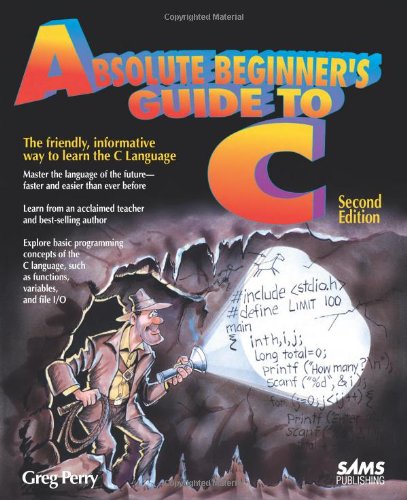
7. Absolute Beginner's Guide to C
$82.00
8. Embedded C Programming and the
$29.90
9. C Primer Plus (5th Edition)
$7.18
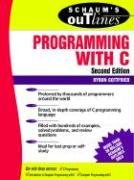
10. Schaum's Outline of Programming
$35.57
11. Programming Embedded Systems:
$49.95
12. Secure Programming Cookbook for
$30.13
13. Computer Science: A Structured
$34.95
14. The Waite Group's C Programming
$32.44
15. C++ Network Programming, Volume
$18.14
16. C Programming for the Absolute
$46.00
17. C How to Program, Fourth Edition
$28.40
18. C Programming FAQs: Frequently
 
$7.30
19. Proficient C - The Microsoft Guide
$74.95
20. The Elements of C Programming

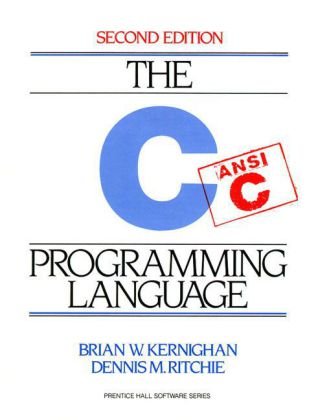
1. C Programming Language (2nd Edition) (Prentice Hall Software)
by Brian W. Kernighan, Dennis M. Ritchie
Paperback: 274 Pages (1988-04-01)
list price: US$48.67 -- used & new: US$35.00
(price subject to change: see help)
Asin: 0131103628
Average Customer Review: 4.5 out of 5 stars
Canada | United Kingdom | Germany | France | Japan
Editorial Review

Amazon.com
Just about every C programmer I respect learned C from this book. Unlike many of the 1,000 page doorstops stuffed with CD-ROMs that have become popular, this volume is concise and powerful (if somewhat dangerous) -- like C itself. And it was written by Kernighan himself. Need we say more? ... Read more

Customer Reviews (246)

5-0 out of 5 stars Never so few have packed so much into so little space
This little book is still a standard reference after all these years. Having gone from programming in C to C++, Ada, Java, and a handful of others, I still find myself referring back to this little reference for a key concept that is as true today as then. More than a tutorial on the C language, this is a compact desk reference to computer science with real examples of elegant code from a real operating system. Leave it to masters of efficiency in software design to come up with a marked efficiency in textbook design as well. Never have so few packed so much into so little space. The language has changed, the underlying principles of software design have not.

5-0 out of 5 stars I'm a beginner, not a genius and I learned C from this book
I have a few years of PHP, Python and JavaScript experience. I don't have a computer science degree. I picked up this tiny 180 page book and learned C in a few weeks. I did a lot of the exercises, which at first were incredibly challenging, but then once things click, you'll see the solutions aren't impossible. I feel that I've learned enough C to write a pretty decent program. Things like gcc and linking and using shared libraries aren't covered, and the standard headers have been updated since this book I think. Some online reading, or an additional book will be required in addition to this.

3-0 out of 5 stars These guys should stick to writing programming languages
This review is in no way a reflection of the service which I have received from Amazon, which to date has been stellar!!! Great Job guys at Amazon!!!

About the Book:
I am a Physics Graduate and currently persuing my Masters in computer science. I bought this because I was in the process of learning C and wanted to understand the intricacies of the language from the perspectives of its creators. Well, to no avail.

This book is not for a beginner of the language, and if you are a beginner ignore the excercises until you have read the whole book, or simply buy
"The C Answer Book", which is the one they probably really want us to buy.

For ambitious programmers the book will be a good challenge. If you get through all the questions you should be able to create a simple compiler at the end of the book.

Things that could be improved:
1. Better explanations on how the language works with hardware
2. Better demonstrations on how each command/ reserved word can be used,especially the rand() function generator.

I have also started reading one of Ivor Horton's books on C++, he is a fantastic teacher. I think if you are a beginner of any language, or simply want to know how a language really works check out any of his texts.

5-0 out of 5 stars My first and most important programming book, 27 years ago
The other comments capture the importance of this book, so I won't dwell on it. The main point I would like to make is that this book is accessible to somebody who has no programming experience at all, as this was my first book for my first programming language over 27 years ago in my high school. We had a pdp11/70 running UNIX and all I knew at the time was how to do basic UNIX commands (ls, cp, rm, and then cc, of course), and how to drive a text editor, a variant of Emacs.

The rest is up to you. You need to have a passion and it will help a great deal to have a mentor or a teacher who can answer all your questions. I knew I had the passion when I couldn't sleep at night.

One last thing: Programmers who learn C and really understand it, pointers, and "how strcmp actually works" will be good programmers in higher level languages like Java, Ruby or anything else that comes along. If you start out with the higher level languages and never learn what is really going on at the machine level (which is where C is at), you will write inefficient code and have no idea why. The world is full of programmers like that today. Try not to be one of them.

5-0 out of 5 stars Great book!
This book is a great book for learning C programming.It can be somewhat difficult, but when you are done, you will have a very solid understanding of C programming. ... Read more


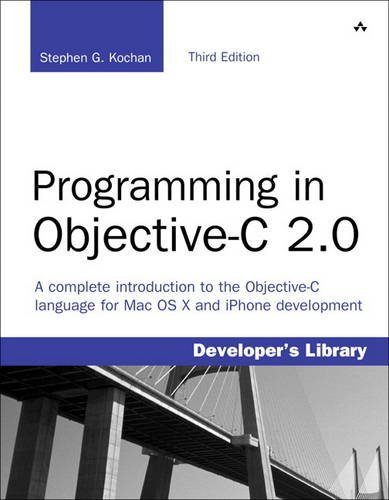
2. Programming in C (3rd Edition) (Developer's Library)
by Stephen Kochan
Paperback: 576 Pages (2004-07-18)
list price: US$44.99 -- used & new: US$26.69
(price subject to change: see help)
Asin: 0672326663
Average Customer Review: 4.5 out of 5 stars
Canada | United Kingdom | Germany | France | Japan
Editorial Review

Book Description

Learn C programming from one of the best. Stephen Kochan¿s Programming in C is thorough with easy-to-follow instructions that are sure to benefit beginning programmers. In its third edition, the style in this book remains true to the simple, instructional style of previous editions. It provides you with updated and relevant examples of how C programming can be used with small, fast programs, similar to the programming used by large game developers such as Nintendo. If you want a one-stop-source for C programming, this book is it!

Download Description
Programming in C, Third Edition is a revised edition of a classic programming title. Author Stephen Kochan's style and thorough explanations have earned him a place among the most respected of computer book authors. Although the C programming language hasn't undergone any major changes, it's enjoying new life among game programmers and small device programmers, where its simple elegance makes it the ideal choice for small fast programs. Large game developers, such as Nintendo, use C almost exclusively. This edition combines the time-tested instructional style of Stephen Kochan with updated and relevant examples. ... Read more

Customer Reviews (18)

3-0 out of 5 stars Required Text for C Programming Course
This was the only text required for my college level C-Programming Course.I honestly didn't read as much of it as I should have.I did feel that most of the examples were thorough and helpful.

4-0 out of 5 stars Great book, but inconsistent programming style
First and foremost, this is an excellent book. Everything is explained very well with not too much "fluff". I found a few errors in the text but that's to be expected in any programming book.

Now the reason I gave it only 4 stars is because of the style of the code. He uses "thisVar" or "this_var" in programs and many times uses both in the same program! The same for braces. He goes from same-line braces to line-after braces many times in the same program!

For those unaware, that's:

blahBlah {
....
}

and

blahBlah
{
....
}

This doesn't affect the functionality, but when coding in the real world you need a consistent style. These are the only issues I have with this book.

4-0 out of 5 stars Excellent Introduction
Great explanations, accompanied by good examples. Definitely a must if you're new to C. I've had experience with C++, so the concepts weren't anything new, but the syntax presentation for C was clear. Get it, it's cheap compared to other books.

5-0 out of 5 stars Excellent C Primer
For an experienced assembly language programmer looking to apply C programming to embedded systems, this book has just the approach that suits my needs. Logically organized and very readable, it keeps layering concept upon concept, subtley bringing in different techniques, while informing not only about the language, syntax and use, but also about how compilers interact with various constructs.I also enjoyed the well thought out example programs and exercises.

3-0 out of 5 stars A tad older (23 years) than I was expecting...
I haven't spent much time with this book but I wanted to make sure others didn't experience the same surprise that I did with this book.I bought this book via the marketplace link above, and was shocked to find it is a book written in 1983 (mine is a 1987 reprint of the original edition).I thought the seller had listed the book on the wrong page, since the Amazon page says it was revised in 2000, but the ISBN # is the same... ... Read more


3. Expert C Programming
by Peter van der Linden
Paperback: 384 Pages (1994-06-24)
list price: US$42.99 -- used & new: US$30.00
(price subject to change: see help)
Asin: 0131774298
Average Customer Review: 4.5 out of 5 stars
Canada | United Kingdom | Germany | France | Japan
Editorial Review

Amazon.com
Defying the stereotypical notion that technical books tend to be boring, Expert C Programming offers a lively and often humorous look at many aspects of C--from how memory is laid out to the details of pointers and arrays. The author reveals his points through invaluable anecdotes, such as stories of costly bugs, and through folklore, such as the contents of Donald Knuth's first publication. Each chapter ends with a section entitled "Some Light Relief," which discusses topics (topics that some may consider to be "recreational"), such as programming contests. A fabulous appendix on job interview questions finishes the book. ... Read more

Customer Reviews (75)

2-0 out of 5 stars Not helpful
I bought this book over a decade ago, in a rush to learn things that I needed. I recall it was a distinct waste of time. I'm no expert in C, so I needed tips. In the end, I favored other books that provided examples along with anecdotes. This book seemed to be much more focused on exhibiting how clever the author is, instead of actually helping me pull myself up by the bootstraps. The book I actually leaned on for advice (and I did write some code at the time) was Pointers on C by Kenneth Reek.

Save your money, look for another resource.

5-0 out of 5 stars Humourous and insightful
First of all, this book is not really for beginners in C rather its more for the experienced C programmer. It contains the nuances of C and offers a historical perspective and after which the author provides a workaround, if applicable.

i love the anecdotes and stories in each chapter and provides a wonderful read. I would also recommend "A Book on C(4th Edition)" by Kelly & Pohl where in that book it contains all of the stuff that "Expert C Programming" has and covers basics to advanced topics.

Last thing, i love peter's sense of humour :-)

4-0 out of 5 stars I loved it
I buy a lot of programming books and this one has always stood out as being exceptionally well written and useful. I remember this book as a code quality/best practices book for anyone who wants to spend less time fixing bugs by clearing up common misconceptions and eliminating them once and for all.

5-0 out of 5 stars best!
The best C book of all in my opinion - maybe K&R is still essential to have, then this should be the second. For all there who have come to the point to understand that C is a relatively simple language, this is the book that will show you what next to learn about C.

As well as the technical valuables, the writing style is really enjoyable to read. Plus, very interesting anecdotes.

The chapter about C++ may not be a very important chapter in this book, but it is so well written that it does better teaching C++ than many of the C++ books out there on the market. Gets the essentials and is very balanced instead of "religious".

5-0 out of 5 stars Truly amazing book but not about Expert C programming
This is a truly amazing book. This book alone will not make you an Expert C programmer, but if you ever programmed anything in C or C++ you will find itamazing. It will help you to uncover dark corners of language in most entertaining way possible. I can guarantee you will not go to sleep until you finish it.

... Read more


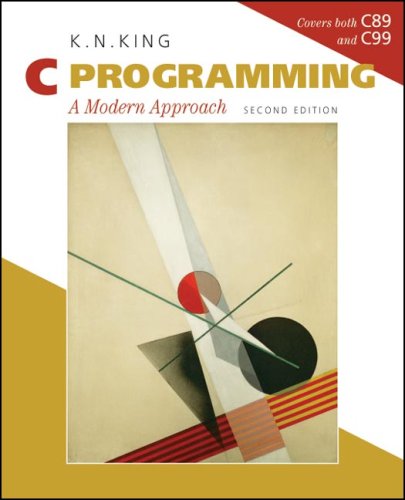
4. Study Guide for C Programming: A Modern Approach
by Manuel Bermudez
Paperback: 251 Pages (1998-01)
list price: US$39.05 -- used & new: US$24.00
(price subject to change: see help)
Asin: 0393969460
Average Customer Review: 4.5 out of 5 stars
Canada | United Kingdom | Germany | France | Japan

Customer Reviews (41)

5-0 out of 5 stars Simple, great student oriented book
This book was an excellent complement to the professor I had for basic C programming. I'd venture to say that even someone with little to no computer experience could learn from it. One really nice feature is the Q & A section where obvious questions about the material are asked and then answered by the author such as: "Why is the C language so terse?" There is not an excess of information, but it gives a great deal of examples and even source code so you can see how the system compiles it. If I were teaching myself the C language, this would probably be the first book I went to.

2-0 out of 5 stars too much
in order to really understand what was going on you need to intently read every single word.There are no solutions for the excercises which i thought were too difficult, and many times the means to find the answer could not be found in the chapter.

5-0 out of 5 stars The Best C Book I've Ever Read
This is definitely the best book on C that I have ever read. King presents just about everything there is on the language in a clear and easily understandable way. One thing that I loved about this was King's mentioning the %g format specifier, which is something that has been very useful and that I haven't seen mentioned too frequently.

5-0 out of 5 stars Learning C is easy with this book
This is the second of King's books I have purchased.It is also the second that I am very very pleased with.

This book presents a quick systematic clear way of learning to program in C period.This has to be the easiest programming book I have ever read that goes beyond absolute basics.

Frankly I don't understand the few negative reviews others have given the book.Yes it would have been nice to have answers to the exercises.However this is a programming book, you get the answers yourself by doing the work.Mistakes are readily apparent, simply because it won't work!

In terms of difficulty, the exercises are doable.There have been a few that did stump me.....for a little while.With a bit of rereading and some experimenting, I have managed to answer all that I have attempted.

Do yourself a favor if you are learning C and buy the book either as a stand alone or as a supplement to another book.

5-0 out of 5 stars amazing
This book was not my first. I had previously tried starting C programming with An Absolute Beginner's Guide to C. It worked well for a little bit, but I had to stop due to a lack of clarity and motivation. C Programming: a Modern Approach is such an improvement from my other programming book. C Programming: A Modern Approach doesn't treat me like I'm stupid...it's clear enough so that I gradually understand C lingo over the course of the book. My current work with it so far has been very smooth and...not easy...but effective. The exercises at the end of each chapter aren't a waste of time...they're useful and also not overdone. It's simply a cut above the rest. ... Read more


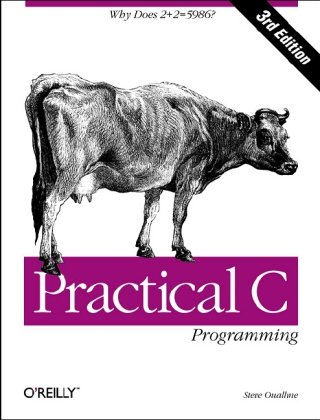
5. Practical C Programming, 3rd Edition
by Steve Oualline
Paperback: 454 Pages (1997-08-01)
list price: US$34.95 -- used & new: US$18.40
(price subject to change: see help)
Asin: 1565923065
Average Customer Review: 4.0 out of 5 stars
Canada | United Kingdom | Germany | France | Japan
Editorial Review

Book Description
There are lots of introductory C books, but this is the first one that has the no-nonsense, practical approach that has made Nutshell Handbooks(R) famous. C programming is more than just getting the syntax right. Style and debugging also play a tremendous part in creating programs that run well and are easy to maintain. This book teaches you not only the mechanics of programming, but also describes how to create programs that are easy to read, debug, and update.Practical rules are stressed. For example, there are fifteen precedence rules in C (&& comes before || comes before ?:). The practical programmer reduces these to two:

  • Multiplication and division come before addition and subtraction.
Contrary to popular belief, most programmers do not spend most of their time creating code. Most of their time is spent modifying someone else'scode.This books shows you how to avoid the all-too-common obfuscated usesof C (and also to recognize these uses when you encounter them in existing programs) and thereby to leave code that the programmer responsible for maintenance does not have to struggle with. Electronic Archaeology, the artof going through someone else's code, is described. This third edition introduces popular Integrated Development Environmentson Windows systems, as well as UNIX programming utilities, and features a large statistics-generating program to pull together the concepts andfeatures in the language. ... Read more

Customer Reviews (49)

4-0 out of 5 stars great for self-learners
For anyone who has suffered through trying to read a beginners book on C only to end up getting lost half way through, you will find this book a huge relief. This book stresses things like how code so from a perspective of communicating logically. And how to comment thoroughly so their is no doubt what the code does. This is not the end all book on C, so you will want to move on to more advanced books on C after this one.

2-0 out of 5 stars File Creation!
This book starts off very strong and the author is very clear and concise. I learned alot... but then something happens... the author decides to wait for covering floats until after he covers File I/O and he rushes through that. I was completely left hanging with not one example of writing data to a file and the author expected me to be able to complete an exercise in which I need to write data to a file. After this...the next chapter back tracks to covering Floats... which should have been covered previously with the other data types.

4-0 out of 5 stars Perfect for beginners, but recommend a second book!
First of all, this book was absolutely wonderful.It did a very good job teaching me how to write C with very little knowledge of the language.However, there were some things that the author did (and skipped over) that are cleared up in "The C Programming Language", by Dennis Ritchie.I would definitely recommend this book to someone who doesn't have very much knowledge of C, because the writing style is clear and easy to follow.The author, for the most part, does a great job of explaining difficult concepts in an easy to understand manner; such as linked lists and trees.Once again, I would recommend another book as a follow up, such as "Expert C Programming".

4-0 out of 5 stars A very good book for beginners...
This is a very good book, but it has two problems:

1.- It is a little bit messy. For example, there are some control statements that are not with the others, not even in the same chapter... they are almost at the end of the book! why?! (The author said that those statements "are hardly ever used in real programming", which is true... but I think that order is a priority in a programming book).

2.- THIS BOOK IS VERY GOOD, but FOR BEGINNERS.
If you are NOT an expert C programmer, this book will be very good for you. You'll learn a lot of basic and very useful features about C language; you'll also learn some advanced features. But if you are an advanced C programmer, maybe you will learn just a little bit more than you already know...


However, this book has A LOT OF VERY INTERESTING INFORMATION (not only related with C language), for example: when you make a "right shift"... the new bits are 1 or 0?, or which operation is more "expensive" (slower): a printf() or a malloc()? etc., etc...

So, I think this is not a bad book... It is like an easier version of "The C programming language (Kernighan/Ritchie)", I mean: A very very good book for beginners... it is also a nice book for advanced programmers.

If you want to learn C from the very beginning, I recommend this book.
If you already know C and you want to know ADVANCED features... well... you can have this book in your collection but... get an advanced book.


P.D:
You can see the index and the table of contents of this book... SEE IT BEFORE YOU BUY IT!!! : )

5-0 out of 5 stars My preferred book on C
This book follows a logical order and is written in a clear, easy to read style. I have 6 books on C on my shelf and this is my favorite. ... Read more


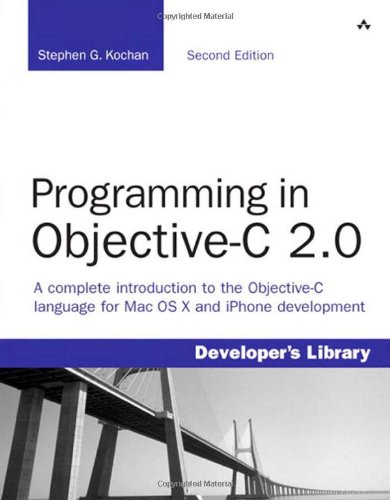
6. Programming in Objective-C (Developer's Library)
by Stephen Kochan
Paperback: 576 Pages (2003-12-18)
list price: US$39.99 -- used & new: US$23.85
(price subject to change: see help)
Asin: 0672325861
Average Customer Review: 4.5 out of 5 stars
Canada | United Kingdom | Germany | France | Japan
Editorial Review

Book Description

Programming in Objective-C is a concise, carefully written tutorial on the basics of Objective-C and object-oriented programming. The book makes no assumption about prior experience with object-oriented programming languages or with the C language (upon which Objective-C is based). And because of this, both novice and experienced programmers alike can use this book to quickly and effectively learn the fundamentals of Objective-C. Readers can also learn the concepts of object-oriented programming without having to first learn all of the intricacies of the underlying procedural language (C). This approach, combined with many small program examples and exercises at the end of each chapter, makes it ideally suited for either classroom use or self-study. Growth is expected in this language. At the January 2003 MacWorld, it was announced that there are 5 million Mac OS X users and each of their boxes ships with Objective-C built in.

Download Description
Programming in Objective-C is a concise, carefully written tutorial on the basics of Objective-C and object-oriented programming. The book makes no assumption about prior experience with object-oriented programming languages or with the C language (upon which Objective-C is based). And because of this, both novice and experienced programmers alike can use this book to quickly and effectively learn the fundamentals of Objective-C. Readers can also learn the concepts of object-oriented programming without having to first learn all of the intricacies of the underlying procedural language (C). This approach, combined with many small program examples and exercises at the end of each chapter, makes it ideally suited for either classroom use or self-study. Growth is expected in this language. At the January 2003 MacWorld, it was announced that there are 5 million Mac OS X users and each of their boxes ships with Objective-C built in. ... Read more

Customer Reviews (34)

5-0 out of 5 stars Good book.
The pedagogy is sound and provides a strong foundation for beginning Obj-C progammers. You don't have to be in Mac OS X to make use of this book.

5-0 out of 5 stars I enjoy this book
I am a professional Java developer and working with object oriented design every day.Originally I thought let me just pick up a Cocoa book and start the coding quickly.I then realize that Objective-C is a very different object oriented language.This book does not assume any background of C language, and explain things in real detail from the real Objective-C point of view.After reading this book, I found that Objective-C was an elegant addition on top of the original C programming language. It achieve all object-oriented features without over complicate the original language.If you want to learn Objective-C, this is definitely the book to start from. Since Objective-C is supported by GCC compiler, this book also tells you what is Mac OS X specific, and what is supported by all platform.

4-0 out of 5 stars Good book to teach yourself
This book was quite easy to read.Although I have some limited programming experience, I think this would be easy for someone who is not expereienced in programming at all.The exercises and descriptions in the book were easy to understand and helped by having you write code that applies the principles in ways that reinforce the ideas.My one knock on the book is that it does not go into Xcode which is what you use to develop code on a Mac.However, I think that might be another book in itself for those of us that aren't very experienced with programming.

4-0 out of 5 stars Great Resource
This is a great book I haven't finished it yet, since the semester started, but so far it's been very clear and effective.It introduces the idea of objects early and effectively, which is nice for someone who already knows how to program in C and wants to learn how Objective-C can be supplement what I already know.

5-0 out of 5 stars Excellent
This is a great book for a beginning Objective C programmer. The only con is that it is a little out-dated and slow. Still though for beginning Mac OS X programmers it is indispensable. ... Read more


7. Absolute Beginner's Guide to C (2nd Edition) (Other Sams)
by Greg Perry
Paperback: 432 Pages (1994-04-18)
list price: US$29.99 -- used & new: US$17.42
(price subject to change: see help)
Asin: 0672305100
Average Customer Review: 4.5 out of 5 stars
Canada | United Kingdom | Germany | France | Japan
Editorial Review

Book Description
For beginning programmers, this updated edition answers all C programming questions. This bestseller talks to readers at their level, explaining every aspect of how to get started and learn the C language quickly. Readers also find out where to learn more about C.This book includes tear-out reference card of C functions and statements, a hierarchy chart, and other valuable information. It uses special icons, notes, clues, warnings, and rewards to make understanding easier. And the clear and friendly style presumes no programming knowledge. ... Read more

Customer Reviews (100)

4-0 out of 5 stars Extremley beginner leve
This book is extremely simple and by far too verbose.

Book is about 360 pages which could easily be fit in 90 page none-verbose version. Still good start if you are absoutely new to C.

To be more specific, this book doesa good job to defining compplecated C terms like Stack/Hip and dynamic memory allocation.

5-0 out of 5 stars Amazing book of C for beginners!
Hi, my name is Adrian Mowrey, and I'm a computer programming student.I always wanted to learn C, but I couldn't because I wasn't able to find a good reference for beginners until I found this book.Another thing that made it harder for me to understand other books is that English was not my first language, and many other books talk too technical for me to understand.This book is much easier for someone, like myself, whose first language is not English.After I read this book, I decided to move forward and order "The C Programming Language" by Brian W. Kernighan and Dennis M. Ritchie.I hope I will advance to a respectable level from where I can build my personal ideas with C, and I'm sure I won't have any problems since I have these two books.

5-0 out of 5 stars Finally, a great book for a true beginner!
The author did a great job of explaining in this book.It was very easy to understand and enjoyable to read.I highly recommend this book for a true beginner.Also, the author includes a helpful and handy "Crib Notes," which is a tear out reference sheet of Functions and Statements covered in the book.No doubt, I rate this book 5 stars!

5-0 out of 5 stars Great Publication
As an IT professional I have read many programming books.Many of which in their attempt to teach you something about their topic end in more confusion than clarity.Not so with this text.This is one of the only texts I have encountered that actually reads as it was described, assuming no programming experience yet having the ability to teach you practical implementations of the language.I found this text to be a fun read, not overly technical (it is a beginning level text) and very much worth my time and effort. I would highly recomend this text to anyone just starting out with C, it will give you the core understanding of concepts you will need to advance your C programming abilities. Nice work Mr. Perry.

5-0 out of 5 stars Great for beginners! THANK YOU!!!
I was always intrigued by the C programming language and was looking for a book that could make it easy for me to understand.I tried reading the famous Kernighan/Ritchie C Programming book and that flew over my head!I then tried other publisher's book like the Teach Yourself C in 21-days, or the Teach Yourself C in 24-hours.None of them are made for the absolute beginner and they assume you already know certain things about computers.Already in the first 5 chapters these books lose me.

This book by Greg Perry is really made for the absolute beginner!After having gone through it, I start to see the logic and understanding of C.Although I still cannot write my own code effectively and efficiently, at least I am a little more comfortable of looking through C source code and making out parts of it, specifically the Black Jack program that is in the book at the end.I HIGHLY recommend this book for beginners looking into programming in C.This book won't make you a master at C, but it is a great introduction to C and will give you a good and simple foundation in it. ... Read more


8. Embedded C Programming and the Microchip PIC
by Richard H. Barnett, Sarah Cox, Larry O'Cull
Paperback: 497 Pages (2003-11-03)
list price: US$103.95 -- used & new: US$82.00
(price subject to change: see help)
Asin: 1401837484
Average Customer Review: 4.0 out of 5 stars
Canada | United Kingdom | Germany | France | Japan
Editorial Review

Book Description
This new book is carefully designed to teach C language programming as it applies to embedded microcontrollers and to fuel knowledge in the application of the Microchip® family of PIC® microcontrollers.Coverage begins with a step-by-step exploration of the C language showing readers how to create C language programs to solve problems.PIC processors are then studied, from basic architecture to all of the standard peripheral devices included in the microcontrollers. Numerous worked-out example programs demonstrate common uses for each of the peripherals.Readers are subsequently introduced to the built-in functions available in C, to help speed their programming and problem solving.Finally, readers are taken through use of the C Compiler, and learn to efficiently develop custom projects. ... Read more

Customer Reviews (4)

4-0 out of 5 stars A rare tutorial for using C on the PIC
Unlike most PIC books which focus on coding in assembler, this book uses the CCS C compiler for all of its examples.It provides simple solid C examples that show what needs to be done.An embedded C tutorial in the front of the book reviews the language.Excercises (With some solutions in an appendix) at chapter end help you know what you understood and where you need more work.The appendix of library functions repeats what is available in the CCS help so I did not find it useful.Maybe it would be to someone who didn't have the compiler.Overall, this book helped me find how to do what I needed to with a minimum of reading irrelevant information and that's really the highest praise I can give to an instructional book.I recomend this book to any experienced programmer who wants to get started with PIC development.

2-0 out of 5 stars Doesnt worth its price
Provided you have NO knowledge on C programming and microcontroller, otherwise you dont really need this book. I personally think that big portion of contents could be found in CCS's manual and sample code FREE.

Anyway, this book is more readable than the manual as it is more well-arranged, together with some explanation and diagram. This could be helpful to beginner with NO prior knowledge on embedded C programming.

5-0 out of 5 stars Excelent book for a Newbie!
For a Newbie on PIC C programming like me, this is really an excellent book. It teaches C language programming, helping the reader to create an entire program (step-by-step). Also, the reader can understand the PIC architecture and learn how use a C compiler (like CCS C). Finally, the reader can learn and try to implement a complete project using microcontrollers. I recommend this book to anyone who is thinking to make a travel through the field of microcontrollers and embedded programming.

4-0 out of 5 stars A very good Text Book
A very good textbook for undergraduate learning MCU programming. This book is based on CCS C complier, a step-by-step guide from basic C programming to project planning. ... Read more


9. C Primer Plus (5th Edition)
by Stephen Prata
Paperback: 984 Pages (2004-12-03)
list price: US$49.99 -- used & new: US$29.90
(price subject to change: see help)
Asin: 0672326965
Average Customer Review: 5.0 out of 5 stars
Canada | United Kingdom | Germany | France | Japan
Editorial Review

Book Description

The new classic! C Primer Plus, now in its 5th edition, has been revised to include over 20 new programming exercises, newly improved examples and the new ANSI/ISO standard, C99. Task-oriented examples will teach you the fundamentals of C programming. From extended integer types and compound literals to Boolean support and variable-length arrays, you will learn to create practical and real-world applications with C programming. Review questions and programming exercises at the end of each chapter will reinforce what you have learned. This friendly and easy-to-use self-study guide will help you understand the fundamentals of this core programming language.

... Read more

Customer Reviews (18)

5-0 out of 5 stars C Primer Plus - truly a great primer
Over the years, as I've flirted with the idea of really sitting down to learn C, I've looked at a variety of intro-to-C type books; I've even bought a couple - only to set them aside to collect dust.This book (C Primer Plus, 5th ed.) is, frankly, one of the best intro books I've seen.I've read the first 13 chapters thus far and have been very pleased with the content.Topics are presented logically, explained well, and include numerous sample programs in the text body to reinforce newly introduced ideas.If you take the time to walk through the sample programs, look at the review questions, and work on the end-chapter programming exercises, you'll be in good shape.This book is worth every bit of the purchase price; it will stay in my personal library for years to come and I will highly recommend it to friends and colleagues looking to learn core C programming skills.

Note: I do have basic programming skills in other languages, but I think this book would be fine for any "true" novice as long as they gave themselves time and diligently worked through the exercises.

5-0 out of 5 stars Amazing book on C
This is simply put the best beginner book I've found on C.

I've been reading it for over a year, and have yet to finish it all of it.

It covers all the C language aspects (and also the C99 extensions) and provides lots of exercises to train your skills.


5-0 out of 5 stars Great Book for anyone wanting to learn C and great Refernce Guide
I have just started reading this book the day before yesterday and I'm only on pg.124 in ch.4 but I already know that this book is a must have for any beginner in C and with their index in the back of the book tells me that it is a great reference guide for veterans of C. I have read other programming books like Teach Yourself Visual Basic 2005 in 24 Hours (which is bad book-doesn't teach very well) and I have to say that this is one of the best programming books out there and it is a must own for any C programmer!

5-0 out of 5 stars My first best 'C' book
I tried couple of C books but, never worked.
C Primer start from the scratch and go through
all the topics which a beginner should know
very well.
The book is thick and has lot of assignments.
It helps new C student to grasp the language
easily.
I recommend "C Primer" for the beginners of
'C'.

5-0 out of 5 stars If you begin in C, this book is for you !
I am a beginner in C and this book helped me a lot to understand basic (and less basic...) C stuffs.
With funny examples, humor, it is a book to have if you want to evolve in programming languages.
... Read more


10. Schaum's Outline of Programming with C
by Byron S. Gottfried
Paperback: 532 Pages (1996-06-01)
list price: US$17.95 -- used & new: US$7.18
(price subject to change: see help)
Asin: 0070240353
Average Customer Review: 4.5 out of 5 stars
Canada | United Kingdom | Germany | France | Japan
Editorial Review

Book Description
A perennial best seller! This timely revision supports the current ANSI Standard for the C language. Includes some discussion of the Turbo C++ operating environment, as well as useful information on operators and expressions, data input and output, control sttements, functions, program structure, and arrays.Download Description
This timely revision supports the current ANSI Standard for the C language. ... Read more

Customer Reviews (10)

5-0 out of 5 stars Dated, but still very useful
I have been teaching introduction to programming with C for almost two decades and over that time many students have asked me for a source for additional programming problems. My answer has always been the latest edition of Schaum's outline in Programming in C. The problems are sound and challenging and working through the solutions is great practice in the art of paper debugging. While interactive buggers are a godsend, performing critical visual reviews of code is a skill that is still essential for the good programmer.
While this outline is somewhat dated, having been published in 1990, the base language of C is still the same. I still recommend it to students who need more practice in visual debugging skills.

5-0 out of 5 stars A Teaching Reference, And A Great Book
C is not a large language, there's not a lot to remember a far as conditionals, types, etc... but there is much to learn. This book gives only the facts and not dogma or methodologies, and the examples are to the point as they should be. This book really should be hardbound and sitting next to your copy of The C Programming language by DR and BK. This manila tome is truly one of the hidden gems you can get for 15 bucks. Use it until the pages fall apart, by then you will have assimulated it's worthwhile knowledge.

You really have to enjoy this book for it's straightforwardness. If you like the "Dummies" series, this book will progress a bit too fast for you, for it is rather complete in it's description of the language features. But if you read and digest technical matters in one or two (or three) gulps, you'll benefit from this book.

5-0 out of 5 stars Excellent as a Reference and a Self-study Guide
This is one of the excellent books in programming. I have come to master C programming in less than two months by following this book page by page. Chapters are organized in an excellent way that goes systematically with programming skills development. I highly recommend it.

5-0 out of 5 stars DIAGRAMS OF DR. G. BYRON SAME AS DR. P. SELLAPAN
I am a student writing a paper which I plan to hand in, the end of this month i.e. October 2002.I noticed that Dr. P. Sellapan's book, P. Sellapan, 1999, "Object-Oriented Programming Using Visual C++ Through Examples", First Edition, Federal Publications Sdn. Bhd., Selangor, page 6-9 - ISBN 983-58-0451-6 and his other book, P. Sellapan, 2001, "C++ Through Examples Include Object-Oriented Programming", Eight Edition, Federal Publications Sdn. Bhd., Selangor, page 177-178 - ISBN 967-914-746-0 have the same diagrams as Dr. Byron's book entitiled, "Schaum's Outlines - Programming With C", 1996, Second Edition on page 371-372.So can somebody tell me, which of the authors should I reference to?I am a bit confused as to whom I should reference to!

5-0 out of 5 stars Too good
Easy to read, lots of examples, challenging exercise problems and programming assignments - you don't ask for much more. This book can be used as a textbook or as a supplement to another book on the C programming language.

You want C, you got C. ... Read more


11. Programming Embedded Systems: With C and GNU Development Tools, 2nd Edition
by Michael Barr, Anthony Massa
Paperback: 301 Pages (2006-10-01)
list price: US$49.99 -- used & new: US$35.57
(price subject to change: see help)
Asin: 0596009836
Average Customer Review: 4.5 out of 5 stars
Canada | United Kingdom | Germany | France | Japan
Editorial Review

Book Description
If you have programming experience and a familiarity with C--the dominant language in embedded systems--Programming Embedded Systems, Second Edition is exactly what you need to get started with embedded software. This software is ubiquitous, hidden away inside our watches, DVD players, mobile phones, anti-lock brakes, and even a few toasters. The military uses embedded software to guide missiles, detect enemy aircraft, and pilot UAVs. Communication satellites, deep-space probes, and many medical instruments would have been nearly impossible to create without embedded software.

The first edition of Programming Embedded Systems taught the subject to tens of thousands of people around the world and is now considered the bible of embedded programming. This second edition has been updated to cover all the latest hardware designs and development methodologies.

The techniques and code examples presented here are directly applicable to real-world embedded software projects of all sorts. Examples use the free GNU software programming tools, the eCos and Linux operating systems, and a low-cost hardware platform specially developed for this book. If you obtain these tools along with Programming Embedded Systems, Second Edition, you'll have a full environment for exploring embedded systems in depth. But even if you work with different hardware and software, the principles covered in this book apply.

Whether you are new to embedded systems or have done embedded work before, you'll benefit from the topics in this book, which include:

  • How building and loading programs differ from desktop or server computers
  • Basic debugging techniques--a critical skill when working with minimally endowed embedded systems
  • Handling different types of memory
  • Interrupts, and the monitoring and control of on-chip and external peripherals
  • Determining whether you have real-time requirements, and whether your operating system and application can meet those requirements
  • Task synchronization with real-time operating systems and embedded Linux
  • Optimizing embedded software for size, speed, and power consumption
  • Working examples for eCos and embedded Linux

So whether you're writing your first embedded program, designing the latest generation of hand-held whatchamacalits, or managing the people who do, this book is for you. Programming Embedded Systems will help you develop the knowledge and skills you need to achieve proficiency with embedded software.

Praise for the first edition:

"This lively and readable book is the perfect introduction for those venturing into embedded systems software development for the first time. It provides in one place all the important topics necessary to orient programmers to the embedded development process.
--Lindsey Vereen, Editor-in-Chief, Embedded Systems Programming ... Read more

Customer Reviews (3)

4-0 out of 5 stars Great Introduction to Embedded Systems Programming.
This book gives an excellent overview of programming embedded systems. It provides numerous examples of real-world hands-on embedded programming. I'd recommend that you have experience in C. Experience with operating systems concepts (such as interrupt service routines) would also be helpful.

Unlike usual programming books, you won't be able to pick up the book, download something, and start working. You'll need to have an embedded system that you can use. The authors use a system from Arcom that will run you about $300. I've not used it and was very wary about it when I first started reading, but as I read through the various examples I gained a great appreciation for the system. It looks like a great way to gain hands-on experience with embedded programming.

Before getting this book I read through the Lego Mindstorm NXT documentation and felt very lost. I didn't understand the symbols on the schematics and they used strange acronyms (like I2C and PWM). I also have an Iguanaworks USB infrared transceiver. I bought it to use in a MythTV system I am building. This book has enabled me to understand the schematics of both the Mindstorm and the transceiver as well as the documentation of both systems. I now feel ready to do my own embedded systems programming.

That said, I did not like everything in this book. They gloss over areas that I felt would have helped me (such as how to use a JTAG adapter and how to create an interrupt service routine under Linux). There are areas where the writing does not flow well and is redundant. The book switched from using an embedded x86 processor in the first edition to using an ARM processor in the second and there are still references to the old processor.

Even with its faults I am glad I got this book. It filled in many of the gaps that I have as a software engineer who is wanting to learn about embedded systems programming. I feel a whole new world has just been opened up to me and I can't wait to jump in.

5-0 out of 5 stars A classroom and lending collection standard.
Programming Embedded Systems with C and GNU Development Tools appears in its second updated edition to include even more real-world and Linux examples, and is a recommended pick for programmers with a familiarity with C. It's been used as a college textbook and covers everything from basic debugging skills to determining the applications and needs of real-time projects. In updating details and clarifying routines, the 2nd edition of Programming Embedded Systems should be considered both a classroom and lending collection standard.

Diane C. Donovan
California Bookwatch

5-0 out of 5 stars Great guide to developing embedded systems
This book is the much needed update to the book on embedded systems also published by O'Reilly. This book assumes that the reader already has some programming experience and is at least familiar with the syntax of the C language. It also helps if you have some familiarity with basic data structures, such as linked lists. The book does not assume that you have a great deal of knowledge about computer hardware, but it does expect that you are willing to learn a little bit about hardware along the way. This is, after all, a part of the job of an embedded programmer.

The book contains 14 chapters and 5 appendixes. The chapters can be divided into two parts. The first part consists of Chapters 1 through 5 and is intended mainly for newcomers to embedded systems. These chapters should be read in their entirety and in the order that they appear. This will bring you up to speed quickly and introduce you to the basics of embedded software development. After completing Chapter 5, you will be ready to develop small pieces of embedded software on your own.

The second part of the book consists of Chapters 6 through 14 and discusses advanced topics that are of interest to inexperienced and experienced embedded programmers alike. These chapters are mostly self-contained and can be read in any order. In addition, Chapters 6 through 12 contain example programs that might be useful to you on a future embedded software project.

Throughout the book, the authors strike a balance between specific examples and general information. Minor details have been eliminated making the book more readable, at least in my opinion. You will gain the most from the book if you view the examples primarily as tools for understanding important concepts. Try not to get bogged down in the details of any one circuit board or chip. If you understand the general C programming concepts, you should be able to apply them to any embedded system you encounter. To focus the book's example code on specific concepts, these examples have been left intentionally incomplete. For example, certain include files and redundant variable declarations are omitted. For complete details about the code, you can refer to the full example source code on the book's web site. I discuss this book further in the context of its table of contents:

Chapter 1, Introduction - Explains the field of embedded programming and lays out the parameters of the book, including the reference hardware used for examples.

Chapter 2, Getting to Know the Hardware - Shows how to explore the documentation for your hardware and represent the components you need to interact with in C.

Chapter 3, Your First Embedded Program - Creates a simple blinking light application that illustrates basic principles of embedded programming.

Chapter 4, Compiling, Linking, and Locating - Goes over the ways that embedded systems differ from conventional computer systems during program building steps, covering such issues as cross-compilers.

Chapter 5, Downloading and Debugging - Introduces the tools you'll need in order to iron out problems in both hardware and software.

Chapter 6, Memory - Describes the different types of memory that developers choose for embedded systems and the issues involved in using each type.

Chapter 7, Peripherals - Introduces the notion of a device driver, along with other coding techniques for working with devices.

Chapter 8, Interrupts - Covers this central area of working with peripherals.

Chapter 9, Putting It All Together - Combines the concepts and code from the previous chapter with convenience functions and a main program, to create a loadable, testable application.

Chapter 10, Operating Systems - Introduces common operating system concepts, including tasks and synchronization mechanisms, along with the reasons for adding a real-time operating system.

Chapter 11, eCos Examples - Shows how to use some features of the eCos real-time operating system.

Chapter 12, Embedded Linux Examples - Accomplishes the same task as the previous chapter, but for the embedded Linux operating system.

Chapter 13, Extending Functionality - Describes options for adding buses, networking, and other communication features to a system.

Chapter 14, Optimization Techniques - Describes ways to decrease code size, reduce memory use, and conserve power.

Appendix A, The Arcom VIPER-Lite Development Kit - Describes the board used for the examples in this book and how to order one for yourself.

Appendix B, Setting Up Your Software Development Environment - Gives instructions for loading the software described in this book on your host Windows or Linux computer.

Appendix C, Building the GNU Software Tools - Shows you how to compile the GNU development tools

Appendix D, Setting Up the eCos Development Environment - Shows you how to build an eCos library appropriate for your embedded system so you can compile programs to run on your system.

Appendix E, Setting Up the Embedded Linux Development Environment - Describes how to install the embedded Linux tools for your Arcom system and build and run a program on it. ... Read more


12. Secure Programming Cookbook for C and C++: Recipes for Cryptography, Authentication, Input Validation & More
by John Viega, Matt Messier
Paperback: 790 Pages (2003-07-14)
list price: US$49.95 -- used & new: US$49.95
(price subject to change: see help)
Asin: 0596003943
Average Customer Review: 4.5 out of 5 stars
Canada | United Kingdom | Germany | France | Japan
Editorial Review

Book Description
Password sniffing, spoofing, buffer overflows, and denial of service: these are only a few of the attacks on today's computer systems and networks. At the root of this epidemic is poorly written, poorly tested, and insecure code that puts everyone at risk. Clearly, today's developers need help figuring out how to write code that attackers won't be able to exploit. But writing such code is surprisingly difficult.

"Secure Programming Cookbook for C and C++" is an important new resource for developers serious about writing secure code. It contains a wealth of solutions to problems faced by those who care about the security of their applications. It covers a wide range of topics, including safe initialization, access control, input validation, symmetric and public key cryptography, cryptographic hashes and MACs, authentication and key exchange, PKI, random numbers, and anti-tampering. The rich set of code samples provided in the book's more than 200 recipes will help programmers secure the C and C++ programs they write for both Unix(R) (including Linux(R)) and Windows(R) environments. Readers will learn:

How to avoid common programming errors, such as buffer overflows, race conditions, and format string problems

How to properly SSL-enable applications

How to create secure channels for client-server communication without SSL

How to integrate Public Key Infrastructure (PKI) into applications

Best practices for using cryptography properly

Techniques and strategies for properly validating input to programs

How to launch programs securely

How to use file access mechanisms properly

Techniques for protecting applications from reverse engineering

The book's website supplements the book by providing a place to post new recipes, including those written in additional languages like Perl, Java, and Python. Monthly prizes will reward the best recipes submitted by readers.

"Secure Programming Cookbook for C and C++" is destined to become an essential part of any developer's library, a code companion developers will turn to again and again as they seek to protect their systems from attackers and reduce the risks they face in today's dangerous world. ... Read more

Customer Reviews (12)

4-0 out of 5 stars Good developer reference
This is a well-written and example oriented book for C/C++ programmers that covers secure programming in all aspects. I had been using this book for last one year now and It helps me as a quick reference and also real source code demonstrating practical approaches that can be incorporated into their software projects.

The book needs a little update but still helps any aspiring C/C++ programmer involved with crypto.

3-0 out of 5 stars a good reference if you've really got to be secure
If you are not sure that you need this book, then you probably don't. But if there is something it the table of contents that you've got to know, and you've got to get it right, then this would be a good book to have. Chapter 12 on Anti-Tampering was a really enjoyable read, though probably a futile task.

5-0 out of 5 stars Great book for anyone using C
This is simply a great book for anyone using C or C++.

These guys literally wrote the book on secure code.

Read it!

3-0 out of 5 stars A task-oriented reference guide
This well-written book covers a lot of topics that I have not read in other books.

Its strengths include:

--Good coverage of cryptography programming
--Task-oriented solutions to specific programming problems
--Easy to navigate "cookbook" style ("with recipes" as the authors call them)

However, some areas of improvement might be:

--Could use more coverage of important subjects (buffer overflows, etc.)
--spends a lot of space on narrower examples (like explaining certain APIs that are documented well online)
--Sometimes jumps into material without much background explanation (which was confusing for me)

It is probably not the first book you should read on the subject. This is more of a recipe guide that is useful if you get stuck on coding a particular topic that happens to be covered. The authors have done a good job of explaining what coverage they do and don't include.

5-0 out of 5 stars Bought it for one reason but ended up using it.
To be truthful, I bought this book because the "gang" I hang out with is mentioned in the Acknowledgments section of the book.That was the ONLY reason when I sent money to Amazon.Com and purchased it for the dusty collection on my bookshelf.

But, when I got it and chuckled over the Acknowledgements section, I started to mindlessly flip through the book.Mindless page flipping soon turned to semi-conscious scanning.Semi-conscious scanning soon turned to serious reading.I find myself reading the book more and more, jumping back and forth between sections I find interesting and useful.

As a Windows C++ programmer for in-house tools, I do not dwell much on secure programming concepts.Yes, this is very, very bad way to program, so those of you reading this review should not try it at home.This book has shown the errors of my ways, revealed security issues that I have overlooked by accident or on purpose and gave concepts and examples that I can apply in my projects.

This book is one reference that I will be going back over and over again.The authors and editors have done a wonderful job to make the reading flow nice and easy.It is also very well laid out by stating the problem you may encounter, followed by a solution and then detailed discussion section with code samples.

For any C/C++ programmer making software to be used by more than one person, this reference book is a must.

You can still read the Acknowledgments and marvel at my name on there, of course. ... Read more


13. Computer Science: A Structured Programming Approach Using C (2nd Edition)
by Behrouz A. Forouzan, Richard F. Gilberg
Paperback: 928 Pages (2000-03-03)
list price: US$82.95 -- used & new: US$30.13
(price subject to change: see help)
Asin: 0534374824
Average Customer Review: 4.5 out of 5 stars
Canada | United Kingdom | Germany | France | Japan
Editorial Review

Book Description
The Second Edition of this useful book presents both computer science theory and C-language syntax with a principle-before-implementation approach.Forouzan and Gilberg continue to present a clear organizational structure, supplemented by easy-to-follow figures, charts, and tables. ... Read more

Customer Reviews (5)

4-0 out of 5 stars HUH
i receieved the book on time but there was a huge ugly sticker on it and the cover was kind of crumpled./

5-0 out of 5 stars Using it for my class
Used this text in college for C programming, and will adopt the C++ version for the class I teach!
Easy to read, plenty of examples, and does not overwhelm the beginning programmer with useless information. Practical, easy to use...best for C programming (and it's sister text for C++).

5-0 out of 5 stars Simple and straight forward
I studied from this book for my class two years ago.I thought that the book carefully explains concepts with out being wordy, which lessen the frustrations and uneasiness of learning how to program for the first time.After each major new concept, the book writes an example program.Following the programs are explanations of everything in the program.Why they write this or why use this method, etc.The exercises are helpful.However, if they have a solution guide to go with it, it would had been even better.Overall, this book is great for anyone trying to learn C on their own.It doesn't leave out anything and the concepts are explained in a straightforward and clear manner.

5-0 out of 5 stars Computer Science: A Structured Programming Approach Using C
This is the best C book I have ever seen.If you want to learn C programming language this is the only book you will need.

4-0 out of 5 stars A Book covers the detailed basic...
I used this textbook for my C class. I found that this book covers the detailed basic. For a beginner, it is regarded a good book to start. ... Read more


14. The Waite Group's C Programming Using Turbo C++/Book and Disk (The Waite Group)
by Robert Lafore
Paperback: 778 Pages (1993-10)
list price: US$34.95 -- used & new: US$34.95
(price subject to change: see help)
Asin: 067230399X
Average Customer Review: 5.0 out of 5 stars
Canada | United Kingdom | Germany | France | Japan
Editorial Review

Book Description
The updated version of the ultimate introduction to ANSI C programming! Beginners as well as experienced programmers will enjoy this popular format to understanding C programming.

  • Presents updated information to cover the latest version of Turbo C++
  • Provides tips, hints, tricks, and strategies
  • Features end-of-chapter exercises and an extensive reference section
  • Disk contains source code for all the programming examples in the book
... Read more

Customer Reviews (9)

5-0 out of 5 stars A Great Book for learning C
Lafore has done a wonderful job. Specially his explanation of the C syntax in this book is excellent. If you are an absolute beginner then this is your book. Learn C in a painless way. Moreover this book also teaches you C graphics! that is something you will not find in most of the great C books in the market.

5-0 out of 5 stars Good book to get started !!!
This book is best for people who are getting introduced to programming ... or C for that matter. It is THE best start-up material. Tip: Read it to build up concepts and move to books dealing with more advanced topic for the highest personal gain.
A book worth digesting !!!

5-0 out of 5 stars Good book
Its a good and well written book. This was my first book which I used to delve into programming. Found it very useful. Cannot be really used as reference, but its good to clear your concepts of OOP.

5-0 out of 5 stars Great beginning book
LeFore's book is a great book for beginning programmers.I have taught C/C++ at our local community college and have often recommended this book to students and friends.It is well written and not overly complex. It has clear explanations of constructs and good examples.Kudos to the author. All beginning books should be so easy to understand.

4-0 out of 5 stars Excellent for explaining syntax
I'm a chem e of 15 years beginning an MS CS degree.A PHD candidate CS friend of mine recommended this book.My programming in C class uses Deitel.Deitel is very poor in explaining the basics of functions andpointers.Lafore does not go into as much depth as Deitel, but does anexcellent job with the basics of arrays, functions, pointers, and thesyntax around them.By the time Deitel got to fucntions, pointers andpointers to functions from within other functions, I got lost because Icouldn't follow the synax in the examples with any certainty.Lafore savedme.I read the chapter on functions and the first 5 pages on pointers andgained a much clearer understanding of the basics.I was then able tounderstand the more in depth examples of Deitel.I deduct one star forLafore's lack of depth. ... Read more


15. C++ Network Programming, Volume 2: Systematic Reuse with ACE and Frameworks (C++ In-Depth Series)
by Douglas C. Schmidt, Stephen D. Huston
Paperback: 384 Pages (2002-11-08)
list price: US$54.99 -- used & new: US$32.44
(price subject to change: see help)
Asin: 0201795256
Average Customer Review: 4.5 out of 5 stars
Canada | United Kingdom | Germany | France | Japan

Customer Reviews (23)

4-0 out of 5 stars c++ network programming
If you want to learn C++ network programming architecture , design patterns and want the source code to be portable , this is the book for you . If you cant afford to have your own copy at least suggest your company to buy it . If your in C++ network programmingand dont use ACE , think again , you might be reinventing the wheel.

4-0 out of 5 stars Good ACE book
ACE becomes popular in the world of system programming these years because of it's portability, low difficulty by providing wrapper encapsulating the complexity of low-level thread usage. However, going on development on ACE without thorough knowledges of system level details is hazardous and therefore further readings are recommended.(e.g. Hart's book)

3-0 out of 5 stars Quite not what I expected it to be
After reading the Vol. 1, I expected quite a bit from the volume 2. May be I am not there yet to understand what the authors are trying to emphasize here. I found some of the material from vol.1 covered to much deeper extend. But the framework from the reusability point of view is missing. Some of the topics covered here are great indeed, especially chapter 5, 6 and 7. Other than that I found this book to be a quick browse and keep it away.

5-0 out of 5 stars Well-written book for eligant power code warriors
This is a well written book documenting many of the eligant and powerful frameworks and idioms used in the ACE library.I've been using ACE for over 7 years to implement portable, concurrent, networked, distributed applications and it's great to see a well-written book like this finally being published. I would highly recommend it as a must have reference for all serious ACE programmers who strive to develop powerful, flexible and portable networked applications.It is also an extremely valuable resource for programmers who want to get introduced and up and running on the concepts and application of some very valuable frameworks.

5-0 out of 5 stars Open-Source Framework Facilitates Network Programming
Writing networked applications using modern operating
systems and languages looks like it should be easy, but it
is emphatically not. The na‹ve designer of networked
applications will encounter a thicket of problems including
lack of portability, distributed performance bottlenecks,
maintaining correctness during shutdown, and managing
recovery from partial failures.

"C++ Network Programming, Volume 2, Systematic Reuse with
ACE and Frameworks" by Douglas Schmidt and Stephen Huston

provides some powerful help in the design and implementation
of networked applications. This help comes in the form of
several frameworks.

A few words about the definition of "framework." The first
step up from writing applications that interface directly
with operating systems is to insert object-oriented wrappers
between the application and lower level services. These
wrappers are classes that encapsulate the low level,
functionally specified, services such as operating systems

and protocol stacks. This first step was taken in the
predecessor volume to the present book, "C++ Network
Programming, Volume 1: Mastering Complexity with ACE and
Patterns", by the same authors, where a collection of
wrappers, called the ACE wrappers, is provided that not only
raises the level of the application interface from
functional to object-oriented, but also provides portability
at the same time.

For example, consider an application that directly uses
sockets. This application would depend on the syntax and
functional details of that operating system's s operating
system's socket implementation. By inserting the ACE
wrappers, the application acquires an object interface to
socket capabilities, and in addition becomes portable across
a large number of compilers, operating systems, and
communication protocols.

But a set of wrapper classes does not solve the networked
application designer's problems, any more than a pile of
bricks is a house.

Frameworks, which are the subject of the present book, are
the next step up in power from wrappers. A framework is an
integrated set of classes into which application designers
plug code that is unique to their applications. The
frameworks described in the present book handle a large part
of the difficulty inherent in network programming, leaving
application designers to deal primary with their
applications' local functionality.

For example, one of the frameworks described in the book is
the Acceptor-Connector Framework. This framework relieves
the user of dealing with the numerous tricky details
inherent in the conceptually simple process of connecting
clients with servers, such as address formats, protocols,
initialization, and message queue locking.

Readers should be aware that the present book is not a
general-purpose text on network programming using C++; this
book is a focused exposition of the ACE frameworks. Readers
will be most comfortable reading this book if they are
already familiar with software design and architecture
patterns, including those described in "Pattern-Oriented
Software Architecture: Patterns for Concurrent and Networked
Objects, Volume 2" by Douglas Schmidt et al, and in the
famous Gang of Four book: "Design Patterns: Elements of
Reusable Object-Oriented Software" by Eric Gamma et al.

The large amount of code that implements the wrappers of
volume 1 and the frameworks of volume 2 is available for
download for free. This code is in wide use today.

Designers of networked applications, when offered a large
pile of code that purports to do a lot of what needs to be
done, must trade off the anticipated saving in design and
implementation time against the anticipated time to
understand what the offered code is intended to do and what
it actually does. This tradeoff can lead a reasonable
designer to ignore existing code in favor of hand-writing an
entire application. In the case of the ACE wrappers and
frameworks, as documented and explained by the two books
mentioned here, combined with the open-source nature of the
implementing code and its widespread employment in real
applications, make the result of this tradeoff pretty clear:
read the books, use the code. ... Read more


16. C Programming for the Absolute Beginner, Second Edition (For the Absolute Beginner)
by Michael Vine
Paperback: 352 Pages (2007-10-11)
list price: US$29.99 -- used & new: US$18.14
(price subject to change: see help)
Asin: 1598634801
Canada | United Kingdom | Germany | France | Japan
Editorial Review

Book Description
If you are new to programming with C and are looking for a solid introduction, this is the book for you. Developed by computer science instructors, books in the for the absolute beginner™ series teach the principles of programming through simple game creation. C is not an easy language to learn, but fortunately the clear explanations, examples, and pictures in this book make learning C easy and fun. Each chapter contains programming challenges, a chapter review, and a complete program that uses chapter-based concepts to construct an easily built application. You will acquire the skills that you need for more practical C programming applications and will learn how these skills can be put to use in real-world scenarios. Additionally, by the time you finish this book, you will be able to apply the programming principles you’ve learned to the next programming language you tackle. ... Read more


17. C How to Program, Fourth Edition
by Harvey M. Deitel, Paul J. Deitel, Deitel, Assoc., Deitel, Associates
Paperback: 1312 Pages (2003-07-18)
list price: US$109.33 -- used & new: US$46.00
(price subject to change: see help)
Asin: 0131426443
Average Customer Review: 3.5 out of 5 stars
Canada | United Kingdom | Germany | France | Japan
Editorial Review

Book Description

Highly practical in approach, this book introduces learners to the fundamental notions of structured programming and software engineering. KEY TOPICS It covers the full C language, key library functions, object-oriented programming in C++ and Java, and event-driven GUI programming in Java. For individuals begin their mastery of C Programming.

... Read more

Customer Reviews (6)

4-0 out of 5 stars Excellent Textbook
This was my college text for an intro level class within my information systems major at the University of Texas at Tyler.While I was first a bit worried over the sheer size of the book I soon came to love it.

Pros:
+The book includes amongst it's numerous examples many complete programs.Meaning that when I wanted to see how something worked I could enter the example and it would compile properly.Most of the other programing textbooks I've experienced include only bits and pieces in their examples.
+The book was able to answer every question I had on C.
+The index was extremely well constructed.
Cons:
-Size may be an issue.If you already resemble a packhorse moving from classroom to classroom this book may not be for you.
-If your looking for a concise intro to C where the goal is entirely to