e99 Online Shopping Mall

Geometry.Net - the online learning center Help  
Home  - Health Conditions - Bipolar Disorder (Books)

  Back | 41-60 of 100 | Next 20
A  B  C  D  E  F  G  H  I  J  K  L  M  N  O  P  Q  R  S  T  U  V  W  X  Y  Z  

click price to see details     click image to enlarge     click link to go to the store

$18.80
41. The Bipolar Bear Family: When
$13.99
42. Journey Not Chosen...Destination
$50.00
43. Depression and Bipolar Disorder:
$7.48
44. Bipolar Disorders: A Guide to
$5.89
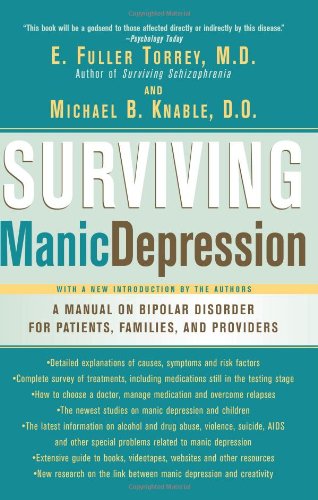
45. Surviving Manic Depression: A
$25.25
46. New Diagnostic and Therapeutic
$5.53
47. Bipolar Disorder: The Latest Assessment
$8.95
48. Bipolar Disorder: Insights for
$12.03
49. You Me and Apollo: Hope Beyond
$9.27
50. Sugar and Salt: My Life with Bipolar
$100.00
51. Bipolar Disorders: Mixed States,
$14.00
52. Mind Race: A Firsthand Account
$12.21
53. Living with Bipolar Disorder:
$11.00
54. Brandon And The Bipolar Bear:
$25.00
55. Bipolar Disorder: A Cognitive
$9.15
56. Break the Bipolar Cycle
$12.10
57. Bipolar Disorder: Rebuilding Your
 
$5.95
58. Disruption of EEG synchronization
$9.00
59. The Tattered Tapestry: A Family's
$12.00
60. In Small Doses: A Memoir about

41. The Bipolar Bear Family: When a Parent Has Bipolar Disorder
by Angela Ann Holloway
Paperback: 28 Pages (2006-07-20)
list price: US$19.99 -- used & new: US$18.80
(price subject to change: see help)
Asin: 1425929524
Average Customer Review: 5.0 out of 5 stars
Canada | United Kingdom | Germany | France | Japan
Editorial Review

Book Description
The Bipolar Bear Family is a story about a young cub who struggles to understand his mother's behavior and her subsequent diagnosis of Bipolar Disorder. The story of The Bipolar Bear Family helps children of bipolar parents address such questions as: Is this my fault? Is it contagious? Can I fix it? According to the National Institute for Mental Health, Bipolar Disorder affects more than 2 million American adults.Further, we know that the dynamics of Mental Illness closely mirror the dynamics of alcoholism and addiction in its impact on the family system.By compassionately educating parents and children, the author hopes to make a life-long difference for these courageous families. ... Read more

Customer Reviews (2)

5-0 out of 5 stars A Wonderful Children's Book Explaining Bipolar Disorder!
I own a copy of this wonderfully illustrated little book.It addresses the issues of bipolar disorder in a way that young children can understand.It isn't technical or complicated at all.The illustrations and story combined make for a great little tool that can be used to teach children about bipolar disorder.I have read this book to young children myself and have found that, although they may have questions about bipolar disorder itself, it certainly isn't to technical for them to read.I highly recomend this book for children who need to know about bipolar disorder!!!

5-0 out of 5 stars Great
Okay, never mind that the author is my sister-in-law.This is a great children's book.It handles a very difficult topic (mental illness) in a very straightforward yet sympathetic manner.It doesn't patronize at all.I'm glad to be one of the first owners of this book, and I think it is a must-have for family therapists everywhere. ... Read more


42. Journey Not Chosen...Destination Not Known: Living With Bipolar Disorder
by Mary Worthen
Paperback: 111 Pages (2001-05)
list price: US$9.95 -- used & new: US$13.99
(price subject to change: see help)
Asin: 0874836476
Average Customer Review: 4.5 out of 5 stars
Canada | United Kingdom | Germany | France | Japan

Customer Reviews (6)

4-0 out of 5 stars Powerful accounts-- but by no means the only scenario.
This is one story- powerfully written by mother and daughter.But every case is unique to the person/family experiencing it.I agree with another reviewer-- I did not connect with the emphasis on God.. but I don't criticize it-- because it is their honest personal experience.They cannot change that.Not everyone is anchored so deeply into God that it is where they must necessarily go.It was, however, just a speculation.And a plausible one-- for MANY but not all.I enjoyed the inclusion of an appendix.It was very helpful.There was a brief mention of TYPE I and TYPE II in the book but it was lacking detail and I wished it would have been a bit more fleshed out.Not everyone is relegated to having the TYPE I (more severe form) and knowing there are differences may help educate people and additionally may reduce the stigma.Overall a good honest account.It would be nice if there were a collection of accounts so people could see the wide spectrum of experiences.

5-0 out of 5 stars Useful for parents and for those newly diagnosed
There are two first-person accounts in this book: that of a mother whose young-adult daughter begins to manifest baffling, frightening behavior and that of the young woman, herself. These were written relatively soon after the young woman began treatment, and the searing descriptions will resonate with many who have been confused and afraid in the early stages of grappling with bipolar disorder.

Beyond the personal story, the primary author (the mother) extends this short, very readable book to describe bipolar's symptoms and its management. There is a fairly extensive glossary, a list of resources, and an appendix about obtaining the very expensive medications, when required, for people with limited incomes and no health insurance.

The book is written quite simply, by contrast to many more technical books on the subject. People who are just beginning to grapple with the impact of bipolar disorder will find the text blessedly free of jargon and easy to understand. You might well go on to other sources, but this is a fine place to start to get one's bearings and some hope.

4-0 out of 5 stars A quick and enjoyable read
I found this to be a fairly enjoyable, quick read about battling bipolar disorder. The quality of writing is pretty good and the story inspires empathy in the reader.Like another reviewer said, it did have a little too much God in it for my taste. Nonetheless, it makes a significant contribution to the genre of mental illness memoirs and is worth reading if you suffer from bipolar disorder or know someone who does.Avery Z. Conner, author of "Fevers of the Mind".

3-0 out of 5 stars Accurate, but a little too much god for me.
As a bipolar person I found that 21-year-old Kristy's account of her illness to be startlingly accurate and her mother's account very poignant.My only issue is with the emphasis they both place on god. They are quite obviously a very religious family (regular catholic church goers; Kristy attended a catholic high school, dad worked there). As a non-religious and non-spiritual person I found it somewhat annoying, as I could not relate on that level at all and have no desire to. Granted, most of Kristy's delusions were religion-based (she frequently thought she was jesus christ and fervently worked at copying the bible word for word), still, I found myself rolling my eyes occasionally.Don't get me wrong, if nothing else this VERY quick read would make sufferers and care givers feel that someone out there is battling the same demons, but beware of god.

5-0 out of 5 stars Powerful account
I purchased this book because there is a family history of this illness.I was not prepared as to how powerful it would be.The mother's story is heartbreaking and a great account for those who are also beginning the journey of helping a loved one.Thank goodness Kristy's mom was so persistant in getting help and that Kristy herself is following the program and doing well.Unfortunately this is not the case for a lot of people.This is a must read for anyone who is dealing with someone with this illness. ... Read more


43. Depression and Bipolar Disorder: Stahl's Essential Psychopharmacology, 3rd edition (Essential Psychopharmacology Series)
by Stephen M. Stahl
Paperback: 228 Pages (2008-03-31)
list price: US$50.00 -- used & new: US$50.00
(price subject to change: see help)
Asin: 0521714125
Canada | United Kingdom | Germany | France | Japan
Editorial Review

Book Description
Relying upon the best-selling third edition of Stahl's Essential Psychopharmacology, Dr. Stephen M. Stahl has revised chapters covering depression and bipolar disorder for this third edition of Depression and Bipolar Disorder. Significantly revised and expanded from the previous edition, Depression and Bipolar Disorder is essential for professionals treating depression and students needing a straightforward illustrated guide to drug mechanisms and current research. This third edition includes advances in neurobiology and recent clinical developments to explain with renewed clarity clinical advances in antidepressant therapy and includes new coverage of sleep disorders and disorders of impulse control. The text is complemented by many new illustrations and enhanced to reflect new knowledge and topics covered in the previous edition. Intended as a primer text covering all aspects of treatment for psychosis and related conditions, this concise volume can nevertheless be read cover to cover by experts and novices alike. ... Read more


44. Bipolar Disorders: A Guide to Helping Children & Adolescents
by Mitzi Waltz
Paperback: 442 Pages (2000-01-15)
list price: US$24.95 -- used & new: US$7.48
(price subject to change: see help)
Asin: 1565926560
Average Customer Review: 5.0 out of 5 stars
Canada | United Kingdom | Germany | France | Japan
Editorial Review

Book Description
Until recently, bipolar disorders were almost never diagnosed in children and rarely recognized in adolescents, even though between 20 and 40 percent of the two million or more adults diagnosed with bipolar disorders in the United States experienced theonset of illness in their teen years or before. Psychiatrists now recognize that manic depression has frequently been misdiagnosed as ADHD (or oppositional defiant disorder, conduct disorder, or depression). According to recent data, 23 percent of children currently diagnosed with ADHD will evenutally be diagnosed as having a bipolar disorder. As many as a million children in the US alone may have childhood-onset bipolar disorder.Bipolar disorders are different in children than in adults. There are some diagnostic criteria unique to children. Some reckless behavior is limited by being a child and being under adult control. Families and communities pay a heavy toll when this disorder is not recognized and treated. Suicide is a possible outcome, as are school failure, limited job prospects, legal difficulties, and hospitalizations. Understanding and recognizing the differences in the illness for children and adolescents is key for concerned parents and professionals. Bipolar Disorders covers the range of topics that parentsneed to know about in order to help their children:

  • Description of the range of bipolar disorders
  • Diagnostic criteria, current and proposed, including comparisons to common misdiagnoses
  • Family life with bipolar disorders, including recognizing and preventing mood swings, safety, and support
  • Medications, with special attention to the physiology andresponses of children and adolescents
  • Therapeutic interventions in various "talk therapies"
  • Other interventions, such as improving sleep patterns, preventing seasonal mood swings, diet, and supplements
  • Insurance issues
  • school, including special education system and 504 Plans or EIPs
As author Mitzi Waltz notes, "With early intervention, the possibilities for these kids are limitless." ... Read more

Customer Reviews (5)

5-0 out of 5 stars An essential starting point...
After more than a year of fear, confusion, anger and spousal disagreements regarding our child's behaviors, my wife and I separated. Then we found out that our 14-year-old is almost certainly suffering from bipolar disorder, not just depression (the first diagnosis) or anxiety (the second.) Now, from houses 25 miles apart, we are beginning the journey toward appropriate medications, appropriate school placement, and understanding. I bought this book a month ago, and it took the whole month to read it. At 400 pages, it is nothing if not comprehensive. And it is scary as hell, but comforting as well. Mitzi Waltz is herself the parent of a bipolar teen, and she has a great gift for translating medical and psychological jargon into plain English. If you are in the same boat as we are, or if you have a young relative recently diagnosed with BP, buy this volume right now. Buy several. The price is great for what you get, and I suspect you will be referring to it continuously for years. It is not focused exclusively on teenage patients, either. Kids as young as eight have now been diagnosed with this miserable brain chemistry imbalance, which seems to be a life-long condition once it manifests. The book creates much-needed sympathy for BP victims, whose attitudes, actions and unpredictable moods can be infuriating and can turn parents against each other as both try different approaches to keeping their child safe and stable and successful. So far, our path has included two psychiatrists, four different medications, a four-day stay for the daughter in a juvenile mental health center, two school systems and now a home-bound program, and much heartbreak, frustration, sadness and screaming. Mitzi's book is the single best tool I've found to help myself cope.

5-0 out of 5 stars A Great Resource for Parents, Teachers and Doctors
Ms. Waltz has once again produced an excellent book that is clear and informative.In my practice of Psychiatry, I have found books like this are few and far between.I am using this book as a resource for all my Bipolar families.This book covers all topics related to Bipolar Disorderboth esoteric and day-to-day living issues.If you're a parent or a lovedone of a child (or adult)with Bipolar Disorder, read this.You will not gowrong.And after you're done, pass your copy onto your child's teacher ordoctor.It will help you all get together on the same page.It's criticalthat our kids get the help they need. This book will teach you how best toadvocate for your child.

5-0 out of 5 stars This is an excellent guide for parents
Mitzi understands the relationship between parents and children who suffer from early-onset bipolar disorder.Her book addresses numerous issues that parents face on a day to day basis.She provides resources, support, andsolutions.Truly an excellent book and one that all parents of childrenwith bipolar disorder should keep at their fingers.

5-0 out of 5 stars Thanks for writing this book!
We found this book to be very helpful us to further understand our daughter's recent diagnosis as Bipolar.We found the information to be well presented, and easy to understand.The section on schools was veryinformative.

5-0 out of 5 stars Thanks for writing this book!
We found this book to be very helpful us to further understand our daughter's recent diagnosis as Bipolar.We found the information to be well presented, and easy to understand.The section on schools was veryinformative. ... Read more


45. Surviving Manic Depression: A Manual on Bipolar Disorder for Patients, Families, and Providers
by E. Fuller Torrey, Michael B. Knable
Paperback: 416 Pages (2005-03)
list price: US$18.00 -- used & new: US$5.89
(price subject to change: see help)
Asin: 0465086640
Average Customer Review: 4.5 out of 5 stars
Canada | United Kingdom | Germany | France | Japan
Editorial Review

Amazon.com
If knowing one's enemy is key to surviving a prolonged encounter, then Surviving Manic Depression should prove essential reading to those who suffer from this brain disease's horrific highs and lows. Having immersed themselves in the topic, E. Fuller Torrey, M.D., and Michael B. Knable, D.O., offer a comprehensive resource for those afflicted with--or responsible for treating--manic depression. Unfortunately, a surprisingly small amount of data exists regarding its prevalence, and existing studies show conflicting results.

Torrey and Knable's emphasis on dissecting all that is known about the disease clearly indicates that "survival" entails neither escape nor eradication; rather, it requires a lifelong pledge to undertake an effective course of treatment. The first step: learning every suspected cause, symptom, risk factor, and treatment strategy. Sprinkled among statistic-laden paragraphs, touches of empathy arrive via articulate quotations from sufferers including Patty Duke and Kay Jamison. But the crux of Torrey and Knable's work is its compilation of all the informative bits and pieces readers need to build an effective action plan. Most helpful are the chapters that address special problems (including alcohol and drug abuse, violent behavior, medication noncompliance, and the seduction of mania); and their no-holds-barred reviews of books, selected Web sites, and videotapes. --Liane Thomas Book Description
Surviving Manic Depression is the most comprehensive, up-to-date book on the disorder that affects more than two million people in the United States alone. Based on the latest research, it provides detailed coverage of every aspect of the disorder.

All aspects of the disease are addressed: symptoms, with many direct descriptions from patients themselves, risk factors, onset and cause, medications (including drugs still in the testing stage), causes, psychotherapy, and rehabilitation and how the disease affects children and adolescents. Here too are discussions of special problems related to manic-depressive disorder, including alcohol and drug abuse, violent behavior, medication noncompliance, suicide, sex, AIDS, and confidentiality. Surviving Manic Depression also includes special features such as a listing of selected websites, videotapes, and other resources. ... Read more

Customer Reviews (24)

3-0 out of 5 stars Not so fun to read but some good information
Although there is a lot of good information in this book, getting beyond the first chapter is a challenge.When you begin reading, there is no engaging narrative style, just a series of subtitles with factual information underneath.If you are like me, this isn't the first information you are looking for...statistics on how many people have the disease (depends upon when and how you define it)...statistics on how many people are being treated in urban vs. rural settings...To make a long story short, this book does not grab you at all.You have to push through, as if you were reading an academic paper, to get information.There are no uplifting case histories referred to throughout the book that keep you interested (cases mentioned are usually one or two paragraph examples).Nor are there any new theories presented here - just a disjointed summary of the (disappointing) research that has been done thus far.The medication section is not up to date, since there was no mention of Lamictal as a treatment.I bought this book because of the good review here on Amazon, and was somewhat disappointed, so I felt compelled to add me own feelings for the benefit of those who might do the same.

2-0 out of 5 stars A Frustrating Book About a Frustrating "Illness".
To begin with, this book is mistitled.If you are looking for a book of practical advice for how to get through day to day struggles while in the throes of this illness, this book offers very little.If you are looking for practical advice for how to deal with someone (a loved one perhaps) who may have this illness, this book does not really offer much of this either.And, if you are looking to validate your experience by reading about accounts of individuals who have had similar experiences, this book does not include much of this either.This book is really more for psychiatrists and medical professionals who try to define the illness.Thus, it includes discussions of what exactly constitutes the illness, various studies, and the endless wrangling among experts over where to draw the lines and which theories of the illness are correct.After reading this book, I have concluded that not only do psychiatrists know very little about the human brain and the human mind, but they may know nothing at all.Much of the definition of the illness seems entirely arbitrary, as even the author points out, and most of the research into the physiological causes of the illness remain poorly understood and open to multiple interpretations.Furthermore, for any given individual who exhibits symptoms of either mania or depression, there is really no predicting the illness.Some may go on to cycle rapidly between the two for the rest of their lives.Others may never experience an episode again.The author claims that certain medications (e.g. lithium) work to either prevent or dampen the effects of mania and depression, but they don't work in all cases, the reason why they work is poorly understood, they may or may not have harmful side effects, and furthermore there is no proof that improvement is necessarily due to the medication at all.Then, there is the issue of diagnosis.Despite the fact that the diagnostic criteria appear to be exact, closer inspection reveals them to be almost completely arbitrary with no clear limits as to what qualifies as illness and with the limits that are written into the criteria themselves being arbitrarily set.In addition, it would appear that while certain individuals exhibit classical symptoms of the illness (oscillating between the two extremes in various amounts), the majority do not.Which leads me to believe that in many cases the illness is being overdiagnosed and used as a catch-all to explain any bad, eccentric, or otherwise unexplainable behavior.My personal experience with psychologists and psychiatrists also leads me to believe this.I have found that psychologists and psychiatrists tend to be normal people with a fancy degree.This means that they are just as prone to misunderstand behavior that falls outside the norm as anyone else.In addition, I have found that psychologists and psychiatrists tend to see what they look for in people.If a psychologist or psychiatrist has a preconceived notion of an individual's experience, they will tend to perceive their behavior so as to confirm their own theories about that person.I have no further evidence to support my belief that psychologists and psychiatrists do not possess any extraordinary insight, but my hunch tells me that they really do not.How could they?

To sum up, here is my understanding of manic depression.We all have ups and downs throughout the day, week, and year.It's part of being human.However, psychiatrists seem to be obsessed with these ups and downs.And they want you to be obsessed with them too.Some people have really high ups and really deep downs.Obviously the people who have the highest ups and the lowest downs need some sort of treatment.The only question is what sort of treatment should that be.Psychiatrists like Torrey would argue that the only really effective treatment is a drug like lithium (perhaps with various other drugs including anti-depressants and anti-psychotics or even other more drastic treatments such as ECT in extreme cases).Many psychologists would argue that they need psychotherapy (the talking cure) of one form or another.Torrey contends that in the case of manic depression psychotherapy really is optional and may or may not do any good (at best it can help a person become more aware of their illness and offer practical advice).Furthermore, Torrey contends that some forms of psychotherapy may even be harmful, particularly Freudian therapy.On this point I tend to agree wholeheartedly with Torrey on both points.I agree that Freudian therapy is definitely not beneficial in the least and is possibly harmful.(Freud has really offered humanity very little despite his eminence.See Torrey's much better book, _The Freudian Fraud_ for more on this.)And at least in my personal experience I have found psychotherapy to be largely a waste of time, money, and energy.At best a psychotherapist can serve as a friend in a time of crisis or offer some very simple commonsense practical advice, but beyond this I really doubt they can be very useful.In addition, I have often found that talking to a psychotherapist is like talking to a Martian, they really don't get what you have to say and they interpret everything you say within a certain framework that makes it very difficult for you to have any sort of real conversation with them.I have also found some psychotherapists to be downright hostile to things you might say and to be remarkably arrogant.

Another frustrating thing about manic depression for me at least, is that I really can't relate to the descriptions others give of their illness very well.For me, the illness has never been about spending sprees or sex, etc.It has always been for me about increased energy, extreme nervousness, sleeping problems, heightened senses, and intense religious/mystical experience.When I hear other people describe their experiences with the illness I really can't relate because they seem so little like mine.This has only added to my doubt about the usefulness of diagnosing this illness to begin with.I also find it frustrating that some have attempted to link this disorder with creativity or high achievement.Particularly noxious I find are romanticizers like Kay Jamison, who not only try to link this illness with creativity, but also would seem to give the impression that it is a social status thing (an illness high achieving or upper crust individuals are prone to), and in doing so give the impression that it is also a lot of fun.There is nothing fun about the psychic pain of depression, and I have found little fun about "mania" either to be honest.Furthermore, it is definitely not fun to see the kind of destruction that follows in the path of this illness for some people.Torrey seems to give some credence to Jamison's theories, though to his credit he is much more conservative than her.

Finally, there is one other point.The author says that you should tell people that you have this illness.I disagree.Nearly everyone I have told that I have been diagnosed with manic depression, I have lived to regret later.If you tell someone, you may meet a sympathetic person who can understand that you have been through a hard time.(Most people can relate to "depression" of some sort, but they really do not understand the true agony of the thing.)On the other hand, you may go from being treated with respect to being treated little better than a common criminal.You haven't changed but they have.Mania in particular is so far outside of most peoples' understanding that they will find it difficult to comprehend what you really mean.Furthermore, I have found that people tend to be very cruel and prone to all sorts of prejudices and superstitions when this topic is brought up.My own experience with other people and this illness has been so negative, in fact, that I have been left with a permanent fear of people and a nagging feeling that I am being subtly criticized by nearly everyone I meet.

A final point, I think that there is a tendency by many to become totally obsessed with this illness and every detail surrounding it.This book is a good example of that kind of obsession, by both psychiatrists and ill people alike.I don't think this obsession is beneficial at all, and endless wrangling over details seems utterly pointless.I must conclude after reading this book that psychiatrists still know very little (definitely far less than they pretend to know or that they'll tell you) and that much of what they do know is entirely arbitrary.It remains a mystery.

5-0 out of 5 stars Reading the Definitive Authority on Manic Depression
Very well written and presented. I would recommend this book to anyone I know with Manic Depression. It was very helpful to me.

5-0 out of 5 stars Excellent book highly recommended.
This is an excellent book about all aspects of Bipolar Depression. It is a terrible disease and the depression isquite dangerous. There is a new FDA approved procedure for depression called vagus nerve stimulation. I would recommend another excellent book; "Out of the Black Hole: The Patient's Guide to Vagus Nerve Stimulation and Depression". It's ISBN number is # 0974848417. I found both books very helpful forthe treatment plan with my psychiatrist. As far as I am considered, the more information you have, the better.

4-0 out of 5 stars Surviving is the best we can do?
An easy to read, well written, thoroughly researched book on manic-depressive illness.Hmm... Wonder what Koch would say about that? He's the guy who postulated Koch's postulates, a set of criteria to prove that the disease (in this case anthrax) was caused by a particular bacterium. Bipolar disorder is too complex for a simplistic application of Koch's postulates. But then, what about an infection like Lyme disease that was regretfully omitted in the book? Perhaps that disease should be included in "secondary" mania. The authors did admit that mania from syphilis was once manic-depressive illness before it became secondary mania. Some believe it is all secondary, secondary to different biological anomalies that just haven't yet been identified. More humility about the limitations of our models and our medications would have been helpful, as would a discussion regarding the restorative role of nutrition. Save for a small section on omega-3 fatty acids, this was left out. I also would have liked to have read something on the links betweenLyme disease and subtypes of diseases currently diagnosed as MS, ALS, and "manic-depressive illness."What if symptoms akin to MS, ALS and mania had similar etiologies that met the requirements of Koch's postulates?I recommend the book, particularly for the discussion on infections. However, while a reader may, with some effort, imagine the implications for the future, the authors have still kept us stuck in an obsolete typology that ensures a revolving door into the hospital for all too many patients who believe they have a disease called "manic-depressive illness."For them, surviving is about all that can be asked of them.
David Moyer, Author, Too Good to be True? Nutrients Quiet the Unquiet Brain ... Read more


46. New Diagnostic and Therapeutic Aspects of Bipolar Disorders: 3rd Stanley Symposium, Andechs, November 2001 (Neuropsychobiology)
Paperback: 36 Pages (2003-01)
list price: US$25.25 -- used & new: US$25.25
(price subject to change: see help)
Asin: 3805575491
Canada | United Kingdom | Germany | France | Japan

47. Bipolar Disorder: The Latest Assessment And Treatment Strategies
by Trisha Suppes, Ellen B. Dennehy
Paperback: 112 Pages (2005-05-30)
list price: US$16.95 -- used & new: US$5.53
(price subject to change: see help)
Asin: 1887537252
Average Customer Review: 4.5 out of 5 stars
Canada | United Kingdom | Germany | France | Japan
Editorial Review

Product Description
Have you ever ridden a roller coaster?This gives you an idea of the life of someone with Bipolar Disorder -- a life of extreme highs and lows.Here is a book with professional information in layman's language where you can learn how the disorder is diagnosed and what treatments work the best.Bipolar Disorder joins the series of timesaving books from Compact Clinicals.In clear concise language, these books provide up-to-date assessment and treatment information for various mental disorders.Each book condenses pertinent treatment approaches and relevant examples in a format designed for quick review and easy use. ... Read more

Customer Reviews (2)

5-0 out of 5 stars fantastic
This book really is fantastic for the student of psychology, or the lay person. It uses terms as they are used in the DSM. It manages to be very highly accessible without feeling condescending, and its concise enough to be read in short order and used as a day to day reference guide.

4-0 out of 5 stars Must read for the patient or concerned family memeber
Thank you for this important addition to the many many publications on bipolar disorder.This book contains a lot of very helpful technical information about the newest treatments, drugs and therapies available.It can be challenging, but is a great resource to help educate the patient or concerned loved one.Take it with you to the doctor and ask questions!Readers, take note - this was published in 2005!It has the newest information, unlike other books that continue to preach about outdated treatments! ... Read more


48. Bipolar Disorder: Insights for Recovery
by Jane Mountain
Paperback: 144 Pages (2003-08)
list price: US$19.95 -- used & new: US$8.95
(price subject to change: see help)
Asin: 0971927057
Average Customer Review: 4.0 out of 5 stars
Canada | United Kingdom | Germany | France | Japan

Customer Reviews (7)

5-0 out of 5 stars Samuel Allen
As a sufferer of type I bipolar disorder, I have been struggling with this disease for decades in total ignorance. As a result of a recent diagnosis, I've been reading just about every resource available. I found Dr. Mountain's book provides insightful information and advice through comprehensible narrative in a style that is well suited to the general public. I can certainly identify with her personal experiences and found myself wanting more. I cannot wait for her sequel.

4-0 out of 5 stars Helpful insights
The author suffers from bi-polar disorder and writes from a personal as well as a clinical perspective that is helpful.I have one family member who has been diagnosed as bi-polar and another who thinks she is probably hypo-manic.This book helps me understand both better.A better understanding lowers my frustration with things I have always found very difficult.The book also offers some hope by discussing treatments that do work.

1-0 out of 5 stars What an awful book for such an important topic!
I was diagnosed with bipolar disorder about seven years ago.That said, I've tried to read everything I can get my hands on regarding the topic.The Jane Mountain book was just awful.It was written on a fifth-grade level, way too simplified and quite pedestrian.I was surprised since Mountain is a doctor as well as a sufferer.Kay Redfield Jamison, a doctor as well, did a much better job of lending insights into the disorder with "An Unquiet Mind", a seminal work in the field.I would highly recommend her book as well as the Mondimore book.His was clinical, detailed and insightful.The Mountain book was almost demeaning, it was really dumbed-down.I can't believe the high ranking it got, which is why I bought it in the first place.What a waste of time (even though the volume is so short and only took a few hours to read!)

5-0 out of 5 stars excellent window into the life of person with bi-polar challenge
This book gives the reader much insight into the condition.Dr Mountain begins a facet of the disease with the medical terms used, then simplifies it so that the average person can clearly understand what is being dealt with.The fact that Dr Mountain has suffered from this allows her to clearly discribe "How it feels"

5-0 out of 5 stars Illness And Recovery Thanks To A Gentle Woman
As a survivor of manic depression myself, I must commend Dr. Mountain.Her book is an immensely valuable public service.She explains the disease to lay people even though she is an experienced physician.

I don't mean to dwell on myself, but I must say I am a writer by trade.Many writers have been diagnosed with this frightful disease.Dr. Mountain hit the nail on the head when she said the following on page 16 about what a manic phase feels like:

"Life felt like a dense atmosphere of swirling gray smog that threatened to suffocate me."

That's how I felt during my manic phases before lithium brought relief.I would go on shopping binges.I would lie awake nights thinking terrible thoughts about George Bush's family trying to control my thoughts.Oooh, how it influenced my writing negatively!I started rambling on about my old college professors having ties to the CIA.Thank G'd for lithium and now Prozac.

Thank you again, Dr. Mountain.You should couple YOUR writing with the lecture circuit.How I'd love to write an article in my Probe newsletter about your gentle approach to this horrible disease!Please start giving lectures around North America.I will be there to spread the word.I got your back, kiddo. ... Read more


49. You Me and Apollo: Hope Beyond Bipolar Disorder
by J. D. Stottlemire
Paperback: 76 Pages (2007-09-18)
list price: US$12.94 -- used & new: US$12.03
(price subject to change: see help)
Asin: 1430308192
Average Customer Review: 5.0 out of 5 stars
Canada | United Kingdom | Germany | France | Japan
Editorial Review

Book Description
"Apollo" is a message to people in Crisis: "You are not alone on the mountain." "The fear does not matter. The dark does not matter. The despair does not matter. All that matters is understanding, and making it home alive." "The fact that we're here today means we're stronger than our depression." "I don't punish myself for drinking so much and smoking the things I smoked. I was doing the best I could.at the time. I'm just glad I.found my way to some real help." "It's not my fault that I have this disease and I'll be damned if I'm going to let it kill me." "Today there is a great deal of hope." ... Read more

Customer Reviews (3)

5-0 out of 5 stars Authentic and Hopeful...a Beautiful True Story
I just finished my third reading of this honest and hope-filled true story by J.D. Stottlemire.With each reading, I have felt a deepening of my awareness about Bipolar Disorder, as well as what it is to be human.The message of hope is for all of us, whether we have experienced Bipolar Disorder ourselves, or know someone that has, or if we just go through depression sometimes...(and who hasn't?)Mr. Stottlemire speaks from his heart, combining humor and seriousness in a very real-life way, that is so easy to relate to, and so easy to read.His story changes lives, by offering that we are not alone, and as he says, "Today there is a great deal of hope."

5-0 out of 5 stars The best $12.50 you'll ever spend!
I never write book review becuase (well...frankly, I'm too lazy)but after reading Apollo I had to get off my duff and tell everyone what a great book this is.Informative, witty, an easy, quick read.If you don't personally know someone who would benefit from this book buy a copy to donate to your local hospital, mental health center, jail or library!!!!
This is the kind of book that could save a life.

5-0 out of 5 stars A Powerful and Positive Message with Unlimited Potential
J.D. Stottlemire takes us into the surreal world of a mind with Bipolar Disorder. Woven into one man's journey through life is a fascinating comparison to the Apollo 13 mission. Readers of this book will gather insights into the inner sanctum of a brilliant mind, a mind with "a hidden flaw."

This is an eloquently written account of a very personal struggle with Bipolar. Stottlemire humbles himself with grace and style and leaves the reader with real hope that they too can understand and get through the challenges. For all those whose lives have been shattered and broken by Bipolar, I urge you to read this book.
... Read more


50. Sugar and Salt: My Life with Bipolar Disorder
by Jane Thompson
Paperback: 180 Pages (2006-08-30)
list price: US$14.49 -- used & new: US$9.27
(price subject to change: see help)
Asin: 1425953174
Average Customer Review: 4.0 out of 5 stars
Canada | United Kingdom | Germany | France | Japan
Editorial Review

Book Description
SugarandSalt: My Life with Bipolar Disorder is the story of an ordinary person who lived with and ultimately overcame bipolar disorder (manic-depression.). She was not diagnosed until she was 32. She describes what it is like to be raised in a family overshadowed by the illness, and to try to fit in in school and to function at work with the undiagnosed disorder. The failure of a marriage and relationships are detailed, and she struggles to understand why her life is so different and so difficult, until she has a sudden revelation that something is wrong with her and that she needs help.Then comes the long fight to get treatment as she tries medication after medication after being misdiagnosed as psychotic. For five years she seeks knowledge and understanding of the disorder that makes her suffer. In a dramatic turn, Jane realizes she must enter a mental hospital to get the treatment she needs. She describes life in a locked ward, and how her doctor finally finds the medication her disorder responds to. She feels she has been given the key that lets her out of the hell the mood disorder has kept her in all her life, and for the first time, she feels "normal." After the hospital, Jane has to face the world again and start a new life. She is able to work for years without her employers discovering her secret. However, after ten years, she develops an allergy to the medication that has served her so well and must start the process over again. During this process, she loses her dream job and falls back into depression.A story of ultimate triumph over bipolar disorder; find out how she did it and how you, too, can manage the disorder through medication and therapy. ... Read more

Customer Reviews (10)

5-0 out of 5 stars Wonderful insight into bipolar
Ms Thompson describes her life experiences as they relate to bipolar... in retrospect she is able to explain how her disease manifested itself and how greatly it affected her life.This is an excellent insight into bipolar disease and its insidious presence in the author's life and the lives of her friends and family.

1-0 out of 5 stars Book should be renamed as "My Life...Oh And Oops, I'm Bi-Polar
This book sucks...no other way to state it.This book is hardly about bi-polar disorder but more about a women's feminist life and sexual discoveries during her college and beyond years.The author gives no clues during this story about how she suffers from the disease, she just sort of "pops" it in every so often in between boring accounts of her college days, and dating years and how she was very "modern" as a woman.This is a very boring biography of a person who may or may not have bi-polar as it is such a minor part of the entire story.

3-0 out of 5 stars Can't wait - Type I or II?
I have not yet read this book, but hope that it is even half as good as "Invisible Driving" by Alistair McHarg.That book is about his personal experience with emphasis on the sad/hilarious manic episodes of Bipolar Disorder Type I, and is extremely well written (I would gladly read it even as a novel).

I can't wait to find out whether Ms. Thompson is Type I or Type II, as I am Type II and have seen very little written about it in a first person or in atechnical fashion.[Since Type II usually has none or very few episodes of full-blown mania, it is much more difficult to get a proper diagnosis].

2-0 out of 5 stars Mistitled but kinda interesting nonetheless.
Not really much here about bipolar disorder. I read it to glean insight into the mental illness but this is really a memoir about Thompson's life. The bipolarity seems incidental to her narrative. So, although it is mistitled and there is not a lot to learn about bipolar disorder, her story is somewhat interesting.

4-0 out of 5 stars Not enough in common
Although the author opens up about her struggle with bipolar disorder there were moments that I felt she could have been more detailed about the depression and manic episodes.Besides losing job after job what about the moments she was alone...how did she feel?Being bipolar I struggle everyday...I won't be defeated by this illness and in my days challenge I still have 3 children to care for and a marriage to save.I know how manic feels and how depression feels so much that it's like I'm a slave to it.Like the author I do to medication is important but also deconditiong of unhealthy and compulsive behavoir is just as important. ... Read more


51. Bipolar Disorders: Mixed States, Rapid Cycling and Atypical Forms (Cambridge Studies in International and Comparative Law New Series)
Hardcover: 406 Pages (2005-11-14)
list price: US$140.00 -- used & new: US$100.00
(price subject to change: see help)
Asin: 0521835178
Canada | United Kingdom | Germany | France | Japan
Editorial Review

Book Description
Bipolar disorder manifests itself in a variety of forms. It can coexist with other psychiatric conditions, and treatment efficacy can depend on the type of bipolar state. This book covers the full range of atypical, rapid cycling and transient forms of bipolar disorder, from atypical and agitated depression to schizoaffective mixed states. The most recent ICD category is covered, and the authors also look at the biology and genetics of bipolar disorder, along with issues relating to age (children and the elderly), comorbidity, choice of drug treatment and investigational strategies. ... Read more


52. Mind Race: A Firsthand Account of One Teenager's Experience with Bipolar Disorder (Adolescent Mental Health Initiative)
by Patrick E. Jamieson
Hardcover: 200 Pages (2006-07-19)
list price: US$30.00 -- used & new: US$14.00
(price subject to change: see help)
Asin: 0195309065
Average Customer Review: 4.5 out of 5 stars
Canada | United Kingdom | Germany | France | Japan
Editorial Review

Book Description
The life of a person with bipolar disorder can be tumultuous.Imagine living in a world divided into many parts: one is fast-paced, frantic, energetic--you are at the top of your game and feeling invincible; another is so bleak and dark that even the simple task of going to the store requires Herculean effort.Now imagine a third: going about your daily routing when another manifestation, the mixed state, combines these symptoms simultaneously.This is just a glimpse into the world of a person with bipolar disorderMany people diagnosed with this disorder are adolescents: young people who often feel isolated, unsure of who to talk to, or where to turn for help or answers.Having been diagnosed with the disorder at age fifteen, Patrick Jamieson knows firsthand the highs and lows and bring his experiences to bear in Mind Race: A Firsthand Account of One Teenager's Experience with Bipolar Disorder, the first in the Annenberg Mental Health Initiative series written specifically for teenagers and young adults.Mind Race is a first-person account, aimed at teens who have recently been diagnosed with bipolar disorder, informative in a compassionate, good-humored, yet authoritative manner. Jamieson discusses his own challenges and triumphs, and offers advice on dealing with developing symptoms such as how to recognize the beginning of a mood shift.In accessible language, he presents the latest in scientific research on the disorder, treatment options, and how to cope with side effects of different medications.He includes a detailed F.A.Q. that answers the questions a newly diagnosed adolescent is likely to have, and also offers suggestions on how to communicate with friends and family about the bipolar experience.With Mind Race, Jamieson offers hope to teens and young adults living with bipolar disorder, helping them to navigate and overcome their challenges so they can lead a full and rewarding life. ... Read more

Customer Reviews (6)

4-0 out of 5 stars Excellent resource on bipolar disorder in adolescence
This is a book about bipolar disorder, formerly known as manic-depression.For those who might not know, bipolar disorder is a moderate to severe emotional problem that features both periods of severe depression and periods of mania, which is a mood-state that features racing thoughts, high energy level, risk-taking, sometimes bizarre over-estimation of one's own abilities, decreased sleep, decreased appetite, and a sense of elation that has nothing to do with one's surroundings (i.e., you feel extremely happy for no reason).Everyone has changes in their moods but, for people who experience bipolar disorder, the mood-swings are extreme, can last for long periods of time, and are not connected to any valid reason.

Patrick Jamieson is a research psychologist involved with a large project trying to help adolescents with different emotional disorders.Also, as a teenager, Patrick Jamieson began having episodes of significant depression, interspersed with manic and mixed episodes, along with some healthier periods.He took his personal experience and his academic knowledge, combined them, and wrote "Mind Race:A firsthand account of one teenager's experience with bipolar disorder".This book is aimed as a help to adolescents experiencing bipolar disorder, along with their families and everyone involved in the lives of teenagers experiencing bipolar disorder.

The author provides chapters describing his own experience as a teenager experiencing the onset, diagnosis, and treatment of bipolar disorder; a detailed description of bipolar disorder from the professional standpoint; the different forms of help available for adolescents with bipolar disorder; a description of what a psychiatric hospital stay can be like; separating the disorder from the person who experiences it; and how people who have bipolar disorder can be successful.

Patrick Jamieson does a good job of blending his personal experience with a book designed to describe bipolar disorder.He both provides a clear picture of what the symptoms of bipolar disorder are, as well as the internal perspective of what it is like to live through both the depressive and the manic episodes of bipolar disorder.

The book has two main strengths.First of all, for a book that is under two hundred pages, there is a tremendous amount of information here, and most of it agrees with what I know about bipolar disorder (I am a psychologist in a clinic for children and adolescents, and bipolar disorder is not uncommon in our client population).The information provided in the book includes the different types of psychotherapy available, the medications often used to treat bipolar disorder, and an excellent list of agencies and websites and book that can be helpful to teenagers with bipolar disorder, as well as to their families.

The second strength of the book is its perspective or voice.Hearing this information is one thing, but it comes across differently, in a more realistic manner, and with more power, when the information comes from someone who has experienced it.It is one thing to say, "I am going to tell you about bipolar disorder," but is something else to hear, "I am going to tell you what it is like to have bipolar disorder."

I also have two concerns about this book.First, when the authordescribes the different medications available to treat bipolar disorder, there is a strong emphasis on lithium and Depakote.Those were the first two main medications used to treat bipolar disorder, and they are still used often.In the agency where I work, though, our psychiatrists have shifted away from prescribing lithium and Depakote for adolescents with bipolar disorder, in favor of the newer anticonvulsant medications, like Trileptal or Lamictal.They have concerns about the possible side effects of Depakote when it is prescribed to children and teenagers.The newer medications were described in the book, but I would have liked to see more emphasis on these medications.From seeing the response of the clients, these newer medications do seem quite effective, and with few side-effects.

My second concern has to do with the reading level of the book.I think that a sixteen-year-old, who is an avid reader and bright, can handle this book.However, a sixteen-year-old who is not a good reader, is going to struggle.This book is designed for adolescents with bipolar disorder, so that they can understand better what they are going through.Given the reading level of the book, that will not happen with many clients.

Despite its flaws, this is a very informative book about bipolar disorder, and how it is experienced in adolescence.

An excellent companion book to this would be Survival Strategies For Parenting Children With Bipolar Disorder (Higher Education Policy).

5-0 out of 5 stars a fantastic read
A well-written and thoroughly enjoyable book. I enjoyed the anecdotal aspects of Patrick's story, and would have actually preferred more of this. Some readers may be expecting this to have been written by a fifteen-year-old, given the title, but it's clearly stated on the cover that he has a PhD. The book covers a lot of ground in a highly entertaining, creative, and informative manner.Readers will learn a lot about bipolar disorder in this concise book.Paul Fitzgerald, author of: Adjust Your Brain: A Practical Theory for Maximizing Mental Health

5-0 out of 5 stars what is it like to be biploar?
As a professional, I am always on the alert to find books that educate me, my clients, and their families.When a family member can have an experience of reading a similar account of what their loved one who is afflicted with that illness cannot say to them directly, it can build a bridge of understanding that weeks of family therapy may not be able to do.Understanding may not fix a situation, but it can open a window of compassion.This book does that and is quite readable as well - accurate, funny, poignant, and real.I highly recommend it.

5-0 out of 5 stars A must have for spouses, co-workers, friends
A wonderful, easy to understand, first person narrative about coming to grips with bi-polar disorder.It was eye opening to read about what it is like to have bi-polar - especially from the perspective of a young person.Whether you are diagnosed or are the friend, spouse or co-worker of one who is dealing with bipolar, this book will help you learn how to navigate through the highs and lows. It is also very encouraging to know that that this young man learned how to manage his disease and succeed in life. There is hope.

2-0 out of 5 stars Not what I expected......
This book is geared towards teenegers and recommended for ages 9-12 by Amazon. I am 39 and found it to have way too many big words and full of poor humor. Overall, I think there are alot better books on this subject for teenagers. ... Read more


53. Living with Bipolar Disorder: A Guide for Individuals and Families
by Michael Otto, Noreen Reilly-Harrington, Robert O. Knauz, Aude Henin, Jane N. Kogan, Gary S. Sachs
Paperback: 144 Pages (2008-04-04)
list price: US$17.95 -- used & new: US$12.21
(price subject to change: see help)
Asin: 0195323580
Canada | United Kingdom | Germany | France | Japan
Editorial Review

Book Description
Living with bipolar disorder is a challenge, and this book is designed to help patients and their families develop the skills they need to be a good consumer of treatment and to become an expert partner in the management of bipolar disorder.Drawing on research documenting the strength of combining drug treatments with behavioral interventions for fighting bipolar disorder, this book takes a skill-based, family-and-friends approach to managing the ups and downs commonly experienced with the disorder. With Living With Bipolar Disorder, sufferers can learn how to better recognize mood shifts before they happen, minimize their impact, and move on with their lives. Written by the authors of Managing Bipolar Disorder: A Cognitive Behavioral Treatment Program, this book teaches individuals with bipolar disorder how to work together with their family and friends to take charge of their illness and get the most out of professional treatment. The authors stress the importance of an active partnership in treatment, while providing information and strategies to help patients and their families enhance their independence and their management of bipolar disorder.In addition to the strategies directed to individuals suffering from bipolar disorder, this book also provides information and instructions for friends and family members so they'll have the tools to help their loved ones take control of their illness. Family members will learn how to recognize potential problems, provide encouragement, practice new coping skills, and understand what the patient is going through. The book also provides worksheets and forms to help the patient reinforce skills and practices learned in therapy. It includes information about the details of living with bipolar disorder, gives advice on the best ways to avoid relapses, and teaches how to anticipate problems. Here then is a wealth of information on bipolar disorder along with effective strategies to reduce the likelihood of episodes of depression or mania and maximize the enjoyment of life. ... Read more


54. Brandon And The Bipolar Bear: A Story For Children With Bipolar Disorder
by Tracy Anglada
Paperback: 20 Pages (2004-10-30)
list price: US$11.00 -- used & new: US$11.00
(price subject to change: see help)
Asin: 1412039312
Average Customer Review: 4.5 out of 5 stars
Canada | United Kingdom | Germany | France | Japan

Customer Reviews (14)

5-0 out of 5 stars Love it
I bought this book last year when my 8 year old was diagnosed with Bipolar. I was hoping it would help me explain to him what in the world was causing him the termoil his body was given him on the inside.
To my suprise it not only helped him understand, it helped me as well. He keeps it by his bed side (still to this day) and reads it either to himself or to me, when he is having and off day.

I am very thankfull I got this book.

5-0 out of 5 stars Absolutely Wonderful 6 Stars
Bipolar disorder in children can manifest itself in many ways.This book helps children to understand what is happening in a non-clinical way.Having children with this illness, I have found this to be a valuable resource to let them know that they are not alone in what they are feeling.I have found that it helps open a line of communication between my wife and I and our girls.They are no longer embarrassed by the difficulties they face, because they understand that they are not the only ones to have this health condition.Also, it helps them to express their experiences to me in their own words.

1-0 out of 5 stars Unsatisfied
I am both a mental health care professional, and a mother of a child with Bipolar II. Although Bipolar I, Bipolar II, and Cyclothalmia, differ greatly; there are many similarities. Unfortunately, none of them were connected in this book. When my child read it, the comment was, "I could never relate to this book. It's not me!". Nothing of the racing thoughts; the obsessiveness; the disruptive sleep patterns, etc. I shared the book with many of the families I work with, almost all had similar responses.I am happy to see the topic come up and be published for children. I just wish it could have been something that more of them and their parents could actually relate to.

4-0 out of 5 stars glad this book exists!
I actually got this book from the National Alliance for Mental Illness (something like that?) before it was published in color. At that point, it was just stapled together-- but it was (and still is) one of the only books like this accessible for kids. Its literary content isn't phenomenal-- it'll probably never win awards for story-- but it's important just because of the topic it covers...

5-0 out of 5 stars Hope!
Want your child to find some comfort and understanding of what is happening to him/her.This book will help.Be sure to the the Biolar Child for yourself. ... Read more


55. Bipolar Disorder: A Cognitive Therapy Approach
by Cory F. Newman, Robert L. Leahy, Aaron T. Beck, Noreen Reilly-Harrington, Gyulai Laszlo
Hardcover: 280 Pages (2001-09)
list price: US$39.95 -- used & new: US$25.00
(price subject to change: see help)
Asin: 1557987890
Average Customer Review: 5.0 out of 5 stars
Canada | United Kingdom | Germany | France | Japan
Editorial Review

Book Description
Bipolar Disorder: A Cognitive Therapy Approach is a rich source-book ofpractical and sensitive guidance on bipolar disorder -- a devastatingillness that until now has been treated primarily through somatic means.In this book, practitioners will discover the "art and heart" of cognitive therapy in the treatment of bipolar disorder. This volume also examinesthe interface between cognitive therapy and pharmacotherapy and providesexplicit guidelines for addressing bipolar patients' misgivings abouttaking medications. The authors present numerous techniques for themanagement of hypomania and mania, and they bring to bear the full forceof traditional cognitive therapy in combating suicidality -- a commonaspect of the disorder. Recognizing that bipolar disorder affects entirefamilies, the book explicates methods for helping couples and familiescollaborate more effectively in the face of one (or more) members' bipolar illness. In addition, the authors touch upon the sensitive but vitallyimportant topic of stigma, and how it affects the lives and treatment ofmanic-depressive individuals. Most importantly, this book offers ways fortherapists to help boost the morale, self-esteem, hope, and resiliency oftheir bipolar patients through the therapeutic relationship. ... Read more

Customer Reviews (4)

5-0 out of 5 stars Best book on the subject
A compilation of the work of some of the most experienced people in the field, this book is intended to provide clinicians with a rich toolbox of therapeutic interventions including excellent checklists, case studies and counsel.For this subject matter, this book is as good as it gets.

5-0 out of 5 stars An excellent, practical description of cognitive therapy
This is an excellent book about cognitive therapy for bipolar disorder.It's a little newer than Basco's book on the same subject- both books are excellent and the reader could consult either or both to learn more about the subject.This book may have been written for psychiatrists and therapists, but I think it's well within reach for the layman, and so can be read by bipolar persons and their families as well.The writing is excellent and book is well organized too.Highly recommended.Avery Z. Conner, author of "Fevers of the Mind".

4-0 out of 5 stars Excellent source for clinicians!
The authors, most of who are eminently respected in the field of cognitive therapy, have offered a compassionate and highly useful guide to working with individuals who suffer from manic depression.Their emphasis on respecting the dignity of each person and addressing the significant hopelessness and stigma that often accompany this condition is much needed. Rather than focusing exclusively on the psychopharmacological regimens that are part of the treatment of this disorder, the authors help to explicate the compounding variables such as drug and alcohol abuse, psychosocial and identity issues that complicate treatment.They address important issues such as self-disclosure and bipolar disorder in the practicing clinician, which are usually not mentioned in books about this condition. Their descriptions of the phenomenology of bipolar disorder are helpful and enlightening.All in all, I found this a useful, compassionate and long overdue guide for therapists who work with individuals struggling with this condition.

5-0 out of 5 stars Excellent
A complement to recent "encyclopedias" on the subject, this is an outstanding guide for the layman. More writing of this kind will be necessary to help understand this plague of our times. But this is basic, core material. This layman highly recommends it. ... Read more


56. Break the Bipolar Cycle
by Elizabeth Brondolo, Xavier Amador
Paperback: 304 Pages (2007-12-20)
list price: US$16.95 -- used & new: US$9.15
(price subject to change: see help)
Asin: 0071481532
Average Customer Review: 5.0 out of 5 stars
Canada | United Kingdom | Germany | France | Japan
Editorial Review

Book Description

Take control of your symptoms--and take charge of your life

If you're dealing with bipolar disorder, you already know that it’s more than a cycle of “ups” and “downs.” You may also have difficulty with depression and irritability, as well as problems with weight gain, memory, and fatigue. Dealing with these day-to-day problems can sometimes seem like too much to bear. Drawing on the latest research in bipolar disorder, stress, and health, this step-by-step guide offers a complete selection of livable, workable solutions to manage bipolar disorder and helps you:

  • Identify your symptoms
  • Explore your treatment options
  • Stabilize your moods
  • Sharpen your mind
  • Achieve your goals

This isn't a one-size-fits-all guide. It's a uniquely personal approach to your bipolar disorder that covers the full spectrum of the disease and its symptoms. You'll be able to find successful ways to regulate your moods, relieve your stress, improve your thought processes, and break the bipolar cycle--for a happier, healthier life.

... Read more

Customer Reviews (2)

5-0 out of 5 stars This is a great book!
I found this to be one of the best written, clear, and practical books for the lay person on mental health that I have read in a long time. I learned a lot about bipolar disorder even though I am in the mental health field. People who suspect they may be bipolar spectrum even if not frankly bipolar should read this book and get their families to read it too.

5-0 out of 5 stars An Excellent Book! Highly Recommended.
I don't know of any other book on the subject of Bipolar Disorder that is as state-of-the-art, comprehensive and accessable (i.e. readable) as "Break the Bipolar Cycle." What is most striking about this book is how useful and practical it is for everyone involved in the process of living with and/or treating Bipolar Disorder (and perhaps mental illness in general). As someone who is very familiar with Bipolar Disorder, I am impressed with Brondolo and Amador's ability to reach and inform not only the person suffering with the disorder, but his/her family and treatment team as well. Interspersed throughout the book are illuminating clinical examples which make for an interesting and relatable read.Most of all, the book offers a practical and hopeful picture of what it is like to live with this illness and how to take control and make the best life possible for yourself, your loved-ones and your clients. Thank you Drs. Brondolo and Amador for this very important work and for dedicating your lives to helping those in need. "Break the Bipolar Cycle" is a must read for anyone who has been affected by Bipolar Spectrum Disorders. ... Read more


57. Bipolar Disorder: Rebuilding Your Life
by James T. Stout
Paperback: 304 Pages (2002-05)
list price: US$18.95 -- used & new: US$12.10
(price subject to change: see help)
Asin: 1879384442
Average Customer Review: 5.0 out of 5 stars
Canada | United Kingdom | Germany | France | Japan

Customer Reviews (8)

5-0 out of 5 stars Book Give Insight into Bipolar and Depression
After hearing Dr. Stout speak at a NAMI meeting, I rushed right out and purchased the book.Not only does it do an excellent job of explaining the emotions of someone living with this illness, it is riveting.I didn't want to put it down.Several friends have asked to borrow it.

One of the things that is difficult to understand for many of us family members of someone living with mental illness, is the utter despair and hopelessness they experience when they are symptomatic.Dr. Stout is able to convey this well.

There is a lot of good information for family members as well as ill people themselves.My ill family member and I have both used many ideas from his book.

I highly recommend it for a good read and for useful information.

5-0 out of 5 stars Best "Personal" story about bipolar
Bipolar is a big part of my life and my families life. Understanding the people who deal with it must be as hard as having it. Reverend Dr. James Stout gives us a "diary" if you will, of his life and dealing with his abusive family.Not a technical book but a book that will teach you practical techniques for managing moods without losing your mind. Unlike the other books out there on this subject, Rebuilding your life, makes you feel like you are not alone.Someone else has been through this and knows how you feel and is trying to help you.
I commend Reverend Dr. James Stout for the courage I know it took to write this book.

5-0 out of 5 stars As good information as there is
A very close relative of mine has bipolar disorder, so I've read everything I've been able to find on this subject.
However, this book is as comprehensive an analysis as I've found.Although the author goes into a bit more detail of his day-to-day life than I wanted, DO NOT skip a single chapter.Every chapter has tools and techniques that are invaluable to understanding and coping with the disorder.
The book is especially trailblazing in putting this "chemical" condition in the context of a dysfunctional upbringing.And in presenting skills for dealing with those, related, problems.
The appendices are especially helpful, and succinct.

5-0 out of 5 stars A rare balanced look at living with Bipolar Disorder
Stout provides a very rare take on bipolar disorder. It is from the perspective of one who has been there (is there) and has more than survived. As a psychiatrist, I have rarely encountered a 'personal experience' volume with such bredth and balance. Yes, he includes religion... he's a minister! But he identifies scores of important aspects to 'rebuilding your life' with bipolar disorder. He doesn't shun medicine as some organized evil attempt at behavioral control. He doesn't say God will heal you without any work on your part. Basically he details all the areas of your life, which if taken for granted (like sleep) can lead to symptomatic relapse.

The title of Chapter 14, "Life in a Psychiatric Unit: Sometimes Awful, Sometimes Fun" fairly well says it all. (And it describes working in a psych unit too!)

Stout has maintained a sense of humor, balance and optimism which would be well adopted by anyone facing a mental health challenge. He has no hidden agendas and never preaches. He tells it like he has experienced it, and as it has worked for him. And he tells it well.

Heartily recommended to all.

5-0 out of 5 stars Brilliant!
Precise, Great Advise. A true Bipolar Recovery book. I have never seen a self help book I couldn't put down.A great book for all those who suffer from Bipolar. Especially those who were victims of abuse. Speaks to those in commons language. Doesn't preach. Speaks of the importance of medication. A must own. ... Read more


58. Disruption of EEG synchronization also seen in manic phase of bipolar disorder.(Neuropsychiatric Medicine)(Electroencephalographs): An article from: Clinical Psychiatry News
by Patrice G.W. Norton
 Digital: 3 Pages (2004-03-01)
list price: US$5.95 -- used & new: US$5.95
(price subject to change: see help)
Asin: B00082CS14
Canada | United Kingdom | Germany | France | Japan
Editorial Review

Book Description
This digital document is an article from Clinical Psychiatry News, published by International Medical News Group on March 1, 2004. The length of the article is 696 words. The page length shown above is based on a typical 300-word page. The article is delivered in HTML format and is available in your Amazon.com Digital Locker immediately after purchase. You can view it with any web browser.

Citation Details
Title: Disruption of EEG synchronization also seen in manic phase of bipolar disorder.(Neuropsychiatric Medicine)(Electroencephalographs)
Author: Patrice G.W. Norton
Publication: Clinical Psychiatry News (Magazine/Journal)
Date: March 1, 2004
Publisher: International Medical News Group
Volume: 32Issue: 3Page: 70(1)

Distributed by Thomson Gale ... Read more


59. The Tattered Tapestry: A Family's Search for Peace with Bipolar Disorder
by Tom Smith
Paperback: 222 Pages (2007-08-17)
list price: US$14.95 -- used & new: US$9.00
(price subject to change: see help)
Asin: 1583483853
Average Customer Review: 5.0 out of 5 stars
Canada | United Kingdom | Germany | France | Japan
Editorial Review

Book Description
"I am no longer a poet. I have lost all my words."

Vibrant, intelligent, and active, nineteen-year-old college student Karla Smith embraces the future with unbridled enthusiasm. But when she suddenly loses interest in everything she always loved, her family is understandably alarmed. Where is the bubbly, optimistic Karla they all know and love?

Weeks go by and Karla hides under her bedcovers, refuses to engage in any of her passions, and returns only a wall of silence to her family's pleading questions. Eventually diagnosed as bipolar, Karla experiences the illness's major symptoms of recurring depression and periodic mania. Her parents, Fran and Tom, and her twin brother, Kevin, endure her tragic lows and euphoric highs for seven long years before Karla loses the battle with her illness, committing suicide at the tender age of twenty-six.

The Smith family weaves threads of pain, confusion, grief, and hope into a moving portrait of the challenge and tragedy of bipolar disorder. But it's Karla's own story-her brave fight against the debilitating disorder and her enduring struggle for balance, acceptance, and peace-that lies at the heart of this book, offering hope and strength for everyone who suffers from bipolar disorder and their loved ones.

... Read more

Customer Reviews (6)

5-0 out of 5 stars A family Perspective
This book imparts to the reader not only the intensity of the illness experienced by the individual, but the consumption of the entire fa