e99 Online Shopping Mall

Geometry.Net - the online learning center Help  
Home  - Health Conditions - Tuberculosis (Books)

  1-20 of 100 | Next 20
A  B  C  D  E  F  G  H  I  J  K  L  M  N  O  P  Q  R  S  T  U  V  W  X  Y  Z  

click price to see details     click image to enlarge     click link to go to the store

$18.50
1. The White Death: A History of
$10.35
2. Timebomb : The Global Epidemic
$23.80
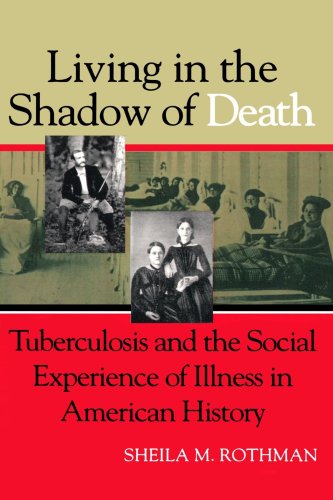
3. Living in the Shadow of Death:
$22.62
4. Tuberculosis and the Politics
$15.49
5. The Forgotten Plague: How the
$9.95
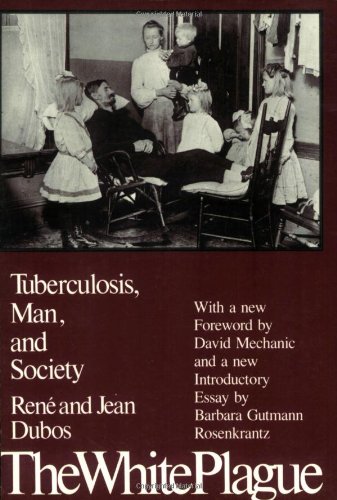
6. The White Plague: Tuberculosis,
$140.09
7. Tuberculosis (TUBERCULOSIS ( ROM))
$24.40
8. Tuberculosis (Twenty-First Century
$260.00
9. Handbook of Tuberculosis: Molecular
 
10. Tuberculosis and genius,
 
$59.95
11. The Bioarchaeology of Tuberculosis:
$92.54
12. Tuberculosis and Nontuberculosis
$16.74
13. Bargaining for Life: A Social
$7.65
14. The Tuberculosis Update (Disease
$15.16
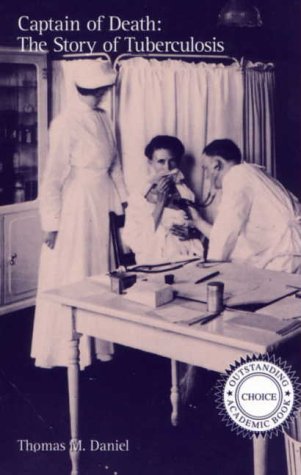
15. Captain of Death: The Story of
$34.90
16. So Has a Daisy Vanished: Emily
$225.00
17. Tuberculosis: The Microbe Host
$119.96
18. Pathogenesis of Human Pulmonary
 
$49.50
19. The Modern Epidemic: A History
$226.00
20. Reichman and Hershfield's Tuberculosis:

1. The White Death: A History of Tuberculosis
by Thomas Dormandy
Paperback: 448 Pages (2001)
list price: US$18.95 -- used & new: US$18.50
(price subject to change: see help)
Asin: 1852853328
Average Customer Review: 4.5 out of 5 stars
Canada | United Kingdom | Germany | France | Japan
Editorial Review

Book Description
"One of the most readable medical histories ever." —Sunday Express

"A gripping read, enlightening and moving by turns." —Evening Standard

"Like an experienced suspense writer, the author of this marvelous book reserves his good news until the end. . . . One of the additional pleasures of his book lies in its vivid parentheses, case histories, even footnotes. . . . [it is] enlivened by Dormandy's mordant wit and idiosyncratic style. . . . A fine book." —Anita Brookner, The Sunday Times

"A model of how medical history ought to be written . . . lucid in its analysis and perspicacious in its commentary." —Peter Ackroyd, The Times of London

"This is not a book for the faint-hearted or the hypochondriac. It is, however, a fascinating account of a disease which is probably as old as man himself." —Literary Review

"Dormandy writes extremely well, with a sharp wit . . . it is impossible to do justice to the riches to be found in this book." —The Sunday Telegraph

The victims of tuberculosis (usually known as consumption) included not only Keats, The Brontës, Chopin and Chekhov, but members of almost every family. It was a killer on a huge scale.

The White Death is an outstanding history of tuberculosis.Thomas Dormandy's engrossing account of the search for a cure is complemented by a description of its complex natural history and by portraits of individual sufferers, including writers, artists, and musicians, whose lives and work were shaped (and often tragically curtailed) by the disease.But, tuberculosis is not just a disease of the past.In many parts of the world it is still a bigger killer than AIDS, while in America and Europe drug-resistant strains threaten its resurgence. ... Read more

Customer Reviews (5)

5-0 out of 5 stars no title
This is a rad history if you have any interest in the subject, highly recommended. It is devoid of soft abstraction, fashionable theoretic apparatus, and similar wastage. It's repletely informed and documented, and usually fascinating. The style is distinctive but subdued and effortless.

The only (probable) error I could notice was the passing assertion that Domagk's own daughter was the first human to receive Prontosil. I have seen this claim elsewhere, but more detailed accounts of the development of Prontosil state that her treatment was in fact subsequent to the first several human trials.

4-0 out of 5 stars Index
This book is loaded with information but it could have been much better indexed.I also wonder why no mention is made anyplace about Seaview Hospital in Staten Island, NY, which was the largest municipal TB hospital in the U.S. in the first half of the 20th century, and contributed much in the fight against TB.Then again, maybe I missed it and Seaview is mentioned, but it's not indexed.

5-0 out of 5 stars The White Death is a force to be reckoned with!
From Antiquity, tuberculosis has been a killer on a huge scale, ever-present yet lurking rather than epidemic; its explosion in the 1800s went hand-in-hand with industrialization, abetted by bad housing, endless work hours & poverty.

For the Victorians, who elevated illness to art forms, the victims of TB were the ultimate in pale & interesting; the roll call of tuberculous genius reads like who's who of artists & writers: Keats, Chopin, the Brontes; Robert Louis Stevenson, Chekhov, Orwell, to name only a few.

Thomas Dormandy has written an engrossing account of the amazingly complex social, artistic & natural history of this ubiquitous disease as well as a telling chronicle of the medical profession at its worst & best.

This is one vitally informative, compelling & erudite volume on an affliction that has been with us since we began burying our dead, drawing on walls & writing. Make no mistake, TB is with us still! It is now mutating upon the new vectors of HIV, prisons, orphanages & multidrug resistancy.

The White Death is an impressive & eminently readable history! Do check out my eInterview with this respected author - I think you will be as amazed as I!

4-0 out of 5 stars The Best Work on the Subject
There have been some reasonably satisfying works written on the cultural aspects of tuberculosis, and others on the scientific struggle to understand and control the disease.What makes this work unusually rewarding is that Dormandy (a consultant pathologist and medical writer) possesses the ability and education to bring together TB's medical and cultural aspects.He is equally comfortable discussing the influence of TB on the German Lied tradition and the interaction between the disease organism and the immune system.

The White Death is particularly strong on TB's influence on European high and Bohemian culture and on the stories of individual scientists and doctors involved in research and treatment.Dormandy has a bit less patience for the bureaucratic history of public health and the political intrigues of academia, a feeling I share.I particularly enjoyed the opinionated and informative footnotes.

4-0 out of 5 stars A Consuming disease
When the whole world seemed to be suffering with flu last winter I read andthoroughly enjoyed "Flu" by Gina Kolata. I caught the sickness bug (bad pun) and read several more social-history books about deadly diseases and living conditions in the past, and Dormandy's "TheWhite Death" was by far the best. We readers are all familiar with theidea of the limp, frail tubercular Victorian who is tragically going towaste away before his magnus opus is finished, but do we realise that untilfairly recently, tuberculosis was so common - in fact expected in certaincircles - that the wasted tubercular look was actually fashionable amongstthe artistic and indolent (early heroine-chic?)? This very readable bookcharts the long and difficult fight between the medical establishment andtuberculosis - a disease that wasn't fussy who it struck or where itstruck. Of course, the poor slum-dwellers didn't stand a chance, buthistory does not record their names.What is striking is how many wellknown figures it hastened to an early grave - some of the finest artists,writers and minds of Europe, including the Brontës, Keats, Modigliani,Chekhov, D.H. Lawrence, Katherine Mansfield and George Orwell. It alsorampaged through several royal households at various times. What made it socruel was its slowness and the way it toyed with its victims. Availed withall that quackery could offer, the patient could have several seeming"recoveries" before eventually fading. Dormandy describes some ofthe practises of doctors in their battle against tuberculosis - you willhave to read them for yourself! Gradually inroads were made by thescientific community but only after generations of sickness. Incredibly itwas a long time before the idea of quarantine caught on (in Italy)! Aninteresting and readable medical and social history that becomes morecompelling when you know that tuberculosis is again on the rise.Drug-resistant strains have been found, and it seems that whilst battlesmay have been won, the war may still be lost. ... Read more


2. Timebomb : The Global Epidemic of Multi-Drug Resistant Tuberculosis
by Lee Reichman, Janice Hopkins Tanne
Paperback: 320 Pages (2003-09-01)
list price: US$15.95 -- used & new: US$10.35
(price subject to change: see help)
Asin: 0071422501
Average Customer Review: 4.5 out of 5 stars
Canada | United Kingdom | Germany | France | Japan
Editorial Review

Book Description

"A chilling account of... the global resurgence of this disease..."--The New York Times

"Tuberculosis--a nineteenth century disease--has come back with a vengeance... Timebomb is the extraordinary story of courage and cowardice in confronting the global TB epidemic."--Donna E. Shalala, former Secretary of Health and Human Services, President of the University of Miami

Download Description
Written by one of the world's preeminent TB experts and an award-winning medical writer, Timebomb details the evolution and current state of the multi-drug resistant TB epidemic. From the overcrowded prisons of Siberia to the streets of New York City, the authors sound the alarm on this global epidemic and herald the work of the men and women who are laboring on the frontlines, waging real-life biowarfare, in a scientific race to defuse the ticking bomb. ... Read more

Customer Reviews (6)

4-0 out of 5 stars scary and revealing
For those of you unfamiliar with tuberculosis: TB is a life-threatening disease that is caused by bacteria. It is treatable, but the treatment is lengthy (at least 6-8 months) and relatively costly (around $900 in the US). If patients do not receive the correct combination of antibiotics, or if they stop treatment prematurely, they may develop (or transmit) multi-drug-resistant tuberculosis, a disease which is nearly impossible to treat, treatment requiring up to 2 years of taking very expensive (up to $250,000 for 1 case of multi-drug-resistant TB) antibiotics that have a lot of side effects.

In Timebomb Lee Reichman gives a very clear description of all the factors involved in Tb, its treatment, the ways in which such treatment may fail and the dire consequences of failure. He also gives personal account of his experiences with multi-drug-resistant tuberculosis, with an emphasis on the situations in the United States and Russia. In the beginning of the 1990s there was an outbreak of (multi-drug-resistant) tuberculosis is New York: a team of very dedicated public health officials, doctors and community health workers fought the outbreak by treating patients as much as possible at home and were capable of reversing the situation, be it at very high costs (1 billion dollars in excess spending on health care). These costs would have been unnecessary if policy makers had in the past realized the threat that TB poses to the society once you become complacent.

In Russia, on the other hand, doctors are far more influential and there are a lot of very perverse incentives that stigmatise patients to such an extent that they actually do not come forward with their TB: they are locked in hospitals for up to 2 years for treatment and 1 in every 5 TB patients is operated upon, even when these operations are absolutely not necessary. And in prisons everything goes wrong that can go wrong with regard to transmission and control of TB and the emergence of multi-drug-resistant TB: overcrowded prisons, interrupted treatment and amnesty for TB prisoners that have not finished their treatment, And all this combined with an unjustified national pride that prohibits the Russians to ask for help or to accept evidence-based interventions that are promoted by the World Health Organization.

I have worked in a few of the prisons in Russia myself to try and improve the diagnosis of TB and the descriptions are very recognizable for me. I wish I had read this book before I started that job, because it had given me a better understanding of the forces I had to fight against.

2-0 out of 5 stars anger
This book is captivating and reads well, however I have found myself overcome with rage and anger while reading.Here's a couple of thoughts.First of all intellectual imperialism.Russia lost the cold war -- therefore the achievements of Soviet research, science etc are useless, primitive, unscientific.The author says, for example, that "English is the language of science", and that Russian doctors who speak English and can therefore read scientific literature in English are far more advanced than Russian doctors who only read literature in Russian, since Russian methods of medicine are at least 50 years behind Western ones. (I have never heard of an American scientist, however, who had learned Russian and studied Russian scientific and medical literature.)The author dismisses Russian treatment methods as barbaric just because they are different from the orthodoxy of treatment prescribed in the States.That's one point.Secondly, extremely frustrating is the absense of numerical data or statistics.DOTS is always more effective than the methods used by Russian medics, but no stats or studies as to this issue are ever sited.The one time the author does site a study (Tomsk) where 50 patients treated with DOTS were compared with 50 patients treated with the classical Soviet method, he is forced to admit that the cure rates were equal!!!!!!!So what then of his argument that Soviet medical treatment is not based on evidence and is barbaric?Also, TB was on a steady decline throughout the Soviet period, -- isn't that evidence enough that the Soviet way to treat TB is not entirely bogus?

Thirdly: the comparison between TB treatment in the US and in Russia is entirely inappropriate.It would make far more sense to compare Russia with a country that has similar rates of TB infection in the population, as well as similar economic conditions.

Fourth: The author talks about TB as if all there was to it is inhailing the bacteria.Meanwhile, the facts are that 80-90% of the people exposed to the bacteria never develop the disease.It is only when their immune systems are weakened (by poor nutrition, homelessness, stress, etc etc) that people actually get sick with TB.The author completely ignores the role that the social chaos of post-Soviet times and the sky-rocketing rates of poverty, starvation, malnutrition that followed the establishment of "democracy" play in the tuberculosis epidemic.

Finally: behind the fancy DOTS programme, all that is asked for is a dismantling of the social networks of support.Instead of putting people into hospitals where they will be fed, cared for, and constantly observed by a trained professional for signs of negative reactions to drugs -- make sick people walk to clinics to get anti-TB drugs.Obviously this method of treatment is "more cost effective".But is it really more effective?I would highly doubt it.

5-0 out of 5 stars A Riveting and Absorbing Book!
This shocking book focuses on the emerging public health threat associated with the rise of multiple drug resistant (MDR) strains of tuberculosis, especially in the former Soviet bloc of countries. In an age when worldwide travel can be accomplished in days if not hours, the connectivity between what is transpiring in the underdeveloped world and within our own borders is more striking than ever before. Therefore, we must recognize the threat posed by the emergence of such strains, and prepare to deal with the almost inevitable outbreaks of such strains of TB as they begin to occur in modern western societies.

This is not an easy read, but it is a quite fascinating and eye-opening one. The spread of MDR tuberculosis with the populations of Russia and the former satellite countries is shocking, and the total number of individuals latently infected now number some two billion people, or over one third of the total world population! Given the inability of modern medicine to counteract the course of the disease or to easily cure people infected with these new strains, the threat posed by them for people in all countries cannot be over-dramatized. Tuberculosis is indeed highly contagious, spreading freely through the air from infected individuals when they speak, cough, or sneeze. The authors refer to it as the "Ebola with wings", making a tacit reference to this most deadly form of hemorrhagic fever which is quite lethal when contracted, but which is thankfully more difficult to spread since (unlike tuberculosis) it is not airborne.

The predictions of its consequences are dire indeed; MDR tuberculosis is anticipated to kill 30,000,000 in the next decade alone. It festers in the more humid and warmer reaches of the earth, from Brazil to India, from Russia to China, and it is especially dangerous in those area of the world that have the poorest existing public health infrastructures. The economic collapse of the former USSR condemned millions to conditions of enforced cohabitation with infected individuals in the most congested, least sanitary, and most poorly equipped social structures in the world. Given such an alarming rise ion incidence and prevalence of the disease entity, the risk for cross-cultural contamination is only a short air-flight away from a looming public health disaster in the small towns and mega-cities of Europe and North America. Indeed, it is hard to engage in hyperbole here to overestimate the threat.

This book is indeed a call to arms, a plea for enlightened action on the part of governments, public health agencies, pharmaceutical research conglomerates, and the general public in order to avoid the terrors that await us if we sit by without doing all we can do to ensure better safeguards and better screening find, isolate, and treat infected individuals before they can lay the groundwork for a tragic and unstoppable epidemic. This is an important and worthwhile book, and one that I heartily recommend.

5-0 out of 5 stars Timebomb: The Global Epidemic of Multi-Drug-Resistant TB
This lively and well-written book is packed with fascinating nuggets of historical and medical information. From the "dark, Satanic mills" of the Industrial Revolution to the squalid prison cells of contemporary Russia, from Egyptian mummies to DNA fingerprinting, you will follow the trail of the TB bacillus and the heroic researchers and public health workers who remain committed to conquering it.

"Timebomb" is a winner!

5-0 out of 5 stars Timebomb: The Global Epidemic of Multi-Drug Rfesistant Tuber
Anthrax, shmanthrax.To come down with good, productive anxiety, read about "Ebola with wings"-drug-resistant TB. And no, tuberculosis is not a thing of the past: It's here, it's now, it kills 2 million people every year. Several chapters of this book read like a detective novel. Timebomb starts by showing us Nicolay, a Russian, as he flies into New York in 1998, coughing highly infectious, drug-resistant TB bacteria into the plane's air. Then Timebomb looks into risky-to-work-in TB labs; a Siberian prison (where much of the world's TB is generated); a lung operation; the Russian medical system that's failing to control the bug; and takes us along on the dangerous rounds of an unsung heroine, a public-health worker. The book is not only well written, it's about a threat that individual members of the public can actually do something about-if they know the problem exists. ... Read more


3. Living in the Shadow of Death: Tuberculosis and the Social Experience of Illness in American History
by Sheila M. Rothman
Paperback: 332 Pages (1995-11-01)
list price: US$25.00 -- used & new: US$23.80
(price subject to change: see help)
Asin: 0801851866
Average Customer Review: 2.5 out of 5 stars
Canada | United Kingdom | Germany | France | Japan
Editorial Review

Book Description
For more than 150 years, until well into the twentieth century, tuberculosis was the dreaded scourge that AIDS is for us today. Based on the diaries and letters of hundreds of individuals over five generations, Living in the Shadow of Death is the first book to present an intimate and evocative portrait of what it was like for patients as well as families and communities to struggle against this dreaded disease. "Consumption", as it used to be called, is one of the oldest known diseases. But it wasn't until the beginning of the nineteenth century that it became pervasive and feared in the United States, the cause of one out of every five deaths. Consumption crossed all boundaries of geography and social class. How did people afflicted with the disease deal with their fate? How did their families? What did it mean for the community when consumption affected almost every family and every town? Sheila M. Rothman documents a fascinating story. Each generation had its own special view of the origins, transmission, and therapy for the disease, definitions that reflected not only medical knowledge but views on gender obligations, religious beliefs, and community responsibilities. In general, Rothman points out, tenacity and resolve, not passivity or resignation, marked people's response to illness and to their physicians. Convinced that the outdoor life was better for their health, young men with tuberculosis in the nineteenth century interrupted their college studies and careers to go to sea or to settle in the West, in the process shaping communities in Colorado, Arizona, and California. Women, anticipating the worst, raised their children to be welcomed as orphans in other people's homes.In the twentieth century, both men and women entered sanatoriums, sacrificing autonomy for the prospect of a cure. Poignant as biography, illuminating as social history, this book reminds us that ours is not the first generation to cope with the death of the young or with ... Read more

Customer Reviews (2)

1-0 out of 5 stars Interesting but of Truly No Relevance
As Rothman, ruefully notes in her book there have been studies of medicine from the perspective of the doctor and from the perspective of the disease but not from the perspective of the patient.

Thus, Dr. Rothman sets out to do "a history of patienthood" and how being a patient changed over the course of time with respect to one single disease, TB or Consumption.

The problem is that her original sources are diaries, mainly of women but not exclusively. That by and of itself limits her subjects overwhelmingly to upper crust and educated NE families by and large. Overwhelmingly these are the well-off, relatively speaking. Theretofore, all of Rothman's democratic impulses are naturally very limited. The whole thrust of thesis is thus quite silly. This is not a history truly of patienthood, but of patienthood of the wealthy - of a small well-to-do segment of society.

What was it truly like to a patient with TB among the indigent and the poor? Rothman cannot really say for these people kept no diaries and if they did they were certainly not preserved a hundred and fifty years later in some library archives waiting for her to come find them.

Rothman gives us only the narrowest slice of what it means to be a patient.

Furthermore, this is a telling of history through anecdote. So she takes one, two, maybe 3 dozen diaries and summarizes what the people say in them. Who cares! To say these 3 dozen people are a representative sample (even among the upper crust educated elite of society) is downright silly.

It would be like someone reading 3 dozen blogs today on the net and saying they have a general sense of what society was thinking of the Iraq war. Who actually spends their time writing a blog? What is the motivation of those who write the blog? By definition, they are the people with extreme views, angry, disenchanted, frustrated, opinionated jerks. Represenative of nothing.

And this all leaves out the fact that we still have no clue as to biased selection of diaries that Rothman chose, potentially only using the one's that made her point (or only quoting passages from the diaries that support her thesis).

This is not history. This is not fact-telling. This is historical fiction writing.

If you want to understand disease read the work of Robert Fogel, Nobel Prize winning cliometrician. If you want to read historical fiction, go read Barbara Tuchman or Leon Uris.

This is just bad fiction with labored dense writing posing as history.

4-0 out of 5 stars Fascinating, informative...and overwhelmingly sad
"[T]uberculosis was the leading cause of death in the United States throughout the nineteenth century and well into the twentieth.From 1800 to 1870 tuberculosis was responsible for one out of every five deaths.Paying little attention to geography, social class, or age, it struck rich and poor, young and old, and urban and rural residents."These statistics in Rothman's introduction are tragic enough.The narratives that follow are even sadder.

Consumption -- as it was known at the time -- was thought to be either inherited or the result of a sedentary life.(The communicable tubercle bacillus wasn't discovered until 1882.) Doctors focused on a three-pronged cure for their male patients of means:daily exercise, a good diet, and travel to a better climate.On the other hand, female patients were told to handle their domestic duties as best as possible and to get assistance from single female family members who could move in temporarily.Invalids and their families eventually dealt with the inevitable outcome and prepared for death.In the twentieth century, patients were sent off to sanatoriums.Chances are good that someone in your ancestry was affected. At the very least, they knew people who were.

This book is revealing because it is written from the patient's viewpoint and with the individuals in mind. Letters and diaries of consumptives show that people commiserated with fellow sufferers and exchanged news of symptoms and possible curative measures.The focus of the story-telling is thus very personal rather than medical.It makes for compelling reading.

"Living in the Shadow of Death" is mandatory reading for anyone interested in life in the United States in the 1800s and early 1900s.Genealogists and academic researchers in the humanities (especially literature and history) should put this title on their to-read list."The good old days" really weren't. ... Read more


4. Tuberculosis and the Politics of Exclusion: A History of Public Health and Migration to Los Angeles (Critical Issues in Health and Medicine)
by Emily K. Abel
Paperback: 188 Pages (2007-11-15)
list price: US$23.95 -- used & new: US$22.62
(price subject to change: see help)
Asin: 081354176X
Canada | United Kingdom | Germany | France | Japan
Editorial Review

Book Description
Though notorious for its polluted air today, the city of LosAngeles once touted itself as a health resort. After the arrival of thetranscontinental railroad in 1876, publicists launched a campaign toportray the city as the promised land, circulating countless stories ofmiraculous cures for the sick and debilitated. As more and more migrantspoured in, however, a gap emerged between the city's glittering image andits dark reality.

In Tuberculosis and the Politics of Exclusion, Emily K. Abel showshow the association of the disease with "tramps" during the 1880s and 1890sand Dust Bowl refugees during the 1930s provoked exclusionary measuresagainst both groups. In addition, public health officials sought not onlyto restrict the entry of Mexicans (the majority of immigrants) during the1920s but also to expel them during the 1930s.

Abel's revealing account provides a critical lens through which toview both the contemporary debate about immigration and the U.S. responseto the emergent global tuberculosis epidemic. ... Read more


5. The Forgotten Plague: How the Battle Against Tuberculosis Was Won - And Lost
by Frank Ryan
Paperback: 488 Pages (1994-09-14)
list price: US$21.99 -- used & new: US$15.49
(price subject to change: see help)
Asin: 0316763810
Average Customer Review: 4.5 out of 5 stars
Canada | United Kingdom | Germany | France | Japan

Customer Reviews (6)

4-0 out of 5 stars A valient effort
Frank Ryan writes overly long about the attempts to fight tuberculosis.Admittedly, Ryan is no historian.His work bounces along from one aspect of the stuggle to another, while only the most tenuous relation is suggested.He bogs down in the details of tangential aspects of the story and it is only in reflective hindsight that one begins to find continuity.

Ryan's book traces the many threads of research that produced ever-increasing breakthroughs in controlling tuberculosis; the researchers involved operated more or less independently, unaware of each other's existence and progress, thus affording little opportunity for cooperation.

Ryan's complicated story of the many contributions to tuberculosis research perhaps seems mildly disheartening.The search for treatments for tuberculosis spread across a far greater geography and period of time.The presentation of these various groups researching tuberculosis, brought together in a single tome with decades of work artificially telescoped into a few hundred pages, blurs the reality that researchers at the time did not see the opportunities for cooperation with the clarity of hindsight.In fairness, Ryan did try to present scientists laboring, incognizant of each other's work, isolated by oceans and political ideologies.However the petty struggles and backstabbing over patent rights, royalties and scientific prestige suggest baser motives than one would like to attribute to persons engaged in saving mankind from a deadly disease.

5-0 out of 5 stars Simply amazing!!
As a lung doctor coming from a country where tuberculosis is a common disease I thought this book was going to be interesting. I was wrong. It was fascinating! I made the mistake of start reading it while I was working on some professional projects. The result was several nights of poor sleep just because I started my reading after finishing my work late at night and I just could not stop reading it! I am going to buy several copies for some of my coleagues. This is a great book

4-0 out of 5 stars Entertaining & fascinating at the same time!
This book really gives the inside story about Tuberculosis or "Consumption" as it has been known for centuries. The first chapter was a little slow and preachy, but by the 3rd chapter the author really takes off with fascinating details and glimpses into the horrible suffering of TB victims. Bless the memory of all those nameless souls who died of this dreadful, perplexing, and still 'consuming' disease. Truly a sad story in the annals of medicine, and a deeper look at our mortal vulnerability to the invisible microbes that threaten our lives daily.We think we have found all the answers in our super technical, scientifically advanced generation, but this book proves that we are vastly outnumbered in our battle with lethal diseases such as TB, AIDS, SARS, and certain cancers. As long as their is life there will be suffering, and this book offers a closer look at that undesirable but certain reality.

5-0 out of 5 stars Superb Book on How Science Saved Lives
This book should be required reading for our schools!It shows how people communicated ideas and progress on the cure for tuberculosis and made incredible discoveries!It reads like a novel and is superb!

5-0 out of 5 stars Must reading: how science happens. Why is it out of print?
Certainly the great hallmark of modern civilization is the dramatically increased ease of communication, and it is this ease of communication which has so changed the face of modern science. It is fitting, then, that Dr. Ryan begins his book with a brief history of tuberculosis leading up to Koch's epic-making lecture on 24 August 1882 announcing his discovery of the cause of tuberculosis. Towards the end of the chapter he quotes the protest of an editor at the New York Times about the delay in receiving the news in America; the editor wrote, "it is safe to say that the little pamphlet which was left to find its way through the slow mails . . . outweighed in importance and interest for the human race all the press dispatches which have been flashed under the Channel since the date of the delivery of the address - March 24."

As the book proceeds, we see the effect of the growth of the worldwide scientific establishment and the network of scientists and ideas that have led the battle against the "white plague." As fascinating and compelling as is the subject of the search for the cure for tuberculosis, I think an even more important theme of the book is just exactly how science works. We see Paul Erlich influenced by Koch's lecture and the coincidental development of the sanatorium movement. We see Selman Waksman working in soil microbiology and taking as an assistant the young René Dubos who, reading an article by Winogradsky, would drastically change his career to focus on what he described as "the biochemical unity of life" and what would come to be known as the ecology of disease and health. We see Oswald Avery (see "The Great Influenza" by John M. Barry) assisted partially by Dubos in discovering "that DNA was the wonder chemical of heredity and life." And we're still only about a quarter of the way through the book.

It's true that the book reads somewhat like a thriller, with one discovery leading to the next, and with the inevitable dead ends and red herrings, but through it all we are impressed with the steady, relentless stream of study, investigation, and discovery. It is certainly one of the best illustrations I have ever read of how science works. It should be required reading for, well, everyone.
... Read more


6. The White Plague: Tuberculosis, Man, and Society
by Rene J. Dubos
Paperback: 316 Pages (1987-01)
list price: US$19.00 -- used & new: US$9.95
(price subject to change: see help)
Asin: 0813512247
Average Customer Review: 5.0 out of 5 stars
Canada | United Kingdom | Germany | France | Japan

Customer Reviews (2)

5-0 out of 5 stars Timeless book about the social causes and consequences of illness.
I could barely put this book down. One fascinating theme is the link between perceptions of the symptoms of TB and social class.When TB was primarily a white, upper-class disease, the symptoms were viewed with esteem.For example, pale, thin, frail people were thought to be particularly bright, creative, and appealing.But that is scratching the surface -- there is so much that is compelling and interesting about this book.

5-0 out of 5 stars A social study of science
DuBos et al examine the social aspects of the TB epidemic, along with some of the biological factors.They show how TB was romaticized, how it was portrayed as a demon coming to rob the healthy of life, and how it sparked scientific invention - in particular the stethescope.The introduction is wonderful as it lays out the basic parts of the book.Words of advice: this book is best read as a whole from beginning to end, as the authors build on the arguments they make in past chapters. ... Read more


7. Tuberculosis (TUBERCULOSIS ( ROM))
Hardcover: 790 Pages (2003-09-01)
list price: US$179.00 -- used & new: US$140.09
(price subject to change: see help)
Asin: 0781736781
Average Customer Review: 5.0 out of 5 stars
Canada | United Kingdom | Germany | France | Japan
Editorial Review

Book Description
This comprehensive clinical reference is edited by experts from the NYU-Bellevue Chest Service, which through its influence in tuberculosis care and education has been an integral part of the formation of the entire specialty of pulmonary medicine. The book draws on this extensive experience to present an authoritative account of the history, epidemiology, microbiology, immunology, clinical treatment, pharmacology, and prevention or control of tuberculosis. The book will serve as a definitive reference for specialists in pulmonary medicine, infectious disease, and public health. New to the Second Edition are more concise and focused chapters, new information on molecular biology from the genome project, and updated information especially for the epidemiology section. ... Read more

Customer Reviews (1)

5-0 out of 5 stars Review of stuart garay's tuberculosis
he made his mother proud.
i couldn't put it down. ... Read more


8. Tuberculosis (Twenty-First Century Medical Library)
by Diane Yancey
Library Binding: 128 Pages (2007-12-15)
list price: US$30.60 -- used & new: US$24.40
(price subject to change: see help)
Asin: 0822591901
Average Customer Review: 4.0 out of 5 stars
Canada | United Kingdom | Germany | France | Japan
Editorial Review

Book Description
One of the deadliest diseases healthcare workers fight today, tuberculosis (often called TB) infects the lungs of one-third of the world's population and kills about 2 million people a year. While scientific breakthroughs brought this bacterial disease under control during the 1960s to the 1980s, it was never completely eliminated. In the early 1990s, TB came back as a serious global threat. Not only has TB now spread to virtually every country on Earth, new strains of TB--which are resistant to the standard antibiotics used to cure it--have appeared. Learn what causes TB, how it spreads, why it is so difficult to treat, and more in this informative volume. ... Read more

Customer Reviews (1)

4-0 out of 5 stars Fascinating account of the world's#1 infectious disease
In seven chapters, Yancey presents a clear understanding of tuberculosis, "the persistent enemy."With statistics, the author informs that TB is no longer a disease mainly among a poor or sickly population.It is affecting healthy middle class children and adults and is the top infectious killer in the world, above AIDS and pneumonia.It infects 1/3 of the world's population.

The challenge in eradicating this disease that damages the lungs and is highly contagious is that many strains of TB now are resistant to drug therapies that have previously been effective.Also, governments around the world do not all support prevention or agree on the most effective treatment.Although we have come a long way from treating the disease with butter on feet, ashes of swine dung mixed with raisin wine, wolf's liver, elephant blood, brown sugar and water, or syrup made from millipedes, there is still no one all-encompassing protocol that is affordable and effective for the population who are carriers of TB.

This well-researched book contains many interesting illustrations, such as infected cells, old public health posters, researchers in labs in the late 1940s, and maps of incidences of TB cases by state.Yancey personalizes some of the information by presenting cases of individuals and their families who are dealing with the disease.She even-handedly presents the concerns and issues and provides a chapter on action and awareness.Also included is a glossary, resources, further reading, index.

Useful as a source of information for school reports, Tuberculosis is also a book that is an interesting an enlightening history of how small the world becomes through the spread of disease. ... Read more


9. Handbook of Tuberculosis: Molecular Biology and Biochemistry
Hardcover: 453 Pages (2008-03-21)
list price: US$260.00 -- used & new: US$260.00
(price subject to change: see help)
Asin: 3527318860
Canada | United Kingdom | Germany | France | Japan
Editorial Review

Book Description
Tuberculosis (TB), a deadly airborne disease caused by the bacterium Mycobacterium tuberculosis, takes the lives of almost 2 million people each year and is considered to be the most common infectious disease in the world. However, thanks to the efforts of researchers such as the volumes’ lead editor, Dr. Stefan H. E. Kaufmann, there have been several recent advances in fighting the disease.

Dr. Stefan Kaufmann, the Founding Director of the Max Planck Institute for Infection Biology in Berlin and Professor of Microbiology and Immunology at the Charité at the Humboldt University, Berlin, has published more than 600 scientific articles and currently serves as President of the European Federation of Immunological Societies and Chair of the Immunology Division of the American Society of Microbiology. Dr. Kaufmann is considered the world's leading expert in the field of tuberculosis.

The Handbook of Tuberculosis, which explores the causes and available treatments of the widespread infection as well as current research into vaccination, is divided into three separate volumes covering different areas of study. Each volume provides an essential resource to molecular and cell biologists, bacteriologists, immunologists, pathologists and pathophysiologists, clinicians and those working in the pharmaceutical industry and interested in world health.

Volume 1: Molecular Biology and Biochemistry highlights the molecular mechanisms of tuberculosis. The book is co-edited by Dr. Eric Rubin, Professor of Immunology and Infectious Diseases at the Harvard School of Public Health. It provides the basis for the three-volume set by focusing on the genomic and genetic nature of the pathogen as well as current medical advancements that combat the bacterium on a molecular level.

Volume 2: Immunology and Cell Biology presents the pre-eminent resource for all aspects of cell biology and immunology of tuberculosis, including vaccine development.

Volume 3: Clinics, Diagnostics, Therapy and Epidemiology introduces a comprehensive overview of clinical aspects of tuberculosis, including drug resistance, epidemiological aspects and clinical trials.  ... Read more


10. Tuberculosis and genius,
by Lewis Jefferson Moorman
 Unknown Binding: Pages (1940)

Asin: B0006AP0H2
Canada | United Kingdom | Germany | France | Japan

11. The Bioarchaeology of Tuberculosis: A Global View on a Reemerging Disease
by CHARLOTTE ROBERTS, JANE BUIKSTRA
 Hardcover: 368 Pages (2003-10-30)
list price: US$59.95 -- used & new: US$59.95
(price subject to change: see help)
Asin: 0813026431
Canada | United Kingdom | Germany | France | Japan

12. Tuberculosis and Nontuberculosis Mycobacterial Infections
by David Schlossberg
Hardcover: 400 Pages (2005-12-16)
list price: US$110.00 -- used & new: US$92.54
(price subject to change: see help)
Asin: 0071439137
Canada | United Kingdom | Germany | France | Japan
Editorial Review

Book Description
The Definitive Text on Tuberculosis Infections for More Than Two Decades!

This trusted resource provides infectious disease specialists with the most comprehensive coverage found anywhere of the varied manifestations of tuberculin diseases and the clinical options available to physicians for treating them.The new edition has been updated to reflect state-of-the-art changes in the direction and management of these diseases and contains new chapters on multi-drug resistance and the latest prophylactic strategies. ... Read more


13. Bargaining for Life: A Social History of Tuberculosis, 1876-1938 (Studies in Health, Illness, and Caregiving in America)
by Barbara Bates
Paperback: 435 Pages (1992-05)
list price: US$28.95 -- used & new: US$16.74
(price subject to change: see help)
Asin: 081221367X
Average Customer Review: 2.0 out of 5 stars
Canada | United Kingdom | Germany | France | Japan

Customer Reviews (1)

2-0 out of 5 stars Definitely NOT Social History
As a lover of medical history, specifically, the effect of pandemic disease on history and society, I believed the reviews and subtitle of this book thinking it was, indeed, a social history, in other words, a history of the human experience.However, after wading through all 370 some pages (not counting the voluminous notes) of this book, I determined that it is actually a history of hospitalization and medical care as provided to an extremely small segment of the population afflicted with Tuberculosis in turn of the 20th Century Pennsylvania.If you are interested in what it was like to to be one of the millions who lived and died with TB in a world before antibiotics, DO NOT waste your money on this book.If you are interested in reading about a small group of doctors and how they attempted to treat/restrict/institutionalize their TB patients, this one is for you.And, as a bonus, you will get lots on information on exactly how much their medical care cost and how many eggs they were expected to eat each day.Sound interesting?Not particularly.There are many more interesting books on PEOPLE with TB out there.Buy one of those. ... Read more


14. The Tuberculosis Update (Disease Update)
by Alvin Silverstein, Virginia B. Silverstein, Laura Silverstein Nunn
Library Binding: 112 Pages (2006-03)
list price: US$31.93 -- used & new: US$7.65
(price subject to change: see help)
Asin: 0766024814
Canada | United Kingdom | Germany | France | Japan

15. Captain of Death: The Story of Tuberculosis
by Thomas M. Daniel
Paperback: 303 Pages (1999-06-17)
list price: US$22.95 -- used & new: US$15.16
(price subject to change: see help)
Asin: 1580460704
Average Customer Review: 4.0 out of 5 stars
Canada | United Kingdom | Germany | France | Japan
Editorial Review

Book Description
The dramatic story of tuberculosis is told here in a straightforward and accessible style. It presents the stories of persons connected with the disease, either as victims, or as those who made contributions to our knowledge of it; in addition to these personal accounts, the book unfolds the history and explains the pathogenesis of TB. The re-emergence of tuberculosis as a major American public health hazard has focused much attention on this ancient disease. This book offers a comprehensive account of the disease from prehistoric times through to the present day, detailing the attempts to eradicate it completely. Its four separate sections (the spread of tuberculosis; its infectious nature; susceptibility to it; and methods of treatment) are linked through the device of presenting individuals' particular experience of the disease, whether as as victims, or as those who made contributions to our knowledge of it; in between these vignettes, the book unfolds the history and explains the pathogenesis of TB. A detailed medical glossary completes the volume.THOMAS M. DANIEL is Emeritus Professor of Medicine and International Health and Director of the Center for International Health at Case Western Reserve University. ... Read more

Customer Reviews (2)

4-0 out of 5 stars The narrative isn't linear
I read this good book, here in Brazil.This book is concise and easy to read.It wasn't made for doctors, but for general public.I'm not a doctor.I'm an agronomist.
Some photos; all black and white.
The main failure of this book is to be non-linear.A chapter about tuberculosis today, is before a chapter about the discovery of bacterial origin of tuberculosis.
Among the best parts of this book, there's the proof that tuberculosis declined before medicines against it, were found in late 1940 decade.Better sanitarization, better food, pasteurization,etc. put tuberculosis in decline, since late XVIII Century.

4-0 out of 5 stars An eye-opening history of a nearly forgotten plague
As a child that started grade school in the 1950s, I remember standing in lines for TB skin tests. Now, after reading this remarkable book and learning of the many luminaries in the arts, sciences, literature, politics, and the aristocracy the fell to this forgotten killer, I feelprofoundly lucky to be born after 1948. I'm amazed the story oftuberculosis is not more well known, for it's a story the deserves to betold, retold, and remembered. Another well-kept secret from the text isthat today TB still kills more people worldwide than AIDS and all of thetropical diseases combined. How did Dan Rather missed this scandal?

On alight note, it's interesting that a recent (I thought) ideal of beauty, theKate Moss "heroin" look, is really quite old. The text describedhow young and beautiful women were considered to be even more beautiful ifthey appeared to be pale and wasting away with TB--the"consumtive" look. Strange how history repeats its self. ... Read more


16. So Has a Daisy Vanished: Emily Dickinson and Tuberculosis
by George Mamunes
Paperback: 211 Pages (2007-10-10)
list price: US$35.00 -- used & new: US$34.90
(price subject to change: see help)
Asin: 0786432276
Canada | United Kingdom | Germany | France | Japan
Editorial Review

Product Description
This work places Emily Dickinson's poetry in a new setting, examining the many ways in which Dickinson's literary style was affected by her experiences with tuberculosis and her growing fear of contracting the disease. The author gives an in-depth discussion on 73 of Dickinson's poems, providing readers with a fresh perspective on issues that have long plagued Dickinson biographers, including her notoriously shut-in lifestyle, her complicated relationship with the tuberculosis-stricken Benjamin Franklin Newton, and the possible real-life inspirations for her "terror since September." ... Read more


17. Tuberculosis: The Microbe Host Interface
by Lucy DesJardin
Hardcover: 292 Pages (2004-03-04)
list price: US$225.00 -- used & new: US$225.00
(price subject to change: see help)
Asin: 0954523210
Canada | United Kingdom | Germany | France | Japan
Editorial Review

Book Description
The Horizon Scientific Press titles focus on high-level microbiology and molecular biology topics. Written by internationally renowned and highly respected leaders in the field, titles in this series comprise of review manuals, practical manuals, and reference texts for research scientists, bioscience professionals and graduate students.

M. tuberculosis remains one of the most successful human pathogens known. The causative agent of tuberculosis, it also has an unique ability to persist for years in the infected, apparently healthy host. This dormant organism can be reactivated years, even decades later to cause tuberculosis. Knowledge regarding the interaction of M. tuberculosis with the host is fundamental to understanding the pathogenesis; leading eventually to the development of strategies for the prevention and control of infection and disease.

By integrating genetic, microbiologic, immunologic, and cell biologic approaches to elucidate pathogenesis, penetrating new insights into the interaction of M. tuberculosis with the host have emerged. This book reviews the most important state-of-the-art approaches currently used to study microbe-host interactions and highlights emerging methodologies. Strategies to analyze the following topics are included: mycobacterial entry, growth, and gene expression in macrophages; analysis of post-phagocytic events; analysis of signaling in infected macrophage; the acquired immune response; newer animal- and non animal-models systems; latency; and the epidemiology of M. tuberculosis infections. ... Read more


18. Pathogenesis of Human Pulmonary Tuberculosis: Insights from the Rabbit Model
by Arthur M., Jr., Ph.D. Dannenberg
Hardcover: 453 Pages (2006-09-30)
list price: US$149.95 -- used & new: US$119.96
(price subject to change: see help)
Asin: 1555813739
Canada | United Kingdom | Germany | France | Japan
Editorial Review

Book Description
This book provides in-depth insights into the pathogenesis of humantuberculosis and can serve as both a guide for future research and for the treatment of the disease. It covers the seminal work of Max B. Lurie inthe rabbit model of tuberculosis, and the work of the author, whocontinued to research using the rabbit model after Lurie's death in 1966.updates Lurie's last work that was published in 1964 covering tuberculosis in the rabbit model offers an authoritative account of the currentresearch using the rabbit model presents the pathogenesis of tuberculosisfrom the inhalation of the bacillus to a fully developed disease and itsvarious manifestations details the key principles of tuberculosispathogenesis illustrations the pathology of human disease using imagesfrom the renowned collection of A. R. Rich and W. G. MacCallum of theJohns Hopkins School of Medicine provides a comparison of tuberculosis inrabbits, mice, guinea pigs, and monkeys. ... Read more


19. The Modern Epidemic: A History of Tuberculosis in Japan (Harvard East Asian Monographs)
by William Johnston
 Hardcover: 432 Pages (1996-03)
list price: US$49.50 -- used & new: US$49.50
(price subject to change: see help)
Asin: 0674579127
Canada | United Kingdom | Germany | France | Japan
Editorial Review

Book Description
Through a historical and comparative analysis of modern Japan's epidemic of tuberculosis, William Johnston illuminates a major but relatively unexamined facet of Japanese social and cultural history. He utilizes a broad range of sources, including medical journals and monographs, archaeological evidence, literary works, ethnographic data, and legal and government documents to reveal how this and similar epidemics have been the result of social changes that accompanied the process of modernization. Johnston also shows the ways in which modern states, private organizations, and individual citizens have responded to epidemics, and in the process reexamines the concept of the epidemic itself, showing that epidemics must be thought of not only in medical and biological terms but in political, social and cultural terms as well. ... Read more


20. Reichman and Hershfield's Tuberculosis: A Comprehensive, International Approach, Third Edition(Two-Volume Set) (Lung Biology in Health and Disease)
Hardcover: 1400 Pages (2006-08-01)
list price: US$299.95 -- used & new: US$226.00
(price subject to change: see help)
Asin: 0849392713
Canada | United Kingdom | Germany | France | Japan
Editorial Review

Book Description

Thoroughly examining tuberculosis from historical, theoretical, and clinical perspectives, this Third Edition merges state-of-the-art research developments with principles of programmatic TB management. Each of the 50 chapters analyze current studies on TB mechanisms and treatment and will meet the needs of all who work in the field of TB control, whether in low-income, high-prevalence areas or in low-prevalence industrialized countries.

... Read more

  1-20 of 100 | Next 20
A  B  C  D  E  F  G  H  I  J  K  L  M  N  O  P  Q  R  S  T  U  V  W  X  Y  Z  

Prices listed on this site are subject to change without notice.
Questions on ordering or shipping? click here for help.

site stats