
|
Help |
| Home - Mathematicians - Greek Mathematics (Books) | |
e99 Online Shopping Mall
|
|
Help |
| Home - Mathematicians - Greek Mathematics (Books) | |
| Back | 21-40 of 100 | Next 20 |
click price to see details click image to enlarge click link to go to the store
| 21. SELECTIONS ILLUSTRATING THE HISTORY OF GREEK MATHEMATICS. Volume II, From Aristarchus to Pappus by Ivor, translator Thomas | |
| Hardcover:
Pages
(1941)
Asin: B0044ST86Q Canada | United Kingdom | Germany | France | Japan | |
| 22. A History Of Greek Mathematics V2: From Aristarchus To Diophantus (1921) by Thomas Heath | |
| Paperback: 598
Pages
(2010-09-10)
list price: US$35.96 -- used & new: US$33.98 (price subject to change: see help) Asin: 1164109162 Canada | United Kingdom | Germany | France | Japan | |
|
Editorial Review Product Description | |
| 23. Ludic Proof: Greek Mathematics and the Alexandrian Aesthetic by Reviel Netz | |
 | Hardcover: 272
Pages
(2009-05-29)
list price: US$99.00 -- used & new: US$85.03 (price subject to change: see help) Asin: 0521898943 Canada | United Kingdom | Germany | France | Japan |
|
Editorial Review Product Description | |
| 24. Science Awakening: Egyptian, Babylonian and Greek Mathematics by B.L. Van der Waerden. | |
| Hardcover: 306
Pages
(1954)
Asin: B000P26D7W Canada | United Kingdom | Germany | France | Japan | |
| 25. The history of mathematics in Europe,: From the fall of Greek science to the rise of the conception of mathematical rigour, (Chapters in the history of science) by J. W. N Sullivan | |
| Hardcover: 109
Pages
(1930)
Asin: B00089YB3K Canada | United Kingdom | Germany | France | Japan | |
| 26. Athletics and Mathematics in Archaic Corinth: The Origins of the Greek Stadion (Memoirs of the American Philosophical Society) by David Gilman Romano | |
 | Paperback: 117
Pages
(1993-12)
list price: US$20.00 -- used & new: US$20.00 (price subject to change: see help) Asin: 0871692066 Canada | United Kingdom | Germany | France | Japan |
| 27. A history of Greek mathematics by Thomas Little Heath | |
 | Paperback: 606
Pages
(2010-09-03)
list price: US$45.75 -- used & new: US$32.98 (price subject to change: see help) Asin: 1178262227 Canada | United Kingdom | Germany | France | Japan |
|
Editorial Review Product Description | |
| 28. The Mathematics of Plato's Academy: A New Reconstruction by David H. Fowler | |
 | Hardcover: 486
Pages
(1999-07-29)
list price: US$150.00 -- used & new: US$128.71 (price subject to change: see help) Asin: 0198502583 Average Customer Review: 
Canada | United Kingdom | Germany | France | Japan |
|
Editorial Review Product Description Customer Reviews (3)
The first impression on receiving this book in your hands is the heavy weight.But this is not only true physically, due to the high quality of the cartridge paper, it is also true intellectually.Thus the second impression reinforces the first.The caliber of the scholarship exhibited in this tome is of the highest order, doing full justice to an investment in so expensive a paper. Nothing less than the most complete exposition possible of ancient Greek mathematics as taught at the Platonic Academy in Athens, is presented, based on all currently available sources. The author labors to guide the reader with diagrams, definitions, explanations, cross-references, commentaries and modern mathematical symbols to provide a clear, detailed and thorough account.He even starts from the photographic plates of Greek papyri.This is a major work of scholarship that itself deserves to become a classic; a model of its kind. Just in case amazon readers accuse me of obsequious flattery, abject servility and distasteful onesidedness, allow me one criticism.The influence of the Ionian philosopher-mathematicians, Thales, Anaxagoras, Anaximander and Anaximenes on Plato's Academy is not covered. A magnificent twenty-one page bibliography testifies to the author's detailed background research, and whets the reader's appetite for further reading. Finally, three separate indexes show that the author is making every effort to help his reader as much as he can.Could one ask for more ?
Fowler details how thin the surviving evidence is, even for such basics as when Euclid's ELEMENTS were written. Drawing on other careful classicists he demolishes now traditional stories about the Pythagoreans and the irrational, Plato's Academy, even Euclid's own style in the Elements. He shows them coming from heavy interpretations of extremely vague (and often late) sources. Plates in the book show how desperately scanty are the physical remains of any mathematical writing within centuries of Plato's death. Even the first and second century AD leave us only a few scraps of Euclid. On the positive side, Fowler gives a persuasive account of a method of reciprocal subtraction which he calls "anthyphairesis". It lay within the grasp of Athenian geometers, and suits some remarks Plato makes on mathematics, and suits traditions on geometers Plato knew, and goes far to unify and explain much of Euclid. It was apparently cited by Aristotle (under the name "antanairesis"). Probably, it really was used in the period. It also makes some very pretty geometry. Regular pentagons make a lot of sense anthyphairetically. Anyone trying to read the later books of Euclid, especially books X and XIII, will get tremendous help from this book. Conversely, you can hardly read much of this book without reading Euclid. The book is not well organized. It spends many pages at a time on mathematical reconstructions that could not possibly have been used by the Greeks, so as to show beyond question that they could not have been. And it probably pushes its point too far. That is what classicists do. They push a point for all it is worth and perhaps more. These flaws are inevitable when you work on such important questions on so little evidence. Fowler assembles enormous amounts of classical textual evidence and later scholarship. He gives some nice mathematics including an appendix on the later arithmetized incarnation of anthyphairetic methods as continued fractions. If you are determined to ask what math Plato knew and promoted, and what existed before Euclid--and so you are determined to break your heart--then you must read this book. ... Read more | |
| 29. Ibn Al-Haytham's Completion of the Conics (Sources in the History of Mathematics and Physical Sciences) (Indo-European and English Edition) by J.P. Hogendijk | |
| Hardcover: 417
Pages
(1984-12-13)
list price: US$218.00 -- used & new: US$218.00 (price subject to change: see help) Asin: 0387960139 Canada | United Kingdom | Germany | France | Japan | |
| 30. Euclid: The Great Geometer (The Library of Greek Philosophers) by Chris Hayhurst | |
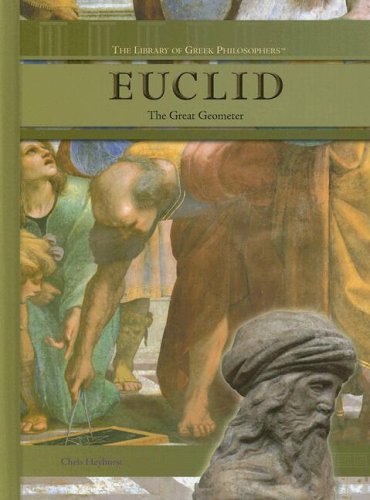 | Library Binding: 112
Pages
(2006-02-03)
list price: US$33.25 -- used & new: US$31.39 (price subject to change: see help) Asin: 1404204970 Canada | United Kingdom | Germany | France | Japan |
| 31. Mathematics and Its History (Undergraduate Texts in Mathematics) by John Stillwell | |
 | Hardcover: 660
Pages
(2010-08-02)
list price: US$69.95 -- used & new: US$55.96 (price subject to change: see help) Asin: 144196052X Average Customer Review:
Canada | United Kingdom | Germany | France | Japan |
|
Editorial Review Product Description "This book covers many interesting topics not usually covered in a present day undergraduate course, as well as certain basic topics such as the development of the calculus and the solution of polynomial equations. The fact that the topics are introduced in their historical contexts will enable students to better appreciate and understand the mathematical ideas involved...If one constructs a list of topics central to a history course, then they would closely resemble those chosen here." (David Parrott, Australian Mathematical Society) "The book...is presented in a lively style without unnecessary detail. It is very stimulating and will be appreciated not only by students. Much attention is paid to problems and to the development of mathematics before the end of the nineteenth century... This book brings to the non-specialist interested in mathematics many interesting results. It can be recommended for seminars and will be enjoyed by the broad mathematical community." (European Mathematical Society) "Since Stillwell treats many topics, most mathematicians will learn a lot from this book as well as they will find pleasant and rather clear expositions of custom materials. The book is accessible to students that have already experienced calculus, algebra and geometry and will give them a good account of how the different branches of mathematics interact." (Denis Bonheure, Bulletin of the Belgian Society) This third edition includes new chapters on simple groups and combinatorics, and new sections on several topics, including the Poincare conjecture. The book has also been enriched by added exercises. Customer Reviews (4)
| |
| 32. Pappus of Alexandria and the Mathematics of Late Antiquity (Cambridge Classical Studies) by Serafina Cuomo | |
 | Paperback: 248
Pages
(2007-06-21)
list price: US$48.00 -- used & new: US$39.21 (price subject to change: see help) Asin: 0521036895 Average Customer Review: 
Canada | United Kingdom | Germany | France | Japan |
|
Editorial Review Product Description Customer Reviews (2)
I don't know how many people still take "Rome's Fall' as a moral litmus test, but I suspect the story still holds a lot of weight. It's this icon that Cuomo targets. In general terms, I couldn't be more pleased with the project. Unfortunately, it doesn't really get off the ground. Cuomo isn't very forth coming on what she makes of the era. It seems she simply likes pastiche. She starts her iconoclastic journey well, suggesting the subject of her book might never have existed. It is hard to argue the point. We know almost nothing about Pappus, the man. Unfortunately, the fictional Pappus concept seems to have been mentioned for shock value, and not pursued seriously. I would have been interested in hearing details on the process of putting mathematic lectures on scrolls for academic, social or bureaucratic purposes. Maybe ghost writing was a common practice. This emphasis on the 'media' itself seems critical to Cuomo's case (a role the Arch of Constantine served), but it is entirely ignored. Cuomo then takes us down an entertaining bunny hole involving legal torture and highly paid astrologers. By taking this route, she hopes to convince us that mathematics was about as important to our late-classical delinquents as, well, ourselves. The legal discussion shows mathematical knowledge put one socially above those who could expect torture during any legal cross-examination. The astrological references show desperate young parents prayed for their off-spring to become mathematicians. So far, so good, but Cuomo then launches into a book by book deconstruction of the works ascribed to Pappus (whoever he was), and in this the reader starts to wonder just what she wants to say. The less than stunning conclusion is that Pappus had careerist interests and said different things to target groups in hopes of enhancing his authority. I was less than impressed. One might surmise Cuomo has a bigger goal, but if it exists, it is very subtle. Of these subtle arguments, the chief seems to be that the standard historiography associates the development of Greek mathematics exclusively with Plato's philosophy (the Proclus (411-485) perspective). Cuomo points out contradictions in this line of reasoning made by Pappus (? 320 ?) and Iamblichus (250?-330?). In this, Cuomo hints at disputing the role of the Neo-Platonic synthesis. Proclus, as the heir to Plato's academy, plays a pivotal role in this. Cuomo seeks to uncover the real mathematician hidden by Proclus and later Neo-Platonic Christians. If this is really what she hints at, I would be surprised. I am just grasping at straws... The unfortunate fate of the interested reader. ... Read more | |
| 33. Specious Science: Why Experiments on Animals Harm Humans by C. Ray Greek, Jean Swingle Greek D.V.M. | |
 | Paperback: 288
Pages
(2003-10-28)
list price: US$24.95 -- used & new: US$0.99 (price subject to change: see help) Asin: 0826415385 Average Customer Review: 
Canada | United Kingdom | Germany | France | Japan |
|
Editorial Review Product Description Customer Reviews (4)
Specious Science excels in at least three areas. First, it's a great primer in the fundamental tenets of sound science. Second, it shows how animal-modelled research fails to meet these basic requirements in theory and in practice. Third, it explains how human-focused medical research, which competes with animal experiments for funding, is superior in its scientific rigor, relevancy, and predictive value. How many times have we heard that a mouse is the "best" model for studying human disease? One look at a mouse should make you skeptical. The Greeks probe deeper and investigate significant differences between humans and animals at the cellular, sub-cellular, and molecular levels - the arenas in which both the agents of and treatments for disease operate. They explain how small interspecies differences in genetic layout lead to substantial divergences in responses among species. In other words, Evolution 101! The animal model, no matter how strenuous or creatively its proponents argue otherwise, fails this lesson. "Best animal model" is a fairly meaningless term. Extrapolating from one species to another is fated to be inexact and misleading. Our "hit rate" for medical discoveries is higher in every other type of scientifically-grounded medical research, and for this reason, as the book points out, money squandered on the crude and antiquated animal model harms humans. Specious Science should be required reading for any life science major, or anyone interested in how charities and the Federal Government spends their health research dollars.
The Greeks use current knowledge of genetics and evolution to explain why animal-modeled science should be viewed with the same skepticism that most educated people view crystal therapy, pyramid power, and faith healing. Once they have presented a theory for why members of other animal species are not productive models of human disease, the Greeks go on to examine the evidence and demonstrate that their theory is sound. Using the history of medical advancement as their test bed, the authors look at the record and debunk the claims we have all heard about animal research being the source of all cures - claims made by the vested interests that turn out to be spin-doctoring and myth. With much scholarship and research, the Greeks have uncovered the roots and behind-the-scenes stories of the discoveries that have changed medicine through time into a science. They explain the lost chances and delays that a faith in the animal model has repeatedly caused. They expose the fatal catastrophes that have resulted when scientists have chosen to value animal data over human, and they have explained the surprising histories of the medical miracles that have arisen from doctors trying to help human patients. The book also points out recent breakthroughs and advances in medicine that are stemming from human biology, genetics, epidemiology, chemistry, physics, and mathematics. We learn that computers are screening chemicals at astonishing rates and predicting their efficacy and toxicity as drugs at a rate and degree of accuracy that will embarrass everyone with a stake in the archaic practice of animal experimentation. Together, Specious Science and their earlier work, Sacred Cows and Golden Geese, present a cogent and compelling argument that explains why animal experiments continue and why they continue to retard real medicine progress and result in continued human suffering. Anyone wishing to understand the science of medicine and the debate surrounding the theory of animal models will find this book essential reading. ... Read more | |
| 34. History of Geometry: History of geometry. Egyptian mathematics, Babylonian mathematics, Indian mathematics, Chinese mathematics, Greek mathematics, Mathematics ... in medieval Islam, List of geometry topics | |
 | Paperback: 200
Pages
(2009-10-08)
list price: US$79.00 -- used & new: US$69.97 (price subject to change: see help) Asin: 6130068220 Canada | United Kingdom | Germany | France | Japan |
|
Editorial Review Product Description | |
| 35. Almagest: Latin, Arabic language, English language, Mathematics, Astronomy, Star, Planet, Greek language, Ptolemy, Geocentric model, Islamic Golden Age, ... Middle Ages, Renaissance, Greek astronomy | |
 | Paperback: 288
Pages
(2009-12-10)
list price: US$109.00 -- used & new: US$108.09 (price subject to change: see help) Asin: 6130250894 Canada | United Kingdom | Germany | France | Japan |
|
Editorial Review Product Description | |
| 36. Science and Mathematics in Ancient Greek Culture by Lewis Wolpert | |
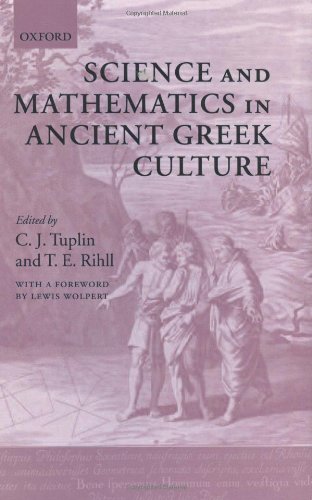 | Hardcover: 400
Pages
(2002-11-28)
list price: US$175.00 -- used & new: US$175.00 (price subject to change: see help) Asin: 0198152485 Canada | United Kingdom | Germany | France | Japan |
|
Editorial Review Product Description | |
| 37. Maths and the Greeks (Maths & History) by John Davies | |
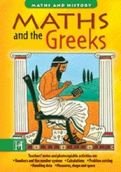 | Spiral-bound: 114
Pages
(2002-06-28)
-- used & new: US$61.46 (price subject to change: see help) Asin: 1902239946 Canada | United Kingdom | Germany | France | Japan |
| 38. Apollonius: Conics Books V to VII : The Arabic Translation of the Lost Greek Original in the Version of the Banu Musa (Sources in the History of Mat)volume I (Books V to VII Vol 1) | |
| Hardcover: 347
Pages
(1990-05-02)
list price: US$169.00 -- used & new: US$584.67 (price subject to change: see help) Asin: 0387972161 Canada | United Kingdom | Germany | France | Japan | |
|
Editorial Review Product Description | |
| 39. A Manual of Greek Mathematics by Thomas L. Heath | |
| Hardcover:
Pages
(1931)
Asin: B000H33IU4 Canada | United Kingdom | Germany | France | Japan | |
| 40. Greek mathematics by Thomas Little Heath | |
| Paperback: 552
Pages
(1963)
-- used & new: US$64.66 (price subject to change: see help) Asin: B0007F6FNO Canada | United Kingdom | Germany | France | Japan | |
| Back | 21-40 of 100 | Next 20 |
 Why Books II and X of the Elements look like they do