e99 Online Shopping Mall

Geometry.Net - the online learning center Help  
Home  - Nobel - Amnesty International (Books)

  1-20 of 100 | Next 20
A  B  C  D  E  F  G  H  I  J  K  L  M  N  O  P  Q  R  S  T  U  V  W  X  Y  Z  

click price to see details     click image to enlarge     click link to go to the store

$17.44
1. Diplomacy of Conscience: Amnesty
$10.00
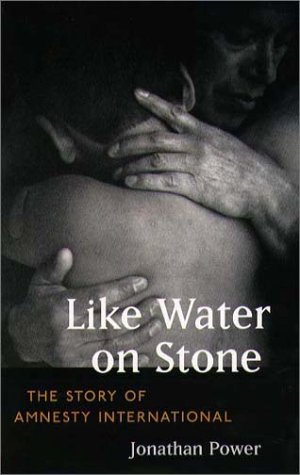
2. Like Water on Stone: The Story
$7.99
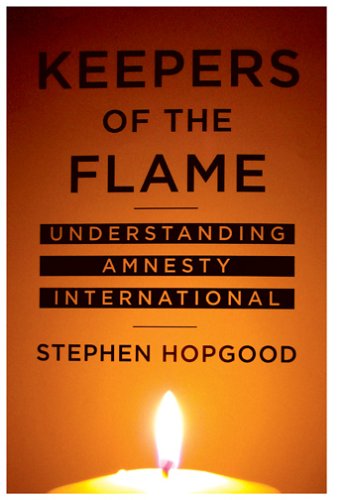
3. Keepers of the Flame: Understanding
$8.20
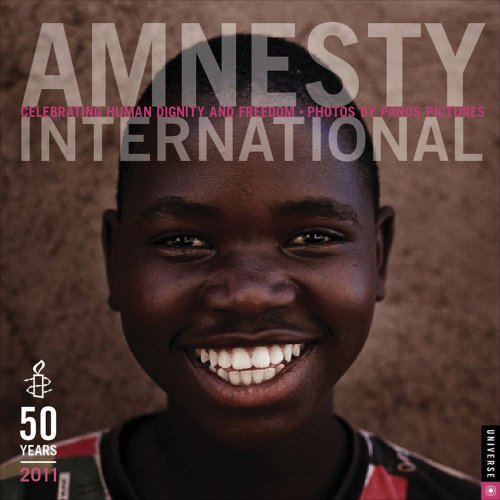
4. Amnesty International: 2008 Wall
$11.19
5. Amnesty International: 2009 WaLL
 
$98.71
6. Burma: Extrajudicial Execution
 
$5.99
7. United States of America: Rights
 
$24.95
8. Amnesty International Report 2007:
 
$5.85
9. Torture in the Eighties (Amnesty
$25.81
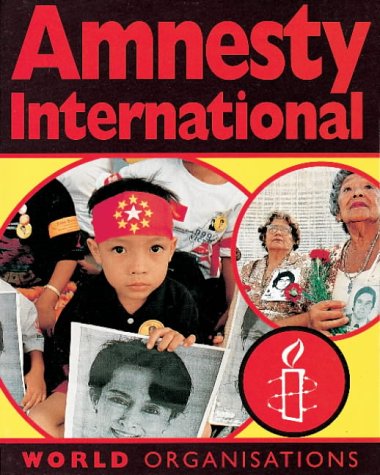
10. Amnesty International (World Organizations)
 
$5.95
11. ARABS-ISRAEL - Sept. 30 - Amnesty
 
12. When the state kills--: The death
 
13. Amnesty International (International
$3.50
14. The Case of Mumia Abu-Jamal: A
 
15. United States of America: The
16. Amnesty international : Rapport
 
17. Indonesia: An Amnesty International
 
$77.82
18. Amnesty International: The 1994
 
19. The Death Penalty: Amnesty International
 
20. Report of the Amnesty International

1. Diplomacy of Conscience: Amnesty International and Changing Human Rights Norms
by Ann Marie Clark
Paperback: 183 Pages (2001-03-01)
list price: US$24.95 -- used & new: US$17.44
(price subject to change: see help)
Asin: 0691057435
Canada | United Kingdom | Germany | France | Japan
Editorial Review

Book Description

A small group founded Amnesty International in 1961 to translate human rights principles into action. Diplomacy of Conscience provides a rich account of how the organization pioneered a combination of popular pressure and expert knowledge to advance global human rights. To an extent unmatched by predecessors and copied by successors, Amnesty International has employed worldwide publicity campaigns based on fact-finding and moral pressure to urge governments to improve human rights practices. Less well known is Amnesty International's significant impact on international law. It has helped forge the international community's repertoire of official responses to the most severe human rights violations, supplementing moral concern with expertise and conceptual vision.

Diplomacy of Conscience traces Amnesty International's efforts to strengthen both popular human rights awareness and international law against torture, disappearances, and political killings. Drawing on primary interviews and archival research, Ann Marie Clark posits that Amnesty International's strenuously cultivated objectivity gave the group political independence and allowed it to be critical of all governments violating human rights. Its capacity to investigate abuses and interpret them according to international standards helped it foster consistency and coherence in new human rights law.

Generalizing from this study, Clark builds a theory of the autonomous role of nongovernmental actors in the emergence of international norms pitting moral imperatives against state sovereignty. Her work is of substantial historical and theoretical relevance to those interested in how norms take shape in international society, as well as anyone studying the increasing visibility of nongovernmental organizations on the international scene.

... Read more

2. Like Water on Stone: The Story of Amnesty International
by Jonathan Power
Hardcover: 332 Pages (2001-05-17)
list price: US$35.00 -- used & new: US$10.00
(price subject to change: see help)
Asin: 1555534872
Average Customer Review: 3.0 out of 5 stars
Canada | United Kingdom | Germany | France | Japan
Editorial Review

Book Description
When British attorney Peter Beneson founded Amnesty International in 1961 to campaign for the release of political prisoners, his idea of bombarding offending governments with letters, postcards, and telegrams was sharply criticized as "one of the larger lunacies of our time." Forty years later, with more than one million members and supporters in over 160 countries and territories, London-based Amnesty has impacted individual lives and played a significant role in shaping public policy, if not always practice, of governments around the globe.

Amnesty's extraordinary strategies to reduce human rights abuses are critically examined in this objective look at the successes and failures of the organization over the last four decades. In Like Water on Stone, author Jonathan Power recognizes Amnesty's considerable achievements-the difficult struggles in Guatemala to help those facing death squads, discusses the case in the Central African Republic where Amnesty's masterful detective work exposed the massacre of defenseless children, and investigates attempts to bring former Chilean strongman Augustine Pinochet to justice.

But Power does not shy away from raising the difficult questions about Amnesty's strategies. Do Amnesty's campaigns lead repressive governments to murder rather than jail political prisoners? Is the organization's research and reports always accurate? Was Amnesty right to label British methods of interrogation in Northern Ireland as "torture?" Was Amnesty right to lobby for better prison conditions for the notorious Baader-Meinhoff gang in Germany?

Like Water on Stone also explores Amnesty's efforts in China, Morocco, Sri Lanka, and Colombia. A sobering review of Amnesty's work in the United States considers the hypocrisies of a nation that champions human rights abroad but tolerates police brutality, racial profiling, and capital punishment within its own borders.

One of Amnesty's best known adopted political prisoners, Olusegun Obasanjo, now the democratically elected president of Nigeria and a personal friend of author Power, once described Amnesty International as operating "like water on stone." According to Jonathan Power, the world is indeed a better place because of the organization's slow yet steady strides in the fight for human rights. ... Read more

Customer Reviews (4)

1-0 out of 5 stars Amnesty International is more like urine on a tree!
Ughh. Amnesty International. What a two-faced communist-led bureaucracy. A loony-lefty friend of mine once introduced me to this criminal organization a few years back and presented them to me as this great organization that helps people who've been sent to prison under false pretenses and generally is there to make sure that brutal third-world dictators can't take advantage of innocent people. Being a member of the republican party, who's main purpose is taking out brutal dictators and spreading peace and freedom around the world, I was immediately intrigued and sent in for some information.

As I learned more about these hucksters, I came to realize that they are nothing more than a far-left, and I mean communist-party far-left, lobbying group, using people in need as pawns for their money-making ponzie scheme.I had heard negative things about them from time to time, but figured, hey, who's perfect? Then when they came out against the Iraq war I knew something was wrong. A brutal dictator who was convicted of war crimes such as using chemical weapons against his own people, locking people up for being accused of unfealty, and assassinating a large portion of Iraq's congress and cabinet as soon as he entered office was taken down and replaced with a democracy and AI is against it!?!

Yes, it then dawned on me that AI is nothing more than a far-left front group putting their personal politics ahead of real living and breathing people's human rights. The republican Bush administration did more for human rights in their 8 year term(he was reelected to serve a second term) then AI has since it was established in 1961! They spend most of their time and money trying to get a Native American convicted of murder out of prison then they do anything else, and they still haven't even achieved that!

AI even criticized the British parliament for releasing information about Saddam's human rights violations. Why would a group that is supposedly meant to being human rights violations to light be upset about someone dong just that?

Of course, AI has always taken the side of the villain throughout it's history: Nelson Mandela, suspected terrorists, and Hizbullah for example. They actually are against free speech when it is deemed hate-speech by their standards and took the side of the terrorists who killed over the Muhammad Cartoon!

AI constantly takes the sides of America's enemies and acts against it's allies. It is viciously anti-Israel and continues to whine about enemy combatants held in prison's like Guantanamo that even Michael Moore admits are clean, spacious, and have excellent health-care.

I don't suppose AI's recent anti-American behavior to have anything to do with Irene Khan, a self-proclaimed Muslim, being appointed to Secretary General would it? It seems AI, like all liberal organizations favors 'diversity' over common sense when it comes to selecting it's staff.

AI also recently changed it's stance on abortion from 'neutral' to "pro-choice" a decision that really doesn't surprise anyone as the group is comprised of staunch leftists. I guess to elitist liberals like AI, babies aren't entitled to human rights. What's very strange is that AI is strictly against the death penalty. This means that to AI criminals that have raped and killed deserve to live more so than unborn babies. We are dealing with some sick folks here people.

AI has committed so many more crimes, but I must stop typing now as recounting this information to you has literally made me sick on my stomach. Please do not donate any money to Amnesty International. Thankfully, because so few people even know about this silly group, I am probably wasting my time as nobody will read this review.

3-0 out of 5 stars Spotty Coverage of an Important Movement
This book is rather difficult to figure out, and ultimately it doesn't do justice to its titular organization. Despite the title, this is not really a history of Amnesty International. Instead, it is more of a compendium of investigative journalism towards the subject of human rights in the second half of the twentieth century, using examples of problem areas in which Amnesty made some impact. In fact, it becomes apparent that Jonathan Power is merely reporting on human rights episodes that he happens to be familiar with as a long-standing foreign affairs correspondent. Thus, the supposed focus on Amnesty International as a social movement and non-governmental organization, and the effectiveness of its efforts, mostly falls apart as the book progresses.

The actual history of the organization appears awkwardly in one chapter in the middle of the book, with most of the remainder consisting of rather standard political coverage of a very selective collection of human rights stories that seem to have been chosen arbitrarily by the author. At certain times, this does lead to very informative examinations of political and historical episodes that may be unfamiliar to the knowledgeable reader, such as a brutal dictatorship in the Central African Republic, or the inconsistent human rights record of the supposedly enlightened South Korea. Also, the chapter on Amnesty's concerns about rampant abuse in the American prison system offers a pretty balanced, if sometimes inflammatory, outside perspective.

Unfortunately, other sections are marred by Jonathan Power's soapbox sermonizing. For example, he wraps up examinations of trouble spots like Colombia, China, and North Korea with one-paragraph pronouncements on how these nations' myriad problems can be immediately solved. Also, there are a fair number of factual errors throughout the book (especially with the dates and locations of major geopolitical and colonialist developments), and I agree with the previous reviewer on how such minor missteps can add up to major reservations about Power's coverage. And finally, the reader may want to skip the interminable final chapter in which Power unleashes a windy and inconclusive lecture on the current state of human rights around the world, with only occasional non-sequiturs to remind the reader that this is still a book about Amnesty International. Overall, this book that claims to be about that great and committed organization is often just tangentially influenced by it. [~doomsdayer520~]

3-0 out of 5 stars Important Subject, Uneven Treatment
This is an uneven book on an extremely important organization and topic.The role of Amnesty International, a private citizen's organization created to hold governments accountable for their actions, has been critical to bringing human rights issues to the forefront of global foreign policy concerns.The simple approach of having citizens write letters to government officials expressing their interest in and concern over political prisoners has resulted in the release of thousands, and has brought hope to many.Amnesty International's efforts have demonstrated that individual citizen action does make a difference; it has become a model for other organizations around the globe.

Unfortunately, the author does not successfully capture the importance and significance of Amnesty.There are a number of factual errors which, while not significant in their own right, are jarring and do raise questions regarding other statements.As one example, he states that both Nigeria and Rhodesia were British colonies in 1966; both were former colonies but by 1966 were both independent nations.His analysis is not always strong; in other instances it is virtually non-existent.On more than one occasion his writing meanders and concludes without making any point; this is particularly the case with the chapter on the history of Amnesty, and on the Baader-Meinhoff gang.On the other hand, his discussion of Amnesty's role in China is well-written, and the chapter on human rights violations is well-written, well-documented, and provides important commentary and analysis concerning the human rights record of a nation that has high standards but that does not always live up to them.

Literary and analytical weaknesses aside, the importance of Amnesty's mission, and its success (and failures) over the years, make this an important book to read.One only hopes that someone will be motivated to write a more thorough treatise on the subject.

5-0 out of 5 stars An excellent look inside Amnesty International
Amnesty International was started in 1961 by Peter Benenson, a british lwayer who read about students in Portugal (at that time under a military dictatorship) who received long prison terms for toasting freedom. His idea of flooding the offending government with letters, telegrams and unpleasant publicity was derided at the time as silly. Over the years, AI has kept its emphasis on those prisoners who do not use or advocate violence, and has stayed as non-partisan as possible in various international disputes while double and triple-checking all information it receives. Today, with members in over 160 countries, Amnesty International is the world's most influential private organization dealing with human rights.

This book looks at the difficulties faced by AI in its work around the world. Nigeria is the home of AI's most famous political prisoner, Olusegun Obasanjo (now President of Nigeria). Amnesty's attention to detail and fine detective work exposed the massacre of more than 100 children in the Central African Republic. Political freedom in China seems to go through phases of openness, only to be slammed shut by the government. The book also deals with death squads in Guatemala and attempts to bring former Chilean dictator Augusto Pinochet to justice.

The author also explores human rights in America. Around the world, America is the first one to say something to other countries whose human rights records are less-than-perfect. But, looking at America's domestic record of police brutality, racial profiling and inability to ratify various human rights conventions and treaties, the word "hypocrisy" comes to mind.

This is a fine piece of writing. Those who are already active in the human rights field, and those who just want to know something about AI (before becoming members) will learn a lot from this book. Highly recommended. ... Read more


3. Keepers of the Flame: Understanding Amnesty International
by Stephen Hopgood
Paperback: 272 Pages (2006-03-16)
list price: US$19.95 -- used & new: US$7.99
(price subject to change: see help)
Asin: 0801472512
Canada | United Kingdom | Germany | France | Japan
Editorial Review

Book Description
If one organization is synonymous with keeping hope alive, even as a faint glimmer in the darkness of a prison, it is Amnesty International. Amnesty has been the light, and that light was truth—bearing witness to suffering hidden from the eyes of the world."—from the Preface

The first in-depth look at working life inside a major human rights organization, Keepers of the Flame charts the history of Amnesty International and the development of its nerve center, the International Secretariat, over forty-five years. Through interviews with staff members, archival research, and unprecedented access to Amnesty International's internal meetings, Stephen Hopgood provides an engrossing and enlightening account of day-to-day operations within the organization, larger decisions about the nature of its mission, and struggles over the implementation of that mission.

An enduring feature of Amnesty's inner life, Hopgood finds, has been a recurrent struggle between the "keepers of the flame" who seek to preserve Amnesty's accumulated store of moral authority and reformers who hope to change, modernize, and use that moral authority in ways that its protectors fear may erode the organization's uniqueness. He also explores how this concept of moral authority affects the working lives of the servants of such an ideal and the ways in which it can undermine an institution's political authority over time. Hopgood argues that human-rights activism is a social practice best understood as a secular religion where internal conflict between sacred and profane—the mission and the practicalities of everyday operations—are both unavoidable and necessary. Keepers of the Flame is vital reading for anyone interested in Amnesty International, its accomplishments, agonies, obligations, fears, opportunities, and challenges—or, more broadly, in how humanitarian!organizations accommodate the moral passions that energize volunteers and professional staff alike. ... Read more


4. Amnesty International: 2008 Wall Calendar
by Universe Publishing
Calendar: 24 Pages (2007-08-09)
list price: US$13.99 -- used & new: US$8.20
(price subject to change: see help)
Asin: 0789316161
Average Customer Review: 5.0 out of 5 stars
Canada | United Kingdom | Germany | France | Japan

Customer Reviews (1)

5-0 out of 5 stars A.I. Calendar
Amnesty International's calendar has beautiful,
thoughtfully composed photos from all over
the world.Support a good cause and buy
the 2008 calendar! ... Read more


5. Amnesty International: 2009 WaLL Calendar
Calendar: 24 Pages (2008-07-01)
list price: US$13.99 -- used & new: US$11.19
(price subject to change: see help)
Asin: 0789317273
Canada | United Kingdom | Germany | France | Japan

6. Burma: Extrajudicial Execution and Torture of Members of Ethnic Minorities
 Paperback: 71 Pages (1988-06)
list price: US$5.00 -- used & new: US$98.71
(price subject to change: see help)
Asin: 0862101476
Canada | United Kingdom | Germany | France | Japan

7. United States of America: Rights for All
by Amnesty International
 Paperback: 153 Pages (1998-10-23)
-- used & new: US$5.99
(price subject to change: see help)
Asin: 086210274X
Canada | United Kingdom | Germany | France | Japan

8. Amnesty International Report 2007: The State of the World's Human Rights (Amnesty International Report)
 Paperback: 337 Pages (2007-05-23)
list price: US$24.95 -- used & new: US$24.95
(price subject to change: see help)
Asin: 1887204466
Canada | United Kingdom | Germany | France | Japan

9. Torture in the Eighties (Amnesty International Report)
by Amnesty International
 Paperback: 263 Pages (1984-05)
list price: US$5.95 -- used & new: US$5.85
(price subject to change: see help)
Asin: 0939994062
Canada | United Kingdom | Germany | France | Japan

10. Amnesty International (World Organizations)
by R.G. Grant
Hardcover: 32 Pages (2006-06-08)
list price: US$25.81 -- used & new: US$25.81
(price subject to change: see help)
Asin: 0749636920
Canada | United Kingdom | Germany | France | Japan

11. ARABS-ISRAEL - Sept. 30 - Amnesty International Reports Child Casualties.: An article from: APS Diplomat Recorder
 Digital: 2 Pages (2002-10-05)
list price: US$5.95 -- used & new: US$5.95
(price subject to change: see help)
Asin: B0008FK4RG
Canada | United Kingdom | Germany | France | Japan
Editorial Review

Book Description
This digital document is an article from APS Diplomat Recorder, published by Pam Stein/Input Solutions on October 5, 2002. The length of the article is 366 words. The page length shown above is based on a typical 300-word page. The article is delivered in HTML format and is available in your Amazon.com Digital Locker immediately after purchase. You can view it with any web browser.

Citation Details
Title: ARABS-ISRAEL - Sept. 30 - Amnesty International Reports Child Casualties.
Publication: APS Diplomat Recorder (Newsletter)
Date: October 5, 2002
Publisher: Pam Stein/Input Solutions
Volume: 57Issue: 14

Distributed by Thomson Gale ... Read more


12. When the state kills--: The death penalty, a human rights issue (Amnesty International briefing)
 Unknown Binding: 21 Pages (1989)

Isbn: 0939994461
Canada | United Kingdom | Germany | France | Japan

13. Amnesty International (International Organizations (Milwaukee, Wis.).)
by Deena Banks
 Paperback: 48 Pages (2003-08)
list price: US$11.95
Isbn: 0836855264
Canada | United Kingdom | Germany | France | Japan

14. The Case of Mumia Abu-Jamal: A Life in the Balance (Open Media Pamphlet Series)
Paperback: 64 Pages (2001-04-09)
list price: US$6.95 -- used & new: US$3.50
(price subject to change: see help)
Asin: 158322081X
Average Customer Review: 4.0 out of 5 stars
Canada | United Kingdom | Germany | France | Japan
Editorial Review

Book Description
Mumia Abu-Jamal, a black man, was convicted and sentenced to death in 1982 for the murder of white police officer Daniel Faulkner. Based on an exhaustive review of the trial transcript and other original documents, Amnesty International determined that the case failed to meet minimum international standards safeguarding the fairness of legal proceedings and here explains why a new trial is mandatory. ... Read more

Customer Reviews (4)

2-0 out of 5 stars Not very objective
It's sad that so few commentators on this case ever read the trial transcripts.

It's simple:Officer Falkner was shot by a gun registered to Mumia.Mumia was still wearing the shoulder holster when he was apprehended, and the gun had five spent cartridges.Mumia's hair, complexion, hat and striped sweater matched the description of an eye-witness who saw it all from 25 feet away.

Faced with such damning, obvious evidence, the defense has cooked up one silly explanation after another.But they never explain away the central facts of the case.

Far too many black men have been wrongly convicted.I'd give a second look at any black man's conviction.That's why I got interested in this case.But Mumia is simply, obviously guilty. Handsome, charismatic, and guilty.

Mumia has been very successful at manipulating the media and the courts.It takes away from other men of color who have genuinely been wrongly accused.

If you must believe he's innocent, then there are all sorts of fairy tales for you.If you believe in colorblind justice, there is one simple answer.

Mumia shot a police officer in the face, point blank.

5-0 out of 5 stars Excellent book which I highly recommend
This is a very well researched, very thoughtful and very interesting book which in my opinion everyone should read as part of understanding the world we live in.I agree with the other reviewer that this book makes a compelling case that a re-trial absolutely essential in order for justice to triumph.Please buy and read this book.It is first rate in every way.

5-0 out of 5 stars Raising doubt about Mumia's trial
If you are from Philadelphia or the Philadelphia area, then you can truly understand the problems of the case of Mummia.It seems that every time you mention his name here you get into some kind of arguement.The sad thing about this is most people have absolutely no knowledge of the facts on the case of Mumia. This book, if you read it, can change that. The book attempts,and does a good job of, explaining why Amnesty International thinks that Mumia Abu Jamal recieved an unfair trial.At no time does Amnesty International say that Mumia should be set free, or that he is innocent of said charges.I will repeat this so there are no misunderstandings,AT NO TIME DOES AMNESTY INTERNATIONAL SAY THAT MUMIA SHOULD BE SET FREE OR THAT HE IS INNOCENT.
Now anyone should be skeptical of a book written on such a sensitive subject, but Amnesty International is a highly respected global human rights watch dog group, and I believe that their information is reliable.If you are from Philadelphia and would like to read a book on Mumia, or you are from somewhere else and just interested, this book is a good start, but not an end to informing you on this subject.

5-0 out of 5 stars Points out the gross flaws of Mumia's trial
Amnesty International in this little pamphlet presents the gross problems in the way Mumia Abu Jamal, black journalist and activist on death row since 1982 for allegedly killing a police officer, has been treated by the legal system. And there are a great many gross problems. AI does not declare him to be guilty or innocent nor have they adopted him as a prisoner of conscience.

AI points out that of the three witnesses who claimed to have heard him confess to killing officer Faulkner after being brought into the emergency room, on, officer Gary Wakshul wrote in his log after finishing his shift that night that "the negro male made no comments." Another, a hospital security gaurd, claimed to have handwritten a note to her supervisor after the incident. Another, officer Gary Bell, Faulkner's "best friend," made no record of the incident until two months later.

The security gaurd did not come forth with her claim until two months later. The alleged handwritten note was not found but a supposed typewritten copy of it was. The security gaurd denied having seen that copy before but despite its dubious authenticity Judge Sabo admitted it into evidence. Wakshull, Bell and Durham, the security gaurd, all came forward two months after the alleged confession, after Mumia had complained of being beaten by police after his arrest. Mumia tried to get Wakshul to testify but he was for some reason "on vacation" and Judge Sabo refused to pursue the matter furhter.

The alleged witnesses to the crime. AI points out that Cynthia White, the prostitute, who changed the details of her story numerous times, was serving an eighteen month sentence in Massachusetts at the time of the trial, with three charges pending, and was arrested twice in the days following the shooting, though she was not prosecuted for those two incidents. They point out that in 1987 a detective involved in Mumia's case testified successfully in support of releasing White, who was then on trial for numerous felonies, on bail despite her very extensive criminal record. They point out that Veronica Jones, the second prostitute, testified at the trial that "they [the police] told us we could work the area [as prostitutes] if we tell them [that Abu Jamal was the shooter]." She said that "they [the police] were trying to get me to say something the other girl [White] said. I couldn't do that." She said that she saw two men running from the scene but later retracted the statement, as she later testified in 1996, after being visited by police officers in jail where she was being held on charges of robbery and assault. Judge Sabo struck her original statements from the record. AI points out that Robert Chobert, the cab driver, intially told police that the shooter had "run away." He was on probation for arson at the time and was driving with a suspended liscence for which he was not prosecuted and he approached the prosecutor, as he later testified, wanting to know how he could get his liscence back so he could earn his living driving his cab. "We'll see" the prosecutor replied.

AI points out that the police did not conduct tests on Mumia's hands or smell his gun to see if had recently been fired. The medical examiner, was declared at the trial by Sabo to be a ballistics expert though at the 1995 hearing he reversed himself. The examiner made a "lay guess"--Sabo's words--that the gun was a .44 calibre whereas Mumia's gun was a .38 calibre. The medical examiner testified that though the bullet found in officer Faulkner seemed similar to those from Mumia's gun, the tests were inconclusive as to wheather it actually came from Mumia's firearm.

They point out, among other things,, him being a frequent target of law enforcment, especially the FBI's COINTELPRO program and how the prosecutor exploited Mumia's political views to secure a death sentence from the jury.

I think he's probably innocent. Give him a new trial or release him immediately. ... Read more


15. United States of America: The Death Penalty
by Amnesty International
 Paperback: 245 Pages (1987-06)
list price: US$6.00
Isbn: 0939994259
Canada | United Kingdom | Germany | France | Japan

16. Amnesty international : Rapport 2002
by Amnesty international
Paperback: 455 Pages (2002-05-24)

Isbn: 2876661306
Canada | United Kingdom | Germany | France | Japan

17. Indonesia: An Amnesty International report
by Amnesty International
 Unknown Binding: 146 Pages (1977)

Isbn: 0900058633
Canada | United Kingdom | Germany | France | Japan

18. Amnesty International: The 1994 Report on Human Rights Around the World (Amnesty International Report)
by Amnesty International, Amnesty Anternational
 Paperback: Pages (1994-08)
list price: US$17.95 -- used & new: US$77.82
(price subject to change: see help)
Asin: 0897931629
Canada | United Kingdom | Germany | France | Japan

19. The Death Penalty: Amnesty International Report
by Amnesty International
 Paperback: 209 Pages (1979-04)
list price: US$5.00
Isbn: 0900058889
Canada | United Kingdom | Germany | France | Japan

20. Report of the Amnesty International missions to the Republic of Nicaragua, August 1979, January 1980, and August 1980, including memoranda exchanged between the government and Amnesty International
by Amnesty International
 Paperback: 73 Pages (1982)

Isbn: 086210047X
Canada | United Kingdom | Germany | France | Japan

  1-20 of 100 | Next 20
A  B  C  D  E  F  G  H  I  J  K  L  M  N  O  P  Q  R  S  T  U  V  W  X  Y  Z  

Prices listed on this site are subject to change without notice.
Questions on ordering or shipping? click here for help.

site stats