e99 Online Shopping Mall

Geometry.Net - the online learning center Help  
Home  - Nobel - Beckett Samuel (Books)

  1-20 of 100 | Next 20
A  B  C  D  E  F  G  H  I  J  K  L  M  N  O  P  Q  R  S  T  U  V  W  X  Y  Z  

click price to see details     click image to enlarge     click link to go to the store

$14.40
1. The Dramatic Works of Samuel Beckett:
$7.50
2. The Complete Short Prose of Samuel
$9.57
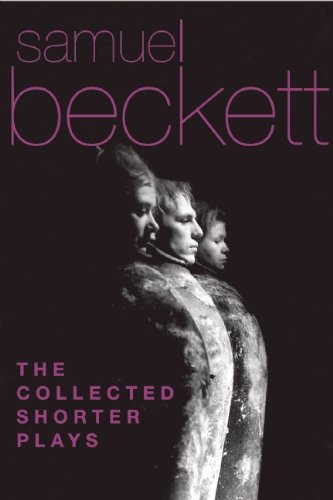
3. Collected Shorter Plays of Samuel
$14.88
4. Novels I of Samuel Beckett: Volume
$12.99
5. The Grove Companion to Samuel
$7.98
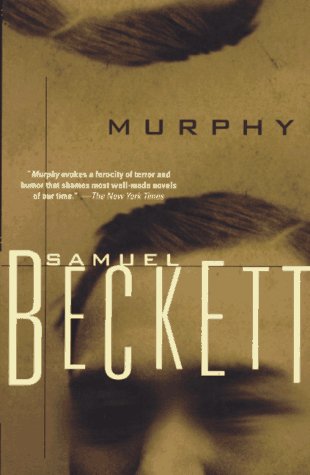
6. Murphy
$14.86
7. Novels II of Samuel Beckett: Volume
$14.88
8. The Poems, Short Fiction, and
$14.10
9. Molloy, Malone Dies, The Unnamable
$475.00
10. The Grove Centenary Editions of
 
11. Endgame a Play
$13.10
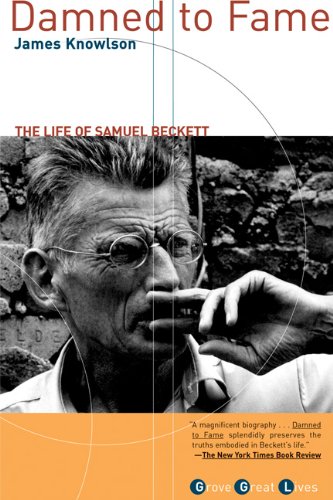
12. Damned to Fame: The Life of Samuel
$2.74
13. The Cambridge Introduction to
$29.95
14. The Semiotics of Beckett's Theatre:
$6.94
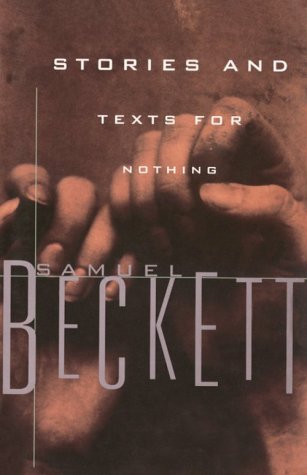
15. Stories and Texts for Nothing
$6.82
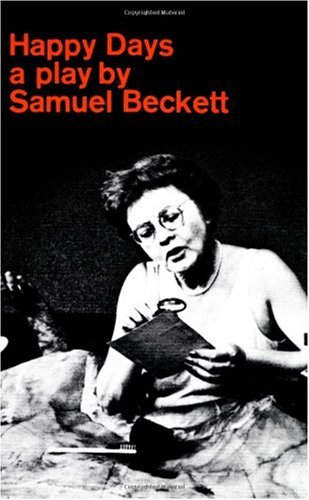
16. Happy Days
$7.35
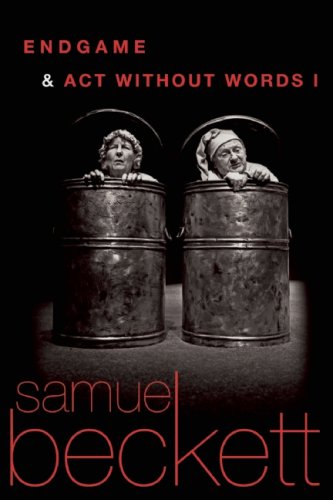
17. Endgame and Act Without Words
$6.32
18. Samuel Beckett: Waiting for Godot,
$7.77
19. More Pricks Than Kicks
 
$8.95
20. Samuel Beckett: Waiting for Godot-Endgame

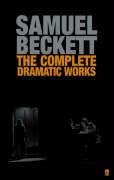
1. The Dramatic Works of Samuel Beckett: Volume III of The Grove Centenary Editions (Works of Samuel Beckett the Grove Centenary Editions)
by Samuel Beckett
Hardcover: 520 Pages (2006-03-13)
list price: US$24.00 -- used & new: US$14.40
(price subject to change: see help)
Asin: 0802118194
Average Customer Review: 4.0 out of 5 stars
Canada | United Kingdom | Germany | France | Japan
Editorial Review

Book Description

Edited by Paul Auster, this four–volume set of Beckett's canon has been designed by award winner Laura Lindgren. Available individually, as well as in a boxed set, the four hardcover volumes have been specially bound with covers featuring images central to Beckett's works. Typographical errors that remained uncorrected in the various prior editions have now been corrected in consultation with Beckett scholars C. J. Ackerley and S. E. Gontarski.

"I am always deeply puzzled when people say of Beckett, 'Oh, he's so difficult!'–or avant garde, or complex, or . . . ambiguous. It is the profoundest nonsense, for Beckett is perhaps the most naturalistic playwright I know of, as well as the clearest and least obscure. The 'obscurity' resides in the assumption of obscurity. I know that if Beckett's outdoor plays were set on suburban terraces, and the indoor ones just inside those terraces, in suburban living rooms, everyone would be the wiser, certainly the less puzzled. We are most comfortable with the familiar." — Edward Albee, from his Introduction.
... Read more

Customer Reviews (4)

5-0 out of 5 stars I have the 4 book hard back collection and I love it.
I ordered the "box set" of all four about a year ago.I had to wait 4 months for it to be delivered but it was worth it.A wonderful collection of his work. I read the play, then watch the DVD on Becket on tape. These books are good quality. Not the best on the planet, but more than acceptable.I am really glad I bought them, and that I okay'd the continuation of the order when Amazon told me of the delay.These books, and the Becket on tape of in the top 3 things I am glad I bought from Amazon.

1-0 out of 5 stars way too sophisticated for my tastes
I will never buy high-falutin' literature again.Cerebral constipation comes to mind.
If you find yourself interested in this fellow's work I suggest you support your local public library.

5-0 out of 5 stars Excellent edition
To all Beckett lovers - this is the ultimate, yet cheap, edition. All plays are there.The only compromise is the quality of the paper.

5-0 out of 5 stars A beautiful edition
Samuel Beckett's status as possibly the greatest dramatist of the twentieth century is unquestionable, and in this attractive volume, Grove Press has compiled all of his plays (with the exception of "Eleutheria," which Beckett suppressed and refused to translate), a complete collection previously available only in an expensive out-of-print Faber edition.

This is one in a series of four volumes publishing almost all of Beckett's oeuvre. The volume includes classics like "Waiting for Godot," "Happy Days," "Endgame" and "Krapp's Last Tape" in addition to classic shorter plays such as "Breath."

I was apprehensive about buying the Grove edition sight unseen: in the past, my copies of their paperbacks haven't held up so well (in particular my copy of Beckett's "Molloy/Malone Dies/The Unnamable", which is not only printed in an unattractive font but the spine of which cracked on nearly my first reading). But this is a beautiful hardcover volume, matching the rest of the Beckett set, with cover art of the Godotian tree, and featuring Beckett's own translations of his French-language plays. Brief introductory notes by Paul Auster and Edward Albee (in the latter note, Albee comments - surprisingly - that his favorite Beckett work are the later plays rather than the standards such as "Godot"). These introductions are short, but the dramatic work of Beckett is so fantastic and varied that nothing could do it justice but simply to begin reading. ... Read more


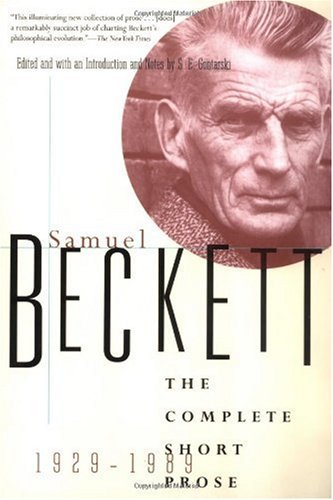
2. The Complete Short Prose of Samuel Beckett, 1929-1989
by Samuel Beckett
Paperback: 336 Pages (1997-03-13)
list price: US$16.00 -- used & new: US$7.50
(price subject to change: see help)
Asin: 0802134904
Average Customer Review: 4.0 out of 5 stars
Canada | United Kingdom | Germany | France | Japan
Editorial Review

Amazon.com
Although Samuel Beckett (1906-1989) is best-known for his novels, such as the Molloy series, and his still frequently-performed plays like Waiting for Godot and Endgame, he is rarely thought of as a writer of short fiction and prose. Yet he wrote short works devotedly throughout his life; many critics count various Beckett short stories as masterpieces of the form, central to an appreciation of the writer's oeuvre. The Complete Short Prose, 1929-1989, as the title suggests, collects all of the Nobel Prize-winner's shorter works, such as "First Love," and "The Lost Ones."Book Description

Nobel Prize winner Samuel Beckett was one of the most profoundly original writers of the 20th century. He gave expression to the anguish and isolation of the individual consciousness with a purity and minimalism that have altered the shape of world literature. A tremendously influential poet and dramatist, Beckett spoke of his prose fiction as the "important writing," the medium in which he distilled his ideas most powerfully. Here, for the first time, his short prose is gathered in a definitive, complete volume by leading Beckett scholar S. E. Gontarski.
... Read more

Customer Reviews (8)

4-0 out of 5 stars Beckett erases himself...
This book brings together what is the lesser-known short prose of Samuel Beckett--a surprisingly small output for so long-lived and otherwise so prolific an author. From his first published story to his last gnomic writings, this collection of texts provides a kind of comprehensive chronicle of Beckett's developmental arc as a writer beginning with the surprisingly conventional *Assumption.*

These texts showcase Beckett both at his most human and his most "inhuman." His characteristic slapstick black humor is in full play through about half the book, but from *Texts for Nothing*--which strike me as a stunningly personal testament of depression and isolation just this side of the grave short of suicide--to the final *Stirrings Still* the writing takes on the terse impersonality of stage direction, which I can't help but think would be far more effective--and interesting--taken dramatized ((indeed as many of these texts have been staged)) than they are to read. Obsessively precise descriptions of nameless mute bodies standing, sitting, lying, etc. is interesting experimentally but eventually becomes mind-numbing on the page. These last texts of Beckett, leached and bleached of everything that heretofore one loved about and associated with Beckett, including Beckett himself, leaves one with the eerie sensation of having entered a room whose occupant has long since vanished. What one is watching in effect is Beckett's suicide--or self-erasure--in prose and if one takes the later writing in that context it is both a chilling testament to the human condition and the grimly logical "end game" indicated by all of his earlier work. Man is subtracted little by little until he's simply not there anymore--that seems to be the message of the ever diminishing momentum and presence of personality of Beckett's oeuvre as illustrated in *The Complete Short Prose.* It is, however, with regard to the final texts in this volume, far more rewarding to contemplate these existential suicide notes from a philosophical point of view than it is embodied in the form of prose.

Without question an important and rewarding book, *The Complete Short Prose of Samuel Beckett* is explanation itself why Beckett's short fiction is not as well-known or well-loved as his novels and plays. As a record, though, a sort of autobiography in fiction it can't be beat as a way to understanding the painfully compelling work of the last--and final?--true giant of world literature.

1-0 out of 5 stars Cure for insomnia
I love short stories, in fact I need think we need to read them more often in this harried society...but this collection...

Wow...it is my cure for insomnia. I have been trying to read finish this novel for 2 years now, and have finally come to the realization that I simply will never finish it because- it is my cure for insomnia.

5-0 out of 5 stars A tale of progression
The great thing about this collection, aside from seeing Beckett work his wonders on the short form--something for which he is underappreciated--is seeing him evolve as a writer over the years. I loved the way you could trace his investment, or lack thereof, in plot and the standard niceties of "story" over the course of the book. He is a master, truly, and one should take time to appreciate his shorter and lesser known works. Much joy waits therein.

5-0 out of 5 stars Beckett: Still Relevant
The Complete Short Prose 1929-1989 is one of the great books to appear in the last ten years. I grew up reading parts in anthology and thin Grove Press editions. At last many of these sparse texts parading around as novels have come together under one cover. Stories like "First Love" and "The End" are among Beckett's strongest works, and "Texts for Nothing" are extremely complex and perhaps the most moving monolgues I know, for they often bring tears to my eyes. Beautiful stuff! You need some sort of literary standard other than Dave Eggers or Cormac McCarthy: I'll take Beckett any day!

Beckett had a big influence on European writing, but his influence is almost invisible on American letters. Sometimes you hear about writers being influenced by Kundera, Borges, or Kafka, but Beckett has eluded the art of writing here, with the exception of play writing. That's unfortunate, because his trilogy of novels and much of his short texts are some of the most intense, beautiful writing in the past half-century. Edward Dahlberg often talked about this sort of great writing: "It was to take me many years to realize that one has to be very lucky to write one intelligence sentence."

After reading the definitive introduction by the writer S. E. Gontarski, I am convinced that Beckett is the creator of "Spoken Word." Take that to the bank! In works such as "Fizzles" and "The Lost Ones" Beckett modulates a disembodied voice that is stripped away of all mimesis, yet it is the same interior voice that permeates all his fiction. Haunting, profound, chilling. I can think of no equal to Beckett's prose writing, except maybe Dahlberg himself. Only if today's hack writing was half as good as Beckett and Dahlberg....

People should read The Complete Short Prose and Three Novels like they read the Bible. Do it now! I know why these books are worth reading! As Dahlberg once said, "What need had I of the sour pedants of humid syntax, or of courses in pedagogy, canonized illiteracy. I saw that anybody who had read twelve good books knew more than a doctor of philosophy." Nevermind these fads, these 20 under 40, and so on. Nevermind.

5-0 out of 5 stars Beckett's little-known nonfiction
While Beckett's works certainly contain their share of angst, there is more to his work than that, as this collection reminds us.The last work in this collection is a nonfiction essay that Beckett wrote for Irish radiojust after World War II called "The Capital of the Ruins." Beckett's subject was a field hospital in the French town of St. Lo thatIrish citizens had helped to staff (and where he himself had worked as aninterpreter).While the prose is unmistakably Beckett (particularly theself-deprecating humor--at one point he refers to the essay as a"circumlocution"), the optimism of trying to convince his peoplethat they had helped their fellow human beings survive a terrible war moreeasily is not what we expect from him.Also typical is a wonderfulBiblical allusion to the Book of Isaiah and its great swords-and-plowsharesmetaphor, which he cleverly adapts to modern times.There is a lot ofwonderful fiction in this volume (my favorite is "The Cliff," ashort meditation, possibly on a preserved skull), but the non-fiction isnot to be neglected, and reveals a side of this writer not often seen orconsidered. ... Read more


3. Collected Shorter Plays of Samuel Beckett: All That Fall, Act Without Words, Krapp's Last Tape, Cascando, Eh Joe, Footfall, Rockaby and others
by Samuel Beckett
Paperback: 320 Pages (1994-01-07)
list price: US$15.95 -- used & new: US$9.57
(price subject to change: see help)
Asin: 0802150551
Average Customer Review: 4.5 out of 5 stars
Canada | United Kingdom | Germany | France | Japan

Customer Reviews (8)

5-0 out of 5 stars Beckett's best short dramatic works.
This is a very fine assortment of Beckett's short dramatic works, together in one volume.Most of these are late works, and they all have that existentialist angst, not to mention the dark humor, that is the hallmark of Beckett's best late works.He worked in a variety of forms in his later works; there's a work for film, a television play, some radio works, as well as stage plays.In every instance his genius shines through. Fans of Beckett will find this volume indispensable, and anyone who has an appreciation of modern stage works will also find this a superb addition to their library.

1-0 out of 5 stars Absurd and nothing else.
I have long heard the name of Samuel Beckett, along with Yeats, Bernard Shaw and Heaney as the 4 most distinguished writers of Ireland. But Beckett's plays in this book are a total disappointment!
For shoppers who are reading this review, you may disagree with my rating of this book, but you have to agree that the plays in this book can (might) only be appreciated through watching them being acted out, and not just by reading the scripts.
I don't understand the plays in this book at all, except for the very first one - All That Fall.
For those who like Eugene O'Neill and such, and not absurdity, please do not try this book.
This is definitely not worth US$15.95!
Maybe just US$1.95, for All That Fall.

4-0 out of 5 stars Almost too much Beckett from such a small book!
The perfect collection of Samuel Beckett's shorter works. A resource that no home library should be without.

5-0 out of 5 stars Blinded by the darkness
It is in these short 'dramaticules' that Samuel Beckett's dark and chilling genius is at it's most intense. Beckett's plays are his most vivid depiction of the futility of human communication, and the undeniable solitude of the individual as a result.

Old age and the fruitless reminiscing that this stage of life brings, preoccupies Beckett in many of these short pieces. In 'Ohio Inpromptu' an aged character's memories are constantly stopped from wandering into nostalgia by the periodic knocking of his mirror image who sits opposite him. This struggle for or against nostalgia for the past is one that faces many of Beckett's characters. In 'Rockaby' and 'Footfalls' we see old women who have battled against life for long enough and are simply awaiting their death. They feel no longing for the past and feel no passion for a life that has failed them. In 'Krapp's Last Tape', Beckett's main character has the difficulty of simultaneously battling with his former and current self. The result is a display of disdain for the optimism and exuberance that characterises more youthful thought.

The aforementioned plays, as well as notable others such as 'The Old Tune' and 'All That Fall' fantastically exemplify Beckett's premise that we are all stuck on the pointless treadmill of life and that only death can pull us off it.

5-0 out of 5 stars Extraordinary, but to be taken in doses.
Some advice: although this book contains some of the most astonishing plays ever written, I wouldn't read them all in one go.If you do, doubts might seem to creep in.About how Beckett doesn't really have all that much to say, and became increasingly mannered in his attempts to say it.That his work is really just three variations on basic forms - the Godotesque double act; the old man or woman looking back over a (generally stunted) life; and the pattern plays/mimes.You'll certainly want to rush and read something silly just for a breath of air; there's not much of the vaunted Beckett humour here.

Nevertheless, the collection brims with Beckett's best work - the remorselessly inventive radio play, 'All That Fall'; the sublimely tragic comedy, 'Krapp's Last Tape'; the infernal farce, 'Play'; the deconstruction of nostalgia, 'That Time'; the chamber poignancy of 'Ohio Impromptu'; the great theatrical experiments, 'Footfalls', 'What Where', 'Not I', 'Rockaby', which pushed the language of theatre way past its limits, undermining its boasts of 'live performance' and the functionality of language - in these texts, 'meaning', if there is such a thing, may reside in the stage directions. ... Read more


4. Novels I of Samuel Beckett: Volume I of The Grove Centenary Editions (Works of Samuel Beckett the Grove Centenary Editions)
by Samuel Beckett
Hardcover: 496 Pages (2006-03-13)
list price: US$24.00 -- used & new: US$14.88
(price subject to change: see help)
Asin: 0802118178
Canada | United Kingdom | Germany | France | Japan
Editorial Review

Book Description

Edited by Paul Auster, this four–volume set of Beckett's canon has been designed by award-winner Laura Lindgren. Available individually, as well as in a boxed set, the four hardcover volumes have been specially bound with covers featuring images central to Beckett's works. Typographical errors that remained uncorrected in the various prior editions have now been corrected in consultation with Beckett scholars C. J. Ackerley and S. E. Gontarski.

Beckett was interested in consciousness as a form of comedy close to tragedy and logic as a crime. He loved the tension in 'cogito ergo sum' and took a dim view of the connecting word, the 'ergo' in the equation. Cogitating was the nightmare from which his characters were trying to awake. Being was a sour trick played on them by some force with whom they were trying desperately not to reckon. Beckett produced infinite amounts of comedy about the business of thinking as boring, invalid, and quite unnecessary. His characters did not need to think in order to be, or be in order to think. They knew they existed because of the odd habits and deep discomforts of their bodies. I itch therefore I am." — Colm Toibin, from his Introduction
... Read more

5. The Grove Companion to Samuel Beckett: A Reader's Guide to His Works, Life, and Thought
by C. J. Ackerly, S. E. Gontarski
Paperback: 608 Pages (2004-02-17)
list price: US$25.00 -- used & new: US$12.99
(price subject to change: see help)
Asin: 0802140491
Average Customer Review: 5.0 out of 5 stars
Canada | United Kingdom | Germany | France | Japan
Editorial Review

Book Description

From A to Z, this is an indispensable guide to the works, life, and thought of one of the most important writers of our time. The Nobel Prize-winning author Samuel Beckett was a literary treasure, and this work represents the only comprehensive reference to the concepts, characters, and biographical details mentioned by, or related to, Beckett. Painstakingly and lovingly compiled by acclaimed Beckett scholars C. J. Ackerley and S. E. Gontarski, it is alphabetical, cross-referenced, and laid out in a very user-friendly format. The Grove Companion to Samuel Beckett provides an organized trove of information for students and scholars alike, and is a must for any serious reader of Beckett.
... Read more

Customer Reviews (2)

5-0 out of 5 stars Easily the best reference work on Beckett known to me
This is a fine, scholarly work that should be in the hands not just of scholars but also of every serious student of Beckett and late 20th century drama.The cross-referencing is very useful.Above all, each entry is based on a thorough knowledge of the literature on the subject.First rate.

5-0 out of 5 stars A major work
This is the definitive work on Beckett. You should buy ten copies of this for all your friends. This work is coming back in vogue. Be ahead of the curve. ... Read more


6. Murphy
by Samuel Beckett
Paperback: 288 Pages (1994-01-20)
list price: US$13.50 -- used & new: US$7.98
(price subject to change: see help)
Asin: 0802150373
Average Customer Review: 4.5 out of 5 stars
Canada | United Kingdom | Germany | France | Japan
Editorial Review

Book Description

'Murphy', Samuel Beckett's first published novel, was written in English and published in London in 1938; Beckett himself subsequently translated the book into French, and it was published in France in 1947. The novel recounts the hilarious but tragic life of Murphy in London as he attempts to establish a home and to amass sufficient fortune for his intended bride to join him.
... Read more

Customer Reviews (15)

2-0 out of 5 stars Postmodern Garbage
I had to read this for class.The plot is all over the place and it is really boring.There is nothing memorable about this book and it is as mundane as watching a squirrel collect nuts for the winter...on second thought, watching a squirrel collect nuts for the winter is like going to Disney World when you are 4 years old compared to reading this book.I had to read this for English 196 and I can't wait to sell this back to the book store even though I got it on ebay...so in essence, selling it to the bookstore....good riddance!!!

5-0 out of 5 stars Comic-tragic masterpiece
Murphy is a novel unlike any other. Quite deliberately, Beckett's characters are not portrayed with realistic fullness, and the plot is fragmented and incomplete. Nevertheless, this is an enjoyable read if conventional expectations are suspended. Beckett's early work is often compared to Joyce, but they are actually very different. Beckett's works are essentially tragic-comic. There is one passage that perfectly encapsulates the problem of desire:

"I greatly fear," said Wylie, "that the syndrome known as life is too diffuse to admit of palliation. For every symptom that is eased, another is made worse. The horse leech's daughter is a closed system. Her quantum of wantum cannot vary."

Beckett considered this passage important enough to repeat twice in his novel. Murphy, the protagonist of this novel, realizes in effect that desire can never be satisfied, and so he simply withdraws from life, attempting to reach a state of catatonic stupor. His girlfriend tries with tragic pathos to draw him back into life, but her attempts are doomed to failure. Murphy's friends are all similar to himself, fragmented and incomplete. The novel's vision is absurdist, tragic, and existentialist--humans are "windowless monads," doomed to isolation and misunderstanding. Beckett's achievement consists primarily in the brilliantly original language used to communicate his vision. Like Shakespeare or any great poet, his work cannot be summarized but must be experienced.

3-0 out of 5 stars Odd.
My account of reading 'Murphy,' expurgated, accelerated, improved and reduced, gives the following.

Page one: I grin, marvelling at Beckett's wit and his prehensile command of the English language.I pause, to scan a dictionary for some obscure little term (syzygy, anyone?).I pause again, to scan another dictionary for the same obscure little term.('You cram these words into mine ears, against the stomach of my sense' -Shak.)I sigh, thoroughly vexed by the absurdities of the 'plot' and my complete reduction to an analphabetic lexicon-dependent cur.And then at last I grin, mollified again by Beckett's wit....Onward, page two awaits!

Pages two through one-hundred and fifty-eight: same as above.

Hell roast this story, I don't know what to make of it.

5-0 out of 5 stars the very best
the very best Beckett book, hands down.the funniest thing--along with Kinsley Amis' "Lucky Jim"--ever in English.
essential.sure it lives and moves under the spell of Joyce--who cares?can you name, other than Flaubert or James, a better master.masterly.so fun to re-read.

5-0 out of 5 stars Murphy
_Murphy_ is dark, funny, and ponderous.While most Beckett fans know _Waiting for Godot_, this novella takes more of a Modernist bent that differs from the anticipatory post-Modernism of _Godot_.Beckett's black humor prevails, and the intellectual quest for love and its concrete definition develops; this idea carries over from the Joycean tradition begun in _Ulysses_. ... Read more


7. Novels II of Samuel Beckett: Volume II of The Grove Centenary Editions (Works of Samuel Beckett the Grove Centenary Editions)
by Samuel Beckett
Hardcover: 536 Pages (2006-03-13)
list price: US$24.00 -- used & new: US$14.86
(price subject to change: see help)
Asin: 0802118186
Canada | United Kingdom | Germany | France | Japan
Editorial Review

Book Description

Edited by Paul Auster, this four–volume set of Beckett's canon has been designed by award-winner Laura Lindgren. Available individually, as well as in a boxed set, the four hardcover volumes have been specially bound with covers featuring images central to Beckett's works. Typographical errors that remained uncorrected in the various prior editions have now been corrected in consultation with Beckett scholars C. J. Ackerley and S. E. Gontarski.

"A man speaking English beautifully chooses to speak in French, which he speaks with greater difficulty, so that he is obliged to choose his words carefully, forced to give up fluency and to find the hard words that come with difficulty, and then after all that finding he puts it all back into English, a new English containing all the difficulty of the French, of the coining of thought in a second language, a new English with the power to change English forever. This is Samuel Beckett. This is his great work. It is the thing that speaks. Surrender." — Salman Rushdie, from his Introduction
... Read more

8. The Poems, Short Fiction, and Criticism of Samuel Beckett: Volume IV of The Grove Centenary Editions
by Samuel Beckett
Hardcover: 584 Pages (2006-03-13)
list price: US$24.00 -- used & new: US$14.88
(price subject to change: see help)
Asin: 0802118208
Average Customer Review: 5.0 out of 5 stars
Canada | United Kingdom | Germany | France | Japan
Editorial Review

Book Description

Edited by Paul Auster, this four–volume hardcover set of Beckett's canon has been designed by award-winner Laura Lindgren. Available individually, as well as in a boxed set, these books are specially bound with covers featuring images central to Beckett's works. Typographical errors that remained uncorrected in the various prior editions have now been corrected in consultation with Beckett scholars C. J. Ackerley and S. E. Gontarski.

"[Beckett] settled on philosophical comedy as the medium for his uniquely anguished, arrogant, self-doubting, scrupulous temperament. In the popular mind his name is associated with the mysterious Godot who may or may not come but for whom we wait anyhow. In this he seemed to define the mood of an age. But his range is wider than that, and his achievement far greater. Beckett was an artist possessed by a vision of life without consolation or dignity or promise of grace, in the face of which our only duty is not to lie to ourselves. It was a vision to which he gave expression in language of a virile strength and intellectual subtlety that marks him as one of the great prose stylists of the twentieth century." — J. M. Coetzee, from his Introduction
... Read more

Customer Reviews (1)

5-0 out of 5 stars Beckett poems and literature
An inspiration for my writing and my creativity, and I could never dare emulate him well enough.But
what a wonderful book and an excellent time to share with friends and family.I highly recommend it in
every way.I am so glad that I purchased this product and have nothing but praise for his great poetry
which I used in common correspondence immediately. ... Read more


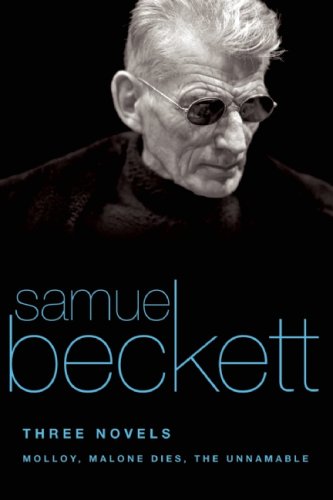
9. Molloy, Malone Dies, The Unnamable (Everyman's Library)
by Samuel Beckett
Hardcover: 528 Pages (1997-09-16)
list price: US$22.00 -- used & new: US$14.10
(price subject to change: see help)
Asin: 0375400702
Average Customer Review: 4.5 out of 5 stars
Canada | United Kingdom | Germany | France | Japan
Editorial Review

Amazon.com
Samuel Beckett's brilliance as a dramatist--as the creator ofWaiting for Godot,Krapp's Last Tape, and that despairing pas de deux Endgame--has tended to overshadow his gifts as a novelist. Yet he's unmistakably one of thegreat fiction writers of our century. As a young man he took dictation (literally) from James Joyce,and absorbed everything that myopic maestro had to offer when it came to Anglo-Irish prosody. Still, Beckett's instincts would ultimately steerhim away from Joyce's delirious play with high and low diction, toward amore concentrated, even compulsive style. His earlier novels, like Murphy or Watt, give us a taste of what was to come. But Beckett truly hit his stridewith a trilogy of early-1950s masterpieces: Molloy, Malone Dies, The Unnamable. Here he dispenses with all the customary props of contemporary fiction--including exposition, plot, and increasingly, paragraphs--and turns his attention to consciousness itself. Nobody has ever evoked the pain of existence, or the steady slide towardnonexistence, with such poetic, garrulous accuracy. And once you've attuned yourselfto the epistemological vaudeville of Beckett's prose, he turns out to bethe funniest writer on the planet--ever.

None of the three entries in the trilogy is exactly amenable tosummary. It's fair to say, though, that Molloy is the easiest to read,with at least a bare-bones narrative and an abundance of comical set pieces.In one famous episode, the narrator spends page after page figuring outhow to vary the sucking stones he carries in his pockets:

And while I gazed thus at my stones, revolving interminable martingalesall equally defective, and crushing handfuls of sand, so that the sand ran through my fingers and fell back on the strand, yes, while thus Ilulled my mind and part of my body, one day suddenly it dawned on the former,dimly, that I might perhaps achieve my purpose without increasing the numberof my pockets, or reducing the number of my stones, but simply by sacrificingthe principle of trim. The meaning of this illumination, which suddenlybegan to sing within me, like a verse of Isaiah, or of Jeremiah, I did not penetrate at once, and notably the word trim, which I had never metwith, in this sense, long remained obscure.
This nutty ratiocination goes on for much, much longer, until thenarrator loses patience and throws the stones away. And that's a fairencapsulation of Beckett's philosophy: he argues for the essential pointlessness of life--the solitary, wretched splendor of human existence--but does soin a comic rather than a tragic register, which ends up softening or even overpowering the bleakness of his initial premise. So MaloneDies opens with a typically morbid mood-lifter ("I shall soon be quite deadat last in spite of it all") and then makes endless comedic hay out of Malone's failure to keel over. And by the time we hit TheUnnamable, we're forced to wonder whether the narrator actually exists: "I, say I. Unbelieving. Questions, hypotheses, call them that. Keep going, goingon, call that going, call that on." Happily, Beckett worried these same questions and hypotheses to the end of his career, with increasingly minimalistic gusto. But he never topped the intensity or linguistic brilliance of this mind-bending three-part invention. --JamesMarcusBook Description
(Book Jacket Status: Jacketed)

The first novel of Samuel Beckett's mordant and exhilarating midcentury trilogy introduces us to Molloy, who has been mysteriously incarcerated, and who subsequently escapes to go discover the whereabouts of his mother. In the latter part of this curious masterwork, a certain Jacques Moran is deputized by anonymous authorities to search for the aforementioned Molloy. In the trilogy's second novel, Malone, who might or might not be Molloy himself, addresses us with his ruminations while in the act of dying. The third novel consists of the fragmented monologue–delivered, like the monologues of the previous novels, in a mournful rhetoric that possesses the utmost splendor and beauty–of what might or might not be an armless and legless creature living in an urn outside an eating house. Taken together, these three novels represent the high-water mark of the literary movement we call Modernism. Within their linguistic terrain, where stories are taken up, broken off, and taken up again, where voices rise and crumble and are resurrected, we can discern the essential lineaments of our modern condition, and encounter an awesome vision, tragic yet always compelling and always mysteriously invigorating, of consciousness trapped and struggling inside the boundaries of nature. ... Read more

Customer Reviews (31)

4-0 out of 5 stars The Third's the Finest
Three powerful novels, each unique and perhaps so like (and unlike) the others in style that they stand together as much as apart, and readily stand up to evaluation, even deconstruction. I found, having never read Beckett before, The Unnamable to be the finest of the three; each reader though takes a different view. I appreciated the total lack of concern with the modern conventions of the novel in the last work, and The Unnamable lives up to its title in many ways, but draws the reader in to a world of exquisite minimalism and modernity. If experimental work of a higher order is your goal, you can hardly do better than Beckett.

5-0 out of 5 stars I can't go on, you must go on, I'll go on.
Sharply influenced by James Joyce, this trilogy by Samuel Beckett is a truly remarkable achievement.It is a poetic descent into complete obscurity, words removed from their subjects, relations with no establishments.The first novel, Molloy, at least bears the semblance of a plot, and is, in my opinion, the weakest of the three.It tells two seemingly unrelated stories through a strict stream of consciousness technique.The second novel, Malone Dies, is much more abstract, bearing only a touching relation with actuality, the decaying stories and thoughts of a man resolved to die, a man trying to find his epitaph, a man in fear of the void in which there is only silence.The third novel, The Unnamable, is a unique piece in world literature.It is a novel about words, words speaking about words, narrated by a voice whose existence is melts and transforms with his ideas, an entity whose being is confirmed only by his speech.It is, to my mind, the most extreme form of stream of consciousness writing, bearing no relation to actualities, to reality, only related to ideas.The story, if one can call it that, is simply the story of the voice that tells it, a voice that wishes for the silence, that wants to find an end, the perfect sentence, the perfect phrase, who wishes to be still but is afraid to be still, who speaks words of no meaning, speaks only to avoid the silence that lies beyond his reach.This last novel is truly astonishing.A warning though:do not look for any sense of plot, character, or even reality in these books, for they are thoughts removed from the objects of thought.

5-0 out of 5 stars The Human Condition Exposed
(old review from April 2005, on "Malone Dies")

This is the story of Malone, an old man about to die who can't do much except breathing. He's in a hospital room, maybe, and he tries to write a story, or stories.

It's a major book and it's a classic. I really loved it. I like Beckett anyway, but this book is truly awesome. Reflections on writing, living, etc. It's very ironic at times and the stories Malone writes can be really twisted. Some of which is really icky ick but unless you mind things that go off the beaten path, you'll dig it.

What else to say... it's a first person narrative, except for the parts that actually are stories written by Malone. The figure of Malone, alone in this strange room, is reminiscent of that of a feotus; and indeed, Malone sucks the corner of his pillow like a baby, and is treated just like a baby, since he cannot live on his own due to his very old age. The walls are also described as bones at some point, like a skull, I think, it's a bit like Malone is trapped in a head, which is the usual condition of our consciousnesses (or souls). The narrative solely comes from malone's trapped consciousness, it's what Genette would call "focalisation zero", if i'm not mistaken, which I could very well be, having skipped that book at uni. Basically, the narrator is far from omniscient and only knows what the character knows; which is logical since the character, Malone, is also the narrator. You get tons of mise en abymes with the fact that Malone, a character-narrator, writes stories. Stories within the story.

Major book of the 20th Century, I totally recommend it for anyone who likes good literature. And anyone who breathes, yeah, if you breathe, you need to read "Malone Dies". By the way, if Malone sounds like Alone, it's not a coincidence. Malone is always alone and yes he does die too, alone. Deep book about the human condition.

5-0 out of 5 stars A carcass in God's image and a contemporary skull
The trilogy is Beckett HQ. Step right up. When you come back down might I suggest a trip through the anterooms that are Texts for Nothing? Go on, restore yourself to the feasible. Number 7 in particular is certain to unbuckle your trunions. Seriously, it is here we are reminded that heads are only wound up once. And that, as Denis Johnson might say, is almost too beautiful to laugh about.

Has anyone ever had a really good look at the blank page facing Text Number 1? The page in the library copy is blank but for this message:

Translated by the author

I couldn't believe I missed this the first time and actually did gallop back to my hut to double check. It's there alright, franker than ever:

Translated from the French by the author

Still, it's an encouragement though, isn't it? Right there you know you're in good hands. You know another thing I couldn't believe I missed the first time? The name Knott in either Johnson or Beckett.

Reading these two writers puts me in mind of that stunning little poem Emily Dickinson wrote:

The heart asks pleasure first,
And then, excuse from pain;
And then, those little anodynes
That deaden suffering;

And then, to go to sleep;
and then, if it should be
The will of its Inquisitor,
The liberty to die.

I've just remembered something and boy is my face red. The trilogy right? The Unnamable in particular.

"These few general remarks to begin with. What am I to do, what shall I do, what should I do, in my situation, how proceed?"

Isn't that just as true a twang upon an ancient chord as you are ever likely to hear in print? How proceed indeed.


5-0 out of 5 stars worth reading....if you like that sort of thing
It seems like most of the reviews for this book fall into one of two categories.Either the reviewer thinks these novels are exquisite for what they are to a literary movement, or else they don't like them because they're boring and nothing happens.It's true that these books stand up to thorough academic scrutiny, but I also think they're fun to read.They are by no means plot-driven novels.If you're looking for a good story, keep looking.But whether or not you're able to make it through all three of these novels probably has more to do with your taste in reading than your intellectual abilities.If you're a casual reader of popular fiction, you probably won't enjoy these novels much, but if you like Joyce, Kafka, and Eggers, you'll love Beckett. ... Read more


10. The Grove Centenary Editions of Samuel Beckett Boxed Set: Contains Novels I and II of Samuel Beckett, The Dramatic Works of Samuel Beckett, and The Poems, ... of Samuel Beckett (Grove Centenary Editions)
by Samuel Beckett
Hardcover: 2136 Pages (2006-03-28)
list price: US$100.00 -- used & new: US$475.00
(price subject to change: see help)
Asin: 0802118313
Average Customer Review: 5.0 out of 5 stars
Canada | United Kingdom | Germany | France | Japan
Editorial Review

Book Description

Edited by Paul Auster, this four–volume set of Beckett's canon has been designed by award winner Laura Lindgren. Available individually, as well as in a boxed set, the four hardcover volumes have been specially bound with covers featuring images central to Beckett's works. Typographical errors that remained uncorrected in the various prior editions have now been corrected in consultation with Beckett scholars C. J. Ackerley and S. E. Gontarski.

"Poet, novelist, short–story writer, playwright, translator, and critic, Samuel Beckett created one of the most brilliant and enduring bodies of work in twentieth–century literature. In celebration of the one hundredth anniversary of his birth, the four volumes of this new edition bring together nearly every word Beckett published during his lifetime. Open anywhere and begin reading. It is an experience unequaled anywhere in the universe of words." — Paul Auster, from his Series Notes
... Read more

Customer Reviews (7)

5-0 out of 5 stars Wow, I can't believe the prices!
I bought these about a year ago from Amazon for about $60-70.I had to wait 4 months to have them delivered as they were doing some special printing.I love the books. The quality is good and the stories are excellent.I read the play, then watch Beckett on Tape.I get a lot out of them that way. The collection is in my top 5 favorite Amazon purchases, but I'm glad I don't have to pay this much for them.

5-0 out of 5 stars I have never seen better
I guess that if you are looking here, you are a reader of Beckett.Grove has made a set for your better enjoyment of what you have read in all sorts of doggy paperbacks.The books are comfortable in hand.They are, more remarkably, carefully bound to lay open on your desk.You rarely see hardcovers that open flat anymore.

The spine is black cloth with silver imprint.The cover is cornflower blue, hard and shiny, like the slip case.The end papers are black like the spine, but textured in the way you would expect.

The volume of novels sports that miserable, tortured bike without a hint of its literary presentation.So the drama has the sorry tree.Again, no hint, just the just announcement.

If you plan to keep reading Beckett, this is a useful set.

5-0 out of 5 stars Terrific addition to personal library.
I was pleased with this collection of Beckett's work.It made a wonderful addition to my personal library.The binding and print are asthetically pleasing.I would highly recommend this set to those who like his works, or as a gift for someone literary in your life.

5-0 out of 5 stars My only wish: a ribbon bookmark.
Now taking pride of place in my library.

5-0 out of 5 stars Beautiful artifacts
If you're even looking at this set, wondering whether you should buy them; you've read some Beckett and been deeply struck by his work. I'm just reviewing the physical books themselves.... They are beautiful, the covers bear perfect icongraphic images, the paper is quality, the binding is well done. If you're looking for a review of the words these books contain; they are corrected directly from the extant manuscripts.... If you've never read Beckett at all; contrary to the popular impression, this is not a man of despair but of true compassion; his writing inspires a vividness about the act of reading itself.

G*D bless Samuel Beckett; my favorite literary mystic.

post script:I've now got a look at the individual volumes. The books of the boxed set are differently made than the books you order one at a time. The boxed set books have cloth spines, the separate books don't. The ones in the set are more elegant and better produced. ... Read more


11. Endgame a Play
by Samuel. Beckett
 Paperback: Pages (1958)

Asin: B000LRB8HG
Canada | United Kingdom | Germany | France | Japan

12. Damned to Fame: The Life of Samuel Beckett
by James R. Knowlson
Paperback: 832 Pages (2004-04-30)
list price: US$22.00 -- used & new: US$13.10
(price subject to change: see help)
Asin: 0802141250
Average Customer Review: 4.5 out of 5 stars
Canada | United Kingdom | Germany | France | Japan
Editorial Review

Amazon.com
Samuel Beckett, a talent so exceptional that he created masterpieces in both French and English, shied away from the limelight for much of his life. However James Knowlson, in this amazing biography, shows Beckett wasn't entirely hesitant to talk about himself; the book relies heavily on interviews with Beckett to reconstruct the writer's dizzying career. Knowlson fills the pages with exhaustive detail--some major, some minor. In addition, he analyzes the influences on and evolution of Beckett's work. Through it all a larger picture emerges, one of the artist at work and in life. Damned to Fame is a necessary addition to any study of Beckett.Book Description

Damned to Fame is the brilliant and insightful portrait of Nobel Prize-winning author Samuel Beckett, mysterious and reclusive master of twentieth-century literature. Professor James Knowlson, Beckett's chosen biographer and a leading authority on Beckett, vividly re-creates Beckett's life from his birth in a rural suburb of Dublin in 1906 to his death in Paris in 1989, revealing the real man behind the literary giant. Scrupulously researched and filled with previously unknown information garnered from interviews with the author and his friends, family, and contemporaries, Knowlson's unparalleled work is the definitive Beckett biography of our time.
... Read more

Customer Reviews (8)

4-0 out of 5 stars the intensity of brilliance

Considering the voluminous experience garnered by his subject, James Knowlson does a good job in this depiction of a great writer and and even greater personality - a life that showed about as much integrity as is possible in this time on earth. Since Knowlson knew Beckett for many years, he was intimate with aspects of the life of Beckett that would elude other biographers.

Yet, as good as this book is, it could have been better in that it gets awfully windy with inconsequential and petty details. Do we really need to know about Beckett's bouts with the flu, or the morbid details of so many friend's deaths over his eight decades? The fact that there are 125 (!)pages of footnotes makes one wonder where the copyeditor was on this book. Richard Ellman's "James Joyce" has but 65 pages, and that is way too many. Was Knowlson trying to outwrite Ellman on this bio or what? It sure is hard on the reader when footnoted material that should have been folded into the text is not. I suppose this is what is referred to as "exhaustive detail".

In spite of my items of critique, this is still a good book and an invaluable resource for those interested in one of the 20th Century's literary giants. The bibliography is a valuable compilation in itself.

As far as the Tepi review, it is overblown with false characterizations.
Knowlson actually does depict the emotional struggle between Beckett and his domineering mother, while Beckett's life with Suzanne is adequately told. This is one review best ignored.

Recommended reading.

The Cloud Reckoner

Extracts: A Field Guide for Iconoclasts

The Amplitude of Growlers, Part I

The Amplitude of Growlers - Part II


4-0 out of 5 stars Detailed record of the life- journey of 'The Master of 'Less ' is 'More'
James Knowlson is both a preeminent Beckettscholar, and cherisher of Beckett's friendship and memory. There is thus in his biography a degree of caring, and perhaps too a degree of personal protection. Nonetheless it provides any student of Beckett with a wealth of new information to enhance our knowledge of a great writer, but not solve completely the mystery and meaning of his greatness.
Joyce , Beckett's boss, and great inspiration , taught him the meaning of total dedication to the craft. But Joyce also gave him the key negative example. The feary father was greedy, and always added on and made more words than any other maker could possibly contend with . So Beckett chose a contradictory technique and became the great minimizer, the great substractor, the master of 'Less is More'.
One reviewer on the Amazon site(Tepi)excoriates Knowlson for playing down the emotional and psychological drama and difficulty of Beckett's life, of underestimating the role the cold mother played on her creator son. The criticism too of the biography is that it does not come to life in providing real portraits of the real people in Beckett's life, including the companion of twenty - years Susan.
Nonetheless I believe in general we search for the good in the book, value what it gives us. And this book does give us much new detail about a master in the art of making meaning out of what is smaller.
My own reading of Beckett goes back a long way in misunderstanding and appreciation. I in reading years ago the trilogy of novels felt that Beckett comprehended a basic aspect of human experience, in old age and dying, in a way no one else had. He made into 'Literature' kinds of experience which had not been made into Literature before.
His fierce inner poetry the Irish lyric spirit was strong in him as Joyce.
A biography can provide us details and insights into the life, and even the creative process of a master, but it cannot solve the mystery of great creation which always has within it something of a ' divine gift' a ' surprise' that even the creator himself cannot fully understand.

5-0 out of 5 stars A Thorough, Passionate, and Scholarly Work
If the scale permitted, I would give Knowlson's biography of Samuel Beckett 4 1/2 stars. It is an impressively thorough, passionate, and scholarly work by an ardent admirer. Knowlson's ardor for Beckett, the man no less than the work, is everywhere evident as a predominant strength and an odd occasional weakness. I could not help feeling, every now and then, that it pained Knowlson greatly to have to write anything negative about Beckett. As a biography, it is less emotionally detached than I usually like, but only slightly. It was a compelling read, all 618 pages, which is saying alot.

5-0 out of 5 stars Tepi Distorts Knowlson--This Bio Is the One You Need
The review below by Tepi distorts Knowlson's accomplishment and misguides readers to Bair's biography, which relies heavily on supposition and is flat out wrong on the details of Beckett's life in almost countless cases.Tepi expects Knowlson to track Beckett's mother's effect on him throughout the entire piece, but this isn't a psycho-biography; it's a biography that considers the man as a whole, not the man as formed by his mother.

This is the standard biography of Beckett because Knowlson has access to more first-hand information than any other.Doesn't hurt to have Beckett's authorization and good graces, either.It is true that the amount of information here is overwhelming, but this makes it the piece that a student of Beckett needs to have, something that one can consult for the rest of one's life.If one wants idle and sensationalistic speculation on Beckett's complexes, then you should waste your money on Bair.The choice shouldn't be hard.

5-0 out of 5 stars Access to the inaccessible
It is too easy, I think, to criticize an authorized biography as being hagiography. I did not find that Damned to Fame suffered from particular whitewashing, but then I was not reading it with a particular need to see SB picked apart in a personally critical way.

Knowlson was a close personal friend of Beckett's-- a fact which he does not try to hide in his treatment. And as such he has access to letters and papers of which other would-be Beckett biographers could only dream. And as a friend, I found that he left the focus in the place that Beckett would have wanted it-- on the work itself, on the vision, on the *writing*.

Which is not to say that he neglects Beckett as a person. ButBeckett was a deeply private person and I found that Knowlson did an excellent job of balancing the privacy so dear to the subject with discussing what the reader needs to know to understand the artist.

For a casual reader, Damned to Fame might even be *too* exhaustive. I appreciated it, however. Particularly appreciated all the references to what Beckett was reading at various points in his life and I as well appreciated the copious notes and bibliography provided at the end of the book. ... Read more


13. The Cambridge Introduction to Samuel Beckett (Cambridge Introductions to Literature)
by Ronan McDonald
Paperback: 150 Pages (2007-01-29)
list price: US$19.99 -- used & new: US$2.74
(price subject to change: see help)
Asin: 0521547385
Canada | United Kingdom | Germany | France | Japan
Editorial Review

Book Description
This is an eloquent and accessible introduction to one of the most important writers of the twentieth century. This book provides biographical and contextual information, but more fundamentally, it also considers how we might think about an enduringly difficult and experimental novelist and playwright who often challenges the very concepts of meaning and interpretation. It deals with his life, intellectual and cultural background, plays, prose, and critical response and relates Beckett's work and vision to the culture and context from which he wrote. McDonald provides a sustained analysis of the major plays, including Waiting for Godot, Endgame, and Happy Days and his major prose works including Murphy, Watt and his famous 'trilogy' of novels (Molloy, Malone Dies, The Unnamable).This introduction concludes by mapping the huge terrain of criticism Beckett's work has prompted, and it explains the turn in recent years to understanding Beckett within his historical context. ... Read more


14. The Semiotics of Beckett's Theatre: A Semiotic Study of the Complete Dramatic Works of Samuel Beckett
by Khaled Besbes
Paperback: 328 Pages (2007-06-18)
list price: US$29.95 -- used & new: US$29.95
(price subject to change: see help)
Asin: 1581129556
Canada | United Kingdom | Germany | France | Japan
Editorial Review

Book Description
What this book will hopefully contribute to the general canon of theatrical studies is its study of the Beckettian dramatic text not as a model of the 'absurd' tradition, but rather as a cultural product whose writer's thinking can scarcely be dissociated from the cultural environment within which it took shape, and whose deciphering requires the use of cultural codes and sub-codes that will undergo detailed examination in the course of analysis, a study that we may so generically call a cultural semiotic study of Beckett. ... Read more


15. Stories and Texts for Nothing
by Samuel Beckett
Paperback: 160 Pages (1994-01-13)
list price: US$13.00 -- used & new: US$6.94
(price subject to change: see help)
Asin: 0802150624
Average Customer Review: 5.0 out of 5 stars
Canada | United Kingdom | Germany | France | Japan
Editorial Review

Book Description

This volume brings together three of Nobel Prize winner Samuel Beckett’s major short stories and thirteen shorter pieces of fiction that he calls “texts for nothing.” Here, as in all his work, Beckett relentlessly strips away all but the essential to arrive at a core of truth. His prose reveals the same mastery that marks his work from Waiting for Godot and Endgame to Molloy and Malone Dies. In each of the three stories, old men displaced or expelled from the modest corners where they have been living bestir themselves in search of new corners. Told, “You can’t stay here,” they somehow, doggedly, inevitably, go on.
... Read more

Customer Reviews (3)

5-0 out of 5 stars "A monumental grain of sand."
Please bear with me while I work my way up to what I believe is the importance of the great work of word-art called STORIES & TEXTS FOR NOTHING:
Between the publication of MURPHY (1938) and the early 1950's, when the heart of Beckett's genius erupted and birthed strange, monumental works of prose fiction and drama that changed the very definitions of those word-art forms, Beckett showed in his work such a remarkable facility for verbal juggling of heavy philosophical concepts, terminologies, implications, and suggestions that most of the criticism of his work that began to rise quickly and unabatedly in the late 1950's tended to focus on finding evidence of some sort of philosophical system behind and supporting the mystery of this startling new art. There were exceptions to this tendency, but not many. Most everyone wanted to explain Beckett philosophically. It took years for the critics to begin to back off from this misguided and cocksure obsession and begin to see that Beckett was more of an
anti-philosopher than a philosopher and more of an artist than either of those and that the very definition of `artist' and his work was in for a change. A radical change. Beckett was suddenly present as an undeniably great artist who denied even the possibility of a valid philosophical system within word-art. It turned out that all Beckett's earlier rich philosophical allusions in MURPHY and WATT (1945) were comical grotesqueries with a dark undercurrent of bitter satire or even agonized mockery. Beckett was an artist of extraordinary intellectual capacity who denied the validity of that capacity in terms of explaining or even describing reality. The basic premise and assumption of all philosophy is that the human intellect (at its best) has the capacity to formulate a systematic structure of verbally expressed thought that corresponds to some significant degree with reality itself. This Beckett denied. He denied not only that the human intellect had this capacity, he went beyond that and denied that there was any real evidence that reality itself even has a systematic nature. Reality is a mystery that human intellect cannot penetrate or elucidate. And this mystery tends toward the nightmarish, toward "a mess." Beckett reduces all the academic paraphernalia of philosophy to grotesque and comic pedantry, but does not stop there. He goes beyond the comic nightmare of WATT and follows its final"mirthless laugh" into THE UNNAMABLE, a hell of helpless but inescapable words reduced to bare fundamentals, shorn of philosophical-academic pretense, words simply struggling and failing to make some basic sense out of "issueless misery." This is not satire at this point, it is the artist (Beckett) struggling to survive as an artist with any sense of validity. The near chaos of THE UNNAMABLE left Beckett unsure if he could go on artistically. His artistically heroic effort to go on and not simply founder in the word-hell of THE UNNAMABLE resulted in STORIES & TEXTS FOR NOTHING. It must be seen that the success of this effort was not due to a turning back of any kind, it was a genuine movement forward artistically. This great work has deep similarities with MOLLOY ('51), MALONE DIES ('52), and THE UNNAMABLE ('53), but it has crucial new elements, especially in the TEXTS FOR NOTHING ('55), that give it a significance of its own. There is not space here to go into what all these new elements are (you can email me if you want to discuss this), but here, in these little word-structures arising in the ashes of THE UNNAMABLE, it becomes clear that at the heart of Beckett's work is not a philosophical system of any kind, but a conviction about the mysterious nature of a tormenting reality trying to express itself with some fundamental artistic validity. Failing again, but failing better. And here is the first `minimalizing' in Beckett's work that made it possible for him to go on to HOW IT IS (1960) and then into the final phase of his artistic life's work the `closed space' phase, that culminated in COMPANY, ILL SEEN ILL SAID, and WORSTWARD HO. Though these latter works seems so different in style from STORIES & TEXTS FOR NOTHING, they could not have been achieved without the prior achievement of that earlier work that appears so slight and yet is so crucial in the chain and so great in its own right. "A monumental grain of sand."
Finally, I would like to say that I have read STORIES & TEXTS FOR NOTHING in the original French and it is wonderful how vital and genuine the transformation into English is. Nothing is lost. Also: the original drawings by Avigdor Arikha accompanying this work are wonderful and essential. Each one is a drawing of something specific and yet is, amazingly, a drawing of nothing. They help make this volume a treasure. Highly recommended.

5-0 out of 5 stars ..but no one really knows what an ostrich sees in the sand..
read. immediately. carry it with you everywhere. read. again. read. immediately carry it with you. everywhere read. again read immediately. carry. it. with you everywhere read again read. immediately carry it. with. you everywhere with. this. infinite. here. what is there but this this is this infinite here what is there but this infinite here

5-0 out of 5 stars Not for Nothing
Bloody bleeding brilliant! ... Read more


16. Happy Days
by Samuel Beckett
Paperback: 64 Pages (1994-01-13)
list price: US$13.00 -- used & new: US$6.82
(price subject to change: see help)
Asin: 0802130763
Average Customer Review: 3.0 out of 5 stars
Canada | United Kingdom | Germany | France | Japan
Editorial Review

Book Description

In 'Happy Days, ' Beckett pursues his relentless search for the meaning of existence, probing the tenuous relationships that bind one person to another, and each to the universe, to time past and time present.
... Read more

Customer Reviews (9)

5-0 out of 5 stars Beckett's not for everybody!
I have been a fan of Ruth White ever since I saw her in Lullaby and Let Them Hear You Whisper from the Broadway Archives. They never recorded her performance as Winnie in Samuel Beckett's Happy Days. First, Beckett is not for everybody. Some people are going to find him difficult, hard, and even boring.Those people who have never read Beckett or studied him thoroughly are going to have a hard time understanding his brilliance. Beckett is the king of minimalism regarding theater and the absurd. Here is a middle aged woman stuck in mound doing a daily routine. We never do learn why she is in such a predicament because it's a Beckett metaphor for our lives being stuck in a mound. It's a literary device. He was brilliant.

3-0 out of 5 stars bitter end
The alarm clock rings and Winnie awakes. It is the beginning of a new day. The scene is a flat landscape with Winnie in the centre. She is embedded up over her waist in the mound. Winnie is happy about every single day. Willie, her husband, lies behind her and he seldom speaks. He is reading the newspaper. Winnie is preoccupied with oneself, putting thinks out of her bag and talking to Willie.
In the second act Winnie is embedded up to the neck in the mound. Her speech is an endless flow of words. She is more melancholy as in the first act. I think Beckett wanted to show the process of getting old and cope with it. They both are two different characters, but they complete in a very special way. Remembering the past and being happy with the present is one of the pleasures of life. Happy days will end, but if not today, it will be another precious day.

3-0 out of 5 stars "Just to know that in theory you hear me, even though in fact you don't, is all I need."
When this 1961 play opens, a woman is buried waist deep in a pile of sand, a large bag on her left, and a deep tunnel behind and below her on her right.The environment is treeless and bleak, and we have no idea where the woman (Winnie) is or why and how she came to be in her present predicament.Throughout the first act, Winnie shares the minutiae of her life, pulling out her glasses, a parasol, a gun, a music box, and her hat from her bag and blathering on about brushing her teeth, while questioning if she has brushed her hair. Occasionally, she looks toward the tunnel, where she addresses an unseen "Willie," who does not respond. When he emerges from the tunnel briefly, humming, Winnie gaily announces "Another happy day," before he disappears again.

The only changes that occur in the play are the result of time--there is no plot. In the second act, Winnie appears older, she has sunk into the sand so that only her head shows, and she is unable to move it.Though she is not sure Willie is alive and calls to him repeatedly, he ignores her, until he suddenly emerges, dressed in tuxedo and top hat and tries to crawl upward toward Winnie.End of play.

In this classic example of the Theatre of the Absurd, the characters are out of sync with the world as the audience knows it, living in some universe with which we are unfamiliar.Their lives are meaningless, undirected, and irrational, yet, during the play, they somehow survive the passage of time, the lack of connection with each other, and their purposeless existence.Willie seems to be trying, futilely, to connect with Winnie at the end, but, absurdly, Winnie cannot see him and he cannot reach her.

Author Samuel Beckett once said, "Nothing is funnier than unhappiness...it's the most comical thing in the world."In that sense this is a funny play, but there were few laughs from the audience when I saw it recently.The production starred one of New England's most brilliant actresses in one of her most extraordinary performances, the lighting provided visual interest, and the direction was first-rate.Yet despite the fact that this was an audience of theatre-goers accustomed to serious drama, most of the audience was yawning by intermission, and about one-third had fallen asleep.If Beckett's intention was to show the meaninglessness of life through the monotony of this play, he succeeded brilliantly--putting the audience to sleep is the ultimate absurdity.n Mary Whipple

2-0 out of 5 stars Classic, Schmlassic.
Even though I consider myself fairly versed in theatre, I have to say that "Happy Days" fails to resonate.Granted Beckett is out there, but he accomplished far greater things with the sublimely ridiculous "Waiting For Godot."

"Happy Days" seems to wander around like a freshman who doesn't know what class he/she wants.Looking for absurdist theatre?You're much better off with Ionesco's "Bald Soprano."

4-0 out of 5 stars Beckett's most usefully truthful play.
So often Beckett's philosophical 'universality' seems like an excuse not to confront genuine dilemmas head on.'Happy Days' is his most tangible work, a grim portrait of a marriage, where a wife is buried up to her waist/waste in a repetitious living death, trying to avoid confronting the reality of her situation, the brutish indifference of her husband, the incremental inevitability of life only getting worse.

Winnie is Beckett's most sympathetic character because she is the one we are the most likely to meet - she is aware of the hopelessness of her situation, but what can she do?Concentrate on something else - how many of us do better?The dissatisfaction most people have with the play presumably lies with the stage directions which interrupt the monologue every couple of words, rendering a fluid, rhythmic read impossible (like Beckett was ever easy).Instead of complaining, go and see it in a theatre, where words and gesture combine to moving effect, even when the language is at its most insistently ironic and playful (and it's very funny too, but don't they always say that about Beckett?).It certainly made me ashamed of the way I treat my wife. ... Read more


17. Endgame and Act Without Words
by Samuel Beckett
Paperback: 96 Pages (1994-01-12)
list price: US$13.00 -- used & new: US$7.35
(price subject to change: see help)
Asin: 0802150241
Average Customer Review: 4.0 out of 5 stars
Canada | United Kingdom | Germany | France | Japan

Customer Reviews (30)

4-0 out of 5 stars It doesn't get much better than this.
Samuel Beckett, Endgame, A Play in One Act, Followed by Act Without Words, A Mime for One Player (Grove, 1958)

Samuel Beckett's plays are known for being obtuse while entertaining; Endgame is no different where this is concerned, but it is also arguably his most powerful work. We are presented with four characters, three of whom cannot move and one of whom cannot stop moving, in a relentlessly bleak landscape that, while it is never explicitly stated, seems to be post-apocalyptic. It is possible that these four are the last people left alive on earth, and their collective health is failing. Beckett uses this absurd, if gripping, mise en scene to reflect not only on both the banal and the dramatic in interpersonal relationships, but on how screwed up the world is in general. What caused these four people to be the last on Earth? And are they, in fact, the last on Earth in a literal sense, or is it just that they have become so isolated the rest of the world has forgotten about them? And can we (and the other characters) trust anything that Clov, the sole character capable of movement, is telling them? We get no answers; we are expected to supply them ourselves, of course.

Endgame is, in this volume, followed by Act Without Words, a behaviorist melodrama taken to absurd extremes, with one man in a desert setting unable to reach a carafe of water that is dangled (presumably, by a supreme being) just out of his reach, despite objects being delivered to him that should by rights help him reach it. As with most of Beckett's work (much of which, by the way, can be found free online at samuel-beckett.net, including the entire texts of these two plays), the comic and the tragic (or, I should say in this case, the endlessly frustrating) blend marvelously into one ugly morass of emotion. Great stuff, this. ****

2-0 out of 5 stars Review from a Beckett lover who was sadly disappointed
Beckett's literature can so often be prided on portraying the struggle of the pointlessness of existence versus the hope that is created by the denial that all humans are immersed in. This play is a certain exception.

All hope in Beckett's theatre is ironic and only meant to be seen as a bi-product of human desperation, however this ironic hope is the element of his plays that make them relevant to the human condition. The lack of this hope in endgame is what means this play is simply unhuman.

In 'Waiting for Godot' the flimsy pathetic hope is generated by the idea that Godot will eventually turn up. In 'Endgame' there is no hope for the future of any kind seen in any of the characters. The only any way upbeat contributions come from Nagg and Nell's memories which are irrelevant to their current situation and even more irrelevant to their future (reinforced by the death of one of them).

This play is a pale shadow of 'Waiting for Godot' and it is 'Waiting for Godot' I would recommend as more relevant to what Beckett had to say as well as some other plays from his collected works such as 'Krapp's last tape' 'Ohio inpromptu' or 'Rockaby'

1-0 out of 5 stars "Endgame" - Ghastly!
"Endgame" is a crude and despicable play.It's not a classic and a pitiable excuse of a play.Utterly useless and does not deserve our time.The characters are one dimensional, lacking, and unrealistic.The plot is morally confusing and worthless.I do not recommend.

4-0 out of 5 stars The bleakest of them all...
Totally bare in the conventional aspects of drama, Beckett's skewed humor depicts a meaningless world without hope or happiness. Taking the uncertainty of the human situation to the edge, Beckett summarized his views at his deathbed "What did you find to enjoy about life?"....."Very little." (approximately)
As such, Beckett's repitiveness shows the monotony and boredom of existence. Some people, who find his plays painful, would be in a state totally akin to Beckett himself. I get more enjoyment out of reading the plays than watching them performed. They are too slow and devoid of action to be filmable. The sense of humor is not redemptive to life, but merely shows the bleakness more sharply by contrast. I personally prefer Camus to Beckett, who at least has a slightly more balanced view of life, if not more meaningful.

3-0 out of 5 stars Surreal theatrical creations
"Endgame and Act Without Words" brings together 2 theater pieces by Samuel Beckett. The book is translated from the French by the author.

"Endgame" is a strange, surreal play about the relationship between a chair-bound man and his caretaker. It has both humorous and sad aspects as these characters deal with their past history. Pain and physical decay are significant themes in this play. Storytelling is an important motif here: Beckett seems to be asking if stories liberate or enslave us.

"Act Without Words" is a one-person mime in which a performer interacts with various moving props onstage. Overall, these two pieces did not make that great an impact on me; I was really expecting more. I recommend the book if you're interested in theatrical surrealism. ... Read more


18. Samuel Beckett: Waiting for Godot, Endgame, Krapp's Last Tape (Faber Critical Guides)
by John Fletcher
Mass Market Paperback: 150 Pages (2001-03)
list price: US$11.76 -- used & new: US$6.32
(price subject to change: see help)
Asin: 0571197787
Canada | United Kingdom | Germany | France | Japan

19. More Pricks Than Kicks
by Samuel Beckett
Paperback: 192 Pages (1994-01-07)
list price: US$13.00 -- used & new: US$7.77
(price subject to change: see help)
Asin: 080215137X
Average Customer Review: 4.0 out of 5 stars
Canada | United Kingdom | Germany | France |