e99 Online Shopping Mall

Geometry.Net - the online learning center Help  
Home  - Nobel - Gao Xingjian (Books)

  1-20 of 100 | Next 20
A  B  C  D  E  F  G  H  I  J  K  L  M  N  O  P  Q  R  S  T  U  V  W  X  Y  Z  

click price to see details     click image to enlarge     click link to go to the store

$57.40
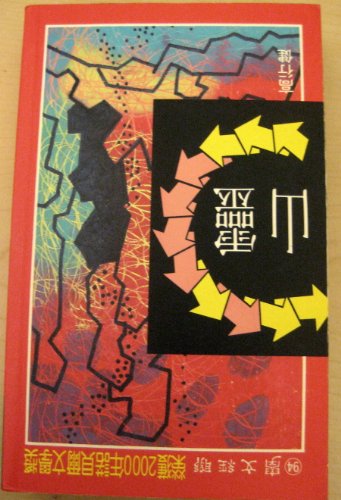
1. La Montagne de l'âme
$15.96
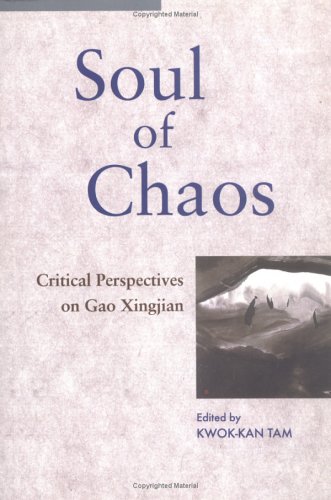
2. Soul of Chaos: Critical Perspectives
$13.00
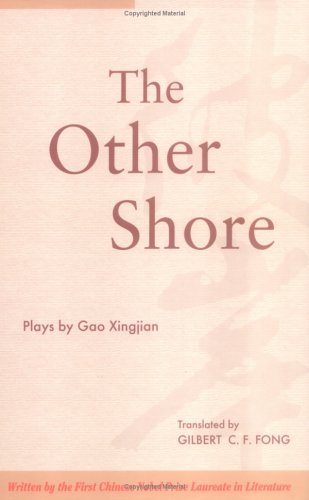
3. The Other Shore
$15.20
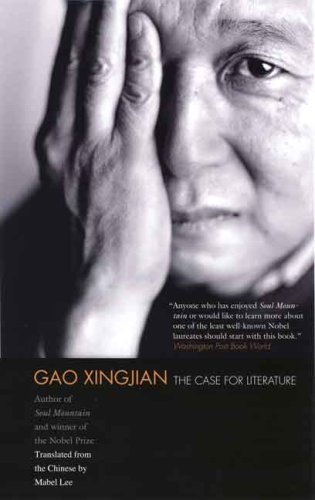
4. The Case for Literature
$1.38
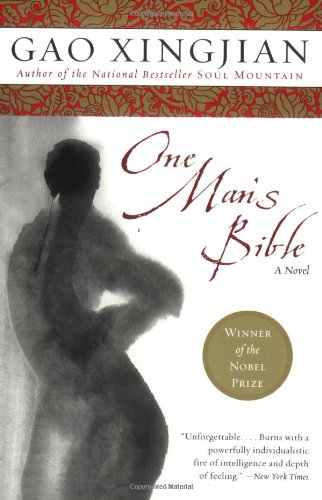
5. One Man's Bible
$6.00
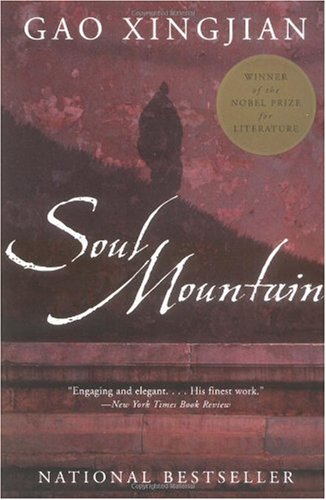
6. Soul Mountain
$20.68
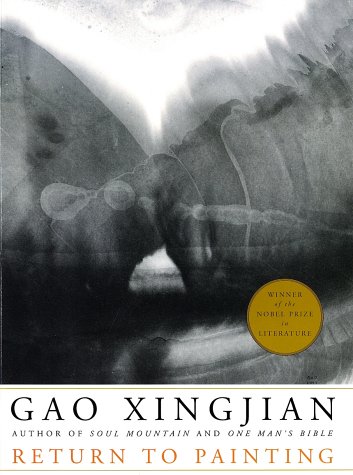
7. Return to Painting
$1.94
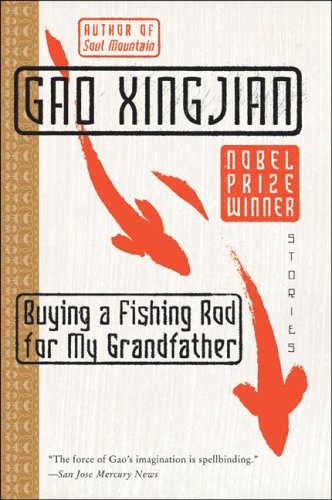
8. Buying a Fishing Rod for My Grandfather:
$28.95
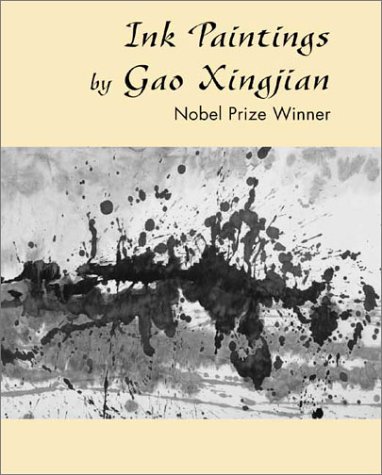
9. Ink Paintings by Gao Xingjian:
$32.00
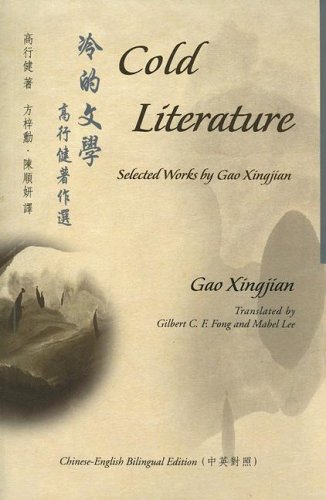
10. Cold Literature: Selected Works
$5.95
11. Gao Xingjian's "The Other Shore":
$48.00
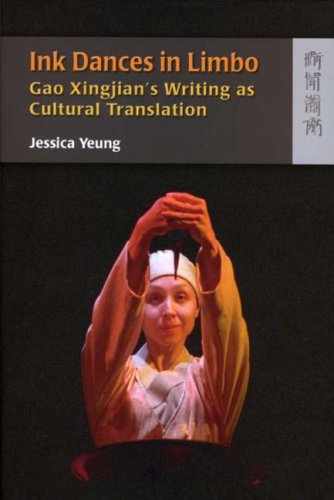
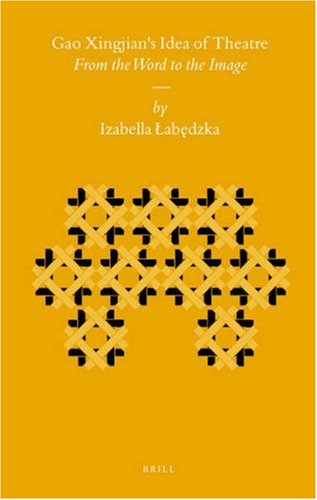
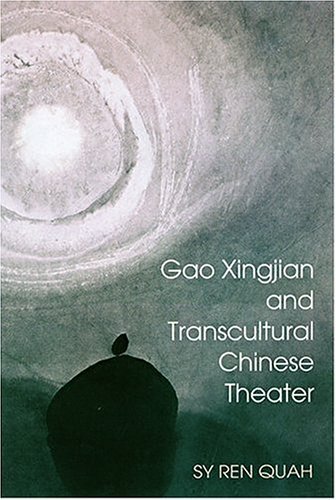
12. Gao Xingjian and Transcultural
 
$25.71
13. En Torno A La Literatura/around
 
$1.68
14. Snow in August: Play by Gao Xingjian
$24.69
15. Por Otra Estetica Seguido De Reflexiones
$15.00
16. Wild Man ('Ye ren', in traditional
$15.50
17. jue dui xin hao (in traditional
$15.75
18. The Bus Stop ('Che zhan', in traditional
$9.95
19. Biography - Xingjian, Gao (1940-):
 
$5.95
20. Gao Xingjian. One Man's Bible.(Book

1. La Montagne de l'âme
by Xingjian Gao
Paperback: 670 Pages (2002-09-26)
-- used & new: US$57.40
(price subject to change: see help)
Asin: 2876787857
Canada | United Kingdom | Germany | France | Japan

2. Soul of Chaos: Critical Perspectives on Gao Xingjian
Paperback: 356 Pages (2002-12-30)
list price: US$18.00 -- used & new: US$15.96
(price subject to change: see help)
Asin: 9629960036
Canada | United Kingdom | Germany | France | Japan
Editorial Review

Book Description

Gao Xingjian, the Nobel Laureate in Literature 2000, is a writer of many talents, being a novelist, playwright, stage director, painter, translator and critic at the same time. The Swedish Academy summarized in a press release Gao's achievements as follows: "an ouvre of universal validity, bitter insights and linguistic ingenuity, which has opened new paths for the Chinese novel and drama." His novels,Soul Mountain andOne Man's Bible, and his many later plays seek to rediscover the self in its originary consciousness, which is translingual and transcultural. Educated in China and now residing in France, Gao Xingjian writes in between two traditions, the Chinese and the Western. He started his literary career in the early 1980s, and has been noted for his experimentation with the dramatic form and his innovation in the use of narrative voice. In his works, he explores subjectivity beyond the limits of language by examining the self in relation to gender, culture, location and politics. This book presents a collection of critical studies on various aspects of Gao Xingjian's novels and plays. Contributors include distinguished scholars in the fields of comparative literature, theatre and Chinese studies, whose views form a critical dialogue on the writer's achievements in literature and the theatre.

... Read more

3. The Other Shore
by Gao Xingjian, Gilbert C. F. Fong
Paperback: 312 Pages (1999-06-15)
list price: US$18.00 -- used & new: US$13.00
(price subject to change: see help)
Asin: 9622018629
Average Customer Review: 4.0 out of 5 stars
Canada | United Kingdom | Germany | France | Japan
Editorial Review

Book Description

When Gao Xingjian won the Nobel Prize for Literature in 2000, he became the only Chinese writer to achieve such international acclaim. The Chinese University Press is the first publisher of his work in the English language. Indeed, The Other Shore is one of the few works

by the author available in English today.The Other Shore: Plays by Gao Xingjian contains five of Gao's most recent works: The Other Shore (1986),Between Life and Death (1991),Dialogue and Rebuttal (1992),Nocturnal Wanderer (1993), andWeekend Quartet (1995). With original imagery and in beautiful language, these plays illuminate the realities of life, death, sex, loneliness, and exile. The plays also show the dramatist's idea of the tripartite actor, a process by which the actor neutralizes himself and achieves a disinterested observation of his self in performance. An introduction by the translator describes the dramatist and his view on drama.

... Read more

Customer Reviews (8)

4-0 out of 5 stars Heads Roll
Gao Xingjian's "The Other Shore" is an excellent collection of his plays.Translator Gilbert C. F. Fong does a good job expressing the eloquence of Xingjian's dialogue.The scholarly introduction gives analysis on the staging and influences on the playwright.

"Between Life & Death" is an amazing play, essentially a 32-page monologue for a female, although it could also be broken between various actresses playing aspects of the same character.It reminded me of an esoteric extended version of "The Vagina Monologues."

"Dialogue & Rebuttal" is an existential exploration of the male-female relationship.Man's expectations clash with woman's needs.It's not a plot-oriented play, but could be a gripping on stage.

"Nocturnal Wanderer" impressed me as most likely successful play for production in the United States.The Sleepwalker is the main character.Xingjian employs the interesting technique of having most of the dialogue of this character in second person, as if he were expressing extended prose monologues.The Sleepwalker encounters the Prostitute, the Ruffian & the Tramp, who each weave into what appears to be Xingjian's closest flirtation with traditional plot structure.The play becomes interesting with several gunshot assassinations and a head that rolls out of the briefcase at various intervals.

"Weekend Quartet" reminded me a bit of Philip Barry's "Hotel Universe" where a diverse group of travelers meet for a weekend.In Xingjian's play, an aging artist Bernard and his longtime live-in friend Anne invite a young author Daniel and his youthful girlfriend Cecile for the weekend.Xingjian's form is unique, writing sections of the play that lists the characters who speak.For instance, a section is labeled as dialogue between Daniel and Anne without designating the specific lines to be spoken by each character.The reader follows along with Xingjian's lead, understanding that probably Daniel speaks first followed by Anne and then alternating through the end of the section.It's a very different way of reading a play.What I understood is that this leads us to understand that the characters are playing aspects of each other that could be shuffled so that each assumes the other's point of view.Some of the quartets are more plot-oriented with the final section getting quite metaphysical.There is an extended moving monologue at the end by Bernard who faces death that could shine in oral interpretation or as an audition piece.

"The Other Shore" is a Buddhist play about a monk who is condemned for speaking the truth.It is non-realistic with the actors donning characters and shucking them at different points in the action.It requires very physical (handstands, etc.) and stylized staging.

I was glad to become acquainted with this Chinese playwright's theatrical works.Along with "Snow In August," it is an important body of work that begs production in the United States.Enjoy!

3-0 out of 5 stars For serious readers only
This collection of recent plays by Gao Xingjian is worth investigating by merit of the dramatist's receipt of the Nobel Prize and for the controversy raging around him and the Prize in China. Most readers will probably pick up this book for those very reasons. The plays contained are post-modern, avant-garde, and in some cases utterly abstract. They're the sort of scripts that probably make for very interesting plays when performed, but make for rather tedius reading. Some scripts make for very enjoyable literature, but Gao's are a little too "artsy" to work in print alone. I recommend "The Other Shore" for serious readers only: dramatists, academics, and the hardcore Chinese literature enthusiast. Casual readers, merely curious about this year's Nobel winner, should avoid this collection and instead read Gao's novel, "Soul Mountain", which is much more accessible.

5-0 out of 5 stars Nobel Press Release
The Nobel Prize in Literature for 2000 goes to the Chinese writer Gao Xingjian

"for an œuvre of universal validity, bitter insights and linguistic ingenuity, which has opened new paths for the Chinese novel and drama".

In the writing of Gao Xingjian literature is born anew from the struggle of the individual to survive the history of the masses. He is a perspicacious sceptic who makes no claim to be able to explain the world. He asserts that he has found freedom only in writing.

His great novel Soul Mountain is one of those singular literary creations that seem impossible to compare with anything but themselves. It is based on impressions from journeys in remote districts in southern and south-western China, where shamanistic customs still linger on, where ballads and tall stories about bandits are recounted as the truth and where it is possible to come across exponents of age-old Daoist wisdom. The book is a tapestry of narratives with several protagonists who reflect each other and may represent aspects of one and the same ego. With his unrestrained use of personal pronouns Gao creates lightning shifts of perspective and compels the reader to question all confidences. This approach derives from his dramas, which often require actors to assume a role and at the same time describe it from the outside. I, you and he/she become the names of fluctuating inner distances.

Soul Mountain is a novel of a pilgrimage made by the protagonist to himself and a journey along the reflective surface that divides fiction from life, imagination from memory. The discussion of the problem of knowledge increasingly takes the form of a rehearsal of freedom from goals and meaning. Through its polyphony, its blend of genres and the scrutiny that the act of writing subjects itself to, the book recalls German Romanticism's magnificent concept of a universal poetry.

Gao Xingjian's second novel, One Man's Bible, fulfils the themes of Soul Mountain but is easier to grasp. The core of the book involves settling the score with the terrifying insanity that is usually referred to as China's Cultural Revolution. With ruthless candour the author accounts for his experiences as a political activist, victim and outside observer, one after the other. His description could have resulted in the dissident's embodiment of morality but he rejects this stance and refuses to redeem anyone else. Gao Xingjian's writing is free of any kind of complaisance, even to good will. His play Fugitives irritated the democracy movement just as much as those in power.

Gao Xingjian points out himself the significance for his plays of the non-naturalistic trends in Western drama, naming Artaud, Brecht, Beckett and Kantor. However, it has been equally important for him to "open the flow of sources from popular drama". When he created a Chinese oral theatre, he adopted elements from ancient masked drama, shadow plays and the dancing, singing and drumming traditions. He has embraced the possibility of moving freely in time and space on the stage with the help of one single gesture or word - as in Chinese opera. The uninhibited mutations and grotesque symbolic language of dreams interrupt the distinct images of contemporary humanity. Erotic themes give his texts feverish excitement, and many of them have the choreography of seduction as their basic pattern. In this way he is one of the few male writers who gives the same weight to the truth of women as to his own.

The Swedish Academy

4-0 out of 5 stars Great Offerings from the Chinese Master
Gao Xingjian's artistic sensibility was chiselled out of his double frustration of public condemnation and private shock.

After being established as a prominent Chinese playwright, he suddenly fell out of grace of the communist authorities, who dubbed his works as `Spiritual Pollution'. At that time he was also undergoing an intense personal trauma, being diagnosed, wrongly, with lung cancer. He set out on an extensive journey to the heart of China covering 5 months and 15,000 kilometres which helped him rediscover his self and his countrymen and helped change his world-view.

Although a direct outcome of this emotional journey was the phantasmogoric novel `Soul Mountain', the present five plays also bear testimony to his broadened horizon.

In his plays the mythical findsplace with the real, as he tries to make sense of the diversity of his land's culture and its people. Gao tries to mask the horrors of the Cultural Revolution in a set of highly original imagery. The symbolism sometimes obfuscates the proceedings, but the stark realism of the human drama comes back again and again. Some of Gao's views, on man woman relationship for instance, may not be palatable to the Western sensibility, but one has to understand the vast compass that he is handling in these plays.

Out of the five plays `The Other Shore' and `Nocturnal Wanderer' are the most gripping. But all the five plays reflect the yearning of the individual to break lose from the stifling collective memory.

3-0 out of 5 stars Try it...
I read in the NY Times that Gao won a Nobel Prize for Literature, though most of his work is banned by the Chinese government. For this reason alone, I would read it. See NY Times' 10/13/00 article for more on him. ... Read more


4. The Case for Literature
by Xingjian Gao
Hardcover: 192 Pages (2007-03-20)
list price: US$25.00 -- used & new: US$15.20
(price subject to change: see help)
Asin: 030012421X
Average Customer Review: 4.0 out of 5 stars
Canada | United Kingdom | Germany | France | Japan
Editorial Review

Book Description

When Gao Xingjian was crowned Nobel Laureate in 2000, it was the first time in the hundred-year history of the Nobel Prize that this honor had been awarded to an author for a body of work written in Chinese. The same year, American readers embraced Mabel Lee’s translation of Gao’s lyrical and autobiographical novel Soul Mountain, making it a national bestseller. Gao’s plays, novels, and short fiction have won the Chinese expatriate an international following and a place among the world’s greatest living writers.
The bold and extraordinary essays in this volume—all beautifully translated by sinologist Mabel Lee—include Gao's Nobel Lecture (“The Case for Literature”), “Literature as Testimony: The Search for Truth,” “Cold Literature,” “Literature and Metaphysics: About Soul Mountain,” and “The Necessity of Loneliness,” as well as other essays. These essays embody an argument for literature as a universal human endeavor rather than one defined and limited by national boundaries. Gao believes in the need for the writer to stand apart from collective movements, regardless of whether these are engineered by political parties or driven by economic or other forces not related to literature. This collection presents Gao's innovative ideas on aesthetics, and it constitutes the very kernel of his thinking on literary creation.
Praise for Soul Mountain:
“A brilliant sprawl of a novel that defies conventional notions of ‘the self’ and ‘literature.’”—Washington Post
“Startlingly poetic language . . . Bewitching narrative voices . . .One long immersion in buried strata of history and the psyche.”—Boston Globe
“Gao’s wanderer . . . has found survival . . . in words. And ultimately, it is the miracle of those words that wins Nobels.”—Los Angeles Times Book Review
... Read more

Customer Reviews (1)

4-0 out of 5 stars Straight to the Truth
This slim but powerful book makes a case for literature as a living, crucial source of nurture and a noble human activity, in these times of doltish cynicism, profit-taking ignorance and commercially manufactured discouragement.

Gao stresses a rigorous program for the writing of literature, which earns it a place on my own short shelf of indispensable and inspirational books on writing. But the individual expression Gao champions should not be confused with the self-indulgent and programmatic confessionals lining the bookstore shelves. "In this postmodern age, which is concerned only with consumerism, the unchecked bloating of the individual is already a far-off myth..." Though he rejects ideological purposes, he does believe literature has social benefit, in the creation of empathy. "Yet through literature there can be a certain degree of communication, so the writing of literature that essentially has no goal does leave people a testimony of survival. And if literature still has some significance, it is probably this."

Gao Xignjian achieved his first success in China in the early 1980s with plays, and continued to write for the theatre, as well as fiction and literary essays through years of shifting political winds until he went into exile towards the end of the decade. His output only increased in the 1990s. Though his autobiographical novel, "Soul Mountain", was published in the U.S. in the same year as his Nobel Prize, and remains his best known work in America, it was completed shortly after he left China.

For Gao, the purpose of literature is simple: the search for truth. "...its value lies in discovering and revealing what is rarely known, little known or thought to be known, but in fact not very well known, of the truth of the human world." "For the writer, truth in literature approximates ethics, and is the ultimate ethic of literature."

But this truth is not in the realm of metaphysics or ideology. "Truth is perceptual and concrete. Full of life, truth is available for human observation at any time and in any place; it is the interaction between subject and object." It is the individual's "testimony of his times."

"The language required by literature comes from spontaneous speech that goes straight to truth." Gao is a particular champion of the auditory. "The human need for language is not simply a need for the transmission of meaning; language is also needed for one to listen to, and for affirming one's own existence."

"It is my view that the only responsibility a writer has is to the language he writes in." And that language must sing. "The musicality of language is of extreme importance, and music provides me with more insights than any sort of literary theory." "If I fail to hear music in the sentences I have written, I acknowledge defeat..."


Gao writes about his own approach to fiction and theatre, and (especially in a terse but harrowing chapter near the end) his battles with Chinese authorities, but all within the context of this literary purpose. Agree or disagree with his assertions, this is a book anyone involved in literature must read. In the main, it is a book that everyone should read to understand the activity of literature--the single voice singing a surviving truth beyond the amorphous noise.

... Read more


5. One Man's Bible
by Gao Xingjian
Hardcover: 464 Pages (2002-09-01)
list price: US$26.95 -- used & new: US$1.38
(price subject to change: see help)
Asin: 0066211328
Average Customer Review: 4.0 out of 5 stars
Canada | United Kingdom | Germany | France | Japan
Editorial Review

Amazon.com
In the same circling, ruminative vein as his Nobel Prize-winning debut novel Soul Mountain, Chinese expatriate Gao Xingjian's fictionalized memoir of his youth, One Man's Bible, is an attempt to capture the Kafkaesque anxieties of the Cultural Revolution. As a budding writer, and the son of a white-collar worker, the unnamed narrator soon realizes that, no matter what useful friends he makes at school, he is vulnerable to investigation by the restless, politically unstable Red Guard: "Enemies had to be found; without enemies, how could the political authorities sustain their dictatorship?" Punishment for real or imagined "mistakes" of thought and behavior would have been death, imprisonment, or banishment to a labor farm.The only answer, he came to believe, was to blend in with the masses and to construct a mask of bland agreement with whoever appeared to be in charge at the time.

The bulk of Xingjian's absorbing narrative takes place in this bleak world of exposure, hysteria, and reprisals, and from an appropriately distant third-person point of view.But the act of recollection is spurred by a four-day-long affair with a near-stranger in the mid-1990s.The narrator, long exiled from China, has been brought to Hong Kong to help stage one of his plays.Here he runs into a German-Jewish woman, Margarethe, whom he knew slightly from his final years in China.For Margarethe, survival hinges on memory.It is she who persuades the narrator to let his painful, rigorously suppressed memories begin to thaw, and if not to drop his mask, at least to remember that he is wearing one.--Regina Marler Book Description
One Man's Bible is the second novel by Nobel Prize-winning author Gao Xingjian to appear in English. Following on the heels of his highly praised Soul Mountain, this later work is as candid as the first, and written with the same grace and beauty.

In a Hong Kong hotel room in 1996, Gao Xingjian's lover, Marguerite, stirs up his memories of childhood and early adult life under the shadow of Mao Zedong and the Cultural Revolution. Gao has been living in self-imposed exile in France and has traveled to this Western-influenced Chinese city-state, so close to his homeland, for the staging of one of his plays.

What follows is a fictionalized account of Gao Xingjian's life under the Communist regime. Whether in "beehive" offices in Beijing or in isolated rural towns, daily life is riddled with paranoia and fear, as revolutionaries, counterrevolutionaries, reactionaries, counterreactionaries, and government propaganda turn citizens against one another. It is a place where a single sentence spoken ten years earlier can make one an enemy of the state. Gao evokes the spiritual torture of political and intellectual repression in graphic detail, including the heartbreaking betrayals he suffers in his relationships with women and men alike.

One Man's Bible is a profound meditation on the essence of writing, on exile, on the effects of political oppression on the human spirit, and on how the human spirit can triumph.Download Description
"PerfectBound e-book extras:"No-isms": A Conversation with Gao Xingjian and Translating Gao: Mabel Lee on Gao XingjianIn a Hong Kong hotel room, in 1996, Gao Xingjian's lover, Marguerite, stirs up his memories ofchildhood and early adult life under the shadow of Mao Zedongand the Cultural Revolution.Gao has been living in self imposed exile in France and has traveled to this Western influenced Chinese city-state, so close to his homeland, for the staging of one his own plays. What follows is a fictionalized account of Gao Xingjian's life under the communistregime: whether in the `beehive' offices in Beijing or in isolated rural towns, everywhere daily life is riddled with paranoia and fear, as revolutionaries, counter-revolutionaries, reactionaries, counter-reactionaries and government propaganda turn citizens against one another, where a single sentence spoken ten years earlier can make onean enemy of the state.Gao evokes the spiritual torture of political and intellectualrepression in graphic detail, including the heartbreaking betrayals he suffers in his relationships with women and men alike.ONE MAN'S BIBLE is a profound meditation on the essence of writing, on exile and on the effects of political oppression on the human spirit, and how the human spirit can triumph." ... Read more

Customer Reviews (16)

5-0 out of 5 stars A very personal story within the Cultural Revolution
One Man's Bible conveys the life and death choices the narrator had to make every day during a period of extreme social turbulence.This book excels in communicating the tension between the desire to survive and thrive in society and a personal desire (in this case to keep writing)that is forbidden by "society". The narrator is certainly not a hero and does not judge what his happening around him.

I also found the book very good in being able to paint a picture of daily life, at the collective and individual level, in the period where the book is set.

5-0 out of 5 stars beautiful, accomplished work
Gao Xingjian's second novel, "One Man's Bible" contains partially autobiographical life story of a Chinese writer, who tries to find his own place, peace of mind and right to writing and publishing in the Communist China.

The writer, living in permanent exile from China, goes to Hong Kong to attend a premiere of one of his theater plays. There, he meets Margarethe, one of the women who had an impact on his life. Margarethe, a German Jew, who stayed in Germant despite many doubts and reservations, is enquiring about the writer's past and this triggers and avalanche of memories. In fact, it is not a novel compositional trick, but because of Gao's dream-like style, similar to "The Soul Mountain", it seems still fresh and original here.

The chapters, which describe the Chinese past of the main character during the Cultural Revolution are separated by the ones closer to the present. The difference is stressed by the changes in narration between second and third person.

Among enemies and friends, career wolves and people desperately trying to preserve their individuality and self-respect, the young writer tries to figure out his own place, which requires a lot of time and effort, many schemes and being always a step ahead of the others. To write and publish in the capital, one must escape the Party purges, must have a job, a right to lodging in a tiny room in the communal apartment, an impeccable past and a perspective of a career within the Party.

Initially, the protagonist manages quite well. He becomes a leader of young rebels in yet another uprising, labeling the former previous party officials as "The Snake Spirits" (name given to all enemies of the system). He is also a lover of one of the Party leader's wife. Thanks to her warning (apparently the proofs of his disloyalty have been found (in the form of the information that in the remote past, just after the war with Japan, his father was in the illegal possession of weapons), the writer finally realizes that he will never be able to find for himself a safe place in the communist structures, allowing him creative freedom. Only then he decides to escape, initially hiding n the far away, mountain village, under the pretenses of rehabilitation through physical labor. After a long period of creative hibernation and waiting, he manages to leave China and stay abroad permanently, getting the status of the political refugee.

This seemingly realistic plot is spiked with the descriptions of events from emigrant times, the weird dreams pestering the protagonist and the masterful portraits of people who he met in China (the whole gallery of human types, from small cheaters, through people using their professional positions to the good and bad purpose, to intellectuals broken by the system) and outside (especially interesting are the female characters - already mentioned Margarethe and Sylvie, a person whose personal experience separates her like a chasm from the protagonist; it is interesting to notice, how her character is the opposite to the writer's). Various motivations and life attitudes are shown very clearly and convincingly, so that the reader can rest assured, that in each regime everyone has their own free will and our life choices depend on our will only.

The parallels to Gao's life come to mind automatically during reading. The protagonist is not from the working class (his father, like Gao's, works in a bank), he is educated, writes and then destroys his writings, afraid that they can be discovered and used against him (Gao had burned all his manuscripts before leaving China), during his years in exile he cannot visit China... It is hard not to wonder whether "One Man's Bible" is a kind of the catharsis, as the writer is shown as a person who to reach his goal - to write and publish - does not hesitate to become an opportunist. Although he is trying to live in agreement with his conscience, he makes mistakes, which he later regrets and which affect other people's lives. If Gao writes here about himself, he definitely does not try to excuse his actions or to show himself in the best light...

The autobiographical style makes "One Man's Bible" less contemplative and looking more like a "traditional" novel than "The Soul Mountain", but here again comes back the motif of integration with the rural people and respect for the antique Chinese traditions - for example, the scene of conversation with the old doctor and description of his handbook are beautiful).

This novel is worth recommendation, especially, because the access to the Chinese writers who describe the country's reality well and at the same time their books present the high level of artistic achievement, is limited, and Gao's works are banned in China (apparently, they are available on the black market, but not published officially), therefore it is very likely that they contain accurate observations (like the Polish, Soviet or other emigrant writers, to which I can relate).

4-0 out of 5 stars Isolated In a Crowd
Part of why Gao Xingjian's book "One Man's Bible" has such an impact for the Western audience is that many of us who have heard of the Cultural Revolution in China still have no adequate experience that helps us understand it or its impact on the Chinese people.Xingjian's detached style may be the only way to deal with this and not go crazy.So many of the details are startling.When he relates how his father's ownership of a gun some 30 years previously is held against him so that he's threatened by the dreaded "reactionary" & "counter-revolutionary" labels is amazing to the Western mind.To hear of families split apart as educated parents are sent for 8 years of "re-education" in rural labor camps is shocking.When those in political disfavor become ill, the hospital becomes the ideal method for assassination.I believe it's because of this subject matter that the book has such an impact.

There is also another underlying theme of human isolation.Surrounded by people, the main character cannot let anyone get close to his heart and emotion.He interprets freedom as an absence of love; and this is perhaps the saddest aspect of the book.Xingjian's series of lovers from the German Marguerite to his first love Lin and the many other casual affairs reflect the satisfaction of the basic hormonal drives, but leave an emotional detachment that precludes real intimacy.On a purely human level, this clinical self-examination is put under a harsh light.

The novel's construction uses some of the techniques that made "Soul Mountain" also seem fresh & "un-Western."The alternation of time periods, flashing back and forth from past eras in China to the present detachment works to produce a tension in the novel.Use of various persons (e.g. I, he/she) including second person (you) narration adds a variety; whereas more accepted Western standards would look for consistency.People may react negatively to the book because we're used to a plot line where a story is told.Xingjian's story is told here, but it's in more of a travelogue format than the traditional structure that builds to a climax.Xingjian's tale seems to travel to anti-climax, much as life often can seem mundane or routine.

Some of the philosophical chapters near the end did not connect with me as well.The book does seem to end simply because the author put down the pen.But all in all, this is an important book.My family watched the film "Balzac & the Little Chinese Seamstress" the other night.I found myself using Xingjian's book to fill in many of the details about the re-education camps for my family.Translated works may lose some of the original nuance and impact, but Mabel Lee did a good job with the translation.I often would ponder an unusual image.This is an excellent mind-stretching book.Enjoy!

5-0 out of 5 stars Engrossing
This is a fantastic autobiographical novel about the author's experiences under Mao's China and how it affected him and others.The subject matter itself is enough to reccomend this book because we rarely get insights into this closed world and must strive to understand it as it emerges as a world economic power.

The author uses an interesting techinque of detachment where the main character is also the narrator who speeks most often in the third person.Irme Kertesz in his novel "fatelessness" beautifully dscribes how people can survive even the worst suffering, such as the holocaust, by detachment of soul from body.In "Fatelessness", the protagonist survives the concentration camps by escaping outside himself and comes to not only view his suffering and surroundings in the third person but becomes so detached that the physical pain, wounds, illness and suffering of his own body are described and experienced as a thiid person.This mode of escape was subconcious and persisted after the war, leaving a permanent scar of detachment that leaves the reader wondering how the protagonist will relate in peacetime.

Gao has evidently experienced a similar form of coping mechanism that is evident in the sections of the novel that take place in the present, during his expatriat years.It becomes manifest by his casual serial sexual encounters with women who also have similar problems of forming lasting bonds and attachments because of trauma (rape etc).Gao's inability to form a lasting personal bond extends to his lack of attachment to China, his people and his new home, career and friends.Though his insights are [rofound, Gao's emotions and actions are superficial and dream-like.

The most brilliant technique is his use of the word "you."The detached narrator (Gao)uses this word to refer to the subject (Gao)as if he is writing for and talking to himself.I have only seen this technique used in Gao's other novel translated into English "Soul Moutain."Later in the novel, when describing the past he uses "him" to describe the subject "Gao" living in Mao's China.The Narrator uses "you" to refer to the Gao in the present, expatriat state.

The use of "you" and "him" has a multilevel effect on the text and the reader."Him" Gao of the past becomes "You" Gao of the present - a different level of detachment."Him" Gao is the Gao of the present describing the Gao of the past as if from a distance, as if that person no longer exists and is dead or lost.The "You" Gao is more familiar, closer, intimate yet detached, a different, mature Gao of the present who is having these relationships, having his plays performed and struggling with the present novel and his past.If a man is the sum of his experiences we are left still wondering who the real Gao is and if he knows himself.It is as much a discovery of Mao's oppressive China as an effort of self descovery -- both painful.

The other effect of the use of "You" used by the narrator to describe Gao in the present is the author subtly drawing in the reader, to place him or herself in Gao's place, to become Gao."You" also refers to the reader.We are invited to become Gao in our imagination as we read the text.The simplicity of one word creating somany layers of meaning and effect on the text and reader is on par with Jose Saramago's penchant for a lack of puntuation in many of his works.

This book is indeed something special, ingenious, and genuine.You may walk away haunted and disoriented, angry, frustrated, helpless and questioning your security.But as Gao makes clear at the begining, the experience of a Chinese mind under Mao can only be compared to the Holocaust under Hitler.Here East and West share a commonality of humanity at its best and worst, a common suffering and experience and a place to begin a dialog of understanding.Evil takes on many forms but it's effects on the human soul are universal.

5-0 out of 5 stars Cultural Drift
To this day, the bizarre, cult-like events of the Cultural Revolution remain a prime focal point for Chinese novelists and, especially, memoirists. Writers from Adeline Yen-Mah, Jung Chang, Jan Wong, and Anchee Min to Yu Hua, Mo Yan, Dai Sijie, and Yan Geling have plumbed the depths of political capriciousness, human debasement, and the sheer will to survive in their own lives or in those of their fictional characters. Yet few if any Chinese writers have dared examine the effects of the Cultural Revolution on their later, post-Tiananmen Square massacre (1989) lives. Gao Xingjian's semi-autobiographical novel, ONE MAN'S BIBLE, is the first I have encountered, and the results are hauntingly devastating.

The story opens in a Hong Kong hotel in 1996 with the unnamed Chinese narrator (an internationally successful playwright) and his temporary paramour, a white Jewish woman of German descent named Margarethe. Theirs is an affair of mutual convenience and simple animal lust, but it is also a continuation of two largely hopeless searches for human closeness and warmth even as both characters deny that they seek such a thing. Margarethe works insistently to draw out the narrator's past, asking him to tell his life's story and suggesting that he turn it into a book. The narrator for his part insists that such a thing is not possible, that "things in China can not be explained by language alone," yet the book of his life unfolds before us in chapters that alternate (for the first half of the book) between his present-day encounter with Margarethe and his autobiography.

What emerges from this approach is a haunting tale of a rational, intelligent man trying desperately to cope with the utter irrationality of the Cultural Revolution. At first a nonpolitical citizen of Beijing, the narrator decides that he can best survive by becoming a faction leader. Having established his revolutionary bona fides, he then lays low and chooses his moves carefully, ultimately realizing that his next move is to the countryside, to keep his head down as a peasant farmer and teacher for perhaps the rest of his life. To maintain his sanity, he secretly writes about his feelings and experiences, keeping his papers well-hidden from nosy neighbors. Over time, he discovers that survival under Mao requires repeated acts of selfishness and disregard for the feelings of others, particularly the women who pass through his life, offering sexual temptation coupled with the threat of personal ruin. Ultimately, Margarethe returns to Europe and disappears from the alternating scenes, leaving Gao to examine ever more intensely his own past, his failings and regrets and lost relationships. He never shares with us the manner in which he "escapes" from China, partly because it doesn't really matter and partly because, in a psychological sense, he will never escape.

By using the alternating chapters, the author establishes a clear divide between history and the present while simultaneously illustrating how that history impinges on the narrator's current life. Gao takes this structure even further by bifurcating the narrator himself, referring to his present-day self in the second person (you) and to his pre-escape self in the third person (he). Yet they are clearly just variations of the same person; the narrator's past is an inescapable part of his present. He is scarred for life by the Cultural Revolution, and the lonely, distant, untrusting person he has become is a direct reflection of the persona he was forced to adopt in order to survive those times. He has learned to be a soulless user of others, and little else.

This is a dark and haunting examination of life and survival during the unimaginable events of the Cultural Revolution and its aftermath. Timed and placed in 1996 Hong Kong just before the British turnover over that island to the Communist government in Beijing, it is also a fascinating metaphorical contemplation of modern China, a nation of soulless users lusting after money the same way his narrator lusts after women. Gao Xingjian emerged from relative obscurity (at least outside of China) to become his country's surprise first Nobel Prize winner for Literature. In ONE MAN'S BIBLE, Western readers can get a sense of why he was chosen. Deservedly so, it would seem. ... Read more


6. Soul Mountain
by Gao Xingjian, Mabel Lee
Paperback: Pages (2000)
-- used & new: US$6.00
(price subject to change: see help)
Asin: 0732266513
Average Customer Review: 3.5 out of 5 stars
Canada | United Kingdom | Germany | France | Japan
Editorial Review

Amazon.com
As one of Gao Xingjian's characters remarks, if a fiction writer could know the true stories of the people he passes on the street, he would be amazed. Surely the Nobel laureate's own story, which forms the basis of Soul Mountain, is worthy of amazement. In 1983 Gao was diagnosed with lung cancer, the disease that had killed his father. At the same time, he had been threatened with arrest for his counterrevolutionary writings and was preparing to flee Beijing for the remote regions of southwest China. Shortly before his departure, however, the condemned man got at least a partial reprieve: a second set of x-rays revealed no cancer at all. On the heels of this extraordinary redemption, he began the circuitous journey that would lead him to the sacred (and possibly mythical) mountain ofLingshan--and to this daring, historically resonant novel.

A destination chosen arbitrarily, at the suggestion of a fellow traveler, the elusive Lingshan becomes rich with meaning for the narrator of Soul Mountain. Meanwhile, the narrator himself shows a tendency to go forth and multiply. First he divides into You and I. Then You generates yet a third voice, a somewhat simple but intense young woman named She, followed by He--and none of these personae can resist the elemental lure of the sacred site. Indeed, the search for Lingshan becomes a metaphor for all spiritual striving:

Would it be better to go along the main road? It will take longer travelling by the main road? After making some detours you will understand in your heart? Once you understand in your heart you will find it as soon as you look for it?The important thing is to be sincere of heart?If your heart is sincere then your wish will be granted?
Along the way, I and You mourn the devastations of the Cultural Revolution, when thousands of monuments, temples, and graves were reduced to rubble. The obliteration of these reminders of the dead becomes a torment to the narrators of the novel, who struggle to assert their individuality--itself a proscribed act in CommunistChina--against what they see as a false and brutal ideal that has swept away history, literature, and tradition as decisively as it has destroyed the ancient forests. (At one point Gao describes the sad spectacle of the few remaining pandas, who wander a shrinking woodland wearing electronic transmitters.) Seamlessly translated by the Australian scholar Mabel Lee, Soul Mountain is a masterpiece of self-observation set against a soulful denunciation of "progress" and practicality.--Regina MarlerBook Description

Special feature! This e-book edition contains "The Case for Literature," the complete text of Gao Xingjian's 2000 Nobel Lecture.

In 1983 Chinese playwright, critic, fiction writer, and painter Gao Xingjian was diagnosed with lung cancer and faced imminent death. But six weeks later, a second examination revealed there was no cancer - he had won "a reprieve from death" and had been thrown back into the world of the living. Faced with a repressive cultural environment and the threat of a spell in a prison farm, Gao fled Beijing. He traveled to the remote mountains and ancient forests of Sichuan in southwest China and from there back to the east coast, a journey of fifteen thousand kilometers over a period of five months. The result of this epic voyage is Soul Mountain.
A bold, lyrical, prodigious novel, Soul Mountain probes the human soul with an uncommon directness and candor. Interwoven with the myriad of stories and countless memorable characters -- from venerable Daoist masters and Buddhist nuns to mythical Wild Men, deadly Qichun snakes, and farting buses -- is the narrator's poignant inner journey and search for freedom.
Fleeing the social conformity required by the Communist government, he wanders deep into the regions of the Qiang, Miago, and Yi peoples located on the fringes of Han Chinese civilization and discovers a plethora of different traditions, history, legends, folk songs, and landscapes. Slowly, with the help of memory, imagination, and sensory experience, he reconstructs his personal past. He laments the impact of the Cultural Revolution on the ecology -- both human and physical -- of China. And in a polyphony of narrating selves -- the narrator's "I" spawns a "you," a "she," and a "he," each with a distinct perspective and voice - the novel delights in the freedom of the imagination to expand the notion of the individual self.
Storytelling saves the narrator from a deep loneliness that is part of the human condition. His search for meaning - in life, in the journey - turns up the possibility that there may be no meaning. The elusive Lingshan ("Soul Mountain"), which becomes the object of his quest, never yields up its secrets, but the journey is a rich, strange, provocative, and rewarding one. Soul Mountain is a novel of immense wisdom and profound beauty.
Download Description
"Special feature! This e-book edition contains ""The Case for Literature,"" the complete text of Gao Xingjian's 2000 Nobel Lecture.In 1983 Chinese playwright, critic, fiction writer, and painter Gao Xingjian was diagnosed with lung cancer and faced imminent death. But six weeks later, a second examination revealed there was no cancer - he had won ""a reprieve from death"" and had been thrown back into the world of the living. Faced with a repressive cultural environment and the threat of a spell in a prison farm, Gao fled Beijing. He traveled to the remote mountains and ancient forests of Sichuan in southwest China and from there back to the east coast, a journey of fifteen thousand kilometers over a period of five months. The result of this epic voyage is Soul Mountain.A bold, lyrical, prodigious novel, Soul Mountain probes the human soul with an uncommon directness and candor. Interwoven with the myriad of stories and countless memorable characters -- from venerable Daoist masters and Buddhist nuns to mythical Wild Men, deadly Qichun snakes, and farting buses -- is the narrator's poignant inner journey and search for freedom. Fleeing the social conformity required by the Communist government, he wanders deep into the regions of the Qiang, Miago, and Yi peoples located on the fringes of Han Chinese civilization and discovers a plethora of different traditions, history, legends, folk songs, and landscapes. Slowly, with the help of memory, imagination, and sensory experience, he reconstructs his personal past. He laments the impact of the Cultural Revolution on the ecology -- both human and physical -- of China. And in a polyphony of narrating selves -- the narrator's ""I"" spawns a ""you,"" a ""she,"" and a ""he,"" each with a distinct perspective and voice - the novel delights in the freedom of the imagination to expand the notion of the individual self. ... Read more

Customer Reviews (88)

4-0 out of 5 stars a well constructed spiritual and cultural journey
Soul Mountain has elements of a spiritual journey and a cultural exploration.Translating such a work from Chinese is no doubt a challenge.As a result, much of the language doesn't flow.At times, the conversations between the speaker and these ghost-like female figures seem almost adolescent.The story and imagery manage to get through.The villages and people that turn up create the world outside, while the author's constant musings adds more depth, as well as illuminating his internal cosmos.It is sometimes difficult to separate actual characters from avatars, but that mystic quality gives the book its flavor.The power of the Yangtze, the dust of the country roads, the quaint, strained apartment of a girl--all are very clearly conveyed.It is a story like no other.Portions do slow down with the avatars throwing fits or whining or yelling, but the remainder is very good.The cover painting nearly captures the essence itself.

5-0 out of 5 stars Wonderful Wanderings of Goa Xingjian
If you've ever felt like grabbing your pack and disappearing into the mountains, then this is for you.
Xingjian is a rare breed of photographer, painter, poet and writer who manages to combine his talents to create a classic.
Having wandered the mountains of Japan myself, I often tried to jot down my thoughts as I went. A task better left to Goa Xingjian - the master.

4-0 out of 5 stars tranquil reflections against a moving, Chinese landscape
The main character travels to a small mountain town where he meets a girl. She is working in a hospital there, escaping from a sad love affair. She agrees to go with him to Lingsan (Soul Mountain) for a few days. They go about making up stories about the people they see. He tells her about dragon dancers, bandits, mythological women, ghosts, grave robbers, hawkers, violent stories and romantic stories. As they fall in love with each other she becomes a storyteller herself, but the traits of her imagination are feminine - she talks about her own past, her love affairs, her desire for motherhood and emotional stability. The male character, at times appearing in a first-person narrative, is mostly concerned with tracing the disappearance of the old world of China, both from a cultural, ethnographic, and natural, ecological perspective. The traveller becomes a reader of the landscape, and the narrative is constituted by this effort to translate cultural and physical signs through the mediating axcis of the imagination. Experience of the world is important, but only in so far as it affects our perception in meaningful ways, helping us develop either a moral lesson or a deeper understanding of human complexities.

This way the narration progresses making up an ocean of violence and despair - the little stories acting like waves and making up a fragmented history. The contemporary re-presentations of folk culture are demythologized, subject to the ridicule of the masses and the blind, puzzled and ultimately rather ineffectual interest of the learned class. The translation of tradition and ancient history into our modern world is as problematic as the translation of affection between man and woman. When she decides to leave him, the main character consigns her to his memoroy, transforming the existence of the loved one into something as dubious as the country's ancient culture, with its rapidly eroding signs.

The narrative switching between the "I" and "you" personas in the main male character makes us think of the ancient time when the individual did not exist: "The birth of I derived from fear of death, and only afterwards an entity which was not I came to constitute you." The main character continues his journeys with no particular goal saving that of keeping moving. The same questions keep lapping his conscience: what is the meaning and purpose of tradition in our contemporary age?, how can we preserve our authenticity in a brutish world?, why is religion so detached from the passions?, why do we find such comfort in storytelling? Ultimately skeptical about love, the novel is nevertheless an ode to friendship, to the warmth of the acquaintances made and retained while "on the run", and to the sharing of information between people.

The main problem or interest is not to be found in history, which can be read however one chooses, but in what comes before history, the forgotten time before birth, from which the stuff of legend is perhaps derived. The rest is all a mockery of life. There is a vision of travelling as a form of forgetfulness, a way of entering that primeval time. It certainly is the means of projecting tranquil reflections onto a moving landscape. When the landscape is still, it is reflection that surges, climaxes, stops again.

The main character and the woman come together again towards the end of the novel. It is up to the reader to decide whether there has been a reconciliation or not, but by this time the reader - after 500 pages or so of serene reflections - wonders whether this reunion is necessary. After all, it could all have just been a dream...

3-0 out of 5 stars Not for the concrete-minded
I read the reviews for this book, and despite the raves, had to stop reading it before I was finished.
The plot was too vague, and the "ingenious" gender changes of the narrator had no effect on me.
Moreover, the narrator refers to a "she."It seems the narrator develops crushes on many women, but doesn't often indicate up-front when he switches women.
I'm concrete-minded, and to me, this whole book was somewhat intangible.
It may be genius to the abstract-minded, but if you're like me, skip it!

5-0 out of 5 stars autobiography? semi-autobigoraphy? travelogue? fanstasy? novel? ethnography?
I started reading this book because the title 'Soul Mountain' seemed very evocative. I ended up reading a work that exceeded my initial expectations of it.

This semi-autobiographical travelogue, if I may call it that (this work defies easy characterization in terms of genre), is based on the authors five-month travels in peripheral provinces of China among the Miao, Yi, Jiangsu, Tibetan, and Qiang people.

The author mixes this with his fantasies and day-dreams and philosophical reflections on a wide range of topics - men and women, history, nostalgia, madness, loneliness, pain, archaeology, nature, conservation, environment, Buddhism, Daoism, occult, sorcery, banditry etc.

The novel has two interwoven streams - one is the authors fantasies of woman and the other is his travel experiences.

In a writing style that seems a curious mixture of that of French and Chinese writers, the author gives poetic descriptions of pain, wonder, astonishment, degradation, fear, terror, hunger, fatigue, nature, folk songs, history, ruins, personalities, childhood, sex and so on.

The novel is not a story but a road novel. It does not have a beginning, peak and climax. It is a journey - always begun and never ended.

I have read about thirty of so 'classic' novels. This one stands out as the most memorable, although this is my subjective opinion.

There is no plot to describe here, but everyone will find a lot to identify in this novel. ... Read more


7. Return to Painting
by Gao Xingjian
Paperback: 192 Pages (2002-09-01)
list price: US$29.95 -- used & new: US$20.68
(price subject to change: see help)
Asin: 0060513543
Average Customer Review: 5.0 out of 5 stars
Canada | United Kingdom | Germany | France | Japan
Editorial Review

Book Description

Gao Xingjian's introduction to his sumptuous collection of watercolour art is a strongly worded manifesto, a rallying cry for a return to the art of painting.

The art world needs, he claims, to rediscover the simplicity, beauty and clarity of the brushstroke. Focusing on 'conceptual games' and ideology he envisages bringing about the death of art, closing down the limitless possibilities of expression that painting reveals. His manifesto targets those artists whose high concept 'art' brings them infamy but does not produce inspirational art to be enjoyed by all.

It is a persuasive argument on its own terms but set alongside his simple but timeless and completely stunning, classic watercolours, the effect is intensified. Intricate in their detail, haunting in tone, universal in scope, Gao's paintings alone are justification for why we need to look again at the power of a painting and reject the trends obsessing the contemporary art world.

... Read more

Customer Reviews (2)

5-0 out of 5 stars Ink Painting of Transcendental Beauty
This can be for you one of those life-transforming books.It is filled with ink washes of transcendental beauty.For the used prices available in 2007 you can't afford not to buy a copy!Yes, what he says about painting can alter your way of thinking about art.Have a look at my scan of "Earth and Sky" to give you a slight taste of what lies between the pages of this book.

5-0 out of 5 stars Reinventing the Renaisance Man with Gao Xingjian.
Chances are if you've found you're way to this obscure page, in the dusty corners of Amazon's towering collections, then you are already familiar with the stormy melancholic work of Gao Xingjian. He was the darkhorse candidate who came out of nowhere to become China's first Literary Nobel Laurate, and the leading figure in avant-garde Chinese ink painting.

This book vitaly chronicles the later. Although many of his literary works have been translated into English (notably Soul Mountain and One Man's Bible) there is still a great volume of his work that is yet to be presented to American audiences out side of New York, LA, San Francisco, or Seattle. He is best known in China as a playwrite and art critic as well as for his intense paintings executed in the traditonal Chinese medium of black and white ink.

In this aspect he is a phenomenal innovator. He uses traditional mediums and techniques in abstract and disonant ways. The effect of his ink paintings is alternately jarring, serene, fearsome, lonely, jagged and placid. They are the perfect visual complement for his meandering yet meaningfull literary works. Infact, the Taiwanese editions of his books (they aren't published in the PRC for political reasons) include several examples of his paintings to set the tone.

As I lived in the People's Republic of China over the last year, I found that visualy and literarily, Gao Xingjian captures the intensely varried mournfull extacies of life in Modern China, but his passion, regret, exhaltation and dispar are emotions that people of all countries can relate to.

To reinvent your understaing of modern art, buy this book. ... Read more


8. Buying a Fishing Rod for My Grandfather: Stories
by Gao Xingjian
Paperback: 144 Pages (2005-01-01)
list price: US$11.95 -- used & new: US$1.94
(price subject to change: see help)
Asin: 0060575565
Average Customer Review: 4.0 out of 5 stars
Canada | United Kingdom | Germany | France | Japan
Editorial Review

Book Description

These six stories by Nobel Prize winner Gao Xingjian transport the reader to moments where the fragility of love and life, and the haunting power of memory, are beautifully unveiled. In "The Temple," the narrator's acute and mysterious anxiety overshadows the delirious happiness of an outing with his new wife on their honeymoon. In "The Cramp," a man narrowly escapes drowning in the sea, only to find that no one even noticed his absence. In the title story, the narrator attempts to relieve his homesickness only to find that he is lost in a labyrinth of childhood memories.

Everywhere in this collection are powerful psychological portraits of characters whose unarticulated hopes and fears betray the never-ending presence of the past in their present lives.

... Read more

Customer Reviews (7)

3-0 out of 5 stars Six Flashes in a Flash
I read Gao Xingjian's "One Man's Bible" and came away ready to read more of his prose.The problem is; he hasn't written that much (at least that's been translated into English).My next step was either the epic "Soul Mountain" or the series of snapshots that comprise "Buying a Fishing Rod for My Grandfather".I came across "Fishing Rod" first and it didn't take me or anyone else much time to stroll though it.

"Buying a Fishing Rod for My Grandfather" is a small collection of six short snapshots; scenes that convey an image or emotion that, presumeably, warrents the story's inclusion in this book.There's a story about an accident that says as much about the bystanders as the people involved.I read this shortly after driving past the site of a serious accident in Atlanta.The way everyone had to slow down to see what they could see came to mind as I read the story titled "The Accident".Others were good in their own way.The last story, "In an Instant", was one I had given up on as a chaotic rambling.However, I kept with it and it wrapped up quite impressively at the end.

I don't know that I benefited greatly by having read this book but it didn't hurt any and it only took a brief sitting to read through it.

4-0 out of 5 stars Emotional Kaleidoscope
This book contains six beautifully crafted short stories built on ordinary events. Crafted more to evoke emotions than tell a tale, these stories range in style from sparse dialogue to rich description of detail.

The dream-like imagery in the last two stories, "Buying a Fishing Rod for My Grandfather" and "In an Instant", carries you along in a hypnotic stream. "The Temple" starts as a charming journey into the country with newlyweds and slowly turns melancholy. "In the Park" takes place almost entirely in dialogue that is surprisingly effective at conveying nervous regret. "The Cramp" skillfully turns danger into triumph into insignificance. "The Accident" is a masterful demonstration of how a tragic death is a mosaic of different events based on point-of-view.

The stories are different in style, but the same themes can be seen running through each: memory, change, loss, and family. These short stories are not going to be everyone's cup of tea - if you need a plot, this isn't for you. But if you appreciate beautiful use of language to paint a picture, you'll probably savor this small collection. The translation seems very unobtrusive - you never get jarring feelings of disconnect from the language.

5-0 out of 5 stars Six Charming Stories by a great writer...
A great book that carries six great stories. Each story has it's own character and charm. Gao Xingjian style is simple and reflects some of the Chinese proud culture...Gao Xingjian is able to make you live the detail of each story, make you wonder on the events and worry about the situation of some of the characters.

The book (even being 120 pages) has so much to offer, a very entertaining book, and the stories are so different and so amazing, it all adds up to being a great product of a Noble prize winner...

Easy, great reading.


5-0 out of 5 stars Six Prose Paintings
Reading the six short stories in Gao Xing Jian's BUYING A FISHING ROD FOR MY GRANDFATHER is like wandering into a small gallery containing six Impressionist paintings.Each story paints a quiet verbal picture of loss and gain, of change, of solitary existence and the consolations of love and family.Gao's works seem nearly plotless, vignettes whichcreate scenes and atmosphere more than story lines.Then again, life consists of such brief moments and experiences; stories are the fictions we create to connect and give personal meaning to these separate moments.

Gao's technique varies from story to story.His opening work, "The Temple," describes the spontaneous actions of a honeymooning couple as they disembark from a train to explore a decaying hillside temple.The story, written in standard prose form, speaks achingly of history and loss, of life moving forward in spite of past tragedies.The second story, "In the Park," switches almost completely to dialog between two nameless acquaintances who meet by coincidence in a park and reclaim their childhood memories as another young woman sits crying on a nearby park bench.

The third story, "The Cramp," gives a harrowing account of a casual swimmer who nearly dies alone within sight of the shore, only to discover when he makes it ashore that no one has noticed.The next story, "The Accident," tells nearly the same story in a moment by moment account of a fatal traffic accident on a Beijing street.The police arrive and take care of the situation, street cleaners come to remove the broken bicycle and wipe the blood from the streets, and life continues on anonymously, as if the death never occurred.

The title story follows, offering a powerful account of a neighborhood no longer recognizable to its main character who had lived there as a boy.The story conveys a sense of loss and disorienting change, of a simple way of life no longer to be found.

The stories in this collection were written between 1983 and 1990, about the same time Gao was completing his novel SOUL MOUNTAIN.The writing is simple and direct, yet it creates memorable images and a strong sense of atmosphere.Despite being written by China's first Nobelist in Literature, these are not stories about China or Chinese culture.Several of these stories offer no sense of place or culture - they could be taking place anywhere in the world.Perhaps this is a reflection of Gao's status as an expatriate in Paris.

For those who enjoy modern Chinese and Chinese-American literature by the likes of Mo Yan, Su Tong, Ha Jin, and Liu Heng, Gao Xing Jian's BUYING A FISHING ROD FOR MY GRANDFATHER stands out for its daring style and its sublimation of Chinese culture to more universal settings and themes.In that respect, Gao is stylistically closer to Japanese writers like Kenzaburo Oe and Haruki Murakami than any Chinese writer I have yet encountered.Anyone who reads this book will likely be motivated to pick up a copy of SOUL MOUNTAIN or ONE MAN'S BIBLE.

3-0 out of 5 stars Good writer, but these are just vignettes
I like the author's direct style and minimalist approach to description and dialogue.It's all very real and keeps things brief (as all books should be, IMHO).These stories, however, don't have much plot or direction, despite being enjoyable reads.You could read it in a day or two and have a feeling of accomplishment. . . .Worth a look. ... Read more


9. Ink Paintings by Gao Xingjian: The Nobel Prize Winner
by Xingjian Gao
Hardcover: 90 Pages (2002-08-25)
list price: US$34.95 -- used & new: US$28.95
(price subject to change: see help)
Asin: 193190703X
Canada | United Kingdom | Germany | France | Japan
Editorial Review

Book Description
This collection of over 60 ink paintings by Gao Xingjian represents his philosophy and painting style. Gao believes that the world cannot be explained and that artistic creation offers the only way to escape into meaning. The images convey these aspects of an inexplicable world-the black-and-white inner world that underlies the complexity of human existence. Drawn in traditional Chinese black ink on rice paper, each painting is characterized by a spontaneous overflow of the ink, creating metaphorical abstract images. ... Read more


10. Cold Literature: Selected Works by Gao Xingjian (Bilingual Series on Modern Chinese Literature)
by Gao Xingjian, Gilbert C. F. Fong
Paperback: 500 Pages (2005-07-30)
list price: US$32.00 -- used & new: US$32.00
(price subject to change: see help)
Asin: 9629962454
Canada | United Kingdom | Germany | France | Japan
Editorial Review

Book Description

Gao Xingjian is the first Chinese Nobel Laureate in Literature. The Swedish Academy summarized his achievements as follows: "An oeuvre of universal validity, bitter insights and linguistic ingenuity, which has opened new paths for the Chines novel and drama." The collection, which aims to present the diversity of Gao's literary talents, contains the highlights of his essays, stories, plays and poems.

... Read more

11. Gao Xingjian's "The Other Shore": A Study Guide from Gale's "Drama for Students" (Volume 21, Chapter 9)
Digital: 28 Pages (2005-04-27)
list price: US$5.95 -- used & new: US$5.95
(price subject to change: see help)
Asin: B0009JJ85K
Canada | United Kingdom | Germany | France | Japan
Editorial Review

Book Description

Term paper due tomorrow? Need to cram for a test? Or just looking for the best information about a favorite literary work?

Turn to "Drama for Students" to get your research done in record time. Brought to you by Thomson Gale--the world's leading source of literary criticism and analysis--this e-doc contains: author biography; plot summary; character analysis; an overview of the play's themes, style, and historical context; a compendium of in-depth critical material; study questions; suggestions for further reading; and much more.

Why choose "Drama for Students"? Because no other source offers so much in such a compact package. Trust the experts: Thomson Gale--and "Drama for Students." ... Read more


12. Gao Xingjian and Transcultural Chinese Theater
by Sy Ren Quah
Hardcover: 256 Pages (2004-05)
list price: US$48.00 -- used & new: US$48.00
(price subject to change: see help)
Asin: 0824826299
Canada | United Kingdom | Germany | France | Japan
Editorial Review

Book Description
A reclusive painter living in exile in Paris, Gao Xingjian found himself instantly famous when he became the first Chinese-language writer to receive the Nobel Prize for Literature (2000). The author of the novel Soul Mountain, Gao is best known in his native country not as a visual artist or novelist, but as a playwright and theater director. This important yet rarely studied figure is the focus of Sy Ren Quah's rich account appraising his contributions to contemporary Chinese and world theater over the past two decades.

A playwright himself, Quah provides an in-depth analysis of the literary, dramatic, intellectual, and technical aspects of Gao's plays and theatrical concepts, treating Gao's theater not only as an art form but, with Gao himself, as a significant cultural phenomenon. The Bus Stop, Wild Man, and other early works are examined in the context of 1980s China. Influenced by Stanislavsky, Brecht, and Beckett, as well as traditional Chinese theater arts and philosophies, Gao refused to conform to the dominant realist conventions of the time and made a conscious effort to renovate Chinese theater. The young playwright sought to create a "Modern Eastern Theater" that was neither a vague generalization nor a nationalistic declaration, but a challenge to orthodox ideologies. After fleeing China, Gao was free to experiment openly with theatrical forms. Quah examines his post-exile plays in a context of performance theory and philosophical concerns, such as the real versus the unr! eal, and the Self versus the Other. The image conveyed of Gao is not of an activist but of an intellectual committed to maintaining his artistic independence who continues to voice his opinion on political matters.

Gao's reputation in China has suffered from a seeming lack of relevance for the history of Chinese drama due to his disinterest in social concerns. In the West, by contrast, his willingness to explore themes considered universal has won him a place within the world literature curriculum, but not widespread recognition. Students of modern and Chinese theater and literature, as well as those with an interest in comparative literature and cultural studies, will welcome this illuminating work that probes Gao Xingjian's transcultural creativity and its complex significance. ... Read more


13. En Torno A La Literatura/around Literature
by Xingjian Gao
 Paperback: 126 Pages (2004-04)
list price: US$25.71 -- used & new: US$25.71
(price subject to change: see help)
Asin: 849609524X
Canada | United Kingdom | Germany | France | Japan

14. Snow in August: Play by Gao Xingjian
by Gao Xingjian
 Paperback: 108 Pages (2004-10-06)
list price: US$11.00 -- used & new: US$1.68
(price subject to change: see help)
Asin: 9629961016
Average Customer Review: 4.0 out of 5 stars
Canada | United Kingdom | Germany | France | Japan
Editorial Review

Book Description

From Gao Xingjian, a winner of the 2000 Nobel Prize for Literature, comes a "major drama about life."

Snow in August is based on the life of Huineng (AD 633-713), the Sixth Patriarch of Zen Buddhism in Tang Dynasty China. Packed with the myriad sights and sounds of both the Eastern and Western theatrical traditions, the play exudes wonder and mysticism. The manykoan cases and the story of Huineng's enlightenment afford the audience fascinating vignettes of Gao's vision of life and existence ¢w an awareness of the Void and the need for a personal peace with oneself.

... Read more

Customer Reviews (1)

4-0 out of 5 stars An Eastern Wind
Nobel Prize winner Gao Xingjian's play "Snow in August" is borne by an Eastern wind, quite different from what Western audiences would expect to see for a night in the theatre.The scholarly introduction traces Xingjian's influences from Meyerhold, Artaud & Brecht and points out similarities and differences.With more than 30 characters and much of the script sung, it would be a challenge to stage.Rather than having a traditional story, we see more of a philosophical development.To describe what happens, a monk named Huineng becomes a major Buddhist leader before his death at the end of Act II.Act III follows up and communicates that life continues with its joys and disappointments.I enjoyed reading the play because it was quite different.Xingjian creates excellent tension with many of his crowd scenes and short staccato dialogue contrasted with flowing spiritually flavored speeches.Not knowing the music, it is harder to interpret the impact of the singing from just reading the page.All in all, this is an interesting reading experience that makes me want to become familiar with more of the playwright's work.Enjoy! ... Read more


15. Por Otra Estetica Seguido De Reflexiones Sobre La Pintura (Pensamiento De La Diversidad)
by Xingjian Gao
Paperback: 96 Pages (2004-02-11)
list price: US$32.50 -- used & new: US$24.69
(price subject to change: see help)
Asin: 8496095703
Canada | United Kingdom | Germany | France | Japan

16. Wild Man ('Ye ren', in traditional Chinese, NOT in English)
by Xingjian Gao
Paperback: Pages (2001-10-01)
-- used & new: US$15.00
(price subject to change: see help)
Asin: 9575223500
Canada | United Kingdom | Germany | France | Japan
Editorial Review

Product Description
We also have Gao Xingjian's drama collecrtion:1.Jue Dui Xin Hao in traditional Chinese Edition, Traditional edition of Signal Alarm. ISBN: 9789575223496 2.Yi ge ren de sheng jing in traditional chinese edition, Traditional edition of One Man's Bible. ISBN:9789570819410 3.Ling shan in traditional chinese edition, traditional edition of Soul mountain. ISBN :9789570805192 4.The Other Shore (In English). ISBN:97896220186245.Zhou mo si chong zou in traditional chinese, traditional chinese edition of Weekend Quartet. ISBN: 9789570821956 6.Mei you zhu yi in traditional chinese edition, traditional chinese edition of Without isms. ISBN: 9789570821963 7.Mu Qin in traditional chinese, chinese edition of mother. ISBN: 9789575223342 8.Gao xing jian duan pian xiao shuo ji in traditional chinese edition, traditional chinese edition of A Collection of Short Stories by Gao Xingjian. ISBN:97895752234109.Che Zhan in traditional chinese edition, traditional chinese edition of A Bus Stop. ISBN:9789575223588 10. Bi An in tradtional Chinese, Traditional chinese edition of The Other Shore. ISBN:9789575223519 11. Ming Cheng in traditional chinese. ISBN:9789575223526 12. Shan Hai Jing Zhuan in traditional chinese. ISBN :9789575223533 13. Tao Wang in traditional chinese. Traditional chinese edition of fugitives. ISBN:9789575223533 14.Sheng Si Jie in traditional chinese. Traditional Chinese Edition of Between Life and Death. ISBN:9789575223557 15.Dui Hua Yu Fan Jie in traditional chinese edition. Traditional Chinese Edition of Dialogue and Rebuttle. ISBN:9789575223564 16.Ye You Shen in traditional chinese edition. ISBN: 9789575223571 17.Peng You in traditional chinese edition. ISBN:9789575224608 18.Kou Wen Sheng Si in traditional chinese edition, Traditional Chinese edition of Inquiring Death. ISBN:9789570827064 19.Jie Ren in Traditional Chinese, Traditional Edition of Wild Man by Gao Xingjian. ISBN:9789575223502 ... Read more


17. jue dui xin hao (in traditional Chinese, NOT in English)
by Xingjian Gao
Paperback: Pages (2001-10-01)
-- used & new: US$15.50
(price subject to change: see help)
Asin: 9575223497
Canada | United Kingdom | Germany | France | Japan

18. The Bus Stop ('Che zhan', in traditional Chinese, NOT in English)
by Xingjian Gao
Paperback: Pages (2001-10-01)
-- used & new: US$15.75
(price subject to change: see help)
Asin: 9575223586
Canada | United Kingdom | Germany | France | Japan

19. Biography - Xingjian, Gao (1940-): An article from: Contemporary Authors
by Gale Reference Team
Digital: 5 Pages (2004-01-01)
list price: US$9.95 -- used & new: US$9.95
(price subject to change: see help)
Asin: B0007SIXN6
Canada | United Kingdom | Germany | France | Japan
Editorial Review

Book Description
This digital document, covering the life and work of Gao Xingjian, is an entry from Contemporary Authors, a reference volume published by Thompson Gale. The length of the entry is 1460 words. The page length listed above is based on a typical 300-word page. Although the exact content of each entry from this volume can vary, typical entries include the following information:

  • Place and date of birth and death (if deceased)
  • Family members
  • Education
  • Professional associations and honors
  • Employment
  • Writings, including books and periodicals
  • A description of the author's work
  • References to further readings about the author
... Read more

20. Gao Xingjian. One Man's Bible.(Book Review) (book review): An article from: The Review of Contemporary Fiction
by Jason Picone
 Digital: 4 Pages (2003-03-22)
list price: US$5.95 -- used & new: US$5.95
(price subject to change: see help)
Asin: B0009FWXYC
Canada | United Kingdom | Germany | France | Japan
Editorial Review

Book Description
This digital document is an article from The Review of Contemporary Fiction, published by Review of Contemporary Fiction on March 22, 2003. The length of the article is 951 words. The page length shown above is based on a typical 300-word page. The article is delivered in HTML format and is available in your Amazon.com Digital Locker immediately after purchase. You can view it with any web browser.

Citation Details
Title: Gao Xingjian. One Man's Bible.(Book Review) (book review)
Author: Jason Picone
Publication: The Review of Contemporary Fiction (Refereed)
Date: March 22, 2003
Publisher: Review of Contemporary Fiction
Volume: 23Issue: 1Page: 152(1)

Article Type: Book Review

Distributed by Thomson Gale ...