e99 Online Shopping Mall

Geometry.Net - the online learning center Help  
Home  - Nobel - Hesse Hermann (Books)

  1-20 of 100 | Next 20
A  B  C  D  E  F  G  H  I  J  K  L  M  N  O  P  Q  R  S  T  U  V  W  X  Y  Z  

click price to see details     click image to enlarge     click link to go to the store

$8.00
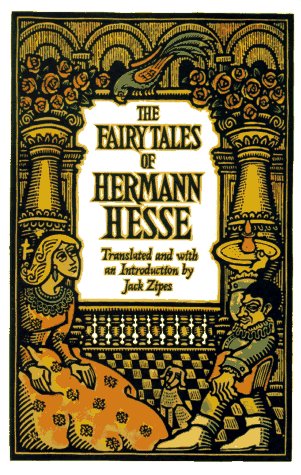
1. The Fairy Tales of Hermann Hesse
$7.89
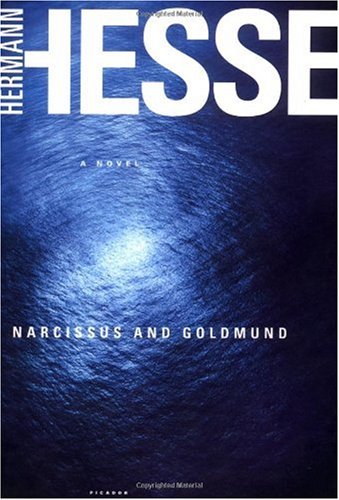
2. Narcissus and Goldmund: A Novel
$8.19
3. Gertrude: A Novel
$10.38
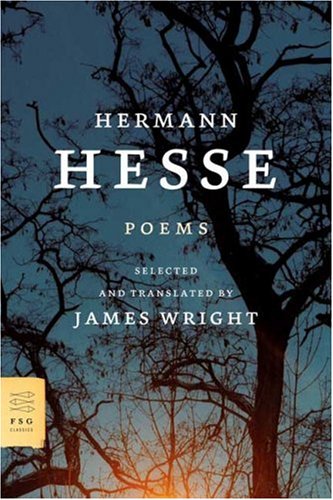
4. Poems
 
5. Hermann Hesse's Futuristic Idealism.
$2.99
6. Narcissus and Goldmund
$0.99
7. Demian (Dover Thrift Editions)
$5.37
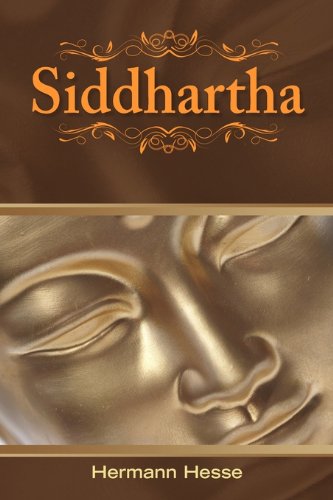
8. Siddhartha
$6.50
9. Pictor's Metamorphoses and Other
 
10. Autobiographical Writings
 
11. Twentieth Century Interpretations
$6.73
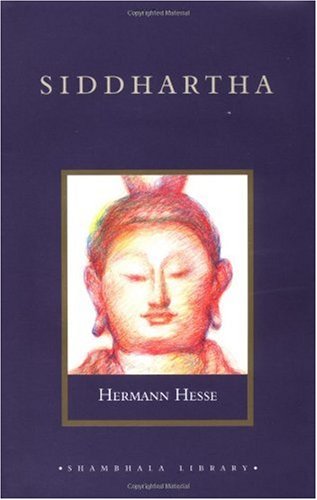
12. Siddhartha: Siddhartha (Shambhala
$10.02
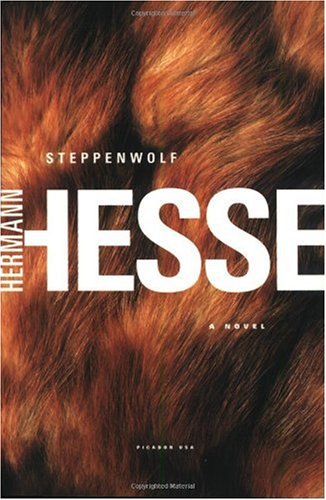
13. Steppenwolf: A Novel
 
$8.42
14. Siddhartha, Demian, and Other
$16.90
15. C.G. Jung and Hermann Hesse
$14.34
16. Rosshalde (Narrativas)
 
17. Steppenwolf
 
18. The Novels of Hermann Hesse: A
$9.94
19. Hermann Hesse
$5.89
20. Siddhartha

1. The Fairy Tales of Hermann Hesse
by Hermann Hesse
Paperback: 304 Pages (1995-10-01)
list price: US$16.00 -- used & new: US$8.00
(price subject to change: see help)
Asin: 0553377760
Average Customer Review: 3.5 out of 5 stars
Canada | United Kingdom | Germany | France | Japan

Customer Reviews (12)

2-0 out of 5 stars Morbid effects - handle with care
I write this review purely as a personal response.The 2 star review is based on the sense of morbidity that I feel on reading these stories. They may bring out the opposite effect in others, which is great!

I found an initial charm in reading this book in a bookstore cafe. Hesse has huge insight into the human condition and rich imagination. However after buying it and reading about 7 or 8 stories it was harder to take the inner themes which mainly circulate around love and death and a thwarted search for meaning and peace.

For those of a sensitive disposition you may find it hard to digest these stories comfortably. Hesse (a German) lived through WWI and WWII, some very troubled times. From his 'dream sequence' story in particular it seems clear that his own mind went to extremes of emotion, heights and depths, such as a mental patient or drug addict might experience. That's all fine. It is all honest human experience and fascinating perhaps when your soul is robust enough to handle sharing his company. You might find in him a kindred spirit of deep imagination and emotion.

For me though, at this particular time, the stories just left me feeling dragged into a morbid and overly emotional way of relating to life.

5-0 out of 5 stars Certain Fairytales in Particular
I found Hesse fairy tales enlightening;three in particular stood out.One is "If the War Continues", which I studied in Intermediate German in college.This is an example of how war
will trample on individual freedom;it carries shades of 1984, with Big Brother forbidding wearing of leather shoes, taking walk without permit.This tale does EXAGGERATE wartime restrictions;indeed, in OUR history, even in the two World Wars, civilians could wear leather shoes and take walks when they saw fit.Yes, there was rationing;yes, news was censored;yes, non-essential goods were not manufactured;yes, non-essential travel was
frowned on.I wonder if Germany under the Hohenzollerns in WWI
(and Hitler in WWII) had restrictions that Hesse mentioned.This
story is eloquent of Hesse pacifist views.
There is also "The Difficult Path", which shows that however
difficult it is to achieve a goal, it can be achieved with will and vision.
Most of all, I remember--and enjoy--"Flute Dream".This, too, I studied first in intermediate German in college.This
tale is of young man leaving home with talents--but no focus.
He met girl who kissed him and gave him bread, as he utilized his singing talent.However, he walked on, passing up not only a relationship but an outlet for his talents.Then he boarded a boat piloted by an old man, seeing this as opportunity knocking.
The young man's songs were not appreciated, and he regretted taking this course, seeing as night came on, that he must identify with the old man.He also was told by the helmsman that there is no way back, but when he took the helm, the old man disappeared, and HE BECAME the old man!What this is about is young adults' going off on their own with talents AND idealism, but no focus, so when they DO see opportunity to be creative and use their talents, and be REALLY successful THAT way, they pass it up, seeking ring dang doo or whatever.THEN they jump at what LOOKS like opportunity but is really a dead end! IT can take the form of having high goals but winding up in dead-end job for life
OR--GETTING to the TOP NOT by being creative, using talents, but MINDLESS CONFORMISM, being yes-men.So, "Flute Dream" sym-
bolizes, among other things, idealism and high hopes, but missing
opportunity and heading for dead end, from lack of focus.I was blind to this in college, then when I LATER read it in English, part of Strange News From Another Star, I did not grasp this meaning.Now, I am thankful to have copy of Hesse's Fairy Tales,
as I have more grasp of meaning of "Flute Dream", and should find others that give insights.

5-0 out of 5 stars A felicitous pairing
For readers of a certain age (like myself), the pairing of Hermann Hesse & Donovan will be a delight in itself. But I hasten to add that Donovan is a superb reader for these evocative stories: always articulate, precise, and just a touch ethereal. Add to that the tasteful scattering of guitar notes at appropriate junctures, and you have the words of a master conveyed by a masterful performer. Joyfully recommended!

3-0 out of 5 stars mixed feelings
i read this because a friend of mine had recommended it to me.. Overall, i could see that the stories ( more of short stories with morals - or at least his own philosophies - than actual fairy tales, except for some supernatural stuff, style, and/or the setting ) were crystals of some great thoughts...
BUT it wasn't.. exactly enthralling (to read).
I'm not sure if it's the translation or personal preference.

3-0 out of 5 stars Great stories . . . Not so great translation
Though the dust jacket claims that the bulk of these stories are appearing here in English for the first time, only a handful haven't appeared in English elsewhere. Hunt down copies of "Stories of Five Decades," "Strange News from Another Star," "If the War Goes On . . .", "Pictor's Metamorphasis," and "Tales of a Student's Life" and you'll have 18 out of 22 of these stories. Zipes' translations themselves are a bit lackluster, and do not really capture the spirit of these texts. That being said, the stories themselves are brilliant, and he does present a good cross-section of Hesse's shorter works. ... Read more


2. Narcissus and Goldmund: A Novel
by Hermann Hesse
Paperback: 320 Pages (2003-02-01)
list price: US$14.00 -- used & new: US$7.89
(price subject to change: see help)
Asin: 0312421672
Average Customer Review: 5.0 out of 5 stars
Canada | United Kingdom | Germany | France | Japan
Editorial Review

Book Description

Narcissus and Goldmund is the story of a passionate yet uneasy friendship between two men of opposite character. Narcissus, an ascetic instructor at a cloister school, has devoted himself solely to scholarly and spiritual pursuits. One of his students is the sensual, restless Goldmund, who is immediately drawn to his teacher’s fierce intellect and sense of discipline. When Narcissus persuades the young student that he is not meant for a life of self-denial, Goldmund sets off in pursuit of aesthetic and physical pleasures, a path that leads him to a final, unexpected reunion with Narcissus.
... Read more

Customer Reviews (6)

5-0 out of 5 stars Narcissus and Goldmund
I felt a sense of loss after finishing this novel. Not as I read its last pages and not as I closed it, but days later, when I thought to myself that for a week, it had been sustaining something in me--something introspective and romantic and idealistic. The novel traces Goldmund's development from youth to a premature old age. However otherworldly and idealistic the boy's thoughts sometimes seem, they are always deeply sincere, and the respectful tone he has for everything around him carries over into the reader's own attitude toward life. Next to Steppenwolf, which is beautifully darker and more solitary, Narcissus and Goldmund is fast becoming my favorite among Hesse's works. It is a novel which will be remembered fondly, and it is so complete and fulfilling that readers might be left with a sense of aimlessness after it is done. In the end, perhaps only novels which leave one with this feeling are truly worth the read.

5-0 out of 5 stars Perhaps Hesse's greatest novel.It's certainly my favorite.
I actually don't read a lot of fiction, but when I do I try to read very high quality material with a lot of depth, complexity and a story that reflects life as it is really lived with all of the uncertainties, difficult emotions, paradoxes, etc.This book succeeds on all accounts and is top notch in every way e.g. round characters, carefully developed plot and engaging interwoven themes that anyone can relate to.

This story deals with the struggle between the intellect and flesh.This personified by the two main characters.One is of a more artistic temperment and the other is a very disciplined type.The two are in search for truth and meaning, but they approach their search differently although they both start out life the same as monks.

In the end, as in real life I don't think the dilemma is resolved or completely understood.However, it is clear that both paths seem to lead to similar realizations.On one hand, the disciplined, intellectual approach to reality and on the other the more meandering, open and free-spirited path of direct experience guided by intuition.

There are many other reviewers who have written more detail about the plot, specifics and other details, so I won't repeat what they have said.What I would like to add is that this book shines a light on the important existential questions we all have and does it in a very powerful and moving way.

5-0 out of 5 stars His friend awakened him- the world and wandering molded him.
_This is the story of two very different young would-be monks in the medieval cloister of Mariabronn. Narcissus was a lunar type- introverted, a thinker and a scholar. On the other hand, Goldmund was a classic solar type- extroverted, a lover and an artist.

_Yet, these two beings of seemingly opposite temperaments became the deepest of life-long friends. This is because different strengths- and different weaknesses- complement each other. In this way two unbalanced natures may in strange alchemy fulfill each other. They may be able to see their shadow in the other- and their pivotal conflict.

_It was in this way that Narcissus saw his friend Goldmund's central repressed crisis. It was this shattering revelation that drove Goldmund out into the world beyond the sheltered cloister. It drove him to a life on the edge as a life-long wanderer. He started in a search for his nearly forgotten mother and ended by finding the eternal feminine in all women. Yet the years of hardship and horror (including murder, the Great Plague, and prison) took their toll on him. When after over a decade of wandering, he finally encountered his friend Narcissus again it saved his life- both literally and spiritually.

_I could not imagine a more Jungian novel. Nor could I imagine a better expression of the meaning of profound friendship.

5-0 out of 5 stars An incredibly moving tale unlike any other
This is one of the most captivating and beautifully written novels in history. Hermann Hesse is a fascinating story teller and vividly romantic poet.Deep introspection, hilarious laughter, pensiveness, tears, and spiritual elevation are all experienced within the pages of this incredible and unmatched journey. Worth every minute... you won't waste a moment once you turn the first few pages. An amazing read!

5-0 out of 5 stars Narcissus and Goldmund
Do yourself a favor and read this book - especially if you have enjoyed any of Hesse's other wonderful works of art.

If you care about life, mystery, dreams, artistic endeavors, love, and truth: read this novel and drink in it's secret and magical beauty.

Who knows? You might just be one of the one's who 'get it'.
And this my friend, is no small prize for those delvers into the inner reaches of the soul. ... Read more


3. Gertrude: A Novel
by Hermann Hesse
Paperback: 237 Pages (2005-08-01)
list price: US$14.00 -- used & new: US$8.19
(price subject to change: see help)
Asin: 0312424639
Average Customer Review: 4.5 out of 5 stars
Canada | United Kingdom | Germany | France | Japan
Editorial Review

Book Description

With Gertrude, Herman Hesse continues his lifelong exploration of the irreconcilable elements of human existence. In this fictional memoir, the renowned composer Kuhn recounts his tangled relationships with two artists--his friend Heinrich Muoth, a brooding, self-destructive opera singer, and the gentle, self-assured Gertrude Imthor. Kuhn is drawn to Gertrude upon their first meeting, but Gertrude falls in love with Heinrich, to whom she is introduced when Kuhn auditions them for the leads in his new opera. Hopelessly ill-matched, Gertrude and Heinrich have a disastrous marriage that leaves them both ruined. Yet this tragic affair also becomes the inspiration for Kuhn’s opera, the most important success of his artistic life.
... Read more

Customer Reviews (17)

5-0 out of 5 stars The Sorrows of Young Herman
It's a long time(35 years) since I had anything to do with Hesse.So it was with a cautionary grasp that I accepted a friend's offer of this book. And I was gratefully surprised. My own youthful exhuberance of'Steppenwolf' had long diminished. And save the three tales that close,'The Bead Game', I hadn't found much of enduring pleasure in Hesse's wearisome journeys East and inwards. A pre-World War 1 Hesse? Gertrude is brisk and muscular,given its lineage is the artistic romanticsim reaching back to Goethe's 'Werner'; the introspective outsider (the subject of Brit. author, Colin Wilson's extravagant thesis of that name). Here was an elegantly composed piece of writing that gets Hesse's concerns(elucidated very well by other reviewers)out there with a minimum of fuss, free of the angstings that its narrator is suffering. The psychological condition of 'projection', so much the jargon word since the publishing of Jung's ideas, is presented as clearly as you'd ever wish for. Recommended!

4-0 out of 5 stars BUT NOT FOR ME
The hero of Hesse's early novel GERTRUDE is straight from the Romantic tradition, even to the Byronic crippled leg that its narrator, Kuhn, suffers in a sledding accident. We have the growth of the artist fully on display here, from his early meanderings through music school, to fleeting first loves and disillusionment, to the existential angst, and the realization of the quest for one's muse. Yep, all of this is contained in this novel, that could have been written in the 1850s in England, but was instead written in the first quarter of the 20th century. Kuhn is a gifted composer, if not a musician, born to a wealthy family who is trying to decide what to do with his life. Almost everyone at the music school he attends seem to think that he is too unorthodox and too lazy to amount to anything. The novel Gertrude is a narrative of his life as he proves that he is anything but a nobody, as he works his way up the musical ladder, making friends with one of the best opera singers around, Heinrich Muoth, who also happens to be a ladies man, and is introduced to Gertrude, the daughter of one of his patrons with whom he falls in love.

Although the general tone of Gertrude is Romantic, Hesse's third novel also touches upon ground that would only be fully explored later by Camus and the other Existentialist writers. The book is a little slow at points but becomes a study in cross purposes as characters fall in love with characters that do not love them in return. Hesse also hits upon the theme of the cruelty of life and that the great task of people is to lose themselves in others because as the self-absorbed Kuhn comes to find out, loving thyself to the exclusion of all others is a ticket to despair.

5-0 out of 5 stars Compelling and beautiful
Because of its brevity and utterly compelling story, which unfolds almost forcefully, this makes a genuinely riveting read.At the same time, its sheer sadness and the strength of the main cahracter's struggle with life make it poignant and memorable.Not to be missed

4-0 out of 5 stars Poignant
After reading, "Demian," "Narcissus and Goldmund", "Siddharta," and "Beneath The Wheel," it was a pleasant surprise to read something "light" from Hermann Hesse.Don't get me wrong.Even with the simple plot and autobigraphical narration of Kuhn, Hesse's philosophies pervade, especially on love, wisdom and growing old.

"Gertrude" is a story about desires.Kuhn's desires to have his leg back, to live without loneliness, even a desire to change fate itself.All of these desires become centered in Gertrude Imothor whom he befriends and falls in love with as Kuhn was slowly rising in prominence as a composer.While Kuhn works on his opera, his friends, Muoth and Gertrude, fall in love.Finding about the affair, Kuhn becomes devastated but was soon distracted by a telegram sent about his ailing father.His father's death brings Kuhn back to the advice that he gave him the past summer.With renewed vigor, he accepts his fate and even composes a prelude for Muoth and Gertrude's wedding.Kuhn's opera becomes a success while Muoth and Gertrude's marriage crumbles.Gertrude, Muoth and Kuhn's desires interweave and create the tragic results to which all of them learn from.

In the end, Kuhn learns from his experiences and even comes to accept his fate, as he relates in this passage:
"Fate was not kind, life was capricious and terrible, and there was no good or reason with nature.But there is good and reason in us, in human beings, with whom fortune plays, and we can be stronger than nature and fate, if only for a few hours.And we can draw close to one another in times of need, understand and love one another and live to comfort each other."

4-0 out of 5 stars A Note of Caution to All Prospective Readers:
It is all too easy to come away from Gertrude, Hesse's earliest fictional memoir, unchanged. Although all will undoubtedly be touched on some level by at least a few of the poignant, youthful anecdotes with which the novel abounds, one should nevertheless resist the temptation to write it off as another "touching story of humanity."* Beneath the heavy sentimentality and beyond the short-winded elations of men, at the heart of the novel, is the idea that pleasure and pain arise from the same source and are aspects of the same force. With this view, the story of a crippled composer, Kuhn, and his unrequited love for Gertrude takes on an expository tone, delving at points into the very nature of pleasure and pain themselves. With that in mind, enjoy the novel and the experience and take full advantage of the multitude of opportunities Hesse affords you to contemplate the nature of these basic, human concepts.

* I quote reviewer "Savygal007" (who apparently maintains the interpretation I caution against) ... Read more


4. Poems
by Hermann Hesse
Paperback: 96 Pages (2008-03-18)
list price: US$13.00 -- used & new: US$10.38
(price subject to change: see help)
Asin: 0374526419
Average Customer Review: 4.5 out of 5 stars
Canada | United Kingdom | Germany | France | Japan
Editorial Review

Book Description

Few American readers seem to be aware that Hermann Hesse, author of the epic novels Steppenwolf and Siddhartha, among many others, also wrote poetry, the best of which the poet James Wright has translated and included in this book. This is a special volume—filled with short, direct poems about love, death, loneliness, the seasons—that is imbued with some of the imagery and feeling of Hesse’s novels but that has a clarity and resonance all its own, a sense of longing for love and for home that is both deceptively simple and deeply moving.
... Read more

Customer Reviews (5)

4-0 out of 5 stars Poems by Herman Hesse selected and translated by James Wright
If you know and love Herman Hesse through his stories then I would guess you will appreciate this collection of his poems.There are not many poems, that is my only complaint, otherwise the poems are beautiful and the introduction insightful.I am glad to have it on my shelf next to the many books of Herr Hesse's fiction.

5-0 out of 5 stars Great poetry, unfairly neglected
I will never understand why Hermann Hesse's poetry is as underappreciated as it seems to be.Translated by Pulitzer Prize winning poet James Wright, who set the standard for many aspiring poets in the twentieth century (and whose son later came to regain his father's crown), Hesse's work has an infectious melancholy to it, some of which we see in his fiction and some of which we don't.Many deal with the waste of human life in WW1, but never once does Hesse put on the mantle of a political ideologue: he is always a romantic, and he always knows just how to do it.

I say without exaggeration that his poem "Thinking of a Friend At Night" is one of the best pieces of poetry that I have ever read (certainly equalling anything Wright wrote during his short life.)I have trouble reconciling the translator's introduction, which posits Hesse as "irretrievably adolescent", with this masterpiece:

"In this evil year, autumn comes early.../I walk by night in the field, alone, the rain clatters/The wind on my hat...And you? And you, my friend?/You are standing--maybe--and seeing the sickle moon/Move in a small arc over the forests/And bivouac fire, red in the black valley/You are lying--maybe--in a straw field and sleeping/And dew falls cold on your forehead and battle jacket/It's possible tonight you're on horseback
The farthest outpost, peering along, with a gun in your fist,
Smiling, whispering, to your exhausted horse/
Maybe--I keep imagining--you are spending the night/
As a guest in a strange castle with a park
And writing a letter by candlelight/and tapping
On the piano keys by the window/
Groping for a sound..."

Not many perpetual adolescents could match that.Wright seems more sympathetic to Hesse's poetry than Stephen Koch (who?), the novelist who first convinced the literati that Hesse's image of himself a poet was erroneous.I would disagree.You could even say, after reading this collection, that his poetry rivals some of his fiction.Anyway, this is an important, extremely enjoyable read for anyone who enjoys German Romanticism brought to a more modern level.

5-0 out of 5 stars Poems of longing and seperation
This is one of my favorite anthologies of poetry, worth reading repeatedly. It captures the spirit of a man, so much like us all, who longs for that something beyond the next hill or behind the wistful smile.How many of us sense intuitively that life is wrapped in a mystery, the veil of separation thin? Hesse's poetry, like his novels, reminds me that even though the inner meaning to life often seems just beyond my reach, it is none the less to be found in the quotidian activities of breathing the fresh air, cutting the finger on the edge of a dish, or listening to Bach as I clean the garage. Written almost 90 years ago, his poetry still rings true to the wandering steppenwolfe in each one of us. "The Gate of Heaven is everywhere."

You may also be captivated by another moving anthology of poetry, "Against Forgetting". It is an anthology of 20th century poems of witness, suffering, and hope.

4-0 out of 5 stars Short & Sweet
It shows the excellent ability of Hesse in mastering both styles of writing. His style in writing poems is magnificant, and very clear. I am sure the translation is still weaker than the original german language, but nevertheless it is a highly recommended book to read.

If you are a Hesse fan, you will enjoy this even more.

5-0 out of 5 stars A Fascinating Glimpse into Hesse's Poetic Mind
It is unfortunate, though Hesse always thought of himself first as a poet, readers who are not fluent in German rarely get to read any of his poetry.Highly lyrical and Romantic, Hesse's poems remind his readers that theworld he was most comfortable in was the creation of the German poets inthe century which preceded him.Highly reminiscent of Holderin with a bitof Goethe thrown in for style, all of the poems selected are eminentlyreadable.James Wright has gone for a literal translation, and in manycases causes the poems to loose the musical charm his words have in German. For those who, like me, are critical of translations, the German text foreach poem is also included.Anyone with an interest in Hesse or in thetwentieth century canon should defintely read this book. ... Read more


5. Hermann Hesse's Futuristic Idealism. the Glass Bead Game and Its Predecessors (European University Papers. Series 1: German Language and Literature)
by Roger Norton
 Paperback: 149 Pages (1973-06)
list price: US$27.80
Isbn: 3261008563
Canada | United Kingdom | Germany | France | Japan

6. Narcissus and Goldmund
by Hermann Hesse
Mass Market Paperback: 320 Pages (1984-03-01)
list price: US$6.99 -- used & new: US$2.99
(price subject to change: see help)
Asin: 0553275860
Average Customer Review: 4.5 out of 5 stars
Canada | United Kingdom | Germany | France | Japan
Editorial Review

Book Description
Hesse's novel of two medieval men, one quietly  content with his religion and monastic life, the  other in fervent search of more worldly salvation.  This conflict between flesh and spirit, between  emotional and contemplative man, was a life study for  Hesse. It is a theme that transcends all time.  The Hesse Phenomenon "has turned into a vogue,  the vogue into a torrent. . .He has appealed both  to. . . an underground and to an establishment. .  .and to the disenchanted young sharing his contempt  for our industrial  civilization."--The New York Times Book Review ... Read more

Customer Reviews (79)

5-0 out of 5 stars a true work of literature.
This book is a wonderful philosophical book that shows the contrast between feelings and thoughts.While reading I was was confronted by quite a number of necessary metaphysical questions.Questions regarding our belief, emotion, thought, perception, logic, divinity and existence. The book shows the struggle of inner human heart which managed to reach the true self consciousness.

5-0 out of 5 stars A transient's mentality, dilemmas and possible arrivals
Hesse's account of how many of your inclinations get enamored by each other's possible arrival. A dilemma in each young thinker's mind taken as far as it went and presented as a story of a vagabond and an abbot is gripping and one which all us can identify with in one way or the other. A masterpiece !

3-0 out of 5 stars Great adolescent book, weak adult book
I put this book in the same category as Kerouac's "On The Road" - a great, adolescent adventure story (and one that inspired me when I was an adolescent).

Although this book will always hold a place in my heart - unforgettable characters, some powerful scenes, some beautiful descriptions - upon rereading it I now see its limits more clearly.

A quick laundry list:

1)I found much of the philosophizing (and waxing eloquent about psychology) gratuitous - two-thirds could have been cut with little loss to the book.

2)The countless sex scenes read as juvenile, one-night stands - and yet were presented as a testament to masculinity and adventure and internal questing and life itself.I was disappointed that Goldmund essentially wasted his entire life having affairs (some with young teenage girls) and never really grew past them.I can't help but wonder what this says about Hermann Hesse (who wrote the book in his 50s).

3)Hesse presented the characters (and philosophies) of Narcissus and Goldmund as opposites or complements who together created a whole, but over and over I felt that he was missing the bigger picture, hampered by his own lack of perspective.

4)I wanted to know more about Narcissus's character - his childhood, his feelings, his dimensions.Hesse gave us almost nothing, and if you take Narcissus's character as written you basically have a very schizoid and repressed - but gentle - gay guy who's spent his life hiding in a cloister.

I wonder how I would have reacted to this book had I not read it first as an adolescent.I suspect I wouldn't have finished it.

4-0 out of 5 stars Art, sex, death
This was one of my favorite novels in my late teens and early twenties.Ostensibly it is about two medieval seminary friends personifying opposite poles of being:Narcissus, the introspective priest, represents the orderly spiritual and intellectual realm of the father, of the church, and of philosophy and science, while his counterpart Goldmund arrives as an unconfident, confused and dissatisfied student compelled to rebel against the stifling monastery life into which he's been thrust so as to find himself alone in the secular world of art, imagination, and sensuality encompassed by Mother Nature.Like Hesse rereading this same novel after many years ("Events in the Engadine" (1953)) I dusted off and taped together my tattered paperback, underlined and asterisked in revealing passages, and slowly savored it over a recent fall month.Some of the writing seemed a bit overdone and even, "embarrassing", as T. Ziolkowski "The Novels of Hermann Hesse: A Study in Theme and Structure," Princeton U. Press (1965) comments, but I still enjoyed re-experiencing Goldmund's picaresque wanderings throughout the Black Death.He camps in the woods and stops in villages, meets fellow wanderers, drinks and socializes in taverns, finds work where he can, and discovers pleasure and temporary respite in his many encounters with women.Throughout his worldly adventures there is always danger and ignorance to be avoided.

Hesse's novels depict individuals at different stages of personal development and N&G picks up where Demian leaves off.A liberated Sinclair is transposed into Goldmund as he seeks out his "Mother Eva" once he's broken from the insular confines of the monastery.What I like most about this novel is the picaresque theme of seeking and personal redemption during times of chaos.To Hesse these redemptive forces are always art.Goldmund meets a master wood carver in a village and becomes his apprentice, eventually becoming a master sculptor himself.The passages where Goldmund is an artist and city-dweller are the most interesting to me, evoking similar scenes from "Steppenwolf" and "Siddhartha", as well as the short stories "Klingsor's Last Summer" and "Knulp".And even though the idyllic medieval setting is simply sketched as a conceptual backdrop, selected by Hesse due to its being a time in which the average European life was ordered around the church, and the ever-present threat of death, it creates space for the reader's imagination and curiosity to wander along with Goldmund.

Yet this time around I felt compelled to focus on Narcissus, hoping against my previous experiences with this novel for a fuller conception of his elusive, rather flatly drawn character, to discover something more profound.While I did re-encounter some descriptive snippets I'd not taken notice of before, especially an insightful dialogue towards the end on "thinking vs. imagining" (p. 277), ultimately, I came to the conclusion that Narcissus should remain the elusive spirit, seemingly devoid of the artistic attention Goldmund receives.Though I would have liked it if Hesse had written more about Narcissus's inner struggles with God and life within Mariabronn, perhaps going off on extended tangents about philosophy and Christianity or celibacy and homosexuality within the church (thus in all likelihood making Hesse enemy #1 to his book-burning countrymen in Nazi Germany, who burned this book anyway; not to mention the probable ire of his editors) but the fact is that Hesse originally conceived the idea of the novel around Goldmund, only later intending for Narcissus to have equal weight.The prototype for N&G can be found in an early, unfinished story called "Berthold" ("Tales of Student Life," Farrar, Straus & Giroux (1976)) in which the focal character of Berthold is essentially an earlier version of Goldmund.Nevertheless, Narcissus's importance is clear in that in the end it is his spiritual life that is the pole from which Goldmund departs and, eventually returns.In any event, a reader wanting more of Narcissus (and many of the philosophical "tangents" & wanderings I mentioned above) will find his reincarnation in Joseph Knecht in the transcendental "The Glass Bead Game".Ultimately, even though Hesse's attempt at a "Doppelroman", or "double-novel" representing two separate lives and realms equally, comes up short in a structural sense, the attempt is perhaps more interesting because of these flaws.

5-0 out of 5 stars Quintessential Hesse
Hesse is widely loved for a number of things:the themes he addresses, the often unexpected light he casts on them, and the detail with which he develops his characters and their setting.His style, even when addressing weighty matters of substance, is simple and never resorts to O'Henry-style tricks.His stories are accessible to most literate people, never relying on technical or obscure language.

Narcissus and Goldmund is probably as good an example of mainstream Hesse as any of his books (at least, of the six or seven I have read over a period of decades).It lacks the exoticism of Steppenwolf and is more complex than several of his shorter works.Perhaps the book it most closely resembles is Siddhartha, since its questions and theme are developed through considering the interplay of spiritual and worldly calling.

In this volume, great principles and different modes of knowing are embodied in the two protagonists. I wept upon reading Goldmund's dying words to Narcissus, as he frames the ultimate question for his cherished friend.Hesse's work is about each one of us, pilgrims on our way to death's shrine. ... Read more


7. Demian (Dover Thrift Editions)
by Hermann Hesse
Paperback: 109 Pages (2000-12-18)
list price: US$3.00 -- used & new: US$0.99
(price subject to change: see help)
Asin: 0486414132
Average Customer Review: 4.5 out of 5 stars
Canada | United Kingdom | Germany | France | Japan
Editorial Review

Book Description

A brilliant psychological portrait of a troubled young man's quest for self-awareness, this coming-of-age novel achieved instant critical and popular acclaim upon its 1919 publication. A landmark in the history of 20th-century literature, it reflects the author's preoccupation with the duality of human nature and the pursuit of spiritual fullfillment. Excellent new English translation. Introduction.
... Read more

Customer Reviews (120)

4-0 out of 5 stars Strange companions
As a little boy Emile Sinclair feels that life is divided into a world of light and a world of dark.Emile meets Max Demian, an older self-assured boy who seems to know much about life.While Demian does not dominate Sinclair, the younger boy falls increasingly under the influence of the older youth.The novel follows Sinclair's development through through childhood to adolescent rebellion to young adulthood.It plots Sinclair's evolving thought from unorthodox religion to philosophical mysticism and on towards self-awareness.

This book was published in 1919, just after World War 1.It shows the influence of the great ferment of thought that occurred at turn of the twentieth century and which resulted in various mystical movements such as theosophy and Rudolf Steiner's anthroposophy.Most of all, the book seems to show the influence of the then new psychology of Carl Jung, including Jung's interest in psychic phenomena.The novel is increasingly didactic as Sinclair delves deeper into mysticism, philosophy and psychology and as a result will be of less interest to those interested in stories of human interaction and events.This is not to say that 'nothing happens' in the novel, even in the second half, but long 'teaching' speeches occupy much of this second half of the book.As someone interested in Jungian psychology I found this book fascinating, but almost 100 years on I am left wondering did the 'grand new man' really emerge or are we still clinging to the "heard instinct" so accurately described in ?

2-0 out of 5 stars for 17 year old budding existentialists
...It was OK. I found the novel slow to start, difficult to deliver its theme, and a bit pale in the spectrum of existentialist literature. I have a feeling that I may have enjoyed it more at age 17 but it held no new revelations for me nor did I find the style particularly captivating. That said, I was intrigued by one particular passage:

"Always, you must think of these things in evolutionary, in historical terms! When the upheavals of the earth's surface flung the creatures of the sea onto the land and the land creatures into the sea, the specimens of the various orders that were ready to follow their destiny were the ones that accomplished the new and unprecedented; by making new biological adjustments they were able to save their species from destruction. We do not know whether these were the same speciments that had previously distinguished themselves among their fellows as conservative, upholders of the status quo, or rather as eccentrics, revolutionaries; but we do know they were ready, and could therefore lead their species into new phases of evolution. That is why we want to be ready."

...Hesse as a pre-Kurzweillian proto-Singularity transhumanist? Or Hesse attempting to appeal to us that we are otherwise base, animal creatures that seem capable only of destruction?

5-0 out of 5 stars Strange beauty
I was never quite sure how to describe or catergorize this odd and beautiful masterpiece, but over the years, I have remained grateful that I even had a high school teacher who included this in a Senior lit. class so many years in my past.

Over the years, I have glanced through this rather slim novel from time to time, puzzled at what it was that made such a huge impact on my spirit, all of 17 years old at the time. But there was something here that Hesse capitivated and I don't know exactly what it was but I sat up and read each word with utter fascination along with an eerie kind of knowing.

It's that kind of book.

If you are looking for a straight narrative that has a predictable or pat ending, you might be dissapointed. This is definitely not for the WATER FOR ELEPHANTS, EAT PRAY LOVE set. It's strange. It's fascinating and it's a classic one of a kinder. There will be those who swear it has the power to change your life and those who will shrug their shoulders with indifference. I have no idea why this read impacted my 17 year old self so. It has not done the same to me as a 38 year old as it had with my adolescent self. But I will say it is so worth reading, as all of Hesse's strange and beautiful works. There just isn't a lot out there today that captures spirituality the way this author does.

One exception, however, is the remarkable SIM0N LAZARUS--of course, the Eckhart Tolle endorsement inspired me!

3-0 out of 5 stars Demian: A Changing Perspective
I first read "Demian" as a mid-teen and it made a BIG impression on me. Since it's a coming-of-age tale it really appeals to teens who are certainly torn with their belief structure and trying to gain a perspective on the world around them.

Everyone needs to understand the setting of this novel as well as what influenced the Nobel-prize winning author, Hermann Hesse. The time period is just prior to WWI in Germany so remember there was little technology to occupy one's time with entertainment. They were a very relationship-based society back then. Hermann was around the age of 40 when he penned this novel so he had some decent adult perspective in writing it.

And perspective is a key element in reviewing the novel. Again, when I was a teen it mirrored my struggles and I found it to be very engaging in its outlay of religious (and a-religious) mystery as well as one's struggle with sexuality. Emil Sinclair went through the entire novel always a little clueless about all the big issues confronting him. He leaned on Max Demian and Frau Eva for support and never really obtained his own independence from their influence. And it was odd that Max and Eva seemed to have so much more influence on him than his own family. He barely talked about his own parents and his sisters. But that's probably due to his "mark of Cain" affinity he had with the Demians, and of course he had outright burning lust in his heart for Max's widowed mother, Eva. (And whatever became of Max's father anyway?) Again, those are elements that many confused teens can identify with.

But now that I'm in my 40s I read it with a far different perspective. It certainly does not affect me the way it once did. I can easily see now that it's a run of the mill coming of age story maybe typical for the early 1900s in Germany. And instead of identifying with Emil's struggles, I am more inclined to point out his folly and shortcomings. I'm more likely to view Max and Eva as manipulative and self-serving than mystically mysterious. And I'm more cynical of how Hesse, who penned the novel AFTER WWI, gave his Max Demian character the prescience to foresee the war and the upheaval it would bring.

So my adult re-reading is far less satisfying than my first teen reading. Then how does one rate a novel with such different perspectives? If you'd asked me as a teen I'd have given it five stars, but as an adult I'd give a pedestrian two stars. So, here, I give it three stars. It's not a badly written novel, it didn't win him the Nobel prize but it certainly was an important work for him that surely accounted for some portion of the Nobel committee's consideration. But its target audience is definitely those in their teen years; they'll find it a more impressive reading experience than established adults.

5-0 out of 5 stars Five huge stars...
Thats it...go read it! Its a great book as areall by Hermann Hesse. ... Read more


8. Siddhartha
by Hermann Hesse
Paperback: 120 Pages (2007-08-05)
list price: US$5.95 -- used & new: US$5.37
(price subject to change: see help)
Asin: 1934648035
Canada | United Kingdom | Germany | France | Japan
Editorial Review

Book Description
Siddhartha (1922) by Hermann Hesse is a deceptively simple, intense, and lyrical allegorical tale of a man in ancient India striving for enlightenment at the time of Buddha.Siddhartha is a man whose life journey runs in parallel and who may or may not be another version of Buddha himself.

Spiritual enlightenment may not be taught, only experienced, and each individual must tread their own personal path toward truth, in this unforgettable novel by the author who won the 1946 Nobel Prize in Literature. ... Read more


9. Pictor's Metamorphoses and Other Fantasies
by Hermann Hesse
Paperback: 208 Pages (1982-12)
list price: US$14.00 -- used & new: US$6.50
(price subject to change: see help)
Asin: 0374517231
Average Customer Review: 5.0 out of 5 stars
Canada | United Kingdom | Germany | France | Japan
Editorial Review

Book Description
Selected and with an Introduction by Theodore Ziolkowski In the spring of 1922, several months after completing Siddhartha, Hermann Hesse wrote a fairy tale that was also a love story, inspired by the woman who was to become his second wife. That story, "Pictor's Metamorphoses," is presented here along with a half century of Hesse's other short writings. Inspired by the Arabian Nights and the tales of the Brothers Grimm, these nineteen stories display the full range of Hesse's lifetime fascination with fantasy--as dream, fairy tale, folktale, satire, and allegory. ... Read more

Customer Reviews (3)

5-0 out of 5 stars A terrific introduction to Hesse
Hesse was an inveterate story writer and this collection is an excellent introduction to his work.Most of these tales are only a few pages long and even the longest can be completed in one sitting.They also span his entire career and give the reader a great overview of the author's style.

I recommend especially the title story, "Pictor's Metamorphoses":here a youth named Pictor wanders into a garden and finds a magic carbuncle which transforms him into a tree.But he realizes that his life his incomplete, and remains unhappy until a girl wanders into the same garden...

5-0 out of 5 stars MAGIC
this book has followed me throughout my life, and has never been topped by another. He was, and is, the author closest to my heart.

5-0 out of 5 stars Shows The Vast Range Of Writing Styles Of Hesse
This is a really good book. From the dreams he has as a young boy to the times after the war. A good book to read in between books. Most of the stories are short but there are some long ones too. ... Read more


10. Autobiographical Writings
by Hermann Hesse
 Paperback: Pages (1972-06)
list price: US$3.95
Isbn: 0374509646
Average Customer Review: 5.0 out of 5 stars
Canada | United Kingdom | Germany | France | Japan

Customer Reviews (1)

5-0 out of 5 stars Fascinating Look into the Life of Hesse!
Really enjoyed the fascinating look into the life of the writer of the great classics, including "Siddhartha". ... Read more


11. Twentieth Century Interpretations of Hesse: A Collection of Critical Essays (A Spectrum book: Twentieth century views)
by Theodore Ziolkowski
 Hardcover: 192 Pages (1973-12)
list price: US$12.95
Isbn: 0133871835
Canada | United Kingdom | Germany | France | Japan

12. Siddhartha: Siddhartha (Shambhala Classics)
by Hermann Hesse
Paperback: 112 Pages (2000-09-19)
list price: US$11.95 -- used & new: US$6.73
(price subject to change: see help)
Asin: 1570627215
Average Customer Review: 4.5 out of 5 stars
Canada | United Kingdom | Germany | France | Japan
Editorial Review

Amazon.com
In the shade of a banyan tree, a grizzled ferryman sits listening to theriver. Some say he's a sage. He was once a wandering shramana and, briefly, likethousands of others, he followed Gotama the Buddha, enraptured by his sermons.But this man, Siddhartha, was not a follower of any but his own soul. Born theson of a Brahmin, Siddhartha was blessed in appearance, intelligence, andcharisma. In order to find meaning in life, he discarded his promising futurefor the life of a wandering ascetic. Still, true happiness evaded him. Then alife of pleasure and titillation merely eroded away his spiritual gains until hewas just like all the other "child people," dragged around by his desires. LikeHermann Hesse's other creations of struggling young men, Siddhartha has agood dose of European angst and stubborn individualism. His final epiphanychallenges both the Buddhist and the Hindu ideals of enlightenment. Neither apractitioner nor a devotee, neither meditating nor reciting, Siddhartha comes toblend in with the world, resonating with the rhythms of nature, bending thereader's ear down to hear answers from the river. In this translation SherabChodzin Kohn captures the slow, spare lyricism of Siddhartha's search, puttingher version on par with Hilda Rosner's standard edition. --Brian BruyaBook Description
This classic of twentieth-century literature chronicles the spiritual evolution of a man living in India at the time of the Buddha—a spiritual journey that has inspired generations of readers. Here is a fresh translation from Sherab Chödzin Kohn, a gifted translator and longtime student of Buddhism and Eastern philosophy. Kohn's flowing, poetic translation conveys the philosophical and spiritual nuances of Hesse's text, paying special attention to the qualities of meditation experience. This edition also includes an introduction exploring Hesse's own spiritual journey as evidenced in his journals and personal letters. ... Read more

Customer Reviews (452)

5-0 out of 5 stars Endlessly re-readable
I've been teaching this book to classes for about a decade, and if one of the marks of truly great literature is that it generates discussions - then this is most assuredly one of the greatest of books.Some students find it too challenging, of course.They decide to ignore Siddhartha's final vision altogether.This is one way to deal with the problem of being asked to think about life in a wholly new fashion, and rather than it being a 'fault' in the book it is evidence of the book's desire to give readers a push in a new and somewhat unnerving direction.For Siddhartha's vision is of a world in which 'I' and 'you' dissolve - and this can be perceived by some 19 and 20 year olds as extremely threatening.

Any book that can shake up students in this age bracket is worth its weight in gold.

5-0 out of 5 stars The best "little book" of Buddhism ever written....
I have read this book no less than five times over the years. How one could not give this book 5 stars is beyond me. I have read numerous books relating to Buddhism and Hesse' "Siddhartha" although a fiction is probably the best book ever written on the subject. So simplistic yet so profound in its message. The essence of Buddhism can be found within these pages. I almost feel badfor the reviewers who gave this book 1-2 stars because they truly missed the point of this incredible book. Anyone that knows even the basics about Buddhism is already aware that the concept of Buddhism is very simplistic (which can be found in Siddhartha) it is the practice of Buddhism that takes dedication, discipline, and determination which is better explained in other books.A true classic which will stand the test of time.

3-0 out of 5 stars for armchair Buddhists (in the Great White West)
Judging from the title, I went into this thinking: This is Hesse's take on the life of Siddhartha Gautama....You know, the Buddha?Instead we get this thin parallel of Hesse's "Siddhartha" rubbed up tangentially against Gautama's life and acts.

I suppose that this prejudice tainted my overall read.

That said, I did not find Hesse's Siddhartha to be a particularly mature or captivating work.It was well-crafted and (at times) thought-provoking but not particularly imaginative.Between this and Demian, I found myself thinking of Hesse as a watered-down, optimistic Kafka.

Oooo....Now there's an idea.The Buddha in Metamorphosis.(Hey you! Come back here with my idea!)

5-0 out of 5 stars Profound, inspiring, life-changing
Siddhartha is Hesse's finest work, followed closely by Narcissus and Goldmund.It's the story of the emergence of the Buddha, written by an incredibly insightful and sensitive author who's clearly walked the spiritual path. It inspired me to write my book, To Bee or Not to Bee, an allegory about the same theme--spiritual awakening. It's now in 11 languages and exploding.Thank you Hermann, you were way ahead of your time.
To Bee or Not to Bee: A Book for Beeings Who Feel There's More to Life Than Just Making Honey

5-0 out of 5 stars Siddhartha
This is a fantastic book and should be read in high school class along with Catcher in the Rye and Of Mice and Men.I know my children will be reading it. ... Read more


13. Steppenwolf: A Novel
by Hermann Hesse, Basil Creighton
Paperback: 224 Pages (2002-12-01)
list price: US$14.00 -- used & new: US$10.02
(price subject to change: see help)
Asin: B000A6U2HU
Average Customer Review: 4.5 out of 5 stars
Canada | United Kingdom | Germany | France | Japan
Editorial Review

Book Description
A Modern, Poetic Classic About the Soul's Journey to Liberation --First Time Ever on CD. Harry Haller is a sad and lonely figure, a reclusive intellectual for whom life holds no joy. He struggles to reconcile the wild primeval wolf and the rational man within himself without surrendering to the bourgeois values he despises. His life changes dramatically when he meets a woman who is his opposite, the carefree and elusive Hermine.

With its blend of Eastern mysticism and Western culture, Hesse's best-known and most autobiographical work, originally published in English in 1929, Steppenwolf continues to speak to our souls and marks it as a classic of modern literature.

Presented unabridged on 6 CDs. ... Read more

Customer Reviews (131)

4-0 out of 5 stars Engrossing
I was recommended this book by a friend that knew I was into Jung and archetypes.And was he dead-on with the recommendation.This is an incredible exploration of the self in all its wonder.

The narrator might be a little pretentious and articulate for a contemporary reader, but if you can get over that, this is a great read!Highly recommended!

Robertson Davies'Fifth Business (Penguin Classics) is similar in vein as it deals with Jungian archetypes anda man's mid-life quest to individuation.

4-0 out of 5 stars Almost perfect.
Theres nothing much to say, its a good product, just wish it was a little smaller given that i got it paperback to carry it inside the jacket pockets, half an inch smaller would have been good, even if it still fits its troublesome and a little annoying that you have to struggle to tuck it in. Still the rest is pretty good and the cover picture is nice.

5-0 out of 5 stars The Man Who Understood
There are people out there, reading this review now, who have gone thru life feeling as though no one has ever understood them. Some of those people will read this book, 'Steppenwolf', & it will hit them like a bolt(& some wont like it at all). Not only will a few of them feel as though they have finally been understood, but they might feel as though at last they can begin to understand themselves!
Yes, there is someone who understands. His name is Hesse. Unfortunately he has passed on, he was from an earlier generation. But you know, when he lived people from all over the world wrote him letters asking for his understanding. He answered them all, & he usually had good advise for them. & he was able to understand not only because he wasintellgent, but also because he had also suffered the problems of his 'Steppenwolf' himself. Yes, it might seem that he were writing this best of all books about each of us individually, but it was, in fact, autobiography. Half autobiography, half poem, & 100% masterpiece. Please read it, & dont allow the 1st 80 pages throw you off- it is going to come alive for you, as it has for people since 1927. You might be in for a treat.
However, some dont feel this way, especially these days. It is a little odd, I feel, that Hesse (who was so popular with readers from my generation in the early 1970s) has had a decline in popularity from 1980 on. He doesnt seem to strike the same chord in todays young readers as he did 30 years ago. Maybe because his books spoke about the importance of spirt over that of technology, I dont know. I dont think Hesse would have seen the rise of the PC & the internet as a bad thing at all, & think it would have been right up his alley, & that he might have made the internet a better thing than it is. In fact, the theme of 'The Glass Bead Game' brings to mind todays internet, & there is a website devoted to just that. But, for me anyway, the fact that todays generation has sort of rejected Hesse is one of the more sad things about it, because I would have believed that they would have embraced him even more than mine did. I think the reason that they havnt might be because that while they are very much in favor of the enlightment that Siddhartha, Goldman, Harry Haller, Sinclair, etc ultimately reach, they have never experienced the PROBLEMS of the Steppenwolf that set those characters on that road in the 1st place. I think that those kinds of problems might have been unique to my generation, & that Hesse came along for Americans just at the right time. It seems that the times have changed.

3-0 out of 5 stars Mix of Darkness and Mysticism
In this unusual novel by Herman Hesse, Harry Haller is the Steppewolf, lonely, isolated, and struggling with conflicting desires of arrogance, emptiness, and longing.Things change dramatically when he meets a woman quite different from him.All seems to lead to the magic theatre, which made for interesting if confusing reading.Hesse blends eastern mysticism with western culture and a somewhat anti-bourgeois message, and many persons battling depression have apparently found it easy to identify with the main character.We read this book in a college literature class and it left us (and even the teacher) confused, although many say's the story is more comprehensible once you've read other Hesse novels.If you like dark stories with conflicting emotions and mysticism, this book may be for you.

4-0 out of 5 stars A Classic Tale, but Not a Casual Read
In the post-millennial era, Herman Hesse's STEPPENWOLF seems like a quaint and faintly pompous throwback to the LSD-driven late 1960's - Woodstock, Joplin, Haight-Ashbury, Hendrix, the summer of love, Jim Morrison, and "Let It Be." The real surprise comes from realizing that Hesse published the original, German language version of this book in 1927, not 1972.

The story centers around a lonely intellectual named Harry Haller, a man of culture and taste who clearly holds himself in far higher esteem than his life's achievements would dictate. So much so, in fact, that Haller views most everyone and everything around him with a disdainful condescension. He even disdains the bourgeois class of which he is by all appearances a member (think Groucho Marx's line about not wanting to be a member of a club that would have someone like himself as a member). In his over-intellectualized manner, Harry has partitioned the world - and himself - into two modes: the rational, academic Harry Haller mode and the emotional, feeling world he ascribes Jekyll and Hyde-like to the wolf from the steppe that he harbors within himself. Naturally, it is the Steppenwolf that Haller struggles to hold at bay. As a consequence of his efforts, Harry is lonely, bored, and purposeless, at a stage where the only meaningful recourse is a razor blade applied to the wrists.

Everything begins to change when Harry stumbles across an advertisement for the anarchist Magic Theater and a pamphlet "Treatise on the Steppenwolf. Not for Everybody." whose message seems oddly tailored to Harry himself. Shortly after, he meets the mysteriously alluring Hermine and the elusive young jazz saxophonist Pablo (at, of all places, the Balance Hotel - get it?). Haller's first reaction to jazz is hyperintellectual, all music theory and analysis, but Hermine gradually brings him around to feeling the music for itself. She slowly but steadily opens Harry up to the wider world of feelings and emotions, using methods as varied as ballroom dance lessons and a surprising illicit lovemaking arrangement. After weeks of preparation and a certain amount of sexual teasing from the increasingly androgynous and shape-shifting Hermine, Harry is deemed finally ready to discover his multiple selves in the drug-inspired carnival of the Magic Theater. The grand finale reads like an extended Timothy Leary LSD trip.

Despite being decades ahead of its time in attitude, content, and frankness, STEPPENWOLF remains something of a chore for modern readers. Hesse's writing is dense and laboriously formal, and the sentiments expressed are incessantly despairing when not filled with tired and too-lengthy philosophical dissertations (never more so than in the the Steppenwolf pamphlet). The author's incorporation of Eastern mysticism as well hardly holds the edge it doubtless offered in 1927. Furthermore, Harry Haller is a decidedly unlikable protagonist - patrician, priggish, and an insufferable esthete. All that being said, STEPPENWOLF remains a remarkable literary accomplishment, a 40-year precursor of the 1960's counterculture movement and the so-called Age of Acquarius. "Know Yourself," "Make Love, Not War," and "If It Feels Good, Do It" sound like nothing so much as admonitions from Hermine and Pablo to live life in the moment. Perhaps the Magic Theater was reborn in MacArthur Park after all.

... Read more


14. Siddhartha, Demian, and Other Writings (German Library)
by Hermann Hesse, Ergon Schwarz
 Paperback: 223 Pages (1992-10)
list price: US$29.95 -- used & new: US$8.42
(price subject to change: see help)
Asin: 0826407153
Average Customer Review: 4.0 out of 5 stars
Canada | United Kingdom | Germany | France | Japan

Customer Reviews (1)

4-0 out of 5 stars Demian, in my own words
I feel that the novel Demian was a highly intellectual novel and very enlightening!It's like no other book I've read in which it's not your usual story of a boy growing up.It's about a boy growing up andquestioning his faith with the help of a boy named Demian who is aclassmate.Emil, the main character feels that Demian is the image inwhich he wants to be.He fantisizes about this image and will do anythingto be it.Demian helps Emil to break from his contious mind and enter hissubconcious.It is a wonderful book and I highly recommend in to anyphilosophy fans, or anybody at all. ... Read more


15. C.G. Jung and Hermann Hesse
by Miguel Serrano
Paperback: 110 Pages (1998-02-01)
list price: US$16.90 -- used & new: US$16.90
(price subject to change: see help)
Asin: 3856305580
Average Customer Review: 4.0 out of 5 stars
Canada | United Kingdom | Germany | France | Japan
Editorial Review

Book Description
Miguel Serrano, a Chilean diplomat and writer who has travelled widely in India studying Yoga, had a close friendship with Jung and Hesse at the end of their lives. This book is the outcome of his meetings and correspondence with them. Many letters are reproduced including documents of great importance written to the author by Jung shortly before his death, explaining his ideas about the nature of the world and of his work. ... Read more

Customer Reviews (5)

3-0 out of 5 stars Read this review before you buy
While I enjoyed this book, it fell short of the other reviews posted here. I'll preface my review - my readings of Jung are more limited than Hesse. I would rate the Hesse portion 2 stars, and the Jung Section 4 stars.

Serrano romanticizes both Hesse and Jung to the point that they are portrayed as spiritual leaders. Serrano reminded me of a wide-eyed traveler who enjoyed idealizing the East, never really becoming entrenched in the culture. Spirituality isn't found by moving to India as much as Serrano alludes. It is possible my cynicism is a result of a recent trip to Asia where I encountered many travelers that reminded me of Serrano's worldly immaturity, although his later fascination with Nazism lends itself to my analysis.

I was looking forward to the linkage between these authors and East theology/philosophy, but I think Serrano came up short. Some ideas he purports came from Jung or Hesse were around long before either author was born, and I do not think either author would say otherwise.

Serrano fixates, at times, on himself a bit too much. Maybe some readers find Serrano interesting, but I was reading the book for insight into Hesse and Jung.

Serrano wrote about Hesse as if Hesse were the Buddha. If you are interested in spiritual guidance I'd search elsewhere. Personally I think Hesse led a life of greater inner turmoil than Serrano lets on in this piece. I can appreciate the other reviewer's comment about people misunderstanding Hesse, however I found reading Hesse's "Wandering" more fruitful than this work.

I did enjoy the Jung section. Serrano focuses less on himself in the Jung section and has more detailed accounts of interactions which I found fascinating. However, my readings of Jung are somewhat limited so the section may not actually offer much insight compared to other works.

I'd recommend reading the book for the Jung section, but maybe get this book from the library rather than buying it.

5-0 out of 5 stars enchantingtale of two friendships.
An enchanting book by the controversial author Miguel Serrano.Serrano's booksare often hard to interpret (requiring a knowledge of Alchemy, Gnosticism, Norse Paganism, Arthurian myth, Nietzschean Philosophy, Jungian Psychology, as well as Tantra both Buddhist and Hindu in order to decipher) but this is one of his more straightforward works.Serrano does an excellent job of drawing one into the story its almost as if you are on a spiritual pilgrimage with him.Despite the fact that I loved his two other books that have been translated into English ( NOS book of the Resurrection and The Secret Flower) I put off buying this book for some reason.After having read a few of Hesse's works and finding them tobe truly amazing I knew I had to stop putting it off and buy it.I wasn't disappointed.

5-0 out of 5 stars The Hermetic Circle
_This is the second time that I have read this remarkable book. Both times I found myself envying the author for having established friendships with two of my greatest heroes, two of the greatest sages of modern times, Hermann Hesse and C.G. Jung.

_This is not some collection of trivial exchanges- from the first meeting with both men the tone of the conversations were deep and significant. As the author says, it was like he had known both men before and they were resuming an old discussion. Hess himself commented on it and said that, "Here, only the right guests meet. This is the Hermetic Circle...." Sounds rather like Jung's concept of synchronicity, though Jung also speaks of Hermetic links with past and future in these discussions.

_While both sections cover a remarkable amount of the core meaning of the life work of both men, there is also a personal sense here. You feel like you are meeting them yourself, are also guests in their houses. Not that the ideas are all rehash either- here and there something new pops up. An example would be how in one of the interviews with Jung the discussion turned to how both the ancient Greeks and the Native Americans both thought from their hearts and not their heads. Thinking exclusively from one's head is the result of dissociation between ego and Self- and sets up a tension that may tear a person or culture to pieces. In any case, you feel that you know both men. Of course, Hesse's novels were autobiographical in the deepest sense (and it is reaffirming to know that he actually was an accurate reflection of his characters- it wasn't just a show.) As for Jung, he states outright that he wrote primarily for his own process of individuation and that the fact that so many others read him made him frankly uncomfortable.

_I was glad to see that my own perceptions of these often misunderstood and misinterpreted men seem to have been accurate from the start. For me too it was like a conversation with old friends- relinking with the Hermetic Circle.

4-0 out of 5 stars crossroads of history
Serrano was a writer and diplomat who sought out 2 masters as a spiritual/philosophic seeker. Fascinating biography, mixed with Serrano's own fixations.

Serrano later fixated on Adolph Hitler, so there certainly seems to be a germanic bent that he followed. Read "Black Sun" to see the strange path MS took after his encounters with Hesse and Jung.

4-0 out of 5 stars Very Enlightening!
I picked this up because I had read several books by Hesse and was interested in Mr. Serrano's personal experiences with the Master. I foundhis writing to be quite engaging, and felt as if I had met Hesse myself.The section on Jung piqued my interest enough for me to search for his, TheUndiscovered Self, which I loved as well. I also went on to read Mr.Serrano's, The Ultimate Flower. Unfortunately most of Serrano's other worksare out of print. Get this before it goes o.o.p. too. You won't regret it. ... Read more


16. Rosshalde (Narrativas)
by Hermann Hesse
Paperback: 217 Pages (2005-07)
list price: US$17.95 -- used & new: US$14.34
(price subject to change: see help)
Asin: 9500725959
Average Customer Review: 4.0 out of 5 stars
Canada | United Kingdom | Germany | France | Japan
Editorial Review

Book Description

Rosshalde is the classic story of a man torn between obligations to his family and his longing for a spiritual fulfillment that can only be found outside the confines of conventional society.

Johann Veraguth, a wealthy, successful artist, is estranged from his wife and stifled by the unhappy union. Veraguth’s love for his young son and his fear of drifting rootlessly keep him bound within the walls of his opulent estate, Rosshalde. Yet, when he is shaken by an unexpected tragedy, Veraguth finally finds the courage to leave the desolate safety of Rosshalde and travels to India to discover himself anew.
... Read more

Customer Reviews (14)

3-0 out of 5 stars Silent Door
Hermann Hesse's "Rosshalde" is a slow tale that meanders through the moods and thoughts of its main character Johann Veraguth.Although written in 1914, it was not translated into English until Ralph Manheim's 1970 version was published.The number of characters in the piece is small.Veraguth's family, his wife Adele, his sons Albert and Pierre and the butler Robert are the major ones with the doctor and his friend Otto Burkhardt being the others.There is another silent character which is the glorious paintings that are so meticulously described that they seem real, as if hanging on a gallery wall.In 1914, divorce had a different social status than the common occurrence of modern divorce.Perhaps this is why the book seems to start as it ends.We are interested in what the painter's life in India will hold and the paintings it will inspire.Instead, Hesse takes 200 pages and then closes the book like a silent door.In the end, "Rosshalde" impresses as the prelude to a book that never quite arrived.It is of note in the light of the author's other accomplishments, but hardly a masterpiece in its own right.Enjoy!

5-0 out of 5 stars His best early novel!
In my opinion, this novel (which was based on Hesse's first divorce) is not only one of my favorite Hesse novels but also my top favorite out of all of his early novels.The majority of his pre-'Demian' books are good but just not very complex or memorable.This one, which I read in one day, is the tops.It's a beautiful novel about the painter Johann Veraguth, who is spending what he thinks will be an uneventful Summer at his beautiful estate Rosshalde, when his estranged wife Adele and their older son Albert (whom he loathes) show up.Veraguth had been looking forward to spending Summer catching up with an old friend of his, who has just returned from India and is now gently pressuring Veraguth to return there with him.The one light left in his life after all of these conflicting forces converge on Rosshalde is his precious younger son Pierre, who was conceived and born during a brief reconciliation between Veraguth and Adele, when Albert was very sick about six years ago.Veraguth had been all ready to leave with his friend, but he does not want to abandon Pierre, leaving him with Adele, whom he doesn't like or trust, or the stuck-up Albert.Adele goes so low as to repeatedly use Pierre as emotional blackmail, saying Veraguth will never see his favorite child ever again if he goes off to India.

One day Pierre gets very violently ill, and his illness takes up much of the rest of the book.There's less time for his estranged parents to be constantly fighting once they're taking care of this delirious little boy around the clock.A few times Pierre appears to be improving, but never for very long.This condition is so serious it eventually leads Adele to completely change her tune and declare that if Pierre recovers, Veraguth can take him with him to India and have permanent custody of him.The ending of the book is quite beautiful, poignant, and bittersweet, and full of the hope of begining again.The final line also reminds me very much of the last line of the Chekhov story 'Lady with Lapdog.'

4-0 out of 5 stars Hesse's most honest, most intimate prose
In this short but unexpectedly brilliant novel, Hesse crafts a landscape of feelings, terrors, and dreams that reflects itself both in the artistic visions of the story's main character and in the dissembling beauty of the story's setting, the estate Rosshalde.Exposing layer after layer of secret thoughts and frustrations, this book is a rich tapestry of all the colors that belong to the palette of human experience.

The tale begins amidst a failing marriage, a blooming career, and a poisonous atmosphere of thoughts unspoken and wishes unfulfilled.Johann Veraguth and his wife Adele live just a short walk away from each other at the artist's splendid country estate, though their souls have drifted worlds apart.The only connection between them, a spoiled but charming child, Pierre, rather than bringing them together in a time of crisis, becomes a thorn in their side--the one love in both of their lives, and yet the most painful physical reminder of their lost marital happiness.Then a glimmer of light shines on Johann's miserable life: the promise of a new life, a death and rebirth.How the man learns to understand his selfishness and his error, how he comes to grasp the full meaning of his search for beauty and happiness, becomes the horrifyingly honest and candidly autobiographical plot of this book.

Though perhaps not as uplifting as _Siddhartha_ or as epiphanic as _Journey to the East_, this book far outshines Hesse's other works in its unflinching depiction of mental struggle, of discontent, depression, and self-criticism.The way Hesse explores each character's soul--especially in the uncanny synthesis of childish naivete and prophetically mature understanding in Pierre's nightmarish daydreams--is sublime.His final portrayal of hope for an end to self-annihilating unhappiness is not pessimistic, but real and heartfelt.

The pain and yearning in this book is real and heartfelt, and the ultimate hope it breathes equally so.Read it slowly, take in the landscape of Hesse's painting, and leave it with a resolve to live your life, to be you.

4-0 out of 5 stars Reads Like a Painting
In Rosshalde, Hesse draws on his own life experience to describe the feelings of resigned loneliness surrounding the loveless marriage of painter Johann Veraguth and his wife, Adele. The famous painter lives alone in his studio on the same grounds as the house harboring his wife and son. This estate, Rosshalde, becomes the serene backdrop for the melancholy tale of a man whose love for his son has kept him in a stagnant state of resignation. A visit from an old friend finally stirs the emotions that have long been lurking inside of Veraguth, granting him the insight he will need to be free of his own self-made prison. Lyrical and deeply sad, Rosshalde is not Hesse's best work, but it may indeed be his most emotionally sincere.

4-0 out of 5 stars If your a big Hermann Hesse you will probably like it
Good but most definitely not one of Hesse's best. If you're a big Hesse fan like I am you will probably like it just because it has that Hesse style of writing. However, if you have never read a Hesse book before I would not recommend this one to start. Try Steppen Wolf, Journey To The East, or Siddhartha first. This book has the absence of the mind bending and thought provoking aspect Hesse's other books have. Rosshalde is mainly a long drawn out story about a couple whose only reason for living in the same general area is there littlest boy and how this couple fights for the affection, and even ownership, of this little boy. There is a lot more to the story then just that but since I hate to ruin stories this is all I am going to say about this book. So as I said before, if you love Hesse you will probably like this book, but if you don't like Hesse or have never read his works, read another one of his more acclaimed books. ... Read more


17. Steppenwolf
by Hermann Hesse
 Mass Market Paperback: 248 Pages (1978)

Isbn: 0553112899
Canada | United Kingdom | Germany | France | Japan
Editorial Review

Product Description
Mass Market Paperback edition of this truly great work of literature. ... Read more


18. The Novels of Hermann Hesse: A Study in Theme and Structure
by Theodore Ziolkowski
 Hardcover: 388 Pages (1965-06)
list price: US$27.50
Isbn: 0691060843
Canada | United Kingdom | Germany | France | Japan

19. Hermann Hesse
by Colin Wilson
Kindle Edition: Pages (2007-12-01)
list price: US$9.94 -- used & new: US$9.94
(price subject to change: see help)
Asin: B0010KFKM2
Canada | United Kingdom | Germany | France | Japan</