e99 Online Shopping Mall

Geometry.Net - the online learning center Help  
Home  - Nobel - Kipling Rudyard (Books)

  1-20 of 100 | Next 20
A  B  C  D  E  F  G  H  I  J  K  L  M  N  O  P  Q  R  S  T  U  V  W  X  Y  Z  

click price to see details     click image to enlarge     click link to go to the store

$1.97
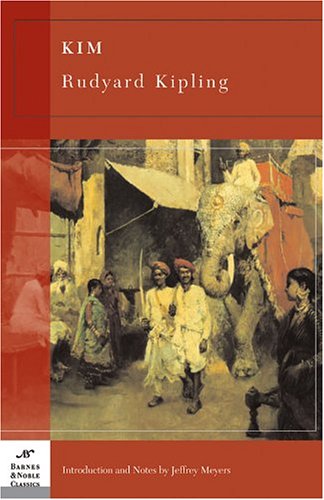
1. Kim (Thrift Edition)
$12.52
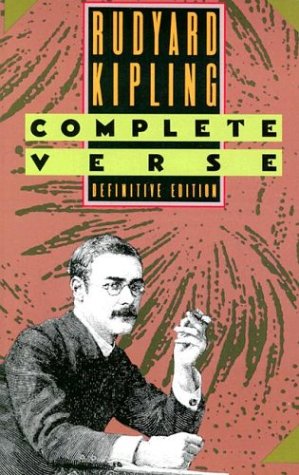
2. Rudyard Kipling: Complete Verse
$25.99
3. Works of Rudyard Kipling, The:
$14.87
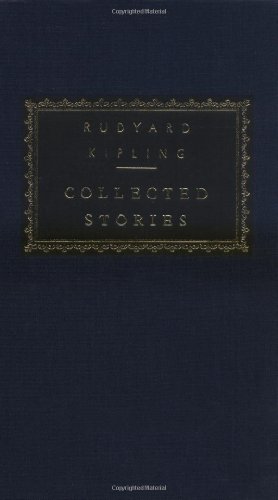
4. Collected Stories (Everyman's
$14.52
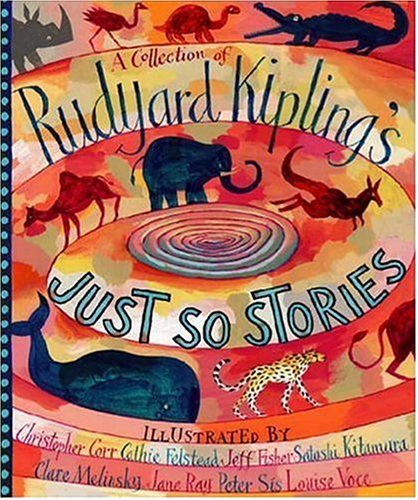
5. A Collection of Rudyard Kipling's
 
$29.95
6. Kim (Aula de Literatura)
$6.14
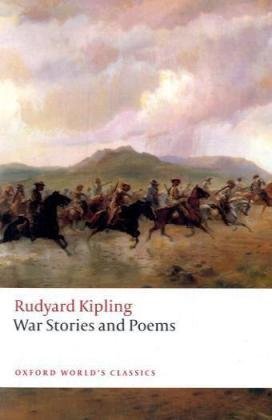
7. War Stories and Poems (Oxford
$42.42
8. The Long Recessional: The Imperial
9. The Works of Rudyard Kipling;
$14.86
10. Rudyard Kipling: The Complete
$14.04
11. The Jungle Book (Books of Wonder)
 
$9.99
12. The Maltese Cat (Creative Short
$8.68
13. The Great Poets Rudyard Kipling
$11.53
14. The Complete Children's Stories
$7.13
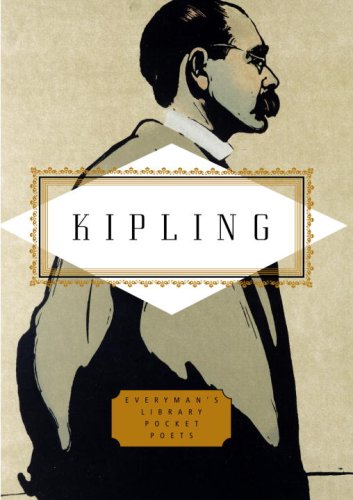
15. Kipling: Poems (Everyman's Library
$1.80
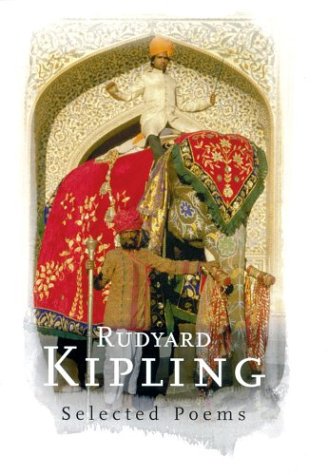
16. Rudyard Kipling: Selected Poems
$5.24
17. If: A Father's Advice to His Son
$5.53
18. The Man Who Would Be King (Art
 
19. Kim (Watermill Classic)
$1.62
20. The Jungle Books (Signet Classics)

1. Kim (Thrift Edition)
by Rudyard Kipling
Paperback: 240 Pages (2005-11-08)
list price: US$3.50 -- used & new: US$1.97
(price subject to change: see help)
Asin: 0486445089
Average Customer Review: 5.0 out of 5 stars
Canada | United Kingdom | Germany | France | Japan
Editorial Review

Book Description

Nobel Prize-winning author Rudyard Kipling set his final and most famous novel in India, where an Irish orphan becomes the disciple of a Tibetan monk while learning espionage tactics from the British secret service. A terrific choice for Kipling fans and lovers of exotic tales of adventure.
... Read more

Customer Reviews (1)

5-0 out of 5 stars unforgettable
This is one of those books that, even if you read then at an early age, you'll always remember with tenderness. It has adventure, fun, suspense; it makes you think about life and people in different parts of the world. When I first read it - I was sixteen - I wanted to go to India and see all those places and villages. I read it until today with the same pleasure. ... Read more


2. Rudyard Kipling: Complete Verse
by Rudyard Kipling
Paperback: 864 Pages (1989-01-27)
list price: US$21.00 -- used & new: US$12.52
(price subject to change: see help)
Asin: 038526089X
Average Customer Review: 4.5 out of 5 stars
Canada | United Kingdom | Germany | France | Japan
Editorial Review

Book Description
Witty, profound, wildly funny, acerbic and occasionally savage, Rudyard Kipling's poems continue to delight readers of all ages.  Included are both the familiar favorites and Kipling's lesser-known works.  This is the only complete collection of Kipling's poems available in paperback. ... Read more

Customer Reviews (8)

5-0 out of 5 stars He may be non PC but he knew what he wa talking about
The Man knew more about Soldiers and soldiering than most Generals today. His line "here lies a fool who tried to hustle the East" has more wisdom in those few lines than most books.
If you want a realistic look at how life is as opposed to the way you want it to be, do a Recon on the Old Boy.

5-0 out of 5 stars Kipling as he is
Well, Kipling rocks. "The white Man's burden" tells you all about development assistance - nothing changes;)

5-0 out of 5 stars A comprehensive collection
... Collections of Kipling's poems have been published many times over the years, but many of them were not complete. This collection includes many not found elsewhere. Many of his poems are about the British Army or the British Empire, but there are also poems on other topics. Some of Kipling's poems are better known than others, e.g., "Gunga Din." A few have been set to music, e.g., "Mandalay" and "Gentlemen-Rankers." In some cases, particular lines are well known such as, "Oh, East is East, and West is West, and never the twain shall meet (from "The Ballad of East and West") or "the Colonel's Lady and Judy O'Grady are sisters under their skins" (from "The Ladies). Some of the poems were concerned with the poor treatment of British soldiers for whom Kipling was a champion, including "Shillin' a Day," "Back to the Army Again," "The Last of the Light Brigade," and "Tommy" ("I went into a public 'ouse to get a pint of beer, the publican 'e up an' sez, 'we serve no redcoats here' ").

Overall, it is a good, wide-ranging collection of poetry covering an extended time period. The collection is recommended for all age groups, although some poems might have to be explained to children. The poems were written at a different time in history, and readers should be aware that some of them may express prejudices and language of that period ("for she knifed me one night, 'cause I wished she was white, and I learned about women from 'er," from "The Ladies")

5-0 out of 5 stars Raw, Untarnished Kipling!
Much ado has been made lately about Kipling, mainly due to a resurgence of affection for poems like The White Man's Burden.Although this has been brought on by the war on terrorism, Kipling's work will brave the tests of time granting him immortality.

Some reviewers have criticized the organization of Complete Verse.The table of contents lists all 500 or so poems in alphabetical order, and the editor provides an index of first lines.What the reader does not get is a scholar's interpretation of Kipling's prose.Although sometimes I enjoy reading another's perspective on the author's intentions, why bias my own experience with the thoughts of another critic?Much better to walk the fields of verse on a virgin path, experiencing Kipling through my own mind.

A great compilation of poetry from a splendid author.Bravo!

5-0 out of 5 stars Bad organization?Who cares?!
It's Kipling.It's an important part of a filker's inventory, since Leslie Fish has put quite a bit of it to music.Kipling wrote these as songs, but we don't have his music anymore.Anyhoo, the National Trust hasgraciously granted Leslie to use the lyrics and she has come up with somefun pieces to sing, like "Rimini," "The Pict's Song,"etc.It's a definite MUST for filkers, and it doesn't matter how itsorganized - it's KIPLING, and that's enough. ... Read more


3. Works of Rudyard Kipling, The: Volume II (Works of Rudyard Kipling)
by Rudyard Kipling
Paperback: 548 Pages (2002-03-01)
list price: US$25.99 -- used & new: US$25.99
(price subject to change: see help)
Asin: 1588278174
Average Customer Review: 4.5 out of 5 stars
Canada | United Kingdom | Germany | France | Japan

Customer Reviews (2)

4-0 out of 5 stars Volume 2?
The cover reads "The Works of Rudyard Kipling, Volume II, Rudyard Kipling. The table of contents lists these five sections:

Volume V: Plain Tales from the Hills
Volume VI: The Light that Failed
Volume VII: The Story of the Gadsbys
Volume VIII: From Mine Own People

The "Search inside" link appears to show the Volume I book. It is incorrectly listed as a previous version. I haven't been able to find Volume I for sale and I don't know if there is a Volume III.

This is an odd edition.There are no page numbers in the ToC, no preface, no index, no cover art. The plain tome resembles a computer printout that was typeset and well bound. I guess you could say that it was pure Kipling though.

5-0 out of 5 stars Enchanting
Rudyard Kipling has an amazing animal sense. He depicted the characters well and enchanted you to continue reading by keeping you in suspense about Mowgli. This is a must read book. ... Read more


4. Collected Stories (Everyman's Library)
by Rudyard Kipling
Hardcover: 960 Pages (1994-10-18)
list price: US$25.00 -- used & new: US$14.87
(price subject to change: see help)
Asin: 0679435921
Average Customer Review: 5.0 out of 5 stars
Canada | United Kingdom | Germany | France | Japan
Editorial Review

Book Description
(Book Jacket Status: Not Jacketed)

Introduction by Robert Gottlieb ... Read more

Customer Reviews (4)

5-0 out of 5 stars A warning about the title
The title is a lie: this is not even close to being Kipling's collected stories. It is a selection, and an excellent one. If you want all of Kipling's stories, you'll have to look elsewhere. If you want a good place to find the best of them, this is the book to have.

4-0 out of 5 stars Excellent, for the most part
There is no question that Kipling was an incredibly talented writer and this collection includes 40 of his best stories.The stories are evidently in chronological order, beginning with his tales of India and, as pointed out by another reviewer, they cover a wide range of subjects.The breadth of this collection really showcases Kipling's ability to write dialogue in the vernacular for characters as disparate as Indian tribesmen, Englishmen (and women) of various social classes and ages, and even a few ancient Romans.

This collection does, however, have its faults.The first is that the writing is very difficult to follow in some places.A few (brief) sections of dialogue are so obscure as to be unintelligible, at least to the modern reader.There are also (very occasionally) passages such as this one: "In the Mediterranean (Nile keeping always her name) there is but one river-that shifty-mouthed Danube, where she works through her deltas into the Black Sea.", which are needlessly opaque.The vast majority of the book is very lucid, but every so often I did find myself having to reread the last few lines to try to decipher what Kipling intended to convey.

The other thing that I did not particularly like were some of the stories that Kipling wrote later in his life (e.g. "The Gardener", "Mary Postgate", "The Wish House").While these stories are often considered his best, I found them a bit on the gloomy side; his Indian tales were much more enjoyable to read.In my opinion, "The Gardener" is a meandering over-rated tale and the ending of "Mary Postgate" is annoyingly vague.

Most of the stories in this collection were enjoyable to read, and all are excellently written.I highly recommend it.

5-0 out of 5 stars One of the finest writers ever
Kipling is little appreciated today, and that's a shame, because he was one of the finest short-story writers the world has ever produced. The closest word I can find to describe his stories is "hynotic." Such an imagination...many of the stories are understated horror and fantasy: stories of talking trains, of wild rides that end up in hellish worlds, of frighteningly realistic curses by man-beasts. Some are truly puzzling, such as "The Gardener." Some are obviously (and disturbingly) autobiographical ("Baa Baa Black Sheep"). Kipling strikes a note few writers can: his stories can be enjoyed (and enjoyed immensely) by both children and adults. These are the kinds of stories that children love having read to them. They always clamor for more.

5-0 out of 5 stars One of the best craftman in Literature
Ihave read one of the most deep tales, the title "the gardener".When i readed it came to my mind two words: fathe, hope, uncanny.

Thistale awake in my a feeling, the atraction for the work of kipling,is magic,it surrounds your views with his views, his feelings with your feelings.All that happens is the presence of the author, this book, is not a simplebook of tales, is the gate for a new worlds, a thousend of worlds, all witha new gravity and with brave life ... Read more


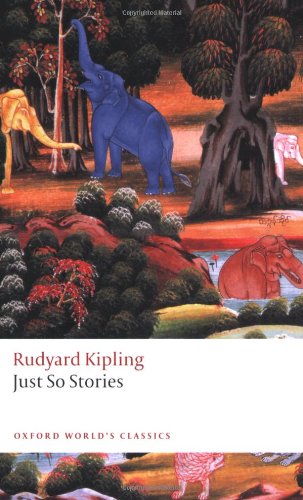
5. A Collection of Rudyard Kipling's Just So Stories
by Rudyard Kipling
Hardcover: 128 Pages (2004-10-07)
list price: US$22.99 -- used & new: US$14.52
(price subject to change: see help)
Asin: 0763626295
Average Customer Review: 4.0 out of 5 stars
Canada | United Kingdom | Germany | France | Japan
Editorial Review

Book Description
In this gorgeous collection featuring eight of Kipling's JUST SO STORIES, each tale is illustrated by a different leading contemporary artist.

How did the rude Rhinoceros get his baggy skin? How did a 'satiably curious Elephant change the lives of his kin evermore? First told aloud to his young daughter ("O my Best Beloved"), Rudyard Kipling's inspired answers to these and other burning questions draw from the fables he heard as a child in India and the folktales he gathered from around the world. Now, in this sumptuous volume, Kipling's playful, inventive tales are brought to life by eight of today's celebrated illustrators, from Peter Sís's elegantly graphic cetacean in "How the Whale Got His Throat" to Satoshi Kitamura's amusingly expressive characters in "The Cat That Walked by Himself." From one of the world's greatest storytellers come eight classic tales just begging to be heard by a new generation — and a visual feast that offers a reward with every retelling.

Featuring illustrations by:
Christopher Corr
Cathie Felstead
Jeff Fisher
Satoshi Kitamura
Claire Melinsky
Jane Ray
Peter Sís
Louise Voce ... Read more

Customer Reviews (6)

5-0 out of 5 stars My children LOVE this book!
I cannot speak highly enough about this wonderful book. It is meant to be read just as it is written and I started reading it to my twin boys when they were 4 years old. Immersing them in such beautiful language is such a gift. They never get tired of hearing the same stories over and over, especially "The Elephant's Child" with his satiable curtiosity! I particularly like this edition of it, because the illustrations are vibrant and interesting, without the book costing a fortune. Each story is very creative and I don't find it offensive at all. It was written in 1900, for crying out loud, and those kids turned out just fine, if you ask me.When your child gets to the stage where they never stop asking questions, you will especially enjoy the accompanying poem at the end of Elephant's Child. This is an absolute must have in any home library. When you read it, just make sure you use your funny voices to make the characters come alive.

5-0 out of 5 stars My son loved this book
I don't understand the other comment about not being appropriate for children because my son loved it! A friend gave me this book when my son was 3 years old. I went through it first, to see what the stories were like, before reading any to him. He was used to all the Disney stories up until then, but really liked the stories in this book. This was back in 1989 and 1990. His favorite was "How the Rhinoceros Got His Skin." Unfortunately, I sold the book when I moved so now have to buy a new copy that I will give to a friend having a baby. My son still remembers this book and how much fun it was to listen to the stories.

1-0 out of 5 stars Not what I expected
I had the impression the stories would be good to read to a child, they weren't.

3-0 out of 5 stars kipling's just so stories
As these stories were written in another era they may not seem PC by today's standards. However, some of them are amusing and can be retold with subtle editing if necessary.

5-0 out of 5 stars Family Readaloud Material
When I married, Mother gave me our family copy of Rudyard Kipling's Just So Stories which had scribbles in it from more than one of my five siblings.I don't remember reading it as a child, to be honest, but it was there.When our first two children were old enough to sit still for a story, my husband sat them in his lap and read them "The Elephant's Child" from this volume.After they squirmed a bit, he assigned acting parts to one or the other of them at various times, and by the time the third son came along they were fighting over acting parts.With voice inflection and movement to accompany the reading, they understood this story more and more, and they began to beg for more story time.He added first one and then another of the stories in this classic. Now our second son and his wife have had their first child, and for his first Christmas as a parent we were delighted to give him him own copy, and the two new parents are continuing the tradition.Bravo, Rudyard Kipling, and bravo, Daddy ... Read more


6. Kim (Aula de Literatura)
by Rudyard Kipling
 Paperback: 448 Pages (2005-02-17)
list price: US$29.95 -- used & new: US$29.95
(price subject to change: see help)
Asin: 8431625899
Average Customer Review: 4.0 out of 5 stars
Canada | United Kingdom | Germany | France | Japan
Editorial Review

Amazon.com
One of the particular pleasures of reading Kim is the fullrange of emotion, knowledge, and experience that Rudyard Kipling gives his complex hero. Kim O'Hara, the orphaned son of an Irish soldier stationed in India, is neither innocent nor victimized.Raised by an opium-addicted half-caste woman since his equally dissolute father's death, the boy has grown up in the streets of Lahore:

Though he was burned black as any native; though he spoke the vernacular by preference, and his mother-tongue in a clipped uncertain sing-song; though he consorted on terms of perfect equality with the small boys of the bazar; Kim was white--a poor white of the very poorest.
From his father and the woman who raised him, Kim has come to believe that a great destiny awaits him. The details, however, are a bit fuzzy, consisting as they do of the woman's addled prophecies of "'a great Red Bull on a green field, and the Colonel riding on his tall horse, yes, and'--dropping into English--'nine hundred devils.'"

In the meantime, Kim amuses himself with intrigues, executing "commissions by night on the crowded housetops for sleek and shiny young men of fashion." His peculiar heritage as a white child gone native, combined with his "love of the game for its own sake," makes him uniquely suited for a bigger game. And when, at last, the long-awaited colonel comes along, Kim is recruited as a spy in Britain's struggle to maintain its colonial grip on India. Kipling was, first and foremost, a man of his time; born and raised in India in the 19th century, he was a fervid supporter of the Raj. Nevertheless, his portrait of India and its people is remarkably sympathetic. Yes, there is the stereotypical Westernized Indian Babu Huree Chander with his atrocious English, but there is also Kim's friend and mentor, the Afghani horse trader Mahub Ali, and the gentle Tibetan lama with whom Kim travels along the Grand Trunk Road. The humanity of his characters consistently belies Kipling's private prejudices, and raises Kim above the mere ripping good yarn to the level of a timeless classic. --Alix WilberBook Description
Kim, one of Kipling's masterpieces, is the story of Kimball O'Hara, the orphaned son of an officer in the Irish Regiment who spends his childhood as a vagabond in Lahore. The book is a carefully organized, powerful evocation of place and of a young man's quest for identity.Download Description
Reared in the teeming streets of India at the turn of the century, the orphan Kim is the 'Friend of all the world', an imp with an endless interest in the extraordinary characters he meets daily. One of them, an old Tibetan lama, sets him on the path that will lead him to travel the Great Trunk Road, and become a spy for the British. ... Read more

Customer Reviews (70)

3-0 out of 5 stars Review of Kim
Great book...have been reading it in a hisotry class...easy to read, flows well and engaging.

4-0 out of 5 stars Kim: East and West in combination
Kim is Rudyard Kipling's mysterious India: a combination of East and West, of mystery and mysticism.Kim is not the India of history books.It is not a neat historical fiction nor is it a simple adventure story in a slightly exotic setting.

Kim was published in 1901 and is the story of the orphaned son (Kimball O'Hara, known as Kim) of a soldier in an Irish regiment. The novel is set in the Indian subcontinent where Kim spends his childhood as a waif in Lahore.

The story of Kim's journeys, as he moves between the East and the West can be enjoyed as an adventure story or read as a window into British colonialism.Kim himself straddles a number of different worlds but never really belongs to any of them completely.

While the novel includes a richly detailed portrait of Indian life and assumes that western mastery is desirable, Kipling frequently identifies similarities between the cultures of India and those of the Europeans in India.

This is a novel which I think is best read twice.Once as a child - for the adventure and mystery and again as an adult for the broader story.

Jennifer Cameron-Smith

4-0 out of 5 stars A Good Spy Story That You Really Need to Read for Yourself
'Kim', taken solely on its own terms, is a late 19th century adventure tale, an early spy story, a travelogue of northern India, a coming-of-age story all set in the midst of the Great Game, the Russo-British contest for imperial dominance in Central Asia. It's a good tale well told, if the language is somewhat dated for the modern reader.

But, of course, 'Kim' is generally not simply taken on it own terms because its author Rudyard Kipling came to personify British imperialism as much as Lord Kitchener. The Norton Edition includes excellent articles that provide historical context as well as several critical essays. I consider myself an anti-imperialist, but also admittedly somewhat of a romantic about the British Empire, and I did not detect jingoism in 'Kim'.

Readers interested in even more background will want to read Quest for Kim: In Search of Kipling's Great Game. Readers needing to be disabused of romanticism about British imperialism may want to consider Imperial Reckoning: The Untold Story of Britain's Gulag in Kenya.

At the end of the day, 'Kim' is quite a good adventure tale and a book that really need to read for yourself. Highly Recommended.

5-0 out of 5 stars My Favorite Novel
After fifty plus years of reading, I think I can say that Kim is my favorite novel.I'm not sure it is the best novel I ever read, whatever "best" might mean, and it certainly isn't the most profound, but there is simply no other book I have enjoyed as much or have reread as often.Many other Amazon reviewers have said that they liked the book very much, often for different reasons: some like the "Great Game" aspect and others enjoy the rich narrative description of India for which the book is justly famous.(A few reviewers found the book "difficult", apparently because of the language device that Kipling uses when speakers are speaking in languages other than English, or for Kipling's use of unfamiliar words, and others found it boring, a criticism I find nearly incomprehensible.I honestly believe that if you find Kim boring, you just don't like to read fiction, except perhaps at the level of Tom Clancy novels.And don't be put off by those reviews that found the book difficult.I presume these readers were looking for a continuation of The Jungle Book and found an adult novel instead.Kim is much easier reading than the novels of many of Kipling's contemporaries, such as Conrad or James, and is no more difficult than Twain.)

At least one other reviewer shares my view that in essence Kim is a coming of age novel, and one of the best, in a league with Huckleberry Finn and A Portrait of the Artist.The Great Game provides the book with the bones of a plot, and Kipling's description of India, much like Twain's description of the Mississippi River environs in Huckleberry Finn, published 16 years before Kim, is the flesh.But the heart of the book is the development of the relationship between Kim and the Red Lama, the fundamental story of two people, one an orphan boy and the other an elderly mystic, finding many of the things they are seeking in caring for and looking after one another.

Again, it is hard to avoid comparing Kim with Huckleberry Finn.The core of the latter book is the development of the relationship between Huck and Jim, and it seems likely that Kipling was influenced by the earlier book.Kipling had clearly read and admired Huckleberry Finn, and once referred to its author as "The great and God-like Clemens."Not that I find the notion that Kipling was influenced by Twain to in any way diminish Kim.It is an absolutely wonderful book and I envy anyone who hasn't read it that is about to do so.Come to think of it, that's true of both Kim and Huckleberry Finn.

2-0 out of 5 stars It's too hard
Unless you enjoy working hard at reading novels, I don't recommend this book. Before you start take a look at the 411 notes in the back that you will have to study (unless you know already know) to get something out of this work. ... Read more


7. War Stories and Poems (Oxford World's Classics)
by Rudyard Kipling
Paperback: 416 Pages (1999-06-10)
list price: US$11.95 -- used & new: US$6.14
(price subject to change: see help)
Asin: 0192836862
Canada | United Kingdom | Germany | France | Japan
Editorial Review

Book Description
A unique anthology of Kipling's war stories and poems, from the frontier wars of empire to the Boer War and the First World War. ... Read more


8. The Long Recessional: The Imperial Life of Rudyard Kipling
by David Gilmour
Paperback: 368 Pages (2003-06-11)
list price: US$15.00 -- used & new: US$42.42
(price subject to change: see help)
Asin: B000FA4VI2
Average Customer Review: 4.5 out of 5 stars
Canada | United Kingdom | Germany | France | Japan
Editorial Review

Book Description

“Readable and reliable . . . [Gilmour’s] assessment of the political background of Kipling’s writings is exemplary.” —Earl L. Dachslager, Houston Chronicle

David Gilmour’s superbly nuanced biography of Rudyard Kipling, now available in paperback, is the first to show how the great writer’s life and work mirrored the trajectory of the British Empire, from its zenith to its final decades. His great poem “Recessional” celebrated Queen Victoria’s Diamond Jubilee in 1897 and his last poems warned of the dangers of Nazism, while Kipling himself, an icon of the empire, was transformed from an apostle of success to a prophet of national decline. As Gilmour makes clear, Kipling’s mysterious and enduring works deeply influenced the way his readers saw both themselves and the British Empire, and they continue to challenge our own generation.
... Read more

Customer Reviews (6)

4-0 out of 5 stars Kipling Re-considered
At a time when the "politically correct" holds sway in much of the media for intellectuals and all too much of academia, Rudyard Kipling is persona non grata -- the author of charming Victorian children's tales, but irredeemably tainted as an advocate and apologist for the British Empire and its subjugation of so many blacks and browns in the world.This biography of Kipling shows that the popular image de jour of Kipling is oversimplified and, at bottom, unfair and wrong.

David Gilmour deliberately focuses on the "imperial" Kipling, or the political (as opposed to the literary) aspect of his life.Of course, it is impossible to cleave Kipling into two selves, one political and the other literary.No one can be so compartmentalized, but Kipling resists it more than most because he was so unabashedly a political writer.And Gilmour chooses to emphasize that fact by exploring Kipling's politics and his view of the British Empire, as well as his role in celebrating it and then mourning its imminent demise (Kipling died before World War II and the death throes of empire).As Gilmour puts it in his preface:"This is the first volume to chronicle Kipling's political life, his early role as apostle of the Empire, the embodiment of imperial aspiration, and his later one of the prophet of national decline."

Gilmour achives his objective quite well.His Kipling -- as I believe is true of the actual Kipling -- was NOT a jingoistic rascist (although, to be sure, certain lines of his taken as they say out of context could be stretched and cited for the opposite conclusion). Yes, Kipling was a Victorian Englishman who grew up amidst, and believed in, the glory of the British Empire.But, as Gilmour persuasively writes, the empire Kipling touted and valued was a civilizing, even humanitarian, force -- an empire of "peace and justice, quinine and canals, railways and vaccinations".His model of empire had no place for the missionary zeal to transform all the Empire's subjects into brown or black (depending on their class) fish-and-chippers or public-school-educated Church-of-Englanders.Moreover, to Kipling, it was the altruistic responsibility of the wealthy, civilized haves of the world (principally Great Britain and the United States) to relieve suffering and improve the lot in life of the myriad have nots.

Gilmour's biography shows, without explicit lecturing, that Kipling was not a stock "stiff-upper-lip" Victorian cardboard cut-out; he was human, with weaknesses he sought both to overcome and to mask, and with a strength of character that ultimately more than redeems him.

Gilmour does not ignore, but he does not dwell on, the literary side of Kipling.For that, the reader must go elsewhere.But for a sensitive yet objective picture of "Kipling as a figurehead of his country and his age", I don't know where else one should or would care to look.

5-0 out of 5 stars Overlooked Today, But a Towering Figure in His Time
Rudyard Kipling, according to David Gilmour's authoritative 'The Long Recessional: The Imperial Life of Rudyard Kipling' was a first-class political hater and author of children's books, as well as the virtual embodiment of the British Empire. Kipling was considered the Imperial Laureate, although he would have refused the post had it existed as he did all government posts - not in his line at all.

Kipling lived much of the first half of his life in the Empire - he spent his early years in India, except for a horrid stretch when he was boarded back in England by his parents who stayed in British India, and later lived off-and-on in South Africa. Kipling loved the Empire and its civilizing mission (up to a point - he did not favor Christian religious proselytizing), but oddly was not that fond of England or the English.

Gilmour paints a portrait of Kipling as a thorough-going reactionary, a pessimist, a virulent opponent of women's suffrage, Irish Home Rule, nearly all politicians (he especially hated Liberals, but also accused Winston Churchill of `political whoring'), trade unions, and imperial wavering of any kind.

'The Long Recessional' (the title refers both to his poem written for Queen Victoria's Diamond Jubilee in 1897 and the decline of the Empire) is not so much a history of Kipling's literary works as it is his leading role in promoting the Empire through his literature. Readers seeking detailed literary analyses had best look elsewhere, but should read this book first to understand what it was that Kipling was so all-fired angry about most of the time. Kipling was something of a negative "prophet"; he saw the coming decline of the Empire and viewed as willful surrender, he saw the coming Great War and watched his countrymen fail to prepare or take a firm stand against 'the Hun', and he saw the coming Second World War and the repeated lack of preparation (he died before that war actually occurred).

Kipling suffered great personal unhappiness from the death of his first daughter at age 6, to a seemingly unhappy marriage with Kipling as the henpecked husband and the death of his son in one of those insane headlong infantry assaults on the German trenches at the Battle of Loos. Kipling's dour personality in most of his last quarter-century of life may to some extent be attributed to a misdiagnosed (and thus mistreated) duodenal ulcer that caused him great pain - once it was correctly diagnosed in 1933, Kipling's pain departed and his personality revived.

Kipling's writings were enormously influential in his time, probably to an extent difficult for the modern reader to grasp given over as we are to the visual and the aural. After the Boer War he turned his pen more and more toward political ends and a bitter-tipped pen it was. Today Kipling is more remembered for his children's classics such asThe Jungle Books (Signet Classics). His Plain Tales from the Hills explores India's impact on the British who lived there and in particular the soldiers who sometimes fought and died there.

Salmon Rushdie has summarized it best when he stated, "There will always be plenty in Kipling that I will find difficult to forgive; but there is also enough truth in these stories to make them impossible to ignore."

Gilmour brings Kipling back to life for some 300 pages; 'The Long Recessional: The Imperial Life of Rudyard Kipling' is a rewarding reading experience about a man mostly overlooked today, but of towering importance in his time.

2-0 out of 5 stars could be much better
I've always enjoyed Kipling's poetry, and have long known that a close reading and an adequate understanding of his writings belie the less pleasant things that habitual hand-wringers and apostles of political correctness have to say about him.Hence my willingness to read this book.

This biography enumerates the stations of Kipling's life: he grew up in India, a country he never stopped loving, indeed it was Hindi and not English that was his mother tongue.After a childhood in India came boarding school in England, life as a journalist in India, becoming the unofficial poet laureate of the soldier and Empire, friendships with leading politicians, marriage to an American, and disillusionment with politics and politicians after the First World War, in which his son died in his first "battle."In this book Kipling does not come across as the ogre that some make him out to be, but he does come across as very close-minded, as a man who understood the art of poetry very well, but things such as the Irish and their grievances not at all.

All the same, I found this book to be a disappointment.Ideas were rarely fully developed; when poems are discussed, only short passages are quoted.Kipling's belief that war with the hated Germans was inevitable is uncritically seen as a sign of prophecy; perhaps a self-fulfilling prophecy of his times and class would me more accurate.Nor are Ireland and Kipling's fire and brimstone solutions for Ireland's troubles described with any nuance.I don't think that the author more than scrapes the surface of the topics he described.Before I draw my conclusions on Kipling, I intend to read at least another book.

Unless you're a high-school student who has to write a report on Kipling, I wouldn't recommend this book to you.

5-0 out of 5 stars Brilliant study of a brilliant man
Few have doubted Kipling's literary genius but for much of the 20th century progressive opinion has caricatured him as the bard of racism, the poet of savagery, the versifier of militarism. Gilmour focuses on Kipling's complex relationship with the British Empire, and shows that these caricatures do not do justice to the poet's nuanced views. To take only one example, Kipling was perfectly aware of the foibles of his fellow Anglo-Indians, and he often paid tribute to the nobility of ordinary Indians. But he was also aware that British rule over the Subcontinent was a great force for peace and stability. The Bloomsbury set jeered his views but he was proven tragically right after Indian independence, which resulted in a bloodbath. Let us hope that Kipling is not proven even more correct in the event of a nuclear exchange between India and Pakistan.

5-0 out of 5 stars Examines not only his writing, but his world
Rudyard Kipling was both a great writer and a representative figure of the British Empire, dabbling in both politics and exploration and winning the Nobel Prize in literature. This biography is the first to examine not only his writing, but his world: The Long Recessional considers the history of his times and provides a lively, revealing probe of the man's changes. ... Read more


9. The Works of Rudyard Kipling; One Volume Edition.
Hardcover: 1004 Pages (1930)

Asin: B000FTS328
Canada | United Kingdom | Germany | France | Japan

10. Rudyard Kipling: The Complete Verse
by Rudyard Kipling
Paperback: 756 Pages (2006-03-01)
list price: US$22.95 -- used & new: US$14.86
(price subject to change: see help)
Asin: 1856266699
Canada | United Kingdom | Germany | France | Japan
Editorial Review

Book Description

When Rudyard Kipling died in 1936, he was considered second to none as a poet. Years before, when Tennyson was Laureate, he had described the young Kipling as the “only one with divine fire.” His poetry is as varied as it is beautiful; among eulogies for the dead and celebrations of life are also character assassinations and comic masterpieces. Very often, the most powerful and evocative poems are the most personal and humane; together, they comprise a compelling and deeply moving portrait of the man.
... Read more

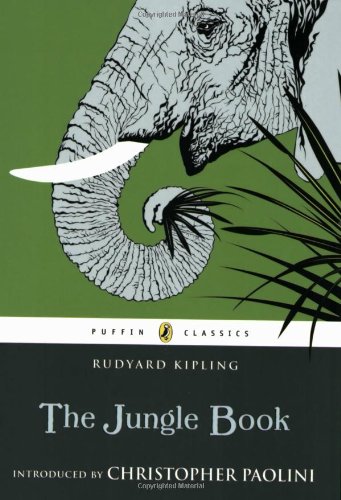
11. The Jungle Book (Books of Wonder)
by Rudyard Kipling
Hardcover: 272 Pages (1995-09-27)
list price: US$25.99 -- used & new: US$14.04
(price subject to change: see help)
Asin: 0688099793
Average Customer Review: 4.5 out of 5 stars
Canada | United Kingdom | Germany | France | Japan
Editorial Review

Book Description

For the past one hundred years, Rudyard Kipling's classic tales of Mowgli, the lost boy raised by wolves in the jungles of India, have captivated children and adults alike.

Mowgli's days are filled with danger, wonder, and excitement. He learns the ways of the jungle from the wise old bear, Baloo, and the great black panther, Bagheera. He is befriended by the faithful wolf, Gray Brother, and is carried off by the crafty Monkey-People -- only to be rescued by the mighty python, Kaa. And through it all, Mowgli knows that he must someday face his sworn enemy: the ferocious man-hating tiger, Shere Khan.

Presented here in the author's preferred order are all of Kipling's thrilling Mowgli stories, as well as the beloved tale of the brave mongoose, Rikki-tikki-tavi. Brilliantly captured in eighteen lush watercolors by Caldecott Honor artist Jerry Pinkney, this handsome centenary edition will be treasured by readers of all ages.

... Read more

Customer Reviews (7)

5-0 out of 5 stars TheJungle Book
This is a beautiful edition of the wonderful childhood classic.I gave it to my twelve-year-old grandson, and he is enjoying it very much.The book is so much better than the movie! I love the way Kipling talks with his reader.I loved this book as a child myself and am very happy to have this great edition to give to my grandchildren.

5-0 out of 5 stars Phyuick Yui
This book was good because it had me on the edge of my seat the whole time. It was also god beacause it had more than one story in it, like the one about the seal.The best one though was the one with Mowgli and it follows him through his life and him leaving and becoming a normal person.

5-0 out of 5 stars All time favorite
The Jungle Book is now one of my all time favorite books. When you read the book it makes you feel like you're there too.I like the way Rudyard Kipling has the animals talk.The main character in the story is a boy named Mowgli.Mowgli was abandoned by his mother and father and raised by wolves.I think
Mowgli is the perfect character for the story because he is brave, smart, and kind.The part I disliked the most in the story is when they keep going to the council rock.I thought it was boring.I liked the excitement in the book and the cliff hangers.Once I picked up the book I couldn't set it down again.I definitely recommend this book to anybody who is in for a challenge!

4-0 out of 5 stars Not as marred in adaptation as others
While I admire Disney's animation (and am looking forward to their Hamlet-ish The Lion King), I usually gripe about the changes they make in their movies from their source material. All one has to do is read the original Pinocchio, Peter Pan, or, supposedly, Bambi, to berate them for destroying classics. I probably should be bothered as well by their Jungle Book, except that I think that it was one of the cases where the marriage of animation, story and music achieves more than the original. Without the source material, it would be nothing, of course, but the wonderful songs (who can forget "Bare Necessities," "Trust in Me," or "I Wanna Be Like You"?) and the structure that turned Kipling's short tales into a two-hour movie create a gestalt that I'm not sure Kipling's tales do by themselves. This is probably sacrilege to the ears of the true Kipling fan, but I'm nothing if not opinionated.

The stories that make up the Jungle Book aren't solely about Mowgli, though, and it's the others, especially "Rikki-Tikki-Tavi," that make this a definate must have.

5-0 out of 5 stars I finally have my own copy
I grew up reading and re-reading theses stories.I never found a compilation of the Mowgli stories I liked though, at least not an affordable one.

This one gave me not only Mowgli but Rikki-tikki-tavi.All with excellent illustrations that add but do not intrude on the stories.

This is a classic that should be on every bookshelf. ... Read more


12. The Maltese Cat (Creative Short Stories)
by Rudyard Kipling
 Hardcover: 32 Pages (1991-06)
list price: US$13.95 -- used & new: US$9.99
(price subject to change: see help)
Asin: 0886824753
Average Customer Review: 5.0 out of 5 stars
Canada | United Kingdom | Germany | France | Japan

Customer Reviews (1)

5-0 out of 5 stars Absolutely delightful!
Being a polo player myself, I found The Maltese Cat a very interesting and accurate view of the game.Being from the ponies perspective is original and entertaining and it makes me wonder what my ponies are thinking when I play them!

Loved reading it to pieces and can read it over and over again... ... Read more


13. The Great Poets Rudyard Kipling (The Great Poets) (The Great Poets)
Audio CD: 1 Pages (2007-07-01)
list price: US$14.98 -- used & new: US$8.68
(price subject to change: see help)
Asin: 9626344741
Canada | United Kingdom | Germany | France | Japan
Editorial Review

Product Description
This anthology of Kipling's most famous poems 'If,' 'Mandalay,' 'Gunga Din' is taken from the Naxos AudioBooksGreat Poetsseries. Though sometimes still regarded as a product of the colonial era, Kipling touches a very popular nerve in Britain's literary tradition, and is regarded more generously now as a master of popular verse. It is often forgotten that he won the Nobel Prize for literature in 1907. ... Read more


14. The Complete Children's Stories (Wordsworth Special Editions) (Special Editions)
by Rudyard Kipling
Paperback: 864 Pages (2005-02-05)
list price: US$12.99 -- used & new: US$11.53
(price subject to change: see help)
Asin: 1840220570
Canada | United Kingdom | Germany | France | Japan
Editorial Review

Product Description
The Jungle Book introduces Mowgli, the boy foundling adopted by a family of wolves, Shere Khan the tiger, Bagheera the black panther and Baloo the sleepy brown bear.
How did the Leopard get his spots? How did the Elephant get his trunk? In Just So Stories Kipling wittily supplies the answers to these and other questions.
Puck of Pook's Hill relates how Dan and Una's magical meeting with Puck, the last of the People of the Hills, leads to their adventures with Romans and Crusaders, Saxons and Vikings...
And later, in Rewards and Fairies, the three meet an array of characters ranging from Iron Age warriors to 'Good Queen Bess' and Sir Francis Drake.
In Kipling's rattling school yarn Stalky & Co, Stalky, M'Turk and the Beetle are a trio of scallywags with a keen desire to break the rules, their unruly activities give the stories an enduring appeal to all children - especially those who have ever wilted beneath the stern glance of a peevish schoolmaster. Kipling's wry, sometimes tongue-in-cheek style will delight and entertain young readers while adults throughout the world will remember his stories with affection. ... Read more


15. Kipling: Poems (Everyman's Library Pocket Poets)
by Rudyard Kipling
Hardcover: 256 Pages (2007-10-16)
list price: US$12.50 -- used & new: US$7.13
(price subject to change: see help)
Asin: 0307267113
Canada | United Kingdom | Germany | France | Japan
Editorial Review

Book Description
Beloved for his fanciful and engrossing children’s literature, controversial for his enthusiasm for British imperialism, Rudyard Kipling remains one of the most widely read writers of Victorian and modern English literature. In addition to writing more than two dozen works of fiction, including Kim and The Jungle Book, Kipling was a prolific poet, composing verse in every classical form from the epigram to the ode.

Kipling’s most distinctive gift was for ballads and narrative poems in which he drew vivid characters in universal situations, articulating profound truths in plain language. Yet he was also a subtle, affecting anatomist of the human heart, and his deep feeling for the natural world was exquisitely expressed in his verse. He was shattered by World War I, in which he lost his only son, and his work darkened in later years but never lost its extraordinary vitality.

All of these aspects of Kipling’s poetry are represented in this selection, which ranges from such well-known compositions as “Mandalay” and “If” to the less-familiar, emotionally powerful, and personal epigrams he wrote in response to the war. ... Read more


16. Rudyard Kipling: Selected Poems (Phoenix Poetry)
by Rudyard Kipling
Hardcover: 160 Pages (2004-01)
list price: US$6.95 -- used & new: US$1.80
(price subject to change: see help)
Asin: 0753817470
Average Customer Review: 3.5 out of 5 stars
Canada | United Kingdom | Germany | France | Japan
Editorial Review

Book Description
"Now this is the Law of the Jungle--as old and as true as the sky;
And the Wolf that shall keep it may prosper, but the Wolf that shall break it must die."
--from "The Law of the Jungle"


Kipling’s innovative experiments with language-especially the dialects of the ordinary soldier-won him many admirers, and still stand out as truly modern today. Among the famous poems featured here are “Mandalay,” “Gunga Din” “The Ballad of East and West,” and the beloved “If.”
... Read more

Customer Reviews (2)

5-0 out of 5 stars "If" is included
Perhaps the above reveiw was for a different book of Kipling's poems. There are no illustrations besides the cover art, and Kipling's famous "If" poem is thankfully included. The book is lightweight andsmall enough to fit in a purse or briefcase easily. The cover is pleasingand the margins inside are generous. In all, well laid out and good to havearound.

2-0 out of 5 stars Kiplings Poems...
I thought it was a poor selsction, without his most famous, "If" included. The illustrations were like those from a newspaper, and it's overall content was not great. ... Read more


17. If: A Father's Advice to His Son
by Rudyard Kipling
Hardcover: 40 Pages (2007-03-27)
list price: US$14.99 -- used & new: US$5.24
(price subject to change: see help)
Asin: 0689877994
Average Customer Review: 5.0 out of 5 stars
Canada | United Kingdom | Germany | France | Japan
Editorial Review

Book Description

What makes a boy into a man?

Courage.

Confidence.

Patience.

Integrity...

For more than one hundred years, this classic poems has inspired readers to reach for the best in themselves.

In pictures and words, here's what every boy needs to know most.

... Read more

Customer Reviews (1)

5-0 out of 5 stars Spectacular, No Ifs About It
Rudyard Kipling's poem about what it takes to become a man is one of the world's finest. He published the poem a few years after winning the Nobel Prize for Literature in 1907. It is both inspirational and motivational and gives an excellent code for living in just a few lines.If you love the poem, then this illustrated version will be read and enjoyed many, many times.

A few of my favorite couplets:

If you can fill the unforgiving minute
with sixty seconds worth of distance run
Yours is the Earth and everything that's in it,
And--which is more--you'll be a Man, my son! ... Read more


18. The Man Who Would Be King (Art of the Novella series, The)
by Rudyard Kipling
Paperback: 80 Pages (2005-06)
list price: US$9.00 -- used & new: US$5.53
(price subject to change: see help)
Asin: 0976140705
Average Customer Review: 3.5 out of 5 stars
Canada | United Kingdom | Germany | France | Japan
Editorial Review

Book Description

The rugged mountains of 19th-century Afghanistan serve as the backdrop for this humorous and action-packed tale of two happy-go-lucky Britons who take over a remote kingdom. The colorful inhabitants and beautiful prose enrich a beautifully powerful ending.

This beautifully packaged series of classic novellas includes the works of masterful writers. Inexpensive and collectible, they are often the first single-volume publications of these classic tales, offering a closer look at this underappreciated literary form and providing a fresh take on the world's most celebrated authors.
Download Description
Also includes "The Phanton Rickshaw." ... Read more

Customer Reviews (10)

5-0 out of 5 stars Kipling'sMasonic parable of the dangers of colonisation
"The Man Who Would Be King" has not unreasonably been used to title many a compendium of Kipling's short stories, since it not only ranks as one of his best, but is also so well known because of the John Huston movie marvellously interpreted by Michael Caine, Sean Connery and Christopher Plummer.

The short novel first appeared in the "Phantom Rickshaw" in 1888 but was again collected in "Wee Willie Winkie and other stories" in 1895. Kipling for this work was inspired by the travels of Josiah Harlan, an American adventurer who claimed the title of Prince of Ghor in 1840 thanks to the military force he lead into Afghanistan (Read the instructive "The Man Who Would Be King: The First American in Afghanistan" by Ben McIntyre).

The story is built with a technique often utilized by Kipling of the picture and frame and is in itself a parable with many possible interpretations, as parables often are. A journalist of a local Indian paper meats a loafer on a train. The man, an ex-military asks him to contact a friend of his in a later date to tell him that he can't meet him presently. After a short time the two friends visit the journalist and tell him they intend to conquer an empire for themselves. Again after two years only one gets back and narrates the adventures the two have been through, that have ended with the death of one of them.

The frame of the story is Kipling's present day India with an established administrative empire and the journalist is evidently Kipling, the picture is Dravot and Carnehan's adventure in Kafiristan, the remote Afghan province they conquer for a brief period. The picture represents the early ages of the making of the British Empire that had relied on adventurers, dreamers and military men possessing superior technologies (arms) compared to the natives. The most evident moral of the parable is that once the English neglect their moral duty towards the native populations there is no sense in the permanence of the Empire and it is destined to fail, but many others can be hypothesized. Many critics have identified this story as a form of disillusionment of Kipling with the society he was living in at that time, while instead in his later life he was known to sustain British Imperialism.

One aspect that often goes unnoticed in this short story is the importance Kipling (a mason himself) gives to the underground tentacles of the secret Masonic network that consented the British influence in India and in European politics. If you happen to watch the John Huston film this is made very clear.

The novella is full of allusions, recalls, citations of different realities and it would take to long to analyse it in depth even though this effort will surely reward the reader. The "Man Who Would Be King" remains one of the milestones of the collective imaginary of our modern world where colonisation is far from forgotten.

1-0 out of 5 stars Worst Ever Reader!
We rushed out and bought this new version. I don't think it's a computer, but she's almost that bad! For a great unabridged read try the 1991 Dercum Audio edition read by William Barker who adapts the character voices adroitly, showing an uncanny ear for the British aristocrats. Although not the latest high tech I for one will stick to the best!

1-0 out of 5 stars Great Book, Computer Reading It
This is a great story, I highly recommend it. However, this recording is a digital voice reading it, so it completely takes away from the story. I love audiobooks, but this one was unlistenable. It was like having bonzibuddy read hamlet.

3-0 out of 5 stars Perhaps a lesson for today's men-who-would-be-kings?
Kipling's critics have long been regarded him as the "bard of imperialism," but the title is telling of his work. In many of his stories he has promoted the virtues of the Queen's empire and created marvelous tales about the adventures of explorers.However, in The Man Who Would be King, Kipling complicates his popular themes by implying a distinction between the cavalier, enterprising upstarts of early empire and the more entrenched, administrative empire that he personally knew.

The Man Who Would be King intersects the lives of the narrator (a stand-in for Kipling himself), the responsible and respectable journalist, with Daniel Dravot and Peachey Carnehan, two adventurous misfits. Through the narrator, Kipling expresses nostalgia toward the earlier days of the empire, represented by Dravot and Carnehan. However, this fondness is tempered by the view that the attitude of the early entrepreneur-imperialists was naïve to the realities and responsibilities of administering an empire, embodied in the narrator. This distinction is seen in the cautionary attitude that Kipling takes toward Dravot and Carnehan during their first encounters, the rapt attention that the narrator pays to Carnehan's recounting of his adventure, and the ultimately tragic ends which both Dravot and Carnehan meet.

Dravot and Carnehan are caricatures, to be sure, of the enterprising spirit that so many British in India came armed with, each in search of their personal fortune and adventure. In his first meeting with the narrator, Carnehan declares, "If India was filled with men like you and me, not knowing more than the crows where they'd get their next day's rations, it isn't seventy millions of revenue the land would be paying-it's seven hundred millions." Of course, this is a persuasive technique that Carnehan uses to build camaraderie with the narrator, and it appears to be somewhat successful. The narrator seems enchanted with the attitude of his companion, prefacing their encounter with "he was a wanderer and a vagabond like myself."Of course, we know that the narrator is a newspaperman who spends long nights laying type for the morning paper, not vagabonding around, however he inserts this to demonstrate a connection with this wanderer.

Following this encounter, the narrator is approached at his office by the two who hope to gain basic information to allow them to go "away to be Kings." However, the narrator is instantly concerned that they are hatching a foolish plan and exclaims, "You'll be cut to pieces before you're fifty miles across the border," and "You two are fools...You'll be turned back at the Frontier or cut up the minute you set foot in Afghanistan." He is unable to dissuade them from their journey and the next day sees them off at the local bazaar, still expressing concern: "`Have you got everything you want,' I asked, overcome with astonishment." He hears little else of the duo for the next three years, and assumes them to be lost causes in their journey.

Unexpectedly, though, the unrecognizably disfigured Carnehan interrupts and recounts his story for the rapt narrator at his desk one night three years later.Perhaps partly because of his disbelief and partly due to his fascination with adventure, the narrator listens, attentive to the final detail, to the tragic tale of Peachey and Dravot. At the end, Carnehan produced from his bag "the dried, withered head of Daniel Dravot!" and then "shambled out of the office." The narrator finds the tattered figure on the street, and shows his loyalty to his fallen brother by driving "him to the nearest missionary for eventual transfer to the Asylum."

The ending of the story is particularly filled with allusions to Kipling's feelings on the matter of the British Empire.The adventurous Dravot and Carnehan represented an anachronistic attitude of the Empire that, fortunately or unfortunately, did not belong in the Empire of Kipling's day. They attempted their adventure, and though they were successful for a short time, they ultimately failed in their endeavors. The narrator, as the modernized colonizer, knew that tragedy was their fate and saw it as his duty to warn his brothers, and in the end care for them.This interpretation does allow for the sympathy that the narrator demonstrates when meeting with Carnehan on the train and when absorbing the details of their journey.

A slightly different analysis of Kipling's attitude suggests that Kipling has become disillusioned with the Empire as a whole.This puts Dravot and Carnehan as the embodiment of all colonizers, not simply earlier ones, and the narrator as a wizened British subject who has learned from the mistakes of his past. He cautions and cares for his misguided brethren, and knows that they will meet tragic fates, but he is still captured by the nostalgia of past days of enterprise and adventure. He longs for those days, but has the benefit of hindsight to know the sad outcome of adventurous hubris. In this interpretation, the crowned head of Dravot represents the caution to the current crown of the fate they may face if they do not reverse their imperial ambitions.

In either analysis, Kipling's adventure tale appears to be a sober warning to any "would-be" kings, be they British or otherwise. Ironically, this tale may be rather timely to Americans in light of the current military involvements in Afghanistan and Iraq. Kipling would likely, though sadly, be vindicated in the fact that history does repeat itself.

3-0 out of 5 stars I guess you had to be there
As a reluctant student in that oxymoronic high school class, Poetry Appreciation for Teenage Males, I was surprised to rather enjoy the verses of Rudyard Kipling. Now, decades later, I thought I'd investigate his prose - these 13 tales in RUDYARD KIPLING: THE BEST SHORT STORIES, written during the period 1889 -1904.

Kipling had an affinity for the common British soldier and civil servant standing duty on the far edges of Empire. Thus, several chapters feature such of the Queen's own, usually soldiers relating cautionary stories regarding relationships with women. (This is assuredly fertile ground for bivouac conversation, even today.) However, the thick dialect which the author faithfully re-creates in his hero of the moment sometimes makes for heavy going.

The author's writing style includes the occasional trick of animating animals and inanimate objects with a human voice and personality. Sometimes this worked for me, sometimes not. The former was best exemplified by "The Ship That Found Herself", a clever instruction about the structural parts of a steamship. Less entertaining was "The Maltese Cat", a dialogue among polo ponies during a big match. Perhaps if I'd understood the game better, or cared, it might have gone over more successfully.

On a scale of one star to five, I awarded no single story more than four. The least appreciated effort was "The Record of Badalia Herodsfoot", a depressing narrative set in the London slums that illustrates the adage, "No good deed goes unpunished." Of the several fours, my favorite was "They", a poignant ghost story set in England's southern Downs that would've made, with a little tweaking, a good episode for the old TWILIGHT ZONE television series. However, even the former contained an astute observation worth noting here:

"... if people did not die so untidily, most men, and all women, would commit at least one murder in their lives."

While Kipling is undeniably a great storyteller, I suspect that his writings had a greater appeal to readers contemporary with the author than those in the current millennium. Perhaps time has passed them by. One had to be there, especially to appreciate both Britain's paternal yet condescending attitude towards the subject denizens of its colonial possessions and once-new technologies that are today considered quaintly antiquated.

I'm glad I took the time to read this book, but am also happy to be finished and moving on to the next. ... Read more


19. Kim (Watermill Classic)
by Rudyard Kipling
 Paperback: 396 Pages (1981-01)
list price: US$1.95
Isbn: 0893756105
Canada | United Kingdom | Germany | France | Japan

20. The Jungle Books (Signet Classics)
by Rudyard Kipling
Paperback: 368 Pages (2005-05-03)
list price: US$4.95 -- used & new: US$1.62
(price subject to change: see help)
Asin: 0451529758
Average Customer Review: 4.5 out of 5 stars
Canada | United Kingdom | Germany | France | Japan
Editorial Review

Amazon.com
No child should be allowed to grow up without reading The Jungle Books. Published in 1894 and 1895, the stories crackle with as much life and intensity as ever. Rudyard Kipling pours fuel on childhood fantasies with his tales of Mowgli, lost in the jungles of India as a child and adopted into a family of wolves. Mowgli is brought up on a diet of Jungle Law, loyalty, and fresh meat from the kill. Regular adventures with his friends and enemies among the Jungle-People--cobras, panthers, bears, and tigers--hone this man-cub's strength and cleverness and whet every reader's imagination. Mowgli's story is interspersed with other tales of the jungle, such as "Rikki-Tikki-Tavi," lending depth and diversity to our understanding of Kipling's India. In much the same way Mowgli is carried away by the Bandar-log monkeys, young readers will be caught up by the stories, swinging from page to page, breathless, thrilled, and terrified. (Ages 9 to 12)Book Description
The adventures of Mowgli, a man-child raised by wolves in the jungle, have captured the imaginations not just of children, but of all readers, for generations. ... Read more

Customer Reviews (37)

4-0 out of 5 stars Super Reader
Rather than being raised by apes, it is wolves that fulfill for the family role for the young boy Mowgli after he escapes being tiger snacks.

Shere Khan will continue to be his antagonist, and he will gain advice and assistance from other jungle denizens as he grows to manhood.

This also has the pretty cool heroic mongoose tale Rikki-Tikki-Tavi.

4-0 out of 5 stars Heart pounding Tale
"The Jungle Books" by Rudyard Kipling are adventures of Mowgli and friends. Mowgli is a boy who is kidnapped as a baby by a tiger. He is raised by wolves and taught the laws of the jungle by Baloo the bear and Bagheera the black panther. Mowgli is then kicked out of the wolf pack because of Shere Khan the tiger who swore to kill Mowgli one day. Mowgli learns all the ways of the jungle. He eventually kills Shere Khan. Baloo is a lovable bear who teaches Mowgli the ways of the jungle and how to respect it. Bagheera is a feared and wise black panther who befriends Mowgli in all situations. In "Kaa's Hunting", Mowgli is kidnapped by the Bandar-log monkeys. Monkeys are not highly respected in the jungle community because they have no leader. Baloo and Bagheera seek the help of Kaa the Python to rescue Mowgli. The stories "Rikki-Tikki-Tavi" and "The White Seal" have nothing to do with Mowgli and his adventures, but they offer valuable lessons. The lesson in "Rikki-Tikki-Tavi" is to trust yourself and the loyalty in friends.
The story "The White Seal" is about Aleuts coming to Novastoshnah every year and skinning hundreds of seals. The only white seal ever born on the island, Kotick, wants to find a new island to stay on, so that the people will not know where to look for the seals. This way no more seals will be killed. Kotick wanders for many years in search of a new island to live on. Once he finds one, he goes back to tell the rest of his herd, but they don't believe him. He challenges one of the other males to a fight and if he wins, they will go with Kotick to the new island. In the end, all the other seals die because none of them would go with him, so he taught them all a lesson.
In "Rikki-Tikki-Tavi", a curious mongoose wanders into a garden. He meets a cobra named Nag. Because mongooses naturally eat snakes, Rikki-Tikki kills Nag.Nagina, Nag's wife gets mad at Rikki-Tikki-Tavi and threatens to bite his owners. Rikki-Tikki crushes all of his eggs in the nest. I liked this story, but didn't like how it didn't tie into the adventures of Mowgli.
In "Toomai of the Elephants", a young boy falls asleep on his elephant. The elephants then march off to a hill far away. Here the boy wakes up to find thousands of elephants all stomping in the same pattern, at the same time. The boy has seen the dance of the elephants. When he returns to his father, he tells him that, but he doesn't believe him. I disliked how that this story also had nothing to do with Mowgli and his adventures.

4-0 out of 5 stars Heart pounding Tale
"The Jungle Books" by Rudyard Kipling are adventures of Mowgli and friends. Mowgli is a boy who is kidnapped as a baby by a tiger. He is raised by wolves and taught the laws of the jungle by Baloo the bear and Bagheera the black panther. Mowgli is then kicked out of the wolf pack because of Shere Khan the tiger who swore to kill Mowgli one day. Mowgli learns all the ways of the jungle. He eventually kills Shere Khan. Baloo is a lovable bear who teaches Mowgli the ways of the jungle and how to respect it. Bagheera is a feared and wise black panther who befriends Mowgli in all situations. In "Kaa's Hunting", Mowgli is kidnapped by the Bandar-log monkeys. Monkeys are not highly respected in the jungle community because they have no leader. Baloo and Bagheera seek the help of Kaa the Python to rescue Mowgli. The stories "Rikki-Tikki-Tavi" and "The White Seal" have nothing to do with Mowgli and his adventures, but they offer valuable lessons. The lesson in "Rikki-Tikki-Tavi" is to trust yourself and the loyalty in friends.
The story "The White Seal" is about Aleuts coming to Novastoshnah every year and skinning hundreds of seals. The only white seal ever born on the island, Kotick, wants to find a new island to stay on, so that the people will not know where to look for the seals. This way no more seals will be killed. Kotick wanders for many years in search of a new island to live on. Once he finds one, he goes back to tell the rest of his herd, but they don't believe him. He challenges one of the other males to a fight and if he wins, they will go with Kotick to the new island. In the end, all the other seals die because none of them would go with him, so he taught them all a lesson.
In "Rikki-Tikki-Tavi", a curious mongoose wanders into a garden. He meets a cobra named Nag. Because mongooses naturally eat snakes, Rikki-Tikki kills Nag.Nagina, Nag's wife gets mad at Rikki-Tikki-Tavi and threatens to bite his owners. Rikki-Tikki crushes all of his eggs in the nest. I liked this story, but didn't like how it didn't tie into the adventures of Mowgli.
In "Toomai of the Elephants", a young boy falls asleep on his elephant. The elephants then march off to a hill far away. Here the boy wakes up to find thousands of elephants all stomping in the same pattern, at the same time. The boy has seen the dance of the elephants. When he returns to his father, he tells him that, but he doesn't believe him. I disliked how that this story also had nothing to do with Mowgli and his adventures.

4-0 out of 5 stars A Nicer read
Though Walt Disney and Enid Blyton are my fav picks for children, The Jungle Book is a nicer read. Mowgli is just a loving character and as an Indian version of the Jungle Book is a fav among kids in Hindi, this is a sure pick for all children. Rudyard Kipling takes kids for a ride to an adventure with thrills and fantasies - it all depends on the taste and choice of read. However, I recommend this book as this is fun read and kids in my library too, love to read and watch The Jungle Book. Enjoy!

- ilaxi

5-0 out of 5 stars What magic lies between the covers of this book!
I have thoroughly enjoyed reading these wonderful stories again, and it was a bonus having all of Rudyard Kipling's stories together in one volume.This book has all the Mowgli stories, plus other favourites like "Riki-Tiki-Tav", "Toomai of the Elephants", and many more.Reading these again affirmed my belief of Kipling's great skill as a storyteller.These stories had appeal for me when I was younger, but they have a different appeal for me now.Kipling's descriptions and characterizations are wonderful, and they put the reader right there in the jungle with Mowgli and Bagheera, and all Mowgli's other friends.We who love to read should not forget to read these wonderful stories once in awhile.Modern short story authors still have to go some to even begin to match these classics by a great author. ... Read more


  1-20 of 100 | Next 20
A  B  C  D  E  F  G  H  I  J  K  L  M  N  O  P  Q  R  S  T  U  V  W  X  Y  Z  

Prices listed on this site are subject to change without notice.
Questions on ordering or shipping? click here for help.

site stats