e99 Online Shopping Mall

Geometry.Net - the online learning center Help  
Home  - Nobel - Mann Thomas (Books)

  1-20 of 100 | Next 20
A  B  C  D  E  F  G  H  I  J  K  L  M  N  O  P  Q  R  S  T  U  V  W  X  Y  Z  

click price to see details     click image to enlarge     click link to go to the store

$4.94
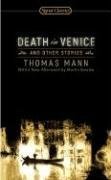
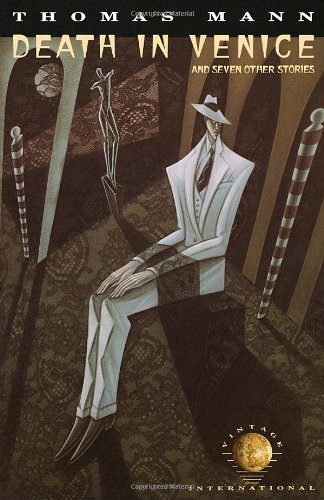
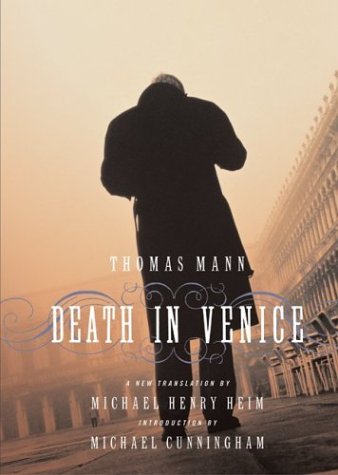
1. Death in Venice: And Seven Other
$25.51
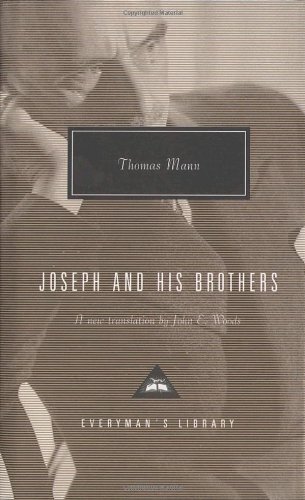
2. Joseph and His Brothers: The Stories
 
$66.55
3. The Cambridge Companion to Thomas
$2.95
4. Death in Venice and Other Stories:
$10.69
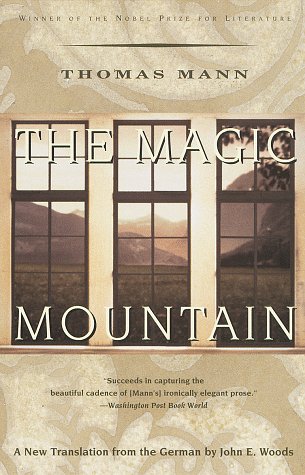
5. The Magic Mountain
$38.63
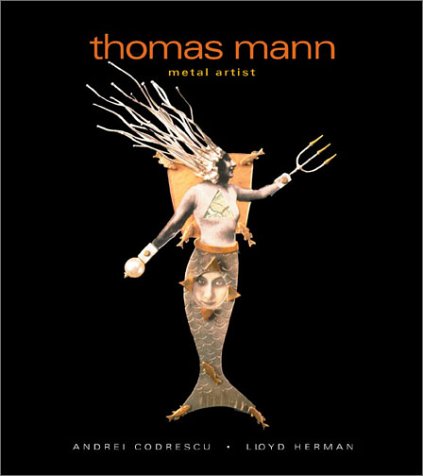
6. Thomas Mann: Metal Artist
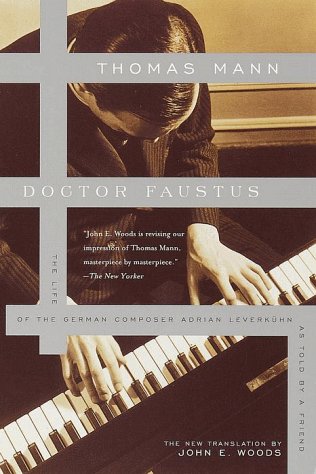
7. Doctor Faustus: The Life of the
$16.91
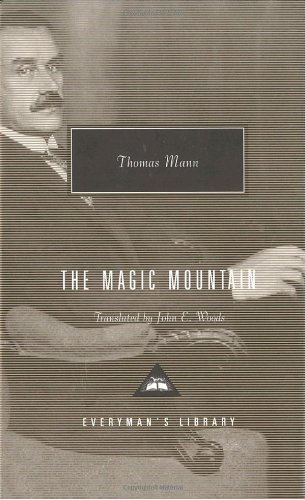
8. The Magic Mountain (Everyman's
$75.00
9. Thomas Mann's Death in Venice:
 
10. Erotic Irony: And Mythic Forms
$57.95
11. Thomas Mann's Death in Venice:
$13.12
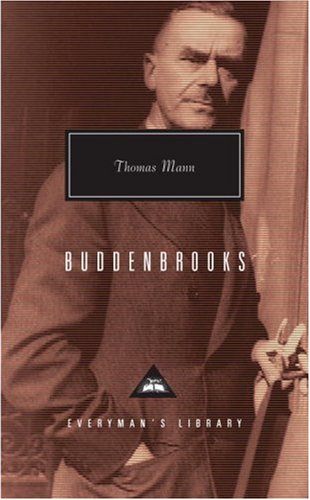
12. Buddenbrooks: The Decline of a
 
13. Stories of Three Decades
$1.75
14. The Letters of Heinrich and Thomas
$14.58
15. Mario and the Magician & Other
$7.00
16. Confessions of Felix Krull, Confidence
$12.74
17. Der Tod in Venedig
$5.45
18. Death in Venice
$9.00
19. Thomas Mann
$12.95
20. La Montana Magica (Pocket Edhasa;

1. Death in Venice: And Seven Other Stories
by Thomas Mann
Paperback: 416 Pages (1989-03-13)
list price: US$10.95 -- used & new: US$4.94
(price subject to change: see help)
Asin: 0679722068
Average Customer Review: 4.5 out of 5 stars
Canada | United Kingdom | Germany | France | Japan
Editorial Review

Book Description
Eight complex stories illustrative of the author's belief that "a story must tell itself," highlighted by the high art style of the famous title novella. ... Read more

Customer Reviews (13)

5-0 out of 5 stars A great introduction to a litery giant
This is my first time reading Thomas Mann, save for the few excerpts that appear in college literature studies. Thomas Mann is notorious for his lengthy sentences and his never-ending novels, so I picked this as a gentle introduction to his works.
Even just flipping through the short stories will give an impression of how versatile and varied Mann's writing styles could be. Death in Venice, while being his most famous work in this book, is also one of the more difficult ones to read. This was Thomas Mann at his best - his sentences, long and tortuous, rolls through the imagination paragraphs at a time. Felix Krull, on the other hand, is short and succinct, with almost a feel of modern satire permeating through it.
The translation reads pretty clean and straightforward. While this probably probably loses a bit of feel in terms of grammar and structure of the sentences, Mann's styles and the suitability of the German language to this task means that a direct translation would have less flow and may seem cumbersome.
Overall I would say this is a nice illustration of Mann's literary prodigy, without overwhelming those who are not yet initiated into reading his full-sized novels.

3-0 out of 5 stars Okay
The book was shipped really late and that bothered me.I needed it for class, and i got it three weeks from the day i bought it.

5-0 out of 5 stars Good Introduction to Thomas Mann - Intriguing, Complex Stories
The long novels of Thomas Mann can prove challenging, not unlike those of Henry James. Fortunately, this varied collection - Death in Venice and Seven Other Stories - offers an easier way to become acquainted with Mann's intellectual, psychologically complex literature.

Thomas Mann's lengthy sentences and complex grammatical structures markedly complicate the task of translation. H. T. Lowe-Porter's translation is considered the most accessible version, although at the expense of subdividing many of Mann's sentences. (For comparison with an excellent literal version, look at Stanley Appelbaum's translation of Death in Venice, Dover Publications, 1995).

Death in Venice and Seven Other Stories was first published by Vintage Books in 1954. My edition was printed by Vintage International in 1989; it has neither an introduction nor explanatory notes.

Death in Venice (1911):While vacationing in Venice, the aging, highly respected author Gustave Ashenbach becomes mesmerized by a young boy staying at the seashore with his Polish aristocratic family. Although intellectually aware of his growing obsession, Ashenbach is unable to break away.This somber portrayal of a troubled man is a masterpiece of subtle nuances that illustrates Thomas Mann's ability to create layers of meaning.

Tonio Kroger (1903) is perhaps more biographical as it explores a writer's internal conflict between his desire to be accepted, that is to fit in to a bourgeois life, and his contradictory need to follow his artistic temperament wherever it might lead him.

Mario and the Magician (1929) is more explicitly political, depicting in the guise of an unscrupulous hypnotist a Mussolini-like character. The ending of this intriguing account is a surprise.

The setting in Disorder and Early Sorrow (1925) is Munich, less than a decade after World War I, amid rampant inflation and social upheaval. The narrator, Professor Cornelius, is saddened by the loss of tradition, exemplified by modern art, music, and dance forms so popular with his older children, now young adults. He finds refuge in his study of history. Early sorrow refers to an incident involving his five year-old daughter, Ellie.

A Man and His Dog (1918) is personal, humorous, and almost idyllic, quite different from the more serious topics addressed in the other stories in this collection.

The Blood of the Walsungs (1905) is the most disturbing story in this collection. The two key characters exhibit an aristocratic arrogance and elitism that culminates in incest. In an opera scene Mann draws a close parallel between his two protagonists and Siegmund and Sieglinde in Wagner's Die Walkure.

Tristan (1902) has been described as a retelling of the legend of Tristan and Isolde set in a sanatorium. Detlev Spinell, a tuberculosis patient staying in the Dr. Leander's medical facility, becomes infatuated with another patient, Herr Kloterjahn's wife. Spinell is a largely unsuccessful writer, one that has difficulty relating to others.

In Felix Krull (1911) the narrator is a self-serving, unscrupulous, amoral, confidence man that is somehow likeable. The story ends abruptly, leaving the reader wondering what happens next.Forty years later Thomas Mann resumed work on this story and in 1954 he published the novel The Confessions of Felix Krull, a light, often hilarious account of a man who wins the favor and love of others by enacting the roles that they desire of him.

Thomas Mann was born in Germany in 1875. He was awarded the Nobel Prize for Literature in 1929. He left Germany in 1933, living primarily in Switzerland and the United States until his death in 1955.

4-0 out of 5 stars Entertaining, Classic Literature
Thomas Mann wrote "Death in Venice" in 1911.The protagonist, formerly a self-controlled and respectable public figure, gives himself over to obsessively stalking a 14-year-old boy for whom he has erotic feelings. While these feelings would be unacceptable to most people in our era, it is still difficult for us to appreciate the degree of condemnation they would have attracted when this story was written.Yet, Sigmund Freud had published The Interpretation of Dreams a decade earlier, and German intellectuals like Thomas Mann were aware that censurable urges lurk beneath conscious notice within all of us.Through this story, the author was surely struggling to come to terms with his own homoerotic urges.Judging from what he wrote, these were deeply troubling to him: corruption, decay, and condemnation are the themes he presents to us.While the images conveyed through this story are repugnant and shocking, the writing is beautiful and affecting.

Several of the other stories in this volume are of similar quality, and similarly deal with troubling themes ("Mario and the Magician," "The Blood of the Walsungs").Yet, Mann was also capable of an extended and sincerely felt appreciation of the more benign and wholesome aspects of our world ("A Man and His Dog").

These stories are worth reading and re-reading.Thomas Mann won the Nobel Prize for literature in 1929, and these stories, if not Nobel prize quality, at the very least show Mann to be an engaging and entertaining writer.

4-0 out of 5 stars A Wonderfully Complex Writer
Mann is to be struggled with; his work to be attacked and repulsed - it is the embodiment of engaging, challenging fiction.It may be advisable to start out with Mario and the Magician, a splendid and accessible story of a hypnotist performing amazing acts on an incredulous audience that is itself hypnotic in alluring its character audience and the reader into a seeminly pedestrian story that turns out to have a whimsical, fantastic denouement.M&M also doubles as a grand metaphor for the fascism that was beginning to grip Germany - the awesome power of a tyrant and the dangerous nakedness of a raptured audience.

Mann passes the test of great writing, in that even in translation, one can appreciate the literary dexterity of a master at work - a writer carried away, inhabiting each sentence of his story.Some of his lesser stories, towards the end of the anthology, are sprawling introspectives and thoroughgoing accounts of places and things.

Death in Venice is a seminal work and sets the tone for Mann's subtle revelations of repressed passions and the tabboo.Mann elegantly lays bare human souls, yet keeping the lid safely fastened to the pressured jar.One of my favorites was Toni Kroger - a touching story of an artist's life, from young man to mature adult.Mann renders beautifully unrequited love and homosocial admiration by the introverted for the extroverts.In reading his stories, we may find that he expresses memories and feelings that were always there, but could not find the words for before.That, perhaps, is the highest achievement of a writer. ... Read more


2. Joseph and His Brothers: The Stories of Jacob, Young Joseph, Joseph in Egypt, Joseph the Provider
by Thomas Mann
Hardcover: 1492 Pages (2005-05)
list price: US$42.00 -- used & new: US$25.51
(price subject to change: see help)
Asin: 1400040019
Average Customer Review: 5.0 out of 5 stars
Canada | United Kingdom | Germany | France | Japan
Editorial Review

Book Description
(Book Jacket Status: Jacketed)

This remarkable new translation of the Nobel Prize-winner’s great masterpiece is a major literary event.

Thomas Mann regarded his monumental retelling of the biblical story of Joseph as his magnum opus. He conceived of the four parts–The Stories of Jacob, Young Joseph, Joseph in Egypt, and Joseph the Provider–as a unified narrative, a “mythological novel” of Joseph’s fall into slavery and his rise to be lord over Egypt. Deploying lavish, persuasive detail, Mann conjures for us the world of patriarchs and pharaohs, the ancient civilizations of Egypt, Mesopotamia, and Palestine, and the universal force of human love in all its beauty, desperation, absurdity, and pain. The result is a brilliant amalgam of humor, emotion, psychological insight, and epic grandeur.

Now the award-winning translator John E. Woods gives us a definitive new English version of Joseph and His Brothers that is worthy of Mann’s achievement, revealing the novel’s exuberant polyphony of ancient and modern voices, a rich music that is by turns elegant, coarse, and sublime. ... Read more

Customer Reviews (18)

5-0 out of 5 stars AN OUTSTANDING BOOK
One of the greatest books ever written.

Also the kind of service / support rendered by Amazon, when the first copy did not reach me, was truly touching and amazing. Within a fortnight of not having received the original book sent to me,I had the book finally in my hands ! Great customer service.

5-0 out of 5 stars Beautiful!
The new translation of Joseph and His Brothers is beautiful, as is the novel.Yes, it's long--about 1500 pages--but it's worth all the time it takes to read.Perhaps this isn't the place to start, if you haven't read Mann before, but if you already admire his work, you're going to love this book.

5-0 out of 5 stars Unsurpassed fiction, in any century!
Anyone who has read my Listmania "Escape Mass Market Fiction" knows that I touted this novel (tertrology actually) as having ".... the most exquisite language since Shakespeare". But it is truly beyond that. After 30 years and over 3,000 books read I can affirm that there simply has been no greater work of fiction produced in any century by man or woman. One of the reviewers for the Lowe-Porter translation was dead-on saying you keep wanting to go back and reread the last 20 pages you managed to finish just to savor the experience. Original editions are a little rare and expensive, but, like any treasure, it's rewards are transcendental, and once read, you can consider yourself part of the most esoteric world of the true literati. NOTE-- Beginners who are easily scared off and prefer to sample before committing might want to skip the Preludes and go straight to the main chapters.

5-0 out of 5 stars Challenging and Sublime
For all the great technological magic of our age we suffer the misfortune of living in a time where the depth of hyperbole rends the edge from language leaving us bereft when the time comes to describe something truly remarkable.Thus to say that John Woods' translation of Thomas Mann's Joseph and His Brothers offers readers a gift of almost indescribable value may leave one wondering if I am making a literally true statement or simply wallowing in the common puff of our day.In this case the latter is the case for Mr. Woods' translation of Mann's great opus offers the reader an experience both challenging and sublime.

Readers unfamiliar with Mann's work may feel a sense of vertigo beginning this even more than his other works.Much of the style of narration, unique with its perspective shifting through time, seems almost purposely designed to leave one doubting their footing. Increasing the sense of dread is the books sheer heft, with over 1500 pages of small type and weighing in at almost two and half pounds.Yet those brave souls who resist the temptation to lay down this load in favor of a more easily digested work will come to in the end appreciate the feast to come.Mann's work rests on its own unique rhythm, and once the reader grows acclimated they will surely appreciate both the work and the great skill of Mr. Wood as translator.This series of four novels expounding on the biblical tale of Jacob, his son of Joseph of the famous robe, as well as his brothers,often comes when people engage in the entertaining and fruitless parlor game of determining the greatest literary work of the 20th century.While no single work can claim such a title, the complexity of the work and the Herculean task of translation should be evident that this is only the second instance of its translation into English in the more than 60 years since it first appeared.

Beyond simply outlining the work's subject matter, in many ways it seems written with the express intent of defying further description.With a complex web of interrelated stories, occasionally taking subjects that the bible reflects on for only a sentence and expanded on them for a hundred pages and at the same time seeking to place this seminal tale in its religious, historic, and cultural context, the work often leaves the reader gasping at the audacity of Man's enterprise.Yet almost every one of his efforts comes as a remarkable success, leaving one much to ponder.Indeed, any expectation that one can rush through this work will surely leave you with only a headache and little to show for the effort.Instead, one must take their time and slowly chew on Joseph and His Brother's digesting each piece in turn.Like many great works this one takes effort and diligence, but the reward comes as more than just bragging rights for having read it.Far more, it will offer an often eye opening new perspective and beckon from the book shelf to be taken down again so that you may reread this section or that.

One last point: to end where I began, Mann's attention to detail and word choice often gives pause, making each of us consider the harm done when we rain down words on a subject when a mere drop would do.

5-0 out of 5 stars no title- first volume of series
This isn't really about Joseph and his brothers, but about his father, Jacob.An amazing achievement, taking the bare bones of the biblical story and adding research from Judaism and Egyptian and Near East mythologies and oral histories.Plus Mann went to the land covered in these histories to see it for himself.There is an ironic, slightly satirical tone which surprised me - I thought it would be so religious - not at all.He made everything matter-of-fact and plausible and made the biblical characters come alive as real people, always adding the small details of their way of life then.Jacob seems such a sympathetic man, as Rachel does a woman, but Joseph comes off as a tattle tale, and there is the one line in the bible to support this as in everything of which Mann writes.Such a sad and touching ending to this first book. ... Read more


3. The Cambridge Companion to Thomas Mann (Cambridge Companions to Literature)
 Hardcover: 282 Pages (2002-02-04)
list price: US$80.00 -- used & new: US$66.55
(price subject to change: see help)
Asin: 052165310X
Canada | United Kingdom | Germany | France | Japan
Editorial Review

Book Description
Key dimensions of Thomas Mann's writing and life are explored in this collection of specially commissioned essays. In addition to introductory chapters on all the main works of fiction and the essays and diaries, there are four chapters examining Mann's oeuvre in relation to major themes. A final chapter looks at the pitfalls of translating Mann into English. The essays are well supported by supplementary material including a chronology of the period and detailed guides to further reading.Download Description
Key dimensions of Thomas Mann's writing and life are explored in this collection of specially commissioned essays. In addition to introductory chapters on all the main works of fiction, the essays and diaries, there are four chapters examining Mann's oeuvre in relation to major themes. These thematic explorations include his position as a realistic writer concerned with the history of his own times and as a commentator on German and American politics;his controversial reputation as an intellectual novelist; the literary techniques that enabled his challenging fictions to appeal to a wide audience; and the homosexual subtext running through his fiction and diaries. A final chapter looks at the pitfalls of translating Mann into English. The essays are well supported by supplementary material including a chronology of the period and detailed guides to further reading. Altogether the volume provides an invaluable resource for scholars and students. ... Read more


4. Death in Venice and Other Stories: And Other Stories (Signet Classics)
by Thomas Mann
Paperback: 256 Pages (1999-05-01)
list price: US$5.95 -- used & new: US$2.95
(price subject to change: see help)
Asin: 0451526090
Average Customer Review: 4.5 out of 5 stars
Canada | United Kingdom | Germany | France | Japan
Editorial Review

Book Description
The celebrated author, Gustave Aschenbach, burdened by his successes, comes to Venice for a holiday and encounters a vision of eros -- a vision for which he pays with his life. Death in Venice, Thomas Mann's intensely moving elegy for a man trapped between myth and modernity, was written at the peak of his powers. ... Read more

Customer Reviews (9)

5-0 out of 5 stars Mann's "Death in Venice" and More
Thomas Mann's masterful short novel "Death in Venice" (1912) tells the story of a distinguished German writer, Gustav Aschenbach, who, at the age of 53 while on holiday in Venice, develops a passion for a 14-year old boy named Tadzio.Mann's story sets the demands and powers of eros, human sexuality, in the form of Aschenbach's feelings for Tadzio, against the life, of intellect, discipline, artistic creation, and order which Aschenbach had, before his fateful passion, attempted to realize in his life.Mann's story is highly organized and beautifully controlled, meeting the artistic and intellectual demands of his protagonist, Aschenbach.Yet the story exudes passion and eroticism, in Aschebach's homosexual attraction for a young adolescent, the dank gondolas of Venice, the fetid epidemic that plagues the city, and the atmosphere of death and destruction that Mann captures in his work.The story is full of allusions to Schopenhauer and Nietzsche, to Plato's Phaedrus and Symposium and, I think, to the Bacchae of Euripides.Mann's story offers a disturbing picture of the claims of sexuality and eroticism, particularly on the life of the mind, and of the consequences of repressing them.

I was grateful for the opportunity to reread "Death in Venice" in a book group, and my understanding of the work was increased by this excellent collection of seven of Mann's early short stories in a volume edited by David Luke. It is available at a modest price.The six other stories in the volume were written earlier than "Death in Venice" and show a unity of theme with this great work. Each of the stories juxtaposes the life of the artist, the outsider trying to observe and understand,with the claims of passion. The artists involved, the passions, and the results differ among the stories, but the underlying theme remains the same.

"Tonio Kroger" (1903), an extended short story, shows an aspiring writer infatuated in his youth with a school friend and, subsequently, with the girl his friend marries. He years to be part of what he deems "the bright children of life, the happy, the charming, and the ordinary" while recognizing that this is not to be for him. "Tonio Kroger" was Mann's own favorite among his works and it presents the theme of "Death in Venice" -- intellect and passion in a different way and light.

The extended story "Tristan" (1903) also is based upon a conflict over a young woman, set in a sanitorium, between a dandified writer and her business-like matter-of-fact husband. Mann's love for Wagner and for music are also at the center of this story.

The remaining four stories also develop the theme of passion as a disturbing force in what appears to be a settled life. I particularly enjoyed the short opening work, "Little Herr Friedemann" (1897) in which a young man who becomes hunchbacked and reserved as a result of an accident in infancy is humiliated and rejected when he feels the stirrings of passion in the person of a beautiful 24 year old married woman.

In delving into the force eroticism exerts on human life, Mann's stories explore a theme which resonates deeply with me and with many readers.This book, with Luke's translation and introduction, is an excellent way of getting to know Mann's stories.

Robin Friedman

5-0 out of 5 stars Wagner never sounded so good
I know two Germans, both of whom read a great deal- one of them taught the language to me for two semesters; the other I know via the internet. Each of them seems to have very different ideas about their own culture. For instance, one insists that Goethe is over-rated and should not be read; the other promises me that he is the bedrock of that countries literature. Who to believe? I'm still trying to make my mind up...

However, both of them insisted that I read Thomas Mann.

They couldn't have been more right. To you, the potential reader, I want to pass on that advice: read Thomas Mann. Read him and reread him and study him. Do it with this book, the Bantam publication translated by David Luke.

Thomas Mann had an intelligence about his writing that can only be appreciated fully firsthand. This is not light material by any stretch of the imagination but neither is it so dense that it can't be understood or gotten through. The fact is that its perfect; it sits just right in your mind, beckoning you on page by page, intricately constructing the internal rhythm of its characters and their dilemmas in such a way that you find yourself hypnotized, pouring through the pages then digesting those over a period of several weeks as the moods he has created stick with you. The material haunts you; it grabs hold of your imagination in such a way that a deep footprint will be forever left.

Take the story of `Tonio Kruger' for example. Inside the material there are repetitions which occur, turns of phrases that are presented in happy times, then echoed later to recall to the reader, albeit almost subconsciously, those earlier moments. These little flourishes in the language are the craft of a man who took his work very seriously, presenting the writing as well as the subject as part of the experience. Anyone who has read Flaubert knows what pains some authors take in this striving for the bon mot; Mann is such an author, a person who writes at all levels; plot, character, technical presentation, and theme.

This is to say that the other pieces of the fiction (plot; characterization) work as well as these little technical echoes. The story `Tristan' is a good example: after finishing this one, try to erase from your mind the image of the writer pleading with the sickened wife to play the piano. Try to wipe away the lilt of language, the turn and tilt that bring to mind the piece by Wagner, a sound that you can almost hear in the just the words themselves. I assure you, it will stick to you. If you want to do any writing yourself you will find your mind wandering over this passage, trying to discern how it is that Mann achieved this feat in mere language.

And this brings me to another reason to buy this book- David Luke. Mr. Luke does a splendid rendering of the material, a translation that does not dumb it down, that is very conscious of the work and its brevity and that takes great pains to make sure to convey as many levels of the work to the reader as is possible. One good example- at one point a German word is used that can have more than one meaning in the context (Geist); this is noted at the bottom of the page instead of being accounted into the translation itself. Doing this instead of writing both contexts into the text gives the reader an appreciation for the original work that could not be had otherwise.

The introduction is splendid as well. In 50 pages Mr. Luke covers a brief synopsis of each of the stories, recounting to the reader what should be noted so that the brilliance of the work becomes more evident (I will admit, I did not notice the repetitions myself...). I would advise (as with any introduction) that this part should be read last; it contains spoilers that could curtail the experience of a fresh reading.

Bottom line: Add this to your collection of paperbacks. Each story is worth the price of the book as a whole and the fact that they can all be had so cheap leaves little reason not to buy it.

-LP

5-0 out of 5 stars The Sorrows of Youth
All of these stories were written when Mann was in his early twenties, and he always felt he would never surpass them.It is not hard to see why; they are suffused with the intensity and bitter-sweetness of despair that only youth can bring.By turns tragic and comic, the dark corners of Venice shall linger in the mind long after you have turned the page.

5-0 out of 5 stars Art as a way of life
This collection of Thomas Mann's novellas and short stories thematically exhibits the alienation of being a passionate artist in a bourgeois society."We artists despise no one more than the dilettante, the man of life who thinks that in his spare time, on top of everything else, he can become an artist," the title character tells a sympathetic friend in "Tonio Kroger," a story which seems at least partially autobiographical.Tonio, who has become a renowned writer as an adult, recalls an instance when he was a boy in which he tried to entice the interest of a friend -- a popular, athletic boy, everything that Tonio was not -- by enthusiastically explaining to him the plot of Schiller's "Don Carlos."The attempt was futile, however, and Tonio was left spiritually alone with his unusual love of literature.

"Tristan" takes the artist-bourgeois conflict to a setting that presages Mann's definitive novel "The Magic Mountain."The protagonist, an offbeat writer named Spinell confined to a tuberculosis sanatarium, takes an interest in a fellow patient, a businessman's wife who, he discovers, is a sensitive and tasteful amateur pianist.He writes her husband a derogatory letter, deploring him as a philistine who does not deserve to share his life with this secretly artistic woman, which results in a heated confrontation between the two men.In "The Child Prodigy," Mann's tone turns satirical as he focuses on an eight-year-old concert pianist giving an electrifying public performance to an audience whose various reactions -- wonder, jealousy, indifference -- are reflections upon themselves more so than on the performer.

"Death in Venice" is the boldest piece in this collection, unambiguously presenting homosexuality in an artistically positive light but also showing something of a German fascination with Italian culture and scenery.Gustav Aschenbach, the protagonist, again seems to reflect Mann to an extent as a middle-aged, widowed, respected author from Munich who becomes infatuated with a teenage boy while vacationing in Venice.Whether this love ever becomes mutual or physical is not as important as the mood Mann invokes about European cultural and moral decadence, possibly symbolized by the cholera epidemic that sweeps through the city.

"Man and Dog: An Idyll" is a brilliant meditation on the narrator's affectionate and occasionally difficult relationship with his pet pointer and also allows a glimpse of life in the industrialized and suburbanized Germany of the early twentieth century.To say that Mann gives the dog a human personality may seem a cliche, but few writers could achieve his level of empathy in relating a dog's behavior and desires in man's terms without resorting to outright personification. A disturbing inversion of this story is told in "Tobias Mindernickel," in which a lonely old man, given no personal background by Mann, ostracized in his neighborhood by adults and taunted by children, buys a dog and demands from it the obedience and respect he has never earned from people.

Mann is truly one of the most important figures in twentieth century literature.What he chose to portray, and the talent with which he portrayed it, brighten the legacy of a century that threatened to destroy art in so many ways for so many insane reasons.

5-0 out of 5 stars Art and Time in Italy
The shorter tales are good but are really like imperfect sketchesmade in study for the grand finale piece Death in Venice. Most of the tales deal with sensual longing which is never satisfied or consummated and that gets a bit tiring unless you see the sensual longing representing some higher longing as well, the sensual longing perhaps being one in the same with spiritual and artistic longing. That way you are more in the frame of mind to see that Death in Venice is not just about an older mans lust for a younger man but a prolonged meditation about time and art and all those highly valued goods. I have to confess I get tired of Mann pretty quick because he dwells on the same themes over and over again but if you are a student of fiction he really is one of those writers who has much to teach. Still it sometimes seems to me that Mann's characters would be better off if they occasionally just went ahead and did it. That may sound to be an awful oversimplification but I think they would feel better and their already instable identities and worlds would not constantly be shaken to the ground by those too long suppressed desires.As for the spirit and artistic sense, they too would be happier, much more contented, with the occasional release and renewal of energies, a bit of fleshen contact would connect them to something more real than their "thoughts" about things. Anyway if you haven't already read Death in Venice you are lucky because it is a great read, though a strange and sometimes disturbed one. If you like your main characters made of more earthy substance than Mann's suffering spirits read D.H. Lawrence who also loved Italy by the way and who contemplated time and art in a much more relaxed manner. ... Read more


5. The Magic Mountain
by Thomas Mann
Paperback: 720 Pages (1996-10-01)
list price: US$18.95 -- used & new: US$10.69
(price subject to change: see help)
Asin: 0679772871
Average Customer Review: 4.0 out of 5 stars
Canada | United Kingdom | Germany | France | Japan
Editorial Review

Book Description
In this dizzyingly rich novel of ideas, Mann uses a sanatorium in the Swiss Alps--a community devoted exclusively to sickness--as a microcosm for Europe, which in the years before 1914 was already exhibiting the first symptoms of its own terminal irrationality. The Magic Mountain is a monumental work of erudition and irony, sexual tension and intellectual ferment, a book that pulses with life in the midst of death. ... Read more

Customer Reviews (82)

5-0 out of 5 stars Unique in reading experiences
Just to be clear, I've only read the Lowe-Porter translation, though I plan at some point to follow Mann's advice and give it a once-again with the new Woods version.For those not accustomed to fairly dense or philosophical works of fiction, the task here presented to the reader will likely prove new and exciting.I'm not going to say "difficult" or "intimidating" because, with a bit of patience and intelligence, the novel is accessible and even enjoyable in a certain idiosyncratic way.

The Lowe-Porter translation is certainly worth the time as long as one is willing to entertain the idea of paragraph-length sentences and multi-clause complexes loaded with such devices as are available to the would-be Germanizer of the English language: commas, dashes, semicolons, ellipses... mostly the first two.The translation also deftly utilizes an impressive vocabulary, and I kept a pen and pad handy with a dictionary to take notes and learn new native words from a novelist whose second language is my first.Above all--and I have come to this opinion after having worked my way through the book carefully and slowly and, in all sincerity, with great enjoyment--reading Thomas Mann will make you a better writer and thinker.The same probably goes for many of the great works of literary fiction, but here is a modern author whose imagination and love for ideas and abstraction I find very dear to my own intellectual sentiments.

As far as accessibility, an introductory knowledge of Nietzsche is extremely helpful in particular.Schopenhauer's influence shows itself clearly in the concern for time and the subjectivity of its experience, but I believe Nietzsche's ideas are very nearly more pervasive on the whole.They also have less to do with the aesthetics of the novel and more with its content, meaning that their potential for distracting the unsuspecting reader and detracting from his or her sense of literary enjoyment becomes a real issue.That being said, the back-and-forth between Settembrini and Naphta is intellectually engaging, particularly for those with a background or interest in German philosophy.Fortunately, Mann saves the novel from suffocating in this kind of mental gymnastic by interspersing predominately narrative chapters--lulls in the intellectual hyper-articulation surrounding some of the main characters.

Who should read this book?I'm not entirely sure... nearly everyone who garners an interest I suppose.I hesitate to call the novel "modernist" in contradistinction to "post-modernist" because the intellectual motifs revolve so dependently around Nietzschean concerns.The issue of life and death, for instance--whether death is an absolute negation or something positive and life-worthy--is reminiscent of Nietzsche's dialectical approach to the same issue.Undoubtedly Nietzsche (and perhaps Mann himself) often assumes the enlightenment, progressive, bourgeois-liberal side manifested in Settembrini.But some aspects don't match up: Nietzsche wasn't liberal or progressive, and decried the bourgeois values of his time.In some ways, S. and Naphta seem to represent two unacceptable oppositions of a dualism, some kind of Nietzchean inspired set of polarities designed for the purposes of philosophical dialogue.

In the end, however, I believe Nietzsche and Mann would come down qualifiedly on the side of Settembrini.This seems fairly obvious by the conclusion of the novel, though the introduction of Peeperkorn is another issue altogether: a character we the reader learn both to love and hate.A character whose physical presence and prowess inspire a certain awe but whose skill in articulation shrivels in comparison to the above mentioned antagonists, Peeperkorn is at once personally fascinating and intellectually repulsive.Though I found myself repeatedly sympathizing with Settembrini in Peeperkorn's presence, I could at most blindly affirm the former's academic optimism in the face of the child-like carelessness that is Peeperkorn.Is Peeperkorn really Nietzche's mature vision of the Dionysian principle?The idea changed in Nietzche's thought, later to emerge as something closer to the intellectual maturity represented by Settembrini.On this account, I can only dismiss Peeperkorn as too unrealistic and unconcerned, or perhaps merely too lacking in a mature and universal humanistic spirit.

Whatever one's interpretation, the book is the ultimate in fictional food for thought.I believe it is also tremendously enjoyable to a certain kind of intellectual sentiment: philosophical, conceptual, abstract, patient and slow moving, perhaps a little pessimistic.I recommend without much reservation the Lowe-Porter translation, not as a substitute for Woods but as a work of creative literary articulation in itself.

1-0 out of 5 stars Al Gore, Yassar Arafat, and Magic Mountain...
...What are three reasons why the Nobel Prize is utterly meaningless Alex!


Holy crud, I just finished reading Magic Mountain about 5 minutes ago and want to get this review out while I still have the taste in my mouth.There's some great 1-star reviews for this book that I doubt I'll ever be able to top...but I'll try anyways.

What the book lacks in character development, ideas, and psychological analysis it more than makes up for in utter pointlessness.A more unfeeling, disinterested, atomized novel you will not find.Mann writes like a man detached from the world; he's incapable of giving a cohesive structure to multiple ideas and moving them in a single direction.In a word, it's a novel without purpose, more or less a collection of seemingly random, meaningless events that occur over a seven year period within a sanatarium high in the German Alps.

Maybe this disjointed style of narrative was somehow meant to be just an avenue through which Mann could pretentiously lecture the reader about the nature of time.Sure!I mean, time is such an easily definable concept that it certainly can be casually woven into what allegedly is an already highly complex storyline - and of course Mann possesed the Astrophysics Ph.D to make any of this time talk relevant, right?Not a chance.

Nothing it seems is able to pry the protagonist Hans Castorp away from his life as a spineless worm.Even the more notable events enjoy just a short twilight before they fizzle out, leaving Hans Castorp the same detached, unthinking, and cowardly individual on DAY 1 as he is in YEAR 7.Is this a true portrait of the character and psychology of a human being?Maybe in this mood equalizer culture of ours it is, which is probably at least part of the reason for the novel's popularity in the Anglo-American world.

Outside of that it's difficult to imagine an individual (or if one did indeed exist why such a wretched existence should be made the focus of a lengthy novel) who - could continuously witness death first-hand, go through a series of near death experiences himself, have intimate relationships with intellectuals (though admittedly the Settembrini-Naphta dialogues are just dramatized pseudo-philosophical ramblings) - without every experiencing any notable change in his psychology or behavior.How would Mann justify this ridiculously unrealistic, unfeeling outlook on the development of what is commonly known as character, spirit, or soul?Assuming we were able to actually locate someone like Hans Castorp would there be any purpose in digging beneath the surface of a man who is so fundamentally disinterested in anything that isn't completely about him?

I think what happened here was that Mann looked at mankind's desire for comfort, then jumped a whole bunch of steps and concluded that the man who simply wants to "stay warm" would be able to easily insulate himself from ideas and withdraw himself from society.That just isn't the case though.I don't deny that modernity can create a sense of detachment and social isolation in many individuals, but these feelings are not at all easily accepted by those same people. Indeed, even the people who personally decide to isolate themselves either do so because of, or cannot do so without severe emotional trauma and despair.Thus, if Hans Castorp is indeed supposed to be representative of this sort of Nietzchean "herd animal" than he is able to live this way with a stunning and completely unrealistic sense of ease.

Finally, what was up with the ending?Out with a whimper indeed!What an incredibly sick view of life this book expresses.Not only was this nearly the most worthless thing I've ever read, but I also have an added sense of shame at having initially given this book to someone as a birthday gift!It's little wonder they never bothered to read it.Run far, far away from this lifeless pseudo-philosophic nonsense.

Worst Novel of the 20th Century.

5-0 out of 5 stars A great book but not for flatlanders
Anyone who is preoccupied with the cares of the "flatland", who lives busily working away with the sense that everything will keep humming along indefinitely, will find this book a waste of time. The main character, Hans Castorp, takes leave of his life in the lowlands of northern Germany at first on a vacation, but then due to a lingering illness stays on at a sanatorium in Davos, Switzerland for what turns out to be an ominous seven years: the time leading up to the outbreak of World War I. From a life of comfort and security, in which he follows the well-defined and socially-acceptable track of becoming an Engineer, he finds himself transported with an unknown future to a rarefied mountain world, in which death is stalking.

The narrative moves briskly at the beginning, much like I remember BUDDENBROOKS, but soon the author gets into a different kind of territory and sabotages the running narrative by lengthy descriptions. At one point, he takes almost an entire page to describe Hans taking his temperature (in keeping with the theme of time). What drew me into this descriptive style concerned the events as they unfolded: certainly, Hans's attraction to Clavdia Chauchat, the fate of his cousin Joachim, the doings of the patients at the sanatorium in the face of death; and especially, the perceptive way of the author in noting all those personal concerns that are often skipped over in the usual rush and roar of everyday life.

On one level, this book is about the education of Hans Castorp - an education all-together different from what he would get in the flatland. We get introduced to the long-winded discourse of Settembrini, the secular humanist ; and as a counterpoint, Naphta and his incessant arguments defending the authoritarianism of the Church. These two represent the European conflict between the legacy of the Greeks and the religion imported from the deserts of the Levant. They, along with others such as Rhadamanthus and Peeperkorn, more closely resemble operatic characters than actual flesh and blood characters. They engage more in soliloquies than dialogue, and they confront and challenge Hans.

On a deeper level, Hans can be seen as embarking upon a spiritual quest, which is certainly unlike the material quest that he was following in the flatland. The quest for the Holy Grail in Western Mythology is a quest that can only be undertaken by a unique individual on a path not traveled ever before by anyone else, by the most difficult of possible ways. Hans is as Settembrini calls him: "the delicate child of life". But he is tested in his own way by the very immediate presence of death and disease; and he is also tested when he gets lost in a snowstorm.

5-0 out of 5 stars patience required, rewarded
I won't summarize anything here... it's been done in these reviews already... but I've just finished the book and found it to be one of the most rewarding reading experiences of my life. I can see that this book isn't for everyone...it does require a great deal of patience...there are lots of long, slow moving passages... but it isn't haphazard in it's unfolding. I just feel as though I've been in the presence of a master here, an author who guided me quite expertly through his created world. I found the characters fully developed, the story rich in detail, landscape, thought, idea, and purpose. It did take me a LONG time to read, but it was worth every second. I rank this among my favorite books, one of the most important books I've read, and one of the most rewarding.

1-0 out of 5 stars An odious narrator/author
I've read this novel at least four times over the past forty years...twice within the last year.It's always made me uncomfortable in a manner that I've found it difficult to define. To some extnet, the problem has always been the two dimension characters that fail to engage.And, certainly the character of Setembrini (sp?) withhis constantly referred to "plastic" or "graphic" speech (depending on how you translate the German), his tasteless toothpick, and idiotic, theatrical getures is almost terminally irritating to the extent that I find Naptha (who Mann works hard to make unpleasant) pleasant. (By the way, I don't believe Naphtha is a "terrorist" in our modern usage of the word as some here seem to feel.)

But boring characters and situations are simply a part of the literature of mittle europa.And anyone who reads much of such literature either learns to put up with it or, for whatever reason, to like it.No, I think that perhaps I have at last figured out what so puts me off.It's the personna of the narrator.He's is SO superior.The whole novel reads like it had been written by a precocious, sophomoric adolescent showing off..."Look how smart I am!Look how much cleverer and insightful than any of the characters (and you, Dear Reader) I am!"It is for me an unpleasant tone, which, combined with the rather flat characters and situations makes the novel irritating at best...and for the literate among you, yes, I know that I've just"confused" author and narrator.That is intentional as Mann seems to be using the nineteenth century narrator as author's spokesman technique.

As to Mann's wanting the reader to see a homoerotic connection between Hans and Joachim, I don't see really how it can be missed...Joachim the manly soldier, Hans the soft, gentle boy...ah, yes.It goes, I hope, without saying, that there can be homoerotic elements in a novel that is not at all gay.

It's reasonably well known that the Nobel prize for literature is awarded not for a single book, but rather for a body of work. And, anyone who knows his history knows that many classic liberals (I do not refer here to the bastardized use of the term found in contemporary politics) wanted to reintegrate Germany into the company of civilized nations after that nation's lost of stature in and after WWI. I suspect that the politics of inclusion won the Nobel Prize for Mann rather more than his actual writing.

So, why have I contined to read this novel over many years?Quite simply because of the setting.When I was a small boy there was still a tuberculosis sanitarium in the town in which I grew up.For whatever reason, the mysterious, graceful, boring life of such places has always intrigued me. ... Read more


6. Thomas Mann: Metal Artist
by Andrei Codrescu, Lloyd E. Herman, Thomas Mann, Michael W. Monroe
Hardcover: 127 Pages (2001-10)
list price: US$35.00 -- used & new: US$38.63
(price subject to change: see help)
Asin: 1893164128
Average Customer Review: 5.0 out of 5 stars
Canada | United Kingdom | Germany | France | Japan

Customer Reviews (4)

5-0 out of 5 stars Simply delicious - buy it before it is too late.
I confess, I am a Thomas Mann fan! This is a wonderful book that anyone who loves Mixed Media, found objects and unique jewellery will love. A wonderful variety of "essays" written by others about Mann at different times in his career, starting in the 1970's including pieces written by Mann on his creative process. It is a wonderful read and you can see clearly how his unique style has developed.

The glorious images that adorn the pages of his work are beautifully taken and reproduced in page after page of work that you can not help but gasp at, sigh at and hopefully appreciate this remarkable artist's talent. The book may be "old" in terms of publishing (2001) but you just have to track this book down and keep it before it is out of print. This book is one of my most loved.

5-0 out of 5 stars Fabulous Book!!!
This is a wonderful book. I was not familiar with Thomas Mann at all until I purchased this book. To say the man is a creative genius is almost an understatement.

5-0 out of 5 stars Pleasing to the Eye
A book well done for the fan of Thomas Mann.It gives LOTS of detailed photos of all his work through the years, as well as an account of his life.I'm glad he gives acknowledgement for all the people who contributed to his success.Well done!

5-0 out of 5 stars Over 40 years of creative genius
This book displays a beautifully photographed representation of Thomas Mann's creative genius that is not to be missed. Thomas Mann is a true modern master and this book details his life's work and inspiration from the past three decades. From the use of non-precious metals, found objects, and objects that are created to look old, Thomas's highly recognizable industrial style is an inspiration to many, and he will be remembered for his contribution to the world of jewelry arts, for many years to come. ... Read more


7. Doctor Faustus: The Life of the German Composer Adrian Leverkuhn As Told by a Friend
by Thomas Mann
Hardcover: 534 Pages (1997-11-25)
list price: US$35.00
Isbn: 0375400540
Average Customer Review: 4.0 out of 5 stars
Canada | United Kingdom | Germany | France | Japan
Editorial Review

Book Description
The new translation, by the masterly John E. Woods, of one of Thomas Mann's most famous and important novels: his modern reworking of the Faust legend, in which twentieth-century Germany sells its soul to the devil.

Mann's protagonist, Adrian Leverkühn, is one of the most significant characters in the literature of our era, for it is in him that Mann centers the tragedy of Germany's seduction by evil. This modern Faust is a great artist: Leverkühn is a musical genius who trades body and soul in a Mephistophelian bargain for twenty-four years of triumph as the world's greatest composer. He is isolated, brilliant, a radical experimenter who both plays and thinks at the very edges of artistic possibility. The story of his life becomes an apocalyptic narrative of his country's moral collapse as it surges into the catastrophe of World War II. No simple symbolic figure, Leverkühn is himself, almost paradoxically, a morally driven man in the vortex of an entire culture's self-destruction.

Through the wonderful--and terrible--story of Leverkühn's life and death, Mann not only gave us his most profound writing on the very nature and heart of all art--how it is created and how it impinges on every aspect of our experience: artistic, religious, political, sexual, psychological--but also forced his countrymen (the novel was first published fifty years ago, in 1947) to come face-to-face with how they had fallen prey to all that was most lethal in their heritage. ... Read more

Customer Reviews (15)

5-0 out of 5 stars Essential Reading for German Literary History
Before you read this book, I highly recommend you become acquainted with the history of German culture, music, art, literature and life. It is an excellent read when you have a background to fall back on. Thomas Mann draws from his life, from the culture surrounding him and the unfolding panorama of the history of Germany. From Goethe, to Kant, to Schoenberg, his book is a mosaic of influences. You cannot read it without at least having some idea about the dark times he lived in, about his homosexuality and his literary knowledge. He was the German master, but unlike Franz Kafka, he is only accessible when you have the tools to discern him.

But once you get an idea about the grandeur of his milieu, brace yourself for one of the most sublime and excellent of books. It is a Bildungsroman of a man and an epoch. Doctor Faustus is the looking glass in which the reader sees the writer himself lurking behind his creation and the era he represented. It is a tragedy but like the operas of Wagner, it will haunt you and thrill both your mind and heart. Each page has the depth of the abyss. Read this with a glass of German Riesling to get the full effect of German culture.

5-0 out of 5 stars Artist Meets Scientist
In Doctor Faustus, arguably his greatest book if not the greatest book ever, all of Mann's formidable gifts come together. Lying at the heart of Mann's concern is the central figure of Adrian Leverkuhn, theologian turned composer. In him all the warring impulses, all the contradictions of our age are focused. "Cold" by nature, inclined to mathematics and to "speculate the elements" as scientists do, he yet craves the freedom and unrestraint of art, specifically music, the most demonic of the arts. But the fearful complexities of modern composition and his own innate coldness form an insuperable barrier, he needs something to kindle him to his destiny as a great composer. This turns out to be the Devil, who in a memorable interview heavy with fate offers him a quick way out of his difficulties.

The book teems with unforgettable images. To pick a few at random: the extended description of Adrian's sojourn in the Italian countryside, where he meets the Devil and his fate is sealed; the wintry excursion to the Bavarian Alps; the vision of the children in the choir singing a motet to Adrian, bedecked with rubies on their fat hands while little yellow worms crawl from their nostrils down into their chests in the finest diabolic style. The density and vividness of Mann's imagery, its capacity to fill the mind and linger there, is Shakespearean.

Mann's treatment of his characters is sensitive, fine-grained, subtly ironic, and humanly engaging, with much wry humor. The amazing chapters dealing with Schwerdtfeger's vicarious wooing of Marie Godeau for Adrian, the piling up of layers of meaning and subcontext (including the latent homosexuality that runs like a provocative thread throughout Mann's writings), amount to a virtuoso performance whose incredible, sustained brilliance is rivaled only by Joseph's interview with Pharaoh in Joseph and His Brothers, also by Mann. Those readers who complain that the narrator Serenus Zeitblom is a tedious boor, that the other characters are lifeless cardboard cutouts, and that nothing ever happens, simply haven't gotten to first base with this novel.

What then is the problem? It is one that Mann himself wrestled with and which for a time led him to consider the work a failure, although he was determined to finish it. The problem is that the story cannot just unfold naturally and tell itself. A certain amount of history, of context, is needed to motivate the character of Adrian Leverkuhn; readers must be made to understand why the problems he wrestled with are not peculiar to him but arise inevitably and are universal -- in short, our problems as well. This context-building necessitates a rather long, abstract, and careful development. With his daughter Erika's help, the original manuscript was cut extensively to leave only the most essential material, but even so this development occupies the first third of the book. Anyone interested in Western history will find it fascinating, while those who aren't will be richly rewarded for persisting, for the narrative pace, at first imperceptible, does pick up and toward the end becomes irresistible, like the final running out of the sand in Adrian's hourglass.

Given that Adrian's concerns are ours as well, what are we to do about them in our own very different age? What meaning does the concluding high G on the cello in Adrian's final work, that abides like a light in the night, hold for us? When we strip away all the inanity, futility, and trash of our era, what is left? Not art, alas, for art is a finite store that has been exhausted. But there is science, which is unlimited and inexhaustible, and it is specifically the scientific aspect of Adrian's nature, his tendency to "speculate the elements", that is meaningful for us. Modern biology now offers the prospect of understanding and manipulating the essence of life itself. Will it just be more "devil's juggling", more falling down in the dust to worship the quintillions, from which Zeitblom protested nothing human can ever emerge? Can man be trusted to resist temptation in carrying out such a program? Can the devil and the humane even be separated from this vital substance? No one can tell us, yet the essence of the problem is already fully present in symbolic form in Doctor Faustus. This is the triumph of Mann's representative art, of the Artist way. As we continue on the precarious, ever-changing path of self- and world-discovery, Mann's book stands as a guidepost and a warning. This is the enduring significance of Doctor Faustus and the reason why it will always be with us for as long as we remain recognizable as a species.

3-0 out of 5 stars brief thoughts...
I just finished Doctor Faustus by Thomas Mann.

I agree with other readers that it is written in highly complex prose. It reminds me quite a bit of Joseph Conrad. While Mann's sentences are strangely convoluted, if you read them slowly and carefully, eventually they do make sense. The effort is worthwhile and satisfying. The translator Woods has obviously done a painstaking job in rendering into English an obviously difficult German text. There is however an annoyingly substantial amount of technical discussion on musical theory that (as Mann himself notes on several occasions) demands considerable forbearance on the part of the reader, especially one who is not particularly skilled in the art. It is not clear why Mann decides to go into such detailed technical discussions, except perhaps as an expression of some longstanding personal interest of his in classical music. The depth of technical detail is not critical to the reader being able to appreciate the brilliance of Adrian's composing. Balanced against this, there are some beautiful literary passages (Adrian's trip to the brothel; his father's science experiments; the exchange with the devil; the sleigh ride in the country) that more than compensate for the long-winded music-theoretical discourses.

The basic story, as all reviewers know, is the classic Marlowe/Goethe tale of a man who sells his soul to the Devil in return for a lengthy period of great artistic creativity and power. In this case the luckless hero is composer Adrian Leverkuhn. The parallel between Adrian and Germany in the inter-war years has been noted by other reviewers, so I won't go into further detail here.

I have not yet read the Marlowe or Goethe versions but, having read this book, I have now put these high up on my list. However, I am not in a particular rush to read anything more by Thomas Mann. I might care to open up one of his earlier books in a couple of years, but I first need to let Doctor Faustus crystallize in my mind for a while. The subtlety of the text (reminsicent of Kenziburo Oe's masterpeice "Somersault" or Madison Smartt Bell's recent "All Souls' Rising") needs time to work its way properly into my neural network.

I would not advise casual readers, simply looking for a good entertaining story, to pick up Doctor Faustus by Thomas Mann. Such a reader might be disappointed and would have trouble getting very far into it. The book, written somewhat relectively by a mature writer, is more appropriate fora person interested in digging around in the dusty corners of great literature.

5-0 out of 5 stars A Reckoning.
This review is dedicated, in friendship and grateful memory, to Bob Zeidler, one of Amazon's best and brightest customer reviewers.It is partly inspired by an exchange with Bob, whose comments hereon are sorely missed.
_______________________________

"Yes ... we are lost.That is to say: the war is lost, but that means more than a lost military campaign, in fact it means that *we* are lost, lost is our substance and our soul, our faith and our history.It is over with Germany; ... an unnamable collapse, economical, political, moral and spiritual, in short, all-encompassing, is becoming apparent, - I don't want to have wished for what is looming, because it is despair, it is madness."*

Thus, the narrator of Thomas Mann's last completed and, I think, greatest novel sums up Germany's fate after the barbarities of national-socialism.But this is no mere character speaking:This is Mann himself - the erstwhile self-proclaimed "Unpolitical Man," condemned to watch the Nazi tyranny's horrors from the distance of his Californian exile, taking up the mighty pen that had gained him his Literature Nobel Prize and, through the voice of a narrator named Dr. Serenus Zeitbloom (in itself, supremely ironic comment on Mann's own circumstances) composing his final reckoning with the country he left when the Nazis came to power, and where he never returned to live, although he finally did leave the U.S. in 1952, driven out by McCarthyism.

According to his diaries, as early as 1904 Mann had the idea of using a composer's temptation by the devil (and thus, updating the Faustian legend, *the* quintessential theme of Germany's cultural history at least since the Middle Ages) to illustrate the corruption of art by evil.Seeing the country's intoxication with the glorious promises of Hitler and his henchmen, seeing all of German society fall under the spell of evil, including the "Bildungsbürgertum," the educated middle class considering itself guardians of Germany's cultural tradition (and for whose acceptance the dark-haired merchant's son without a university education struggled throughout his life, much as they bought his books), reviving that idea first conceived forty years earlier was a logical choice; now further inspired by the personalities of Arnold Schoenberg, whom Mann met in exile and whose twelve-tone scale became that of his novel's protagonist Adrian Leverkuehn, and Friedrich Nietzsche, with whose writings and personal fate Mann had been fascinated early on.Philosophically and musically, the novel is also influenced by critical theorist Theodor Adorno, with whom Mann entertained an in-depth epistolary dialogue.

Blending together musical theory, the decline of humanist philosophy, the rise of fascism and the powers of black magic (most of which Mann had already explored in earlier works like "The Magic Mountain" and, very pointedly, in the 1930 short story "Mario and the Magician"), "Doctor Faustus" is thus simultaneously a comment on the political developments, a warning, an attempt to come to grips with Germany's high-flying, yet so easily destructible philosophical and moral compass - and, masterfully construed though it is, a cry of despair in the face of utter madness.For while the novel is brimming with references to the better part of German (and European) cultural history, from the medieval "Faustus" tale to Goethe, Weber's "Freischuetz," Martin Luther, Protestantism, and Thuringia and Saxony as focal points of all things German, Mann's central point remains the parallel between his country's fate and that of his novel's protagonist, both ending in ruin and madness-induced stupor after their deal with the devil has run its evil course.

Unlike Goethe, who places his Faust's temptation at his tragedy's beginning, leaving no doubt about the event's physical reality, Mann even narratively lifts Leverkuehn's temptation into the realm of allegory and imagination, by splitting it into two incidents, whose combined effect will only come to fruition in the novel's final part.On neither occasion Zeitbloom, the narrator, is present; for both we thus have only Leverkuehn's own words.Yet, even the first account, a letter describing how the would-be composer is mischievously led to a brothel and falls under the spell of a prostitute, already intimates the evil to come, the venereal disease that will later constitute the outward cause of his madness; and not only does Leverkuehn ask his friend to destroy that letter, he also closes it imploring him to pray for his soul.

Much later in the narrative - although indicating that it was actually written earlier; thus employing yet another level of (temporal) abstraction - Mann introduces Leverkuehn's transcript of his exchange with the devil; a dream-like sequence during which shape-shifting "Sammael," in language hearkening back to Goethe and even the Middle Ages, promises Leverkuehn nothing short of "the metamorphosis of a god": that by his name a whole generation of "receptively healthy boys"* will swear, "those who thanks to [his] madness will no longer have to be mad themselves;"* and that, indeed, his name will live forever.Still, at this point we have already witnessed Leverkuehn explaining the foundations of his twelve-tone scale, only to be challenged by Zeitbloom's question whether the strictness of his concept doesn't deprive the composer of all freedom (which Leverkuehn denies, rather seeing the composer as "bound by a self-imposed order, hence free").*And when in an exchange laden with symbolism Zeitbloom then presses whether the formation of harmony wouldn't be left to chance, Leverkuehn's response is, "Rather say: to constellation"* - thus squarely introducing, as his friend will quickly note, concepts of black magic, which in addition to the dialogue's musical and political references again drive home Leverkuehn's exposure to the irrational and evil, long before the reader actually learns about his interview with the devil.

Doubtlessly among Mann's most intimately personal works, "Doctor Faustus" is also among his most complex ones; and while hardly any of his writings make for a leisurely read, the sardonic "Felix Krull," the near-humoristic "Royal Highness" and even his early masterpiece "Buddenbrooks" are foils to the seasoned master craftsman's rapier that is drawn here.Demanding, certainly - but also highly recommended!
_______________________________

*Translation mine.

4-0 out of 5 stars A great book, but very rough going!
First of all, I think Thomas Mann is without doubt the very greatest 20th century author! I am familiar with about everything he wrote, as well as his very interesting life. But I have found Dr. Faustus to be simply very rough going. The book's basic theme is outlined by many other reviews here. Though a very serious subject (life and death and the horrors of WW2), there is still not the wry humor I find in Mann in his other blockbusters (MagicMountain,Buddonbrooks,Royal Highness,Felix Krull,etc), so that solemnity overwhelms this great enterprise. In fact,in my humble opinion, the 2 best parts are his descriptions of prehistoric life under the sea, and the bombings of great German cities. The characterizations seem a bit dry, with nothing like the amusing personages in say, the Magic Mountain. And the descriptions of musical compositions practically require an advanced degree from the Julliard School. So these small criticisms simply suggest that great patience, learning, and thinking are required to fully appreciate this great novel, and probably this reviewer does not have these three qualities in ample quantity to really appreciate Dr. Faustus! ... Read more


8. The Magic Mountain (Everyman's Library)
by Thomas Mann
Hardcover: 904 Pages (2005-06-21)
list price: US$26.00 -- used & new: US$16.91
(price subject to change: see help)
Asin: 1400044219
Average Customer Review: 4.5 out of 5 stars
Canada | United Kingdom | Germany | France | Japan
Editorial Review

Book Description
(Book Jacket Status: Jacketed)

With this dizzyingly rich novel of ideas, Thomas Mann rose to the front ranks of the great modern novelists, winning the Nobel Prize in Literature in 1929. The Magic Mountain takes place in an exclusive tuberculosis sanatorium in the Swiss Alps–a community devoted to sickness that serves as a fictional microcosm for Europe in the days before the First World War. To this hermetic and otherworldly realm comes Hans Castorp, an “ordinary young man” who arrives for a short visit and ends up staying for seven years, during which he succumbs both to the lure of eros and to the intoxication of ideas.

Acclaimed translator John E. Woods has given us the definitive English version of Mann’s masterpiece. A monumental work of erudition and irony, sexual tension and intellectual ferment, The Magic Mountain is an enduring classic. ... Read more

Customer Reviews (3)

5-0 out of 5 stars Illness is life and death
"The Magic Mountain" is a lengthy extension of a comical short story of a passive, unremarkable upper middle class gentleman. World War I caused Mann to use the character as an observer of the decay of traditional German values and the political and social chaos that culminated in a "break" that changed Germany forever. Like Goethe's Faust, Hans Castorp takes a tour of life remaining passive as he explores the nature of time, the influence of art, the responsibility of social intervention, the obsession of passion, the intrusion of other cultures, and the direct confrontation of death.

This novel has a profound effect on readers as they are linked to and limited by Castorp's perceptions. We are passively exposed to ideas and events as Hans travels to the sanitorium for a brief stay. Weeks become months as Hans receives a vague diagnosis, and we share his fate. Time slows to a virtual standstill during some days and accelerates to another season a few pages later. Years go by as we are exposed to the cultural views of the era. Ultimately, Hans must accept responsibility for his own life and death as we do page by page. This is a remarkably life-changing novel, particularly for readers intimidated by life and death.

5-0 out of 5 stars Truly Marvelous
Thomas Mann's opus follows Hans Castorp's visit to a tuberculosis sanatorium in the Swiss Alps, a stay which would last seven years. This immensely rich and complex novel is, at its core, about temporality. We are given numerous conversations between the primary actors about the plasticity of time, about the ways in which our sense of time shape our existence. What is particularly brilliant about Mann's prose in 'The Magic Mountain,' is his ability to provoke sensations in the reader that mirror the protagonist. For instance, during the scene early in the novel where Castorp decides to stay at the sanatorium, I found that I too had been seduced by the private world which Castorp had become embedded. It is during this scene that it is revealed that the patients are in fact intoxicated (both literally and metaphorically) by their environment; the accretion of bacteria on the spinal cord creates the effect of a subtle intoxication and euphoria. Remarkably, Mann does not fail to create this effect through the creation of his conversations, which achieve an extraordinary level of verisimilitude. This is a novel about ideas, not actions. We are thrown into an ongoing dialectic between the enlightenment and romanticism, between the hard sciences and psychoanalysis, between philosophy and religion, and so on. The characters, particularly Castorp, Settembrini, and Dr. Krokowski, pulse with realistic energy. 'The Magic Mountain' is a masterpiece of form and scale, it is truly one of the great literary works of its time. John Woods has provided a supremely readable translation, both in the beauty of its cadences and in the rich subtlety of the dialog.

4-0 out of 5 stars For serious readers...
It is almost pointless to assess a star rating to a book like this - a novel that breaks most of the conventions of the genre.I am a fan of Thomas Mann - I love Death in Venice and his short stories.This book however, taxed my abilities as a reader to the limit.It took me about two months to finish it.I don't pretend to have absorbed everything in it.It is an 854-page philosophical novel without any real plot.

It tells the story of Hans Castorp - an average Joe from Germany - who goes to visit his cousin in a health spa for three weeks and ends up staying for seven years.The trip isn't so much a vacation for him but a period of intellectual development - sort of like going to college.The bulk of the book is taken up with philosophical discussions with the humanist Settembrini and the radical Naptha.In all this, it is very difficult to tell where Mann's sympathies lie.

One of the joys of reading Mann is that his sentences evoke a Europe at the beginning of the twentieth century.This however, wears thin over 800 pages.As A.S. Byatt points out in her wonderful introduction, one tries to hurry along but the novel demands to be read at its own speed.At the end of the novel, there is the fear that you missed something and didn't get everything out of it.Mann's advice was to simply read it twice.John Irving loves the book and claims to have read it more times than he can count.I may read it again - but not for a long time.
... Read more


9. Thomas Mann's Death in Venice: A Novella and Its Critics (Studies in German Literature Linguistics and Culture)
by Ellis Shookman
Hardcover: 320 Pages (2003-06-12)
list price: US$75.00 -- used & new: US$75.00
(price subject to change: see help)
Asin: 157113056X
Canada | United Kingdom | Germany | France | Japan
Editorial Review

Book Description
Thomas Mann's 1912 novella Death in Venice is one of the most famous and widely read texts in all of modern literature, raising such issues as beauty and decadence, eros and irony, and aesthetics and morality. The amount and variety of criticism on the work is enormous, and ranges from psychoanalytic criticism and readings inspired by Mann's own homosexuality to inquiries into the place of the novella in Mann's oeuvre, its structure and style, and its symbolism and politics. Critics have also drawn connections between the novella and works of Plato, Euripides, Goethe, Schopenhauer, Platen, Wagner, Nietzsche, Gide, and Conrad. Ellis Shookman surveys the reception of Death in Venice, analyzing several hundred books, articles, and other reactions to the novella, proceeding in a chronological manner that allows a historical perspective. Critics cited include Heinrich Mann, Hermann Broch, D. H. Lawrence, Karl Kraus, Kenneth Burke, Georg Lukàcs, Wolfgang Koeppen, Mario Vargas Llosa, and Thomas Mann himself. Particular attention is paid to Luchino Visconti's film, Benjamin Britten's opera, and to other more recent creative adaptations, both in Germany and throughout the world. Ellis Shookman is associate professor of German at Dartmouth College. ... Read more


10. Erotic Irony: And Mythic Forms in the Art of Thomas Mann (Broadside Editions Ser)
by Joseph Campbell
 Paperback: 34 Pages (1991-06)
list price: US$5.95
Isbn: 0931191092
Canada | United Kingdom | Germany | France | Japan

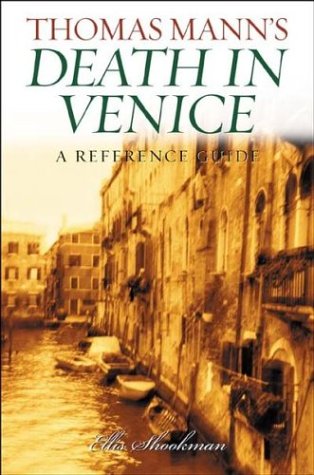
11. Thomas Mann's Death in Venice: A Reference Guide (Greenwood Guides to Literature)
by Ellis Shookman
Hardcover: 168 Pages (2004-03-30)
list price: US$57.95 -- used & new: US$57.95
(price subject to change: see help)
Asin: 0313311595
Canada | United Kingdom | Germany | France | Japan
Editorial Review

Book Description
Death in Venice, by Nobel Prize-winning author Thomas Mann, is one of the most popular and widely taught works of German literature. It is also a complex work of art that challenges its readers. This reference is a convenient guide to the novella. In addition to providing a plot summary, the volume helps students and general readers discover the literary and intellectual qualities of Mann's famous story. The guide also: BLSurveys Mann's life and works

  • Compares Death in Venice to Mann's other fiction, as well as to works by other writers
  • Summarizes the events Mann relates
  • And discusses the genesis, editions, and English translations of his novella. Mann's literary and non-literary influences are considered, along with his narrative style, and the historical, cultural, and sociological factors surrounding Death in Venice. The guide also explains how the issues Mann treated remain current today, and reviews the critical and scholarly reception of his text. ... Read more

  • 12. Buddenbrooks: The Decline of a Family (Everyman's Library)
    by Thomas Mann
    Hardcover: 784 Pages (1994-10-04)
    list price: US$22.00 -- used & new: US$13.12
    (price subject to change: see help)
    Asin: 0679417370
    Average Customer Review: 4.5 out of 5 stars
    Canada | United Kingdom | Germany | France | Japan
    Editorial Review

    Book Description
    (Book Jacket Status: Not Jacketed)

    Introduction by T. J. Reed; Translation by John E. Woods ... Read more

    Customer Reviews (36)

    5-0 out of 5 stars Decline and fall of a bourgeois family
    French literature of or about the XIX Century deeply explored the rise of the bourgeoisie over the nobility. Think of Balzac and Proust. But it was this book, published at the turn of the XX Century, which first explored in a comparable depth the decline and fall of a bourgeois family, amidst social unrest. This is the epic story of the Buddenbrook family through four generations. This was a family who had greatly prospered in the free city of Lübeck, in Northern Germany. They were a family of merchants and naval entrepreneurs, deeply rooted in the Protestant ethics of Weberian fame. They were very religious and hard workers. The novel begins with a scene of family bliss: old Johann Buddenbrook has purchased a new house, a big, beautiful one, and the family is gathered. They are celebrating economic and social success. There is Jean, the son and partner, his distinguished wife, and their three children, their and their grandparents' joy and pride. Thomas is a serious and noble boy; Christian is a troublemaker; and little Tony is a hardnosed girl, also naughty but always good in the end. The novel continues telling the story of the upbringing of the three kids and the people around them. The old folk die, and the younger begin to go out to the world. Thomas reveals as an excellent businessman, in the tradition of his forebearers, has a good marriage and gets elected as senator of the city, which he celebrates by moving into a spectacular new house. Christian becomes a ne'er-do-well, a drunkard and a useless guy. In fact he becomes pathetic and hypochondriac. and the pretty Tony experiences tragedy and bad marriages. The decline continues.

    There is no point in elaborating on the complex, tight plot. It is a multilayered bovel, with some side stories, but always a straight language and an easy to read style, with no experimentalisms. Mann is a very skilled narrator, and his first novel shows him already in full possession of his art. Character development is very good, and his Realism gives no quarter. Mann illustrates some fifty years, starting in 1835, in the life of this interesting city, one of the cradles of modern commerce, finance, and Capitalism in general. Along with the Buddenbrooks, we experience the profound changes the city undergoes. Business, politics, religion, music, family life and social relationships are all explored. A great fresco of life, by the guy who would later pen "The Magic Mountain" and "Doktor Faustus", philosophical and chornological sequels of this excellent novel.

    3-0 out of 5 stars Just not worth the time
    I thought this book was very well written and entertaining but just too long.If you love Mann then read this book, if not, then just read Magic Mountain or Death in Venice.

    I've decided to elaborate on my review.

    The reason why I think this book is not worth the time is because the topic is too narrow.For the average reader, this book's focus on a German upper-middle class family from the turn of the twentieth century might not grab their attention and hold it for 736 pages.I am interested in German history and culture yet I found myself struggling through sections.I think many people who are introduced to Mann by this work may dismiss him because this book failed to really capture their imagination.For this reason, I think many people can skip this particular work.

    As I said I found the book to be quite interesting throughout, but there were sections that did not add to the book.No one but the true Mann fan will read about some of this family's daily minutia completely enthralled.I am a fan of Mann and I certainly had problems with some of the work.I think the book would have been just as good if not better with fewer pages.The book would at least be more accessible if it were shorter.

    The writing is superb, the story is very compelling at times and I am glad I read Buddenbrooks, but I can certainly sympathize with some of the negative reviews for this book and I would not recommend this book for any of my friends unless they like Mann to begin with.If I were not interested in Germany, I may have put this book down way before the final page.

    4-0 out of 5 stars Buddenbrooks: The Decline of a Family (Everyman's Library (Cloth))
    I read the "The magic mountain" by Thomas Mann about a year
    ago and was very impressed by it. It was a book about ideas
    and discussions, drawing from different standpoints of the
    political spectrum. I even went on to rate the magic mountain
    as one of the greatest books I had read. Buddenbrooks was
    a bit of let down. Its clearly a book written by a coming of
    age author, and one can see the author's work mature as the work progresses. I think the Magic mountain is a must read and
    Buddenbrooks lacks the intellectual distance that Mann is
    capable of. Its a Mann book, and not reading it is like
    missing a flower in the garden.

    5-0 out of 5 stars Genetics As A Sieve
    The novels of Thomas Mann often portray the fortunes of an artistic aristocratic family in Germany at the turn of the century.What Mann finds fascinating about these families is their decline from wealth to poverty and health to disease.In BUDDENBROOKS, Mann begins a four generation saga with old Johann Buddenbrooks, who by the mid 1800s had established his family as a local power in terms of wealth and health.Clearly Mann saw more than a little of himself in the Buddenbrooks clan.In fact, when his novel was first published in 1901, many of his readers saw themselves and their town novelized in a fashion that scandalized them.They did not like to think of themselves as the inheritors of a worn out and dissolute society.

    Johann has a son Jean, who tries hard to carry on the tradition of success in both family and business that he inherited from his father.Jean has many of the hard-nosed qualities of business that marked the success of his father.Jean is soon faced with problems unknown to Johann.Beginning with Jean's generation is the decline of the fortunes of the Buddenbrooks.Jean has an older brother Gotthold who commits two sins that later mark the next generation. He has no interest in or aptitude for running a large family business.In his personal weaknesses, Gotthold comes across as a Freddy Corleone, jealous of the talent of his older brother Michael from THE GODFATHER.Further, Gotthold alienates his family with a marriage of which they disapprove.

    Jean has three children, a daughter Antonie (Tony), and two sons Tom and Christian.It is the fortunes of these three that comprise the bulk of the book.It is almost painful for the reader to note the decline of this generation for reasons that may not be all of their own doing. When Tony matures, she is faced with an impossible choice: to marry the man whom she truly loves (Morten Schartzkopf) or the wealthy pig (Grunlich), whom Jean unwisely pressures her to marry.Despite Jean's best intentions, his refusal to let his daughter follow her heart is a very big reason for his family's later decline.

    Tom is Jean's eldest son and determines to carry on the family tradition of success, but he is less capable than his father and still less capable than his grandfather.Tom combines diminished business acumen with an inability to tolerate with what he sees as the moral lapses of his brother Christian.Tom is blind to his own penchant for an interest in fine clothes and culture that Johann would have found incomprehensible, yet he has no scruples about lashing out at Christian's foibles.

    Christian is a walking mess of neuroses, which later cause him to wind up in a mental institution. He has no talent for business and he sees himself as a dabbler in the arts, which probably goes a long way toward explaining Tom's antipathy and lack of patience for him. Further the family trait of whining about an unfair distribution of a will that was first seen in Gotthold emerges with a vengeance when Tom lies, leaving Christian with a pittance.

    The family's decline ceases with Tom's son Hanno, a basically decent but sickly boy who dies of typhus at fifteen.What Mann has done in the Buddenbrooks saga is to use the passing of the decades as a temporal sieve, slowly filtering out the best of the genetic wheat, leaving only the effete chaff.In so doing, he dramatizes what for him was the most abiding concern of his life: a rationale for the extinction of his family's class and culture.

    5-0 out of 5 stars A realistic story of a family and the ordinary wear and tear of life
    The Buddenbrooks motto is: "My son, show zeal for each day's affairs of business, but only for such that makes for a peaceful night's sleep." (page 473). A wise and careful approach to life like that you would think would keep the family going on and on -- but no --- "the storms and shipwrecks of life." (page 590) pull them down. A history (fictional) of a family in a big book that does not seem so big, because of the skillful way it is told, in short well organized chapters. ... Read more


    13. Stories of Three Decades
    by Thomas Mann
     Hardcover: Pages (1936)

    Asin: B000JVK384
    Canada | United Kingdom | Germany |