
|
Help |
| Home - Nobel - Oe Kenzaburo (Books) | |
e99 Online Shopping Mall
|
|
Help |
| Home - Nobel - Oe Kenzaburo (Books) | |
| 1-20 of 100 | Next 20 |
click price to see details click image to enlarge click link to go to the store
| 1. A Personal Matter by Kenzaburo Oë | |
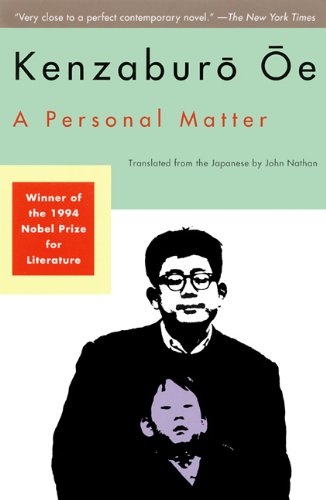 | Paperback: 165
Pages
(1994-01-13)
list price: US$13.00 -- used & new: US$6.88 (price subject to change: see help) Asin: 0802150616 Average Customer Review: 
Canada | United Kingdom | Germany | France | Japan |
|
Editorial Review Product Description Customer Reviews (39)
| |
| 2. A Quiet Life (Oe, Kenzaburo) by Kenzaburo Oe | |
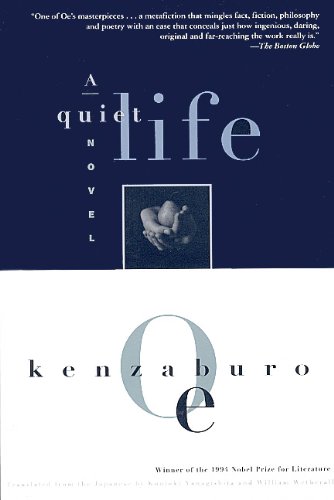 | Paperback: 256
Pages
(1997-12-08)
list price: US$15.00 -- used & new: US$7.54 (price subject to change: see help) Asin: 0802135463 Average Customer Review: 
Canada | United Kingdom | Germany | France | Japan |
|
Editorial Review Product Description Customer Reviews (10)
"A Quiet Life" is a slow-moving story with little action and a deeply realistic, human touch. Like much of Oe's writing, "A Quiet Life" is a fictional work that is powerfully marked by a real-life event--the birth of Oe's brain-damaged son in the mid-1960s. Thus, Ma-chan, the narrator, grapples throughout the narrative with her feelings about Eeyore, as well as her feelings about her intellectual and emotionally distant father. Much of the novel is devoted to exploring Ma-chan's thoughts and feelings as she follows a mundane, day-to-day existence shepherding Eeyore to music lessons with Mr. Shegito, a professor and friend of her father, and to swimming lessons with Mr. Akai, a somewhat cold and sinister character of questionable motives. Along the way, Ma-chan continually realizes that Eeyore is, in many ways, a remarkably sensitive and gifted human being, despite his disability. Oe's narrative is enigmatic and subtle in its suggestiveness. Oe, through the voice of his narrator, makes much of words that Ma-chan repeats in her narrative, words that are italicized in the text and linger in the reader's mind like ontological talismans. The text, too, reflects the intellectual groundings of Ma-chan's distant father-seemingly the author Oe himself-when it delves into extended discussions of Tarkovsky's film, "Stalker" (based on the classic, if somewhat obscure science fiction novel, "Roadside Picnic" written by the Strugatsky brothers), and the writings of Celine, notably "Rigadoon" (in a somewhat disturbingly sympathetic literary riff on a notorious, albeit fascinating, anti-semite). While I am familiar with Oe's biography, this is the first novel I have read by him. He is an interesting and intellectually impressive writer who perhaps deserved the 1994 Nobel Prize for Literature. I know I will read more of his work. However, as Ma-chan's mother comments when Ma-chan tells her of the title of the diary she has kept: "'Diary as Home' sounds bland and dull." She then elicits a different title from Eeyore, who suggests: "How about 'A Quiet Life'? That's what our life's all about." It is, indeed, the narrative of a quiet life, but Eeyore's title unfortunately does not save Oe's book from being bland and dull. While "A Quiet Life" is redeemed by the sensitivity, the enigmatic feeling and the profound intellect of its author, the story ultimately falters on a sometimes mind-numbing banality and what seems to be a stilted English translation. Thus, while I enjoyed reading "A Quite Life," I often had difficulty maintaining my interest in Oe's narrative. ... Read more | |
| 3. Teach Us to Outgrow Our Madness: Four Short Novels: The Day He Himself Shall Wipe My Tears Away, Prize Stock, Teach Us to Outgrow Our Madness, Aghwee the Sky Monster by Kenzaburo Oe | |
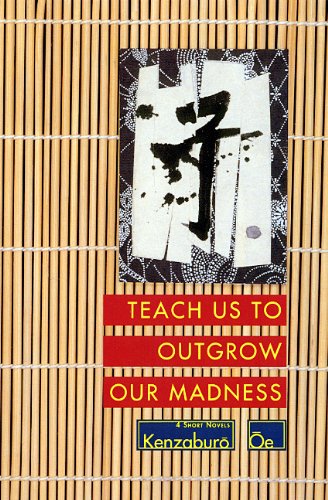 | Paperback: 261
Pages
(1994-10-13)
list price: US$14.95 -- used & new: US$4.72 (price subject to change: see help) Asin: 080215185X Average Customer Review:
Canada | United Kingdom | Germany | France | Japan |
|
Editorial Review Product Description Customer Reviews (12)
| |
| 4. Nip the Buds, Shoot the Kids by Kenzaburo Oe | |
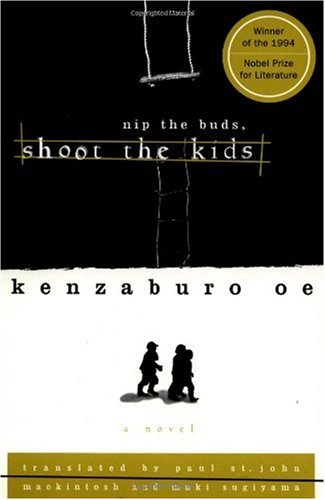 | Paperback: 192
Pages
(1996-06-13)
list price: US$14.00 -- used & new: US$4.95 (price subject to change: see help) Asin: 0802134637 Average Customer Review:
Canada | United Kingdom | Germany | France | Japan |
|
Editorial Review Product Description Customer Reviews (19)
| |
| 5. The Silent Cry: A Novel by Kenzaburo Oe | |
| Paperback: 288
Pages
(1994-07-07)
list price: US$14.00 -- used & new: US$7.61 (price subject to change: see help) Asin: 4770019653 Average Customer Review:
Canada | United Kingdom | Germany | France | Japan | |
|
Editorial Review Product Description Customer Reviews (16)
The story deals with by the main characters search for answer to �how does a modern man communicate( in philosophical sense )?�One brother thinks, we can communicate by death and in our silence. The other wants to communicate by connecting his present with the past of thesociety. It is a difficult novel due to the hard subject matter. But Oe does SPLENDID job in expounding the difficult issues through his excellent narrative. ... Read more | |
| 6. Changeling by Kenzaburo Oe, Deborah Boehm | |
 | Hardcover: 480
Pages
(2010-03-16)
list price: US$26.00 -- used & new: US$16.13 (price subject to change: see help) Asin: 0802119360 Average Customer Review: 
Canada | United Kingdom | Germany | France | Japan |
|
Editorial Review Product Description Customer Reviews (4)
| |
| 7. Grand Street 55: Egos (Winter 1996) by Kenzaburo Oe, Deborah Treisman, Grand Street Editors | |
 | Paperback: 255
Pages
(1996-01-02)
list price: US$12.95 -- used & new: US$11.00 (price subject to change: see help) Asin: 1885490062 Canada | United Kingdom | Germany | France | Japan |
| 8. Hiroshima Notes by Kenzaburo Oe | |
 | Paperback: 192
Pages
(1996-06-07)
list price: US$13.00 -- used & new: US$7.45 (price subject to change: see help) Asin: 0802134645 Average Customer Review:
Canada | United Kingdom | Germany | France | Japan |
|
Editorial Review Product Description Customer Reviews (3)
The central figure of the essays is Dr. Fumio Shigeta, a medical doctor who was in Hiroshima on the day the A-bomb was dropped. He happened to arrive in the city to take up a new post just a week before the day of the bombing. It is through Dr. Shigeta that Oe learns how the bomb victims become social outcasts, have difficulties finding marital partners, get divorced because they cannot have children, hide in shame in the back-rooms of their houses for years, and commit suicide or go insane upon learning that they are diagnosed as having "an A-bomb disease". In the midst of this pain and suffering, Dr. Shigeta patiently applies his medical skills to help the victims. He ignores the stigma placed on the victims by Japanese society, and for him there is no taboo on issues like the genetic effects of the radiation. Dr. Shigeta is the "authentic man" for Oe, a person who is "humanist in the truest sense ¡V neither too wildly desperate nor too vainly hopeful". A man of modesty, patience and perseverance, Dr. Shigeta appears to be the real-life counterpart of the fictional Docteur Rieux of Albert Camus's novel The Plague: "When Hiroshima was attacked by radiation - the plague of the modern age - the city was not specifically closed off. Since that day . . . Dr. Shigeta took upon himself the misery of Hiroshima, and has continued to do so for twenty years." More than anything he saw in Hiroshima, it must have been the example of Dr. Shigeta that made Oe realize that there was just one answer to his own personal question whether his son should be operated to live brain-damaged thereafter or be left to die. If Dr. Shigeta could bear the suffering of thousands of strangers and dedicate his life to relieving their pain, then he could bear the suffering of raising a brain-damaged son. I believe it was this realization that made Oe wake up and face his own suffering: "I think it was in Hiroshima that I got my first concrete insight into human authenticity." While the Hiroshima Notes are the central document of Oe's humanism, they also provide a uniquely Japanese view of the Hiroshima bombing. Oe examines the feelings of shame and humiliation in the victims, and the attempts of the people of Hiroshima to forget what he calls the "holocaust of the A-bomb".His tone is very restrained and unemotional, devoid of moralizing and anger. Any sensationalism is missing from Oe's writing. He does not accuse or explain, he simply reflects. At times, though, he gets tangled in his reflections. The most embarrassing example is his argument that the A-bomb would never have been dropped on Leopoldville in the Congo because the American decision makers wanted to drop the bomb only on a people with the "human strength to cope with the hell that would follow."This racist, muddled thesis is an absolute exception, however. A small stain on Oe's essays which shows that even a Nobel Prize winner with a conscience will get caught up in prejudices from time to time. I recommend these essays to anyone who has read Kenzaburo Oe's "A Personal Matter" (the fictional account of the decision the author had to make with regard to his son), and to anyone who ever had to answer the question "why should I rather follow one course of action instead of another when both options involve me suffering?" ... Read more | |
| 9. Somersault (Oe, Kenzaburo) by Kenzaburo Oe, Philip Gabriel | |
 | Paperback: 576
Pages
(2003-12-03)
list price: US$14.00 -- used & new: US$8.23 (price subject to change: see help) Asin: 0802140459 Average Customer Review: 
Canada | United Kingdom | Germany | France | Japan |
|
Editorial Review Product Description Customer Reviews (7)
| |
| 10. Rouse Up O Young Men of the New Age! by Kenzaburo Oe, John Nathan | |
| Hardcover: 259
Pages
(2002-03)
list price: US$24.00 -- used & new: US$5.00 (price subject to change: see help) Asin: B000VYVIN8 Average Customer Review:
Canada | United Kingdom | Germany | France | Japan | |
|
Editorial Review Product Description Customer Reviews (5)
| |
| 11. The Novels of Oe Kenzaburo (Routledge Contemporary Japan Series) by Yasuko Claremont | |
 | Hardcover: 224
Pages
(2009-01-15)
list price: US$150.00 -- used & new: US$117.84 (price subject to change: see help) Asin: 0415415934 Canada | United Kingdom | Germany | France | Japan |
|
Editorial Review Product Description Ôe Kenzaburô was awarded the Nobel Prize for Literature in 1994. This critical study examines Ôe’s entire career from 1957 – 2006 and includes chapters on Ôe’s later novels not published in English. Through close readings at different points in Ôe’s career Yasuko Claremont establishes the spiritual path that he has taken in its three major phrases of nihilism, atonement, and salvation, all highlighted against a background of violence and suicidal despair that saturate his pages. Ôe uses myth in two distinct ways: to link mankind to the archetypal past, and as a critique of contemporary society. Equally, he depicts the great themes of redemption and salvation on two levels: that of the individual atoning for a particular act, and on a universal level of self-abnegation, dying for others. In the end it is Ôe’s ethical concerns that win out, as he turns to the children, the inheritors of the future, ‘new men in a new age’ who will have the power and desire to redress the ills besetting the world today. Essentially, Ôe is a moralist, a novelist of ideas whose fiction is densely packed with references from Western thought and poetry. This book is an important read for scholars of Ôe Kenzaburô’s work and those studying Japanese Literature and culture more generally. | |
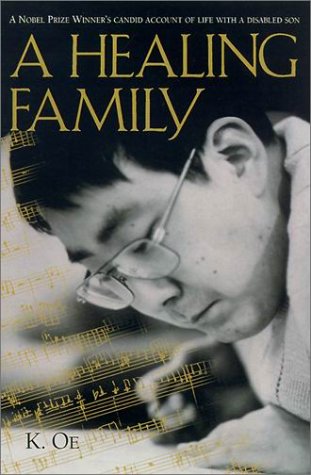
| 12. A Healing Family by Kenzaburo Oe | |
 | Paperback: 208
Pages
(2001-05)
list price: US$14.00 Isbn: 4770027338 Average Customer Review:
Canada | United Kingdom | Germany | France | Japan |
|
Editorial Review Product Description Hikari was born in 1963 with a growth on his brain so large it made him look as if he had two heads. His parents were told he might never be more than a "human vegetable" requiring constant care; but they took the decision to raise him. Today, despite autism, poor vision, and a tendency to seizures, their son is an established composer with two successful CDs to his credit. Oe has often written about the sorrows and satisfactions of being the parent of a handicapped child, most memorably in A Personal Matter; but nowhere has his writing been more personal, more buoyant, more revealing than in this non-fiction work. Without diminishing the suffering that Hikari and his family have been through, he celebrates the victories that can be won, especially his son's gift for music--his own "language." Friends make an appearance along the way--doctors, musicians, other writers--as do the themes that have preoccupied Oe all his life: the rights of the underprivileged; the moral authority of the survivors of the atomic bombing; the mystery of language. But his thoughts keep circling back to his family--to the healing power of the family, and the unwitting courage we can all find in ourselves. The book is illustrated with sketches of family life painted by his wife. Customer Reviews (3)
At the time I read it, I was in the process of deciding whether to get my wisdom teeth extracted by a dentist or an oral surgeon.I heard that my face would be bruised and swollen, my jaws unhinged, etc. after the surgery.It was quite unnerving just to think about it.Then I read that Hikari has to make weekly visits to the dentist, and that his epileptic pills make his gum terribly swollen.I felt that I am in a much much better situation than some people.It was a consolation to read this book. One thing I don't quite like about most of Kenzaburo's books is that he refers to a lot of other European writers and their works, which I find hard to understand.Well, that's just my ignorance.
This beautiful book shows the profound love, affection and pride the Oe family take in Hikari's accomplishments and happiness.From the age of five, Hikari has been obsessed with classical music, and eventually began to compose pieces for piano and violin.Much of "A Healing Family" concerns Oe's attempts to understand his son through music. "A Healing Family" is a book everyone should read.Finely crafted, perceptive, intelligent and moving, it shows us again that compassion and empathy can make all the difference in the world.
| |
| 13. The Crazy Iris and Other Stories of the Atomic Aftermath by Kenzaburo, editor Oe | |
| Unknown Binding:
Pages
(1985)
Asin: B003TP0XD2 Average Customer Review:
Canada | United Kingdom | Germany | France | Japan | |
Customer Reviews (4)
| |
| 14. Japan, the Ambiguous, and Myself: The Nobel Prize Speech and Other Lectures by Kenzaburo Oe | |
 | Hardcover: 128
Pages
(1995-04)
list price: US$15.00 -- used & new: US$60.85 (price subject to change: see help) Asin: 4770019807 Average Customer Review:
Canada | United Kingdom | Germany | France | Japan |
|
Editorial Review Product Description Other key addresses he has given elsewhere join the Nobel lecture in this volume, giving a wider view of the work of a literary activist who sees himself as one of a dying breed in the intellectual life of his own country. Even those unfamiliar with his writing will be stimulated by the free-ranging thoughts of one of the century's most brilliant minds. Included in the book are "Speaking on Japanese Culture before a Scandinavian Audience," "On Modern and Contemporary Japanese Literature," "Japan's Dual Identity: A Writer's Dilemma," and "Japan, the Ambiguous, and Myself." Customer Reviews (2)
| |
| 15. The Marginal World of Oe Kenzaburo: A Study in Themes and Techniques by Michiko Niikuni Wilson | |
 | Paperback: 168
Pages
(1997-04)
list price: US$21.95 -- used & new: US$20.96 (price subject to change: see help) Asin: 1563245809 Canada | United Kingdom | Germany | France | Japan |
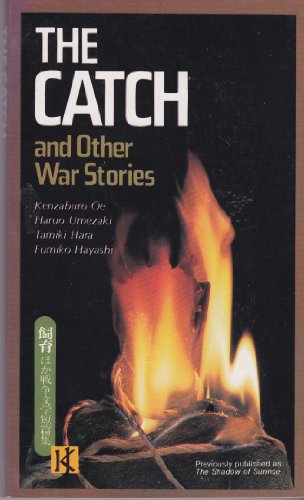
| 16. Catch and Other Stories by Kenzaburo Oe, Haruo Umezaki, Tamiki Hara, Fumiko Hayashi | |
 | Paperback: 156
Pages
(1981-06)
list price: US$9.00 Isbn: 0870114573 Average Customer Review:
Canada | United Kingdom | Germany | France | Japan |
|
Editorial Review Product Description Customer Reviews (1)
| |
| 17. La Presa (Spanish Edition) by Kenzaburo OE | |
| Paperback:
Pages
(1995-01)
list price: US$27.20 -- used & new: US$27.20 (price subject to change: see help) Asin: 8433906674 Canada | United Kingdom | Germany | France | Japan | |
| 18. M/T to mori no fushigi no monogatari (Japanese Edition) by Kenzaburo Oe | |
| Tankobon Hardcover: 404
Pages
(1986)
Isbn: 4000001981 Canada | United Kingdom | Germany | France | Japan | |
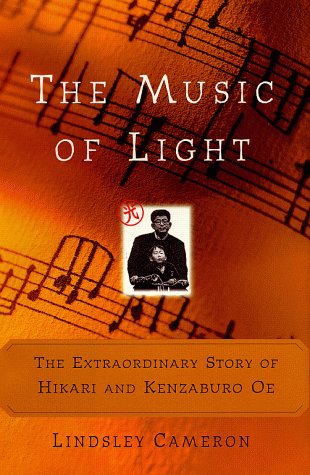
| 19. The MUSIC OF LIGHT: THE EXTRAORDINARY STORY OF HIKARI AND KENZABURO OE by Lindsley Cameron | |
 | Hardcover: 240
Pages
(1998-06-12)
list price: US$24.00 -- used & new: US$9.55 (price subject to change: see help) Asin: B000H2M3WY Average Customer Review:
Canada | United Kingdom | Germany | France | Japan |
|
Editorial Review Product Description The most popular classical composer of our day was born with a medical deformity so severe that his parents had to fight to keep him alive. When the child of novelist Kenzaburo Oe and his wife, Yukari, was born with a herniated brain, the doctors recommended letting him die. Instead, his parents defied Japan's then-harsh customs and saved him with a complicated operation that left him severely handicapped. They named him Hikari, which means "light"; now in his thirties, with an I.Q. of 65, limited language and motor skills, and an inability to express emotions clearly, Hikari has indeed become a beacon of inspiration. He has miraculous musical gifts, including a phenomenal memory and the ability to compose chamber works that have broken sales records and delighted hundreds of thousands of listeners. His father's boundless love for and devotion to Hikari have been inspirational in more than one way. Kenzaburo Oe has written many novels and essays based on the experience of raising his musical-savant son, and was awarded the Nobel Prize for literature in 1994. His stories and novels have been translated into many languages and read by millions. Based on exclusive access to the Oe family, as well as interviews with brain specialists and performers of Hikari's music, and including assessments by leading music critics, The Music of Light offers a portrait of uniqueness. Hikari is the only savant known in history who has composed original music. Lindsley Cameron explains how his brain works; how he can express sadness in his music but not with language or his face; and how his musical activities have extended his mental capacities. The creative interdependence of father and son is unprecedented, too. Kenzaburo's need to give Hikari a voice was so essential to his own art that he announced, just before winning the Nobel Prize, that he was giving up writing fiction because Hikari, through his music, had now found a voice of his own. Cameron shows how writing has allowed Kenzaburo to explore possibilities too painful to confront in any other way. The Music of Light explores the mysteries of the human brain, and reveals the miraculous power of creativity. Oe's close relationship with his son is unusual, especially inJapanese society, where men do not usually get very involved withraising their children. While helping Hikari deal with his healthproblems, the Oe family struggled to cope with their culture's severediscrimination against disabled people. Cameron describes Hikari'smusical development and his amazing ability to memorizesongs. Hikari's life story is an inherently fascinating one--a man whocannot express himself very well verbally somehow figured out how todo something most people cannot do: make up songs. Cameron interviewedboth men and other family members for this book, and has done a goodjob of capturing their personalities on paper.Hikari and KenzaburoOe influence each other's work tremendously, and the elder Oe'swriting and fame have had an enormous impact on the family's life.Fans of Kenzaburo Oe and people who are interested in the roots ofcreativity will find a lot to like in this book. --JillMarquis Customer Reviews (2)
| |
| 20. A PERSONAL MATTER / THE SILENT CRY / TEACH US TO OUTGROW OUR MADNESS by Kenzaburo Oe | |
| Paperback: 700
Pages
(1995)
Asin: B000NWHP44 Canada | United Kingdom | Germany | France | Japan | |
|
Editorial Review Product Description | |
| 1-20 of 100 | Next 20 |
 Bleak...
 Intellectually Interesting Introspection from a Nobel Winner
 Disturbing (but not in a way you want it to be)