e99 Online Shopping Mall

Geometry.Net - the online learning center Help  
Home  - Nobel - Pasternak Boris Leonidovich (Books)

  1-20 of 100 | Next 20
A  B  C  D  E  F  G  H  I  J  K  L  M  N  O  P  Q  R  S  T  U  V  W  X  Y  Z  

click price to see details     click image to enlarge     click link to go to the store

 
$57.53
1. My Sister-Life
$13.65
2. Safe Conduct, an Autobiography
$9.95
3. Biography - Pasternak, Boris (Leonidovich)
 
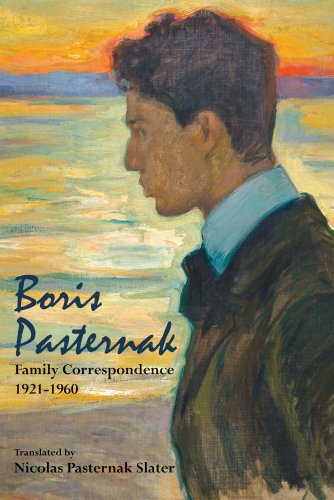
4. The Correspondence of Boris Pasternak
 
5. The Zhivago poems
 
6. Boris Pasternak ob iskusstve:
 
7. The Correspondence of Boris Pasternak
 
8. The Correspondence of Boris Pasternak
 
9. Three letters from Boris Pasternak
 
10. Seven Poems (Keepsake Ser.)
 
$117.00
11. Doctor Zhivago
 
12. The blind beauty: A play;
 
13. History of a Contraoctave and
 
$75.00
14. L'an 1905
 
15. Letters to Georgian friends
 
16. Vtoroe rozhdenie: Pisma k Z.N.
 
17. Pisma B.L. Pasternaka k zhene
 
18. The Poems of Doctor Zhivago
 
19. Selected Poems
 
20. Selected writings and letters

1. My Sister-Life
by Boris Leonidovich Pasternak, Bohdan Boichuk
 Paperback: 116 Pages (1992-12)
list price: US$17.00 -- used & new: US$57.53
(price subject to change: see help)
Asin: 0810110903
Average Customer Review: 5.0 out of 5 stars
Canada | United Kingdom | Germany | France | Japan
Editorial Review

Book Description
One of the great books of twentieth-century poetry. ... Read more

Customer Reviews (3)

5-0 out of 5 stars Powerful poetry of material things
Some of our strongest poets are those who energize the material things and concrete sensations of daily life in special ways. Objects set apart by poetic imagination and power become sacred and establish a bond between the reader as perceiver and the thing perceived. By extension the bond opens the reader to an entire universe of ensouled matter--a new way of looking at the world.

Such is the poetry of Boris Pasternak in this 1917 book written at the height of The Great War and on the eve of the October Revolution. Pasternak's spirited materialism predates William Carlos Williams's concept "No ideas but in things."

Pasternak sets many of these poems in concretely described locations where his magical materialism can go to work. In "The Flies of the Moochkap Teahouse,"

The spirit sweats--the horizon's
tobacco-tinged--like thought
Windmills image a fishing village
Boats and weathered nets.

This poet's world view of ensouled materiality provides a unique perspective on the new century just beginning. Each reader must decide for him or herself just how prescient or prophetic Pasternak's"The Definition of Soul" was to become.

It falls like a ripe pear into the storm
with a single clinging leaf
How faithful--it quits its branch--
reckless--it chokes in the heat.

We learn much about Pasternak from his later novel and the film (Dr. Zhivago) it spawned--but we don't experience his power as a poet. He was possibly the the most poetically powerful of figures in what is known as the Silver Age of Russian Literature, including Marina Tsvetaeva Selected Poems (Tsvetaeva, Marina) (Twentieth-Century Classics), Osip Mandelstam Selected Poems of Osip Mandelstam (New York Review Books Classics), Anna Akhmatova Anna Akhmatova (Everyman's Library Pocket Poets), and Nikolai Gumilyov The Pillar of Fire, among the most talented and brilliant poets of the twentieth century. They bore the brunt of the Soviet regime's ideological attacks and physical repression.

Here is poetic brilliance and talent of the first rank--the power of poetry of material things on display.

5-0 out of 5 stars Right up there with Mandelstam, Mayakovsky, and Pushkin
Pasternak's poetry is better than his prose. Why he is still often better known for the latter baffles me. I suggest this or any of his collected poems to the reader looking for creative, quality poetry. Pasternak certainly ranks as one of the greatest amongst the group of very talented Russian poets that emerged during the first quarter of the 20th centuary. His poems deserve just as much (if not more) recognition as his novels.

5-0 out of 5 stars Sister of Mine: Poetry of Detail<p>
While Pasternak is known in the United States mainly for his novel "Dr. Zhivago" - or, more to the point, the film based on "Dr. Zhivago" - he was quite an accomplished poet. A better poet, I think, than he was a novelist. Although I've never read Mr. Rudman's translation - or, for that matter, any translation at all - "Sister of Mine-Life" keeps to its bosom a host of beautiful poems.

Rather than try to explain Pasternak's incredible gift for metaphor and detail, his absolute love of words - he was a decent translator of Shakespeare and others - I'll roughly approximate my favorite poem, from it's original Russian. It is untitled.

***

My friend, you ask, who ordered
That the holy idiot's speech should blaze?

***

Let us trickle words
As the garden drips amber and lemon
Absently and generous,
Gently, gently, gently.

And there's no need to explain
Why there is such ceremony
Of madder and of lemon
Scattering on leaves.

Who made pine needles rush
On a long stick, like music
Through the locks of Venetian blinds,
To the bookcase.

Who reddened the rug of mountain ash
Rippling beyond the door,
Written through with beautiful,
Quivering cursives.

You ask, who orders
That August be great
To whom nothing is small
Who lives in the finishing

Of maple leaves;
Who, since the days of the Ecclesiastes,
Hasn't left his post
And is hewing alabaster?

You ask, who orders,
That the September lips of asters and dahlias
Shall suffer?
That leaves
Should fall from stone caryatids
To the damp gravestones
Of autumn hospitals?

You ask, who orders?
--Omnipotent God of details,
Omnipotent God of love,
Of Yaigails and Yaidvigas.

I don't know, was it decided,
The riddle of the road to the afterlife,
But life, like the stillness
Of autumn -- is details.

I can't quite transmit the pine needles rushing through the Venetian blinds as boats through a sluice, but I'm sure Mr. Rudman could. Even through my approximate translation, it's possible to see what a man of detail Pasternak was. In my edition, the introduction begins: "With Pasternak, you must hurt" -- as great ideas are, the editor notes, painful.

Pasternak certainly took painful care of his words, his thoughts, his beauty. And "Sister of Mine-Life," one of his earlier collections - (the summer of 1917) - is beautiful, detailed and pained.

***

As a post script, I prefer "Sister of Mine-Life," to "My Sister-Life" because the construction "sistra maya" - rather than "maya sistra" stresses that she's my sister.

Also, because life and sister are both female in gender, "my sister" and "my life" are dually coupled in Pasternak's title. "My" could refer solely to sister, or it could be my life, as well.

... Read more


2. Safe Conduct, an Autobiography and Other Writings
by Boris Leonidovich Pasternak
Paperback: 260 Pages (1958-12-01)
list price: US$18.95 -- used & new: US$13.65
(price subject to change: see help)
Asin: 081120135X
Canada | United Kingdom | Germany | France | Japan

3. Biography - Pasternak, Boris (Leonidovich) (1890-1960): An article from: Contemporary Authors
by Gale Reference Team
Digital: 23 Pages (2004-01-01)
list price: US$9.95 -- used & new: US$9.95
(price subject to change: see help)
Asin: B0007SEE4S
Canada | United Kingdom | Germany | France | Japan
Editorial Review

Book Description
This digital document, covering the life and work of Boris (Leonidovich) Pasternak, is an entry from Contemporary Authors, a reference volume published by Thompson Gale. The length of the entry is 6897 words. The page length listed above is based on a typical 300-word page. Although the exact content of each entry from this volume can vary, typical entries include the following information:

  • Place and date of birth and death (if deceased)
  • Family members
  • Education
  • Professional associations and honors
  • Employment
  • Writings, including books and periodicals
  • A description of the author's work
  • References to further readings about the author
... Read more

4. The Correspondence of Boris Pasternak and Olga Freidenberg, 1910-1954
by Boris Leonidovich Pasternak
 Paperback: 365 Pages (1982)
list price: US$19.95
Isbn: 015122630X
Canada | United Kingdom | Germany | France | Japan

5. The Zhivago poems
by Boris Leonidovich Pasternak
 Unknown Binding: 95 Pages (1988)
list price: US$8.95
Isbn: 0916383660
Canada | United Kingdom | Germany | France | Japan

6. Boris Pasternak ob iskusstve: "Okhrannaia gramota" i zametki o khudozhestvennom tvorchestve
by Boris Leonidovich Pasternak
 Unknown Binding: 396 Pages (1990)

Isbn: 5210001172
Canada | United Kingdom | Germany | France | Japan

7. The Correspondence of Boris Pasternak and Olga Freidenberg, 1910-1954
by Boris Leonidovich; Mossman, Elliott; Freidenberg, O. M. Pasternak
 Hardcover: Pages (1982)

Asin: B000J4JS5K
Canada | United Kingdom | Germany | France | Japan

8. The Correspondence of Boris Pasternak and Olga Freidenberg, 1910-1954 / compiled and edited, with an introduction, by Elliott Mossman ; translated by Elliott Mossman and Margaret Wettlin
by Boris Leonidovich (1890-1960) Pasternak
 Hardcover: Pages (1982)

Asin: B000VZOZVE
Canada | United Kingdom | Germany | France | Japan

9. Three letters from Boris Pasternak
by Boris Leonidovich Pasternak
 Unknown Binding: 29 Pages (1967)

Asin: B0006BT1Z8
Canada | United Kingdom | Germany | France | Japan

10. Seven Poems (Keepsake Ser.)
by Boris Leonidovich Pasternak
 Paperback: Pages (1970-09)
list price: US$6.95
Isbn: 087775005X
Average Customer Review: 5.0 out of 5 stars
Canada | United Kingdom | Germany | France | Japan

Customer Reviews (2)

5-0 out of 5 stars Redundant Alchemy as Translation: From Gold to Gold
"Translation," as Vladimir Nabokov said, "is a form of betrayal." As such, poetry in a foreign tongue is seldom worth reading in translation -- one usually finds the fire and beauty of the wordtrapped behind the translator's teeth. Fortunately, for the Englishreader, George L. Kline has the smile of a jack-o'-lantern. Not merelycontent to convey the meaning and ambiguities of Pasternak's poems, Klineclosely mimics the rhythms and sonorous melodies of the Nobel Prizelaureate's Dylan Thomas-esque lines. Compare the following stanzas from"Lessons in English." The first is from Merrill Sparks'competent translation; the second is a morsel from Kline's breathtakingtranslation:

When it came time to sing for Desdemona/ And she began --her song, restraining,/ The darkest demon saved for her dark day/ A psalmof stream-beds, weeping, flowing.

When it was Desdemona's hour to sing,/When her voice steadied and grew strong,/ Black day, a demon blacker far,sent up/ A psalm for her of wailing river-runs.

So fine are these seventranslations that one wallows for more of Kline's touch. To best know thebeauty of Pasternak, short of learning Russian, seek out this glorious (butall too brief) book.

5-0 out of 5 stars Redundant Alchemy as Translation: From Gold to Gold
"Translation," as Vladimir Nabokov said, "is a form of betrayal." As such, poetry in a foreign tongue is seldom worth reading in translation -- one usually finds the fire and beauty of the wordtrapped behind the translator's teeth. Fortunately, for the Englishreader, George L. Kline has the smile of a jack-o'-lantern. Not merelycontent to convey the meaning and ambiguities of Pasternak's poems, Klineclosely mimics the rhythms and sonorous melodies of the Nobel Prizelaureate's Dylan Thomas-esque lines. Compare the following stanzas from"Lessons in English." The first is from Merrill Sparks'competent translation; the second is a morsel from Kline's breathtakingtranslation:

When it came time to sing for Desdemona And she began -- hersong, restraining, The darkest demon saved for her dark day A psalm ofstream-beds, weeping, flowing.

When it was Desdemona's hour to sing, Whenher voice steadied and grew strong, Black day, a demon blacker far, sent upA psalm for her of wailing river-runs.

So fine are these seventranslations that one wallows for more of Kline's touch. To best know thebeauty of Pasternak, short of learning Russian, seek out this glorious (butall too brief) book. ... Read more


11. Doctor Zhivago
by Boris Leonidovich Pasternak
 Audio CD: Pages (2000-04)
list price: US$129.95 -- used & new: US$117.00
(price subject to change: see help)
Asin: 0754053636
Average Customer Review: 4.0 out of 5 stars
Canada | United Kingdom | Germany | France | Japan
Editorial Review

Book Description
This new trade paperback edition of Pasternak's classic evokes the life and loves of the poet-physician Zhivago during the turmoil of the Russian Revolution. This edition features a thorough introduction by Oxford University scholar John Bayley. ... Read more

Customer Reviews (76)

3-0 out of 5 stars Good & Bad
Like others have said, this book does a great job at depicting what Russia was like during the revolution. Otherwise, the story is really hard to get into. It's historically important, but not an enjoyable read.

1-0 out of 5 stars Honestly?
I've always considered myself a good reader.I mean, my favorite novel is by Victor Hugo, so it's not like I'm incapable of following wordy descriptions of city landmarks or numerous characters who are loosely connected.But Dr. Zhivago is the first novel where I've ever had to consult Spark Notes just to get a clue of what was going on.

That said, I plodded through it and finally finished it, only for a terrible, anti-climactic ending.The problem, I believe, is with Lara.The author clearly wants us to root for Zhivago and Lara, but he does nothing to make the reader want to root for them.I hated Lara, I found Zhivago's love of her unbelievable; it was obvious as a plot device.They were made for each other because the author says so.Meanwhile, I loved Tonia, and didn't know why Zhivago just completely forgot about her after she went to Paris. I also don't know exactly why we're supposed to swoon over a pairing that basically hurts the lives of everyone involved and makes Zhivago abandon all of his responsibilities as a husband and father.If I liked the character until then, I assure you that my liking ceased when he was more concerned with pining over Lara than the welfare of his wife and children.

As for its historical significance, it was good in that regard, but I think that We The Living by Ayn Rand (though obviously not regarded as a classic) presents a better picture of Soviet life.It has a better love story, too.

4-0 out of 5 stars Doctor Zhivago: Russian Classic
Doctor Zhivago is a personal epic treatise on the Russian Revolution and how it affected Russians through the eyes, particularly, of one poet. Banned at one point by the Russian government, the book gives a very good description of what it was like for the peasant and aristocrat during the time of the Bolshevik revolution. Pasternack opens a window to a time of violent change, of challenges to personal liberty and expression under the devastating communist wave. Written in another age, present day readers may find it cumbersome and hard to keep track of some characters (referred to with all four names, usually). It is, however, one of the best and most rich representations of a milestone in the history of the Soviet Union and ultimately a love story of epic scope.

5-0 out of 5 stars An Unconventional Romance
Doctor Zhivago has, in the years since its secret publication in Italy, been called a timeless love story. However, even though this may be true, it does not follow the usual type of a love story which begins with the meeting of two lovers and then ends happily with their marriage or a comparable event. Instead the author, Russian poet Boris Pasternak, writes the love story between Yury Zhivago and Lara Antipova, two characters who were already married to others. In this, Doctor Zhivago is a palpable commentary on marital infidelity. This has, in the past, lead this beautifully worked novel to be shunned as controversial or immoral. However, despite the fact that Pasternak chooses such a difficult theme to work with in his novel, he validates and creates sympathy for Yury, Lara, and their affair with his usage of characterization, symbolism, and appeals to pathos.

Pasternak's characterizations of the two principle female characters play a huge role in winning the audience's sympathy for Lara and her plight. Yury's wife Tonya is, essentially, a flat character; throughout the book she remains devoted to Yury and her children; she conforms to the social norms both before and after the revolution takes place where Pasternak's more dynamic characters all experience a change because of it. Additionally, Pasternak makes it difficult to connect to Tonya by keeping her essentially out of sight throughout the novel; the only time the audience reads of her feelings is in a letter, and consequently, is indirect. In fact, all of the audience's experience of Tonya is indirect; we see her through Zhivago's descriptions or conversations about her, but never as just herself. This distance from Tonya is furthered by Yury's lack of identification with Tonya; he always feels spiritually apart from his wife. A sharp contrast is Lara, whose poignant thoughts and feelings can be read from nearly the beginning of the story, and who, despite having extremely nonconformist tendencies like political activeness, maintenance of a job even into her married years, and an insistence to assist in the WWI war effort, is portrayed more warmly than any of the other characters in the novel. She is given the endearing Tonya-like qualities of devotion to family (it is the emergence of her husband Pasha as the merciless revolutionary Strelnikov that leads to their separation) and the nonconformist attributes which make her such a fascinating character. The audience is also made to see Lara as a character worthy of the kind of love she has with Yury because of the tragic nature of her previous intimate relationship as a teenager with the aging lawyer Komarovsky, which can be described as nothing less than parasitic. As Lara later says to Yury, "There is something broken in my whole life. I discovered life much too early, I was made to discover it, and I was made to see it from the very worse side--a cheap, distorted version of it--through the eyes of a self-assured, elderly parasite, who took advantage of everything and allowed himself whatever he fancied" (13:398). This clearly exhibits the disillusionment she felt as a result of her affair, and is not only presented here but also throughout the text. Pasternak uses Lara's disillusionment to create sympathy and hope for something better for this extremely likable character; as she loves Yury Zhivago, their love affair is the culmination of our hopes.

Another way in which Pasternak validates Yury and Lara's affair is his use of religious symbolism, particularly in reference to who would have been the "fallen woman" of the affair, Lara. In Pasternak's time, it was the woman who suffered more from an affair; however, in one particular scene, Lara appears as an iconic image of the Virgin Mary. "Like a huge banner stretching across a city street, there hung before him in the air, from one side of the forest glade to the other, a blurred, greatly magnified image of a single, astonishing, idolized head. The apparition wept, and the rain, now more intense, kissed and watered it" (12: 367-386). By symbolizing the Virgin Mary as Lara, Pasternak is creating an association between Lara and the Virgin, and a good one at that. The reader is less disposed to think of Lara as a "fallen woman" after this association, and the image is repeated throughout the text, including Zhivago's funeral scene (15: 502). In this, Pasternak's use of symbolism is highly effective in creating the reader's sympathy for the affair in Doctor Zhivago.

Finally, Pasternak masterfully appeals to the reader's sense of pathos, especially when dealing with the fate of the two lovers; neither end up with the other or with their spouses. After running away to Yuryatin together, Komarovsky comes to collect Lara using black mail; Tonya and her children have already been deported, and he returns to work in his Moscow hospital. The novel ends with Yury's death; Lara, who has been searching for him for years, finds him only at his funeral, and it is this, one of the closing scenes, which is one of the most beautiful and heartbreaking: Lara holds Yury's body in her arms and cries over him. The fact that these lovers, so obviously suited to each other in every way, have such a short relationship and do not end up together creates in the reader such regret and sympathy for Yury and Lara. Even though their relationship was illegitimate and possibly aberrant, we feel more sympathy at their parting, because of Pasternak's more poetic style at this part, than when Tonya is deported. It is much more personal, infinitely more heartbreaking. Boris Pasternak's appeal to pathos in Doctor Zhivago logically creates in the reader the most sympathy for Yury, Lara, and their romantic plight.

There is no reason that the theme of marital infidelity in Doctor Zhivago should keep any reader from enjoying and appreciating the exquisite loveliness of Pasternak's prose and story. Pasternak made sure of this with his dexterous handling of characterization, symbolism, and appeals to pathos. Doctor Zhivago remains as a monument of 20th century literature, and one that can be recommended to anyone from the age of about 14 up. Beautifully told, masterfully written, Doctor Zhivago is undoubtedly one of the must-read-classics of the last century.


5-0 out of 5 stars A rare novel
After reading famous books you often feel that whilst it was good, you can't quite understand why it has become so renowned. Perhaps it is because the idea is powerful but badly executed or perhaps has an incredible mood but the concept and importance are somewhat lacking. None of these feelings occur when reading Dr Zhivago, its artistry is superb, the dialogues and turns of phrase are often breathtaking in their subtle importance, beauty or both. This is a book that fully warrants its reputation, it is stripped of the idealism and runs almost like a political philosophy discourse at times in the development of ideas of equality, the human spirit and the paths to progress in society.

It is for this reason that I don't think the book deserves its reputation as a 'love story': it is certainly a human story with love becoming more important as a theme as the book continues, but the power of the context is such that one could say that it is a political book first and a romance second. However, such hierarchies are not applicable in a work such as Dr Zhivago, such is Pasternak's skill as a writer that the themes of the novel perfectly complement each other, he balances the issues of the history of the era, Yury's development as a person and the underlying current of the women in his life with almost orchestral skill. If Pasternak's aim was to create an illustration of the power, subtlety and synphonic nature of life, uncontrollable by 'men of action' then this is reflected in the structure and style of his prose.

The book had a great effect on me, its integrity was great and the whole book wonderfully honest. Each comment was razor blade sharp so I was often completely surprised that he was brave enough to write such things in Soviet Russia. He seems to have paid for his integrity with his life, echoing the life of his main character in this way and in many others. I would be unsurprised if Pasternak only wrote one novel on this scale; he seems to have put everything of himself into it.

The prose is not always pleasurable to read, it's even dull in places such as the chapter-long train journey. I also would have preferred a greater mix with descriptions and dialogues, there were few sections when the two were sufficiently mixed so that the reader has to often read very lengthy dialogues and intermitable (though often startlingly beautiful) descriptions. I experienced East of Eden by Steinbeck in a similar way: it was often not pleasurable so much as enlightening and a book that one should try to read at least one time in your life. ... Read more


12. The blind beauty: A play;
by Boris Leonidovich Pasternak
 Hardcover: 128 Pages (1969)

Isbn: 0002620510
Canada | United Kingdom | Germany | France | Japan

13. History of a Contraoctave and Childhood of Luvers
by Boris Leonidovich Pasternak
 Hardcover: Pages (1987-06)
list price: US$19.50
Isbn: 0882335529
Canada | United Kingdom | Germany | France | Japan

14. L'an 1905
by Boris Leonidovich Pasternak
 Paperback: 80 Pages (1958-11-30)
list price: US$75.00 -- used & new: US$75.00
(price subject to change: see help)
Asin: 0320064182
Canada | United Kingdom | Germany | France | Japan

15. Letters to Georgian friends
by Boris Leonidovich Pasternak
 Unknown Binding: 190 Pages (1968)

Asin: B0006BU7E2
Canada | United Kingdom | Germany | France | Japan

16. Vtoroe rozhdenie: Pisma k Z.N. Pasternak
by Boris Leonidovich Pasternak
 Unknown Binding: 476 Pages (1993)

Isbn: 5900540014
Canada | United Kingdom | Germany | France | Japan

17. Pisma B.L. Pasternaka k zhene Z.N. Neigauz-Pasternak
by Boris Leonidovich Pasternak
 Unknown Binding: 243 Pages (1993)

Isbn: 5852010553
Canada | United Kingdom | Germany | France | Japan

18. The Poems of Doctor Zhivago
by Boris Leonidovich Pasternak
 Hardcover: 204 Pages (1977-02-25)
list price: US$43.95
Isbn: 0837182948
Average Customer Review: 5.0 out of 5 stars
Canada | United Kingdom | Germany | France | Japan
Editorial Review

Book Description
The 25 poems from Pasternak's masterpiece Doctor Zhivago are followed by a masterful critique of their function in the novel and their value as poetry. ... Read more

Customer Reviews (1)

5-0 out of 5 stars THE POEMS OF DR. ZHIVAGO
THIS BOOK WAS GIVEN TO ME AS A GIFT A VERY LONG TIME AGO, BACK IN 1975. THE POETRY WAS WONDERFUL AND BEING IN LOVE WITH A VERY SPECIAL PERSON AT THE TIME AND SHARING "THE POEMS OF DR. ZHIVAGO" WITHHIM......MADE ME BELIEVE THIS BOOK WAS MADE FOR "LOVERS"! ... Read more


19. Selected Poems
by Boris Leonidovich Pasternak, Jon Stallworthy, Peter France
 Hardcover: Pages (1983-10)
list price: US$15.00
Isbn: 0393018199
Average Customer Review: 5.0 out of 5 stars
Canada | United Kingdom | Germany | France | Japan
Editorial Review

Book Description
Aleksandr Blok (1880-1921) lived through his country's savage wars and radical traumas trying to welcome the new order. Trotsky wrote, `Certainly Blok is not one of us, but he came towards us. And that is what broke him.' Pasternak said, `He is as free as the wind.' ... Read more

Customer Reviews (1)

5-0 out of 5 stars Beautiful from start to finish.
Pasternak's poetry transcends even language barriers. Even though he's more famous for his fiction, his poetry is truly perfection and should be added to any poet's shelf. ... Read more


20. Selected writings and letters (The Library of Russian and Soviet literary journalism)
by Boris Leonidovich Pasternak
 Paperback: 438 Pages (1990)

Isbn: 5010019752
Canada | United Kingdom | Germany | France | Japan

  1-20 of 100 | Next 20
A  B  C  D  E  F  G  H  I  J  K  L  M  N  O  P  Q  R  S  T  U  V  W  X  Y  Z  

Prices listed on this site are subject to change without notice.
Questions on ordering or shipping? click here for help.

site stats