e99 Online Shopping Mall

Geometry.Net - the online learning center Help  
Home  - Physics - Condensed Matter (Books)

  1-20 of 100 | Next 20

click price to see details     click image to enlarge     click link to go to the store

$71.23
1. Condensed Matter Field Theory
$70.10
2. Many-Body Quantum Theory in Condensed
$70.75
3. A Quantum Approach to Condensed
 
$85.51
4. The Theory of Neutron Scattering
$49.30
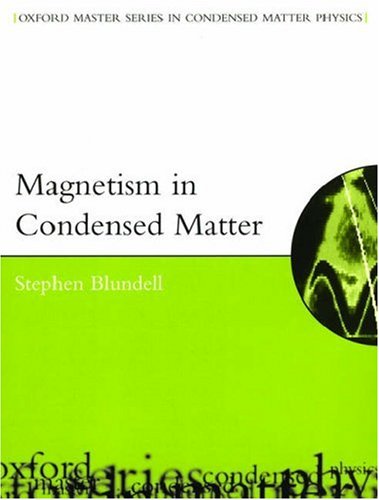
5. Magnetism in Condensed Matter
$70.18
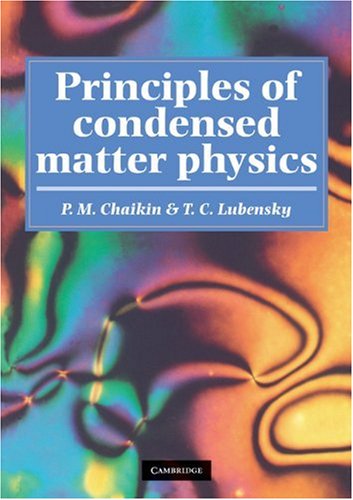
6. Principles of Condensed Matter
$194.48
7. Quantum Field Theory in Condensed
$59.00
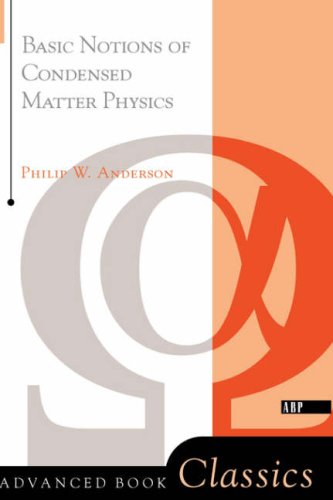
8. Basic Notions of Condensed Matter
$48.00
9. Introduction to Condensed Matter
$12.80
10. Condensed Matter Physics (Dover
$15.93
11. Condensed Matter Physics: Crystals,
$96.93
12. Interatomic Forces in Condensed
$97.70
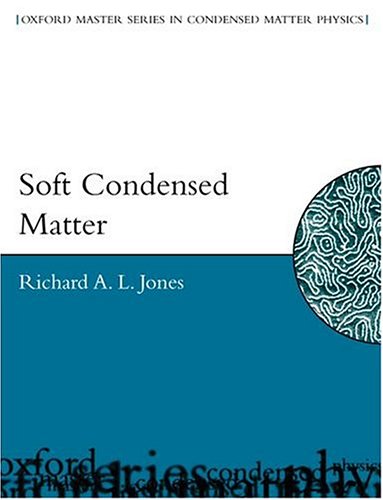
13. Soft Condensed Matter
 
14. Computer Simulation Studies in
$110.00
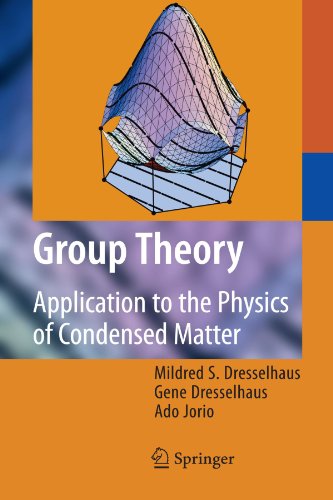
15. Symmetry and Condensed Matter
$81.99
16. Condensed Matter Physics
$73.95
17. Topics and Methods in Condensed
$184.31
18. Neutron, X-rays and Light. Scattering
 
$134.45
19. Electronic Phase Transitions (Modern
$103.20
20. Soft Condensed Matter: New Research

1. Condensed Matter Field Theory
by Alexander Altland, Ben Simons
Hardcover: 636 Pages (2006-06-12)
list price: US$90.00 -- used & new: US$71.23
(price subject to change: see help)
Asin: 0521845084
Average Customer Review: 5.0 out of 5 stars
Canada | United Kingdom | Germany | France | Japan
Editorial Review

Book Description
Over the past few decades, in concert with ground-breaking experimental advances, condensed matter theory has drawn increasingly from the language of low-energy quantum field theory. This primer is aimed at elevating graduate students of condensed matter theory to a level where they can engage in independent research. It emphasizes the development of modern methods of classical and quantum field theory with applications oriented around condensed matter physics. Topics covered include second quantization, path and functional field integration, mean-field theory and collective phenomena, the renormalization group, and topology. Conceptual aspects and formal methodology are emphasized, but the discussion is rooted firmly in practical experimental application. As well as routine exercises, the text includes extended and challenging problems, with fully worked solutions, designed to provide a bridge between formal manipulations and research-oriented thinking. This book will complement graduate level courses on theoretical quantum condensed matter physics. ... Read more

Customer Reviews (3)

5-0 out of 5 stars Miraculous Textbook
This book is really incredible. It is one of only a handful of really readable physics texts, and it carefully moves from very friendly explanations of basic concepts, such as a two page review of Gaussian integrals (things like this make it a great reference), to very advanced material. The last chapter on topology, for example, doesn't hold back from using the full machinery of differential geometry, but also provides a great tutorial on the subject.

Also, a closer read reveals that this book's point of view is thoroughly modern, in the sense that it puts symmetry concepts and non-perturbative techniques front and center. The authors do readers a huge service by promoting the idea that one of the keys to understanding complex quantum systems is to correctly identify their fundamental excitations.

5-0 out of 5 stars Landmark of Theoretical Condensed Matter Physics book!!!
This is an extremely well-written book, which covers almost all the modern topics in condensed matter physics while keeps the physics and mathematics clear and simple.

It is an invaluable reference or textbook for graduate students who are interested in theoretical condensed matter physics, esp. in strongly correlated systems.

It is almost the best book I have seen for a graduate student to study the functional method, renormalization-group theory, etc., applied to condensed matter systems.

5-0 out of 5 stars Simple Language
This book is a good introduction to Field Theory applied in condensed matter physics. In dealing with two difficult subjects the authors do it in a very simple language. This is very important either to beginners or experts. There are very good solved examples to illustrate each section. Besides, there are small boxes citing the people behind the development of the issue. ... Read more


2. Many-Body Quantum Theory in Condensed Matter Physics: An Introduction (Oxford Graduate Texts)
by Henrik Bruus, Karsten Flensberg
Hardcover: 466 Pages (2004-11-11)
list price: US$85.00 -- used & new: US$70.10
(price subject to change: see help)
Asin: 0198566336
Average Customer Review: 5.0 out of 5 stars
Canada | United Kingdom | Germany | France | Japan
Editorial Review

Book Description
This book is an introduction to the techniques of many-body quantum theory with a large number of applications to condensed matter physics. The basic idea of the book is to provide a self-containedformulation of the theoretical framework without losing mathematical rigor, while at the same time providing physical motivation and examples. The examples are taken from applications in electron systems and transport theory.On the formal side, the book covers an introduction to second quantization, many-body Green's function, finite temperature Feynman diagrams and bosonization. The applications include traditional transport theory in bulk as well as mesoscopic systems, where both the Landau-Buttiker formalism and recent developments in correlated transport phenomena in mesoscopic systems and nano-structures are covered. Other topics include interacting electron gases, plasmons, electron-phonon interactions, superconductivity and a final chapter on one-dimensional systems where a detailed treatment of Luttinger liquid theory and bosonization techniques is given.Having grown out of a set of lecture notes, and containing many pedagogical exercises, this book is designed as a textbook for an advanced undergraduate or graduate course, and is also well suited for self-study. ... Read more

Customer Reviews (1)

5-0 out of 5 stars EXCELLENT BOOK!
This book is exactly what a new student (with some training in basic grad courses in solid state, statistical mechanics, etc.) needs to grasp condensed matter physics without a "research-based bias." Todays programs are so focused on application that a thorough treatment of pedigogical materials get superfically taught. Philip Anderson warns about this in his timeless classic "Basic Notions." This book uses QFT in canonical picture (bootstraps), no mention of path integrals. I started out in HEP, so I got trained fairly well in path integrals, some may find this a barrier with the book. Luttinger theory is the most modern topic touched on, applications to materials science. I recommend Wen's book if you want to look at Quantum Hall Effects and Topological Orders (post 1980's). ... Read more


3. A Quantum Approach to Condensed Matter Physics
by Philip L. Taylor, Olle Heinonen
Paperback: 414 Pages (2002-03-18)
list price: US$85.00 -- used & new: US$70.75
(price subject to change: see help)
Asin: 0521778271
Average Customer Review: 4.0 out of 5 stars
Canada | United Kingdom | Germany | France | Japan
Editorial Review

Book Description
This reader-friendly introduction to the theory that underlies the many fascinating properties of solids assumes only an elementary knowledge of quantum mechanics. Taylor and Heinonen describe the methods for performing calculations and making predictions of some of the many complex phenomena that occur in solids and quantum liquids. Their book, aimed at advanced undergraduates and beginning graduate students, leads the reader from the fundamental behavior of electrons and atoms in solids to the most recently explored manifestations of the quantum nature of condensed matter. ... Read more

Customer Reviews (2)

3-0 out of 5 stars An OK book
Since the first edition of Ashcroft/Mermin 's Solid State Physics, the Condensed Matter Physics has been expanded a lot in all directions. Things like high Tc Superconductivity and Quantum Hall Effect were not even discovered in the 1970s. And even in this age, not many textbooks touched the areas that actually most researchers in Condensed Matter Physics are currently working on.
This book is a good try for putting all the new topics as well as the classical ones together in one textbook. But after reading it, I am afraid the book spreaded too much while most topics are not described very clearly in this small book.
My feeling is, looking at the content only, you'll find this a great book --- almost everything interesting has been included! But if you really try to learn some topics --- especially the "advanced ones" --- you'll find many chaptors just give rough ideas or descriptions and finally it turns out not that helpful.
But of course this is not a bad book in general. If you are not in the research of COndensed Matter Physics, browsing this book can give you an nice overview of the current Condensed Matter Physics.

5-0 out of 5 stars It is an excellent book.
Unfortunately it and its predecessor A Quantum Approach to Solid State are not very well-known yet. In conrast to many 'standard' Condensed Matter texts (like Ascroft & Mermin, Kittel, Marder, etc.) the authors do not attempt to cover all of the huge field. Instead they concentrate on the Quantum side of things which is reflected in the title (for example, no Soft Condensed Matter topics and purely classical results are included). This allows them to discuss several different approaches to the same question. To start they give you an appetizer which includes phonons, some magnetism and a short overview of what's to come. The arguments are intuitive at first and thus easy to understand Then they successfully bring more and more depth to the questions. This helps you to keep in mind the goal they are trying to achieve without getting lost in the forest of details. Quite often you can also use their derivation as a way to remember the result without memorizing it. You get a feel for what's to come and what is in need of patching (here is an example: they discuss Landau levels in a magnetic field by saying that a cirle looks like an oscillator from a side so the orbits should be quantized in the same way and then apply the same formula; this is an easy way to remember it but it is certainly not rigorous!). The book ends with a good discussion of the Quantum Hall effect and effect Kondo and thus cannot be called elementary. No shortcuts are taken so the presentation is smooth and easy to follow till the very end. The book was an enlightment when I first saw it!
On the minus side Taylor and Heinonen seem to be fond of indeces so some familiar expressions may look unexpectedly complicated and not immediately recognizable. An arguable drawback of the simplicity is that I adopt and 'privatize' their ideas so quickly that the second reading (the hunt for the missed points) is not that much fun (keeps me in a state of trying to figure out what was that that I was finding so difficult). Due to its limited content you will need to supplement this text with others which are more complete.
I hope that this short review helps spread the word about another good introduction to the complicated field of CMP. ... Read more


4. The Theory of Neutron Scattering from Condensed Matter: Volume II (International Series of Monographs on Physics)
by Stephen W. Lovesey
 Paperback: 310 Pages (1986-10-30)
list price: US$187.00 -- used & new: US$85.51
(price subject to change: see help)
Asin: 0198520298
Canada | United Kingdom | Germany | France | Japan
Editorial Review

Book Description
An invaluable, up-to-date reference aid for investigators and researchers, this two-volume work develops the principles and concepts of statistical physics and quantum chemistry that are the basis for the interpretation of experimental data.These volumes build on the author's now standard
text, Theory of Neutron Scattering (OUP, 1971), and include expanded coverage of nuclear scattering, with many sections completely rewritten and updated, and many previously unpublished experimental calculations.With a greatly expanded bibliography including 200 new references, this work will
interest graduate students and researchers in physics. ... Read more


5. Magnetism in Condensed Matter (Oxford Maser Series in Condensed Matter Physics)
by Stephen Blundell
Paperback: 256 Pages (2001-12-06)
list price: US$59.95 -- used & new: US$49.30
(price subject to change: see help)
Asin: 0198505914
Average Customer Review: 4.0 out of 5 stars
Canada | United Kingdom | Germany | France | Japan
Editorial Review

Book Description
An understanding of the quantum mechanical nature of magnetism has led to the development of new magnetic materials which are used as permanent magnets, sensors, and information storage. Behind these practical applications lie a range of fundamental ideas, including symmetry breaking, order parameters, excitations, frustration, and reduced dimensionality.This superb new textbook presents a logical account of these ideas, staring from basic concepts in electromagnetsim and quantum mechanics. It outlines the origin of magnetic moments in atoms and how these moments can be affected by their local environment inside a crystal. The different types of interactions which can be present between magnetic moments are described. The final chapters of the book are devoted to the magnetic properties of metals, and to the complex behaviour which can occur when competing magnetic interactions are present and/or the system has a reduced dimensionality.Throughout the text, the theorectical principles are applied to real systems. There is substantial discussion of experimental techniques and current reserach topics. The book is copiously illustrated and contains detailed appendices which cover the fundamental principles. ... Read more

Customer Reviews (1)

4-0 out of 5 stars Good overview of magnetism
This book is an easy to read overview of the subject. It's a good book to review the fundamentals (para/dia/ferro/anti magnetism,
exchange interaction, etc.). I gave it 4 stars instead of 5 because the price is a bit high, and sometimes the treatments lacks depth. ... Read more


6. Principles of Condensed Matter Physics
by P. M. Chaikin, T. C. Lubensky
Paperback: 699 Pages (2000-10-09)
list price: US$79.00 -- used & new: US$70.18
(price subject to change: see help)
Asin: 0521794501
Average Customer Review: 5.0 out of 5 stars
Canada | United Kingdom | Germany | France | Japan
Editorial Review

Book Description
Now in paperback, this book provides an overview of the physics of condensed matter systems. Assuming a familiarity with the basics of quantum mechanics and statistical mechanics, the book establishes a general framework for describing condensed phases of matter based on symmetries and conservation laws. After surveying the structure and properties of materials with different symmetries, it explores the role of spatial dimensionality and microscopic interactions in determining the nature of phase transitions. Particular attention is given to critical phenomena and renormalization group methods. The properties of liquids, liquid crystals, quasicrystals, crystalline solids, magnetically ordered systems and amorphous solids are investigated in terms of their symmetry, generalized rigidity, hydrodynamics and topological defect structure. In addition to serving as a course text, this book is an essential reference for students and researchers in physics, applied physics, chemistry, materials science and engineering, who are interested in modern condensed matter physics. ... Read more

Customer Reviews (7)

5-0 out of 5 stars Wonderful and deep approach to soft condensed matter physics
This textbook's main originality is its unusual mixture of latest experimental facts and observations in soft condensed matter with deep theoretical concepts and tools.
Exactly solved models of statistical physics pervades the text which also contains a good discussion on real-space renormalization methods and field-theoretical approaches to condensed matter problems.
The chapter on topological defects and excitations is particularly welcomed.
May not be particularly suited for self-study as some results are not always carefully derived and the exercises can prove quite hard to solve.
A prior exposure to phase transition phenomena is recommended.

5-0 out of 5 stars incorrectly labelled a "soft matter" book
This is simply a modern presentation of condensed matter physics, and thus includes some soft matter examples, but it is not in any sense a "soft matter book".

To those still mired in traditional solid state physics, where electronic properties are topics 1 through 987 and understanding how a semiconductor works is still a primary goal, it may appear that this is a strange book. Indeed it is: it is a condensed matter text rather than a solid state text.

Take a look at your Ashcroft and Mermin flyleaf some time---it is over 30 years old. What have you learned since then? What have your students learned? Do they really get turned on by LAPW and FLAPW? Are you sure? This book is a good place to start bringing yourself, and your students, up to date.

5-0 out of 5 stars I know why Onslow is more interested in this book than Daisy
Captivating bedtime reading, perfect for those insomniac nights. You will only need to read page one to see how come Onslow favours Principles of Condensed Matter Physics over Daisy!

5-0 out of 5 stars Exhaustive treatment of soft matter physics!
Given my training as engineer in undergraduate and as polymer scientist in my MS, I find this book a challenging endevour. It presupposes knowledge of quantum mechanics and statistical mechanics, and is written in a style most beneficial for Physics graduate students. Nonetheless, since every serious student in material science and polymer physics must indeed become comfortable with soft matter physics, this book is a delightful introduction. The book by RAL Jones can provide a quick introduction to phenomenon and principles encountered in the book. But to master the trade, to become comfortable with notation used in papers, to understand the math, to make yourself a soft matter physicist, this book provides matter, paradigm and principles in comprehensive manner.

Specifically book is essential reading for people studying physics of crystals, liquid crystals, amorphous materials, polymers and magnetically ordered systems. It provides detailed introduction to symmetry, phase transitions, field theories, scattering and correlation functions, and generalized elasticity and hydrodynamics. Each chapter and topic can be appreaciated by additional reading from a textbook each in Statistical Mechanics (Pathria), Electrodynamics (Slater and Frank), Quantum Mechanics, liquid crystals (chandrashekar or de gennes, polymers (doi, de gennes) and scattering (neutron-higgins, light-pecora). Like potential readers, I am myself a student, just starting on this daunting but worthwhile study of condensed matter.

5-0 out of 5 stars Best basic condensed matter textbook
It is not only a "soft Condensed Matter" book. This book has every basic (or kinda advanced) ideas of condensed matter physics. And there is almost no prerequisite for this book --- a reader needn't even know any solid state physics before he reads this book. The text is well written and easy to read.
--- These are all the features of a perfect textbook. ... Read more


7. Quantum Field Theory in Condensed Matter Physics
by Alexei M. Tsvelik
Hardcover: 378 Pages (2003-12-08)
list price: US$70.00 -- used & new: US$194.48
(price subject to change: see help)
Asin: 052182284X
Average Customer Review: 5.0 out of 5 stars
Canada | United Kingdom | Germany | France | Japan
Editorial Review

Book Description
This course in modern quantum field theory for condensed matter physics includes a derivation of the path integral representation, Feynman diagrams and elements of the theory of metals.Alexei Tsvelik also covers Landau Fermi liquid theory and gradually turns to more advanced methods used in the theory of strongly correlated systems. The book contains a thorough exposition of such non-perturbative techniques, as 1/N-expansion, bosonization (Abelian and non-Abelian), conformal field theory and theory of integrable systems. First edition Hb (1995): 0-521-45467-0First edition Pb (1996): 0-521-58989-4Download Description
This book is a course in modern quantum field theory as seen through the eyes of a theorist working in condensed matter physics. It contains a gentle introduction to the subject and therefore can be used even by graduate students. The introductory parts include a derivation of the path integral representation, Feynman diagrams and elements of the theory of metals including a discussion of Landau-Fermi liquid theory. In later chapters the discussion gradually turns to more advanced methods used in the theory of strongly correlated systems. The book contains a thorough exposition of such non-perturbative techniques as 1/N-expansion, bosonization (Abelian and non-Abelian), conformal field theory and theory of integrable systems. The book is intended for graduate students, postdoctoral associates and independent researchers working in condensed matter physics. ... Read more

Customer Reviews (3)

5-0 out of 5 stars Modern overview that emphasizes the physics
Quantum field theory has been applied to many different areas of physics, and has done a fairly good job of explaining the phenomena in these areas. When applying quantum field theory to a physical problem one usually takes a pragmatic attitude, and ignores the many existing difficulties in its formalism. Quantum field theory has yet to be put on a rigorous mathematical foundation, but this has not deterred its use in a myriad of applications, with condensed matter physics, the subject of this book, being one of them. The author has done a superb job here, since he emphasizes the physics behind quantum field theory, and not just the formalism. Anyone interested in quantum field theory, and especially those outside the "oral tradition", will definitely benefit from its perusal.

That quantum field theory is similar to statistical mechanics is used extensively in this book. Loosely speaking, one can view the quantum field theory of a system in a certain dimension as a statistical mechanical system in one dimension more. This simplifies calculations considerably, and in condensed matter physics things get even easier since a lattice is present, thus allowing one to deal more transparently with the problems with infinities that will always appear in quantum field theory.

The author gives an overview of quantum field theory in the first part of the book, it being assumed that the reader already has a strong background in it. The calculation of correlation functions is the main goal of the book, and to facilitate this, the author introduces the path integral formalism. Wick's theorem, the tour-de-force of calculations in quantum field theory is then derived. Explicit calculations are done for a bosonic field in an external field using the now ubiquitous mathematical identity that "the determinant of an operator is the exponential of the trace of the logarithm of the operator. One should remember when reading these pages that the considerations are purely formal since no mathematical justification has been given for the path integral measure. Perturbation theory and Feynman diagrams are discussed (of course) and the infinities that arise in perturbation series are dealt with using regularization procedures. Since the author is dealing with problems in condensed matter, where a lattice is present, he labels quantum field theories as "universal" if there is no dependence of the correlation functions in the lattice. Since regularization procedures are obviously dependent on the lattice spacing (the "ultraviolet" and "infrared" divergences), physical quantities that depend on this are called "non-universal" by the author. The standard characterization of a theory as being "renormalizable" is reserved for those where the perturbation expansion can be reformulated so that non-universal quantities appear as a finite number of parameters. This leads to a formulation of the "universality hypothesis" and the renormalization group. The author states the Gellman-Low equation, and shows that the behavior of the Gellman-Low function graphically. The properties of this function in predicting asymptotic freedom and phase transitions are discussed in detail. The O(N) model is used to illustrate some of the phenomena exhibited by quantum field theories, such as symmetry breaking and the origin of Goldstone bosons.

All of these considerations involve only bosonic quantum field theories, but the inclusion of fermions is done in the second part of the book. The discussion here is also more physical, as the author discusses electrodynamics in metals, the treatment however being non-relativistic. This is remedied though later as the author treats quantum electrodynamics. The Schwinger model, and the origin of anomalies as a screening of the electromagnetic field is discussed, and this discussion is more physically motivated and better appreciated intuitively than the one based on path integral measures. The famous Boson-Fermion equivalence in (2+1) dimensions is discussed in terms of the Aharonov-Bohm effect. This is an interesting discussion and one that is somewhat unorhodox, as it is usually not presented in this way. It clearly shows the physical meaning of adding the Chern-Simons term to the Lagrangian, presented in most books as being merely a mathematical device.

Spin systems are the subject of part 3 of the book, with the author noting at the beginning that such systems are complicated to study due to the commutation relations of the spin operators. The emphasis is on disordered magnetic systems, and the presentation is crystal clear from a physical standpoint. The role of continuous symmetry in the nonlinear sigma model, and the breaking of discrete symmetry by short range quantum fluctuations is discussed in detail. The reader is also briefly introduced to the physics of doped antiferromagnets.

The last part of the book is the most exotic, and one that is better understood from a mathematical standpoint. The physics of (1+1)-dimensional quantum systems has turned out to be more of a mathematical playground however, as it turns out to have many experimental manifestations, as the author points out many times. In addition, his treatment of the quantum field theory of the free massless bosonic scalar field shows that even a seemingly trivial action can have non-trivial properties in terms of its correlation functions. Perturbing this action by a cosine term gives the sine-Gordon model, which is exactly solvable, and its connection with conformal field theory is shown by the author. The famous Kosterlitz-Thouless transition is also treated in fair detail. The Ising and spin 1/2 Heisenberg models are discussed in terms of conformal field theories and bosonization. The reader thus gets a physical motivation for the consideration of conformal field theories that have resulted in an enormous amount of research in the past decade. And, also, the reader can see clearly the origin of Kac-Moody algebras and non-Abelian bosonization in these and latter discussions on current operators. The Kondo problem, dealing with a magnetic impurity in a metal, and one of the most difficult problems in condensed matter physics, is treated here in detail in one dimension at half-filling.

5-0 out of 5 stars The Best Introduction to CFT for CMT
This book gives a fairly comprehensive and very comprehendible introduction to conformal field theory as seen from a condensed-matter theorist's point of view.The review of the book from Book News givenabove actually describes it very well.The only things that could be addedare a warning that there are typos in the text and a praise to the authorfor the superb (as always) illustrations, which he drew himself.

Theauthor gives a fuller treatment of the subject in his new book"Bosonisation and Strongly Correlated Systems", which, quiteunfortunately, has not yet come out in paperback and is prohibitivelyexpensive in hardcover.

5-0 out of 5 stars physical review
diffusion in the semiconducto ... Read more


8. Basic Notions of Condensed Matter Physics (Advanced Book Classics)
by P. W. Anderson, Philip W. Anderson
Paperback: 564 Pages (1997-01-01)
list price: US$59.00 -- used & new: US$59.00
(price subject to change: see help)
Asin: 0201328305
Average Customer Review: 4.5 out of 5 stars
Canada | United Kingdom | Germany | France | Japan

Customer Reviews (2)

4-0 out of 5 stars Advanced users only
The title of the book may be misleading.
Attention, this book is for advanced readers in Condensed matter physics. Actually, the book is mostly consisted of some good papers selected by by Anderson. A beginner can read this after he get to know the "basic notions" from basic books.

5-0 out of 5 stars A very useful Guide to Condense Matter
In fact, although it was been published almost twenty years ago, But most ideas in it were veryclassical and very sightful to Condense Matter So you caould see that many papers in the publication in fact cites this book . It's a very guide to the matter world ! ... Read more


9. Introduction to Condensed Matter Physics: Volume 1
by Feng Duan, Jin Guojun, Duan Feng, Guojun Jin
Paperback: 616 Pages (2005-07-01)
list price: US$48.00 -- used & new: US$48.00
(price subject to change: see help)
Asin: 981256070X
Average Customer Review: 5.0 out of 5 stars
Canada | United Kingdom | Germany | France | Japan
Editorial Review

Product Description
This is volume 1 of two-volume book that presents an excellent, comprehensive exposition of the multi-faceted subjects of modern condensed matter physics, unified within an original and coherent conceptual framework. Traditional subjects such as band theory and lattice dynamics are tightly organized in this framework, while many new developments emerge spontaneously from it. In this volume,· Basic concepts are emphasized; usually they are intuitively introduced, then more precisely formulated, and compared with correlated concepts.· A plethora of new topics, such as quasicrystals, photonic crystals, GMR, TMR, CMR, high Tc superconductors, Bose–Einstein condensation, etc., are presented with sharp physical insights.· Bond and band approaches are discussed in parallel, breaking the barrier between physics and chemistry.· A highly accessible chapter is included on correlated electronic states — rarely found in an introductory text.· Introductory chapters on tunneling, mesoscopic phenomena, and quantum-confined nanostructures constitute a sound foundation for nanoscience and nanotechnology.· The text is profusely illustrated with about 500 figures. ... Read more

Customer Reviews (1)

5-0 out of 5 stars A great introduction text to condensed matter physics
This book was written by two respected Chinese physicists. It tries to give a coherent account to the whole subject of condensed matter physics. To do this, it builds up an unified framework based upon concepts such as elementary excitations, topological defects, broken symmetry, rigidity, emergent phenomena, collective phenomena, coherence, localization, etc. In the first part, authors discuss thoroughly the structure of matter in condensed phase, which is not readily available in other texts on condensed matter physics. In the second part, authors focus on wave behavior in condensed matter systems with different structures. Things like electrons, phonons, photons in periodic or quasiperiodic systems are discussed. This part has also covered topics like surface and impurity effects, transport, tunneling, and Anderson localization. The third part introduce bond and band approaches to electronic structures of materials. Two other chapters in this part are given to correlated electron systems and nanostructures like quantum well/wire/dots, respectively. The fourth part is the last part of this volume, which covers phase transition and various ordered phases. Landau theory is introduced and applied to liquid crystals and other systems. Magnetism, superconductivity, and superfluidity are discussed. Finally, a chapter on broken ergodicity is included, which is an important concept to the phase transitions that are not directly related to broken symmetry.

Overall, this book is a great introduction to condensed matter physics. It can also serves as a reference for research physicists. Many discussions in the book are illuminating. The book is well organized. The framework taken in the book is very helpful for graduate students to gain a deeper and wider understanding of condensed matter physics as a whole. In one word, this book is highly recommended for those who want to study condensed matter physics. ... Read more


10. Condensed Matter Physics (Dover Books on Physics)
by A. Isihara
Paperback: 384 Pages (2007-06-05)
list price: US$19.95 -- used & new: US$12.80
(price subject to change: see help)
Asin: 0486458776
Canada | United Kingdom | Germany | France | Japan
Editorial Review

Book Description

More than a graduate text and advanced research guide on condensed matter physics, this volume emphasizes applications rather than theory. Self-contained chapters examine simple liquids, electron systems and correlations, two-dimensional electron systems, quasi one-dimensional systems, hopping and localization, magnetism, superconductivity, liquid helium, and polymers. Appendixes offer background on molecular distribution functions. 1991 edition.
... Read more

11. Condensed Matter Physics: Crystals, Liquids, Liquid Crystals, and Polymers
by Gert Strobl
Paperback: 381 Pages (2003-09-29)
list price: US$59.95 -- used & new: US$15.93
(price subject to change: see help)
Asin: 3540003533
Average Customer Review: 5.0 out of 5 stars
Canada | United Kingdom | Germany | France | Japan
Editorial Review

Book Description

Derived from lectures at the University of Freiburg, this textbook introduces solid-state physics as well as the physics of liquids, liquid crystals and polymers. The five chapters deal with the key characteristics of condensed matter: structures, susceptibilities, molecular fields, currents, and dynamics. The author strives to present and explain coherently the terms and concepts associated with the main properties and characteristics of condensed matter, while minimizing attention to extraneous details. As a result, this text provides the firm and broad basis of understanding that readers require for further study and research.

... Read more

Customer Reviews (1)

5-0 out of 5 stars Learning by analogies!
Gert Strobl provides a comprehensive and coherent presention of ideas on structure, susceptibilities, molecular fields and phase transitions, charge and currents and on dynamics of condensed matter physics. Like the text by Chaikin and Lubensky, this text best serves the interests of Physicists, though Strobl manages to present things more simply. This also means it is less exhaustive, and less mathematically intensive. What is most remarkable about the book is the way it allows the reader to make connections between the behavior of liquids, crystals, polymers and liquid crystals.

The analogies between these seemingly distinct classes of matter are extremely insightful. Each chapter selectively treats one aspect of condensed matter, say like chapter on phase transitions or on moduli and susceptibility brings out the role of underlying structure in determining the response of a range of materials. This is one of the very few books on condensed matter that talk about charges and currents, and solid state physics in the same vein as polymer and liquid crystal physics. Though the conductivity in polymers is not covered, the basics discussed would be helpful to reader in making meaningful analogies.

The greatest utility of the book is that it can act as a bridge that a physicist or a theorist can use to learn about other areas of condensed matter and how his understanding translates to other systems. For an experimentalist or an engineer the description allows him to learn the language that his peers doing theory or working in related topics, different materials speak in. While I will prefer the text by Daoud and Williams as introductory text, and the one by Chaikin and Lubensky is unparalleled in its content, Strobl's book is a good treatise to be read on its own merit. ... Read more


12. Interatomic Forces in Condensed Matter (Oxford Series on Materials Modelling, 1)
by Mike Finnis
Hardcover: 304 Pages (2004-01-01)
list price: US$109.45 -- used & new: US$96.93
(price subject to change: see help)
Asin: 0198509774
Average Customer Review: 4.0 out of 5 stars
Canada | United Kingdom | Germany | France | Japan
Editorial Review

Book Description
There is a continuing growth of interest in the computer simulation of materials at the atomic scale, using a variety of academic and commercial computer programs. In all such programs there is some physical model of the inter-atomic forces, which may be based on something as simple as a pair interaction, such as the Lennard-Jones model, or as complex as a self-consistent, all-electron solution of the quantum mechanical problem. For a student or researcher, the basis of such models is often shrouded in mystery. It is usually unclear how well founded they are, since it is hard to find a discussion of the physical assumptions that have been made in their construction.The lack of clear understanding of the scope and limitations of a given model may lead to its innocent misuse, resulting either in unfair criticism of the model or in the dissemination of nonsensical results. In the present book, models of inter-atomic forces are derived from a common physical basis, namely the density functional theory. The interested reader will be able to follow the detailed derivation of pairwise potentials in simple metals, tight-binding models from the simplest to the most sophisticated (self-consistent) kind, and various ionic models.The book is self-contained, requiring no more background than provided by an undergraduate quantum mechanics course. It aims to furnish the reader with a critical appreciation of the broad range of models in current use, and to provide the tools for understanding other variants that are described in the literature.Some of the material is new, and some pointers are given to possible future avenues of model development. ... Read more

Customer Reviews (1)

4-0 out of 5 stars Great content but could be written in a simpler manner
I read this book as preparation for my Ph.D. comprehensive exams.Specifically, I wanted to improve my understanding of materials modelling and density functional theory.This book did accomplish this.It provides a very comprehensive study of how interatomic forces are calculated in solids.Density functional theory, tight binding, empirical potentials, linear response theory, phonon calculation, and elastic constants were all here.

The focus was tight; with minimal straying into related topics such as electronic structure, Monte Carlo, or modelling of gases or liquids.As such, this book is great for materials engineers and scientists, but is useless for chemists and probably most physicists.

The book leans towards the theoretical side; minimal discussion of how the different equations would be implemented into code.Hence don't use this book as a guide to writing a simulation software.But do use it as a guide to understanding how to use a simulation software to obtain results.Suprisingly, the text does not require a lot of prior knowledge in thermodynamics, crystallography, quantum, or solid state; thereby making it more readable for people from a wide range of technical backgrounds.

I recommend this as a textbook for a course on atomistic scale modeling of solids, with one reservation.It is short, well organized, and since it is written by one author, the text flows much better than many other textbooks in materials modelling which are usually written by a team of authors.But it is not written in the simplest manner possible.Many of the concepts are explained in purely mathematical terms; i.e. derivations and proofs.This is great for the mathematically inclined but death to everyone else.Instead, many of the concepts should have been accompanied by figures and diagrams to help the reader visualize what is going on.This is especially true in the chapter on elastic constants.The text delved right into matrix math, when it should have used figures showing how crystal cells of different lattice types can be deformed along different crystallographic directions. ... Read more


13. Soft Condensed Matter
by Richard A.L. Jones
Hardcover: 230 Pages (2002-08-15)
list price: US$125.00 -- used & new: US$97.70
(price subject to change: see help)
Asin: 0198505906
Average Customer Review: 5.0 out of 5 stars
Canada | United Kingdom | Germany | France | Japan
Editorial Review

Book Description
The physics of soft condensed matter is probably one of the most 'fashionable' areas in the physical sciences today. This book offers a coherent and clear introduction to the properties and behaviour of soft matter. It begins with a treatment of the general underlying principles: the relation of the structure and dynamics of solids and liquids to intermolecular forces, the thermodynamics and kinetics of phase transitions, and the principles of self-assembly. Then the specific properties of colloids, polymers, liquid crystals and self-assembling amphiphilic systems are treated within this framework. A concluding chapter illustrates how principles of soft matter physics can be used to understand properties of biological systems. The focus on the essentials and the straightforward approach make the book suitable for students with either a theoretical or an experimental bias. The level is appropriate for final year undergraduates and beginning graduate students in physics, chemistry, materials science, and chemical engineering. ... Read more

Customer Reviews (1)

5-0 out of 5 stars Excellent text for appreciating beauty of soft matter!
The chapters are written in straightforward language, conveying essential ideas and fundamentals in very readable manner. The book illustrates how one can convey complex ideas in simple words and yet capture all intricacies of the subject. The book is self contained introduction to colloids, polymers, liquid crystals, self-assembly, crystallization, glass transition, phase behavior and gelation. I have not encountered a better book that presents such a rich overview of these vastly different yet interrelated domain of condensed matter physics in less than 200 pages.

Since the book was written fairly recently, it presents a very modern understanding of described topics. The book by Chaikin and Lubensky (~700 pages) is the one written for anyone interested in meaty details, and equations in their full grandeur. Strobl's recent book on condensed matter is another excellenttext and presents lots of physics in very well written graduate level text. But to taste and tempt into soft matter, Jones book definitely is the one to pick! ... Read more


14. Computer Simulation Studies in Condensed-Matter Physics IV: Proceedings of the Fourth Workshop Athens, Ga, Usa, February 18-22, 1991 (Springer Proce)
by D.P. Landau, K.K. Mon
 Hardcover: 223 Pages (1993-03)
list price: US$128.00
Isbn: 0387563091
Canada | United Kingdom | Germany | France | Japan

15. Symmetry and Condensed Matter Physics: A Computational Approach
by Michael El-Batanouny, Frederick Wooten
Hardcover: 1000 Pages (2008-03-31)
list price: US$110.00 -- used & new: US$110.00
(price subject to change: see help)
Asin: 0521828457
Canada | United Kingdom | Germany | France | Japan
Editorial Review

Book Description
Unlike existing texts, this book blends for the first time three topics in physics - symmetry, condensed matter physics and computational methods - into one pedagogical textbook. It includes new concepts in mathematical crystallography, experimental methods capitalizing on symmetry aspects, non-conventional applications such as Fourier crystallography, color groups, quasicrystals and incommensurate systems, as well as concepts and techniques behind the Landau theory of phase transitions. Ideal for graduate students in condensed matter physics, materials science, and chemistry. ... Read more


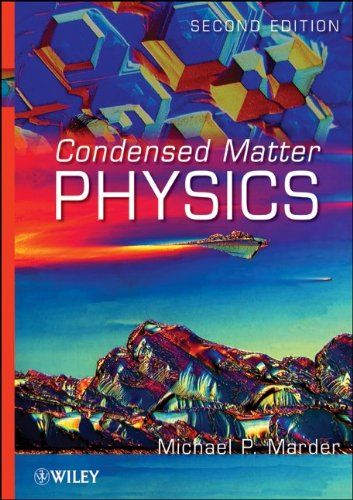
16. Condensed Matter Physics
by Michael P. Marder
Hardcover: 928 Pages (2000-01-07)
list price: US$135.00 -- used & new: US$81.99
(price subject to change: see help)
Asin: 0471177792
Average Customer Review: 3.5 out of 5 stars
Canada | United Kingdom | Germany | France | Japan
Editorial Review

Book Description
A modern, unified treatment of condensed matter physics

This new work presents for the first time in decades a sweeping review of the whole field of condensed matter physics. It consolidates new and classic topics from disparate sources, teaching "not only about the effective masses of electrons in semiconductor crystals and band theory, but also about quasicrystals, dynamics of phase separation, why rubber is more floppy than steel, electron interference in nanometer-sized channels, and the quantum Hall effect."

Six major areas are covered---atomic structure, electronic structure, mechanical properties, electron transport, optical properties, and magnetism. But rather than defining the field in terms of particular materials, the author focuses on the way condensed matter physicists approach physical problems, combining phenomenology and microscopic arguments with information from experiments. For graduate students and professionals, researchers and engineers, applied mathematicians and materials scientists, Condensed Matter Physics provides:
* An exciting collection of new topics from the past two decades.
* A thorough treatment of classic topics, including band theory, transport theory, and semiconductor physics.
* Over 300 figures, incorporating many images from experiments.
* Frequent comparison of theory and experiment, both when they agree and when problems are still unsolved.
* More than 50 tables of data and a detailed index.
* Ample end-of-chapter problems, including computational exercises.
* Over 1000 references, both recent and historically significant.

An Instructor's Manual presenting detailed solutions to all the problems in the book is available from the Wiley editorial department. ... Read more

Customer Reviews (4)

2-0 out of 5 stars Comprehensive but poor
I admire anyone who attempts to teach all of condensed matter physics in one book. That being said, being comprehensive and being comprehendible are two very different things. While being the former it sacrifices the latter. Marder does not do a good job of explaining the physical concepts needed to build a better understanding of advanced material. In addition, his end-of-chapter problems can be relatively uninformative and tedious i.e. you are left asking why did I just do this problem? Inevitably I find myself going back to Ashcroft & Mermin's wonderful but dated book. Hopefully one day they will publish a new edition...

3-0 out of 5 stars Broad coverage, but lacking detail
I used Marder's book (the corrected printing) during a solid state physics course this past Spring 2003 semeseter. While I have to commend Marder at his attempt to provide a great deal of breadth on the enormous field of condensed matter, I think he fell short on the details and pedagogy that are necessary for someone new to the subject. Too often, I found myself (and the others I worked with) having to refer to Ashcroft & Mermin's text to complete HW problems assigned out of Marder's book. Also, his notation in certain chapters was unnecessarily confusing, especially the chapter(s) on phonons. I have since read most of the book by Taylor & Heinonen, and I found it to be of much more use than Marder's book. T&H's book is very well written and the concepts flow smoothly from one to the next. In fact, many of the things I struggled to understand last semester were so clearly explained in their text, that I wondered how I could have been so confused! Marder's book has been praised by others as a modern improvement to the A&M standard, but up-to-date topics are of little use if the first-timer has difficulty understanding the nuances of core ideas (e.g., transport, band-structure, and electron-phonon interactions). My opinion is that a good library should include A&M's text for those fundamentals that never go away (crystal structure, semiconductors, etc.) and a book such as T&H's or Chaikin & Lubensky's for the more modern topics ("soft" condensed matter, mesoscopic physics, etc.).

5-0 out of 5 stars corrected printing has appeared
Note that a corrected printing (not 'new edition') came out in February 2001. Make sure you get this version, which is identified on the cover.

4-0 out of 5 stars at last, an update for Ashcroft & Mermin's book
The classic solid state / condensed matter text by Ashcroft and Mermin (A&M) is now 25 years old. It's a very accessible and elegantly written book, but condensed matter is a fast-moving subject, and it's embarassingthat A&M is still used today. The alternatives have all been toospecialized, too formal, and/or too leadenly written in comparison.

Thisbook by Marden may finally replace A&M. Like Ashcroft and Mermin,Marden is a member of the Cornell mafia. Some parts of the book practicallyecho A&M, and the writing style is at least as friendly to thebeginning grad student ("Now it will be protested that atoms withoutdipole moments do not have dipole moments. This is true. However...") But the large number of new developments of the last 25 years are discussedor at least mentioned. In addition to the same-old band structure,magnetism, etc., liquids are covered (a surprising omission in A&M), asare surfaces, soft matter, optical properties of materials, etc. The bookis fairly logically structured and works well as a text, except that thereis way too much material here to cover in a year.

The first printing isfull of errors, listed on a web page created by the author. You may want towait until the second printing before plunking down $95 (too high forimpoverished grad students). Top and bottom margins are practicallynonexistent. Photographs and shaded 3D drawings are poorly reproduced andmurky; they appear to have been printed on a smeary $79.95 inkjet printerand then reproduced. ... Read more


17. Topics and Methods in Condensed Matter Theory: From Basic Quantum Mechanics to the Frontiers of Research
by Michele Cini
Hardcover: 443 Pages (2007-08-17)
list price: US$99.00 -- used & new: US$73.95
(price subject to change: see help)
Asin: 3540707263
Canada | United Kingdom | Germany | France | Japan
Editorial Review

Book Description

This book provides material for courses in theoretical physics for undergraduate and graduate students specializing in condensed matter, including experimentalists who want a thorough theoretical background; the advanced part should be of interest to research workers too. A good first course in quantum mechanics is assumed. Here a variety of many-body phenomena in condensed matter are discussed, with special attention paid to the understanding of strong correlation effects. This requires a variety of theoretical tools (diagram expansions, groups, recursion methods and more). The text, which arose naturally from teaching, is eminently readable and the mathematical treatments are explained in enough detail to be followed easily. Proofs of all the relevant theorems are provided, but the main emphasis is always on the physical meaning or applicability of the results. Many examples are provided for illustration and also serve as worked problems.

... Read more

18. Neutron, X-rays and Light. Scattering Methods Applied to Soft Condensed Matter (North-Holland Delta Series) (North-Holland Delta Series)
Hardcover: 541 Pages (2002-10-01)
list price: US$221.00 -- used & new: US$184.31
(price subject to change: see help)
Asin: 0444511229
Canada | United Kingdom | Germany | France | Japan
Editorial Review

Book Description
Scattering experiments, using X-ray, light and neutron sources (in historical order) are key techniques for studying structure and dynamics in systems containing colliods, polymers, surfactants and biological macromolecules, summarized here as soft condensed matter. The education in this field in Europe is very heterogeneous and frequently inadequate, which severely limits an efficient use of these methods, especially at large-scale facilities. The series of "Bombannes" schools and the completely revised and updated second edition of the lecture notes are devoted to a practical approach to current methodology of static and dynamic techiques. Basic information on data interpretation, on the complementarity of the different types of radiation, as well as information on recent applications and developments is presented. The aim is to avoid over - as well as under-exploitation of data. ... Read more


19. Electronic Phase Transitions (Modern Problems in Condensed Matter Sciences, Vol 32)
by W. Hanke
 Hardcover: 336 Pages (1992-09)
list price: US$250.00 -- used & new: US$134.45
(price subject to change: see help)
Asin: 0444888853
Canada | United Kingdom | Germany | France | Japan

20. Soft Condensed Matter: New Research
Hardcover: 350 Pages (2007-06-15)
list price: US$129.00 -- used & new: US$103.20
(price subject to change: see help)
Asin: 1594546657
Canada | United Kingdom | Germany | France | Japan

  1-20 of 100 | Next 20

Prices listed on this site are subject to change without notice.
Questions on ordering or shipping? click here for help.

site stats