e99 Online Shopping Mall

Geometry.Net - the online learning center Help  
Home  - Psychology - Evolutionary (Books)

  1-20 of 100 | Next 20

click price to see details     click image to enlarge     click link to go to the store

$41.68
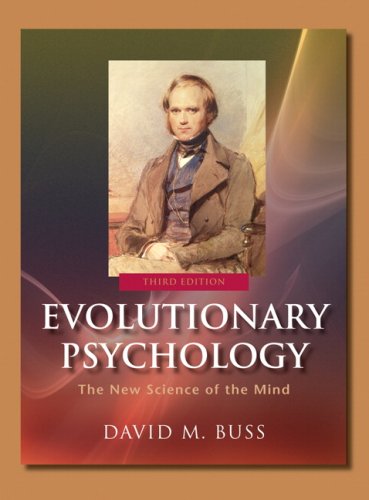
1. Evolutionary Psychology: The New
$5.03
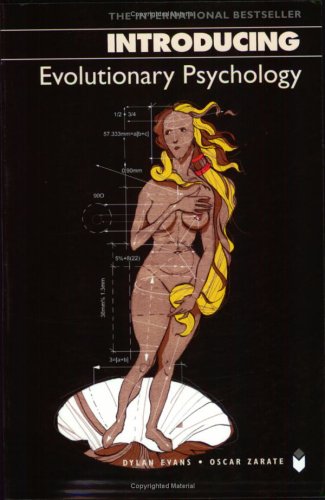
2. Introducing Evolutionary Psychology,
$79.82
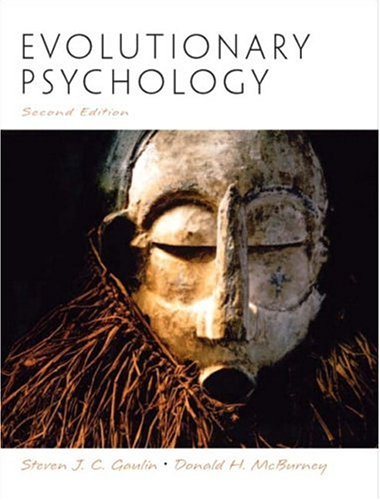
3. Evolutionary Psychology, Second
$8.00
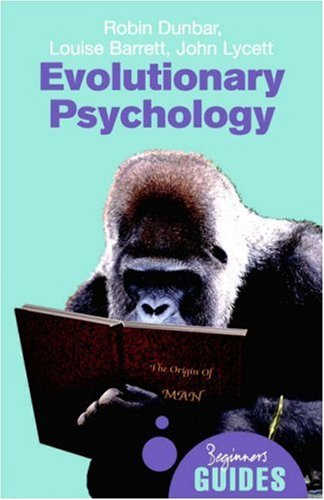
4. Evolutionary Psychology: A Beginner's
$92.97
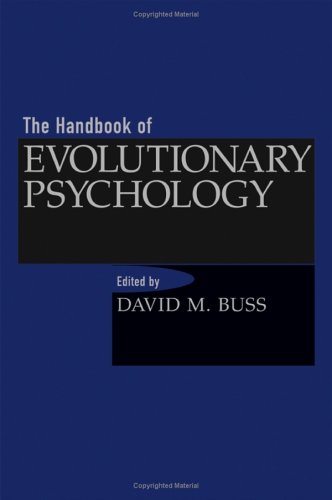
5. The Handbook of Evolutionary Psychology
$45.00
6. Human Evolutionary Psychology
$17.46
7. Evolutionary Psychology as Maladapted
$10.98
8. Psychology: An Evolutionary Approach
$82.07
9. Oxford Handbook of Evolutionary
$1.42
10. The Debated Mind: Evolutionary
$41.55
11. Evolutionary Psychology: An Introduction
$23.97
12. Origins of Human Nature: Evolutionary
$6.54
13. Neo-liberal Genetics: The Myths
$40.98
14. Evolutionary Cognitive Neuroscience
 
$6.00
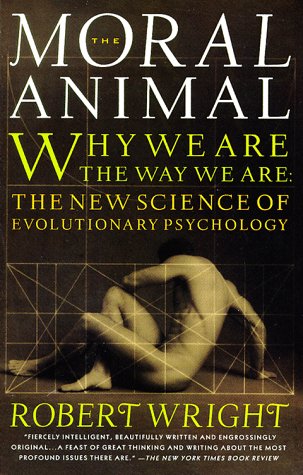
15. MORAL ANIMAL, THE: Why We Are
$45.06
16. The Adapted Mind: Evolutionary
$8.92
17. The Moral Animal: Why We Are,
$55.00
18. Evolutionary Psychology: An Introduction
$84.95
19. Personality Psychology: Domains
$98.51
20. The Evolutionary Bases of Consumption

1. Evolutionary Psychology: The New Science of the Mind (3rd Edition)
by David Buss
Hardcover: 496 Pages (2007-07-01)
list price: US$99.60 -- used & new: US$41.68
(price subject to change: see help)
Asin: 0205483380
Average Customer Review: 4.5 out of 5 stars
Canada | United Kingdom | Germany | France | Japan
Editorial Review

Book Description
Composed of cutting-edge reasearch and featuring an engaging writing style, the author offers compelling scientific answers to the profound human questions regarding love and work. Beginning with a historial introduction, the text logically progresses by discussing adaptive problems humans face and ends with a chapter showing how the new field of evolutionary psychology encompasses all branches of psychology.Each chapter is alive with the subjects that most occupy our minds:sex, mating, getting along, getting ahead, friends, enemies, and social hierarchies.Why is child abuse 40 times more prevalent among step-families than biologically intact families?Why, according to one study, did 75% of men but 0% of women consent to have sex with a complete stranger?Buss explores these intriguing quandaries with his vision of psychology in the new millenium as a new science of the mind. Anyone with an interest in the biological facets of human psychology will find this a fascinating read. ... Read more

Customer Reviews (12)

5-0 out of 5 stars Good Intro
This was the first book I read dealing with Evolutionary Psychology.I read it after college and law school so the textbook format was actually perfect for what I was looking for.It begins with a rudimentary and straight forward explanation of evolution by natural selection.From there it gets into the details of evolutionary psychology.It is a very solid introduction to the field in my opinion.I was told that when it comes to EP to start with Buss's book but don't end there and I sort of see why.I don't think you could go wrong by starting here.

3-0 out of 5 stars high on appeal, low on rigor
I used this book as a text book for a course I taught on Evolutionary Psychology.On the whole, the students really enjoyed the text and they found Buss's writing style to be very engaging and easy to read.I would agree.

Nevertheless, I feel this book--like the whole field of Evolutionary Psychology--requires a far more rigorous scientific framework before it can be considered a field that can substantively explain human behavior from an evolutionary perspective.Don't get me wrong: evolutionary hypotheses can provide a lot of insight into particular human behaviors.However, I would have liked to see much more discussion on what is science, what constitutes a scientifically valid argument, how do we falsify a particular hypothesis, etc.These issues could be covered in a few pages or so, and I think they could help flesh out or perhaps even justify some of the arguments put forth in the text.As it stands now, the book reads more like an apologetic and as I skim the pages, I get the same feeling that I do when I've been pamphleted by evangelicals.Buss's arguments are fraught with generalizations: studies on college kids are extrapolated to the whole human species, studies on plumage color in birds are used to argue for handicaps in humans, and on and on it goes.There are sentences that make pretty extraordinarly claims that go unreferenced and there are sentences that make trivial points that are tailed by six references.

Professor Buss does a good job in conveying the basics of natural selection, but then uses some of the most tenuous definitions of fitness in trying to make an adaptive argument: questionaires, age, symmetry, and even intuition are all stand-ins for fitness.This is a shame because in order to know when selection will operate, we need to know how phenotypic (including behavioral) variation covaries with fitness.Because his fitness proxies are so weak, I have a hard time buying many of the arguments advanced in the book.Other evolutionary forces are rarely discussed; such lapses are unfortunate since it is likely that drift has played some (if not a major) role in getting populations to cross adaptive valleys, as well as affecting the evolutionary dynamics of frequency-dependent selection.But I digress...

I hope future editions (and I'm sure they're on their way) will include a chapter on scientific and evolutionary epistemology.That is, I would like to see a chapter address the question: what steps do evolutionary biologists proceed through when they make an adaptive argument.This would be a timely and useful contribution given that intelligent-design folks are trying to loosen up and poke holes in the definition of science.One chapter starts down this road but never critically discusses how hypotheses are tested (and rejected!), it focuses more on how hypotheses are developed--and believe me, evolutionary psychologists are good at coming up with hypotheses.Professor Buss's book, with its profligate use of unfalsifiable hypotheses, does not help the cause in this respect.Sure, evolutionary psychologists can always hide behind Lakatos as they denigrate Popper for being too severe, or, like Dunbar et al., they can actually learn some math, some scientific epistemology, and help bring evolutionary psychology into a more rigorous, more reputable position.Buss's book does too much of the former and not enough of the latter.

5-0 out of 5 stars HUMAN CIVILIZATION FROM THE PRESENT: WHY WE ACT THIS WAY
Each day for twenty-something years I woke up to see reality as it was presented to me.I noticed many patterns in life that are hard not to notice -- such as the difference between men and women in how they approach sexual opportunities.Men will readily say yes, women firmly no.Why?

Evolution is such an intriguing and elegant theory on its approach to our current behavior.Boss's contention is that the present behaviors we see today in our modern era -- fear of snakes, high male sexual drive -- arose from our ancestors.Those who did not have such characteristics did not become our ancestors.Thus, over time, certain characteristics were more likely to be successful in the mating process, and those are the same characteristics we see today.Boss's insight required a lot of keen intellectual insight into many different hypothesis.

Some of these hypothesis seemed far-fetched at first.Who would think that there would be statistical differences in how maternal grandparents v. paternal grandparents relate to their grandchildren.There are, however. Maternal grandmothers have less risk in investing in a grandchild who is not biologically related since she is confident that her daughter is biologically hers, and she can be certain that her daughter's child is biologically related, too.The hypothesis that paternal grandfathers would be most distant -- since they have the most to lose -- turned out to be true.(Paternal grandfathers cannot be 100% certain that they fathered their son or daughter, and thus, they cannot be sure that that child's son or daughter is biologically related).

This is perhaps one of the most important contributions in scientific literature since Watson and Clark's published report on their findings of DNA.

Michael Gordon

5-0 out of 5 stars A thorough, rigorous, and illuminating book.
David Buss, author of The Evolution of Desire and The Dangerous Passion, brings his formidable intellect, research experience, knowledge, and writing talent to bear in this impressive introduction to the field of Evolutionary Psychology.It is obvious from reading the book that it was painstakingly researched.An impressive breadth of research studies in evolutionary psychology and relevant work from other disciplines, including anthropology, biology, and sociology are clearly explained and their implications discussed.Alternative hypotheses and interpretations of research, where alternatives have been explicitly proposed, are even-handedly explored.The chapters of the book are organized by the kinds of problems of survival and reproduction faced by our ancestors.This organization makes the broad range of specific research covered in the book easy to understand and integrate into a coherent understanding of the evolutionary origins of human cognition and behavior.Thought-provoking, absorbing, and exceptionally well written: Dr. Buss's Evolutionary Psychology text is an absolute joy to read.It is a must-have for psychologists, biologists, and any student of human nature.

3-0 out of 5 stars Procede with Caution
I have not read the text book.I am a former student of Dr. Buss' and suspect that it will be as vacant in theory as his previous literary attempts.Evolutionary Psychology is an extremely interesting field, but as with any field must be considered in an interdisciplanary manner.The reviewers that make blanket statements about Evolutionary Psychology being the only world view might benefit from reading some philosophy without prejudging it as merely a coping mechanism.For those of you who considering purchasing this book, the last time I spoke with Dr. Buss, he had only very superficial knowledge of the more detailed and sophisticated theories in this field of study and this will probably be reflected in the text book.To be fair, his writing is often enjoyable and as others have said, does read like a novel, but do not mistake this for depth of knowledge. ... Read more


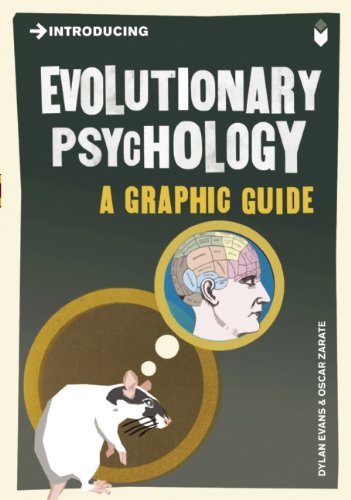
2. Introducing Evolutionary Psychology, 2nd Edition
by Dylan Evans
Paperback: 176 Pages (2006-01-25)
list price: US$12.95 -- used & new: US$5.03
(price subject to change: see help)
Asin: 1840466685
Average Customer Review: 4.0 out of 5 stars
Canada | United Kingdom | Germany | France | Japan
Editorial Review

Book Description
Using evolutionary biology and cognitive psychology as well as anthropolgy, primatology and archaeology, characters such as Dawkins, Gould and Dennett are beginning to piece together the first truly scientific account of human nature. ... Read more

Customer Reviews (12)

4-0 out of 5 stars Introducing the "Introducing" series.
If you've not read any of the "Introducing Such-and-such" series (or the similar "For Beginners" series from a different publisher) then I'll have to describe the overall series to you as well as this particular book.

Both of these series have the simple goal of serving as a brief introduction to the topic for an intelligent layman. The series makes use of copious illustrations throughout, so that they almost look like a comic book.

I sheepishly have to admit I picked this book up because I knew the Wachowski brothers, creators of The Matrix, had all their principal actors read it.

That said, this book fulfills the goal of giving a simple overview of the basic concepts of evolutionary psychology. I do a fair bit of self-directed reading about various psychology topics, so I found the subject interesting. The authors describe the origins of evolutionary psychology and how it's distinguished from the larger field of general psychology. Various topics covered include the evolution of human social behavior (and why reputation is so important to us), dietary habits (why fatty, sugar-laden foods are so hard to ignore) and mating patterns.

I have only two major criticisms concerning this book. The first is more of a minor annoyance than a significant flaw: Important figures are usually pictured as well as named. Later in the book these people are shown describing through speech bubbles important points of their theories. The problem is that their names are only given the first time. I found it very annoying to have to go back every time a certain picture was presented to remember the name and associate the theory with the correct person.

The second and more important problem is this: Although the authors present several objections to the theories of evolutionary psychology, their responses to these objections feel a bit too pat. They simply don't seem to be taking these arguments seriously. Of course, this is a short book intended only as an introduction to the field, so the authors had a limited scope, but I still found their approach to their critics a bit too dismissive.

Overall, if you're a curious, omnivorous reader like myself, you'll probably find this a good read. As other reviewers have noted, the book includes suggestions for further reading at the end, so if you really enjoyed the subject you already have directions for further research.

4-0 out of 5 stars Short & Sweet
This book provides a brief introduction to the field of Evolutionary Psychology, defined as a combination of cognitive psychology and evolutionary biology.I finished it just as quickly as "The Zen of Farting" by Carl Japikse, but needless to say, this book was far more enlightening.The pages are almost in comic book format with pictures taking up the lion's share of space.The pictures weren't necessary to get the points across, but alas, to sell a brief and rudimentary book such as this, volume is necessary.

The author, a Ph.D. student in cognitive psychology at the time the book was written offers a great introduction to the field of evolutionary psychology and provides a laundry list of further readings on the subject.

If you have little to no exposure to this field, this is an excellent book to get you started. I highly recommend it.

5-0 out of 5 stars This review not based on content but presentation
There's no way I can review this book based on content because I'm not very familiar with the fields, but I did appreciate how well the authors presented the theories on such a controversial theory. They did manage to shed some light on method of explaining human behavior that I never thought of and took for granted (my folly considering I'm an aspiring Sociologist).What's best is at the end of the book there are suggestions for further reading.

5-0 out of 5 stars excellent
Highly recommended. A superb, easy-to-understand introduction to Evolutionary Psychology. A lot of drawings clearly explain the concepts.

By the way, I'm not at all surprised that a great book like this was published in Europe (the UK in this case). The squeamish Americans would have a lot of issues with the "graphic" illustrations and non-politically-correct content.

Wonderful & entertaining!

5-0 out of 5 stars Great macro introduction to Evolutionary Psychology
This book changed my life. This book discusses information using real life scenerios which can be demonstrated in everyday life. It really spooked the "voodoo" (that which I could not explain) right out of me.And I'm a more temperate, more understanding person than I ever was before.

Again, this book covers details from a "macro perspective", that is it goes over the general details and explains the interconnectivity (global) information, rather than speaking in specific(unrelational) terms or ideas.It guides you logically through the process and displays the information in pictorials and patterns which make it very easy to understand its concepts.

Every institution providing education should use this books communication models in their programs.A lot of people going through institutional schooling get fustrated because schools fail to explain the interconnectivity first, and get lost in meaningless (unrelational) details.

I feel I have received many answers to the questions of life through this book. I highly recommend it. ... Read more


3. Evolutionary Psychology, Second Edition
by Steven J. C. Gaulin, Donald H. McBurney
Hardcover: 416 Pages (2003-07-25)
list price: US$89.80 -- used & new: US$79.82
(price subject to change: see help)
Asin: 0131115294
Average Customer Review: 5.0 out of 5 stars
Canada | United Kingdom | Germany | France | Japan
Editorial Review

Book Description
The second edition of Evolutionary Psychology is the only book on the market that shows the relevance of evolutionary thinking to the entire range of psychological phenomena, and it does so at a level appropriate for readers new to the field. Each chapter deals with a particular topic by illustrating how an evolutionary approach illuminates behavior as a response to problems faced by humans in our evolutionary past.The authors—representing the disciplines of both psychology and anthropology—present their material traditionally: they first provide the foundation for understanding the fundamentals of modern evolutionary theory; then systematically apply this theory to learning, cognition, perception, emotion, development, pathology, and more.For any reader interested in a richer understanding of human behavior and the psychological mechanisms that underlie it. ... Read more

Customer Reviews (1)

5-0 out of 5 stars the clearest book about Evolutionary Psychology
This is the clearest, smartest introduction to the field of evolutionary psychology that exists. Gaulin succinctly, clearly, and brilliantly provides an overview to the whole field. Buy it, read it, live it!
... Read more


4. Evolutionary Psychology: A Beginner's Guide (Beginner's Guides)
by Robin Dunbar
Paperback: 192 Pages (2005-05-25)
list price: US$14.95 -- used & new: US$8.00
(price subject to change: see help)
Asin: 1851683569
Average Customer Review: 4.5 out of 5 stars
Canada | United Kingdom | Germany | France | Japan
Editorial Review

Book Description
Starting with its origins in the work of Charles Darwin, the book covers all the key areas of evolutionary psychology, including the role played by genetics in our sexual behavior, parental decision-making, and how babies learn about and adapt to the world. ... Read more

Customer Reviews (2)

5-0 out of 5 stars Exactly what the title says.
I am a psychologist, but I did not have any dedicated evolutionary psychology education within my university training. I bought this book to make up for my own lack of knowledge and to give me a starting point from which to understand evolutionary psychology. And, it did the job I hoped for. Having said this, I think it does assume some psychology knowledge, although not a great deal. This book would be best for people with at least a first-year-level undergraduate psychology education, but other people without formal training would still understand most of its content without much difficulty.

This book provides exactly what its title promises, a beginner's guide to evolutionary psychology. What exactly makes this a beginner's guide is that it takes the time to explain assumptions, background, and terminology. Happily, the background explanation does not weigh down the text, or unnecessarily delay the appearance of more central content. In addition, there's a useful short glossary. Moreover, the book is clearly designed to promote learning about the content because each chapter concludes with a plain-English summary that reinforces the main ideas.

Despite its short length (about 165 pages of text) there is quite a lot of interesting content in this book. In particular, I found the research on child development, brain development, social interaction, and moral behaviour very interesting. I think other readers would find the information on close personal relationships (couple relationship / mating) very interesting too - which was one areas of psychology in which I am familiar with evolutionary explanations. Finally, this book provides a different, although possibly complementary, explanation of the evolution of religion than Richard Dawkins's recently top-selling "the God Delusion".

4-0 out of 5 stars A Beginner's Guide
This book is better than most in that it looks at more than one point of view on certain topics. Good for getting people started on evolutionary psychology, although if you've gotten far enough to read this book some of it will be a little remedial. If you know something about EP already you'll want something more challenging. ... Read more


5. The Handbook of Evolutionary Psychology
Hardcover: 1028 Pages (2005-07-28)
list price: US$125.00 -- used & new: US$92.97
(price subject to change: see help)
Asin: 0471264032
Average Customer Review: 5.0 out of 5 stars
Canada | United Kingdom | Germany | France | Japan
Editorial Review

Book Description
The foundations of practice and the most recent discoveries in theintriguing newfield of evolutionary psychology

Why is the mind designed the way it is? How does input from the environment interact with the mind to produce behavior? By taking aim at such questions, the science of evolutionary psychology has emerged as a vibrant new discipline producing groundbreaking insights. In The Handbook of Evolutionary Psychology, leading contributors discuss the foundations of the field as well as recent discoveries currently shaping this burgeoning area of psychology.

Guided by an editorial board made up of such luminaries as Leda Cosmides, John Tooby, Don Symons, Steve Pinker, Martin Daly, Margo Wilson, and Helena Cronin, the text's chapters delve into a comprehensive range of topics, covering the full range of the discipline:

  • Foundations of evolutionary psychology
  • Survival
  • Mating
  • Parenting and kinship
  • Group living
  • Interfaces with traditional disciplines of evolutionary psychology
  • And interfaces across disciplines.
In addition to an in-depth survey of the theory and practice of evolutionary psychology, the text also features an enlightening discussion of this discipline in the context of the law, medicine, and culture. An Afterword by Richard Dawkins provides some final thoughts from the renowned writer and exponent of evolutionary theory. Designed to set the standard for handbooks in the field, The Handbook of Evolutionary Psychology is an indispensable reference tool for every evolutionary psychologist and student.Download Description
The foundations of practice and the most recent discoveries in theintriguing newfield of evolutionary psychology Why is the mind designed the way it is? How does input from the environment interact with the mind to produce behavior? By taking aim at such questions, the science of evolutionary psychology has emerged as a vibrant new discipline producing groundbreaking insights. In The Handbook of Evolutionary Psychology, leading contributors discuss the foundations of the field as well as recent discoveries currently shaping this burgeoning area of psychology. Guided by an editorial board made up of such luminaries as Leda Cosmides, John Tooby, Don Symons, Steve Pinker, Martin Daly, Margo Wilson, and Helena Cronin, the text's chapters delve into a comprehensive range of topics, covering the full range of the discipline:Foundations of evolutionary psychologySurvivalMating Parenting and kinshipGroup livingInterfaces with traditional disciplines of evolutionary psychologyAnd interfaces across disciplines.In addition to an in-depth survey of the theory and practice of evolutionary psychology, the text also features an enlightening discussion of this discipline in the context of the law, medicine, and culture. An Afterword by Richard Dawkins provides some final thoughts from the renowned writer and exponent of evolutionary theory. Designed to set the standard for handbooks in the field, The Handbook of Evolutionary Psychology is an indispensable reference tool for every evolutionary psychologist and student. ... Read more

Customer Reviews (2)

5-0 out of 5 stars "you say you want a revolution..."
Well, it's here.This is exciting stuff.If you don't find it exciting it's possible that you are unconcious.
It actually is a relief to me that so much of this is considered controversial or fringe, which is so absurd. perhaps there's a conspiracy by creationists/intelligent designists to select evolutionists as their advanced life forms.I want to be carful not to miss anyone who 400 years after Galleleo's trial, decides now that he still needs forgiveness.
We are truely at the threshold of a brave new world.

5-0 out of 5 stars Wonderful Literature Review
I think that David Buss has assembled a cohesive and thorough overview of evolutionary psychology.This book offers an in depth examination of the standard topics.I believe that this area of psychology will benefit scholars in the social sciences a great deal in the future, as it will lend some substantial connection to the life sciences.I would also recommend Barret,Dunbar, and Lycett. ... Read more


6. Human Evolutionary Psychology
by Louise Barrett, Robin Dunbar, John Lycett
Paperback: 464 Pages (2002-01-28)
list price: US$47.50 -- used & new: US$45.00
(price subject to change: see help)
Asin: 0691096228
Average Customer Review: 5.0 out of 5 stars
Canada | United Kingdom | Germany | France | Japan
Editorial Review

Book Description

Why do people resort to plastic surgery to look young? Why are stepchildren at greatest risk of fatal abuse? Why do we prefer gossip to algebra? Why must Dogon wives live alone in a dark hut for five days a month? Why are young children good at learning language but not sharing? Over the past decade, psychologists and behavioral ecologists have been finding answers to such seemingly unrelated questions by applying an evolutionary perspective to the study of human behavior and psychology. Human Evolutionary Psychology is a comprehensive, balanced, and readable introduction to this burgeoning field. It combines a sophisticated understanding of the basics of evolutionary theory with a solid grasp of empirical case studies.

Covering not only such traditional subjects as kin selection and mate choice, this text also examines more complex understandings of marriage practices and inheritance rules and the way in which individual action influences the structure of societies and aspects of cultural evolution. It critically assesses the value of evolutionary explanations to humans in both modern Western society and traditional preindustrial societies. And it fairly presents debates within the field, identifying areas of compatibility among sometimes competing approaches.

Combining a broad scope with the more in-depth knowledge and sophisticated understanding needed to approach the primary literature, this text is the ideal introduction to the exciting and rapidly expanding study of human evolutionary psychology.

... Read more

Customer Reviews (5)

5-0 out of 5 stars Highly recommended!!!
Highly recommended for students on human behavior!!! Diversity of themes, take a look at the table content! The reading is easy and clarifying.

5-0 out of 5 stars The Fab Three from Liverpool
They didn't have adequate texts, so they wrote their own. The writing is very thoughtfull, even diplomatic, and certainly compelling, with explanations as clear as an unmuddy lake in deepest summer.
These folks care about their students and aren't going to just leave stragglers behind.
They are good examples of why I like humans.

5-0 out of 5 stars Most useful introduction to the field
I purchased this book about four years ago, when it first came out. I've found it to be invaluable in leading me through the literature on evolutionary psychology and human behavioral ecology (one of the book's strengths is that it embraces both of these approaches). The book lends itself to browsing, and I've often looked up a topic in the index, read the pages listed, and then later looked up a particularly interesting article mentioned in those pages. In this way I've discovered the work of a few authors that I now consider to be quite important (Pierre van den Berghe and Austin Hughes come to mind). For me, this book has been a great investment.

4-0 out of 5 stars Good textbook on evolutionary psychology
This is a very nice introduction to evolutionary psychology.Originally, as the authors note, it was designed to meet a need for a good undergraduate textbook in the field.They note that they (page xi) ". . .were frustrated by the fact that there was nothing we could use as a textbook that was sufficiently broad to cover all our interests."However, this book is not just for undergraduate students. It will also serve well the larger public with some knowledge of evolution who might be interested in the developing area of evolutionary psychology.Thus, this book could well have multiple audiences.

The purpose of this book, as the authors observe, is to (page 1) ". . .demonstrate that by adopting an evolutionary perspective on human behaviour and psychology, we can provide a coherent unified explanation on human social evolution and adaptation."Obviously, an ambitious agenda for this book.

And an agenda that they do pretty well in addressing.

The first two chapters do a nice job of laying out the basics of evolutionary theory in readily understandable terms.In these chapters, they clearly note that human behavior can be explained by evolutionary processes.The second chapter addresses the apparent paradox between evolution operating on individuals (the "selfish gene" metaphor) while we see apparent cases of altruism.

Following chapters apply evolutionary theory to a variety of human behaviors, such as: (a) cooperation among kin (relatives); (b) reciprocity and sharing; (c) mate choice;(d) human reproduction; (e) parental investment in offspring; (f) marriage and inheritance; (g) the individual's functioning within larger societies; (h) cognition; (i) social cognition; (j) language; (k) cultural evolution.

Those topics suggest the scope of this work.The volume is made more useful to readers with many examples provided.It is a focused application of evolutionary theory to human psychology and social behavior.This is one of the better introductions to the study of evolutionary psychology.Those who do not accept the application of evolution to humans, of course, will not be convinced.For others, this is an interesting volume and will provoke much reflection.

5-0 out of 5 stars HUMAN evolutionary psychology
I am surprised at the relatively low sales numbers and lack of reviews for this excellent text. Although David Buss's text book is by far the better seller it leaves much to be desired. It is simply too "dumbed down" for the senior and graduate level students that it was intended for. Although Dr. Buss is a strong advocate of the evolutionary approach to human psychology, his treatment of evolutionary theory is rather weak and laymen like giving away his background in psychology rather than biology.
The currrent text by Barrett et al. however gives an excellent account of evolutionary theory as a starting point for the books' coverage of human evolutionary psychology, perhaps because this book emanates from Robin Dunbar's (2nd author) lab. Dr. Dunbar is a immenent British primatologist whose background includes a thorough grounding in the biological sciences including evolutionary theory.
Also, more than any of the other texts in this field the emphasis of this one is on HUMAN evolutionary psychology. Other texts use a more comparative approach and rely too heavily on extrapolations from the general primate literature rather than on data specific to humans.
Lastly, this text has the largest and most relevant bibliography of any of the other texts. Documentation is thus extensive This alone is worth the price of the book ... Read more


7. Evolutionary Psychology as Maladapted Psychology (Life and Mind: Philosophical Issues in Biology and Psychology)
by Robert C. Richardson
Hardcover: 248 Pages (2007-11-30)
list price: US$30.00 -- used & new: US$17.46
(price subject to change: see help)
Asin: 0262182602
Canada | United Kingdom | Germany | France | Japan
Editorial Review

Book Description
Human beings, like other organisms, are the products of evolution. Like other organisms, we exhibit traits that are the product of natural selection. Our psychological capacities are evolved traits as much as are our gait and posture. This much few would dispute. Evolutionary psychology goes further than this, claiming that our psychological traits--including a wide variety of traits, from mate preference and jealousy to language and reason--can be understood as specific adaptations to ancestral Pleistocene conditions. In Evolutionary Psychology as Maladapted Psychology, Robert Richardson takes a critical look at evolutionary psychology by subjecting its ambitious and controversial claims to the same sorts of methodological and evidential constraints that are broadly accepted within evolutionary biology.

The claims of evolutionary psychology may pass muster as psychology; but what are their evolutionary credentials? Richardson considers three ways adaptive hypotheses can be evaluated, using examples from the biological literature to illustrate what sorts of evidence and methodology would be necessary to establish specific evolutionary and adaptive explanations of human psychological traits. He shows that existing explanations within evolutionary psychology fall woefully short of accepted biological standards. The theories offered by evolutionary psychologists may identify traits that are, or were, beneficial to humans. But gauged by biological standards, there is inadequate evidence: evolutionary psychologists are largely silent on the evolutionary evidence relevant to assessing their claims, including such matters as variation in ancestral populations, heritability, and the advantage offered to our ancestors. As evolutionary claims they are unsubstantiated. Evolutionary psychology, Richardson concludes, may offer a program of research, but it lacks the kind of evidence that is generally expected within evolutionary biology. It is speculation rather than sound science--and we should treat its claims with skepticism. ... Read more


8. Psychology: An Evolutionary Approach
by Steven J.C. Gaulin, Donald McBurney
Paperback: 416 Pages (2000-05-23)
list price: US$57.80 -- used & new: US$10.98
(price subject to change: see help)
Asin: 0137599943
Average Customer Review: 5.0 out of 5 stars
Canada | United Kingdom | Germany | France | Japan

Customer Reviews (1)

5-0 out of 5 stars The first of a new generation of texts for teaching psych
Is human nature infinitely variable from culture to culture, relatively unconstrained by our biology, or is there a single basic human biological nature that just varies in certain particulars from environment to environment ?We care about this not only from a scientific perspective, but even a political one, since our view of human nature is one of the foundations of political philosophy as well.

The evolutionary psychology (EP) approach is here. Rather than adding yet another field to the growing list of social psychology, personality psychology, biological psychology, depth psychology, behavioral psychology, cognitive psychology, gestalt psychology, narrative psychology, transpersonal psychology, and so on endlessly, EP comes with the slogan that it can unify the whole mess.

Simply put, by understanding the process nature uses to design organisms, and applying that to human evolution, we discover what the mind is designed to do and how.It's the scientific equivalent of asking God for our original blueprints.Except that we have to infer the design from very imperfect information.

There have been several other good introductory EP texts, such as the excellent one by David Buss, a specialist in human mating patterns. There is also one by Cosmides and Tooby, authors of a landmark scholarly text in the field which contains a manifesto for distinguishing evolutionary psychology from the social sciences.There is even a reasonably good cartoon version of an overview of the field, by Evans and Zarate.

What is very special about *this* new text by Gaulin and McBurney is that they have NOT just issued another manifesto against social science or another highly focused text on human mating and explanations for altruism.They seem to have actually begun a new era in the field, its implied agenda all along, to provide a unified framework for studying all of psychology, from sensation and perception to cognition, social behavior, and culture.As if all of human behavioral variety can be explained from the start in terms of where we came from.

How does this potentially change psychology in general ?That's the main strength of this book. The authors make very clear that thinking in terms of the history of our species and the history of life in general; rather than isolated findings from loosely related experimental conditions; leads to very different conclusions at times.Like other fields, EP gives us a specific set of tools and protocols for investigating patterns in nature. But unlike other fields, it gives us a pegboard for hanging all those experimental results and investigating their relationship and what it tells us about ourselves and even our relationship to the rest of nature.

The question is of course whether it succeeds.Is evolutionary psychology really to the point yet where it is no longer a protoscience, but a central way to understand human behavior ?There remain some dedicated opponents of the field, like Richard Lewontin, Stephen Jay Gould, and Steve Rose ("Alas, Poor Darwin.") Their main and strongest objection seems to remain that it is too seductively easy to tell evolutionary stories about human behavior, stories that can't be tested empirically. Do the authors address this sufficiently to offer EP as a "new psychology ?"

Surprisingly, yes, I think they do. Gaulin and McBurney address the real technical issues raised by the youthful status of the field.They don't offer a strongly deterministic account of human beings blindly following the programming of their genes, they clearly communicate a biologically informed perspective on human behavior. Our behavior not only has a very real and explorable relationship to animal behavior, but it has a discernable relationship to evolutionary process.

Most importantly of all, the authors make clear that EP does not have to, and does not, stand on its own from vague untestable evolutionary theories, or "just so stories." It truly does provide a new way of making sense of what we already know from existing psychological experiments, and shedding new light on them with additional testable predictions.

This is not only a milestone text in psychology teaching, but also an exemplary text in general.It is exceptionally clearly written, with crisp prose with outstandingly good organization.

I had one quibble with the text, which is the annoying tradition, seemingly taken from Cosmides and Tooby's maifesto "The Adapted Mind," of spending a lot of time attacking the "standard social science model" of infinitely mutable human nature.The "SSSM" probably seems more a worthy target for its political implications than its role in social science.If human nature is infinitely mutable, it is also infinitely perfectable, and therefore suggests "utopian" goals and certain kinds of solutions to social problems.This is where tempers really flare, and we start getting the usual accusations of people being fascists or marxists or racists or supporters of eugenics or supporters of unrealistic social engineering.I think the tradition of attacking the "SSSM" it just a more veiled way of playing politics the way Wilson, Lewontin, and Gould did in the early days of sociobiology.

Since leading figures in most other fields have also attacked the blank slate view of human nature, this casts such rhetoric as a bit of a strawman rather than really distinguishing EP from realistic portrayals of modern social scientists and anthropologists.I suppose this sort of rhetoric is attributable somewhat to the followers of the field trying to create its niche in academia.But it is a distraction that for me takes away from an otherwise wonderful text. It's time to "just say no" to the silly idea of suppressing evolutionary thinking, the most important principle in life sciences, just to keep extremists happy.It's time to take the implications of a wondrous evolving natural world more seriously and begin a new era of learning about ourselves from those implications.It's time to start teaching psychology as if we took our own biological science seriously, and begin to study human nature in earnest.This is an exceptional first step. ... Read more


9. Oxford Handbook of Evolutionary Psychology (Oxford Library of Psychology)
Hardcover: 576 Pages (2007-05-17)
list price: US$98.50 -- used & new: US$82.07
(price subject to change: see help)
Asin: 0198568304
Canada | United Kingdom | Germany | France | Japan
Editorial Review

Book Description
The Oxford Handbook of Evolutionary Psychology provides a comprehensive overview of the latest developments in this fast-growing area of research. With contributions from over fifty experts in the field, the range and depth of coverage is unequalled.In addition to well studied areas of investigation, such as mate choice and reproduction, the volume also includes chapters on the philosophical underpinnings of evolutionary psychology, comparative perspectives from other species, recent neurobiological findings, and gets to grips with the issue of cultural evolution in relation to human psychology. All the chapters combine a solid review of the relevant literature with well reasoned arguments and robust discussions of the major findings, as well as original insights and suggestions for future work.All the chapters are written by active researchers in the field of evolutionary psychology and so, as might be expected, a wide diversity of opinions is presented. The critical, wide-ranging and diverse discussions are thought-provoking and, taken together, the handbook as a whole provides a well balanced assessment of current research, from both theoretical and empirical perspectives. In addition, the editors provide an initial chapter and section introductions that place the contributions in context and help guide the reader by highlighting the major themes raised by the contributors. While each chapter thus stands on its own, and the book can be used as a work of reference, the integration of themes across chapters and sections means it can also be read in its entirety as a complement to textbooks and other publications in the field. The Oxford Handbook of Evolutionary Psychology is the definitive text on this burgeoning field. ... Read more


10. The Debated Mind: Evolutionary Psychology versus Ethnography
Paperback: 224 Pages (2001-03)
list price: US$34.95 -- used & new: US$1.42
(price subject to change: see help)
Asin: 1859734324
Canada | United Kingdom | Germany | France | Japan
Editorial Review

Book Description

In a further development of the nature-nurture debate, this collection of articles questions how the human mind influences the content and organization of culture. In the study of mental activity, can the effects of evolution and history be teased apart?

Evolutionary psychologists argue that cultural transmission is constrained by our genetic inheritance. Few social and cultural anthropologists have found this argument to be relevant to their work and many would doubt its validity. This book uniquely pitches the arguments for innatism against ethnographic perspectives that call into question the theoretical foundations of orthodox evolutionary biology and cognitive science. Ultimately the aim of the debate is to create an original set of mutually compatible theories that will open up new areas for interdisciplinary research.
... Read more

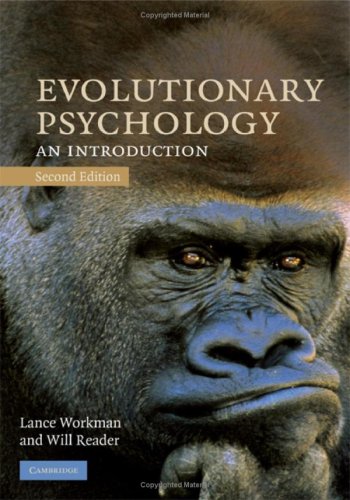
11. Evolutionary Psychology: An Introduction
by Lance Workman, Will Reader
Paperback: 428 Pages (2004-06-21)
list price: US$46.00 -- used & new: US$41.55
(price subject to change: see help)
Asin: 0521805325
Canada | United Kingdom | Germany | France | Japan
Editorial Review

Book Description
This textbook offers a comprehensive introduction to the increasingly important and fascinating science of evolutionary psychology, which attempts to understand the mind and behavior in terms of the evolutionary pressures that shaped them. The text carefully integrates evolutionary ideas with those of mainstream academic psychology to complement traditional courses and offers abundant critical evaluation. Topics covered include cognitive and social development, language, emotion, and evolutionary psychopathology. Each chapter features:

  • Preview and list of key terms
  • Text boxes containing interesting supplementary material
  • Summary of key ideas
  • Guide to further reading.Download Description
    The growth of evolutionary psychology is arguably one of the most important developments in psychology, and science in general, over the last twenty years. Drawing on theoretical and empirical research from a range of fields including behavioral biology, psychology, sociology and anthropology, evolutionary approaches to human behavior seek to understand the complex interactions of brain, behaviour and environment. This textbook provides a comprehensive introduction to the basic ideas of evolutionary psychology in a clear and accessible way, starting with a general introduction to the main theoretical issues and research and then looking at how these are applied to various areas of psychology such as cognitive psychology and developmental psychology and topics such as emotion and language. It will be an invaluable resource for student and researcher alike seeking a clear and reliable guide through this complex and controversial field. ... Read more

  • 12. Origins of Human Nature: Evolutionary Developmental Psychology
    by David F. Bjorklund, Anthony D. Pellegrini
    Hardcover: 444 Pages (2001-12-15)
    list price: US$39.95 -- used & new: US$23.97
    (price subject to change: see help)
    Asin: 1557988781
    Average Customer Review: 4.0 out of 5 stars
    Canada | United Kingdom | Germany | France | Japan
    Editorial Review

    Book Description
    Adult individuals in all societies have long understood the need forgenerativity-concern for and commitment to caring for the next generation. The need for generative action is particularly critical now given thesocietal and global threats that we face in the first years of thetwenty-first century. Building upon Erikson's groundbreaking developmental model that first propelled the construct of "generativity versusstagnation" into mainstream consciousness, The Generative Society examines this critical stage of development that occurs during the "long middle" of adulthood, as it exists on societal and cultural levels. This volume'sdiverse group of eminent scholars explores the complex relationshipsbetween generativity and various societies' political, economic,religious, educational, and cultural arenas. Integrating empiricalresearch, scientific and cultural theory, and their own informedobservations and speculations regarding generativity in society, thevolume that results is a rich and stimulating exchange about themultifaceted role of generativity in human life and in society. ... Read more

    Customer Reviews (1)

    4-0 out of 5 stars A Welcome Addition to the Literature
    This book, published under the imprimatur of the American Psychological Association, is meant to be a textbook on human developmental psychology, which is the study of individual development from embryo to adulthood.The idea that there is an intimate link between individual development and species evolution was publicized more than a century ago by Haeckel, who coined the famous phrase "Ontogeny [individual development] recapitulates phylogeny [species development]." However attractive Haeckel's idea, it prove to be far too simple (see the excellent book "Ontogeny and Phylogeny" by S. J. Gould). For most of the 20th Century, developmental psychologists dealing with humans virtually ignored the evolutionary literature. This book is a largely successful attempt to rectify this curious situation.

    Developmental psychology explains how nature (genes) and nurture (environment) interact in determining individual intelligence, personality, and social behavior. The authors take a thoroughly "developmental systems perspective," in which there is a "bidirectional interaction at all levels of organization" (p. 68) between genes and environment.Since the interaction between genes and culture is in fact highly nonlinear, this perspective is correct, as long as it is not take to the point where we deny the usefulness of heredity estimates (which the authors do not do, though there is virtually no behavioral genetics in the book).

    The authors expound basic evolutionary psychology, they compare human and animal behavior, and generally suffuse their exposition with an evolutionary dimension. But what exactly is the connection between ontogeny and phylogeny? We are told that much of human behavior is adaptive (e.g. morning sickness in pregnancy), but it is unclear how this affects developmental theory, for which the important question is "is morning sickness good or bad for mother and/or child?" In several cases, they show how developmental psychology can improve evolutionary thinking (e.g., understanding the pace ofindividual cognitive development, or the relative importance of domain specific vs. domain general cognitive capacities). But the other direction is only weakly represented in the book.

    The most important principle of evolutionary theory that applies to developmental psychology, according to the authors, is that infants are not tabula rasa, but rather are predisposed to learn and develop in certain directions (e. g., the acquisition of language, recognition of faces, willingness to share, potential for anger and aggression). They apply this nicely to cognitive development, but fall flat when discussion social development and interaction.

    This is because the evolutionary psychology position on social development is in serious need of updating. The book presents the standard ev psych view that cooperation, altruism, and aggression can be understood in terms of self-interest, inclusive fitness (Hamilton), and reciprocal altruism (Trivers, but attributed to Hamilton and Axelrod in the book). The development here is very slim, but the position itself is simply wrong.

    As has been repeatedly shown (see, e.g., the new Russell Sage book on "Commitment," edited by Randy Nesse, or Sam Bowles and my News and Views article and the Fehr-Gächter paper in Nature, vol. 415, January 10,2002), human behavior is much more broadly and deeply social than traditional ev psych understands. Human development includes not only cognition, cheater detection, and the like, but also guilt, shame, empathy, sympathy, a taste for vengeance and retaliation, the capacity to be socialized into prosocial values, and even more. These are basic developmental themes that are missing from this book, though they are known to social psychologists and are an active subject of research.

    Of course, I should not fault the authors for not being on the vanguard of evolutionary developmental psychology, since it's hard to get teacher to use a book that has material that they didn't learn in graduate school. But the challenge for the (near) future is to correct this imbalance in evolutionary psychology. ... Read more


    13. Neo-liberal Genetics: The Myths and Moral Tales of Evolutionary Psychology
    by Susan McKinnon
    Paperback: 184 Pages (2006-02-01)
    list price: US$12.95 -- used & new: US$6.54
    (price subject to change: see help)
    Asin: 0976147521
    Average Customer Review: 5.0 out of 5 stars
    Canada | United Kingdom | Germany | France | Japan
    Editorial Review

    Book Description

    Evolutionary psychology claims to be the authoritative science of "human nature." Its chief architects, including Stephen Pinker and David Buss, have managed to reach well beyond the ivory tower to win large audiences and influence public discourse. But do the answers that evolutionary psychologists provide about language, sex, and social relations add up? Susan McKinnon thinks not.
    Far from being an account of evolution and social relations that has historical and cross-cultural validity, evolutionary psychology is a stunning example of a "science" that twists evolutionary genetics into a myth of human origins. As McKinnon shows, that myth is shaped by neo-liberal economic values and relies on ethnocentric understandings of sex, gender, kinship, and social relations. She also explores the implications for public policy of the moral tales that are told by evolutionary psychologists in the guise of "scientific" inquiry.
    Drawing widely from the anthropological record, Neo-liberal Genetics offers a sustained and accessible critique of the myths of human nature fabricated by evolutionary psychologists.
    ... Read more

    Customer Reviews (1)

    5-0 out of 5 stars fantastic, honest and sourced
    A short, devastating book that takes on the "conventional wisdom" of evolutionary psychology as presented by Steven Pinker and his acolytes (as well as, increasingly, in the popular press and among the generally educated.) McKinnon is a fantastic writer, very clear, very "honest" (despite being in a discipline often considered part of the humanities, she has a scientist's respect for facts -- and makes a convincing case that, for all their pretentions to scientific rigor, the evolutionary psychologists often don't.)

    If you've ever made an argument based on evolutionary psychology, or have found yourself intrigued by the claims made by the field to explain cultural phenomena (gender relations, religious traditions, economic behavior, etc.), you really owe it to yourself to read McKinnon's nuanced and currently unfashionable argument for the autonomy of culture over biology.

    I can't recommend this book enough. ... Read more


    14. Evolutionary Cognitive Neuroscience
    Hardcover: 620 Pages (2006-11-01)
    list price: US$65.00 -- used & new: US$40.98
    (price subject to change: see help)
    Asin: 0262162415
    Average Customer Review: 4.0 out of 5 stars
    Canada | United Kingdom | Germany | France | Japan
    Editorial Review

    Book Description
    Since Darwin we have known that evolution has shaped all organisms and that biological organs--including the brain and the highly crafted animal nervous system--are subject to the pressures of natural and sexual selection. It is only relatively recently, however, that the cognitive neurosciences have begun to apply evolutionary theory and methods to the study of brain and behavior. This landmark reference documents and defines the emerging field of evolutionary cognitive neuroscience. Chapters by leading researchers demonstrate the power of the evolutionary perspective to yield new data, theory, and insights on the evolution and functional modularity of the brain.

    Evolutionary cognitive neuroscience covers all areas of cognitive neuroscience, from nonhuman brain-behavior relationships to human cognition and consciousness, and each section of Evolutionary Cognitive Neuroscience addresses a different adaptive problem. After an introductory section that outlines the basic tenets of both theory and methodology of an evolutionarily informed cognitive neuroscience, the book treats neuroanatomy from ontogenetic and phylogenetic perspectives and explores reproduction and kin recognition, spatial cognition and language, and self-awareness and social cognition. Notable findings include a theory to explain the extended ontogenetic and brain development periods of big-brained organisms, fMRI research on the neural correlates of romantic attraction, an evolutionary view of sex differences in spatial cognition, a theory of language evolution that draws on recent research on mirror neurons, and evidence for a rudimentary theory of mind in nonhuman primates. A final section discusses the ethical implications of evolutionary cognitive neuroscience and the future of the field.

    Contributors:
    C. Davison Ankney, Simon Baron-Cohen, S. Marc Breedlove, William Christiana, Michael Corballis, Robin I. M. Dunbar, Russell Fernald, Helen Fisher, Jonathan Flombaum, Farah Focquaert, Steven J. C. Gaulin, Aaron Goetz, Kevin Guise, Ruben C. Gur, William D. Hopkins, Farzin Irani, Julian Paul Keenan, Michael Kimberly, Stephen Kosslyn, Sarah L. Levin, Lori Marino, David Newlin, Ivan S. Panyavin, Shilpa Patel, Webb Phillips, Steven M. Platek, David Andrew Puts, Katie Rodak, J. Philippe Rushton, Laurie Santos, Todd K. Shackelford, Kyra Singh, Sean T. Stevens, Valerie Stone, Jaime W. Thomson, Gina Volshteyn, Paul Root Wolpe ... Read more

    Customer Reviews (1)

    4-0 out of 5 stars diverse topics for an exciting science
    It is an exciting time in neuroscience. As the realisation dawned in recent years that evolutionary ideas can be fruitfully applied to the brains of various species. Along with the experimental tools that enable the testing of useful models of the brain.

    The book's diversity of papers reflects accurately the intellectual ferment. One example might be the rise of evolutionary game theory. Standard game theory arose with von Neumman and others, and was originally only applied to human subjects. But a chapter on SPFit delves into how players evolve in geological time, optimising their reproductive odds. Thus the promise is to see how behaviour can be explained in the context of playing a long game.

    Another very topical issue in the book is mirror neurons. Covered all too briefly here, given the amount of research that is ongoing. If there will ever be another edition of this book, perhaps more space could be allocated to it? ... Read more


    15. MORAL ANIMAL, THE: Why We Are The Way We Are:The New Science of Evolutionary
    by Robert Wright
     Hardcover: 467 Pages (1994-08-23)
    list price: US$27.50 -- used & new: US$6.00
    (price subject to change: see help)
    Asin: 0679407731
    Average Customer Review: 5.0 out of 5 stars
    Canada | United Kingdom | Germany | France | Japan

    Customer Reviews (5)

    5-0 out of 5 stars Dr. J
    Mr. Wright's book should be considered required reading for anyone seeking insight into human (and animal) behavior. The Moral Animal begins with the increasingly popular theory that human evolution and behavior can be explained at the quantum level as well as, if not better than the macro-definable explanations with which we are all familiar. Additionally, the author provides excellent argument to support assertions that human behavior can be explained by evolutionary (or rather, co-evolutionary) forces.

    The neo-Darwinian model presented accounts for differences in general gender behavior and provides a format for policies that could work to solve some of our social problems. The explanations of "sex" wars, and why males and femaleshave different life strategies are clear and strongly argued. The book offers an understandable explanation of where we came from, an insight on where we might be heading and reasons for why we are (historically) where we are now.

    5-0 out of 5 stars Great book... a must read for human nature.
    Always tell a good book by the unavailability.Find it and keep it. Anthropology at its best... plus a little philosophy.Full of the sexualanimal and his ultimate motivations...he understands Darwin and the humanexperience...few books do.

    5-0 out of 5 stars The Big Broom
    Having a real weakness for broad inter-disciplinary sweeps that leave a lot of conventional thinking whimpering in the dust (as one finds in the work of Camille Paglia and John Ralston Saul), I enjoyed this book thoroughly.I must admit that my ignorance of a lot of the scientific material dealt with in this book leaves me vulnerable to an ornate argument.Still, Wright's pitch is aimed at the non-expert and I never felt in over my head.His back and forth between thesis and Darwin's life functions both to iluminate his argument and provide a breather between bouts of research and speculation.Stylistically, Wright is diligent and at times wry.I was initially attracted to the book by a blurb by Steven Pinker author of The Language Instinct. Philosophically, one can see their attraction but stylistically, Wright lacks Pinker's glee.A bit of term-paper drudgery seeps through the prose.As for the argument itself, Wright is General Grant, winning by dogged force and determination.At times, he squeezes a lot of juice from simple primate studies, but he has the wisdom to label specualtion as such.The seemingly circular logic of evolutionary psychology in which everything is interpreted through that paradigm and what doesn't fitawaits future clarification smells a bit of dogma and faith, but, again, Wright senses the objection and makes a good faith effort to explain it away, appealing to the difficulties inherent in asking for an evolutionary hypothesis capable of interpreting every bit of anthropoligical, archeological and genetic evidence.In any case, much of his argument seems quite availbale for disproof. Finally, Wright should be congratulated for going the whole route.Clearly, this new paradigm has profound political and philosophical implications which are not shied away from.Wright is not a philosopher but he lives up to the obligations of his argument and provides a utilitarian framework for us to ponder ethics for the newly self-aware species.

    5-0 out of 5 stars Change your view
    Wright has done an exceptional job surveying the science, and weaving into it a fascinating biographical sketch of Darwin himself. If you want to begin to get a grasp on why men and women are truly different, and in what ways, you have to start from the biology. Though, of course, you don't have to end there. Wright is a weaker philosopher than he is a reporter; don't let it stop you from reading this astounding book and doing some thinking for yourself.

    5-0 out of 5 stars A Ground-Breaking Book on Human Morality & Evolution
    Wright argues that human nature is carefully adapted towards maximizing the success and proliferation of our progeny. The moral and sexual behaviors of humans, he notes, can be explained by considering how these adaptations might have improved the success of our ancestors. He shows us how much of what we call humanity -- our rationality, our morality and our seeming transcendence above animals -- is the manifestation of the very "animal" motives which we criticize as selfish and inhumane. The true irony, as the title of the book suggests, is that we are oblivious to our own baser motives. ... Read more


    16. The Adapted Mind: Evolutionary Psychology and the Generation of Culture
    Paperback: 688 Pages (1995-10-19)
    list price: US$49.95 -- used & new: US$45.06
    (price subject to change: see help)
    Asin: 0195101073
    Average Customer Review: 4.5 out of 5 stars
    Canada | United Kingdom | Germany | France | Japan
    Editorial Review

    Book Description
    Although researchers have long been aware that the species-typical architecture of the human mind is the product of our evolutionary history, it has only been in the last three decades that advances in such fields as evolutionary biology, cognitive psychology, and paleoanthropology have made the fact of our evolution illuminating. Converging findings from a variety of disciplines are leading to the emergence of a fundamentally new view of the human mind, and with it a new framework for the behavioral and social sciences.First, with the advent of the cognitive revolution, human nature can finally be defined precisely as the set of universal, species-typical information-processing programs that operate beneath the surface of expressed cultural variability. Second, this collection of cognitive programs evolved in the Pleistocene to solve the adaptive problems regularly faced by our hunter-gatherer ancestors--problems such as mate selection, language acquisition, cooperation, and sexual infidelity.Consequently, the traditional view of the mind as a general-purpose computer, tabula rasa, or passive recipient of culture is being replaced by the view that the mind resembles an intricate network of functionally specialized computers, each of which imposes contentful structure on human mental organization and culture.The Adapted Mind explores this new approach--evolutionary psychology--and its implications for a new view of culture. ... Read more

    Customer Reviews (11)

    4-0 out of 5 stars An important introduction to evolutionary psychology
    This is one of the earliest texts in the field called Evolutionary Psychology (EP).This specialization evolved from what Edward O. Wilson termed "Sociobiology" in the mid-1970s.EP applies the logic of sociobiology to human psychology.That is, how has natural selection shaped how humans think and make decisions?As editors Leda Cosmides, John Tooby, and Jerome Barkow put it (page 7): "Evolutionary psychology is psychology informed by the fact that the inherited architecture of the human mind is the product of the evolutionary process."The book, in their conceptualization, has two goals (page 3): "The first is to introduce the newly crystallizing field of evolutionary psychology to a wider audience. . .The second goal of this volume is to clarify how this new field. . .supplies the necessary connection between evolutionary biology and the complex, irreducible social and cultural phenomena studied by anthropologists, economists, and historians."

    They locate their perspective by juxtaposing evolutionary psychology with what the term "the standard social scientific model."The chapter by Tooby and Cosmides (Chapter 1) outlines this model in much more detail.
    As we know, the SSSM insists that, for all practical purposes, human nature - and thus human behavior - is shaped by culture. Put less laconically, the SSSM rests on three cardinal tenets - two of them explicit, the third usually implicit. These are: (1) that humans have no innate behavioral tendencies; (2) that, consequently, human nature is solely the product of learning and socialization (in short, of "nurture"); from which it follows (3) that human nature (and consequently human behavior) is essentially quite malleable (my rendering of the perspective). Of course, evolutionary psychology moves in a different direction, emphasizing the effects of the evolutionary process on human behavior and thinking.

    This edited volume includes a series of chapters exploring different aspects of human behavior.The section titles illustrate the variety of topics covered: Section II focuses on cooperation and social exchange, noting that these have evolutionary bases; III examines the psychology of mating and sex; IV looks at parental care and children; V considers perception and language as evolutionary adaptations; VI takes a look at environmental aesthetics (such as evolved responses to landscapes); VII has only one chapter--looking at the evolution of psychodynamic mechanisms.The volume closes with an essay by Jerome Barkow.

    Not all readers will be convinced by the arguments raised in this volume.However, it serves an important purpose by unapologetically claiming that we cannot understand much of human psychology (and other social behaviors) without considering human evolution. Indeed, it is hard to complain about this overarching perspective.However, readers may well dispute specific applications of the perspective. In the end, this is a rich volume and will prod the reader to think differently about "human nature."

    5-0 out of 5 stars Evolution from Several Vantages
    This book is a massive tome on evolutionary factors that influence human behavior. It begins with clarification of the kind of Darwinism the authors appeal to, so that everyone is on the same page, and considers the general psychological foundations of Darwinism on culture.

    The book then moves on to discuss cognitive adaptations for social exchange, citing human and non-human examples. The book also includes the evolutionary psychology of mating and sex, examining preferences for mate selection and competition, mechanisms for sexual attraction, and the evolutionary use of women as chattel (something any Old Testament and Quran reader can relate to).

    A significant portion of the book is devoted to parental care and children, examining how pregnancy sickness, patterns between twins, maternal-infant vocalizations, and child play in the form of chasing each other are all evolutionary mechanisms that continue to be featured.

    Steven Pinker adds an essay on natural language and natural selection; Roger Shepard contributes an essay on the man's perceptual adaptation to the natural world; both of which demonstrate the interconnectedness between perception, language, and adaptation.

    The book concludes with some of its most esoteric issues: environmental aesthetics, intrapsychic processes, and the theoretical implications of culural phenomena.

    The whole book, while not necessarily over-academic, is ultimately dense reading. Most of the concepts and conceptualizations require mental work to apprehend, while the statistics and empirical evidence are clearly described. While drawing from many disparate areas of evolutionary biology, all the essays find their ultimate significance in how the mind, in particular, has adapted to environmental forces. A demanding, but facinating, read.

    5-0 out of 5 stars A fresh start
    The argument - and it is an argument - is that human behaviour is strongly influenced by evolved psychological mechanisms, and that those mechanisms are numerous and specific, rather than just one general learning mechanism- ie a human baby comes with an installed operating system and quite a lotof free software, and is definitely not a blank slate. What makes theargument persuasive is the attempt to import the scientific method -hypotheses falsifiable by experiment - to an area previously characterisedby mumbojumbo and pseudoscience. Not all the attempts are successful, butas they say it's a start. 100 years late (for psychology) it is saying (a)the brain is an organ so it must have evolved too - let's think about it ina Darwinian fashion and (b) let's try to make pyschology a science not ahumanity. It is potentially very offensive to existing psychologypractitioners, because it implies that most existing psychologists arewitch doctors. It is also very offensive to large bodies of public policywonks (let's not beat about the bush here - in American speak this book isvery offensive to liberal Democrats), essentially saying that most of the"science" behind social and educational policy has no foundation.And because it is polemical - it is shooting at a century of vestedinterests after all - it overstates its case in some places, although thewriters are usually very careful to stress that while behaviouralprogrammes may be partly pre installed, behaviour itself is nothardwired.

    It was the start for me of looking at the way we think in acompletely different light and led me to later, more detailed, morebalanced statements of the case.

    It is pretty hard going in places,particularly as they do rather tiresomely go out of their way trying toavoid giving direct offence, but they're not fooling anyone (not mss67 fora start.)But in reality they are yelling that the Emperor("learning/nurture is all") has no clothes. For all its faultsit's the book that has most influenced my thinking in the last 10 years,and definitely a five star performance.

    5-0 out of 5 stars Great work
    Finally, a branch of psychology which does not use the standard psycho-babble which distorted our views of human-kind in the 20th century.

    4-0 out of 5 stars More Tooby & Cosmides, please
    I was prompted to respond by the review from the individual in Virginia.He or she didn't like the Tooby & Cosmides chapters whereas I feel they were by far the most interesting chapters in the book. Reading their longessay (Chapter 2)is one of the best favors psychologists can do forthemselves.Being a psychology major, I know that I was often confusedabout psychology before reading it, but their combination of cognitivepsychology with evolutionary biology finally gave me an idea of wherepsychology should be going in the future.If only social psychologists anddomain-general cognitive psychologists would read it, their research andapproach might not be so sterile and boring.My only regret is that thebook contained some chapters that were not as strong as the early chapters,but the importance of the good chapters greatly outweighs any weaknesses inthe other ones. ... Read more


    17. The Moral Animal: Why We Are, the Way We Are: The New Science of Evolutionary Psychology
    by Robert Wright
    Paperback: 496 Pages (1995-08-29)
    list price: US$15.95 -- used & new: US$8.92
    (price subject to change: see help)
    Asin: 0679763996
    Average Customer Review: 4.0 out of 5 stars
    Canada | United Kingdom | Germany | France | Japan
    Editorial Review

    Amazon.com
    An accessible introduction to the science of evolutionary psychology and how it explains many aspects of human nature. Unlike many books on the topic,which focus on abstractions like kin selection, this book focuses on Darwinian explanations of why we are the way we are--emotionally and morally. Wright deals particularly well with explaining the reasons for the stereotypical dynamics of the three big "S's:" sex, siblings, and society.Book Description
    Are men literally born to cheat? Does monogamy actually serve women's interests? These are among the questions that have made The Moral Animal one of the most provocative science books in recent years. Wright unveils the genetic strategies behind everything from our sexual preferences to our office politics--as well as their implications for our moral codes and public policies. Illustrations. ... Read more

    Customer Reviews (116)

    4-0 out of 5 stars Not Quite Moral
    Robin Wright is a prolific writer in the field of evolutionary psychology and a staunch supporter of New Darwinianism.In his ground breaking book, "The Moral Animal", Wright sheds light on various innate human behaviors through the prism of natural selection and cognitive psychology.He discusses origins of many peculiar tendencies such as advantages of low self esteem, self deception, the nature of monogamy in men and women, office politics, kin selection etc., all deeply rooted at the subconscious level.

    In exploring morality, Wright expresses his cynical view that the road to success is paved with self serving intentions.Success is defined as passing on one's genes as far and wide into the future as possible.He postulates any tendency to gain an advantage in this endeavor, however selfish, is favored by natural selection.The goal of the supposed "moral animal" is to act as selfishly as possible while simultaneously appearing selfless to his or her peers.

    In the later chapters, Wright temporarily abandons his cynical view of morality and introduces the reader to his idea of non-zero-sumness and utilitarianism:Small sacrifices on behalf of individuals resulting in larger gains for others will leave everyone better off, including the individual, and therein lies the compelling reason for moral behavior.

    While Darwin's natural selection has remained an unproven theory, albeit with increasingly strong evidence pointing to its validity, Wright discloses in the appendix his bias of using natural selection to explain all human behavior, including everything that has been explained so far and "the rest".He speaks of a "faith" in the theory, which is a recipe for overreaching observations.

    Despite Wright's own bias in using Darwin's life and theories constantly to explain anything and everything, his arguments are expressed in a cogent and plausible manner, and will give any reader plenty of ideas to ponder.

    5-0 out of 5 stars A self-help book
    If you are a modern woman, educated with all the equalitarism lectures, professional, qualified, and have gone through a life very much like that of the girls of "Sex and the City", put your Cosmo aside and read this book. It may shock you, it may even infuriate you but it may help you to understand why certain past relationships did not work, what people thinks of you and it will provide you with a general dynamucs of human relations.
    It's not like you are going to accept that every person in the world follows the behavior patterns exposed here but it helps you to comprehend why some people do (even though they preached and believed on exactly the opposite attitudes) and, moreover, once you accept these patterns underlie most human motivations you can use this knowledge for your own benefit... I got a ring on my finger out of it... as well as great success as a HR manager...
    And the gossip about Darwin's life is quite interesting too...

    4-0 out of 5 stars A very interesting point of view
    A series of hypothesis and theories, always supported by a scientific presentation of evidence found in other works on the relevant subjects. A very interesting insight in the human nature, in the relationship between men and women, with special regard to the driving forces which influence the human behaviour (sexual desire, greed, hunt for power and wealth etc.).

    5-0 out of 5 stars Great Style and Openness
    Here is a lively discussion of evolutionary psychology and what it means for our views on human morality. Robert Wright has a very good writing style and a way of explaining EP that aids even those of us who have already read widely on the subject. Here he also uses Darwin's own life and experiences to illustrate the subject.

    The first section is about the sexes which, contrary to what some people might think, does not present men with anything to be proud of. It does show us why both sexes are a disappointment to each other. Wright overemphasizes female 'monogamy', as many writers do, when promiscuity should really be presented as more relative than the good for men/bad for women dichotomy. There is still much to be debated in this area but Wright does try to cover the subject as broadly as he can. I certainly don't see him as deliberately shying away from any aspect that may be relevant to the discussion. We just need much more input from female evolutionary psychologists to get the bigger picture.

    The second section covers sociality - kin selection, reciprocal altruism - and the evolution of emotions, such asgratitude, obligation, guilt, frienship, that aid or aided us in our inclusive fitness maximization behavior. Section three is about hierarchy and status and how we 'deceive ourselves in order to deceive others better'. Wright puts together an interesting whole which meshes genetic and environmental determinisms with developmental and behavioral plasticity and flexibility. Not forgetting how this evolved in an environment we no longer live in and is therefore always potentially maladaptive. Perhaps he only just manages to get away with it!

    The final section is a focus on morality. Wright reveals himself, and Darwin, as utilitarians. This obviously will sit best with those readers who are also utilitarians or at least, like myself, have a soft spot forJ SMill and Utilitarianism. Wright is not afraid to discuss how problematic morality can be for EP. 'The situation is, in short, a mess' he admits at one point. But most evolutionary psychologists agree with Wright that out evolved instincts for survival as social beings gives most of us a sense of how to behave