e99 Online Shopping Mall

Geometry.Net - the online learning center Help  
Home  - Psychology - Psychologists (Books)

  Back | 21-40 of 100 | Next 20

click price to see details     click image to enlarge     click link to go to the store

$8.99
21. "Why Are All The Black Kids Sitting
 
22. A psychologist looks at life
$64.90
23. The Psychologist as Expert Witness
$22.17
24. Howard Gardner Under Fire:The
$26.95
25. Life as a Psychologist: Career
$15.00
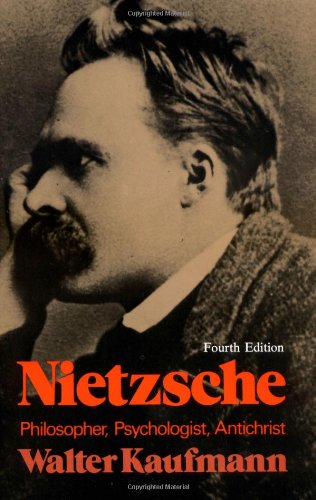
26. Nietzsche: Philosopher, Psychologist,
$38.76
27. Statistics for Psychologists:
$13.25
28. A Geography of Time: The Temporal
$20.95
29. Shrunken Heads (The Insane, the
$30.00
30. SPSS for Psychologists: A Guide
$9.07
31. The Unquiet Dead: A Psychologist
$63.18
32. At Risk Youth: A Comprehensive
$73.66
33. Ethics for Psychologists: A Handbook
34. Pooh and the Psychologists
$29.95
35. Tech Psychologist's Guide to Technology
$30.00
36. Six Community Psychologists Tell
$24.99
37. Visual Basic 2005 for Psychologists
$20.47
38. How to Do Research: A Psychologist's
39. Psychologist's Book Of Self-tests:
$3.93
40. Dilemma of Psychology: A Psychologist

21. "Why Are All The Black Kids Sitting Together in the Cafeteria?": A Psychologist Explains the Development of Racial Identity
by Beverly Daniel Tatum
Paperback: 320 Pages (2003-01-07)
list price: US$15.95 -- used & new: US$8.99
(price subject to change: see help)
Asin: 0465083617
Average Customer Review: 3.5 out of 5 stars
Canada | United Kingdom | Germany | France | Japan
Editorial Review

Amazon.com
Anyone who's been to a high school or college has noted how students of the same race seem to stick together. Beverly Daniel Tatum has noticed it too, and she doesn't think it's so bad. As she explains in this provocative, though not-altogether-convincing book, these students are in the process of establishing and affirming their racial identity. As Tatum sees it, blacks must secure a racial identity free of negative stereotypes. The challenge to whites, on which she expounds, is to give up the privilege that their skin color affords and to work actively to combat injustice in society. ... Read more

Customer Reviews (77)

5-0 out of 5 stars A truly amazing book
Mrs. Tatum's book is a demonstration of great craftmanship in the form of literature. This book will open your mind to a new understanding of race, racism, prejudice, and priviledge. If you are thinking about whether to buy this book or not go ahead and buy it, you will not regret it. "Why Are All The Black Kids Sitting Together In The Cafeteria" is a masterpiece of a book.

5-0 out of 5 stars Amazing book
I love the way this book is written.It walks the reader through some very interesting and complicated social issues that are crucial.I recommend that ALL high school teachers read this book.

3-0 out of 5 stars Annoying at times
Dr. Tatum presents a book that is very easy to read, quite understandable, and she makes her points clear.However, she is so convinced that her point is the one and only correct point, that she leaves little room for disagreement.Her arguments tend to be rather limited.
Overall though, it's a good attempt to raise consciousness on the subject of racism.

5-0 out of 5 stars Read it now.If you've read it, read it again.
I swear, this woman must have visited my High School cafeteria, because everything she writes hits home.I haven't read this in a few years, but it still rings home to me.Whenever I see it, I give the same reaction that I would get when other people who read it saw me with the book- "Oh, you're reading that!"It's not just about the black kids sitting into the cafeteria, it goes well beyond that.The stories shared are excellent.I recommend this book to everyone and anyone.

3-0 out of 5 stars Good insights, but a little histrionic
I am really glad I read this book, because it gave me a different perspective on some things. However, I think she was very biased: she never really considered any alternate viewpoints besides her own, and never gave a White viewpoint on racism any credit whatsoever (the most she did was agree that here is a problem). Some of the racist remarks she quoted I thought had more to do with cultural differences than racism, but I know that those assumptions are still annoying as I am part of a group that has a subculture and dislike it when people assume that I am part of that subculture as well.Some of those remarks, though, were just completely ridiculous as she went so far to complain about being washed "whiter than snow" in church. She completely and totally missed the point of that phrase which comes from the verse "Though your sins are like scarlet, they shall be washed whiter than snow." NOTHING to do with race whatsoever. It is a METAPHOR. Examples such as these are why I put "histrionic" in my title.

There are also other issues I wish she would have addressed/covered more thoroughly (ie, over-education about prejudice, reverse prejudice, perceived prejudice, etc). I felt like she was saying "WE are always right. White people are always wrong." And yes, I will agree that we are mostly in the wrong, but any psychologist worth anything knows it takes more than 1 to maintain a system. ie, Who are those actors in the media perpetuating those stereotypes? Not White people in makeup! So MAYBE it's not JUST evil White people forcing these stereotypes on everyone. I just wish she would have been a little more BALANCED.

Most of the studies she quoted were at least 10 years old. I checked one that I thought was very interesting, only to discover it was 25 years old. In the topic of racism, you have to stay up to date as things change so rapidly, hence the three stars. At times, I wanted to quit as it was occasionally tedious, querelous, and inconsequential. As I said, though, I am glad I read it as I did gain new insight. I REALLY liked how she handled the topic of racism with her kids, and I would like to do the same. She made some EXCELLENT points and had some good ideas. It is very thought provoking, even if you ultimately wind up not agreeing with her 100%. Surely, though, there must be a better book out there on racism. If not, someone should write one as this book is terrible for educating Whites on the problems of being Black (or another race). Of course, I am sure I will now be labeled as a "racist" for not agreeing with a PC book. Oh, wait, I am White, therefore, I am ALREADY a racist. Why bother trying? If you are White, according to Tatum, you can never win no matter what you do or how hard you try to stop the cycle. ... Read more


22. A psychologist looks at life
by Gary R Collins
 Unknown Binding: 167 Pages (1971)

Isbn: 0878010114
Canada | United Kingdom | Germany | France | Japan

23. The Psychologist as Expert Witness
by Theodore H. Blau
Paperback: 608 Pages (2001-10-05)
list price: US$75.00 -- used & new: US$64.90
(price subject to change: see help)
Asin: 0471113662
Average Customer Review: 4.0 out of 5 stars
Canada | United Kingdom | Germany | France | Japan
Editorial Review

Book Description
The leading resource on forensic practice

The Psychologist as Expert Witness, Second Edition introduces practitioners to the law and the role of psychologists in the courtroom, covering all facets of forensic practice-one of the most rapidly growing areas of professional specialization. This comprehensive primer prepares the psychologist to function credibly as an expert witness, identifying the current and emerging areas of application of psychology to the law.

Revealing psychology's enormous potential to promote human welfare through the American system of jurisprudence, former American Psychological Association president Theodore Blau:

  • Outlines the ways psychology has come into contact with the court via the areas of neuropsychology, clinical psychology, psychotherapy, mental disability, psychological profiles, various marital and family issues, and others
  • Offers a wide range of situations in which psychologists have appeared as expert witnesses
  • Includes step-by-step instructions on examining competency to stand trial and making custody recommendations
  • Examines cases where psychologists have done well-and not so well-in court
  • Discusses malingering, deceit, and exaggeration
  • Presents guidelines for testifying in marital, civil, and criminal disputes
  • Emphasizes standards for practice and practical training in providing testimony to the courts
... Read more

Customer Reviews (1)

4-0 out of 5 stars An improvement over the first edition
Dr. Blau has successfully put together much of what a beginning forensic psychologist, or a clinical psychologist drawn serendipitously into the legal arena should know. ... Read more


24. Howard Gardner Under Fire:The Rebel Psychologist Faces His Critics
Paperback: 476 Pages (2006-11-29)
list price: US$36.95 -- used & new: US$22.17
(price subject to change: see help)
Asin: 0812696042
Average Customer Review: 5.0 out of 5 stars
Canada | United Kingdom | Germany | France | Japan
Editorial Review

Book Description

Thirteen critical essays challenge Howard Gardner's theories of multiple intelligences, ability traits, U-shaped curves in development, and other psychological concepts of spirituality, creativity, and leadership. All are answered by Gardner himself, and his pungent replies, coupled with the essays, create a provocative, no-holds-barred debate. Also included are an intellectual autobiography and bibliography.
... Read more

Customer Reviews (1)

5-0 out of 5 stars Much criticism - here refuted.
HOWARD GARDNER UNDER FIRE: THE REBEL PSYCHOLOGIST FACES HIS CRITICS is for any college-level reader in either psychology or education who already have some gasp of Gardner'' contributions in these areas. Before Gardner's FRAMES OF MIND there was little opposition to the paradigm of IQ: his works changed how intelligence was perceived and measured, and generated much criticism - here refuted. ... Read more


25. Life as a Psychologist: Career Choices and Insights
by Gerald D. Oster
Hardcover: 184 Pages (2006-05-30)
list price: US$34.95 -- used & new: US$26.95
(price subject to change: see help)
Asin: 0275985989
Canada | United Kingdom | Germany | France | Japan
Editorial Review

Book Description
Psychology is one of the most popular majors in college today, with the number of students enrolled in the discipline having surged some 200% in the last 10 years. In this book, dozens of outstanding practitioners and scholars explain how quickly the career opportunities for graduates with psychology degrees are growing--in talk therapy and clinical research, but also at agencies ranging from the CIA and Homeland Security to the Library of Congress and the Securities and Exchange Commission. In preparing his book, Oster contacted dozens of working psychologists and asked them what advice they would offer today's aspiring psychologists. Their responses provide a glimpse into a changing and ever-expanding field. Dozens of contributors recall their thoughts and actions as they plotted careers--or landed jobs by surprise. From one psychologist who put her research aside to become president of a university, to another who ended his work with children to become an author of psychological mystery books, the dozens of practitioners interviewed share the sometimes-humorous, often-difficult experiences and decisions they faced as they completed their college years and built successful careers. The book includes advice on making the "right" choice from among psychology careers in fields old and new, the ins and outs of graduate school, and the lessons seasoned professionals learned in their quests for meaningful careers. Web sites for more information on specialties are listed, as are suggested additional readings. The book also includes sections on making the most of undergraduate years, and on balancing the demands of career and family. ... Read more


26. Nietzsche: Philosopher, Psychologist, Antichrist
by Walter A. Kaufmann
Paperback: 532 Pages (1975-02-01)
list price: US$26.95 -- used & new: US$15.00
(price subject to change: see help)
Asin: 0691019835
Average Customer Review: 4.5 out of 5 stars
Canada | United Kingdom | Germany | France | Japan
Editorial Review

Book Description

This classic is the benchmark against which all modern books about Nietzsche are measured. When Walter Kaufmann wrote it in the immediate aftermath of World War II, most scholars outside Germany viewed Nietzsche as part madman, part proto-Nazi, and almost wholly unphilosophical. Kaufmann rehabilitated Nietzsche nearly single-handedly, presenting his works as one of the great achievements of Western philosophy.

Responding to the powerful myths and countermyths that had sprung up around Nietzsche, Kaufmann offered a patient, evenhanded account of his life and works, and of the uses and abuses to which subsequent generations had put his ideas. Without ignoring or downplaying the ugliness of many of Nietzsche's proclamations, he set them in the context of his work as a whole and of the counterexamples yielded by a responsible reading of his books. More positively, he presented Nietzsche's ideas about power as one of the great accomplishments of modern philosophy, arguing that his conception of the "will to power" was not a crude apology for ruthless self-assertion but must be linked to Nietzsche's equally profound ideas about sublimation. He also presented Nietzsche as a pioneer of modern psychology and argued that a key to understanding his overall philosophy is to see it as a reaction against Christianity.

Many scholars in the past half century have taken issue with some of Kaufmann's interpretations, but the book ranks as one of the most influential accounts ever written of any major Western thinker.

... Read more

Customer Reviews (28)

4-0 out of 5 stars The best overall Nietzsche primer in print.
This is the book that set the record straight with regard to the significance and coherence of Nietzsche's philosophy.Even though it was written over 50 years ago it still stands as probably the best thorough introduction to the man and his ideas.It manages to present those ideas in an uncomplicated way without watering them down or trivializing them.Its only flaw in my estimation is the perfectly heroic and coherent portrait of the philosopher that it paints.As great a thinker as Nietzsche was, his philosophy is not without contradictions and flaws.This book either resolves those contradictions too readily or overlooks them entirely.In that sense it is a charitable reading.But such a flaw can easily be forgiven Kaufmann's book for it was afterall the very first scholarly work to begin to do justice to Nietzsche.

5-0 out of 5 stars Great for Beginners.
While this book will not necessarily help you have a specific knowledge of how exactly Nietzsche's ideas relate to each other, it is a good book to use as a general overview of Nietzsche.It effectively teaches one how to read Nietzsche, not as if he is a nazi power hungry idiot, but as a dynamic thinker whom deserves a serious study.

This book is great for beginners, but outside that, it offers few insights to someone who has studied Nietzsche.This was the first interpretation of Nietzsche I read, after having read all his major works, and it did clear up some confusion, but it does not explain Nietzsche's concepts in a truly satisfactory way.I recommend that every person interested in studying Nietzsche reads this, but only as a foundation for further research, it is not an end but a beginning. Kaufmann made Nietzsche accessible to the English speaking world, he pretty much single handedly cleared the confusion of the relationship between Nietzsche and the Nazi's, but this book ultimately leaves much to be desired for the avid student of Nietzsche.

2-0 out of 5 stars religious need

Intelligent persons like Kauffman are close to accept Nietzsche's
believes, but the religious need, blind their minds.

5-0 out of 5 stars Great milk!
I read this book in an attempt to start my education of Nietzsche and his philosophy. I thought, at first glance, that it was a biography and a great place to start. I may have been wrong.
This text is not a biography. It is not light reading. In fact, it was written by one of the foremost scholars on the life and philosophy of the difficult Nietzsche and Kaufmann is highly intelligent himself. Though I was able to slowly read through this text, and it did offer absolutely invaluable insights, I would not suggest it for the passive or novice reader.
The reader does get a sense of what kind of a person Nietzsche was but this book is mainly concerned with his writings and ideas. Many of the works Nietzsche wrote are highlighted and presented in depth. However, far beyond this discussion of the writings of Nietzsche is a discussion of his ideas and their relevance. In this case, Kaufmann attempts something rarely indulged--a discussion of the ideas and thoughts of one of the most brilliant and revolutionary philosophers of recent times.

This is meat not milk.

5-0 out of 5 stars Kaufmann did a great job
Walter Kaufmann wrote some of the best available translations of Nietzsche's work, most of which can only be appreciated by understanding how bad past scholarship was on Nietzsche.However, the issue for a book should be how well it speaks to us now, rather than how well it would have spoken to us then.How well suited is Kaufmann for this task?

First, Kaufmann has translated many poems, philosophers, and Nietzsche's work into English.This means he has intimiate familiarity with Nietzsche's use of various Germanic words.

Second, he was interested in existential philosophy in general.Kaufmann was also fascinated by many of the same people that Nietzsche found inspirational, particularly Goethe.While it is possible to accurately "translate" a text and give a meaning based upon pure linguistics and reading the text, an author that is able to place things within their proper historical standpoint shows a great deal more to the audience whenever ideas can be placed within other contexts.

Third, Kaufmann was a fan of Nietzsche.This is something important, as many philosophers butcher other philosopher's work that they do not like.Take, for example, Karl Popper's very famous misinterpretations of Hegel in "Open Society and Its Enemies".

Fourth, though he is often harsh towards other interpretators and commentators, (most often justifiably so), he has no doctrinal axe to grind.The most serious accusation is that he white-washed Nietzsche too much.I think most readers acquainted with Nietzsche will see where Kaufmann did this.Given that he was trying to remove the taint of the Nazis from Nietzsche, I can understand his white-washing, even if it's now antiquated.

Fifth, he has no real religious axe to grind.He was one of the first scholars to take Nietzsche's critique of religion and Christianity seriously.I say this in case some poor reviewer like one who did this book says that his "Christian" background interferes with his scholarship.(To give you an idea of how little this person knows Kaufmann, he conveted to Judaism at 11 and was agnostic for his adult life.Does one count his pre-natal years as a Christian influence?)

Anyone even remotely familiar with "Faith of A Heretic", "Critique of Religion and Philosophy", or "Religion in Four Dimensions: Existential, Aesthetic, Historical, and Comparative" will note that Kaufmann wrote many detailed and extensive critiques on religion and particularly Christianity.(He did seem to retain some fondness for Judaism, but that has no bearing on his interpretation of Nietzsche.)

Overall, he probably was more familiar with Nietzsche than any other scholar, and his command of English is impeccable.Nietzsche was a fascinating philosopher, and if it hadn't been for Kaufmann's work on him, most of us would never have heard anything about him except that he was a proto-Nazi. ... Read more


27. Statistics for Psychologists: An Intermediate Course
by Brian S. Everitt
Hardcover: 384 Pages (2001-04-01)
list price: US$65.00 -- used & new: US$38.76
(price subject to change: see help)
Asin: 0805838368
Canada | United Kingdom | Germany | France | Japan
Editorial Review

Book Description

Built around a problem solving theme, this book extends the intermediate and advanced student's expertise to more challenging situations that involve applying statistical methods to real-world problems. Data relevant to these problems are collected and analyzed to provide useful answers.

Building on its central problem-solving theme, a large number of data sets arising from real problems are contained in the text and in the exercises provided at the end of each chapter. Answers, or hints to providing answers, are provided in an appendix.

Concentrating largely on the established SPSS and the newer S-Plus statistical packages, the author provides a short, end-of-chapter section entitled Computer Hints that helps the student undertake the analyses reported in the chapter using these statistical packages.
... Read more

28. A Geography of Time: The Temporal Misadventures of a Social Psychologist, or How Every Culture Keeps Time Just a Little Bit Differently
by Robert V. Levine
Paperback: 288 Pages (1998-09)
list price: US$18.50 -- used & new: US$13.25
(price subject to change: see help)
Asin: 0465026427
Average Customer Review: 4.0 out of 5 stars
Canada | United Kingdom | Germany | France | Japan
Editorial Review

Amazon.com
On time, out of time, time out, time is money--if our vernacular is any indication, the concept of time has certainly infiltrated American culture. Does everybody in the world share the same perception of time? In A Geography of Time, psychologist Robert Levine puts time to the test by sending teams of researchers all over the world to measure everything from the average walking speed to the time it takes to buy a stamp at the post office. Levine scatters his findings among engaging accounts of his own encounters with the various perceptions of time in different cultures. From the history of clocks to how people tell time today, A Geography of Time is jam-packed with "timely" information. ... Read more

Customer Reviews (12)

4-0 out of 5 stars Whose time are you taking, anyway?
Chances are good that you live a clock-time life, even if your inclination is toward event-time. You may be either mono- or polychronic, Type A or Type B, and within that frame either aggressive or passive. Whichever way you take your time, neat or on the rocks, time and your relationship to it are part of the unspoken language of any culture. Levine's GEOGRAPHY takes you around the world and into yourself exploring the meaning of time in our lives.With annecdotes and statistics, the author helps readers pry the back off of mental clocks to see the surprising works inside. A man arranges to meet his brother in Kabul, Afghanistan, and waits all week before turning to an embassy for help. When contact is finally made, it turns out that the two men had agreed on a week but not a year. To us that seems humorous, because our years seem to move on a timeline from past to future. To an Afghani the calendar is more viscerally cyclical, years repeat the circle and are not meaningfully different.Historically, why did duels, battles and treaty signings so often happen at dawn? Then, (as now in the few remaining clock-free cultures) dawn was one of three "times" in the daily flow that could be clearly specified, along with "nonetime" (noon) and sundown (clearly an inauspicious hour to take aim at one's opponent).I realized through this reading that I am inclined toward event-time polychronism. That is; I prefer to handle things as they occur instead of adhering to a pre-set schedule, and prefer to engage in several things at once instead of one thing at a time. Helpfully, Levine offers suggestions of ways to include your innate time sense in life within a society running in a different mode. Also included are rankings of a few dozen cities world-wide in order of pace: not surprisingly the dominant economic countries, where "time is money" tend to be the faster moving ones. On the other hand, Japan moves very fast but without most of the tension and stress found in the U.S. -- probably because theirs is a cooperative culture and ours competitve and individualistic. Equally illuminating are the differences dividing Japan and the U.S. from Europe. Europeans move quickly like we do, but take a whole lot more time off -- five weeks mandatory vacation in most countries, and a friend told me just yesterday that France is slated to move to a 35 hour work week. Time sense is important. Differences in personal timing rank second to monetary concerns as a cause of friction in relationships (!), and cultural variance can cripple communication for travelers and governments alike.An American keeping an appointment is shown into an office somewhere in Africa. Her host is engaged in conversation with another person and so she stands back, politely waiting her turn. Several minutes later the host turns on her and blasts her with castigation for failing to interrupt and greet him. Has she no manners? What civilized person could possibly enter a room and not immediately greet another? Her explanation/apology that she was following American rules of conduct is rejected. He insists she was intentionally being rude.You see? Timing is everything.

5-0 out of 5 stars interesting look into human perception and modern society
Levine reports beautifully on his studies of cultural perceptions of time in the modern world. He writes well and engagingly, presenting a very interesting and telling look into human perception of time in different cultures and its effect on mental and physical health, reasoning, and society. A must read.

2-0 out of 5 stars Being late is murder (literally) according to this guy!
I was enjoying this book right up until the author felt the need to make this nutty comparison to Brazilians always being late:

"There is a practice in many Arab cultures whereby a young woman who is caught being intimate with a man she is not married to is sometimes murdered by her brothers. To Westerners, this is uncivilized behavior. But the brother is committed to protecting the role of an important institution-the family-in the social pattern. The temporal behavior of important Brazilians must, similarly , be understood as part of a larger pattern."

Okay Mr. Levine. There are healthy doses of cultural relativism and and then there is, like, femicide.
I love it when academics make these kinds of statements, declaring, essentially, that their brainy assertions are more important than people's (and usually women's) lives.
I mean, he has to use the Arab males murdering female kin example because that really helps him make his point; lets him show how impartial he is.
But this reveals the flaw that runs through the entire book. Other than a brief chapter on how power is asserted through making others wait, Levine barely touches on the issue of power, and thus,he can conveniently ignore the female question in all of his observations of other cultures and use murdered women as a prop to support his anthropology-lite observations of tardy Brazilians.

Levine's assertions about Japan are so horrifically and stupidly misguided as to be completely irrelevant. It is obvious that he saw and understood little of the country from his descriptions of stays in nice hotels, visits to tea houses, hot springs, and nightly bottles of Sapporo. Having lived in Tokyo for 13 years I can say that his observations are utterly ridiculous and shallow.

He merely parrots whatever he's been told by the propaganda machine that works keeps everyone in their place there. Among the assertions made by Levine are these tired old gems.

Japanese people don't like taking holidays.
Japanese people aren't suffering when their lives and relationships are destroyed, or just never allowed to grow, due to ridiculously long work hours.
Japanese people are the exception to the rule. All other people on earth are unhappy when their time and lives arewasted for the corporation, but Japanese people are somehow "special" and therefore we should let the corporate machine go ahead and keep them miserable.
His ludicrous section on Japanese meetings is so off the mark,he may as well have been basing his observations on the Orange County tennis club.
He asserts that while Japanese meetings do take a ridiculous amount of time...

It's okay for people to get up and leave the meeting (no one will hold it against them, he writes).
People can fall asleep in the meeting.
People can get up and get a cup of coffee during the meeting.


I don't know how many of these meetings Mr. Levine has suffered through, but obviously not many-he was too busy going to "tea shops" and "sitting next to Buddhas"-but having suffered through so many of those meetings myself, having watched my friends in Japan suffer (without getting coffee or falling asleep I might add) from wasted hours of life gone to deciding the color of buttons on a school uniform, or the wording of a table of contents, I can safely shake my head at this garbage.

What is most interesting though, is that Levine, admits to his minder. Instead of trusting his own observations here, Levine admits that like a good little honorary member of the Chrysanthemum Club he's allowed his minders to tamper with the truth:"Yoneda wrote because he was concerned (with good reason I might add) about the superficiality of my understanding of Japanese attitudes toward time."
And isn't that what always happens when someone who doesn't know the system is close to saying something less than flattering about Japan. Wasn't the Dutch government, after all, told to stop Karel Van Wolferen from speaking his mind? Levine's chapter on Japan is proof of business as usual.

While some of this book was interesting, it really shows how far off the mark some of these scholars, who either have a vested interest in asserting their own versions of foreign cultures, or the versions given to them by those who pay for their plane tickets and hotel rooms, are from
accurate observations of the places they explore.

5-0 out of 5 stars Time, Place, Pace: New ways to think about our creation.
A Geography of Time, by Robert Levine, discusses time as few may have previously considered it in their daily pursuits.Through personal experience, via a sabbatical, Levine offers keen insights into the rhythms of life as experienced by peoples and places the world over.Offering "tempo" and what he calls "clock time" and "event time," as points of departure in an analysis of his and his colleagues observations, Levine successfully illustrates how not only "personality types" impact a region, but also how the region impacts the personality as well, thus revealing the symbiotic relationship between the person or persons and place or places respectively.

By traversing not only the globe, but the subject of time as well, Levine has allowed readers to come closer to understanding their world and those of others with whom they come in contact.Of his main points, Levine successfully argues that we are oriented to clock-time, event-time, or "multitemporality," i.e., psychological androgyny.[Of this in between time and state of mind, Levine shows that we are better served in such a space than that of being exclusively in one or the other of either clock or event time; especially as it relates to our social, physical and psychological well being.]

Two chapters considered interesting by this reviewer are chapters one and ten.Due to the foundation established in chapter one regarding "tempo," and the last wherein Levine offers practical solutions to balance our activities and potentially lead healthier and happier lives, A Geography of Time, is not only a delightful read, it is also enormously illuminating.By providing an approachable perspective for consideration, as it relates to human activity and interaction, i.e., tempo, coupled with personal and collegial anecdotes, Levine has broached the subject of the relativity of time and pace with considerable depth and admirable precision.

In chapter one, "Tempo: The Speed of Life," Levine shows how humans, despite best efforts of social constructionists, still "march to the beat of different drummers."Borrowing from the field of music, the element of tempo, Levine notices, along with colleagues who have both traveled and lived in other countries, that not only do people have different rhythms in locales the world over, but that there seem to be distinguishable characteristics of and between the places as well.In asking the question, "what characteristics of places and cultures make them faster or slower?" Levine posits two elements for consideration: "economic well-being" and "degree of industrialization."With these elements in mind, Levine, in later chapters, develops some rather interesting and amusing ways to determine not only people's level of helpfulness in a specific locale, but also the pace of locales observed.

In chapter ten, "Minding your time, Timing your Mind," Levine successfully answers the "so what?" question.By illustrating that there are significant and avoidable consequences to certain tempos, he offers practical suggestions for a new way of not only interacting with members from different locales, but also for simply living.In coupling "lessons" learned in chapter nine, with ideas regarding middle-time in chapter ten, readers will come away from Levin's work with a clearer understanding not only themselves as "paced" individuals, but also how pace affects others in their midst.With this newfound knowledge, if put into practice, readers are sure to be in a better mental space for having been so informed.

As with any work, it has both its high and low points.With Levine's A Geography of Time, there are a few that deserve mention.However, for the sake of space and time, I will relegate my comments to chapters with the most "lows."That being said, chapters three and seven: "A Brief History of Clock Time," and "Health, Wealth, happiness, and Charity" respectively deserve my attention in this regard.

In chapter three, Levine discusses the "history of clock time," but omits some important elements for consideration.Having presented good historical information regarding the emergence of both watches and time zones in America, with the latter having ties to the railroad industry, it would have been illuminating to understand more about the socialization process of convincing the mass of people to accept this new way of thinking about the day.Another missed opportunity is found in the lack of in-depth discussion surrounding the carving up of the day into units of time, i.e., the twenty-four hour period and the sixty-minute hour.Perhaps a discussion of this element of the social construction of time would have lent more meat to a good beginning to the question of time and its social meaning.

Additionally, given his discussions of "time zones," it would have been equally revealing to read of the need for the creation of Greenwich Mean Time (GMT), as it relates to globalization and economics.Not to mention the politics surrounding the choice of Greenwich as the focal point around which time has been socially constructed.Given that the Giza Plateau in Egypt is the geographical center of the pre-plate tectonic shifting of the earth's land mass; which for logical reasons seems a truer fit for the center of a "time-line," perhaps a discussion of some of the then discussions surrounding this event and its consequences, both pro and con, would have been a more just treatment of not only time in America, but around the globe as well; all of which serve as social tethers to and for time, clocks, watches, and socialization alike.

In chapter seven, while discussing "health, wealth, happiness, and charity," Levine merely makes allusion to that intangible something that gives a place its certain "feeling."In omitting this element of the place, Levine opts not to reveal the evident, but intangible components of a respective locale.Beyond stating, "our data strongly support the notion that cities, too, can be Type A" (as in personality).Perhaps it is in his "silence" on this subject that one may find some substance for consideration.For him with eyes and ears, this element is quite revealing.

Overall, Levine's work is compelling in that it reveals elements of our daily lives that provide clues as to how we have come to be that which we are: either a clock-time or event-time person, or some "androgynous" realization of the best of both worlds.In presenting this work, Levine has allowed for a clearer understanding of not only other locales around the world, their paces and people, but also those closer to home as well.In so doing, he has given the traveler and non-traveler alike, an opportunity to broaden their perspective on different cultures and potentially foster an even greater understanding of new peoples and societies with their time and pace peculiarities.Should the ideas be both understood and employed by readers, a level of respect will not only emerge for different cultures, but a more profound understanding of one's own culture as well; for this and many other reasons Levine's work should be praised.

4-0 out of 5 stars Time well spent
"A Geography of Time" is an almost-excellent study of perception of time, and how this perception is affected by culture and location. A new vocabulary is introduced to the reader, along with a host of new ideas about time, including "event time," "natural time," and the familiar "clock time."The author's research is enlightening and challenging.

The concepts are easy to absorb, and the subject is well-researched and documented.I have no doubt that Levine's work is strong. Some of the work involves providing evidence for well-known concepts, such as bigger cities have a faster pace than smaller cities.Interesting correlations are drawn between the pace of a location and the accuracy of it's timepieces.I found the concept of being able to train oneselfto elongate and condense time perception to be particularly interesting, such as in the case of a martial artist who moves fast by forcing an opponent to appear to move slow. Other interesting tidbits include the "contradiction of Japan," which shows that an ultra-fast paced life can be balanced out with cultural rules to prevent aggression, and how a slow-paced city is not necessarily kinder than a fast-paced city.

The reason why "A Geography of Time" is only almost-excellent is due to the author's skills as a writer. Ideas are not presented in a structured manner, information is redundantly repeated and personal opinions are freely mixed with research and evidence.Some difficult concepts, such as Einstein's time dilatation in Special Relativity are introduced as window dressing for what amounts to a sociological subject. A brief history of the introduction of clocks in America is included.The last chapter is almost a "self help" opinion piece by the author, on how to use knowledge of time to greatest advantage.

All in all, while the research is interesting and the concepts are worth reading, the book would havebenefited from a tighter focus on the author's part.The book wander's lazily from concept to concept, and hurts the material overall.All in all, worth reading and enjoyable, but falling just short of the mark. ... Read more


29. Shrunken Heads (The Insane, the Profane, and the Profound on the Road to Becoming a Psychologist)
by Gregory W. Lester
Hardcover: 150 Pages (2005-01)
list price: US$24.95 -- used & new: US$20.95
(price subject to change: see help)
Asin: 0964145812
Average Customer Review: 4.0 out of 5 stars
Canada | United Kingdom | Germany | France | Japan

Customer Reviews (1)

4-0 out of 5 stars A hoot!
Dr. Lester's story about becoming a psychologist is a great read.His has a way with words and should submit it to the networks so there would be an intelligent sit-com on television.The writing is similar to Larry Gilbert's work on MASH.My husband told me whatever book I was reading, I couldn't read in bed anymore because I kept waking him up snorting with laughter.A must read for anyone wanting to become a mental health professional (or knows lives with one).As a psychotherapist, the stories hit home.Good work! ... Read more


30. SPSS for Psychologists: A Guide to Data Analysis Using Spss for Windows
by Nicola Brace, Richard Kemp, Rosemary Snelgar
Paperback: 408 Pages (2003-03-01)
list price: US$37.50 -- used & new: US$30.00
(price subject to change: see help)
Asin: 080584774X
Average Customer Review: 4.5 out of 5 stars
Canada | United Kingdom | Germany | France | Japan
Editorial Review

Book Description
This popular text guides the novice user through the process of entering and analyzing data using SPSS. The authors assume only basic knowledge of Windows, review the basic issues regarding design and statistics, and proceed gently through all the major statistical techniques used in psychology, from introductory up to advanced level. Students are introduced to the rationale and use of each test and provided with clearly annotated examples of SPSS output. In this way, they are shown how to choose, perform, and report the statistical analysis of their own data. This edition covers SPSS 10 and 11, and contains more advanced statistical material--ANCOVA, factor analysis, logistic regression, and discriminate analysis. This book is intended for undergraduate students in statistics/research methods courses and other undergraduate-level social science courses.
... Read more

Customer Reviews (2)

5-0 out of 5 stars A very handy and useful book
I wish I'd found this book earlier during my undergraduate years. SPSS for psychologists covers from the most basic topics to quite advanced (such as factor analysis and logistic regression). It is very easy to read, explains how to do various statistical operations in SPSS and how to interpret them. I came across a few errors, though, but they were minor and I highly recommend this book!

4-0 out of 5 stars Good reference text for the non-statistician
Use of this book requires a basic knowledge of statistics and the tests you will be performing.Don't use a test if you don't know the theory behind it.What's great about the book is the no-nonsense explaination of default data analysis output tables.Every user of SPSS will eventually need to wade through these complete, but poorly organized tables. ... Read more


31. The Unquiet Dead: A Psychologist Treats Spirit Possession
by Edith Fiore
Paperback: 192 Pages (1995-03-01)
list price: US$15.00 -- used & new: US$9.07
(price subject to change: see help)
Asin: 0345460871
Average Customer Review: 4.5 out of 5 stars
Canada | United Kingdom | Germany | France | Japan
Editorial Review

Book Description
Noted psychologist Dr. Edith Fiore explains how to detect spirit possession in yourself and others, how to protect yourself from entities, how to release your home from displaced spirits, and how to perform a depossession. Filled with shocking case histories. ... Read more

Customer Reviews (26)

4-0 out of 5 stars The Unquiet Dead
I think this book is excellent considering it was written over 20 years ago, when this was truly was an emerging form of therapy.This book helps the reader understand how close and intermeshed the spiritual world is with ours, and even though some will find it disturbing to think how easily a discarnate entity can be attached or influence a living person, knowledge and understanding is the key to freedom and empowerment.Better to know than live in ignorance... in these cases ignorance is not bliss.I also welcome the presentation of this material in a medical setting vs a religious one.I gave it 4 starsdue to her lack of information on dealing with non-human entities (or with the scary name of "demons").In her introduction she claims that "fortunately, to my knowledge, I have never treated a patient who was plagued by demons.Demonic possession or satanic possession is not within the scope of this book".She might have been frightened of delving into this area.I highly recommend Freeing the Captives by Louise Ireland-Frey MD, who addresses dealing with all types of entities, human and non-human in a clear, no-nonense way.

4-0 out of 5 stars Creepy but important
I recommend this book to friends of mine who are in the alternative health field. While I found the whole idea of such common spirit possession pretty creepy, the case studies she described were very impressive. For instance, she believes that spirit possession is always involved in cases of alcohol or drug abuse.

While we do find what we call "attachments" it's nowhere near the 80% she quotes, but people come to me because they don't feel good, or have a child with autism, not because they think they're crazy.

She uses a rather complicated hypnosis process to free her patients of their possessors. But it all follows a logical progression. She believes the person who really needs the therapy is the spirit that is doing the possessing, otherwise, if you clear them out, and don't heal them, they'll just go torture someone else, and that person may not seek help.

It is a good introduction into the issue.

4-0 out of 5 stars Unnerving, but worthwhile
Anyone who works in the alternative health field should read this book. I don't agree with the author that it is as prevalant as she says, but we do often find what we call "attachments". Especially with violence and people with substance abuse (including food) issues.

5-0 out of 5 stars Excellent Book
I consider Dr. Fiore's work to be a groundbreaker and a forerunner in the field of psychology and hynotherapy. She discovers (and cites case histories)of spirit attachment, oppression, and/or possession as a cause for many of the puzzling and unexplained behaviors and problems of her clients. A fascinating book that every psychologist and counselor should read.

5-0 out of 5 stars How to Rid Yourself of Unwanted Spirits
You can ask if people really need this book: the answer is Yes. What would make a person hold onto unhappiness especially if it involves unwanted spirits: here is a great read to find out. The intrepid reader will find a fascinating discussion that will certainly delve into emotional healing and courageous release of unwanted spirits so they may find their proper home in the Eternal Light.Give them a break and send them on their way. May the Perpetual Light Shine Upon Them and thank God we have the Requiem Mass. The author differentiates between human spirits that are the souls of the lost who have not found their way to heaven and demonic spirits which can have no rest and will only cause our unrest. Some other interesting observations: she tells us that lost spirits also lurk in graveyards and hospitals, so it's wise to be on guard. ... Read more


32. At Risk Youth: A Comprehensive Response for Counselors, Teachers, Psychologists, and Human Services Professionals
by J.Jeffries McWhirter, BenedictT. McWhirter, EllenHawley McWhirter, Robert J. McWhirter
Paperback: 384 Pages (2006-08-10)
list price: US$105.95 -- used & new: US$63.18
(price subject to change: see help)
Asin: 0534272363
Average Customer Review: 4.0 out of 5 stars
Canada | United Kingdom | Germany | France | Japan
Editorial Review

Book Description
Prepare for work with at-risk youth with AT RISK YOUTH: A COMPREHENSIVE RESPONSE! Presenting educational, psychological, and counseling interventions for the prevention and treatment of at-risk behaviors, this counseling text will help you improve the lives of young people at risk. Each chapter makes use of case studies and stories of real clients to illustrate concepts and to highlight, apply, and personalize the book's information. An extensive appendix contains a list of phone numbers and Web page information on national organizations, agencies, and clearinghouses that provide information, technical assistance, and other resources on the problems of working with at-risk children, adolescents, and families. ... Read more

Customer Reviews (1)

4-0 out of 5 stars Good introduction to at-risk youth
The McWhirter's book provides a nice introduction to workingwith at-risk youth.This book is undoubtedly marked towardsundergraduate students and as a result the authors do a few things that are a bt too "cute" for my taste--like using their poetry and sayings at the beginning each chapter and using a tree metaphor to talk about at-risk behavior.Also, I did not find the case studies particularly relevant but are probably fine for students with limited experience workings with this population.None of this though detracts from an otherwise wonderful book.The authors do a nice job of addressing topics like risky sexual behavior, violence, and suicide and a good series of chapters on intervention.Having said this, though, I think this is a very nice book, enjoyed reading it, and will recommend it to others who want a overview of at-risk youth.END ... Read more


33. Ethics for Psychologists: A Handbook
by Ronald Francis
Hardcover: 272 Pages (1991-01-15)
list price: US$100.95 -- used & new: US$73.66
(price subject to change: see help)
Asin: 1854332708
Canada | United Kingdom | Germany | France | Japan
Editorial Review

Book Description
A comprehensive handbook covering a range of ethical issues which psychologists working in practice are likely to come across. It contain an explanation of the background of ethical theory and details international covenants and a range of ethical codes from around the world. ... Read more


34. Pooh and the Psychologists
by A. A. Milne, Ernest H. Shepard
Hardcover: 191 Pages (2001-04-01)
list price: US$20.00
Asin: B000BZ6UTO
Average Customer Review: 4.0 out of 5 stars
Canada | United Kingdom | Germany | France | Japan
Editorial Review

Book Description
Move over, Freud, there's a new psychologist in the forest, and his name is Winnie-the-Pooh. In this witty book, Williams cleverly explores the psychological depths of the inhabitants of the Hundred Acre Wood: Piglet is compulsively shy, Eeyore is clinically depressed, and so on. In his unobtrusive way, Pooh is at the center of the puzzle, teaching each of his friends a little smackerel about themselves and leading them on the road to recovery. ... Read more

Customer Reviews (2)

3-0 out of 5 stars A little disappointing, depending on what you're looking for
I bought this book because I read a lot of books on psychology AND I was introduced to looking at diverse themes through the "Pooh" world view when a frind suggested "The Tao of Pooh," by Benjamin Hoff. I got this book thinking it might be entertaining and illustrative as well.

It is entertaining for the first while, but generally not very illustrative. As the previous reviewer said, the more you know about shools of psychological theory the more you will enjoy the book. But if you are looking to either learn something about psychological theory OR looking for images and anologies that illustrate concepts in a striking or perceptive way, this is not the best book.

It is entertaining, but it can get old if you are not careful. The tone is very tongue-in-cheek, I had some good chuckles. The kick of the book is looking at the world of the Hundred Acre Wood through such over-the-top scholarly eyes. There is an "inside tone" to his dialog with the reader: sort of a "uninformed and unstudied individuals fail to appreciate this, but you and I can clearly see..." attitude runs through the entire book. I enjoyed that in the first few chapters, but after a while the joke got old. To be fair, I did read this in just a couple long sessions in just a couple days. It may be enjoyed more as a nightstand book where you read a chapter or two every few days.

In terms of learning anything new from the book, one is not likely to get more than a few nuggets of information about one theorist or another. The book is orgainized more by character and story than by psychological concept, so one never really gets to see a school of thought fleshed out in a way that enhances your understanding of it. But, if that's not why you're reading the book, you won't experience it as a short-coming.

It is a fun book, especially if you LOVE Pooh or psychology. If you love and know a lot about both this could be a good, light read to nibble on before bed or over lunch.

5-0 out of 5 stars Satirical Ursinological Scholarship!
The more you know about psychological theories and Winnie-the-Pooh, the more you will enjoy this book.Dr. Williams blasts away with tongue-in-cheek satire aimed at the psychologist's belief that everything that is said, thought, dreamed, and done has many layers of significance.Unfortunately, that approach means that your enjoyment will be modest if your knowledge is correspondingly limited in either area.If you know little about psychology and have not read Winnie-the-Pooh, you may not get most of the humor in the book.

In Freud-like fashion, Dr. Williams begins by descrbing the case for Winnie-the-Pooh being a super psychologist.The thrust of this argument is that Winnie employs every method ever recommended by any psychologist or psychoanalyst somewhere in his fictional adventures.In fact, he often combines them in a single fictional encounter.

The book then recounts seven cases and Winnie's role in them.

Case 1 -- Pooh Cures Christopher Robin of Arktophobia (fear of bears)

Case 2 -- Pooh Assists Piglet to Mature

Case 3 -- Pooh at His Most Eclectic with Tigger

Case 4 -- The Problem with Rabbit

Case 5 -- Parenting:Kanga and Roo

Case 6 -- Wol's Problems with Communication

Case 7 -- Eeyore:A Case of Classical Depression

The cases are written up like Freud's with the exception that they are illustrated with many drawings from the original Pooh stories.

As an example of the approach, the book Winnie-the-Pooh opens with a reference to his living under the name of Sanders.That is never mentioned again.Dr. Williams provides a lengthy argument in favor of this meaning that Winnie-the-Pooh is describing himself as the Sand man, the bringer of dreams.This is an indication of his role as psychotherapist.

In the famous story where Winnie eats too much honey and cannot get out of the hole in the tree, Dr. Williams reinterprets this as Winnie-the-Pooh making an example of himself to discourage others from overeating rather than using aversion therapy on them.

To put this prescience into context, Dr. Williams points out that the Pooh stories date in the 1920s.In the text, he finds "frequent anticipation of theories and practices which more plodding psychologists arrived at much later."

I don't know about you, but I didn't think much about Jung when I read Winnie-the-Pooh.Obviously, the references were too subtle for me.

Those who have experienced psychotherapy will probably find humor in the observations made about Winnie-the-Pooh that they may have heard applied to themselves.Could the observations be equally apt?

This book is best enjoyed by a roaring fire on a cold night with a warmed snifter of brandy, and savored slowly.

After you have finished the book, you might consider the many instances where novels do show ways to solve psychological problems through their fictional developments.Could it be that we can use fiction to be our own therapist?Or, is someone else the therapist?If someone gave you the book, perhaps they are the therapist.If so, is the author the propounder of the theory . . . or is the character?

See the possibilities for humor in pomposity everywhere!

... Read more


35. Tech Psychologist's Guide to Technology and Access Tools
by Jeanne Beckman
Paperback: 268 Pages (2007-10-04)
list price: US$29.95 -- used & new: US$29.95
(price subject to change: see help)
Asin: 1602640890
Average Customer Review: 5.0 out of 5 stars
Canada | United Kingdom | Germany | France | Japan
Editorial Review

Book Description
Schools are only shepherds along the way in ALL children's lives, providing necessary preparation and guidance, so that they can become increasingly independent, with self-esteem intact for the next learning/living environment they will face. Dr. Beckman's guide ensures appropriate access tools are available to people with special needs.In this age of technological innovation parents ask, "Can I find tools which will help my child learn and be successful?"Teachers ask, "Can I implement assistive technology even though I'm not a computer expert?"Administrators ask, "Can I know if assistive technology is effective?" Dr. Jeanne Beckman resoundingly answers, "Yes, you can."With her 25 years of personal and professional experience, Dr. Beckman has learned how to effectively provide assistive technology for people with special needs. --James Nuttall, Ph.D., Psychologist and Education Research Consultant, Michigan Department of Education ... Read more

Customer Reviews (1)

5-0 out of 5 stars Finding the right technology to accommodate disabilities
Dr. Beckman has created a powerful how-to guide to help families find the right technology to accommodate reading and other disabilities. There is a wealth of technology available in this book to help parents and adult learners. As a clinical psychologist, Dr. Beckman teaches people how to fit the tools to changing needs. Her "Does it make sense?" strategy helps deal with all the obstacles along the way.

Helen Gallagher, author: Computer Ease ... Read more


36. Six Community Psychologists Tell Their Stories: History, Contexts, and Narrative
Paperback: 161 Pages (2004-09-17)
list price: US$30.00 -- used & new: US$30.00
(price subject to change: see help)
Asin: 0789025116
Canada | United Kingdom | Germany | France | Japan
Editorial Review

Book Description
Six Community Psychologists Tell Their Stories: History, Contexts, and Narrative presents the unique opportunity to examine how culture and social norms have combined with chance, coincidence, and serendipity to form the professional identities of men and women who were among the first generation trained to work in the field of community psychology. The book's contributors—disciples of those who founded the sub-field—provide insights into the factors (social status, family history, education, social environment, cultural events, important ideas) that furthered their professional development in an emerging field. Their stories—still works in progress—go far beyond facts, figures, dates and details to document what they've done with their lives—and why.

Six esteemed community psychologists—three men who began their careers as the field was established in the mid-1960s and three women who took part in the increased opportunities available in the 1970s—recall how important events and social movements affected them as they fulfilled their personal and professional goals. They discuss the effects of family values and styles, class, ethnic status, gender, racism, anti-Semitism, the power of social settings, supportive education and work settings, and the impact of post-World War II government programs on their education, including the G.I. Bill, and the establishment of United States Public Health Service fellowships. Their stories touch on many common themes, including social marginality and sex discrimination, making personal discoveries in response to educational experiences, the significance of fate, and the experience of gaining a new or renewed sense of self through meaningful events, occasions, and people.

These Six Community Psychologists Tell Their Stories:

Dr. Jean Ann Linney (University of South Carolina), whose experiences involve a combination of idealism, supportive contexts, and good fortune

Dr. Julian Rappaport (University of Illinois at Urbana-Champaign), who views himself as an "insider/outsider," whose personal and professional identity crosses traditional boundaries

Dr. N. Dickon Reppucci (University of Virginia), who became a community psychologist by accident, an outgrowth of his involvement with social protest in the 1960s

Dr. Marybeth Shinn (New York University), whose story reflects her interest in the social contexts of neighborhoods and community settings

Dr. Edison J. Trickett (University of Illinois at Chicago), who writes of the life experiences that have influenced both his work and his longtime involvement in folk music

Dr. Rhona S. Weinstein (University of California at Berkeley), whose work in the dynamics of self-fulfilling prophecies in educational settings developed early in her career

Insightful commentary on their recollections is provided by two distinguished scholars—Henrika Kuklick, Science Historian at the University of Pennsylvania, and Dan McAdams, Professor of Psychology at Northwestern University.

Six Community Psychologists Tell Their Stories: History, Contexts, and Narrative is a unique resource for community psychologists, autobiographical researchers, and anyone interested in the history of psychology. ... Read more


37. Visual Basic 2005 for Psychologists
by Otto MacLin, Mark Dixon, James Jackson
Paperback: 323 Pages (2007-11)
list price: US$39.95 -- used & new: US$24.99
(price subject to change: see help)
Asin: 1878978594
Canada | United Kingdom | Germany | France | Japan
Editorial Review

Book Description
Visual Basic 2005 for Psychologists is designed to provide psychologists with the necessary skills to adapt their research agenda to the changing face of science in the 21st century. This book will show you how to computerize your experimental apparatus, stimulus presentations, and data collection procedures. It will also provide you with specific programming routines (code) that you can customize and incorporate into your own experiments. Most importantly, this book will provide you with the skills to program your own research, whatever that research may be. ... Read more


38. How to Do Research: A Psychologist's Guide
by Jonathan Evans
Paperback: 126 Pages (2005-09-29)
list price: US$26.95 -- used & new: US$20.47
(price subject to change: see help)
Asin: 1841695424
Canada | United Kingdom | Germany | France | Japan
Editorial Review

Book Description
Despite the existence of a large number of research methods textbooks, so far there has been no coherent discussion or useful outlining of a 'strategy' for research. This book seeks to plug that gap.

Offering practical advice on all methodological aspects of research from literature review and interpretation of findings, to development of theories, writing and publication, this book also provides a consideration of the major conceptual aspects of conducting research. The whole process of research, from philosophical underpinnings to key concepts in implementation, is critically examined and practical advice provided.
This book will be a useful resource for post-graduate students, at both MA and PhD level, and those carrying out research for the first time. ... Read more


39. Psychologist's Book Of Self-tests: 25 Love, Sex, Intelligence, Career, And Personality Tests Developed By Professionals To Reveal The Real You
by Louis H. Janda
Paperback: Pages (1996-07-01)

Asin: B000XY530K
Canada | United Kingdom | Germany | France | Japan

40. Dilemma of Psychology: A Psychologist Looks at His Troubled Profession
by Lawrence Leshan
Paperback: 190 Pages (2002-11-01)
list price: US$16.95 -- used & new: US$3.93
(price subject to change: see help)
Asin: 1581152515
Average Customer Review: 5.0 out of 5 stars
Canada | United Kingdom | Germany | France | Japan
Editorial Review

Book Description
Featuring a new introduction by Dr. Stanley Krippner—coeditor of the best-selling Broken Images, Broken Selves—this expanded edition of The Dilemma of Psychology reveals why more than 100 years of psychology and armies of psychotherapists have not helped to solve humanity's most pressing issues. Uncompromising, yet with a deep passion for his field, Lawrence LeShan talks about the expectations that rose with the birth of psychology, how the new science started off on the wrong foot, and why it might still be the only tool to solve the deepest issues of our time: war, pollution, and overpopulation. In order to improve the human condition, LeShan argues, psychology has to make humanity and human life its focus. Witty and full of imaginative examples, this visionary roadmap to a more authentic, more vital psychology will fascinate anyone concerned about the mental health of today's society. ... Read more

Customer Reviews (1)

5-0 out of 5 stars A thoughtful, openly presented treatise
The Dilemma Of Psychology by psychologist and educator Lawrence LeShan is a carefully written scrutiny of the discipline and healing science of psychology. Accessibly written by a practicing psychologist holding deep reservations regarding the current state of his profession, The Dilemma Of Psychology candidly examines psychology's quest to understand the human condition and its state purpose to help people. LeShan questions a number of basic assumptions that are widespread among practitioners such as that "God is an Engineer." A thoughtful, openly presented treatise, The Dilemma Of Psychology is a highly recommended contribution to Psychology Studies reference collections and reading lists. ... Read more


  Back | 21-40 of 100 | Next 20

Prices listed on this site are subject to change without notice.
Questions on ordering or shipping? click here for help.

site stats