e99 Online Shopping Mall

Geometry.Net - the online learning center Help  
Home  - Psychology - Psychology And Religion (Books)

  Back | 21-40 of 100 | Next 20

click price to see details     click image to enlarge     click link to go to the store

$18.03
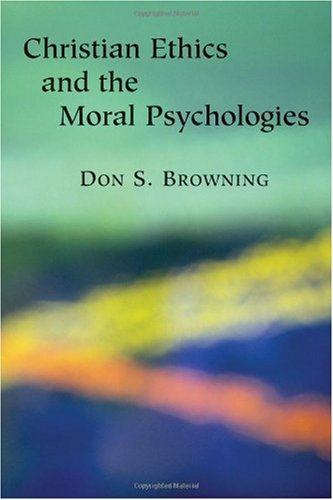
21. Christian Ethics and Moral Psychologies
$10.69
22. Religion Explained: The Evolutionary
 
$190.00
23. Religious Motivation and the Origins
 
$74.00
24. Psychology and Religion: West
$4.50
25. Psychology and Religion at the
$30.60
26. Religion and the Body (Cambridge
$3.89
27. Christian Psychology in 'A Course
$36.50
28. Religion and Psychology in Transition:
$29.97
29. Judeo-Christian Perspectives On
$45.95
30. Modern Psychology and Ancient
$16.99
31. The Religion That Kills: Christian
$46.13
32. The Psychologies in Religion:
$8.66
33. Buddhist Psychology: The Foundation
$30.87
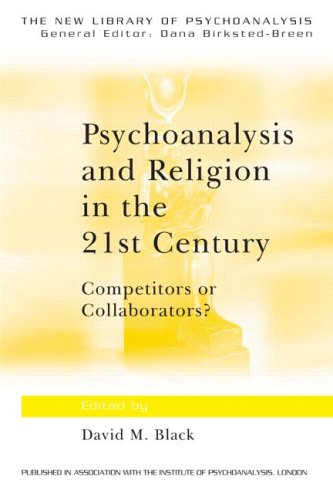
34. Psychoanalysis and Religion in
$10.47
35. Psychology & Christianity
$12.32
36. Jesus and Psychology
$21.53
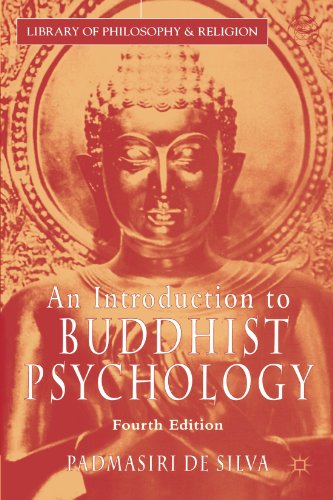
37. An Introduction to Buddhist Psychology,
 
$9.95
38. The evolutionary psychology of
$99.94
39. Explorations in Neuroscience,
$8.55
40. Beyond Religion: A Personal Program

21. Christian Ethics and Moral Psychologies (Religion, Marriage, and Family)
by Don S. Browning
Paperback: 244 Pages (2006-04-30)
list price: US$30.00 -- used & new: US$18.03
(price subject to change: see help)
Asin: 0802831710
Canada | United Kingdom | Germany | France | Japan

22. Religion Explained: The Evolutionary Origins of Religious Thought
by Pascal Boyer
Paperback: 384 Pages (2002-04)
list price: US$17.50 -- used & new: US$10.69
(price subject to change: see help)
Asin: 0465006965
Average Customer Review: 4.0 out of 5 stars
Canada | United Kingdom | Germany | France | Japan
Editorial Review

Amazon.com
What's it all about? Though we might never answer the really big questions--with good reason--maybe we can understand why we ask them. Cognitive anthropologist Pascal Boyer tackles this topic in the unapologetically titled Religion Explained, and it is sure to polarize his readers. Some will think it's an impermissible invasion of mental territory beyond the reach of reason; others will see it as the first step toward a more complete understanding of human nature--and Boyer is acutely aware of the emotionally charged nature of his work. This knowledge informs his decision to proceed without caution, as he warns readers early on that most will risk being offended by some of his considerations. Readers who can lay aside their biases will find great rewards here; Boyer's wide scholarship and knack for elegant writing are reasons enough for reading his book.

That gods and spirits are construed very much like persons is probably one of the best-known traits of religion. Indeed, the Greeks had already noticed that people create gods in their own image.... All this is familiar, indeed so familiar that for a long time anthropologists forgot that this propensity requires an explanation. Why then are gods and spirits so much like humans?

Peppering his study with examples from all over the world, particularly the Fang people of Africa, Boyer offers plenty of evidence for his theory that religious institutions exist to maintain particular threads of social integrity. Though he uses the tools of evolutionary psychology, he is more careful than most EP proponents to avoid ad hoc and circular arguments. Best of all, at least to those unmortified at the idea of examining religion critically, his theories are potentially testable. Even if he turns out to be dead wrong, at least Religion Explained offers a new and powerful framework for thinking about our spiritual lives. --Rob LightnerBook Description
Many of our questions about religion, says renowned anthropologist Pascal Boyer, are no longer mysteries. We are beginning to know how to answer questions such as "Why do people have religion?" Using findings from anthropology, cognitive science, linguistics, and evolutionary biology, Religion Explained shows how this aspect of human consciousness is increasingly admissible to coherent, naturalistic explanation. This brilliant and controversial book gives readers the first scientific explanation for what religious feeling is really about, what it consists of, and where it comes from. ... Read more

Customer Reviews (58)

1-0 out of 5 stars Overuse of the word intuition
I was disappointed in the author's overuse of the word intuition.Especially since he did not define it in the book, and then he attached it to many other words and really overused it, ending up in the last chapter with 66 uses.I enjoyed the substantive content, but feel he deconstructed too much.His use of counterintuitive was also bothersome. I could not get beyond my own conception that intuition is something that feels an inspiratation from outside oneself, and therefore his use grated on me from the get go.Many folks today are using the term intuition in a contemporary sexy way, colloquially, and what they really mean to say deals more with guessing and rational thought processed, than the frequently surprising and unexpected aspects of true, often irrational, intuition.

4-0 out of 5 stars A serious effort to get to the real roots of religious thinking
Pascal Boyer goes deep in his effort to explain belief in the supernatural. As a result, some of the reading is a bit dull, but it is ultimately rewarding. He goes well beyond the "people are a afraid of death" and "social approval" sorts of explanations in his wide-ranging survey of current and historical supernatural beliefs. Most people today take monotheism as the norm, and Boyer shows how and why we got to this point, as religion came to mesh with an increasingly complex web of human intuitions and emotional needs, showing the edifice of religion to be nothing but a cultural artifact.

5-0 out of 5 stars A joy to read for a behavioral scientist
This book helps us to see current formalized (text based) religions and ethics as almost necessary products of the evolutionary history of our hyper-social species.

1-0 out of 5 stars Religion not explained
I was very disappointed in this book, and not just because it is difficult.I was mainly disappointed because rather than explaining religion, Boyer explained the "transmission" of religious beliefs.He explains the influence of "memes" (cultural archetypes)on people's beliefs, but he doesn't explain why some people reject them and believe something else.

4-0 out of 5 stars Worth the effort
I would give this book 5 stars for its content, but only 3 for its style.The information contained here is enlightening, thought-provoking, and very rewarding, but it does take an effort to read.

It took me 2 hours to read the last 50 pages, and then I immediately started another book ("The Third Chimpanzee, by Jared Diamond) and I read 100 pages in 2 hours.This gives you an idea about Boyer's writing style which can be slow to read.

However, if you are interested in this topic, you will want to read this book.The basic thesis expounds how the social human mind is predisposed to believe in religious concepts despite their implausibility.Boyer explicates with precision these deep-seated psychological roots of religion.

If you find Boyer's style just too grating to read the entire book, but still want to get the meat of his argument, I would recommend chapters 1-3 and 9.Although if this subject is as fascinating to you as it is to me, you will want to eventually finish it in its entirety.
... Read more


23. Religious Motivation and the Origins of Buddhism: A Social-Psychological Exploration of the Origins of a World Religion (Routledgecurzon Critical Studies in Buddhism)
by Torkel Brekke
 Hardcover: 224 Pages (2002-10-18)
list price: US$190.00 -- used & new: US$190.00
(price subject to change: see help)
Asin: 0700716831
Average Customer Review: 5.0 out of 5 stars
Canada | United Kingdom | Germany | France | Japan
Editorial Review

Book Description
Why did people in North India from the 5th century BC choose to leave the world and join a sect later coined as Buddhism? This is the first book to apply the insights of social psychology in order to understand the religious motivation of the people who constituted the early Buddhist community. It also addresses the more general and theoretically controversial question of how world religions come into being, by focusing on the conversion process of the individual believer. ... Read more

Customer Reviews (1)

5-0 out of 5 stars Novel, Interesting, Highly Readable, Admirable Scholarship
I was delighted to find that someone had written a study of Buddhism from a sociological angle. I was not disappointed with the book. I have only two quibbles. The first chapter, an essay justifying the use of some Vinaya texts as reliable sources for studying the Buddhism of Gotama's time, contains several German passages which are untranslated. It is still possible to take something out of the chapter, but it detracted from my comprehension of the issues addressed therein. Second, I would have preferred that the sociological-theoretical angle of analysis was more deeply explored with more specific theories. The chapters of the book break down as follows:

1: The Khandaka of the Vinaya Pitaka
2: Religious Motivation & The Relationship Between the Early Samgha & The Laity
3: Religious Motivation & The Theme Of Conversion
4: Social Psychology & The Religious Motivation Of The Early Buddhists
5: Religious Motivation & The Role Of Fear
6: Religious Motivation & The Merit Of Giving

The only chapters that dealt heavily and specifically with different theories of social psychology were chapters 2 and 4. These were excellent, but since there is already plenty of scholarship on giving (dana) in Buddhism, I would have liked to see chapter 6 heavily reduced in favor of more material like that found in chapters 2 and 4.

Chapter 5 was interesting and backed with lots of good textual sources. As in chapter 6, these were taken from various Indian cultural/religious sources, not just Buddhist ones. For example, Brekke included Jain material in several places to compare/corroborate Buddhist social trends. However, I thought that the chapter's extreme clarity came at the price of being slightly repetitive. Chapter 6 was particularly repetitive, moreso than chapter 5. I think that Brekke starts really strong, but by chapters 5 and 6 starts running out of things to say. But since both these chapters are still useful and the others are excellent, it's not a serious flaw to the book.

Chapter 3 was extremely interesting! It offers a new take on Buddhist conversion that challenges the notion that Buddhism's Dhamma spread purely on the basis of its quality and insight. Brekke suggests that the induction of fear, similar to the "fire-and-brimstone preaching" stereotype about Christian proselytizing, played a large role in Buddhist conversionism. This assertion is strongly backed by the appropriate ancient sources.

Chapter 2 also was very good. Among many things, it explored possible social reasons for the stringency of the rules found in the Vinaya (monastic code of discipline). It is suggested that the monks needed to appear respectable in order to receive lay support, and so much of monastic regulation served the purpose of producing a particular "image" of what monks should look like. (A devout Buddhist could nonetheless, and I think legitimately so, claim that these regulations still have a practically useful function of anchoring the bhikkhu in constant mindfulness.)

I won't give too much away, but if you have any interest in the subject matter then this book is definitely worth reading. It offers several new perspectives for thinking about Buddhism, all backed by a plethora of excellent source material.

The excellence of the scholarship and the ample amount of source quotation is in fact the reason that this book gets five stars instead of four, despite its minor shortcomings. I did not notice any assertion that was not backed by a plenitude of textual/historical material.

I think that if you want to gain a more sophisticated understanding of the historical Gotama movement, studying either as a scholar or a devoted Buddhist, then you will probably be very satisfied with what this book can offer. ... Read more


24. Psychology and Religion: West and East (The Collected Works of C. G. Jung, Volume 11)
by C. G. Jung
 Hardcover: 720 Pages (1970-01)
list price: US$92.50 -- used & new: US$74.00
(price subject to change: see help)
Asin: 0691097720
Average Customer Review: 4.5 out of 5 stars
Canada | United Kingdom | Germany | France | Japan
Editorial Review

Book Description

Sixteen studies in religious phenomena, including Psychology and Religion and Answer to Job.

... Read more

Customer Reviews (3)

4-0 out of 5 stars Not an easy read, but worth the trouble/expense
This lengthy tome, while not an easy read and including rather detailed analyses of certain Christian processes as well as the less than scientific (but certainly different) Answer to Job, provides a number of wise observations on the psychology of religion, applicable to both Eastern and Western religious traditions.Some of his main areas of cross-religious focus are:

Belief vs. Thought:
p. 110 "People who believe and don't think always forget that they continually expose themselves to their own worst enemy: doubt. Wherever belief reigns, doubt lurks in the background.But thinking people welcome doubt: it serves them as a valuable stepping-stone to better knowledge.People who can believe should be a little more tolerant with those of their fellows who are only capable of thinking.Belief has already conquered the summit which thinking tries to win by toilsome climbing.The believer ought not to project his habitual enemy, doubt, upon the thinker, thereby suspecting him of destructive designs...let the believer rejoice that others, too, seek to climb the mountain on whose peak he sits."
p. 449 "Irritability, bad moods, and outbursts of affect are the classic symptoms of chronic virtuousness."

The Statistical Distribution of Human Development In Terms of Years and Historical Periods:
p. 308 "There are people who, psychologically, might be living in the year 5000 B. C., i.e., who can still successfully solve their conflicts as people did seven thousand years ago.There are countless troglodytes and barbarians living in Europe and in all civilized countries, as well as a large number of medieval Christians.On the other hand, there are relatively few who have reached the level of consciousness which is possible in our time.We must also reckon with the fact that a few of our generation belong to the third or fourth millennium A. D. and are consequently anachronistic."
p. 333-5: "It takes about twenty years for the ordinary run of people to begin thinking the thoughts of the educated person of today...it takes about twenty years for the general outlook and problems of the educated to percolate down to the uneducated masses."

The nature of human development through neuroses and withdrawal of projections (when a person projects his or her inner perspectives, problems, etc. onto the external world or onto other people, thus denying the internal origin of the projection-and associating it with denial of responsibility for it).Jung's Individuation process involves integrating the split off pieces of one's personality-including projections.The process implies accepting oneself rather than condemning one's faults.
p. 43 "fairly complete human beings are exceptions.It is true that an overwhelming majority of educated people are fragmentary personalities and have a lot of substitutes instead of the genuine goods."
p. 85 "the development of consciousness requires the withdrawal of all the projections we can lay our hands on."
p. 256 "So long as they are unconscious our unconscious contents are always projected, and the projection fixes upon everything `ours,' inanimate objects as well as animals and people...they are more than what they are in themselves and function as such."
p. 339 "We cannot change anything unless we accept it.Condemnation does not liberate; it oppresses...if the doctor wishes to help a human being he must be able to accept him as he is.And he can do this in reality only when he has already seen and accepted himself as he is."

Psychological problems can result from resisting this process; resulting neuroses and suffering help to spur on the process despite egoistic attempts to derail it:
p. 75 "neurosis is always a substitute for legitimate suffering."
p. 350 "A neurosis is never more complicated than the person who has it."
p. 335 "with the decline of religious life, the neuroses grow noticeably more frequent."

Thus, the religions (spiritual) life can be identified with Individuation as opposed to neurosis.Further:
p. 283 "A concrete event by itself can never create meaning, but is largely dependent for this on the manner in which it is understood."
p. 339 "simple things are always the most difficult.In actual life it requires the greatest art to be simple."

Such an approach (to simplicity and creation of meaning) implies further similarity between psychology and religion (West and East).

5-0 out of 5 stars Absolutely ESSENTIAL
_Psychology and Religion: West and East_ is definitely one of the top three most important books in the Princeton/Bollingen series of Jung's collected works.As of now, it is only available in the ...hardcover edition, but you cannot put a price on the life-enhancing knowledge contained in this volume.
I will go over this volume one essay at a time:

The first essay is entitled "Psychology and Religion" and is a very useful, readable, and somewhat generalized overview on Jung's opinions on religion, and its usefulness in preventing neurosis.This essay is an ideal introduction.

Next comes the esaay "A Psychological Approach to the Dogma of the Trinity".This is a very complex and profound essay, and deals with some of the most perplexing and mysterious concepts in all of theology.Specifically, it attempts to explain the precise nature of the Holy Ghost.It may be hard to relate to this essay unless you have had a numinous religious experience, such as a connection of coincidences with an underlying Biblical message.But Jung does a remarkable job dealing with this complex subject.

Next comes the essay "Transformation Symbolism in the Mass".This is my least favorite essay in this collection.Jung describes in excruciating detail the painstaking procedures involved in carrying out a proper symbolic mass.This wouldn't be so bad if Jung would have actually given us his interpretation of the symbolic significance of the procedures contained within the mass, but he does not do this.Instead, he simply explains in a very boring and dry manner what is to be done in performing the mass, and does not venture an interpretation of what any of this means.This is the only weak essay in this volume, however, and the rest of the book is classic, vintage Jung. But to avoid getting bogged down and demotivated, I suggest you skip this essay.

After a few other short but useful essays, we come to the centerpiece of this volume, Jung's masterwork, "Answer to Job".This is Jung's single greatest achievement, and one of his longest essays.This essay alone is worth the price of this collection (although "Answer to Job" is available by itself in paperback).Some critics have accused Jung of blasphemy because of this book, but in my opinion it is the greatest work of theology ever written, by anyone, ever.For more details on this specific masterpiece, refer to my review on the stand-alone paperback edition of this great essay.

Finally, we have the section on Eastern religion.Although this discussion on Asian religion comprises only about 1/4 of _Psychology and Religion: West and East_, it is perhaps the best interpretation of Eastern religion ever written by a westerner, eclipsing even the work of Zen masters Alan Watts and Aldous Huxley.First is the discussion on the Tibetian Book of the Dead, which is fascinating (also see Timothy Leary's companion piece to this ancient work).Next is a very poignant discussion on Yoga and the West.It basically criticises westerners for "doing" Yoga like it is only a type of aerobic exercise, and neglecting the literary, scholarly, and philosophical aspects of Yoga.

Next comes the discossion on "Zen Satori".This is probably the best essay in the section on Eastern religion.Within this relatively short work, Jung provides invaluble insight into Zen enlightenment, and succeeds in showing us the way to a betterlife, breaking free of fear, hate, negative emotion, and all other sources of neurosis.Words cannot describe the positive and joyous forces which are unleashed by the Zen master Jung within this spectacular essay.

Finally, we have a masterful discussion of the I-Ching.This essay, though brief, is a succint and insightful interpretation of this ancient work.It is absolutely essential for anyone who is interested in the I-Ching, and it is also a competent and thorough introdution for those unfamiliar with the I-Ching.

Overall, this volume of essays is ABSOLUTELY ESSENTIAL for all Jungians.5 +++stars.Highest recommendation.

4-0 out of 5 stars a liberating experience...
i have found this book really interesting and if not for the usuall difficult jargons, i would have rated this a five star book. What i found of special interest is the portion of the ANSWER TO JOB...it containedideas which are controversial yet liberating! Even when i was a child, Ialready harbored the same questions posited in this work i.e. someirrationalities in the way God works. I also love the psychologicalanalysis of the book of revelation which includes the analysis of theshadow of its author...it was a learning experience for me since i becamemore convinced that in order for us to be truly human and be morepsychologically balanced, we have to integrate all the aspects of ourpersonality including the SHADOW! You'll have an enlightening experience byreading this book. ... Read more


25. Psychology and Religion at the Millennium and Beyond (Religion & Jungian Psychology Series)
by J. Marvin Spiegelman
Paperback: 186 Pages (1999-06)
list price: US$14.95 -- used & new: US$4.50
(price subject to change: see help)
Asin: 1561841382
Canada | United Kingdom | Germany | France | Japan
Editorial Review

Book Description
Throughout the world, billions of people are sharply focused on the significance of the third millennium of the Western calendar. While some see hope, others fear (or even long for) an apocalypse. In this single volume, thirteen prominent Jungians of diverse religious backgrounds--from the Western (Judaism, Christianity, Islam) to the Eastern (Taoism, Buddhism, Hinduism, Confucianism)--provide an unparalleled insight into their views of the meaning and significance of this event.

The prominent list of contributors to this unprecedented work includes: Peter Coukoulis, Ph.D.; John Dourley, Ph.D.; Gustav Dreifuss, Ph.D. & Bina Weiler, M.A.; Anson J. Levine, Ph.D.; Shirley S.Y. Ma, M.Sc.; Mokusen Miyuki, Ph.D.; Joe McNair, Ph.D.; Gloria F. Orenstein, Ph.D.; Tenzin Wangyal Rinpoche; Manisha Roy, Ph.D.; Murray Stein, Ph.D.; Arwind Vasavada, D.Litt. and J. Marvin Spiegelman, Ph.D. ... Read more


26. Religion and the Body (Cambridge Studies in Religious Traditions)
Paperback: 330 Pages (2000-08-28)
list price: US$34.99 -- used & new: US$30.60
(price subject to change: see help)
Asin: 0521783860
Canada | United Kingdom | Germany | France | Japan
Editorial Review

Book Description
This will be the standard study on the "body" in relation to the major religions. It highlights the distinctive and unfamiliar ways in which diverse religious traditions understand the "body" and notes the assumptions and problems of contemporary attitudes to it. Religion and the Body brings together essays by established experts in the history of religion, the social sciences and philosophy. The result is a rich source for comparative studies of the "body", its relation to society and to the divine. ... Read more


27. Christian Psychology in 'A Course in Miracles'
by Kenneth Wapnick
Paperback: 89 Pages (1992-08)
list price: US$5.00 -- used & new: US$3.89
(price subject to change: see help)
Asin: 0933291140
Average Customer Review: 5.0 out of 5 stars
Canada | United Kingdom | Germany | France | Japan

Customer Reviews (1)

5-0 out of 5 stars an excellent book
This is not a very long book - that is - it doesn't have many pages.However, it has a huge messege. It's messege on forgiveness is lifechanging! It may only take you a few hours to read it but, you will returnto it over and over again. I can't recommend it enough. ... Read more


28. Religion and Psychology in Transition: Psychoanalysis, Feminism, and Theology
by James W. Jones
Hardcover: 176 Pages (1996-10-30)
list price: US$42.00 -- used & new: US$36.50
(price subject to change: see help)
Asin: 0300067690
Canada | United Kingdom | Germany | France | Japan
Editorial Review

Book Description
In this thought-provoking book, clinical psychologist and professor of religious studies James W. Jones presents a dialogue between contemporary psychoanalytic thinking and contemporary theology. He sheds new light on the interaction of religion and psychology by viewing it from the perspective of world religions, providing an epistemological framework for the psychology of religion that draws on contemporary philosophy of science, and bringing out the importance of gender as a category of analysis. ... Read more


29. Judeo-Christian Perspectives On Psychology: Human Nature, Motivation, And Change
by William R. Miller, Harold D. Delaney
Hardcover: 327 Pages (2004-09-30)
list price: US$49.95 -- used & new: US$29.97
(price subject to change: see help)
Asin: 1591471613
Average Customer Review: 5.0 out of 5 stars
Canada | United Kingdom | Germany | France | Japan
Editorial Review

Book Description
Discusses how the dominant models within psychology compare and contrastwith a Judeo-Christian view of the individual, and asks how psychologicalresearch and practice might differ if informed by this perspective. ... Read more

Customer Reviews (2)

5-0 out of 5 stars A thoughtful and provoking call to action...
It is both necessary and beneficial for promoting the uniqueness and maturation of the field of psychology that issues of religion and spirituality be embraced by research psychologists and clinicians alike.This theme is the central message of Judeo-Christian Perspectives, an excellent text edited by Bill Miller and Harold Delaney.Encompassing a wide variety of topics from self-control to sexuality to struggles of the soul, this book demonstrates that psychology cannot do justice to the study of the person without examining the contributions and influences of religion.Using Jewish and Christian ideology, scriptures, and practices, the authors explore how current topics and research pursuits in psychology (including volition, motivation, personality, moral and spiritual development, sexuality, health and well-being, and personal change) might be broadened and advanced by acknowledging and integrating these spiritual perspectives.The book describes the crossroads at which psychology and religion currently stand, and it provides both theoretical considerations and practical recommendations to incorporate Jewish and Christian perspectives into psychological theory and research.

Judeo-Christian Perspectives provides an empirically-supported examination of the religion-psychology interface, suggesting that both assimilation and accommodation may be required to fully explore the nature of human beings.It is not written by or for a singular audience (e.g., orthodox Jews, evangelical Christians), but instead includes a diverse authorship that aims to reach an even more diverse field.Drawing from a wealth of scholarly research, this book proposes that psychology must move beyond the reductionism and materialism that has characterized much of its history in order to fulfill its namesake as "the study of the human psyche."Psychologists, regardless of their personal religious beliefs, have both an obligation and an opportunity to consider the impact of Judeo-Christian beliefs on their empirical pursuits and clinical practice.In light of the fact that a significant majority of Americans consider religious faith to be the most important influence in their lives, the integration of psychology and religion cannot be reduced to checking off a box on a demographic survey or other simplistic attempts to incorporate spirituality.The volume by Miller and Delaney goes beyond a basic consideration of religious factors to propose a collaborative dialogue or even a deeper integration of Judeo-Christian beliefs with psychology.The resulting effort is not a uniform research proposal (as even the various chapter authors have different conceptualizations and recommendations), but a challenge to the field to deliberately create opportunities for religious perspectives to influence and inform the whole of psychological study.

5-0 out of 5 stars An excellent contribution to religious studies
Judeo-Christian Perspectives On Psychology: Human Nature, Motivation, And Change is a selection of essays by learned individuals grounded in the 2001 challenge the Pew Charitable Trust made to psychology, among seven other academic disciplines, to show how dominant models of human nature compare and contrast with the Judeo-Christian view of the individual. Covering such topics as the spiritual dimension of reality, the importance of the freedom to make choices and be held responsible for the outcomes, the potential for personal transformation above and beyond rational decision making, and much more, these scholarly, extensively researched and annotated discussions open a window into higher con-templation of the nature of humanity itself as perceived through the twin windows faith and the science of the mind. An excellent contribution to religious studies and psychological existential debate shelves.
... Read more


30. Modern Psychology and Ancient Wisdom: Psychological Healing Practices from the World's Religious Traditions
by Dwight Judy, Sheldon Kramer, Stephen G. Gilligan
Hardcover: 307 Pages (2003-01-14)
list price: US$49.95 -- used & new: US$45.95
(price subject to change: see help)
Asin: 0789017512
Average Customer Review: 5.0 out of 5 stars
Canada | United Kingdom | Germany | France | Japan

Customer Reviews (5)

5-0 out of 5 stars Breath of fresh air
This book is filled with chapters which take readers back to what therapy was in its original form - spiritual expansion and exploration. Each chapter is unique and distinct, yet all of them flow together in harmony. My favorite chapter is Tales of the Goddess: Healing Metaphors for Woman. This chapter offers a perspective which empowers women to fully claim their feminine power without agression against men. I found this book to be empowering, informational, and diverse.

5-0 out of 5 stars Ground-breaking work for 21st century health & healing arts
This is an important anthology that brings together an impressively diverse number of scholars, healers, and other practitioners to share knowledge on the cutting edge of mind-body disciplines.It could not have appeared at a more opportune time.I would readily recommend most of the selections, particularly the chapter on Taoism.

5-0 out of 5 stars A very meaningful book
This book is very interesting. It delivers the information in an original and mind catching way. The Indian chapter was especially intriguing. I hope everyone catches the important messages that this book contains.

5-0 out of 5 stars A book whose time has come!
If ever such a book of wisdom and understanding was needed in world, now is the time! As our personal and collective awareness have become raw with violence perpetrated upon ancient separateness and hatred, this book becomes a must read over and over again. It is a profound resource for all of our altars - a multifaceted and powerful way to focus our prayers for wholeness and for healing - for each other and for our world.

5-0 out of 5 stars A Serious Guide
Now that we've opened our minds to alternative healing, we have found that many of these spiritual practices have always been there!Modern Psychology and Ancient Wisdom is a guidebook to the psychological healing practices of the world's religious traditions. In her introduction to the book, editor and co-author Sharon Mijares guarantees us that this is not a treatise on dogma. She's right. It's a serious guide to spiritual healing practices detailed by thoughtful scholars and teachers qualified to share the power of spirituality.The book will be extremely helpful to practitioners, but this anthology of stories, chants, dances, and meditations is not simply a guide for professionals. It's a superb collection for the body/mind/spirit of the common reader as well. ... Read more


31. The Religion That Kills: Christian Science: Abuse, Neglect, and Mind Control
by Linda S. Kramer
Paperback: 272 Pages (1999-11-22)
list price: US$16.99 -- used & new: US$16.99
(price subject to change: see help)
Asin: 1563841711
Average Customer Review: 3.0 out of 5 stars
Canada | United Kingdom | Germany | France | Japan
Editorial Review

Book Description
Christian Scientists are trapped in a mindset that twists their perception of reality, teaches them to mistrust their physical senses, and short-circuits their ability to make informed, reasoned decisions regarding healthcare.

The Religion That Kills examines how people become ensnared in Christian Science and discusses how this religion can affect them emotionally, physically, and spiritually. The book also discusses Mary Baker Eddy - the founder of Christian Science - in terms of her leadership style, her claim to divine revelation, and her misuse of both secular and biblical language.

The Religion That Kills is a tool for recovering from the negative effects of Christian Science, for understanding Christian Science logic and terminology, for helping Christian Scientists objectively evaluate their religion, and for discussing biblical issues with Christian Scientists. ... Read more

Customer Reviews (33)

5-0 out of 5 stars Getting help
How about a book that helps ex-christian scientists get well? Treatment? Counseling resources?

I have observed that many people who believe christian science's version of reality slowly lose touch with reality and themselves. Mental illness and isolation seem to naturally develop when one continually forces themselves to believe in a system of reality that is false or ficticious. Letting Mary Baker Eddy or anyone else define your reality is a form of mental slavery. Especially when it causes unnecessarily prolonged illness and death as christian science has done.

5-0 out of 5 stars Finally, someone speaks for the truth
After reading this book I was so thrilled to finally hear the truth exposed about this deadly socalled religion. Few without the begefit ofthe insightful and documented research described in this bookare aware of the dimentia of the revered leader of this cult and the many tragedies it causes when unsuspecting readers begin to believe it and put it into practice. The author gives a book that is easily understood and clearly exposes the atrocities of the secrets kept that lead to death and child abuse. If one wants to know what really goes on in the homes of these believers and the horrors indured by the innocent children in those homes this tells it like it is and is a must read. It is good exposure to those who have been told that "It's just a religion" with no knowledge of the damage and death allowed in these families.

1-0 out of 5 stars Mistaken Identity
The only reason these reviews are all so bitter & angry is because for those people, C.S. wasn't the way. They were let-down or disappointed by lack of results.
Christian Science is not for the weak-of heart & not for the weak-of-mind. It is based on the teachings of CHRIST JESUS, not Mrs. Eddy. JESUSS' methods of healing worked 2,000 years ago, and they still work today.
I come from a line of four generations of Scientists, and although I no longer consider myself one, I have witnessed multiple healings through the simple Truths that Jesus Christ gave us, TRUTHS WHICH CAN BE APPLIED TODAY, WITH OR WITHOUT MRS. EDDY'S WRITINGS. They are timeless, because they are the Truths Jesus taught, not some half-brained ideas thought up by some "nut" over a hundred years ago.
For some people, C.S. may not be the way to go, but it is the choice of every human being to practice & believe in what they wish. I hope people will one day wake up & stop being so selfish in thinking that "if they'd have received medical treatment they would still be here alive, with me". That's a selfish way to think. People who practice C.S. choose to do so of their own free will, and if passing away "early" is the result of it, that's their own God-given right & they're probably better off anyway, without all the negative, fearful influences of the unbelievers around them.....
I may be an EX-Christian Scientist, but I would never endorse such a book as this.

5-0 out of 5 stars Should be criminalized
Linda Kramer's description of Christian Science is correct. It is also a practical religion. Both the robust, healthy followers and those miraculously healed can credit the practice while those who die of it aren't around to complain. How many religions have attorneys available to represent parents whose children needlessly die due to withholding basic medical care? This is a practical religion. Logical it is not-- not in the sense of the scientific method, Law of Cause and Effect, objective observation and description of what is factually before you. To the Christian Scientist these are illusions, errors born of the material world.

I also grew up in Christian Science and am well versed in Mary Baker Eddy's HEALTH AND SCIENCE WITH KEYS TO THE SCRIPTURES. My mother died of Christian Science choosing it over medical treatment for tuberculosis when it was in the treatable stage and spreading it to others. I suffered years of childhood asthma denied available medical attention in favor of paid CS practitioners, twisted logic and implicit (never articulated) blame. Some people might even consider this criminal. In Christian Science the human emotions of anger, fear, and sadness are products of the "mortal mind" and along with viruses, bacteria, diseases and all human suffering, illusions of the "material world."

This is a religion built on denial. Just as an alcoholic uses denial to avoid dealing with unpleasant realities so does the Christian Scientist.Christian Science apologists will ofcourse disagree without ill will. They are above above such feelings. They understand these are all illusions.

5-0 out of 5 stars for Suvivers of Christian Science
I was raised my first 10 yrs in their cult.I am in therapy now and they keep asking where this/that idea came from.Now I know it was from the Christian Science propaganda.My earlier surch for some insight produced nearly nothing including Martin's book.Thankyou God for such a wise women puting this information out to us.A must read for survivers of this cult. ... Read more


32. The Psychologies in Religion: Working with the Religious Client
Hardcover: 344 Pages (2006-02-18)
list price: US$52.00 -- used & new: US$46.13
(price subject to change: see help)
Asin: 0826128564
Canada | United Kingdom | Germany | France | Japan
Editorial Review

Book Description
This book is an examination of the thinking, personality, and developmentprocesses as well as clinical concerns of clients who are members ofparticular religious groups. Religious upbringing influences people inways that are difficult or impossible to describe and this book provides a "window on their world," as it were. In addition, it examines possiblefuture religious development as spiritualism begins to replaceinstitutional religion and as religious choice replaces religiousconstraint. This book will be helpful to all therapists who want tounderstand how religious people "really think." ... Read more


33. Buddhist Psychology: The Foundation of Buddhist Thought (Foundation of Buddhist Thought, The)
by Geshe Tashi Tsering
Paperback: 192 Pages (2006-10-20)
list price: US$14.95 -- used & new: US$8.66
(price subject to change: see help)
Asin: 0861712722
Canada | United Kingdom | Germany | France | Japan
Editorial Review

Book Description

Just as scientists observe and catalog the material world, Buddhists for centuries have been observing and cataloging the components of the human psyche. Addressing both the nature of the human mind and how humans know what they know, Buddhist psychology offers a rich and subtle knowledge of the inner experience. Here, Buddhism's unique, time-tested way of viewing the mind is explained so that followers of Tibetan Buddhism can understand their anger and aversion, and develop equanimity, patience, and love.
... Read more

34. Psychoanalysis and Religion in the 21st Century: Competitors or Collaborators (The New Library of Psychoanalysis)
by David Black
Paperback: 278 Pages (2006-05-12)
list price: US$34.95 -- used & new: US$30.87
(price subject to change: see help)
Asin: 041537944X
Canada | United Kingdom | Germany | France | Japan
Editorial Review

Book Description
Freud described religion as the universal obsessional neurosis, and uncompromisingly rejected it in favor of "science".Ever since, there has been the assumption that psychoanalysts are hostile to religion.Yet, from the beginning, individual analysts have questioned Freud's blanket rejection of religion.
In this book, David Black brings together contributors from a wide range of schools and movements to discuss the issues.They bring a fresh perspective to the subject of religion and psychoanalysis, answering vital questions such as:
· How do religious stories carry (or distort) psychological truth?
· How do religions 'work', psychologically?
· What is the nature of religious experience?
· Are there parallels between psychoanalysis and particular religious traditions?
Psychoanalysis and Religion in the 21st Century will be of great interest to psychoanalysts, psychoanalytic therapists, psychodynamic counselors, and anyone interested in the issues surrounding psychoanalysis, religion, theology and spirituality. ... Read more


35. Psychology & Christianity : With Contributions by Gary R. Collins ... Et Al
Paperback: 271 Pages (2000-10)
list price: US$17.00 -- used & new: US$10.47
(price subject to change: see help)
Asin: 0830822631
Average Customer Review: 4.5 out of 5 stars
Canada | United Kingdom | Germany | France | Japan
Editorial Review

Book Description
Psychology has exploded across the academic and popular landscape in the last hundred years. Dozens of schools of thought have arisen and thousands of books have been written on the nature of our personalities, our development, our relationships and our inner well-being.All of this has been of interest (and sometimes of concern) to Christians because of the importance we place on a correct understanding of human nature. Psychology often seems disconnected from, if not antithetical to, Christian perspectives on life. How do we relate our cherished Christian beliefs about persons to what secular versions of psychology tell us?In this book are gathered four models of the relationship of psychology and Christianity. David Powlison (Westminster Theological Seminary) offers the biblical counseling model. The levels-of-explanation model is advanced by David G. Myers (Hope College), while Gary Collins (former executive director of American Association of Christian Counselors) introduces the integration model. The Christian psychology model is put forth by Robert C. Roberts (Baylor University).Each of the contributors responds to the other essayists, noting points of agreement as well as problems they see. Editors Eric L. Johnson and Stanton L. Jones also provide an introduction to the history of Christians and psychology as well as a conclusion that considers what might bind the four views together and how a reader might evaluate the relative strengths and weaknesses of each view. ... Read more

Customer Reviews (5)

5-0 out of 5 stars A MUST READ FOR THOSE INVOLVED IN CHRISTIAN COUNSELING
The authors allow latitude to each of the contributors to tackle this thorny issue of integrating Psychology and Theology.The reader however, may experience a great deal of cognitive dissonance as he or she seeks the "one way" to conduct Christian Counseling.However, in the end the editors clearly encourage a systemic approach to the matter by encouraging the reader that "all truth is God's truth," and that it is only when we listen critically to what others have to say about the matter that we can then move on and develop our own approach.Those individuals desiring a purely nouthetic approach will be sorely dissappointed however, due to the fact that there is only one clear contributor that embraces nouthetic counseling as Jay Adams has outlined during his career.Yet, this is the crux of the book as the reader gets to the end because the editors make clear that while there is value in the nouthetic (philisophical) approach to counseling, there is value to be found in the other approaches as well.It is high time that a work such as this was published and anyone in the field of "Christian Counseling" will find not only a fair and balanced treatment of various positions, but a helpful resource, assisting the reader to work out his or her own integration philosophy with fear and trembling.

4-0 out of 5 stars Psychology book review
This book provides insight into the many different views of Psychology from Christian world-views. There are some excellent points made. You may not completely agree with just one of the four views, but it will help to show you where your general beliefs and critiques of psychology are. All four authors are experts in their field of study. I really liked how the book was arranged. Each author has written their own philosophy concerning psychology and Christianity, and following each of the statements the other authors give their critique and response to that view.

5-0 out of 5 stars perplexing, but quite good
The format of 4 essay writers each writing their own essay and responding to the other three is fantastically done, even if some of the responses are a little non sequitur.The four positions presented are all rather similar to one another, so at times, it's hard to figure out who's really arguing for what.All of them respect psychology and are committed Christians.But, through the grand tradition of debate, all of them manage to mark out their territory effectively and respectfully.If the both pieces of the title appeal to you, then the book will not disappoint.If you're only interested in one or the other, however, this isn't your book.

5-0 out of 5 stars Very Entertaining and Enlightening
As a professor who teaches a seminary course on Psychology and Theology, I require this text every year. As a typical "four views" genre book, it presents four sides of one issue, and gives time for responses to each view from the other three authors.

For anyone wanting to be up-to-date on the primary views of the relationship between psychology and Christianity, this is a must read. Whether you agree with any of the views or not, you will be enlightened. And, you'll be entertained--always a good and often a rare thing with an academic text book.

What this book does well, in particular Powlison's section, is force the reader to think through very specific definitions of terms. When we say "psychology," what exactly do we mean? What type of psychology? What use of psychology? What approach to psychology?

My only minor quibble is with the title of the book. Why not "Psychology and Theology"? The question really is not "should Christians practice psychology (rightly defined)?" Nor is it "should we integrate theology and Christianity?" That makes it seem as if there is no such thing as a biblical psychology or a historical theology of the human soul. The real issue is the relationship between the queen of the sciences (theology) and psychology. Do they cover the same terrain? If so, which if either has preminence, in what area(s), and why? This editorial issue aside, get this book!

Reviewer: Bob Kellemen, Ph.D., is the author of "Beyond the Suffering: Embracing the Legacy of African American Soul Care and Spiritual Direction." He has also authored "Soul Physicians," "Spiritual Friends," and the forthcoming "Sacred Friendships: Listening to the Voices of Women Soul Care-Givers and Spiritual Directors."

3-0 out of 5 stars Helpful but flawed
I am a huge fan of the "4 View" books IVP has published.They are always helpful and worth reading.This one I was particularly excited about.As a pastor who does alot of counseling, reads a lot on the topic, and is pursuing a DMin in the field, I really wanted a book that would help me get a handle on the various models available.While the book was informative, I really think its the least engaging of all the 4 views ones I have read.

My biggest problem was the way it seemed biased agianst the "Biblcial" model (one of the 4 views).Obviously, in every one of these books my own view (if I clearly fall into one of the 4 camps) will be roughly one-quarter of the book.It will be opposed by a 3 to 1 ratio. That's why you read these books.But what I found a little vexing was the way the editors framed the "Biblical" model in their long (and very informative) introductory essay.While giving a fairly balanced presentation of the other 3 models, the Biblical model is largely dismissed.The one figure mentioned is the founder of the movement, Jay Adams.That is appropriate, but the reader is left with the impression that the movement is essentailly Adams-ism. The fact is that the movement took Adams' initial insights and went in a direction that Adams has largely denounced.The book's author of the Biblical view section, for example, (David Powlison) is one who has been very critical of Adams (and vice versa).The editors' seeming disdain for the Biblical model also seems reflected in the concluding chapter.

Still, a helpful work.The packaging and the indeex and bibliograph are also very nice. ... Read more


36. Jesus and Psychology
Paperback: 224 Pages (2007-11-01)
list price: US$19.95 -- used & new: US$12.32
(price subject to change: see help)
Asin: 1599471248
Canada | United Kingdom | Germany | France | Japan
Editorial Review

Book Description
A collaborative study, Jesus and Psychology shows how psychology can be used to illuminate the historical and modern portrayals of Jesus, the wisdom of his sayings and the reasons people read and understand the Bible differently. The book is divided into three sections. In the first, Fraser Watts opens with a discussion of the value of a psychological approach to the Gospels. Contributor Justin J. Meggitt follows with an essay on the potential contributions made by a psychological study of the historical Jesus. Liz Gulliford then offers an analysis of three contemporary filmsJesus Christ Superstar, The Last Temptation of Christ and The Passion of the Christshedding light on the psychological dilemma of whether to portray Jesus as human or divine and how to integrate the two. Sara Savage begins the next section with a comparison of contemporary methods of psychological therapy and studies the way Jesus responded to the people that he met. Fraser Watts continues the discussion with a look at threads of psychological meaning in Jesus teachings. Beaumont Stevenson then looks at the importance of the breaking of taboos that occur at several crucial points in the gospel narrative. Jesse W. Abell draws on the frameworks of cognitive psychology to illustrate how our own thought processes affect our readings of texts like the Gospels, James Day finishes the section with a discussion of developmental psychology and how an individuals personal developments is likely to influence how he or she interprets the Gospels. In the third section of the book, Leslie J. Francis explores Jungian personality types and how they can affect an individuals reading of the Gospels. Everett L. Worthington Jr. then examines the value people give to virtue is shown to have significant implications on what is perceived as the central message of the scriptures and also on the interpretation of the interplay between justice, mercy, grace and forgiveness. Jesus and Psychology presents new scholarship in the field of psychology and religion while extending the global sciencereligion dialogue. ... Read more


37. An Introduction to Buddhist Psychology, Fourth Edition (Library of Philosophy and Religion)
by Padmasiri de Silva
Paperback: 216 Pages (2005-11-29)
list price: US$31.95 -- used & new: US$21.53
(price subject to change: see help)
Asin: 1403992452
Average Customer Review: 5.0 out of 5 stars
Canada | United Kingdom | Germany | France | Japan
Editorial Review

Book Description
An Introduction to Buddhist Psychology is a lucid, intelligible and authentic introduction to the foundations of Buddhist psychology. It provides comprehensive coverage of the basic concepts and issues in the psychology of Buddhism and thus it deals with the nature of psychological inquiry, concepts of mind, consciousness and behavior, motivation, emotions, perception, and the therapeutic structure of Buddhist psychology. For the fourth edition, a new chapter on "emotional intelligence" and its relationship with Buddhism has been added. ... Read more

Customer Reviews (1)

5-0 out of 5 stars Good introduction to buddhist psychology.
The book is concise, informative and easy to read. It provides basic principles of buddhist psychogy and comparison with the western therapeutic systems. A good book for beginners as well as others. ... Read more


38. The evolutionary psychology of religion.(Cover story): An article from: The Humanist
by Steven Pinker
 Digital: 15 Pages (2006-09-01)
list price: US$9.95 -- used & new: US$9.95
(price subject to change: see help)
Asin: B000IYW3GM
Canada | United Kingdom | Germany | France | Japan
Editorial Review

Book Description
This digital document is an article from The Humanist, published by Thomson Gale on September 1, 2006. The length of the article is 4340 words. The page length shown above is based on a typical 300-word page. The article is delivered in HTML format and is available in your Amazon.com Digital Locker immediately after purchase. You can view it with any web browser.

Citation Details
Title: The evolutionary psychology of religion.(Cover story)
Author: Steven Pinker
Publication: The Humanist (Magazine/Journal)
Date: September 1, 2006
Publisher: Thomson Gale
Volume: 66Issue: 5Page: 10(6)

Article Type: Cover story

Distributed by Thomson Gale ... Read more


39. Explorations in Neuroscience, Psychology and Religion (Ashgate Science and Religion Series)
by Kevin S. Seybold
Hardcover: 208 Pages (2007-07-30)
list price: US$99.95 -- used & new: US$99.94
(price subject to change: see help)
Asin: 0754655636
Canada | United Kingdom | Germany | France | Japan

40. Beyond Religion: A Personal Program for Building a Spiritual Life Outside the Walls of Traditional Religion
by David Elkins
Paperback: 352 Pages (1998-10-25)
list price: US$16.95 -- used & new: US$8.55
(price subject to change: see help)
Asin: 083560764X
Average Customer Review: 5.0 out of 5 stars
Canada | United Kingdom | Germany | France | Japan
Editorial Review

Book Description
This book is aimed at the millions who find that traditional religion fails to meet their spiritual needs. ... Read more

Customer Reviews (6)

5-0 out of 5 stars A wonderful book describing alternative portals to the sacred
Usually I run a mile at anything writen by a psychologist or someone in the profession.While I respect what they're doing, and have done a lot of therapy myself, I find their tools and perspectives are usually quite limited and out of date.This however, is an excellent book.Writen from extensive practical experience for the person who's seeking spirituality outside of organised religion... and lets face it, that's a growing market!Even if you do have a primary spiritual path or religious faith, you will find that this book has much to offer in terms of practical connection with the sacred/god/spirit in areas you may not have considered.

I found much of this work has the flavour of Thomas Moore, while still being uniquely the author's own work and perspective.The reader will also note a Jungian influence in his work.Elkins outlines 8 alternative paths to the sacred - The Feminine, The Arts, The Body, Psychology, Mythology, Nature, Relationships, Dark Nights of The Soul.It's great to choose one that appeals to you and delve into it and then to look at section you may not initially be attracted to and see how that can be worked into your life - there are many portals to the sacred!I pick this book up occassionaly just to review a chapter and reflect on how I can integrate that path more into my life.In a final chapter, he provides a valuable tool for developing a spiritual program based on each of the paths including several exercises and a places for reflection.Coaches will find this a valuable tool for their toolkit.

I've recently went through my books to cull out the rubbish and titles I've outgrown, this book will be a keeper.Highly recommended.

5-0 out of 5 stars Clear, intimate, and significant
This book, which I've read twice through and refer to from time to time, gives the reader a clear explanation of spiritual paths. They are backed up by the author's experience and knowledge of the field.Being a southern boy from a conservative christian group, many of the concepts here are foreign to the heritage in which I was raised.I have attempted at times during the course of my life to understand and fathom this yet evolving alternative spiritual tradition.This book has been a help.The fact that it is authored by a person who comes from where I come from provides validation for me of the truths of this spiritual stream.David and I come from the same place in rural Arkansas.He is six years older than I and I can distinctly remember him on pitcher's mound throwing his roundhouse curveball to Pony league batters. We grew up in an intense, close knit christian group.Zealous and extremely rational, the rules are well set and little deviation allowed. But sincere, diligent, and devout beyond reproach.Therefore, I know where he is coming from.David was always a caring, thoughtful and feeling type person. Naturally, he went into the ministry originally but eventually found his way and home inthe psychology profession (lucky for you dear reader).Even though I haven't seen or talked with him since I was a teenager in the sixties I can still hear his voice when I read the book. You can perceive that he made an impression on me.The book shows that he has read widely and he draws from resources back to the Greeks and before as well as spiritual writings up to the present.It is not New Age pap.I really admired him for self-disclosure and for his guts to say some of the things he did in the sections on the feminine and the erotic.The book is intended for those "outside the walls of traditional religion".But, it is my opinion that it is no less useful for those (like myself) who are within organized religion.So read it and try out some of the paths.It is good that he provides suggested structure and discipline.Didn't Jesus say something like "My yoga is easy my burden is light"?

5-0 out of 5 stars Beyond Religion and Into My Soul
This is one of the best books I have ever read.It is like I wrote it myself it is so near to my own philosophy.If you would to explore something outside what you have always been told is the truth, read thisbook!

5-0 out of 5 stars This book will open your eyes, as it did mine!
As a spiritual teacher I have often been asked about spirituality and religion.David, however, deals with this topic better than anyone I have ever seen--Del Millers, author, Dancing with God

5-0 out of 5 stars Insightful
This book expressed ideas that I have been feeling for a long time.This book was beautiful and spiritually insightful.I do believe in God and our lord and savior Jesus Christ, however traditional religion did not quenchmy hunger for spiritual knowledge.I strongly advise this book for thespiritual seeker ... Read more


  Back | 21-40 of 100 | Next 20

Prices listed on this site are subject to change without notice.
Questions on ordering or shipping? click here for help.

site stats