e99 Online Shopping Mall

Geometry.Net - the online learning center Help  
Home  - Pure And Applied Math - Biostatistics (Books)

  1-20 of 100 | Next 20

click price to see details     click image to enlarge     click link to go to the store

$37.92
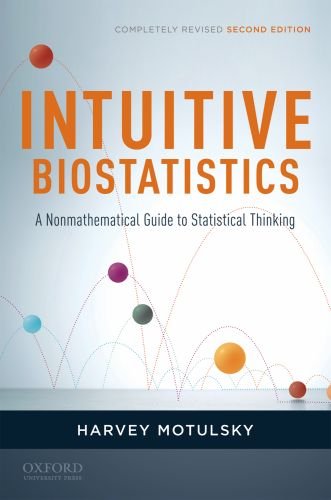
1. Intuitive Biostatistics
$73.94
2. Principles of Biostatistics (with
$35.00
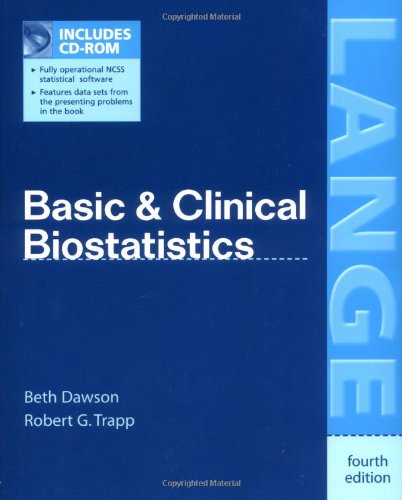
3. Basic & Clinical Biostatistics
$92.90
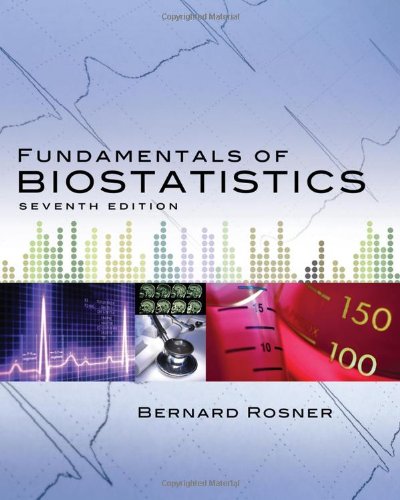
4. Fundamentals of Biostatistics
$60.59
5. Regression Methods in Biostatistics:
 
$20.50
6. High-Yield™ Biostatistics
$44.94
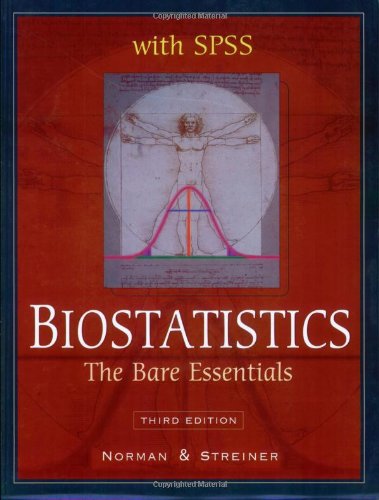
7. Biostatistics:The Bare Essentials
$66.45
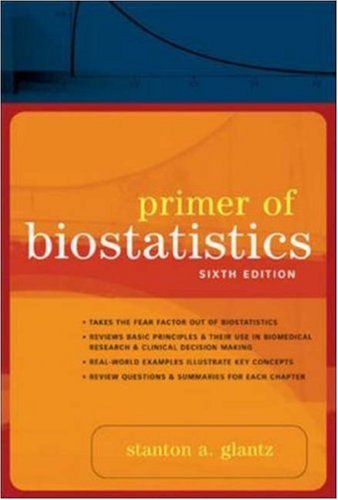
8. Primer of Biostatistics 6/e Valuepack
$49.00
9. Basic Biostatistics: Statistics
$71.98
10. Biostatistics for the Biological
 
$31.20
11. Principles of Biostatistics Student
$26.98
12. Biostatistics: A Methodology For
$58.47
13. Introductory Applied Biostatistics
$34.99
14. Study Guide to Epidemiology And
$29.95
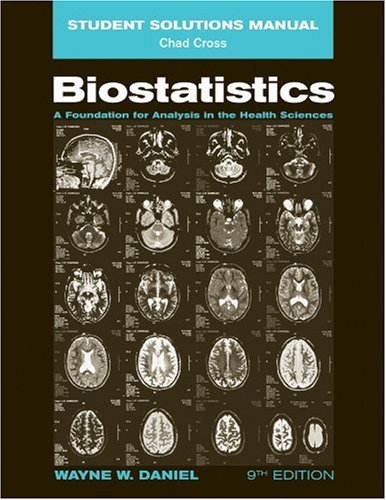
15. Biostatistics: A Foundation for
$39.95
16. A Study Guide to Epidemiology
$35.21
17. An Introduction to Biostatistics
$58.99
18. Biostatistics: The Bare Essentials,
$41.61
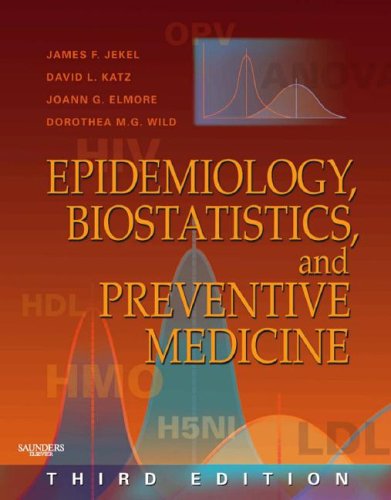
19. Epidemiology, Biostatistics and
$53.36
20. Biostatistics, Second Edition:

1. Intuitive Biostatistics
by Harvey Motulsky
Paperback: 408 Pages (1995-10-19)
list price: US$46.95 -- used & new: US$37.92
(price subject to change: see help)
Asin: 0195086074
Average Customer Review: 4.5 out of 5 stars
Canada | United Kingdom | Germany | France | Japan
Editorial Review

Book Description
Designed to provide a nonmathematical introduction to biostatistics for medical and health science students, graduate students in the biological sciences, physicians, and researchers, this text explains statistical principles in non-technical language and focuses on explaining the proper scientific interpretation of statistical tests rather than on the mathematical logic of the tests themselves.Intuitive Biostatistics covers all the topics typically found in an introductory statistics text, but with the emphasis on confidence intervals rather than P values, making it easier for students to understand both. Additionally, it introduces a broad range of topics left out of most other introductory texts but used frequently in biomedical publications, including survival curves. multiple comparisons, sensitivity and specificity of lab tests, Bayesian thinking, lod scores, and logistic, proportional hazards and nonlinear regression. By emphasizing interpretation rather than calculation, this text provides a clear and virtually painless introduction to statistical principles for those students who will need to use statistics constantly in their work. In addition, its practical approach enables readers to understand the statistical results published in biological and medical journals. ... Read more

Customer Reviews (23)

5-0 out of 5 stars excellent elementary book on biostatistics
Dr. Motulsky is an MD who is also a Professor of Pharmacology and President of his own software company. The book's title suggests that he can make biostatistics intuitive for non-statisticians (e.g. physicians, clinicians and nurses). After reading through it he has made a believer out of me! He introduces concepts through examples and touches on most of the important statistical methods that are used in the medical literature. While the book could be used as a classroom text, it seems to me to be more suited as a reference source for medical researchers who want to understand the statistics described in research papers. Although not a statistician by training, Dr. Motulsky has a good understanding of statistical methods and principles and exhibits his wisdom and experience throughout the book. He is deliberate at keeping things simple and to the point. He points out that he intentionally uses fake examples and modifies real examples for simplification of exposition. He avoids mathematics as much as possible. the preface and the introduction are very well written and the reader should read both before reading the rest of the text.
My usual concern with such books is that concepts are oversimplified and the presentation is too cook-bookish. Amazingly that is not the case here. Professor Motulsky carefully explains concepts such as confidence intervals, p-values, multiple comparison issues, Bayesian thinking and Bayesian controversy in a way that should be understandable to his intended audience.

Proportions and the binomial distribution are introduced early. Advanced topics such as sequential methods, survival curves and logistic regression are tackled. These subjects are important in medical research but are often avoided in elementary books. To his credit he also does a very good job of introducing the concepts of sensitivity and specificity. Hypothesis testing is introduced at the same time which makes a lot of sense since for a particularly hypothesis test the specificity and the sensitivity are related to the type I and type II errors. It is a good way for those familiar with medical applications where specificity and sensitivity may be intuitive concepts, to become comfortable with the less familiar null and alternative hypotheses and their associated error probabilities.

Professor Motulsky writes eloquently and this appears to be appreciated by the readers, judging from the other reviews that I have seen on Amazon. Having said all this you might wonder why I didn't give it 5 stars. I found a few things that could have been done better.

I am not completely happy with the way probability is introduced through the binomial distribution and here the wording could be improved. He writes "Mathematicians have developed equations, known as the binomial distribution, to calculate the likelihood of observing any particular outcome when you know the proportion in the overall population." Actually the binomial distribution is a probability distribution (which he has not yet defined as he first uses the term distribution). The equation is a statement that the probability of an event (e.g. exact 7 heads in 10 coin flips) is given by equation (2.2) on page 19 with N=10 and R=7 and p=1/2 (assuming a fair coin).

Another area that could be omitted or else improved is the discussion of Bayesian ideas. Bayes theorem is presented in a limited context related to the example of sensitivity and specificity. While I do think that some Bayesian ideas are well brought out the breadth of applications is missing. Some comparison of the frequentist and Bayesian approaches and philosophy are correctly described but the discussion is too brief to provide good insight. The p-value is strictly a frequentist concept. Motulsky relates it to the Bayesian idea of posterior odds for the null hypothesis to be true. While there is such a formal mathematical relationship, they are conceptually quite different. This is just like relating likelihood to posterior probability. Mathematically the likelihood and posterior probability are related through Bayes theorem as posterior = likelihood x prior but although likelihood is an acceptible frequentist concept posterior probability is not. A real understanding requires some knowledge of the sample space for a frequentist and the treatment of parameters as random quantities by Bayesians. I think this may be something that requires a little more mathematical sophistication than is intended for this readership.

There are a few topics that get little or no treatment but deserve more in a biostatistics texts. These include missing data, resampling methods, hierarchical Bayesian models and longitudinal - repeated measures data. Perhaps we will see intuitive descriptions of some of these topics in the second edition.

5-0 out of 5 stars good foundation for further inquiry into stats
A really nifty book for anyone--and that's most of us--interested in what basic statistical tests mean and how to use them.Even someone with a pretty advanced knowledge of statistics may not understand all of the intuitive concepts described in this book.Consistent with its title, it is probably best suited for those in the biosciences, rather than engineers, for example, but I'd say that people in those more technical fields may very well benefit greatly from reading it.It's written in a conversational manner that is easy to digest.I'd say a lot of thinking by the author went into creating it, because he seems to guess what the reader may be thinking and then answers those questions.He's big on the confidence interval, too.Readers who need more specialized, detailed info on a particular topic, such as two-way ANOVA, probably need to consult an additional text.Overall, a great introduction to fundamental statistical concepts and tests, that will be of interest to biological scientists and many other folks, too.Author of Adjust Your Brain: A Practical Theory for Maximizing Mental Health.

5-0 out of 5 stars a great resource
I wouldn't exactly call this book easy reading, but not many books that cover statistics at this level are.It is, however, very worthwhile reading for those who want a better understanding of biostatistics.I've taken a couple of graduate level statistics courses, and often when I couldn't quite understand what the textbook or teacher was talking about, reading this book clarified things for me.As a reasearcher, I continue to use this book occasionally to refresh my memory on various aspects of statistics, and it has served me very well.People may criticize the book for being "non-mathematical," but I don't think that's fair because it was not intended to be a rigorous math-stats book.There are plenty of those available, and none that I know of that can explain things as well to consumers of statistics like me.

2-0 out of 5 stars Deceptive
If you think you can learn Statistics intuitively and without mathematics or in otherwords the easy way, I have an intuitive Brain Surgery book for sale.

5-0 out of 5 stars An original approach.An excellent book on the subject.
The majority of reviewers really liked this book.I can see why, I did too.The author uses a unique approach to teaching statistics that is focused on calculating and explaining Confidence Intervals (the minimum and maximum value you expect an outcome to be given a confidence level typically 95%) rather than P values (probability outcome is due to chance).He also uses common sense and clearly distinguishes between what is statistically significant and what is "significant."Thus, he translates well statistical mumbo jumbo into plain English.He tells you what you should care about and look for.

He shares with you all the statistical flaws that clinical studies may have including testing multiple hypothesis to come up with just a single statistically meaningful one, using large samples to prove something trivial, using small samples that raises uncertainty level, etc...

His section on Bayesian Logic is excellent.His table on what test or methodology to use given the shape of the data and objective you have is worth the price of the book alone.That's one of the clearest taxonomy of statistical methods I have seen anywhere.

Some knowledgeable reviewers have picked up a few errors the author made.I stumbled upon a couple while attempting to replicate the calculation of a few examples.I emailed the author and each time within an hour he either clarified the calculation or corrected the typo that was present in the book.Given his prompt answers, I can't ding him for the couple of typos I caught.

Although the author presents this book as an introductory one, I recommend the reader acquires a good foundation in basic statistics before studying this book.Forgotten Statistics would fit that bill.Indeed, `Intuitive Biostatistics' covers a huge amount of ground.It is far more than an introductory text.It covers material that is pretty advanced including nonparametric hypothesis tests, non linear regression, logistic regression, Bayesian analysis, etc...If it is the first time you come across that stuff you'd be well served having a solid stats foundation.Given that, this book has a lot to offer.I'll keep it as a great reference for years.
... Read more


2. Principles of Biostatistics (with CD-ROM)
by Marcello Pagano, Kimberlee Gauvreau
Hardcover: 592 Pages (2000-03-09)
list price: US$142.95 -- used & new: US$73.94
(price subject to change: see help)
Asin: 0534229026
Average Customer Review: 3.5 out of 5 stars
Canada | United Kingdom | Germany | France | Japan
Editorial Review

Book Description
Marcello Pagano and Kimberlee Gauvreau's PRINCIPLES OF BIOSTATISTICS, Second Edition is a concepts-based introduction to statistical procedures that prepares public health, medical, and life sciences students to conduct and evaluate research. With an engaging writing style and helpful graphics, the emphasis is on concepts over formulas or rote memorization. Throughout the book, the authors use practical, interesting examples with real data to bring the material to life. ... Read more

Customer Reviews (14)

5-0 out of 5 stars another fine introductory biostatistics book
Like Rosner's book by the same publisher, this text is an introductory text by Harvard professors who teach medical students. It seems to be in competition with Rosner's book which makes me wonder why the same publisher is publishing them both. The style is different but the market and level of the two books seem to be the same. Both texts include diskettes with data for PCs. Both books are well written and cover mostly the same topics. The Pagano text seems to go into a little more detail on contingency tables and survival analysis. Both contain lists of valuable references.

4-0 out of 5 stars too wordy

It is written for students who dont have a good mathematical background..Therefore it is too wordy for an engineer , physics or math student..as a student with such background, I founded many long explanations redundant as they could be said in 2 lines..

2-0 out of 5 stars Complicated language
The language in this book is very hard to understand. I took statistics when I was an undergrad and but this book is so hard to understand. The authors tried to show more steps in the math examples maybe try to make it easier for the reader but it just make it MUCH more complicated to follow. Sometimes I have to read my undergrad statistics book in order for me to understand the same thing it says in this book.

2-0 out of 5 stars Principles of Biostatistics
This book does not give step-by-step instructions on how to solve problems.Therefore, I feel it is not a good book.I still feel very lost after reading chapters in this book.

5-0 out of 5 stars Hope this suggestion helps u decide
This is my first time that I purchased online. I got the book within 3 days and it's in a good condition. Cheaper, got a book, and on time...isn't it enough? ... Read more


3. Basic & Clinical Biostatistics (LANGE Basic Science)
by Beth Dawson, Robert G. Trapp, Robert Trapp
Paperback: 416 Pages (2004-04-02)
list price: US$55.95 -- used & new: US$35.00
(price subject to change: see help)
Asin: 0071410171
Average Customer Review: 3.0 out of 5 stars
Canada | United Kingdom | Germany | France | Japan
Editorial Review

Book Description
A comprehensive user-friendly introduction to biostatistics and epidemiology applied to medicine, clinical practice, and research. Features “Presenting Problems” (case studies) drawn from studies published in the medical literature, end-of-chapter, and a CD-ROM with data sets and statistical software programs. ... Read more

Customer Reviews (12)

1-0 out of 5 stars Try another book
I had to purchase this book for a class I am taking. This is a fourth edition book and I have to correct errors before reading each chapter. I give publishers some leeway on a first edition, but by the fourth the kinks should be worked out. Also, there is some crucial information missing when making the calculations and sometimes it does not give enough detail on how to work through the problems.

4-0 out of 5 stars Basic and Clincial Biostats, Scientific Perspective
The book is very detailed and an excellent read and resource for anyone who is in the field of science and someone who reads scientific peer-reviewed journal articles.Though there were some errors in some calculations in the book, overall, it is very helpful and a great way to learn biostatistics and applications in the clinical setting and research settings.

1-0 out of 5 stars definitely not helpful for 'basic' or introductory level
I have very little background in biostats, and need to learn it for medical research and research design.

This book is difficult to read, has far too much emphasis on mathematics and far too little empahisis on concept.After a whole quarter in Biostats using this book, I can tell you very little about how and when to employ certain basis statistics tests or interpret them with confidence.The answers in the back are ofter erroneous, as is some of the text (according to my professor).

The only thing I can seay that is good about this test is that the NCSS software that comes with it I think may be helpful at some point.

I am back in the market for a better book!

4-0 out of 5 stars Good Primer
I bought this book in 1990 (an older version) and have never had a statistics course.I have found it to be an extremely helpful starting point for the application of statistical tests to biomedical problems.From this I have gone on and used more sophisticated tools for computation and have only rarely needed to seek out the advice of experts.

The book is packed full of information and covers the broad range of problems most often encountered in biomedical science.It emphasizes an understanding of the choice an appropriate test for a given problem.Flow charts also help guide the user to the right test and the correct chapter.For this reason I have come back to it repeatedly over the years and it has become well worn.It is sparse on explanation of the statistical or mathematical proofs of methods so it is more of a cookbook than as a theoretical treatise.

4-0 out of 5 stars Pretty Good
I actually thought this book was pretty good.I haven't used the cd.The definitions are pretty clear.I use this in conjunction with Gordis' Epidemiology for quick review.I find Rothman and Greenland is not good for that.When I am thinking about research design and elements of statistical analysis this book is easy to turn to to just go over why one test may be better than another--I am a medical student with an MPH in epi who has worked on several research projects, and I think this book is pretty helpful as a simple aid in the transition from research assistant to co-investigator. ... Read more


4. Fundamentals of Biostatistics (with CD-ROM)
by Bernard Rosner
Hardcover: 896 Pages (2005-02-24)
list price: US$146.95 -- used & new: US$92.90
(price subject to change: see help)
Asin: 0534418201
Average Customer Review: 3.5 out of 5 stars
Canada | United Kingdom | Germany | France | Japan
Editorial Review

Book Description
FUNDAMENTALS OF BIOSTATISTICS (WITH CD-ROM) leads you through the methods, techniques, and computations necessary for success in the medical field. Every new concept is developed systematically through completely worked out examples from current medical research problems. ... Read more

Customer Reviews (13)

4-0 out of 5 stars nice treatment of biostatistics
Bernard Rosner is a Harvard Professor of Biostatistics. He has written an introductory text for undergraduate and graduate medical school students. It covers the basics of probability and inference including categorical data. Other topics include regression, correlation and survival analysis. It is written for students with no math beyond high school algebra but common mathematical notation is freely used. It includes a diskette with data for examples. Many examples are given to illustrate the concepts and SAS ouput is used to illustrate the results and familiarize the students so that they can interpret statistical output. Many exercises are given at the end of each chapter. Several require use of the data sets on the diskette. I think the author has been careful to try to make the subject understandable to medical students. He also has used the lectures notes that were the basis of the text in courses he taught in the Harvard Medical School. So he knows his audience. A unique feature is the catergorizing of exercises by medical specialty.

Rosner tries to fill an important need and does a good job. He avoids heavy mathematics without turning the text into a cookbook. This is now the fourth edition. So many improvements have been made. I gave it 4 stars. It probably deserves 4 and 1/2 stars.

2-0 out of 5 stars Better books available
I was in a sense forced to purchase this text as it was the official text for my class. Unfortunately, if you are a researcher just trying to obtain a basic understanding of the field of statistics, this is not the book for you. There is very little that is understandable to a beginner or even to someone with some basic knowledge in the field. This book is purely meant for the statistican. Norman and Streiner's text on biostatistics and Andy Field's text on Statistics and SPSS are written in plain language. They are easy to understand and get the concepts across with only the bare minimum of formulas thrown around. This book's primary usefulness is its comprehensiveness, but that only goes so far when the text is just unintelligible to most of us mere mortals.

5-0 out of 5 stars Indispensable book
This book is a necesary complement for epidemiology, and basic investigatigation. The chapter's organization is very adecuate for novice and experienced. Every chapter has an easy form to learn the content. The exercises are very congruent with the objetive of evry theme.

2-0 out of 5 stars The backwards book for biostatistics
At the time I was taking bio-statistics for my MPH at Harvard School of Public Health, a friend was taking a different class using this book.I ended up buying it, but only as a reference.Althought the material is all here, the organization is scrambled with theory intermixed with the example that starts the topic discussion - some may like this, but personally it drives me crazy.At the end of the semester, I had a wonderful grasp of statistics, and my friend was pulling his hair out.One real plus of this book is that the index includes the clinical examples that generate the discussion, so I do use this book as a reference for "like-problems".

1-0 out of 5 stars My Prof had trouble understanding the book!
My prof had us buy this book for an intro stats class for grad school.She didn't know how good it would be, but thought it applied to our health policy program.This book was not very good.At one point even our prof said she did not like the book and thought the practice questions were unclear at times.Unless your prof forces you to use this book, I would look at easier books (this is not good for a basic stats class).We also used SAS and this book wasn't any help with that portion of the course.It was not worth the $110 price tag.If you are a prof looking for a stats book, please don't select this one (the price alone is crazy). ... Read more


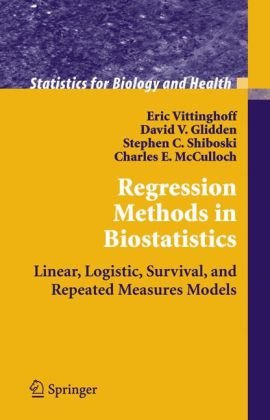
5. Regression Methods in Biostatistics: Linear, Logistic, Survival, and Repeated Measures Models (Statistics for Biology and Health)
by Eric Vittinghoff, David V. Glidden, Stephen C. Shiboski, Charles E. McCulloch
Hardcover: 344 Pages (2007-06-08)
list price: US$79.95 -- used & new: US$60.59
(price subject to change: see help)
Asin: 0387202757
Average Customer Review: 4.5 out of 5 stars
Canada | United Kingdom | Germany | France | Japan
Editorial Review

Book Description

This new book provides a unified, in-depth, readable introduction to the multipredictor regression methods most widely used in biostatistics: linear models for continuous outcomes, logistic models for binary outcomes, the Cox model for right-censored survival times, repeated-measures models for longitudinal and hierarchical outcomes, and generalized linear models for counts and other outcomes.

Treating these topics together takes advantage of all they have in common. The authors point out the many-shared elements in the methods they present for selecting, estimating, checking, and interpreting each of these models. They also show that these regression methods deal with confounding, mediation, and interaction of causal effects in essentially the same way.

The examples, analyzed using Stata, are drawn from the biomedical context but generalize to other areas of application. While a first course in statistics is assumed, a chapter reviewing basic statistical methods is included. Some advanced topics are covered but the presentation remains intuitive. A brief introduction to regression analysis of complex surveys and notes for further reading are provided. For many students and researchers learning to use these methods, this one book may be all they need to conduct and interpret multipredictor regression analyses.

The authors are on the faculty in the Division of Biostatistics, Department of Epidemiology and Biostatistics, University of California, San Francisco, and are authors or co-authors of more than 200 methodological as well as applied papers in the biological and biomedical sciences. The senior author, Charles E. McCulloch, is head of the Division and author of Generalized Linear Mixed Models (2003), Generalized, Linear, and Mixed Models (2000), and Variance Components (1992).

From the reviews:

"This book provides a unified introduction to the regression methods listed in the title...The methods are well illustrated by data drawn from medical studies...A real strength of this book is the careful discussion of issues common to all of the multipredictor methods covered." Journal of Biopharmaceutical Statistics, 2005

"This book is not just for biostatisticians. It is, in fact, a very good, and relatively nonmathematical, overview of multipredictor regression models. Although the examples are biologically oriented, they are generally easy to understand and follow...I heartily recommend the book" Technometrics, February 2006

"Overall, the text provides an overview of regression methods that is particularly strong in its breadth of coverage and emphasis on insight in place of mathematical detail. As intended, this well-unified approach should appeal to students who learn conceptually and verbally." Journal of the American Statistical Association, March 2006

... Read more

Customer Reviews (3)

4-0 out of 5 stars Nice coverage of important topics for biostatisticians
The authors say that they created this book to fit with a course they taught at UC San Francisco to medical students.The book is very sophisticated and a great reference source for practicing biostatisticians in industry or research.It surprises me a little that they find it effective for there non-technical audience.Although the topics are technical and many are advanced they do cover it in a conceptual way without heavy mathematics but still requiring some statistics classes as prerequisite.

Regression does not cover all the techniques of biostatistics but as the authors point out the four topics in the subtitle are among the most important.I know this from my many years of experience as a bisostatistician in the medical device and pharmaceutical industries.They use many good practical examples useing many of the common variables studies in many clinical trials where physical exams are given to record blood pressure and other vital signs and chemistry labs are done to determine cholesterol levels and other things that can be factors in various diseases.Also glucose levels are very important to monitor for diabetes trials.

In addition to the standard topics general estimating equations and generalized linear models are covered and where appropriate bootstrap confidence intervals.There is even a chapter on complex surveys a topic important when quality of life is an endpoint and survey instruments are used to measure it.

In the survival analysis chapter the Kaplan-Meier curves, log rank tests and Cox proportional hazards models are covered as expected but the authors go further to include extensions of the Cox model when the proportional hazards assumption fails.My only disappointment is that there is no coverage of actuarial life tables.At the medical device companies that I worked for it was common to get interval data on events rather than continuous data and then the Cutler-Ederer life table method is the analog for interval data to the Kaplan-Meier estimator for continuous data.

The book covers many topics but is concise as the authors claim.The authors provide a lot of examples that they work out using the statistical package Stata.The authors claim that Stata is the package of choice for biostatistics.This may be the case in academic settings but is certainly not the case in the pharmaceutical industry where SAS is used almost exclusively.I think that it would have been better to show how to write the computer code for solving these problems both in SAS and Stata.To the authors credit Stat is a very good package for their purpose and they do at times mention SAS and SPSS which are the other two major statistical packages used in industry.

All in all this is a very good book that is worth its list price.I will use it as a reference.it also contains a very nice bibliography of 9 pages.

5-0 out of 5 stars very good book, compact but comprehensive
This book covers a wide range of topics in Biostatistics, in a comprehensive, but not overwhelming way. In my opinion this book has the potential of being useful to a broad audience, from Statisticians to other professionals who do health related research.

5-0 out of 5 stars Excellent book ...
A very specific book, with a lot of details for a statistitian ... Read more


6. High-Yield™ Biostatistics (High-Yield™ Series)
by Anthony N Glaser
 Paperback: 128 Pages (2004-12-01)
list price: US$26.95 -- used & new: US$20.50
(price subject to change: see help)
Asin: 078179644X
Average Customer Review: 5.0 out of 5 stars
Canada | United Kingdom | Germany | France | Japan
Editorial Review

Book Description
High-Yield(TM) Biostatistics, Third Edition provides a concise review of the biostatistics concepts that are tested in the USMLE Step 1. Information is presented in an easy-to-follow format, with High-Yield Points that help students focus on the most important USMLE Step 1 facts. Each chapter includes review questions, and an appendix provides answers with explanations. This updated edition includes additional information on epidemiology/public health. The improved, more readable format features briefer, bulleted paragraphs, more High-Yield Points, and boldfaced terms. ... Read more

Customer Reviews (4)

5-0 out of 5 stars Extremely Board Specific
I first encountered this book when it was called "Biostatistics for the Boards" when I took the course from Dr. Glaser when he was teaching at the American University of the Caribbean School of Medicine in 1990. Dr. Glaser was an exceptionally good and popular teacher and the book reflects his "no-nonsense" style. At first I thought it was a "dumbed down" statistics book as I had taken a full year of stats in college and my previous books had been huge and heavy textbooks. However, I soon found that the reason Dr. Glaser's book was so brief was that he concentrates only on the type of concepts and questions you will find on the USMLE step 1. The chapters are short and it is easy to review each one many times to firmly plant the info into long term memory. I had no problems at all with the stats on the USMLE. This book presents exactly what you need to answer all the questions on the USMLE without having you waste a lot of time studying things you will never use.

5-0 out of 5 stars The best source for USMLE
Are you one of those people that are scared of Biostatistics? Fear no more!! This book is for you. It explains everything in a very smart and simple way. Plenty of examples and tests help you to master the subject. If you study this book well, you will "understand" biostatistics and you don't have to memorize nonsense informations. two thumbs up!

4-0 out of 5 stars SIMPLY GREAT
ACTUALLY GIVES A HIGHER YIELD IN MARKS-AMUST HAVE

5-0 out of 5 stars Statistics in a Nutshell
This dandy little book shares the keys of understanding college biostatistics with you. It's what you need to know to pass exams, boards and the like.It provides clear instruction on the essentials of descriptive and inferential statistics, hypothesis testing, correlationaltechniques, research methods, and statistics in epidemiology. For those whostruggle with beginning and intermediate statistics classes, it's a jewel. ... Read more


7. Biostatistics:The Bare Essentials 3/E (Biostatistics: The Bare Essentials Biostatistics: The Bare E)
by Geoffrey R. Norman, David L. Streiner
Perfect Paperback: 200 Pages (2007-09-30)
list price: US$49.00 -- used & new: US$44.94
(price subject to change: see help)
Asin: 1550093479
Canada | United Kingdom | Germany | France | Japan
Editorial Review

Product Description
This book translates biostatistics in the health sciences literature with clarity and irreverence.Students and practitioners alike applaud Biostatistics: as the practical guide that exposes them to every statistical test they may encounter, with careful conceptual explanations and a minimum of algebra. The new Bare Essentials reflects recent advances in statistics, as well as time-honored methods. For examplehierarchical linear modeling,which first appeared in psychology journals and only now is seen in medical literature, is described. Also new is a chapter on testing for equivalence and non-inferiority, and another on getting started with the computer statistics program, SPSS.Free of calculations and jargon, Bare Essentials speak so plainly that you won t need a technical dictionary. No math, all concepts. The objective is to enable you to determine if the research results are applicable to your own patients. Throughout the guide, you ll find highlights of areas in which researchers misuse or misinterpret statistical tests. We have labeled theseC.R.A.P. Detectors(Convoluted Reasoning and Anti-intellectual Pomposity), which help you to identify faulty methodology and misuse of statistics. ... Read more


8. Primer of Biostatistics 6/e Valuepack (Book and CDROM)
by Stanton A. Glantz
Paperback: 500 Pages (2005-06-30)
list price: US$76.95 -- used & new: US$66.45
(price subject to change: see help)
Asin: 0071447814
Average Customer Review: 4.0 out of 5 stars
Canada | United Kingdom | Germany | France | Japan
Editorial Review

Book Description
Extremely popular, this student-friendly text presents the practical areas of statistics in terms of their relevance to medicine and the life sciences. Includes many illustrative examples and challenging problems that reinforce the author’s unique and intuitive approach to the subject. The new edition features a new two-color design, examples taken from current biomedical literature, and review questions within each chapter.

The CD-ROM is a menu-driven program that contains everything required to perform meaningful analysis of data and runs statistical tests providing advice on optimal test results. ... Read more

Customer Reviews (12)

1-0 out of 5 stars Horrifying Errors
Unfortunately, this book is filled with typos and mathematical errors, including the solutions section. A maths book clearly fails by letting its readers down and wasting their time when errors exist in the solutions section. Some are even as basic as addition and subtraction errors in formulating solutions tables. How can you trust this as a mathematical guide when clearly the author has failed at simple calculations? The errors are otherwise just about acceptable in the standard text.

Whilst it reads well in parts, its strengths come from the examples provided, which relate to real life clinical trials and data. However, despite my relatively decent mathematical background, derivations sometimes suddenly lead to a formula or solution out of the blue. The text unfortunately does so in parts too leaving out the systematic approach to the explanation.

I guess you can't have both a true mathematical guide with such clinical emphasis, but for me, the typos just destroy it. If you seriously haven't been affected by the typos, especially the ones in the solutions, then you're clearly not reading carefully enough. The waste of time to get to the wrong solution when you probably had the right one at hand hours before is deeply annoying.

Overall, this book reflects quite poorly on Glantz who in my opinion, is morally and ethically bound to passing on accurate knowledge when he takes on a challenge as difficult as producing a statistical guide. Addendums, erratas or even a statement acknowledging this would have sufficed for now. Without these irritating errors, the strengths of the book really would have been something to rate this book highly for.

Seriously beware. Needs to be pulled of bookshelves in this state.

5-0 out of 5 stars Best stats book out there without the errors of the 6th edition
The quickest, most accurate stats book out there.Warning: you must read it carefully, you can't really skim.That said, if you do read it carefully, even just the first few chapters, you will truly understand basic stats.Before reading this I didn't get significance or what a t-test really meant.Now I can speak the lingo and critically assess other authors work.Just a great book if you give it a few hours to sink in.
Get the 5th edition, not the 6th, for some reason the 6th is full of typos and errors in the examples.

5-0 out of 5 stars Statistics in plane english.
If you can not explaine it in plane english you probably don't undestand it yourself.In this book the author present a clear explanation of this technical field in plane english.

2-0 out of 5 stars good material, too many errors
It's a decent book overall. The material is not too hard to underestand, and there are a lot of medical examples. However, there's nearly a typo on every other page. I wouldn't mind if the mistakes were minor, but it's too much when a third of the solutions are wrong, and statistical tables are incorrect (e.g. 6-8 & 6-9).

5-0 out of 5 stars Non-mathematical introduction to biostatistics
This is not a treatise in mathematics.The author uses easy to understand examples to explain concepts.Other reviewers have noted typos that altered their learning experience; I have not.Other reviewers report that the presentation of ANOVA is not easily understood; I disagree.Statisticians that are used to the Fisher and Scheffé methods of explaining ANOVA will clearly find this different.I actually found it useful to present ANOVA before the T-test and to use the examples he did.Glantz's text on regression and ANOVA is also very good. ... Read more


9. Basic Biostatistics: Statistics for Public Health Practice
by B. Burt Gerstman
Paperback: 557 Pages (2007-07-26)
list price: US$67.95 -- used & new: US$49.00
(price subject to change: see help)
Asin: 0763735809
Canada | United Kingdom | Germany | France | Japan
Editorial Review

Product Description
Basic Biostatistics is a concise, introductory text that covers biostatistical principles and focuses on the common types of data encountered in public health and biomedical fields. The text puts equal emphasis on exploratory and confirmatory statistical methods. Sampling, exploratory data analysis, estimation, hypothesis testing, and power and precision are covered through detailed, illustrative examples. The book is organized into three parts: Part I addresses basic concepts and techniques; Part II covers analytic techniques for quantitative response variables; and Part III covers techniques for categorical responses. With language, examples, and exercises that are accessible to students with modest mathematical backgrounds, this is the perfect introductory biostatistics text for undergraduates and graduates in various fields of public health. ... Read more


10. Biostatistics for the Biological and Health Sciences with Statdisk
by Marc M. Triola, Mario F. Triola
Hardcover: 672 Pages (2005-11-04)
list price: US$120.00 -- used & new: US$71.98
(price subject to change: see help)
Asin: 0321194365
Average Customer Review: 3.0 out of 5 stars
Canada | United Kingdom | Germany | France | Japan
Editorial Review

Book Description

Biostatistics for the Biological and Health Sciences is the result of collaboration between the author of the #1 statistics book in the country and an expert in the biological sciences field. The major objective of this book is to provide a thorough, yet engaging introduction to statistics for students and professors in the biological, life, and health sciences. This text reflects the important features of a modern introductory statistics course and includes an abundance of real data and biological applications, and a variety of pedagogical components to help students succeed in their study of biological statistics.MARKET: It is the ideal introduction to statistics for students and professors in the biological, life, and health sciences.

... Read more

Customer Reviews (2)

5-0 out of 5 stars Great Resource
I have just completed my Biostatistics class and received an A by using this textbook. This is very concise, informative and easy to read.

1-0 out of 5 stars Not good at all
I couldn't make heads or tails of this book... not enough practical application and way too much inconsequential detail.Other students complained about its format too.I found better information using Google searches. ... Read more


11. Principles of Biostatistics Student Solutions Manual
by Kimberlee Gauvreau
 Paperback: 94 Pages (2001)
list price: US$36.40 -- used & new: US$31.20
(price subject to change: see help)
Asin: 0534373984
Average Customer Review: 5.0 out of 5 stars
Canada | United Kingdom | Germany | France | Japan

Customer Reviews (1)

5-0 out of 5 stars Good deal
Good price and quick shipping.Item is as described and brand new! ... Read more


12. Biostatistics: A Methodology For the Health Sciences (Wiley Series in Probability and Statistics)
by Gerald van Belle, Patrick J. Heagerty, Lloyd D. Fisher, Thomas S. Lumley
Hardcover: 896 Pages (2004-07-26)
list price: US$132.00 -- used & new: US$26.98
(price subject to change: see help)
Asin: 0471031852
Average Customer Review: 4.0 out of 5 stars
Canada | United Kingdom | Germany | France | Japan
Editorial Review

Book Description
THOMAS S. LUMLEY and GERALD VAN BELLE

  • Data sets, tables, additional examples, and solutions to selected problems will be housed on the web
  • Instructors will have the opportunity to submit their own problems and solutions to be added to the website (with proper citations)
  • Authors will comprehensively update all the material in the book, focusing on current techniques and applications
  • An additional appendix will mention current software packages, web sites, and important data sets that are available to students and practitioners
Download Description
THOMAS S. LUMLEY and GERALD VAN BELLE * Data sets, tables, additional examples, and solutions to selected problems will be housed on the web * Instructors will have the opportunity to submit their own problems and solutions to be added to the webs ... Read more

Customer Reviews (4)

5-0 out of 5 stars well written text in biostatistics
The authors write well and cover most of the important topics very thoroughly. They motivate the subject very well with a number of important and "real world" examples in the first chapter.
A unique feature is its detailed coverage of sample size determination in a number of contexts.

The book was published in 1993 which is not recent enough to cover advances in meta analysis, resampling, Bayesian Hierarchical Models (with Markov Chain Monte Carlo Methods) and frailty models. At least bootstrap methods and meta analyses are mentioned in the book.

Noteworthy are the full chapters on multiple comparison problems and discriminant analysis. This is an excellent reference book for biostatisticians.

5-0 out of 5 stars Great reference text
This text is a great reference for everything from basic analysis to more advanced topics like longitudinal and time-to-event data. The book is well-written with relevant, current examples. If I had to choose one reference book, this would be it because of its depth and breadth of content (at the intermediate level).

1-0 out of 5 stars From an M.D.'s perspective taking a Masters Degree in Stats
This was a terrible book. To say that it is user unfriendly is an understatement. It is wordy and too long, furthermore, it doesn't teach you what you need to know. It is difficult to reference things (for example, try looking up sensitivity in the index!) and the writing is very tangential. This is not a good book if you are just starting out. I would not receommend it.

5-0 out of 5 stars nice intermediate level text in biostatistics
The authors write well and cover most of the important topics very thoroughly. They motivate the subject very well with a number of important and "real world" examples in the first chapter.

A unique feature is its detailed coverage of sample size determination in a number of contexts.

The book was published in 1993 which is not recent enough to cover advances in meta analysis, resampling, Bayesian Hierarchical Models (with Markov Chain Monte Carlo Methods) and frailty models. At least bootstrap methods and meta analyses are mentioned in the book.

Noteworthy are the full chapters on multiple comparison problems and discriminant analysis. This is an excellent reference book for biostatisticians. ... Read more


13. Introductory Applied Biostatistics (with CD-ROM)
by Sr., Ralph D'Agostino, Lisa Sullivan, Alexa Beiser
Hardcover: 672 Pages (2005-03-16)
list price: US$126.95 -- used & new: US$58.47
(price subject to change: see help)
Asin: 053442399X
Average Customer Review: 4.0 out of 5 stars
Canada | United Kingdom | Germany | France | Japan
Editorial Review

Book Description
INTRODUCTORY APPLIED BIOSTATISTICS (WITH CD-ROM) explores statistical applications in the medical and public health fields. Examples drawn directly from the authors' clinical experiences with applied biostatistics make this text both practical and applicable. You'll master application techniques by hand before moving on to computer applications, with SAS programming code and output for each technique covered in every chapter. For each topic, the book addresses methodology, including assumptions, statistical formulas, and appropriate interpretation of results. This book is a must-have for every student preparing for a statistical career in a healthcare field! ... Read more

Customer Reviews (3)

5-0 out of 5 stars Introductory Applied Biostatistics
This is a great textbook for an introduction to biostatistics.My "required" textbook for my Introduction to Biostatistical Methods was way to technical for me to understand.I got this book to translate and really learn the basics (I have little mathmatics background). Its geared to those who may not have had any statistics backgrounds and easy to read.

5-0 out of 5 stars great introductory book covering all the key topics
In contrast to the first reviewer I loved this book! It should be pointed that I am reviewing this first official edition in hard cover with a CD-ROM while the first reviewer reviewed a preliminary edition in paperback with no CD and published in 2005 whereas this text has a 2006 copyright date.
The authors are all statistics professors at Boston University with Ralph D'Agostino Sr. the most well-known.They have a great deal of experience as teachers researchers and consultants and it shows in the material and the clarity of presentation.Also to their credit, they provide numerous worked out examples in the text and plenty of exericises at the end of the chapters that can be given as homework problems.The other reviewer complained about not having any answers given in the back of the book.I question how valuable that would be.The in-text exercises and the clear exposition in the text , along with an instructor, should be enough for the students to gain enough confidence to try the homework problems with some confidence that they are doing them right!Also the instructor should have a solutions manual to work from or should put one together to go over the homework in class and/or in tutorial sections.Sometime students can waste a lot of time trying to force their solution to match the answer in the back of the book. What if there is a error or typo in the book's answer?

I like the way the authors present the material and the fact that they illustrate the methodology with real examples and SAS software.Many of the analyses are done using the Framingham Heart Study data which is a well designed cohort study with thus far a long 50 year follow-up on the surviving original cohorts.We benefit from the authors' intimate knowledge of this data snd their ability to illustrate a variety of biostatistical methods using it.There is also an interesting follow-up study that was conducted with the offspring of the original Framington cohorts that is discussed in the book.

The book starts with a motivating chapter.I did a similar thing in my introductory book for health science majors.Students in the health sciences are not very interested in math and may have a preconceived notion that statistics is boring mathematics and not relevant to their work.These ideas are very much off base and a good introductory chapter can dispell these notions.The next three chapters are standard to almost any first statistics course starting with ways to summarize data for description.This includes a section on statistical computing snd an introduction to the Framingham study and its data.

Next an introductory chapter on probability is given that includes the basics and some important combinatorial ideas needed to understand the binomial distribution.Then the binomial and normal distributions are presented.This chapter and all subsequent chapters have a section on statistical computing using SAS.Appendix A provides the basic components of SAS that are needed to run analyses in SAS along with sample code and sample output.

Next Chapter 4, as part of a logical progression, covers sampling distributions and the central limit theorem.Chapter 5 covers inference for a single sample mean and includes discussion of power and precision in the important practical problem of deciding how many subjects are needed to draw proper inferences from the trial.This deserves mention because many elementary statistics books avoid this topic and yet it is always one of the first questions a statistician is faced with when he is designing a clinical trial.

Chapter 6 does essentially the same thing as 5 but for two sample problems where the difference of two means is often the key parameter.In the two sample problem there is the added complication of whether or not the two population variances are equal and/or the two sample sizes are equal.Methods are available for all of these situations.Also matched pair designs involve two correlated populations of equal size and can often improve precision over designs that use independent populations to compute the mean difference.Such analyses often come up in clinical trials when baseline and final values are compared for the same subject and for pre-intervention and post-intervention tests in educational trianing studies. Again power and precision the SAS procedures and the analysis of the Framingham Heart Study are given.

The remaining chapters are Categorical Data (Chapter 7)Comparing risks in two populations (Chapter 8), Analysis of Variance (Chapter 9), Correlation and Regression (Chapter 10), Logistic Regression (Chapter 11), Nonparametric Tests (Chapter 12), and Introduction to Survival Analysis (Chapter 13).These are important chapters commonly included in introductory biostatistics texts but chapters such as 8, 10 and 12 are often not included in a general introductory statistics course.

In addition to Appendix A on SAS, Appendix B provides the traditional statistical tables but also shows why the are no longer really necessary since all these table entries can be generated using software.In this case the authors demonstrate it with SAS.And finally, Appendix C provides additional information and data documentation on the Framingham Heart Study.

This text would make a great course text for medical students and health science majors and could even be used as a first biostatistics course for either masters or PhD level statistics students who are interested in biostatistics.It also makes a good reference book for statisticians and biostatisticians.

2-0 out of 5 stars Price-less
Visually is unappealing.The examples and tests lack answers to corroborate whether your efforts paid off.It looks like your paying a bundle for a photocopy version of the book.... ... Read more


14. Study Guide to Epidemiology And Biostatistics (Study Guide to Epidemiology and Biostatistics) (Study Guide to Epidemiology and Biostatistics)
by J. Richard Hebel, Robert J. McCarter
Paperback: 232 Pages (2006-03-30)
list price: US$48.95 -- used & new: US$34.99
(price subject to change: see help)
Asin: 0763734918
Canada | United Kingdom | Germany | France | Japan

15. Biostatistics: A Foundation for Analysis in the Health Sciences (Wiley Series in Probability and Statistics)
by Wayne W. Daniel
Hardcover: 944 Pages (2004-11-25)
list price: US$109.95 -- used & new: US$29.95
(price subject to change: see help)
Asin: 0471456543
Average Customer Review: 3.5 out of 5 stars
Canada | United Kingdom | Germany | France | Japan
Editorial Review

Book Description
This classic text takes an applied and computer-oriented approach to its topical coverage. The book is intended for one or two semester courses in biostatistics at the undergraduate or graduate level offered by departments of biostatistics, statistics, mathematics, nursing and other allied health disciplines, and is also used in some departments of forestry and animal husbandry. Nearly all the examples and exercises make use of real data from actual research projects and reports from health sciences literature. Where appropriate, Minitab, SPSS and SAS commands and printouts are included as part of the examples and solutions to exercises. ... Read more

Customer Reviews (9)

4-0 out of 5 stars Helpful but technical
This book is extreamly helpful for academic research.It can be somewhat more technical than most people would need.

3-0 out of 5 stars Not as impressive as I first thought
Daniel obviously knows his statistics; but, I wouldnt think that is too helpful for individuals reading or studying from his textbook.
The reasons are numerous, and all these reasons would reduce anyone's chances of solely using this book, or even using it at all.
The textbook is well organized, however Daniel's writing oftenis pedantic, repetitive (not in the helpful way) and ambiguous at best.
The examples and solutions occassionaly have serious errors in them which affect the overall outcome of the test (A second consideration is that the book is in it's 8th edition!!! therefore such errors are unacceptable for a person such as myself).
An example can be found on page 239 (example 7.3.2). The pooled variance, as calculated by Daniel is approximately off by 100 simply because he didnt give attention to dividing the numerator with the proper pooled D.F of the samples. The chapter ironically was on hypothesis tests, something extremely important to any line of empirically oriented statistics.

In Chapter 8; which is probably the most important chapter in Bistatistics (ANOVAs) he does not mention the relationship between MSW and sample SD. Also, his usage of Summation in formulas often are unnecessarily overcomplicated. Such is not even seen in professional journals.

I did like this textbook regardless of its many shortcomings, its not because I liked the author's style of writing. Its more or less the fact that my lecturer (I assume) used this book heavily in his lectures and so I used it as a supplementary text.

I would suggest, Chap T. Le's Introductory Biostatistics. However he goes too much into nonparametric methods and proportions and doesnt cocentration (to the degree I wanted) on continous data.

More robust and probably cost effect books are :Introductory Statistics for the Life Sciences by Samuels. But the Best book I have ever seen on the subject is "Introductory Biostatistics for the health sciences" By Chernick and Friis. The book is well priced and no portion of this book, I have seen as being useless.

5-0 out of 5 stars Excellent Text for 2nd Statistics Class
I'm taking my first biostatistics class in medical school, but the text I am using in class (Rosner) has lost me.I subsequently borrowed Daniel's book from the library (only because it has 7th editions), and I am glad that I picked it!Daniel is a good writer.The book is well organized and laid out.Important concepts are emphased and explained with minimum mathematics involved.The well thought out examples are worth working through as well for clarification of the applications of important concepts.However, as a beginner in statistics, I was lost in the midst of mathematics on certain concepts (given that I have a relatively strong mathematics background) without really understanding the meaning of some very basic terms, like percentile, confidence intervals.

What I do is to read another reference book that explains the very basic concepts in plain English first before reading this text.I am currently using Munro's Statistical Methods for Health Care Research.While both of them cover the same set of concepts, Daniel gives me the mathematical and more advanced explainations compare to Munro.

5-0 out of 5 stars Very Good
I have used this and other texts by Daniel over the years and I find you can not go wrong with his works.He is a no nonsense author and a very good writer who uses plenty of examples.Get his nonparametric book also.

4-0 out of 5 stars Solid introductory reference
The title is very appropriate - this text provides a solid foundation in biostats.I used it for an intro course in grad school, and working through the text was very worthwhile.Previously cloudy concepts are now more clear, and I have a great reference for future use. More in-depth biostats deserves a consultation with a statistician, not a longer text. I agree with other reviewers that there are occasional mistakes (which need to be fixed - this is not even the first edition), but overall I would still highly recommend it. ... Read more


16. A Study Guide to Epidemiology and Biostatistics, Fifth Edition (Study Guide to Epidemiology and Biostatistics)
by Richard F. Morton, J. Richard Hebel, Robert J. McCarter
Paperback: 208 Pages (2004-05)
list price: US$39.95 -- used & new: US$39.95
(price subject to change: see help)
Asin: 0763728756
Canada | United Kingdom | Germany | France | Japan
Editorial Review

Book Description
Essential reading for students and health professionals in medicine, nursing, public and community health, dentistry, pharmacy, and allied health sciences, A Study Guide to Epidemiology and Biostatistics contains clear and succinct explanations of complex topics. Each chapter contains two components: the study notes and the exercises. The study notes briefly explain the major issues of a given topic. The exercises component requires you to apply the knowledge gained from epidemiology examples. In addition, self-assessment quizzes are available on-line. Successfully used by thousands, it is the one and only comprehensive study guide that will expose you to all of the basic principles of epidemiology and biostatistics, help you understand biostatistics and epidemiology without becoming bogged down in mathematical computation, and enable you to intelligently read and appraise the health literature. It is a must-have resource for those who will become users of epidemiological reports. ... Read more


17. An Introduction to Biostatistics
by Thomas Glover, Kevin Mitchell
Paperback: 422 Pages (2006-03-25)
list price: US$46.95 -- used & new: US$35.21
(price subject to change: see help)
Asin: 1577664582
Average Customer Review: 5.0 out of 5 stars
Canada | United Kingdom | Germany | France | Japan
Editorial Review

Book Description
New publisher! New price! This accessible, complete introduction to the use of statistics in the biological sciences emphasizes the relationships among probability, probability distributions, and hypothesis testing. There are examples throughout the text taken from many areas in the life sciences, including genetics, physiology, ecology, agriculture, and medicine. The authors highlight the expected value of various test statistics under the null and research hypotheses as a way to understand the methodology of hypothesis testing. In addition, they incorporate nonparametric alternatives to many situations along with the usual parametric analysis. Key features include: 1) each chapter includes a broad set of problems with varying degrees of difficulty, selected answers are located in the back of the book; 2) interesting and easily understood examples are included with each concept; and 3) end-of-chapter problems are randomized within each chapter, requiring students to choose the appropriate analysis and helping them to develop critical decision-making skills. ... Read more

Customer Reviews (1)

5-0 out of 5 stars Excellent explanations
My biostats professor is one of the worst teachers I've ever had, so I basically have to teach myself the material. This book definitely explains the concepts wonderfully and provides a lot of examples to explain them even further. I don't mind studying out of it at all, and I normally hate math textbooks. ... Read more


18. Biostatistics: The Bare Essentials, Second Edition (Biostatistics: The Bare Essentials)
by Geoffrey R. Norman, David L. Streiner
Paperback: 324 Pages (2000-07-15)
list price: US$44.95 -- used & new: US$58.99
(price subject to change: see help)
Asin: 1550091239
Average Customer Review: 4.5 out of 5 stars
Canada | United Kingdom | Germany | France | Japan
Editorial Review

Product Description
Following a highly successful first edition, this book takes on a highly entertaining approach to an area normally reserved for dry, hard-to-follow books. Students benefit not only from the humorous aspects, but also from the in-depth and memorable discussions. This second edition features four new chapters on computer-intensive techniques, including MANOVA, Logistic Regression, Measuring Change and Structural Equation Modeling. This book is excellent for medical and other health professions students. ... Read more

Customer Reviews (12)

5-0 out of 5 stars Easy to read yet detailed enough for exam!
This book is written as a review for people have already taken some kind of statistics or biostatistic. The funny unique writing style keeps me focus and actually helps me to understand the material better. People who have never taken any statistic class may have a harder time. However, why would any one who has no statistic background try to read a book titles "Biostatistics." There are alway those Dummy books. Even people with no statistic background but with some mathematics background will appreciate this book.

5-0 out of 5 stars A guilty pleasure
Although I have long since graduated to much less easygoing fare, I love this book. When I was a confused and clueless medical student, this was the first text that helped me to come to terms with biostatistical concepts.

If you have a background in psychology or other softer sciences, are facing your first biostatistics class, and find other texts a bit scary or obscure, this is definitely worth a try.

The jokes become annoying and the examples a bit garbled on a second read, but I still love this book because of the clarity of its visuals. I also like and highly recommend the chapters on factor analysis and survival analysis, and usually give this book to new students in our lab.

5-0 out of 5 stars Best intro stat book I've found
I took stat 20 years ago, and decided I needed an update, particularly regarding how to calculate sample size:this book was the ticket.A lot about sample size always seemed to me to be smoke-and-mirrors, and WHEN that's so (not always, but sometimes!), Norman and Streiner admit it, saving the learner a lot of frustration. Money well spent.

5-0 out of 5 stars The best biostatistics review ever!
I keep a copy of this book in my office to loan out to students who are reviewing for biostatistics exams, and colleagues who feel the need to brush up on their biostats.

The book definitely does assume some basic knowledge about statistics -- I wouldn't recommend it for someone trying to learn about biostats for the first time.It's really best for someone who already has some kind of formal training in biostatistics, but doesn't want to have to dredge through the heavy textbooks for every question -- I can definitely find the answers to my most common questions in this book much more quickly than I can in my formal textbooks.

For those looking for a less technical introduction to biostatistics that doesn't presume a lot of preexisting knowledge, I'd suggest Modulsky's 'Intuitive Biostatistics'.

1-0 out of 5 stars just get to the point!
I found this book extremely annoying to read.I thought it
would be a good idea to get an easy statistics book that does
not presume too much prior knowledgeI quickly found the so
called "humor" to seriously interfere with readability.The
constant attempt to be funny simply becomes the book's major
goal in almost every sentence you read! and I just found this irritating to a degree that the book is rendered useless. ... Read more


19. Epidemiology, Biostatistics and Preventive Medicine: With STUDENT CONSULT Online Access
by James F. Jekel, David L. Katz, Joann G. Elmore, Dorothea Wild
Paperback: 448 Pages (2007-05-07)
list price: US$48.95 -- used & new: US$41.61
(price subject to change: see help)
Asin: 141603496X
Canada | United Kingdom | Germany | France | Japan
Editorial Review

Book Description
Succinct yet thorough, Epidemiology, Biostatistics, and Preventive Medicine, 3rd Edition brings you today's best knowledge on epidemiology, biostatistics, preventive medicine, and public healthin one convenient source. You'll find the latest on healthcare policy and financing · infectious diseases · chronic disease · and disease prevention technology. This text also serves as an outstanding resource for preparing for the USMLE, and the American Board of Preventive Medicine recommends it as a top review source for its core specialty examination. ... Read more


20. Biostatistics, Second Edition: A Guide to Design, Analysis and Discovery.
by Ronald N. Forthofer, Eun Sul Lee, Mike Hernandez
Hardcover: 528 Pages (2006-12-14)
list price: US$88.95 -- used & new: US$53.36
(price subject to change: see help)
Asin: 0123694922
Canada | United Kingdom | Germany | France | Japan
Editorial Review

Book Description
Today, mathematics, biology, medicine, and statistics are closing the interdisciplinary gap in an unprecedented way and many of the important unanswered questions now emerge at the interface of these disciplines. Now in its Second Edition, this user-friendly guide on biostatistics focuses on the proper use and interpretation of statistical methods. This textbook does not require extensive background in mathematics, making it user-friendly for all students in the public health sciences field. Instead of highlighting derivations of formulas, the authors provide rationales for the formulas, allowing students to grasp a better understanding of the link between biology and statistics. The material on life tables and survival analysis allows students to better understand the recent literature in the health field, particularly in the study of chronic disease treatment. Biostatistics now includes a companion website to demonstrate the different applications of computer packages for performing the various analyses presented in this text.

*Includes access to a companion website with further examples and a full explanation of computer packages
* Over 40% new material with modern real-life examples, exercises and references
* New chapters on Logistic Regression; Analysis of Survey Data; and Study Designs
* Introduces strategies for analyzing complex sample survey data
* Written in a conversational style more accessible to students with real data ... Read more


  1-20 of 100 | Next 20

Prices listed on this site are subject to change without notice.
Questions on ordering or shipping? click here for help.

site stats