e99 Online Shopping Mall

Geometry.Net - the online learning center Help  
Home  - Religion - Advaita Vedanta (Books)

  1-20 of 100 | Next 20
A  B  C  D  E  F  G  H  I  J  K  L  M  N  O  P  Q  R  S  T  U  V  W  X  Y  Z  

click price to see details     click image to enlarge     click link to go to the store

$9.03
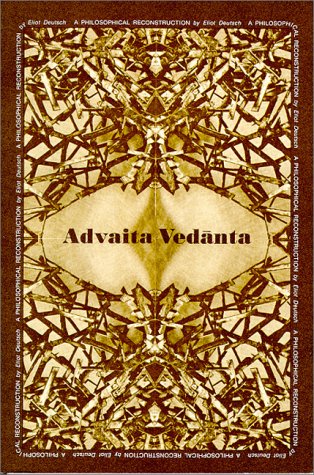
1. Advaita Vedanta : A Philosophical
$35.00
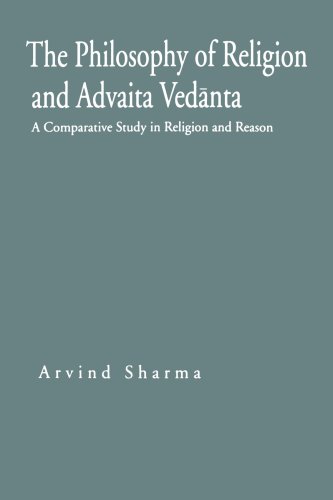
2. The Philosophy of Religion and
$12.89
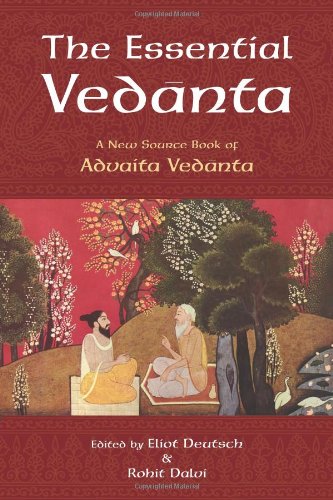
3. The Essential Vedanta: A New Source
$32.99
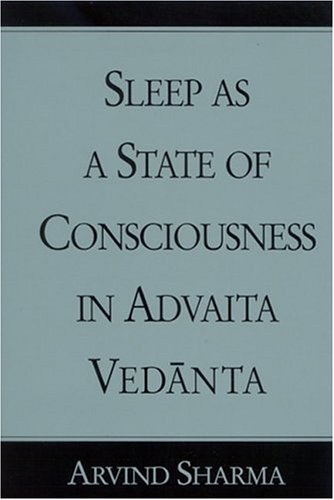
4. Sleep As a State of Consciousness
$26.04
5. The World as Dream (Advaita Vedanta)
 
$15.95
6. The Metaphysic of Experience in
$106.99
7. New Perspectives on Advaita Vedanta:
 
$15.47
8. The pathway of non-duality, Advaitavada:
 
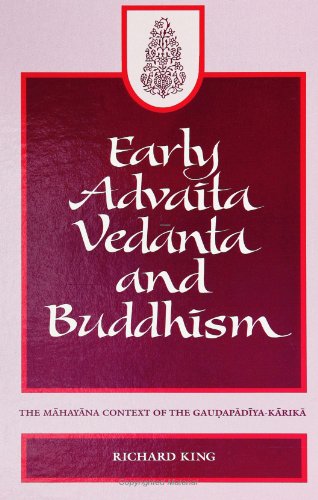
9. Early Advaita Vedanta and Buddhism:
 
$37.95
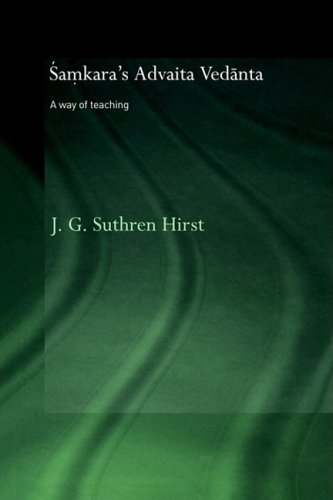
10. Samkara's Advaita VedantaA Way
 
$20.60
11. Philosophy of Religion and Advaita
$118.11
12. Advaita Vedanta And Vaisnavism:
 
13. Christian thought through Advaita
$8.00
14. Advaita Vedanta: An Introduction
 
$18.77
15. Bhamati and Vivarana Schools of
 
$19.95
16. Problems and Perspectives in Religious
$52.00
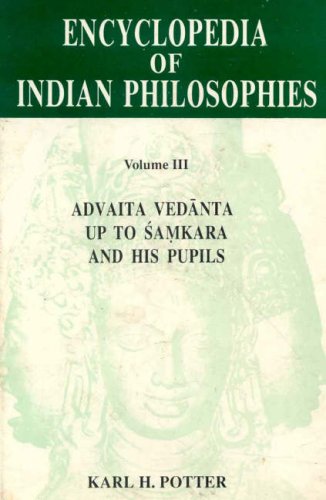
17. The Encyclopedia of Indian Philosophies
 
$27.17
18. The Method of Early Advaita Vedanta:
$72.20
19. Encyclopaedia of Indian Philosophies,
$18.00
20. The Nirvana Sutras and Advaita-Vedanta:

1. Advaita Vedanta : A Philosophical Reconstruction
by Eliot Deutsch
Paperback: 128 Pages (1969-06)
list price: US$10.00 -- used & new: US$9.03
(price subject to change: see help)
Asin: 0824802713
Average Customer Review: 5.0 out of 5 stars
Canada | United Kingdom | Germany | France | Japan

Customer Reviews (5)

5-0 out of 5 stars A rare and unusual book and must have introduction...
I am a personal growth coach who uses an integral approach to psychology to work with clients.This approach places the study of psychology within the larger context of the world's wisdom traditions.I have my graduate education in this area including a lot of sacred psychology and I have been a student of world religions for 25 years.I have also studied philosophy quite deeply as part of my academic education and attended school at a Jesuit University.In addition, I teach meditation including multiple Eastern approaches.It is out of this context that I'm writing this review.

In my opinion, Advaita Vedanta is a remarkable book.In about 115 pages it captures the philosophy and spirit of this complex territory.Every word in this book is carefully chosen and it is a model for good philosophical writing and general writing as well.It manages to both educate and keep the reader's attention very well.

The general approach in this book is to assume a very broad audience.What is truly amazing is that Deutsch succeeds in addressing this audience in an effective, deep and meaningful way.This is not a dead lifeless analysis and contextualization of Eastern concepts.I feel it captures the heart of the tradition, the most important concepts and is successful in presenting these ideas to a Western audience concisely.

I would also like to add that in no way is this book superficial.It is all meat and no fluff.While it's not the type of book you would read at the beach, it isn't inaccessible to the average educated person.The way the ideas are presented, also provides great food for thought on the big existential questions for anyone.

The symbolism and mythology that underlies Hinduism is not emphasized here.What is most important are the ideas and the underlying reality of the ideas.The ontology (study of Being) and epistemology (theory of knowledge) in this worldview is handled very skillfully, which is a must of a Western reader approaching the study of this area from a much different perspective.

Lastly, the author has good credibility.In addition to being a professor of philosophy, he was the editor of the Philosophy East and West journal, authored a book on the Bhagavad Gita and coauthored The Essential Vedanta: A New Source Book of Advaita Vedanta (Treasures of the World's Religions).He also spent some time in India and has an in-depth understanding of both Eastern and Western thought.

At it's core, Advaita Vedanta is about experiencing reality and it's approach is a via negativa (or path of negation) with respect to concepts.This is something that the author understands and conveys very well.Considering he is a philosopher, this is quite an achievement.While he is not a follower of any particular lineage, he handles the topic in the manner of someone with a deep understanding and felt sense of what it's about.

For Westerners, it's hard to imagine a better introduction.This book gets right to the point and untangles the basic tenets and ideas from the symbolism and cultural baggage that can often accompany an in-depth study.At the same time, he respects the cultural mileau out of which the tradition arose and does a good job of giving the reader a sense of this without overwhelming him or her with unnecessary detail.

This is one of the best books in the area of religion that I have read period.It is certainly my top choice for Westerners who want to get started with Advaita Vedanta.From this book, you can branch out to the area which most interest you.If you have no background in religion of philosopy, then I would recommend that you read Huston Smith's The World's Religions: Our Great Wisdom Traditions first.If you want to take both of these and contextualize them for applicability to a modern context, then another good read would be A Brief History of Everything.If you are more of an audio person, then Kosmic Consciousness is an even better place to bring all of your thinking together and integrate it with the modern world, sociology, science, etc.

5-0 out of 5 stars Good Introduction
This is a good introduction to all the basic tenets of advaita vedanta. This book is not for a casual reader, but as long as you know a little about vedic religion you will be able to read it carefully and come away with a very good understanding of advaita vedanta.

Each chapter explicates a single complicated topic in language that is for the most part easy to understand, but occasionally is philosophically dense, as expected and hoped for from this topic. The topics covered are, in order, Brahman, levels of reality, the relation between Brahman and the world, the self, karma, epistemology, ethics, moksa, and jnana yoga.

I would highly recommend this book as a starting point for anyone interested in a complete perspective on advaita vedanta. After reading this, it was much easier to continue on to more difficult, abstract philosophical analyses.

5-0 out of 5 stars Exceptional insight into Advaita Vedanta philosophy.
Books by authors who attempt to distill the essence of a vast and esoteric subject into one volume often fall short of the mark. Advaita Vedanta: A Philosophical Reconstruction, by Eliot Deutsch, is an exception. Professor Deutsch's subject is Advaita Vedanta, and in particular non-dualistic Advaita as conceived by Sankara.

Concepts implicit in Advaita are concisely exposed. For example, the idea of subration

"the mental process whereby one disvalues some previously appraised object or content of consciousness because of its being contradicted by a new experience."

is made clear, and then used to define the three levels of being: Reality, which cannot be subrated by any other experience; Appearance, which can be subrated by experience; Unreality, which neither can nor cannot be subrated by other experience. Further subtle gradations of Appearance are elaborated.

On the other hand, ideas which are explicit in Advaita writings, but are extraneous to or demonstrably not implied by the non-dualistic core of Advaita, are discussed but separated from the pure non-dualistic abstraction. Most impressive is the chapter devoted to a discussion of the doctrine of karma and the corollary concept of samsara, (transmigration or reincarnation). The author notes that

"There is perhaps no other basic doctrine in Indian philosophy which has had such a hold upon the popular thinking and practical religion of India ... as the doctrine of karma."

and then proceeds to prove by the pramanas, or "valid means of knowledge", identified with Advaita, that karma is not demonstrable within the framework of Advaita. This remarkable chapter concludes

"In sum: The law of karma, which occupies so important a place in Indian thought and which is central to the manner in which the supreme value of moksa or freedom is conceived, must, for the Advaitin, have the logical status of a convenient fiction."

This sounds a bit harsh taken out of context, but hopefully will provoke further inquiry by reading the book!

Finally, after having lifted the core of Advaita Vedanta out of its cultural, historical, and religious contexts, this book succeeds in imbuing the reader with the feeling that Advaita is surely one of the greatest intellectual and spiritual achievements of mankind.

5-0 out of 5 stars A great introduction to Advaita
This is an excellent book.Very clear and concize.People who have studied vedanta the conventional way will also gain few insights.While for people used to western philosophical tradition, it is one of the best introductions.

5-0 out of 5 stars An excellent brief introduction to Advaita Vedanta.
For anyone who may have become curious about Advaita Vedanta, and who is looking for a good introduction to what many feel is one of the greatest philosophical achievements of either the East or West, there could be no better guide than this book.

Eliot Deutsch, professor of philosophy at the University of Hawaii and for many years editor of the prestigious journal, 'Philosophy East and West,' writes in a wonderfully lucid and straightforward style, and clearly admires his subject as being of universal philosophical interest.

In his short book of just 120 pages, he skilfully introduces us to the basic ideas of this complex system (Brahman, Levels of Being, Brahman and the World, Self, Karma, Epistemology, Ethics, Moksa and Jnana Yoga), while taking care to avoid overwhelming the reader with too much detail.

Advaita, we learn, is a non-dualistic system, expounded primarily by Sankara (ca. 788-820), the main concern of which is to show that all boundaries and distinctions are unreal,that reality is not made up of parts, and that "in essence it is not-different from the Self" (p.3).There is, in other words, onlythe Self, Brahman, or the One, a state "which is ultimately a name for the timeless plenitude of being" (p.9).

If this seems difficult, think of a movie screen.Any scene projected upon the screen willseem to hold a multiplicity of clearly defined and separate objects: a man, a woman, a child, a dog, a table, chairs, walls, windows, etc.We know, however, that the picture is one.Now consider what is present at the moment in your own field of vision.It too 'seems' to contain a multiplicity of 'objects'...

In reading this book I was impressed, not only by the clarity ofthe author's style and by his lucid treatment of the subject, but also by the fact that, although his approach to the subject is that of a philosopher, he clearly respects Vedanta as being both a way of spiritual realization as well as a system of thought, a religion as well as technical philosophy.

Eliot Deutsch, in short, has given us a book which is fair-minded, scholarly, and extremely well-written.It is also well-documented and has an excellent bibliography.Those who might wish to further deepen their understanding of Vedanta might consider looking at 'A Duet of One - The Ashtavakra Gita Dialogue' (Advaita Press: CA, 1989. ISBN: 0929448111), a fine translation by Ramesh S. Balsekar of anamazing and beautiful short early Advaita text which deserves to be better known. ... Read more


2. The Philosophy of Religion and Advaita Vedanta: A Comparative Study in Religion and Reason (Hermeneutics, Studies in the History of Religions)
by Arvind Sharma
Hardcover: 232 Pages (1995-02)
list price: US$46.00 -- used & new: US$35.00
(price subject to change: see help)
Asin: 0271010320
Canada | United Kingdom | Germany | France | Japan

3. The Essential Vedanta: A New Source Book of Advaita Vedanta (Treasures of the World's Religions)
by EliotDeutsch, Rohit Dalvi
Paperback: 432 Pages (2004-09-25)
list price: US$24.95 -- used & new: US$12.89
(price subject to change: see help)
Asin: 0941532526
Average Customer Review: 4.0 out of 5 stars
Canada | United Kingdom | Germany | France | Japan
Editorial Review

Book Description
This book will be of great interest to all students of Hinduism, students of both Eastern and Western philosophy, and spiritual seekers who wish to better understand this ancient Indian tradition of non-dualist thought. ... Read more

Customer Reviews (1)

4-0 out of 5 stars Vedanta in the past and today
Very substantial and objectiv.
Sorry only, that nothing on Neo-Vedantism!
Daniluu ... Read more


4. Sleep As a State of Consciousness in Advaita Vedanta
by Arvind Sharma
Hardcover: 160 Pages (2004-10-07)
list price: US$35.00 -- used & new: US$32.99
(price subject to change: see help)
Asin: 079146251X
Average Customer Review: 5.0 out of 5 stars
Canada | United Kingdom | Germany | France | Japan

Customer Reviews (1)

5-0 out of 5 stars In-depth philosophy
This is the only book I have ever wanted to read twice, and as far as I can rememeber the only one I have read twice. Through intellectual analysis (rather than new-age bs) it changed my view of consciousness.

It begins with a survey of historical sources of sleep (Upanisads, Gita, commentaries by important philosophers such as Sankara, etc), and gradually moves through some very deep and mind-altering explanations of deep sleep to finish with modern interpretations of the state from the very active field of current Indian philosophy. The overall theme of this book is a critique/explanation of why sleep can be used as an (imperfect) model for Brahman-experience. This book is full of Sanskrit terms as well as english philosophical terms and is not for the casual reader, but for those with serious interest in philosophy, consciousness, and/or advaita vedanta, it is an essential read. Any serious and enthusiastic student of this subject will be able to extract many layers of understanding of reality from this well-organized text. ... Read more


5. The World as Dream (Advaita Vedanta)
by Arvind Sharma
Hardcover: 222 Pages (2006-02-02)
list price: US$28.95 -- used & new: US$26.04
(price subject to change: see help)
Asin: 8124603650
Canada | United Kingdom | Germany | France | Japan
Editorial Review

Product Description
Study of dreams, dream metaphor in Indian tradition and especially Advaita Vedanta ... Read more


6. The Metaphysic of Experience in Advaita Vedanta: A Phenomenological Approach
by Debabrata Sinha
 Hardcover: 150 Pages (1995-02-05)
list price: US$15.95 -- used & new: US$15.95
(price subject to change: see help)
Asin: 8120809424
Canada | United Kingdom | Germany | France | Japan
Editorial Review

Book Description
The central thesis of Sankara, Advaita Vedanta is embodied in the unparalleled doctrine of Pure Conscience (Cit), the fuller significance of which is often overlooked in the usual stereotype of a metaphysics of Brahman, combined with the illusionistic philosophy of the world. The present work offers a radically fresh approach in the interpretive understanding of this pivotal conception of Cit and its orientation. ... Read more


7. New Perspectives on Advaita Vedanta: Essays in Commemoration of Professor Richard De Smet, S.J (Numen Book Series : Studies in the History of Religions, ... in the History of Religions, Volume 85)
Hardcover: 187 Pages (2000-05-01)
list price: US$107.00 -- used & new: US$106.99
(price subject to change: see help)
Asin: 9004116664
Average Customer Review: 5.0 out of 5 stars
Canada | United Kingdom | Germany | France | Japan

Customer Reviews (1)

5-0 out of 5 stars He knows his stuff!
Bradley J. Malkovsky is my professor at the University of Notre Dame, and if this book exemplifies partially some of the ideologies and thought-provoking concepts that he presents in his lectures, then it is a great work indeed!His insight on the Christian-Hindu relationship is eye-opening, triggers the gears of thought, and develops a strong thirst for future studies in search for the "Truth"... ... Read more


8. The pathway of non-duality, Advaitavada: an approach to some key-points of Gaudapda's Asparsavada and Samkara's Advaita Vedanta by means of a series of questions answered by an Asparsin
by Edwin Raphael
 Hardcover: 99 Pages (1992-02-05)
-- used & new: US$15.47
(price subject to change: see help)
Asin: 8120809297
Canada | United Kingdom | Germany | France | Japan
Editorial Review

Book Description
This book is composed of a series of questions and answers regarding some aspects of Non-duality (Advaita) discussed by Raphael, a Researcher-Philosopher who has achieved Asparsa-vada (i.e. the pathway of no support) and keeping alive Advaita Tradition which has had in Gaudapada and Samkaracarya its most representative 'revivers' both from the point of view of Realization and Doctrine. ... Read more


9. Early Advaita Vedanta and Buddhism: The Mahayana Context of the Gaudapadiya-Karika (S U N Y Series in Religious Studies)
by Richard King
 Hardcover: 341 Pages (1995-08)
list price: US$30.50
Isbn: 0791425134
Average Customer Review: 5.0 out of 5 stars
Canada | United Kingdom | Germany | France | Japan
Editorial Review

Book Description
This book provides an in-depth analysis of the doctrines of early Advaita and Buddhism that has important implications for the question of the relationship between Hindu and Buddhist thought. The author examines the central doctrines of the Gaudapadiya-karikain a series of chapters that discuss early Advaita in relation to the Abhidharma, Madhyamaka, and Yogacara schools of Buddhism. The question of the doctrinal diversity of Indian Buddhism is also discussed through an analysis of the concept of 'Buddha-Nature' and its relationship with Vedantic thought. ... Read more

Customer Reviews (1)

5-0 out of 5 stars Early Advaita Vedanta and Buddhism
The origins of the school of thought known as the Advaita Vedanta in medieval India is a subject that is fraught with numerous controversies.This is a very important study on the relationship between the AdvaitaVedanta and Mahayana Buddhism. It is important because it approaches thestudy of Advaita Vedanta from a historico-philosophical perspective, thatis, it situates Advaita Vedanta squarely within thecontext and influenceof Mahayana Buddhism. This is a context that is usually ignored inpresent-day studies. This is an approach that is at once distinctive andpenetrating, for it gives us a deeper insight into how the medieval Indianphilosophers (i.e. Sankara) understood their project, rather then imposingour usualy presuppositions on them. What is the relationship betweenAdvaita Vedanta and MAhayana Buddhism? Is it appropriate to view Sankara asa Buddhist in disguise? What is the philosophical basis of Advaita Vedantaand Mahayana Buddhism? These are but some of the questions that the authorexplores. This is a must-buy for any serious student of Indian thought ingeneral. BE WARNED though, because just as this work is illuminating, itmay also bedeconstructive of our most deeply entrenched beliefs aboutAdvaita Vedanta and MAhayana Buddhism. ... Read more


10. Samkara's Advaita VedantaA Way of Teaching
by Jacquelin Hirst
 Paperback: 264 Pages (2005-06-06)
list price: US$37.95 -- used & new: US$37.95
(price subject to change: see help)
Asin: 0415406013
Canada | United Kingdom | Germany | France | Japan

11. Philosophy of Religion and Advaita Vedanta
by Dharmakirti
 Hardcover: 232 Pages (1997-04-02)
list price: US$28.95 -- used & new: US$20.60
(price subject to change: see help)
Asin: 8170305594
Canada | United Kingdom | Germany | France | Japan
Editorial Review

Book Description
Comparative study on Vedanta tradition, various religious traditions, emphasis on nature of faith, revelation, human destiny, and language. ... Read more


12. Advaita Vedanta And Vaisnavism: The Philosophy Of Madhusudana Sarasvati (Routledge Hindu Studies Series)
by Sanjukta Gupta
Hardcover: 176 Pages (2006-10-16)
list price: US$149.95 -- used & new: US$118.11
(price subject to change: see help)
Asin: 0415395356
Canada | United Kingdom | Germany | France | Japan
Editorial Review

Book Description
In Indian philosophy and theology, the ideology of Vedanta occupies an important position. Hindu religious sects accept the Vedantic soteriology, which believes that there is only one conscious reality, Brahman from which the entire creation, both conscious and non-conscious, emanated.Madhusudana Sarasvati, who lived in sixteenth century Bengal and wrote in Sanskrit, was the last great thinker among the Indian philosophers of Vedanta. During his time, Hindu sectarians, rejected monistic Vedanta. Although a strict monist, Madhusudana tried to make a synthesis between his monistic philosophy and his theology of emotional love for God. This book provides the religious context of his extensive and difficult works. This is the only comprehensive study of Madhusudana Sarasvati's thought. ... Read more


13. Christian thought through Advaita Vedanta (I.S.P.C.K. contextual theological education series)
by K. P Aleaz
 Unknown Binding: 251 Pages (1996)

Isbn: 8172142404
Canada | United Kingdom | Germany | France | Japan

14. Advaita Vedanta: An Introduction
Hardcover: 125 Pages (2004-01)
list price: US$22.95 -- used & new: US$8.00
(price subject to change: see help)
Asin: 8120820274
Canada | United Kingdom | Germany | France | Japan
Editorial Review

Book Description
The novelty of this book consists of the fact that it introduces the reader to the basic tenets of Advaita Vedanta in three independent but complementary ways: scripturally, rationally and experientially.All the three elements are usually found intertwined in accounts of Advaita Vedanta.They are presented distinctly here in the hope that each perspective will enrich one's understanding of Advaita Vedanta as a whole and also allow the reader to form his or her own opinion about the relative merits of each approach. ... Read more


15. Bhamati and Vivarana Schools of Advaita Vedanta: A Critical Approach
by P.S. Roodurmun
 Hardcover: 297 Pages (2002-01-01)
list price: US$30.00 -- used & new: US$18.77
(price subject to change: see help)
Asin: 8120818903
Canada | United Kingdom | Germany | France | Japan
Editorial Review

Book Description
A critical analysis of the philosophy of Advaita Vedanta by comparing the views of the Bhamati and the Vivarana Schools, the two most important protagonists of Sankara's philosophy, with a detailed study of the original texts. A must for research scholars of Advaita Vedanta and for all those interested in Indian Philosophy. ... Read more


16. Problems and Perspectives in Religious Discourse: Advaita Vedanta Implications
by John Grimes
 Paperback: 209 Pages (1994-02)
list price: US$19.95 -- used & new: US$19.95
(price subject to change: see help)
Asin: 0791417921
Average Customer Review: 5.0 out of 5 stars
Canada | United Kingdom | Germany | France | Japan

Customer Reviews (1)

5-0 out of 5 stars Absolute Language
Grimes presents the absolute language of Advaita Vedanta, meaning direct statements about the identity between the individual and the absolute, as well as the theory "that it is more logically consistent to speak of an unqualified absolute than of a qualified theistic deity". He goes into great length while analyzing the logic behind it. Advaita Vedanta is also clearly presented. He says, his book contains a proposed solution to the problems of religous discourse, but sounds very determined about those solutions. The content is propperly based on Advaitic scholasticism and despite it's abstractness pleasant to read. Grimes has a very precise language and keeps the reader busy up to the last page. ... Read more


17. The Encyclopedia of Indian Philosophies (Vol.III: Advaita Vedanta, Part One)
Hardcover: 635 Pages (1998-01-01)
-- used & new: US$52.00
(price subject to change: see help)
Asin: 8120803108
Average Customer Review: 3.5 out of 5 stars
Canada | United Kingdom | Germany | France | Japan
Editorial Review

Book Description
Volume 3. This volume summarizes all that we know of early Advatia Vedanta up to Samkara's pupils. An analytical introduction by the editor introduces the reader to the concepts utilized by Gaudapada, Samkaracarya and Mandana Misra in expounding and defending the Advaita view. This is followed by summaries of all the authentic Advaita works of these authors, and Padmapada. ... Read more

Customer Reviews (2)

5-0 out of 5 stars With due respect, Steve didn't get it.
The avowed function of this book is to discuss the Advaita tradition from a *philosophical* perspective. It is not a handbook on meditation but a discussion on the crucial philosophical *arguments* which the Adviatin scholars and sages gave in support of their tradition. So, there is no fault if it does well what it tries to--and it does.

Readers like Steve would be better served by Shambala-type books, which don't get too heavy on the discursive thought, but revel in the OM-yness. This book is for scholars and practitioners who want to go deeper into the philosophical underpinnings of this meditational tradition.

2-0 out of 5 stars Bad account on Advaita Vedanta
While other volumes deal with largely "philosophically-minded" works (Nyaya-Vaisesika in vol. 2 and 6, Samkhya in vol. 4, Buddhism in vol. 7 and 8), i'm not sure Advaita Vedanta can be dealt with from a philosophical perspective without removing most of its content. Advaita Vedanta is rather spiritual and religious than philosophical in purpose. Advaita is not to be analyzed from a philosophical perspective. This leaves an impression that these scholars have not understood the content of Advaita when reading it (have they really read it ?). If one reads the Bhagavad-gita, Srimad-Bhagavatam and other Advaita texts, one will soon realize that the stories they contain have not just a moral purpose. Their intent concerns the reader, not just ontological aspects as in philosophy but consequences on everyone's life. The purpose is not about trying to win arguments by word jugglery, but to provide spiritual insight for the reader. So i think that this volume misses largely its point, by restricting Advaita to what it is not intended to be. Rather read the non-scholarly works available everywhere than this volume. ... Read more


18. The Method of Early Advaita Vedanta: A Study of Gaudapada, Sankara, Suresvara and Padmapada
by Michael Comans
 Hardcover: 492 Pages (2002-02-05)
list price: US$34.95 -- used & new: US$27.17
(price subject to change: see help)
Asin: 8120817222
Average Customer Review: 5.0 out of 5 stars
Canada | United Kingdom | Germany | France | Japan
Editorial Review

Book Description
This is a unique work discussing the teachings of four of the great Advaita Acharyas: Gaudapada, Sankara, and his disciples, Suresvara and Padmapada. This work will be of great value to one who is seeking to develop his spirituality within the Advaita tradition. ... Read more

Customer Reviews (1)

5-0 out of 5 stars Quality and Depth
The author shows that he grasps the subtleties and nuances of not only Advaita Vedanta and it's commentaries, but also of Madhyamaka and Yogacara buddhism. He unpacks the meanings of these profound teachings in a precise, coherent and unpretensious manner without losing or overplaying his obvious scholarly expertise. Highly recomended for those intersted in understanding the knowledge revealed by Advaita Vedanta of the "first waters," as opposed to the subjecive experiential prattlings of neo-advaita in the current satsang culture. ... Read more


19. Encyclopaedia of Indian Philosophies, v. XI. Advaita Vedanta from 800-1200 AD
Hardcover: 834 Pages (2006-01-15)
list price: US$82.95 -- used & new: US$72.20
(price subject to change: see help)
Asin: 812083061X
Canada | United Kingdom | Germany | France | Japan
Editorial Review

Product Description
Latest in this major reference series. volume X not pub. yet. This has specialty essays on Advaita Vedanta, 800-1200 AD. ... Read more


20. The Nirvana Sutras and Advaita-Vedanta: Beneath the Illusion of Being
by Stephen H. Wolinsky
Paperback: 250 Pages (2004-09)
list price: US$14.95 -- used & new: US$18.00
(price subject to change: see help)
Asin: 0974995401
Average Customer Review: 3.5 out of 5 stars
Canada | United Kingdom | Germany | France | Japan
Editorial Review

Book Description
Now from the founder of Quantum Psychology, a direct disciple of Sri Nisargadatta Maharaj and the author of fourteen books, comes the last word in Self-realization." The Nirvana Sutras and Advaita-Vedanta: Beneath the Illusion of Being."Following on Nisargadatta Maharaj's' basic premise, "All you can teach is understanding, the rest comes on its own", Dr. Wolinsky through a series of sutras and commentaries, demonstrates using eight contexts ranging from Buddhism to science, from Advaita-Vedanta, neuro-science and linguistics, and tantric yoga, to provide a long neglected understanding which lies at the core of all of these teachings, that all spirituality and psychology are dependent on the existence of a separate independent individual subject-I, and if this subject-I is an illusion, a product of the nervous system, a miss-perception, then a not only does the "I" disappear, but so does the foundation and basic premise of all spirituality, spiritual paths and psychology.This book as a follow-up to Walden III, can stand on its own. Not recommended for the weak of heart, or those who are more interested in a spiritual lifestyle than the realization of Nirvana. ... Read more

Customer Reviews (2)

5-0 out of 5 stars NIRVANA means EXTINCTION
.....This statement alone is worth the price of the book. Dr. Stephen Wolinsky demonstrates step by step, the how and why of NIRVANA meaning EXTINCTION.
Wolinsky uses startling quotes from the Buddha, " you might not necessarily be aware of your own enlightenment" and from Nagarjuna, "there never was a Buddha who taught anything" to show the underlying nothing which is not nothing as a thing, but rather a word to describe what is not. ... BRILLIANT!

2-0 out of 5 stars 'This Is Not a Review'
This is a book and author that seem to go to the extreme of negation (neti-neti). There are a number of statements called 'nirvana sutras' in this book that attempt to drill into the head of the reader that the mind-body-ego mechanism that they believe themselves to be is but an illusion, as well as everything else in phenomenal existence. Please note that these 'nirvana sutras' are not any kind of text from the deep past, but the author's own creation. Here are some statements from the book, that might give you an idea of the content: 'No being ever entered Nirvana', 'You will not necessarily be aware of your own enlightenment', 'Nothing exists,' 'The Buddha never taught any Dharma.' Also, the author says that because spirituality and psychology are based on the 'I' that they're false.

The author seems to negate everything, not leaving anything at all, but does have a short section on what might be left after all of these negations, call 'post-deconstruction'; not very much is offered though as to what might be left, and although it can't be expressed in words, some words of inspiration for us dreamers might be nice. The author draws from teachers like Nagarjuna and stresses dependent arising (the philosophy that says that because everything depends on everything else, that everything is empty).

There is a section at the end listing all of the so-called 'illusions,' some of which are: 'the illusion of being,' 'the illusion of not being,' 'the illusion of consciousness,' 'the illusion of unconsciousness,' and so on in this manner. These statements seem confusing at first, but according to Advaita, there is 'not two,' so for there to be consciousness, there must also be unconsciousness, and the Absolute Reality, whatever that might be, even transcends the distinctions of consciousness and unconsciousness!

To conclude, this isn't the first book on Advaita that you would want to read. If you do, there might be misunderstanding. Check out 'The Book of One' by Dennis Waite for a good introduction to Advaita. This isn't really a book that I recommend because of it can easily be taken as nihilistic and is a little too negative for my taste; also many of the `sutras' don't seem to have enough explanation and there is no table of contents. For older texts on Advaita, I recommend the works of Shankara and the Upanishads, and for modern reading books like 'I Am That' by Nisargadatta Maharaj and the teachings of Sri Ramana Maharshi, and Wei Wu Wei for the intellectually inclined.

P.S. Check out the Astavakra Gita-A beautiful text!
... Read more


  1-20 of 100 | Next 20
A  B  C  D  E  F  G  H  I  J  K  L  M  N  O  P  Q  R  S  T  U  V  W  X  Y  Z  

Prices listed on this site are subject to change without notice.
Questions on ordering or shipping? click here for help.

site stats