e99 Online Shopping Mall

Geometry.Net - the online learning center Help  
Home  - Religion - Anglican (Books)

  1-20 of 100 | Next 20
A  B  C  D  E  F  G  H  I  J  K  L  M  N  O  P  Q  R  S  T  U  V  W  X  Y  Z  

click price to see details     click image to enlarge     click link to go to the store

$39.50
1. Anglican Communion in Crisis:
$7.77
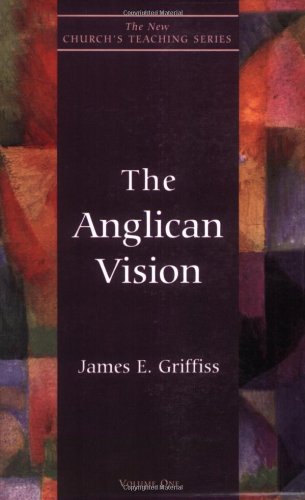
2. Anglican Vision (The New Church's
$11.11
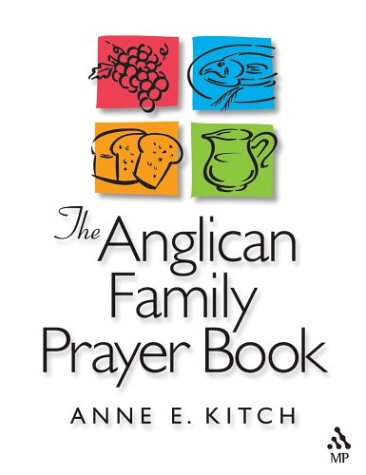
3. The Anglican Family Prayer Book
 
$1.15
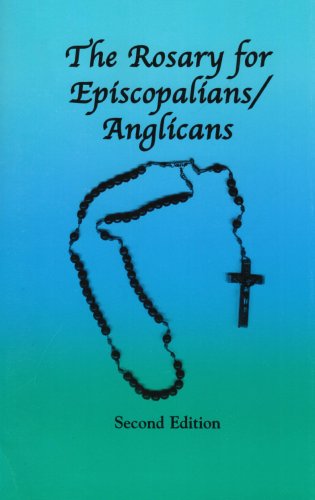
4. The Rosary for Episcopalians/Anglicans
$8.15
5. Anglican Identities
$13.80
6. Anglican Spiritual Direction (Spiritual
$24.91
7. Anglican Approaches to Scripture:
$8.20
8. Anglican Spirit
$10.00
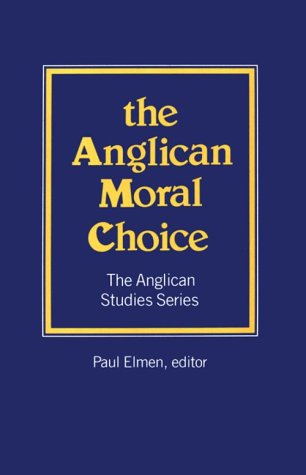
9. Anglican Moral Choice (The Anglican
$101.04
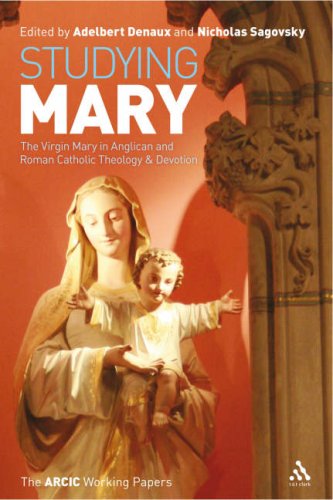
10. Studying Mary: Reflections on
$14.99
11. Give Us Grace: An Anthology of
$20.94
12. The New Puritans: The Rise of
$14.74
13. Canterbury Cousins: The Eucharist
$24.95
14. Anglican Covenant: Unity and Diversity
$8.80
15. The Poetic Imagination: An Anglican
$24.79
16. Modern Anglican Theology: Chapters
$16.65
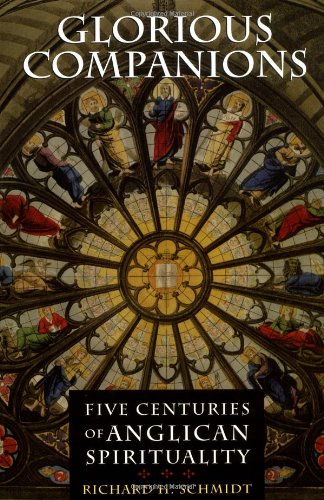
17. Glorious Companions: Five Centuries
$12.76
18. Anglican and Evangelical?
$213.00
19. Canon Law in the Anglican Communion:
$20.50
20. Love's Redeeming Work: The Anglican

1. Anglican Communion in Crisis: How Episcopal Dissidents and Their African Allies Are Reshaping Anglicanism
by Miranda K. Hassett
Hardcover: 320 Pages (2007-04-09)
list price: US$39.50 -- used & new: US$39.50
(price subject to change: see help)
Asin: 069112518X
Average Customer Review: 3.0 out of 5 stars
Canada | United Kingdom | Germany | France | Japan
Editorial Review

Book Description

The sign outside the conservative, white church in the small southern U.S. town announces that the church is part of the Episcopal Church--of Rwanda. In Anglican Communion in Crisis, Miranda Hassett tells the fascinating story of how a new alliance between conservative American Episcopalians and African Anglicans is transforming conflicts between American Episcopalians--especially over homosexuality--into global conflicts within the Anglican church.

In the mid-1990s, conservative American Episcopalians and Anglican leaders from Africa and other parts of the Southern Hemisphere began to forge ties in opposition to the American Episcopal Church's perceived liberalism and growing toleration of homosexuality. This resulted in dozens of American Episcopal churches submitting to the authority of African bishops.

Based on wide research, interviews with key participants and observers, and months Hassett spent in a southern U.S. parish of the Episcopal Church of Rwanda and in Anglican communities in Uganda, Anglican Communion in Crisis is the first anthropological examination of the coalition between American Episcopalians and African Anglicans. The book challenges common views--that the relationship between the Americans and Africans is merely one of convenience or even that the Americans bought the support of the Africans. Instead, Hassett argues that their partnership is a deliberate and committed movement that has tapped the power and language of globalization in an effort to move both the American Episcopal Church and the worldwide Anglican Communion to the right.

... Read more

Customer Reviews (3)

3-0 out of 5 stars Nothing Else Like It, But Could Have Been So Much More
There is nothing else in print that covers the same territory as Miranda Hassett's "The Anglican Communion in Crisis," not even Philip Jenkin's "The New Face of Christianity:Believing the Bible in the Global South."In an era of global shifts and realignments within the Anglican Communion, this is a timely book, and I'm glad I read it.

Hassett's book is obviously an updated version of her doctoral dissertation in anthropology from UNC at Chapel Hill.It focuses on events in the Anglican Communion from 1992-2002, and has been lightly updated to include subsequent developments.Hassett's strengths include a focus on fieldwork (largely in Uganda) and a remarkably even-handed approach to thorny theological and political issues.(She admits in a footnote that she is personally pro-gay rights, yet is willing to criticize the excesses of the liberal wing of the Episcopal Church when it is warranted by her fieldwork data.)She also makes insightful comments, which often are contrary to prevailing wisdom, about the nature of globalization and about Philip Jenkins' thesis of a global religions shift.

However, it could have been so much more.The organization of her book is somewhat choppy and structurally unclear; her prose is frequently turgid and bloated; many of the references to globalization literature seem gratuitious and intended to satisfy her dissertation committee; and the updating of her dissertation to include events since 2002 is uneven.Her focus on Uganda is useful from a fieldwork perspective, and no dissertation can be expected to cover everything.However, developments in the Provinces of Nigeria and the Southern Cone, which have proven to be equally significant from a realignment perspective, are virtually ignored.

In short, limitations aside, Hassett's book is the best one currently available.However, the definitive account of the forces for realignment within the Anglican Communion has yet to be written.Indeed, the story itself has yet to be played out in history.Once she completes her divinity degree at the Episcopal Divinity School, perhaps Hassett herself can write such a history, as long as she remembers that less is more and tighter is more powerful.

2-0 out of 5 stars Ignores basic factors
Amazingly, and for whatever reason, Hassett seriously downplays the part played by American, fundamentalist, non-Anglican, right-wing financial backing in the creation and ongoing support of the "crisis", which is far more about power than about theology.Particularly telling is Ms Hassett's frequent citation of David Virtue, a particularly virulent anti-gay blogger (his site, Virtue Online, is widely referred to in "liberal" circles as Venom Online) while ignoring or being completely unaware of Jim Naughton's "Following the Money", a definitive, excellently sourced study of the financing of American and African break-away groups by American right-wing individuals and groups.Naughton's study is available online, courtesy of the Episcopal Diocese of Washington.http://www.edow.org/follow/.Read it.

4-0 out of 5 stars How Globalization Twists Cultural Concepts and Understandings
This is a fascinating book. It goes beyond the superficial newsreporting to deal substantively with the undercurrent of issues impacting the Anglican Communion.

Hassett provides a detailed anthropological analysis of the issues undergirding the Anglican Communion, from extensive interviews and field work in a church within the Episcopal Church in the United States (ECUSA), which has been aligned with the "conservative" minority against the "Church", and from visits and interviews within the Anglican Church in Uganda.

As a non-Anglican that, nonetheless communes within the Episcopal Church due to my denomination's agreement with ECUSA, I read this book from my academic background in public administration and political science, and with background in teaching and research interests in international relations and comparative politics, and the impact of globalization. I read it from a certain built-in mindset that the situation of the Anglican Communion is a test case for how "states" would act in an environment not constrained by a convention such as the Peace of Westphalia. While the book basically confirmed that mindset, the palpable reaction I came away from the reading of this book is how pejorative terms, concepts, and ideas have become in a global political climate of polarized extremes. Just what exactly do "liberal" and "conservative"and "orthodox" mean? Do they mean the same thing in different cultures and within differing cultural contexts? It is true that we are living in a global age of exacerbated political speech, and, as a result, there has been a certain "assault on reason" (to quote the name of the book by the former US VP, Al Gore - The Assault on Reason). The heightened tenor of global political speech is certainly one of the by-products of the dynamics of globalization.

Hassett's thesis is that the context of the issues affecting the Anglican Communion are not just the result of the split between the church universal in the global north and south. This thesis, widely attributed to Philip Jenkins from his well-regarded work, The Next Christendom: The Coming of Global Christianity, and his follow-up book, The New Faces of Christianity: Believing the Bible in the Global South, seeks to generalize all issues affecting Christianity as simply the result of the ascendance of the global south while Christianity in the global North continues to gradually decline. Hassett seeks to argue that there is a deep cultural context to the issues within the Anglican Communion, within specific African churches as well as within the ECUSA, while certainly not discounting the overarching impacts of the dynamics of globalization. She incorrectly infers that Jenkins' work discounts the role of culture, however. She does bring a deeper understanding, though, of some of the underlying precepts of cultural influences in the development of some African leaders' thought on the issues ongoing within the Anglican Communion.

This is a surprisingly balanced and very disciplined anthropological study that asks a series of very fundamental questions that could be the basis for future research. First, how do cultures define themselves within political discourse? Second, how can differing political discourse be ameliorated to allow for deeper cultural understanding, and, in the specific case of the Anglican Communion, spiritual and theological understanding? Third, specific to the context of the study, how can the tools of statecraft be used to bridge the differences within the Anglican Communion so as to avoid schism? Fourth, to return to a basic question of both theology and philosophy, what is "reason" and how can it be attained and maintained in a global climate that seeks to pull to the extremes as a result of the dynamics of globalization?

I think the greatest contribution of this study is the inference that deeper understanding of the cultural context of terms, concepts and processes (i.e., parliamentary procedure, which Hassett incisively notesas an issue because of the supposition that those in from "western" churches within the Communion are more skilled at these procedures than those in the churches in the Communion within the global south). It begs for further research by employing an oral history approach -- by listening to those actors in the dispute talk about what they do and what they believe and why, so as to infer ways to create bridges to understanding.

This is not a political tome. It is a serious work of anthropology that deserves wide readership for its discussion of cultural and political dynamics as much as the continuing "reasoning" within the Anglican Communion.The book's subtitle suggests that it leans towards the "Episcopal dissidents and their African allies". However, I do think that's a little misleading, particularly in the reading of Chapter 7, which details the "assymetry of money and transnational alliances".I think it would be a more accurate description to say that the actions within the Anglican Communion have led to a certain awareness of differences of opinion that could actually be the basis of a renewed and invigorated Anglican Communion. Calling the issues in the Anglican Communion a "crisis" I think is a bit disingenuous. The Anglican Communion, like many other denominations, is simply in search of greater reason that seeks to draw closer to God through Christ Jesus.

... Read more


2. Anglican Vision (The New Church's Teaching Series, V. 1)
by James E. Griffiss
Paperback: 148 Pages (1997-01-25)
list price: US$11.95 -- used & new: US$7.77
(price subject to change: see help)
Asin: 1561011436
Average Customer Review: 3.5 out of 5 stars
Canada | United Kingdom | Germany | France | Japan
Editorial Review

Book Description
In this first volume to the New Church's Teaching Series the author provides a general introduction to the Anglican tradition. ... Read more

Customer Reviews (7)

4-0 out of 5 stars The broad view...
The Episcopal church in the twentieth century took advantage of the general availability of publishing to good advantage, compiling through several auspices different collections and teaching series, the latest of which was only completed a few years ago.There have been 'unofficial' collections of teaching texts, such as the Anglican Studies Series by Morehouse press, put out in the 1980s, as well as an earlier teaching series.However, each generation approaches things anew; the New Church Teaching Series, published by Cowley Publications (a company operated as part of the ministry of the Society of St. John the Evangelist - SSJE - one of the religious/monastic communities in the Episcopal church, based in the Boston area) is the most recent series, and in its thirteen volumes, explores in depth and breadth the theology, history, liturgy, ethics, mission and more of the modern Anglican vision in America.

The first volume, by James Griffiss, is entitled 'The Anglican Vision', and is a one-volume introduction to Anglicanism.There are two primary sections - Origins of Anglicanism, and Anglican Belief and Practice.In the first part, rather than beginning with the Reformation or the Church Fathers, Griffiss traces the development of Anglicanism in a very personal way, using stories of his own experiences in seminary and ministry, as well as the stories of others in their journeys toward church community.The more standard history - here a very basic overview (as a more in-depth history comes in a later volume) - is developed in the following three chapters, always with an eye toward setting the context for Anglicanism today.

In the second section, Anglican Belief and Practice, again Griffiss gives a brief overview of topics such as worship and belief (there are more detailed discussions of each topic here in later volumes in the series).Griffiss puts his own belief structure into this - the church has no set dogmatic or doctrinal system to which one must adhere.Griffiss sees, in addition to the various sacramental practices of the church, that the church itself can be viewed as a sacrament, an 'outward and visible sign of an inward and spiritual grace'.Griffiss traces some of the relationships between scripture, reason, tradition, liturgy and spiritual practices that comprise a community.

One of the important issues facing the church today is the tension between continuity and change.Griffiss addresses this at each turn, focusing upon the incarnational aspect of the church.There are controversies of identity, ethics, inclusion, and practice; Anglicanism does not have an authoritarian structure that dictates policies on these matters for the whole communion (nor indeed often for individual provinces in the church).Griffiss does a good job at keeping the various sides in play in his discussion.

Griffiss is a priest and systematic theology professor, who was named Canon Theologian by the current Presiding Bishop of the church.He is a respected clergyman and respected author, who care and dedication to the church is very apparent in these pages.

Each of the texts is relatively short (only two of the volumes exceed 200 pages), the print and text of each easy to read, designed not for scholars but for the regular church-goer, but not condescending either - the authors operate on the assumption that the readers are genuinely interested in deeping their faith and practice.Each volume concludes with questions for use in discussion group settings, and with annotated lists of further readings recommended.

3-0 out of 5 stars Strangely boring.
I agree that this book was disappointing. It's hard to say why--I just didn't find it very readable or lively. I kept putting it aside and not picking it up again, so it took days to finish, even though it's quite brief. As a reader who's an "inquirer," I was particularly put off by what felt like long, stern listings of what Anglicans believe; I felt like I was just being told that I'd have to learn to believe this by fiat rather than by having things explained.

Don't let this cast aspersion on the rest of the series, though: I've now read Vol. 2 (Opening the Bible) and found it fascinating.

2-0 out of 5 stars The Anglican Vision: Or, Lack Thereof
This book was a disappointment.Although it is obvious that the author feels very strongly about Anglicanism and that it has a rich history, his writing lacks the persuasiveness and clarity of vision that the title would imply.

Anglican theology, in reading this book, seems to have been most shaped by the Book of Common Prayer and the sacramental theology of Cyril of Jerusalem, which is neither fully Roman Catholic nor fully Protestant (rather, it is the best of both); the idea of the Anglican church as a type of "via media" (middle way) is present throughout Griffis' book.He then goes on to talk a bit about the Oxford movement, the mid-20th century the push towards social engagement and social justice, and how the Anglican church allows for a critical inquiry into various issues that may result in not taking the Scriptures or the Tradition/s at full face value; Griffis' vision of Anglicanism is one that leaves possibilities open.

Griffis repeatedly notes that there is a lot of disagreement in the Anglican church, most notably on issues of abortion, homosexuality, and the place of women in the church (and if that doesn't really cover most of the spectrum of controversial issues today, I don't know what does).This lack of vision - this lack of agreement - is what really left me thinking that, at the very least, Griffis lacks vision; at most, Anglicanism lacks vision.

Although the *idea* of a church that leaves room open for discussion is very attractive, there seems far less room for discussion on many matters than Griffis would presume (if, of course, the threats of much of the Global South to break off communion with many of the churches in the West means anything); perhaps his view is representative more of the liberal (= Western? = bourgeios?) desire for "discussion" - or, perhaps more accurately, license - about what have traditionally been issues of morals that were agreed upon by the vast majority of Christians.

Griffis' vision of Anglicanism may very well tear the Anglican communion apart.

5-0 out of 5 stars informative
This is one of the best introductions to Systematic Theology from an Anglican/Episcopal perspective. I found it highly informative and covering a huge ground, while not taking off on theological mambo-jambo. Well, if you think it is boring, maybe Systematic Theology isn't for you.

5-0 out of 5 stars American Anglicanism in Perspective
James Griffiss does an incredible job of tying together the many ends of the Anglican experience as it exists in the Episcopal Church.This book is perfect for people considering joining the church, people interested in the life of the church, or for church study groups.The writing is free flowing and easy to understand without being childish.I highly recommend this book. ... Read more


3. The Anglican Family Prayer Book
Hardcover: 208 Pages (2003-10-01)
list price: US$18.00 -- used & new: US$11.11
(price subject to change: see help)
Asin: 0819219401
Average Customer Review: 5.0 out of 5 stars
Canada | United Kingdom | Germany | France | Japan
Editorial Review

Book Description
The best place to teach children about our faith is in the home. The Anglican Family Prayer Book is a resource for Episcopal families who want to pass on Anglican prayers and traditions to their children and teach faith in everyday settings.

This important new resource has been compiled by The Rev. Canon Anne Kitch, well known for her children's books, Bless This Day and One Little Church Mouse. A parent as well as an educator, Anne Kitch introduces these Anglican prayers and practices with stories from her own life, as well as brief information about the history and use of the prayers.

The perfect resource for families, especially those who may be new to the Episcopal Church, as well as church school teachers, youth ministers, and clergy, The Anglican Family Prayer Book helps parents and children pray together. Prayers for morning and evening, blessings, nighttime prayers, prayers for ordinary and special occasions, intercessory prayers, prayers of the Eucharist, and prayers for use during the special seasons of the Church year make this book one that families will use every day. ... Read more

Customer Reviews (1)

5-0 out of 5 stars Uncommonly good...
Anne Kitch is probably better known to readers as the author of children's books (`Bless this Day', `Bless this Way', and `One Little Church Mouse') - this is not a children's book per se, but it does keep in mind both Kitch's love for writing for children, and her special ministry of education that involves children.

Children are integral to the family (that goes without saying, perhaps), and prayer should also be integral to the family.This book provides a framework, suggestions, prayer texts and inspiration for incorporating prayer into the family life on a daily basis, around gathering times such as meals, as well as other parts of life.

In many ways, no Anglican can escape the liturgical patterns of the Book of Common Prayer or the liturgical daily cycles of ancient monastic systems (nor, indeed, do they generally want to!).This book begins with a wonderful introduction to what common prayer is - it is not common as in `uninteresting' or `ordinary', but common as in the root of the word `communal' - these are things done in common, in community, and the family provides a perfect context and beginning for true community.There are many common prayers held in common across the broader lines of Christianity - the Lord's Prayer, the Song of Mary (Magnificat), St. Francis' prayer, etc., and these are laid out in the first section with introductions accessible to all.

The second section looks at daily prayer - morning, evening, graces, blessings, bedtime prayers, as well as prayers for days of the week.How one goes about prayer, in the family group and when one is alone, is important, and Kitch discusses that at the beginning of this section.

The third section has prayer suggestions and texts for people and occasions.Special occasions in the life of the family - anniversaries and birthdays, new homes, baptisms, grieving - as well as prayers for important members of the extended family - distant relatives, friends, visitors, even pets - are included here.There are prayers for healing and reconciliation, and prayers for thanksgiving and celebration.There is more than one way to talk to God, Kitch reminds us, and one can use either the acronym ACTIP (Adoration, Confession, Thanksgiving, Intercession and Petition) or ACTS (replacing the final two with the word Supplication) as a reminder for the various ways we talk to God in prayer.

The final two sections bring the world of the prayers of the Anglican church into relationship with the prayers of the family with an overview and text samples of prayers from the Eucharistic liturgy (with a brief discussion on how to teach children to worship) and prayers for the liturgical year (special prayers for major holidays and seasons).

This is a wonderful resource, a small book with big print (all the better for small hands to grasp and readers of all ages to find inviting in word and physical form).I highly recommend it to Anglicans of any age, and even to those beyond the Anglican tradition who want a structure to their prayer life, particularly that of the family. ... Read more


4. The Rosary for Episcopalians/Anglicans
by Thomas Schultz
 Paperback: Pages (2003-10)
list price: US$3.95 -- used & new: US$1.15
(price subject to change: see help)
Asin: 1587900556
Average Customer Review: 5.0 out of 5 stars
Canada | United Kingdom | Germany | France | Japan

Customer Reviews (2)

5-0 out of 5 stars Understanding a Spiritual Treasure-The Rosary
Like many Protestants I never understood the universal tradition of using beads to keep count of prayers offered to God. Fr. Schultz's book presents a step by step approach to understanding and using the Rosary to add another dimension to one's private prayer life.

Thomas Schultz was my spiritual director while I lived in the San Francisco Bay Area, and his love of the Rosary was clear. (He confided that he even makes rosaries to give to interested novices while watching TV.)

The Rosary for Episcopalians and Anglicans makes the Rosary accessible to non-Catholics by offering both traditional and alternate prayers, and an appendix of Biblical citations that illuminate the "Mysteries" as a basis for meditation on the life of Christ. The origin of the well-known "Hail Mary" is also explained.

I suggest taking this book and a Rosary on your next retreat or vacation. It will introduce you to a practice of personal prayer that soothes the conscious mind, calms the inner self, and feeds the soul.

5-0 out of 5 stars Terrific Handbook
This book is a wonderful tool for Christian's who aren't Catholic but would like to use The Rosary. The instructions are very clear and the author provides both traditional and modified prayers for people who are uncomforable asking for intercession from Mary. Great Book. Great Price. ... Read more


5. Anglican Identities
by RowanWilliams
Paperback: 149 Pages (2004-03-25)
list price: US$13.95 -- used & new: US$8.15
(price subject to change: see help)
Asin: 1561012548
Average Customer Review: 5.0 out of 5 stars
Canada | United Kingdom | Germany | France | Japan
Editorial Review

Book Description
Anglican Identities draws together studies and profiles that sympathetically explore approaches to scripture, tradition, and authority that are very different-yet at the same time distinctively Anglican. ... Read more

Customer Reviews (1)

5-0 out of 5 stars Theological Difficulties as a Chorus of Voices
Amidst all the furor in the last year and a half concerning whether or not the Anglican Communion was - and is - likely to last, Rowan Williams, Archbishop of Canterbury, released this collection of essays on Anglicanism/s in hopes that "these 'identities' may allow and encourage for some readers a pause for mind and feeling to be reintroduced to 'passionate patience.'" (pp. 7 & 8)What follows these closing remarks in the introduction are not just 8 chapters devoted to different Anglican thinkers; instead, along with his historical investigations are a number of theological illuminations that are, quite simply, brilliant:

"Doctrine is about our end (and our beginning); about what in our humanity is not negotiable, dispensable, vulnerable to revision according to political convenience or cultural chance and fashion.Deny this, and you must say that humanity or the human good is, in some significant way, within our power to determine: which may sound emancipatory for a few minutes, until you remember that, in a violent and oppressive world, it is neither good news nor good sense to propose that definitions of the human lie in human hands, when those hands are by no means guaranteed to be the instruments of a mind formed by contemplative reason - or even what passes for reason in the liberal and universalist ethos of 'our' democracies."
- p. 55

"...theological language is a difficult, always incomplete, corruptible, but unavoidable enterprise, pressed into existence by the particular character of what God is perceived as doing, by the sense of a givenness or gratuity bearing on the human situation in such a way that a difference is made that demands new words and concepts."
- p. 108

What Williams most seeks to do here - as in other places - is to enter into a charitable dialogue with some of the important - even if not necessarily great - Anglican voices of the past.This charitable dialogue is not without criticism at points; but equally, it is not without appreciation.Reading Williams reading others is like watching someone look into a photo album and pull out all sorts of interesting bits about *us* and where we are at today by noticing the style of bicycle that the child in the photo is riding or the type of dress that a woman is wearing *then*.This is a book to go back through more than once.

There are eight chapters in the book:

1. Williams Tyndale (1491 - 1536): The Christian Society
2. Richard Hooker (1554 - 1600): Contemplative Pragmatism
3. Richard Hooker (1554 - 1600): Philosopher, Anglican, Contemporary
4. George Herbert (1593 - 1633): Inside Herbert's Afflictions
5. B.F. Westcott (1825 - 1901): The Fate of Liberal Anglicanism
6. Michael Ramsey (1904 - 1988): Theology and the Churches
7. John A. T. Robinson (1919 - 1983): Honest to God and the 1960s
8. B.F. Westcott (1825 - 1901), E.C. Hoskyns (1884 - 1937), William Temple (1881 - 1944) and John A.T. Robinson(1919 - 1983): Anglican Approaches to St. John's Gospel

Williams is quite aware that this is by no means a complete list of the manifold Anglican identities that have existed and continue to exist in our world.Yet, there are a lot of contours and trajectories here that ought not be missed and can, in fact, be found to emerge as one goes through different Anglican thinkers.

As one may notice in the above list of chapters, Richard Hooker - perhaps rightly thought of as the theological father of all later Anglican writers - makes *two* appearances here.Williams writes that "Hooker - like the Anglican tradition as a whole, it is tempting to add - is tantalizingly hard to pigeonhole." (p. 55) Yet, I wonder if perhaps this is only because we have become too used to hearing a polemic between radical Protestants on the one hand and ardent Roman Catholics on the other - as if this truly represented the spectrum of Christendom!Anglicanism, as an attempting *for* a primitive (= historic!) catholicity, deconstructs the oftentimes elaborate over-simplifications made by both Puritans and Roman Catholics on issues such as Scripture, grace and the Church, therefore standing as a viable third option: as something *distinctly* Anglican.

Highly recommended. ... Read more


6. Anglican Spiritual Direction (Spiritual Directors International) (Spiritual Directors International)
by Peter Ball
Paperback: 138 Pages (2007-04-01)
list price: US$22.00 -- used & new: US$13.80
(price subject to change: see help)
Asin: 0819222542
Average Customer Review: 5.0 out of 5 stars
Canada | United Kingdom | Germany | France | Japan

Customer Reviews (1)

5-0 out of 5 stars A Very Good Overview
Peter Ball gives us a very comprehensive overview of Spiritual Direction from an Anglican perspective.He looks primarily on the different schools and their contributions.This book is not about technique, but about the values, attitudes and pastoral perspective that Anglicans have contributed to the work of Spiritual Direction.It is a helpful tool for those who wish to know more about this important work. ... Read more


7. Anglican Approaches to Scripture: From the Reformation to the Present
by Rowan A. Greer
Paperback: 288 Pages (2006-08-25)
list price: US$29.95 -- used & new: US$24.91
(price subject to change: see help)
Asin: 0824523687
Canada | United Kingdom | Germany | France | Japan
Editorial Review

Book Description
Many controversial religious debates of our day center on how to interpret scripture correctly.Is it historical or theological?How do we address contradictions?Greer shows the multi-layered Anglican tradition of what scripture is and how to interpret it. ... Read more


8. Anglican Spirit
by Michael Ramsey
Paperback: 128 Pages (2004-10-01)
list price: US$13.00 -- used & new: US$8.20
(price subject to change: see help)
Asin: 1596280042
Average Customer Review: 5.0 out of 5 stars
Canada | United Kingdom | Germany | France | Japan

Customer Reviews (2)

5-0 out of 5 stars An Excellent Introduction
Rowan Williams, the current Archbishop of Canterbury, notes in his foreword that this is a book that is really needed right now.Given that tensions in the Anglican Communion have been increasing for quite some time and that they are now at the point where the Anglican Communion is likely to change in some significant and painful ways over the next few months, it is well worth looking back and seeing something of what others (particularly the heroes of the past!) saw when they looked at Ekklesia Anglicana.

This work is a short one.Compiled from class notes and given Ramsey's editorial approval, the chapters that make up The Anglican Spirit come across as quite conversational - much as if one were sitting the classroom where Ramsey first delivered these.In short, Ramsey gives a quick tour of the history of Anglican thought and practice while giving a bit of theological commentary on the side: criticisms, critiques and approvals.He brings out things that one would likely not know if one were not an expert and well trained in the history of Anglican thought - again, giving the book a conversational tone while sacrificing none of its content.

One is left with a sense that Anglicanism does have a grounding in Scripture, Tradition and Reason - that, contrary to what many think, one may really speak of an Anglican spirit and an Anglican thought process.Anglicans, like other Christians, hold the Scriptures in the highest regard and they believe that the Scriptures must be read not only in the light of higher Biblical criticism, but through the light of the many different thinkers of the Church, especially the creeds and the first four Ecumenical Councils.Ramsey notes that these four have always been authoritative for Anglicans in a way that the last three Ecumenical Councils were not - not that they were or are wrong, but that they never had a grip on the Western (Anglican, Roman Catholic and Protestant) imagination as a whole.

Perhaps more difficult, though, is the idea that "reason" - the bogeyman of so much contemporary thought - ought to play a part in the Christian life in general, and the Anglican life in particular.Ramsey does not propose that one ought to disregard the past in light of new cultural configurations, but that one must ask one's self - the Church must ask itself - how the Gospel is to be given in such a way that its relevancy is seen in a particular culture.This is not watered-down relativism, but an honest and forthright approach to reading both Scripture and Tradition in light of one's contemporary situation.

It would have been welcome to read a chapter on how exactly the Church is to use Reason to engage a particular culture, but Ramsey doesn't touch upon this (perhaps it was not as urgent an issue when this book was first put together a good 13 years ago).Yet, perhaps there is an answer in his ecclesiology.He proves quite prophetic at points, particularly when he discusses unilateralism in the communion and how dangerous it is not only to Anglicans but to all Christians.One can - and should - ask whether or not this means that Ramsey refuses to let a given culture be self-justifying; it is worth reading his chapter on the church and noting what he doesn't say as much as what he does say.

Yet, when he discusses the relationship of Anglicanism to the Roman Catholic and Eastern Orthodox churches, he notes that Anglicanism does not exist for itself and that perhaps the time will come when it will have to dissolve to make way for a greater good in the Church catholic.While very few would want to see this happen, one must admit that it takes a good bit of humility to write this sort of thing, especially since Ramsey was the Archbishop of Canterbury at a truly revolutionary time in both global Christianity and world history.

Hopefully these latter words of Ramsey's will prove to be less prophetic and more along the lines of a warning, not unlike the recent Windsor Report.Of course, only time will tell.In the time between, however, this is an excellent introduction to the spirit of Anglicanism by someone who truly was one of Anglicanism's greatest spirits.

[This book is perfectly complemented by Mark Chapman's Anglicanism: A Very Short Introduction (Very Short Introductions).]

5-0 out of 5 stars A classic on genuine anglicanism
Michael Ramsey (former Archbishop of Canterbury) sets out the history and heart of anglicansim in this very readable introduction to Anglicanism.His insights and perceptions help us get to the history and heart of true anglicanism and its relationship to other churches, especially the Roman Catholic.

The first 2 chapters are key for anyone wanting to discover or return to genuine anglicanism, versus a (post-)modernist, liberal interpretation.Enjoy it! ... Read more


9. Anglican Moral Choice (The Anglican Studies Series)
Paperback: 274 Pages (1983-06)
list price: US$15.95 -- used & new: US$10.00
(price subject to change: see help)
Asin: 0819213225
Average Customer Review: 5.0 out of 5 stars
Canada | United Kingdom | Germany | France | Japan

Customer Reviews (1)

5-0 out of 5 stars Great book
This is a great book about moral theology. It will be a good addition to your personal library. ... Read more


10. Studying Mary: Reflections on the Virgin Mary in Anglican and Roman Catholic Theology and Devotion
Hardcover: 277 Pages (2007-12)
list price: US$130.00 -- used & new: US$101.04
(price subject to change: see help)
Asin: 0567032310
Canada | United Kingdom | Germany | France | Japan

11. Give Us Grace: An Anthology of Anglican Prayers
Hardcover: 528 Pages (2004-05-01)
list price: US$30.00 -- used & new: US$14.99
(price subject to change: see help)
Asin: 0819219622
Average Customer Review: 5.0 out of 5 stars
Canada | United Kingdom | Germany | France | Japan
Editorial Review

Book Description
Anglican Christians are the heirs to a rich tradition. No other family of churches has been praying in English as long as the Anglicans, whose prayers have been dominated by the rhythm and beauty of the Book of Common Prayer. Anglicans blend what is best from the Celtic, Orthodox Christian, and Roman Catholic traditions, and add to them ideas important to Anglicans - nature, incarnation, social justice, and more - to create unique and often beautiful prayers.

Give Us Grace provides an overview of Anglican prayers from the beginning of that tradition up to the present day. A collection that spans the ages and the continents, the book is arranged chronologically, from writers such as Miles Coverdale and Thomas Cranmer, through the sixteenth-century, and continuing with contemporary writers such as Desmond Tutu, David Adam, Madeleine L'Engle, and others. Biographies of each writer are provided. Prayers from a variety of Anglican prayer books, such as the First Primer of Edward VI, the New Zealand Prayer Book, and prayer books from South Africa, Kenya, Japan, Canada, Australia, and others also are included.

Give Us Grace is an excellent reference tool, a valuable devotional resource, and an ideal gift.

... Read more

Customer Reviews (2)

5-0 out of 5 stars Useful book for people interested in reading, using prayer
This is a book that I read, but more I use for prayer. I grant many of the prayers by the well known and should be known Anglicans in this book are old. And their language may be unusual to us moderns, at least to an extent, but they are useful and meaningful.

I bought this hardback to have access to prayers. I had read a biography of Terry Waite, the Anglican held captive some years ago in Iran. He said of his captivity, that one thing that held him was staying with prayers he knew from his prayer book. Albeit I have The Book of Common Prayer, and I say those prayers from it as do many Episcopalians. I thought to myself that I needed more, and though I don't believe that Terry Waite, a devout man, only said those prayers from his prayer book, and none of his own, nonetheless it is a good idea to have a source of prayer like the Anthology as also starting point and inspiration. Those who wish to widen their scope will find this a useful book, one full of history of the Anglican Church.

Say you are perusing the book, rather than reading it from one cover to the other, you will find all kinds of interesting prayers. Some are long. There is John Donne, who says prayers before various sacraments, like marriage. He is of course giving a sermon at the marriage. Here is some text to give you a taste of the language you may encounter. This from the time of 1571 to 1631:

"O Eternall and most gracious God, who hast promised to hearken to the prayers of thy people, when they pray towards thy house, though they be absent from it, worke more effectually upon us, who are personally met in this thy house, in this place consecrated to they worship. Enable us, O Lord so to see thee..."

The language is to this reader most moving and lovely. The book has many such samples of prayer. Here is another sample, this from Jeremy Taylor:

"An Act of Contrition...Lord, thou shalt find my heart full of cares and worldly desires, cheated with love of riches, and neglact of holy things..."

I was introduced to prayers from the New Zealand Prayer Book by a minister, and I was happy to find some of those prayers in this book, which Episcopalians may find a good source of history and interesting reading. There is a text before the prayers of each person who is quoted that tells of that persons life, and the years they lived. The quotes from the New Zealand book are too lengthy for here, but this excerpt about the night:

"The night is dark/Let our fears of the darkness of the world and of our own lives rest in you." "The night is quiet./Let the quietness of your peace enfold us,/all dear to us,/and all who have no peace."

That is a modern, contemporary prayer from their book.

More prayers, or subjects for prayer are given. Elizabeth Goudge, a layperson who lived 1900 to 1984 has some of her prayers in this book "Give Us Grace:" "For the Crippled, For the Blind," "For the Dying," "For Political Prisoners,"

Frankly, I enjoy finding these prayers, and I think if you are so inclined to a need to get words to pray and connect with God on all sorts of topics, you will find this a treasure of such good things. A book to keep, the type is large enough for easy reading and the hardback binding seems sturdy. So one can put this book to use for a long time.One reviewer calls this book, a "Feast." I think it is that, too. The publisher is Morehouse Publishing, an Episcopal Church publishing house. Interestingly, the genre or category for the book is "spirituality," and that should tell you something of it, too. There is no harm in being introduced to a rich tradition. The book is compiled by a well known Episcopal editor, Christopher L. Webber. Congratulations to him for an eminent job. Rich in prayer, this book is a keeper for those so inclined to the spiritual path and religious reading.

5-0 out of 5 stars Uncommon prayers...
Christopher Webber is an author of several Anglican-related titles; among his best work are 'Welcome to Sunday' and 'Welcome to the Episcopal Church', which set the stage for newcomers as well as old-timers who want more background information about their church.This book, 'Give Us Grace' could be considered a natural companion to these volumes.It is an anthology of prayers in the Anglican tradition -- Anglicans are often described as 'people of the book', that book being the Book of Common Prayer. However, this book does change over time.Also, there are other writings by Anglicans, who are often influenced by the BCP in their own writing content and style.

Webber arranges this collection chronologically, beginning with the first major voice of Anglicanism, Thomas Cranmer.Cranmer, Archbishop of Canterburyis the father of Anglican liturgy, the prime mover behind the shape of the liturgy that continues as a primary influence to this day.Cranmer was also a biblical translator, one of the earliest to put the Bible into English, so the scriptural sensitivity of the litugry to the Bible derives from the duality of his role.From these beginnings, Webber traces others of the early Anglican period (including Elizabeth I), through the present day.

Webber does not confine his collection to the English, however, just as Anglicanism is not confined to Britain.Webber draws upon the wider experience of the Anglican communion, whose most recent enhancements to the spiritual and prayer life of its members include revised prayer books in Australia and New Zealand, as well as several generations of prayer book revisions in the United States.There are samplings from Native Americans, Africans, Asians, and other Europeans.Among still-living persons represented are Desmond Tutu, archbishop from South Africa and anti-apartheid champion, and Madeleine L'Engle, author and mystic in North America.

Anglicanism is in some ways a hybrid, taking nourishment from roots in Catholicism and Protestantism, Celtic and Roman influences, and the strong traditions of the English langauge which include both Shakespeare and the King James Bible.There are prayer structures that transcend the Book of Common Prayer and influence in profound ways the prayer development of others -- collect forms, even if not strictly adhered to, still manage to provide seed for inspiration that can often be seen.The cadence and rhythmic qualities of the Book of Common Prayer are pronounced in many of the entries here.

Webber is a priest who currently lives in Connecticut; he has served parishes in inner-city, suburban, and overseas/international settings.He brings his experience, his education, and his obvious spirituality to the writing tasks represented here. ... Read more


12. The New Puritans: The Rise of Fundamentalism in the Anglican Church
by Muriel Porter
Paperback: 192 Pages (2007-02-01)
list price: US$22.00 -- used & new: US$20.94
(price subject to change: see help)
Asin: 0522851843
Canada | United Kingdom | Germany | France | Japan

13. Canterbury Cousins: The Eucharist in Contemporary Anglican Theology
by Owen F. Cummings
Paperback: 174 Pages (2007-11-16)
list price: US$22.95 -- used & new: US$14.74
(price subject to change: see help)
Asin: 0809144905
Canada | United Kingdom | Germany | France | Japan

14. Anglican Covenant: Unity and Diversity in the Anglican Communion (Affirming Catholicism)
Paperback: 160 Pages (2008-03-25)
list price: US$24.95 -- used & new: US$24.95
(price subject to change: see help)
Asin: 0567032531
Canada | United Kingdom | Germany | France | Japan

15. The Poetic Imagination: An Anglican Tradition (Traditions of Christian Spirituality)
by L. William Countryman
Paperback: 214 Pages (2000-01)
list price: US$18.00 -- used & new: US$8.80
(price subject to change: see help)
Asin: 1570753075
Average Customer Review: 4.5 out of 5 stars
Canada | United Kingdom | Germany | France | Japan

Customer Reviews (2)

4-0 out of 5 stars A Tradition Too Broad?
As an Anglican priest with a deep interest in poetry, I looked forward immensely to reading this book, and in large part it did not disappoint.The first chapter, in particular, in which the author discusses the whole concept of 'A Poetic Spirituality'is brilliant, and well worth the price of the book by itself!Almost as good is chapter 2, 'Resources of Image and Language', in which the author discusses in a helpful way Anglican attitudes to Scripture, Liturgy, and Creation.

Where the book does disappoint is the rather narrow choice of poets discussed, and the failure to consider how their individual work can be understood as part of an identifiable tradition, called in the subtitle 'An Anglican Spiritual Tradition'.Countryman admits that his choice was shaped by those books he happened to have on his own shelves, and by and large they are 'standard' religious classics, such as Vaughan, Traherne, Herbert, etc.Here his exposition is sound, if not exactly original or challenging.

It is when he turns to the more modern writers, such as Auden, R.S. Thomas, and the Australian Judith Wright that more doubts set in.He appears not to notice how different they are from their predecessors, such that we might question whether they belong to the same tradition at all.Countryman's basic thesis that the Anglican poetic tradition is essentially devotional rather than didactic is questionable in Auden's case and, I would argue, plain wrong in Thomas'.[I am not familiar enough with Wright's work to comment on her case.]

But overall, I do commend this book, with a final niggle addressed to the publishers.This is said to be a volume in the 'Traditions of Christian Spirituality Series', and there is a preface about the series by Philip Sheldrake, Series Editor.Alas, nowhere is there a list of titles, published or to be published, in the series.Black mark for DLT!

5-0 out of 5 stars Anglican Spirituality
I have not read this book but I did attend a workshop with Dr. Countryman where he read from a manuscript of this book.The manuscript material was very good, especially his discussion of the sprituality of John Donne and George Herbert.After hearing Dr. Countryman I have developed a new facet of my own spirituality which is the use of poetry.I am sure that you will not be disappointed with this book. ... Read more


16. Modern Anglican Theology: Chapters On Coleridge, Hare, Maurice, Kingsley And Jowett And On The Doctrine Of Sacrifice And Atonement (1859)
by James H. Rigg
Paperback: 444 Pages (2007-11-03)
list price: US$36.95 -- used & new: US$24.79
(price subject to change: see help)
Asin: 0548699372
Canada | United Kingdom | Germany | France | Japan

17. Glorious Companions: Five Centuries of Anglican Spirituality (Five Centuries Anglican Spirit)
by Richard H. Schmidt
Paperback: 360 Pages (2002-12)
list price: US$26.00 -- used & new: US$16.65
(price subject to change: see help)
Asin: 0802822223
Average Customer Review: 4.0 out of 5 stars
Canada | United Kingdom | Germany | France | Japan

Customer Reviews (5)

5-0 out of 5 stars Great Episcopal Sunday School Book
We just completed a Sunday school class using a chapter each week for study.The discussion questions at the end of each chapter are thought provoking and facilitate group discussion.It is an excellent way for "cradle Epicopalians" and those new to the faith to learn about those who have shaped who we are.It will be a shock for some to learn about those in our past.It would be a good follow-up after Confirmation classes.This is an easy book to read.

2-0 out of 5 stars An Anglican "Bartlett's Quotations"
A good idea, but a rather disappointing achievement.There's very little to sink one's teeth into here.Mere snippets from 29 Anglican authors' writings are offered.None of them are longer than a third of a page, many of them are no more than 2 or 3 sentences.As a consequence, the reader doesn't get "Five Centuries of Anglican Spirituality" so much as "300 pages of Anglican quotes."Quotations are tricky things.If they're epigrams or one-liner witticisms--the kind of stuff Oscar Wilde, for example, churned out--they can stand alone.But quotations that are taken from larger works, particularly theological and spiritual ones, rarely do well apart from their contexts.They may provide raw material for lectio divina or meditative prayer.But they hardly give an idea of the depth or breadth of Anglican spirituality.It's all well and good, for example, to know that Dorothy Sayers wrote that "It is curious that people who are filled with horrified indignation whenever a cat kills a sparrow can hear that story of the killing of God told Sunday after Sunday and not experience any shock at all" (p. 273).But what does this quotable quote, which first appeared in the Introduction to Sayers' "The Man Born To Be King," actually mean?Read by itself, it's a commonplace, almost trite observation.It's only Sayers' reflections on this strange indifference to the killing of God, as well as her thoughts on scriptural "realism"--all of which Schmidt omits--that makes the passage worth attending to.

4-0 out of 5 stars Thumbnails of the Saints
An excellent introduction to Anglican thinkers, although these interesting and informative essays are essentially starting places for more in-depth reading. And once we get past the obvious early figures, the choices of the profiled sometimes seem a little arbitrary, with echoes of an editor somewhere saying, "Can't we get some more women and people of color in here?" But Schmidt+ has done his homework, and there's food for thought between the covers.

4-0 out of 5 stars Companions for the Journey
As a concept, "Glorious Companions" rates five stars. In execution, it occasionally falls to three. So let me give it four stars and say at the start I recommend the book highly, although with several caveats.

"Glorious Companions," a selection of the Episcopal Book Club, is a anthology or compendium into the hearts and minds of twenty-nine significant figures in Anglican spirituality. Proceeding chronologically, the author, Fr. Richard Schmidt, begins with Thomas Cranmer, the father of the Book of Common Prayer, and ends with Desmond Tutu, the prophet of forgiveness. In between, he covers figures as representative and as diverse as Richard Hooker, John Donne, Joseph Butler, Charles Gore, Dorothy Sayers, C.S. Lewis, and Verna Dozier. Some of his choices are inspired; it was a delight to see Samuel Johnson, a powerful writer whose writings on spirituality are largely unknown. Others, however, seemed arbitrary. Why Hannah More, for instance, but not Florence Nightingale? William Law but not William Laud? Thomas Traherne but not Benjamin Whichcote? Why Madeleine L'Engle over T.S. Eliot or W.H. Auden?

An especially strong feature of the book is its excellent Introduction. Schmidt writes his introductory essay as a road map not just to his book, but to spirituality, Anglicanism, and theological imagery as well. Each of the twenty-nine sections of the book are divided into four parts: an ink drawing of the subject by Dean Mosher; a short spiritual biography of the author; a selection of passages from the subject's writings; and questions for reflection and discussion to be used by study groups.

Generally Schmidt does a good job of placing his subjects in their historical, literary, and spiritual contexts and selecting appropriate passages for consideration and edification. But he can misstep on occasion. The section on John Donne was a disappointing example of these lapses. Schmidt focused more on Donne as a preacher of sermons than as a major English poet. Donne's poetry is difficult, but to ignore it in favor of his lesser talents is a lost opportunity for real spiritual discovery.

4-0 out of 5 stars Recommended to clergy and laity
Although the author says this book is aimed at laypeople, rather than clergy, I wish every member of the clergy would read it, especially those who think a sermon has to be long and address every possible angle. Using clear language and examples from people's everyday lives, a skillful writer -- like Schmidt -- can convey deep thoughts without beating the issue to death.

Schmidt's introduction was, for me, the best part of the book. It really got me thinking and examining my own views.

The selection of profiles of influential Anglican thinkers was excellent, although I wished he would have included even more non-white, English men.

Because of its structure, the book is perfect to pick up and read when you have a few minutes. It is also suited for use by a discussion group. ... Read more


18. Anglican and Evangelical?
by Richard Turnbull
Paperback: 178 Pages (2007-06-10)
list price: US$19.95 -- used & new: US$12.76
(price subject to change: see help)
Asin: 0826481647
Canada | United Kingdom | Germany | France | Japan

19. Canon Law in the Anglican Communion: A Worldwide Perspective
by Norman Doe
Hardcover: 440 Pages (1998-08-27)
list price: US$252.00 -- used & new: US$213.00
(price subject to change: see help)
Asin: 0198267827
Average Customer Review: 5.0 out of 5 stars
Canada | United Kingdom | Germany | France | Japan
Editorial Review

Book Description
There is no recognized corpus of binding law globally applicable to all Churches in the Anglican Communion.Ostensibly, each Church is autonomous, free to make rules to facilitate and to order its internal life.This book, which is global in scope and will be of interest throughout the world, makes available for the first time a comparative study of the Constitutions, Canons, and other forms of law of Churches in the worldwide Anglican Communion.Does analysis draws out the similarities and differences between them and, from the coincidence of actual laws and from global ecclesiastical conventions enunciated by the Lambeth Conference, he elucidates the global principles of Anglican canon law that may apply to all Churches in the Communion.The subjects examined include: government; ministry; doctrine and liturgy; rites; property; inter-church relations; and ecumenism. Does thorough and practical analysis of a hitherto under-explored subject is placed squarely within its jurisprudential and theological context, and will be welcomed by both practitioners and scholars. For those within the Anglican Communion, his book offers a wealth of information enabling individual Churches to see how fellow Churches are organized.For those without, the book provides a valuable insight into Anglican government and law. ... Read more

Customer Reviews (1)

5-0 out of 5 stars A crucial resource for anglican ecclesiastical lawyers.
This is a pioneering work attempting to discern the legal principles that tie together churches in the Anglican Communion.The result of enormous research and skillful analysis, it will be highly useful to anyone interested in the governance and law of Anglican churches. ... Read more


20. Love's Redeeming Work: The Anglican Quest for Holiness
Paperback: 832 Pages (2004-01-01)
list price: US$34.99 -- used & new: US$20.50
(price subject to change: see help)
Asin: 0191070580
Average Customer Review: 5.0 out of 5 stars
Canada | United Kingdom | Germany | France | Japan
Editorial Review

Book Description
There is a rich vein of writing within Anglican tradition that has helped to form the theology and spirituality of the contemporary church.For many readers, much of this material remains unfamiliar and is often difficult to access.Love's Redeeming Work draws together the works of major writers from the sixteenth century to the present day who have contributed to this development.Each selected writer is introduced with a brief biography, which gives background information about the author, and highlights the relationships that existed with others from the same period.This will enable the reader to set the writings in their proper context, enhancing understanding of the material.The selections then follow.In some instances these may be familiar, but other examples will introduce fresh ideas for every reader.Each writer's selection is concluded with a list of source texts, which can encourage readers to explore in more depth those areas which intrigue and excite them.Love's Redeeming Work traces a path that has enabled Anglicanism in particular, and the wider church as well, to develop an ever-deepening awareness of the need for a spiritual depth in the Christian life informed by a better knowledge of tradition.In exploring this material, it is the compilers' hope that readers will find new riches that will encourage and sustain their own quest for holiness. ... Read more

Customer Reviews (1)

5-0 out of 5 stars "Hold fast to that which you have been given..."
In the foreword to this wonderful collection of Anglican spiritual writings, Archbishop of Canterbury Rowan Williams states two things: first, that it is intended to be something of an enchiridion - a handbook or manual - of the Anglican faith and second, the desire that it will be instrumental in leading to a renewal of Anglican theology.Perhaps this second point that will strike some people as odd, but in reality Williams is only noting what others before him (such as one of Williams' predecessors, Michael Ramsey) have noted: since World War II, there has been a real loss of Anglican identity.It is precisely because of this loss of identity that a handbook for instruction in the faith is needed.Love's Redeeming Work accomplishes this quite admirably.

First, there are over 700 pages of source material.Each author or selection is prefaced with relevant dates (including birth and death), a brief summary of their accomplishments and any other relevant data (such as forced exile, martyrdom, marriage, controversies, etc.).It is fascinating to read about some of the great heroes of Anglicanism fighting and arguing with each other, or being influenced and taught by each other; one can go back and forth between these authors and get a feel for really being in the midst of historical development.Every selection for each author is also referenced so that if one desires to pursue further reading of an author one may do so (assuming, of course, that one can get one's hands on the originals which, in many cases, is sadly doubtful).

Second, the book is divided into three main time periods, each of which begins with an essay on the historical and theological development of the era.The essays are absolutely first rate (which is of no surprise, given that Rowell, Stevenson and Williams are all theologians and historians that orbit a high sphere all their own) and provide a substantive amount of background material.Again, reading back and forth between different authors and noting the influence over time of different persons on each other is a wonderful way of getting into the historical development of Anglicanism; fortunately this book is arranged in such a way that this is made quite possible.Reading the selections in order gives one view; dipping into different selections gives another view that is no less complementary.The chronological arrangement of authors fosters the helpfulness of both.

One thing that one will see as one reads through this is that Anglicanism has a wide variety of streams in it.From early Protestant streams that did not seek to divide the church from its catholic past so much as to offer a reform of the excesses of the late medieval Western church, to those that would be far more Calvinist in their views, to those that would be more far more medieval in their aspirations: all of these are found in Anglicanism.

Furthermore, as one gets away from the motherland (England) in the 19th and 20th centuries, one begins to see some of the ways that Anglicans have both engaged and been engaged by cultures from all around the world.This volume, in fact, is the only place that one is going to find many primary documents on the development of Anglicanism as a world communion: India, Africa and Southeast Asia are all represented in this collection.This is incredibly refreshing as there is much talk about global Anglicanism (especially its being more conservative) but next to no primary sources available; this volume offers a significant corrective to that absence.

Living authors such as Desmond Tutu, Rowan Williams and N. T. Wright are not included in this collection.It would be fascinating to see this collection updated in a generation to see who would be included (the aforementioned surely would be).However, as a reader in Anglicanism - including some liturgical texts, for that matter - it functions magnificently.It does a tremendous job revealing how Anglicanism - the third largest Christian church in the world - has come to be.And, hopefully, in fostering the memory of what has come before, it will be influential in shaping where Anglicanism goes from here on out.For all interested in Anglicanism, this is a volume that can truly be called "indispensable". ... Read more


  1-20 of 100 | Next 20
A  B  C  D  E  F  G  H  I  J  K  L  M  N  O  P  Q  R  S  T  U  V  W  X  Y  Z  

Prices listed on this site are subject to change without notice.
Questions on ordering or shipping? click here for help.

site stats