e99 Online Shopping Mall

Geometry.Net - the online learning center Help  
Home  - Religion - Anglican (Books)

  Back | 21-40 of 100 | Next 20
A  B  C  D  E  F  G  H  I  J  K  L  M  N  O  P  Q  R  S  T  U  V  W  X  Y  Z  

click price to see details     click image to enlarge     click link to go to the store

$7.48
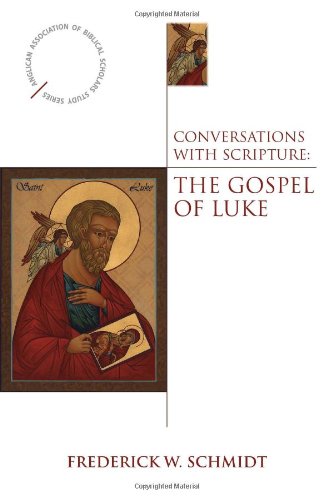
21. Conversations With Scripture:
$9.00
22. The Process of Admission to Ordained
 
23. The Anglican Spiritual Tradition
 
$39.00
24. Anglican Chant Psalter
 
$17.63
25. Beyond Colonial Anglicanism: The
26. Not Angels, but Anglicans: A History
27. The Anglican Tradition: A Handbook
 
28. Anglican Spirituality (Anglican
 
29. The Book of Common Prayer Canada
$45.70
30. Anglican Church-building in London
$8.08
31. Common Prayer on Common Ground:
 
$3.00
32. Idol Bones
$5.25
33. What We Do in Advent: An Anglican
$17.68
34. Our Anglican Heritage
 
35. A History of Anglican Liturgy.
 
$19.48
36. Evangelical Anglicans in a Revolutionary
$13.42
37. Anglican Religious Life: A Yearbook
$5.87
38. What Is Anglicanism (The Anglican
 
39. THE HYMN BOOK OF THE ANGLICAN
$20.95
40. Divided We Stand: A History of

21. Conversations With Scripture: The Law (Anglican Association of Biblical Scholars Study Series) (Anglican Association of Biblical Scholars Study Series)
by Kevin A. Wilson
Paperback: 115 Pages (2006-06-30)
list price: US$13.00 -- used & new: US$7.48
(price subject to change: see help)
Asin: 0819221473
Canada | United Kingdom | Germany | France | Japan
Editorial Review

Book Description
Although the Ten Commandments have been the center of much recent controversy in American politics, scripture contains many laws about which Christians are perplexed. If the Bible contains laws, shouldn't those laws be followed? What does the law that prohibits reaping a harvest to the very edges of your field mean in modern times? Or, what about God's prohibition, in Leviticus not to round off the hair on your temples or to mar the edges of your beard? The Decalogue and the Holiness Code in Leviticus contain guidelines to ethical behavior that originally helped to shape a covenant community and have meaning in us today.

In the newest addition to the Conversations with Scripture series, Kevin Wilson offers fresh insights into the meaning of the Law for today. In chapters that explore the Law in Exodus and Leviticus, Wilson examines the historical and cultural contexts of these legal codes. He discusses rituals such as sacrifice and rituals related to purification from defilement. Wilson demonstrates the ways in which the temple priests used many of these laws as their own code of purity and their own method of enforcing purity in the covenant community.

As with other books in the series, Wilson's book features definitions and sidebars in each chapter on particular topics, as well as study questions. ... Read more


22. The Process of Admission to Ordained Ministry: The First Lutheran, Reformed, Anglican, and Wesleyan Rites : A Comparative Study (Process of Admission to Ordained Ministry)
by James F. Puglisi
Paperback: 227 Pages (1998-04)
list price: US$9.99 -- used & new: US$9.00
(price subject to change: see help)
Asin: 0814661297
Canada | United Kingdom | Germany | France | Japan

23. The Anglican Spiritual Tradition
 Hardcover: Pages (1983)

Isbn: 0872431258
Canada | United Kingdom | Germany | France | Japan

24. Anglican Chant Psalter
by Wyton
 Hardcover: Pages (1989-06-01)
list price: US$39.00 -- used & new: US$39.00
(price subject to change: see help)
Asin: 0898691354
Average Customer Review: 5.0 out of 5 stars
Canada | United Kingdom | Germany | France | Japan

Customer Reviews (1)

5-0 out of 5 stars Heavenly
This edition of the Anglican Chant Psalter is wonderful!Our liturgy has never sounded better! ... Read more


25. Beyond Colonial Anglicanism: The Anglican Communion in the Twenty-First Century
 Paperback: 376 Pages (2001-04-01)
list price: US$29.00 -- used & new: US$17.63
(price subject to change: see help)
Asin: 0898693578
Canada | United Kingdom | Germany | France | Japan

26. Not Angels, but Anglicans: A History of Christianity in the British Isles
Paperback: 303 Pages (2001-04)
list price: US$34.95
Isbn: 1853113522
Average Customer Review: 4.5 out of 5 stars
Canada | United Kingdom | Germany | France | Japan

Customer Reviews (2)

5-0 out of 5 stars See with A TREASURY OF ANGLICAN ART
This book would be ideally purchased with the book A TREASURY OF ANGLICAN ART -- also available from AMAZON.
NOT ANGELS BUT ANGLICANSgives the reader of any background (Episcopal, Roman, Protestant or none) the history and flavor of the English Church and British Spirituality-- from early and medieval Roman Catholicism to the present Anglican Communion -- the largest worldwide body of Christians after the Roman Catholic Church.Not just a dry collection of facts , this work selects historical figures and makes them come alive again as Anglicans develop from a 16th century national state church (Th C of E) to a world wide communion of 80 million adherants in churches all over the globe in the 21st century.
Of interest to all Episcopalians, Christians of any stripe and Anglophiles everywhere.Also looks good on a coffee (tea?) table!

4-0 out of 5 stars A well written compendium
The Anglican Church has influenced millions of people all over the world.It is the largest world wide church after the Roman Catholics.But unlike the Roman Church, there are few well written sources to introduce the history, theology and personalities of this Christian Body.
While this book concentrates on the Church of England, there are also chapters about the American Episcopal Church, and the world wide Anglican Communion. Anyone who is interested in learning about this Church would benefit from reading this very interesting, very readable (and colorfully illustrated) book. ... Read more


27. The Anglican Tradition: A Handbook of Sources
Hardcover: 640 Pages (1991-01)
list price: US$60.00
Isbn: 0281044961
Average Customer Review: 4.0 out of 5 stars
Canada | United Kingdom | Germany | France | Japan

Customer Reviews (1)

4-0 out of 5 stars Useful for scholars
This book, created out of a resolution from the Lambeth Conference 1988, is a comprehensive collection (and serves in some ways as an annotated bibliography) of sources of Anglican faith, doctrine and practice from the earliest beginning of the church to the late 1980s.Any such text is going to suffer from two shortcomings, inherent in any published enterprise of this scope -- first, it must needs be selective; to be generally affordable and accessible, it must be incredibly selective, so scholars will argue as to whether particular things incorporated here need to be included, and if something else not included should be.Second, because it is a book published at a certain date, it will become 'dated' material fairly quickly, particularly given the pace at which new things are be published.These duly noted, the editors here have done a very good job at producing a book that should be useful to scholars and other general researchers for some time to come.

The editors Evans and Wright worked in chronological arrangement to incorporate sources from the early church to the present.They do not include canonical texts, as these are assumed to be foundational already as part of the Anglican triad of scripture, tradition and reason.The first text included is a piece by Clement, Bishop of Rome; a letter to the Corinthians, addressing various contentious issues in a way that continues to speak to the church.Other early authors incorporated include Irenaeus, Melito, Ignatius, Cyprian, Origen, and others.These are writings shared by the whole church, East and West; part of the intention of the editors, reflecting the will of the Lambeth Conference, was to stress the historical continuity of the Anglican Church in its various provinces today with the church historically over time, all the way back to the earliest post-canonical writings.

The writings from the sixteenth century forward are primarily drawn from Church of England and other Anglican sources.As a result, even in the index there is no entry for John Calvin or Martin Luther, a remarkable thing given that their theology and influence has had some impact on the development of Anglicanism; this I feel is the one drawback of the book, that it takes a bit too narrow a focus sometimes in the effort to adhere to the catholic rather than protestant strands of Anglican history, save where those protestant strands are directly English in nature.

The material included here includes both 'acta', the official documents or texts, and 'exempla', writing from later authors who reflect the concerns and ideas of the time.Some are from later historians or church officials; most come from the mainstream of church history and documentation.However, the 'acta' generally carry no more 'official' weight than the 'exempla' -- this is not an effort to create an official Anglican canon of documents with, in the words of the editors, 'automatic and binding authority for all Anglicans'.In many ways, there is no distinctively and definitively Anglican theology, so such a canonical effort would unlikely succeed in any case.

For most readers (including most Anglicans), this material is the kind of optional-extra reading they don't need to be able to participate in the life of the church.This really is a book for scholars and those concerned with the historical progression of the church; in that sense, this book would be of value for any Anglican library, particularly clergy and academic professionals.
... Read more


28. Anglican Spirituality (Anglican Studies)
 Paperback: 168 Pages (1982-06)
list price: US$10.95
Isbn: 0819212970
Average Customer Review: 4.0 out of 5 stars
Canada | United Kingdom | Germany | France | Japan

Customer Reviews (2)

5-0 out of 5 stars A great spirit...
The Episcopal church in the twentieth century took advantage of the general availability of publishing to good advantage, compiling through several auspices different collections and teaching series, the latest of which was only completed a few years ago.One of the better of the 'unofficial' collections of teaching texts is the Anglican Studies Series by Morehouse press, put out in the 1980s, which comprise several volumes that look at different aspects - theology, spirituality, history, and more.This volume, 'Anglican Spirituality' by William Wolf (who edited another volume in this series, 'The Spirit of Anglicanism'), looks at spirituality in a liturgical context.

Anglicanism is a fluid term, and spirituality is a fluid concept, so there is indeterminancy all around.This volume consists of eight essays, each of which deals with different aspects of the Anglican approach to spirituality.This can be via focus on a particular resource (the Book of Common Prayer and other literary resources, music, etc.), particular personalities (Thomas Traherne, John Donne, Richard Hooker, etc.),or theological aspects of spirituality.As Harvey Guthrie states in the first essay and John Skinner states in the final essay to this collection, Anglican spirituality is fully in accord with the overall incarnational ethos of Anglican liturgical expression and theological conviction.Anglican spirituality is rarely expressed and represented as a solitary in search of the otherworldly divine, but rather looks for communal expression and historical links.

No one reading the sermons and poetry of John Donne or George Herbert can ever doubt a strong spirituality exists in Anglicanism.John Booty looks in particular at the spiritual expression in acts of contrition by the divines of the sixteenth and seventeenth century that expressed itself in poetry and prose, music and liturgy. Again, the communal and incarnational aspects are emphasised, as the acts of contrition are most commonly expressed in today's liturgy in the General Confession, a continuation of the church's tradition.Booty continues in a second essay his look at spirituality through to the twentieth century, looking particularly at the Oxford Movement and Evangelical movements in Anglicanism, as well as some careful attention to William Temple.Wolf himself adds an essay dealing in particular with the figure of Thomas Traherne, better known to general audiences as a poet, but who contributed much to the spiritual development of his time.

Rounding out the collection are essays by David Siegenthaler, who does a general literature survey of Anglican Spirituality, exploring the broad range of authors and time periods (collections of Anglican Spirituality are increasingly available, containing much of the material discussed here); essays on the Book of Common Pryaer by Daniel Stevick, and an essay on music by Alastair Cassels-Brown.Cassels-Brown discusses Anglican chant, hymnody and hymnals, and the general incorporation of music into the liturgy.

Wolf's afterword, in six brief pages, provides an incredible summary, synopsis and connection of all the topics discussed in the text.In addition to Wolf's introduction, I would recommend readers look at the afterword prior to the rest of the text, and then again after the text.

Because Anglicanism does not have a set catechism or doctrinal system to which one must adhere, the statements in Wolf's text are subject to interpretation and change, but it does give a good introduction to the way Anglicans think about spirituality.

3-0 out of 5 stars A Valiant Attempt to Cover a Vast and Varied Topic
The Anglican Communion encompasses a wide variety of traditions and expressions, from extremely liberal to very conservative, and from the Anglo-Catholic to the Evangelical. It's to this book's credit that editor William Wolf and his contributors acknowledge this diversity from the start, and admit that, as Harvey H. Guthrie begins his essay, 'What "Anglican" means is hard to define.'

The key to understanding Anglicanism lies in the Book of Common Prayer, and in the fact, as contributor John E. Booty writes, 'the Church of England [places] corporate worship, including sacraments, before doctrine.' Admittedly, this is precisely one of the major criticisms other denominations level at Anglicanism. But here it is celebrated as a distinctive.

I first read this book back when I was an Episcopalian, and was looking for a deeper understanding of my tradition's approach to spirituality. From that standpoint, this book's primary benefit -- apart from its comprehensive historical approach -- was in pointing me back to the Book of Common Prayer. 'Anglican Spirituality' is not a how-to handbook for Anglicans seeking spiritual insights. It can, however, place Anglican spirituality in its historical and theological context. I would recommend this as part of a program of reading, including the Book of Common Prayer and Holloway's 'The Anglican Tradition' (which I've also reviewed), but would be reluctant to encourage the relative neophyte -- as I was -- to use this book as his sole reference. ... Read more


29. The Book of Common Prayer Canada
 Leather Bound: Pages (1962)

Asin: B000SJAQQG
Canada | United Kingdom | Germany | France | Japan

30. Anglican Church-building in London 1915-1945
by Michael Yelton, John Salmon
Hardcover: 250 Pages (2007-07-30)
list price: US$49.95 -- used & new: US$45.70
(price subject to change: see help)
Asin: 1904965148
Canada | United Kingdom | Germany | France | Japan
Editorial Review

Product Description
This is a comprehensive, lavishly illustrated record of London's inter-war church-building activity. It shows the rich variety of Anglican churches erected for the capital's expanding population, some of them by famous and distinguished architects such as N.F. Cachmaille-Day, Sir Edward Maufe, Sir Charles Nicholson and A.E. Wiseman. This period of church-building is neither popular nor much discussed, yet the present study shows how many of the churches are of real importance and quality. It offers an illuminating introduction to the background of interwar church-building in the capital, an entry for every church erected between 1915 and 1945, a table of the architects responsible, and both interior and exterior photographs for almost every building. ... Read more


31. Common Prayer on Common Ground: A Vision of Anglican Orthodoxy
by Alan W. Jones
Paperback: 128 Pages (2006-08-01)
list price: US$14.00 -- used & new: US$8.08
(price subject to change: see help)
Asin: 081922247X
Average Customer Review: 2.5 out of 5 stars
Canada | United Kingdom | Germany | France | Japan
Editorial Review

Book Description
Responding to the controversy and divisiveness within the Anglican Communion - particularly over the issue of homosexuality - Alan Jones offers a more balanced look at the middle way to be found within Anglican orthodoxy. With its focus on careful listening and prayerful deliberation, Jones's vision of orthodoxy is the antidote to the anger and bitterness that threatens the Body of Christ today.

In this thoughtful volume, Jones takes a look at Anglicanism from four different perspectives - fundamentalism versus modernism, the tired caricature of Anglicanism as "muddled thinking," as an orientation toward transcendent mystery, and through the eyes of some of Anglicanism's greatest exemplars. ... Read more

Customer Reviews (2)

4-0 out of 5 stars Interesting, Helpful and Clarifying
I was not expecting this book to propose specific suggestions to solve the ongoing controversy in the Anglican Communion between the "liberals" and the "fundamentalists" which centers chiefly on homosexuality and what should be the Church's "stand" on it.

I like the book because Alan Jones in a very brief volume, and in his typical charming, insightful, but often meandering style does an excellent job IMO of getting to the core of Anglicanism. Anglicanism is the "Via Media" which doesn't mean -- "neither here nor there". The Via Media arises from a respect for mystery in religious experience, and that God is a mystery impossible to encapsulate in a concept or dogma. The Anglican allows for freedom from rigidly held doctrines, and stresses knowing God through experience centered in worship.

Alan Jones in tracing the roots and history of Anglicanism discovers a church whose history and traditions have created a body of Christians who stress love and tolerance-- with considerable freedom in specific beliefs.

Should any segment of the Anglican Communion separate themselves from the main body over the ordination of women priests, gay priests, or performing marriage ceremonies for gay or lesbian couples? That is something for each of these groups to decide -- prayerfully and wisely. They should also consider what they will lose if they break from the main body of the Church, and be careful that after they secede they do not gravitate into rigid formalism, literalism, and dogmatism --- often characteristic of fundamentalists among all religious persuasions.

1-0 out of 5 stars Don't waste your money
The title of the book suggests that it will provide a vision for Anglicanism that is satisfying, or at least accomodating to those involved in the contemporary controversy. It is long on promise and short on delivery. If the reader is hoping for a book to assist them in clearing away the debris in the field of the Anglican landscape, this is not the book for you. Jones rehearses the same tired mantras that have been associated with the Episcopal Church for some time now. This book is another example of those saying that Christians need to get along, but Jones delivers almost nothing in the way of genuine solutions. His work, like many others, assumes that if the disputing parties understood each other better, they would be further along in the reconciliation process. The truth is, understanding the opposite position better may increase the volatility of the argument. Sometimes their is no third alternative, because positions are incompatible with one another, and mutually exclusive. ... Read more


32. Idol Bones
by D. M. Greenwood
 Hardcover: 216 Pages (1993-10)
list price: US$18.95 -- used & new: US$3.00
(price subject to change: see help)
Asin: 0312098294
Average Customer Review: 5.0 out of 5 stars
Canada | United Kingdom | Germany | France | Japan

Customer Reviews (1)

5-0 out of 5 stars Anglican mayhem
Theodora Braithwaite, intelligent and conscientious deacon, and descendant of a long line of bishops and clergy, brings her understanding of cathedral politics to the complex personal and political currents and possible motivations for the murder of its new dean. She also brings a thoughtful conscience to the disparities of gospel proclamation and practice in the Anglican church.
This author knows the Anglican church in all its liturgical, theological and political details, but her love and knowledge do not blind her to the shortcomings and failures of the church as a representation of Christ with us. ... Read more


33. What We Do in Advent: An Anglican Kids' Activity Book
Paperback: 48 Pages (2006-09)
list price: US$7.00 -- used & new: US$5.25
(price subject to change: see help)
Asin: 0819221953
Canada | United Kingdom | Germany | France | Japan
Editorial Review

Book Description
Fun-filled activity book for kids ages 4 to 7 shows how to make an Advent wreath, help Mary and Joseph find their way to Bethlehem, and count the gifts the Magi bring to the Christ Child. Filled with mazes, crossword puzzles, connect-the-dots, and word searches. A great way for kids and their parents to focus on the true meaning of the Advent and Christmas seasons. An invaluable resource for families and Christian formation teams alike. ... Read more


34. Our Anglican Heritage
by John W. Howe
Paperback: 175 Pages (2007-01)
list price: US$21.00 -- used & new: US$17.68
(price subject to change: see help)
Asin: 159752946X
Canada | United Kingdom | Germany | France | Japan

35. A History of Anglican Liturgy.
by G. J. Cuming
 Hardcover: 448 Pages (1969)

Isbn: 0333093887
Canada | United Kingdom | Germany | France | Japan

36. Evangelical Anglicans in a Revolutionary Age, 1789-1901
by Nigel Scotland
 Paperback: 455 Pages (2004-05-01)
list price: US$27.99 -- used & new: US$19.48
(price subject to change: see help)
Asin: 1842272314
Canada | United Kingdom | Germany | France | Japan
Editorial Review

Book Description
The nineteenth century has often been termed a "revolutionary age" on account of the rapid and radical changes which took place in industry and transport, housing and public health, science and technology, education and social life. Religion also played an important part in this revolutionary age. In particular evangelical Christianity shaped the Victorian years. From Parliament where they were represented by William Wilberforce, the Clapham Sect, Lord Shaftesbury and an increasing number of bishops, right down to the poor on whose behalf they campaigned unceasingly, evangelicals began to influence every level of society.

Despite the significance of this age for evangelical Anglicans, surprisingly little has been written. Evangelical Anglicans in a Revolutionary Age seeks to restore the balance. Based on a wide range of primary sources—sermons, tracts, private correspondence, newspapers, and journals—Nigel Scotland presents an extensive study of life in this era. Evangelical Anglicans and social action, theology, education, culture, politics, and mission are dealt with. Particular attention is also given to prominent individuals such as Charles Simeon, John Sumner, Spencer Perceval, and Josephine Butler in this extensive study that celebrates the rising number of Evangelical Anglicans in the revolutionary age. ... Read more


37. Anglican Religious Life: A Yearbook of Religious Orders and Communities in the Anglican Communion, and Tertiaries, Oblates, Associates and Comp
by Peta Dunstan
Paperback: 206 Pages (2007-08)
list price: US$12.99 -- used & new: US$13.42
(price subject to change: see help)
Asin: 1853118141
Canada | United Kingdom | Germany | France | Japan

38. What Is Anglicanism (The Anglican Studies Series) (The Anglican Studies Series)
by Urban Tigner Holmes
Paperback: 95 Pages (1982-01-01)
list price: US$11.00 -- used & new: US$5.87
(price subject to change: see help)
Asin: 0819212954
Average Customer Review: 3.5 out of 5 stars
Canada | United Kingdom | Germany | France | Japan

Customer Reviews (3)

4-0 out of 5 stars A possible answer, but not necessarily the only one...
The Episcopal church in the twentieth century took advantage of the general availability of publishing to good advantage, compiling through several auspices different collections and teaching series, the latest of which was only completed a few years ago.One of the better of the 'unofficial' collections of teaching texts is the Anglican Studies Series by Morehouse press, put out in the 1980s, which comprise several volumes that look at different aspects - theology, spirituality, history, and more.The introductory volume, if you will, to this series is this text, 'What is Anglicanism?' by bishop Urban T. Holmes.

Holmes, a respected educator and clergyman in the church, provided this personal set of reflections on the central question in response to the general need in a changing environment.This is not meant to be a comprehensive treatment - in a mere 100 pages of text, it could hardly hope for that.It is not heavy on history or theology, but rather in twelve chapters looks at some of the key issues involved in the church, devoting a few pages for each subject, such as liturgy, scripture, sacraments, spirituality, etc.

There is no strong dogmatic or doctrinal system that the Anglican church insists upon; indeed, even the liturgical standards around which much of the church coalesces are far more flexible than many realise.Thus, this is not a book that will tell the reader what he or she must believe, or must do, but begins to approach the question of what is unique about Anglicanism, a point of continuing inquiry among Anglicans and non-Anglicans alike.

Holmes wrote this text shortly after the adoption of the 1979 Book of Common Prayer by the Episcopal church and the decision to officially accept women's ordination; being an authority in the church hierarchy, he felt it important to be generally supportive of the moves the church was making in the face of dissatisfaction by many traditionalists.

One of the criticisms of this book is that it is not specific, and that it wanders a bit in its text.This is true, but as Holmes discusses the Anglican consciousness in the first chapter, this kind of ambiguity is inherent in the Anglican mind.One can think of mystics and authors who embody ideas quite apart from traditional Anglican dogma, but still embody an overall ethos - C.S. Lewis, Charles Williams, J.R.R. Tolkien.Anglicanism is also a system of acknowledging the incarnation, making Anglicanism a 'sensible' religion - not necessarily sensible in terms of being practical, but rather in terms of paying attention to the experiences of the senses - worship services that involve 'smells and bells' can testify to this feature.

Because Anglicanism does not have a set catechism or doctrinal system to which one must adhere, the statements in Holmes' text are subject to interpretation and change, but it does give a good introduction to the way Anglicans think.

2-0 out of 5 stars An interesting but ultimately frustrating book!
This book is an effort by a noted Episcopalian educator and priest to describe his "understanding of what it means to be an Anglican." By "Anglican," Dean Holmes meant "nothing more than those Christians who worship according to some authorized edition of the Book of Common Prayer and who are in communion with the see of Canterbury." As an Anglican who is trying very hard to understand what is happening in the Anglican Communion today, I looked forward to reading this book. It is loosely organized into 12 chapters, each dealing with the author's assessment of the Anglican perspective on key issues in the church, such as authority, the Bible, the Liturgy, Episcopacy, and like topics.Each chapter could stand alone as an essay on the subject at issue, which makes reading the book less challenging than it might otherwise be.The author is articulate and his prose is generally understandable in a single reading. He delights in using vivid imagery to describe the theological topics he is examining; for example, Dean Holmes writes that "the Sacraments are to life in the church as sexual intercourse is to a marriage. They do not encompass it, they guarantee nothing, but out of them springs the possibility of lives changed by an intimacy with God at the deepest level."I was nevertheless very frustrated by the book. It is less a description of Anglicanism than its 20th century American incarnation; a better title would have been "What is Liturgical Liberalism?" The author neglects the Anglican tradition of the last five centuries as well as that evolving in the rest of the world in favor an "Anglican attitude" that is, as another writer has observed, "averse to the truth claims, disciplines, and passions that make for mission." It is also interesting that an author who repeatedly stresses the need for imaginative approaches to theology and "the penultimate nature of our answers to the character of God and his will for us" can speak so derisively of those who do not share his positions. Dean Holmes refers to the "simplemindedness of Pietism," characterizes the worship of Protestants as "homogenized," refers to those who think that the Gospel of Matthew could possibly support the infallibility of the Pope as "foolish," and labels as "absurd" the views of those who see in the book of Revelation prophecy about our present circumstances.So much for tolerance! The reader in search of an objective answer to the question of "What is Anglicanism" should, quite frankly, look elsewhere.

4-0 out of 5 stars a very good little book
This is not an insubstantial book, in spite of its modest size of 95 pages. The author goes to some effort to dispel any notions and impressions that the Anglican Communion is socially and financially upper class. He also refrains from denominational triumphalism. There is a great deal of interesting reading on issues of missionary work, prophetic witness, the Sacrements, Bishopry and administration, and Biblical interpretation. The writing style is quite heavy but not overwhelmingly so, and is closely and coherently argued. Certain readers might find his exposition rather stiff and humorless, but very thoughtful and well researched.

This book was written I believe in 1982 and it reflects issues affecting the Anglican church at that time. It is due for an updated edition, in light of recent developments. Perhaps surprisingly, there is no commentary or opinion on the Anglican position - at least in Canada from my direct experience - on the issue of encouraging participation of Baptized but not Confirmed Christians in the Eucharist. The Anglicans have come in for some criticism on this matter, even from Pope John Paul II.

I enjoyed this book so much that I read it twice. For Anglicans and Episcopalians it is an excellent read, although it is not suited for novices to Christianity. Considering there is not a great deal of literature in this specific branch of worship, it is recommended. ... Read more


39. THE HYMN BOOK OF THE ANGLICAN CHURCH OF CANADA AND THE UNITED CHURCH OF CANADA
by Rev. Edgar S.; Atkinson, The Rev. Ronald C. Et al Bull
 Hardcover: Pages (1974)

Asin: B000M103NQ
Canada | United Kingdom | Germany | France | Japan

40. Divided We Stand: A History of the Continuing Anglican Movement
by Douglas Bess
Paperback: 292 Pages (2006-09-15)
list price: US$20.95 -- used & new: US$20.95
(price subject to change: see help)
Asin: 1933993103
Average Customer Review: 3.0 out of 5 stars
Canada | United Kingdom | Germany | France | Japan
Editorial Review

Book Description
The Continuing Anglican Movement is made up of those who strive to "continue" in the way of traditional Anglicanism, which many feel the American Episcopal Church and the Anglican Church of Canada have abandoned in their Prayer Book reforms, policies regarding the ordination of women, the full inclusion of gays and lesbians, and other issues. This is the only full-length history of the Continuing Anglican movement in the United States and Canada, an engaging, fascinating, and often painful ecclesial saga-available once again in a new edition from the Apocryphile Press. ... Read more

Customer Reviews (4)

4-0 out of 5 stars You Can't Tell the Players Without a Scorecard
This is a very interesting book, but gets overloaded with so many players that it is difficult to keep track of who is who! I suspect that this is a "First Edition" and that the second edition will be forthcoming at some point, as the continuing Anglican movement is still playing itself out and how its end state will look is far from certain right now. But with The Episcopal Church's descent into what can most charitably be called "non-orthodox Christianity," this is a story that is far from over.

1-0 out of 5 stars Interesting but Not Surprising
Thank you for the opportunity to review this book. My first observation is that I know nothing of the credentials of the author.This is very important when dealing with (reading) such a book. Perhaps the most interesting aspect is that it confirms much of my understanding of what has and is still taking place in the Continuing Anglican Movement south of the 49th. As a priest within the Anglican Catholic Church of Canada I am aware of how much of what goes on in the U.S Church gradually enters Canada. Not all of this is good, sadly. I cringe at the description of devious and deceitful behaviour. I realize it is in Canada too and it appears to be growing.The author has done us a great service and I pray that his sincere efforts awake those who seem to be content to sleep on, regardless. Thank you Mr. Bess.
The Rev'd., Fr. Richard S. Mowry, TSF
(a.k.a The Rev'd., Bro. Cuthbert, TSF)

4-0 out of 5 stars Finally something to make sense of the Alphabet Soup
As a minister in the Reformed Episcopal Church -- not technically one of the Continuing jurisdictions -- I've found myself encountering and working with members of the Anglican Continuum.Perhaps one of the most difficult aspects of the Continuum is sorting out the different groups and what they represent.This book does exactly that and if you're looking for some help to sort out the various jurisdictions and where they've come from you'll find your answers here.

The book is rather poorly edited and would be greatly improved if it had an index, but on the whole I found it very informative.The greatest problem with this book is stated by the author in the introduction: there is no comprehensive source of history and documents for the Continuing Anglican churches, and those sources that are available are frequently biased and sometimes unreliable.If you read this book, remember that some parts are rather biased and many parts include a good bit of speculation.

If you are interested in the Continuum -- where it's come from and where it's going -- you'll find this book fascinating.Just remember to read between the lines and don't accept everything at face value.

4-0 out of 5 stars Continuers Get Their Day In The Sun
This book was a pleasant suprise. As an Episcopalian, I was expecting it to basically trash the "mainstream" Episcopal Church, and to glorify the "dissidents" who make up the Continuing Churches. Although the book is certainly sympathetic to the Continuers, it is also brutally honest about the weaknesses of certain groups and figures within the movement.
Perhaps the book's greatest strength is that it tells the story (and tells it with a fresh writing style) of a group of conservative Epsicopalians that (to the best of my knowledge) have never had their story revealed before. There are some fascinating and quirky tales: of the early Continuing bishop who was an influential member of just about every radical right-wing political group in the 1960s; of a leading bishop in the movement who seems to have been a habitual "jurisdiction hopper," ecclesiastical coniver, and womanizer; and my personal favorite - the "brawling bishops" incident.
However, besides these juicy tales of strange and erratic behavior by some leaders in the Continuing movement, the book is basically a serious examination of the problems that committed "traditionalist" Episcopalians and Anglicans encountered when they were isolated in jurisdictions of their own creation. The old problem of "High Church" and "Low Church" interpretations of Anglicanism seems to have reared its ugly head with renewed force within the Continuing churches. Having left the Episcopal Church in the 1970s because it was alleged to have been politically radicalized and taken over by "secular humanism," the Continuers discovered that their commitment to "orthodoxy" led to more problems than they had imagined.
A warning is in order. The book does have its weaknesses. Idealogically, many Episcopalians may not take kindly to the author's description of female priests as "priestesses," or to his descriptions of Episcopalian political activism in the late 1960s as "foolish" and "naive." Also, the book could have used a more thorough editing job. There are quite a few typos. Perhaps most frustrating is that the book does not have have an index (although it is well footnoted). Despite these flaws, the book was much more interesting and informative than I was expecting it to be. ... Read more


  Back | 21-40 of 100 | Next 20
A  B  C  D  E  F  G  H  I  J  K  L  M  N  O  P  Q  R  S  T  U  V  W  X  Y  Z  

Prices listed on this site are subject to change without notice.
Questions on ordering or shipping? click here for help.

site stats