e99 Online Shopping Mall

Geometry.Net - the online learning center Help  
Home  - Religion - Buddhism (Books)

  1-20 of 100 | Next 20
A  B  C  D  E  F  G  H  I  J  K  L  M  N  O  P  Q  R  S  T  U  V  W  X  Y  Z  

click price to see details     click image to enlarge     click link to go to the store

$7.27
1. Buddhism for Beginners
$9.50
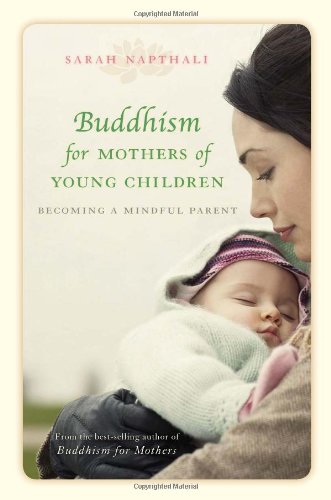
2. Buddhism for Mothers: A Calm Approach
$4.87
3. Buddhism Plain and Simple
$11.82
4. Buddhism For Dummies (For Dummies
 
$6.21
5. Buddhism without Beliefs
$9.78
6. Buddhism Day by Day: Wisdom for
$8.49
7. The World of Tibetan Buddhism:
$7.93
8. One Breath at a Time: Buddhism
$7.34
9. An Introduction to Zen Buddhism
$11.33
10. Introduction to Buddhism: An Explanation
$5.29
11. Buddhism: A Very Short Introduction
$19.62
12. The Foundations of Buddhism (OPUS)
$12.59
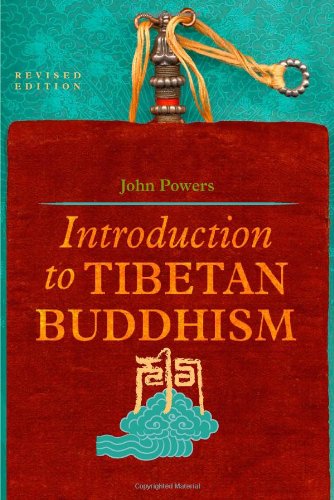
13. Introduction to Tibetan Buddhism,
$7.11
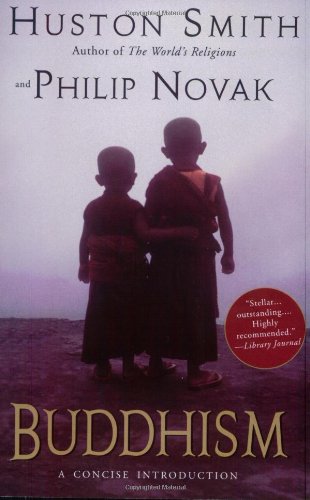
14. Buddhism: A Concise Introduction
$6.92
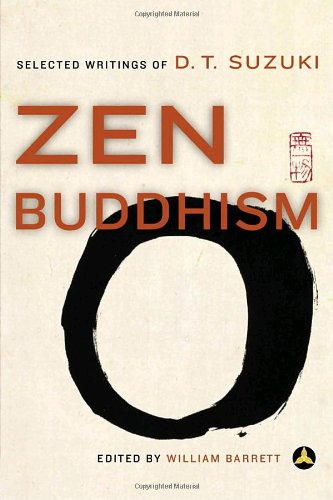
15. Zen Buddhism
$9.99
16. An Introduction to Buddhism: Teachings,
$24.00
17. Contemplative Science: Where Buddhism
$57.02
18. The Experience of Buddhism: Sources
$13.57
19. Tibetan Buddhism and Modern Physics:
$10.00
20. Complete Idiot's Guide to Understanding

1. Buddhism for Beginners
by Thubten Chodron
Paperback: 160 Pages (2001-02-25)
list price: US$12.95 -- used & new: US$7.27
(price subject to change: see help)
Asin: 1559391537
Average Customer Review: 4.5 out of 5 stars
Canada | United Kingdom | Germany | France | Japan
Editorial Review

Book Description
Answers fundamental questions and issues that arise in the minds of modern Western individuals who are beginning this tradition of practical spirituality. ... Read more

Customer Reviews (18)

5-0 out of 5 stars Reviews
"Chodron's plain English makes her beginner's guide nearly perfect for those new to Buddhism and those who simple want to learn more."--Booklist, American Library Association

"This is a very thoughtful contribution to Buddhist teachings."--NAPRA ReView

"A very compassionate book. Her approach is nonsectarian and emphasizes the basic unity found within Buddhism."--Ryo Imamura, Jodo Shin Priest and Professor of Psychology at Evergreen State College

"Her lucid, correct, clear, and convincing manner is highly commendable."--Ven. Dr. Havanpola Ratanasara, College of Buddhist Studies, Los Angeles

"A beginner's guide to making life more simple and joyful."--Elizabeth Barker, New Age Journal

"Ven. Thubten Chodron is especially skilled in presenting Buddhist philosophy and practices in ways that are easily accessible and practical for Buddhists who live in the Western world."--Ven. Hung I Shih, Abbot, Jade Buddha Temple, Houston

"By answering the most basic questions, Thubten Chodron helps practitioners dispel confusion and gain a realistic, down-to-earth approach to the Buddhist path."--Alexander Berzin

"A beautifully simple book for the curious, beginner, or anyone who has ever thought about practicing. This book allows the reader to go from cover to cover, or skip to the chapters that truly interest them. There are no mystical words, no vague references or language problems. It's simple, basic English that will answer almost all the questions you have ever wanted to ask about Buddhism, but didn't know which book to read or who to ask."--Amazon Books

"This is the perfect gift for family and friends who wish to understand one's engagement with Buddhism. Thubten Chodron combines several decades of traditional training in Tibetan Buddhism with western psychotherapeutic relevance....That quality of integration is where the Venerable Thubten Chodron is such a powerful writer and teacher."--Branches of Light of Banyon Books

"Here is an excellent introduction to Buddhism. Most importantly, it offers good advice for anyone who wants to lead a more sane, balanced, and compassionate life."--Bodhi Tree Book Review

"I'd recommend this book not just for people interested in Buddhism, but really for everyone. A lot of what is mentioned is really common sense: be compassionate, tolerant, truly enjoy things, ask questions, which, in this day and age, we sometimes tend to forget. Consider this a 'refresher course in life.'"--The Feminist Review

3-0 out of 5 stars More of a Q & A instead of how to practice Buddhism.
This book although useful is more of a question and answer session instead of a how to go about practicing Buddhism.
I really wanted something that explained what I must do to practice Buddhism.What I should read ie: Darhma, Sutra etc.It talks about meditation but does not tell you how to go about doing this and the methods you should use.
I was slightly dissapointed.

4-0 out of 5 stars A good primer
This book is nicely written and is a good introduction to classic Buddhism-I would also recommend FREE YOUR MIND by Sensei Anthony Stultz Free Your Mind: The Four Directions of an Awakened Life as a companion volume which offers a more contemporary approach-together they provide an excellent overview of Buddhist wisdom.

4-0 out of 5 stars Interesting
I really like the "Q & A" layout of the book.I was looking for a book to explain Buddhism simply.While this book is easy to read and informative, I am now looking for a book that gives definitions and how to pronounce some words.I would recommend this book for anyone who has general questions about Buddhism.

5-0 out of 5 stars a good beginning for those newly interested in buddhism
Lately, I've been noticing Buddhist influences around me more and more frequently. From prints and candleholders of the Buddha at Target, to everyone threatening with Karmic repercussion for any wrongdoing, Buddhism seems to be everywhere. Many times, especially during existential crises, I would get a bit curious as to what Buddhism really entails, but every time I perused the aisles of my local alternative bookstore in search of a life-changing Buddhist book, I usually got a little overwhelmed and ended up leaving the store with incense and candles instead. That is, until I got my hands on this book.

If you're like me, or just don't know where to begin, then this would be a good start. Don't be fooled by the slimness of this book, Buddhism for Beginners is definitely not the kind that you get through in one sitting. Not because it probes deeply into the subject, but mainly because it covers a lot of information, even while only skimming the surface. The book is in the form of question and answer, creating a dialogue between reader and author. The topics range from the basics of Buddhism, to what the Buddha's view on controversial topics is (abortion, death penalty, the environment), to women in Buddhism and even parenting. It can be rather repetitive at times, and a lot of the answers are rather ambiguous. More than once you will find the answer begins with "it depends." At times, the author oversimplifies and statements like "If you show people how patient you've become they will think Buddhism is a good thing and will be curious too" appear more than once in the book. If anything, this book leaves the door wide open for those interested in Buddhism to do further reading in the subject.

Criticism aside, I'd recommend this book not just for people interested in Buddhism, but really for everyone. A lot of what is mentioned is really common sense: be compassionate, tolerant, truly enjoy things, ask questions, which, in this day and age, we sometimes tend to forget. Consider this a "refresher course in life," the kind of book you keep around and pick up from time to time. The author's voice is nonjudgmental, serene and optimistic without being cliché. I read this book after a notoriously low point in my life, and after pondering many of the ideas in it, I was left feeling hopeful, motivated not to take life too seriously; after all, I could always come back and try again. ... Read more


2. Buddhism for Mothers: A Calm Approach to Caring for Yourself and Your Children
by Sarah Napthali
Paperback: 240 Pages (2003-09-01)
list price: US$15.95 -- used & new: US$9.50
(price subject to change: see help)
Asin: 1741140102
Average Customer Review: 5.0 out of 5 stars
Canada | United Kingdom | Germany | France | Japan
Editorial Review

Book Description
Addressing the often-overlooked spiritual needs of mothers, this book discusses Buddhist teachings as applied to the everyday challenges and stresses of raising children. Offered are ways for mothers to reconnect with their inner selves and become calmer and happier-with the recognition that a happier mother will be a better parent. This realistic look at motherhood acknowledges the sorrows as well as the joys of mothering and offers real and achievable coping strategies for mothers to renew their lives on a deep level. ... Read more

Customer Reviews (25)

4-0 out of 5 stars Essential reading for Moms
I am not a Buddhist, although there is much about the religion that I think can help us in everyday life.I picked up this book more for the tips on parenting than to learn more about Buddhism.For this reason I only skimmed through the initial and final chapters which are more about Buddhism, and concentrated on the segments in the middle.

What I particularly like about this book is that is very upfront about how difficult and lonely parenting can sometimes feel.Sarah Napthali (and the other women whom she quotes) are very frank about the times when they've been angry with their children or partners, when they've felt depressed or anxious or when they just fail to enjoy parenting as much as they'd like to.It's clear that being a Buddhist doesn't mean that you never feel these difficult emotions, just that you work on not giving in to them.Because this book is written in such an unjudgemental and empathetic way, I found it very inspiring.I think this should be required reading for every mother!

My only critique is really that the book is a still too topline.Although Napthali does give a handy list of techniques to help you parent in a more calm way, I found that some of them were more headlines than how to-s.The book also includes a chapters on topics like concerns about ageing and relationships with your partner and while these were interesting I would have preferred her to spend more time on parenting issues.

Nevertheless, it's a fabulous book to keep on your bedside table.I liked to read a few pages and reflect back at the end of the day.

5-0 out of 5 stars food for the soul
I loved this book, it was really beautifully written, Sarah has a lovely style of writing. Her own personal stories were my favourite parts of the book but this book is much more about how to enrich our everyday lives with buddhism. The principles are outlined simply and applied to the painfully banal trials of parenting with compassion and humour. Forget any religious leanings, I recommend this book to all mothers.

5-0 out of 5 stars down to earth!
I have read a few books on Buddhism and this is the first book to acknowledge the unique role that many women have taken on. Practicing Buddhism and raising a three year old son can at times be challenging (well maybe all the time!) and this point is recognized throughout the entire book. I highly recommend this book for anyone, moms or dads, who is interested in a realistic approach to practicing Buddhism and raising a family.

5-0 out of 5 stars Every mother should read this book!!!!
If you are considering buying this book, DO!!!! This is the best book for mothers that I have run across and I have read many as I try to come to grips with what has happened to my life following the birth of my son. Sarah Napthali presents the buddhism philosophy in ways that make it applicable to your daily experiences, particularly the daily experiences of moms.It is not "preachy" in any way and it should help you maintain a camlmer, happier attitude regardless of the religious beliefs or practices you currently have.I read the book and then started over again.It has really changed my perspective and helped me go from an anxious person who always wished things were just a little different than how they are to someone who relishes in the moment and sees life as a string of experiences that I have limited control over.I have realized that there is potential for happiness and wonder in nearly every daily interaction and that taking this perspective IS what I do have ultimate control over.The book also helped me to step back and take a look at motherhood from a different perspective, which helped me acknowledge and welcome (instead of feeling guilty about or overwhelmed with) the range of emotions that come with the incredible transition motherhood is.I have bought about 10 of these books and have shared them with nearly all of my mother friends.I am on today to buy some more to share.I suggest other mothers do the same!


3-0 out of 5 stars Self Help/Parenting with a Buddhist flavour
This is not a bad book but it is fairly simplistic. It is a good book for mothers (Buddhist or not) of young children who won't mind the populist feel of the book. It is not an especially deep work though, so if you like your Buddhist books to be fairly weighty and insightful this is going to disappoint. If, on the other hand, you don't mind a book that reads like a series of really long magazine articles then you will probably like it. ... Read more


3. Buddhism Plain and Simple
by Steve Hagen
Paperback: 176 Pages (1998-12-29)
list price: US$10.95 -- used & new: US$4.87
(price subject to change: see help)
Asin: 0767903323
Average Customer Review: 4.5 out of 5 stars
Canada | United Kingdom | Germany | France | Japan
Editorial Review

Amazon.com
You might want to digest this book slowly, a few pages at a time. Although Zen teacher Steve Hagen has a knack for putting the philosophy of Buddhism in a "plain and simple" package, it may take a while to sink in. There is so much there. Seeing reality, realizing the wisdom of the self, breaking free of dualistic thinking--this is pretty heady stuff. Thankfully, Hagen passes it along in the form of examples from life, psychological tidbits, and stories from Buddhist teachers past and present. And when it clicks in, it can be life-transforming. Hagen explains this shift in outlook and how the fundamental way we look at the world affects everything we do. As an outline, Hagen follows the basic teachings of the Buddha, and we see that, rather than dogmatic truths, they are reminders for us as we reconsider the life we have taken for granted for so long. As it turns out, Buddhism is life, plain and simple. --Brian BruyaBook Description
“A beacon light of clarity and wisdom, a sobering teacher for us all. Simple and outstanding. Highly recommended.” - Charlotte Joko Beck, author of Everyday Zen

“This is. . . . about awareness. Not awareness of something in particular, but awareness itself'being awake, alert, in touch with what is actually happening. It's about examining and exploring the most basic questions of life. It's about relying on the immediate experience of this present moment. It's about freedom of mind.” - Steve Hagen

The observations and insights of the Buddha are practical and eminently down-to-earth, dealing exclusively with awareness in the here and now. Buddhism Plain and Simple offers listeners these fundamental teachings, stripped of the cultural trappings that have accumulated around Buddhism over the past twenty-five centuries. The newcomer will be inspired by the clear, simple principles found in Buddhism Plain and Simple, and those familiar with Buddhism will welcome this long-needed overview.

“Buddhism Plain and Simple is a delightfully direct pathway toward our true heart.” - Steven Levine, author of Who Dies?

Read by the author.

... Read more

Customer Reviews (129)

5-0 out of 5 stars Pass it on!
This book takes the mystery out of Buddhism. As I am neither a student of religion nor a psychologist, I can't tell whether what the author describes are the actual beliefs of Buddhism or just plain common sense and knowledge of the human psyche, but I give it to everyone I know.

5-0 out of 5 stars A beautiful overview of a complex subject, but may not be the best introduction to Buddhism for some readers.
This eloquent little book gives even a casual student of Buddhism a very readable and provocative overview of a very complex subject. Having said that, the fact is that one needs a certain mindset to begin the study of Eastern philosophies, so while the author does present the material in plain and simple language, if you have not done any other reading on the subject, you may find it a bit of a tough go.While I recommend this book highly and have given away numerous copies to friends who have expressed an interest, there are other introductory books such as "The Buddha In Your Mirror" by Hochswender, Martin & Morino, for those readers who would benefit from a more structured and practical initial presentation of the subject.

5-0 out of 5 stars Excellent gift book
We reread Hagen's book from time-to-time.It is a book that has much to offer to anyone, no matter what their religious persuation might be.For that reason, among others, we find it is a useful gift book that we can send to friends and relatives who might be receptive to the concept of living in the moment.

5-0 out of 5 stars A great introduction to ZEN Buddha Dharma
This book has many strengths. One being the depth and simplicity of its concepts. It takes Buddhism and demistifies it; with all its confusing branches such Theravada, Mahayana and Kadampa Buddhism. I found all the information on the internet and introductory books to confuse and meld all versions of Buddhism together. Hagen does not go there. Hagen takes the core of Buddha's teachings and gives it to his reader simply. This book not only applies to Buddhism but to life- it is an application on how to see all experiences and ourselves- they are not separate things. The book does lack explanation on the idea of compassion which seem strong in most Buddhist teachings and other authors. Also Hagen does not explain the lifestyle of Buddhism as far as vegetarianism and meditation are skimmed over quickly.

Hagen explains it with out all the fluff that religions with such history sometimes bring with them. As far asthe reading it is very direct, and PRECISE. Hagen seems to cut through to the core which other teachers of Buddhism may take years with a student of understanding to get to. I felt I was reading a book about Zen BUDDHISM and not its other branches. All Buddhism still seems like a maze to work through tradition, practice and history. Hagen's book is so strong that it could be its own self contained dharma. But I wanted to read about his interpretation on compassion and how they apply to the Buddha- dharma.

5-0 out of 5 stars Plain and Simple
The title tells it all! I had always wanted to know just what Buddhism was all about. After attempting to read other articles and books on the subject, I had just abut given it up until I ran across this one. Naturally the title intrigued me, I purchased it I am pleased to say it is "excellent". Thank you, Steve Hagen! ... Read more


4. Buddhism For Dummies (For Dummies (Religion & Spirituality))
by Jonathan Landaw, Stephan Bodian
Paperback: 384 Pages (2002-12-01)
list price: US$21.99 -- used & new: US$11.82
(price subject to change: see help)
Asin: 0764553593
Average Customer Review: 4.5 out of 5 stars
Canada | United Kingdom | Germany | France | Japan
Editorial Review

Book Description
From the outside, Buddhism seems like a bundle of contradictions wrapped inside a paradox. It is a religion without a god, a belief system without rules, and a faith that encourages its adherents to question everything, including its own teachings. You could spend a lifetime studying Buddhist texts and following its observances and still feel like you’ve only just barely scratched the surface. Yet, over the past 2500 years, this lovely religion that preaches compassion, generosity, tolerance, selflessness and self-awareness has commanded the fervent devotion of hundreds of millions of people around the world who believe it to be the true path to enlightenment.

If you’re curious about Buddhism but feel intimidated by all the exotic jargon and strange trappings, this book is for you. Written by two leading American Buddhist teachers and scholars, it offers you a uniquely friendly way to explore the fascinating history of Buddhism and discover:

  • Who Buddha was and his significance in world history and spirituality
  • How the practice of Buddhism can enrich your everyday life
  • How Buddha’s teachings combine to create a path to enlightenment
  • Daily observances and meditation practices
  • How to fulfill your highest potential through Buddhism

In plain English, experts Jonathan Landaw and Stephan Bodian define the important terms, explain the key concepts and explore, in-depth a wide range of topics, including:

  • Buddha’s life and teachings and the evolution of the major Buddhist traditions
  • How Buddhism works as a religion, philosophy of life and a practical approach to dealing with life’s problems, all rolled into one
  • The idea that the mind is the source of all happiness and suffering
  • How the practices of wisdom and compassion can connect you with your inner spiritual resources
  • Meditation and other core Buddhist practices and how they can affect your everyday life
  • How to apply Buddhist teachings at each stage along the spiritual path

Whether you’re a searcher of truth, a student of religions, or just curious about what’s got Richard Gere and all the rest of those celebrity Buddhists so excited, Buddhism For Dummies is your intro to Buddhism basics. ... Read more

Customer Reviews (21)

4-0 out of 5 stars Outlines and gives context to a very broad and deep topic
Buddhism is a rich, organic topic with a huge number of books offering interpretation, explanation and guidance.It is easy for a beginner (like me) to become lost.

For those interested in learning about Buddhism, I found this book very helpful.It covers the main schools of Buddhism and their historic and geographic context with sufficient detail to inform the reader without distraction.It covers the main tenants of Buddhism, such as The Eightfold Path, The Five Precepts, and The Four Heavenly Abodes.I've been steadily reading a number of books on Buddhism over the past two years and I find myself referring back to this book now and again to remind myself of the larger context.

Those seeking a conceptual understanding to serve as a foundation for further study will be satisfied.

2-0 out of 5 stars Somewhat disappointing...
Honestly, I was expecting more.These "dummies" books give the authors almost unlimited opportunity to explain something in detail, yet make it interesting and enlightening.What I would have wanted to see was more history on the story of Siddhartha and how he became Buddha.I also thought the book was biased toward the Tibet way of Buddhism and those looking for more about Zen are going to be disappointed.The book almost reads like a college textbook and that is just dry dry dry.Yuck.

4-0 out of 5 stars A good intro...
Being new to Buddhism, I found this book to be a very easy-to-understand source of information. It touches on many aspects of Buddhism, inviting the reader to turn to other resources, listed in Appendix B, for more in-depth information.

This book covers the main themes of Buddhism without becoming too overwhelming with technical terms.

While some people may not like the 'For Dummies' books, I appreciate the blend of serious information and touches of humor found in them.This was true in Buddhism for Dummies.

5-0 out of 5 stars Fantastic
Buddhism has always interested me but it is only recently I began to read up on the practice.This book is fantastic for my education.It is easy to understand, well tagged, can be read is small stages, and an enjoyment to have at my bedside.

3-0 out of 5 stars Could not really present a picture
The greatest failure in Buddhism for Dummies is that authors Jonathan Landaw and Stephan Bodian forgot the target audience. How this is possible with the words `for Dummies' in the title is somewhat of a mystery to me. It's not the case that this book is intended literally for dummies, of course, but it is intended for readers with little or no background on Buddhism and generally it is marketed in the English-speaking world. Thus, the authors would have been well-advised to arrange the material differently. What the reader will find after an extremely brief general introduction is a history of Buddhist development. While this need not be a bad thing, Buddhist history is made up largely of splintering of Buddhism into a variety of sub-groups with sometimes subtle differences among them. How should the brand-new reader approach all these new topics?

Beyond the confusing history the reader finds Buddhism in practice. But there, again, we find a heavy emphasis on the Buddhist monk and the lifestyle such a person adopts. While this can be interesting, it seems a funny choice of starting material for Buddhist practice. Eventually the authors do deliver some answers on the question, `what is Buddhism really?' While more comprehensible than earlier sections, I can't say that the ultimate explanations are very clear. If asked to explain Buddhism now I could say little more than I could prior to reading the book. While the authors are clearly enthusiastic, they never really bring it all together in a form that's remotely compelling. Granted Buddhism is very different from Western religions and philosophies, but I can't believe that this is the most comprehensible description and introduction possible in this format and length. ... Read more


5. Buddhism without Beliefs
by Stephen Batchelor
 Paperback: 144 Pages (1998-03-01)
list price: US$13.00 -- used & new: US$6.21
(price subject to change: see help)
Asin: 1573226564
Average Customer Review: 4.0 out of 5 stars
Canada | United Kingdom | Germany | France | Japan
Editorial Review

Amazon.com
As in all the major religions, there is a wisdom behind the theology of Buddhism that informs the believer in daily life. Stephen Batchelor would argue that the difference with Buddhism is that the wisdom is in fact independent of the theology and is not informative to believers only, but to everyone. In Buddhism Without Beliefs Batchelor lays out the major tenets of Buddhist wisdom, commenting on their relevance to modern life. The Buddha said that seekers must find the Truth for themselves, and Batchelor offers this book as a roadmap.Book Description
Those with an interest in Buddhism will welcome this new book by Stephen Batchelor, former monk and author of Alone With Others and The Awakening of the West. But those who are just discovering this increasingly popular practice will have much to gain as well-for Buddhism Without Beliefs serves as a solid, straightforward introduction that demystifies Buddhism and explains simply and plainly how its practice can enrich our lives. Avoiding jargon and theory, Batchelor concentrates on the concrete, making Buddhism accessible and compelling and showing how anyone can embark on this path-regardless of their religious background. ... Read more

Customer Reviews (98)

5-0 out of 5 stars Healthy and attitude changing
This book is a keeper to refer to for many years to come.I look forward to my second reading with as much enthusiasm as I did when I first bought it.

This path can be more easily interpreted by western minds, without instilling any concerns about conflicts with other belief-based religions.

In this way a Christian (or any other religion) reader can start to few other paths without challenging any of their "beliefs". Any work that brings different sects / faiths / belief structures to more common and positive ground is healthy and may facilitate contructive and peaceful change.

There are many paths to enlightenment. This book illuminates one such path, that can also be followed by most believers of other faiths.

Did Sittharra state something like - let each of you go out and serve, but let no two of you take the same path?

As a Christian, I found the book to be outstanding, attitude changing, healthy and constructive reading.

Another good book to help understand other viewpoints is "The World's Religions" by Huston Smith.

4-0 out of 5 stars Buddhism Without Beliefs
This book is excellent reading.
The meditation and Buddhist study group (Sangha) I belong to bought several of these books. We read them as a group after our meditation. We thoroughly enjoy the way that it is written.
We never seem to read very far into the book as the conversation started by the topics, is always fascinating.
I think this book best for someone with good foundational Buddhist knowledge. I think that some of the topics require more basic explanation before they can be appreciated in this book.
Buddhism without Beliefs

4-0 out of 5 stars Buddhism is practice not theory
The emphasis of this book is not only that the Teachings of the Buddha are to be spread and made known but that they must be simple. The four noble truths are all what you need to know and the noble path, the fourth truth, is all what you need to practice. The corruption of the original message as it was passed on in Asia gave Buddhism the confusing complexity of its numerous schools and branches. According to Batchelor, the noble truths are something to be acted upon, not something to be believed. Truths are facts that bring understanding while beliefs are assumptions that make up religions. Truths repeated mechanically, without real understanding, also lead to dogmas. "Truth repeated is not truth", said Krishnamurti. Even though BUDDHISM WITHOUT BELIEFS is clear and straightforward, I take exception to one statement in Batchelor's book. However idealistic and worthwhile it may be, "social engagement" is not in the essence of Buddha's Teachings. This would go beyond the four noble truths.

5-0 out of 5 stars Companion to Zen practice - Batchelor's Walden
I come to this with some Soto Zen training but do not claim vast knowledge.My experience reading this book was to nod my head a lot and say, "yes".I was unaware of the controversial nature of these views before reading other reviewers here.

During retreat, we opened sitting sessions with a chant that begins "We are here to end suffering..."and continues later with "We are not here to create and cling to beliefs..."and ends with "...and end suffering."So we are focusing on Zazen (meditation) and ending suffering.I found the focus of this book to be the same.

The four noble truths are explained by Stephen Batchelor as: understanding anguish (suffering), letting go of its origins, realizing its cessation, cultivating the path.The book contains crystal clear explanations of this and finds it of central importance.

I read the book in preparation for a dinner and lecture by Stephen Batchelor.I had only to drive a short distance and sit and eat good food with some of my friends and ask my questions.

My main question was this.Many people are upset with the idea that some things are said to be of central importance in your book and other things like rebirth and karma transcending subsequent births are said to be not central.On what do you base this?I never did have to ask the question because he explained this during the course of the evening by referring to the 10 undeclared questions: 1) Whether the world is eternal, 2) or not eternal, 3) Whether the world is finite, 4) or infinite, 5) Whether the soul and body are identical, 6) or different, 7) Whether the enlightened one exists after death, 8) or does not exist after death, 9) or both exists and does not exist after death, 10) or neither exists nor does not exist after death. The Buddha set these questions aside by saying the answers were unimportant because they would not lead to ending suffering.This would be a pointer to the centrality of the four noble truths in the Buddha's own words and an recommendation to stop thinking about an answer on life after this one - not because there is no answer to be had but because it is more important to end suffering now in this life.

Regarding the centrality of Zazen (meditation) the Buddha said: "Do not believe in anything simply because you have heard it. Do not believe in anything simply because it is spoken and rumored by many. Do not believe in anything simply because it is found written in your religious books. Do not believe in anything merely on the authority of your teachers and elders. Do not believe in traditions because they have been handed down for many generations. But after observation and analysis, when you find that anything agrees with reason and is conducive to the good and benefit of one and all, then accept it and live up to it."This seems to support the agnostic attitude and questioning approach.

The explanation on emptiness is compact and led to my greater understanding.

There are many pearls of wisdom in this book and it is worth reading.It was my pleasure to meet Mr. Batchelor.I found he offered his ideas with humility, a quiet voice, and a depth of study and careful consideration.This book is a good companion for practice.

5-0 out of 5 stars The Fake who keeps giving this book one star!
I found it interesting to realize that the majority of the one start votes given to this book were obviously written by the same nut job who keeps changing his screen name and continuously adding new hate responses to this book.
Don't take my word for it, browse through the half dozen 1 start ratings of this book and see for yourself.
The childish rants are almost all worded with exactly the same repetitious drivel.
While the majority of the reviews give this book a 4 to 5 start rating.

When I consider buying a book, I not only look for the most ratings near 5 stars, I also look for the lunitics who seem to hate the books. I figure the authors must be doing something right is they can rattle the nuts from the trees and also please the majority of kind readers and reviewers.
I have ordered, but not yet read the book, But I'm going to give it a 5 star rating just to give the expert Budholigist a coronary ;) Guess that's going to really mess with my karma ;)
As they used to say on the X-Files, "Question Everything" :) ... Read more


6. Buddhism Day by Day: Wisdom for Modern Life
by Daisaku Ikeda
Paperback: 393 Pages (2006-11-01)
list price: US$15.95 -- used & new: US$9.78
(price subject to change: see help)
Asin: 0972326758
Average Customer Review: 5.0 out of 5 stars
Canada | United Kingdom | Germany | France | Japan
Editorial Review

Book Description

With brief, easily absorbed wisdom from the precepts of Nichiren, a 13th-century Buddhist priest, this collection of day-to-day musings can be enjoyed by casual readers and devoted followers alike. Covering a wide span of topics—from life and death to courage and winning—the practical information and encouragement are ideal for those seeking to find a deeper understanding of this ancient philosophy.
... Read more

Customer Reviews (8)

5-0 out of 5 stars Awesome
This book is great!!! Recently, we had a very very tragic loss in our family. My 21 yr old brother, all American college football player with absolutely no enemies, was randomly attacked and beaten to death one night while leaving a store by a group of 6 guys. It was a gang initiation beating. I turn to this book everyday for support. It seems like every single teaching, applies to me personally so it's helped me a lot through these past couple of weeks! Especially during this struggle I have with losing my younger brother so suddenly and in such a cruel manner.

5-0 out of 5 stars The Best Way of Life
This is a book of Daily Encouragement, written by Soka Gakkai International(A world wide Buddhist organization) President, Daisaku Ikeda. However, it doesn't tell you to chant or meditate everyday but it teaches you how to live your life best way possible. Live your life with hope, courage and never give up spirit.

5-0 out of 5 stars Perfect Gift
This is such an encouraging book by Daisaku Ikeda. We are giving them to
our fellow friends and members as birthday gifts. It seems that each birthday for each friend has a perfect quote that is meaniful to them.

I'm also planning to give this book to my friends that are not members
as they are "life truths" as a dear Christian friend said to me after she
read some quotes by Daisaku Ikeda.

Anna L in Lodi, CA

5-0 out of 5 stars Buddhism Day by Day:Wisdome for Modern Life
Love it!Intelligent; insightful, inspiring...and current.It's also very light and easy to carry. Worth its weight in gold.

5-0 out of 5 stars Fresh Guidance
This is a welcome update in the series of daily guidance offered to fellow Buddhists by Daisaku Ikeda.It is always helpful to start the day off with encouraging words, especially when they are fresh and not previously seen or at least not totally familiar. ... Read more


7. The World of Tibetan Buddhism: An Overview of Its Philosophy and Practice
by Dalai Lama
Paperback: 224 Pages (1995-03-25)
list price: US$15.95 -- used & new: US$8.49
(price subject to change: see help)
Asin: 0861710975
Average Customer Review: 4.5 out of 5 stars
Canada | United Kingdom | Germany | France | Japan
Editorial Review

Book Description

The World of Tibetan Buddhism is the definitive explanation of Tibetan Buddhism by the world's ultimate authority, His Holiness the Dalai Lama. First providing a general overview of the most elemental Buddhist concepts and terms, the Dalai Lama then goes into reasonable depth on Buddhist values and the Tibetan practice of Vajrayana Buddhism, with a focus on Tantra. A Q&A section and glossary are included.
... Read more

Customer Reviews (4)

4-0 out of 5 stars Exxcellent but for advanced
Marvellous book, however, the two parts are more for people that already know about Buddhism from practice, those who have their Kleisha yet cannot understand about void or Tantra, aspects that cannot be understood without the deep moral basis attained by following the Four Noble Truths. Thus the First part of the book is for everybody who wants to learn in general about Buddhism, but then the book starts to be very complicated, what a pitty for neophytes.One is not that surprised the write has gained so many doctorates, his intelligence is sparkling from the text, but this would be for a different review...

5-0 out of 5 stars A BEAUTIFUL BOOK
This book is just what the title implies, an introduction to Tibetan Buddhism.As I read through the pages of this book, what transpired was an overwhelming sense of spiritual peace and tranquility.In today's "crazy world," so many people are looking for peace of mind and "a haven from the storm"that will sustain them through the everyday trials and tribulations of life.If you are not familiar with Buddhism and are still searching for that "safe haven," I think you will, indeed, find this book on the philosophies of Tibetan Buddhism both enlightening and enjoyable.

4-0 out of 5 stars A good introduction to Buddhism
Before reading this book, I didn't know much about Buddhism, and reading it made me realize just how little I really knew.It gave me a good perspective on Buddhist practice and especially the difference between ZenBuddhism (what I knew a little about) and the rest of the Buddhist world.

5-0 out of 5 stars It may change your life...
...for the (very) better!I just wanted to do my bit to put the general rating nearer were it should be.This book will put light, wisdom and happiness in your life...how can anyone rate it below five stars isbeyond me!If you love life, you'll love this book (whether you areBuddhist or not)! ... Read more


8. One Breath at a Time: Buddhism and the Twelve Steps
by Kevin Griffin
Paperback: 256 Pages (2004-06-09)
list price: US$14.95 -- used & new: US$7.93
(price subject to change: see help)
Asin: 1579549055
Average Customer Review: 5.0 out of 5 stars
Canada | United Kingdom | Germany | France | Japan
Editorial Review

Book Description
Kevin Griffin, a Buddhist meditation teacher and longtime Twelve Step practitioner, weaves his personal story of recovery with traditional Buddhist teachings. The book takes us on a journey through the Steps, examining critical Twelve Step ideas like Powerlessness, Higher Power, and Moral Inventory through the lens of Buddhism. One Breath at a Time presents potent ancient techniques for finding calm and clarity and offers a vision of a Higher Power not tied to traditional Western Judeo-Christian concepts. One Breath at a Time describes the convergence of two vital traditions, one ancient, the other contemporary, and shows how they are working together to create a rich spiritual path for our times. Certain to resonate with both meditators and those whose mantra is 'One day at a time,' One Breath at a Time should find a large, welcoming audience. ... Read more

Customer Reviews (15)

5-0 out of 5 stars An excellent introduction to Buddhism and the Twelve Steps
If you are new to the twelve-step programs, or new to Buddhism, or a master at both, you will find this book very informative and useful.

I first heard about Kevin's book from one of his dharma talks on the audiodharma.org podcast. At the time I was all ready in recovery, and I could see many similarities between Buddhism and twelve-step principles. Kevin's book clarified and corrected the intersections I saw, and introduced me to a new way at look at the Twelve Steps and the Universalist nature of the twelve-step movement.

From the beginning of recovery, I had hard time digesting what the Steps meant to me and how the could be useful in my life. Very simple clarifications for this book--like the difference between powerlessness and helplessness described in chapter one (e.g. powerless over desires, not powerless over behavior--I find myself coming back to time and time again.

I was also impressed by Kevin's understanding of Buddhist concepts, such as not-self (or no-self), that have been very difficult for me to understand. Kevin's stories and examples helped me to see the importance of metta (loveingkindness meditation) in practice and how useful it can be in dealing with resentments.

Perhaps the most important point Kevin makes in the book is about language, as Kevin puts it: "Language is always an issue in spiritual teachings... as I've talked about, these teachings try to explain something that goes beyond language; words are only an attempt to represent reality, that are not reality itself... Language always comes out of a particular time and place, a particular culture. Inevitably it becomes dated.... Finding our own Language for the Steps is a useful exercise as long as we don't forget the original intent."

It's true that Alcoholics Anonymous came from Protestant roots, and that much of the literature in twelve-step programs consequently retains much of that language and culture. It the same way that it's important to follow the "spirit of the law" rather than "the letter of the law," it's important to understand the intent or spirit of twelve-step language rather than to think it's necessary to align oneself with it's particular religious connotations.

One thing, however, that troubled me a little was that Kevin's decision to use his full name for the author attribution. I was reminded by a friend of mine about the controversy surrounding James Frey's books right around when I was finishing this one. In many cases, when writing about twelve-step related recovery stories, authors will elect to used the first name, last initial format for the attribution (e.g. see Afraid to Live, Afraid to Die and A Skeptic's Guide to the 12 Steps). I can understand the pluses and minuses of using the full name or following (maybe over-zealously) the anonymity principles of used in such programs. I thought it was worth mentioning here, not because I don't trust Kevin, but because it's an important issue worth considering.

5-0 out of 5 stars One Breath at a TIme
This incredibly insightful book has deepened my understanding of both my meditation practice and the twelve steps. I cannot recommend it highly enough to anyone working the twelve step program who may be having difficulty with the "Higher Power" concept. Anyone with a meditation practice can benefit (as I did) from using the twelve step format to help gain better understanding of Buddhist concepts.

5-0 out of 5 stars A Truly Spiritual Journey
This is one of the finest books I've read linking the 12 Steps of AA with the practices of Buddhism.Kevin Griffin has a magnificent grasp of both and presents them so clearly that it truly is a thrill to read.Excellent writing as well, sometimes poetic.Well done!

4-0 out of 5 stars hidden gem
I bought this book for my bf as he was coming out of rehab, and ended up reading it myself as well.It has lessons and guidance that even a non-addicted person can apply to their everyday life.I highly recommend this book, it is a quick read, and you'll leave knowing things about yourself you didn't before.

5-0 out of 5 stars Great Intro to the Twelve Steps and Western Buddhism
Kevin Griffin and friends put a lot of thought into integrating these two approaches.However, what makes the book a Five Star instead of a Four Star is the totally honest portrayal of his own life by Mr. Griffin as he tells of his misdeeds and how he hurt others in his bouts with alcohol and drugs. He offers hope and redemption to the rest of us and you will love his happy ending.Were we all so open, humble, and acknowledging of our faults and missteps.A great read for us recovering folks who also would like to focus on Step Eleven, especially through a Buddhist perspective. ... Read more


9. An Introduction to Zen Buddhism
by D.T. Suzuki
Paperback: 144 Pages (1994-01-13)
list price: US$12.00 -- used & new: US$7.34
(price subject to change: see help)
Asin: 0802130550
Average Customer Review: 4.5 out of 5 stars
Canada | United Kingdom | Germany | France | Japan
Editorial Review

Book Description

One of the world’s leading authorities on Zen Buddhism, D. T. Suzuki was the author of more than a hundred works on the subject in both Japanese and English, and was most instrumental in bringing the teachings of Zen Buddhism to the attention of the Western world. Written in a lively, accessible, and straightforward manner, An Introduction to Zen Buddhism is illuminating for the serious student and layperson alike. Suzuki provides a complete vision of Zen, which emphasizes self-understanding and enlightenment through many systems of philosophy, psychology, and ethics. With a foreword by the renowned psychiatrist Dr. Carl Jung, this volume has been generally acknowledged a classic introduction to the subject for many years. It provides, along with Suzuki’s Essays and Manual of Zen Buddhism, a framework for living a balanced and fulfilled existence through Zen.
... Read more

Customer Reviews (22)

5-0 out of 5 stars Good intro to the Zen View of everything
The book is divided into several chapters which were originaly published as a single articles on several publications, but have a reworking that makes them easier to read. First a rather long foreword by Dr. Jung let us oversee the entire oriental vision of the world. Afte a short prelimiray done by the author, chapter two discusses on what is zen and what is not zen. On the third chapter the question of the supposed nihilism of zen is brought to the board. Then on chaper four an introduction the the logic (or ilogic) of the zen is done. Still, on chapter five the author reaches the partial conclusion that zen rather than a nihilistic and ilogical doctrine is a higher affirmation of the whole of the universe. On chapter six, a general realization of the practicity of zen (in contrast with other branches of buddism and christianity) is done. On chapter seven, the author try to describe the reaching of illumination or "satori". On chapter eight, author make an explanation of the aim and functioning of the so called "koans", which are excescies composed of brief cases that exposes the zen mind and logic further hard to explain and understand. Finally on chaper nine a short description of a monk's life in a zen monastery is done, to show up the central role of the "zendo" or meditation hall within the monastery.
A brief reading that can be taken as an exelent introduction to the zen, highgly recomended.

3-0 out of 5 stars A tough read
This book has a lot of good information on Zen, and seems like more of an overview than anything else. Although labeled as an 'Introduction', any person not well versed in Zen will find it a bit hard to follow. The chapter on Koan was very insightful, and is a great read for people interested in the background, use, and reasons the Koan was / is used.

5-0 out of 5 stars Great read...
This is a nice, quick, read. Some of the chapters were especially interesting...great reference on zen buddhism. I am sure I will read over certain sections again. It may be worth noting that this book is not a technique, or, "how to meditate" book.

4-0 out of 5 stars Another Finger Pointing At the Moon
D.T. Suzuki is considered one of the best spokesman for Zen Buddhism to non-Asian readers. He seems to do his best to make Zen clear and intelligible to the Western mind. He does give hints as to the nature of ideas like Satori and koans, the difference between Zen and Dhyana, and the structure of monastic life. He discusses the difference between Zen and Indian and Western rationalism and intellectualism, and he tries to show how Zen transcends Western logic. Nevertheless, I found the book baffling and unintelligible, but tantallizingly suggestive. I guess it's just another finger pointing at the moon, but it's a pretty eloquent finger.

3-0 out of 5 stars Good intro...
As my first book and intro to Zen Buddhism I chose this book, so take the 3 stars w a grain of salt.
I am 3/4s through the book and it feels authentic and you can feel the passion.Well written (with a few translation snaffus).

An easy read which I think, so far, a good intro. ... Read more


10. Introduction to Buddhism: An Explanation of the Buddhist Way of Life
by Geshe Gyastso
Hardcover: 190 Pages (2003-06-01)
list price: US$17.95 -- used & new: US$11.33
(price subject to change: see help)
Asin: 0948006714
Average Customer Review: 4.5 out of 5 stars
Canada | United Kingdom | Germany | France | Japan
Editorial Review

Book Description
We all have the potential for self-transformation, and a limitless capacity for the growth of good qualities, but to fulfill this potential we need to know what to do along every stage of our spiritual journey. With this book, Geshe Kelsang Gyatso offers us step-by-step guidance on the meditation practices that will lead us to lasting inner peace and happiness.With extraordinary clarity, he presents all Buddhas teachings in the order in which they are to be practiced, enriching his explanation with stories and illuminating analogies.Following these practical instructions, we shall come to experience for ourselves the joy that arises from making progress on a clear and structured path that leads to full enlightenment. ... Read more

Customer Reviews (11)

5-0 out of 5 stars Introduction to Biddhism
Explained in simple text anyone can understand.This book is a must for someone just starting their enlightenment journey through Buddhism. Practicing Buddhists are reminded of why they have choosen this way of life in the first place.Very informative book,well written. In fact,even non Buddhists could benefit from the practices presented by Geshe Kelsang Gyatso.

4-0 out of 5 stars Good primer for Tibetan Buddhism
Read very concisely and clearly, this is a good introduction to the basics of Mahayana Buddhism - and Buddhism in general.While lacking the congeniality of, say, Jack Kornfield, this intro thoroughly covers many aspects of the Four Noble Truths, the Eightfold Path, etc.Recommended for beginners serious about exploring the Buddhist path.

5-0 out of 5 stars THE MOST COMPREHENSIVE INTRODUCTION TO BUDDHISM OUT THERE!
Geshe Kelsang Gyasto's book An Introduction to Buddhism, distills all the basic, essential components of Buddhist thought and philosophy into a short, concise, clear, easy to read text that leaves the reader wanting to find out more about these beautiful teachings!

The importance of meditation can never be emphasized enough and Geshe Kelsang writes WHY meditation is ESSENTIAL to be able to experience true happiness.He also explains clearly why we experience so much mental suffering and how we can reduce the stress in our life and be proactive in our lives rather than always reacting, many times in negative ways.This information is so important, especially in this day and age when our lives seem more busy and more complicated than ever!

I have read this book many times and am constantly amazed at how each time I read it, the teachings impact me in a different way.I believe this is because Geshe Kelsang Gyatso writes in such a manner that beginners get a strong foundation of the basic principles of Buddhist thought and philosophy, and more advanced practitioners get a deeper insight into the inner workings of some of the more challenging aspects of the philosophy like the ultimate nature of reality, the true nature of suffering, karma, and the function of the mind and the role it plays in our experience of the world.

I recommend this book both to beginners and those who have more experience studying Buddhist thought and philosophy. It is a precious text that is extremely helpful in improving our meditation practice and our daily lives.

5-0 out of 5 stars Beautiful Introduction to Buddhism. 10 Stars!
Geshe Kelsang Gyatso always writes with such wonderful compassion, and shares in his joy to reach and awaken humanity. "Buddha" means "awakened" and that is just what this wonderful book will guide you towards on your path, and bring you closer to the loving compassion and right mindfulness that will clear up and clarify so much for you.

I take the teachings into my heart, mind and soul where true "AHA" moments of newfound enlightenment transform prior suffering into a state of being "awakened." Just as each drop in a bucket will fill that bucket, each drop of heartfelt right thought and action, detachment, and compassion for oneself and all of humanity will transform your life.

Gyatso's teachings are genuine, and you will find yourself coming that much closer to being awakened when you allow your heart to open fully, and give understanding and compassion.
The teachings are simple and profound. They are pure and potent. They are eternal and everlasting in their truth, and in the positive impact they bring to humanity by bringing genuine heartfelt understandings of exactly HOW Buddha became "awakened."
I HIGHLY recommend this book, along with "Transform Your Life: A Blissful Journey" "The New Meditation Handbook" and "Universal Compassion" all by Geshe Kelsang Gyatso.
I hope they have the immeasurable impact on your life that they have had on mine.

4-0 out of 5 stars start here with this author's works
I have four books by this author.He writes in a soothing manner and explains Tibetan Buddhism practices thoroughly.However, the other books I have did not make sense until I read this one.This one puts the basics down pat.Once I absorbed this easy read, the other texts begin to make more sense.This one is written in a flowing easy style, explaining things.It makes reference to his other books for more specifics about practice, which is why I gave it 4 stars.You will read about an overview of practice in this book and get interested in the specifics to read further see such and such book for more details.This is definitely the place for a beginner in the Tibetan approach to begin. ... Read more


11. Buddhism: A Very Short Introduction (Very Short Introductions)
by Damien Keown
Paperback: 152 Pages (2000-06-15)
list price: US$9.95 -- used & new: US$5.29
(price subject to change: see help)
Asin: 0192853864
Average Customer Review: 4.0 out of 5 stars
Canada | United Kingdom | Germany | France | Japan
Editorial Review

Book Description
This Very Short Introduction introduces the reader to the teachings of the Buddha and to the integration of Buddhism into daily life. What are the distinctive features of Buddhism? Who was the Buddha, and what are his teachings? How has Buddhist thought developed over the centuries, and how can contemporary dilemmas be faced from a Buddhist perspective? Words such as 'karma' and 'nirvana' have entered our vocabulary, but what do they mean? Damien Keown's book provides a lively, informative response to these frequently asked questions about Buddhism. ... Read more

Customer Reviews (12)

5-0 out of 5 stars Brief Introduction to Buddhism
Buddhism is a subject that has spawned a huge and bewildering number of books, all meant to encourage the Westerner in understanding its message and way.Like the other volumes in the VSI series, this book provides a succinct introduction into a field in general, highly readable outlines.There is a short bibliography for further study, as well as a timeline; both of these help in placing the historical and religious aspects in perspective.It is also very clear in setting out the demands of Buddhism on adepts in the 21st century.As a starting point, this slim volume points theway to the Way.Highly recommended.

2-0 out of 5 stars Buddhism: a Very Short Recruitment Tract
"Buddhism" started off very well, giving the parable of the blind men and the elephant as an example that Buddhism could appear to be many different things depending upon your perspective.Then Keown moved on, giving a "life" of Buddha and an overview of the evolution of the various schools of Buddhism.But the further I read into the book, the elephant looked less and less like an unbiased work of scholarship and more and more like a thinly veiled attempt to convert the unbelievers to Buddhism.By the last chapter, "Buddhism in the West," the veil was off.

Before the last chapter, however, came the chapter on "Meditation," where it was revealed that through the power of meditation, you too can learn to read minds, have out-of-body experiences, levitate, and walk on water.

In the section entitled "The Popularity of Buddhism in the West" Keown made statements that are, to say the least, at odds with sober scholarship.To say that Buddhism, which has a cosmology inhabited by higher gods, lower gods, titans, and ghosts, is a rational philosophy strains credulity.To say that, unlike Christianity, few Buddhist doctrines are in conflict with science and allegorical interpretations are available for the ones that are, is again to strain at a gnat and swallow a camel.Firstly, the doctrines of any religion that are in conflict with science can be interpreted allegorically.Secondly, the Judeo Christian concept of a universe with a beginning and an end is far more in keeping with scientific thought than the endless cycles of Buddhism.(Big Bang = "Let there be Light").Then to say that, unlike those poor benighted Christians, Buddhism doesn't have any "thou shalt nots" flies in the face of the Five Precepts, which forbid killing, stealing, lying, sexual immorality, and drunkeness.By my count that's four of Christianity's top ten Thou Shalt Nots.Then he writes about past life regression under hypnosis as if it were a valid science.Hypnosis is such an unreliable guide that most of the courts of this land refuse to allow witnesses to testify to hypnotically refreshed memories.There is more in the same vein in the last chapter, but those are the high spots.

The Oxford University Press is normally a bastion of scholarly merit.This work is not typical of their usually fine output.Instead of this book, read "The Pocket Idiot's Guide to Buddhism," which actually gives good information without trying to make you believe you can walk on water and without trying to turn you into a Buddhist.

4-0 out of 5 stars Bodhisattva won't you take me by the hand?
If Steely Dan was your only introduction to Buddhism then you need to get this book. I am so glad that I found these "A Very Short Introduction" books. If all of them are as informative, to the point and interesting, I'm going to have a library. These books are the Cliff Notes to life for people with a brain.
This book has maps, references, end notes and pronunciation guides.It attempts to answer question such as "Is Buddhism a Religion?" Yes, based on the taxonomy of a religion used by Keown.

I don't want to make the review longer than the short book. But, if you want a brief overview of Buddhism and how it can relate to you today, get this book!

2-0 out of 5 stars Not Very Informative
The book while well written, has too many instances of false information. The book tends to group specific practices together as if every school of thought is the same. This is a huge injustice. A better read would be 'A Buddhism Primer - An Introduction to Buddhism',

3-0 out of 5 stars Academic but biased towards Tibetan Buddhism
This book is well written and scholarly, but has a definite Mahayana and Tibetan bias. For instance, the assertion that reincarnation and states of future existance (hell beings, hungry ghosts, etc.) is fundamental to all Buddhist groups is not true. The docterine stems from a 1200 AD Cambodian text, and there are Buddhist discourses that warn against debate on reincarnation (with arguements about the implicit assumption of a self or soul that may lie in this belief). The other Very Short Introduction to Buddha is less biased. For a better introduction, I would recommend Rahula's What the Buddha Taught. ... Read more


12. The Foundations of Buddhism (OPUS)
by Rupert Gethin
Paperback: 352 Pages (1998-09-24)
list price: US$29.95 -- used & new: US$19.62
(price subject to change: see help)
Asin: 0192892231
Average Customer Review: 4.5 out of 5 stars
Canada | United Kingdom | Germany | France | Japan
Editorial Review

Book Description
Buddhism is a vast and complex religious and philosophical tradition with a history that stretches over 2,500 years, and which is now followed by around 115 million people. In this introduction to the foundations of Buddhism, Rupert Gethin concentrates on the ideas and practices which constitute the common heritage of the different traditions of Buddhism (Thervada, Tibetan, and Eastern) which exist in the world today. From the narrative of the story of the Buddha, through discussions of aspects such as textual traditions, the framework of the Four Noble Truths, the interaction between the monastic and lay ways of life, the cosmology of karma and rebirth, and the path of the bodhisattva, this books provides a stimulating introduction to Buddhism as a religion and way of life, which will also be of interest to those who are more familiar with the subject. ... Read more

Customer Reviews (9)

5-0 out of 5 stars great intro to Buddhist thought
I found this to be a fascinating general history of Buddhist thought, very dense with information and insights.(And I mean dense - this is not an "Idiot's Guide to..." by any means.) I am looking forward to reading it again in the near future.

P.S. Contrary to the (very puzzling) one-star review below, this book hardly has "page after page listing date after date"; it focuses on ideas, not events, and for a work of history lists very few dates at all. I have to conclude that the reviewer has not actually read the book and is criticizing it for reasons best known to himself.

5-0 out of 5 stars Superb
The best introductory text I have read on Buddhism; beautifully written and very accurate as far as my ability to judge extends.

Regarding the controversy in the reviews here, people need to remember that there are more components to Buddhism than the words of the Buddha. First, the worldview in India at that time included gods, demons, hellworlds, reincarnation etc, and it would be unrealistic to expect them to not be a part of Buddhist writings. Second is the the huge religion and tradition of writing that expanded upon the words of the Buddha. In the west, we have a wide variety of those Buddhist traditions available, and we have the luxury of being able to pick one that suits us best.

5-0 out of 5 stars One of The Best Overall Books on Buddhism
While I do not have the pedigree of Mr. Taylor (who wrote another 5 start review), I have read several hundred books on Buddhism, including all of the Nikayas, and I also took one graduate level course in a Buddhist Studies program, and I agree whole-heartedly with his comments. This book was one of the two main sources for the Buddhist Studies course, and to this day it is one of the handful of books to which I refer regulary. In fact, my copy is so worn out that I am about to order another one. If I were to teach an introductory course on Buddhism this would be the textbook. Unlike the 1 start review of Mr. Martin, I find this book wonderfully engaging and well-written. Occasionally I will pick it up to look up a fact, and find myself reading the next 20 pages.

Mr. Gethin is also uniquely able to present the different traditions in an honest way without being disparaging about any of them. It is perhaps the fairest, most even-handed and factual account of the different traditions that I have read. I find this quite remarkable. I think that a fair reading of this text will let you appreciate the different schools of Buddhism, even if you don't necessarily buy into them.

I think this book is a hidden gem. I wish that everyone with an interest in Buddhism could read - and appreciate (!) - this fine piece of work.

5-0 out of 5 stars Buddhism as it really is, and not seen through Western eyes.
The Foundations of Buddhism presents an introduction to Buddhism as it really is, as seen through the eyes of millions of its Asian followers, and not the cleaned-up atheistic Buddhism of latter-day "Western" converts.One reviewer thought that this book was a bad introduction to Buddhism simply because the author repeated the ancient Buddhist story of the Hindu gods paying homage to the Buddha at his birth! This merely reflects a largely "Western" bias.Belief in the existence of gods is not anathema to the so-called "real" or "original" teachings of the Buddha.Even Theravada Buddhism, the branch of Buddhism that is regarded as adhering most closely to the Buddha's original teachings, do not disclaim the existence of the Hindu gods.According to the Pali scriptures, the Buddha himself simply regarded them as irrelevant to mankind's salvation.Gods, like us, are caught in the web of samsara.They may occupy an exalted place in the current scheme of things, but they too will ultimately die (admittedly after a very long time) and be reborn (possibly on a lower plane of existence based on the law of karma, in accordance with their previous conduct), and die and be reborn, again and again.Thus, it is useless for mankind to blindly worship the gods in hopes of attaining salvation.Salvation in the form of Nirvana can only come from within - through our own renunciation of worldly desires.That is the main Buddhist message - Buddhism is simply not an atheistic philosophy that dismisses the existence of gods or other spiritual beings, contrary to what some "Westerners" seem to imply.In Mahayana Buddhism and to an even greater extent in Vajrayana Buddhism, spiritual beings of all sorts occupy virtually all spheres of existence.Buddhism is anything but atheistic.Just ask any Buddhist living in Asia.

5-0 out of 5 stars Real Buddhism
Having studied Buddhism privately and academically for over 20 years I usually consider introductory works not worth the bother. When I saw the outraged comments from the one-star reviewer below, however, I thought that this could be an interesting work. As another stated, most presentations of Buddhism that are made for Westerners are usually filtered to some extent, particularly older ones that are taking the Buddhism-is-the-secular-religion-for-us-grown-up-Westerners routine. Unlike Mr. Martin, I own and have bothered to read many of the early Buddhist writings, and they are chock full of the kind of things he claims are not part of Buddhism. The author of this book takes it all on the chin and doesn't let it faze him a bit. He's more interested in telling about both the story and teachings of Buddhism as they really were and, at core, still are, rather than keeping Western devotees comfortable.

And what an introduction! Take all those 5 star reviews seriously. I was repeatedly impressed with the clarity of prose and vision Gethin demonstrates while explaining even some of the most difficult to grasp Buddhist philosophical concepts. Things that it took two hours for some of my teachers to communicate to the point that students actually understood are brilliantly exposited with delightful comprehension in just a few pages. It takes a real grasp of the field to pull this off, and Gethin does it over and over. Illuminating charts, penetrating text, and, thank goodness, a topical bibliography to mine for years...what more could you want? If you want to read a book that will leave you with a solid understanding of core, foundational, Buddhist concepts, instead of a fluffy semi-New Age ransacking of the tradition to pamper Western assumptions about the self and the cosmos, look no further. As soon as this is submitted, I am sending an email to the professor at the Buddhist college I attend to look at this work for inclusion in the texts for our introductory survey course. Peter Harvey's and Walpola Rahula's introductory works are both on the schedule already, along with a third that will go unnamed, which Gethin simply stomps into the dirt for value. "The Foundations of Buddhism" clearly belongs in such stellar company and hopefully this Fall will be benefiting students alongside them. ... Read more


13. Introduction to Tibetan Buddhism, Revised Edition
by John Powers
Paperback: 512 Pages (2007-12-25)
list price: US$22.95 -- used & new: US$12.59
(price subject to change: see help)
Asin: 1559392827
Average Customer Review: 4.5 out of 5 stars
Canada | United Kingdom | Germany | France | Japan
Editorial Review

Book Description
The expanded edition of the classic reference, one of Snow Lion's top ten bestsellers. Thorough coverage of Tibetan Buddhism from its Indian origins to the present day; includes new information on the four schools of Tibetan Buddhism, religious practices and festivals, and the current political situation. ... Read more

Customer Reviews (6)

5-0 out of 5 stars Thoroughly 'reader friendly' and an excellent, highly recommended addition

Now in a newly revised and expanded edition, "Introduction To Tibetan Buddhism" by John Powers is a comprehensive and informative introduction that covers a wide range of topics including Tibetan Buddhist history, doctines, meditation practices, schools, religious festivals, and major historical figures. Of special not in this revised edition are the expanded discussions of recent Tibetan history and tanta, and significant new publications in the field. Articulate, superbly organized and presented, "Introduction To Tibetan Buddhism" is thoroughly 'reader friendly' and an excellent, highly recommended addition to personal, academic, and community library Buddhist Studies reference collections and supplemental reading lists.

5-0 out of 5 stars Very good introduction
This is a very good undergraduate-level introduction to Vajrayana. It's well-organized, thorough without being too intimidating, and evenhanded. It really isn't a substitute for a teacher or time spent with a practice group, of course, but it'll help a newcomer make sense out of terminology and references.

4-0 out of 5 stars A Very Good Introduction
This book is one of the most valuable I have come across in all the academic studies of Buddhism. I highly recommend it to all.

4-0 out of 5 stars A Good Survey Despite Wierd Feminism
I was glad to find J. Powers' comprehensive explanation of Tibetan Buddhism. It was both technically informative and colorful. I enjoyed the detail on the discovery of the reincarnated Dalai Lama; the testing of the 2-year-old boy by the disguised monks. Tibetan Buddhism can be confusing and arcane, and a book like this was needed. My only complaint: Powers' use of female pronouns throughout the book is offputting to a male reader; slightly bizzare. Buddhism was founded by a male, developed by men, and has attracted men for aeons. A feminist agenda in work of this weight (even twisting the conventions of literature) is misplaced and gives to the text a triteness.

4-0 out of 5 stars He Ain't Heavy, He's My Brother...
This book is not a good "Introduction to Tibetan Buddhism."It
took me about one month to read the book.It is 500 pages.
The author uses big words.There is great detail.For an
intro to Tibetan Buddhism, buy "Open Heart, Clear Mind" by
Thubten Chodron.I learned a lot from this "Comprehensive
Guide to Tibetan Buddhism."But I have read thirty or forty
books on the subject.And this is still a HEAVY meal.If
you do want to really know about Tibetan Buddhism in an

"intermediate" fashion, then please buy and read the book.
You will learn a lot.I was dissapointed to learn that one of the Dali Lama's was a romantic poet and womanizer who did
very little spiritual practice!And that the Chinese organized
massive "gang rapes" in order to subjagate the Tibetan people.
So I learned a lot.But I still wished that there was less detail and more clarity.The meal is just too big.I'll state it once more.Buy and read this book if you want a comprehensive text on Tibetan Buddhism.Thank You. ... Read more


14. Buddhism: A Concise Introduction
by Huston Smith, Philip Novak
Paperback: 256 Pages (2004-12-01)
list price: US$12.95 -- used & new: US$7.11
(price subject to change: see help)
Asin: 0060730676
Average Customer Review: 4.5 out of 5 stars
Canada | United Kingdom | Germany | France | Japan
Editorial Review

Book Description

A concise and up-to-date guide to the history, teachings, and practice of Buddhism by two luminaries in the field of world religions.

... Read more

Customer Reviews (15)

4-0 out of 5 stars Buddhism: A Concise Introduction
The half written by Huston Smith was an easy enlightening read.The second half was boring.

5-0 out of 5 stars One of the Very Best Introductions to Buddhism
As I am writing this I have just seen a new report lamenting the lack of knowledge about religions amongst the youth of America. It's easy to see that ignorance about the core beliefs of others is dangerous, and, perhaps, a bit disrespectful.

This is a marvelous introductory book to the basic tenets of Buddhism by the well-known writer Huston Smith, whose magisterial book The World's Religions has sold more than two million copies. The first half of this book is an expanded and updated version of the sections on Buddhism from the World's Religions. Though there has been a shift in emphasis between the two: the big book focused more on Mahayana Buddhism, in this new book, the emphasis is more on Theravada Buddhism, with a useful chart delineating some of the differences and similarities between the two major schools of Buddhism.

The second half of the book is all new and was largely written by Philip Novak, one of Smith former doctoral students who is now a professor in his own right. His focus is more on the growth and spread of Buddhism in Europe and the amazing way in which Buddhism has evolved in North America. A tribute to its remarkable resilience in the face of cultural forces.

Although many of the basics of Buddhism can be picked up online, or by consulting any decent encyclopedia, the discussion of concepts like the our Noble Truths, the Eightfold Path, Nirvana and the Three Marks of Existence goes beyond the essentials and brings out a number of new and important points.

There is an important issue when we examine philosophical or religious matters. There is inevitably a subjective component in how anyone, scholar or otherwise, interprets the teachings and their own experiences. So it is inevitable that not everyone will agree with every interpretation and nuance. Insight meditation, one of the tools of Theravada Buddhism, was one of the first forms of meditation that I ever learned, and the way that I was taught, by a well-known Thai-born teacher, was somewhat different form the interpretations in this book. I have also seen a couple of reviewers take issue with some of the book's comments about Zen Buddhism. They make some excellent points. Though I studied Zen too, and my own teaching was close to the information given in the book.

So this book will not be the final word on Buddhism, but then there probably cannot be a "final word." The system has shown remarkable adaptability over the last twenty-five centuries, and there is no reason to think that it won't continue to evolve in the future.

Highly recommended.

4-0 out of 5 stars Good summary for new students
For those new to Buddhism, Huston Smith and Philip Novak have made a very readable presentation.This book would be recommended for introductory college level, or for those curious about the basics of Buddhist thought.Brevity is its strength for those seeking a fairly comprehensive overview, but also its weakness for scholars looking for more depth.

5-0 out of 5 stars great book
If you want a introduction to buddhism this is the book. Covers all branches of buddism. Huston Smith part is very well written and easy to read. The second part of the book by Novak isn't as enjoyable it can drag on at points and isn't as well written. All in All though if you are interested in buddhism this is a great book that covers alot of ground for a small 200 page book.