e99 Online Shopping Mall

Geometry.Net - the online learning center Help  
Home  - Religion - Church Of Christ (Books)

  Back | 21-40 of 100 | Next 20
A  B  C  D  E  F  G  H  I  J  K  L  M  N  O  P  Q  R  S  T  U  V  W  X  Y  Z  

click price to see details     click image to enlarge     click link to go to the store

 
21. The First Church of Christ Scientist
22. One Hundred Years (A Statement
 
$16.00
23. Christ Holy Church International
$8.09
24. A Different Jesus?: The Christ
 
25. A Comprehensive History of the
 
26. Church of Christ Number Two
 
27. New possibilities for Disciples
28. Hymns of the Church of Jesus Christ
$10.02
29. Tradition, Opinion, and Truth:
$8.49
30. For Us and for Our Salvation:
$6.14
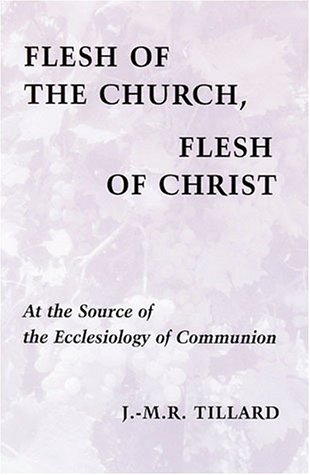
31. Flesh of the Church, Flesh of
$3.95
32. A Handbook for Today's Disciples
$11.99
33. New Evidences of Christ in Ancient
 
34. Book of Worship: United Church
 
35. WHY I AM A MEMBER OF THE CHURCH
$7.80
36. What Christ Thinks of the Church:
 
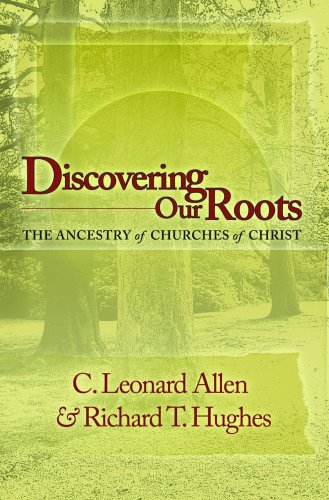
37. Discovering Our Roots: The Ancestry
 
38. The church history of Britain,
$15.75
39. Baptism, Christ's Act in the Church
$90.19
40. Church Dogmatics: Doctrine of

21. The First Church of Christ Scientist and Miscellany
by Mary Baker EDDY
 Hardcover: Pages (1913)

Asin: B000GYEAZG
Canada | United Kingdom | Germany | France | Japan

22. One Hundred Years (A Statement of the Development & Accomplishments of Churches of Christ in Australia)
by A.W. Stephenson
Board book: Pages (1945)

Asin: B0010X967E
Canada | United Kingdom | Germany | France | Japan

23. Christ Holy Church International
by Thomas Oduro
 Perfect Paperback: 256 Pages (2007-08-15)
list price: US$16.00 -- used & new: US$16.00
(price subject to change: see help)
Asin: 1932688277
Canada | United Kingdom | Germany | France | Japan
Editorial Review

Product Description
The author explores and examines the history, beliefs, practices, and growth of Christ Holy Church International, an African Independent Church in Nigeria, founded by Agnes Okoh, an illiterate woman who, while returning from a market in 1943, heard a voice repeatedly saying , "Matthew Ten."Agnes Okoh, a marginalized woman and a widow, was able to found and lead an itinerant evangelistic team of 12 members in 1947 as the movement grew into a church with nearly 800 congregations by 2002. The history of that church in a pluralistic, multi-cultural and multi-linguistic Nigeria is the focus of this book. ... Read more


24. A Different Jesus?: The Christ Of The Latter-day Saints
by Robert L. Millet
Paperback: 226 Pages (2005-04-30)
list price: US$18.00 -- used & new: US$8.09
(price subject to change: see help)
Asin: 0802828760
Average Customer Review: 2.5 out of 5 stars
Canada | United Kingdom | Germany | France | Japan
Editorial Review

Book Description
Are Latter-day Saints Christian, or do they worship a different Jesus? In this engaging book based on the foundational Mormon documents, Robert Millet clearly explains why Latter-day Saints claim to be Christians and compares their understanding of Jesus with the views of traditional Christian believers.

A leading Mormon scholar who has spent much of his career in conversation with traditional Christians and their writings, Millet discusses what constitutes Christianity and examines how the Latter-day Saints fit or do not fit within that rubric. Intended to inform rather than to convince or persuade, A Different Jesus? clears away misconceptions and doctrinal distortions that characterize more polemical works about Mormonism. Millet points out the many beliefs that Latter-day Saints hold in common with traditional Christians, yet he also emphasizes differences where they exist.

A Different Jesus? initiates and will foster a significant dialogue between Latter-day Saints and traditional Christians. Of special value are a lengthy chapter that answers some of the most frequently asked questions about Mormonism, a glossary showing how key theological terms are defined by Latter-day Saints, and evangelical scholar Richard Mouw's foreword and afterword, which help set an agenda for future discussions between these rich religious traditions. ... Read more

Customer Reviews (11)

1-0 out of 5 stars Book should have been titled Jesus Smith
The mormon belief is strong, there is no doubt.Unfortunately, their belief is misguided in Jesus Smith, Joseph's alter ego.

5-0 out of 5 stars It works.
To be upfront, I haven't read this book; I have lived it.I am a member of the Church of Jesus Christ of Latter-Day Saints.I have had Robert L. Millet as a gospel doctrine teacher for three different religion classes at Brigham Young University.His insights to the scriptures of the New Testament are deep and make sense.He stated on the first day of class that his goal in it was to bring us closer to Christ.For me, he accomplished that goal.I have witnessed Robert L. Millet's deep love for the Savior in his words and dedication in the selfless service He gives to others.I am a Physics Teaching student.I like to understand the whys and hows of Jesus Christ: who He was, who He is, and how I can have a personal relationship with the living Jesus Christ.Through the Church and its teachings, priesthood power, blessings, and my efforts to pray, repent, forgive, trust, love, and work towards becoming more like the Christ of whom Joseph Smith and the Prophets taught, I have felt the Lord's cleansing power on multiple occasions.I have felt purity, joy, happiness, and undescrible love fill my soul.I have gained guidence and direction in my life from the Lord Himself.One can argue all they want about who Jesus really is, but if one doesn't come to know Him personally, one will never know.I am a living testament that living the gospel as taught by the Jesus of the Church of Jesus Christ of Latter-Day Saints works.

2-0 out of 5 stars Only For A Select Audience
If a person's spiritual quest leads them to examine Mormonism, they will need to resolve a key issue very quickly.That issue is:do divinely inspired texts on which to base Christian beliefs exist outside the Bible.If the answer is yes, then a further exploration of Mormonism is possible.If the answer is no, then Mormonism is a dead end for one's spiritual growth.

That same issue has to be faced when reading A Different Jesus.While Millet uses many citations from several Christian writers (C.S. Lewis, John F. MacArthur, and Luke Timothy Johnson, among others) and the Bible to bolster his points, the crucial source for most of his arguments are quotes from both Mormonism's sacred texts and subsequent writings by Mormon Prophets and theologians.If an individual trying to learn about Mormonism doesn't accept the authority of these sources, then Millet's arguments will make no sense.To be fair, Millet and Mouw state throughout the book that their goal is to provide a basis for understanding, not conversion.Still, without accepting the central premise that Mormonism's sacred texts are divinely inspired, one will end up understanding how Millet gets to his beliefs without comprehending how he could think such beliefs are true.

A Different Jesus probably would make excellent reading for anyone practicing the Mormon faith, because it does highlight the differences between Mormonism and mainstream Christianity.Additionally, anyone who is trying to find their spiritual direction will likely find value in parts of the book (particularly, the chapter titled "Recurring Questions").But, for those who have defined their spirituality within the context of mainstream Christianity, A Different Jesus will not do much to either change their mind about Mormonism's beliefs or improve their comprehension about those beliefs.

1-0 out of 5 stars A deceptive book
This book does present mostly what Mormons believe.However, it does not clearly present or emphasize the distinctive and gross differences between our real God and Creator, and Jesus Christ as revealed by the Bible and the distorted Mormon view.It is the Bible, not the BOM, D&C, or POGP that truthfully and accurately reveals to us who is God our Creator.This book is clearly misleading and having Mouw write the forward shows its true intend,which is to compromise God's truth to appease the Mormon the deception.False doctrine is a lie and presenting it is such an appealing light only adds to the deception.

1-0 out of 5 stars Truth Matters
Reviewer Tad Griffin (above) presents an interesting dialogue between himself and a generic Evangelical, concluding that since they both believe in a literal, physical return of Christ to earth, they therefore should embrace each other as Christian brothers. "We understand the same Jesus differently" is the way he concludes it. The interesting thing is that a devout Muslim who's well educated in Christianity might make exactly the same argument (I should know, I'm a missionary in a Muslim country, and I've heard it before). It's not sufficient to point out a single area of agreement and conclude that all other differences are therefore irrelevant.

The fact is, yes, there are elements at which Mormons, Catholics, Muslims, and Evangelicals agree to greater or lesser extents (we all believe in angels, judgment day, heaven & hell, etc.). But it is where we disagree that defines the boundaries of our beliefs and affects the way we interrelate.

As a hospital chaplain years ago I met a Mormon who was visiting with a patient of mine. She claimed that we believed exactly the same thing - a lie I quickly, and graciously, refuted. The problem with her, and Tad, and Millet is that they focus our attention on the areas where we agree and gloss over the topics where we don't. "As man now is, god once was; as god now is, man may yet become." (B. Young) is NOT Christianity. The Mormon god's begetting Christ by assuming a male body and having sex with the Virgin Mary is NOT Christianity. Posthumous conversion into the Mormon religion is NOT Christianity. These are not trivial disagreements, and to write a book as Millet has done is a PR job, nothing more. ... Read more


25. A Comprehensive History of the Church of Jesus Christ of Latter-day Saints, 7 Volumes
 Paperback: Pages (1976)

Asin: B000GYCC7Y
Canada | United Kingdom | Germany | France | Japan

26. Church of Christ Number Two
by A. T DeGroot
 Unknown Binding: 50 Pages (1956)

Asin: B0007J7FM0
Canada | United Kingdom | Germany | France | Japan

27. New possibilities for Disciples and Independents,: With a history of the Independents, Church of Christ Number Two
by A. T DeGroot
 Unknown Binding: 112 Pages (1963)

Asin: B0007EL03A
Canada | United Kingdom | Germany | France | Japan

28. Hymns of the Church of Jesus Christ of Latter-day Saints 1974: Revised and Enlarged (Large Print Third Edition, 1974 Dark Navy Blue Hardcover Spiral Bound Printing)
by Tracy Y. Cannon, M. Lowrie Hofford, Martin Luther, Francis Assisi, Charles W. Penrose, Fanny J. Crosby, Annie Malin, Ada Blenkhorn, Charles Wesley, Lorin F. Wheelwright
Hardcover: 424 Pages (1974)

Isbn: 0741948737
Canada | United Kingdom | Germany | France | Japan
Editorial Review

Product Description
Hymns of the Church of Jesus Christ of Latter-day Saints 1974: Revised and Enlarged. Hardcover Spiral Bound. Dark Navy Blue Color. 1974 Third Edition. 10-7/8" x 7-3/4" x 1-1/4". Weight = 3 lbs. ISBN 0741948737. Special Limited Edition. ... Read more


29. Tradition, Opinion, and Truth: The Emerging Church of Christ
by Fred Peatross
Paperback: 140 Pages (2000-09)
list price: US$10.95 -- used & new: US$10.02
(price subject to change: see help)
Asin: 0595139116
Average Customer Review: 4.5 out of 5 stars
Canada | United Kingdom | Germany | France | Japan
Editorial Review

Book Description
A fast moving book that looks inside the heritage known as the churches of Christ. As a compass gives direction this book will help you understand the difference between culture, tradition and Scripture. If your congregation is attempting to navagaite the many changes in 21st century American culture, this may be the book for you. An eye-opener! ... Read more

Customer Reviews (6)

5-0 out of 5 stars A must read for anyone in the churches of Christ
First, the negatives- this books oddly falls off a cliff halfway in.The book is clicking along nicely concerning theology problems inside the church of Christ then, for no apparent reason, there are a few essays about the big bang and other seemingly non-related subjects.Then, as strangely as it began, the book returns to the subjects of tradition verses opinion verses truth in the churches of Christ.

Don't let the weird warble turn you off to this book.It is an excellent collection of short articles about problems with the doctrine of the church of Christ.Wait!Members of the churches of Christ will tell you they have no doctrine except the Bible!Of course, that is where this book is excellent.It's not what the Bible says, but how it is interpreted and it takes a close look at what is actually tradition and Biblical teaching.

This is a fine book and any one who is a member of the church of Christ needs to read it.

4-0 out of 5 stars Only for those within to understand
The book deals with the progressive agenda within the churches of Christ during the turn of the century.The book highlights some concerns of the author over rigid patternism.The book is a call to unity.The major problem of the text is that the author infuses much opinion into the prose.The topics are relevant, but before one is to buy into his system, there must be more argumentation for his believes.There must be deeper investigation into these points of view.The author has drunk deeply of Leroy.

4-0 out of 5 stars easy read
I agree that the flow of the book was odd, but the overall message came across very clearly once you finish the book.One gripe is that he uses the "upper room" argument, which I find to be a very weak argument.There are better ones out there I believe.If you are in the CoC or thinking of "identifying" this is a good book to read to make sure you are "owning" your interpretations.Let us all in the CoC learn to think for ourselves and not depend on our ancestry to "figure it all out for us".Let us not be merely indoctrinated.

3-0 out of 5 stars Splitting the difference
For the message alone this book should get 5 stars. The message of unity between all "factions" of the Church is essential for growth and to lead the lost to Christ.However, this is a review of the book as a whole and I found it lacking, that is 1 star.Hence the title of this review, 5+1/2=3 stars.

What I found in this book is mostly opinion, more opinion and a little scripture.I must admit that I have yet to finish it so maybe it redeems itself in the end chapters/segments.Still, I am finding it a difficult read not due to the message but the messenger.The writing is stilted and the format confusing.It seems to be a random grouping of essays by the listed author and one other person, Buff Scott, Jr.There is at times a flow between one section and the next but overall, no.The authors have a section quoting leaders from the Restoration movement and church history but no citing.Basically, "This is what they said but you'll have to work to verify it if you want to."The other difficulty for me is most of the time I don't recognize the church the writers are criticizing.There are vague similarities to the congregations and church leaders I have known but that is all.

The book while worth reading can be summarized in this: Look to Christ for unity and for wisdom with all Church brethren.Don't treat your opinion or your traditions as law avoiding the trap of legalism.To me, the rest of the book is just filler and the authors' opinion and criticism of the Church as a whole based on their experiences.

5-0 out of 5 stars Smelling Salts for the Soul
This fascinating and very readable series of short essays on issues in the churches of Christ is a real wake up call. The authors ask many intriguing and challenging questions about subjects such as legalism, tradition, hermeneutics, evangelism, the eldership, and worship, to name just a few. Although I do not agree with all of the book's conclusions, the authors do ask many good questions that clearly are on the minds of members of the church today. I recommend this book for church leaders and other mature Christians with strong critical thinking skills who are capable of, to borrow a phrase from the book, "owning their own interpretations." ... Read more


30. For Us and for Our Salvation: The Doctrine of Christ in the Early Church
by Stephen J. Nichols
Paperback: 176 Pages (2007-08-09)
list price: US$14.99 -- used & new: US$8.49
(price subject to change: see help)
Asin: 1581348673
Average Customer Review: 4.0 out of 5 stars
Canada | United Kingdom | Germany | France | Japan
Editorial Review

Product Description
For Us and for Our Salvation tells the very human story of the formation of the doctrine of Christ in those early centuries of the church. A glossary, numerous charts and timelines, and some helpful appendices make the book accessible and user-friendly. Primary source materials from key theologians and councils complement the engaging narrative. ... Read more

Customer Reviews (4)

4-0 out of 5 stars Christ's Deity Defended...
Stephen J. Nichols hit a homerun in this book. As the title suggests, Dr. Nichols' goal is to establish what the early church thought of the Deity of Christ. He lays this out by going through a quick examination of who the "players" are, what and who they were fighting, and then laying out their arguments.

After this, he lets the men speak for themselves with their own writings. I really enjoyed this format. You get some explanation and then you get to read for yourself. Most books will either focus on just the explanation and yet others just lay out the entirety of a writing. This book is a great medium. Although it is short, it gets to the point and shows that the Council of Nicaea was definitely not the first time that Jesus' deity was brought forth in the church, but was orthodoxy handed down from the Apostles to those in the early church.

The book is broken down in chapters based on the different centuries and includes many men and their beliefs, from the early centuries all the way to the fifth century. You read from men like Ignatius, Irenaeus, Turtullian, Hippolytus, Athanasius, Leo the Great, and more. You also encounter some of the heretical writings so that you see what these men were fighting against.

All and all, I would use this book as a resource for any that doubt the doctrine of Christ's divinity in relation to the early church. No doubt the Bible speaks of the divinity of Christ, but now we are getting attacked that it was a foreign concept to the church fathers. This book puts that to rest in a quick and easy read on the subject that Jesus Christ was no doubt God, and was For Us and Our Salvation. Highly Recommended.

4-0 out of 5 stars For Us and For Our Salvation - Stephen J. Nichols
In For Us and For Our Salvation Dr. Stephen J. Nichols has written a readable survey of the doctrine of Christ in the early church. Earlier this year I read a historical survey he wrote on the Reformation and very much enjoyed it. Actually, Nichols has become fairly well-known for his brief historical treatments. On this occasion he goes all the way back to give us a guided tour of Christological Theology in the first four centuries.

A short book (172 pages), For Us and For Our Salvation feels even shorter than it is since there are only three "real" chapters in the book. In fact there are six (not including the introduction and epilogue) but they read more like three with two sides each. The three "real" chapters are about (1) Christ in the Early Centuries; (2) The Battle for Christ at Nicea; and (3) The Battle for Christ at Chalcedon. The other three chapters are works from the theologians of those eras. So for example, after the chapter about Christ and Nicea, Nichols follows up with a chapter containing excerpts from the relevant works surrounding that event, including selections from Eusebius, Athanasius, Socrates, Basil of Caesarea,Gregory of Nazianzus, Gregory of Nyssa, Ambrose, and even Arius. He terms these three supplementary chapters "In their own words." These "Side B" chapters of primary sources are fantastic accompaniments to his "Side A" overviews.

Some evangelicals have stayed away from the church fathers as a reactionary stance against Catholicism. Yet we don't have to approach the fathers like Catholics do to benefit from their legacies. At the end Nichols provides a guide to read the fathers for those looking to study them further. As one reads this brief history through the first four centuries it's hard not to get interested in these giants of the faith.

One highlight of this book is the wonderfully compact treatments it offers of the heresies which sprouted during the early years of the church. These heresies condemned by the councils seemed to part with orthodoxy in very subtle ways. But as Nichols takes great pains to show, the differences between the orthodox views and the heretical views were life and death matters. For example, if Christ wasn't fully human (Apollinarianism) then he couldn't sympathize with us or truly relate to us. This view has implications that are devastating for our view of Christ's sacrificial death. Throw out Christ's full humanity and out goes our salvation. Nichols shows where the other heresies--like Apollinarianism--go wrong, and how.

It takes but a few hours to read a brief work like this and feel totally refreshed in the pure waters of orthodox Christology. You can't help but appreciate the men who spent their lives defending it, and the beautiful creeds which elucidated it. It is truly sad that as evangelicals we have all but divorced ourselves from the historical line of faith which preceded us. These are vital matters, not trivialities. The right view of Jesus is a breathtakingly gorgeous thing, and for all Christian readers alike, For Us and For Our Salvation should ignite praise to our "great God and Savior" (Tit. 2:13).

4-0 out of 5 stars A Clear, Brief and Helpful look into church history
Whenever I read something from church history I have the same approach and the same reaction. I approach the book thinking that I am going to have to jump into a time machine to relate to the subjects and issues of the day. However, I am quickly reminded that aside from the cool names there is very little that we do not have in common today with them.

In reading For Us and For Our Salvation I had the same response. Stephen Nichols does an admirable job of contextualizing the issues of yesterday while also helping us to see the commonality of what we are facing today. From the introduction Nichols writes:

The early church fathers wrestled with the same problems presented by The Da Vinci Code phenomenon and its fanciful speculations about Jesus. The wrestled with the same problems presented by Islam and its adamant denial of the deity of Christ. And they wrestled with the same problems presented by the scholars working in the Jesus Seminar or in Gnostic texts like the Gospel of Judas who quickly dismiss the four canonical Gospels as God's true revelation to humanity. In the days of the early church, the names of the opponents were different from those faced by us today, but the underlying issues bear a striking resemblance. When the church fathers responded with the orthodox view of Christ, they did the church of all ages a great service.

Nichols begins his book under the shadow of the completion of the New Testament and traces the development of the attacks and defense of the doctrine of Christ through the first four centuries. We are introduced to valiant defenders of a biblical Christology such as Tertullian, Ignatius, Irenaeus, and Hippolyteus. We learn of their battles against the Ebionites, Marcion, Sabellius and others. Furthermore, Nichols provides helpful detail concerning Athanasius and his battles with Arius.

In effort to help us see, feel and better understand the gravity of the issue at hand in these days Nichols intermixes chapters containing selections of the original documents written by both the "good guys" and the "bad guys". This is helpful in that it helps us remember that these were `regular' guys just living their lives, aiming to exalt Jesus by standing firm to what he Bible teaches. They had their 60-70 years to live and this is what they chose to fight for.

Nichols' book is a helpful look into the past for encouragement in the present. I really appreciated Nichols' ability to be both clear and brief in his chronicling of the doctrine of Christ in the early church. The book weighs in at more than manageable 172 pages which includes a couple of appendixes and a helpful glossary. For Us and For Our Salvation will doubtless prove helpful to all--pastors, teachers, students, and `laymen'.

4-0 out of 5 stars Church History Today
Stephen Nichols is quite the prolific author. A professor at Lancaster Bible College and Graduate School and a graduate of Westminster Theological Seminary, Nichols has written several notable books in the past few years and it seems that he always has at least one title on the "Coming Soon" lists at Crossway or P&R Publishing. Nichols has a gift for presenting church history in a way that is interesting and in a way that appeals to those who may not otherwise know (or care) about the long, storied history of the church. He shows how church history is relevant precisely because the controversies we face today are strikingly similar to ones the church has dealt with long ages ago.

The early church fathers wrestled with the same problems presented by The Da Vinci Code phenomenon and its fanciful speculations about Jesus. They wrestled with the same problems presented by Islam and its adamant denial of the deity of Christ. And they wrestled with the same problems presented by the scholars working in the Jesus Seminar or in gnostic texts like the Gospel of Judas who quickly dismiss the four canonical Gospels as God's true revelation to humanity. In the days of the early church, the names of the opponents were different from those faced by us today, but the underlying issues bear a striking resemblance. When the church fathers responded with the orthodox view of Christ, they did the church of all ages a great service.

Nichols' latest effort is titled For Us and for Our Salvation and it examines the doctrine of Christ in the early church. "This book explores [the] controversies over Christ faced by the early church. This book also looks to tell the story of the people involved." The timing of this title is no coincidence. In the past few years we have seen several attacks on the doctrine of Christ, most of the accusers claiming that the doctrine of Jesus' divinity was a fabrication of those who followed centuries after His death.

This book tells the story of how the doctrine of Christ was formulated by the early church and how this doctrine was forged in the fires of controversy. It relies, as do many of Nichols' books, on primary source materials from the key councils and theologians. Nichols offers compelling proof that the divinity of Jesus Christ was not fabricated by his followers centuries later, but was central to the church from its earliest days.

He ultimately has to conclude that

The early church was right in spending so much time and effort on the doctrine of Christ. They were right to contend that Christ is the God-man, very God of very God and at the same time truly human with flesh and blood. They were right to content that Christ is two natures conjoined in one person without division, separation, confusion, or mixture, to use the language of the Chalcedonian Creed. They were also right to contend that the gospel collapses without this belief. In the words of Athanasius and the Nicene Creed, Christ is the God-man "for us and for our salvation."

I've long believed that church historians do not receive their due in today's church. But a man like Stephen Nichols shows what an integral role they can (and should!) play. Historians have a unique perspective on contemporary struggles in the church and are able to show, to borrow a great little phrase from French, "plus ca change, plus c'est la meme chose." Or, to translate, "the more things change, the more they stay the same." There is a sense in which history seems cyclical--controversies arise and are put to rest for a time, but seem to rise again. Those with a view to the church's past are specially equipped to see these controversies for what they are and to teach how the church dealt with them in the past. Nichols does just this in For Us and for Our Salvation. He leaves no doubt that the answers to these contemporary issues lie in the past. ... Read more


31. Flesh of the Church, Flesh of Christ: At the Source of the Ecclesiology of Communion (Pueblo Books)
by J. M. R. Tillard
Paperback: 154 Pages (2001-03)
list price: US$6.24 -- used & new: US$6.14
(price subject to change: see help)
Asin: 0814661815
Average Customer Review: 4.5 out of 5 stars
Canada | United Kingdom | Germany | France | Japan

Customer Reviews (2)

4-0 out of 5 stars An intro to Tillard
This book provides a good introduction to Tillard's
work. It was written in response to some questions about
the sources for Tillard's larger work _Church of Churches_,
but the English translation of that book was rather
sloppy. This translation, however, is very good, and
a good introduction to the work of J.-M.-R. Tillard.

5-0 out of 5 stars Excellent study on the origins of communion ecclesiology
Jean Marie Tillard wrote this book as a companion volume to the previously published 'Church of Churches'. It provides at the same time a resource which demonstrates the foundation of the so-called communion ecclesiology which is predominant in the post-conciliar Catholic Church in both the Scriptures and the Tradition, as well as being a response to his critics who accused him of being too innovative in his theology of the Church. In referring to the Tradition of the Fathers of the 'undivided' Church, that is the Church of the first Christian Millennium, of the traditions of West and East (both Antiochene and Alexandrian), Fr Tillard demonstrates that the roots of communion ecclesiology are found equally, if with different emphases, in the common Tradition. No only is the breadth of Tillard's reading phenomenal, as evidenced by the extensive footnotes, but also his pastoral and ecumenical awareness are evident in his demonstration of the openness of communion ecclesiology to dialogue with other Christians as well as being a basis for solidarity with the poor. This book is a key work for understanding the depths of communion ecclesiology, and should be read by anyone wanting to deepen their vision of the Church by reference to the Scriptures and to the Fathers. Despite its importance and scholarliness, this work is surprisingly easy to read and concise. ... Read more


32. A Handbook for Today's Disciples in the Christian Church (Disciples of Christ
by D. Duane Cummins
Paperback: 72 Pages (2003-10)
list price: US$7.99 -- used & new: US$3.95
(price subject to change: see help)
Asin: 0827214456
Canada | United Kingdom | Germany | France | Japan

33. New Evidences of Christ in Ancient America
by Blaine M. Yorgason, Bruce W. Warren, Harold Brown
Hardcover: 420 Pages (1999-12)
list price: US$24.95 -- used & new: US$11.99
(price subject to change: see help)
Asin: 0929753011
Average Customer Review: 3.0 out of 5 stars
Canada | United Kingdom | Germany | France | Japan
Editorial Review

Product Description
In 1947 Tom Ferguson threw a shovel over his shoulder and marched into the jungles of southern Mexico. Teamed with world class scholar Bruce Warren, they found a mountain of evidence supporting Book of Mormon claims. Now after 50 years and numerous expeditions they have unearthed amazing archaeological discoveries and ancient writings, all of which shut the mouths of critics who say such evidences do not exist. In this volume, all the most convincing - including the latest – archaeological evidences are presented. ... Read more

Customer Reviews (5)

5-0 out of 5 stars Two or More Witnesses
I can't wait to read this book! A lot of people would like to believe that there is no archaeological evidence to substantiate the LDS position because it would turn their world upside down.But the fact of the matter is, there is physical evidence.

For one example, there have been found in the United States two stones inscribed with the ten commandments in Hebrew, one in Los Lunas, New Mexico and one near Newark Ohio. The one in Ohio is inscribed on all sides with a condensed version of the Ten Commandments in a peculiar form of post-Exilic square Hebrew letters.

If you put in the time to research, you will find the evidence, and although evidence is truly not necessary to those who have obtained a spiritual witness, it is emotionally satisfying.On the other hand, evidence can have the ability to pique the interest of many who will then have the humility to seek their own spiritual witness, so it is useful, but only to those who seek the truth, not to the prideful who think that they already have all of the truth.

There have been numerous other finds, but they are often suppressed or labeled as forgeries, because to authenticate such finds would turn modern day ideas of religion upside down. Those who are called upon to authenticate such discoveries after all, have their own private religious views. Nevertheless, the Lord did say through Isaiah, "the wisdom of their wise men shall perish, and the understanding of their prudent men shall be hid." So we can practically expect the so-called "authorities" to miss the mark, if we are to believe in the scriptures at all. Regardless, there are actually too many of these finds to have been forged.

In my own experience, my high school anthropology teacher, (not LDS) who was an amateur archaeologist in the Columbia River Gorge, came to school one day after finding a calendar during one of his digs, expressing his amazement that it dated from Christ.Later I went up to Canada and in a restaurant there I saw several Native American Indian murals depicting Christ as He appeared to the Native Americans, as well as His ascension. There also was a representation of the spirits of their dead rising up into into one of three lodges in the sky of different levels, being helped in and greeted by their ancestors.I also know of a Native American man now lives in Santaquin, Utah, who joined the LDS Church after reading the Book of Mormon because the stories in it were the familiar stories that he had heard repeatedly from his Grandfather, who was his tribe's Medicine Man.I know an older woman in Federal Way, Washington, who is a member of the Poma Indian tribe that lived in an isolated area of Northern California, who told me that her whole tribe believed in and worshiped God the Father and His Son, Jesus Christ independent of any intervention of the white man, and that her great great grandfather had prophesied after having a vision, that two young white men would come to their tribe and teach them.He told them that when that time came they were not to turn them away.When she was 15, they finally did come, and in time she said the whole tribe was baptized into the Church.I know another lady from Guatemala who showed us a book she owned that her village used as scripture which she stated was somewhat similar to the Book of Mormon.She joined the Church when her future husband came and taught her family the Gospel.

As for the so-called DNA "evidence" I don't know that you can take current samples from living people in the US and compare them with current samples of living people in Europe. If there is no DNA evidence linking them, that would disprove our common descendency from Adam and Eve, but no one attempts to point out that little detail, because the target here is the LDS Church and the purpose is an outright intent to disprove their claim that the American Indian is part of the house of Israel, descended from Joseph, through Manasseh. Not necessarily pure of course, as there have been numerous peoples who have intermingled their seed with them throughout history. But as to this "evidence", They would actually have to find DNA from about 600 BC in the old world to conduct a totally accurate scientific comparison.Anyone who has seen the "Back to the Future" Trilogy can see the applicable analogy, which is so eloquently expressed by the fictional Dr. Emmett Brown.

Jesus said, (John 10: 16)"And other sheep I have, which are not of this fold: them also I must bring, and they shall hear my voice; and there shall be one fold, and one shepherd."We read of the dispersion of the tribes of Israel in the Old Testament, and since all of humankind are the children of God, it only makes sense that Christ would go to them and teach them as well as those in Jerusalem and the surrounding areas, and it only makes sense that they would make a record of those events.When the 10 lost tribes come down from the North Country, they will have a sacred record as well.Only the Adversary would try to keep us in our currently divided state and work diligently to keep us from becoming united into the one fold that Jesus Christ described.According to editors of the World Christian Encyclopedia, "there are 19 major world religions which are subdivided into a total of 270 large religious groups, and many smaller ones. 34,000 separate Christian groups have been identified in the world. Over half of them are independent churches that are not interested in linking with the big denominations."This is contrary to the desires that Jesus expressed, that we should be one, even as He and the Father are one. But it was prophesied that Christ would not return until after a falling away: Thess 2:3 "for that day shall not come, except there come a falling away first", also Jesus said that Elias would come and restore all things, Therefore it is necessary that something would have to happen so as to unify the people just as all the ancient prophets have proclaimed:

Joel 2: 28 "And it shall come to pass afterward, that I will pour out my spirit upon all flesh; and your sons and your daughters shall prophesy, your old men shall dream dreams, your young men shall see visions" John the revelator also prophesied:Rev 14:6 "And I saw another angel fly in the midst of heaven, having the everlasting gospel to preach unto them that dwell on the earth, and to every nation, and kindred, and tongue, and people." Daniel prophesied, "And in the days of these kings shall the God of heaven set up a kingdom, which shall never be destroyed: and the kingdom shall not be left to other people, but it shall break in pieces and consume all these kingdoms, and it shall stand for ever." Isaiah prophesied (ch. 29) that a sealed book would come forth and be delivered to one who was unlearned, and that it would cause those who erred in spirit to come to understanding and those who murmured to learn doctrine.

People should be looking forward to the fulfilling of these prophesies and not trying to destroy or deny the evidences or the witnesses thereof that they are coming to pass.This book is here to help people become more aware of that, and they would be wise not to judge the LDS Church on the rumors and hearsay that have proliferated from the Church's inception, but to learn the truth for themselves firsthand.

3-0 out of 5 stars Really...Does It Matter?
Maybe the book is of interest to some but I am tired ofeveryone's need to proove or disproove beliefs, espeically those who use anicdotal "proofs" in favor of their stand. If the religion works as a way of explaining and relating to Godthen who cares about the proofs... Really.

1-0 out of 5 stars Designed to make the whole state of Utah sleep better
Never a mormon city found. Show me some ancient north american elephant bones. These guys forged and cast metal right? Show me an iron spear from a nephite? or laminite?. Spelling? I'm sure Blaine M. Yorgason is a genius(under hypnotic spell A.K.A. BYU). But it is impossible to make something out of nothing. Put your beliefs on trail, scrutinize every detail.There lies the truth, not professeing that Joe Smith was a prophet of god like an android every Sunday. If the glove doesn't fit you must acquit.

1-0 out of 5 stars bunk
Don't waste your time with this book.For 170 years now there hasn't been a scintilla of evidence found which substantiates any LDS claim that Christ visited the Americas or that any of the Book of Mormon peoples, cities, histories, etc ever happened or ever existed---except when it is being argued by LDS scholars.Please, please, will any Mormon please recommend even a single book, written by a non-Mormon archeologist or historian, which corroborates ANY Mormon claims concerning the pre-Columbian New World?

5-0 out of 5 stars Terrific Evidence to Prove Jesus Visited America
The evidence and arguments presented by this book are so compelling that anyone who doubts that Jesus visited America is kidding themself.Surely after reading this Book Alex Loya will need to accept that there is abundant archeological evidence for the history included in the Book of Mormon. ... Read more


34. Book of Worship: United Church of Christ (Bwp)
by Uccocll
 Leather Bound: 563 Pages (1986-12)
list price: US$37.00
Isbn: 0940615010
Canada | United Kingdom | Germany | France | Japan

35. WHY I AM A MEMBER OF THE CHURCH OF CHRIST
by Leroy Brownlow
 Hardcover: Pages (1945)

Asin: B000GJFKLE
Canada | United Kingdom | Germany | France | Japan

36. What Christ Thinks of the Church: An Exposition of Revelation 1-3
by John R. W. Stott
Paperback: 128 Pages (2003-10)
list price: US$10.99 -- used & new: US$7.80
(price subject to change: see help)
Asin: 0801064716
Average Customer Review: 4.0 out of 5 stars
Canada | United Kingdom | Germany | France | Japan

Customer Reviews (2)

4-0 out of 5 stars Expository Preaching- Not Prophecies Explained
Dr Stott regains the biblical ground lost to the popular and hyped-up books presented en-masse to unwary Christians in their 'Hollywood'-style appeal.

Looking at the letters to the seven Churches, the biblical teacher, John, reviews the Apostle John's, enscripturation of the Christ's words to him on the Isle of Patmos. Reaching to the present, the 'Revelation' or 'Apocalypse' is the culmination of current world-history, and the re-appearance and long-awaited Second Coming of our Redeemer, Christ Jesus.

There were exhortationary warnings directed towards these Churches, which directly impact on ours.Stott stays true to the text and true to the context throughout.

'If this clear-sighted scrutiny of the hearts and minds of people was a characteristic of the earthly Jesus, how much more must the risen Christ know all human secrets?' pg 73

A well-presented pastoral injuction to the Church in the world not to become the worldly Church.

4-0 out of 5 stars What Christ Thinks of the Church
The number of books written on the final book of the Biblical canon could fill a library. Both fiction and non fiction have considered it from virtually every angle, from conspiracy theories to allegories, it's all been said. Few, however, have taken the book in a coolly logical way that makes it applicable for today and does not scare you into wanting to cut up every form of identification you own to avoid accidentally taking the mark of the beast.

Fortunately, this slim volume is the exception. Mr. Stott, a noted Biblical expositor wastes no words in addressing the beginning of Revelation. Examining each of the churches to whom Christ sent a letter, he gives the history of these places and how they might have viewed the messages, then makes them applicable to problems today.

**** After reading this, you won't know who the Anti-Christ is, nor will you know when the age will end. It is not a countdown to Armegeddon, but sound advice for how to live until then. If you are scared to read Revelation, reading this book will make it a bit easier to conquer that phobia. ****

Reviewed by Amanda Killgore ... Read more


37. Discovering Our Roots: The Ancestry of Churches of Christ
by C. Leonard Allen, Richard T. Hughes
 Hardcover: 161 Pages (1988-05)
list price: US$10.95
Isbn: 0891120084
Average Customer Review: 4.5 out of 5 stars
Canada | United Kingdom | Germany | France | Japan

Customer Reviews (2)

5-0 out of 5 stars Fascinating!
This book holds the mirror up to Churches of Christ and allows us to see how we have been (and continue to be) influenced by the history and traditions that we tend to deny.As the authors claim, you cannot understand and, if desired, counteract the influence of tradition and history if you do not first admit those influences are present.This book illuminates a lot of blind spots for Churches of Christ and reminds us we are not the only ones with a restorationist vision.We can learn much from the successes and mistakes of those who preceeded us.

A very entertaining and balanced read.

4-0 out of 5 stars Concise, to the point and easy to read!
This book gives a quick look at the major forces shaping the religious movement called the restoration movement and how the churches of Christ fit into the overall picture.Members of the churches of Christ (or anyonereally) can gain much from seeing the similarities and differences betweenthemselves and the men and women of the past who spent their lives askingmany of the same questions and came up with many of the same answers.Beinspired by people who gave their lives for truth, purity and theirconvictions. ... Read more


38. The church history of Britain, from the birth of Jesus Christ until the year MDCXLVIII
by Thomas Fuller
 Unknown Binding: Pages (1842)

Asin: B00085IXYC
Canada | United Kingdom | Germany | France | Japan

39. Baptism, Christ's Act in the Church
by Laurence Hull Stookey
Paperback: 208 Pages (1982-03)
list price: US$21.00 -- used & new: US$15.75
(price subject to change: see help)
Asin: 0687023645
Average Customer Review: 5.0 out of 5 stars
Canada | United Kingdom | Germany | France | Japan

Customer Reviews (3)

5-0 out of 5 stars Baptism, broadly speaking...
Laurence Hull Stookey, in the epilogue to his book Baptism: Christ's Acts in the Church, gives a very personal interpretation to the meaning of baptism for him:
'Baptism has changed my perception of the future. The same God who claimed me before I could understand, through that very act gives me hope for a future that I cannot comprehend.'

Baptism is a powerful action, one that incorporates an individual into the community. Despite the near-universal acceptance of baptism as a fundamental Christian practice, there is still a great amount of confusion and theological disarray (a term Stookey uses, which reminds me of Joe Jones' frequent use as well) surrounding the meaning and actual ritual enactment.

Stookey warns against seeing baptism as a magical act. This is not something that should be seen as a transformative act that works independent of the intentions and meaning attached to it by the individuals and community participating. However, there is a fine line that is often crossed between the theory of baptism and the practice of baptism. 'Early in the third century, Tertullian ... stated this worthy assertion, which establishes that the ministry of baptism is not the exercise of some magical power, nor is it the prerogative of an elite group. All can share equally what they themselves have received equally. When it came to practice as distinct from principle, Tertullian was more restrained.'

The entire community is called to participate in the baptism of members; frequently (as in my own tradition) when a new member is being baptised, all other members present are called upon to renew their own baptismal vows. This can be particularly meaningful and important in a tradition that practices infant baptism, for many (or most) individuals will not be able to recall the actual experience of their own baptisms.

Stookey permits the practice of infant/child baptism, on the grounds that it is part of the community's action, and so long as the community accepts responsibility for those it baptises, children may be included. 'Baptism is for those committed to the Christian faith and community, and for their children. This presses upon the church the necessity of being what the church is intended to be: a family of Christ's people who disciple, nurture, and encourage one another in faith.'

Baptism is the mark of being part of a church as a community of covenant, in relationship with God and with each other. Stookey argues for adult commitment to the process of baptism, but that this commitment can extend to the education and incorporation of children into the community. Stookey also argues against rebaptism. If baptism is 'a ritual action [that] has the power to communicate and incorporate', the baptised person is already part of the community, and it becomes a matter for pastoral leadership to lead the person who might be seeking rebaptism into other forms of expression - baptismal renewal, confirmation, reaffirmation are possible means for this.

Baptism is not simply a physical action, but rather is a multi-sensory experience that reaches out of several emotional and mental levels. 'While the very existence of sacramental actions and things is testimony that words are not everything in communicating the faith, this by no means indicates that words are unimportant.'

The words help express the desires and intentional aspects of the action, while the physical aspects carry meanings that reach many levels conscious and subconscious. Thus, Stookey argues for an incorporation of those he refers to as 'retarded' and 'senile', both in baptism and in communion, for some of the many-layered meanings may be able to be understood by those in ways those more 'normal' might not comprehend.

Baptism is, finally, a great equaliser. Through baptism all are made part of the body of Christ, and part of the adopted family of God. 'Baptism also gives us a vision of a new social order. All of us come to baptism as sinners equally guilty before God, and all of us come away from baptism as those who have been made God's adopted sons and daughters through grace. Once we grasp this, any supposed superiority based on race, social class, gender, or nationality is exposed as a lie.'

We all become responsible to and for each other. As Stookey concludes, there is is no greater comfort on earth for him than that he is baptised, and part of the family of God, the body of Christ. This is perhaps the ultimate purpose of baptism.

5-0 out of 5 stars A Superb Introduction to Baptismal Theology and Liturgy
As a pastor, I sometimes have a difficult time explaining various aspects of baptism to my congregation. This is not usually because I am unaware of "the answer" but rather because I struggle for a way to explain things that is both accessible and understandable while doing justice to the importance of the rite and to those who lack the "theological" background to follow my arguments. Stookey's book is going to make that job a lot easier. In it, he explains the reasons for the centrality of the baptismal act and also discusses its development through history. In doing so he frequently points out that the reason a certain practice is rejected (or retained) can often be at odds with the original reason it was adopted (or rejected). He does all of this in clear prose that is easy to understand.

Another wonderful aspect of the book is its explanations of differences in denominational beliefs and practices and points out in marvelous ways just how similar we all are just under the surface. I especially enjoyed when he pointed out that certain aspects of Pentecostal affirmation share the highest of the high church theology with Roman Catholic confirmation.

This book is not written with any single denomination in mind although it does gravitate towards the mainline liturgical tradition (Catholic, Episcopal, Methodist, Lutheran, etc.). Much reference is made to other traditions including non-liturgical ones as well. The underlying theme of all his discourse is to recover the centrality of the baptismal covenant, whatever the denomination. He suggests ways to do so and also includes descriptions of liturgies to accomplish that end. He does this fully realizing that not everything he proposes will go over well in every venue.

If I were to teach a class in sacramental theology, particularly one in baptismal theology, this would be a text of choice.

5-0 out of 5 stars Beautiful, lucid, gentle--a gift to any believer
This lovely book has put an end to the believer vs. infant baptism debate for many by gently illustrating in a number of ways that baptism is Christ's act--not man's or woman's--and that acceptance of that gift is not one of the intellect, but one of faith.Stookey traces the history of baptism from its primitive streambed roots to primitive early church rituals to modern-day derivations, calling the reader into deeper questions and encounters with each century's development.At the end of the journey, I felt refreshed and confirmed in that faith which led me on the journey to begin with. ... Read more


40. Church Dogmatics: Doctrine of Reconciliation Jesus Christ the True Witness, Part 3 (Karl Barth Church Dogmatics)
by Karl Barth
Hardcover: 496 Pages (1961-06)
list price: US$110.00 -- used & new: US$90.19
(price subject to change: see help)
Asin: 0567090434
Canada | United Kingdom | Germany | France | Japan

  Back | 21-40 of 100 | Next 20
A  B  C  D  E  F  G  H  I  J  K  L  M  N  O  P  Q  R  S  T  U  V  W  X  Y  Z  

Prices listed on this site are subject to change without notice.
Questions on ordering or shipping? click here for help.

site stats