e99 Online Shopping Mall

Geometry.Net - the online learning center Help  
Home  - Religion - Druid (Books)

  Back | 21-40 of 100 | Next 20
A  B  C  D  E  F  G  H  I  J  K  L  M  N  O  P  Q  R  S  T  U  V  W  X  Y  Z  

click price to see details     click image to enlarge     click link to go to the store

$18.63
21. The Druids
$24.95
22. Secrets of the Druids
 
$16.47
23. The Druid Plant Oracle
 
$33.92
24. The Druid Queen (Forgotten Realms,
$6.30
25. The Druids (Ancient Peoples and
$8.37
26. Bonewits's Essential Guide to
$9.41
27. What Do Druids Believe? (What
$4.65
28. The Druid King
$8.47
29. What Life Was Like Among Druids
 
$109.82
30. Druid Source Book From Earliest
$8.31
31. Druid Power: Celtic Faerie Craft
$14.25
32. The Druid Renaissance: The Voice
$8.33
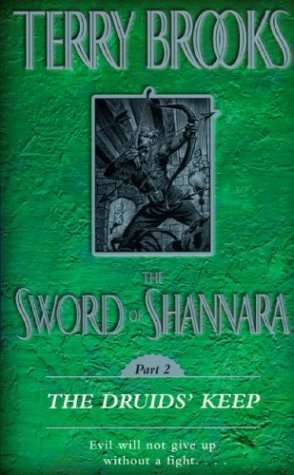
33. The Heritage of Shannara Books
 
$0.17
34. Truth About Druids (Llewellyn's
$54.32
35. The Druid Way (Earth Quest)
$13.95
36. The Philosopher and the Druids:
$4.57
37. Being a Pagan: Druids, Wiccans,
$84.95
38. The Celtic Druids' Year: Seasonal
$7.80
39. Celtic Tree Mysteries: Practical
40. Jarka Ruus (High Druid of Shannara)

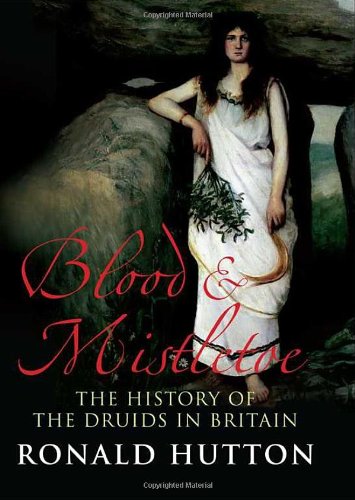
21. The Druids
by Ronald Hutton
Hardcover: 240 Pages (2007-05-01)
list price: US$29.95 -- used & new: US$18.63
(price subject to change: see help)
Asin: 1852855339
Average Customer Review: 5.0 out of 5 stars
Canada | United Kingdom | Germany | France | Japan
Editorial Review

Book Description
Ronald Hutton's latest book is the latest comprehensive study of what people have thought about the ancient Druids and why. Written in a racy and accessible style it is essential reading for everyone interested in exploring our mysterious past.

Most books written on the Druids hitherto have been by archaeologists specialising in the Iron Age, who have occupied a great deal of space trying to find things to say about the 'original' ancient priesthood. Most have then devoted a final section of their books to people who have called themselves Druids since 1700 - until recently with contemptuous dismissal. Hutton's contention is that the sources for the ancient Druids are so few and unreliable that almost nothing certain can be said about them. Instead he reverses the traditional balance of interest to look at the many ways in which Druids have been imagined in Britain since 1500, and what this tells us about modern and early modern society. In the process he achieves many new insights into the development of British national identities, established and 'alternative' religions, literary culture, fraternal organisation and protest movements. He also suggests new ways in which the discipline of archaeology can be perceived - which will delight some practitioners and enrage others. ... Read more

Customer Reviews (3)

5-0 out of 5 stars The mythologising of a myth
Ronald Hutton has published a string of fine works exposing fallacies we've held concerning ancient religions and mysticisms.This volume, the first of a pair on the Druids, is one of the most devastating to prejudiced thinking.At the outset, Hutton reminds us that what we know of the Druids was produced by their enemies.Julius Caesar, likely the most famous of those, declared them the leaders of Gaul's resistance to imperial Roman invasion.Through the years, archaeologists, historians and others have attempted to form a picture of who the Druids actually were.These efforts have produced notable failures, and Hutton has taken a different tack with this book.Instead, in a carefully researched and comprehensive study, he reviews how the Druids have fared at the hands of those wishing to use their myth to create new ones.

In this finely crafted study, the author subdivides the Druid myth into themes that have been used to characterise them over the past few centuries.There are the "Patriotic" and "Rebel" Druids, "Green" ones, while others are "Wise" or "Demonic".Each of these portrayals has been forwarded by scholars, poets, social commentators, and not a few charlatans."Patriotic" Druids have been adopted by various writers to convey the notion that Druid rebellion against the Romans was a model for others rejecting imperial incursion, in Britain, notably against attempts by the Roman Church to overwhelm Anglican Protestantism."Rebel" Druids, Hutton considers a modern phenomenon, a form of 20th Century counter-culture - "hippies with a cause".The extensive chapter on the "Wise" Druids, on the other hand, covers a range of views.Druids as teachers, religious leaders and intense observers of Nature granted their image great influence.According to a given writer's agenda, however, this might be seen as either positive or negative. The collection and imparting of knowledge can either contribute to a society, or rend it through challenges to accepted dogmas.Druids who claimed to understand the cosmos better than Christian priests would be viewed as "heathen".

Over the course of the 18th and 19th Centuries in the British Isles, interest in the Druids waned, then waxed.As the threat of domination by the Roman Church evaporated, Druids as leaders of guerilla forces protecting British society faded.As the British Empire began its expansion, however, segments of the United Kingdom found the Druids an inspiration for giving their heritage a sounder foundation.Wales, in particular, used the Druids as the basis for its bardic tradition.One "researcher" went so far as to fabricate an extensive collection of Welsh poetry, a massive invention that went undetected for many years.The Welsh weren't alone in inventing roles for the Druids - the Scots, Germans, Irish and, of course, the British all exhibited high levels of creative skill in using the Druids for their own ends.

Because Hutton intends this book for the general reader, to be followed by a second, more scholarly volume, the present work is almost conversationally written.Each chapter opens with a summary paragraph describing the theme it will address.There are sets of drawings and photographs enhancing the text.These include those by, and of, William Stukeley, one of the leading early figures of British Druidry.Stonehenge figures largely in the narrative, as it was long thought a Druid construction.In modern times, reality notwithstanding, Stonehenge has become the focal point for a Druidic resurgence.Ceremonies, even weddings are held in the area by those thinking they are following Druid rituals.He concludes this work with mild speculation about where Druidry might tend in the future.Although the book is clearly intended for those interested in history, its excellent presentation and worldly viewpoint make it a fine read.[stephen a. haines - Ottawa, Canada]

5-0 out of 5 stars Excellent historical review of druids in modern times
This book by a noted historian takes a look at Druids as they have been conceived of in modern times, and provides arguments for or against these conceptions.I found this book to be an incredible resource for adding to my knowledge about Druids.And, it is written in an enjoyable and often funny style.I highly recommend this book to anyone interested in the history of the Druids.

5-0 out of 5 stars Another outstanding effort by Hutton!
Do you think you know what the Druids were all about? Hutton's book will make you think again. It's not so much an account of the ancient Druids as a much-needed examination of how the Druids have been viewed in more recent times. ... Read more


22. Secrets of the Druids
Hardcover: 400 Pages (2002-04-08)
list price: US$24.95 -- used & new: US$24.95
(price subject to change: see help)
Asin: 1579122329
Average Customer Review: 2.5 out of 5 stars
Canada | United Kingdom | Germany | France | Japan
Editorial Review

Book Description
An in-depth study of the history, lore, and tradition of Celtic philosophy and religion, this beautifully designed book offers a fascinating look of the mysterious ways of the Druids.

John Matthews is the author of more than fifty books on Celtic and Arthurian History and related subjects. He is a prominent lecturer and teacher in the United States and Europe. ... Read more

Customer Reviews (3)

3-0 out of 5 stars A Compilation of Matthew's Source Book Series, sadly lacking


Just barely three stars.

A Compilation Book drawn from his first three books in the "Source Book" series (The Druid Source Book, The Celtic Seers' Source Book, and the Bardic Source Book), Secrets of the Druids is a scaled back (abridged) tour through the trilogy.

This text covers writings from the Classical commentators, Celtic Folklore, various stories and interpretations regarding the Druids, Seers and Bards of Celtic & Gaelic tradition, in that order.

Since this book is a compilation geared toward a general audience, it lacks many of the footnotes and details in the original three books, so you have to refer to the original texts to find many of the references or sources for the material. There is also no index, which is rather annoying, as it makes it very difficult to find material in the book when you're searching for it.

John Matthew's translations are mostly reasonable, but some of his interpretations of these tales are a little far reaching. If you can put aside some of the commentary, and don't mind the other issues already mentioned, there are some interesting stories presented, but I've seen much better books on the subject.

"Secrets of the Druids" is geared for a general audience, rather than for scholarly study/reference, and it highlights what the author considers the best of his works in one concise, easier to read source book.As it stands, there is a lot of interesting information in this book, but you have to search elsewhere to find out where much of it comes from and you can't rely on Matthew's interpretations.

I definitely prefer the individual three source books over this compilation for the footnotes and index this text lacks (with their own inherent limitations considered), but, if you don't mind doing further research, and can keep track of where everything is, it's decent (just).

Unfortunately, if you've already read the other volumes, you will also find little new material is covered in this compilation. It's a compilation, nothing more.

All and all, this text may be enteraining for someone new to Druidic studies and Celtic Folklore, but for those who've studied a bit more, it's really lacking.

3-0 out of 5 stars A Lukewarm Reaction
As a fairly serious student of John and Caitlin Matthews many works, I must say I was rather disappointed by this latest one. As has been previously stated, the material has already been covered in his three volume series of sourcebooks. Besides that, the material is, in my opinion, poorly arranged and incredibly dull. Add to this the fact that many of the sources are questionable in both authenticity and scholarly value, and you have a poor book from an otherwise outstanding author. If you have need of an impressive looking reference book, then by all means pick this book up. If you're looking for an exciting read on the Druids, this is not it.

1-0 out of 5 stars Greatly disapointing
What a waste of money, If you read the Matthews work seriously you'll already have the three books that this book is pulled from.
If you don't read their work seriously the book is disjointed and dry.
Sadly the newest thing about the book itself is a nice cover and a few new drawing that look great. The drawing are repeated in the book wasting space,and the cover is destroyed when you try to take the shrink-wrap off that it ships in. I can understand the reason for the shrink wrap, if I saw this book in a store I would never of bought it. With the wrapping you can be fooled into thinking this is a new piece of work.
I would strongly suggest spending money on either the three book set the Matthews have done, (Sourcebooks for Druids, Seers, and Bards) or buying a more "user-friendly" book on the basics. In either case don't waste the money on this watered down version. ... Read more


23. The Druid Plant Oracle
by Philip Carr-Gomm, Stephanie Carr-Gomm
 Hardcover: 128 Pages (2008-08-05)
list price: US$24.95 -- used & new: US$16.47
(price subject to change: see help)
Asin: 0312369778
Canada | United Kingdom | Germany | France | Japan

24. The Druid Queen (Forgotten Realms, the Druidhome Trilogy, Book 3)
by Douglas Niles
 Paperback: 31 Pages (1993-03)
list price: US$4.95 -- used & new: US$33.92
(price subject to change: see help)
Asin: 1560765682
Average Customer Review: 4.0 out of 5 stars
Canada | United Kingdom | Germany | France | Japan

Customer Reviews (7)

4-0 out of 5 stars help me find a copy of this book please
I have read the Moonshae trilogy by douglas niles and thought it was a brilliant trilogy. then read the first 2 books in the druidholme trilogy and found this an even more interesting set of books that I just could not put down once I started reading them.But for about 2 years now I have been trying to get the druid queen but have not had any look getting it anywhere if you can help me can u e-mail me at mage@scottsmail.com

5-0 out of 5 stars Waiting for reprint
Well I have read the first trilogy and also the first two books in thedruid home trilogy and am now waiting for Druid Queen and Ill be Happy

4-0 out of 5 stars Adventure and romance.
Although I enjoyed the Moonshae Trilogy, I have to say that the Druidhome Trilogy is much better.I read all three books in two days, and I was wishing they were longer. Unlike other Forgotten Realms authors (mostnotably Ed Greenwood), Douglas Niles definitely has a well-developed plot,with a clear conflict that leads to a logical conclusion.Although thestory itself is quite good, that wasn't really what kept me reading intothe small hours of the night. Actually, it was the romance part ofit--something which gets neglected in many other TSR novels. I found myselfdying to know who Alicia would choose.All of the characters are extremelylikeable (except maybe Deirdre), and I was happy to see that Newt, thefairy dragon returns in this trilogy. I highly suggest this trilogy toanyone who is a fan of the Forgotten Realms setting, and especially tothose of us who wish the authors would pay more attention to developinglove between their characters.

4-0 out of 5 stars The Druid Queen
This is another fine book from Douglas. I'm at chapter 12 at the time beeing, and High King Tristian Kendrick finds himself (and the faerie dragon Newt) facing an army of Trolls and firbolgs all alone. It'scompelling - have to finish this one tonight...

Anybody out there,willing to sell "Moonshae - Special Module FR2; by DouglasNiles"?

5-0 out of 5 stars Waiting for the reprint
I have read the first trilogy ( The Moonshae Trilogy) and have gotten the first two in this trilogy but can't seem to find the last in the series. I am a serious collector and the books of the forgotten realms are my target.I have 42 in 1 time read condition and hope to complete the collection. Irealize that it's going to be hard since TSR was bought out but any onethat can direct me to a "source".....gimmee, gimmee, gimmee ... Read more


25. The Druids (Ancient Peoples and Places Series)
by Stuart Piggott
Paperback: 216 Pages (1985-05)
list price: US$18.95 -- used & new: US$6.30
(price subject to change: see help)
Asin: 0500273634
Average Customer Review: 4.5 out of 5 stars
Canada | United Kingdom | Germany | France | Japan

Customer Reviews (5)

5-0 out of 5 stars Great partner with his "The Celts"
Fusing both historical research and anthropology this talented author brings to life figures that would require a lifetime of study to partially comprehend.I would suggest this book to anyone who thinks Celtic=Wiccan or that the Irish/Celtic natural spirit is anything but Heathen.A great read for curious Wiccans and well read Indo European sons and daughters.

4-0 out of 5 stars Anthropologica Academia
I read the `Druids' with slightly amused rapture as I imagined the croaky voice of a pre-war colonial authority on primitive tribes. This book had been recommended to me so many times that I eventually caved in and procured it as a bargain on E-Bay. I was perhaps slightly wary of the semi-divine official status of Professor Stuart Piggot, an accepted archeological authority at Oxford University, and whilst he follows the standard principals of academic research and remains objective throughout, his style of writing provokes a `Monty-Python'esque' humor for its occasional eccentricity.

What I found immensely helpful was Prof. Piggot's approach to analysis, categorization and organization of evidence and information. This would include the use of archeological, iconographic, epigraphic, classical and vernacular sources. Whilst I groaned every time I came across the word `savage' or `barbarian,' I was also grateful for the authors introduction to the terms `hard and soft primitivism' to explain the differences between the classical Greek and Latin accounts of the Gallic tribes and the Druids.

Piggot is absolutely thorough in his approach and account of the Druids. He is prepared to examine every facet, each crumb of evidence and article of information available to him, regardless of academic opinion. I can imagine how revolutionary in format this book might have been when first published, since even today few academics are willing to explore a subject beyond their own particular specialism. For this I admire Piggot, who evidently pushed out the boat, broadened his field of enquiry and tackled the subject as a whole rather than remain in a subjective arena. And so, I found myself looking at the importance of maps, place-names, technology, science, agriculture, economy, social order, language and literacy, archeology, shrines, temples, earth-works, burial sites, votive sites, etymology, rituals, education and literacy, cosmology and religious beliefs, magic, gnomic wisdom, philosophy, and politics. In this respect, `The Druids' is definitely comprehensive, provocative and inspiring; it provided me with a wealth of topics for deeper consideration and contemplation.

The bulk of the text is conveniently divided up into four main chapters. In the latter part Piggot deals with the romantic ideal and the Druid revival. Whereas many scholars would begin perhaps in the 17th century with Tolland and Stukely, Piggot draws back to the last phase of the European Renaissance to discover the roots of paganism as we know it today. I found it interesting to learn that many early speculations on the nature of the Druids and Celts were colored by the discovery of native American Indian tribal cultures and systems. Piggot takes the reader up to the romantic revival, the `dignified nonsense' of the Welsh Gorsedd and Iolo Morganwg, the shady mysticism of dreamers and the `cosy world of lunatic linguistics' of individuals like Rowland Jones. Piggot's view of this latter modern development in `native spirituality' is one without historical or cultural foundation, a colorless and fanciful imagining, and I for one must surely agree.

In his epilogue Piggot succinctly draws his conclusions and theories together. He defines the practices of the earliest Druids as being developments of customs and rituals in Paleolithic prehistory, and proposes the possibility of syncretism with other Indo European cultures. Piggot even considers the possibility of a strain of shamanism within Druidic practice, a question which regularly appears within online discussion groups today and inspires fierce arguments.

Having absorbed the radical content of this volume I can now see how vastly it influenced the beginnings of a traditionalist Celtic Pagan movement in the latter half of the twentieth century. Piggot has created a stable foundation on which reliable research can be conducted for the implementation of traditional practices and rituals within a modern context. Perhaps his final comment reveals the most about the inherent characteristics of the Druid, that the truest modern evocation of their spirit is within the realms of scientific exploration and computer engineering than mythic reconstructionism and `role playing.'

The message I got from this book was that I should be prepared to question everything, to analyze and carefully weigh the evidence of any spiritual matter but particularly those subjects dealing with ancient concepts. Piggot provided me with the academic tools to disseminate, examine, and probe beyond careless ambiguity and imagination... and seek the core dynamic of a topic rather than peruse its exterior decoration.

David Drew:

http://360.yahoo.com/my_profile-MmJAzjEwcqTnQwamnug.dXpdDk75BA44_A--;_ylt=AkDDzLkV1EqoCGAWKAUPbW7lAOJ3?cq=1

5-0 out of 5 stars The Druids Revealed!
_The Druids_ by distinguished archeologist Stuart Piggott, published in the Ancient Peoples and Places series, is an essential source on this ancient Celtic priesthood.This book covers much material dealing with the archeological remains available from the ancient Celts, as well as material from ancient texts (mostly written by Greeks and Romans).The first section of this book covers the archeological remains of the ancient Celts, including tombs and various artifacts which are believed to be connected with the Druids.These remains are present throughout Britain and Ireland as well as in parts of Continental Europe, from France all the way to Czechoslovakia.The second section deals with ancient texts which help inform the archeological discoveries.Important writings from Posidonious, Lucan, and Caesar are explained.To the ancients, the world was believed to have fallen from a lost Golden Age, and thus the ancient barbarian tribes represented this pastoral paradise.Thus, druids were depicted as noble priests and wizards who ruled as philosophers and poets of nature as part of a soft primitivism.However, as part of a hard primitivism it was noted that druids practiced human sacrifice and engaged in ghastly rituals (often involving mistletoe as a sacred plant).Caesar and others were appalled by these cannibalistic rites and had them prohibited.The third section of this book deals with the romantic notions of the druid that sprang up later.These romantic notions again incorporated elements of soft primtivism, presenting the druids as noble savages (much as the inhabitants of the New World were perceived), or hard primitivism, presenting the savagery (especially human sacrifice) of the druids.Important writers developed the druid myth, often deriving them from the children of Noah after the flood.The druids came to play some part in the thinking of deists and nature worshippers but also in that of orthodox Christians who saw in the druids a precursor to their own faith.Early writers dealing with the druids included John Toland, William Stukeley, and William Blake.Also, the stone monuments such as Stonehenge came to be associated with the ancient druids through this romantic literature.Within the last hundred years, societies sprang up claiming druidic pedigrees for themselves.Indeed, one such druidic society included among its members Winston Churchill.Today many of these druidic societies hold rites around Stonehenge and other sacred monuments during certain times of the year.The author stresses however the distinction between druids-as-known and druids-as-wished-for.This book provides an excellent introduction to the archeology of the ancient Celts and the history of the druids.

4-0 out of 5 stars This is the standard
This is the one that all other books are judged by. Piggott doesn't wander off into romanticism but it also isn't just dry anthropology.

4-0 out of 5 stars The druids as known, as well as wished for.
In "The Druids" Piggott first defines the limits of what can be known about any pre-literate people such as the Druids, and how it can be known. This is not, as so many other books on the topic turn out to be, a romantic description of an ancient people, but rather a history first of the archeological, then the contemporary historical, and finaly the historiographic records of the Druids, who they may have been, and what they may have been about.

Throughout, Piggot continuiously contrasts the three levels of historical knowledge, described as "Druids as known," "Druids as inferred," and "Druids as wished-for." The first third of the book is one of the better examples of conservative (not in a political, but an academic sense) archeological interpretation as Piggot explains the few hard facts that can be discerned from material remains, and the few inferrences which can be made from those facts. To romantics and lovers of "Druids as wished-for" this part will probably seem quite dry and lifeless, but for those interested in real archeology and it's interpretation, this may be the most interesting part of the book.

Piggott then takes us on to contemporary accounts of the Druids from their literate neighbors in the ancient world, while still mainting his contrast between what is known and what is inferred. This is the part of the book that will interest those who want to get the best possible picture of who and what the Druids really were, as these contemporary and near contemporary accounts are the closest things we have to real insight to the culture of the ancient Celts. Of course, this can be gleaned from the primary sources as well, and whether or not you read Piggott's book, Ceasars "Gallic Wars" and the Ulster Cycle of Irish legends are both well worth reading.

Finally, Piggott takes us on a history of the history of Druids, from the Renaissance through the modern era. This is almost as fascinating to me as the prior two-thirds!of the book, as this section shows how the scant historic and archeological records were interpreted in all manner of romantic, nationalistic and downright bizarre ways.

All in all, "The Druids" is a fine example of sussing out the real history of a subject that is often treated with more romance and fantasy than scholarly rigor. Unfortunately, there is little that we can truly know about the Druids because they left no written records themselves, and their neighbords had all manor of political and cultural biases when they wrote about them. But even if the Druids still remain a cypher, isn't it far more fun, and more fascinating to try to solve the cypher with what facts are available, rather than the romantic fantasies that have piled up over the years? ... Read more


26. Bonewits's Essential Guide to Druidism
by Isaac Bonewits
Paperback: 256 Pages (2006-08-01)
list price: US$13.95 -- used & new: US$8.37
(price subject to change: see help)
Asin: 0806527102
Average Customer Review: 4.0 out of 5 stars
Canada | United Kingdom | Germany | France | Japan
Editorial Review

Book Description
A book about Druids unlike any other, Bonewits's Essential Guide to Druidism not only goes far behind the usual Celtic and Classical references by discussing the evolution and migration of the Proto-Indo-European peoples, from whom the Celts arose, but also discusses the beliefs and ritual practices of both the British and American streams of modern Druidry, as well as providing warnings about deceptive Druid organizations and authors. This is a book that belongs in the library of every modern Druid, regardless of their particular path or style of Druidism. ... Read more

Customer Reviews (10)

1-0 out of 5 stars Typical Bonewits propaganda from recent years
Isaac Bonewits has a recent habit of bringing scholarship to his works, but then using his powerful intellect to stick it to groups he has personal problems with. This book is no exception.I admire his earlier intelligent works; but lately his writings have devolved into slander and pagan tabloid writing.Those of us who have been around the block for a couple of decades in the pagan communities are able to separate the chaff from the grain in this book; but for the novice, Bonewits does a major disservice by crying "cult" to any group who hasn't towed his particular line.There are actually very good groups of pagans whom I have known for years whom he libels in his books and offers absolutely no evidence to support his nefarious claims.It is obvious by the comments that he posts on his website that he is in dire financial need; so I am assuming that his foray into tabloid journalism is based on his need to make as quick a buck as possible.What a waste of what used to be a decent author.I hope he gets some money soon so he can return to what he does best: writing thoughtful and well-researched books.

5-0 out of 5 stars Highly recommended
Learning about neo-pagan druidism should, at first glance, be easy.The shelves of both "New Age" bookstores and the "Alternative Religion" category at your local Barnes and Noble are sure to be filled with tons of books with words like "Celtic" and "Druid" and "Irish" and so-forth.Simply grab one of those books, and you're on your way.

The reality is, of course, quite different.Most of those books are filled with romanticism of the worst sort, outrageously unverified scholarship, 19th century forgeries and errors, etc.While at times they may prove usable in a personal spiritual life, they're hardly accurate and sometimes those sources can be downright deceitful and dangerous (such as the 21 Lessons of Merlyn).

Bonewits' book is a breath of fresh air.Bonewits is a man devoted to genuine scholarship, learning and a no-nonsense approach to both ancient druidism (or as he calls it, Paleopagan) and modern Neopagan Druidism.Bonewits' book is filled with scholarship, gentle (and sometimes not so gentle) wit and wisdom regarding Druidism, ancient and modern.

As someone who has recently become interested in the subject, I knew immediately that, based upon his previous books and his webpage, that Bonewits' book would not be a "mixed bag" or an outright falsehood like many so-called "Celtic" books are.I am exceedingly glad that I purchased this book and it shall serve as both a reference and a guide to other books on the subject (I've already ordered Ellison's The Solitary Druid: A Practitioner's Guide due to Bonewits' high recommendation of the book).

If you're dedicated to believing that the Druids built Stonehenge, that the Druids were all monotheists, that "Celtic Christianity" was a beautiful combination of "gentle Druidism" and "mystical Christianity," this is not a book for you (or rather, it IS but you're likely to become very angry at your cherished myths being turned on their heads without so much as a by-your-leave).If you're interested in an intelligent and witty guide to the multiple forms of a genuine pagan faith that is based upon sound research AND imagination (with the latter never trumping the former), then this is a terrific place to start your journey.

1-0 out of 5 stars Dribble Dribble
This has got to be the worst book I have ever tried to read. It should be retitled - the guide to being a hippie and stick it to the system. I would only recommend this book to someone who needed fire starter for their next camp out.

4-0 out of 5 stars Great Intro for Neo-Druidry
Isaac's book is a great introduction to the Neo-Druid movement and it is very well researched and written. My only "complaint" would be his slight bias against reconstructionists and some of his views are just a bit too liberal for me.

5-0 out of 5 stars Unexpectedly Fantastic!
I really didnt expect all the information here. This book contains excellent religious history and how they are connected, from India to Europe. Gives very readable information on the background up to present practices of Druidry! Outstanding value, very readable! Recommended for anyone with an interest in Indo-european religions. ... Read more


27. What Do Druids Believe? (What Do We Believe?)
by Philip Carr-Gomm
Paperback: 100 Pages (2006-04-03)
list price: US$13.89 -- used & new: US$9.41
(price subject to change: see help)
Asin: 1862078645
Canada | United Kingdom | Germany | France | Japan

28. The Druid King
by Norman Spinrad
Paperback: 432 Pages (2004-08-10)
list price: US$14.95 -- used & new: US$4.65
(price subject to change: see help)
Asin: 0375724966
Average Customer Review: 3.5 out of 5 stars
Canada | United Kingdom | Germany | France | Japan
Editorial Review

Book Description
A major triumph of historical fiction, The Druid King, is a masterly retelling of the life of the legendary general Vercingetorix and his brilliant crusade against the Roman invasion of Gaul.Vercingetorix was both a man of myth and a real historical figure—he managed, where others had failed, to unite the tribes of Gaul and lead them against the might of the entire Roman empire.

After watching his father’s harrowing death, young Vercingetorix retreats to the forest where he learns the ways of the druids. Soon he must return to civilization to reclaim his birthright and his father’s honor, but the city of his birth has changed. Now, he must confront the greatest military power the world has even known--the Roman legions of Julius Ceasar. This is the story of Vercingetorix, Druid King of Gaul. ... Read more

Customer Reviews (9)

4-0 out of 5 stars Spinrad tries historical fiction
While not exactly famous, Norman Spinrad is well-known in the world of science fiction as a reliable veteran who has been producing stories for several decades.With The Druid King, he departs from that genre to tell a historical tale of Gaul during the last days of the Roman Republic.

The protagonist in The Druid King is Vercingetorix, a young man who is destined to become the King of Gaul.At the beginning of the story, however, he is merely the teenaged son of a Gallic chieftain.His father has visions of uniting the tribes to oppose Rome, but Vercingetorix's uncle ends that with murder.Vercingetorix is forced to flee and takes refuge with the Druids.

Meanwhile, Julius Caesar has his own ambitions, and the conquest of Gaul is a mere stepping stone for him.A master manipulator, he is able to defeat his foes as much with wiles as with force.Briefly, he makes Vercingetorix his protégé, but soon enough they are foes, leading opposing sides.Unfortunately for Caesar, Vercingetorix has picked up enough from his former mentor to become a difficult adversary.

This is a story of Rome vs. Gaul, but not just in terms of peoples but also ways of life.Much is made of the different approaches to battle:the Gauls believe in honor in battle, the Romans are merely concerned with victory.This difference in philosophy will prove to be a major problem for Vercingetorix as he realizes the Roman approach is necessary to overcome his foes, but his followers are less willing to break with tradition.

Spinrad is a good writer, but the edginess that makes him excellent in his science fiction is missing here.As a result, this is merely another good historical novel.Also, Spinrad's story suffers in comparison to Colleen McCullough's outstanding Roman history series (which also describes the Caesar vs. Vercingetorix battles).I can only give this book four stars as a result:this is not Spinrad's best work (he should probably stick with science fiction), but it is a good, entertaining read.

3-0 out of 5 stars the DRUID King
The story was good.The only way that I can read history.
Unfortunately, my wish for more druidism was not fulfilled.And what the heck is a leggionare??

3-0 out of 5 stars Ainteresting read, a bit korney
It is good to see the story of Caesar's wars with the continental celts with some attention payed to the celtic side of the story. Did find it at times somewhat juvenile. For example; when a character rides a horse in this story theyconstanlty make it rear up. This annoys any real horseman or student of iron age cavalry. This story is supposed to be about iron age celtic warriors on sturdy gaulish ponies, not a girl's fairy tale of knights on white stallions. And Vercingetorix is given as a name recieved from birth rather than a title he had been bestowed with(Ver means high,Cinget means warrior, Rix means king.Ver-cinget-rix high warrior king) he would have been given a simple name as a child and called Vercingetorix only after he took command of the Gaulish army. And Vercingetorix is portrayed very young even at the climax. I find the notion of a boyish Vercingetorix unable to grow a respectable celtic mustache leading an army implausible. I would recommend it to young readers interested in the story of gaul, but not to the more sophisticated enthusiast.

5-0 out of 5 stars A Sweeping Historical Novel
By 60 BC the might of the Roman legions had conquered most of the known world and to be fair had improved the lot of most of the defeated nations. Those who continued to oppose Rome were ruthlessly crushed.
Now Julius Caesar has turned his attention to the invasion of Gaul. He is seeking a victory that will give him the power to cast out the old guard and become Emperor of Rome the greatest city in the world. But a formidable foes stands against him, the Druid King, Vercingetorix.

The conflict that is about to happen will start to shape the future history of Northern Europe. The Gauls know that they must fight to the bitter end or face the destruction of everything they believe in. But can the tribes be brought together as one unit to fight this relentless enemy. More importantly can they gain a victory and save themselves from oblivion.

This books relates one of the most brutal military campaigns of all time.

4-0 out of 5 stars An historical epic.
Like the fictional Hagar the Horrible and the real, post 911 e-mailer/apologiser Jo - now would be a good day to bury some bad news - Moore, Norman Spinrad sucks on a lemon and charges his way through the conflict between the realpolitik of an expanding Roman Empire and Gallic mysticism.

This should appeal to readers of titles by Tom Holt. And those who enjoyed Norman's, The Iron Dream. ... Read more


29. What Life Was Like Among Druids And High Kings (Celtic Ireland AD 400-1200)
Hardcover: 144 Pages (1998-04)
list price: US$34.95 -- used & new: US$8.47
(price subject to change: see help)
Asin: 0783554559
Average Customer Review: 4.0 out of 5 stars
Canada | United Kingdom | Germany | France | Japan

Customer Reviews (3)

3-0 out of 5 stars Fairly Dull, But Lovely Pictures
This volume is one of a series of Time-Life books about how people lived during different times and places in history.As one would expect from the publishers, "What Life Was Like" is beautifully illustrated, featuring breathtaking photographs ofIreland.

What the book lacks is an exciting, sustained narrative.Although the text touches upon the interesting lives of St. Patrick, St. Columba and King Brian Boru, it lacks the crisp storytelling of books like Reston's "The Last Apocalypse" or Howarth's "1066."And considering that "What Life Was Like" covers 800 years of Irish history, it weighs in it a very superficial 130 pages--most of which are taken up with pictures! (It does, however, include a useful pronunciation guide and a helpful summary of the origins of various Irish surnames.)

I liked "What Life Was Like" well enough to buy a few other volumes in the series, but I view this one as "history lite," an agreeable diversion for a rainy Sunday afternoon but not good enough to keep a reader going late into the night.

5-0 out of 5 stars Buy this!
Any what life was like book is worth your time! This is the best type of history book I ever picked up. Time Life takes you into the lives of common folk and lets you see how History is meant to be written.

4-0 out of 5 stars Great historical information on Ireland
This book, like the others in the series, has a lot of good pictures as well as descriptive text. It really gives you a good sense of what it was like to live at certain times in Ireland. The information on Saint Patrickis brief, but interesting. I have some of the others in the series and thisis almost as good; the only reason I give it 4 stars instead of 5 isbecause I felt the depth of the material was not as great. ... Read more


30. Druid Source Book From Earliest Times To
by John Matthews
 Hardcover: 384 Pages (2001-09)
-- used & new: US$109.82
(price subject to change: see help)
Asin: 1860198422
Average Customer Review: 4.0 out of 5 stars
Canada | United Kingdom | Germany | France | Japan

Customer Reviews (8)

4-0 out of 5 stars One of my favorite authors
John and Caitlin Matthews are two more authors that I generally enjoy. I caught on to Celtic worship many years ago and for a long while they seemed the only non-Llywelyn published authors which were accessible. They both get kudos for being tireless translators and bringing to mainstream readership many older documents which we would not otherwise be able to read for ourselves.

The Druid Source Book is a compilation of Druid history, scholarship and commentary from a range of sources. It is especially treasured for the beginning section on the Druids in history, quoting many of the sources, Caesar and beyond, and their words. The book also contains a wealth of knowledge spanning the last two centuries or so from historians and practitioners alike. It is a very nice addition to any Druid shelf for this wealth of source material.

4-0 out of 5 stars Great Compilation
Matthews does a wonderful job of pulling together different treatises throughout history on how the world has and does view Druidism.This is a very dry read, but is filled with great information.

5-0 out of 5 stars excellent
I read a review where an individual stated that "this work was outdated'. Well the ancient druids certainly 'are' and here is a good collection of their history! It seems the more and more I readreviews of Matthews work I come across the complaint that its "dry history'. While this may be true there are also gems within the desert if one cares to look. Also all the books that I've ever read about "druid magic, techniques, shamanism etc...I have found to be worthless and just a dressed up version of wicca. The Encyclopedia of Celtic Wisdom is another example of fine writing and research. Once again we must remember this was"an oral tradition".

5-0 out of 5 stars Good Collection
John Matthews is the editor of this book and has put a lot of work into collecting different material on the Druids.Some of the matterial used is difficult to find as it is out of print, or is an abridged form of larger writings.

It contains material from Caesar to Ross Nichols.Also, there is a list of further readings, and major Druid orders if your interested.

4-0 out of 5 stars A Good Place to Start
The Druid Source Book is a fine gateway to information for those researching Celtic religions or starting a quest for a spiritual path.Unlike many books on the subject, the Source Book is a collection of writings, essays, and articles that relate to the religious practice, gods and myths of the celts.The writings are from several different points of view and time periods.The book is devided by chronological periods so you get not only the information the articles offer, but a historical reference on how this particular religious system was viewed at differtent times of history. This book is also helpful in that many of the passeges contained within are extremely hard to find and it is nice to have them collected in one volume(even if alot of them are not complete).I recomend this book to any person with an interest in celtic religions that want to go to the source information,rather than a regurgitation by someone else, and avoid contamination by others opinions. ... Read more


31. Druid Power: Celtic Faerie Craft & Elemental Magic
by Amber Wolfe
Paperback: 272 Pages (2004-06-01)
list price: US$14.95 -- used & new: US$8.31
(price subject to change: see help)
Asin: 0738705888
Average Customer Review: 2.0 out of 5 stars
Canada | United Kingdom | Germany | France | Japan
Editorial Review

Book Description
Call forth dragons and feel the ancient songs of the Celts stirring in your blood. Access the deep wisdom of the Druidic orders and reclaim the Elemental gifts of the Otherworld. Become a spiritual warrior of the Celtic Craft-a Dragon-Rider. The dragon is a symbolic representation of the alchemist's or magician's works of power. Druid Power presents techniques for self-transformation through Celtic faerie craft and Elemental magic. Rich with mythological information and psychological insight, this innovative guide bridges ancient Celtic Druidic Tradition with modern transpersonal psychology. Reawaken your connection to the magick of the natural world through traditional ceremonies, guided journeys, and unique exercises that lead to a direct connection with the Elemental forces of Nature. Experience the strength and purity of fire, the emotional alchemy of water, the profound reality of earth, the awareness of air, and the transcendent mystery of spirit.

Enter the realm of myth where magick and the mundane blend. Druid Power is your guide to finding your way to the Otherworld and back again-richer, wiser, healed, and whole. ... Read more

Customer Reviews (4)

1-0 out of 5 stars Run, don't walk, away from this horrible book
Run, don't walk away from this book.It's a hodge podge of modern Celtic Wicca, a sprinkle of Faery Wicca and a dash of ornamental magic with some dragon silliness thrown in.There is nothing Druidic about it.While it may contain potent exercises for self actualization, it's disgusting how she steals the word of Druid.She should have stuck to the subtitle - Celtic Faery Craft and Elemental Magic.There is a ridiculous romanticized history essay and while preaching about being open to wisdom, she is yet remarkably derogatory to modern druidry.It's awash in New Age and psychology psychobabble.

1-0 out of 5 stars Just terrible...
Why would someone with no Druidic training whatsoever even bother writing a book on the subject? Whatever the author's credentials may be, none of them have to do with Druidry at all. That is obvious in this book which is purely fabricated and must have come out of the imagination of one who practices Celtic flavoured Wicca and magick.

Sorry to dissapoint everyone, but celtic wicca, or made up systems that could fall into the catagory of celtic wicca has nothing to do with druidry.

It isn't that the material provided in the book won't work. They will, of course, just like any ritual or spell written up by any individual will... But it is misrepresented as Druidry. It is not. There are better books out there for that.

1-0 out of 5 stars Horrid
Most of the information the author offers in this book on druidry in made up. I have studied druidry for awhile now and thought this book was one of the worst i have come across. The book doesn't even make a very good drink coaster, so do NOT read this book.

4-0 out of 5 stars jjnomicon
This book is good for people wanting to develop their imagination using creative visualization. It's like watching t.v. with words. It's also loaded with interesting Celtic Druid information. I liked the book a lot. ... Read more


32. The Druid Renaissance: The Voice of Druidry Today
Paperback: 303 Pages (1996-08)
list price: US$21.00 -- used & new: US$14.25
(price subject to change: see help)
Asin: 1855384809
Average Customer Review: 4.5 out of 5 stars
Canada | United Kingdom | Germany | France | Japan
Editorial Review

Book Description
The Druid tradition lies at the heart of Western spirituality and today it is experiencing a renaissance unprecedented in its long history. ... Read more

Customer Reviews (6)

5-0 out of 5 stars Lanterns That Light the Path of Druidry.
The Druid Renaissance, edited by Philip Carr-Gomm, is a collection of writings by the likes of such well-known persons as Isaac Bonewits, Louise Larkins Bradford, Robert Mills, and Dr. Gordon Strachan.

From these writings we are given some idea of what it means to be a Druid in the modern world.Quoting from the text: "To be a Druid today means following a path which reverences Nature, and which honors an inheritance of lore and tradition which includes the observation of eight seasonal festivals, and working with gods and goddesses, sacred trees and animals.In ancient times, Druids were sages, philosophers, judges and advisors to Kings and Queens.Today, when someone calls themselves a Druid, it can mean either that they feel in sympathy with the ideals of the ancient Druids, and celebrate the eight seasonal festivals, or that they are a member of a Druid Order, whose origins may go back to 1717 AD, or which may have been formed more recently."(p.71 Bonewits)

I find however that there is more to modern Druidry than an affinity for the ideals of the ancient Druids and celebrating the eight seasonal festivals.The path of Druidry is also to master those things that are unseen and forgotten by the common man.It is said of the Tuatha De Danann, that they were in the northern islands of the world, studying occult lore, secret knowledge, sorcery and diabolic arts, witchcraft and magical skills, until they surpassed the sages of the pagan arts.These things and more are on the path of Druidry in the modern day.

It is important however that as we study the arcane arts that we keep in mind that the Druids were a social class of intellectuals and artists.They had counterparts in other cultures (such as the Brahmans of India), yet it was only in the Celtic Culture that they were called Druids."They were of both genders and had several sub-classes, such as Bards, sacrificers, healers, diviners, and judges.They were polytheists, not monotheists, and it is probably true that they did offer human sacrifices from time to time.However, they did not build Stonehenge or the pyramids, did not all have long white beards, did not come from Atlantis, and probably few of them had golden sickles.These Druids functioned primarily as the transmitters of knowledge and culture from one generation to the next, and as performers and supervisors of the ceremonies they believed necessary to keep the forces of chaos at bay." (p.75 Bonewits)

To delude ourselves into believing the myths created students of pagan arts in the past 50 or 60 years is to stray far from the path of Druidry, as it was in the past or as it should be today.Druidry and the modern practice of Wicca are not the same thing and should never be mixed.Even Gerald Gardner, one of the founders of Wicca, in his book "The Meaning of Witchcraft" (1959) stated that Druidry and Wicca are separate practices.They simply do not have a common root.

What then is it that the modern Druid studies, that has been forgotten by the common man?In ancient times the Druids had a close connection with nature, a deep knowledge of the plants and animals."In ancient Ireland, in the days of the mythological Tuatha De Danann, there once sprouted a crop of magical herbs... each a cure for any illness...When the gods withdrew, the knowledge of herbal lore did not vanish entirely, but passed into the hands of wise men, the Druids." (p. 148 Bradford)

It is this type of secret that must be sought by the modern Druid, the secrets of nature.The Druids' skill with herbs and healing plants is found in the writings of Pliny the Elder in his "Natural History" where he wrote of the herbs of the Druids of Gaul during the first century.

Druidry has its ceremonies, the eight seasonal festivals, seen in the wheel of the year.It is interesting to read in The Druid Renaissance how the Druid festivals may be related to the Chinese book of wisdom and oracles, The I Ching.The legendary Chinese emperor Fu His, who is credited with the original construction of the trigrams in pre-Confucian times, provides the modern Druid a system that is "most cogent and symmetrical, offering great rewards when overlaid with the Druidic festivals" (p. 179 Mills)

We also see Druidry connected to Christianity at the time of Christ.The question is asked: "Did Jesus come to Glastonbury and Cornwall with Joseph if Arimathea?If so, was it only to accompany his uncle when tin trading or were there Druidic and Megalithic connections? (p. 237 Strachan).The Christian Bible does not record the history of Jesus' life during the quite years.We read of his birth and of his death, but the years in between and unclear."It cannot be proved that the young Jesus came to Britain in the flesh... But equally, it cannot be proved that he did not come." (p. 255 Strachan)The likelihood ofJesus traveling to Britain is quite high, as is the likelihood that the "lost tribes of Israel migrated to what is now Europe.This is perhaps a mystery for the modern day Druid.

The Druid Renaissance is a very interesting book, inspiring thought and reflection on the words of its several authors.One may not agree with all that it written, and there may even be disagreement between the authors within the book, but it certainly is a book to make one think and seek additional knowledge.After all... knowledge and wisdom are the lanterns that light the path of Druidry.

4-0 out of 5 stars It's not bad....but
I found this to be okay, but there are better books out there about Druids.Yet at the same time the people who contributed to this book did a good job and was well written.To me it seemed like there were parts of the history still missing, therefore somewhat incomplete.

4-0 out of 5 stars Don't buy this with "The Rebirth of Druidry"
Others have covered this book well here. It is excellent, and I recommend it to scholars and interested practitioners. But it was republished more recently as "The Rebirth of Druidry." They are the same book. So don't buy both, or you'll end up with two copies od the same book.

4-0 out of 5 stars A diverse presentation of Neo-pagan druidism
As with any anthology, the real power of the book lies in the few gems scattered amongst the semi-precious stones of the majority of the writing, and the overall balance and diversity represented by the full cross-sectionof opinion presented. Carr-Gomm should be saluted for providing commentaryfrom a wide range of authors from organizations outside of his own.

PartI: The Call of the Land was itself worth the price of the book for me. Itrepresents the best of what makes druidism a religion for the future aswell as the past.

5-0 out of 5 stars Carr-Gomm's reader friendly presentation of modern Druidry
The most informative source book about contemporary Druidism I've found. Druidic history is addressed unabashedly; even the less popular aspects are discussed and dissected in a comprehensive, informative manner. ... Read more


33. The Heritage of Shannara Books One and Two: The Scions of Shannara, The Druid of Shannara
by Terry Brooks
Hardcover: 912 Pages (2006-08-29)
list price: US$13.99 -- used & new: US$8.33
(price subject to change: see help)
Asin: 0517228521
Average Customer Review: 4.0 out of 5 stars
Canada | United Kingdom | Germany | France | Japan
Editorial Review

Book Description
Here together for the first time in one volume are the first two books in Terry Brooks’ enthralling epic, The Heritage of Shannara.

Since the death of the Druid Allanon, the Four Lands have changed profoundly, with magic strictly forbidden in the Southland, now under totalitarian rule. In Book One, The Scions of Shannara, Par Ohmsford, descendant of the fabled Shea and possesor of the power of the Wishsong, accidentally brings a mythic horror to life, and a man calling himself Cogline drives it away. Cogline brings a message from Allanon: venture to the dread Hadeshorn, along with the other Scions of Shannara– Par, his brother Coll, Wren, and Walker Boh. On the way to the Hadeshorn, they must face the dangerous Shadowen. When they finally arrive, Allanon's spirit reveals a dangerous secret. In the future, all life in the Four Lands will be destroyed. To prevent this terrible fate, Allanon commands Par to recover the long-lost Sword of Shannara, a task that is next to impossible.
Ancient evil forces remain in control of the Four Lands in The Druid of Shannara. To restore the Keep of the Druid Allanon, Walker Boh sets out on a journey to find the black Elfstone. After narrowly escaping death, he learns that the Elfstone lies in the hands of the Stone King. Now Walker Boh must venture into perilous, unknown lands with a strange band of fellow travelers that includes Morgan Leah, whose once-magic sword has been broken; Quickening, the daughter of the ancient King; and Pe Ell, an assassin who hatches his own dark, sinister plot. Can they capture the black Elfstone and restore peace to the Four Lands? ... Read more

Customer Reviews (2)

5-0 out of 5 stars Swept away by Mr. Brooks
Someone recently told me that the Shannara series is post-apocalypse and this has caused me to reread them after all these years.

Mr. Brooks paints a better series than J.K. Rowling's Harry Potter. His characters have much more depth. The book is action-packed. His imagery flows like water and carries you through the scenes.

The maturity level of the characters, their level of diction, and the way they carry themselves is very mature and admirable. Subsequently, with the action packed, this is a book for adults as well as adolescents.

There was never a dull moment and I found it difficult to put every book in this series down.

Brooks has a way of weaving language together that makes a scene beautiful. He shows instead of tells, which is a skill that separates him as a distinguished writer.

3-0 out of 5 stars Good Book?
Of Course, being in the Shannara series, it was a great book

BUY IT! ... Read more


34. Truth About Druids (Llewellyn's Vanguard Series)
by Tadhg MacCrossan
 Paperback: 64 Pages (2002-09-01)
list price: US$1.99 -- used & new: US$0.17
(price subject to change: see help)
Asin: 0875425771
Average Customer Review: 4.0 out of 5 stars
Canada | United Kingdom | Germany | France | Japan

Customer Reviews (1)

4-0 out of 5 stars A Well-Written, Brief Introduction to Druidry
"The Truth About The Druids" is a small book, short in its number of pages, but great in its content.For one wanting a brief introduction to the Druids, this book is a good choice.Not only does this book tell one what the Druids are, but also and importantly it dispels many false beliefs and rumors and tells one what Druids are not.

Druids are identified as the highest rank of learned men among the Celtic people.One skilled in the rituals, laws and customs of the people, and skilled in magical arts, poetry songs and verses.We see also, through comparison, the close relationship between the Druids and the `Eriloz or Erulians' (Rune Masters) of the Germanic people.

MacCrossan has also identified the female Druids, called Ueleda or Bendrui, acting as priestesses of the Goddess representing the European virtues: (1) Wisdom or poetry and learning, (2) Physical strength or health and courage, and (3) Productivity, fertility and sexuality.

We see also an introduction to the three Realms and the Druidic concept of time.Celtic Magic is discussed and how a Druid's spell would be accomplished by singing a certain kind of song.And we see mention of manufacture of the Druid's Gem (ovum anguinum).

We are given introduction to the festivals of the Druids and even a discussion of their clothing or vestments ~ dispelling the idea that Druids need wear full white robes.

Finally we are left with a discussion of `Neo-Druidism' its modern developments and a glimpse at where the future may take us.

This book is no in-depth study of Druidry, for such is precluded by its length, yet it is certainly a fine introduction for someone wanting to learn "The Truth About The Druids".

... Read more


35. The Druid Way (Earth Quest)
by Philip Carr-Gomm
Paperback: 176 Pages (1993-04)
list price: US$15.95 -- used & new: US$54.32
(price subject to change: see help)
Asin: 1852303654
Average Customer Review: 4.0 out of 5 stars
Canada | United Kingdom | Germany | France | Japan

Customer Reviews (11)

2-0 out of 5 stars Misleading Title
Considering this book is largely the personal musings of one man (rather than a scholarly take on the subject,) perhaps a better title would have been "A Druid's Way." Nothing to write home about here. Instead I highly suggest Graeme Talboy's "Way of the Druid."

5-0 out of 5 stars The Modern Druid not Druidism
The religion practiced by the ancient Celts and their priests the Druids, is and will always be a mystery. It is sad to see people wishing, hoping, and praying that they could defy logic and physics and go back in time figuratively or otherwise and follow "Druidism." The sad truth is they would probably tell the Druids they were not worshipping or performing their rites in a historically accurate way either! What these folks believe actually happened is just pure fantasy. They have no crystal ball into the past and are just as at a loss as the historians and archeologists investigating the ancient Celts using scientific means.

The fact is Druidry is a modern manifestation and at best based upon guesses at what the ancient Celtic religion was. Philip makes no bones about it. He is not saying in any of his texts that what he is presenting is the unchanged religion of the Celts. Would we or could we really follow the ancient religion in its entirety today? Do we have the same exact needs, hopes, or world-views? A great deal of history has happened since then.

What Philip does provide is another spiritual path or way for the modern individual; the Druid Way. The Druid Way is not an ancient religion brought out of context for a modern age but a modern look at an ancient religion which can be of use and import for us today.

I have researched the ancient Celts extensively and yet this book is one of my favourites! It is a very enjoyable read.

5-0 out of 5 stars Bright, Mercurial, Energizing
Philip Carr-Gomm's intelligence - not unlike Andrew Harvey's - has a bright, mercurial and energizing quality that immediately stimulates interest and attention. Far superior to a rote historical study, his book is an experiential pilgrimage, a first-hand account that could only be charted by someone as sufficiently steeped in the ideas from the inside of his skin as is Philip. And here is where it begins: high on the downlands above Lewes on the South Downs Way, as he stands on Itford Hill at the outset of his circular journey of excursion and return. From here, in twenty-one chapters, he unfolds a compelling narrative that is both story and exploration, memory and discourse, homily and lyric exposition, coloured with his own immediate psychic perception.
`I plead very guilty to being indeed my own ancestor', as Nuinn is quoted in the book...and what is everywhere present here is the presence of the past that the whole landscape resonates, and that Philip unearths, naming original place names, tracking lost paths gone to grass and cut through by our present roads - and he does so with a sense of detail reminiscent of Gilbert White, though his canvas is larger.
Jay Ramsay

5-0 out of 5 stars This whole book is a delight!
This whole book is a delight. It is the diary of a sacred journey, through sacred space, and through the heart and mind, as well as a useful practical guide to the countryside and its associations and history. It is a book to use and to keep and to remember.
Asphodel

4-0 out of 5 stars Great read.
Once again, Philip Carr-Gomm is NOT an anthropologist and hisbooks are NOT about the ancient druids. Druidry is a modern beliefwith only occasional ties to events/beliefs of 2000 years ago, just as modern Christianity is.

I finished this book with a feeling of peace, it was almost a meditation to read it. However, I got very little practical information out of it. I certainly don't feel that it is "a complete description of the Druid Way." The comments by the author are closer to the book than the "synopsis" is. Wonderfully written, this book brings together a stroll around the countryside with the grief of a loss of a friend to show a path to enlightenment through the power and beauty of the earth.

...if you want to know about ancient druids, check out "The Druids" by Stuart Piggot or "The Celts" by T. G. E. Powell. The fact of the matter is the historical druids committed very little to paper until after they were assimilated into the Culdee church. And that all had the taint of Christianity on it. ... Read more


36. The Philosopher and the Druids: A Journey Among the Ancient Celts
by Philip Freeman
Paperback: 240 Pages (2007-11-02)
list price: US$13.95 -- used & new: US$13.95
(price subject to change: see help)
Asin: 1416585230
Average Customer Review: 4.0 out of 5 stars
Canada | United Kingdom | Germany | France | Japan
Editorial Review

Download Description
Early in the first century B.C. a Greek philosopher named Posidonius began an ambitious and dangerous journey into the little-known lands of the Celts. A man of great intellectual curiosity and considerable daring, Posidonius traveled from his home on the island of Rhodes to Rome, the capital of the expanding empire that had begun to dominate the Mediterranean. From there Posidonius planned to investigate for himself the mysterious Celts, reputed to be cannibals and savages. His journey would be one of the great adventures of the ancient world. Posidonius returned home and wrote a book about his travels among the Celts, which became one of the most popular books of ancient times. His work influenced Julius Caesar, who would eventually conquer the people of Gaul and bring the Celts into the Roman Empire, ending forever their ancient way of life. Thanks to Posidonius, who could not have known that he was recording a way of life soon to disappear, we have an objective, eyewitness account of the lives and customs of the ancient Celts. ... Read more

Customer Reviews (9)

3-0 out of 5 stars Unimpressive
The chapters in this rather superficial book are only tenuously held together by Freeman's imagined journey of the Greek historian Posidonius among the Gauls of the 1st century BC. The large majority of the book rehashes second or third hand information, with little independent research, analysis or synthesis byFreeman who simply appears to have compiled easily obtainable evidence into a book with a flashy title. Unfortunately, there are only a few fragments from Posidonius splattered across the book as opposed to a lot of needless filler information.

There is almost nothing, and certainly nothing new, about the druids.

1-0 out of 5 stars Poor Mr. Freeman...
Based on the works of the Greek philosopher, Posidonius (widely regarded as an unreliable source on the subject,) I can only feel sorry that the author wasted so much time on this obviously unworthy project.

5-0 out of 5 stars Archaeology, history, religion
I received this book for Christmas and have been so impressed by the wonderful way it tells the story of the Celts. I had heard of the Celts before, but I never really knew who they were or what they did. I especially liked the focus on women and archaeology. I'm recommending this book to all my friends.

3-0 out of 5 stars Not a bad introduction
I got the feeling reading this book that the original title may have been "the philosopher and the Celts", but that the publisher thought stressing the Druidic connection would sell more books.It's not bad for an introduction to Celtic interactions with Mediterranean cultures, and it's an easy read, but it necessarily deals mostly with pre-Roman Gaul, and the Druids get only one chapter.Check it out of the library, or buy it on sale, but don't expect it to make you an expert on Druids.

4-0 out of 5 stars Freeman does his best
The "Philosopher and the Druids" attempts to develop an ethnographic account of the Gauls, focusing on the 1st century BC when they were visited by the Greek philosopher Posidonious, who had the same objective.The book achieves only modest success, through no fault of Freeman.The problem is that only small fragments of Posidonious' study are extant, and other sources are also very incomplete.To supplement first person accounts, Posidonious makes use of what we know of Celtic Ireland, even many centuries later, as well as what we know of Bronze Age Greece (think Homer).In fact Celtic culture comes out looking a lot like that of Bronze Age Greece, supplemented by their unique priestly class, the Druids.The Druids may have been primarily a civilizing influence, promoting justice and morality, but this is not entirely clear.For me it was disappointing that a culture which had already interacted with Roman and Greek culture for centuries by the first century BC did not, as far as I can tell from Freeman's book, seem to have progressed except in a material sense.Certainly, some of their craft work as shown in the book's pictures is stunning.Freeman's book is almost always interesting, if you don't mind quite a bit of political history.

... Read more


37. Being a Pagan: Druids, Wiccans, and Witches Today
by Ellen Evert Hopman, Lawrence Bond
Paperback: 392 Pages (2001-11-01)
list price: US$19.95 -- used & new: US$4.57
(price subject to change: see help)
Asin: 0892819049
Average Customer Review: 3.0 out of 5 stars
Canada | United Kingdom | Germany | France | Japan
Editorial Review

Amazon.com
Renowned herbalist and druid Ellen Evert Hopman interviews an assortment of artists, prostitutes, militants, scientists, lawyers, writers, and priestesses who all have one thing in common: being a pagan. As a dynamic and growing spiritual movement, paganism offers many diverse voices, as evidenced by this fascinating collection of over 60 interviews. Starhawk (The Spiral Dance) debunks the myth of satanic ritual murders in the U.S.; NPR reporter Margot Adler (Drawing Down the Moon) speaks to being a pagan Jew; Z. Budapest (The Goddess in the Office) offers a primer on "Wind Magic"; and Isaac Bonewits (Real Magic) shares stories of pagan fathering. Other compelling voices include a psychiatric nurse and lay midwife named D'vora who defends the tradition of sacred prostitution. And Victor Anderson, a leader in the "Feri/Faery Faith in America," speaks to his unwavering belief in little people and the true story behind "Snow White and the Seven Dwarves." Kudos to Hopman and cowriter Lawrence Bond for chronicling this sweeping and excellent testimonial to modern-day paganism. --Gail HudsonBook Description

More than 60 pagan leaders and teachers describe in their own words what they believe and what they practice.


Addresses how Pagans view parenting, organized religion, and politics.


Introduces the wide range of possibilities within the neo-Pagan movement.


By Ellen Evert Hopman, author of A Druid's Herbal for the Sacred Earth Year; Walking the World in Wonder: A Children's Herbal; and Tree Medicine, Tree Magic.


Who are the pagans and what do they stand for? Why would some of the members of the best educated, most materially comfortable generation of Americans look back to mystical traditions many millennia old? During the last few decades, millions of people have embraced ancient philosophies that honor Earth and the spiritual power of each individual. Ways of worship from sources as diverse as the pre-Christian Celts, ancient Egypt, and Native American traditions are currently helping their followers find meaning in life while living in the Information Age.

In this book Pagan leaders and teachers describe in their own words what they believe and what they practice. From Margot Adler, an NPR reporter and author of Drawing Down the Moon, to Isaac Bonewits, ArchDruid and founder of a modern neo-Druidic organization, those interviewed in this book express the rich diversity of modern Paganism. Hopman's insightful questions draw on her own experiences as a Pagan and Druid as well as on her extensive research. With coauthor Lawrence Bond, she examines how Pagans address such issues as parenting, organized religion, and politics. The resulting dialogues illuminate the modern Pagan revival.

... Read more

Customer Reviews (7)

5-0 out of 5 stars Excellent Book on Our Pagan Trailblazers of Yestreday and Today.
This wonderful book is a great introduction on all the main neo-pagans of merit.I looked around for an older copy of 'People of the Earth',apparently it's out of print and now re-introduced as ,'Being a Pagan'.This is a step above Margo Adler's worthy book,'Drawing Down the Moon'(1979).I like both books,yet this is more informative,more authors discussed and cozier reading.I have not found a better collective pagan book out there ,that discusses the current best thoughts and opinions, of fellow modern heathen thinkers and writers yet.If you can't obtain the original copy,then i would recommend reading ,'Being a Pagan'.

3-0 out of 5 stars Not all it was...
Just discovered that the extensive interview with Victor Anderson that appeared in the original edition (_People of the Earth_) has been cut from _Being a Pagan_. Disappointing, to say the least!

4-0 out of 5 stars Revision of an excellent book -
Aside from the weirdness caused by the book's re-naming which caused some to purchase it twice (it was formerly known as 'People of the Earth') this is a great and diverse collection of ideas centered around Pagan spirituality. There are some wonderful interviews with a lot of different people. From Starhawk, to Victor Anderson, to Annie Sprinkle... a wealth of styles and philosophies are presented.

2-0 out of 5 stars Re-write of "People of the Earth"
Ms. Hopman and Mr. Bond gave us a very memorable view of the pagan world in their book "People of the Earth: The New Pagans Speak Out".Published in 1995, it was a look at a time in the early 90's from the point of view of some of the members of that pagan culture.It was a look at those who comprised the pagan community at that time.Drawn from interviews done around 1993 and 1994, many of which were done at the Starwood Festival in New York State, they were insightful and gave a picture of what paganism was at that time, at that place.

"Being a Pagan" is the re-release of this book.New title but the same material right down to the graphics and photos.
While some of you may not have had the opportunity to obtain the first book "People of the Earth", which is now out of print, this is an opportunity to obtain a new copy.

Those of you who already have "People of the Earth" may want to bypass this, as it really does not contain any relevant new material.

While this may be a wonderful look at the world of paganism in the early 90's, the pagan community has changed so much in the last ten years.This book now serves as a small window of history about an event and a time in the early pagan culture.

It's a shame that the cover does not mention this is a release of the older book.I've noticed many people upset by that fact and I feel it should have been made very clear on the front cover.The book is supposed to be "revised" but I was hard pressed to find any obvious revisions.

Otherwise, it is a book worth having for its look at the pagan culture at that time.

1-0 out of 5 stars Duped As Well
I too was foolish enough to think that "Being a Pagan' today was a new work. Unfortunately, as stated by the other reviewers, it is simply a republication under a new title of a book that seemed pertinent and timely in 1996 but now seems outdated and a bit tired. Perhaps theauthors could have updated the interviews, as is the title should have been "Being a Pagan in 1996". Many of the interviews are interesting and the book is well put together... ... Read more


38. The Celtic Druids' Year: Seasonal Cycles of the Ancient Celts
by John Robert King
Paperback: 240 Pages (1996-03)
list price: US$16.95 -- used & new: US$84.95
(price subject to change: see help)
Asin: 0713724633
Average Customer Review: 4.0 out of 5 stars
Canada | United Kingdom | Germany | France |