e99 Online Shopping Mall

Geometry.Net - the online learning center Help  
Home  - Religion - Enlightenment (Books)

  1-20 of 100 | Next 20
A  B  C  D  E  F  G  H  I  J  K  L  M  N  O  P  Q  R  S  T  U  V  W  X  Y  Z  

click price to see details     click image to enlarge     click link to go to the store

$8.16
1. The Backdoor to Enlightenment:
$7.47
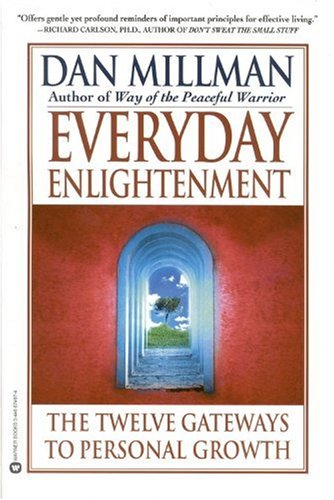
2. Everyday Enlightenment: The Twelve
$19.89
3. Dialectic of Enlightenment (Cultural
$15.77
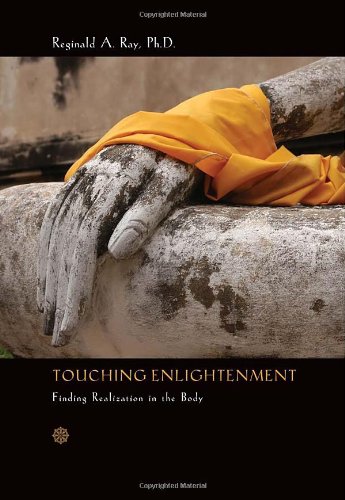
4. Touching Enlightenment: Finding
 
$16.32
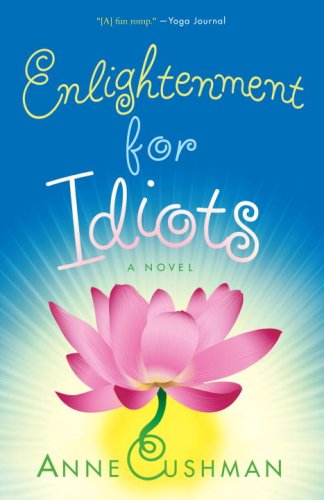
5. Enlightenment for Idiots: A Novel
$11.90
6. The Enlightenment: The Science
$7.37
7. Instant Enlightenment: Fast, Deep
$9.20
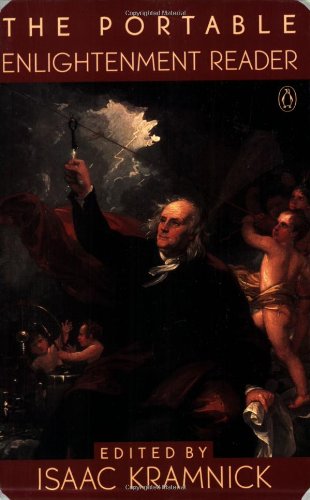
8. The Portable Enlightenment Reader
$49.95
9. The Highest Level of Enlightenment
$11.25
10. The Enlightenment: The Rise of
 
$12.84
11. Healing for the Age of Enlightenment
$16.16
12. The Great Treatise on the Stages
$27.16
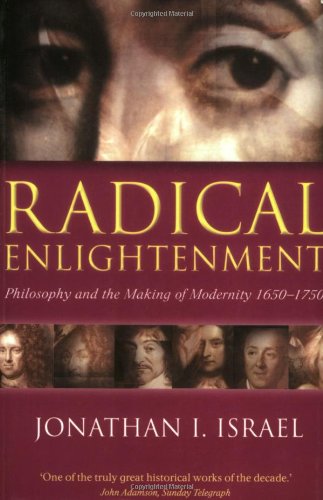
13. Radical Enlightenment: Philosophy
$4.97
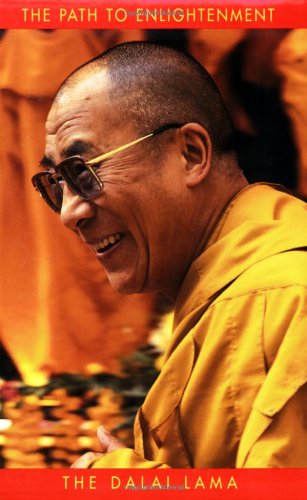
14. The Path to Enlightenment
$21.72
15. The Great Treatise on the Stages
$16.38
16. The Great Treatise on the Stages
$155.36
17. Lazy Man's Guide to Enlightenment
$30.23
18. Golf for Enlightenment: Seven
$11.75
19. Enlightenment's Wake RC (Routledge
 
$2.99
20. Crystal Enlightenment: The Transforming

1. The Backdoor to Enlightenment: Eight Steps to Living Your Dreams and Changing Your World
by Za Rinpoche, Ashley Nebelsieck
Paperback: 272 Pages (2008-02-19)
list price: US$14.00 -- used & new: US$8.16
(price subject to change: see help)
Asin: 0767927400
Average Customer Review: 4.5 out of 5 stars
Canada | United Kingdom | Germany | France | Japan
Editorial Review

Book Description

Everyone dreams of a better life. All the things you’ve ever wanted — happiness, loving relationships, well-being, abundance, and peace of mind — are all qualities of enlightenment, a way of embracing our fullest potential that seemed unavailable to us, until now.

For thousands of years, the secret to enlightenment has remained hidden in the distant reaches of the Himalayas, deep in wisdom impenetrable to all but the most dedicated seekers. For the first time in history, The Backdoor to Enlightenment burns the rules and barriers that have hindered our understanding and reveals the keys to immediate, profound realization to the rest of the world. Blending centuries-old texts with contemporary wisdom, readers of any faith can bypass the traps and limitations of modern life and achieve lasting peace every day.
More than just a heartfelt story of mystery and discovery, this revolutionary work stands out as a smart, clear guide, showing step-by-step how you can use these astonishing truths to transform every aspect of your life. There might not be a shortcut to your dreams, but there is a Backdoor!

... Read more

Customer Reviews (9)

5-0 out of 5 stars everything u wanted to know about enlightenment but were afraid to ask
This is LIFE ALTERING yet remarkably easy-to-read. Nebelsieck's ability to draw simple parallels between our lives and ancient wisdom make this book unique in it's genre.
I've suffered from depression and a general malaise toward my life and read many a self-helf book in my search for answers. This book is truly inspiring and has helped me to look in the right places.
MUST READ.

5-0 out of 5 stars Radical way to give wisdom teachings
I would highly recommend this book for anyone who is ready for a new and radical way to get wisdom. And it isn't boring, that's for sure, as many of those other books are. There is a plot and it is riveting, witty and chugs along smoothly. What the authors have to say is earth shaking stuff, too. And I think that anyone will "get it."
As you read this, what takes place will be the witnessing of an adventure in your mind that can only be likened to a dream of truth.

5-0 out of 5 stars "O" magazine picks another winner!!!
I noticed a quote in "O" magazine from this book and proceeded to research this book and found it on Amazon.This is an amazingly useful tool that everyone should have and use in their daily lives. I not only found the story entertaining but loved how it linked the ideas in a very straight forward and easy to use way.Kudo's to the authors who took very deep and profound Tibetan teachings for all of us to easily understand and apply to our everyday lives.This is definitely a book that I will recommend highly to my book club and students.

5-0 out of 5 stars Amazing!
So I opened the book and then even though the phones rang and clock
ticked, I couldn't put it down.That simple every day things we know but don't pay much attention to, can be pointed out in a fun mystery is a treasure.They say only a master can make the most difficult easy.There were moments when the ordinary fog lifted and I found delight.I found hope and had a great read.Should have five stars and then given some kind of ribbon for inspiration.

My granddaughter, daughter and mother-in-law will all enjoy it, something that spans the generations.For heaven sakes, read it, have fun, find happiness.

5-0 out of 5 stars Profound and Practical Advice to Reach Your Full Potential
Everyday we struggle to get through our unending list of to-do's, work and family obligations and stresses. It is always a challenge to find a way to incorporate eastern ideas of harmony and happiness into everyday life. The surprising discovery process of the main characters, the clear and authentic commentary, and the "take home message" bullet points at the end of each chapter truly make this a companion for reference on how to deal with every situation with more awareness, joy, and compassion. The mastery of Buddhist ideas and the engaging narrative in this book enforce the serendipitous collaboration of Za Rinpoche and Ashley Nebelsieck and provide profound and practical advice to reach our full potential to be happy and enjoy our lives with great purpose. ... Read more


2. Everyday Enlightenment: The Twelve Gateways to Personal Growth
by Dan Millman
Paperback: 368 Pages (1999-06-01)
list price: US$14.99 -- used & new: US$7.47
(price subject to change: see help)
Asin: 0446674974
Average Customer Review: 5.0 out of 5 stars
Canada | United Kingdom | Germany | France | Japan
Editorial Review

Book Description
Multi-million-copy bestselling author Dan Millan reveals the gateways to personal growth. Turn everyday life into a spiritual adventure. Dan Millmans Twelve Gateways to Personal Growth uncover the hidden purpose of life, a road map to the higher reaches of human potential. Everyday Enlightenment shows how to, discover your worth, energize your body, tame your mind, trust your intuition, accept your emotions, face your fears, illuminate your shadow. Also available as a Time Warner AudioBook. ... Read more

Customer Reviews (17)

5-0 out of 5 stars Wonderful Book!
Worth buying and seeing his movie -- a great self-help book for any one of any age.

5-0 out of 5 stars My Oasis
I needed this book like a nearly dead,confused,thirsty traveller wandering aimlessly through the parched desert needs water.
Over the past 2 1/2 years I have read, referenced, and reread this book countless times. I also bought the book on tape and often listen (sometimes just a chapter) for an easy self-centering. Thing is- I'm the sort that rarely watches a movie twice and if I love a book I might read it again- in a couple years. I can't get enough of this timeless wisdom- truly a map to concious living.

All I can say is this is the only "spiritual read" and "self help" book that I gravitate back to time and time again. It truly covers every pittfall and challenge to the human condition.

Thank you Dan Millman- I'm so very gratefull for you!

5-0 out of 5 stars Ascend
This book takes you up the summit of our selves, step by step through well yet openly defined pathways that lead to some consciousness which is all you'll need to keep coming back to-awakening through reading is the ideal experience and why we should do so.Each chapter or gateway has several short to mid size sections that makes it great for commuting and chewing on nuggets of wisdom.This too I found through the library web catalog quite gratefully while this book includes the Peaceful Warrior workout that also makes it worth buying so we can learn and pratice enlightenment through all our day to day actions.

5-0 out of 5 stars This book is practical
Dan Millman has placed the most practical guide I have seen for living the ins and outs of the real world. We can't go sit on a mountain or retreat to a lake hideaway to revive ourselves. This book tells you how to live the 8-5, rush hour traffic, life while maintaining yourself physically,mentally and emotionally. This is what everyday enlightenment looks like.

5-0 out of 5 stars Treasure Trove of info. for everyday enlightenment
This guidebook by Dan Millman has useful and wise information for everyone. This book is not your typical trite self-help book that's been rehashed 1000 times.

Dan Millman has done extensive training in meditative disciplines, mystical practices, and other endeavors in the search for enlightenment. While he found these practices to be highly inspirational and wise, he also realized that these practices didn't do any good if you couldn't perform your everyday tasks in an enlightened manner. Thus-Everyday Enlightenment.

The book offers 12 practical and well thought-out-of areas or gateways to pass through for optimal growth as a person emotionally, physically and spiritually. Some of the gateways are: self-worth, money, health, emotions, taming the mind, trusting your intuition, sexuality, love, and serving others. As you apply the suggestions in each chapter you'll find yourself becoming more successful with that particular gateway. When you combine all the insights and wisdom you've learned from the gateways you can't help but live in a more satisfied way.

Dan makes it clear that none of us are ever going to perfect these gateways. They serve as signs and guides to lead us on the path of continual improvement. After all, enlightenment is what you do in the moment. In other words, it's the moment-to-moment awareness and actions that we bring to the present that make us enlightened. No one is ever completely enlightened-they just act more enlightened than others in their day-to-day affairs.

I found many of the anecdotes in the book to be inspirational. Especially inspirational was the chapter about serving others. There are many wonderful stories of people doing extraordinary acts of kindness to help others. If you don't find these moving you might want to get your pulse checked.

The wonderful thing about this book is that Dan writes in a clear fashion that is highly accessible to anyone. He also offers practical examples that aren't just fancy esoteric abstractions. Another thing of importance is that the information in this book doesn't depend on your personal beliefs, sexuality, religion or anything similar. The information rises above factional differences to a unified place that works for all humanity. However, you have to have the effort and willpower to apply the lessons taught.

What makes Dan's writing so impressive is that from these common bonds of enlightenment that apply to all of humanity he elaborates on them in a way that has personal meaning. He doesn't preach to people but accepts them as they are and shows them a path to take. He realizes that everyone's path is a little different but at the same time it's the same as well...The paradox of enlightenment. Read this book for yourself and start applying the techniques and lessons contained therein. This will open up a move vivid picture of reality that creates happiness, enlightenment, and awakening. ... Read more


3. Dialectic of Enlightenment (Cultural Memory in the Present)
by Max Horkheimer, Theodor W. Adorno
Paperback: 304 Pages (2007-03-13)
list price: US$24.95 -- used & new: US$19.89
(price subject to change: see help)
Asin: 0804736332
Average Customer Review: 4.5 out of 5 stars
Canada | United Kingdom | Germany | France | Japan
Editorial Review

Book Description

Dialectic of Enlightenment is undoubtedly the most influential publication of the Frankfurt School of Critical Theory.Written during the Second World War and circulated privately, it appeared in a printed edition in Amsterdam in 1947."What we had set out to do," the authors write in the Preface, "was nothing less than to explain why humanity, instead of entering a truly human state, is sinking into a new kind of barbarism."

Yet the work goes far beyond a mere critique of contemporary events. Historically remote developments, indeed, the birth of Western history and of subjectivity itself out of the struggle against natural forces, as represented in myths, are connected in a wide arch to the most threatening experiences of the present.

The book consists in five chapters, at first glance unconnected, together with a number of shorter notes.The various analyses concern such phenomena as the detachment of science from practical life, formalized morality, the manipulative nature of entertainment culture, and a paranoid behavioral structure, expressed in aggressive anti-Semitism, that marks the limits of enlightenment.The authors perceive a common element in these phenomena, the tendency toward self-destruction of the guiding criteria inherent in enlightenment thought from the beginning.Using historical analyses to elucidate the present, they show, against the background of a prehistory of subjectivity, why the National Socialist terror was not an aberration of modern history but was rooted deeply in the fundamental characteristics of Western civilization.

Adorno and Horkheimer see the self-destruction of Western reason as grounded in a historical and fateful dialectic between the domination of external nature and society.They trace enlightenment, which split these spheres apart, back to its mythical roots.Enlightenment and myth, therefore, are not irreconcilable opposites, but dialectically mediated qualities of both real and intellectual life."Myth is already enlightenment, and enlightenment reverts to mythology."This paradox is the fundamental thesis of the book.

This new translation, based on the text in the complete edition of the works of Max Horkheimer, contains textual variants, commentary upon them, and an editorial discussion of the position of this work in the development of Critical Theory.
... Read more

Customer Reviews (11)

5-0 out of 5 stars Nothing short of revolutionary
Marxist politics aside, Adorno and Horkheimer's staggering critique of post-enlightenment thought takes everything we "civilized" people take for granted and burns it---in front of your kids.

The examination of the oft-overlooked philosophy of the Marquis de Sade is especially significant, as it critiques the rogue philosopher while paying him his long-overdue respect as a true man of philosophy.

4-0 out of 5 stars Adorno presents a challenging look at the modern condition
Adorno and Horkheimer are associated with the Frankfurt school of thought in post-WWII Germany.In this book, Dialectic of Enlightenment, the two thinkers disect the post-war condition looking at all aspects of cultural identity as based on ancient enlightenment-esque ideals.This book illuminates the devestating results of progressivist models of history in late capitalism.Probably the most famous essay deals with the culture industry and how, in post-war capitalism, movies, books, television all become tools of subjegation through which a falsified sense of individuality is produced and commodified to the ends of keeping the consumers of this industry distracted enough to ignore the insideousness of that which we allow to control us.
A very dense read, poetic in areas, but challenging throughout.Adorno is often criticized for being a cynic, but I think that under his often scathing view of modern culture is a message that through exacting self-reflection change of the "total system" can occur.
These themes are expanded on in Adorno's other works: Minima Moralia, and Negative Dialectic.

5-0 out of 5 stars Gather the Fragments...
"Myth is already enlightenment, and enlightenment reverts back to mythology" (xviii).This statement is likely one of the most explosive philosphical theses penned in the 20th century, for not only did it give expression to much of the suspicion and pessimism that people experienced in the early 20th century, particularly under the Nazi regime, but this statement set into motion much of the later suspicion concerning the Enlightenment project and its relation to not just freedom, but domination under freedom's guise.

Dialectic of Enlightenment: Philosophical Fragments is the most important work ever written by any of the members of the Frankfurt School; it stands as a type of manifesto really for the possibility of Critical Theory as a post-positivistic discipline.It is easy to miss, but this is not just a work of philosophy - it is not a work written by old men with elbow patches on their jackets pondering various ideas in a scientific and socio-historical philosophical vacuum.Quite the opposite: this is a book that drew upon then-current sociology and anthropology (particularly pertaining to religion), in addition to the history of philosophy and philosophical currents such as Marxism (Western Marxism, to be specific).This is a book that draws - obviously - on history; it is a book that has much to say about media and the effects of what Adorno called "The Culture Industry".

Several authors, such as Jurgen Habermas and Leszek Kolakowski, have noted the the structure of the book - what we might call its "poetics" - is quite abnormal for a work of philosophy.The subtitle of the book comes well into play here as a means of understanding the book; "Philosophical Fragments" very much describes what it is like reading this work.The genuinely fragmentary nature of the book - it begins with an essay titled "The Concept of Enlightenment" before two excurses (one on Odysseus and the other on Marquis de Sade), the chapter "The Culture Industry", a series of theses titled "Elements of Angi-Semitism: Limits of Enlightenment", and the closing section "Notes and Sketches" (which is anything but smooth) - only adds to the sense of urgency.

The attempt to ascertain "why humanity, instead of entering a truly human state, is sinking into a new kind of barbarism" (xiv) animates the work.This regression ultimately has to do with the very nature of myth, which is "obscure and luminous at once" (xvii).It is with positivism that science believes it can banish all mystery from the world such that humans become masters of it (1); art itself has fallen prey to this myth (14).Perhaps surprisingly, this does not begin in the 18th century European Enlightenment, but with one of our most ancient of founding myths: Odysseus.The deceptive nature of the sacrifice in Odysseus is the beginning of our journey towards enlightenment, for it places us on a similar footing with the gods.The attempt of persons such as Sade to advocate a world without superstition not only turns us into beasts with "the innocence of wild animals" (77), but means that we still must hold onto one myth: that we can actually live in a world where all is entirely as it seems.Transgression of the previous morality (Catholicism) is the necessary mythical supplement to this view; it brings no pleasure but only violence.Both the Culture Industry and Anti-Semitism ultimately have the same totalitarian goal: to make everyone the same, as economic cogs in the machine, devoid of their individuality.Thus Enlightenment is necessarily violent against the Other, who doesn't fit in.The book ends with Notes and Sketches in a kind of anti-climax; Dialectic of Enlightenment is left open.

In many ways, this edition by Stanford University Press, in their uber-fine series "Cultural Memory in the Present", is like a critical edition in English.Dialectic of Enlightenment was printed various times and in various editions from 1944 thru 1969; this edition collects each of the prefaces for the various editions, and notes every single textual variant for each edition, some of which are seen as rather unimportant, but others of which show that the text was very much a continual work in progress for Horkheimer and Adorno.In addition to an Editor's Afterword, there is an essay appended at the end of the book titled "The Disappearance of Class History in "Dialectic of Enlightenment": A Commentary on the Textual Variants (1944 and 1947)", which many will likely to find insightful reading.This is an important addition to the library of many different fields - political thought, intellectual history, philosophy, theology, religious studies, and social theory, among others - regardless of how it has been produced.Stanford University Press should really be commended for producing it in such a way that it is a fine addition to one's library as well.

One does well to remember that this work should not be simply taken at face value.In their 1969 Preface, Horkheimer and Adorno mention that they ascribe a "temporal core to truth" (xi), which means that as an older text, what remains applicable in it should be used today, and what no longer applies should be left alone as having been applicable at one time in the past.Neither author ever endorsed the irresponsible usage of their work in the 1960s by protesting students who had become little more than mobs; that they have been linked to irresponsible New Left anti-politics (via their friend Herbert Marcuse) is not their fault.Rather, what Horkheimer and Adorno endorsed then (and would continue to endorse, were they still alive) is not a brutal application of a particular theory, but a sustained, thoughtful and well informed engagement of theory with the whole of the modern world."As a critique of philosophy, it does not seek to abandon philosophy itself" (xii).In short, they believed in wisdom: and this is what philosophy is ultimately all about.

4-0 out of 5 stars A masterpiece of critical theory
Max Horkheimer and Theodor Adorno, both prominents of the Frankfurter Schule of critical theory, wrote this work during WWII. In their own words, the purpose of the book was to explain why humanity, instead of entering a truly human state, is sinking into a new kind of barbarism. Obviously their experiences as Jewish intellectuals fleeing for the national-socialist regime to the United States was a strong impulse for this view, but the book is not limited to a critique of nazism or even totalitarianism altogether.

The main subject of the book, though that itself is already difficult to disentangle, is Enlightenment's betrayal of its own liberating capacity. Adorno & Horkheimer analyze this by means of various cultural metaphors, which in highly abstract, contradictory and aesthetic language (especially the parts by Adorno) trace the development of Enlightenment and its subsequent 'dark side' throughout an equally metaphorical history of culture and ideas. In a certain sense this may most remind readers not familiar with both authors of Foucault and his use of concepts like the Panopticon to express a view of power relations. The method of Adorno and Horkheimer is however not so much genealogical, as Foucault's is, as dialectical in its idealist form.

The book consists of an introduction, two "excursions" and two chapters on the Enlightenment itself, as well as a series of aphorisms provided at the end as "notes and sketches". Each part of the book consists of a very abstract, very metaphysical and almost entrancing analysis of, in turn, the development of Enlightenment as myth out of earlier myth, the form of modern Enlightenment as instrumental reason and mass deception, and the limits of Enlightenment to its own rationality, in the form of anti-semitism. The language of the book is extremely difficult, even in English, and in the best (and worst) traditions of continental philosophy it contains a very great amount of layers and meanings, not all of which are free of internal contradiction. Readers familiar to Situationist works are perhaps best prepared for the effect, which is somewhat similar in method, if not in style, to Guy Debord.

The introduction, "The Concept of Enlightenment", posits Enlightenment as thought liberating man from his natural shackles, and creating man as master of the earth. This process of liberation entails at the same time the possibility of man to protect himself from, and understand the workings of, nature, and also mankind's loss of being one with nature. In this process, the self is created as a subjectivity divorced from direct experience of the outside world. Man's memory of this is very vague and distant, but is present in everyone as a certain inchoate feeling of loss.

This is also the main subject of the first Exkurs, "Odysseus, or Myth and Enlightenment". The story of the Odysseia is here used in many ways to provide metaphorical expressions for the role of myth in and against Enlightenment. Myths are primitive descriptions of the world, and in being so are already classifications used as a form of instrumental reason, which is the seed of Enlightenment. The role of sacrifice to the Gods, for example, is presented as manipulation of those Gods, and in so doing already expression of an Enlightened mind avant la lettre. Odysseus' adventure with the Sirens is metaphor for man's loss as described above: Odysseus, the Enlightened ruler, knows his loss but is constrained by his knowledge from acting on it; and the shipmates, the great mass of modernity, is only vaguely aware of the loss, and are not affected. But Circe, the Cyclops, and many other themes are used besides.

The second Exkurs is "Juliette, or Enlightenment and Morality". The works of De Sade, in particular Juliette, here provide an expression of Enlightenments freeing and therefore contradictory character. Kant is contrasted with Juliette; where Kant is the restrained form of reason, reason as classifying and ordening power, Juliette is reason's destructive power of old orders. Because Enlightenment destroys the validity of any appeal to tradition, religion, etc., it falls pray to itself, in that Enlightenment's appeal to its own absolute values is undermined, in the same way that Juliette uses and is used by Catholicism in undermining it.

The third chapter is "Enlightenment as Mass Deception", covering the subject of the culture industry. Here Adorno rants against all the vapid and degraded culture forms he perceives in the United States, although he never states it as valid only for the US, of course. There are many interesting insights and observations about modern culture and still valid ones too in this chapter, but Adorno's general tone is that of the "hochbürgerliche" bourgeois annoyed about the offenses against good taste he sees. Yet to dismiss it based on that would be superficial, even if we cannot agree with Adorno's hatred for radio and jazz. His observations on American movies are very poignant, and in between his cultural criticism he hits on certain relations between the capitalist mode of production, its Enlightenment ideology, and the cultural superstructure that are very worthwhile for a patient radical.

The fourth chapter is called "Limits of Enlightenment", and addresses directly the subject of anti-semitism and fascism more generally. Fascism is posited as Enlightenment turned against itself (it must be noted Adorno & Horkheimer were among the first to state this, even if it is somewhat of a cliche now). Enlightenment's general instrumental reason knows only power as a measure of behavior. Therefore, it cannot tolerate the existence of groups that thrive, yet never have power, such as Jews and women. Whenever Enlightened society fails to satisfy the needs of its members, their anger is turned against such groups.

The last chapter, "Notes and Sketches", is as said a series of aphorisms, familiar to people who have read situationist works, or for example Walter Benjamin's notebooks.

Overall, this book is an extremely complex, but very worthwhile philosophical critique of modern culture, and a very pessimistic and negative analysis of Enlightenment and its possibilities. It is hard work to get to the bottom of it, but nevertheless rewarding for any student of philosophy.

5-0 out of 5 stars The Black Book of Western Philosophy
The dialectic of Enlightenment is a history of appearances and false totalities that end up in totalitarianism. It is history presented as instrument of dominion. The false totalities of myth and rationality hides the primordial lie in which the law of identity appears in the world. By this logic, everything must be the same. Appearance is mythical in the sense that promise something that can never be fulfilled. The central argument of this wonderful book is that myth is already enlightenment because it tries to explain the world and gain utility from it; and enlightenment is already myth for it tries to exorcise everything different from it. As Adorno & Horkheimer puts it: "Enlightenment has a mythical horror to myth." The impulse for which Enlightenment tries to free itself from myth goes against itself in the form of saturating technical, formal rationality that will end up in the horror of ethnic genocide. This is the black book of Western philosophy. ... Read more


4. Touching Enlightenment: Finding Realization in the Body
by Reginald A. Ray
Hardcover: 395 Pages (2008-01)
list price: US$24.95 -- used & new: US$15.77
(price subject to change: see help)
Asin: 1591796180
Canada | United Kingdom | Germany | France | Japan
Editorial Review

Book Description
How is it that a person can meditate for five, ten, twentyyears or more--and hardlychange? Because they've reduced it to "a mentalgymnastic," explains Reggie Ray. In Touching Enlightenment, the esteemedauthor of five books on Buddhist history and practice guides readers backto the original approach of the Buddha: a systematic process that resultsin a profound awareness "in our bodies rather than in our heads." Combiningthe scholarship he's renowned for with original insights from nearly fourdecades practicing and teaching meditation, Reggie Ray invites readers toexplore: * The body as the ideal place for spiritual pilgrimage * How to cultivate imagination, deal with pain, breathe more naturally, andother essential skills * Why "rejected" experience becomes imprinted in the body--and the steps torelease it "To be awake, to be enlightened, is to be fully and completely embodied. Tobe fully embodied means to be at one with who we are, in every respect,including our physical being, our emotions, and the totality of our karmicsituation," writes Reggie Ray. Readers everywhere now have a map ofunprecedented clarity and power for embarking on the journey towardultimate realization in and through the body, with Touching Enlightenment. ... Read more


5. Enlightenment for Idiots: A Novel
by Anne Cushman
 Hardcover: 384 Pages (2008-04-15)
list price: US$24.00 -- used & new: US$16.32
(price subject to change: see help)
Asin: 0307381641
Canada | United Kingdom | Germany | France | Japan
Editorial Review

Book Description
Nearing age thirty, Amanda thought she’d be someone else by now. Instead, she’s just herself: an ex-nanny yogini-wannabe who cranks out “For Idiots” travel guides just to scrape by. Yes, she has her sexy photographer boyfriend, but he’s usually gone—shooting a dogsled race in Alaska or a vision quest in Peru—or just hooking up with other girls. However, she’s sure her new assignment, “Enlightenment for Idiots,” will change everything; now she’ll become the serene, centered woman she was meant to be. After some breakup sex, she’s off to India to find a new, more spiritual life.

What she finds, though, is an ashram run by investment bankers, a yoga master who trashes her knee, and a guru with a weakness for fashion models. She escapes a tantra party at the Taj Hotel, has a nasty argument outside the cave where the Buddha used to meditate, then agonizes through the ten-day silent retreat that’s supposed to make her feel better.

No, India is not what she had pictured. But she finds a friend in Devi Das, a redheaded sadhu who refers to himself as “we.” And when a holy lunatic on the street offers her an enigmatic blessing, Amanda realizes a new life may be in store for her—just not the one she was expecting. ... Read more


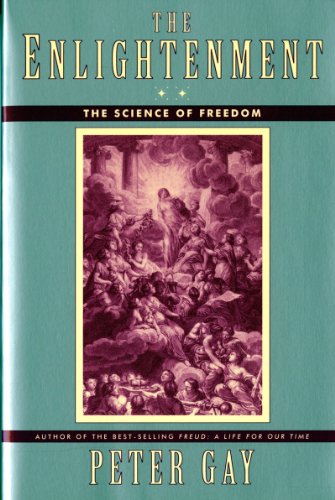
6. The Enlightenment: The Science of Freedom
by Peter Gay
Paperback: 705 Pages (1996-01)
list price: US$19.95 -- used & new: US$11.90
(price subject to change: see help)
Asin: 0393313662
Average Customer Review: 5.0 out of 5 stars
Canada | United Kingdom | Germany | France | Japan

Customer Reviews (2)

5-0 out of 5 stars a classic book on the enlightenment!
I have the desire to have the book translated into Chinese!

5-0 out of 5 stars One of the most brilliant account of the Enlightenment
The Enlightenment by Peter Gay (2 volumes: The Rise of Modern Paganism and The Science of Freedom) surely ranks among the most brilliant accounts of eighteenth-century philosophy ever written. It is a sweeping account of the intellectual history of the 18th century, form its origins right into theFrench and American Revolutions. It traces the struggle of the small cliqueof 'philosophes' -a dispersed group of intellectual giants such asVoltaire, Hume, Lessing and Beccaria- as they fight against corruption,superstition and ignorance, which has kept Europe slumbering since thedemise of the Roman Empire. The book vividly illustrates the ideas of the'philosophes' and how they wanted to bring their reform programs intopractice, and thereby spread the ideals of liberty and the pursuit ofknowledge. Peter Gay deftly describes the cultural background of the'philosophes' and explains how they came to challenge the establishment inorder to bringing about these much needed changes so as to give theirideals a chance to prevail. The book has an extensive and well-readablebibliography with many good suggestions. This account of the Enlightenmentis among the best ever written in the twentieth century, along with PaulHazard's European Thought in the 18th century and Ernst Cassirer's ThePhilosophy of the Enlightenment. I do recommend all to read both volumes ofthis book. ... Read more


7. Instant Enlightenment: Fast, Deep and Sexy
by David Deida
Paperback: 239 Pages (2007-03)
list price: US$12.95 -- used & new: US$7.37
(price subject to change: see help)
Asin: 1591795605
Average Customer Review: 4.0 out of 5 stars
Canada | United Kingdom | Germany | France | Japan
Editorial Review

Book Description
Does enlightenment have a dark side? It does, explains DavidDeida, "but instead of closing to what seems unloving, we can learn to openas what we would rather avoid." In Instant Enlightenment, this maverickauthor and teacher offers a "rude awakening" through a collection of daringexercises and practices intended to provoke, challenge, and immediatelyreveal the ever-present "love that lives all things." What's the filthiestthing you can say that still feels like, "I love you"? Can you "wear" themood and shape of everyone and everything around you without fear orreservation? Which imagined action--sleeping, sexing, or dying to saveanother--most feels like liberation and unbound love? These are just someof the unconventional questions raised in Instant Enlightenment. Each pithychapter encourages readers to blast the light of consciousness on thetaboos we hide in shadow, from our ideas about sex and money to emotionsand spirituality. "The secret to gifting your life's deepest purpose is toopen through what you most resist, so your love's mission can bless theworld," writes David Deida. InstantEnlightenment will surprise andpossibly offend you--but it will lead you "fast and suddenly" to therealization of the sacred entirety of your experience. ... Read more

Customer Reviews (8)

1-0 out of 5 stars Not so great
I'm a big Deida fan and I've really loved all of his other stuff. There was a period of time where I carried "Blue Truth" around in my purse or pocket and read a line or two here and there on a constant basis- and this from a bookaholic who reads a book and gets rid of it in order to move on to the next one. But this was uninspiring and far from his best.

3-0 out of 5 stars Instant Enlightenment
It was Ok not what I expected form this author . All his other books had a WOW factor for me.

5-0 out of 5 stars Hits the Mark!
This very fun & useful book by an extraordinary author, skips over the garbage and gets down to key aspects of reality.Its title is a bit flashy but its apt.Stands out among many (quite a few perhaps overly basic ones) from this prolific psychologist.

5-0 out of 5 stars simple, practical and fun
Since the 'Way of the Superior Man' I think this is my favourite of Davids books. A series of very practical, short and simple observations and exercises expanding ones perception of realtiy. Fun and easy, it is a great book to carry with you to read an exercise on the train, during a pause at work or any time you have a spare moment during the day. If you are looking to open to and move into something larger than yourself in your everyday life this book is for you. Recomended for anyone of any spiritual inclination including fatalists and athiests.

4-0 out of 5 stars A Joyful Cartoon Mallet To The Head!!
Sometimes shocking, sometimes radical, but always humorous and entertaining, this little yellow book by David Deida contains very profound insights for dealing with many foibles of mundane existence. Quoting or describing it would only dilute the experience. I recommend a non-linear approach to reading this tome: scan the table of contents for a relevant topic and devote yourself only to that section for the duration of one sitting. It will work wonders! ... Read more


8. The Portable Enlightenment Reader (The Viking Portable Library) (The Viking Portable Library)
Paperback: 704 Pages (1995-12-01)
list price: US$18.00 -- used & new: US$9.20
(price subject to change: see help)
Asin: 0140245669
Average Customer Review: 4.0 out of 5 stars
Canada | United Kingdom | Germany | France | Japan

Customer Reviews (4)

2-0 out of 5 stars A disappointing edition
Dr. Kramnick does a disappointing job editing the selections in this volume. I constantly found that they missed key points to the individual papers, which lend a great deal to their meaning. It is always difficult when compiling an abridged reader of this nature. What stays in? What goes out? I recommend skipping this reader, if possible, especially if you are interested in the Enlightenment. Stick with the source documents for the "whole story".

5-0 out of 5 stars FACINATING pure ANDsimple
The Age of Enlightenment, the Rise of Science, the art, and literature of the eighteenth century has always been an interest of mine. So you can imagine how amazed and elated I was when I came across this gold.

It has all the big enlightenment writers such as Voltaire, Diderot, Leibniz, Paine, Addison, Pope, Montesqieu, Franklin and many more. It gives a great run down of the wit, the result of the evolution of thought, politics, society and reason as seen in the words of these great minds.

The only thing that I didn't like about this is that there is no Hobbes, which is only a minor quibble. I just thought that since there is Descates, who is not of the eighteenth century enlightenment (17th century and dryer than dust), but a major influence (like Hobbes was included, Hobbes, who was a major link from Descartes to Locke should be included and the provacative and ENLIGHTENING words from The Leviathan should grace the pages of this indispensible book and yet another superb volume from the Viking Portable Library.

5-0 out of 5 stars An Enlightenment Buffet
The eighteenth century Enlightenment is one of the most interesting and exciting periods of intellectual history. The thinkers of that age had a sizable impact on concepts of science, nature, politics, religion and society. How do we become immersed in the wealth of writing of that period, however, without giving up job and family in order to read the works of the Enlightenment authors?

This reader is an excellent book for novices and experienced readers alike. It is an excellent 600+ page book filled with short, pithy excerpts from the key thinkers of the period. Actually the writings go back as far as 1620 with an excerpt from Francis Bacon where he puts down the Greek philosophers and introduces what is to become the scientific method. Beccaria comes up with novel thinking on crime and punishment. Does the death penalty deter crime? How about the punishment fitting the crime instead of being meted out at the whim of some aristocrat?

Montesquieu, Voltaire, Rousseau and Paine weigh in with their political philosophy. The skeptics speak up with their religious criticisms. Manners, morals, art, war, and gender and race issues are all discussed by the likes of Mary Wollstonecraft, David Hume, Reynolds, Pope, and Bentham.

Bite sized as these entries are, they give the flavor of Enlightenment thought. And, importantly for the general reader, they are all mentally digestible. You don't have to read every paragraph six times in order to get a glimmer of the authors' meanings. The represented authors are not just from France either. The best thinkers from France, Italy, Germany, the United States and Great Britain are represented.

5-0 out of 5 stars This book is terrific for research and enjoyment
This was the most helpful anthology when I needed to write a research paper on seventeenth century religion.It has sections for almost all aspects of life and contains various selections that truly show theEnlightenment spirit! ... Read more


9. The Highest Level of Enlightenment
Audio CD: Pages (2004)
-- used & new: US$49.95
(price subject to change: see help)
Asin: B000EOJ6UM
Average Customer Review: 5.0 out of 5 stars
Canada | United Kingdom | Germany | France | Japan
Editorial Review

Product Description
6 Compact Discs A spiritual power breakthrough allows you to reach enlightened states of being using nothing more than an outstretched arm! ... Read more

Customer Reviews (2)

5-0 out of 5 stars Genius, Pure Spiritual Genius!
A friend let me borrow this audio tape to listen to, I put it on my Ipod and I love to listen to it all the time.It was very helpful for me in my search for truth at age 21.After reading Power vs. Force I was excited to listen to this audio tape.Now I suggest to anyone who hasn't read Power vs. Force or any of Hawkins books, to listen to this audio program twice all the way through and then read Power vs. Force.The Audiotape has Hawkins telling his life story, which gives you a better understanding of how and why he does what he does.I especially like his story about his experience with sin as a child.He's so hillarios once you get to know him.This is definitely my favorite spiritual truth audiotape.Hawkins uses his down to earth witty humor while describing and unveiling lots of hidden truths.I believe anybody who is able and willing to surrender their beliefs of what they think truth is and Listen closely to what Hawkins has to say will gain great insights and life changing benefits.It has forever changed my life, thank you Dr. Hawkins.

5-0 out of 5 stars One of our Favorite CDs to listen to
Dr. David Hawkins is great to listen to. He's funny and shares so many of his insights and knowledge. If you've read Power vs. Force, then this will blow your mind even more. Dr Wayne Dyer refers to a lot of Dr. Hawkins teachings. ... Read more


10. The Enlightenment: The Rise of Modern Paganism
by Peter Gay
Paperback: 952 Pages (1995-09)
list price: US$19.95 -- used & new: US$11.25
(price subject to change: see help)
Asin: 0393313026
Average Customer Review: 5.0 out of 5 stars
Canada | United Kingdom | Germany | France | Japan

Customer Reviews (7)

5-0 out of 5 stars Extremely Authoritative and Well-Done
A magnificent, thorough, and long book (419 pages), impeccably documented, the first volume of two.A "must read" for anyone interested in the Enlightenment.The "cheerleaders" of the Enlightenment, from all over Europe, called themselves the philosophes.For a preview, read the 25 page beginning, "Overture."

BOOK ONE: THE APPEAL TO ANTIQUITY

CHAPTER ONE: The Useful and Beloved Past

1.Hebrews and Hellenes:As the philosophes of the Enlightenment saw it, the world was divided into two irreconcilable patterns of life: superstition versus the affirmation of life; mythmakers versus realists; priests versus philosophers.The historical writings of the Enlightenment were all part of their comprehensive effort to secure rational control over the world and freedom from the pervasive domination of myth.The most glaring and notorious defect of the Enlightenment was its unsympathetic, often brutal, estimate of Christianity.

2.A Congenial Sense and Spirit:Rome belonged to every educated manClassic antiquity was inescapable, therefore, some of the philosophes' seemingly pagan ideas were simply the property of thinking men in their time.The philosophes identified with their favorite ancient philosophers, especially Cicero, who had contempt for the fear of death, contempt for superstition, and admiration for sturdy pagan self-reliance.Modern historians no longer think of Christianity as a complete swamp, but the reliance of the Enlightenment on ancient classicism has withstood two centuries of criticism.

3.The Search for Paganism: From Identification to Identity:The philosophes had been born into a Christian world.They knew their Bible, their catechism, their articles of faith, their apologetics, retained many of their Christian friends, and even had clergy in their families.Gibbons was not without anxiety when he wrote his notorious chapters on the origin of Christianity in "Decline and Fall of the Roman Empire."The German philosophes were reluctant to completely abandon the religion of the past.Diderot, the most ebullient of the French philosophes was driven and harassed by doubts.In a letter to his mistress, he cursed the atheism he accepted as true that "reduced their love to a blind encounter of atoms."Even David Hume, whose good cheer was celebrated, had to brood and struggle his way into paganism.

CHAPTER TWO: The First Enlightenment

1.Greece: From Myth to Reason:The philosophes' historical thought was closely tied and deeply, if unconsciously, indebted to the Renaissance.Pious historians during the Renaissance and in the 17th century aided secularization by refining techniques of research, throwing doubt on extravagant tales of Hebrew prophets or Christian saints. The Old Testament, which had served countless generations as authoritative was in decline.The philosophes used it as neither authoritative nor historical, but as an incriminating document.Petrarch removed the label "Dark Ages" from classical pre-Christian times and fastened it instead on the Christian era.

2.The Roman Enlightenment:The Greeks were the teachers of the Romans, but the Romans were the Greeks made plain.The philosophes' two most reliable sources of literature were the Romans Lucretius and Cicero. No propagandist ever conducted a battle of science against religion more exuberantly than Lucretius.Religion was just superstition maintained by terror.Science was reason, offering a complete and coherent account of the universe.Cicero gave them even more - a philosophy of the public servant was that of humanism.Not far behind was the historian Tacitus, who was Gibbon's source of much of what is in "The Decline and Fall of the Roman Empire."These and other Roman Stoics and Epicurians gave the philosophes much fuel for their political and religious criticisms.

CHAPTER THREE:The Climate of Criticism

1.Criticism as Philosophy:Hume proclaimed philosophy the supreme, indeed, the only, cure for superstition.Diderot - The philosopher should not be the inventor of systems but the apostle of truth.Adam Smith - Cultivation of philosophy is "the great antidote to the poison of enthusiasm and superstition."For the Enlightenment, the Age of Philosophy was also, and mainly, the Age of Criticism - they were synonyms - and there were plenty of liberal Christians ready to allow the new philosophy elbow room, provided it stopped barely short of the holiest of matters.

2.The Hospitable Pantheon: Each philosophe took what suited him from the Romans (or from anywhere) and added their characteristic touches, leading to eclecticism - the school that denied being a school.The eclectic "makes a philosophy for himself, individual and personal, one that is his own."The favorite theft of the philosophes was from the Stoicism of Cicero, but since they addressed their propaganda to a largely Christian audience,they also quoted the founders of Christianity, including Jesus. Such adroit posturing barely concealed the philosophes' convictions that Christianity was the worst of fanaticisms.

3.The Primacy of Moral Realism:The philosophes' practicalities were worldly, designed to translate into reality Bacon's and Descarte's grandiose vision of man controlling nature for his profit and desire.In a culture in which men believed in God and yearned for salvation, the study of His nature were matters of intense blessed concern - but during the Enlightenment, they seemed more like verbal games.Nor could the philosophes separate the study of nature from the study of morality.They were confident that the public needed to be educated and it was their calling to educate them.

4.Candide: The Epicurean as Stoic: Voltaire wrote a reality tale - a dialogue on behalf of Newton's empiricism in a world that had discarded myth; and one that caricaturized and satirized Leibniz. Candide is essentially a declaration of war on Christianity.

BOOK TWO:THE TENSION WITH CHRISTIANITY

CHAPTER FOUR:The Retreat From Reason: Educated Romans had at least made a serious attempt to construct a civilization based on reason, not myth.Then came Christianity, which claimed to bring light, hope, and truth - but its central myth was incredible, its dogma a mixture of older superstitions, and its sacred book an incoherent collection of primitive tales. Once the church had discarded its apocalyptic expectations, it settled down to the business of organizing a Christian community - eventually a rigid hierarchy.

1.The Adulteration of Antiquity:In the callous hands of Christians, Greek and Roman literature survived, but barely, and at great cost.The church fathers could not deal generously with secular literature - they were at war for a higher cause. However, there was a minority that maintained an interest - and Christian policy ran somewhere between these two extremes.The great compromise, in the fourth and fifth centuries, was to adapt from paganism whatever could be adapted to religious purposes and to throw the rest away.They invented pious meanings for secular passages, converting and allegorizing meanings - but at least it kept the classics from extinction, though at the price of covering them with pious legends.Cicero was persistently misread into the thirteenth century.

2.The Betrayal of Criticism:Medieval philosophers believed the advent of Jesus had subordinated the need for higher degrees of insight.Abelard devoted much of his ethical and theological speculation to the disappointing thought that his favorite pagan philosophers had been born too early for Christ, thus missing out on salvation. The philosophes saw this as despising and abusing the resources of the mind.

3.The Rehabilitation of Myth:In the Christian millennium, myth was preserved, transcended, and raised to a higher level.The philosophes liked to deride medieval categories as infantile or vicious, but the myths merely followed inevitably from the medieval mind bent on finding religious significance everywhere.Science was done, but like philosophy, it was guided by man's search for holiness and salvation.The enormous distance separating the philosophes from the medieval world view is proof that the Enlightenment was the terminal point of a long process of alienation that had begun centuries before, in the Renaissance.

CHAPTER FIVE:The Era of Pagan Christianity - For all their enormous but gradual contributions to secular thought, Europeans were still overwhelmingly religious - religious fervor attenuating slowly and uncertainly.

1.The Purification of the Sources:Humanists of the Renaissance began to correct the corrupt interpretations of the Greek and Roman philosophers.Many new manuscripts, stored in monastery libraries and guarded by monks, were uncovered, although covered with dust, torn, and mutilated.Unknown copies of Cicero, a single copy of Lucretius's "De Rerum Natura," a single copy of Catullus, and whatever we have of Tacitus were uncovered by persistent Humanist effort bordering at times on thievery.Gradually, classis after classic was reborn, and Humanist scholars purified them of the corrupt accretions of centuries.The veil of pious interpretation was pierced.

2.Ancients and Moderns - The Ancients:The protestant heresy persisted and thus stripped Christian Europe of one of its most tenacious myths, the myth of a Catholic commonwealth centered at Rome.Exploration discovered strange cultures which raised disturbing questions about the souls of heathens and the value of Christian civilization.The Copernican revolution in cosmology began to reverberate among educated men.The printing press and translations, the book trade, the growth of science, and the explosion of interest in accurate interpretations of ancient Greeks and Romans - all these things questioned the authority of the papacy.As Voltaire put it, "a corner of the veil was lifted.The nations, aroused, wanted to judge what they had worshipped."

3.Ancients and Moderns - The Moderns:By the force of its logic, science began to cut its ties with philosophy and to assume a posture at first equal, and then hostile, to theology - less by literary than by scientific means.Even so, the Church first took the findings of Gallileo, Boyle, and Newton as evidence of faith rather than as a threat.Locke called for liberation from the shackles of antique and medieval rules of thought and his impact was huge, the last in a long line of pagan Christians.The philosophes, arrogant as they were, still displayed great reverence for this Age of Genius.

CHAPTER SIX:In Dubious Battle

1.The Christian Component:Locke and his disciple, Toland, both wrote books in 1695 and 1696.Locke tried to prove that Christianity was acceptable to reasonable men; Toland, that what was mysterious and miraculous about Christianity must be discarded - and within those two years the essence of revealed, dogmatic religion evaporated.The philosophes took advantage, striving to maintain a separation between reason and religion while well-meaning Christians continued to try to unite them.This was the beginning of deism, which maintained a healthy respect for Jesus as a teacher, but held that his teachings were distinct from what resulted as the Christian religion.

2.The Treason of the Clerks:Clerical establishments didn't collapse, but every part of life became more secular - there was a subtle shift where religious institutions and religious explanations for events were slowly being displaced from the center of life to its periphery.The evidence for a growing critical rationalism among educated Christians is overwhelming, with a decline in religious fervor.They were thus open to the antireligious propaganda of the philosophes, as Sunday sermons simultaneously grew less severe and more accommodating to an easier life.As the Catholics, Lutherans, and Calvinists fought amongst themselves, the philosophes triumphed over them all.

CHAPTER SEVEN:Beyond the Holy Circle - the philosophes appropriated Christian labors for their own purposes.

1.The Abuse of Learning:This was a time of the beginnings of Biblical critical scholarship.Diderot, Voltaire, and Gibbon each took particular advantage of a different scholarly friend, and applied that scholarship where it could be devastating to Christianity.The philosophes were missionaries - for the sake of their calling they were ready to exploit the best their enemy had to offer, without mercy or gratitude.

2.The Mission of Lucretius:Lucretius was to Epicureus what the philosophes were to the Enlightenment - purveyors of savage, brutal, and relentless diatribes against superstition and religion.Religion retreated to the extent that philosophy and science advanced.

3.David Hume: The Complete Modern Pagan - Whatever misgivings the philosophes had about their passion, Hume had the least.He thought all houses of faith were houses of infection and that a rational man must escape, after exposing, the squabbles of theologians.His philosophy embodies the dialectic of the Enlightenment at its most ruthless.Without melodrama, Hume lived cheerfully and without complaining, with no supernatural justifications, demanding no complete explanations, no promise of permanent stability, with guides of merely probable validity.He was a cheerful Stoic.


4-0 out of 5 stars Amazon's Waterloo!
This is the first time I had a problem with Amazon shipment. I ordered the 1995 edition, but Amazon repeatedly (twice) shipped the 1966 edition. However, the customer service was excellent. I could ship back without charge and the amount was credited to my account. That is the reason I am giving 4 stars.

5-0 out of 5 stars An Erudite Synthesis of the Enlightenment

Peter Gay is an important intellectual historian and in his lengthy work "The Enlightenment: The Rise of Modern Paganism" he summarizes the ideas of the great philosophers and how they changed the world.This book is a work of great erudition, of synthesis and he begins with the relationship between the philosophers of the 18th century and those of the classical period.The philosophers of the Enlightenment, active in the late seventeenth through the middle of the eighteenth century, had an affection for the Greek and Roman era, but felt the recent discoveries in science, the search for empirical fact, had allowed their own era to supercede the work of the great classical philosophers.
While the classicists inspired the philosophers of the Enlightenment, theis new breed of thinkers were generally contemptuous of religion and they sought to confront, to challenge and to overturn the philosophical concepts of the Hebrew and Christian thinkers who they viewed as their rhetorical adversaries in the battle beaten reason and faith.
Gay is an engaging writer with a gift for synthesizing a raft of material.Here he neatly summarizes the philosophical historians work: "...the philosophes wrote history with rage and with partisanship, and their very passion allowed them to penetrate into regions hitherto inaccessible to historical explorers.Yet it also made them condescending and oddly parochial: their sense of the past merged all too readily with their sense of the present."Although the philosophes view of history was critical, pessimistic,they saw the world "divided between ascetic superstitious enemies of the flesh, and men who affirmed life, the body, knowledge, and generosity; between mythmakers and realists, priests and philosophers."
Gay's book neatly depicts an age, the conflicts between enlightenment thinkers and the past, their areas of agreement and disagreement and, their battles with the weakened Christianity of the day.He points out how te philosophers used the scholarship and erudition of the Catholic orders against them."The Enlightenment" is not a history of philosophy, summarizing the work of each major philosopher, but a history of the way that the ideas and the debate developed in the period.In this volume, he writes of Voltaire, Hume, Smith, Bentham, Gibbon, Diderot, Montsequieu, Lessing, Locke, Holbach, Rousseau and finally, Jefferson and Franklin, intertwining them in a consistent narrative.He concludes the book with a helpful bibliographical essay which will help point those of us who want to do further reading in the right direction.Elegantly written, in clear, crisp prose, "The Enlightenment" is a detailed and nuanced account of the men and ideas that gave us the gift - and curse - of modernity.

5-0 out of 5 stars excellent book!
The Enlightenment has met many critics nowadays, which even make people overlook the positive worth of the enlightenment to modren society. This great book can help readers make a comprehensive and positive view to the enlightenment. I recommend it !

5-0 out of 5 stars Engrossing and detailed
Peter Gay needs no introduction, but I still feel that this work needs to be lauded for what it manages to achieve: it provides an exhaustively detailed socio-cultural account of the enlightenment that is as enjoyable as it is informative.The main slant of this work, namely that the 18th century enlightenment was a reprisal/continuation/adoration of classical (hence Pagan) culture is coherent and functions as a solid structure to this work.Highly recommended. ... Read more


11. Healing for the Age of Enlightenment
by Stanley Burroughs
 Paperback: 150 Pages (1993-10-23)
list price: US$12.00 -- used & new: US$12.84
(price subject to change: see help)
Asin: 0963926217
Average Customer Review: 3.5 out of 5 stars
Canada | United Kingdom | Germany | France | Japan
Editorial Review

Book Description
Discover the complete works of Stanley Burroughs. Developed through a lifetime of practice and teaching . His complete system when properly utilized is to promote health and wellbeing. There are three parts to this book. THE MASTER CLEANSER - The most effective cleansing and weight loss available. It is simple and inexpensive and can be used by anyone. VITA-FLEX- A pressure point therapy that accesses the more than 5,000 reflex points that are on the body. This techinque induses the body to heal itself. COLOR THERAPY-is the shining of specific colors of frequencies of light on the body to create balance. ... Read more

Customer Reviews (10)

5-0 out of 5 stars It works.
I recently finished my 3rd Master Cleanse fast.You don't do this cleanse to lose weight, because you'll gain all or most of it back once you end the fast.This cleanse is to 1) remove mucous from the digestive track, 2) reduce blood pressure, 3) reduce triglycerides and cholesterol, and perhaps 4) remove other toxins from the body.

I know because it had done all of these things for me.My triglyceride count went from 427 to 235 (still high, but much better).I had a cardiac episode where my blood pressure was (I'm not kidding) 253/122 in the emergency room (I'm a 46 year old female).They stabilized me at 193/98 and sent me home. But I declined medicine and immediately when on this 10 day fast.On day 10, my blood pressure had dropped from chronic stroke range to 115/70.

It also functions like an elimination diet.Anyone who has food allergies will feel better on this fast.I have fibromyalgia and felt great - lots of energy and clear headed; I stopped getting migraine headaches for the 10 days I was on the fast.Now that I'm back to eating, I feel much worse!

You have to re-enter the eating world slowly.A piece of toast with butter on it will make you sick after fasting for 10 days.Homemade vegetable soups, and nuts are a good way to re-enter on day 11 and 12.

Something as severe as Leukemia can't be cured with a fast, but for the rest of us, it can be an amazing leg up on our poor eating habits and this toxic world.

4-0 out of 5 stars Healing for the Age of Enlightenment
You might just want to spend a lot less money and get The Master Cleanser book.After 2 days on the cleanse, I woke up able to breathe through both nostrils for the first time in memory and became an avid proponent of his concepts.My lymph system is much better too.
If you are interested in learning Vita Flex, then you need to get this book.Even though I've experienced great value from Vita Flex treatments via a chiropractor, the warnings of injuring yourself or someone else if not performed correctly were enough to dissuade me from attempting it.There was a recipe for eyedrops in that part of the book that claimed to heal cataracts and many other eye ailments.If true, that alone would be worth the price of the book.
And the color theory part of the book is largely a rewrite of Let There Be Light by Darius Dinshah which I already had and is readily available from the Dinshah Society.Personally, I prefer to ignore all those complicated toning schedules and use infrared/far infrared heat lamps when you can't sunbathe.I say throw the whole spectrum at the body and let it take whatever it needs.Burroughs thoroughly disagrees.I'm okay with that, but it doesn't change my opinion.

1-0 out of 5 stars A quack who is responsible for my father's death.
Please save your money and your health. My father died an early and painful death because of Burrough's "cures and lamplights". My father's case is the one studied by law students and unfortunately the one that the "Rose Bird" Supreme Court used for their personal agenda.

5-0 out of 5 stars A safe conservative course of action
After reading some of the "fright" reviews I had to add my 2 cents in.
This book by Stanley Burroughs has useful methods to allow the body to heal itself. This is a conservative, time honored way to health and healing. His ideas were not particulary new or extreme. They can be found in many books on naturopathy, herbal healing, fasting etc. His Master Cleanser is still used by naturopaths and nutritionally oriented doctors.People have used these concepts or variations of them around the world for centuries.

For those interested in such topics this is a good book to add to their collection. Another good book on this subject is The Amazing Liver Cleanse by Moritz.


5-0 out of 5 stars Cleansing of your digestive track
Stanley Burroughs has something here... Several of us our following this lemonade diet. I am on day 6 of the cleansing.Another friend is now coming off the diet.We have lost weight, feel great, look healthier and see the difference in our skin, eyes and energy.Most important to stress - - we were NOT hungry doing this regimen.Anyone who says it's hard, or unable to make it through at least 3 or 4 days, is definitely out of control with their eating habits.This has been incredibly easy to follow.The most important thing is to not cheat on it... if you do, your destined to diarrhea and/or major gastrointestinal upset.One person decided to go out on day 12 and eat a normal meal as he'd done before... it did not agree with him.He is doing a second cleanse and is going off this cleanse the recommended way this time.

I have more energy, have been sleeping better, and have lost over 6 pounds.If you need to lose weight, you can lose up to 2 pounds per day on this regimen.It is not difficult or unsafe in my opinion.I now believe it may be more risky to take all those medications out there to heal you of an ailment than to try this for 14 days.

I recommend that all Americans try this at least once in their lives.You will be amazed how you feel after only a couple of days! ... Read more


12. The Great Treatise on the Stages of the Path to Enlightenment, Volume One: The Lamrim Chenmo
by Tsong-kha-pa
Hardcover: 220 Pages (2001-01-25)
list price: US$29.95 -- used & new: US$16.16
(price subject to change: see help)
Asin: 1559391529
Average Customer Review: 5.0 out of 5 stars
Canada | United Kingdom | Germany | France | Japan
Editorial Review

Book Description
Of the many works of the Tibetan master Tsong-kha-pa, none compare in terms of popularity and breadth of influence with his Great Treatise on the Stages of the Path to Enlightenment, which has been treasures by practitioners and scholars alike for centuries.--H.H. the Dalai Lama ... Read more

Customer Reviews (13)

5-0 out of 5 stars Liberation in the Palms of Your Hand
To read the , by Tsong-kha-pa demands great patience and diligence for the average reader.

In particular, the difficulty is partly due to the excellent and faithful translation of the three volumes of the author's work from Tibetan to English. And since the original work was written scholaric language during Je Tsong Khapa's time six hundred years ago, I reckoned that I needed some help when I purchased all three volumes of the Great Treatise several months ago after reading the first few chapters.

Help has come in the form of an useful preliminary reading. A companion, compendium, discourse-commentary on Je Tsong Khapa's profound and scholarly work has long been translated and available in English and in print for decades before as < Liberation in the Palm of Your Hand: A Concise Discourse on the Path to Enlightenment >.

It is to my knowledge that some Tibetan Buddhist monks from the Gelug/Gelupa school are actually using as a course outline to teach Je Tsong Khapa's to members of the Sangha in 24 days.

is a document of a series lecture delivered by Pabongka Rinpoche over 24 days in Tibet the 1920s,the book is authored by Trijang Rinpoche and translated into English by Michael Richards.

Based on Je Tsong Khapa's work in The Lamrim Chenmo, delivers an "executive summary" of the three volumes of into 898 pages vis-a-vis three volumes of Je Tsong Khapa's detailed scholarly work.

This book is not a Great Treatise on the Path to Enlightenment for Dummies, it is a concise commentary on which readers of The Great Treatise may find as a useful companion to the three profound and wonderfully translated volumes of .

For readers who do not know what really to expect from three volumes of the , I would stongly recommend as a preliminary read. By itself, is already a classic, however, its next greatest value add is to serve as a pathfinder guide for the reader who would be learning the three volumes of the Lamrim Chenmo.

5-0 out of 5 stars The Great Treatise
The books are a great help in doing essays on refuge and boddh. vows great learning tool for those that only get to see their teacher once a month

5-0 out of 5 stars Have an overview of the entire path
Many people are looking for the entire picture of Tibetan buddhism, and this English edition of the "Lam Rim Chen Mo" is one of the most suitable works to get this entire picture. All the stages of the path of liberation are covered in their natural, logical sequence.

It is wonderful that such a thing exists: that it is possible to have a general and complete understanding of the path.
Reading and hearing, studying the teachings allows us to then contemplate their true meaning, that is, come to a personal understanding and conviction that the topic at hand is indeed true, relevant and workable. That is what contemplation is all about: coming to such a workable conviction.
Contemplative understanding is then the basis for meditation, or applying the workable conviction in daily life, until it becomes second nature, thereby transforming our life.
In this way we progress, step by step, from understanding to natural conviction to application to effortless realization.

It is therefore very, very beneficial to acquire a taste for this type of literature - which is itself often a gradual process. It may seem very dry in the beginning, but once you acquire a taste for a certain aspect of the teachings, you will want to read the entire chapter, and then marvel at the profound logic. Once you have a few of such experiences you will understand that other chapters just "might" contain equally valuable treasures, and slowly acquire a taste for them as well, by reading the text and pondering its profound meaning. Drawing our attention to the parts that we tend to ignore then proves to be the quickest way to true understanding!

This is why it is taught that by these very teachings you come to understand how all of the scripture are instructions for actual practice, and that these teachings cover all stages of the path in their natural sequence. Marvelous! Your intelligence, no matter what your present level, will develop naturally, and soon you will encounter understandings not previously met.

I started out with some attractive chapters or topics, and only much later my curiosity for the other parts of the book developed. And even then it took a while to translate the "script" into recognition in daily life. But now I use it as a reference: when I want to have a more thorough understanding of a certain aspect, I study from this book, by looking at its various parts and looking how it fits into the total picture (or mandala of the teachings).

Once you learn how to acquire a taste for this basic, foundational literature of "lam-rim" (graded path) and "lojong" (mind training), you can soon continue into the wisdom literature of "prajnaparamita" (transcendent perfection of wisdom), "tathagatagarbha" (primordially enlightened disposition), "madyamika" (middle way of no dualistic extreme), "secret mantra" (path of swift accomplishment through deity meditation), "mahamudra" (great seal of ultimate bliss), "dzogchen" (great completion in total awareness), and so on.

This "Lam Rim Chen Mo" belongs to a category of literature that is a direct legacy of Atisha, the great Indian master of the early 11th century, whose student founded the Kadampa school, one of the earliest denominations of Tibetan buddism.
These Kadampa teachings still form the basis of training in all four Buddhist schools and their monastic colleges, each school having its own slight variation in interpretation. Most of these have now been translated in English, so you can choose from among the following:

* Geluk school: the "Great Treatise on the Stages of the Path to Enlightenment (Lam Rim Chen Mo)" (subject of the present review) is the classic that belongs to this school;
* Kagyu school: "The Jewel Ornament of Liberation" (ISBN 1559390921) is the famous classic by Gampopa, founder of the Kagyu school, by seamlessly integrating the Kadampa teachings of the gradual path with the Mahamudra teachings of the non-gradual path;
* Sakya school: "The Three Levels of Spiritual Perception" (ISBN 0861713680);
* Nyingma school": "Treasury of Precious Qualities" (ISBN 1570625980) by Jigme Lingpa.

Although each of these four works cover the same main subject, they are not necessarily exactly the same. Which work you choose for study will probably depend on your main spiritual teacher, if you have one.
What I particularly like about the "Lam Rim Chen Mo" in its present English edition, is that the subject is covered in full detail, separated by chapters with clear titles, for easy reference. So it is very suitable as a Western student's manual.

From the Editor's Preface: "The "Lam Rim Chen Mo" has the special feature of blending the three types of persons (those of small, medium, or great capacities) with the three principal aspects of the path (the determination to be free, the spirit of enlightenment, and correct view."

For those of higher capacity this means: travelling from the intent of acquiring a better life in the future; to the intent of liberation from samsara; to the mahayana intent of an open, compassionate heart with sacred outlook and pure vision, in order to liberate all sentient beings.

In this English edition, there are three volumes: the first volume covers the training of small and medium scope; volume two covers the mahayana training of superior scope; of which volume three covers the training in meditative serenity (shamatha) and wisdom insight (vipashyana).

From the Foreword: "Jey Tsongh-kha-pa's "Great Treatise on the Stages of the Path to Enlightenment" is one of the greatest religious or secular works in the library of our human heritage. It presents a stunning vision (...) locating the precious jewel of an individual human embodiment at a critical moment of personal evolution. It provides this revelation in such a way that individual readers can be moved to achieve a fundamental paradigm shift in their vision of their lives: from having been a self-centered, this-life-oriented personal agent struggling with the currents and obstacles around them (...) to becoming a magnificent awakening being, soaring (...) in marvelous evolutionary flight toward an unimaginably beautiful destiny of wisdom, love, and bliss - buddhahood, or simply the supreme evolutionary glory attainable by any conscious being.

I like this literature tremendously, because it allows me to understand the foundation of the entire spiritual path, in the context of Tibetan buddhism in particular, but comparatively in the context of many other wisdom traditions and religions as well. Acquiring its taste has provided the condition, for me, for opening into endless study, imagination, reflection, meditation.

5-0 out of 5 stars THE treatise on Tibetan Buddhism
Je Tsong Kha Pa'sStages of the Path of Enlightenment, is arguably the single most important work ever produced about Tibetan Buddhism. This great Buddhist adept masterfully fashioned a cogent and logical exploration of the steps, that faithfully followed, could lead to Enlightenment in a single lifetime. The scholars involved in this translation are a veritable "Who's Who" of Tibetan Buddhist thought in the West. This eminently readable and thoroughly researched volume should be in the library of anyone who is interested in this rich spiritual tradition.

5-0 out of 5 stars ARGUABLY MOST IMPORTANT BOOK IN TIBETAN LITERATURE
This book is a must read for people familiar with the Buddhist path.It provides a general framework for how all the different practices and teachings fit, in relation to one another and the Buddhist path more generally.In response to some of the critiques of the book below, the book must be taken within its historical context.Tibet was a patriarchial culture and Tsong-kha-pa did see Buddhism as a superior path to other paths.That said, Tsong-kha-pa's comments on these things need to be taken with a grain of salt and it is much better to look to current teachers, such as the Dalai Lama, for advice on these topics. ... Read more


13. Radical Enlightenment: Philosophy and the Making of Modernity 1650-1750
by Jonathan I. Israel
Paperback: 832 Pages (2002-09-12)
list price: US$39.95 -- used & new: US$27.16
(price subject to change: see help)
Asin: 0199254567
Average Customer Review: 4.5 out of 5 stars
Canada | United Kingdom | Germany | France | Japan
Editorial Review

Book Description
Arguably the most decisive shift in the history of ideas in modern times was the complete demolition during the late seventeenth and eighteenth centuries - in the wake of the Scientific Revolution - of traditional structures of authority, scientific thought, and belief, by the new philosophy and the philosophies, culminating in Voltaire, Diderot, and Rousseau. In this revolutionary process which effectively overthrew all justification for monarchy, aristocracy, slavery, and ecclesiastical authority, as well as man's asendancy over woman and theology's domination over education and study, substituting the modern principles of equality, democracy, and universality, the Radical Enlightenment played a crucially important part. Despite the present-day interest in the revolutions of the late eighteenth century, the origins and rise of the Radical Enlightenment have been astonishingly little studied, doubtless largely because if its very wide international sweep and the obvious difficulties of fitting it into the restrictive conventions of 'national history' which until recently tended to dominate all historiography. The greatest obstacle to the Radical Enlightenment finding its proper place in modern historical writing is simply that it was not French, British, German, Italian, Jewish or Dutch, but all of these at the same time. In this novel interpretation of the Radical Enlightenment down to La Mettrie and Diderot, two of its key exponents, particular stress is placed on the pivotal role of Spinoza and the widespread underground international philosophical movement known before 1750 as Spinozism. ... Read more

Customer Reviews (12)

4-0 out of 5 stars Fascinating
An interesting and well written history of the radical Enlightenment - the growth of atheism and deism in particular. The author writes engagingly and makes what could otherwise be a tedious subject interesting. I found the descriptions of how philosophy books were literally smuggled into countries as contraband quite intriguing and more than a bit amusing.

Two notes of caution, however: First, be at least somewhat familiar with the basics of western philosophy. Either have taken a college-level course in it or read a basic book on the topic such as Bertrand Russell's A History of Western Philosophy. Second (and this is only a minor complaint) the author provides copious quotes, mostly in French, without translation. While it is possible to figure out the gist of most of these from the context, it is somewhat annoying at times. The assumption seems to be that if you're studying philosophy, you must speak French.

I will undoubtedly follow this up with the author's other book on the Enlightenment in this series.

3-0 out of 5 stars Radical, Contestable
Jonathan Israel presents his work as an important new history of the `Early' Enlightenment (1680-1740).

He has two key, inter-related theses. Firstly, that the whole of the early Enlightenment was driven by an engagement with the views of Spinoza (e.g. P.431) and secondly that the whole of the early Enlightenment, across Europe needs to be understood as a single, integrated process.

At one stage (P.456) he draws a comparison betweenSpinozism and Marxism and that gives you a good sense of how he sees Spinoza's movement.

His own background as a specialist in the Enlightenment in the Netherlands comes strongly into play and the book is at its best on this topic. The original growth of Cartesianism is taken as read. Spinoza's breach with Cartesian dualism and his counter arguments for monism are gone into in more detail . The book comes alive when discussing the popularizers of Spinoza such as Leenhof, Van Dale, Bekker, Kuyper, Van Den Enden, Meyer, Beverlaand, Goeree. Other radical figures such as Vauvenarues, de Boulainvilliars, Radicati, le Clerc take on a new significance in this light.

Such figures have been lost to history. It is a paradox of the history of philosophy that the greatest intellectual achievement often resides in defending the indefensible, putting obstacles in the path of progress. Those who championed change often achieved less of lasting intellectual quality, being too busy achieving a different world.

It is for this reason refreshing that Hobbes, Locke, Berkeley, Hume, Voltaire, Leibniz, Malebranche and Rousseau play a support role in this book. Soon we begin to believe that the Enlightenment may indeed have been driven forward by radical deists and atheists elaborating on Spinoza.

The argument goes too far as we slip from the 1670s and 1680s to the 1730s and 1740s. Israel is too keen to amalgamate the whole period. He fails to emphasise sufficiently that whereas Spinoza's own work, with Geulincx and Malebrance and Gassendi was part of a debate about Descartes, what came later was something different. Spinoza may have survived better in the 1730s as an icon than Descartes or Malebranche, but he was no less an historical figure. The new battle, by that time, was - as he says - a three cornered fight. But the third corner with Lockean empiricism and Leibnizian/Wolffian rationalism was an emergent mechanical materialism and not a