e99 Online Shopping Mall

Geometry.Net - the online learning center Help  
Home  - Religion - Humanism (Books)

  1-20 of 100 | Next 20
A  B  C  D  E  F  G  H  I  J  K  L  M  N  O  P  Q  R  S  T  U  V  W  X  Y  Z  

click price to see details     click image to enlarge     click link to go to the store

$7.39
1. Humanism, What's That?: A Book
$12.78
2. Humanism: An Introduction
$5.90
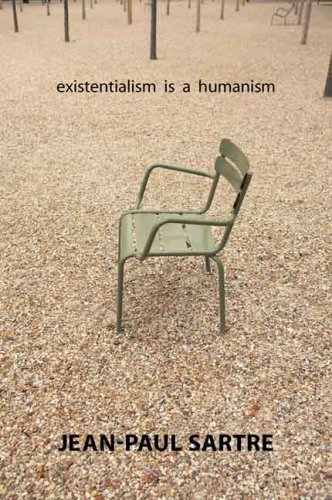
3. Existentialism Is a Humanism
$7.00
4. The Philosophy of Humanism
$17.99
5. Humanism of the Other
$19.99
6. The Cambridge Companion to Renaissance
$22.00
7. The Arrogance of Humanism (Galaxy
$11.02
8. Parenting Beyond Belief: On Raising
$9.50
9. Humanism (New Critical Idiom)
$8.06
10. Einstein on Humanism
$11.95
11. On Being Human: Interpretations
$5.30
12. What Is Secular Humanism?
$32.35
13. Humanism And The Renaissance (Problems
$10.88
14. Ignatian Humanism: A Dynamic Spirituality
$16.94
15. Healing Psychiatry: Bridging the
$15.78
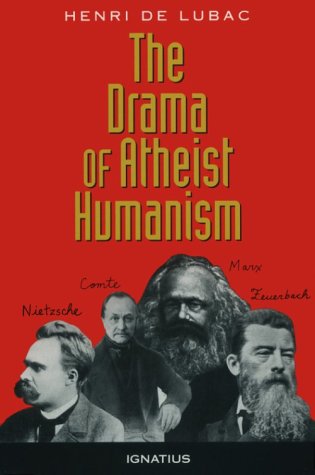
16. Drama of Atheist Humanism
$2.69
17. Humanism As the Next Step
 
$10.13
18. The Architecture of Humanism:
 
$22.00
19. Christian Humanism and the Reformation:
$16.20
20. Environmental Ethics and Christian

1. Humanism, What's That?: A Book for Curious Kids
by Helen Bennett
Paperback: 77 Pages (2005-06)
list price: US$13.00 -- used & new: US$7.39
(price subject to change: see help)
Asin: 1591023874
Average Customer Review: 4.5 out of 5 stars
Canada | United Kingdom | Germany | France | Japan
Editorial Review

Book Description
A conversation between Mrs. Green, a science teacher, and her students forms the basis of this thoughtful work.Starting with the historic concept of separation of church and state, the curious youngsters' insistent questions lead to a conversation of philosophic issues: When a fellow student is injured on her way to class, they wonder why they aren't allowed to pray for her in class.Why do some people believe in God while others don't?What gives life meaning?In the course of what becomes a parent-approved after-school discussion, Mrs. Green presents a humanist point of view, emphasizing science's explanation of life and freedom of thought.Complete with discussion questions, suggestions for activities, and a bibliography, this is a refreshing, innovative approach to presenting humanism to young adults. ... Read more

Customer Reviews (5)

5-0 out of 5 stars Well written kids book on humanism
Not hostile to other beliefs and a very good example of what humanism is. My children enjoyed reading this.

5-0 out of 5 stars Excellent
Terrific primer for this magnificent outlook on the world. If you hope the best for your child ... and if by 'best' you mean to make them a thinking contributing human INDIVIDUAL (not an automoton who simply mimics a design of your own making) I could not more highly recommend this fine book.

4-0 out of 5 stars humanism - the ultimate universe
This is a fine book for teachers and or anyone who is not a theist trying to answer questions about "non-belief." The world has always had non believers. Unfortunately fear from any and all religious sects kept the secular/humanistic point of view hidden beneath the thundering voice of authoritarian religion. We need more people to speak out.

5-0 out of 5 stars A must if you want your kids to be able to think.
I read this to my 11 year old. He loved it and uses it's concepts and ideas in his dealings with friends and teachers at school.
If you want to teach your kids HOW to think instead of WHAT to think, this book is a must.

4-0 out of 5 stars Teaching tolerance to youngsters
Helen Bennett's book is written in the form of a dialogue between a teacher and her pupils on the subject of Humanism and its role in human relations.It has all the appearance of nonfiction, in the sense that it takes the form of questions asked by pupils and the teacher's answers.It is, however, too carefully designed to be an unedited transcript of a single discussion that occurred at a specific time and place, and is in all likelihood a synopsis of several discussions with different groups of pupils.The teacher'sanswers to the pupils' questions are at all times intended to teach tolerance as well as other Humanistic principles espoused by the more enlightened religions.But perhaps the most significant paragraph in the whole book is the description of what happened when the fictional teacher asked her pupils to have their parents sign a permission slip for them to attend a discussion group to talk about Humanism.
"The class took permission slips home and six children (out of thirty-two) were allowed to take Mrs. Green's after-school class on Humanism.When the discussion group met, here is my best recollection of what happened" (p. 13)The rest of the book is the dialogue from their discussions.
When twenty-six out of thirty-two pupils are refused permission by their parents to attend a discussion of what Humanism is all about, it is self-evident that trying to overcome religious bigotry by reasonable discussion has little chance of making a difference.Bennett presumably wrote her book in the hope of doing just that.She should not hold her breath. ... Read more


2. Humanism: An Introduction
by Jim Herrick
Paperback: 105 Pages (2005-01)
list price: US$21.00 -- used & new: US$12.78
(price subject to change: see help)
Asin: 1591022398
Average Customer Review: 5.0 out of 5 stars
Canada | United Kingdom | Germany | France | Japan
Editorial Review

Book Description
"It is a great pleasure to welcome Jim Herrick's book on humanism. His description of humanism is clear and concise, yet easy to read. It covers the important points in a sound manner without going into cumbersome detail." Professor Sir HERMANN BONDI, renowned British mathematician and cosmologist, King's College, Cambridge University, UK

"Jim Herrick insists that humanist optimism is neither blithely sanguine nor naively unrealistic--but rather, a sane and practical based upon a clear-eyed assessment and understanding of ourselves and the world....Definitely a book to own and certainly one to lend." NORMAN PRIDMORE, THE FREETHINKER

"A concise but comprehensive account of humanism, combing argument and defense with a wealth of factual information. A further merit of its comprehensiveness is that it avoids the narrow stereotypes of secular humanism as confined to dry rationalism. Whilst fully committed to rationality and the scientific worldview, Herrick successfully coveys that there is more to life and more to humanism, especially in his chapter on the arts." RICHARD NORMAN, formerly professor of moral philosophy at the University of Kent, UK, and vice president of the British Humanist Association

In this succinct, informative, and enlightening introduction to humanism--a philosophy that emphasizes the value of human life in all its creative potential within a secular context--Jim Herrick, a leading humanist advocate in Great Britain, provides a highly readable account of the guiding principles, history, and practice of humanism in today's world. Herrick surveys the tradition of humanism as it developed over many centuries, its skepticism toward belief in God and an afterlife, humanist values and arguments for morality outside of a religious framework, its attitude of tolerance toward different lifestyles and belief systems, its endorsement of democratic political principles, its strong ties to science, its evaluation of the arts as an exploration of human potential, and its concern for environmental preservation and the long-term sustainability of the earth. ... Read more

Customer Reviews (3)

5-0 out of 5 stars Humanism: An Introduction
This book is an overview of what Humanism is and it is done in a simple, concise way I would recommend it to anyone who is curious as to what Humanism is.

5-0 out of 5 stars Breaking Down Humanism
Humanism, An Introduction is just that - an introduction, albeit a good one.Author Jim Herrick, a British Humanist advocate, outlines the main points of Humanism simply and clearly.He breaks down Humanism so that it can be easily understood.He explains Humanism's take on morality, religion, politics, science, the arts, and more.The book also contains a brief history of Humanism and it's outlook for the future.

The author's unifying outlook on Humanism is commendable:he declines to get involved in delving into the differences between different kinds of Humanism,preferring instead to highlight the philosophy's unifying features. This is good because emphasizing the unity of the worldview is more useful than pointing out differences, especially in an introduction. A central idea is that Humanism is an atheistic/agnostic outlook on life that emphasizes values and requires thinking and reason.Anyone looking for a clear, simple introduction to the philosophy of Humanism should benefit by reading this book.

5-0 out of 5 stars Excellent Overview of Humanism
Filled with quotes from historical humanists, this small guide packs a persuasive argument for walking a moral patch without the crutch of religion. The book traces the history of humanism and analyzes the philosophy in relation to morality, science, religion, politics, and the arts. An excellent read for anybody interested in the question: "Is it possible to be good without God?" ... Read more


3. Existentialism Is a Humanism
by Jean Paul Sartre
Paperback: 128 Pages (2007-07-24)
list price: US$9.95 -- used & new: US$5.90
(price subject to change: see help)
Asin: 0300115466
Average Customer Review: 4.5 out of 5 stars
Canada | United Kingdom | Germany | France | Japan
Editorial Review

Book Description

It was to correct common misconceptions about his thought that Sartre accepted an invitation to speak on October 29, 1945, at the Club Maintenant in Paris. The unstated objective of his lecture (“Existentialism Is a Humanism”) was to expound his philosophy as a form of “existentialism,” a term much bandied about at the time. Sartre asserted that existentialism was essentially a doctrine for philosophers, though, ironically, he was about to make it accessible to a general audience. The published text of his lecture quickly became one of the bibles of existentialism and made Sartre an international celebrity.
The idea of freedom occupies the center of Sartre’s doctrine. Man, born into an empty, godless universe, is nothing to begin with. He creates his essence—his self, his being—through the choices he freely makes (“existence precedes essence”). Were it not for the contingency of his death, he would never end. Choosing to be this or that is to affirm the value of what we choose. In choosing, therefore, we commit not only ourselves but all of mankind.
This edition of Existentialism Is a Humanism is a translation of the 1996 French edition, which includes Arlette Elkaïm-Sartre’s introduction and a Q&A with Sartre about his lecture. Paired with “Existentialism Is a Humanism” is another seminal Sartre text, his commentary on Camus’s The Stranger. In her foreword, intended for an American audience, acclaimed Sartre biographer Annie Cohen-Solal offers an assessment of both works.
... Read more

Customer Reviews (2)

5-0 out of 5 stars Excellent
Although this is not exactly an introduction to the theory of Existentialism, it is certainly a much more accessible account of it than Sartre's "Being and Nothingness." Sartre addresses the numerous detractors of Existentialism who posit that the theory is essentially pessimistic and anti-humanistic, that it suggests a cynical and amoralview of the world. Sartre argues that man wills what he is (a variant of Heidegger's Being-Becoming), and thus the theory provides for radical freedom. He writes, "when operating on the level of complete authenticity, I have acknowledged that existence precedes essence, and that man is a free being who, under any circumstances, can only ever will his freedom, I have at the same time acknowledged that I must will the freedom of others" (49). Sartre brilliantly links up this conception of radical freedom with the willing of the freedom of others such as communist are Marxist political action. This lecture is a lucid and rich work of philosophy, and it instigated a number of debates around the notion of Humanism, famously refuted by Heidegger.

This collection also includes a Q+A between Sartre and a review of Camus' "The Stranger," which he remarkably compares to Hemingway in terms of prose style. For Sartre, "The Stranger" is the great modern work exploring the fact of absurdity; he indicates that its primary strength is the co-existence of clarity and ambiguity.

4-0 out of 5 stars Brief but refreshing
With both a preface and an introduction, the text gives fair warning that it is not intended as a comprehensive overview of Sartre's thought (of which I am no judge either).Rather, to quote the preface, it is "a clear but simplistic discourse that reflects the contradictions that Sartre was struggling with in 1945," specifically his attempt to reconcile existentialism with communism.While this main text makes for an enjoyable (albeit brief) evening's read, the real treat here Sartre's commentary on THE STRANGER.After reading the terse Q&A session--the criticisms are, to quote the preface once again, "muddled and hostile"--it is extremely refreshing to find theory put into practice.Here Sartre writes lovingly about Camus's novel as he interprets it via close reading and in light of Camus's THE MYTH OF SISYPHUS.On a whole, the text may be somewhat of a hodgepodge, but it is nevertheless a pleasant one; you may find yourself returning to this text not for reference so much as for inspriation. ... Read more


4. The Philosophy of Humanism
by Corliss Lamont
Paperback: 371 Pages (1997-01-01)
list price: US$16.95 -- used & new: US$7.00
(price subject to change: see help)
Asin: 0931779073
Average Customer Review: 3.5 out of 5 stars
Canada | United Kingdom | Germany | France | Japan
Editorial Review

Book Description
Released by Humanist Press in its degenderized eighth edition, this powerful book is the definitive study of the history and growth of the humanist movement in North America. Renowned philosopher and activist Corliss Lamont offers a vigorous argument for humanism and provides an affirmative, intelligent guidebook for shaping a better life in today's complex world. ... Read more

Customer Reviews (5)

4-0 out of 5 stars Good introduction
The author's approach of explaining what is humanism is to contrast it against other schools of thought.This author did so in a concise way with clarity, which is quite rare amongst philosophers.I have been confused for the longest time what IS humanism?Not to mention materialism, naturalism, unitarinism, universalism, Deism...etc, which were not covered in my two college level philosphy classes.The level of discussion in this book is simple enough that someone with my background can understand.

The 6th edition I own contains the author's introductions of previous editions, which could actually be interesting and entertaining to read.They are basically the author's sometimes condescending, sometimes logical, defense against the smearing of humanism by different religous groups.Although this book is quite old (1960s), given the increasing level of religious conservatism in US, this book still have relevance.

The reason why this book would not get a 5 star from me is that a large part of this book is devoted to proving why God does not exist and that only scientific method produces Truth.Such topic for this intro text is just too ambitious and the arugement used is probably less sophisticated that other books that attempts to disprove the existence of god.It feels like there is cherry picking of examples.The author used examples, perhaps too many of them, to explain why things like natural moral law, miracles, after life, mysticism..etc does not makes sense.I agree with one reviewer that the author's tone is dogmatic.I expect this author, as an academics, to sound less opinionated and more open minded.

After understanding what humanist means, I agree with the author that many forms of beliefs has qualities of humanism.However, I am not persuaded by the author that other forms of beliefs are necessarily wrong. I think I am 50% athetist and 50% agnostic.This book did not manage to suade me to the athetist camp.

4-0 out of 5 stars Solid if not definitive
Please, remember this is my first review.

This book is a succinct view of humanism as a philosophy of life.In reality, humanism is extremely diverse and encompasses a vast array of ideas and opinions and so this book may in some ways seem foreign or even arrogant at times.However, I found that at the core of this work it was extremely well thought out, providing both the philosophical truths of the past, and the humanist counterpoints.
If you're interested in humanism, and what that basic philosophy entails then this is the best book with which to start.Or, if you're looking for a summation of humanism then this is also a great book.
However, if you're looking to be a humanist, this is a good place to begin and a terrible place to end.
That last comment should not take away from the overall quality of the work, and of Corliss Lamont's supreme scholarship.

1-0 out of 5 stars Pretty darn dull
This is a great book for an insomniac, it puts you right to sleep.It's too bad, because Lamont seems to have put in a lot of work reviewing his encyclopedia for vapid generalities about dead white men.

Specifically, the "philosophy of humanism" in Lamont's hands is an exercise in wool gathering, padding, and trying to look like he's saying something while saying as little as possible (but the same could be said for the Humanist Manifesto III).In addition, the book definitely shows a '50s mentality which has not been edited out of the later "editions."For Lamont, the '60s never happened.

The historical review probably has some value as a bibliography to more vital and lively works.Really, I'd like to be more positive, but I just can't find much to like about this book.By the way, I am a humanist.

4-0 out of 5 stars Primer on Secular Humanism
This book answers the "what" of secular humanism, but not the "why." So, if you're looking for a "debate" or treatise on why humanism is the better philosophy for humankind, you may not find everything you want in this book. What the book does offer is an explanation of specific humanist "tenets" and what implications arise from them. The book covers the definition and history of humanism and then goes into specification application as it pertains to: unity of "mind" and body, origins, science, reason, ethics, freedom, happiness and democracy.

5-0 out of 5 stars This book is joyous reading! Enjoy!
The Philosophy of Humanism is a scholarly work, tracing the influence of Humanism from the ancient Greek philosophers through the Enlightenment and the Bill of Rights to the twentieth century. It is very well documented with reference notes and bibliography for those who prefer sources, yet itis written in a most readable style.

I heartily recommend this book toanyone who truly wishes to investigate and understand this oftenmisinterpreted philosophy. They will learn that Humanism certainly does notpromote witchcraft or the worship of human beings, nor does it advocateselfishness, as in the "me" generation, or for consciencelessmaterialism and ruthlessness, as is often falsely asserted by those whofear and misunderstand the principles of Humanism.

Rather, as Dr. Lamontpoints out, it promotes ethical behavior and respect for others, yet with afreedom of conscience unfettered by traditional supernatural beliefs.Humanists oppose censorship and insist on full exercise of the freedomsguaranteed by the Bill of Rights, including freedom of speech and access toinformation. Humanists are devoted to democratic principles, the employmentof critical reasoning and scientific method, and the full recognition thatwe humans are products of continuing evolution.

The Creationists' wish tohold the line against the teaching of evolution in the public schools isunderstandable. Open scientific inquiry does not promote acceptance onblind faith; the scientist searches for evidence. It's a worrisome matterof indoctrination versus education.

Corliss Lamont was pleased to note,in the introduction to his sixth edition of this book, that so-called"moral majority" leader, Tim LaHaye, cited The Philosophy ofHumanism 36 times in his own book The Battle for the Mind, which denouncesHumanism as "amoral" and as "the most dangerous religion inthe world." An alarming "moral majority" pamphlet forparents asks: "Is Humanism molesting your child?"

Humanism isnot taught in any public schools, contrary to the religious right'saccusation, but is synonymous with a scientific method, that of aquestioning, open, approach to learning, using critical reasoning. Thismethod itself is seen as constituting the great danger: that of encouraginga child to examine and articulate values and concepts in an objective way,rather than accepting with blind obedience that which has been asserted bya power or authority.

The Philosophy of Humanism is the definitive workon the subject of Humanism, used as a standard text, and even as areference in the ongoing debate that swirls around the words "secularhumanism." This name, incidentally, (which is redundant inasmuch ashumanism is already secular, being not-religious), was coined in a SupremeCourt footnote (Torcaso vs. Watkins) that declared humanism similar toreligions, like Buddhism or Hinduism, that do not worship a supernaturalgod.

However, Dr. Lamont insists that Humanism is not a religion, but aphilosophy!

Instead of a personal salvation in some afterlife, Humanismemphasizes the present, the here and now, living to the fullest the onlylife we know we have. The Humanist projection into the future is not a wishfor immortality, according to Dr. Lamont, or survival of the personality insome mysterious spiritual realm, but instead focuses on a commitment to thelong-range benefit of those around us and those who live after us. Thesurvival of the best of our human endeavors, our species, our families, ourgenes is consistent with the Humanist outlook.

Dr. Lamont traces thefirst written record of the philosophy of naturalistic Humanism to ancientAthens in the fifth century BCE in the words of Pericles, who gave afuneral oration championing the cause of democracy and saluting the braveryof those fallen in battle without reference to a deity or a promise of anafterlife reward for their sacrifice.

This book explores the developmentof our very human need to explain the mysteries of the universe, beginningwith some of the most ancient concepts and leading up to present dayphilosophies. We share our human curiosity with our primate ancestors. Inthe absence of science in the childhood of humankind, we did what allchildren do: we made up stories to explain the phenomena which we observed,and which were incomprehensible to us, and therefore seemed akin to magic.Without science how could it have been otherwise?

Dr. Corliss Lamontdescribes Humanism as a philosophy of joyous service for the good of allhumanity that advocates reason, science and democracy. This book is joyousreading! Enjoy! ... Read more


5. Humanism of the Other
by Emmanuel Levinas
Paperback: 136 Pages (2005-10-18)
list price: US$18.00 -- used & new: US$17.99
(price subject to change: see help)
Asin: 0252073266
Average Customer Review: 5.0 out of 5 stars
Canada | United Kingdom | Germany | France | Japan
Editorial Review

Book Description
In Humanism of the Other, Emmanuel Levinas argues that it is not only possible but of the highest exigency to understand one's humanity through the humanity of others. Based in a new appreciation for ethics, and taking new distances from the phenomenology of Hegel, Heidegger, Husserl, and Merleau-Ponty, the idealism of Plato and Kant, and the skepticism of Nietzsche and Blanchot, Levinas rehabilitates humanism and restore its promises.

He expresses disappointment with the revolutions that became bureaucracies and totalitarian governments, and the national liberation movements that eventually led to oppression and international wars. Defining the human as subject, ego, synthesis, identification, cognition, and mood all too easily lead to subjugation, persecution, and murder.

Painfully aware of the long history of dehumanization which reached its apotheosis in Hitler and Nazism, Levinas does not underestimate the difficulty of reconciling oneself with another. The humanity of the human, Levinas argues, is not discoverable through mathematics, rational metaphysics or introspection. Rather, it is found in the recognition that the suffering and mortality of others are the obligations and morality of the self. ... Read more

Customer Reviews (1)

5-0 out of 5 stars A word of warning--you may already own this book
All five of the essays collected and (re)translated in this volume, _Humanism of the Other_, have previously appeared as chapters in Levinas' _Collected Philosophical Papers_, edited and translated by Alphonso Lingis (Duquesne Univ Press, 1998:ISBN#:0820703060). That is not to say that the essays here collected are no good. The new translation is self-avowedly more accurate to Levinas' French than the Lingis translation.

With the above proviso in mind, the five essays collected and published as _Humanism of the Other_ are wonderful representations of the radicality of Levinas' notions of ethics. Of particular is the essay "No Identity." Students and scholars of Levinas in particular and Continental ethics in general are well served by being or becoming familiar with this work.

The introductory essay by Richard Cohen is very clear and worthy of a serious reading in its own right. Cohen is a top-notch Levinas scholar and translator. ... Read more


6. The Cambridge Companion to Renaissance Humanism (Cambridge Companions to Literature)
Paperback: 338 Pages (1996-02-23)
list price: US$29.99 -- used & new: US$19.99
(price subject to change: see help)
Asin: 0521436249
Average Customer Review: 5.0 out of 5 stars
Canada | United Kingdom | Germany | France | Japan
Editorial Review

Book Description
Beginning as a movement based on the recovery of ancient texts, and archaeological study, humanism turned into a dynamic cultural program, influencing almost every facet of the intellectual life of the Renaissance.The fourteen original essays in this volume deal with all aspects of the movement, from its origins in Italy to its manifestation in the literature of More, Sidney and Shakespeare. Overall, The Cambridge Companion to Renaissance Humanism provides a comprehensive introduction to a major movement in the culture of early modern Europe. ... Read more

Customer Reviews (1)

5-0 out of 5 stars A Superlative Compendium of Italian Humanism
The Cambridge Companion to Renaissance Humanism provides readers with a useful collection of essays that discuss humanism from its origins in late medieval Italy up to its impact upon the literature of Elizabethan England.In essence, this is a remarkable and insightful compendium on Italian humanism; and it will be supremely beneficial to impressionistic students and accomplished scholars alike.The only fault to this volume is that it does not sufficiently handle northern humanism.True, it rightfully pays a particular respect to the grandiose surge of English poetry during the 16th-17th centuries.However, everyone knows that Northern Humanism was a far greater phenomenon than that, for it was a movement that touched every facet of European society and then molded it.So it is sad to say that these essays only offer minimal lip-service to northern enthusiasts like Erasmus, More, Colet, Melanchton, Rhenanus and Estiene, whose vision of humanitas was just as clear as Pico's, Petrarch's, or Valla's.Regardless of this, it may be estimated that the chairman, the committee and the worthy scholars who wrote, edited, and compiled these essays had viable reasons for leaving much of northern Europe's role in humanism untold, as it is a subject in itself that calls for a complete volume of its own. ... Read more


7. The Arrogance of Humanism (Galaxy Books)
by David W. Ehrenfeld
Paperback: 304 Pages (1981-02-05)
list price: US$38.00 -- used & new: US$22.00
(price subject to change: see help)
Asin: 0195028902
Average Customer Review: 5.0 out of 5 stars
Canada | United Kingdom | Germany | France | Japan
Editorial Review

Book Description
Attacks nothing less than the currently prevailing world philosophy--humanism, which the author feels is exceedingly dangerous in its hidden assumptions. ... Read more

Customer Reviews (1)

5-0 out of 5 stars Balanced and reasonable analysis of pressing issues
Dr. Ehrenfeld counsels a balance of emotion and reason, and models exactly what he advises, in a moving and intelligent analysis of much of what we face on a broad variety of fronts, in the environment, education and child-rearing, biotechnology and politics.His courageous review of all facets underlying our modern "unease" and his attempt to achieve wisdom, even beyond knowledge, is noteworthy and closely adheres to reality. The writing is eloquent and incisive, and evokes the highest capacities in the reader and thinker to join the dialogue with heart and mind open and awake.Thank you for a brave, powerful and important consideration of how to where we are proceeding. ... Read more


8. Parenting Beyond Belief: On Raising Ethical, Caring Kids Without Religion
by Dale McGowan
Paperback: 304 Pages (2007-04-25)
list price: US$17.95 -- used & new: US$11.02
(price subject to change: see help)
Asin: 0814474268
Average Customer Review: 5.0 out of 5 stars
Canada | United Kingdom | Germany | France | Japan
Editorial Review

Book Description
Foreword by Michael Shermer, Ph.D.

Contributors include Richard Dawkins, Penn Jillette, Julia Sweeney, and Dr. Donald B. Ardell

It's hard enough to live a secular life in a religious world. And bringing up children without religious influence can be even more daunting. Despite the difficulties, a large and growing number of parents are choosing to raise their kids without religion.

In Parenting Beyond Belief, Dale McGowan celebrates the freedom that comes with raising kids without formal indoctrination and advises parents on the most effective way to raise freethinking children.With advice from educators, doctors, psychologists, and philosophers as well as wisdom from everyday parents, the book offers tips and insights on a variety of topics, from "mixed marriages" to coping with death and loss, and from morality and ethics to dealing with holidays. Sensitive and timely, Parenting Beyond Belief features reflections from such freethinkers as Mark Twain, Richard Dawkins, Bertrand Russell,and wellness guru Dr. Don Ardell that will empower every parent to raise both caring and independent children without constraints. ... Read more

Customer Reviews (31)

5-0 out of 5 stars Fulfilling a desperate need
This book is an absolute must have for families raising children in an atheist or partially atheist (one parent) home.It is a wonderful and positive encouragement for raising happy moral children without religion.Every freethinking family should own this book.It is so upbeat and presents many differing viewpoints on practical topics facing non-religious or mixed-religious families today.

4-0 out of 5 stars Great resource
Like others have said, this book has some great ideas and is an excellent resource.My only complaint is that some of the essays are a bit tough to read (and some are not at all, which was great).I felt like I needed to be an English major, or have a dictionary next to me while reading certain authors.I really like the main author's chapter introductions, and I bookmarked several of the essays for later reference.I definitely recommend it, but I did find myself skipping certain essays that seemed just a bit too deep or complicated.

4-0 out of 5 stars This was a gift
I bought this for my sister who is raising two children. She is an atheist and wanted tips on raising them to be moral people without the influence of religion. She used tips in the book immediately when their cat died. So far it has been a real help to her.

5-0 out of 5 stars Parenting Beyond Belief
My children are all grown up it would have been great had I had a book like this while they were young.I read it cover to cover and enjoyed it. You don't have to be a parent of young children to enjoy this book.

4-0 out of 5 stars Great resource
This a wonderful resource for parents who would like to raise their kids to be thinking, skeptical adults.The essays are well written and cover a wide variety of issues that we are all bound to face.Highly recommended. ... Read more


9. Humanism (New Critical Idiom)
by Tony Davies
Paperback: 160 Pages (1996-12-04)
list price: US$21.95 -- used & new: US$9.50
(price subject to change: see help)
Asin: 0415110521
Canada | United Kingdom | Germany | France | Japan
Editorial Review

Book Description
Humanism offers students a clear and lucid introductory guide to the complexities of Humanism, one of the most contentious and divisive of artistic or literary concepts.Showing how the concept has evolved since the Renaissance period, Davies discusses humanism in the context of the rise of Fascism, the onset of World War II, the Holocaust, and their aftermath.Humanism provides basic definitions and concepts, a critique of the religion of humanity, and necessary background on religious, sexual and political themes of modern life and thought, while enlightening the debate between humanism, modernism and antihumanism through the writings and works of such key figures as Pico Erasmus, Milton, Nietzsche, and Foucault.Download Description
A clear account of the major issues and debates, from classical to modern literature and drama. Key names discussed in this wide-ranging survey include Nietzsche, Derrida, Foucault, Marx, Luther, Calvin, Erasmus, Adorno and many others. ... Read more


10. Einstein on Humanism
by Albert Einstein
Paperback: 132 Pages (1998-08-18)
list price: US$8.95 -- used & new: US$8.06
(price subject to change: see help)
Asin: 0806514361
Canada | United Kingdom | Germany | France | Japan
Editorial Review

Book Description
This volume of collected essays by Albert Einstein covers the period of his life between 1931 and 1950. Einstein did not belong to that group of scholars who live in the ivory tower of their research work oblivious of the world around them. On the contrary, he was always an astute and critical observer of the trends and needs of his time. This collection reflects the philosophical as well as political and social attitudes of its author, and we feel privileged to offer them to the public with hardly any editorial change-- a moving document of the workings of a conscientious, profound, and deeply humane mind. ... Read more


11. On Being Human: Interpretations of Humanism from the Renaissance to the Present (New Humanism Series)
by Salvatore Puledda
Paperback: 200 Pages (1997-04)
list price: US$11.95 -- used & new: US$11.95
(price subject to change: see help)
Asin: 1878977180
Canada | United Kingdom | Germany | France | Japan

12. What Is Secular Humanism?
by Paul Kurtz
Paperback: 62 Pages (2007-06-27)
list price: US$9.95 -- used & new: US$5.30
(price subject to change: see help)
Asin: 1591024994
Average Customer Review: 3.5 out of 5 stars
Canada | United Kingdom | Germany | France | Japan
Editorial Review

Book Description
Are there any ethical values and principles that nonreligiousindividuals can live by? In a time when many have forsaken otherworldlyreligions, what does human life mean? What is its significance? Secularhumanism attempts to answer these questions in a way that resonates withhuman aspirations and the findings of science.

In this succinct, engaging overview of the secular humanist perspective,philosopher Paul Kurtz describes the many ways in which secular humanism'sscientific, philosophical, and ethical outlook has exerted a profoundinfluence on civilization from the ancient world to the present. Today manyschools of thought broadly identify with humanist ideas and values. ButKurtz suggests that secular humanism is especially suitable for the needsof our increasingly secular world because it rejects supernatural accountsof reality and seeks to optimize the fullness of human life in anaturalistic universe. In tune with the most progressive trends of thecontemporary world, secular humanism finds meaning in life here and now andexpresses confidence in the power of human beings to solve their problemsand conquer uncharted frontiers.

Kurtz concludes by emphasizing that secular humanism is a bold newparadigm, which weaves together many historical threads, while adding muchmore that is relevant to our rapidly emerging planetary civilization. ... Read more

Customer Reviews (3)

5-0 out of 5 stars Are there ethical values and principles nonreligious individuals can live by?
Are there ethical values and principles nonreligious individuals can live by? Secular humanism attempts to address these principles and thus is an essential acquisition for any collection strong in linking spirituality to ethical and moral behavior patterns. It provides a blend of science, philosophy, ethics and spirituality that offers up new insights into both spiritual and humanistic behavior choices: perfect for college-level library acquisition and debate.

5-0 out of 5 stars Excellent primer on modern secular humanism from the master!
The previous reviewer needs to understand that this really isn't a book per se; it is rather a primer or position paper on secular humanism, and as such, is quite excellent!

1-0 out of 5 stars Pay attention to the page count
I was really looking forward to this book and had it on pre-order for months. Unfortunately, I never noticed that it was only 42 pages long. Actually, there are only 25 pages of content. 25 pages for $9.95!?!? I didn't realize I was paying almost $10 for a leaflet. There are much better, meatier introductions to Secular Humanism out there. ... Read more


13. Humanism And The Renaissance (Problems in European Civilization.)
by Zachary S. Schiffman
Paperback: 254 Pages (2001-09-17)
list price: US$36.76 -- used & new: US$32.35
(price subject to change: see help)
Asin: 0618116257
Average Customer Review: 4.0 out of 5 stars
Canada | United Kingdom | Germany | France | Japan
Editorial Review

Book Description

A volume in the Problems in European Civilization series, this book features a collection of secondary source essays focusing on aspects of the Renaissance and humanist beliefs. The proven PEC format features key scholarship, chapter and essay introductions, and extensive, up-to-date suggestions for further reading. All selections in the text are edited for both content and length.

... Read more

Customer Reviews (1)

4-0 out of 5 stars Good collection of essays, but not an introductory text.
"Humanism and the Renaissance," (Problems in European Civilization.) by Zachary Sayre Schiffman (Editor) and Michael A. Bond is a wonderful up-to-date collection of essays from top-notch historians on the current historical debates surrounding the Humanism and the Renaissance era.

Books from the PROBLEMS IN EUROPEAN CIVILIZATION SERIES are designed for upper-level undergraduate and graduate level European history courses. That being said, this book is not an introductory text. The authors of the articles go directly into their subjects, without providing any significant background information. Therefore, you need to have an historical base level of knowledge to work from. Nonetheless, it is an excellent tool for students, scholars and general readers of modern European history.

The text is best used in class discussions and debate.

An excellent representation of European historical scholarship. ... Read more


14. Ignatian Humanism: A Dynamic Spirituality for the 21st Century
by Ronald Modras
Paperback: 300 Pages (2004-05)
list price: US$16.95 -- used & new: US$10.88
(price subject to change: see help)
Asin: 0829419861
Average Customer Review: 5.0 out of 5 stars
Canada | United Kingdom | Germany | France | Japan
Editorial Review

Book Description
Ignatian spirituality is a dynamic and ever-evolving practice that has great relevance in the twenty-first century. In Ignatian Humanism, author Ronald Modras explains the importance of a sixteenth-century spirituality in a post-modern world and reveals the impact Renaissance humanism had on Ignatian spirituality and the Society of Jesus.

In this vividly written and meticulously researched book, Modras explores the life of St. Ignatius of Loyola, his founding of the Society of Jesus, and the development of the Spiritual Exercises. He also outlines the characteristics of Renaissance humanism and its influence on Ignatian spirituality and the Jesuits. This impact is made tangible in five compelling biographies of Jesuit heroes and humanists: Matteo Ricci, Frederic Spee, Karl Rahner, Pierre Theilard de Chardin, and Pedro Arrupe. ... Read more

Customer Reviews (3)

5-0 out of 5 stars Jesuit Spirituality: Men of Faith, Courage, and Imagination
This marvelous book concerns the essence of Jesuit spirituality i.e., its rootedness in the human experience.Ronald Modras, in the presentation of his book, turns this concept into action by rooting his discussion of this humanism in the experiences of six men who exemplify the Jesuit Way, beginning with the sixteenth-century founder of the Society of Jesus, Ignatius of Loyola, and ending with his twentieth-century doppelganger, Pedro Arrupe.

What struck me about each of the Jesuits discussed is that they were all men of tremendous faith, courage and imagination.I put particular emphasis on the last quality: imagination is at the heart of the Ignatian Spiritual Exercises, which comprise the foundation of a Jesuit's life, and of the Order itself.Following Ignatius, each of the Jesuits discussed here employed great imagination in shattering a paradigm of the society of the time: Matteo Ricci (16th c), rather than remain stuck in European dress, customs, and attitudes, practiced acculturation--becoming a Mandarin scholar--to reach the minds of the Chinese; Friedrich Spee (17th c), rather than accept society's hysteria over a supposed epidemic of witchcraft, talked with accused women, and, at great personal risk, denounced the injustice of tens of thousands of innocent people being executed--his work helped to finally put an end to this madness; Pierre Teilhard de Chardin (20th c), rather than accept a wall between faith and science, sought to reconcile Christian hope with evolution--but first by accepting the validity of evolution; Karl Rahner, rather than hold fast to the notion of salvation only through conscious acceptance of Christ, promoted the concept that all people are given God's grace; and Pedro Arrupe, who survived Hiroshima, rather than simply maintain an Order that was comfortable in its large universities and which gloried in its much lauded successes, pushed the Society of Jesus to making "the promotion of justice integral to the service of faith" (p. 281).

Modras devotes too much attention at the beginning of the book to justifying his title: i.e., why "humanism."He in part seeks to rescue humanism from those Christians who equate it with secularism and atheism and, for that matter, from those secular humanists who might abhor religion as centering people outside of their humanness.But witness, for instance, Karl Rahner: he directed the faithful to look to science to better appreciate God's gifts, and made close friends of atheists, because he found that among atheists were also men of profound good will and brilliant ideas.He preached that grace resides within us, that God speaks to us deep within, "deeper than our conscious intellects" (p. 225).He, like all of the other men in this book, are clearly humanists.And they were also all deeply spiritual men, with a spirituality and mysticism that was not "out there" but was experienced right here and now, in the world and in our humanity.

5-0 out of 5 stars St. Ignatius' improbable legacy
It may seem very unlikely that an ex-soldier, persecuted by the Spanish inquisition, would oneday win favor with the Pope for himself and his followers. This eventually led to the creation of the Society of Jesus. Their legacy includes the precurser of post-secondary education for the masses. Originally free of charge, this education in science and the humanities was offered to woman and the poor or anyone else who sought to be literate. The Society's influence reached throughout the world, and showed that Christianity could adapt to many cultures including closed societies such as China. Where through years of patience and purity, the Jesuits were the first foreigners to penetrate the forbiden city. This is a very informative read.

5-0 out of 5 stars A profound work of faith and meditation
Ignatian Humanism: A Dynamic Spirituality For The 21st Century portrays the work, teachings, and spirituality of Ignatius Loyola, founder of the Jesuit order, and five of his successors: Matteo Ricci, the first Westerner at the court of the Chinese emperor; Frederick Spee, who stepped forward to defend women accused of witchcraft; Karl Rahner, reknowned Catholic 20th-century theologian; Pierre Teilhard de Chardin, scientist and mystic; and Pedro Arrupe, who has led the Jesuits since the era of Vatican II. The final chapter of Ignatian Humanism focuses especially upon spirituality for and within the rapidly changing 21st century. At once both an extensively researched history and a profound work of faith and meditation on what it means to form a connection with a dynamic, actively involved God, Ignatian Humanism is a passionate discussion especially recommended for modern religious and Jesuit studies shelves. ... Read more


15. Healing Psychiatry: Bridging the Science/Humanism Divide (Basic Bioethics)
by David H. Brendel
Hardcover: 200 Pages (2006-03-01)
list price: US$26.00 -- used & new: US$16.94
(price subject to change: see help)
Asin: 0262025949
Canada | United Kingdom | Germany | France | Japan
Editorial Review

Book Description
Psychiatry today is torn by opposing sensibilities. Is it primarily a science of brain functioning or primarily an art of understanding the human mind in its social and cultural context? Competing conceptions of mental illness as amenable to scientific explanation or as deeply complex and beyond the reach of empirical study have left the field conceptually divided between science and humanism. In Healing Psychiatry David Brendel takes a novel approach to this stubborn problem. Drawing on the classical American pragmatism of Charles Sanders Peirce, William James, and John Dewey, as well as contemporary work of pragmatic bioethicists, Brendel proposes a "clinical pragmatism" that synthesizes scientific and humanistic approaches to mental health care. Psychiatry, he argues, must integrate scientific and humanistic models by emphasizing the practical, pluralistic, participatory, and provisional aspects of clinical diagnosis and treatment. Psychiatrists need to have the skill and flexibility to use scientific and humanistic approaches in a collaborative, open-ended clinical process; they must recognize the complexity of human suffering even as they strive for scientific rigor. This is the only way, he writes, that psychiatry can heal its conceptual rift and the emotional wounds of its patients.

Healing Psychiatry explores these issues from both clinical and theoretical standpoints and uses case histories to support its basic argument. Brendel calls for an open-minded and flexible yet scientifically informed approach to understanding, diagnosing, and treating mental disorders. And he considers the future of psychiatry, applying the principles of clinical pragmatism to a broad range of ethical concerns in psychiatric training and research. ... Read more


16. Drama of Atheist Humanism
by Henri de Lubac
Paperback: 539 Pages (1995-10)
list price: US$24.95 -- used & new: US$15.78
(price subject to change: see help)
Asin: 089870443X
Average Customer Review: 5.0 out of 5 stars
Canada | United Kingdom | Germany | France | Japan

Customer Reviews (1)

5-0 out of 5 stars Great
This is the book that first got me interested in religion.It is an outstanding discussion of Comte, Marx & Nietzsche.After reading this, the reader may want to read Kung's Does God Exist? and Baum's Doctors ofModernity: Darwin, Marx & Freud. ... Read more


17. Humanism As the Next Step
by Lloyd Morain, Mary Morain
Paperback: 145 Pages (1998-02-01)
list price: US$10.00 -- used & new: US$2.69
(price subject to change: see help)
Asin: 093177909X
Average Customer Review: 5.0 out of 5 stars
Canada | United Kingdom | Germany | France | Japan
Editorial Review

Book Description
Nowhere else in the United States is there available a book like this. While there have been technical studies of humanism in the past, never before has there been such an authoritative, popular treatment of the whole field. It is for the 20% of the population who no longer receive satisfaction from traditional religions and technical philosophies. A much-needed resource for people who have independently come to an alternative to religious faith--whether they call themselves humanists or not. ... Read more

Customer Reviews (4)

5-0 out of 5 stars Humanism: As the Next Step
I gave this book five stars because it is an easy read and gives you answers to any questions you might have about Humanism.It's a handbook on what Humanism is about and how you can apply it to your life.

4-0 out of 5 stars Very good look at the basics of Humanism
Humanism is a system of belief that feels that problems can best be solved by logical, perceptive thinking and understanding the wway the world works. It doesn't believe in placing faith in a deity or philosophy where matters are accepted on faith and held to be true for all time.

In early days, religion was used to explain natural occurrences like life and death, summer and winter. People now have scientific answers to such questions. Humanism is a philosophy without heaven, divine revelation or sacred scriptures, so humanists fix their attention on this life.

To a humanist, God can be thought of as nature, as goodness in people or the way things work in the universe. An impersonal conception of God is not necessarily rejected, but there are better ways to express these parts of nature. The truthfulness of sacred scripture like the Bible or Koran is less important than how well they serve as inspirational guides for some people. Some humanists do go to church, in more liberal congregations like Quaker, methodist, liberal Jewish, or Unitarian-Universalist.

There are two elements that make up the Humanist approach to personal problem solving. The first is a state of mind of self-reliance and confidence. There are perfectly natural reasons for people's actions, not the conjunction of the planets or the configuration of crystals. The second is to keep an open mind and be reluctant to jump to conclusions.

Knowing absolutely nothing about Humanism before starting this book, I had no idea what to expect. The authors do a fine job at painlessly taking the reader through Humanism. Anyone who is not satisfied with, or oherwise questioning, their present religion, could do a lot worse than read this book.

5-0 out of 5 stars Thnk You, Lloyd and Mary Morain!
I cannot praise this book highly enough. It is brief, easy to read, informative, and deeply inspiring. If you are a humanist like me then youwill be moved by this work. If you want to know more about secular orreligious humanism for any reason then this book is essential reading. Myonly complaint is that I was done with the book much too soon; I want toread more!

"Humanism as the Next Step" contains a briefoverview of the history of modern humanism and the earlier cultural andphilosophical movements that have led up to it. It introduces the reader tothe humanist heritage by looking at some of the works and words of some ofthe more notable humanists. And it explains in clear, common-sense languagejust what humanism is and what it means for those who are committed toit.

This book looks at humanism in all its subtle variations, includingboth "secular" humanism and "religious" humanism. Bothterms actually mean basically the same thing, which can be confusing fornew students of humanism. As the Morains put it, "Whether or not onelooks at humanism as a religion, as a philosophy, as a life stance, or as away of life is, we believe, largely a matter of personal temperament andpreference."

I was impressed by the way the Morains (and FredEdwords, whose insightful essay "The Humanist Philosophy inPerspective" is included), explained the humanist view in a clear,logical, and easily understood manner. This satisfied the secular humanistin me. But they also looked at the aspects of humanism which are, for lackof a better word, "spiritual." This gratified the religioushumanist in me. As a logical thinker with a bit of a spiritual bent I foundthat both sides of my being were being spoken to, and very persuasively.Indeed, this is what I find so wonderful about the humanist perspective. Itallows me to find meaning, wonder, and moral guidance in life whilefollowing the guidance of reason. While traditional Western religion putsreason and spirituality at odds, humanism integrates them. But sadly thisessential aspect of humanist thought is neglected by some humanist writers,who focus excessively on the critique of popular religious myths and notenough on the joyful, awe-inspiring nature of life when viewed through thehumanist lens.

5-0 out of 5 stars A brilliant down-to-earth guide on the Humanist philosophy.
Humanism as the Next Step by Lloyd and Mary Morain is a brilliant down-to-earth guide to the Humanist philosophy. It is totally positive and deeply inspiring, written in a style that is easy to read and to understand. This book gives a great introductory overview for the generalreader, but even more, its joyful presentation will surely be a delight forthe newly aware Humanist who's just discovering that there's actually aname for the earth-oriented, human-focused, non-religious lifestance whichthey have chosen. When one rejects supernatural religious belief andfollows the logic of their own reasoning, there may be no comfort orreassurance at all in this position; quite the contrary, one's stance mightalienate or antagonize significant others, and cause one to feel isolated.This book is a joyous affirmation of the Humanist philosophy! Howcomforting to know that there are millions of other Humanists out there! Itwill serve also to reaffirm the convictions of even a long-time Humanist.And because it's jam-packed with important historical references: names,dates, descriptions and documents, so handy, right at the fingertips, everyHumanist leader/speaker/teacher, as well, will find itindispensable.

Sometimes Humanists can get bogged down with the burden offeeling responsible, knowing full well that there's no quick fix or easyout; there's no supernatural guidance for decision-making, no absolutionfor our shortcomings. Humanism is not for the faint-hearted. It's hard work"shivering in the draft of an open mind." This book is filledwith very practical information and examples for helping us to tackle ourproblems with Humanist fervor and wisdom, and I'm finding that it is agreat comfort to me.

In early 1980 I enjoyed reading the First Edition ofthe Morain's book at the publisher's offices. Later I found a well-worn,book-marked copy on Corliss Lamont's desk top, beside his own ThePhilosophy of Humanism, and among other favorites by Payne, Dewey, Kurtz,Russell, and Santayana. How wonderful and appropriate that Humanism as theNext Step has been newly published by Humanist Press, along with a chapterby Frederick Edwords so concise it could even serve as Humanist ManifestoIII. The group photo used for the book cover is like a little reunion ofthe human family and reminds that we are not really alone, but that we haveeach other. ... Read more


18. The Architecture of Humanism: A Study in the History of Taste
by Geoffrey Scott
 Paperback: 194 Pages (1999-06)
list price: US$16.95 -- used & new: US$10.13
(price subject to change: see help)
Asin: 0393730352
Average Customer Review: 2.5 out of 5 stars
Canada | United Kingdom | Germany | France | Japan
Editorial Review

Book Description
A classic text in architectural and art historical theory. Reissued in trade format with a new introduction, The Architecture of Humanism offers a brilliant analysis of the theories and ideas behind much of nineteenth- and twentieth-century architecture. It discusses the classical tradition as reflected in the architecture of Renaissance and Baroque Italy and the role given the human body in that tradition. It is recommended reading for all architecture students, and essential for those interested in the revival of classical architecture. ... Read more

Customer Reviews (3)

5-0 out of 5 stars Required Reading
Since Notre Dame has the only classical architecture school curriculum in the country, it is obvious why this is required reading for entering students.This is an impassioned defense of the humanist tradition, written just before the Modernist deluge.Anyone interested in the theory behind classical architecture should buy this book.It clearly demolishes fallacies of art criticism committed even today.

1-0 out of 5 stars Where are my missing pages???!!!!
I'm reading this book for History or Arch class and have a paper due in two days.I get to page 146 and the next page is 163???What gives???How am I supposed to get this read and right a paper on it now??????

2-0 out of 5 stars The Architecture of Humanism: A Study in the History of Tast
I read this book over thirty years ago when I was an architecture student at the University of Oregon and had a dificult time undestanding the text.I tried to read it again about ten years after graduation and couldn't develop any excitement or enthusiasm for the book.It is very difficult to understand and is written in somewhat tedious style. ... Read more


19. Christian Humanism and the Reformation: Selected Writings of Erasmus
by John Olin
 Paperback: 202 Pages (1980-01-01)
list price: US$22.00 -- used & new: US$22.00
(price subject to change: see help)
Asin: 0823211924
Canada | United Kingdom | Germany | France | Japan
Editorial Review

Book Description
Third and expanded edition with a new biography of Erasmus. ... Read more


20. Environmental Ethics and Christian Humanism (Abingdon Press Studies in Christian Ethics and Economic Life, Vol 2)
by Thomas Sieger Derr, James A. Nash, Richard John Neuhaus
Paperback: 159 Pages (1997-01)
list price: US$18.00 -- used & new: US$16.20
(price subject to change: see help)
Asin: 0687001617
Canada | United Kingdom | Germany | France | Japan
Editorial Review

Book Description
Thomas S. Derr argues that most recent books on environmental ethics are implicitly, and sometimes explicitly, unfriendly to Christianity. Christian faith and the Western religious tradition are accused of an exploitative attitude toward the natural world ... Read more


  1-20 of 100 | Next 20
A  B  C  D  E  F  G  H  I  J  K  L  M  N  O  P  Q  R  S  T  U  V  W  X  Y  Z  

Prices listed on this site are subject to change without notice.
Questions on ordering or shipping? click here for help.

site stats