e99 Online Shopping Mall

Geometry.Net - the online learning center Help  
Home  - Religion - Humanism (Books)

  Back | 21-40 of 100 | Next 20
A  B  C  D  E  F  G  H  I  J  K  L  M  N  O  P  Q  R  S  T  U  V  W  X  Y  Z  

click price to see details     click image to enlarge     click link to go to the store

$29.85
21. Merleau-Ponty and Modern Politics
$35.90
22. Heidegger and French Philosophy:
$15.05
23. In Defense of Secular Humanism
$67.99
24. Humanism and the Culture of Renaissance
$10.92
25. The Unheard Cry for Meaning: Psychotherapy
$9.05
26. Theism and Humanism : The Book
$13.57
27. The New Military Humanism
 
$48.00
28. Challenging Humanism: Essays in
 
$7.25
29. What Is Secular Humanism?: Why
$3.49
30. Feminism as Radical Humanism
$83.22
31. On Humanism (Thinking in Action)
$7.54
32. The Passionate Intellect: Incarnational
$12.34
33. Humanism and Democratic Criticism
$15.65
34. The Threat from Within: The Incursion
$3.00
35. Impact of Humanism
 
$7.99
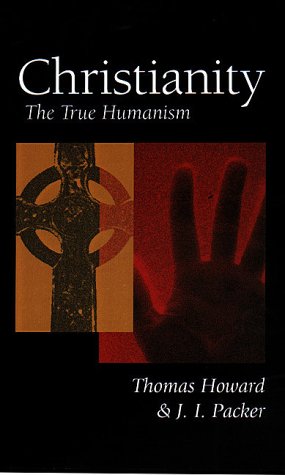
36. Christianity: The True Humanism
 
37. Judges: Gods War Against Humanism
$8.00
38. Architectural Principles in the
$32.50
39. Pedagogy and Praxis in the Age
 
40. The Survival of the Pagan Gods:

21. Merleau-Ponty and Modern Politics After Anti-Humanism (Modernity and Political Thought)
by Diana Coole
Paperback: 288 Pages (2007-08-28)
list price: US$29.95 -- used & new: US$29.85
(price subject to change: see help)
Asin: 0742533387
Canada | United Kingdom | Germany | France | Japan
Editorial Review

Book Description
In this important new book, Diana Coole shows how existential phenomenology illuminates and enlivens our understanding of politics. Merleau-Pontys focus on embodied experience allows us to approach political life in a manner that is both critical and engaged. With breadth of vision and penetrating insight, Coole demonstrates that political questions were always central to Merleau-Pontys philosophical project. Her examination of his complete body of work presents us with a rigorous philosophy that maintains our capacities for agency despite moving beyond a philosophy of the subject. ... Read more


22. Heidegger and French Philosophy: Humanism, Antihumanism and Being
by Tom Rockmore
Paperback: 272 Pages (1995-01-20)
list price: US$38.95 -- used & new: US$35.90
(price subject to change: see help)
Asin: 0415111811
Canada | United Kingdom | Germany | France | Japan
Editorial Review

Book Description
Martin Heidegger's impact on contemporary thought is massive and controversial. In France, the prestige of this German philosopher is such that contemporary French thought cannot be properly understood without reference to him.

Heidegger and French Philosophy examines the reception of Heidegger's thought in France. Tom Rockmore argues that in the period after World War II, due to the peculiar nature of the humanist French philosophical tradition, Heidegger became the master thinker of French philosophy. Rockmore engages with the controversy over Heidegger's political affiliation with Nazism and the debate on how this commitment can be reconciled with his theory. Examining the relation between Heidegger's philosophy and his politics, the book contends that the French reception of Heidegger's thought--first as philosophical anthropology and later as postmetaphysical humanism--has been systematically mistaken. ... Read more


23. In Defense of Secular Humanism
by Paul Kurtz
Paperback: 273 Pages (1983-10)
list price: US$24.00 -- used & new: US$15.05
(price subject to change: see help)
Asin: 0879752289
Average Customer Review: 3.5 out of 5 stars
Canada | United Kingdom | Germany | France | Japan

Customer Reviews (3)

4-0 out of 5 stars Fair (Early) Introduction To Humanism
A compendium of essays, some better than others, Kurtz reports secular humanism (SH) is based on rational thinking, opposed to dogma and any system or influence suppressing critical thinking (Church, State, bigotry Left or Right). It is not a religion as it "generally" dismisses the supernatural as readily as the paranormal, astrology, UFOs and all superstitions. (One can see why it will never have a significant following, as superstition is much easier and goes far in making boring / suffering lives more exciting / tolerable.) High on the SH list is moral education, noting non God-based morality needn't be antisocial, subjective or promiscuous (as is, apparently frequently, one of the attacks on SH). Kurtz supports a program of moral education rather than obedience to a canon. Ethics has a longer history than Judeo-Christianity, he argues. (We assume he's not predating Greek ethics before Hebrew Law - perhaps Hammurabi?) "It is in the crucible of history that ethics have been tested." (i.e. no need for commandments.) Kurtz submits that God does not speak to humanity from above, but the Word is instead an expression of humanity's deepest longings (i.e. it is man speaking to himself). Yet, he stresses that simply rejecting theism is not humanistic, respect for religious freedom must be maintained. Likewise his Secular Humanist Declaration reads like a review of the US Constitution and Bill Of Rights. He also notes reasonable limits to science, misapplied to nature and human life, opening opportunities for ecological disaster and dehumanization of people and their institutions. The ultimate goal should be human growth for all, not a few, and humans are to be responsible for it, rather than forever waiting on divine intervention. "The problem for man is to discover the good life, which is achievable in human terms. The standard is... within man where sources of the good life are to be found, and in this view is an affirmation that life is worth living." Natural Humanists (a slight twist on secular) support Jesus' remark that "the kingdom of God is within thee." Humanism claims humanity as rooted in the soil (nature), it is the flesh (life) that provides satisfaction, but it is social harmony and creative fulfillment (the spirit) that we find our deepest significance.

Kurtz shines most in his chapter on Libertarianism. Oddly, earlier in the book he supports world order through world laws of transnational governments. (Yikes.) Extreme disproportions of wealth should be reduced worldwide, he says. Generally agreeable, but since this is an overview, we never know how exactly he intends to make this happen without the usual resulting tyranny. In Libertarianism he goes on to say that large governments are a threat as is new Liberalism's paternalistic welfare state. The principle of equality in the extreme has turned "equality before the law", and "equality of opportunity" into guarantees of equal results. "Doctrines of social equality are counterproductive, smothering individual initiative." For Libertarianism, he notes, economic and political liberty are central but derivative of a more fundamental ideal - the high moral value placed on individual freedom and choice. (He does not enter into the two-individuals question, both with freedom, one with choice, one in the womb.) Again he returns to morality. "While liberation from control frees us from stultifying customs it can also lead to loss of civil conduct and morality." "To emancipate individuals unprepared for loss in restraint results in license. Autonomous choice is not possible if one is not nurtured to appreciate and handle it... Freedom of restraint is not the same as the developed freedom of a person able to realize his potential. Complete autonomy can only occur in a developed personality." Ironically Kurtz was decades ahead of his time (and the Iraq war) when he stated, "As if democracy were suddenly imposed on a people unready for it or for whom it were alien." And offering advice to our modern universities - in the modern lingo to boot - Kurtz writes, "Because we tolerate diversity does not mean we approve of every style of life."

2-0 out of 5 stars Not too bad, but not too good either
In Defense of Secular Humanism is a collection of essays written by Paul Kurtz, mostly in reaction to allegations leveled against secular humanism (and humanism in general) by the Religious Right and other fundamentalist Christian organizations in the United States.

And therein lies the chief problem: it's a collection of essays that are almost totally focused on one central concern. Whereas many other essay collections by other authors tend to cover wide ranges of concerns (anything from war, to ethics, to religion, to sports), Kurtz's collection is focused almost entirely on answering allegations by his opponents.

And since his opponents had a habit of making the same allegations again, and again, and again, much of this book is Kurtz writing the same responses again, and again, and again.

To sum the problem up, there's a heck of a lot of repition in this book.

Of course, there are several good essays, and some excellent ones. Kurtz's "Principle of Tolerance Reaffirmed", "Fallacy of the Undistributed Middle", and "The Democratic Ethic" are very thought-provoking works to read. However, much of the book delves into seemingly mindless repition and even vitrolic rhetoric, which is, in my opinion, unbecomming of a person of Kurtz's intellectual capabilities.

Bear in mind that I do have some biases on this subject. This was my first introduction to humanism, and it's a very poor book for a first exposure. If you're like I was, and looking for something to introduce the ideas of Humanism to you, read "The Philosophy of Humanism," by Lamont.

Ultimately, I would hesitate to buy this book if I were you. If you're like me, and willing to spend the money to add this to your collections (and read the occasional very interesting articles within), go ahead. However, overall the book is intellectually unstimulating, and probably not worth most people's money. These essays just weren't meant to be put together.

4-0 out of 5 stars Rightwingers on the Warpath
Paul Kurtz,professor of philosophy, publisher of Prometheus Books, and editor of Free Inquiry, wrote this volume in the early 1980s, when the Moral Majority were on a war path against the "religion" ofSecular Humanism.Though many of his articles are redundant, Kurtz's bookbeing a compilation, his rebuttal of much of the Religious Right's paranoiais as refreshing today as it was then.If the Secular Humanists were sucha power block, it would stand to reason that such organizations would havefar more than a few thousand members each. What the Falwells of the worldare reacting to, lumped together under the S.H. bogeyman, is the influenceof a broader humanism, which is attractive to many religionists who seelittle contradiction with their beliefs.The clock can't be turned back. ... Read more


24. Humanism and the Culture of Renaissance Europe (New Approaches to European History)
by Charles G. Nauert
Hardcover: 266 Pages (2006-05-29)
list price: US$80.00 -- used & new: US$67.99
(price subject to change: see help)
Asin: 0521839092
Average Customer Review: 4.0 out of 5 stars
Canada | United Kingdom | Germany | France | Japan
Editorial Review

Book Description
In this updated edition of his classic account, Charles Nauert charts the rise of humanism as the distinctive culture of the social, political and intellectual elites in Renaissance Europe. He traces humanism's emergence in the unique social and cultural conditions of fourteenth-century Italy and its gradual diffusion throughout the rest of Europe. He shows how, despite its elitist origins, humanism became a major force in the popular culture and fine arts of the fifteenth and sixteenth centuries, and the powerful impact it had on both the Protestant and Catholic Reformations. He uses art and biographical sketches of key figures to illuminate the narrative and concludes with an account of the limitations of humanism at the end of the Renaissance. The revised edition includes a new section dealing with the place of women in humanistic culture and an updated bibliography. It will be essential reading for all students of Renaissance Europe. ... Read more

Customer Reviews (1)

4-0 out of 5 stars Outstanding
Nauert does an exceptional job of making accessible a vaporous topic.In the process he dispells many "myths" that would otherwise cloud the subject.He establishes humansim as an "intellectual approach" and not a philosophical method.From this stance, he can demonstrate the mulitple and contrasting manifestations of humanism.His section on Petrach is exceptional.Beyond the sonnet, Petrach developed the notion of historical change.This would prove critical in the humanistic approaches to interpretation of texts.All this may sound dry, but if your interests include intellectual history, this is one of the most accessible surveys I've seen. My one criticism is the lack of emphasis on the sharp contrast humanist education and the drudgery of scholasticism. More here could have emphasized the appeal of humanism to younger generations. ... Read more


25. The Unheard Cry for Meaning: Psychotherapy and Humanism (Touchstone Books)
by Viktor Emil Frankl
Paperback: 196 Pages (1979-03-27)
list price: US$14.95 -- used & new: US$10.92
(price subject to change: see help)
Asin: 0671247360
Average Customer Review: 5.0 out of 5 stars
Canada | United Kingdom | Germany | France | Japan

Customer Reviews (1)

5-0 out of 5 stars Deepening Insight into the Ultimate Search for Man's Meaning
This was a wonderful book.I highly recommend it immediately after you read Man's Search for Meaning.This is a continuation and extension of the Introduction to Logotherapy that comprises the second half of Man's Search for Meaning.This book is more academic and less personal, but still full of insight and humanity.Frankl touches on many different aspects of life and existential vacuums that we all face.Here are some of his remarks that I thought perticularly noteworthy and that will give you a feel for the overall nature of this work.

Frankl's Definition of God
"God is the partner of your most intimate soliloquies. Whenever you are talking to yourself in utmost sincerity and ultimate solitude-he to whom you are addressing yourself may justifiably be called God." {NB: This is in the context of a non-theistic statement, Frankl notes that a religious person would assert that these are real dialogues between himself and God, while an atheist would be equally correct in insisting that they are only monologues within his own mind. Frankl, himself, I think tends toward the latter position.}
Frankl, Viktor. "Determinism and Humanism: Critique of Pan-Determinism" The Unheard Cry for Meaning. pg. 63.

Self-Trancendence
"Man is - by virtue of the self-trancendent quality of the human reality - basically concerned with reaching out beyond himself, be it toward a meaning to fulfill, or toward another human being to lovingly encounter."
Frankl, Viktor. "Determinism and Humanism: Critique of Pan-Determinism" The Unheard Cry for Meaning. pg. 80.

On the Meaning of Sex
"Human sex is always more than mere sex, and it is more than sex to the extent that it serves as the physical expression of something metasexual, is the physical expression of love. Only to the extent that sex carries out this function is it a rewarding experience." {To the extent that sex fails in this task, ie. using another person as a tool, failing to connect to that person as a subject, not simply an object, it is referred to as 'masturbatory' and 'neurotic' by Frankl.}
Frankl, Viktor. "Determinism and Humanism: Critique of Pan-Determinism" The Unheard Cry for Meaning. pg. 80.

The Pursuit of Happiness
"The more one's search for meaning is frustrated, the more intensively he devotes himself to what ... has been termed the 'pursuit of happiness.' When this pursuit originates in a frustrated search for meaning it is aimed at intoxication and stupifaction. In the final analysis it is self-defeating, for happiness can arise only as a result of living out one's self-transcendence, one's dedication to a cause to be served or a person to be loved."
Frankl, Viktor. "The Dehumanization of Sex" The Unheard Cry for Meaning. pg. 83.

Hyper-reflection and Existential Emptiness
"Paying too much attention to something is what I am used to calling 'hyper-reflection.' The patient is invited to carefully observe and watch himself; what is even more important, he is encouraged to endlessly discuss whatever he furnishes from within himself. Hyper-discussion becomes more and more a substitute for the meaning of life which is today so often missing, and missed by those who are caught in an 'existential vacuum,' a feeling of emptiness and meaninglessness." {There is also a discussion on the principle of hyper-interpretation, which subjects one to a relentless examination on one's 'real motivations.'}
Frankl, Viktor. "Critique of Pure Encounter" The Unheard Cry for Meaning. pg. 76.
... Read more


26. Theism and Humanism : The Book that Influenced C. S. Lewis
by Arthur James Balfour, C. S. Lewis, Arthur J. Balfour
Paperback: 203 Pages (2000-12)
list price: US$14.95 -- used & new: US$9.05
(price subject to change: see help)
Asin: 1587420058
Canada | United Kingdom | Germany | France | Japan
Editorial Review

Book Description
In 1962, Christian Century asked the well-known Christian writer, C. S. Lewis, to name the books that had most influenced his thought. Among those that Lewis listed was Arthur J. Balfour's Theism and Humanism (1915). This was no passing whim. Almost twenty years earlier, in 1944, Lewis had lamented in "Is Theology Poetry" that Theism was "a book too little read."

Many others shared Lewis' enthusiasm. When Balfour gave the original lectures on which the book was based, some 2,000 people crowded into Bute Hall at the University of Glasgow on a weekday winter afternoons to cheer and laugh. Even more telling, they kept coming back, week after week for all ten speeches. Even the staid Times of London commented on the "wildly enthusiastic" audiences and noted the diversity of those attending, from citizens and students to professors.

Unfortunately, until now the book hasn't been that easy to find. Copies have only been available on the used market and were thus rare and relatively expensive. This newly typeset edition and enhanced makes the book inexpensive and widely available.

Balfour was a talented writer and perhaps the most intelligent British Prime Minister of the twentieth century. During World War One he replaced Winston Churchill as First Lord of the Admiralty and went on to become Foreign Secretary. In the latter office he was responsible for the 1917 Balfour Declaration committing Great Britain to the establishment of a Jewish homeland in Palestine. It is no exaggeration to say that Israel owes its existence to Balfour.

Theism and Humanism is based on a 1914 Gifford Lecture that Balfour gave at the University of Glasgow. All the original text is included along with over 50 pages of additional material. There are 11 sketches of Balfour adapted from political cartoons in Punch magazine. There are four appendices taken from his other writings, including the marvelous "A Catechism for Naturalism" (which sent the arch-agnostic Thomas Huxley, better known as "Darwin's Bulldog," into a fit of rage). There's also a glossary of people and terms mentioned in the book and a detailed index. Finally, this new edition includes brief quotes from Balfour's other writings to highlight what he is saying. The second edition improves on the first by adding to each chapter in the original, the extensive coverage that The Times of London gave to Balfour's original speech. It also includes three letters by C. S. Lewis on themes closely related to Balfour's book.

Balfour's topic is naturalism, the belief that all that exists are natural processes. He challenges those who believe in it to come up with a rationale for what they hold dearest--human reason, human rights, and the importance of art--based solely on naturalism. He believes that cannot be done and summarizes his book in these words:

"My desire has been to show that all we think best in human culture, whether associated with beauty, goodness, or knowledge, requires God for its support, that Humanism without Theism loses more than half its value."

If you like philosophy and provocative ideas, this book is perfect for you. The Cambridge-educated Balfour was very knowledgeable about science. (He was the President of the British Association for the Advancement of Science in 1904 and his brother was a talented scientist.) That makes this book a useful complement to the Oxford-educated Lewis whose specialty was literature. ... Read more


27. The New Military Humanism
by Noam Chomsky
Paperback: 199 Pages (1999-10-01)
list price: US$26.85 -- used & new: US$13.57
(price subject to change: see help)
Asin: 0745316336
Average Customer Review: 4.5 out of 5 stars
Canada | United Kingdom | Germany | France | Japan
Editorial Review

Amazon.com
Scarcely had the dust settled on NATO's 1999 bombing of Serbia when prolific political commentator Noam Chomsky brought out The New Military Humanism, which raises incisive, unsettling questions about the motives of the United States and England--the two most vocal proponents of Operation Allied Forces--and the efficacy of their handiwork. Chomsky pulls together much damning evidence, including testimony from the military commander who led the attack, to demonstrate that the assault was not intended to bring an end to Serbian leader Slobodan Milosevic's "ethnic cleansing" of the disputed territory in Kosovo; it seems very likely, in fact, that President Bill Clinton and Prime Minister Tony Blair knew full well that their actions would ultimately exacerbate the situation. Chomsky also points out that if the United States was genuinely concerned with ending the horrors of genocide, its continued financial and military support of repressive regimes in countries like Turkey and Indonesia is at the very least extremely puzzling. (The New Military Humanism was written and published before the international community decided in September 1999 to intervene in East Timor, which had been subject to Indonesian occupation for over 20 years.) Ultimately, Chomsky suggests, such contradictions exist because what the United States claims to be a "humanitarian" mission is--no matter how glowingly the mass media portrays it--nothing more than American muscle flexing. "The contempt of the world's leading power for the framework of world order," he concludes, "has become so extreme that there is little left to discuss." --Ron Hogan ... Read more

Customer Reviews (33)

5-0 out of 5 stars Another great myth of our time exploded
In March 1999 NATO forces, mainly British and American, began their 11-week onslaught from the air on Yugoslavia, supposedly to forestall Milosevic in his campaign against the Albanian Kosovars. According to the once reputable Vaclav Havel NATO's avowed intent to protect the underdog was appropriate in an age when `it is simply not permissible to murder people, to drive them from their homes, to torture them and to confiscate their property'. The intervention thus signified a radical, top-to-bottom reappraisal of moral values, a great sea-change in the human condition, no less. Wars could after all be waged for altruistic ends, it was claimed, and the New Humanism's morally cleansing effect would be so far-reaching as to invite comparison with the abolition of slavery in a former age. When even journalists of the calibre of The Guardian's Polly Toynbee can fall for this nonsense we have to wonder how. Here it is subjected to Professor Chomsky's customary razor-sharp analysis, to eye-opening effect.

The New Humanists' claims to the moral high ground can be judged fairly if we note, with Chomsky, how selectively the principle has been applied. Vaclav Havel's evocation of a parallel moral universe which we should all ideally inhabit rings hollow when contrasted with his belief in facing down the so-called communist threat by fair means or foul, even when the means are as foul as the US-supported death squads in El Salvador during the Reagan years. Likewise, when Madeleine Albright sanctimoniously proclaimed `in 1999 we cannot have this kind of ethnic cleansing' we were, and should still be, reminded of her edifying declaration that the deaths of thousands of Iraqi children were `a price worth paying' for maintaining the pressure on Saddam. As one other glaring example of the double standard Chomsky analyses in some detail the case of Turkey; despite the torture, ethnic cleansing and destruction of some 3,500 Kurdish villages - all of this documented by Human Rights Watch - US arms shipments were not withheld from the Turkish military. Meanwhile, over here the Blair Government fell into step with the New Humanism, seemingly oblivious to the contradiction between Robin Cook's much-vaunted `ethical foreign policy' and a willingness to sell arms to Indonesia despite its appalling human rights record.

Turning to the conflict in former Yugoslavia, `The New Military Humanism' shows how the Western powers regarded Serbia as the least worthy recipient of their philanthropic largesse. The 1995 Dayton Accords, which partitioned Bosnia-Herzegovina between Croatia and Serbia, gave rise to the violent expulsion of thousands of Serbs from the region of Krajina at the hands of Croatia's Franjo Tudjman. As events unfolded the Kosovan Liberation Army, a bizarre rag-tag assortment of old Stalinists in the pay of Albania's Enver Hoxha and Nazis looking back to the glory days of the Third Reich, became useful in drawing out Serbian forces into the line of US fire. That the KLA's methods might earn it the standard designation as a terrorist organisation was, in the obvious circles, too embarrassing to contemplate. Chomsky's familiar theme of news being filtered through a largely craven and unquestioning media gets another airing with quotations included from columnists Thomas L Friedman and William Pfaff to illustrate an utter lack of compunction about demonising the Serb population. Having elected a leader like Milosovic they were presumed to be fair game, a deserving target of NATO's onslaught, precisely the rationale espoused by those who masterminded and carried out the London bombings of July 2005.

Another deliberate obstruction of the information flow concerned the 1999 Rambouillet Agreement which effectively called for total military occupation of Kosovo and the rest of former Yugoslavia by NATO. It was so brazen that it was certain to be rejected, which the Serb National Assembly duly did on March 23, calling upon the UN to facilitate a peaceful diplomatic settlement. Predictably there were no negotiations and on March 24 the bombing began. Chomsky's account contains the disquieting revelation that these two proposed agreements were not even presented to the American public, and in the same chapter (`The Diplomatic Record') he notes the bombing of Serbian radio and television for their refusal to parrot NATO propaganda.

It is conceded that Serb atrocities in Kosovo were real. However, according to the UN High Commissioner for Refugees and other sources the Blair/Clinton bombing caused more mass slaughter and population displacement than it prevented, both in its immediate effect and through Milosevic's bloody response to the provocation. Moreover, internal opposition to Milosevic was undermined. The Vojvodina region, once a hotbed of resistance, effectively changed sides after the NATO aggression put paid to any pro-Western sentiment among the population. As usual, Chomsky's historical perspective ranges far beyond the subject immediately under discussion. The sheer scale of the terror and destruction caused by NATO's `humanitarian intervention' puts him mind of other episodes where benign motives have been claimed, including Mussolini's invasion of Ethiopia, Hitler's occupation of parts of Czechoslovakia and President McKinley's 1898 invasion of Cuba.

Some suggestions are made in Chapter 6 (`Why Force?') as to the genuine underlying reasons for the conflict. Blair's rhetoric about NATO credibility could only have made sense if it referred to Big Power geo-political aims and the danger of the one rotten apple, Serbia, spoiling the entire barrel and compromising US dominance of the region. The strategic location of the Balkans in relation to Europe and the Middle East seems to have been decisive, and the European Union's decision to follow a more independent defence policy may have caused concern among US planners. (Mark Curtis in his excellent, Chomsky-approved `Web of Deceit' focuses on NATO's attempts to expand eastwards while the former Soviet bloc countries pursued a neo-liberal economic ideology, thereby being useful to Western business.) Chomsky admits that this is largely speculation, but when fantastical scenarios are conjured up by Vaclav Havel and others to explain major crises extreme scepticism is in order along with the need to consider more plausible explanations. Far from being magnanimous in intent NATO's action is seen as one more cynical exercise in realpolitik which would probably never have beencontemplated if, like North Korea today, Belgrade had possessed an effective deterrent against outside interference.

2-0 out of 5 stars Far from exhaustive
The New Military Humanism, Noam Chomsky
Chomsky's take on the situation in the former Republic of Yugoslavia is the most successful rejection of NATO's intervention I have read thus far, yet it is still a superficial and ultimately unsatisfying work of political science. Chomsky insists on rehashing earlier work from his political writings in which he simply cites his own books as evidence; he devotes an entire chapter to investigating entirely irrelevant US military intervention in Indochina and Central America, pointing out the cruel imperialistic motivations of the campaigns while failing to appropriately relate them to the FRY. Unfortunately, just because the US has acted with illegitimate intentions in the past (and it certainly has), it doesn't mean that NATO's intervention in the future is necessarily motivated by imperialism, hence "the New Military Humanism," but Chomsky fails to reconcile this fundamental dilemma, and the chapter seems to imply that the Albanians should have been killed in higher numbers to necessitate NATO intervention. This section of the book simply does not work.

However, Chomsky does provide fair evidence (far better than Parenti or Johnstone), that NATO was totally aware that military air strikes were going to escalate the intensity of the atrocities. He cites General Wesley Clark (about a dozen times), to the fact that the bombing's consequences "were entirely predictable." But more importantly, Chomsky investigates a US State Department which reveals that higher level planning circles were aware that NATO's bombing was likely to make Serbian aggression more aggravated. His scholarship in this section is good, keeping to totally mainstream publications like the New York Times, the Wall Street Journal, and the State Department Document in question. It appears as though NATO intervention was in fact quite reckless, though Chomsky seems to believe the conflict would have been resolved through diplomacy while providing little evidence that it was a possibility.

Chomsky's scholarship in the New Military Humanism is generally good, although he does rely way too heavily on his own writing, usually on irrelevant military campaigns. And he does make some citations which are a bit curious. For example, on page 106 he discusses the illegitimacy of the Rambouillet Agreement and cites a document (footnote 6), without an author or organization and simply states that it is "widely circulated on the internet." Also, he cites the ultra-left wing Z magazine on page 69 (footnote 63), which is very unreliable. As a final qualification, Chomsky's book didn't include much of the context of the Balkans which is crucial to our understanding of the situation there; instead he preferred to rehash old US crimes which tell us little about the people, history, and culture of the various peoples in the FRY. The New Military Humanism does begin to strike at some of the problems with NATO and the US's proclamations of moral intervention, mostly in the examination of NATO's expectations of bombing and the diplomacy that followed as described above. But it is far from a complete study of the situation there, and Chomsky doesn't adequately make the case that intervention was motivated for the sake of the business elite as he was so able to do in the past.

5-0 out of 5 stars A peek inside the lofty rhetoric
This book should not be approached as a history or an account of the Kosovo conflict. There is little background to the wars in the former Yugoslavia. That is for other works to present. The focus here is the 'new military humanism' of the West as an idea, and as a practice, with the Kosovo war of 1999 serving as the example. The examination takes into account the Orwellian notion that in free societies, it 'wouldn't do' to mention certain facts, namely the facts that contradict the lofty ideals we profess to be upholding.

The book is not an outright condemnation of the intervention in Kosovo, and it does not propose hard solutions or alternatives. This is an examination of the conflict, and of the implementation of a 'new military humanism'. Given the impressive amount written about the war, and the support it was given by intellectuals (from across the spectrum), this is a serious look at whether or not our aims and justifications really hold up. There are few works that actually explore the conflict from this angle, challenging the canned version of the events.

Chomsky asserts that the humanitarian aims and effects of the Kosovo war do not hold up to any scrutiny. Chomsky's position is thus: in a crisis, we can choose to do nothing, choose to mitigate it, or choose to escalate it. He believes that NATO, in fact, chose to escalate the crisis through the bombing campaign. Did we choose to engage the army on the ground, and the forces committing atrocities in the province? No. The bombing escalated the crisis, and indeed, after Milosevic failed to cave in, the civilian population was targeted, and of course, devastated, as an already impoverished country was made to pay for the crimes of its corrupt leaders. Did Milosevic have to put a 'horseshoe' operation into action, once the bombing commenced? No, he didn't. But when you bomb someone, you don't expect them to throw flowers at you, you expect them to react, and the reaction here was cynical, and 'entirely predictable', in the words of Wesley Clark.

Chomsky examines the 'official' version of the events, challenging the chronology while exploring how a certain depiction of current events will morph into a story that supports certain actions, particularly when those actions and interventions are undertaken by the 'enlightened' states of the West.

The Kosovo war is slipping down America's impressive memory hole; of course it's never discussed in the endless considerations on the 'War on Terror'. In fact, if we really cared about ending terrorism around the globe, we would explore our own actions. Milosevic claimed he was fighting terrorists. The KLA were considered terrorists by the US and the West, it was explicitly stated before our involvement. Acting to preserve our 'credibility', we armed and supported said terrorists, and demonized not only the Serbian government, but the whole people, wrecking a country that will take decades to recover, if it ever does.

Hmmm. Perhaps if the situation took place after 9/11, we would not only stand by, but would support and indeed laud Milosevic for his excellent efforts in fighting terrorism.

5-0 out of 5 stars Self evident but important
What is truly sad is that books like this have to exist.Indeed, apart from 'barking' about human rights abuses, if we look at Slobodan Milosevic clones, both Croatian and Bosnian, we notice that each side had blood on its hands.While Chomsky is never popular, this work should be self evident.How can we say the humanitarian mission on Kosovo was justified while NATO turned a blind eye to the biggest exodus of all previously: the ethnic cleansing of Serbs in Croatia.

The recent developments in Kosovo, with the escalating violence proves that things are never so simple.And while the media still pretends this can be explained by revenge, the truth is that the KLA was, and is, a terrorist organization of the al-Qaida vein.

1-0 out of 5 stars Illusions
Chomsky's assertions as regard the Bosnian war and the subsequent war in Kosovo are completely unfounded and in many cases highly outrageous. Like Diana Johnstone, Chomsky claims that these wars were civil wars and not genocides. As is well known, civil war implies collective guilt. This postulation is a flagrant misrepresentation of the actual events. The war in Bosnia was a clear and unequivocal case of a Serbian aggression, as was the war in Kosovo. Evidence refuting Chomsky's preposterous revisionism is overwhelming and indisputable; for rebuttal see books by Noel Malcolm, David Rieff, Roy Gutman, Michael Sells and the winner of the Pulitzer Prize David Rohde who in his book A Safe Area offers a brilliant account of the gruesome massacre in Srebrenica. In his analysis of the war in Bosnia, Chomsky deliberately overlooks many crucial facts. For example, the fact that it was Serbia that attacked Slovenia, Croatia, Bosnia and ultimately Kosovo is not even mentioned. As far as I recall, Serbia was not attacked by any of the neighboring countries. In light of this fact, how can anyone even begin to talk about collective guilt? Milosevic's principal objective was to create a "Greater Serbia" and in order to achieve that it was necessary to exterminate all non-Serbs. Milosevic was driven by ardent nationalism and an ancient hatred for the Turks (read Muslims), for corroboration see for example Michael Sells' The Bridge Betrayed. Sells explains how the Serbian propaganda played a pivotal role in enabling the genocide of the Bosnian Muslims. The Serbs were blinded by highly sophisticated propaganda, the goal of which was to depict Muslims as a grave threat to the very existence of the Serbian people. For a meticulous and elaborate analysis of the Serbian nationalism, see for example Tim Judah's The Serbs and Noel Malcolm's Bosnia. Another absurd assertion made by Chomsky is that the atrocities perpetrated by the Kosovars and the Serbs were almost identical in nature. Facing a much more powerful adversary, the Kosovars did not stand a chance. The war crimes committed by the Kosovars do not even come close to those by the Serbs. Once again, Chomsky makes no mention of the fact that it was Serbia that attacked and invaded Kosovo, thereby ignoring the very reason the war began. If one country invades or attacks another then it is an aggression, not civil war! Chomsky further holds that the NATO's intervention only escalated the atrocities and the ethnic cleansing. The only thing that we know for sure is that it stopped the aggression, this is irrefutable. Sitting in his cozy home somewhere in the U.S. it is easy for Chomsky to constantly advocate diplomacy and peaceful resolutions. Believing that all conflict can be solved peacefully is naïve. You cannot negotiate with everyone since certain individuals just do not want to negotiate. Known for his intransigence and malice, all negotiations with Milosevic were futile, it was either his way or no way at all. How many people have to die before we conclude that negotiations do not work? When in extreme danger, negotiation is hardly the first solution that comes to mind. If there is a reasonable chance to subdue the assailant then there is no need to negotiate, after all we all have the right to self-defense. Also, why should you reward a tyrant like Milosevic by negotiating with him? Give him an ultimatum and unless he complies, punish him severely. I am rest assured that the war in Kosovo would have lasted much longer if the NATO had not intervened. When negotiations fail as they did in Croatia, Bosnia and Kosovo then the use of force is morally justifiable and warranted. Those claiming otherwise have never experienced horrors of war. Even though I am a staunch opponent of unilateral and unwarranted military interventions, it would be naïve to think that we can always negotiate an end to every conflict. I agree with Chomsky about the Middle East and the U.S. foreign policy but he is entirely wrong regarding Bosnia and Kosovo.For honest and well-documented analyses of the wars in Bosnia and Kosovo, see books by Roy Gutman, David Rohde and Noel Malcolm. ... Read more


28. Challenging Humanism: Essays in Honor of Dominic Baker-Smith
 Hardcover: 336 Pages (2005-12)
list price: US$60.00 -- used & new: US$48.00
(price subject to change: see help)
Asin: 0874139201
Canada | United Kingdom | Germany | France | Japan

29. What Is Secular Humanism?: Why Humanism Became Secular and How It Is Changing Our World
by James Hitchcock
 Paperback: 158 Pages (1982-09)
list price: US$7.99 -- used & new: US$7.25
(price subject to change: see help)
Asin: 0892831634
Average Customer Review: 2.5 out of 5 stars
Canada | United Kingdom | Germany | France | Japan

Customer Reviews (3)

1-0 out of 5 stars Typical christian attack piece
This book does nothing to reveal what Secular Humanism is about, what it stands for or what it's goals are.It's arguments are old, out of date, and quite tied to a "Cold War" mentality.The funniest thing I found in this book is the authors repeated attempts to link Secular Humanism with Marxism and Communism.This will come as a great surprise to many of the Libertarian Secular Humanists I know.All in all, it's a waste of your money.

5-0 out of 5 stars One of the most important books I've read
For months after being transformed from an angry, impatient, money-drive feminist into a follower of Jesus Christ, I was still wondering how I could have been so blind for so many years -- the evidence for the truth of Christianity is so overwhelming that I couldn't figure out how I'd overlooked it. And then I stumbled across this book and found out exactly what the problem was. I don't know if reading it years ago would have brought me to Christ any sooner, but at least I would've been aware of the many ways in which we're being brainwashed with the secular humanism worldview. An awesomely important book.

2-0 out of 5 stars What's Wrong With Secular Humanism
I naively thought, based on the title, that this book would tell me what a Secular Humanist thinks Secular Humanism is. Wrong. The author offers a condemnation of Secular Humanism,based on his definitions which do not conform to those of Secular Humanists. He also blames Secular Humanism for many of what are, to him, ills of society at the present time, such as: environmentalists,atheists,feminists,propagandists,communists,psychologists,evolutionists,and liberals. ... Read more


30. Feminism as Radical Humanism
by Pauline Johnson
Paperback: 184 Pages (1994-09-01)
list price: US$28.00 -- used & new: US$3.49
(price subject to change: see help)
Asin: 0813323584
Canada | United Kingdom | Germany | France | Japan
Editorial Review

Book Description
Feminism is currently at an impasse. Both the liberation feminism of the 1970's and the more recent feminism of difference are increasingly faced with the limitations of their own perspectives. While feminists today generally acknowledge the need to recognise diversity, they lack a coherent framework through which this need can be articulated.

In "Feminism as Radical Humanism", Pauline Johnson calls for a reassessment of feminism's relationship to modern humanism. She argues that despite its very thorough and necessary critique of mainstream formulations of humanist ideals, feminism itself remains strongly committed to humanist values.

Drawing on a broad range of political and intellectual traditions, Johnson demonstrates that, only by proudly affirming its own humanist commitments can feminist theory find a way to negotiate the impasse in which it currently finds itself.

"Feminism as Radical Humanism" is an important and controversial contribution to feminist theory, and to the ongoing debate about the meaning of contemporary humanism. ... Read more


31. On Humanism (Thinking in Action)
by Richard Norman
Hardcover: 160 Pages (2004-07-02)
list price: US$100.00 -- used & new: US$83.22
(price subject to change: see help)
Asin: 0415305225
Average Customer Review: 4.0 out of 5 stars
Canada | United Kingdom | Germany | France | Japan
Editorial Review

Book Description
humanism /'hju:meniz(e)m/ n. an outlook or system of thought concerned with human rather than divine or supernatural matters.

Albert Einstein, Isaac Asimov, E.M. Forster, Bertrand Russell, and Gloria Steinem all declared themselves humanists. What is humanism and why does it matter? Is there any doctrine every humanist must hold? If it rejects religion, what does it offer in its place? Have the twentieth century's crimes against humanity spelled the end for humanism?

On Humanism is a timely and powerfully argued philosophical defense of humanism. It is also an impassioned plea that we turn to ourselves, not religion, if we want to answer Socrates' age-old question: what is the best kind of life to lead? Although humanism has much in common with science, Richard Norman shows that it is far from a denial of the more mysterious, fragile side of being human. He deals with big questions such as the environment, Darwinism and "creation science," euthanasia and abortion, and then argues that it is ultimately through the human capacity for art, literature and the imagination that humanism is a powerful alternative to religious belief.

Drawing on a varied range of examples from Aristotle to Primo Levi and the novels of Virginia Woolf and Graham Swift, On Humanism is a lucid and much needed reflection on this much talked about but little understood phenomenon. ... Read more

Customer Reviews (1)

4-0 out of 5 stars Intellectual defence of Humanism
This is a good book that realistically assesses Humanism. It argues strongly against the existence of God. It also shows that life can be meaningful without necessarily believing in the supernatural. ... Read more


32. The Passionate Intellect: Incarnational Humanism and the Future of University Education
by Norman Klassen, Jens Zimmermann
Paperback: 208 Pages (2006-09-01)
list price: US$18.00 -- used & new: US$7.54
(price subject to change: see help)
Asin: 0801027349
Average Customer Review: 4.0 out of 5 stars
Canada | United Kingdom | Germany | France | Japan
Editorial Review

Book Description
Explores the relationship between university education and Christian living and thinking. ... Read more

Customer Reviews (1)

4-0 out of 5 stars "All Truth is God's Truth," Wonderfully Contextualized
This book is explores the themes of whether, and how, Christians can develop a rich and passionate life of the mind. Although it is written for Christian students bound for university, it is useful for any Christian who is serious about the intellectual life.

One of the authors' goals is to defuse the "warfare" mentality concerning faith and "secular" learning that some Christians, particularly those who are not very mature in the faith, often seem to develop. They propose to do this through the model of "Incarnational Humanism."

"Incarnational Humanism" takes the incarnation of Christ as a starting point for a Christian approach to learning. "In Christ," the authors state, "all fragmentation ends and a new humanity begins, a new creation in which all knowledge is united (or taken captive, as Paul puts it) under the lordship of Christ because in him the divine and the human are firmly joined forever." The pattern of the incarnation suggests that we should expect to find that truth is not "an abstract, timeless concept," but rather is mediated through human language, culture, and tradition. Therefore, Christians should not be afraid of truth located outside the hermetically sealed world of our particular religious subcultures.

In short, the authors place a Kuyperian notion of "common grace," as mediated for generations of Christian college students by Arthur Holmes' famous dictum that "All Truth is God's Truth," into the postmodern context. While the authors thus acknowledge the postmodern turn, they firmly deny the destructive Nietzschean postmodernism, evident in figures such as Michael Foucault, that rejects any notion of classical humanism in favor of a heuristic of power relationships.

The answer the authors suggest to Nietzsche and Foucault, however, is not a resurgent Christian rationalism dusted off from the fundamentalist-modernist controversy. Rather, they hearken back to the sort of humanism that is evident in many of the Church's great minds, such as Augustine, Aquinas, Luther, and Calvin, prior to the Enlightenment. In this classical Christian humanism, truth is more than power - indeed, truth in many ways is the antithesis of power - because the divine Truth became man and gave himself for us.

There are many riches in this book. The phrase "Incarnational Humanism" is a beautiful one that deserves broad attention, and it is high time that "All Truth is God's Truth" be given a postmodern reading. There is also, however, a glaring weakness in the authors' arguments: they do not deal adequately with the effects of sin. A model of truth that hearkens back to Augustine, but that glides over any reading of Augustine's thoughts on sin, will not present a thoroughly Christian humanism.

I wish the authors had acknowledged the tension between the incarnation and human sinfulness, and had contextualized it, as scripture and the Christian humanist tradition do, within the "already / not yet" of the Kingdom of God. Nevertheless, this is a valuable addition to the literature on the intellectual life as a Christian vocation. Let us hope that a holistic, incarnational understanding of faith and learning once again infuses the Church, rather than the rationalist, atomistic, confrontational approaches that so often seem to dominate our thinking.

... Read more


33. Humanism and Democratic Criticism
by Edward W. Said
Paperback: 176 Pages (2004-09-14)
list price: US$27.80 -- used & new: US$12.34
(price subject to change: see help)
Asin: 1403947104
Average Customer Review: 4.5 out of 5 stars
Canada | United Kingdom | Germany | France | Japan
Editorial Review

Book Description

In the radically changed and highly charged political atmosphere that has overtaken the United States -- and to varying degrees the rest of the world -- since September 11, 2001, the notion that cultures can harmoniously and productively coexist has come to seem like little more than a quaint fiction. In this time of heightened animosity and aggression, have humanistic values and democratic principles become irrelevant? Are they merely utopian fantasies? Or are they now more urgent and necessary than ever before?

Ever since the ascendancy of critical theory and multicultural studies in the 1960s and 1970s, traditional humanistic education has been under assault. Often condemned as the intolerant voice of the masculine establishment and regularly associated with Eurocentrism and even imperialism, the once-sacred literary canon is now more likely to be ridiculed than revered. While this seismic shift -- brought on by advances in technological communication, intellectual specialization, and cultural sensitivity -- has eroded the former primacy of the humanities, Edward Said argues that a more democratic form of humanism -- one that aims to incorporate, emancipate, and enlighten -- is still possible. A lifelong humanist, Said believed that self-knowledge is the highest form of human achievement and the true goal of humanistic education. But he also believed that self-knowledge is unattainable without an equal degree of self-criticism, or the awareness that comes from studying and experiencing other peoples, traditions, and ideas.

Proposing a return to philology and a more expansive literary canon as strategies for revitalizing the humanities, Said contends that words are not merely passive figures but vital agents in historical and political change. Intellectuals must reclaim an active role in public life, but at the same time, insularity and parochialism, as well as the academic trend toward needless jargon and obscurantism, must be combated. The "humanities crisis," according to Said, is based on the misperception that there is an inexorable conflict between established traditions and our increasingly complex and diversified world. Yet this position fails to recognize that the canonized thinkers of today were the revolutionaries of yesterday and that the nature of human progress is to question, upset, and reform. By considering the emerging social responsibilities of writers and intellectuals in an ever more interdependent world and exploring the enduring influence of Eric Auerbach's critical masterpiece,Mimesis, Said not only makes a persuasive case for humanistic education but provides his own captivating and deeply personal perspective on our shared intellectual heritage.

... Read more

Customer Reviews (4)

5-0 out of 5 stars Said's last offering to the World
Of course this is one of Edward Said's last offerings to the world.Coming out of Columbia University Press where he taught for five decades, it offers a cogent sampling of Said's thoughts towards intellectuals and humanistic practice in America today.

One overarching theme of the book is simply that the humanities in no way represent a set doctrine of must reads, but rather consists of an organic canon perpetually open to new works, influences and analysis.Some of the spokesmen and advocates for a staid brand of humanism receive a healthy dose of criticism from Said; William Bennett and Allan Bloom specifically.A Closing of the American Mind is indeed exactly what happens when Bloom's thoughts are allowed to wash over the reader.Sam Huntington takes his share of well deserved criticism as well, which obviously relates to his orientalist musings about a clash of civilizations.

More than once Said writes specifically of the challenges, privileges and opportunities currently afforded to intellectuals committed to humanism who happen to reside in the United States.The fact that America is alone as the globe's sole superpower has a constant ubiquitous presence for intellectuals and those who espouse humanistic principles.At one point Said admonishes American humanism in general for being too wedded to a Eurocentric outlook.He points out that it is a bias that cannot remain unquestioned.American humanists are frankly too important because they are citizens, writers, artists and intellects living in the world's only remaining superpower.

Said devotes a chapter to an observation of cultural influences.Pointing out how writers, musicians and painters do not necessarily create or work on a tabula rasa because "the world today is heavily inscribed with information and discourse that crowds around one's individual consciousness."Primarily during the Cold War the CIA subsidized countless humanistic and academic conferences and journals.Humanism and Democratic Criticism goes on to explain that the CIA, while not totally dominating cultural life, has nonetheless had a strong influence.

Towards the end of the book a lengthy chapter deals with a thorough analysis and critique of Erich Auerbach's influential work Mimesis.Of which Said claims is the finest literary humanistic work of the last half of the 1900s.Passages are gone over with an emphasis on sociopolitical context taking into account a host of various factors.The analysis of Goethe and his influences on German fascism is astounding.

Humanism and Democratic Criticism should probably be read on a few different levels: 1.)For a sampling of the late Edward Said's ruminations on a topic he more than anyone else had the authority and expertise to dissect and expound on at length.2.)As a general academic treatment of an area of inquiry arguably more important now than at any time in the recent past.3.)Simply as the last book from one of the world's top intellectuals in history.

He is deeply missed.

5-0 out of 5 stars Beautiful and nuanced
Despite its size, this brief collection of lectures comprises a nuanced and compelling argument of how to rescue the humanities from their growing marginalization and irrelevance.Calling for a return to philology and criticizing the jargon-laden obscuratinism and relativism of much of contemporary humanistic practice, Said nevertheless maintains the benefit of close readings of texts and a multiculturalism that consists of expanding the canon rather than tossing it out all together -- in contrast to the willful ignorance of other cultures advocated by the likes of Harold Bloom and Bernard Lewis.

Said also updates and expands on his views of the intellectual in public life which he touched upon in the series of lectures "Representations of the Intellectual."I found these parts quite interesting.However, if you don't hold the same views as the Old Left, you will need to substitute your own discontents for some of his particulars.

4-0 out of 5 stars A small book from my kind of scholar
This book lists from six to 22 references at the end of each chapter and includes an index on pages 145-154.Those who find the source of their ideals in humanism might expect to find Edward W. Said providing strong support for the political application of such ideals, as the final selection in this book, "The Public Role of Writers and Intellectuals" (pp. 119-144) was previously published in `The Nation' (2001).Lectures that were begun in January 2000 at Columbia University were expanded in October and November 2003 with delivery at Cambridge University, then revised for publication to address "a world of heightened animosities" (p. xvi) due to the unfortunate events of September 11, 2001.

I found Nietzsche more often in the text than in the (two) listings in the index, but the two listings in the index for "Vietnam War, 12-13, 34" merely suggest how much motivation can be wrung from "This Cold War cultural tension" in spite of the desire of those who wish to teach refinement above all else as "an unpolitical, unworldly, and oblivious (sometimes even manipulative) attitude to the present, all the while adamantly extolling the virtues of the past" in the choice of subjects for study.The situation breaks the hearts of those who get all fired up to do one thing, only to discover "that there are no jobs for them or that they have to teach many hours of remedial courses in several institutions as adjuncts or part-timers without health benefits, tenure, or prospects for advancement."(p. 14).This is so sad, it brings to mind how many people of the next generation found some mild recognition of their own intellectually tortured times by turning to comedy.In truth, when the loyalty of Americans is questioned, entertainers who can show some comic supernatural powers in a way that is far over the top of whatever level the late Edward W. Said (may he rest in peace) is on in his consideration of changes that occurred in the years he taught, prior to his death on September 24, 2003, are far more likely to be appreciated by the generation currently starting out in life, if the comic nature of everything that American society attempts is fully understood, than this overly serious summary of professional thinking. Columbia University even found its way into remarks that Ted Rall used to introduce himself to the Yale Political Union in New Haven, Connecticut, on December 4, 2003, just a year ago:

"Thank you for inviting me here tonight.As someone who has been both expelled by and graduated with honors from Columbia University, a place you rarely think about, I know that you'll accept the sympathies that I'd like to offer on behalf of a beloved Yalie George W. Bush. . . .Sadly, this middle-aged white man . . . finds himself, in the immortal closing voiceover from Kubrick's `Full Metal Jacket,' in . . ."(GENERALISSIMO EL BUSHO, p. 181).

The profane flavor of the knowledge that Ted Rall flaunts in his opening remarks is primarily a warning to those who might follow the political footsteps of their own times if comedy fails to deter such an outcome by showing that no one is being fooled unless such foolishness is freely chosen by those who fall for an immortal closing line.Said attempts to provide the same warning on an intellectual level by pointing out that "Immanuel Wallerstein has, over the last couple of years, been writing a sustained intellectual critique of Eurocentrism that serves my purposes here very well," (Said, p. 52).The lecture on philology begins with a comparison of the hermeneutics of language in Arab-Islamic culture with interpretation in Europe since Vico's NEW SCIENCE (1744) that brought about the insights of Nietzsche, Emerson, and Richard Poirier.After a number of attempts to describe close reading, we find the advice, "Only connect, says E. M. Forster, a marvelous injunction to the chain of statements and meanings that proliferate out of close reading."(p. 66).The goal of entering a text allows the reader "a component of personal commitment and extraordinary effort, called `ijtihad' in Arabic."(p. 68)."It is not surprising that since the fourteenth century there has been a robust struggle going on about whether ijtihad is permissible, to what degree, and within what limits."(p. 69).The danger of going too far "is what Swift parodies mercilessly in A TALE OF A TUB."(p. 69).

The intellectual tradition of exiles has much in common with a topic of a book of essays by Isaac Deutscher on "how great Jewish thinkers--Spinoza, chief among them, as well as Freud, Heine, and Deutscher himself--were in, and at the same time renounced, their tradition, preserving the original tie by submitting it to the corrosive questioning that took them well beyond it," (pp. 76-77).A humanist asserting anti-superpower values in America is prone to its own form of toughness, "maintaining rather than resolving the tension between the aesthetic and the national," (p. 78).

Chapter 4, Introduction to Erich Auerbach's MIMESIS, provides an example of an exile who wrote a major book in the German language while in Istanbul during World War II, but who then came to America to be a professor at Yale until his death in 1957.Auerbach also relied on Vico, who provided "a cycle that goes from primitive to advanced and degenerate epochs, then back to primitive, Vico says," (p. 91).There are some sweet instincts, and some not so sweet, and America today, as a place for thinking, confounds anyone who is seriously going to contend that this is being figured out.All that follows from the simple observation that America was attacked threatens to prevent any thought that would like to jump back to before that happened to try to arrange things a bit differently.It is even economically preposterous to try to think that this epoch is not totally degenerate.

4-0 out of 5 stars An elegant last work
These series of lectures represent Said at his most eloquent and heartfelt. Brief and therefore not as rigorously argued as his longer works, he makes his case for what studies of the humanities can be, in fact need to be in the 21st century. While making only cursory swipes at his usual opponents (Bernard Lewis, Harold Bloom)his book is more celebratory and admiring of the writers he has emulated and been influenced by: Eric Auerbach most prominently. An elegiac summa from a writer who will be missed. ... Read more


34. The Threat from Within: The Incursion of Secular Humanism Into Christian Belief and Practice
by William L. Merrifield
Paperback: 320 Pages (2007-06-26)
list price: US$22.99 -- used & new: US$15.65
(price subject to change: see help)
Asin: 1602472599
Canada | United Kingdom | Germany | France | Japan

35. Impact of Humanism
Paperback: 320 Pages (2000-03)
list price: US$22.00 -- used & new: US$3.00
(price subject to change: see help)
Asin: 0300082215
Canada | United Kingdom | Germany | France | Japan
Editorial Review

Book Description
This volume seeks to explore our understanding of the Renaissance, starting with the text that defined our conception of the period, Burckhardt's classic work, The Civilisation of the Renaissance in Italy (published in 1860).A particular concern is the 'revival of antiquity' which Burckhardt saw as one of the definitive features of Renaissance culture.This is explored through a reassessment of the role of humanism, with detailed case studies in music (Josquin Desprez), moral philosophy (Valla, Castiglione, More) and political thought (Machiavelli). ... Read more


36. Christianity: The True Humanism
by J. I. Packer, Thomas Howard
 Paperback: 256 Pages (1988-07)
list price: US$4.99 -- used & new: US$7.99
(price subject to change: see help)
Asin: 0850090652
Canada | United Kingdom | Germany | France | Japan

37. Judges: Gods War Against Humanism
by James B. Jordan
 Hardcover: 334 Pages (1985-06)
list price: US$16.95
Isbn: 0939404109
Canada | United Kingdom | Germany | France | Japan

38. Architectural Principles in the Age of Humanism
by Rudolf Wittkower
Paperback: Pages (1971-09)
list price: US$13.95 -- used & new: US$8.00
(price subject to change: see help)
Asin: 0393005992
Average Customer Review: 5.0 out of 5 stars
Canada | United Kingdom | Germany | France | Japan
Editorial Review

Book Description
"Professor Wittkower's....studies of humanist architecture are masterpieces of scholarship."-Sir Kenneth Clark, Architectural Review.

A fourth edition of the forty-year-old classic.

Focusing on the principal architects of that time-from Alberti to Palladio-this bestselling classic explains the true significance of certain architectural forms, bringing to light the connections between the architecture and culture of the period. With publication scheduled to coincide with that of Architectonics of Humanism, this important reference is superbly reproduced in a new, large square format.

The late RUDOLF WITTKOWER was a college professor and eminent scholar residing in London, England. ... Read more

Customer Reviews (1)

5-0 out of 5 stars More than just Architecture!
Already recognized since 1949 as "a masterpiece in scholarship" in its field by several eminent architects, the 173 page tome: ARCHITECTURAL PRINCIPLES IN THE AGE OF HUMANISM, 4th ed. (1971) by Rudolf Wittkower; had, incidentally, also provided an in-depth explanation on proportion and ratio as they differed in usage between architectural procedure and Boethian mathematics.
Of special importance is part four 'The Problem of Harmonic Proportion in Architecture' (p. 101) where the author made the salient point that "Although the Pythagoreo-Platonic concept of the numerical ratios of the musical scale never disappeared from mediaeval [sic], theological, philosophical, and aesthetic thought, there was no over-riding need to apply them to art and architecture" (p. 159).

Rudolf Wittkower unknowingly provided in part four the distinction between an elite Quadrivium education containing Boethian "mathematical arts" while "the 'liberal arts' of painting, sculpture, and architecture were regarded as manual occupations" (p. 117). The author explained "That the high Renaissance architects shunned theory" and "that they were practitioners rather than thinkers" (p. 30).And further "Italian architects strove for an easily perceptible ratio between length, height, and depth" (p. 74).So then according to this author, all of the Renaissance architects conception of architecture was based on a "commensurability of ratios" (p. 108).

Rudolf Wittkower indicated "that the [Renaissance] architect is by no means free to apply to a building a system of ratios of his own choosing, that the ratios have to comply with conceptions of a higher order and that a building should mirror the proportions of the human body" (p. 101).In developing the centrally planned church, Renaissance architects faced the dilemma of the pragmatics of church construction combined with the belief in divinity and the acceptance of Roman Catholic dogma.

The Church was to provide the "easily perceptible ratio" with the simple logic that "As man is the image of God and the proportions of his body are produced by divine will, so the proportions in architecture have to embrace and express the cosmic order" (p. 101).That cosmic order and harmony are contained in certain numbers Plato explained in his TIMAEUS.

Assigned to the architects, a Quadrivium trained Roman Catholic friar and musical theorist, Franchino Gaffurio (1451-1522) "in a truly Platonic spirit he regarded this principle of harmony as the basis of macrocosm and microcosm, body and soul, painting, architecture, and medicine" (p. 124).It was under this famous Renaissance musical theorist in 1525 that "the old belief in the mysterious efficacy of certain numbers and ratios was given new impetus" (p. 102)."It was Pythagoras who discovered that tones can be measured in space.What he found was that musical consonances were determined by the ratios of small whole numbers.If two strings are made to vibrate under the same conditions, one being half the length of the other, the pitch of the shorter string will be one octave (diapason) above that of the larger one" (p. 102)."Thus the consonances, on which the Greek musical system was based - octave, fifth, and fourth - can be expressed by the progression 1:2:3:4.One can understand that this staggering discovery made people believe that they had seized upon the mysterious harmony which pervades the universe" (p. 103).

"The musical consonances are determined by the mean proportionals; for that the three means constitute all the intervals of the musical scale had been shown in the TIMAEUS.Classical writers on musical theory discussed this point at great length.An exhaustive exposition is to be found in Boethius' DE MUSICA, first printed in Venice in 1491-92, and of very great importance for the doctrine of numbers throughout the Middle Ages and during the Renaissance" (p. 111).

Yet Boethius's DE MUSICA was de-emphasized by Renaissance architects in recognition that the "harmony of the universe which Plato had described in the TIMAEUS on the basis of Pythagora's discovery of the ratios of musical consonances" prompted the "application of Pythagoreo-Platonic system of harmonic ratios directly to architecture" (p. 125).As it turned out (not surprisingly) "Gafurio [sic] was regarded by his contemporaries as a critic in architectural matters" (p. 125).

The author of ARCHITECTURAL PRINCIPLES IN THE AGE OF HUMANISM provided the evidence that although the Quadrivium of the mathematical arts of music, astronomy, geometry, and Boethian proportion and ratio, was known to the Renaissance high architects, they preferred the 'harmonic proportion'; 'proportion of excess'; and the 'proportio proportionum'; derived directly from Plato's TIMAEUS and Pythagoras's three means (arithmetic, geometric, and the harmonic) over Boethius's DE MUSICA, though it was a substantial part of friar Gaffurio's ecclesiastical education.This resulted in "proportionally integrated 'spatial mathematics', which we have recognized as a distinguishing feature of humanist Renaissance architecture" (p. 26).

In comparison, for the practical application of Boethian proportion and ratios, please read: THE PHILOSOPHER'S GAME (2001) by Dr. Ann E. Moyer, where the rules of Boethian proportion found in rithmomachia, had been clearly defined, though inadvertently, by Rudolf Wittkower. ... Read more


39. Pedagogy and Praxis in the Age of Empire: Towards a New Humanism
by P. McLaren, N. Jaramillo
Paperback: 220 Pages (2007-05-25)
list price: US$32.50 -- used & new: US$32.50
(price subject to change: see help)
Asin: 9077874844
Average Customer Review: 5.0 out of 5 stars
Canada | United Kingdom | Germany | France | Japan
Editorial Review

Book Description
Written by two leading international exponentsof critical pedagogy, this book is a pioneeringattempt to create a Marxist humanist andfeminist pedagogy for the new century. Criticalpedagogy is discussed as an importantrevolutionary act in bringing about a socialistfuture. ... Read more

Customer Reviews (5)

5-0 out of 5 stars Call for Action
Written by two collaborative leaders in the field of critical pedagogy, Pedagogy and Praxis in the Age of Empire: Towards a New Humanism furthers attempts to make the pedagogical more politically informed. The authors' deep personal engagement with the discourse of critical pedagogy creates a work that addresses the ever-shifting realities of the field and schooling itself. Grassroots constituencies have the power to contest curriculum and policies and grassroots education movements are needed across the world. In their visits with radical teachers and scholars in the United States, Canada, and many other parts of the world, the authors have found that capitalism, education, and technology go hand-in-hand. In this book, critical pedagogy is well-argued as a vehicle of great consequence in the construction of a socialist future.

5-0 out of 5 stars Invigorating!!
Critical, committed, and creative, the emotional and intellectual impact of Peter McLaren and Nathalia Jaramillo's new book is both disorienting and powerful. The collection of essays and the accompanying authors' photo travelogue illuminate the vital struggle for critical educators today in the face of neo-liberal globalization. McLaren and Jaramillo suggest that while critical educators continue to attack standardized testing, pedagogical authoritarianism, rote learning, and the silencing of student voices, they have not overwhelmingly challenged the formal structure of the capitalist system, combating the privatization and businessification of schooling. The task of critical educators today is to work with students to build revolutionary consciousness, never abandoning a vision for the radical transformation of society.

5-0 out of 5 stars Well Done!
This is an intelligent, passionate and eloquent book. A great resource for understanding marxist humanist philosophy and its relation to educational praxis. It keeps you engaged while challenging previously held thought. Wonderfully thought-provoking. Well Done!

5-0 out of 5 stars A teacher in the Beautiful Struggle
This is a fabulous book that impassions the heart, inspires the soul and challenges the mind. The authors make explicit the connection between neo liberalism, race, class, religion and critical pedagogy. This book is important because it gives us a blueprint for changing the world through the hearts and minds of students and teachers to build a better world. I love the photos it really humanizes the authors. This is a must read for those who want to do more than perpetuate the status quo through education.

5-0 out of 5 stars Critically Mapping Educational Futures
In a time of educational decay, McLaren and Jaramillo's latest book is an eloquent yet incisive effort that offers an unparalleled voice of clarity and hope to critical educators across the globe. Charting the continuing rise of neo-liberal approaches in education, the authors of Pedagogy and Praxis in the Age of Empire provide readers a panoramic view of global capitalism that helps situate projects for educational liberation in the United States within the larger struggle against rampant imperialism, permanent war, and forms of racial and gender oppression. Ranging from the Bush administration's xenophobic response to hurricane Katrina, the imperial occupation of Iraq, corporate media's oligarchic manipulation of public knowledge, and the Right's evangelical political project readers will be able to more accurately map and understand current educational policy such as NCLB within the framework of a broader historical and political context. Particularly timely is McLaren and Jaramillo's analysis of neo-liberal citizenship. As they convincingly point out, the distortion of what democratic citizenship is in the neo-liberal era of public schooling is one of the paramount challenges facing the project of critical pedagogy today. As a pioneer in the field of critical pedagogy McLaren's teaming with co-author Jaramillo, an emerging and powerful new voice from within the educational Left, combines into a powerful blend of critical perspectives that is highly relevant to the contemporary moment of educational crisis. In addition to the incisive analyses, and theoretical clarity, this book is also an aesthetic pleasure, giving a unique visual narrative of the authors' lived political engagement along with the written. This book is sure to be widely discussed and admired within educational theory as well as with educators and scholars across diverse disciplines. ... Read more


40. The Survival of the Pagan Gods: The Mythological Tradition and Its Place in Renaissance Humanism and Art
by Jean Seznec
 Paperback: 376 Pages (1961)

Asin: B000PX3VQC
Canada | United Kingdom | Germany | France | Japan

  Back | 21-40 of 100 | Next 20
A  B  C  D  E  F  G  H  I  J  K  L  M  N  O  P  Q  R  S  T  U  V  W  X  Y  Z  

Prices listed on this site are subject to change without notice.
Questions on ordering or shipping? click here for help.