
|
Help |
| Home - Religion - Humanism (Books) | |
e99 Online Shopping Mall
|
|
Help |
| Home - Religion - Humanism (Books) | |
| Back | 41-60 of 99 | Next 20 |
click price to see details click image to enlarge click link to go to the store
| 41. Interpretations of Renaissance Humanism (Brill's Studies in Intellectual History) (Brill's Studies in Itellectual History) | |
 | Hardcover: 324
Pages
(2006-07-01)
list price: US$147.00 -- used & new: US$147.00 (price subject to change: see help) Asin: 900415244X Canada | United Kingdom | Germany | France | Japan |
|
Editorial Review Product Description | |
| 42. In the Footsteps of the Ancients: The Origins of Humanism from Lovato to Bruni (Studies in Medieval and Reformation Traditions) | |
| Hardcover: 562
Pages
(2000-04-01)
list price: US$147.00 -- used & new: US$129.07 (price subject to change: see help) Asin: 9004113975 Canada | United Kingdom | Germany | France | Japan | |
|
Editorial Review Product Description | |
| 43. Poussin and France: Painting, Humanism, and the Politics of Style by Mr. Todd P. Olson | |
 | Hardcover: 336
Pages
(2002-06-01)
list price: US$75.00 -- used & new: US$19.43 (price subject to change: see help) Asin: 0300093381 Canada | United Kingdom | Germany | France | Japan |
|
Editorial Review Product Description | |
| 44. The Confessionalization of Humanism in Reformation Germany (Oxford Studies in Historical Theology) by Erika Rummel | |
 | Hardcover: 224
Pages
(2000-08-17)
list price: US$110.00 -- used & new: US$96.52 (price subject to change: see help) Asin: 0195137124 Canada | United Kingdom | Germany | France | Japan |
|
Editorial Review Product Description | |
| 45. Humanism, Reform and Reformation in England (Major Issues in History) | |
| Paperback: 240
Pages
(1969-12)
Isbn: 0471796492 Canada | United Kingdom | Germany | France | Japan | |
| 46. The Courage to Become: The Virtues of Humanism by Paul Kurtz | |
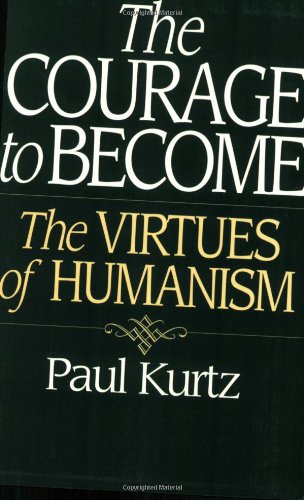 | Paperback: 152
Pages
(1997-06-30)
list price: US$20.95 -- used & new: US$14.95 (price subject to change: see help) Asin: 0275960161 Average Customer Review: 
Canada | United Kingdom | Germany | France | Japan |
|
Editorial Review Product Description Customer Reviews (2)
| |
| 47. Theism and Humanism : The Book that Influenced C. S. Lewis by Arthur James Balfour, C. S. Lewis, Arthur J. Balfour | |
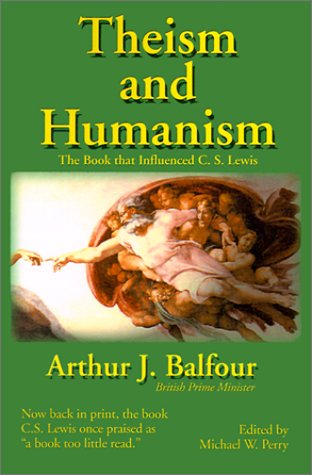 | Paperback: 203
Pages
(2000-12)
list price: US$14.95 -- used & new: US$4.00 (price subject to change: see help) Asin: 1587420058 Average Customer Review: 
Canada | United Kingdom | Germany | France | Japan |
|
Editorial Review Product Description Many others shared Lewis' enthusiasm. When Balfour gave the originallectures on which the book was based, some 2,000 people crowded intoBute Hall at the University of Glasgow on a weekday winter afternoonsto cheer and laugh. Even more telling, they kept coming back, weekafter week for all ten speeches. Even the staid Times of Londoncommented on the "wildly enthusiastic" audiences and noted thediversity of those attending, from citizens and students toprofessors. Unfortunately, until now the book hasn't been that easy tofind. Copies have only been available on the used market and were thusrare and relatively expensive. This newly typeset edition and enhancedmakes the book inexpensive and widely available. Balfour was a talented writer and perhaps the most intelligent BritishPrime Minister of the twentieth century. During World War One hereplaced Winston Churchill as First Lord of the Admiralty and went onto become Foreign Secretary. In the latter office he was responsiblefor the 1917 Balfour Declaration committing Great Britain to theestablishment of a Jewish homeland in Palestine. It is no exaggerationto say that Israel owes its existence to Balfour. Theism and Humanism is based on a 1914 Gifford Lecture that Balfourgave at the University of Glasgow. All the original text is includedalong with over 50 pages of additional material. There are 11 sketchesof Balfour adapted from political cartoons in Punch magazine. Thereare four appendices taken from his other writings, including themarvelous "A Catechism for Naturalism" (which sent the arch-agnosticThomas Huxley, better known as "Darwin's Bulldog," into a fit ofrage). There's also a glossary of people and terms mentioned in thebook and a detailed index. Finally, this new edition includes briefquotes from Balfour's other writings to highlight what he issaying. The second edition improves on the first by adding to eachchapter in the original, the extensive coverage that The Times ofLondon gave to Balfour's original speech. It also includes threeletters by C. S. Lewis on themes closely related to Balfour's book. Balfour's topic is naturalism, the belief that all that exists arenatural processes. He challenges those who believe in it to come upwith a rationale for what they hold dearest--human reason, humanrights, and the importance of art--based solely on naturalism. Hebelieves that cannot be done and summarizes his book in these words: "My desire has been to show that all we think best in human culture,whether associated with beauty, goodness, or knowledge, requires Godfor its support, that Humanism without Theism loses more than half itsvalue." If you like philosophy and provocative ideas, this book is perfect foryou. The Cambridge-educated Balfour was very knowledgeable aboutscience. (He was the President of the British Association for theAdvancement of Science in 1904 and his brother was a talentedscientist.) That makes this book a useful complement to theOxford-educated Lewis whose specialty was literature. Customer Reviews (1)
| |
| 48. The Case for Christian Humanism by Mr. R. William Franklin | |
 | Paperback: 288
Pages
(1991-01-01)
list price: US$28.00 -- used & new: US$12.89 (price subject to change: see help) Asin: 0802806066 Canada | United Kingdom | Germany | France | Japan |
|
Editorial Review Product Description | |
| 49. Mircea Eliade's Vision for a New Humanism by David Cave | |
 | Hardcover: 232
Pages
(1993-01-28)
list price: US$125.00 -- used & new: US$124.68 (price subject to change: see help) Asin: 0195074343 Canada | United Kingdom | Germany | France | Japan |
|
Editorial Review Product Description | |
| 50. Humanism and the Renaissance (Problems in European Civilization) by Zachary S. Schiffman | |
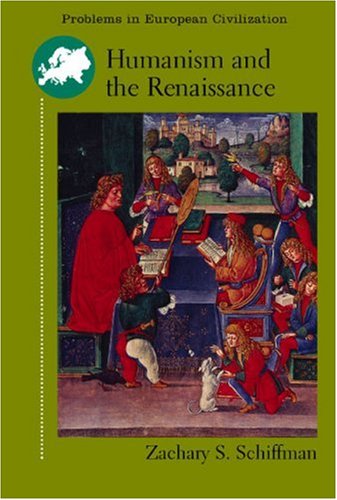 | Paperback: 272
Pages
(2001-09-17)
list price: US$48.95 -- used & new: US$20.00 (price subject to change: see help) Asin: 0618116257 Average Customer Review: 
Canada | United Kingdom | Germany | France | Japan |
|
Editorial Review Product Description A volume in the Problems in European Civilization series, this book features a collection of secondary source essays focusing on aspects of the Renaissance and humanist beliefs. The proven PEC format features key scholarship, chapter and essay introductions, and extensive, up-to-date suggestions for further reading. All selections in the text are edited for both content and length, making this single volume a convenient alternative to course packets or multiple monographs. Customer Reviews (2)
Books from the PROBLEMS IN EUROPEAN CIVILIZATION SERIES are designed for upper-level undergraduate and graduate level European history courses. That being said, this book is not an introductory text. The authors of the articles go directly into their subjects, without providing any significant background information. Therefore, you need to have an historical base level of knowledge to work from. Nonetheless, it is an excellent tool for students, scholars and general readers of modern European history. The text is best used in class discussions and debate. An excellent representation of European historical scholarship. ... Read more | |
| 51. Imperfect Garden: The Legacy of Humanism by Tzvetan Todorov | |
 | Hardcover: 272
Pages
(2002-05-01)
list price: US$55.00 -- used & new: US$31.50 (price subject to change: see help) Asin: 0691010471 Average Customer Review:
Canada | United Kingdom | Germany | France | Japan |
|
Editorial Review Product Description Todorov reads afresh the works of major humanists--primarily Montaigne, Rousseau, and Constant, but also Descartes, Montesquieu, and Toqueville. Each chapter considers humanism's approach to one major theme of human existence: liberty, social life, love, self, morality, and expression. Discussing humanism in dialogue with other systems, Todorov finds a response to the predicament of modernity that is far more instructive than any offered by conservatism, scientific determinism, existential individualism, or humanism's other contemporary competitors. Humanism suggests that we are members of an intelligent and sociable species who can act according to our will while connecting the well-being of other members with our own. It is through this understanding of free will, Todorov argues, that we can use humanism to rescue universality and reconcile human liberty with solidarity and personal integrity. Placing the history of ideas at the service of a quest for moral and political wisdom, Todorov's compelling and no doubt controversial rethinking of humanist ideas testifies to the enduring capacity of those ideas to meditate on--and, if we are fortunate, cultivate--the imperfect garden in which we live. For Todorov, as with the best of the humanists, life in the world is a garden that needs our tending. And though by its nature it is imperfect, at times bearing rotten and sour fruit, it can always be improved with our care, diligence, and love. Ultimately, Todorov proposes that humanism is a wager, à la Pascal: we will be no worse off for striving to mend the human condition, but we risk everything if we don't. --Eric de Place Customer Reviews (1)
| |
| 52. Humanism (The New Critical Idiom) by Tony Davies | |
 | Hardcover: 176
Pages
(2008-04-17)
list price: US$95.00 -- used & new: US$88.80 (price subject to change: see help) Asin: 0415420644 Canada | United Kingdom | Germany | France | Japan |
|
Editorial Review Product Description Definitions of humanism have evolved throughout the centuries as the term has been adopted for a variety of purposes – literary, cultural and political – and reactions against humanism have contributed to movements such as postmodernism and anti-humanism. Tony Davies offers a clear introduction to the many uses of this influential yet complex concept and this second edition extends his discussion to include: With clear explanations and poignant discussions, this volume is essential reading for anyone approaching the study of humanism, post-humanism or critical theory. | |
| 53. Humanist Manifesto 2000: A Call for New Planetary Humanism by Paul Kurtz | |
 | Paperback: 76
Pages
(2000-03)
list price: US$13.98 -- used & new: US$2.21 (price subject to change: see help) Asin: 157392783X Average Customer Review: 
Canada | United Kingdom | Germany | France | Japan |
|
Editorial Review Product Description Customer Reviews (11)
| |
| 54. "Divine Madness": Plato's Case Against Secular Humanism by Josef Pieper | |
 | Paperback: 59
Pages
(1995-07-01)
list price: US$8.95 -- used & new: US$4.83 (price subject to change: see help) Asin: 0898705576 Average Customer Review:
Canada | United Kingdom | Germany | France | Japan |
|
Editorial Review Product Description Customer Reviews (2)
| |
| 55. Readings in Christian Humanism by JOSEPH M. SHAW | |
 | Paperback: 688
Pages
(2009-01-31)
list price: US$39.00 -- used & new: US$32.52 (price subject to change: see help) Asin: 0800664647 Canada | United Kingdom | Germany | France | Japan |
|
Editorial Review Product Description | |
| 56. Intrapsychic Humanism: An Introduction to a Comprehensive Psychology and Philosophy of Mind by Martha Heineman Pieper | |
| Hardcover: 298
Pages
(1990-04)
list price: US$27.50 -- used & new: US$79.50 (price subject to change: see help) Asin: 096249190X Average Customer Review:
Canada | United Kingdom | Germany | France | Japan | |
|
Editorial Review Product Description Customer Reviews (3)
Personally, my quest has taken me to the extents of modern religion, philosophy and psychology.To date, IH still provides a deeper insight and aswers questions that none have been able to ask heretofore.It is truly an elevation of Mind.
| |
| 57. Critical Humanisms: Humanist/Anti-Humanist Dialogues | |
 | Paperback: 240
Pages
(2004-03)
list price: US$42.00 -- used & new: US$29.00 (price subject to change: see help) Asin: 0748615059 Canada | United Kingdom | Germany | France | Japan |
|
Editorial Review Product Description | |
| 58. What Is Secular Humanism?: Why Humanism Became Secular and How It Is Changing Our World by James Hitchcock | |
| Paperback: 158
Pages
(1982-09)
list price: US$7.99 -- used & new: US$0.01 (price subject to change: see help) Asin: 0892831634 Average Customer Review: 
Canada | United Kingdom | Germany | France | Japan | |
Customer Reviews (4)
| |
| 59. The Prism of Grammar: How Child Language Illuminates Humanism (Bradford Books) by Tom Roeper | |
 | Paperback: 376
Pages
(2009-04-30)
list price: US$19.95 -- used & new: US$13.13 (price subject to change: see help) Asin: 0262512580 Average Customer Review:
Canada | United Kingdom | Germany | France | Japan |
|
Editorial Review Product Description Customer Reviews (4)
| |
| 60. Humanism for Parents - Parenting without Religion by Sean Curley | |
 | Paperback: 96
Pages
(2007-05-07)
list price: US$12.95 -- used & new: US$7.79 (price subject to change: see help) Asin: 1430314257 Average Customer Review:
Canada | United Kingdom | Germany | France | Japan |
|
Editorial Review Product Description Customer Reviews (13)
| |
| Back | 41-60 of 99 | Next 20 |
 A sober guide
 It's not a book...it's a pamphlet!