
|
Help |
| Home - Religion - Mormon (Books) | |
e99 Online Shopping Mall
|
|
Help |
| Home - Religion - Mormon (Books) | |
| Back | 21-40 of 96 | Next 20 |
click price to see details click image to enlarge click link to go to the store
| 21. The Book of Mormon by Church of Jesus Christ of Latter-day Saints, Smith | |
 | Kindle Edition:
Pages
(2010-07-18)
list price: US$4.78 Asin: B003WEABW8 Average Customer Review: 
Canada | United Kingdom | Germany | France | Japan |
|
Editorial Review Product Description Customer Reviews (1)
| |
| 22. Who Really Wrote the Book of Mormon?: The Spalding Enigma by Wayne L. Cowdrey, Howard A. Davis, Arthur Vanick | |
 | Paperback: 558
Pages
(2005-07-30)
list price: US$17.99 -- used & new: US$12.23 (price subject to change: see help) Asin: 0758605277 Average Customer Review: 
Canada | United Kingdom | Germany | France | Japan |
Customer Reviews (31)
| |
| 23. By the Hand of Mormon: The American Scripture that Launched a New World Religion by Terryl L. Givens | |
 | Paperback: 336
Pages
(2003-08-21)
list price: US$19.95 -- used & new: US$11.08 (price subject to change: see help) Asin: 0195168887 Average Customer Review: 
Canada | United Kingdom | Germany | France | Japan |
|
Editorial Review Product Description Customer Reviews (41)
| |
| 24. An Insider's View of Mormon Origins by Grant H. Palmer | |
 | Paperback: 296
Pages
(2002-10-15)
list price: US$24.95 -- used & new: US$14.00 (price subject to change: see help) Asin: 1560851570 Average Customer Review:
Canada | United Kingdom | Germany | France | Japan |
|
Editorial Review Product Description He finds that what we take for granted as literal history has been tailored over the years for missionary purposes--slightly modified, added to, one aspect emphasized over another--to the point that the original narratives have been nearly lost. What was experienced as a spiritual event, something from an entirely different dimension, has been often refashioned as if it had been a physical, objective occurrence. This is not how the first Saints interpreted these events. Historians have reevaluated basic concepts surrounding these foundational stories and restored elements, including a nineteenth-century world view, that have been misunderstood, if not forgotten. Customer Reviews (84)
| |
| 25. The Essential Mormon Cookbook: Green Jell-O, Funeral Potatoes, and Other Secret Combinations by Julie Badger Jensen | |
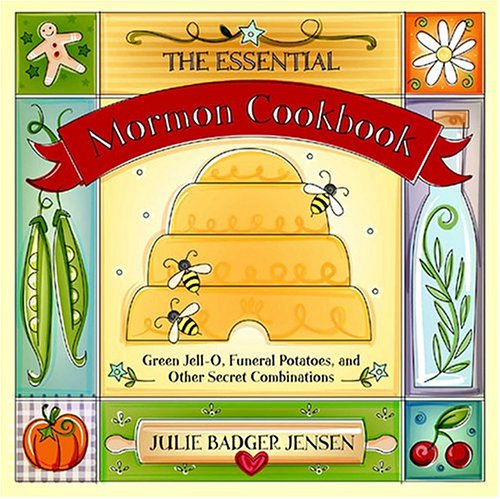 | Spiral-bound:
Pages
(2004-04)
list price: US$21.99 -- used & new: US$16.00 (price subject to change: see help) Asin: 1590382404 Average Customer Review:
Canada | United Kingdom | Germany | France | Japan |
|
Editorial Review Product Description Customer Reviews (16)
| |
| 26. Reasoning from the Scriptures with the Mormons by Ron Rhodes, Marian Bodine | |
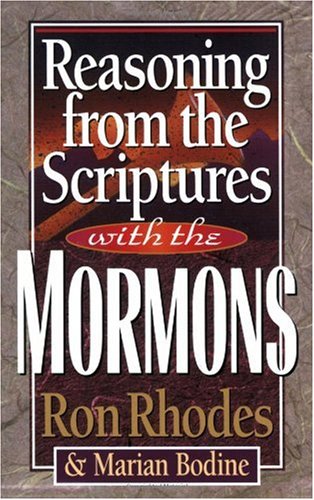 | Paperback: 432
Pages
(1995-07-01)
list price: US$14.99 -- used & new: US$8.49 (price subject to change: see help) Asin: 1565073282 Average Customer Review: 
Canada | United Kingdom | Germany | France | Japan |
|
Editorial Review Product Description Customer Reviews (43)
| |
| 27. Catholic roots, Mormon Harvest by Eric Shuster | |
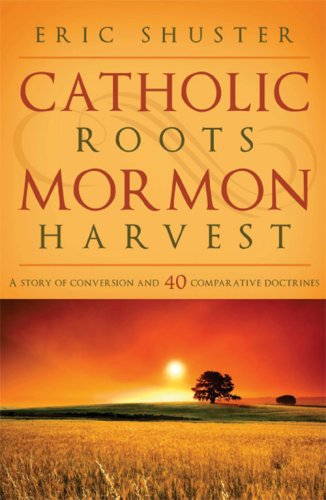 | Paperback: 288
Pages
(2009-04-15)
list price: US$17.99 -- used & new: US$10.70 (price subject to change: see help) Asin: 1599552574 Average Customer Review:
Canada | United Kingdom | Germany | France | Japan |
|
Editorial Review Product Description Customer Reviews (3)
| |
| 28. Papa Married a Mormon by John D Fitzgerald | |
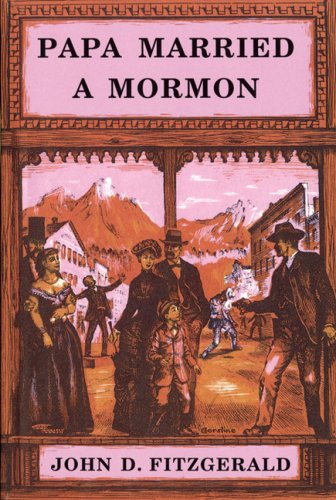 | Paperback: 298
Pages
(2000-07-31)
list price: US$12.95 -- used & new: US$11.01 (price subject to change: see help) Asin: 0914740385 Average Customer Review:
Canada | United Kingdom | Germany | France | Japan |
Customer Reviews (15)
| |
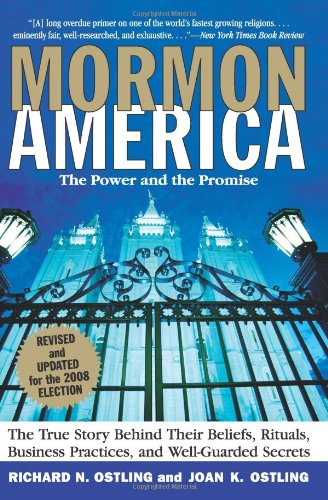
| 29. Mormon America - Revised and Updated Edition: The Power and the Promise by Richard Ostling, Joan K. Ostling | |
 | Paperback: 496
Pages
(2007-10-01)
list price: US$17.99 -- used & new: US$6.99 (price subject to change: see help) Asin: 0061432954 Average Customer Review:
Canada | United Kingdom | Germany | France | Japan |
|
Editorial Review Product Description Who Are the Mormons? The Church of Jesus Christ of Latter-day Saints:
For statistical reasons alone, theMormon Church demands a reader's attention: in just 170 years, theChurch has grown from six members to more than 10 million; if currentrates of growth continue, membership could hit 265 million by 2080,which would make it the most important world religion to emerge sincethe rise of Islam. Mormon America clarifies the reasons for thereligion's rapid growth: "It was from the beginning optimistic andupbeat, a reaction against the establishment New EnglandCalvinism.... It was a religious version of the American dream:Everyman presented with unlimited potential." The book alsoinvestigates the Mormons' immense wealth (relative to size, this is"America's richest church, with an estimated $30 billion in assets andsomething like $6 billion in annual income, mostly from members'tithes.") It anatomizes the minutiae of Church governance (Mormonismis ruled by a self-perpetuating, all-male hierarchy, headed by a"President, Prophet, Seer, and Revelator"), details the many rulesthat govern the Mormon lifestyle (famously, they avoid caffeine andalcohol; the Church's mandates extend even to the proper technique for"dispos[ing] of worn-out holy underwear"), and summarizes the Mormonscriptures. Mormon America is a compulsively readable book, notonly for its insightful analysis and wealth of factual information,but also, and most importantly, because it respects its subjectrigorously. "This is a real faith," the Ostlings write, "and must beunderstood in those terms, without caricature." --Michael JosephGross Customer Reviews (77) | |
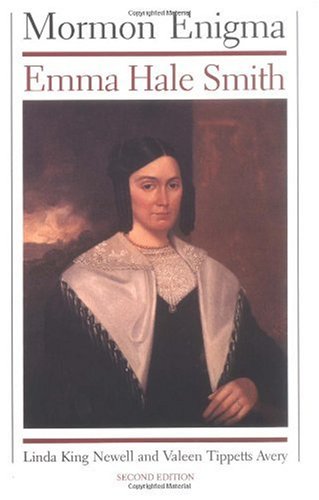
| 30. Mormon Enigma: Emma Hale Smith by Linda King Newell, Valeen Tippetts Avery | |
 | Paperback: 432
Pages
(1994-06-01)
list price: US$21.95 -- used & new: US$17.84 (price subject to change: see help) Asin: 0252062914 Average Customer Review:
Canada | United Kingdom | Germany | France | Japan |
Customer Reviews (26)
| |
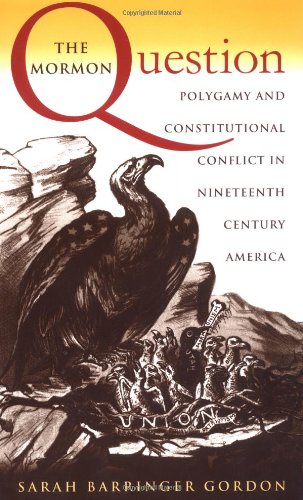
| 31. The Mormon Question: Polygamy and Constitutional Conflict in Nineteenth-Century America by Sarah Barringer Gordon | |
 | Paperback: 352
Pages
(2002-01-21)
list price: US$26.00 -- used & new: US$17.29 (price subject to change: see help) Asin: 0807849871 Average Customer Review:
Canada | United Kingdom | Germany | France | Japan |
|
Editorial Review Product Description As Sarah Barringer Gordon shows, the answers to these questions finally yielded an apparent victory for antipolygamists in the late nineteenth century, but only after decades of argument, litigation, and open conflict. Victory came at a price; as attention and national resources poured into Utah in the late 1870s and 1880s, antipolygamists turned more and more to coercion and punishment in the name of freedom. They also left a legacy in constitutional law and political theory that still governs our treatment of religious life: Americans are free to believe, but they may well not be free to act on their beliefs. Customer Reviews (1)
| |
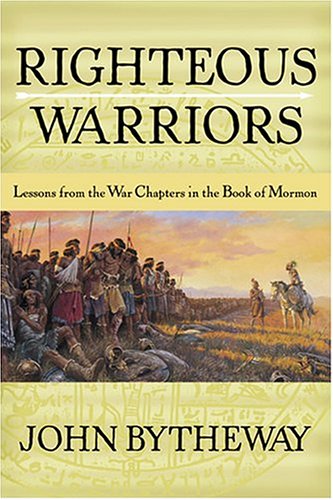
| 32. Righteous Warriors: Lessons from the War Chapters in the Book of Mormon by John Bytheway | |
 | Paperback: 182
Pages
(2004-05)
list price: US$16.95 -- used & new: US$11.25 (price subject to change: see help) Asin: 1590382714 Average Customer Review:
Canada | United Kingdom | Germany | France | Japan |
|
Editorial Review Product Description What we often call the "war chapters" in the Book of Mormon give us important insights into how to defeat Satan in our day.The pattern is clear: When the children of Lehi are successful, it’s because they make covenants first and swords later.Here are great lessons for how to live well now and eternally! Customer Reviews (4)
| |
| 33. The Book of Mormon Reference Companion | |
 | Hardcover: 850
Pages
(2003-11)
list price: US$49.95 -- used & new: US$34.45 (price subject to change: see help) Asin: 1573452319 Average Customer Review:
Canada | United Kingdom | Germany | France | Japan |
|
Editorial Review Product Description Customer Reviews (2)
| |
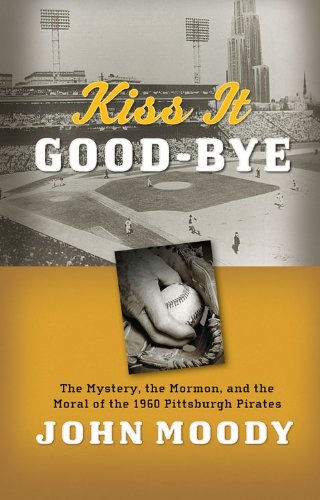
| 34. Kiss It Good-Bye: The Mystery, The Mormon, and the Moral of the 1960 Pittsburgh Pirates by John Moody | |
 | Hardcover: 350
Pages
(2010-03-03)
list price: US$24.99 -- used & new: US$15.20 (price subject to change: see help) Asin: 1606411497 Average Customer Review:
Canada | United Kingdom | Germany | France | Japan |
|
Editorial Review Product Description Though John Moody was only six years old during that magical baseball season, he was a devoted fan of the Pittsburgh team. The star pitcher for the Pirates and John's first hero was Vernon Law-- an unsophisticated Idaho country boy, widely known as The Deacon, a friendly nickname derived from his strict Mormon upbringing. Law was a relatively young man at the time and should have enjoyed several more seasons of fame and success, yet his career went into decline following that phenomenal Series. In this insightful book, John Moody explores a compelling mystery that has persisted now for nearly fifty years, revealing at last why Vernon Law was unable to continue his dominance of Major League batters. But the book is more than just another expose'. Recalling a distant time in American sports, Kiss It Good-bye contains a universal theme: a son's affection for his father and the bond that was forged between them because of their love of baseball. It is a book that will be welcomed by fathers, sons, and baseball fans of every age. Customer Reviews (21)
| |
| 35. Book of Mormon | |
| Audio CD:
Pages
(2003-08)
list price: US$29.95 -- used & new: US$29.95 (price subject to change: see help) Asin: 1591563461 Average Customer Review:
Canada | United Kingdom | Germany | France | Japan | |
Customer Reviews (1)
| |
| 36. Mormon Doctrine, 2nd edition by Bruce R. McConkie | |
| Paperback: 856
Pages
(1979)
Asin: B000VXQH80 Canada | United Kingdom | Germany | France | Japan | |
| 37. One Nation Under Gods: A History of the Mormon Church by Richard Abanes | |
 | Paperback: 656
Pages
(2003-07)
list price: US$24.95 -- used & new: US$14.98 (price subject to change: see help) Asin: 1568582838 Average Customer Review:
Canada | United Kingdom | Germany | France | Japan |
|
Editorial Review Product Description Customer Reviews (114)
| |
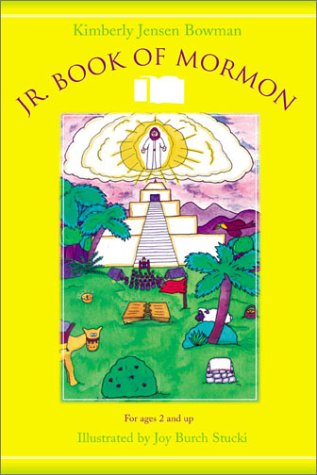
| 38. Jr. Book of Mormon: A Pictorial Study-Guide for Children (For Ages 2 and Up) by Kimberly Jensen Bowman | |
 | Hardcover: 171
Pages
(2001-08-01)
list price: US$14.95 -- used & new: US$9.52 (price subject to change: see help) Asin: 1555175074 Average Customer Review:
Canada | United Kingdom | Germany | France | Japan |
|
Editorial Review Product Description Each Book of Mormon prophet is portrayed in a positive, uplifting way that children will desire to emulate in their own lives. Customer Reviews (2)
| |
| 39. The Mormon Experience: A HISTORY OF THE LATTER-DAY SAINTS by Leonard J. Arrington, Davis Bitton | |
 | Paperback: 456
Pages
(1992-03-01)
list price: US$27.95 -- used & new: US$17.74 (price subject to change: see help) Asin: 0252062361 Average Customer Review:
Canada | United Kingdom | Germany | France | Japan |
|
Editorial Review Product Description Customer Reviews (14)
| |
| 40. The Facts on the Mormon Church (The Facts On Series) by John Ankerberg, John Weldon, Dillon Burroughs | |
 | Paperback: 96
Pages
(2009-03-01)
list price: US$5.99 -- used & new: US$2.36 (price subject to change: see help) Asin: 0736922164 Average Customer Review:
Canada | United Kingdom | Germany | France | Japan |
|
Editorial Review Product Description Well–known authors and noted researchers John Ankerberg, John Weldon, and Dillon Burroughs have updated and revised The Facts on the Mormon Church, a significant title from the popular Facts On Series (more than 1.9 million copies of books from this series sold). The Facts on the Mormon Church presents the truth about the Church of Jesus Christ of Latter–day Saints—Mormon history, doctrines, practices, and theology. Readers find well–researched and easy–to–understand answers to many of the common and not–so–common questions surrounding this high–profile church, all in a handy, quick–reference format. Topics include: Customer Reviews (15)
I think it was Milton who said that Truth is a gem that runs from you, so hurry up and catch it. I oppose the Mormonites, bnut I hate them with the pure love of God.I belive that we can love them out of their doubt into love.
| |
| Back | 21-40 of 96 | Next 20 |
 Recommended -- with Qualification
 A lot of fat in it...
 This book Sucked, but made good for burning.