e99 Online Shopping Mall

Geometry.Net - the online learning center Help  
Home  - Religion - Muslims (Books)

  Back | 21-40 of 100 | Next 20
A  B  C  D  E  F  G  H  I  J  K  L  M  N  O  P  Q  R  S  T  U  V  W  X  Y  Z  

click price to see details     click image to enlarge     click link to go to the store

$45.95
21. Gay Travels in the Muslim World
$7.45
22. Reasoning from the Scriptures
$16.08
23. Lost History: The Enduring Legacy
$9.42
24. The Muslim Discovery of Europe
$6.77
25. Muslims and the State in Britain,
$27.53
26. Christian Slaves, Muslim Masters:
$9.89
27. Islam Our Choice: Portraits of
$11.21
28. Islam and the Muslim Community
$4.51
29. Understanding Islam and the Muslims:
$15.00
30. New Media in the Muslim World:
$8.00
31. Being Muslim (Groundwork Guides)
$15.86
32. The Adventures of Ibn Battuta:
$17.85
33. The Black Muslims in America
$17.07
34. Jews and Muslims in the Arab World:
$16.39
35. Muslim Women in America: The Challenge
$5.48
36. Sharing Your Faith With A Muslim
$6.95
37. The Faith Club: A Muslim, A Christian,
$7.00
38. Unveiling Islam: An Insider's
 
$5.50
39. Why I Am A Muslim: An American
$15.61
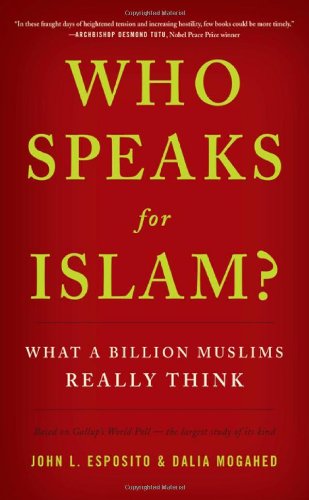
40. Who Speaks For Islam?: What a

21. Gay Travels in the Muslim World (Out in the World)
Hardcover: 200 Pages (2007-05-14)
list price: US$49.95 -- used & new: US$45.95
(price subject to change: see help)
Asin: 1560233397
Average Customer Review: 4.5 out of 5 stars
Canada | United Kingdom | Germany | France | Japan
Editorial Review

Book Description
Travel beyond the fear and paranoia of 9-11 to experienceMuslim culture

Gay Travels in the Muslim World journeys where other gay travel booksfearto tread--Muslim countries. This thought-provoking book tells both Muslim and non-Muslim gay men's stories of traveling in the Middle East duringthesedifficult political times. The true, very personal tales reveal how gaymencelebrate their lives and meetings with local men, including a gaysoldier'sstory of his tour of duty in Iraq. Insightful and at times sexy, thisintelligentbook goes beyond 9-11 and the present political and cultural divides toillustratethe real experiences of gay men in trouble zones--in an effort to seekpeace for all.

After the collapse of the Twin Towers, fears about terrorism and Muslimculturewent hand in hand. Gay Travels in the Muslim World enters the current warzonesto bring real and very personal stories of gay men who live and travel inthesedangerous areas. This book challenges readers' preconceptions andassumptionsabout both homosexuality and being Muslim, while showing the wide rangeof experiences--goodand bad--about the regions as well as the differences in attitudes andbeliefs.

Excerpts from Gay Travels in the Muslim World:

From "I Want Your Eyes" by David Stevens
Men by themselves are rare. I pass a handsome Omani man sitting on theCornichewall with a cigarette between his long brown fingers. He wears hiscolourfulcuma cap at a jaunty angle and his mustard-coloured dishdasha has risenup toreveal tantalizingly hairy calves. I note the carefully made holes in hisears--notin his ear lobes but deep inside the cartilages--a pre-Islamic customstillpracticed on some male babies to ward off evil spirits. I decide it suitshim.

From "It All Began with Mamadou" by Jay Davidson
Drawing definitive conclusions about a society after living here for alittlemore than a year is not a wise, safe, or responsible action on my part.If asociety's culture is a mosaic of thousands of little tiles, then I liketo thinkthat what I have been able to piece together has been a tableau in whichcertainaspects have become discernable, some are a little less clear, and othersremainin a way that I will never see as whole and comprehensible.

From "A Market and a Mosque" by Martin Foreman
Sylhet, Bangladesh: It's eight o'clock in the evening and Tarique andParitoshare taking me out to look at the cruising spots. Until I flew in herethis afternoon,all I knew of the provincial city and the surrounding area was that itwas wheremost of the Bangladeshis in the UK come from--and since most of theBangladeshisin the UK live in my home borough of Tower Hamlets, I feel a kind ofaffinitywith the place. Whether or not Sylhet feels an affinity with me is adifferentmatter.

From "Work In Progress: Notes From A Continuing Journey of Manufacturing Dissent" by Parvez Sharma
In the construction of the image and life of the "queer" Muslimis also the awareness of the not so well known fact that a sexualrevolutionof immense proportions came to the earliest Muslims, some 1,300 yearsbeforethe West had even thought about it. This promise of equal gender rightsand,unlike in the Bible, the stress on sex as not just reproduction but alsoenjoymentwithin the confines of marriage has all but been lost in the rhetoricspewingfrom loudspeakers perched on Masjid's--or mosques--in Riyadh, Marrakechand Islamabad. The same Islam that has for centuries not only toleratedbutalso openly celebrated homosexuality is, today, used to justify astate-sanctionedpogrom against gay men in Egypt--America's "enlightened" friendin the Middle East.

Gay Travels in the Muslim World is a refreshing, well written look atgay rightsand the post 9-11 paranoia about Islamic culture, perfect for anyoneinterestedin the Middle East travel, politics, gay men who travel, and anyspecialistin Middle Eastern travel. ... Read more

Customer Reviews (3)

5-0 out of 5 stars A colorful, thoughtful collection
As a contributor to many different publications, including Horror 101: The A-List of Horror Films and Monster Movies, I am happy to add Gay Travels in the Modern World to my list of credits.The diversity of styles, backgrounds, and ideas of the contributors to this book is a perfect reflection of the diversity in the experiences in both the gay and Muslim worlds.It's impossible not to read this collection without reflecting on how these worlds sometimes collide, sometimes overlap.Don Bapst, author of danger@liaisons.com

5-0 out of 5 stars Broader prospective than the Middle East
The book description mentions "traveling in the Middle East." Readers should understand that the Muslim world far exceeds this limited geographic region and that many of the stories in this book were written by people whose travels were in other areas.

I write this as the author of one of the stories in the book. My experiences were in Africa.

4-0 out of 5 stars Thoughtful Reading of The Muslim World
"Gay Travels in the Muslim World" is quick interesting reading. Luongo's perface to the book is most note worthy. He presents the issue of homosexuality in a framework of identity versus practices which is thoughtful. I would recommend this book for students of sociology and African American studies who are focused on learning more about ascribed and achieved life roles within society.

John Barfield
Evanston, IL ... Read more


22. Reasoning from the Scriptures with Muslims
by Ron Rhodes
Paperback: 352 Pages (2002-07-01)
list price: US$13.99 -- used & new: US$7.45
(price subject to change: see help)
Asin: 0736910107
Average Customer Review: 4.5 out of 5 stars
Canada | United Kingdom | Germany | France | Japan
Editorial Review

Book Description

Anyone interested in sharingthe gospel with Muslim friends or understanding the doctrines and historicalbasis of Islam will appreciate this addition to the popular Reasoning from the Scriptures series.Using an easytofollow questionandanswer format, Reasoning from theScriptures with Muslims covers issues, including...

  • Muhammad and Jesus Christwhat are their roles?
  • the Quran and the Biblewhat kind of inspiration and authority do they have?
  • Islam todaywhat different groups exist, and how can Muslims be reached with the good news?

Each chapter examines aMuslim belief and compares it with biblical Christianity. Readers will findthis an invaluable tool for discussing and sharing the words and life of JesusChrist with Muslim friends and acquaintances.

... Read more

Customer Reviews (6)

4-0 out of 5 stars I thought this was a great source
I purchased this book as an added resource.Overall, I thought this was a great book, being a former Sunni Muslim there was a lot that I was able to relate to.In addition, many aspects of the religion that I was ignorant to, that were made clear such as History, and the bases of the fundamental beliefs.I enjoyed this book so much; I was able to read it in its entirety in a matter of days.The only aspects I did not really like, was the fact that at times, I felt that the Authors personal opinion, rather than a biblical perspective, was overly exerted.So anyone reading thins book needs to be well versed in the word of GOD, so that they do not get side tracked in feed into the opinions of man.Rather focus on the things of GOD; this is from where clarity comes.

3-0 out of 5 stars Not too bad, though room for much improvement
I have read a number of books by Ron Rhodes, and only know too well the double standards and scriptural eisegesis he engages in, alongside the type of logic that would result in an F in any Logic 101 examination. I say this after having read his books on The Church of Jesus Christ of Latter-day Saints and macro-evolution.

This book by Rhodes, instead of being deceptive and very weak, scrapes the barrel as being decent, though there is a heck of a lot of room for improvement, something I doubt will occur in his forthcoming "The 10 most important things you can say to a Muslim."

The good points of this book is that Rhodes answers the criticisms forwarded by Muslims against the divine Sonship of Jesus Christ, the accuracy of the passion accounts, and other elements Muslim apologists misinterpret/misrepresent in their literature against Christianity. Furthermore, he does blow holes into a number of claims Muslims make for the authenticity of the Koran, such as Muhammad's alleged illiteracy, and how the Koran misrepresents Orthodox Christianity, such as the Trinity per "Orthodox" Christianity (the differentiation between "person" and "being" is a Nicene construct), with the Koran confusing the Trinity with Modalism, no doubt influenced by the fact that Muhammad's first wife was an Ebionite Christian.

The more weaker arguments forwarded by Rhodes in this text is his incessant use of so-called Messianic prophecies being fulfilled in the New Testament, "proving" its divine inspiration. For instance, Micah 5:2 is *not* about Jesus. "Bethelehem-Ephrate" is not the suburb of Jerusalem but a tribe or a person (see 1 Chronicles 4:4). Moreover, Jesus did not free the people from the Assyrians, so how could he have fulfilled this "prophecy"? What Rhodes ignores is that the New Testament authors engaged in a Midrashic interpretation of Old Testament pericope, often resulting in texts being wrenched out of context to suit the New Testament authors' pre-conceived beliefs.

Much more could be said about this text, but this should be enough to show that there as many problems as there are positive points about this text. One using this text should approach it with some caution.

I welcome sincere feedback at Robert.S.Boylan@nuim.ie

5-0 out of 5 stars Another piece of work from Rhodes
I really enjoyed this book.I have briefly studied this faith and since I had read the Reasoning with Mormons book I figured this one would be just as good.It was.It was extremely informative.One thing I love about Ron Rhodes "Reasoning" books is that they are not negative in any way.They are explanatory.This is what they believe and this is what the bible teaches.It is a non-bashing book.Anyone who wants to learn more about this faith or any other should pick up his Reasoning from the Scriptures books.

5-0 out of 5 stars Very enlightening book!
This book helped me in understanding Islam from both a historical and theological viewpoint.The author not only gives a thorough background of the subject but also answers questions that Evangelical Christians would be confronted with in their personal witness to Muslims.Although the book is written for a lay person, the author makes very sound, easy to understand intellectual arguments.Not only did I enjoy reading this book, but I plan to use it as a future resource.

5-0 out of 5 stars Good Answers
In this book, Ron Rhodes does an excellant job of outling the Muslim world view and the Muslim perspective on Christianity.He also poses questions that a Muslim apololgist might pose to a Christian and then proceeds to give historical, scriptural, and/or logical answers in support of Christianity.

The questions leveled at Christianity by Muslim apologists are often the same questions posed by other Non-Christian critics and since this book answers these questions with sound research and logic, the usefulness of this book goes beyond the dialogue between Christians and Muslims with respect to Christian theology, historical validity, and interpretive integrity. ... Read more


23. Lost History: The Enduring Legacy of Muslim Scientists, Thinkers, and Artists
by Michael H. Morgan
Hardcover: 320 Pages (2007-06-19)
list price: US$26.00 -- used & new: US$16.08
(price subject to change: see help)
Asin: 1426200927
Average Customer Review: 4.0 out of 5 stars
Canada | United Kingdom | Germany | France | Japan
Editorial Review

Book Description
In an era when the relationship between Islam and the West seems mainly defined by mistrust and misunderstanding, we often forget that for centuries Muslim civilization was the envy of the world. Essential reading for anyone seeking to understand the major role played by the early Muslim world in influencing modern society, Lost History fills an important void.Written by an award-winning author and former diplomat with extensive experience in the Muslim world, it provides new insight not only into Islam's historic achievements but also the ancient resentments that fuel today's bitter conflicts.

Michael Hamilton Morgan reveals how early Muslim advancements in science and culture lay the cornerstones of the European Renaissance, the Enlightenment, and modern Western society. As he chronicles the Golden Ages of Islam, beginning in 570 a.d. with the birth of Muhammad, and resonating today, he introduces scholars like Ibn Al-Haytham, Ibn Sina, Al-Tusi, Al-Khwarizmi, and Omar Khayyam, towering figures who revolutionized the mathematics, astronomy, and medicine of their time and paved the way for Newton, Copernicus, and many others. And he reminds us that inspired leaders from Muhammad to Suleiman the Magnificent and beyond championed religious tolerance, encouraged intellectual inquiry, and sponsored artistic, architectural, and literary works that still dazzle us with their brilliance. Lost History finally affords pioneering leaders with the proper credit and respect they so richly deserve. ... Read more

Customer Reviews (10)

1-0 out of 5 stars Lost History
This is amateur history, written by an amateur. Try reading several centuries of yellow pages, and you get the texture of this opus. Unorganized, with supposedly intriguing vignettes setting the pace. The best you can hope for is that the paper is biodegradable.
Roger L. Putnam, Jr.

5-0 out of 5 stars A Rare Find
Like finding a precious gem in the middle of a pile of debris, I consider this book as much of a rare find in this age.Truly honest and well-researched, it compiles a mind-bewildering amount of detail and information about everything from Islamic history to scientific advancements of the Middle Ages through political conditions of pre-modern Europe. It is written in such a fluid, eloquent style that Morgan has become one of my favorite authors, and I hope to find more of his work.

I have researched the history of development of the arts and letters and science informally and will start to pursue it academically, so I can say about this work that it is as concise and comprehensive a compilation as any I have come across.George Sarton, a Harvard professor of the 1940's, has written 5 volumes on this subject, and yet, Morgan's analysis is more insightful.For instance, Sarton notes the ethnicity behind each and every Muslim scholar or scientist of other faith in the Islamic world who accomplished a great feat. Was he an Arab or a Persian or a Christian or a Jew? Sarton asks of each, in trying to establish that in many instances Jewish or Christian or non-Arab scholars achieved success on their own, thereby downplaying the significance of the Islamic Renaissance as a whole. Morgan makes the point that multi-ethnicity was exactly the source of the Islamic civilization's success: the multiplicity of people of faiths who lived harmoniously and collaborated on projects of translation and learning was a mark of the Muslim golden age's tolerance and pluralism.

So while other historians emphasize the Muslim's material accomplishments in medieval times, they miss the Islamic contribution of tolerance and peace. Morgan does not.From p. 136 of Lost History: "By the ninth and tenth centuries, the Jewish intellectual communities and economies of Muslim Spain, in cities like Cordoba, Seville, and Toledo, are at their peak.Not only have Jews risen to hold the second highest political position in the realm, under Hasdai ibn Shaprut working for Caliph Abd Al-Rahman III; they are also producing their own rich literature, music, philosophy, and scientific thought, sometimes independently, sometimes in collaboration with those of other faiths."

Morgan's precision in unfolding the history of the Muslims from one era to another and from one glorious center of learning to another (Baghdad to Cordoba, or Damascus to Cairo) does not lose the reader or leave him/her bogged down in dates.His narration flows effortlessly and takes you on an awe-inspiring ride.Though one reviewer noted that Morgan over-reaches when he tries to write of scholars' past thoughts (such as Ibn Sina), I think he is using a fictive element (3rd person omniscient) for a good reason.He is trying to evoke a recognition in the Western mind of what another culture has experienced.It is just one technique he uses in making us understand another peoples by walking in their shoes.He is a literary genius, and I cannot hold him to task for employing every means to bridge these two (currently) very remote cultures.

I hope there are other gems in the making, such as this one. It is a pleasure to read a work that is so humble and honest that it can give credit where ever it is due - even to other cultures or civilizations -rather than downplaying their historic importance.

5-0 out of 5 stars A 'must' for any college-level collection

LOST HISTORY: THE ENDURING LEGACY OF MUSLIM SCIENTISTS, THINKERS, AND ARTISTS comes from a diplomat who provides a reasoned view of Muslim culture to counter the current negative focus on terrorism and war. It seeks to return positive Islam's contributions to world attention, examining its major cultural, artistic and scientific contributions over the centuries and showing how early Muslim breakthroughs in science, culture and business helped build the European Renaissance and other movements - right up to modern digital times. A 'must' for any college-level collection strong in Islamic history and culture or world history in general.

Diane C. Donovan
California Bookwatch

1-0 out of 5 stars Amateur History
This book promises so much, but ultimately it is a bland concoction, with a few grievous errors that a good proof-reader with some knowledge of the topic would have picked up. Admittedly, it is not an academic work - it is written for readers who know very little about the topic. Unfortunately the author appears to be one of those people as well.
A bit more rigor in his approach would have greatly helped. But if you know nothing about this era, it may be a good starting point.

5-0 out of 5 stars Great book
I think history always prevail ,With this mad understanding of what Islamic civilization contribute to the humanity ,what we see now in the American and some other west countries is fueled by the negative political media.May be some muslim people chose the wrong teaching which is totally have nothing to the muslim religion.
Unourthintly political agenda is dominating the whole prospective of what Islam stands for ... Read more


24. The Muslim Discovery of Europe
by Bernard Lewis
Paperback: 352 Pages (2001-10)
list price: US$15.95 -- used & new: US$9.42
(price subject to change: see help)
Asin: 0393321657
Average Customer Review: 3.5 out of 5 stars
Canada | United Kingdom | Germany | France | Japan
Editorial Review

Book Description
The eleventh-century Muslim world was a great civilization while Europe lay slumbering in the Dark Ages. Slowly, inevitably, Europe and Islam came together, through trade and war, crusade and diplomacy. The ebb and flow between these two worlds for seven hundred years, illuminated here by a brilliant historian, is one of the great sagas of world history. 30 b/w illustrations. ... Read more

Customer Reviews (18)

5-0 out of 5 stars Only the curious thrive
Intel co-founder Andy Grove popularized the saying "only the paranoid survive," which has become a mantra for high tech companies competing in the fast-paced global market.The none-too-subtle message of Bernard Lewis' "The Muslim Discovery of Europe" is that "only the curious thrive," which could (and should) serve as a mantra for western societies, the United States above all else, during this period of staggering western power.

The subject of this book is as simple as it is sweeping: how did the Muslim world view the West (namely western Europe) from the medieval period to the early modern age?Lewis aims to tell the story of Muslim discovery and interaction with the West from their viewpoint and in their words.The picture he paints of early Islamic society is not flattering and ought to serve as a cautionary tale to modern Americans.

Lewis writes that for over a millennium (800-1800) the Islamic world was disdainful and dismissive of the West.The most remarkable aspect of the Muslim view of Europe was the utter absence of any curiosity about its cultures, languages, arts or sciences.While Europeans traveled to the Middle East, learned Arabic, and wrote a host of books on Islam and Arab culture, for centuries Muslims, Lewis argues, could not have cared less about Europeans.One comparative example is illustrative: Cambridge University established a chair in Arabic in 1633 whereas the first ever Arabic-to-Western language dictionary (in this case French) was not published until 1828 in Egypt.

The West was viewed as backward, slovenly, and above all "infidel."Lewis argues that this strong undercurrent of cultural arrogance and superiority led the Islamic world to fall further and further behind the West as technological innovations and the western economy grew at a rapid pace beginning in the sixteenth century.

So why was Western curiosity about the Islamic world not reciprocated?Lewis contends that the multi-cultural nature of early Europe fostered a need and interest in learning other languages and cultures and dealing with other religions, whereas the relatively monolithic Middle East used one language for religion, government and commerce and never had any firm ethnic or political borders.For Muslims, all Europeans were "Franks" -- that they spoke different languages, dressed uniquely, and eventually practiced different forms of Christianity was unimportant and unexplored.But the main impediment to Muslim curiosity of the West was religious.In Muslim eyes, Lewis says, Christianity was something known and discarded.Anything associated with it was ipso facto inferior and grotesque.Thus, the Muslim world ignored the Renaissance and the political implications of the Reformation, as both were deemed essentially Christian in nature.Lewis repeatedly cites the French Revolution as the first major European event that had major repercussions in the Islamic world namely because it was so overtly non-religious.

This book should give modern American readers pause.Unfortunately, an objective reader could see some parallels between the sixteenth century Islamic world and twenty-first century America.Contemporary Americans often exhibit little interest in foreign cultures and languages, tend to be dismissive of foreign methods and systems, and all too often hold their own faith to be superior to others.Let us hope that we don't wait until the barbarians are inside the gates, as the Muslims did with the Europeans, before actively trying to understand and, where appropriate, emulate others.

4-0 out of 5 stars A Helpful Perspective on the Muslim World
The erudite Mr. Lewis allows the reader to learn when, why, and how the Muslim world began to take interesta in the West, rather than vice versa.

2-0 out of 5 stars A very credible book, except.........
It was interesting to read a review that commented " It is still true, you can not find any study in those countries about Christianity".

That statement is absolute fiction of course - especially in the 33 Jesuit schools in Syria. Perhaps in the west, it has slipped our minds that Jesus was born in the middle east, and we adopted this middle east religion from them.... The eastern Churches very much study Christianity, and many Muslims around them in the Levant, since Jesus is reverred in Islam. John the Baptist's head is maintained in a memorial monument in the middle of the Ommayad Mosque in Damascus.

The most noted manuscripts used for our common bibles today, were discovered in Alleppo (Syria).

Cursory research reveals Lewis's connections to Intelligence, and that speaks for itself. This book should be read, to balance it, in conjunction with 'Hostage to Khomeini' and 'Venice's War Against Western Civilization', unless one wishes to be taken for a very sophisticated ride. Better still, one could reside in the middle east for a while and see for one's self instead of amplifying other people's writings without the slightest ability, credential or experience to determine whether or not they might be accurate. But be ready for shock - it has little in common to the Psy-Ops portraits we have been spoon-fed with by western media, moronic television porgammes (suchas Fox), and artful books such as this.

It's still a fine read, and awfully convincing - it hit it's mark in that respect. Much knowledge on Christianity - one wonders of the author hails from Christian ancestors ?

Continuing the other review - that people in the middle east would supposedly benefit greatly from reading this book was also amusing, to say the least. People from the Middle East would benefit best from a good lawyer and a truth serum, given the looting and plunder of their resources...

3-0 out of 5 stars Informative but dry
This book clearly demonstrates that Professor Lewis is extremely knowledgeable about the Muslim world.
The book has a great deal of information, primarily what was written by Muslims about Europe. The most striking feature is that Muslims' knowledge of (and apparent interest in) Europe was surprising sparse and poorly-informed up until the nineteenth century.

Professor Lewis discusses several reasons for this, including:
a) initially Islam was on the rise, with Europe being barbarous (the Dark Ages), hence strong feelings of cultural superiority;
b) Europe was Christian, which was viewed as a superceded religion, and the primary enemy of Islam, and hence offering little of interest;
c) Supremacy of theology in Islamic intellectual life discouraging "innovation", which became equated with heresy; and
d) Lack of Muslim communities in Europe, due both to Christian intolerance and Muslim desire to live in an Islamic state.

Only after the heavy Ottoman defeats of the late 18th century did the Ottomans start to shift their position and begin to acknowledge that there was a lot to learn from Europe. Even then the process was slow, hesitant (even back-tracking) and limited.

I found the book interesting, with a lot of information. However I thought it rather dry - I kept waiting for a section which brought it all together and and gave the "so what" factor. For me, the book would have been significantly improved by more discourse on what this all meant - hence only 3 stars.

5-0 out of 5 stars I wish I'd read this in 2002 when it first came out
This is really an excellent, well-written book, with lots of good information.The sub-title of the book,"What Went Wrong" does not refer to the knee-jerk questionabout why the islamists hate us, it's about how and why the once high culture of Islam has devolved into the violent morass that much of it is today.The book goes all the way back to the seventh century, and is written from the point of view of islamic cultures of the time.The book has changed my frame of reference about what is going on in the outside world's relationship to islamic cultures.Professor Lewis' style of writing is very readable without a lot of editorializing, the way a real scholar's should be.I have read several of his books now, and intend to read them all. ... Read more


25. Muslims and the State in Britain, France, and Germany (Cambridge Studies in Social Theory, Religion and Politics)
by Joel S. Fetzer, J. Christopher Soper
Paperback: 224 Pages (2004-10-18)
list price: US$20.99 -- used & new: US$6.77
(price subject to change: see help)
Asin: 0521535395
Canada | United Kingdom | Germany | France | Japan
Editorial Review

Book Description
European governments must struggle with assimilating Muslim newcomers into their countries, with so many more now living in Western Europe. Britain, France, and Germany have dealt with the related problems differently. This book explains why their policies differ and proposes ways of ensuring the successful incorporation of practicing Muslims into liberal democracies.Resolving their issues has become all the more urgent in the aftermath of the terrorist attacks of September 11, 2001. ... Read more


26. Christian Slaves, Muslim Masters: White Slavery in the Mediterranean, the Barbary Coast and Italy, 1500-1800 (Early Modern History)
by Robert C. Davis
Paperback: 280 Pages (2004-11-27)
list price: US$29.95 -- used & new: US$27.53
(price subject to change: see help)
Asin: 1403945519
Average Customer Review: 4.5 out of 5 stars
Canada | United Kingdom | Germany | France | Japan
Editorial Review

Book Description
This is a study that digs deeply into this "other" slavery, the bondage of Europeans by north-African Muslims that flourished during the same centuries as the heyday of the trans-Atlantic trade from sub-Saharan Africa to the Americas. Here are explored--perhaps for the first time--the actual extent of Barbary Coast slavery, the dynamic relationship between master and slave, and the effects of this slaving on Italy, one of the slave takers' primary targets and victims. ... Read more

Customer Reviews (8)

4-0 out of 5 stars politically incorrect history
This book covers the subject of a terrorist jihad, in the form of slavery, that took place by non-state agents for a period of 300 years. In that sense, it is applicable to the situation the Western world finds itself in again today. Davis provides throrough documentation of his sources, so this work is a good resource for those interested in pursuing further studies on the topic of Islamic enslavement of Christians.

3-0 out of 5 stars Hmmm.Important but misleading.
1. It is an important book in chronicaling slavery throughout the world in the last 500 years.
2. However, it misleads the reader to think that slavery was the same throughout the world.Though evil is evil, it is important to recognize that different cultures had different rules, rules that could make or break a person.For example, Muslim slavery rarely involved the enslavement of a person for life, especially not that person's offspring. In most cases slaves could not even be sold from person to person and had several rights concerning family.
This marks a vital difference between their practice with slavery and the European practice of chattel slavery: where a person was a slave for life, had NO rights concerning family, and their offspring were immediately and forever the property of their enslaver.
3.The other problem with this book is that it suggests that the primary way that Muslims got European slaves was through raids.On the contrary, just like in Africa, raiding was a minor way of obtaining slaves.The truth is that the Europeans, like Africans, sold each other into slavery.There were various massive ports in Europe, such as Venice in Italy, that grew wealthy from the selling of other Europeans into slavery.

5-0 out of 5 stars The Triumph Of Greed
This book illuminates an important dynamic of history.Africans were enslaving Europeans.Europeans were enslaving Africans.Africans were selling the members of competing African tribes to Europeans for enslavement.The constant in all this is greed.

3-0 out of 5 stars Slavery in the East
While the book was interesting from an historical perspective, it is one not meant for leisure reading.I commend the writer for diligence in research and recommend this as a supplimental text for the person interested in reading additional materials relating to the current conflict between Christians and Muslims.

5-0 out of 5 stars A wonderful read to reflect on the history and today
Reading this wonderful book, one cannot help to reflect on the history sincethen when such slave trade took place, as well as what Europe is facing today. It is important to remember the history and learn the necessary lesson from it, otherwise, we have no way to prevent the history from repeating itself. I also cannot help to wonder: why such history is not told in our schools and in our media? What is the reason that this history has become so sensitive even after 200 years since its end that our governments and our media would never want us to know?

Have our governments and our media sold their soles so that they can justify what they did to promote foreign interests that are damaging our own culture, our free society and the Western civilization in every way?

How could we allow those people who want to kill anyone who do not obey their god to come to our society? How could we allow those threathening our fundamental rights of free expression and liberty everyday living in our society with the best social welfare and benefits? How could we allow those people to build the mosques that are mushrooming our landscape where every moment the hatred to the Western culture and Christianity is taught and the worst brainwash is conducted, and all financed by our taxpayers' money? (in Germany there are more than 3,000 mosques already, more in France, all financed by the governments)How could we allow those talk to give both Islam and Christianity a equal status in the West while our own politicians are trying so hard to destroy our own religion to please those who tried for several centuries but never succeeded?

Of course, there are many immigrants who want to integrate into our society and be good citizens, but there are also people who oppose our civilization in every way, who want to kill us and destroy our society for their religion. We used to fight enemies who invade us from the outside, now thanks to our governments, we have to fight them from within. It is almost an impossible task. With the birth rate of Muslims 5 times of the Christians in the last 50 years, we are becoming minorities in our own countries faster than we have realized.

After reading the world-famous journalist, writer Oriana Fallaci's book THE FORCE OF REASON, I know the West is heading for a total self-destruction. Now with this book on an important part of Western history which has almost lost, everyone living in the West should reflect on the urgency of today and to use our rights to fight for our freedom, now or never. It is our responsibility to prevent the history from repeating itself. ... Read more


27. Islam Our Choice: Portraits of Modern American Muslim Women
Paperback: 304 Pages (2003-07)
list price: US$14.95 -- used & new: US$9.89
(price subject to change: see help)
Asin: 1590080181
Average Customer Review: 5.0 out of 5 stars
Canada | United Kingdom | Germany | France | Japan
Editorial Review

Book Description
An increasing number of American women are embracing Islam-already over one million converts. These are modern American women born and brought up in America to non-Muslim parents. They have journeyed down the path of Islam without giving up their American heritage and found liberation and self-actualization by becoming Muslims.

This book presents the personal accounts of six American Muslim women who have been kind enough to share their first-person stories of the winding roads they traveled en route to embracing Islam.In giving their personal portrayals of their individual journeys to Islam, some of these sisters-in-Islam have publicly proclaimed far more about their personal lives than they normally would be willing to share. In essence, they have sacrificed some of their personal privacy, as well as some of their normal reticence and modesty about their personal and private lives. "Being American sisters-in-Islam does not mean that we are any less zealous than other Americans in cherishing our rights as Americans, and it does not mean that we are any less patriotic…

What the authors of the following chapters share with other modern women in America is immense, and cannot be easily overstated… However, despite all the things that we share with our fellow Americans who are non-Muslims, what we have come to share with our worldwide sisters-in-Islam is especially sweet and appealing. While each of us remains an American, we are Americans who have joined a very special and caring sisterhood that transcends biological inheritance, personal genetics, ethnicity, race, and socioeconomic status.We have come to understand and to love the fact that what is important is individual righteousness, not superfluous considerations of language, skin color, ethnicity, etc."Debra Dirks. ... Read more

Customer Reviews (8)

5-0 out of 5 stars Absolutely Outstanding!
This book really hit home!It provides insight and understanding into the great faith of Islam,with real stories that any woman can relate to.It answers the "why" question for many formerly Christian women.I recommend this book to anyone who is new to the faith, thinking about Islam, or for those Christians who really don't understand why their friend or family member has chosen Islam.

5-0 out of 5 stars A wonderful, realistic read!
Alhamdullilah! Finally someone has come forth to share their stories!. This book is not about Immigrant muslim ladies but rather is the tale and testimony of six American born sisters and their conversion to Islam. This is the story of the struggles, successes, apiritual enlighnenmant and journey from the dark into the light of peace and clean worship. No it is not easy being a minority muslim in a otherwies dominant culture. I recommend this book to new reverts, People investigating our faith and those who just are interested in knowing more about Islam and the lives of some muslim women. may God watch over you for reading this!

5-0 out of 5 stars alright!!!
This is an awesome book. Finally, a voice for us when everyone else in the world is trying to speak for us.
Alhamdullilah, people see that no matter what governments are doing, wars being fought, people threatening, Islam is always there for us and you can choose to follow its straight path. It does not stop you from working, being happy, having a family and friends, from pursuing your dreams.
Inshallah, we will get great Muslims in the spotlight educating each other and making the world better and then show everyone how great and true we are, instead of looking to terrorists.
Then again, they will probably ignore and plug their ears in disbelief.... sigh

5-0 out of 5 stars Wonderful book!
I really loved reading this book.The sisterhood of Islam was evident in the lives of these women.Alhamdulilah!

5-0 out of 5 stars Unbiased reader
If anyone is interested in the lives of Muslim people and want to know why they became Muslims, this is a book that must be read. This book offers insights on the type of lives a fewAmerican Muslim women live and the kind of challenges they face as they try to raise Muslim families in predominatly non-Muslim environments. ... Read more


28. Islam and the Muslim Community (Religious Traditions of the World)
by Frederick M. Denny
Paperback: 137 Pages (1998-04)
list price: US$14.95 -- used & new: US$11.21
(price subject to change: see help)
Asin: 1577660072
Canada | United Kingdom | Germany | France | Japan
Editorial Review

Book Description
This comprehensive text combines the historical and the topical into an accessible introduction to the Islamic tradition and the worldwide Muslim community. It interprets the doctrines, devotional practices, and institutions of Islam and provides a ready understanding of world events involving Muslims: the Islamic Jihad movements, the controversy over the adoption of Islamic holy law, and the Islamic revival. Denny explicates the doctrines, ritual practices, and institutional forms of Islam with special attention to their sources in the Qur'an, Islam's sacred scripture, and the Sunna, the record of Muhammad's teachings and personal example. He explores the Shari'a--Islam's holy law--both in its content and its practical application. He also examines the differences between the Sunni and the Shi'i forms of Islam in their historical, theological, and sociopolitical perspectives. Importantly, the book provides a sense of Islamic spirituality and its persisting mystical tradition, strongly influenced by Sufism. ... Read more


29. Understanding Islam and the Muslims: The Muslim Family and Islam and World Peace
by T. J. Winter, John A. Williams
Paperback: 96 Pages (2002-01-01)
list price: US$7.95 -- used & new: US$4.51
(price subject to change: see help)
Asin: 1887752471
Average Customer Review: 4.0 out of 5 stars
Canada | United Kingdom | Germany | France | Japan
Editorial Review

Book Description

Myths and misunderstandings continue to proliferate about Islam and its millions of followers worldwide. To refute these misconceptions, this newly-expanded, magnificently illustrated version offers succinct, and sometimes surprising, answers to the frequent questions about the Muslim faith in an accessible question and answer format.
... Read more

Customer Reviews (6)

5-0 out of 5 stars Buying copies for friends, relatives and co-workers
Finally, a book uninfluenced by ideology.This book, like so many from Fons Vitae, gives an unbiased view of religious beliefs.The book is quick and concise.Winter and Williams are careful to point out that cultures within Islam vary from country to country, and give a few examples of differences within Islamic denominations.This book is not about Wahhabi Islam, nor about the perverted beliefs of Osama bin Laden.It is an attempt to dispel the widespread ideology that bin Laden's perverted beliefs are held by many Muslims by giving a general overview of the vast majority of Muslims.

1-0 out of 5 stars The True Islam is the Islam that is Practiced Today
This book is premised on a terrible fallacy. The author attempts to present Islam as a religion of peace and tolerance, relying on passages from the Quran and other ancient Islamic texts.

The first problem, of course, is that the Quran, like most religious texts and astrological forecasts, is replete with vague and contradictory passages that can be cited by anyone for just about anything, and is frequently cited by critics of Muslim to creach conclusions diametrically opposed to those of the author Winter.

More fundamentally, what the Quran says is utterly irrelevant. The Quran means whatever the majority of Muslims today think it means. What is relevant is the Islam that is in actual practice today--the beliefs and politics of Muslims worldwide in 2005.

Polls show that more than 90% of the populations of Palestine and Pakistan believe the 9/11 attacks were justified by the United States' policies toward the Muslim world in general and Palestine and Israel in particular. The percentages are almost as high in most other heavily Muslim countries. These are hardly the beliefs of a peaceful and tolerate religion.

However noble its roots (which is subject to question), Islam today bears little resemblance to the Islam of centuries ago, having been hijacked and perverted on a world-wide scale by the Saudi-backed Wahabbism and the brainwashing of children, and creation of psychotic assassins, in the madrassas--the so-called "religious schools"--started and funded in many Muslim countries by the Saudis.

What kind of religion can create hundreds of thousands, if not millions, of cold-blooded psychotic killers? Not one of peace and tolerance.

People like this author Winter love to dismiss the Muslim terrorists and their millions of supporters and apologists as an alleged "extremist" or fringe group. They are indeed extremist, but they most assuredly are not a fringe group. To the contrary, they represent the vast majority of Muslims worldwide today. Sadly, the peaceful and tolerant Muslims--and there are many--are a small and decreasing minority.

5-0 out of 5 stars A good read. Very informative. And very true.
Mr T. J. Winter is a highly accomplished scholar and internationally recognized translator of Islamic texts. In this book he has produced an open and informative description of real Islam as practised by the vast majority of its adherents.

This book should be welcomed by intelligent non-muslims (and uninformed muslims for that matter), who prefer *not* to be informed solely by the loud cries of the violent and misguided minority. (In the same way that an intelligent observer of Chritinianity would not want to form their opinion of it on the basis that Hitler and Mussolini were Catholics and that they were partially supported by the Vatican).

To the reviewer (Seth J. Frantzman) who said that people who really want to understand Islam should read the Quran instead of this book: one can only reply that a) any intelligent and unbiased reader who really manages to deeply read the Quran will at once be understand the beauty of Islam, and b) Mr Frantzman's statement the Quran enjoins people to "beat your wife" is a complete fabrication. It is, however, sadly typical of the detractors of Islam that they attempt to use the force of lies and fear to undermine it. Note that the reviewer did not say which chapter and verse this line can be found (the common practise when quoting from the Quran), simply because the line does not exist in the Quran.

But anyway, this is a very good book. To be read by open-minded individuals who want to understand.

5-0 out of 5 stars A concise and colorful survey of the landscape of Islam
This is an updated and expanded edition of probably the most popular, and certainly one of the best, concise introductions to Islam. One of the main contributors to the text is T. J. Winter (a.k.a. Abdal-Hakim Murad), who is a brilliant Oxford-educated British convert to Islam. The high-quality photographs in this thoughtful work are enriched by a very balanced, informative and insightful text. I know of no other book that so vividly demonstrates the ethnic, geographic, architectural, spiritual and artistic diversity of the Muslim World better than this wonderful little book. Likewise, the text succinctly explains Islam as the majority of Muslims understand it in a very rich and scholarly, yet easy to understand, way. This booklet of ninety-six pages touches on a myriad of topics and is in a question and answer format.The questions are well thought out and the answers are brief, and since the text doesn't shy away from the more difficult and touchy questions that are often asked, a lot of important ground is covered relatively quickly.Some of the featured questions are:"What do Muslims believe?", "What do Muslims think about Jesus?", "Why does Islam often seem strange?", "What is the Muslim conception of peace?", "When can a Muslim conduct an armed jihad?" - and many others that get right to the point of addressing issues that are often the subject of popular myths and misunderstandings. If you want a quick introduction to Islam that explains the religion as Muslims understand it, then this reasonably-priced book is the one for you. In our day and age, where militant distortions of Islam are far too often in the headlines, this book is essential reading for anyone yearning to find out what most Muslims really believe. A fair person should not judge Islam by the misguided acts of fanatics whose actions fly in the face of how the Qur'an has been collectively understood by over 1,400 years of Godfearing and qualified Muslim scholarship. When one wants to learn about a religion, any religion, one should seek to find out how it is understood by the moderate mainstream of the majority of its followers, not small angry and violent sects which really are a relatively new modern phenomenon.

In regards to the previous reviewer, from "Jerusalem, Israel", who calls this book a "huge piece of propoganda [sic]", well this is seemingly because it shows the true and positive side of a religion towards which he is obviously rather hostile. I wonder if he considers books that present a moderate and accurate view of his own religion to be "propoganda [sic]"? He asserts that the book is "misleading" and that it contains "outright fabrications", but doesn't provide any concrete examples. His ignorance actually leads him to come up with a couple of fabrications of his own. He claims that "the Qu'ran [sic] orders its followers to kill the entire non-beleiving [sic] world", although the Qur'an contains no such command. Even though the Qur'an, just like the Old Testament, does sanction warfare based on certain conditions (which the book rather unapologetically explains on pages 69-82), it nowhere advocates indiscriminate violence, taking the law into your own hands, nor the killing of non-combatants. Suffice it to say that historically, Muslim scholars have been advocates of the highest moral and ethical standards, thus they've rejected such facile and simplistic interpretations of the Qur'an, which is not meant to be read (nor misread) by unqualified literalists. In his haste to cast aspersions on the Qur'an, the aforementioned reviewer conveniently omits the fact that the Qur'an grants a special protected status to Jews and Christians as "People of the Book" (which the book explains in some detail on page 83, complete with a picture of "Egyptian Jews in Cairo"), thus his claim that it advocates genocide against them is nothing short of slanderous. This outrageous charge is rather ironic coming from an adherent of Judaism, since the Old Testament is replete with calls to violence, including God-ordered massacres of women and children.Before he writes any more diatribes about the Qur'an's alleged advocacy for genocide and violence, I think Seth J. Frantzman needs to put that fact in his hermeneutical pipe and smoke it.

This same Islamophobic reviewer makes a similar blunder when he claims that "the world is divided into two parts by the Quran, the Dar Al-Harb(the world of war) and Dar al-Islam/Salaam(world of islam/peace) [sic]", since this division is nowhere to be found in the Qur'an. While it is true that some, but certainly not all, medieval Muslim jurists perceived the world in this bipolar way, this was not the only view-much less the majority opinion-amongst a rich diversity of Islamic scholarship.Such distorted statements by Mr. Frantzman make me wonder whether he'sactually even read the Qur'an, much less this book.I suspect that rather than striving to conduct his own balanced and scholarly research, he's just uncritically accepted the rubbish that hostile sources have spoon-fed him about Islam.

Although this book addresses various topics in order to expound upon and clarify Islam's view of women with questions such as: "Does Islam consider men superior to women?" (page 34), "What does the Quran teach about Eve's involvement in the fall from Eden?" (page 36), "Does Islam have female role-models?" (page 36), "Are women excluded from any Muslim religious practices?" (page 37) and "Why do some Muslim women wear veils?" (page 52), it seems that the hostile Israeli reviewer completely ignored what was presented seemingly because he didn't want facts to get in the way of his distorted claims.Indeed, the Qur'an gives women rights that they only obtained during the past century in the West, although many non-Muslims aren't aware of this because their information about Islam mostly comes from a biased media rather than from informed scholarly sources.In his review, as soon as he finishes misrepresenting the text of the Qur'an, Seth J. Frantzman goes on to distort the text of this booklet by declaring that it "pretends that women are 100% equal in all muslim countries", although the book makes no such claim. While this book eloquently documents and explains the rights that the Qur'an gives to women, it no where asserts that these rights have been perfectly and properly implemented in the Muslim World.In fact, the book explicitly says (page 54) that "there can be a great difference between theory and practice of Muslim teaching in some Muslim societies".Typically, the main error underlying the misguided assertions of those who attack Islam is failing to distinguish between the actions of some Muslims on the one hand and the pristine teachings of Islam on the other. Being fallible human beings, Muslims have failed to live up to the ideals of their religion in the same way that Jews, Christians and others have often failed to live up to the ideals of theirs. The Islamophobe's claim that Muslim men "have no such modesty laws" should also be understood in this light, since (believe it or not) there are modesty laws for men in Islam, although many Muslim men are either unaware of them or apathetic about them (which unfortunately seems par for the course on many subjects these days).Mr. Frantzman, however, should be aware that there are modesty requirements for Muslim men since the book clearly states (page 24) that both "men and women are expected to dress in a way which is modest and dignified", which again just begs the question of whether he's actually read this book.Overall, it's fair to say that in the Muslim World today Islam is not the problem, but rather the problem is ignorance and apathy about what it really teaches (as opposed to ideological and cultural distortions of these teachings).

Overall, I feel that the review by a person who is obviously laboring under a heavy payload of misinformation and bigotry is quite telling. In spite of his wild assertion that one could be "brainwashed" by reading the book under review, it seems that he is the one that has been brainwashed by slanted anti-Islamic propaganda (and that's how you spell it Mr. Frantzman). However, in spite of his hostility, I do agree with his conclusion that if you want people "to convert to Islam" one should "definetly [sic] pick this up", since this book has certainly been a positive tool for sharing the teachings of Islam with a great many people and bringing a number of them into the fold of the pure and universal monotheism of Abraham.

In light of the fact that this reasonably-priced book provides a quick, balanced and vivid way to get an accurate picture of what Islam teaches and what Muslims believe, I consider it essential reading and recommend it very, very highly.

5-0 out of 5 stars Scholarly yet approachable
Written by well-known Western scholars from Cambridge University and the College of William and Mary, this book presents the basic elements of the faith such as the Five Pillars and the Muslim view of Jesus and Mohammad.The book also goes into some detail about gender issues, marriage and family, and the laws of warfare in Islam and directly addresses controversial issues such as women's rights, polygyny, and the validity of terrorist acts according to Islamic law.Furthermore, it presents the orthodox view of Islamic law as it has been maintained for centuries by the vast majority of classical Islamic scholars, not a watered-down liberalized version that has no relation to the past nor that of the small extremist, non-law-abiding minority which usually makes the headlines.

The book also offers the reader a peek into the incredibly diverse cultures of Muslims -- from Taiwan and China, to Central Asia, to Africa, to Bosnia and Denmark, and to the US (among many others) -- through stunning National Geographic-calibre photographs which by themselves are worth the price of admission.The book also goes beyond the usually boring list of basic by relating colourful anecdotes about Muslim warrior-queens and other leaders, particular mosques, and gorgeous arts & crafts from around the Muslim world.

This book will not be useful to people like the previous reviewer, Mr. Seth Frantzman from Israel, who seek to confirm their stereotypes and demonize an entire faith for their own political purposes.Judging from his review, it is not even clear that he read the book, as it answers virtually all of points he raises even in its slim form.Yes, there are modesty laws for men, and in traditional Muslim societies men cover their heads as well.No, the burka (covering one's face) is not required by law -- it is a cultural phenomenon, and it is not worn by the overwhelmingly vast majority of Muslim women.Covering the face is actually prohibited in Mecca.The Dar al-Islam/Dar Al-Harb distinction is a medieval distinction, and it refers to the places where Muslims may freely practice their faith and where they may not-- meaning that virtually the whole world today is considered Dar al-Islam.I could go on, but you'd be much better off having Cambridge scholars explain it to you... buy this book! ... Read more


30. New Media in the Muslim World: The Emerging Public Sphere (Middle East Studies)
Paperback: 213 Pages (2003-07)
list price: US$19.95 -- used & new: US$15.00
(price subject to change: see help)
Asin: 0253216052
Average Customer Review: 5.0 out of 5 stars
Canada | United Kingdom | Germany | France | Japan
Editorial Review

Book Description
Fresh insights on the extent to which today's new media--from fax machines and the Internet to pulp fiction and video cassettes--have transcended local and state boundaries and worked to reform notions of gender, authority, justice and politics in Muslim societies emerge from this provocative book. ... Read more

Customer Reviews (1)

5-0 out of 5 stars Enjoyable and informative
I most enjoyed reading New Media in the Muslim World. This bookexamines the recent introduction of mass education and theavailability of new media (including: fax machines, private and satellite Television channels, internet, desktop publishing as well as video tapes and telephone) in the Muslim World. These new media challenge existing modes of governmental and religious authority and creates new discursive spaces for the articulation of ethnic and religious identities.

This work starts with three theoretically oriented chapters and continues with ethnographies. All case study presented in the collection are immensely relevant to new media researchers, although only one of them deals specifically with the Internet.

Other themes consist of: the continuity between old and new in popular culture (Armbrust), interactions between technology and culture in the new "communication ecology" (White), how new communication networks have de-centered debates on the construction of ethnic identity to Europe (Yavuz), the narrowing gap between broadcast production and audiences and the intellectualization of Islamic discourse (both by Eickelman), the discovery of the civil society as a topic for debate in the Muslim world (Norton), etc.

One of the book's strengths is that no simplistic causal link is assumed between new communication technologies and their social impact. The essays are informed by a rich ethnographical context and an understanding of larger social and political.

This book comes to fill this gap with case studies of regions as diverse as diverse as Indonesia, Bangladesh, Turkey, Iran, the Arab world, and the United States... ... Read more


31. Being Muslim (Groundwork Guides)
by Haroon Siddiqui
Paperback: 144 Pages (2008-03-28)
list price: US$10.00 -- used & new: US$8.00
(price subject to change: see help)
Asin: 0888998872
Average Customer Review: 3.5 out of 5 stars
Canada | United Kingdom | Germany | France | Japan
Editorial Review

Book Description

Long a charged topic in the West, Islam has become incendiary since 9/11, drawing heated reactions from both defenders and critics. The two sides rarely talk, and when they try neither seems to listen. Equally helpful for Muslims and non-Muslims, this book is a cross-cultural attempt to bridge these worlds. Based on the author's travels in Muslim lands and his interviews with experts, Being Muslim examines the impact of terrorism on Muslims and explains how Islam works in the daily lives of believers. Siddiqui dissects the Western media's treatment of Islam and Muslims, shows how extremists are being challenged by a new Islamic generation, and tackles the controversial topics, from terrorism to the treatment of women, that have been used to mischaracterize Islam and its adherents. Being Muslim also shows why there are good reasons to expect a future of mutual understanding. Charts, a glossary, and suggestions for further reading accompany the text.
... Read more

Customer Reviews (5)

1-0 out of 5 stars never got past the second chapter
I never got past the first 2 chapters. The first 2 chapters were anti-America/anit-Jew propaganda. From what I hear from other sources it is the same kind of stuff being taught in their schools and mosques that promote hate. And they are suggesting this for a teen read. I hope not.

5-0 out of 5 stars Must Read
This is indeed the best book on the subject. I heard the interview of the author on NPR while driving to the airport from a client site! I could not wait to get this book from the library. I just finished reading the book and I will soon be buying it to add to my library. The author takes a very balanced view on the sensitive topic but spares no punches when dealing with the facts. The book deals with post 9/11 issues very directly and at the same time provides a very nice intro to the Islamic culture and traditions. I recommend this book to anyone who really wants to know what it is to be a muslim in this world that is torn apart by religious conflicts.

5-0 out of 5 stars A Must Read!
Mr. Siddiqui represents Muslims whose voices often go unheard amidst the Islamophobic ravings of the likes of Irshad Manji and the violent rhetoric and actions of extremists, both of whom have come to define Muslims and Islam in the public mind. A must read.

5-0 out of 5 stars A very simple, easy introduction
If it's an easy overview of key issues, topics and social and political concerns you need to serve as an introduction to Muslim concerns, you can't go wrong with BEING MUSLIM, based on travels in Muslim lands and interviews with experts there and in the West. Here's an analysis of the impact of terrorism on Muslims, explaining how Islam affects daily living and surveying differences between East and West perspectives. A very simple, easy introduction, this lends equally well to middle to high school libraries strong in social and political history.

Diane C. Donovan
California Bookwatch

1-0 out of 5 stars Not for youth
This book is written with teens in mind. It fails. Siddiqui writes with a broad brush, frequently compares apples to oranges and leads the reader to join in him with his conclusions. His use of language and statistics to paint distorted versions of history may be acceptable and understood in adult nonfiction (where the reader may have years of "news" experience to differentiate fact from opinion.) However for a teen audience this work makes for an unethical education. ... Read more


32. The Adventures of Ibn Battuta: A Muslim Traveler of the Fourteenth Century
by Ross E. Dunn
Paperback: 379 Pages (2004-12-09)
list price: US$19.95 -- used & new: US$15.86
(price subject to change: see help)
Asin: 0520243854
Average Customer Review: 4.0 out of 5 stars
Canada | United Kingdom | Germany | France | Japan
Editorial Review

Book Description
Known as the greatest traveler of premodern times, Abu Abdallah ibn Battuta was born in Morocco in 1304 and educated in Islamic law. At the age of twenty-one, he left home to make the holy pilgrimage to Mecca. This was only the first of a series of extraordinary journeys that spanned nearly three decades and took him not only eastward to India and China but also north to the Volga River valley and south to Tanzania. The narrative of these travels has been known to specialists in Islamic and medieval history for years. Ross E. Dunn's 1986 retelling of these tales, however, was the first work of scholarship to make the legendary traveler's story accessible to a general audience. Now updated with revisions, a new preface, and an updated bibliography, Dunn's classic interprets Ibn Battuta's adventures and places them within the rich, trans-hemispheric cultural setting of medieval Islam. ... Read more

Customer Reviews (24)

3-0 out of 5 stars A.P. World History Review
The Adventures of Ibn Battuta is a great novel for anyone who really wants to know a very detailed account of the Muslim world during the 15th century. The author not only describes everything that Ibn Battuta does and sees, but he also gives a very long description of the different cites' history that Ibn Battuta visits. However this description is very detailed and it normally doesn't pertain to what is happening whatsoever. These descriptions usually occur once Ibn Battuta enters a new city or town and they normally last a good couple of paragraphs, and contain more information than needed. For example, I personally didn't care what happened to Tangier in the 12th century and the author seemed to have put a good 5 pages describing every detail about it.
Although the excessive amount of information put into everything did bother me, the author did a very good job describing all things Ibn Battuta. The author describes everything about Ibn Battuta along with how he traveled, who he stayed with, what he did, who he did it with, his different adventures, etc. For instance, the author often mentioned and described the different Sufi people that Ibn Battuta stayed with and spent his time with. Probably the best thing about this novel was how the author kept the reader very entertained by sharing the many dangerous adventures and troubles that Ibn Battuta gets in, including many run ins with bandits and robbers. Overall this is an excellent book if you want to learn all about the different Muslim territories and the adventures of Ibn Battuta. Another good thing about this novel is that even if you know nothing about the time period before hand, the author explains everything so well that you'll be alright.

4-0 out of 5 stars know what you're getting
For the reader interested in understanding the context of ibn Battuta's travels, this is an invaluable reference.Ross juxtaposes the thread of Battuta's journey with the cultural and political history of the regions Battuta explores.The maps are also tremendously helpful and the occassional b&w photo add flavor.The writing style is accessible and enjoyable.

BUT if you want to hear ibn Battuta's story in his own voice, look elsewhere!Ironically, you will not find much of ibn Battuta's voice here.While Ross does use extensive quotes from the tales of many medieval travelers, ibn Battuta's own narrative does not dominate the tone.It seems Ross believes his reader will hold two books in hand, his own and The Travels of ibn Battutah, edited by Tim McKintosh-Smith.And this is exactly what I would recommend to anyone intrigued by this oh-so-intriguing tale.

5-0 out of 5 stars Fabulous, in both senses
Whether or not his stories are true, they make for ripping yarns.

5-0 out of 5 stars There's a new version in paperback.
Look under 'other versions' on this page. I can't recommend this highly enough! See my review of the new version on that page.

5-0 out of 5 stars Easily one of the best nonfiction books i've ever read!
This should almost be required reading in colleges, especially with the current geopolitical situation. It isn't just a translation of Ibn Battuta's book, it's at least 50% background material on the places he visited & the people he met with considerable historical info from before, during, and after Ibn's travels. The writing is excellent and easy to get through. It easily ranks next to Plutarch (in a good translation) and Gibbon for it's grand overview of a largely unknown area of history & the world (at least in the West).

This was such a good book, I bought and started the Dover Pub. version of the actual text. Big mistake. That is such a dated translation & offered so little extra compared to Ross' version (not to mention being being very hard to follow, even though I'm much more knowledgeable about the muslim world than your average American), that I gave it away to a Palestinian acquantance after reading the 1st 50 pages. Maybe the 2nd or 3rd time I haven't finished a book, ever, no matter how little I was enjoying it.

Stick with this version unless you really feel the need to read Ibn's actual words & try a non-Dover version if you do. That's a little tough anyway because most of the others only cover parts of the book. Even if you do try another version, I really recommend you read this one first to make the real work more meaningful and understandable unless you're an expert on the Islamic world.

My only complaint is that it might have had a little more of Ibn's actual words instead of paraphrases and summaries, but I feel this is actually a plus after trying to read the real text. Ibn was a contemporary of Marco Polo who actually travelled further and did most of his travels as an insider in muslim societies (at least at the government level), so he got to know the society better and was accepted as a co-religionist. Like Polo, Ibn however, suffers from the same flaws in the actual text. There's a lot of "I went to x, the people follow religion y, the climate is z, I saw building a, the local produce is b...". Ross' version cuts out all the dry midaeval travelogue filler and makes all the information crystal clear.

Do yourself a favor and try this book. Ross is an Islamic Studies professor who obviously knows his stuff & has practiced a few thousand times in a classroom setting on presenting it in a way that makes for interesting and easy reading. ... Read more


33. The Black Muslims in America
by C. Eric Lincoln
Paperback: 324 Pages (1994-03)
list price: US$30.00 -- used & new: US$17.85
(price subject to change: see help)
Asin: 0802807038
Canada | United Kingdom | Germany | France | Japan
Editorial Review

Book Description
This new edition of Lincoln's classic study details the formation and development of the Black Muslim movement through its wide-ranging expressions in America today, focusing especially on Louis Farrakhan's movement as the true successor to the original Nation of Islam founded by Elijah Muhammad. ... Read more


34. Jews and Muslims in the Arab World: Haunted by Pasts Real and Imagined
by Jacob Lassner, S. Ilan Troen
Paperback: 410 Pages (2007-08-28)
list price: US$27.95 -- used & new: US$17.07
(price subject to change: see help)
Asin: 0742558428
Canada | United Kingdom | Germany | France | Japan
Editorial Review

Book Description
Jews and Muslims in the Arab World highlights the effects of historical memory on the Arab-Israel conflict, demonstrating that both Jews and Arabs use stories of distant pasts to create their identities and shape their politics. Whether real or imagined, the past filtered through their collective memories has had and will continue to have enormous influence on how Jews and Arabs perceive themselves and each other. ... Read more


35. Muslim Women in America: The Challenge of Islamic Identity Today
by Yvonne Yazbeck Haddad, Jane I. Smith, Kathleen M. Moore
Hardcover: 208 Pages (2006-03-02)
list price: US$25.00 -- used & new: US$16.39
(price subject to change: see help)
Asin: 0195177835
Average Customer Review: 4.0 out of 5 stars
Canada | United Kingdom | Germany | France | Japan
Editorial Review

Book Description
The treatment and role of women are among the most discussed and controversial aspects of Islam. The rights of Muslim women have become part of the Western political agenda, often perpetuating a stereotype of universal oppression. Muslim women living in America continue to be marginalized and misunderstood since the 9/11 terrorist attacks.Yet their contributions are changing the face of Islam as it is seen both within Muslim communities in the West and by non-Muslims.In their public and private lives, Muslim women are actively negotiating what it means to be a woman and a Muslim in an American context. Yvonne Yazbeck Haddad, Jane I. Smith, and Kathleen M. Moore offer a much-needed survey of the situation of Muslim American women, focusing on how Muslim views about and experiences of gender are changing in the Western diaspora. Centering on Muslims in America, the book investigates Muslim attempts to form a new "American" Islam. Such specific issues as dress, marriage, childrearing, conversion, and workplace discrimination are addressed.The authors also look at the ways in which American Muslim women have tried to create new paradigms of Islamic womanhood and are reinterpreting the traditions apart from the males who control the mosque institutions. A final chapter asks whether 9/11 will prove to have been a watershed moment for Muslim women in America. This groundbreaking work presents the diversity of Muslim American women and demonstrates the complexity of the issues. Impeccably researched and accessible, it broadens our understanding of Islam in the West and encourages further exploration into how Muslim women are shaping the future of American Islam. ... Read more

Customer Reviews (10)

5-0 out of 5 stars Religion 266

Muslim Women in America by Yvonne Yazbeck Haddad, Jane I. Smith, and Kathleen M. Moore, is an excellent book that depicts the stereotypes and life of Muslim women living in America. The authors focus on issues of Islamic dress, marriage, parenting, Islamic views on women in the work place, discrimination, conversion and other stereotypes.

4-0 out of 5 stars IWS Muslim women in America
Muslim Women in America: The Challenge of Islamic Identity Today is a non-fiction work by Yvonne Yazbeck Haddad, Jane I. Smith, and Kathleen M. Moore that aims to explore the lives of Muslim women living in the United States. The major theme in this book is how Muslim women in America choose to fit themselves into society - how they balance between their religious beliefs and the country they live in. The book's eight chapters begin with "Setting the scene" - and introductory chapter that presents the issues that are intended to be addressed within the text. Within the introduction, the authors make a statement that their work does in fact intend to focus on those who consciously choose to uphold their religious and cultural affiliations and to do so openly.

"Persistent Stereotypes," the second chapter, explains the dichotomized impression that American society has of Muslim women: that of the eroticized, mysteriously veiled and seductive women, uneducated and oppressed women smothered in veils, and the image of the anti-west woman "extremist." The extreme vulnerability that Americans perceive is reiterated through missionaries' focus on helping the "poor heathens" and media's anonymous pictures of veiled women. Additionally, the media chose to focus on the atrocities of the Taliban while ignoring citizen's own efforts and activism to amend the situation. Lastly, the chapter addresses the misconception that all Muslim women choose to wear hijab, although the authors do concede that the head covering has become a symbol of adequate piety that can induce hierarchical interactions.

The main content of the book is also presented in a very eloquent fashion that stays true to the organizational tools, like chapter separation and sectional headlines within each chapter. Having already studied Islam in America, this book presented itself in a clear and concise manner that was well supported and cleanly executed. For individuals who have not yet made a study of Islamic tradition and culture in America or abroad, some of the context may be lost. An all-around well-written and informative read, this book is perfect for one studying Muslims in America who has already made some headway in the subject.

4-0 out of 5 stars IWS266
The three women Yvonne Haddad, Jane Smith, and Kathleen Moore's book on the perception of Muslim women, Muslim Women in America: The Challenge of Islamic Identity Today, is a well constructed book. The book discusses what Muslim women face both in Western society and within their own communities. In the being of the book the writers give an overview of the history of Muslim women. The different kinds of Muslim women are presented and their attached stereotypes. How Muslim women have been pointed at and have been judge according either their: dress, the mosque they attend, their accent, their activity in workplace or school, being a housewife. Something as small as being a housewife labels a Muslim women. Some may think that she is a housewife because she is oppressed and that she doesn't have a any freedom.
The writers set out to show a variety of different Muslim women and their voices and actions. The book attempts to get the reader to look at the book objectively and not to generalize. The issues discussed are to help the reader see the differences and that stereotyping Muslim women is actually harder than one may think because of the vast differences among Muslim women.

4-0 out of 5 stars A good but not indepth study of Muslim Women in America
Professor Haddad, Professor Smith, and Professor Moore, professors of History of Islam and Christian-Muslim Relations, Islamic Studies, and Law and Society, respectively, wrote Muslim Women In America to explain the plight of Muslim women in America. In their words, "What follows in this book describes not only the problems Muslims encounter but also the opportunities enjoyed by many American Muslim women to define their own identities and determine their own destinies."
The book starts off with the chapter SETTING THE SCENE. It describes the different issues that American Muslim women have to deal with. The first section, Where did they come from? deals with the countries that American Muslim women came from and what time period they came to the United States. The second section, Religious Identities focuses on the different identities that Muslim women in America claim. These identities are mostly Sunni according to the book, with a decent 20% minority of Shiites, with a small amount of Sufis and other fringe sects. The chapter goes on to talk about Islamic Dress, Woman as Participants in American Society, Anti-Muslim Prejudice, Issues of Identity, and finally Feminism as it relates to Islam.
PERSISTENT STEREOTYPES is the next chapter and it deals with many of the stereotypes that continue to plague American Muslim women. Western Colonialism, the first section, differentiates the differences between Islam and the west. "This juxtaposition of Islamic and Western models of womanhood goes back to the early foundation of the American Republic," reads the third paragraph in the section. It talks in depth about the way that Western women and Muslim women view e