e99 Online Shopping Mall

Geometry.Net - the online learning center Help  
Home  - Religion - Old Catholics (Books)

  1-20 of 100 | Next 20
A  B  C  D  E  F  G  H  I  J  K  L  M  N  O  P  Q  R  S  T  U  V  W  X  Y  Z  

click price to see details     click image to enlarge     click link to go to the store

$14.95
1. Bible History: A Textbook of the
$24.90
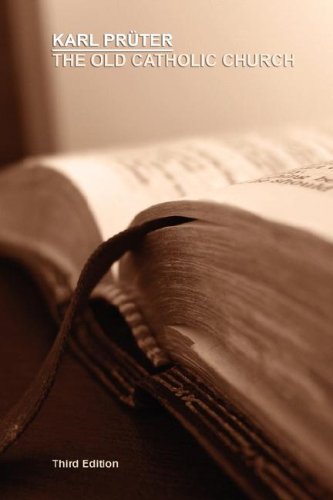
2. The Old Catholic Church, Third
3. The Holy Bible Catholic Home Edition
$18.05
4. Old Catholic: History, Ministry,
$9.02
5. A Short Catechism of the Old Catholic
$34.95
6. The Old Catholic Missal &
$7.61
7. Survivals and New Arrivals: The
$18.95
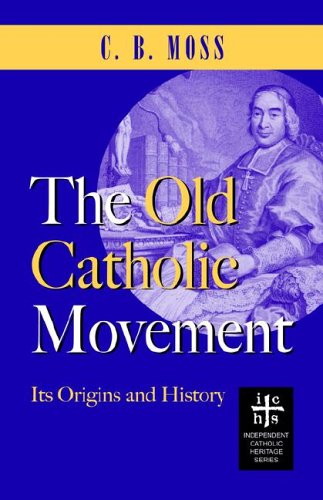
8. The Old Catholic Movement: Its
 
$99.99
9. The Douay-Rheims Old Testament
$10.08
10. New Saints and Blesseds of the
$14.56
11. Catholics, Politics, and Public
 
12. The Holy Bible (New Catholic Edition,
$7.00
13. Catholic Traditions: Treasures
$12.53
14. The Holy Bible Containing the
$11.18
15. The Catholic Church, the First
 
$5.95
16. The Catholic Revolution: New Wine,
 
17. A History of the Old Catholic
$5.30
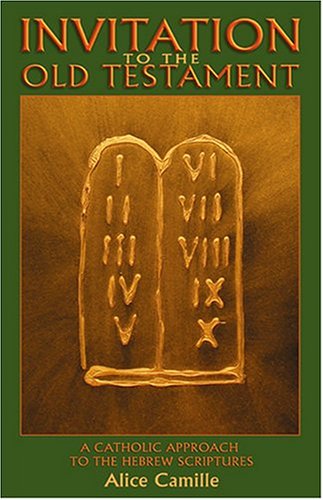
18. Invitation to the Old Testament:
 
$4.74
19. The Catholic Revolution: NewWine,
$2.81
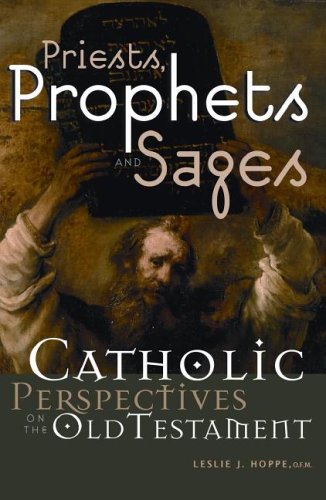
20. Priests, Prophets And Sages: Catholic

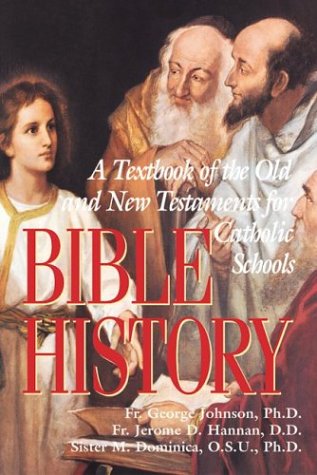
1. Bible History: A Textbook of the Old and New Testaments for Catholic Schools
by George Johnson, Jerome Hannan, M. Dominica
Paperback: 558 Pages (2000-12)
list price: US$24.00 -- used & new: US$14.95
(price subject to change: see help)
Asin: 0895556928
Canada | United Kingdom | Germany | France | Japan

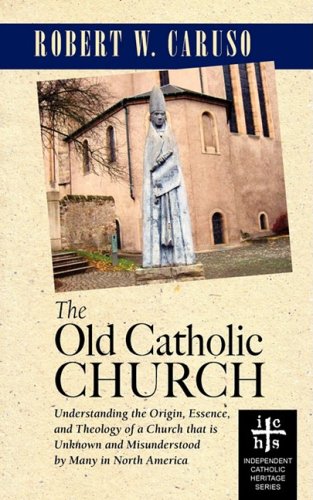
2. The Old Catholic Church, Third Edition
by Bishop Karl Pruter
Hardcover: 136 Pages (2007-02-11)
list price: US$25.00 -- used & new: US$24.90
(price subject to change: see help)
Asin: 0912134402
Average Customer Review: 2.0 out of 5 stars
Canada | United Kingdom | Germany | France | Japan
Editorial Review

Product Description
Karl Pruter, Presiding Bishop of the Christ Catholic Church and an acknowledged expert on the modern autocephalous churches, delineates the history of the Old Catholic Church in North America and provides the most straightforward account of the numerous offspring of this very active religious movement. Complete with Chronology, Notes, Bibliography, Index, and photographs. ... Read more

Customer Reviews (1)

2-0 out of 5 stars Once essential, now dated
Unfortunately, this third edition of The Old Catholic Church seems to be a book past its time. When the first edition was published, good historical material on the origins of Independent and Old Catholicism in the United States was scarce. But the basics found here are developed in more depth and with sounder research elsewhere. Also, little awareness is shown of major shifts in the character and focus of the independent sacramental movement in the present generation.

The final chapters, where the late Bishop Prüter makes sharp comments about "Bishop Gene Robinson of the Diocese of Vermont" [sic] and female priests, offer very little of value. The vision the author had for our movement was quite narrow, not conservative specifically but certainly focused on past goals and approaches for Old Catholicism which most have rejected. There are a handful of details one can only find here, but for the general readership looking for an introduction to Independent Catholic history, there are better places to start. ... Read more


3. The Holy Bible Catholic Home Edition (Old Testament in the Douay-Calloner Text / New Testament and Psalms in the Confraternity Text)
by Rev. John P. O'Connell
Leather Bound: 2500 Pages (1954)

Asin: B000SPHCLW
Canada | United Kingdom | Germany | France | Japan
Editorial Review

Product Description
Large 11.5" x 8" x 3" Catholic Home Edition Holy Bible with numerous color illustrations by celebrated old masters throughout. Published with the approbation of His Eminence Samuel Cardinal Stritch, Archbishop of Chicago. ... Read more


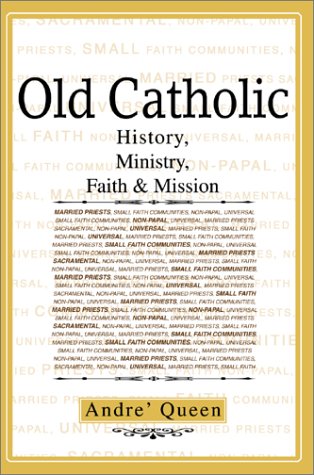
4. Old Catholic: History, Ministry, Faith & Mission
by Andre J. Queen
Paperback: 226 Pages (2003-07)
list price: US$18.95 -- used & new: US$18.05
(price subject to change: see help)
Asin: 0595284078
Average Customer Review: 4.5 out of 5 stars
Canada | United Kingdom | Germany | France | Japan
Editorial Review

Book Description
Read about the best kept religious secret in America! Married clergy, decentralized administration, and Catholic liturgy and practice - in a non-papal and autocephalous Catholic Church. ... Read more

Customer Reviews (3)

4-0 out of 5 stars Old Catholic
As a new member to the Old Catholic Church
and a future seminarian i found this book
very helpful i think Bishop Queen did a great
job .

4-0 out of 5 stars A good resource
Perhaps the strongest aspect in favour of this text is that it is a book on American Old Catholicism by an American Old Catholic. So many texts about the Old Catholics, American and otherwise, are written by outsiders, who bring the biased lenses of their contexts and communities with them. Sometimes these biases are subtle and unintended, but sometimes they are quite deliberate. Needless to say, those who write from the inside similarly write with bias; in the case of Old Catholicism, there is still a long way to go to achieve a parity in sources that could approximate objectivity.

That being said, this text does strive for some degree of objectivity. There are few texts available on Old Catholicism; it is an obscure-enough denomination and topic that books go out of print very quickly. Also, there are many varieties of Old Catholicism (and arguments as to the validity of the claim 'Old Catholic' by many from many). It is easy to get lost in the fray, and even the most able historian and researcher will find clarity an elusive goal.

Andre Queen is not an historian by profession or training, nor is he a writer. He is, however, bishop of a jurisdiction within American Old Catholicism, based in Chicago, and has various other titles and affiliations that have given him a reputation as a good source of information. Queen made effort to seek the counsel of other leaders in various jurisdictions as he compiled this text, so there was an element of collaboration in the process.

In some ways, this book is a compilation, and Queen would be in some respects more aptly described as the editor and compiler rather than the author. This, of course, is in keeping with the methodology of those who have a care for tradition and history - re-inventing the wheel is not necessary. For example, the longest chapter (comprising almost one-third of the entire text) is a model catechism, reprinted with permission from the catechism of the jurisdiction of the Old Catholic Church of America (James Bostwick, archbishop). Not all Old Catholic jurisdictions follow this catechism, and it is not intended to serve here as a dogmatic imposition, but rather as a paradigm for exploration.

The first several chapters give a brief history of the development of Old Catholicism in Europe (which has several strands), together with the text of important historical documents, and the transference of Old Catholicism into North America, a trek that has not been without incident, intrigue, and the occasional unfortunate occurrence. As a history, it suffers a bit from lack of a narrative framework; it is more like a patch-work quilt (made of documents, principles and brief biographies) that tells a story than a seamless narrative. For those not already acquainted to some degree with the history, it is easy to get lost. Perhaps in a future edition, this will be addressed.

The concluding chapters, 'Why Eastern and Western Expressions Combine in American Old Catholicism' and 'Yesterday's Tomorrow, Today', bring up important points that beg for further development. They address questions that most likely will be ongoing concerns, but further work on these issues would be appreciated.

There are three appendices, which deal with more obscure points (one an essay on married clergy, and two biographical/autobiographical pieces on figures of prominence in the movement). These are not really for the uninitiated - the essay on marriage assumes a familiarity with historical theology and church practice (and some degree of canon law); the other two appendices are more accessible. In particular, a reading of the appendix dealing with Archbishop Vilatte, side-by-side with that out of another text, Episcopi Vagantes, shows the trouble in dealing with Old Catholic history, and how apparent bias can be.

One minor criticism is that, in a day of computers with spell-check and grammar check, there are a few more typographical errors that one would hope; alas, in this day of self-editing even for major publishing houses, the primarily error-free text is becoming a vanishing species. Again, should there be a future edition, perhaps these will be corrected.

With the advent of lightning publishing and print-on-demand, texts such as this can remain available for longer periods of time, which is a blessing, given that in circles drawn as the Old Catholic circles are, it takes time to disseminate the information regarding the text's availability. There is not as yet a tradition of scholarship and publication in the Old Catholic world (European, North American or otherwise); in that instance, most any book is a blessing. This book represents another step in the direction of self-study and self-proclamation by the Old Catholics of their own community and beliefs. Imagine a world in which the only available texts about the Anglican, Presbyterian or Lutheran communions were written by Roman Catholic scholars, or the only texts available on Roman Catholicism were written by Eastern Orthodox scholars - one can begin to appreciate the difficulty of study of the subject.

This book strives to put Old Catholicism in the best possible light - a worthy goal, and one that any leader such as Queen would try to do. However, space should be made for the frank admission of the difficulties in Old Catholic history that Old Catholics have caused for themselves; this is brought up implicitly in some of the text, but never specifically addressed. Future editions might develop this theme, so as to not be subject to the charge of not facing our own origins.

For those interested in Old Catholicism, this is a valuable resource. It should be required of clergy and lay leaders of every jurisdiction in Old and Independent Catholicism; even the areas of disagreement can yield insight, and issues of difference made more explicit can aid in mutual cooperation. One hopes for further developments of this sort among the Old and Independent Catholic communities.

5-0 out of 5 stars Exceptional!
I have read many, many publications about the Old Catholic Church in America, this book by far is the most comprehensive.

Truly a credit to the Old Catholics in America.

A must read for anyone interested in religious history in America. ... Read more


5. A Short Catechism of the Old Catholic Church
by Father Rick Saint
Paperback: 64 Pages (2007-05-08)
list price: US$9.95 -- used & new: US$9.02
(price subject to change: see help)
Asin: 0615141951
Canada | United Kingdom | Germany | France | Japan
Editorial Review

Book Description
Borrowing from a variety of historic church resources, A Short Catechism of the Old Catholic Church provides everything a parish priest needs to provide basic instruction in the faith. This is an excellent resource for teaching baptismal or confirmation classes. ... Read more


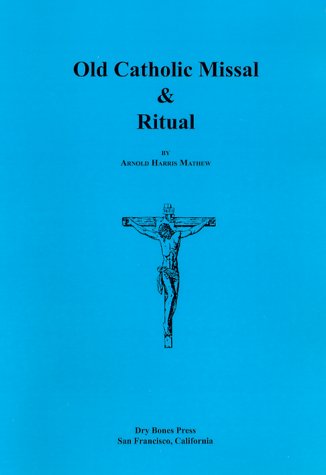
6. The Old Catholic Missal & Ritual
Hardcover: 344 Pages (2005-11-30)
list price: US$34.95 -- used & new: US$34.95
(price subject to change: see help)
Asin: 0977146162
Average Customer Review: 5.0 out of 5 stars
Canada | United Kingdom | Germany | France | Japan

Customer Reviews (2)

5-0 out of 5 stars Old Catholic Missal
The Old Catholic Missal by Arnold H. Mathew, ed, is the seminal and defining work for authentic Old Catholic worship.This is the ordinary form of worship and the standard by which all Old Catholic liturgies are understood.My hope is that every Old Catholic parish in America would employ this Mass weekly as a declaration of our unity and faith.

5-0 out of 5 stars A piece of history...
`The Old Catholic Missal and Ritual' is a primary text for worship developed by one of the earliest figures in Old Catholicism in the English-speaking world, Archbishop Arnold Harris Mathew. Mathew had a quite colourful history, recounted by many as well as by his own autobiography, candidly entitled `Episcopal Odyssey'. Whether Mathew was more sinned against than sinner in his travels through Christendom is a debate better engaged elsewhere; suffice it to say that many Old Catholic jurisdictions trace their lines back to him directly or indirectly, and his work toward establishing standards, including the standards of worship contained in the `Old Catholic Missal and Ritual', remains a primary cornerstone of Old Catholic history.

A missal is a guidebook or instruction book for leading and participating in worship. Catholics, Anglicans and other high-liturgical traditions have missals; it is a more formal text than the BCP or other such primary liturgical sources. During the medieval period, liturgical worship books included the Sacramentary, used by the celebrant of a service; the antiphonale missarum, for use during mass; the lectionary, a set of readings from scripture for the service; and the missal, which was a fusion of the earlier three.

The `Westminster Dictionary of Worship' states, regarding Old Catholic worship:

`The liturgy is meant to be celebrated in a clear and pure form, bringing the Christological element, in particular, to the fore. Thus the Old Catholic churches play a lively part in the liturgical renewal that is taking place in both Roman Catholic and Protestant churches.'

Mathew's development is very traditional, particularly by today's standard. It was developed at a time of increasing mistrust between Anglicans and Roman Catholics, which is part of the difficulty with Anglican acceptance of Mathew or the churches derived from his bishopric consecrations. This edition is more in the manner of reprint than update, to make the historic text available to the various Old Catholic jurisdictions in the English-speaking world. Minor editing has been done, but for the most part this edition preserves the 1909 text of Mathew intact.

The first pages contain the calendar, with saints and feast/fast days, major and minor distinguished, and instructions for fast and abstinence days. The chart of abbreviations shows the history of the liturgy -- there is still an Emp. abbreviation for the Emperor. Various directions follow, including directions on how to use the calendar, how to hear mass, creeds and prayers, and instructions taken from St. Francis de Sales of what to expect in and from the mass.

The missal proper then begins, first the primary service of the Christian worship, the ordinary of the mass. Many of the elements here are familiar, if in somewhat less elaborate and somewhat different order, to most Christians of any denomination. The ordinary of the mass includes communion for the sick, vespers, and solemn benediction, things that are generally extra or supplemental to the ordinary of most denominations today.

Following this are the propers -- the texts, collects and other liturgical pieces that fit with each particular week. These are arranged according to the liturgical calendar, beginning with Advent. The propers also include the texts for the commons of saints, votive masses, propers of particular saints, and occasional prayers for topics, events and special intentions.

Then follow the more occasional offices -- burial of the dead, baptism, confirmation, marriage, confession, extreme unction, and ordination. The instructions and rituals for confession, to take an example, are quite developed -- there is an examination of conscience that begins with prayer and self-directed questions that place the penitent in relation to God, neighbour, and himself or herself. There are prayers for an act of contrition, thanksgivings for after confession, aspirations and absolutions.

Ordination also contains more traditional forms -- rather than just the three-fold ordained clergy of deacon, priest and bishop, clerical orders take on the more elaborate forms of major and minor orders, including orders of doorkeepers, lectors, exorcists, acolyths, and subdeacons in addition to the three major orders. The instructions for conferring orders not only include liturgical direction, but also the development of clergy instruction, character, and other considerations not often followed today.

`The Minor Orders shall be given to such only as understand Latin at least, observing the appointed intervals between each Order, unless the Bishop shall deem it more expedient to act otherwise; that so they may be the more accurately taught how great is the obligation of this their state in life, and may be exercised in each office, according to the appointment of the Bishop.'

Many Old Catholics leapfrog from layperson to bishop in one giant step; there is much wisdom to be gained by holding an interval between appointments.

Of course, some regulations seem strange to us today:

`Such as are not born in lawful wedlock may not be promoted to the Major Orders without an Episcopal dispensation; neither shall insane persons, slaves, man-slayers, such as are irregular, disfigured by some bodily defect, or maimed, take Orders.'

The language contained in the 1909 Mathew missal is, as one would expect, fairly traditional. It reads in many places like the 1928 Book of Common Prayer. This will appeal to certain people, but may be off-putting to those who seek a more modern and accessible language for their worship.

This book is a bit difficult to use for regular devotional practice. Photocopying the relevant pages or using the text in the printing of liturgical bulletins would be advisable, as a 652-page book is hard to hold, particularly when the pages are not thin.

The Apocryphile Press has done a great service at bringing this book back into general accessibility. ... Read more


7. Survivals and New Arrivals: The Old and New Enemies of the Catholic Church
by Hilaire Belloc
Paperback: 167 Pages (1993-10)
list price: US$13.00 -- used & new: US$7.61
(price subject to change: see help)
Asin: 0895554542
Average Customer Review: 5.0 out of 5 stars
Canada | United Kingdom | Germany | France | Japan

Customer Reviews (2)

5-0 out of 5 stars Prophetic Belloc
This beautifully written masterpiece stands as a sequel, more or less, to Belloc's masterful "Great Heresies".Here, Belloc describes the old and new enemies of the Catholic Church.As Mr. Schorr of Geneva observed, much of the corpus of this work seems very contemporary.Sadly, what may not be contemporary is the solution proposed by the great Catholic historian and social thinker.

Belloc wrote at a time when the Church and the Faith, though as always persecuted, were at least united.Were Belloc around now to comment on the post-Vatican II state of the Church, he would probably be more emphatic in his prescription for necessary Catholic action.

And yet, the truth Belloc states herein is eternal.Witness the following:

"Either we shall see the gradual permeation of mankind by the only body of truth to which the mind leaps in unison, rendering all as secure as it can be among a fallen race; or our civilization will sink to be a completely alien body, knowing even less of the Faith than do the distraught town millions of today."

As previously mentioned, the same truth obtains even today.The question is yet to be answered.And in the answer resides the fate of the human race.

5-0 out of 5 stars Could have been written yesterday
Belloc describes and evaluates philosophies/movements/moods antagonistic to the Church.He divides them into three types--

"Survivals" are either discredited, like fundamentalism, or ever present but currently (1929) in disrepute, like materialism.

"Main Opposition" are the strongest of the hour--for Belloc nationalism, anti-clericalism, and most significantly, the "modern mind", a vague, passive resistance to faith and dogma built on ill-conceived, ill-considered ideas about the infallibility of science, the inevitability of progress, and the primacy of man.Of immense interest is Belloc's critique of compulsory state sponsored education--a fairly new thing in Britain at the time.He sees quite clearly that such an assembly line process leads to the weakening of parental authority, a deadening of intellectual acuity, and the development of a world view that prioritizes certain types of knowledge above a clear, rational sense of morality.All these effects, as Belloc prophetically observes, lead to social decay.

"New Arrivals" are developing enemies.With remarkable foresight, Belloc zeroes in on what he calls "Neo-Paganism", which is an attitude of despair, a flat rejection of absolute truth in faith and morals.Belloc accurately predicts the growth of this attitude in the West and the terrible damage it will unleash on our society and culture.

Belloc is enlightening as usual.He not only explains the nature of these movements, but sketches their historical roots, so that we get some sense of how these things developed, and why.It is easy to see that many of these oppostions exist today, although in somewhat different forms, described in different terms, and somehow jumbled up together in a vague secular attitude. The clear and thorough examination in this book helps us make sense of this jumble, and perhaps to formulate a response. ... Read more


8. The Old Catholic Movement: Its Origins and History
by C. B. Moss
Paperback: 380 Pages (2005-08-30)
list price: US$18.95 -- used & new: US$18.95
(price subject to change: see help)
Asin: 0976402599
Average Customer Review: 4.0 out of 5 stars
Canada | United Kingdom | Germany | France | Japan

Customer Reviews (1)

4-0 out of 5 stars Flawed but interesting history
This book, recently reissued by Apocryphile Press, is one of the more heavily sought-after volumes on Old Catholicism on various online venues, used bookstores, and other avenues. Part of the reason for this is simple - Old Catholicism as a denomination and phenomenon in the Christian tradition is relatively little studied, and much of the material is done in German and other continental European languages. There are no major established seminaries, no strong denominational resources, and, particularly in the English-speaking world, a lot of competing sources of material that rarely approaches the quality of being good scholarship. C.B. Moss has produced a reasonably sound, reasonably broad account of European Old Catholicism in historical, ecclesial, and to lesser extent theological, terms.

Moss' first inspiration to study the phenomenon of Old Catholicism came from a foundational book of my own in this regard, the text 'History of the So-Called Jansenist Church of Holland'. This book, published in the 1850s, describes some of the earliest issues that led to a separate but Catholic church in Holland; this group later formed relationships with other continental Europeans, primarily but not exclusively in the German lands, after Vatican I. Moss' survey of church history from the Conciliar Movement (circa fourteenth century) to the first Vatican Council takes up more than half the book; this history is interesting and worthwhile, and serves as a good guide to process for Anglican thinking of the time as well as Old Catholic.

It is after this point in the text that the work of history of Old Catholicism proper really takes place. Moss looks at the various national/cultural situations in turn - German, Swiss, Latin, etc. He spends a good amount of time on the Reunion conferences at Bonn and the Declaration of Utrecht, and various conferences that have taken place since Vatican I in which the administrative side of Old Catholicism has been formed. Moss also devotes a chapter to Old Catholic liturgy, as well as one to ecumenical relationships with other Christians - both of these could be better if more fully developed. Moss concentrates the native language liturgies and is generally dismissive of the English versions of Old Catholic liturgical resources.

Of course, C.B. Moss was a cleric of the Church of England. While making a claim to present an unbiased and objective review of the material, he nonetheless betrays himself at the outset by labeling the foundational figures of North American Old Catholic jurisdictions with the chapter title, 'False Starts', with the fully intended double entendre that that terminology implies. Even as Moss speaks in glowing words about the unity of intercommunion and understanding given by the Bonn Agreement and the way in which this models a better means of cooperation among Christian bodies, he is careful to exclude those he doesn't seem to think pass muster. The bias is subtle but very present, even in the less critical parts of the narrative. (Moss in other writing confesses his personal bias against the North American and British expressions of Old Catholicism.)

The version of this text reissued and revised in 1977 devotes a special addendum to the Old Catholic body since Vatican II. Moss highlights certain restricted communion-agreement sharings that are significant; he also highlights other communion issues with Lutherans, Orthodox, and other churches, including the Anglican communion since the advent of women's ordination. This has continued to be a problem area for the Old Catholics.

This is a flawed text in many ways, but still remains a touchstone for Old Catholic history if for no other reason it is one of the few with a scholarly authority. It is a must for any in Old Catholic and Independent Anglican churches, to help them better understand their own history. ... Read more


9. The Douay-Rheims Old Testament of the Holy Catholic Bible
 Paperback: 1231 Pages (1992)
-- used & new: US$99.99
(price subject to change: see help)
Asin: 0962099449
Average Customer Review: 5.0 out of 5 stars
Canada | United Kingdom | Germany | France | Japan
Editorial Review

Product Description
large edition in red, with gold lettering, compiled by Fr. G. Haydock. Includes very extensive commentary throughout, and a chronological index. ... Read more

Customer Reviews (2)

5-0 out of 5 stars Indescribably beautiful (Douay-Rheims Haydock)
This Douay-Rheims Bible (Old and New Testaments) with Haydock commentaries by Catholic Treasures is quite literally a God-send to the modern Catholic, who is looking for the beauty of a King James Version in as Catholic Bible.This translation towers above the KJV, and over each of the other translations that I own: the Knox, the NAB, NIV, RSV, NKJV, REB, and the updated Douay version known as the Confraternity version.Each time I read any part of this Douay-Rheims, I am transfixed, and taken into the Scriptures, in a way that I have never experienced before.Check out an online version of the Douay-Rheims to get a feel for it.With this Bible once again being made widely available, we do not have to rely on the Protestants' KJV to get the beautiful Old English writing that makes that Bible such a joy to read.In addition to being the true Catholic Bible in English, I find it more beautiful and readable than the KJV (except the 23rd Psalm.I admit it, the protestants nailed that one).The commentaries by Haydock bring this bible into another dimension entirely.Fr. Haydock assembled the most relevant commentaries from Church fathers back all the way to the beginning, and has filled this bible with these commentaries and explanations, that are often eye-popping for the additional information and insights they bring.For instance, I was just reading Mark VII: 24, which details Jesus healing the daughter of the Syrophoenician woman.I had been puzzled by this passage when reading other bibles, as it seems that Jesus at first rejects the woman's pleas because she is a Gentile.Haydock's commentaries include remarks from St. Bede (8th century) which state that Jesus told this woman that He would be going into the house ahead of time, thus implying that He said everything He did for a reason.This led me to speculate that He was "rejecting" her as a Gentile for the benefit of his Disciples, to show them that His salvation was not in fact to be for Jews only.Evidently, as the St. Bede quote indicates, there is Church Tradition on this point.Where else can you find this?This Bible has changed the whole idea of reading the Bible for me.These two large red volumes are constantly calling me from the shelf to unearth their treasures.This is a very precious edition indeed.It has made it harder for me to read my other Bibles.The production of these books is first rate; they are large heavy books that easily sit open on their own without straining the binding at all.The Bible contents are a photographic reproduction of a version from the late 1800s.This is an absolutely essential Bible if you are a Catholic looking for the Bible of Bibles.

5-0 out of 5 stars Excellent translation, excellent commentary, excellent scholarship
This publishing of the Haydock Bible once again is cause for great celebration.This is highly recommended for true, Catholic, Biblical scholarship. ... Read more


10. New Saints and Blesseds of the Catholic Church, Vol. 2
by Ferdinand Holbock
Paperback: 260 Pages (2003-06)
list price: US$14.95 -- used & new: US$10.08
(price subject to change: see help)
Asin: 0898708710
Canada | United Kingdom | Germany | France | Japan

11. Catholics, Politics, and Public Policy: Beyond Left and Right
by Clarke E. Cochran, David Carroll Cochran
Paperback: 210 Pages (2003-04)
list price: US$24.00 -- used & new: US$14.56
(price subject to change: see help)
Asin: 1570754578
Average Customer Review: 5.0 out of 5 stars
Canada | United Kingdom | Germany | France | Japan

Customer Reviews (1)

5-0 out of 5 stars Catholic Politics
This book provides a framework for political analysis by Catholics who may be confused and perplexed by the current American political scene.This book is aimed toward liberals and conservatives, Republicans and Democrats, libertarians and Catholics of all other political persuasions.The one short-coming I saw in the book is the lack of a concluding chapter - but that is probably the authors' intention.The authors intend to give a framework for decision-making by Catholics, but give very few answers beyond those few "unambiguous teachings on particular moral questions (abortion, theft, and living wage, for example)."[pg x]

What was very surprising for a person who believes himself well-informed about political issues was the authors' ability to show how policies that seem not to be related are in fact closely interrelated.A just economy fairly addressing issues of poverty, healthcare, and education lead to secure families spanning across the generations, racial and ethnic pluralism, and protecting the environment and the sanctity of life.

As an example on why being a Catholic is being neither a Republic nor Democrat, liberal or conservative, consider Chapter 9, "Consistently Defending the Sanctity of Human Life."Republicans and conservatives generally defend the sanctity of the life of the unborn ardently, while Democrats and liberals generally object to the death penalty while defending the right to choose.The Catholic response to these issues is consistent - life is sacred regardless whether it is the beginning of life in the womb or the end of life as an octogenarian - and everywhere in between.Period.End of the story for abortion, euthanasia, the death penalty, and physician assisted suicide.

This book was written before the United States and the "coalition forces" invaded Iraq, but gives a structure for a Catholic to analyze that action - and the analysis, at least in my opinion, is not favorable.The "just war" doctrine has been a fundamental position for Catholics since articulated by Thomas Aquinas in his Summa Theoligicae.As the authors say [pg. 199], "Fighting a war against terrorism is just, but there are still significant moral limits in how we go about fighting it."Have we crossed those limits by invading Iraq which, after we have failed to find weapons of mass destruction and have found information that Saddam Hussein did not participate in the 9/11/2001 attacks, shows no signs that it imposed an imminent danger to the United States?Have we crossed those limits with the prisoner abuse recently making the news, which seems to have derived directly from the President's and Defense Secretary's decisions to hold prisoners of war without regard to the Geneva Convention, and American citizens without regard to the due process of law?As the authors also say: "The threat of terrorism does justify more vigilance, including considerable inconveniences and even some loss of privacy for Americans, but these must be balanced against civil liberties."

As stated, my biggest complaint is that there is no conclusion to this book.The authors do not tell us what to think, or in most cases what they think.They do not give us answers to the questions:

Is it right for a politician who passionately believes that abortion is wrong and in the sanctity of life to also believe it wrong to criminalize abortion?Should a bishop announce that he should be denied the sacraments?

Is it right for an economy to adopt the requirements for a just economy (fair wage, universal healthcare, environmental protection) and therefore put it at a disadvantage against other economies that fail to adopt these measures?

One thing that the book does appear to make clear is that there are no bellwether issues.A single issue candidate ("I want to outlaw abortion") must be weighed with the other issues that are important to Catholics."You cannot navigate by one star alone."[pg 7]This book is an important read for Catholics and others who want to understand political issues from the perspective of Jesus' second commandment - to love your neighbor.As the authors say, "As followers of Christ and citizens of a democratic regime, we bear responsibility for justice and the common good."[pg 4] ... Read more


12. The Holy Bible (New Catholic Edition, The Old Testament Douay Version; The New Testament Confraternity Version)
by Francis Cardinal Spellman Catholic Scholars; Imprimature
 Leather Bound: Pages (1961)

Asin: B000UD23MU
Canada | United Kingdom | Germany | France | Japan
Editorial Review

Product Description
Very unique, embossed aluminum jacket over black leather covers; Gold gilt page edges; Silk end papers. ... Read more


13. Catholic Traditions: Treasures New And Old
by Joanne Turpin
Paperback: 178 Pages (2004-10-30)
list price: US$12.95 -- used & new: US$7.00
(price subject to change: see help)
Asin: 0867165510
Average Customer Review: 3.5 out of 5 stars
Canada | United Kingdom | Germany | France | Japan

Customer Reviews (3)

1-0 out of 5 stars Torpedoed by it's own extra material.
Perhaps other reviewers do not read margin quotes.One was from Andrew Greeley, and another one referred to the Holy Spirit as "she".

If you can swallow this drop of poison, the rest of this little book (178 pages) is a light,easy read covering many topics that most long-time Catholics probably do not know(i.e. what does the title "Monsignor" signify, what is the significance of the Church calendar, what is a "sacristy", "alb" or "chasuble", how is the American church organized, what are some of the changes in Catholic practice brought by Vatican II, etc.)

Although it would get a high ranking without the quotes, in its current form it does not merit the "Nihil Obstat", a few bucks, or more than one star.

5-0 out of 5 stars Helpful Resouce for Catholics and Inquirers
As a Catholic parent and one interested in growing in faith and knowledge about my own Church, I love resources like Joanne Turpin's Catholic Traditions:Treasures Old and New.The book provides a comprehensive overview of all of the important aspects of the Catholic Church and its teachings.

Turpin's chapters are well organized with a sufficient level of detail to answer most questions well.The book covers everything from the Sacred Space (physical layout) of the Church, to the names and meanings of the various items employed in the Church.Traditions and teachings related to Marian devotion, the Communion of Saints, Angels and our liturgical calendar are all covered. Wonderful sections on prayer and popular devotions provide not only detailed explanation, but also inspiration for new modes of prayer and adoration.

I will definitely turn to this book to grow in my own faith, to teach my children, and to help educate my friends and others on the beauty of our Catholic traditions.

4-0 out of 5 stars Primer for New Catholics, Blast from the Past for Old-Timers
One of the author's goals in this work is to "distinguish between the essentials and the trimmings, the tradition and the customs." She meets the challenge in 13 chapters dealing with such topics as the Mass; sacraments; prayer; Mary; angels and saints; and "Catholic practices, minor and major." The section on Catholic practices will evoke memories, if not nostalgia, in those who grew up in the 50s, but younger readers may be amused by the era's rules for fasting, women wearing hats to church, "making" the First Fridays, and the like. As a pre-Vatican II Catholic, I read about Forty Hours devotions wistfully.

Each chapter contains relevant margin quotes with reference notes and a short reading list. An extensive index is included. This work would be especially helpful for catechists, parents, and those involved in, RCIA programs. ... Read more


14. The Holy Bible Containing the Old and New Testaments: Revised Standard Version/Catholic Edition
by Catholic Biblical Association of Great Britain
Paperback: 1271 Pages (1994-05)
list price: US$19.95 -- used & new: US$12.53
(price subject to change: see help)
Asin: 089870491X
Average Customer Review: 4.0 out of 5 stars
Canada | United Kingdom | Germany | France | Japan
Editorial Review

Book Description
This is the only major modern translation of the Catholic Bible available in standard English. All other major translations have been revised to conform to feminist demands for "inclusive language" (the same language Rome rejected in the new Catechism). Acclaimed for decades as the clearest, most accurate and most beautiful modern translation of the Bible in English. ... Read more

Customer Reviews (41)

3-0 out of 5 stars Bible Notes in Back
I like the hard cover, which is very durable.The pages are thicker than most wafer-thin Bible pages, which makes it better for highlighting, underlining, or writing in the margins.There are no commentaries, etc, which is OK because I am buying it for the Bible, not the commentary.The books run one into another; they do not start a new page for each new book of the Bible.The footnotes are in the back of the Bible, so you have to flip back and forth if you want to read them, instead of being on the same page as the text they apply to.The Psalms have TWO chapter numbers for every chapter after Chapter 19 (based on Bible history and development), and this double-numbering is very distracting.I like that Psalm 23 has me going through "the Valley of the Shadow of Death" instead of "a dark valley", and it has me living in the House of the Lord "FOREVER" instead of "all the days of my life" or "many years to come".

5-0 out of 5 stars Beautiful
I would argue that this is one of the most beautifully translated and one of the best translations that exists.While not for everyone with the Olde English in the OT (I learned using the KJV so I have no trouble) it is an extremely reliable translation for those who want sure wording they can trust.

3-0 out of 5 stars The Holy Bible: Revised Standard Version, Catholic Edition
The cover is well done.However, the print was too small for my husband.I looked atthe sample cover page before purchasing, but should have checked more pages.To use in a class setting, the text should be written in a larger print.Otherwise it is fine.

3-0 out of 5 stars Good for the price
Good Bible for its price. Print is medium-small, as you might expect from a bible this size. Print runs too close to binding, so it's not the easiest to read. But, I like how it has no same-page commentary (some notes are in the back).

5-0 out of 5 stars Great translation
This is a great edition of a great translation.The footnotes are minimal, with only clarifications of translations and cross references.The Word of God takes up the vast majority of the page, with little to no commentary from men.

This is a highly recommended Bible. ... Read more


15. The Catholic Church, the First 2000 Years: A Popular Survey and Study Guide to Church History
by Martha Rasmussen
Paperback: 300 Pages (2003-06)
list price: US$16.95 -- used & new: US$11.18
(price subject to change: see help)
Asin: 0898709695
Average Customer Review: 4.0 out of 5 stars
Canada | United Kingdom | Germany | France | Japan
Editorial Review

Book Description
This book is a popular overview and study guide to the history of the Catholic Church. Written for non-scholarly readers with little historical background, it includes descriptions of society in different historical eras in order to make the history of the Church more understandable. The book explains important doctrinal, spiritual, and historical questions and developments. It identifies many popular saints and includes interesting historical characters.

Catholics seeking a deeper spiritual life and a closer relationship with God will find many helpful ideas to trust God's love and care for them. The story of how the Church survived earlier trials will encourage people struggling with current challenges in the Church or discouraged by difficulties in their own lives.

This book is useful in RCIA and religious education classes, for personal study, Catholic high school or college classes, or discussion groups. ... Read more

Customer Reviews (1)

4-0 out of 5 stars Very good overview of Church History
I recently finished reading this book. Having not read much for the past few years, I've started to find time to read, specifically to learn more about my faith.

One confusing aspect has always been the history of the Catholic Church. Discussions end up about how the Catholic Church did this or that which seperated it from the true teachings of the Apostles and Christ.

This book is wonderfully easy to read. It delivers on the promise of easy to read for the non-scholarly. It is organized into chapters with different periods and main themes of those periods. The chapters overlap somewhat, enough to bring together common themes or how various aspects of history are connected. Each chapter has several subtopics, with discussion questions at the end and short discription of saint related to the topic of the chapter.

I expect this book can be useful to me as an easy reference. Each chapter outlines what is dicussed and is highlighted on the edge with dark paper. As mentioned earlier, it provides enough background from other chapters to make each chapter stand on its own, especially after reading through once.

I also appreciate learning of specific miracles and how they directly affected the local people of that time.

I recommend this book, especially for the "non-scholoarly" or those that are not history buffs. ... Read more


16. The Catholic Revolution: New Wine, Old Wineskins, and the Second Vatican Council.(Book Review): An article from: Church History
by Paula Kane
 Digital: 4 Pages (2005-09-01)
list price: US$5.95 -- used & new: US$5.95
(price subject to change: see help)
Asin: B000BR6I8K
Canada | United Kingdom | Germany | France | Japan
Editorial Review

Book Description
This digital document is an article from Church History, published by Thomson Gale on September 1, 2005. The length of the article is 1071 words. The page length shown above is based on a typical 300-word page. The article is delivered in HTML format and is available in your Amazon.com Digital Locker immediately after purchase. You can view it with any web browser.

Citation Details
Title: The Catholic Revolution: New Wine, Old Wineskins, and the Second Vatican Council.(Book Review)
Author: Paula Kane
Publication: Church History (Magazine/Journal)
Date: September 1, 2005
Publisher: Thomson Gale
Volume: 74Issue: 3Page: 656(3)

Article Type: Book Review

Distributed by Thomson Gale ... Read more


17. A History of the Old Catholic Church
by Karl Pruter
 Hardcover: 76 Pages (1985-06)
list price: US$19.95
Isbn: 0893705942
Average Customer Review: 4.0 out of 5 stars
Canada | United Kingdom | Germany | France | Japan

Customer Reviews (1)

4-0 out of 5 stars A word from the inside...
Bishop Karl Pruter's book published by St. Willibrord's Press is one of the rare works on this autocephalous church. The word autocephalous refers to the church being independent and self-governing, not attached to the See of Rome, Constantinople, Canterbury, or any other primary administrative centre. There are many jurisdictions of continuing Anglicans, Old and Independent Catholics, and Orthodoxers in North America; other titles in this series explore those jurisdictions, or strive for a directory listing of persons in these traditions. This particular volume focuses on some of the main Old Catholic historical strands in North America, with a brief description of some current jurisdictions.

One of the virtues of Pruter's slim volume is that it is an Old Catholic history written by an Old Catholic. Unlike the Episcopal and Roman Catholic churches who maintain traditions of scholarship and major publishing houses, the Old Catholics are not nearly as established. Much of Old Catholic history has been written by Anglican or Roman Catholic scholars and/or clerics, and sometimes their motivation has been more than objective scholarship. Admittedly, Old Catholic history by an Old Catholic is likewise not going be unbiased, but it serves as a good counterweight to the others.

This book is a good brief introduction to the Old Catholic Church for those who don't know what it is or what it means. Being under 100 pages in length, it does not involve a great deal of investment on the part of the simply curious; it serves as a guide for further research with its brief but worthwhile bibliography that includes writers pro and con on many issues. One hope I would have should this volume be revised and reprinted again would be an indication of the biases of the various writers in the bibliography.

The history of the Old Catholics proper begins in the third chapter and continues throughout the rest of the book. Chapters on the Old Catholic church in Europe and its initial formation, the influence of the Oxford Movement out of England, the Old Catholic Church in England (recounting the story of Bishop Mathew), the influence of Roman Catholic development in America, and various jurisdictions and personalities that have arisen.

In addition to Mathew, listed above, there are chapters on two other key figures: Joseph Rene Vilatte and Carmel Henry Carfora, both strong personalities in the history of Old Catholicism in the Western Hemisphere. Like Mathew, there is controversy both about their own orders and their intentions and later actions; Pruter presents them in a sympathetic light, giving them (unlike many other historians) the benefit of the doubt with regard to intention. Most Old and Independent Catholic bishops can trace their lines through Mathew, Vilatte, or Carfora today.

One thing that becomes readily apparent in reading this brief history is that the Old Catholic movement has often had an ethnic element. The Polish National Catholic Church is but the best example, but not the only one. Because of problems of distant leadership (often from Rome, but sometimes from the Anglican side, too), the particular local concerns sometimes get lost in the shuffle. Polish immigrants to America did not appreciate the 'foreign' priests and bishops sent to serve them, so they separated to preserve their own customs.

One could work in a mill where Polish was spoken by most of the employees, shop in stores where the business was conducted in Polish, and chat with one's neighbours and friends in the Polish mother tongue. The church would, when a Polish priest was available, offer a sermon in that language. Unfortunately, Polish priests were not always available, and the Irish priests did not always suit their Polish parishoners.

Add to this that the bishops in charge were often of German descent, and the seeds for problems with Rome were sown.

However, Pruter points out correctly that the ethnic impetus behind some churches like the Polish National Catholic Church has largely dissipated for these more established groups. Sociological change shows that, in general, by the time immigrant families have reached the third or fourth generation in America, they have become primarily assimilated in culture and language. With regard to the Polish National Catholic Church, Pruter writes:

The future of this church is very uncertain at the present time because of its ethnic orientation. Fortunately, many parishes have tried to move with the times. Since the use of Polish has declined in many of its parishes, English masses have been instituted.

This same situation is true in other ethnic Old and Independent Churches, that as the congregations become less identified by their ethnicity and more as 'Americans', their tendency to want to stay in such communities lessens. In addition to the Poles, there are ethnically-founded jurisdictions for Slavs, Czechs, Lithuanians, Germans, Africans, Mexicans, Brazilians, among many others.

Pruter identifies what is perhaps the most difficult problem in dealing with the Old Catholic churches in North America.Pruter speculates in the final pages about the growth of Old Catholic churches and the continuing situations in the Roman Catholic and Episcopal churches. Pruter's biases and own beliefs become clear here, but his general advice to Old Catholics is generally worthwhile. While some Old and Independent Catholics and continuing Anglicans look for the disaffected and disenfranchised among the larger churches, in fact the growth of the Old Catholic churches rests more in their abilities to reach out to others who are unchurched. This is the real mission field, worthy of effort more than poaching in another's field.

Overall, Pruter's book is not rigourous historical scholarship, but it isn't really intended to be. This is a brief but broad-ranging introduction to the history of development of Old Catholicism with an eye toward various current structures.

... Read more


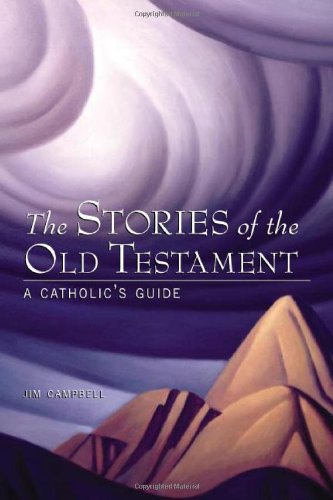
18. Invitation to the Old Testament: A Catholic Approach the Hebrew Scriptures
by Alice Camille
Paperback: 103 Pages (2004-09)
list price: US$9.95 -- used & new: US$5.30
(price subject to change: see help)
Asin: 087946271X
Average Customer Review: 2.5 out of 5 stars
Canada | United Kingdom | Germany | France | Japan
Editorial Review

Book Description
For Catholics, merely relying on the Sunday readings to provide a full understanding of the Bible can be unsatisfying.It is through a deliberate study of the "Good Book: as a whole that contextual understanding can be reached.Invitation to the Old Testament is a carefully written book that offers readers accessible and understandable explanations of the key themes and passages of the Hebrews Scriptures. ... Read more

Customer Reviews (2)

1-0 out of 5 stars Not Catholic
The author, Alice Camille, an out of work college graduate majoring in English, correctly points out that many Catholics lack an understanding of the scriptures.Her purpose was write a simple and readable book for these people so they can gain some grasp of the Old Testament.She apparently has a similar book for the New Testament, though I have not read it.

In this she does succeed.Her writing style is engaging and will appeal to those who are not scholars.Unfortunately, these are really the only good things about the book.

In the introduction, the author happily points out that she is neither a theologian nor a Bible scholar.That becomes evident beginning with the first page.

According to the author, God did not really create the Universe, He just kind of organized it.Aaron was named high priest solely due to nepotism.During the period of Judges, Deborah, the only woman judge, was the only one who had any wisdom.The 20th century figures Martin Luther King and Cesar Chavez were prophets equivalent to the Old Testament prophets.

She later expresses "astonishment" that any man would write about women in the Old Testament, apparently because, to the author, all men were, and still are, misogynists.She claims that women have been sidelined in the Bible.(Blessed, Virgin Mary, please pray for the author.)In the same paragraph, she then goes on to point out that more than three hundred women are discussed in the Bible, in seeming contradiction to her previous premise.

She expresses concern that many unnamed women are often presented as being in a harem, completely ignoring the fact that many unnamed men are far more often simply described as soldiers.

Her focus on innovative interpretations of the scripture and her radical feminism comes through on nearly every page.(Remember: theology + innovation = heresy.)

If you love the Pope and pray for priests, if you look with respect upon nuns who wear the habit and priests in their cassocks, if you love God and respect the Magisterium, AVOID this book.

This book DOES NOT carry an imprimatur nor does it carry a nihil obstat.

4-0 out of 5 stars Old Testament Explained, Brought to Life
Camille has written an "Everyman's" introduction (or reintroduction) to the Bible not as some huge, sprawling book about God, but "lots of little books clustered around a revolving cast of characters who understood themselves to be, in a fundamental way, the people of God." After briefly explaining the Church's use of the lectionery and ways of approaching scripture to get the whole picture, she brings those characters to life while addressing real issues of the day.

In the chapter Salvation by Journey, which covers Exodus, Leviticus, Numbers, and Deuteronomy, Camille addresses the question "Are you saved?" often asked by Fundamentalist Christians. That question, she explains, is often confusing to Catholics, who look at salvation not as a single event, but as (1) the Paschal Mystery, and (2) a process in which we participate our entire lives.

Each chapter ends with several questions for reflection and a prayer activity, making this an excellent resource for personal or group study. ... Read more


19. The Catholic Revolution: NewWine, Old Wineskins, and the Second Vatican Council
by Andrew Greeley
 Paperback: 237 Pages (2005-05-13)
list price: US$15.95 -- used & new: US$4.74
(price subject to change: see help)
Asin: 0520244818
Average Customer Review: 2.5 out of 5 stars
Canada | United Kingdom | Germany | France | Japan
Editorial Review

Book Description
How, a mere generation after Vatican Council II initiated the biggest reform since the Reformation, can the Catholic Church be in such deep trouble? The question resonates through this new book by Andrew Greeley, the most recognized, respected, and influential commentator on American Catholic life. A timely and much-needed review of forty years of Church history, The Catholic Revolution offers a genuinely new interpretation of the complex and radical shift in American Catholic attitudes since the second Vatican Council (1962-1965).
Drawing on a wealth of data collected over the last thirty years, Greeley points to a rift between the higher and lower orders in the Church that began in the wake of Vatican Council II--when bishops, euphoric in their (temporary) freedom from the obstructions of the Roman Curia, introduced modest changes that nonetheless proved too much for still-rigid structures of Catholicism: the "new wine" burst the "old wineskins." As the Church leadership tried to reimpose the old order, clergy and the laity, newly persuaded that "unchangeable" Catholicism could in fact change, began to make their own reforms, sweeping away the old "rules" that no longer made sense. The revolution that Greeley describes brought about changes that continue to reverberate--in a chasm between leadership and laity, and in a whole generation of Catholics who have become Catholic on their own terms.
Coming at a time of crisis and doubt for the Catholic Church, this richly detailed, deeply thoughtful analysis brings light and clarity to the years of turmoil that have shaken the foundations, if not the faith, of American Catholics.Download Description
How, a mere generation after Vatican Council II initiated the biggest reform since the Reformation, can the Catholic Church be in such deep trouble? The question resonates through this new book by Andrew Greeley, the most recognized, respected, and influential commentator on American Catholic life. A timely and much-needed review of forty years of Church history, The Catholic Revolution offers a genuinely new interpretation of the complex and radical shift in American Catholic attitudes since the second Vatican Council (1962-1965). Drawing on a wealth of data collected over the last thirty years, Greeley points to a rift between the higher and lower orders in the Church that began in the wake of Vatican Council II--when bishops, euphoric in their (temporary) freedom from the obstructions of the Roman Curia, introduced modest changes that nonetheless proved too much for still-rigid structures of Catholicism: the "new wine" burst the "old wineskins." As the Church leadership tried to reimpose the old order, clergy and the laity, newly persuaded that "unchangeable" Catholicism could in fact change, began to make their own reforms, sweeping away the old "rules" that no longer made sense. The revolution that Greeley describes brought about changes that continue to reverberate--in a chasm between leadership and laity, and in a whole generation of Catholics who have become Catholic on their own terms. Coming at a time of crisis and doubt for the Catholic Church, this richly detailed, deeply thoughtful analysis brings light and clarity to the years of turmoil that have shaken the foundations, if not the faith, of American Catholics. ... Read more

Customer Reviews (3)

2-0 out of 5 stars Wineskins without Wine
In the 1960s, Andrew Greeley was often accused of never having had an unpublished thought. Following his inordinate number of novels, we can now add that he hasn't had an unpublished fantasy. This scattered and strangely dated book envisions a kind of fantasy revolution in an American Catholicism where lay people can be holier than priests (no kidding) even though most of them scoff at strictures against birth control and even abortion, where the biggest problem seems to be that someone removed the statues from the sanctuary of the parish church while failing to appreciate how movies like "Dogma" improve on 2,000 years of theological reflection. He seems to think it objectively true that guitar players are all terrible musicians (take THAT, Les Paul) while all organ players are virtuosos.

He has identified a class of Catholics called "liturgists," whose passionate aim is to strip worship of anything beautiful and everything ancient while replacing it with a pimply-faced folk singer thoroughly versed in his three guitar chords and three hundred heinous hymns which parishioners listen to because they are polite.

He does mention in passing that the new authoritarianism and dogmatism are having an effect but seems oblivious to the fact that those reactionary forces, the ones that elected our new Pope, are spiraling out of control as politicians are denied communion for upholding the law of the land and the priest-pedophile scandal is rapidly morphing into a combination cover-up and gay-bashing frenzy.

Greely is coming out with a book that purports to explain the mystery of the recent papal election. I hope his big issue is not the poor color coordination of Benedict XVI's liturgical vestments.

2-0 out of 5 stars Why Catholics stay in the church
Pretty much boils down to the idea that (American) Catholics who stay "in" the church, do so "because they like being Catholic".

Which apparently means they like the familiar "American Catholic" culture or ethnicity (ethnicities: Irish, German, Polish) that they were born and raised in: the rituals, color, music, customs ("May crownings"). The vernacular language change they accept as good, the Vatican, medieval ethics and theology they ignore (and have been for decades.) Greeley himself comes from ethnic/cultural Catholicism with good music and colorful liturgies and customs, so he's got a good "born Catholic" culture to like.

But there's little here in this compendium/rehash of Greeley's previous writings to lead someone not born into one of those likeable traditions to turn to Catholicism, or of help to anyone who converted because of the attraction of Catholic theology and the Vatican II vision of Church despite the poverty and disfunction of a local Irish Catholic culture of minimal liturgical beauty (concentration on "validity" as good enough) and little or awful music and zero spiritual content. Or who now find themselves stuck in a parish with all the same (updated with awful music) and now overlaid with a return of authoritarian top down heavy handed management from the Vatican and local bishops, the rollback of the Vatican reforms, and the crackdowns on the least signs of life in intellectual life, particularly in Catholic institutions.

What was the "Revolution"? It is when Catholics openly decided not to "receive" (i.e. ratify with "religious assent") fiats from the hierarchy that they found unreasonable, unworkable, and out of touch with reality. The hierarchy still hasn't gotten the message that if the Church (the faithful) doesn't "receive" a teaching (i.e. the believers don't believe it), it can't reflect the "sense of the faithful" no matter how the Vatican invokes infallibility of either the ordinary or papal magisterium. The Vatican doesn't get it that they're function should be to express what the believers who are the Church believe, not tell them what they should believe based on some theoretical neo-scholastic theology and 13th century concepts that ignore everything humanity has learned about itself since.

Greeley's Catholics who stay because they like being Catholic are the ones the Revolution worked for because they've got a compatible or likeable Catholic cultural milieu to fit into. Those who don't, have little reason to stay.

4-0 out of 5 stars Personal Observations
Fr. Greeley has finally written a book that pretty well says it all, with the exception of one sentence. Hans Kung contrary to Fr.Greeley's opinion is "not" a celebrity theologian. Infact its uncanny how many of Fr.Greeley's observations resemble what Hans Kung has already written about in previous books, going back as far as the 80's. ... Read more


20. Priests, Prophets And Sages: Catholic Perspectives on the Old Testament
by Leslie J. Hoppe
Paperback: 129 Pages (2006-03-30)
list price: US$10.95 -- used & new: US$2.81
(price subject to change: see help)
Asin: 0867166975
Average Customer Review: 5.0 out of 5 stars
Canada | United Kingdom | Germany | France | Japan

Customer Reviews (1)

5-0 out of 5 stars The Old Testament Connection
Hoppe, a professor of Old Testament studies at Catholic Theological Union in Chicago, has written with the goal of showing the value of the Old Testament to believers "as they shape their lives of conversion in response to Jesus' proclamation of the Good News." He has accomplished that goal by presenting scholarly information in a way that interests and engages lay persons.

For example, the chapter on How Does God Speak contrasts the official and popular religions of the Chosen People. After citing a reference from Deuteronomy condemning "divination," Hoppe explains that the practice was based on the belief that messages from the gods are hidden in omens, and understanding the omens and the messages requires special skills. He goes into the history of divination, and describes archaeological evidence of some common omens and the meaning attached to them. The problem with divination in terms of religious practice is that its purpose was not simply to know the divine will, but to engage in ritual activities such as wearing an amulet or saying a prayer to avoid the evil "seen" by the diviner. Clearly this practice, though dressed in different terminology and rituals, can be seen in modern times, and deserves serious examination.

Chapter 6, Did All This Really Happen, explores an issue in today's news: creation science. As would be expected, Hoppe does a good job of addressing the topic and explaining the Church's position. In a more parochial matter, he offers a clear explanation, with examples, of the Christian "lectionary" with its three-year cycle of related Old and New Testament readings.

This is an excellent resource for individuals, catechists, homilists, and faith sharing groups. ... Read more


  1-20 of 100 | Next 20
A  B  C  D  E  F  G  H  I  J  K  L  M  N  O  P  Q  R  S  T  U  V  W  X  Y  Z  

Prices listed on this site are subject to change without notice.
Questions on ordering or shipping? click here for help.

site stats