e99 Online Shopping Mall

Geometry.Net - the online learning center Help  
Home  - Religion - Orthodox Judaism (Books)

  1-20 of 100 | Next 20
A  B  C  D  E  F  G  H  I  J  K  L  M  N  O  P  Q  R  S  T  U  V  W  X  Y  Z  

click price to see details     click image to enlarge     click link to go to the store

1. Rachel's Daughters: Newly Orthodox
$34.30
2. Contemporary Orthodox Judaism's
$18.81
3. Tradition in a Rootless World:
$40.30
4. Judaism and Homosexuality: An
 
$3.98
5. The Many Faces of Judaism: Orthodox,
$10.00
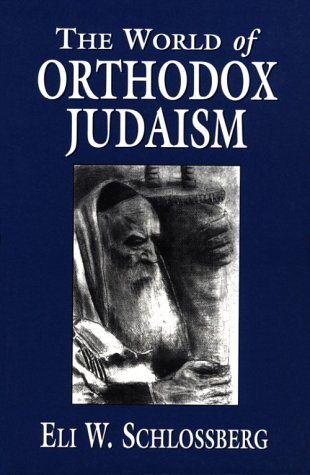
6. The World of Orthodox Judaism
 
$100.00
7. On two fronts: Two brothers are
 
$19.99
8. On Judaism: Conversations on Being
 
$28.18
9. The Orthodox Jewish Bible
$18.78
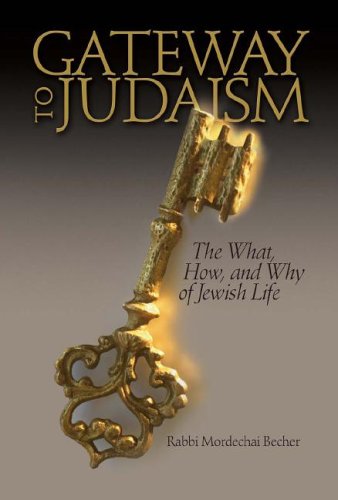
10. Gateway to Judaism: The What,
$18.78
11. Gateway to Judaism: The What,
 
$49.50
12. Changing the Immutable: How Orthodox
 
13. Dimensions of Orthodox Judaism
$30.98
14. Judaism and Modernization on the
 
$35.30
15. The Orthodox New Testament (Acts,
$12.95
16. Strangers No More: One Family's
$35.08
17. Judaism, Science, and Moral Responsibility
$5.90
18. Real Jews: Secular Versus Ultra-Orthodox:
$16.76
19. One Above and Seven Below: A Consumer's
 
$25.00
20. The Hole in the Sheet: A Modern

1. Rachel's Daughters: Newly Orthodox Jewish Women
by Debra Renee Kaufman
Hardcover: 243 Pages (1991-06)
list price: US$59.00
Isbn: 0813516374
Average Customer Review: 3.0 out of 5 stars
Canada | United Kingdom | Germany | France | Japan

Customer Reviews (2)

1-0 out of 5 stars Pro mikva!
The monthly journey to the mikva was the only relevant thing I got out of this book.There was not any other substantive information except an emphasis
on monthly mikva attendance.I found the discussion with the book was dry. I would not pay to read on this subject again.

5-0 out of 5 stars An insightful read
If you're interested in becoming an Orthodox Jewish woman, or are simply curious why young women have turned to the Jewish Orthodoxy, this book is for you.Also, if just you feel that you cannot fathom the highly-structured world of Orthodox Judaism, this book is a great starting place for you.The writer, inspired by her own sister's choice to (re)turn to Orthodox Judaism, wondered why women would want to subject themselves to a way of life that seems so patriarchal on the surface.In a time when many women were turning to women's liberation movements, the women who Debra Kaufman studied were becoming more religious.They weren't trying to gain the same kind of equality with men that other women wanted.The interviewees were seeking more defined spiritual and social roles that were different from men's roles, but equally important and meaningful.Above all, these women, like all other people have done, were looking for meaning in their lives.Kaufman compares and contrasts these women's views to those of other women who joined other religious and non-religious groups.I liked this book overall because it was sociologically-inspired, and not at all preachy. ... Read more


2. Contemporary Orthodox Judaism's Response to Modernity
by Barry Freundel
Hardcover: Pages (2004-01)
list price: US$43.75 -- used & new: US$34.30
(price subject to change: see help)
Asin: 088125777X
Average Customer Review: 5.0 out of 5 stars
Canada | United Kingdom | Germany | France | Japan

Customer Reviews (5)

5-0 out of 5 stars an excellent guide to Orthodoxy...
explaining the basics and debunking myths that seem to be altogether too common (e.g. that Jewish law is 100% anti-abortion or 100% pro-abortion, or that Jews don't believe in an afterlife, that Jewish mysticism began with Kabbalah, or that the most traditional Jews are always the most pro-Zionist). Although once in a while Freundel mentions other Jewish movements, his tone towards non-Orthodox movements is reasonably respectful, and he writes much more about differences within Orthodoxy.

A few points I thought were especially noteworthy or surprising:

*The key difference between the Five Books of Moses and the rest of the Tanach: the first are sources of law, the second generally not.

*Freundel admits the existence of possible corruptions in the biblical text, noting that 8th-century scholars sought to correct such corruptions and that even now, there is a one-letter deviation between Ashkenazic and Sephardic versions of the Torah. But Freundel argues that any small errors in the text are "not legally consequential" because Judaism rejects literal interpretation of the Bible, and Jewish law is based instead on centuries of rabbinic analysis.

*Freundel asserts that Judaism is optimistic about man's capacities, and gives an interesting example of this: human cloning.Catholics oppose cloning because cloning constitutes "playing God in the work of creation" while many Orthodox Jews support cloning in principle because "becoming a partner with God in the works of creation" is essentially noble.A Protestant theologican argued against cloning in a Congression hearing because "people have a right not to be created in this way". By contrast, Freundel asserts that human existence is sufficiently noble that existence is better than nonexistence regardless of how it is created.

*Freundel's detailed explanations of the relationship between God and Evil.Unlike some fringe characters, Freundel rejects the notion that evil is always a punishment for sin (though of course it might be).Orthodox Jews have also endorsed other explanations, since as human free will, Divine self-limitation, evil as a challenge that humans were created to remedy, and possible compensation (to good people who suffer and bad people who do not) in the next world.

Freundel does occasionally lapse into overly technical language; he once asserts that Israel "is a cutting edge issue in the debate between more modern and yeshivish expressions of Orthodoxy."I suspect that many readers who are not Jewish or who grew up outside Orthodoxy won't understand what "yeshivish" means - but thankfully, such lapses are few and far between.

5-0 out of 5 stars excellent review of the origin of Jewish traditions
One of the things I like the most about this book is the way that Rb. Freundel shows the development of Jewish tradition and practices, and shows how the philosophy that makes up Judaism has changed over time. Particularly of interest are the ways in which he ties changes in Jewish thought to global changes in thought over time, and how the overarching idea of a given era affected Jewish views.

This book takes the approach of being a quick overview of a variety of topics rather than an in-depth study on any of them, but it still provides the reader with enough information to give them a cursory understanding of the selected topics. The footnotes and citations are part of the real wealth of this book - if you do want to do an in depth study on any of the topics the book deals with, those would be a good place to start.

5-0 out of 5 stars covers it all
it is amazing that in such short chapters rabbi freundel can do such a good job of showing the range of opinions in orthodoxy and demonstrate their relevance to modern problems.A must have for every jewish person's library.

5-0 out of 5 stars What Jews believe
For the uninitiated:

This book is a primer on the basic philosophies of Judaism.

Before a potential convert or person curious about Judaism reads "To Be a Jew" or other books about the basics of HOW to practice Judaism, he or she should read this book first. This kind of book is rare BUT NECESSARY first step of the thinking person's exploration of Judaism because it tells what Jews believe.

The only other book out there like it that I can think of is "Book of Our Heritage" by Kitov, but reading "Heritage" is already a pretty serious investment in study, usually made only by an avid reader. This book is an easier read but no less significant an achievement.

It is also different from "Heritage" in its approach. It is more straight on with a specific goal of saving the earnest intellectual who is curious about Judaism but confused - confused from all of the myths about Judaism, and popular schools of thought today which contradict or at least seem to contradict Judaism. In his way, the rabbi is trying to achieve a work which is not unlike what the Rambam was trying to do with Guide for the Perplexed and eliviate the confusion. This is an update to that idea for the current time and a much much easier read.

For the initiated:

The title of this book might scare some people away because it has the words "modern" and "contemporary", but it shouldn't. Although it is obviously written by a Modern Orthodox rabbi, it favors no particular hashkafah of Orthodox Judaism. If your kids are in Bnei Brock, they're not going to run out and go to the movies or become astronomers after reading this book, and modern kids aren't going to start keeping yashan either. Those who are learned will find this book has mostly basic material, but it is distilled and summarized in such a way which will clarify many things and make them clearer to us. Having said that, there are many things even the learned will learn from it.

5-0 out of 5 stars CONTEMPORARY ORTHODOX JUDAISM'S RESPONSE TO MODERNITY
From Publisher's Weekly
The International News Source of Book Publishing and Bookselling

February 23, 2004
CONTEMPORARY ORTHODOX JUDAISM'S RESPONSE TO MODERNITY
Rabbi Barry Freundel. KTAV,Freundel, who counts former presidential candidate Joe Lieberman among his Washington, D.C., congregants, invites readers, Jewish and non-Jewish, to gain a better understanding of Jewish law, tradition and belief in his succinct but thorough analyses of 31 different topics crucial to Orthodox Judaism, such as teshuvah (repentance), Israel, prayer and Shabbat and Kashrut. Each chapter summarizes the central sources upon which the Halakhah (Jewish law) is based in clear, understandable terms and explains the development of the tradition as well as its practical application in today's world. Additionally, Freundel provides all the relevant Orthodox opinions on the matter, including those that he or the law ultimately rejects, and elucidates how and why Jewish law maintains its ancient positions even as modernity infringes on them. He does not shy away from or gloss over sensitive or controversial issues; instead he seems eager to take them on and debunk popular myths, including the widespread notions that Judaism considers women inferior and that Jews do not believe In an afterlife. Even though most chapters number only a few pages, his essays are accurate, entirely to the point, easy to finish without losing interest and convenient to pick up or put down at any time. Freundel's evident mastery of the vast breadth of materials within Jewish thought and law combined with his eloquent and cogent writing makes for an exceptionally worthwhile, inspirational and instructive work that no informed person should be without. (Apr. 21) ... Read more


3. Tradition in a Rootless World: Women Turn to Orthodox Judaism
by Lynn Davidman
Paperback: 268 Pages (1993-03-23)
list price: US$24.95 -- used & new: US$18.81
(price subject to change: see help)
Asin: 0520075455
Average Customer Review: 5.0 out of 5 stars
Canada | United Kingdom | Germany | France | Japan
Editorial Review

Book Description
The past two decades in the United States have seen an immense liberalization and expansion of women's roles in society. Recently, however, some women have turned away from the myriad, complex choices presented by modern life and chosen instead a Jewish orthodox tradition that sets strict and rigid guidelines for women to follow.
Lynn Davidman followed the conversion to Orthodoxy of a group of young, secular Jewish women to gain insight into their motives. Living first with a Hasidic community in St. Paul, Minnesota, and then joining an Orthodox synagogue on the upper west side of Manhattan, Davidman pieced together a picture of disparate lives and personal dilemmas. As a participant observer in their religious resocialization and in interviews and conversations with over one hundred women, Davidman also sought a new perspective on the religious institutions that reach out to these women and usher them into the community of Orthodox Judaism.
Through vivid and detailed personal portraits, Tradition in a Rootless World explores women's place not only in religious institutions but in contemporary society as a whole. It is a perceptive contribution that unites the study of religion, sociology, and women's studies. ... Read more

Customer Reviews (2)

5-0 out of 5 stars nicely done and especially good for . . .
people who haven't been exposed to Orthodoxy very much.Just to sum up briefly: the modern Orthodox Manhattanites profiled tend to have busy but slightly empty lives, and are trying to fit their new religious commitment into those lives.Their rabbis tend to focus less on beliefs about Divine existence and desires than on the utilitarian virtues of plugging into the wisdom of a 2000-year-old tradition.The women in the Lubavitch "sleepaway" camp tend to be younger, suffering from very troubled lives, more focused on Divine will, and looking to make a major change in those lives (not surprisingly- since people with satisfactory jobs are usually going to be unable to take a month off). Their rebbes view Chasidism as these women's personal destiny, rather than as a freely chosen alternative. For those of you who are more familiar with Orthodoxy, the charm of this book lies in offhand points that the book makes in passing: for example, its implication that Orthodox triumphalism (that is, the idea that Orthodoxy is the future of Judaism) was far more rare in the 1980s, and that the Lubavitchers were struggling with the Messianic issue (that is, the issue of whether the Rebbe, may his memory be a blessing, was the Messiah) even then.

5-0 out of 5 stars As the author, I want to correct some misimpressions offered
I want to clarify some aspects of my book, TRADITION IN A ROOTLESS WORLD, that were left unclear by the first reviewer who wrote here.One is that the book does not focus on two synagogues in Manhattan but rather on onemodern Orthodox synagogue community in Manhattan and the other a live-inschool-cum-dormitory that is run by the Lubavitcher Hasidim in St. PaulMinnesota.The book has as its primary questions why contemporary womenare attracted to Orthodox Judaism and how that transformation isaccomplished through the interactions between the newcomers and theOrthodox (or Hasidic) institutions that they attend. I argue that each formof Orthodoxy has a particular approach to modernity that shapes all aspectsof the re-socialization process, which affects the type of woman attractedto each group, the way the group presents its teachings on Orthodoxy, andthe final outcome of the socialization process in each setting.The bookis comparative throughout and seeks to make clear to a lay audience whatthe attraction of traditional religious forms is for contemporary women whohave come of age since feminism. ... Read more


4. Judaism and Homosexuality: An Authentic Orthodox View
by Rabbi Chaim Rapoport
Hardcover: 256 Pages (2004-05)
list price: US$55.00 -- used & new: US$40.30
(price subject to change: see help)
Asin: 0853035016
Average Customer Review: 4.0 out of 5 stars
Canada | United Kingdom | Germany | France | Japan

Customer Reviews (4)

4-0 out of 5 stars Does God Love Me?
Religion and Gays

Literary Pride--Amos Lassen

Rapoport, Rabbi Chaim. Judaism and Homosexuality: An Authentic Orthodox View. London: Vallentine Mitchell, 2004.


A book that I recently came across interested me a great deal. Being a Jewish gay man, I wanted to know where I stood in terms of my religion--although to be quite honest, it didn't really matter. I had already formulated my dealings with religion and I had chosen the road that having been born a Jew, I would also die one and that was that. If any of you read my thoughts on the matter in my essay, "A Piercing Thought' then you know what I am talking about.

Rabbi Chaim Rapoport in "Judaism and Homosexuality: An Authentic Orthodox View" explores the Jewish stance on homosexuality. In doing so, he combines the issues of traditional Jewish law with a deep understanding of the moral and philosophical trends in the world today. Surprisingly enough, he does not maintain a conservative view and advocates that the Jewish theologians and clergy must adopt a fair and balanced perspective. What he has done is present a fair study of religiosity and documents his thoughts so that should there be questions, one can also find the answers. His explanations are based upon values and traditional teachings and he gives a framework for co-existence. It is interesting to me to see an orthodox rabbi take such a liberal view and Rabbi Rapoport is a brave man to risk the challenges he will undoubtedly face. The two chapters which really provided a great deal of information for me were "The Nature of Homosexuality--A Jewish Perspective" and "Questions and Responses" in which the rabbi speculates on the questions that will be asked and answers them before hand.

5-0 out of 5 stars Useful for both Jews and Gentiles
This book has been acknowledged by leading Orthodox Rabbis as a groundbreaking effort to take into account the influences and impact of modern Western society. The author searches out all opportunities to apply sensitivity and caring while faithfully adhering to Torah Law ("halacha"). It is extensively researched and presents a most appropriate Orthodox response to this issue as it applies to Jews, but in doing so it probes the philosphical, moral, emotional, physiological and psychological dimensions of homosexuality which apply across the board.The book is valuable for arriving at the Torah Law perspective for today's Gentiles as well. The Noahide Commandments are brought into the discussion, and in numerous places the Torah Laws for both Jews and Gentiles are outlined and compared. The author is careful to delineate how the halacha applies for men and how it applies for women. He also includes relevant Chassidic teachings which are essential for full understanding and proper perspective. Some Orthodox critics have rushed to unwarrented criticisms of this book because they did not read it carefully and intelligently enough to understand the author's intricate analysis of homosexuality in the comparison with other Jewish prohibitions of the Torah, and that he does not, in the final analysis, suggest any deviation from established halacha. In particular the author underscores the fact that sensitivity on a personal level does not carry over into the grave phenomenon of factional and organizational attempts to legitimize a gay or lesbian lifestyle to society. The real-life "Questions and Responses" and voluminous footnotes add richness and depth for all readers.

2-0 out of 5 stars Poorly thought out
Rapoport has produced a comprehensive study of Judaism and its approach to homosexuality. While full of information and analysis, his conclusions are faulty:

1. Yes, the Torah lists forbids other types of sexual relations, such as with a menstruating woman. However, these relations are not singled out -- as male homosexuality is -- as the cause of societal ruin.
2. There is a very big difference between a married couple that does not follow the laws of family purity and a homosexual couple. For one, the no one can ever know if the laws are being followed in the case of the former, while the transgression is blatant in the case of the latter. More importantly, a man and woman who happen not to follow Jewish law in the these issues have not tampered with the essential concept of marriage. Homosexuals, male and female, do exactly that.
3. It is false to say that therapy is ineffective. JONAH, an organization that specializes in this field, has had many success stories.
4. The prohibition against homosexuality is definitely a mishpat, a rational law, and not a chok. There are many sources in the Talmud and midrashim that speak of the ruin that homosexuality brings to civil order.
5. The use of the principle of tinok shenishba is a pandora's box. We could use this argument to "understand" Jewish pedophile and incest.

I could go on but the point is clear. The writer has bought into the gay rights agenda.

5-0 out of 5 stars Brilliantly Done!
As an Orthodox rabbi, I applaud R. Chaim Rapoport's attention to halachic detail but also his recognition of the human aspect of this issue. With enormous sympathy, R. Rapoport describes the dilemma of the Orthodox Homosexual and tries to offer a religiously and psychologically sound course of action. This book will be THE definitive work on the subject. ... Read more


5. The Many Faces of Judaism: Orthodox, Conservative, Reconstructionist & Reform
by Moshe Ben Aharon
 Paperback: 124 Pages (1981-01)
list price: US$5.50 -- used & new: US$3.98
(price subject to change: see help)
Asin: 087441332X
Average Customer Review: 3.0 out of 5 stars
Canada | United Kingdom | Germany | France | Japan

Customer Reviews (2)

5-0 out of 5 stars a somewhat dated, but absolutely first-rate survey
Though in some respects dated, Rabbi Gilbert S. Rosenthal's "The Many Faces of Judaism" provides an excellent survey of American Judaism, focusing on the history, ideas, values, and practices of four major movements:Orthodox, Conservative, Reconstructionist, and Reform.

The book is particularly sympathetic in its treatment of the Conservative and Reconstructionist movements - perhaps displaying a little bias on Rabbi Rosenthal's part.But Rosenthal knows his subject, and his treatment is generally evenhanded in its coverage of all four movements' history and values.In fact, Rosenthal's fairness and balance may help to explain why he was selected to be Executive Director of the National Council of Synagogues, representing the Reform, Conservative, and Reconstructionist movements together on Jewish relations with other religious traditions.

Sadly missing is any discussion of American Judaism's fifth major movement, the Humanistic Judaism founded by the Rabbi Sherwin T. Wine.

Although the book is obviously written for classroom instruction of Jewish youth (the publisher offers a teacher's guide and student workbook), I find the text a first-rate introduction for non-Jewish adults.It is clear, informative, and engaging.

And the fact that it is dated in some respects may serve to underscore what it says about the relative alacrity with which the Conservative, Reform, and Reconstructionist movements may adapt to social change - with the Conservatives perhaps lagging a bit behind Reform Jews and Reconstructionists on issues like the ordination of women rabbis.Each of these movements is in any event alive, dynamic, and engaging the modern world.

Eric Alan Isaacson

1-0 out of 5 stars Very outdated
This may have been a good introduction to the differences between movements at one time, but it's now outdated and misleading. For example, it was written before the Conservative movement had female rabbis and counted women in the minyan. ... Read more


6. The World of Orthodox Judaism
by Eli W. Schlossberg
Paperback: 128 Pages (1997-04-28)
list price: US$18.00 -- used & new: US$10.00
(price subject to change: see help)
Asin: 0765759551
Average Customer Review: 4.5 out of 5 stars
Canada | United Kingdom | Germany | France | Japan
Editorial Review

Book Description
This book is a friendly, engaging explanations of the traditions and lifestyles of Orthodox Jews. Informative for both Jews and non-Jews, Eli W. Schlossberg draws on personal experiences as an Orthodox Jew active in the international business world to answer the most commonly asked questions people have about religious Jewish life. The World of Orthodox Judaism is a concise resource for anyone interested in learning more about the customs and standards of Orthodox Jewish life. ... Read more

Customer Reviews (3)

5-0 out of 5 stars A book for all people
This book is an excellent reference for jews and non-jews alike. An enjoyable read, easy to understand and in an hour and a half a great deal one can learn. Recommended for parents whose children become more observant. An excellent tool for people to learn about kosher and jewish rituals. Makes a graet gift for jewish or non-jewish friends.

4-0 out of 5 stars Informative, valuable introduction
Being curious about the requirements inherent in Orthodox Judaism, this slim volume looked like a good starting point for my research.It didn't let me down.Mr. Schlossberg has done a great job covering so much groundin such a short book.I especially appreciated the humanity and humor theauthor brings to the various discussions, especially the explanation ofwhat makes food kosher.While I'd hoped that this book might have provideda little more coverage of the differences of observance among the Orthodox,this book is both a good quick reference and a good read.

5-0 out of 5 stars Outstanding! Interesting! Thorough! Highly recommended!!
A wonderful book for someone who wants to learn more about the life and customs of an Orthodox Jew.The book answered many questions that I've had and explained the Orthodox practices very well.I learned a great dealfrom this book and I really enjoyed reading it. I would highly recommendit. ... Read more


7. On two fronts: Two brothers are torn from each other by the struggle between Orthodox Judaism and the Reform movement in revolutionary nineteenth century Hungary : a novel
by Yirmeyahu Bindman
 Unknown Binding: 142 Pages (1990)
-- used & new: US$100.00
(price subject to change: see help)
Asin: 1560620285
Canada | United Kingdom | Germany | France | Japan

8. On Judaism: Conversations on Being Jewish
by Emanuel Feldman
 Paperback: 302 Pages (1994-10)
list price: US$19.99 -- used & new: US$19.99
(price subject to change: see help)
Asin: 0899060358
Canada | United Kingdom | Germany | France | Japan

9. The Orthodox Jewish Bible
 Paperback: 1248 Pages (2003-01-31)
list price: US$39.95 -- used & new: US$28.18
(price subject to change: see help)
Asin: 0939341042
Average Customer Review: 4.0 out of 5 stars
Canada | United Kingdom | Germany | France | Japan

Customer Reviews (21)

5-0 out of 5 stars Great bible for hebrew students
This is a great bible for people who want to become more familiar with the original language of the old testament.

5-0 out of 5 stars AN INSPIRED & GODLY TRANSLATION
This is an outstanding work. A totally new conception and approach to Bible translation. I have seen many versions, but this stands alone. And while some may quibble about the presence of the New Testament (Brith Chadasha, based on Jeremiah 31:31), this translation shows the essential harmony between the two Testaments. It's not a question of Jewish or Christian, it's a question of which book has the Divine Imprint that began with Adam and extended on through Noah, Abraham, Moses, David, and the final greatest seed of Abraham through whom all the world would be blessed: Yeshua - Jesus.

This Bible will reveal great Godly wisdom and turn over and cast away all your preconceptions about God and His Messiah.

Order one NOW! AMEN!

5-0 out of 5 stars An Orthodox Jew Defends the Orthodox Jewish Bible
In response to T.R. Rich, I say that the Orthodox Jewish Bible is not a fraud, but that it brings out the truth of the Bible. The author does not live in a narrow world or consider those who disagree with him to be Satan. I think that T.R. should be willing to read the book.

5-0 out of 5 stars OJB
The Orthodox Jewish Bible is a great work.
It is helpful to the Messianic jew/gentile.
I have not seen any bible's with the Torah portion's clearly defined, as this bible does.
The devotion that is so clearly seen in this work.
Can be seen in the first book to the very last page.
The information given in this translation is very help full to those who do not have any Messianic background.
The Word of God is very straight forword.
And has no grey area.
Some people are very hateful when it comes to a translation that is geared twords the Jewish community.
Feeling it to be a threat to them.
There is only one way to God and no other.
From one to five.
I rate the Orthodox Jewish Bible, a high 5.

5-0 out of 5 stars The Bible Written From a Jewish Perspective
The Orthodox Jewish Bible was of interest to me, and I have no background in the Yiddish dialect. My wife and I immigrated to Israel in 1995. This Bible would have been very helpful for us while we lived in Israel, because many Israelis speak Yiddish. Our background is in Sephardic Hebrew and we are Messianic Jewish believers. I have learned a great deal from this Bible, and it is helpful to me in my ministry; both writing and preaching the Gospel. Since I am a lover of languages, I am able to compare the text in The Orthodox Jewish Bible with the Hebrew Bible, which is helpful in my personal studies. I admire Dr. Goble for his perseverance.

Ron Mays,
Author of the book, Hell and Destruction ... Read more


10. Gateway to Judaism: The What, How, And Why of Jewish Life
by Mordechai Becher
Hardcover: 518 Pages (2005-11-07)
list price: US$29.99 -- used & new: US$18.78
(price subject to change: see help)
Asin: 1422600300
Average Customer Review: 5.0 out of 5 stars
Canada | United Kingdom | Germany | France | Japan
Editorial Review

Book Description
Gateway to Judaism delivers an engaging insider look at the mindset, values, and practices of contemporary traditional Judaism. Rabbi Becher demonstrates that Judaism today is anything but anachronistic rites and disjointed rituals. Rather, his book opens a portal to a vibrant lifestyle that brings joy and meaning to Jewish living. Based on years of answering thousands of challenging inquiries, Becher's work blends elements of Jewish philosophy and law with an intensely practical explanation of how Jews actually live. ... Read more

Customer Reviews (10)

5-0 out of 5 stars Gateway
The book arrived very quickly and in excellent order. It is very informative to any one wishing to learn more about the Jewish faith or Jewish Race. It will help you to understand their ways and customs and make you appreciate their lifestyle more. It has helped myself as an American Jew to better understand why I am the way I am at times. Very informative reading andjoy.

5-0 out of 5 stars A well written and in-depth analysis of the contemporary lifestyles and practices of the Jewish people
Gateway To Judaism: The What, How, And Why Of Jewish Life by Rabbi Mordechai Becher is an informed and informative introduction offering the reader a well written and in-depth analysis of the contemporary lifestyles and practices of the Jewish people. As a superbly organized and presented study of the many varying intricacies of the Jewish life, Gateway To Judaism focuses upon the modern Jewry, relating him to the jews of ancient or earlier times, and cogently investigates the acceptable new traits, practices etc, as well as defines the line to be drawn when exploring your own practices. Gateway To Judaism is a very strongly recommended read for the traditional practitioner of the Judaic faith, especially those more subversive or explorative.

5-0 out of 5 stars The values and practices of modern Judaism
GATEWAY TO JUDAISM: THE WHAT, HOW, AND WHY OF JEWISH LIFE is an insider's look at the values and practices of modern Judaism. Rabi Becher is a senior outreach expert with Gateways Seminars, helping thousands re-connect to their Jewish heritage. As such a leader, he was often asked for a single book to 'explain it all' - and GATEWAY TO JUDAISM is his answer, covering everything from Sabbath and traditional rituals in modern times to understanding both religious sentiments and social impacts of Judaism in everyday life.

5-0 out of 5 stars Engaging book that opens gate to understanding
Reviewed by Tammy Petty Conrad for Reader Views (2/06)

Rabbi Becher has responded to frequent requests for a book on all aspects of Judaism by creating this useful volume. As a scholar and lecturer on Judaism, he could always provide lengthy lists of books on different areas within the topic. But he never felt there was one book that included everything, so he wrote one himself. His engaging style encourages curious readers to learn more about this religion.

In Gateway to Judaism, sections include the Cycle of Life, which covers various transitions explaining the rituals observed and the history behind them. He moves on to a detailed discourse of the holidays throughout the Jewish year. Rabbi Becher continues by explaining the importance of the Torah, their holy book, and the role of the synagogue in the life of a Jew. He ends with a section titled Self, which features individual behavior including dietary laws and prayer, as well as other daily practices. No detail is left out from learning about specific prayers for each festival to the foods prepared for each ritual.

Many of the festivals and ceremonies were already familiar to me, but I didn't always know the history or significance of an event. Rabbi Becher makes a point of also explaining why the rules and regulations are still practical, demonstrating the relevancy of Judaism in today's world.I particularly enjoyed his use of a "fabricated" family, the Levy's, to show how they would participate in a holiday or ritual in their home.
Although this is no college textbook, there are plenty of footnotes for those who want further information as well as a glossary, a recommended reading list divided by topic and a chapter devoted to organizations and Web sites where even more information can be obtained.

This engaging book is truly a compilation of all things Jewish and a gift for anyone seeking to learn more about the religion. It should be recommended reading for not only Jews, but members of other faiths as well, since information opens the gate to understanding.

5-0 out of 5 stars A Must Read

Every encounter with Mordechai Becher is memorable.He is a once in a generation synthesis of Torah knowledge, contemporary thought, and common sense.If you want all of that in a book about Jewish thought and practice, this is your book.

In fact, I can't think of a person who doesn't need to read this.No matter what your background, interests, or level of observance, you will be hooked from the first read.Even the footnotes are captivating.

Yehoshua Karsh
Torah Learning Center of Northbrook
Northbrook, Illinois
... Read more


11. Gateway to Judaism: The What, How, And Why of Jewish Life
by Mordechai Becher
Hardcover: 518 Pages (2005-11-07)
list price: US$29.99 -- used & new: US$18.78
(price subject to change: see help)
Asin: 1422600300
Average Customer Review: 5.0 out of 5 stars
Canada | United Kingdom | Germany | France | Japan
Editorial Review

Book Description
Gateway to Judaism delivers an engaging insider look at the mindset, values, and practices of contemporary traditional Judaism. Rabbi Becher demonstrates that Judaism today is anything but anachronistic rites and disjointed rituals. Rather, his book opens a portal to a vibrant lifestyle that brings joy and meaning to Jewish living. Based on years of answering thousands of challenging inquiries, Becher's work blends elements of Jewish philosophy and law with an intensely practical explanation of how Jews actually live. ... Read more

Customer Reviews (10)

5-0 out of 5 stars Gateway
The book arrived very quickly and in excellent order. It is very informative to any one wishing to learn more about the Jewish faith or Jewish Race. It will help you to understand their ways and customs and make you appreciate their lifestyle more. It has helped myself as an American Jew to better understand why I am the way I am at times. Very informative reading andjoy.

5-0 out of 5 stars A well written and in-depth analysis of the contemporary lifestyles and practices of the Jewish people
Gateway To Judaism: The What, How, And Why Of Jewish Life by Rabbi Mordechai Becher is an informed and informative introduction offering the reader a well written and in-depth analysis of the contemporary lifestyles and practices of the Jewish people. As a superbly organized and presented study of the many varying intricacies of the Jewish life, Gateway To Judaism focuses upon the modern Jewry, relating him to the jews of ancient or earlier times, and cogently investigates the acceptable new traits, practices etc, as well as defines the line to be drawn when exploring your own practices. Gateway To Judaism is a very strongly recommended read for the traditional practitioner of the Judaic faith, especially those more subversive or explorative.

5-0 out of 5 stars The values and practices of modern Judaism
GATEWAY TO JUDAISM: THE WHAT, HOW, AND WHY OF JEWISH LIFE is an insider's look at the values and practices of modern Judaism. Rabi Becher is a senior outreach expert with Gateways Seminars, helping thousands re-connect to their Jewish heritage. As such a leader, he was often asked for a single book to 'explain it all' - and GATEWAY TO JUDAISM is his answer, covering everything from Sabbath and traditional rituals in modern times to understanding both religious sentiments and social impacts of Judaism in everyday life.

5-0 out of 5 stars Engaging book that opens gate to understanding
Reviewed by Tammy Petty Conrad for Reader Views (2/06)

Rabbi Becher has responded to frequent requests for a book on all aspects of Judaism by creating this useful volume. As a scholar and lecturer on Judaism, he could always provide lengthy lists of books on different areas within the topic. But he never felt there was one book that included everything, so he wrote one himself. His engaging style encourages curious readers to learn more about this religion.

In Gateway to Judaism, sections include the Cycle of Life, which covers various transitions explaining the rituals observed and the history behind them. He moves on to a detailed discourse of the holidays throughout the Jewish year. Rabbi Becher continues by explaining the importance of the Torah, their holy book, and the role of the synagogue in the life of a Jew. He ends with a section titled Self, which features individual behavior including dietary laws and prayer, as well as other daily practices. No detail is left out from learning about specific prayers for each festival to the foods prepared for each ritual.

Many of the festivals and ceremonies were already familiar to me, but I didn't always know the history or significance of an event. Rabbi Becher makes a point of also explaining why the rules and regulations are still practical, demonstrating the relevancy of Judaism in today's world.I particularly enjoyed his use of a "fabricated" family, the Levy's, to show how they would participate in a holiday or ritual in their home.
Although this is no college textbook, there are plenty of footnotes for those who want further information as well as a glossary, a recommended reading list divided by topic and a chapter devoted to organizations and Web sites where even more information can be obtained.

This engaging book is truly a compilation of all things Jewish and a gift for anyone seeking to learn more about the religion. It should be recommended reading for not only Jews, but members of other faiths as well, since information opens the gate to understanding.

5-0 out of 5 stars A Must Read

Every encounter with Mordechai Becher is memorable.He is a once in a generation synthesis of Torah knowledge, contemporary thought, and common sense.If you want all of that in a book about Jewish thought and practice, this is your book.

In fact, I can't think of a person who doesn't need to read this.No matter what your background, interests, or level of observance, you will be hooked from the first read.Even the footnotes are captivating.

Yehoshua Karsh
Torah Learning Center of Northbrook
Northbrook, Illinois
... Read more


12. Changing the Immutable: How Orthodox Judaism Rewrites Its History
by Marc Shapiro
 Hardcover: 256 Pages (2008-03)
list price: US$49.50 -- used & new: US$49.50
(price subject to change: see help)
Asin: 1904113605
Canada | United Kingdom | Germany | France | Japan

13. Dimensions of Orthodox Judaism
 Hardcover: 471 Pages (1983-12)
list price: US$35.00
Isbn: 0870688944
Canada | United Kingdom | Germany | France | Japan

14. Judaism and Modernization on the Religious Kibbutz
by Aryei Fishman
Hardcover: 218 Pages (1992-06-26)
list price: US$99.00 -- used & new: US$30.98
(price subject to change: see help)
Asin: 052140388X
Canada | United Kingdom | Germany | France | Japan
Editorial Review

Book Description
This study examines the capacity of traditional Judaism to renew itself in response to the challenge of modernity. Concentrating as it does on the major Jewish Orthodox movements of the nineteenth and twentieth centuries, the book focuses especially on the Religious Kibbutz Federation in Israel, whose pioneering settlements attained a sophisticated synthesis of modern and traditional Jewish culture at the community level. Professor Fishman provides the first sociological study of the formation of modern Orthodox Judaism, as well as the first scholarly study of the religious kibbutz. ... Read more


15. The Orthodox New Testament (Acts, Epistles, and Revelation)
by Dormition Skete Icons, Holy Apostles, Holy Apostles Convent
 Hardcover: 672 Pages (2000-12-16)
list price: US$37.50 -- used & new: US$35.30
(price subject to change: see help)
Asin: 0944359183
Average Customer Review: 4.5 out of 5 stars
Canada | United Kingdom | Germany | France | Japan
Editorial Review

Book Description
THE ORTHODOX NEW TESTAMENT, two-volume set. THE HOLY GOSPELS and ACTS, EPISTLES, AND REVELATION. NEW AND ENLARGED SECOND EDITION AVAILABLE.

With so many English New Testaments on the market, which version is most faithful to the original Greek? How do you choose one that reflects Orthodox perspective and theological content? Our Orthodox monasteries, Holy Apostles Convent and Dormition Skete, labored six years, with a committee of contributors, to present this fully illustrated Orthodox translation, which has been diligently compared against the original Greek text, the authorized version (1912) of the Patriarchate of Constantinople, and the King James Version. There was no compromise of accuracy and reliability in this brand-new translation which echoes the rhythms and idioms of the original Greek. This promises to be an enriched reading experience that gives you an in-depth understanding of God's word, answering commonly asked textual and theological queries for vital and penetrating insights into God's word.

We have brought together a trustworthy and one-of-a-kind patristic commentary which draws from the whole spectrum of the authority of the Church Fathers for a rich, dependable, invaluable resource for devotional reading, Bible study, sermon preparation, and teaching. Explore the Scriptures with the champions of Orthodoxy with hundreds of succinct, reliable, and inspiring commentaries that elaborate on difficult passages, thereby providing a clearer understanding.

Gain a greater understanding of the shades of meaning in the original language with word studies stressing meaningful nuances in the Greek, but often lost in other translations. Even for those who do not know Greek, exegetical material gives critical analysis of key words, that is not overly technical, for both beginners and scholars alike.

Special Features include: (1)Experience the New Testament fully illustrated with Orthodox icons interspersed, thus complementing pertinent text so that you can reverently view Christ, His Mother, the Apostles, and many other biblical personalities, together with sacred events, Bible scenes, miracles, parables, and numerous apocalyptic depictions. (2) High-quality format. Text is in large, easy-to-read 13-point typeface; endnotes are in a readable and clear 10-point typeface. (3)Words of Christ and others set in quotations. (4) At the end of each book of the New Testament, references and informative notes on linguistics, key words, difficult terms and phrases. Extensive explanatory notes packed with information on textual difficulties and theological concepts that enable you to discover the rich truths of the original Greek text. (5) Chronological Index of Gospel Parallels. (6) Instructive Appendix and Bibliography, and detailed listing of Greek codices explained.

Our two new handsomely bound 6x9 Smyth-sewn case-bound books, in sturdy lexotone with gold stamping on cover and spine, are printed on high-opacity acid-free pages, and lavishly illustrated. Sewn in gold ribbon marker. The second edition has been expanded. Printed with the blessing of the Synod of Bishops of the Genuine Orthodox Christians of Greece and the Diaspora under Metropolitan Kallinikos. The Orthodox New Testament is available as a set with with both The Holy Gospels (ISBN 0944359175, 640 pages, 230 icons, $37.50) and Acts, Epistles, and Revelation (ISBN 0944359183, 672 pages, 137 icons, $37.50), or may be purchased individually. ... Read more

Customer Reviews (7)

5-0 out of 5 stars THE Orthodox New Testament!
This is the book I have been looking for!While I appreciate the efforts of the editors of the Orthodox Study Bible, I found this 2-volume New Testament to be MUCH more to my liking.First and foremost, it features a new English translation made by Orthodox scholars primarily from an Orthodox text approved by the Patriarchate of Constantinople.Secondly, it features the direct, in-depth references to the Holy Fathers that are so often lacking in the OSB.The decision to print icons with the text was an excellent one, as the reader can readily relate to both the written and visual Word of God thereby.Clearly the editors of this text went to very great lengths to prepare and present a truly ORTHODOX Bible, and for this they are to be greatly commended.A "must-have" for every English-speaking Orthodox Christian, and extremely valuable as well for those non-Orthodox seeking to learn what the Holy Fathers (who were Orthodox, after all!) have to say about the Holy Scriptures!

2-0 out of 5 stars Not what I was expecting
I am a protestant theologian very interested in Orthodoxy, so I bought this translation hoping for a fresh, readable, Orthodox version of the Bible which made clear how the Orthodox interpreted various passages.

What I got was basically the King James Version. The text is unreadably archaic. The translation differs only in minor ways from any protestant translation.

I had hoped that the excepts from the Fathers would allow me to really come to grips with Patristic exegesis and give me fresh insights into their thinking. I had hoped for a new translation of their writings a change from the archaic and outdated translationn of the Nicene Fathers series. Unfortunately the translators have often just copy-pasted from the Nicene Fathers volumes! The patristic quotations they have choosen do not usually add much to the passages, and do not usually address the questions that are in my mind as I read those passages.

On the positive side, the book is impressive for its beauty, it is nicely printed, with amazingly large text.

The whole thing was an excellent idea in theory - an Orthdox translation with Patristic quotations. But in practice the translators have failed to acheive any degree of excellence. On the whole buying this was a waste of money, and I don't expect to use the volume much in the future. Anyone who wants a Bible should buy the New Revised Standard Version (NRSV) instead.

5-0 out of 5 stars Best translation of the New Testament
I have read this New Testament and the companion volume of the Epistles and Revelation with great joy and spiritual enrichment.I plan to keep reading and learning form the depth of the dymanic translation and the comprehensive endnotes by the Church Fathers.Most important is the treating of the Greek tenses so that the dymanic and energetic reality of the energies of God are available which is usually not the case in other translations.I would also like to recommend the new "Orthodox New Testament Research Program" now available on CD ROM where one can search, write notes, form and print research and much more.Wonderful!!

5-0 out of 5 stars Best Bible Ever!
Just like the match Gospels, book, not only is the translation clear to read and faithful to the original Kione Greek, but the Patristic quotes used for the footnotes, makes it far superior to other "Study Bible" or translations. No Christian should be without theis Bible!

5-0 out of 5 stars Best English Bible EVER!
Not only is the translation clear to read and faithful to the original Kione Greek, but the Patristic quotes used for the footnotes, makes it far superior to other "Study Bible" or translations. No Christian should be without theis Bible! ... Read more


16. Strangers No More: One Family's Exceptional Journey from Christianity to Judaism
by Shlomo Ben Avraham Brunell
Paperback: 134 Pages (2005-06-30)
list price: US$12.95 -- used & new: US$12.95
(price subject to change: see help)
Asin: 9652293040
Average Customer Review: 5.0 out of 5 stars
Canada | United Kingdom | Germany | France | Japan

Customer Reviews (2)

5-0 out of 5 stars Belief and determination
This was a very touching story of the journey to a new belief and the determination to follow it. Every step this family took was heavy with consequences and life changes that one could not go back on. But with determination and a strong faith, they are now part of the community of the Children of Israel.

5-0 out of 5 stars An Exceptional Book
This book takes you on a journey in more ways than one. Shlomo Burnell recounts his life in Finland from the time he entered the Church as a minister, through the growth of his family, their move to Austrailia and finally to Israel. But the real journey is the spiritual one. From an early acceptance of Church doctrine through questioning and seeking and finally coming to realize the spiritual truth of Judaism, the Burnell family's journey was like riding a whirlwind.
I highly recommend this book to anyone seeking to find the truth. ... Read more


17. Judaism, Science, and Moral Responsibility (The Orthodox Forum Series)
by Yitzhak Berger
Paperback: 316 Pages (2005-11-28)
list price: US$42.95 -- used & new: US$35.08
(price subject to change: see help)
Asin: 0742545962
Average Customer Review: 5.0 out of 5 stars
Canada | United Kingdom | Germany | France | Japan
Editorial Review

Book Description
Judaism, Science, and Moral Responsibility is the fourteenth conference volume in the Orthodox Forum Series. Current scientific and moral trends stress the need for greater sensitivity to human dignity, but at the same time challenge the very structure and sanctity of traditional Jewish norms. The contributors in this work explore the issues of Judaism, science, and Jewish moral principles in a manner that should be of interest to the layman and scholar alike. The Forum Series provides a valuable and relevant resource, bringing the insights of Jewish thinkers to the fore in a rapidly changing society. ... Read more

Customer Reviews (1)

5-0 out of 5 stars Does Brain Science erase Free Will? Orthodox Perspectivies
Judaism, Science, and Moral Responsibility edited by Yitzhak Berger (The Orthodox Forum: Series Editor: Robert S. Hirt: Rowman & Littlefield Publishers) (Paperback)
Do human beings have free will? Are they genuinely responsible for their actions? These questions have persisted throughout the history of philosophy, but in the twenty-first century they have become more sharply and clearly defined than ever. Indeed, a vivid and mighty tension impacts today's intellectual struggles over free will. On the one hand, the rapid advances of several empirical disciplines, notably neuropsychology and genetics, threaten our instinctive affirmation that free will and moral responsibility exist. On the other hand, the depth and force of our instincts-our powerful intuition that there is free will, that there is moral responsibility-present, for most people, an almost impenetrable barrier against the sweeping denial of free will suggested by empirical research. The chapters in this volume address this tension from a dual vantage point. While drawing heavily upon tradi¬tional Jewish texts and teachings, they also offer a blend of scientific, philosophical, psychological, and social insights into this most mystifying of topics. In addition, they illuminate the concept of repentance, a transformation of character that ranks in much of Jewish literature as the highest expression of free will.
CONTRIBUTORS: Yitzhak Berger, Rivkah Teitz Blau, Shalom Carmy, Michelle Friedman, Basil Herring, Robert Pollack, David Shatz, Haim Sompolinsky, Moshe Halevi Spero, Rachel Yehuda
Excerpt: Do human beings really have free will? Are they genuinely responsible for their actions? These questions have persisted all through the history of philosophy, but in the twenty-first century they arguably have become defined more sharply and clearly than ever. Indeed, today an especially vivid and mighty ten¬sion underlies intellectual struggles over free will. On the one hand, the rapid advances of several empirical disciplines, notably neuropsychology and genet¬ics, threaten our instinctive affirmation that human free will and moral re¬sponsibility exist. For these disciplines maintain that all events, including those we refer to as human choices, are determined-preordained, as it were-by prior physical states. To be sure, in times past determinism was discussed and often endorsed, but the thesis lacked the massive empirical support it enjoys today. At the same time, the depth and force of our instincts-our powerful intuition that there is tree will, that there is moral responsibility-present, for most people, an almost impenetrable barrier against the sweeping denial of tree will suggested by empirical research.
The contemporary battles over free will and responsibility, then, are largely between those who come down on the side of empirical research and those who champion our intuitions. But in the process of debate, philosophers and scientists who ponder free will have posed an array of fascinating questions. Is determinism truly total, or can we identify "gaps" in the causal chain of events in the human brain that allow a role for free choice? Might we carve out a middle ground that accepts both free will and determinism-that is, might freedom prove compatible with a deterministic view of the world? In an indeterminist world (a world in which not all events are determined)
could we provide a coherent explanation of how we make moral choices? And so forth.
Recent remarks of two important players in the debate exemplify the intensity of our resistance to the empirical assault on free will. Philosopher Peter van Inwagen, while arguing that free will is compatible with neither determinism nor indeterminism, humbly sums up with the following: "I conclude that free will remains a mystery-that is, that free will undeniably exists and that there is a strong and unanswered prima facie case for its impossibility" [ital¬ics added].' So free will, it would appear, cannot exist-and yet it must. Somewhat analogously, neuroscientist Benjamin Libet, who has shown that our awareness of decisions arises only after the neural states responsible for them, nonetheless proposes that we possess the ability, via a "conscious veto," to alter our apparently determined course of action. Libet concludes:
The intuitive feelings about the phenomenon of free will form a fundamental basis for views of our human nature, and great care should be taken not to be¬lieve allegedly scientific conclusions about them that actually depend upon hid-den ad hoc assumptions.... My conclusion about free will, one genuinely free in the nondetermined sense, is then that its existence is at least as good, if not a better, scientific option than its denial by deterministic theory.'
If our natural sense of freedom is strong, commitment to religious principles only adds to our conviction of its centrality. The Torah insists that human beings are faced with a choice between good and evil, life and death, and that they are to "choose life"-that is, perform God's commandments (Deut. 30:19). Moses Maimonides (1138-1204) took this stark presentation of alter-natives to signify the existence of a free choice between options and the existence of responsibility as well. Some thinkers who believe in determinism might advocate an end to ascriptions of moral responsibility on the grounds that these ascriptions are indefensible; but in the Bible it is God who holds people responsible for their actions, and His judgment is presumed to be infallible. From a religious standpoint, then, there is moral responsibility, and from this it follows that there is free will.
The viability of belief in free will and moral responsibility in our age was the subject of the fourteenth annual conference of the Orthodox Forum, held in March 2002. The papers in this volume are based on the proceedings of that conference and represent collectively a blend of scientific, philosophical, psychological, and social insights into this most mystifying of topics.
The essays in the first half of this volume take up the challenge, from a traditional Jewish perspective, of delineating the parameters of human freedom and deepening our understanding of its workings.
In the opening essay, Haim Sompolinsky presents a version of the scientific challenge to the standard religious conception of human freedom, that is, what is known as incompatibilist free will' This most common understanding suggests that the individual decides on a course of action not otherwise determined by prior physical states.
Sompolinsky takes us through recent brain research, demonstrating that what we perceive as the process of conscious decision-making relies over¬whelmingly upon the physical workings of the brain. Research on patients having undergone split-brain procedures, for example, suggests that "reason¬ing, will, and the generation of actions can be fractured and compartmentalized within the brain," and that "cognition and volition are rooted in discrete brain structures." If there remains a role for choices that are not neurobiologically determined, this would require an independent will to operate on the quantum level, where one finds physical indeterminacy. And indeed, chaos theory suggests that it cannot be ruled out that small quantum fluctuations af¬fected by the individual's will might tip the balance of a borderline decision in favor of one alternative or another.
Nevertheless, Sompolinsky argues that if "mental forces result in event probabilities in the brain that are different from those predicted by the known physical laws, these violations of the laws should be readily detected and verified by ordinary scientific observation." Such violations of probabilistic laws stand against current scientific evidence. Furthermore, incompatibilist free will requires either a mental state that has emerged from the brain having a causal effect on the brain itself, or an independent metaphysical entity acting on the brain. Sompolinsky argues that any such entity or state affecting the brain, or for that matter, any discovered violation of known probabilistic laws, should, in any case, be cast in terms of a revision of our conception of the physical laws governing nature. He proceeds, also, to contest the notion that an "emergent" mental state could have independent causal power: in allegedly analogous cases-for example, where the "emergent" solidity of a wheel generates rotation-it is really the condition of the molecules themselves that causes the result, nothing more. In this view, then, only compatibilist versions of free will "do not run counter to scientific ideas or findings," for in these ver¬sions, the will does not choose between alternatives otherwise undetermined by physical laws.
Robert Pollack states straightforwardly that genetic specificity is an incomplete determinant of behavior: "synaptic connections-the basis of all mental activity later in life-cannot have all been specifically encoded by our genomes." Thus, "human genomes do in fact allow free will."
The inadequacy of genetic makeup in determining individual behavior prompts Pollack to warn against utilizing genetic information "as an excuse for setting aside religious values." In this context, he raises the need to work with every individual regardless of mental capacities in an effort to maximize his/her potential. Furthermore, in minimizing the centrality of DNA in our evaluation of individuals and groups, Pollack argues that Jews should not view themselves in terms of genetic uniqueness: while Maimonides speaks of the "Crowns" of royalty and priesthood as inherited, the "Crown of Torah" is "set aside, waiting for every Jew." It is, then, the individual who may strive for elevation and through teaching and learning-not by appeal to the DNA of the group.
Pollack proceeds to take issue with James Watson's call for utilizing genetic analysis to reduce "the differences in human beings" in order to create "a so¬ciety in which we can effectively view all individuals as truly equal." "Our future," writes Pollack, "lies not in minimizing our differences, but in cherishing them" He concludes by calling for "religiously informed, sensitive" policies in contemporary medicine that respect the individuality and autonomy of pa¬tients, and work toward helping people in need, "one person at a time."
David Shatz's essay responds to the challenge outlined by Sompolinsky. Initially, Shatz offers that even if neuroscience suggests that all that exists are material entities, belief in a non-material soul and in free will could be defended by an appeal to faith. But even independently of such an appeal, the fact that science has no place for an entity or phenomenon of type X (specifically, non-material ones) does not entail that there are no entities or phe¬nomena of type X-only that such entities and phenomena do not enter into scientific theories, due to methodological constraints scientists adopt. Similarly, God could not enter into a scientific theory, because He is a non-material being and science does not utilize non-material explanations; but a religious scientist will believe, legitimately, that He exists. Finally, some philosophers even today (admittedly a small minority) think that belief in a soul can be supported by evidence.
Despite his resistance to materialism and his belief in free will, Shatz does not think that the contemporary scientific picture is totally alien to Judaism. In the main body of the paper, he bids us to consider how far Judaism is willing to go in accepting materialism and in denying free will-can it affirm these theses in part, and if so, at what stop must it get off the train? In response to this question, Shatz points to such precedents as views that attribute sin to the biological "part" of a human being, Hasidic views that deny the existence of free will, views like Nahmanides' that downplay the value of free will, the medieval assertion that astrology determines human behavior, and compatibilist views (prevalent in medieval times) which maintain that an action can be both free and determined. All of these approaches suggest considerable room for either materialistic explanations of actions, a denial of free will, or areconciliation between free will and determinism. Even so, Shatz points out some flaws in adopting certain of these precedents.
Thereafter, he turns to the strengths and weaknesses of compatibilism. While he thinks the weaknesses are significant, the fact that compatibilism salvages free will and was accepted by medieval Jewish philosophers (in a form different from today's) gives some motivation for seeking to dispel the objections to it. But since compatibilism and incompatibilism both confront significant challenges, in the end Shatz admits to being mystified by what free will is. If we do not know what it is to have free will, we cannot decide whether we have it.
For Shalom Carmy, free will, in our culture, is impossible without a lively imagination of what it may be like to exercise free will. It is therefore desirable to explore the existential dimensions of freedom and determinism. The attractiveness of freedom is rooted in the introspective conviction, in prevalent beliefs about responsibility and in the experience of creativity. Determinism is attractive because it fits human beliefs about scientific system. It is also thought to promote psychologically and, to some people, morally desirable goals such as the avoidance of anxiety, avoidance of guilt and tolerance of one's own, and others' deficiencies: some maintain that if we don't know that an act is free, it is morally safest to view it as determined, though, in Carmy's view, this position does not stand up to inspection. Lastly, determinism captures the introspective conviction of being unfree.
Philosophical questions about the conceptual coherence of free will, writes Carmy, lead to the conclusion that the fluent experience of freedom escapes systematic exposition because of its inherently self-referential nature. This makes it crucially important to provide suitable models and metaphors for freedom; otherwise one would have no idea what it's like. One such model views freedom in terms of an effort of will that overcomes resistance. Another comprehends freedom along the lines of artistic creativity. The latter does better in capturing intuitions about the unpredictability and mystery of freedom, and even succeeds in explaining cases where freedom is associated with effort. Creativity is particularly important in connection with personal relations, where creative response to the other, and not only effort of will, is necessary for wholesome moral action.
Carmy regards R. Dessler's and R. Kook's treatments of free will as the most significant in twentieth-century Jewish thought. Detailed philosophical and literary examination reveals R. Dessler's affinities to Kantian thought, with its emphasis on moral responsibility, and to aspects of the effort model with cor¬responding difficulties in dealing with moral luck and with the traditional belief that reward and punishment are not completely determined by effort. R. Kook's discussion, by contrast, is oriented toward the creativity model.
While this model is not geared to the judicial problem of responsibility, it can provide insight in this area too.
Recovery of a living sense of freedom is facilitated by appropriate attention to language as illustrated by close reading of passages in Dreiser, Henry James, and psychotherapeutic literature. It likewise requires experiences of competent willing and honestly earned confidence in one's agency. Lastly, if belief in freedom is not to become a ceremonial vacuity, we need a realistic, concrete sense of its limitations, of human vulnerability and creatureliness. Such an outlook sustains a robust religious sense of self, confident enough to with-stand the pressure of ideological conformity and to maintain the dignity of private individuality.
The next section of the volume concerns the proper religious-communal response to problematic behaviors where it is suspected that the violator's free will is constrained. Basil Herring catalogues the near-universal affirmation of broad free will in rabbinic and post-rabbinic Jewish thought and emphasizes its centrality in the fundamental religious imperative of overcoming moral failure and achieving personal redemption. Not only "individual self-discipline;" but "enlightened communal censure, social rejection, and institutional educa¬tion" all must play a role in sublimating "forbidden . . . urges, no matter how widespread or condoned they may be within the larger societal sphere?' Nevertheless, "the rabbinic tradition also recognized certain limits and constraints on human behavior that, while not ultimately removing freedom of choice and its consequences, greatly complicate and diminish human freedom." For such cir¬cumstances, Herring coins the term "choice-diminished behavior" (CDB).
Behavior that is immoral remains so even if choice-diminished, and where it is harmful to others, Herring affirms that "there ought to be no tolerance or leniency." Where there is no direct harm to others, in contemporary societal settings-particularly in cases of CDB-"a carefully constructed case can be made favoring restraint and caution" on the part of the community. For indi¬viduals who engage in problematic CDB, Herring advocates allowing partici¬pation in synagogue life, provided that "public health, personal dignity, and communal decorum" are maintained, and that there is no public expression in religious-communal settings of behavior that violates religious principles. Even where these criteria might justify communal sanctions, a balanced judg¬ment must be made as to whether or not this would be appropriate and beneficial in the long term. Furthermore, any policy of communal sanctions must avoid arbitrary selectivity in its application. Herring proceeds to observe that in school settings, where "character formation" is a basic objective, there are cases in which "serious sanctions" might be appropriate even where the be¬havior is not harmful to others, but he delineates a series of sensitive concerns in the development and implementation of any such policy.
Picking up on Herring's call for no tolerance of behavior harmful to others, Rivkah 'Feltz Blau forcefully urges the religious community to adopt policies toward abusers of children that reflect a no-nonsense approach: "Once a per-son has abused a youngster, he cannot serve in any position that will present him with another opportunity." Because of the effects of abuse, "the potential further damage to children in the event that even a one-time abuser is allowed to continue working with them is incalculable." The indifference even of bystanders, not to mention the community leadership, is a form of complicity, and the abuser's other accomplishments must be seen as irrelevant.
To confront the problem systematically, Blau advocates the establishment of "a review board consisting of trained professionals" to investigate all accusa¬tions. This method provides a range of benefits for parents, children, employ¬ers, and the accused. In addition, it should be part of children's education "to recognize abusive behavior, to resist it, and to report it." The elimination of "surprise and secrecy from the abuser's arsenal" will contribute to the con¬tainment of this intolerable behavior, however "choice-diminished."
The volume's final section concerns self-improvement and teshuvah. The essay by Michelle Friedman and Rachel Yehuda focuses in particular on simi¬larities and differences between psychotherapy and the process of teshuvah (repentance). Both involve the alleviation of emotional pain and are systems for change, but there are other similarities as well as contrasts. (1) In both psychotherapy and repentance, we can identify an authority who stimulates change. But whereas in repentance the locus of authority is God, to whom one relates out of love and/or fear, in psychotherapy the locus of authority is the patient-since psychotherapists maintain that a patient should not change just "for the therapist." (2) In both instances, transference takes place. (Transference is the process by which the patient or potential penitent invests the therapist, or rabbi, or even God with a constellation of feelings whose origins are based on earlier relationships.) (3) Psychotherapy aims, in the first in-stance, at relieving pain. TL'shuvah, however, aims in the first instance at changing behavior to conform to halakhah, with relief of pain only a second¬ary benefit. (4) Judaism believes that good behavior provides greater insight, while in classic psychotherapy (as opposed to cognitive behavior therapy), the reverse is the case-greater insight motivates correct behavior.
Friedman and Yehuda illustrate their points with three case studies. Ultimately they argue that familiarity with psychotherapeutic techniques and processes can facilitate the teshuvah process, and conversely, an understanding of teshuvah can enhance the psychotherapeutic process. Rabbis and mental health processionals must therefore understand each other's principles. However, behavior that is acceptable to a psychotherapist may not be acceptable to a rabbi, because the rabbi relates to halakhah and not only to the patient's suffering.
Moshe Halevi Spero analyzes the process of change inherent in teshuvah, informed by a broad spectrum of philosophical and psychological literature as well as by primary and secondary sources within the Jewish tradition. In this "postmodern inquiry," Spero challenges simplistic conceptions of "return" to a prior state, calling attention to the elusiveness of the concept of the self as a rigidly bounded entity, the limitations of memory, the paradoxical nature of time, and the inadequacies of the medium of language. It becomes necessary, in light of this challenge, to formulate a new approach to teshuvah that circumscribes the "impossibilities" that emerge from a more crude understanding.
Spero expounds on the theory that there is initially no differentiation between the self and anything it experiences: the self attains identification through a process of "negativization," which enables "discrete perceptions of self" and "other." A gap thus emerges between the self and the other, and any longing for the other as originally experienced will fall short, as it can exist now in the mind only through symbolic representation, itself dependent upon the limited vehicle of language. Yet in linguistic expression there lies desire, "attempting to escape and seek fulfillment." And indeed, in the "linguistically moderated rituals of teshuvah," there "comes a searching of the deepest elements of the human mind for that fundamental flaw or moment of severance from which emanates a cry that gradually took the concrete form of alienation, mistrust, apathy, and sin, but also potentially expresses the search for the original union." And while the original union cannot itself be fully re¬trieved, teshuvah entails a process of "refinding" and "reapproximating" this prior state by means of mental, language-based representation. On the basis of his analysis, Spero advances novel understandings of numerous aspects of teshuvah delineated in classical sources, including the distinction between teshuvah rnei-ahavah and teshuvah mi-yir'ah, and the efficacy of teshuvah besha'ah chat, in the process providing ingenious interpretations of several aggadic tales of individuals engaged in the teshuvah process.
... Read more


18. Real Jews: Secular Versus Ultra-Orthodox: The Struggle for Jewish Identity in Israel
by Noah J. Efron, Noah Efron
Hardcover: 320 Pages (2003-05-27)
list price: US$27.50 -- used & new: US$5.90
(price subject to change: see help)
Asin: 0465018548
Average Customer Review: 5.0 out of 5 stars
Canada | United Kingdom | Germany | France | Japan
Editorial Review

Book Description
An explosive book that documents in savage detail the war that is tearing Jewish Israel apart from the inside.

Most Americans would be shocked and disturbed to learn that the harsh rhetoric of virulent anti-Semitism is alive and thriving in Israel. Israel is a Jewish state, after all, so the anti-Semitism found there could hardly be aimed at all Jews. In fact, the Israeli brand of anti-Semitism pits secular Jews against fundamentalist Jews, the ones in traditional clothing following exacting religious rules.

Writing from his unique vantage as a Tel Aviv resident, Noah Efron examines the discomfiture and spleen that some secular Jews feel when confronted with their ultra-Orthodox brethren. He recounts the difficult history of the ultra-Orthodox in Europe and Palestine, and examines their role in Israel, a country obsessed with and conflicted about what it means to be a Jew. Despite political, economic, cultural, and religious reasons for the tension between the two groups, little can explain the ferocity with which the Orthodox are loathed today, or the shocking rhetoric that many secular Jews use to denounce and ridicule them.

This chilling and disturbing book documents the terrible details of an animosity based partly on fact and partly on a fantasy that threatens the future of Israel. ... Read more

Customer Reviews (17)

5-0 out of 5 stars A rarity in honesty, balance and thorough research
Efron offers what we cannot get in newspapers, tv or other media. Not in Israel and not abroad.
Efron brings to the forefront what might be Israel's biggest problem. But he does it with a tremendous sense of responsibility.
Although the Haredi society has few voices interested in presenting their side, Efron does more than being a speaker for them. He presents Haredi and secular sides with thorough research. He doesn't let himself be dragged into the vortex of hatred that blinds people on both sides.
This book helped me better understand Israeli society, the origins of the problems and the possible consequences.
About the only thing we don't see in this book is the light at the end of the tunnel, nor any suggestions on how to resolve it, but I guess that would probably: a) prevent him from being unbiased andb) Would require another book.

5-0 out of 5 stars fascinating
An excellent introduction to the many disputes between hareidi (ultra-Orthodox) Jews and Israel's more secular Jews.He explains the major concerns secularists have about hareidi behavior, and the pro-haredi responses to those critiques.The major areas of contention are:

1. Work and military service.Haredim are allowed to avoid military service, and often stay out of the workforce for most of their lives thanks to government support and foreign charity.But haredim point out that the Israeli military has no great need for unskilled manpower, and that haredim are less burdensome to the state treasury in many ways: they don't commit as many crimes (thus reducing the need for police and prisons) and they do not use a variety of government services oriented towards secular Jews (e.g. modern art, television and radio, all of which haredim tend to avoid).In addition, haredim bring money into the economy by attracting foreign charity, and consume and waste less than the general population.

2. "Infiltration" of secular neighborhoods.Haredim evangelize other Israelis, and secular Jews fear that once their neighborhoods are "taken over" by haredim, they will be pressured to conform to haredi rules in public.For example, secular Jews fear that roads will be closed off on Shabbat, and that women will be pressured to dress conservatively.But Efron points out that secular Jews often wish to prevent Haredim from building their institutions in secular neighborhoods, and that the haredi population is now simply too large to be limited to existing haredi enclaves.

3.Misuse of political power.Haredim occasionally engage in corrupt behavior, generally distrust Israel's courts, and occasionally engage in thuggish behavior. As a result, secular Jews worry about haredim are not committed to the rule of law or to Israeli democracy. Efron points out that political corruption in Israel is hardly limited to haredim; in fact, during the 1990s "almost a dozen secular politicians were indicted for corruption and betrayal of public trust, but almost none was convicted" - a fact that suggests that haredi politicians are victimized by a double standard.And (despite their often-intemperate language) haredim do obey the orders of Israeli courts.

4.Fear of a haredi "takeover" of the political system.Haredi parties typically hold the balance of power in Israel's parliament, and limit divorces and conversions through their power over rabbinic courts (which, under Israel law, govern life-cycle events for Jews). Efron points out that haredim don't always get what they want; according to him, "There is more commerce on Saturdays and holidays, unkosher food is everywhere . . . and so on."In other words, haredi political power is directed towards preserving the status quo rather than limiting the freedom of secular Jews.


In addition, Efron describes the history of the haredi/secular relationship.In the early 20th century, haredim were quite hostile to (mostly secular) Zi