e99 Online Shopping Mall

Geometry.Net - the online learning center Help  
Home  - Religion - Paganism (Books)

  1-20 of 100 | Next 20
A  B  C  D  E  F  G  H  I  J  K  L  M  N  O  P  Q  R  S  T  U  V  W  X  Y  Z  

click price to see details     click image to enlarge     click link to go to the store

$9.01
1. Paganism: An Introduction to Earth-
$6.99
2. Living Paganism: An Advanced Guide
$15.00
3. Paganism and Christianity 100-425
$8.88
4. The Complete Idiot's Guide(R)
$15.00
5. Christianity and Paganism in the
$19.05
6. A Beginner's Guide to Hellenismos
$28.59
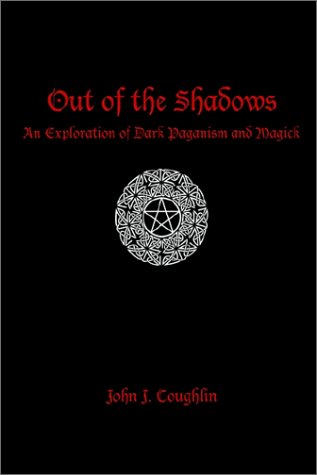
7. Out of the Shadows: An Exploration
$9.35
8. The Paganism Reader
$6.48
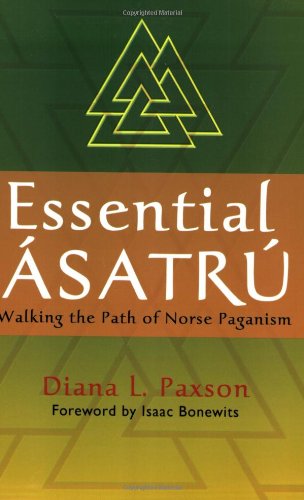
9. Essential Asatru: Walking the
$6.35
10. Rites of Pleasure: Sexuality in
$18.19
11. Her Hidden Children: The Rise
$15.69
12. Egyptian Paganism for Beginners:
$125.00
13. European Paganism: The Realities
$20.00
14. Holy Grail: Ancient Pagan Apocrypha
$0.92
15. The Everything Paganism Book:
$19.10
16. The CR FAQ: An Introduction to
 
$24.99
17. Grimoire Of Shadows: Witchcraft,
$21.00
18. Contemporary Paganism: Listening
$16.13
19. A Community of Witches: Contemporary
$21.00
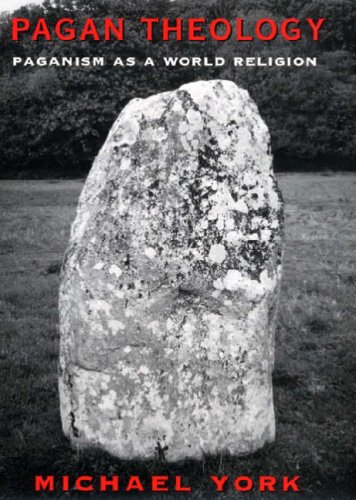
20. Pagan Theology: Paganism as a

1. Paganism: An Introduction to Earth- Centered Religions
by Joyce Higginbotham
Paperback: 272 Pages (2002-07-01)
list price: US$15.95 -- used & new: US$9.01
(price subject to change: see help)
Asin: 0738702226
Average Customer Review: 4.5 out of 5 stars
Canada | United Kingdom | Germany | France | Japan

Customer Reviews (35)

5-0 out of 5 stars pagan plethera
This book provides all of the basic essentials in an easy to understand guide. I enjoy this book because it is not biased to one form of paganism or another and it is very informative and easy to read. There are also helpful meditations and exercises to build your faith.

5-0 out of 5 stars Worthy Exposition of the Essense of 'Modern Paganism'
This is an excellent formal book about what is 'Paganism'.And one of the few pagan books written in a useful work-book format.Many people confuse 'paganism' with 'satanism','nihilism',or 'hedonism'.True satanists are also christian believers.True country pagans are not burdened with the christian-devil dual concept.Atheistic nihilism is a cultureless sterile waste of ones life.And ego-driven hedonism is the selfish pleasures derived at the reckless expense of Mother Nature,that may come back to destroy oneself.My only qualm with the book is that it may come across as 'generic witchcraft' to most wiccan readers.Where is the earthy pagan witchiness of the Farrer's and the Frost's books? The style and presentation of this book is somewhat bland and basic for serious practioners of 'Real Magick'.I guess the purpose of the book is to educate outsiders of the heathen path and persuade the curious new readers of witchcraft to investigate the pagan subject further.And this book is an excellent starting point.I can only recommend it as a good book for beginning readers of the basic essentials of 'Neo-Paganism'.

5-0 out of 5 stars Celtic Info:
I get overwhelmed with information this book
has provided for me. Just love it! This book
is a must have and will be in your library forever!

5-0 out of 5 stars Perfect to clear your doubts.
The format of the book is amazing, it makes the book incredibly easy to digest and understand. If you are considering Paganism as a religious alternative, this is a must read. Even if you are just curious about Paganism it's a must read. All the aspects of this beautiful spiritual path are layed out in the simplest of terms, with no pretentions and with plenty of references for the skeptics you may find out there. If you are studying alternative religions or just trying to find the one that suits your needs the best, I highly recomend this book as a start.

4-0 out of 5 stars Good info
I've been looking for a book about paganism that isn't so centered on Wicca.This is a good one.It's a workbook style so that has helped me too.It has a lot of good info in my opinion.I wouldn't say this is a book for someone already well versed on their Pagan beliefs, but it is a good one for those of us just starting down our path. ... Read more


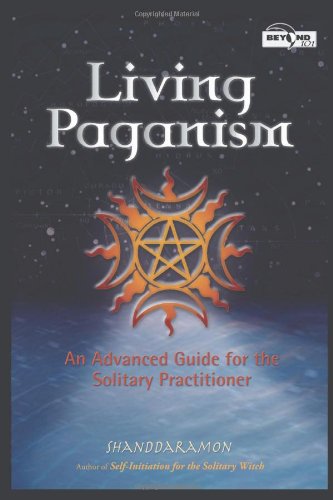
2. Living Paganism: An Advanced Guide for the Solitary Practicioner (Beyond 101)
by Shanddaramon
Paperback: 255 Pages (2005-11-30)
list price: US$14.99 -- used & new: US$6.99
(price subject to change: see help)
Asin: 1564148254
Average Customer Review: 5.0 out of 5 stars
Canada | United Kingdom | Germany | France | Japan
Editorial Review

Book Description
First Shanddaramon led seekers down a path to attaining higher spirituality in his book Self-Initiation for the Solitary Witch. Now, with Living Paganism, he gives readers the opportunity to not only advance in their self-initiated training, but to literally live Paganism.

You have studied books on Paganism. You do rituals at home or in a group. You search for information about Pagan thought and practice but, somehow, it doesn't seem enough. You want your life to reflect your Pagan values. You don't just want to do Pagan things; you want to live your Paganism everyday and through everything you do. That is what a truly spiritual person does and, as a deeply committed practicing Pagan, you can learn to let your spiritual practice become more a part of your life. It can be the essence of who you are.

Living Paganism picks up where Shanddaramon's last book left off and leads the practitioner to determine how to be more fulfilled through connecting spiritual practice to the many sacred cycles of life. In this book, you will learn how to develop Pagan spiritual goals that are balanced and meaningful. Then you will learn to observe and become an active participant in the cosmic cycles of the universe so that you may learn to honor and use those cycles to live your Pagan values. Every day we experience the cycles of Earth, the moon, the sun, and the changes in life. By connecting your practice to these sacred cycles you will learn to create a meaningful and magical life.

Living Paganism enables you to experience more advanced and fulfilling training in your quest for adeptness.

Shanddaramon is He is the author of Self Initiation for the Solitary Witch (New Page Books) and is a regular contributing writer for PagaNet news. He is a writer and artist living in Durham, North Carolina where he teaches art and music, does pastoral and divinatory advising and listening, and teaches Pagan studies classes. He is a founding member, brother, and ordained minister of the Sacred Order of Living Paganism—a fellowship of brothers and sisters dedicated to deep Pagan learning, practice, and service. ... Read more

Customer Reviews (1)

5-0 out of 5 stars Becoming connected to the cycles of life
Shanddaramon's LIVING PAGANISM: AN ADVANCED GUIDE FOR THE SOLITARY PRACTITIONERtells practitioners how to use connecting spiritual practices to become more connected to cycles of life. From learning how to develop Pagan spiritual goals to becoming an active participant in cosmic cycles, LIVING PAGANISM continues Shanddaramon's teachings, begun in SELF-INITIATION FOR THE SOLITARY WITCH.
... Read more


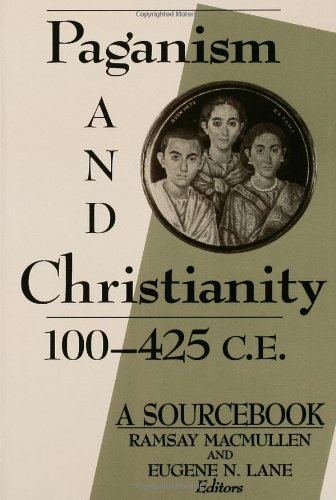
3. Paganism and Christianity 100-425 C.E.
by Ramsay MacMullen, Eugene, N. Lane
Paperback: 312 Pages (1992-01-01)
list price: US$22.00 -- used & new: US$15.00
(price subject to change: see help)
Asin: 0800626478
Average Customer Review: 4.5 out of 5 stars
Canada | United Kingdom | Germany | France | Japan

Customer Reviews (3)

4-0 out of 5 stars An Eclectic Array of First-Hand Pagan and Christian Sources
MacMullen and Lane's Paganism and Christianity (100-425 C.E) presentsreaders with an eclectic array of writings touching every facet of religious life in the Late Roman world.These varied sources were penned by authors as conflicting as Eusebius and Julian and they deal with intriguing aspects of pagan cultus, pagan missionary activity, the Imperial Cult, the Persecutions and also provide pagan and Christian apologetic/theological literature.Overall, these pieces of literature paint a vibrant picture of religious life during this fascinating epoch in history and they convey something of the richness that the multiform belief systems of the Mediterranean world had to offer.Many of these sources are very difficult to find in English translation; and many of them can be quite expensive.So this sourcebook is indispensable, given that it is quite affordable, convenient and very useful.

4-0 out of 5 stars History Brought to Life..........
............ with these genuine texts from the early Christian era. The documents contained within this sourcebook were written primarily by saints, emperors and philosophers and help us clearly envision life during the early Christian period (100-425 C.E.) as it was truly experienced by Christians and Pagans alike. There are texts describing the management of temples and shrines, cults, hymns, religious attitudes, missionizing (non-Christian), and perception by outsiders of Jews, Christians and Gnostics. The most fascinating sources are those pertaining to personal accounts of conversion and various edicts that persecute, at different points in history, Jews, Christians, and Pagans. Also interesting are the sources describing the impact of Constantine's conversion on the spread of Christianity. I highly recommend this sourcebook to anyone interested in early Christianity.

5-0 out of 5 stars The other side of the religious coin
Macmullen and Lane have done a service by presenting a treasure of texts revealing primarily the religious attitudes and experience of non-Christians during the formative years of Christianity. Christians today often assume that the language of faith in the early church was the exclusive domain of Christianity. The authors prove otherwise. The titles of some of the chapters demonstrate therange of experience and language of "pagans." For example: "Magic, Dreams, Astrology, Superstition," "Healing Shrines," "Hymns," "Cult Groups," "Holy Men and Women," and "Hermetism and Gnosticism." The sentiments contained in these texts are mirrored in early Christian churches, naturally, since these attitudes and languages were part of the religious atmosphere breathed by all peoples of the time. The unbiased reader is helped to easily appreciate the cultural and religious kinship between followers of Christ and those of either the Mysteries, philosophy, and mythologizing theologies such as those of the Gnostics.The last six chapters of the book are especially helpful in appreciating the dynamics of conversion and persecution. While I generally do not favor of history-of-religions approach to the study of historical phenomena, I make a strong exception regarding this book. I recommend that the reader use this book as a companion to Keith Hopkins' "A World Full of Gods." ... Read more


4. The Complete Idiot's Guide(R) to Paganism
by Carl McColman
Paperback: 384 Pages (2002-04-18)
list price: US$18.95 -- used & new: US$8.88
(price subject to change: see help)
Asin: 002864266X
Average Customer Review: 4.5 out of 5 stars
Canada | United Kingdom | Germany | France | Japan

Customer Reviews (17)

5-0 out of 5 stars great overview!
This book served as an excellent introduction to Paganism! I am very new to Paganism and am trying to learn as much as I can, so this book was a wonderful resource. I especially liked the open-minded, accepting approach. It presents a wide variety of Pagan paths and suggests that the reader decide what's right for him or her, rather than feel obligated to do things a certain way. Personally, I think this is one of the main points of Paganism, so I thought this approach was especially appropriate. If anyone is curious about Paganism, I highly recommend using this book as a starting off point!

2-0 out of 5 stars Not very in depth
Good for someone who knows absolutely nothing about paganism in general and has no idea which path they are interested in. Or good as a research tool for someone comparing different paths for a school project maybe. This book lightly touches on some paths (Druids, Wicca, etc.) but does not have much in depth info. From my little bit of research on the internet, I already knew that much or more about the different paths that the author mentioned.

4-0 out of 5 stars Good, but could be better.
I'd reccomend this book for those who know little or nothing about Paganism, but the more you know, the less usefull the book will be.Most of the information were things I already knew, but I enjoyed the book and found it a quick read, an enjoyable review.Not bad at all.

4-0 out of 5 stars Paganism
This is a good book.However, there are better books available.If you are a beginner or inquirer, this is a good book to start with.

4-0 out of 5 stars A reassuring intro
If you think you may be a pagan at heart, and want to find out how you can decide for sure, seek no further: this book will provide you with a sound, comprehensive, yet undemanding introduction to the entire concept.McColman, a long-time practising pagan, clearly explains what pagans believe and why, how their beliefs carry over into their everyday lives, what kinds of rituals are typical of them, how to deal with the non-pagans in your life, and where you can find out more.Again and again he reiterates the basic tenet that paganism has no single dogma: you're free to practise it in whatever way feels right for you.Among the most useful of his recommendations: follow the tradition to which you feel most closely drawn.(In my case, probably Native American.)After reading this book, I feel more convinced than ever of my basic pagan-ness, and begin to have some idea of how to get my feet more solidly planted on pagan ground.It's true that McColman seems to concentrate most heavily on the Wiccan and Celtic traditions, but since they're apparently the most popular and visible segments of the pagan community, that's probably inevitable.Once again, it's important to remember that you don't have to join them, or any group at all.Paganism, McColman tells us, is for folks who like to think for themselves rather than blindly accepting what the established religions have to say.If you think of yourself in those terms, it's worth your time to look through this book; you may recognize yourself. ... Read more


5. Christianity and Paganism in the Fourth to Eighth Centuries
by Ramsay MacMullen
Paperback: 288 Pages (1999-10-11)
list price: US$20.00 -- used & new: US$15.00
(price subject to change: see help)
Asin: 0300080778
Average Customer Review: 4.5 out of 5 stars
Canada | United Kingdom | Germany | France | Japan
Editorial Review

Book Description
In this book, MacMullen investigates the transition from paganism to Christianity between the fourth and eighth centuries. He reassesses the triumph of Christianity, contending that it was neither tidy nor quick, and he shows that the two religious systems were both vital during an interactive period that lasted far longer than historians have previously believed. ... Read more

Customer Reviews (10)

5-0 out of 5 stars The History Christianity Never Told
This is a very important book, one that every student of religious history should read. Ramsay MacMullen has undertaken the task of speaking on behalf of a people who were not allowed to speak for themselves: the pagans of the Roman Empire. He points out that the focus of history has been on Christianity; after all, Christians wrote the histories of that era. But he notes as well that the estimates on Christian numbers by Tertullian and Eusebius are "manifestly absurd", an expression "of the authors' zeal and their sense of the distance traveled by their church since the first century." What this amounts to, in MacMullen's view, is that "the Christians, not only in their triumphant exaggerations but in their sheer bulk, today, seriously misrepresent the true proportions of religious history."

Orthodox Christianity was not interested in voices raised in protest. What were seen as heretical writings were burned, as were non-Christian texts and "copyists were discouraged from replacing them by the threat of having their hands cut off." And Christianity's own historians were not interested in giving a balanced accounting of events. MacMullen comments that Eusebius "disclaimed the telling of the whole truth. Rather, he proposed to limit his account to 'what may be of profit.'"

This book attempts to set the record straight. MacMullen notes that previously scholars had thought that paganism had been defeated by the end of the fourth century and all converted to the new faith. This is not true, he tells us. "Stain Augustine did not live in a Christian world" he says and in the book's five chapters proceeds to demonstrate the truth of this assertion.

We see that paganism of the late Roman Empire was alive and well. "It used to be thought that, at the end, the eradication of paganism really required no effort" and that paganism had become a hollow husk. "But historians seem now to have abandoned this interpretation...The real vitality of paganism is instead recognized; and to explain its eventual fate what must also be recognized is an opposing force, an urgent one, determined on its extinction." And we see the extreme measures to which Christianity was willing to resort to stamp out all opposition: fines, confiscation, exile, improsionment, flogging, torture, beheading, and crucifixtion. "What more could be imagined? Nothing. The extremes of conceivable pressure were brought to bear." Nor was this violence restricted to pagans. Speaking of the fourth century, MacMullen says "more Christians died for their faith at the hands of fellow Christians than had died before in all the persecutions."

Like Pagans and Christians before it, Christianity & Paganism in the Fourth to Eighth Centuries must be read for the truth of the past to be understood. The facts have for long been misrepresented and misunderstood, and MacMullen brushes these obstructions away with a masterful hand to reveal the vibrancy of a pagan world scholarship has long consigned to oblivion. I cannot recommend it highly enough.

5-0 out of 5 stars Paganism: Tolerance and Tradition
As far as I know Ramsay MacMullen could not in any way be accurately described as a Pagan. In fact, he does say some things that indicate that he almost certainly is not one. Nevertheless, this is one history book that every well-educated Pagan should read. It's not a pretty story - in fact its an excrutiatingly painful story.

MacMullen deals with most of the important myths about the rise of Christianity and the downfall of Paganism:
(1) that Pagans voluntarily chose to convert to Christianity without coercion
(2) that women, slaves and the rural populations were less loyal to Paganism than the urban male elites
(3) that Paganism "went quietly"
(4) that Paganism simply disappeared without a trace

All of these myths are laid to rest by MacMullen. May they rest in peace.

Despite (apparently) not being a Pagan himself, MacMullen nevertheless displays an uncanny sympathy for and understanding of Classical Paganism. In particular he adeptly captures the spirit of Paganism with the two words "tradition" and "tolerance". Paganism was a Religion and a world-view in which tradition was honored and revered - it was a way for human beings to feel a strong connection to the past and to each other. And it was also a Religion in which tolerance was taken for granted. This is the real take-home lesson of this book.

MacMullen calmly tells the tale of how Christianity grappled with a simple fact: nobody knew exactly how to go about imposing one religion on everyone. It had never been done before and the very idea was not so much objectionable as it was simply incomprehensible. MacMullen tells the horrifying story of how the Christians slowly perfected the repressive machinery necessary to enforce spiritual and psychological conformity. At first edicts against Paganism could be safely ignored - but as the decades and centuries went on, through a combination of savage mob-violence and state terrorism, Paganism was driven underground.

MacMullen makes it clear that Paganism fought to survive. Without probably intending to, he leaves the door wide open for future investigations of the ways in which Paganism continued to survive as a clandestine Religion.

5-0 out of 5 stars Awsome Book, Crappy Footnotes
Well, a lot has been said about this book. Let me just say this: this book is most likely the best out there on the subject. MacMullen's arguments and knowledge of his sources is unquestionable.

This book serves to document the first of many crimes committed by the Christian religion: the bloody persecution of paganism. Temples were destroyed, books burned, and yes, people killed. People would not have to wait for the crusades and the Inquisitions to get a religiously-inspired blood bath. And the terrible thing is, though most at least know of the Inquisitions, the crusades, the Witch trials, etc. nobody remembers the persecution of the pagans, so they basically got away with it. This book serves, in particular, to outline the despicable deeds of Justinian; I cannot wait to get the Secret History. Theodosius, Justinian, et al go down in history with Hitler, Stalin, Moa Zedong, and Pol Pot as the greatest mass murderers in history. Cannot recommend enough. Except for the footnotes; prepare for days of fun as you cite them in discussions and then have trouble actually finding out what in the heck MacMullen is referring to. I don't get it, the notes in Christianizing the Roman Empire were certainly not perfect, but they at least did not require a companion volume to read. Oh, and I liked his writing, if that counts for anything.

4-0 out of 5 stars TGIF?
McMullen has an interesting style that some may find irritating but I rather enjoyed. At times he uses orotund and convoluted sentences reminiscent of Gibbon or Samuel Johnson. At other times he lapses into the first person and uses contractions and old-fashioned slang such as "argy-bargy."It is rather like listening to conversation over the port in the Senior Common room of some ancient college.
I was irritated by the references.These occupy a large part of the book and are grouped as end-notes (Gibbon had footnotes).They often give only a single name of author without date or place of publication.If you track down the author in the bibliography (which is separate) you often still don't get anywhere, even if you remember where in the text you started off.Sometimes the references contain references.
The question of which festivals and folk customs represent survivals of pre-Christian religions is more complex than he acknowledges.It's better dealt with by Ronald Hutton in "Pagan religions of the Ancient British Isles."
I've always been intrigued by the names of the days of the week in Indo-European languages.In French you have Vendredi for Friday. In Welsh we have Dydd Gwener. Who was Gwener?

5-0 out of 5 stars Excellent!
This is a fantastic research book, & for those of you interested in the history of Christianity & Paganism, this is a good & easy read. I'll leave the details for you to read in the book, but this book should prove enlightening. ... Read more


6. A Beginner's Guide to Hellenismos
by Timothy Jay Alexander
Paperback: 220 Pages (2007-06-14)
list price: US$19.95 -- used & new: US$19.05
(price subject to change: see help)
Asin: 1430324562
Average Customer Review: 5.0 out of 5 stars
Canada | United Kingdom | Germany | France | Japan
Editorial Review

Book Description
A Beginners Guide to Hellenismos provides an overview of Hellenic Polytheistic Reconstructionism. Hellenismos is an emerging religious movement attempting to reconstruct the ancient Greek religion. This book supplies the beginner with a guide for practicing Hellenismos. Contrary to the popular misconception, Reconstructionist religions are in no way rigid or dogmatic. In A Beginners Guide to Hellenismos, Timothy Jay Alexander explains how liberating, innovative, and adaptive the modern Hellenic religion is. This book provides the reader with an easy to use and understand guide to begin their worship. It explains in detail modern Hellenic practices and the reasons behind them, and serves as a common sense guide about this fast growing modern religion. ... Read more

Customer Reviews (3)

5-0 out of 5 stars Great Book!!!
An excellent book to introduce the reader to Hellenismos. I was very glad to find this book as there just isn't enough books like this one out there!!!

5-0 out of 5 stars Review of a Beginner's Guide to Hellenismos
As a person who is interested in the cultural and religious belief of the people in Hellenistic Greece and also its place in the post-modern world, I was very impressed by Mr. Alexander's first book Hellenismos Today. In that book he provided us an introduction to the modern Hellenistic Polytheist.

In his second book, a Beginner's Guide to Hellenismos he concisely and practically shows (1) the revelance of the religion in the modern world and how it can be applied to daily life (2) how to worship in the modern world based upon the orthopraxy of the ancient Greeks (3) how to integrate worship and religion into daily life in the modern world.

I was particularly impressed by his chapter on personal worship and especially personal worship in the modern world.

Overall this is a 5/5 book for information with regards to Hellenismos and more importantly how to practice it and integrate it into modern life. This is certainly a book who I would recommend to anyone who is interested in honoring the Gods of Greece.

5-0 out of 5 stars What an Inspiring Book!
After reading Mr. Alexander's first book, Hellenismos Today, and being very impressed, I was very happy to see a second book out so soon.I eagerly snatched it up, as this book was marketed as an intro to actual worship.

As an experienced practitioner of Hellenismos, I was interested to see what the author felt was essential for worship.I admit I was scared.I was worried for nothing, because Mr. Alexander came through again....refusing to whitewash our practices to make it more palatable for the masses.

The beginning of the book is a reinforcement of some of the information provided in Hellenismos Today, and I can understand why...it's not assumed that the first book was read, and some of the information is key to understanding the practice and worship of Hellenismos.

However; I was very impressed with the concise information provided on how to get started on worship.

I was glad to seeMr. Alexander stress orthopraxy and syncretism in the Theology chapter of the book.He makes it clear that while there is room for personal innovation, that there is still a correct way to practice, and a way to create theories using a correct method of thinking.

The Cosmology chapter is expanded in this book, and there are very good sections regarding the Soul, the Afterlife and Reincarnation, and an excellent discussion of "good and "evil".

Mr. Alexander has broken down the Worship of Hellensimos into three dimensions:Public, Personal and Cult...and goes into great detail explaining the differences between each one.The Prayers and Hymns Chapter goes into great detail as well and gives examples of both formal and informal prayers, and also an example of a Hymn.I especially like that he encourages the reader to write their own forms of devotion.

For a novice to Hellensimos, the Chapters on Offerings, Sacrifices and Libations, and Votives is key (in addtion to the basis - prayer).There is often confusion between an offering and a sacrifice, and this book makes it so clear as to what each one is.The differences between a vow and an oath are also clearly defined. Correct disposal of sacrifices and offerings is also included...which is something I wish I had had more information on when I was just starting out.

I think a reader will be inspired to start practicing if they have been afraid to thus far. Some of the misconceptions with Hellenismos is that you have to be a scholar to practice, and Mr. Alexander makes it clear that what the novice needs to do is start practicing.With this book, a reader will have the encouragement and support needed to start worship.Piety, Reciprocity and Moderation are stressed...and even as an experienced practitioner of Hellenismos, I felt a swell of excitement and passion.If that feeling can be expressed to one that has practiced for awhile, I cannot imagine what this book can do for someone new to Hellenismos. This book sends out a spiritual message...and that is crucial to understanding Hellenismos.

The Rites and Rituals Chapter is also very good, explains clearly, Rites of Passage, Rites of Worship and so on.The Festival and Festival Calendar is also included, and Mr. Alexander has a wonderful section on ideas to recreate festivals and secular holidays using a little imagination and personal innovation.

Then the most controversial part of the book comes up:Magick.Once again, Mr. Alexander stresses the differences between Magick and Mysticism, Divination and Shamanic practices.I personally agree with his assessment of magick (spellwork) as impious...others may not.I encourage readers to read this section carefully, and form their own opinion.

For me, personally....the Chapter on Temples, Shrines, Statues and Images was the most inspiring part of the book.The author's enthusiasm for bringing our wonderful religion public again is evident, he writes with passion and eloquence on this subject.


Mr. Alexander leaves us with his final words...and these words are the essence of Hellenic Reconstructionism:

"Hellenismos is not rocket science, it is religion"

This is a very well written book.I highly recommend it for beginning practioners of Hellensimos, and more experienced Hellenic Reconstructionists as well. Check out the Appendix....wonderful information is included. My favorite is Emperor Julian's Oration to the Mother of the Gods.There's also a guide of useful Greek words and an extensive list of epithets of the gods.

This book inspires, sends a spiritual message, and is a practical guide...all at the same time.

Congratulations, Mr. Alexander. You are a fresh new voice for Hellenismos, and I will continue to read anything you put out.


... Read more


7. Out of the Shadows: An Exploration of Dark Paganism and Magick
by John J. Coughlin
Hardcover: 276 Pages (2002-10-22)
list price: US$29.45 -- used & new: US$28.59
(price subject to change: see help)
Asin: 1403350582
Average Customer Review: 4.5 out of 5 stars
Canada | United Kingdom | Germany | France | Japan
Editorial Review

Book Description
Reclaiming the word darkness from its evil associations, this book explores the aspects, imagery, and spirituality of darkness. ... Read more

Customer Reviews (28)

5-0 out of 5 stars Well done!
When it comes to Goth, Dark Paganism, and an honest raw look into how a person evolves or is drawn into the lifestyle of both, look no further than Coughlins self exploration. In Out of the Shadows, the author gives a detailed explaination as to what and who we are, as well as his own personal views on ethics in dark magick.

Highly recommended!

Corvis Nocturnum ~ author of Embracing the Darkness; Understanding Dark Subcultures

4-0 out of 5 stars Short, and definitely to the point!
"Out of the Shadows" was an easy read.I finished it in one afternoon.The content did not drag or oversimplified anything.It left the responsibility to the reader of how to use and digest the info within.Some readers will be a little disappointed in the curt statements and explanations about the Gothic culture, the dark religions, etc., but I think the intent was to get the info out into the open with no apologies intended.Definitely a good read for those who are honestly wanting to explore (not dabble) the 'darkness'.It's like a good snack that should not be eaten like junk food day after day.

5-0 out of 5 stars Darkness
An excellent book on Dark Paganism.I finally found what I was looking for.Highly recommended.

2-0 out of 5 stars Where's the Dark Magick
I might have been expecting too much, but I was disappointed with this book. I did not learn anything on Dark Magick per se. The first half of the book is about a variety of subjects like, Goths, Vampires, Lost Souls, the Collective Unconscious, Dark Deities, Satanism and some other stuff. The second half is about Magick, but it sounds more like High Magick to me. Where's the Dark Magick?

4-0 out of 5 stars I like..
I like this. It is good and dark and Taylor Ellwood says good stuff that's true about this. Yup..Dark and good..Exploring all dark paths that many books do not do, not just linked to one dark path. This is good, and his column in New Witch is..also good. Take care, Vanes ... Read more


8. The Paganism Reader
Paperback: 400 Pages (2004-04-27)
list price: US$42.95 -- used & new: US$9.35
(price subject to change: see help)
Asin: 0415303532
Average Customer Review: 5.0 out of 5 stars
Canada | United Kingdom | Germany | France | Japan
Editorial Review

Book Description
Paganism is not only a contemporary faith movement of increasing popularity, but also an area of considerable interest to scholars in a number of disciplines. The Paganism Reader provides a definitive selection of primary sources in Paganism, ranging from its ancient beginnings to its 20th century reconstruction and revival.Chronologically organised sections, each with an editor's introduction, present extracts from Greek, Norse and Celtic literature and from writings on witchcraft, folk beliefs, shamanism and goddess worship.The recent influences of environmental and feminist movements and of Neopagan interpretations are also considered.Giving full coverage of Paganism's diverse forms and alerting readers to critical academic debates, this is an invaluable guide to Pagan origins and practices. ... Read more

Customer Reviews (3)

5-0 out of 5 stars Beth
If you are interested in the historical, philisophical, and cultural dimensions of Paganism, Clifton's book is the best on the market.Relevant to Wiccans, Reconstructionists, Hermetics, and everything in between, this book will add real depth and color to your spiritual practice.The Paganism Reader is a lovely alternative to academic works about paganism written 'from the outside.'Chas Clifton is Pagan himself and is sensitive to our issues and experiences.An excellent book!

5-0 out of 5 stars Find a place for this book in your library
Sometimes we do not need 'how to' books because our need is not 'how to' but 'why'.Sometimes we need reminders of why we are, as opposed to who we are or what we do.Sometimes we need books that inspire us, or give us a reason for our lives.

The Paganism Reader is a well put together volume that provides us with material that offers inspiration, gentle teachings and insights into the very nature of our spirituality.

Mr. Clifton and Mr. Harvey have put together various works, classified by the time of their writings (classical, proto-revival, revival and diversification) that touch the heart of what it is to be pagan.The material is fresh for the most part, well chosen for content and it's appeal to the pagan reader in a variety of applications.The material can be read as individual pieces, or taken as a whole.It can be used for private meditation or as a group exercise for study.

The classical is represented by various excerpts; from the 'Book of Jeremiah' to 'Pliny the Elder' and material from the 'Irish Cycles' to Geoffrey of Monmouth.The material covers a wide range of myths and mysticism.

The proto-revival material is characterized by excerpts from "Aradia', Aleister Crowley's 'The Book of the Law', Margaret Murray on 'Witchcraft' and Rudyard Kipling's 'A Tree Song', to name a few.

Revival and diversification contains material selected from the writings of Doreen Valiente, GeraldGardner, Robert Heinlein, Marion Bradley, Mr. Clifton and others.There is also a 'Further Reading' list that is quite in depth and a well thought out Index.

The material presented is as diverse as the many paths of paganism.The book offers to the general pagan some wonderful material that will provoke discussion as well as contemplation.
A must have book on your library shelf, it should be included in your 'must read' lists and is a very useful tool for any teacher, as well as a book I would consider a primer for anyone looking at the pagan path.

5-0 out of 5 stars As diverse as nature...
Routledge Press has a strong reputation for putting out fine scholarship and helpful editions for students, scholars, and other interested readers, as this book on Paganism, edited by Chas S. Clifton and Graham Harvey, is no exception to that tradition.This is a reader; it is not a single narrative-strand history nor is it simply a collection of works under the guise of scholarship but really saddled with an agenda.There are three primary sections, largely based on historical division - Part One introduces classical texts from the ancient world, Part Two looks at what are called `proto-revival' texts, and Part Three looks at the revival and diversification of paganism over the past century or so.

The Classical Texts draw on literature from many different cultures (British Isles, Nordic/Icelandic culture, and ancient Egypt as well as the more well-known Israel, Greece, and Rome).There was no one systematic religious framework called `paganism', as these texts indicate, but rather Paganism is a term used to cover a wide range of religious and spiritual ideas.These texts include a diversity of literary forms - autobiography, poems, narrative stories, histories, and even an epistle/letter.

The proto-revival texts include texts that reawaken to a celebration of the natural world and the spirituality inherent in it during the eighteenth and nineteenth centuries.Again, the motivations are diverse (Romantic views of nature, a disillusionment with progress and urbanism, etc.) as well as the types of literature - included here pieces from Rudyard Kipling, Robert Graves, Aleister Crowley and Kenneth Grahame, among others.There is also the entry written by Margaret Murray for the 1929 edition of the Encyclopedia Britannica on witchcraft, a rather sympathetic account of the history of witchcraft, making it something very different than it is popularly envisioned.

The third part explores twentieth century scholarship as well as works written by and for Pagans.Some of the tensions that exist in the diversity that is Paganism have to do with the emphasis on nature versus the emphasis on the self and personal reflection/discovery.Another tension has to do with hierarchy - are there those with power and position or not?Among the many titles given to Pagans today are Witches, Druids, Shamans, Eco-activists, Goddess worshippers, and several others. Magic sometimes plays a role, but not always.Paganism is far from the kind of devil worship sometimes portrayed by church hiearchs.

In the introduction, Clifton and Harvey clearly state that it is not the intention of this collection to steer the reader in any particular direction regarding this texts; to that end, the introduction is but a few pages long, and the list of further readings is quite generous at the end of the book.Clifton does contribute a few articles in Part Three, on nature religion and Western shamanism.

A fascinating study. ... Read more


9. Essential Asatru: Walking the Path of Norse Paganism
by Diana L. Paxson
Paperback: 224 Pages (2006-12-01)
list price: US$12.95 -- used & new: US$6.48
(price subject to change: see help)
Asin: 0806527080
Average Customer Review: 4.5 out of 5 stars
Canada | United Kingdom | Germany | France | Japan

Customer Reviews (8)

4-0 out of 5 stars This is Essential Asatru
This is one of those books where you expect to find one kind of information only to find a more important history lesson on being Asatru.

4-0 out of 5 stars Not as FBL as I Expected
Very nice, understandably written introduction to Norse Paganism.Paxson's book coversa great deal of informationin a short period of time. As an introduction to Asatru it does have all the essentials. I won't retread the points that most of reviewers have already covered.
Probably the most useful section of the bookto me was, "Toasts, Boasts & Oaths".For those of you who are new to Norse Paganism, the section on , "Surviving Your First Heathen Event",is an absolute must read. Additionally the, "Asatru and Wicca",section drew some distinctions between the faiths and will give the novice some pat answers to often asked questions..
I rather liked the, "Heathen Holy Days", section and disagree with the reviewer who stated that they were "Wiccan with a few Asatru concepts grudgingly allowed".The most widely recognized dayswere marked with a Volknot while other celebrations & commemorations are so blatantly obvious that no explanation is needed, i.e., Leif Eriksson Day & Columbus Day.If these holidays were influenced by Wiccan thought then why is there no Norse version Samhaim?
All and all yet another good introductorybook on Asatru/Heathenism. Enough detail to get you more interested but not bored. Consider "Essential Asatru" as the Cliff'sNotes to "Our Troth vol. I & II". This book and Krasskova's "Exploring the Northern Tradition" compliment each other well and will point newcomers in the right general direction. After that they, (the newcomers), should be able tofigure things out on their own.

In Frith,
Spence

"Sic gorgiamus allos subjectatos nunc"
M. Addams

5-0 out of 5 stars Great introduction
This book is a wonderful introduction to heathenry and Asatru, and I would recommend it to anyone trying to get a quick snapshot into whether the religion is right for them.While I thought the table of correspondences for the gods was a bit ceremonial for my taste, I understand why Ms. Paxson chose to use them.Many newbies search for tangible and tactile ways to make their connections and this may be useful.

I also really liked the chapter introductions which fictionalized an actual ritual/sumbel.They really captured the essence and feel, and I hope some may be turned to visiting a real kindred to see that depth of emotion and connection to the gods.

4-0 out of 5 stars Not a main course.
When I received this book, I racked my brain trying to figure out why the author's name was so familiar. By the time I got to the acknowledgements, I had the light bulb go off in my head. Ms. Paxson is the very same author who penned those wonderful fiction books with Marion Zimmer Bradley. These very books were my introduction into the worlds of magic back in my 20s. I settled in for what I was sure was to be a very enjoyable ride.

Each chapter starts off with a scene from a Heathen ritual. From this scene the chapter goes off into small segments of history, customs or mythology based on Norse Paganism. The chapters are divided into three sections called "Rounds" and follow the lines of a typical Heathen ritual. The first section (Round one) is dedicated to Heroes and Ancestors, the second is for Gods and Goddesses, and the final one is entitled Toasts, Boast and Oaths. Following these sections there are some pages with resources, a bibliography and an index. I'm not sure an index is necessary though, as the main body of the book is barely 200 pages long.

This book is a basic introduction for a non-Heathen. It is very lean and briefly touches on many topics. It was an easy read and did not require much effort from the reader. I would have liked to see more of Ms. Paxson's story telling ability in evidence in the mythological sections instead of a bland recounting of the facts related to each personality.

Although I have been to several boasting rituals in the last few decades, I really wasn't aware of many of the backgrounds behind the rites. This book cleared up many of my misconceptions and some of my ignorance on this fascinating branch of Paganism. The book sheds light on the kindred for the non-heathen, but it is so short and only touches on the surface of so many topics, I doubt anyone but a non-heathen would get much out of it. I would classify this book as an appetizer only, but a tasty tidbit non-the-less.

Reviewed by W. Lyon Martin - Auhtor/illustrator of "An Ordinary Girl, A Magical Child."

5-0 out of 5 stars great introduction to asatru
This book is an excellent basic introduction to asatru, especially for those coming to it from the broader neopagan community. It presents the principles and beliefs of the religion in a very straight forward manner, providing a good base for people to decide if they want to learn more. It is also the perfect book to give to curious friends and family to help them understand the heathen in their life. I loved that each chapter is opened with a fictional ritual scene which not only helps illustrate the books points but also gives a descent overview of the heathen community. I also liked that, unlike many other heathen books, while presenting some history of the religion this one doesn't get bogged down in historic names and dates. It covers all the "essential" facts in an entertaining and engaging way, and really gives the reader a feel for Asatru as a vibrant modern religion. ... Read more


10. Rites of Pleasure: Sexuality in Wicca and Neo-Paganism
by Jennifer Hunter
Paperback: 240 Pages (2004-10-01)
list price: US$12.95 -- used & new: US$6.35
(price subject to change: see help)
Asin: 0806525843
Average Customer Review: 4.0 out of 5 stars
Canada | United Kingdom | Germany | France | Japan

Customer Reviews (9)

3-0 out of 5 stars nothing new
It seems to me that the people interwievedin this book have a somewhat similar take on sexuality. I would have enjoyed a more diverse group of voices that also exist in the pagan community like someone who think BDSM isopressive, someone who think polarity and male/female coupling is the only form of true wicca, someone who belives you should be legally handfasted to have sex or kids, celibacy etc. This book as it is now just gives me nothing new. Sad on such an interesting subject.

5-0 out of 5 stars Excellent work!
I really, really, really liked this book. I've pretty much been reading anything I can get my hands on as far as BDSM and sex magic goes, and so the chapter in this book on that topic was what first attracted me. I'm not surprised I like it, though-I think that her 21st Century Wicca is one of the best (and most underappreciated) Wicca 101 texts out there (and you know it has to be good to impress me ;)


This is definitely a unique book in the existing corpus of knowledge regarding paganism and sexuality in general. Rather than a how-to guide for sex magic, it's an excellent discussion of ethics and the role of sex and sexuality in the pagan community. You want your paganism 201 material? Here it is, with intelligent, mature discussion of what can sometimes be sticky (literally and figuratively) subject matter. Hunter punctuates her writing with quotes from a wide selection of interviewees ranging from Annie Sprinkle and Dossie Easton to Donald Michael Kraig and Raven Kaldera.


The topics covered include various sexualities (hetero, homo, bi, etc), polyamory, transgendered people and gender fluidity in the pagan community, BDSM and even sex work, among others. Hunter does an excellent job of treating every topic fairly and evenly. There's also a good chapter on sex magic and preparations thereof, making this a really good guide overall. And, I am absolutely pleased to say that she makes good use of endnote citations and has a wonderful bibliography. (Those of you who have been reading my reviews a while, or my journal, or talking to me in person, or...well...you get the idea, know that the lack of internal citations in pagan nonfic is one of my major pet peeves.)


Overall, I highly recommend this book to any pagan. Hunter offers a lot of food for thought that I think the pagan community really needs to be paying attention to, especially in light of recent social shifts towards the mainstream. As paganism gets more exposure from outside the community, other people will be asking about our views on sex and sexuality. This book addresses a lot of the controversial issues about sex and sexuality in paganism in a manner that not only can help the individual pagan get a better handle on hir own thoughts on the matter, but could even be offered as a text for non-pagans to read.

2-0 out of 5 stars A bit too subversive for my tastes
I'm not sure whether my gripe is more with this particular book or with the larger spiritual community in general, but I'm starting to resent the way in which alternative sexual mores are linked with the pagan community.I'm not Puritan in attitude by any means, and it's interesting to see the different ways in which people can build spirituality into their sex lives.But I'm still annoyed in the way in which BDSM, fetishes, polyamory, etc are linked right into mainstream paganism.Yes, monogamous, "vanilla" sex is touched on too, but almost as a means of highlighting the worth of alternative practices.This is fodder for critics of pagan morality.Gods forbid some pagans have more traditional/mainstream values.In short, I think this book should have been written, but I don't appreciate that it speaks in the name of all pagans...Worth a read though.

4-0 out of 5 stars Solid, insightful book with shaky introduction
_Rites of Pleasure_ is a popular-press book written by a practitioner of contemporary Paganism. It includes a history of Pagan sexuality, Pagan sex gods and symbols, Pagan relationships, sexuality in the Pagan community, gender and queer Paganism, BDSM, sex work, and sex magic. Hunter treats all of these topics in a colloquial, sex-positive voice, supplementing her own thoughts with interview clips from other Pagan practitioners, some of them very well-known (including Carol Queen, Oberon Zell-Ravenheart, Raven Kaldera, Judy Harrow, Don Kraig, Annie Sprinkle, and others).

Hunter shows a great deal of sophistication in many of the chapters. Her Pagan relationships chapter includes a balanced, common-sense introduction to polyamory, while also supporting monogamy as a legitimate relationship style. The chapters on BDSM and sex magic are both provocative and down-to-earth. Hunter emphasizes consent and safety while providing a strong theoretical framework for the use of sexuality and BDSM techniques for spellwork, to achieve ecstatic or visionary trance, for initiatory purposes, and to explore new depths of bonding with a partner or partners. _Rites_ is excellent in its treatment of safer sex, looking in depth at negotiation techniques among networks of lovers and exploring condoms and other latex barriers as magical tools. Finally, Hunter provides a theological grounding for the importance of sexuality within Pagan practice, giving clear explanations of the Pagan belief in immanent deity and providing models of how sexuality can be used as a devotional practice in contemporary Paganism.

The book is somewhat marred, however, by weak introductory chapters, which is where Hunter ventures outside her specialty (contemporary Paganism and sexuality) into history. Hunter gets academic points for pointing out that most narratives of prehistoric Goddess worship are speculation, and for her references to Ronald Hutton's excellent work on Pagan history. Her overuse of Riane Eisler (whose scholarship is notoriously flawed and biased), however, leads to a number of overgeneralizations. Hunter is alive to the diversity of contemporary Paganism; it is a shame she is not more aware of the immense diversity of Christianity and other world religions.

With the exception of these opening chapters, however, _Rites_ is a well-researched, intelligent, accessible book that deals with issues of sexuality in contemporary Paganism with insight and subtlety. I would whole-heartedly recommend it for anyone interested in sex-positive spiritual practice.

1-0 out of 5 stars What editor passed this?
"Some Netspeak is used in this book. If you see some strange 'punctuation,' or an acronym you don't recognize, just ignore it--and buy a computer at your earliest opportunity."

To be honest, this kind of attitude from a writer does not encourage me as to their ability to explain anything.While it is (regrettably) true that "Netspeak" has become nearly ubiquitous, it's hardly something to use as a way of putting oneself above the reader.Ms. Hunter would have been well-served to include a short lexicon in place of this "recommendation" which only serves to alienate. ... Read more


11. Her Hidden Children: The Rise of Wicca And Paganism in America
by Chas S. Clifton
Paperback: 206 Pages (2006-08-28)
list price: US$19.95 -- used & new: US$18.19
(price subject to change: see help)
Asin: 0759102023
Average Customer Review: 4.0 out of 5 stars
Canada | United Kingdom | Germany | France | Japan
Editorial Review

Book Description
A history of wicca and neopaganism in the United States focusing on the post-WW II period. ... Read more

Customer Reviews (6)

4-0 out of 5 stars A fascinating study
I read Mr. Clifton's blog, which is where I first heard of this book.It's a wonderful and amazing study of the origins of Wicca in America - while the history of Wicca in England is a necessary topic to cover in a book like this, Clifton thankfully doesn't go into much detail about it (plenty of books can be found covering that subject.The Triumph of the Moon: A History of Modern Pagan Witchcraft is the essential book for that subject).

I only have one complaint - too short!I wish it was longer, much longer.Great book, but I wish the topics were covered more indepth.Still, it's a great history of paganism and "nature worship" in the states and definitely worth a read and a place on any pagan or comparative religion bookshelf.

4-0 out of 5 stars A Witch Without Her Broom
"her hidden children the Rise of Wicca and Paganism in America" by Chas S. Clifton, is a sobering study into the dark and often misunderstood world of "Wicca", and ..."the Craft."

The book is actually a very well researched text and would make a superb referral book to any college course in Wicca and Paganism in America.
The reality of Wicca's genesis and those who helped mold it's contemporary theology onlyserves to tarnishes the mystique of the subject matter.

I personally, would have preferred a more flowing "story-book" form of literary expressiveness. This would have allowed the reader to maintain just a wee-bit more ofthat "magical mystery."However, that thought alone is "magical thinking" and would have been unrealistic.

This is a very good chronological study andacademic interpretation of
Witchcraft, and Paganism.Like most religions that have undergone years of transformation, the reader can only wonder; "Was there ever a real honest to goodness witch?"

Clifton's study shows the reader there are many brands of self- proclaimed witchs, but... none with a broom!

In my opinion, this is a 4-star book based on the deep caldron of superb information the author gives to his reader.It should be a constant companion to those who have an honestinterest in the truth of religions and those who profess them.

Joseph R. Calmia

2-0 out of 5 stars Riding the Merry Go 'Round
During the Middle Ages (and well into the Renaissance period) scholars, inquisitors, and other "learned men" established an official definition and depiction of witchcraft. This "empirical truth" of the past era is now an acknowledged falsehood in the eyes of most modern scholars who believe that the matter was actually one of hysteria and politics (no witches, no witches' sect).

Modern scholars are now doing today what was being done in the past centuries. In other words they are establishing a definition and depiction of Wicca, once again based on empirical truth.Here again we find an official depiction in which we are told what is true and what is not.Unfortunately the "objective view" of modern scholars is as tainted now as was the view of learned men in past centuries.

In Clifton's book, Her Hidden Children, the author uses words like "purported" instead of reported or claimed.The word purported is far from objective, as is the word "liar" which the author also uses when referring to certain figures in Wicca and Witchcraft today.The personal bias of this so-called "objective" scholar is no more apparent than in his dealing with the topic of hereditary witches.Clifton sees the lack or absence of documentation as absolute proof of the non-existence of hereditary witches (of whom he is highly critical of throughout the book).He goes on to comment that the lack of documentation is "convenient" for people that claim hereditary lineage.In truth the lack is probably anything but convenient for these individuals, for it brings only skepticism, criticism, and alienation to anyone who openly admits to a family tradition.

Many modern scholars point to the depiction of the former image of the witch as evil, and they say that modern witches cannot be descended from them because the modern beliefs and practices bear no resemblance.However, since the former depiction has no roots in any real historical sect, the argument holds no water. It's a failed attempt to have it both ways during a debate.

Clifton's book purports to be a warm, humorous, and sympathetic telling of the origins and evolution of Wicca by an insider.However in this regard it fails to deliver the hype that appears in the endorsements on the back of the book.In the telling of Wicca's story the author uses the accounts of popular figures and organizations as the definitive foundation from which Clifton creates his material for the book.In doing so he fails to take into account the 70 to 80 percent of solitary practitioners who comprise the true body of Wiccan religion.These are the people who actually wrote the history of Wicca and continue to do so without documentation or celebrity status.So again, the empirical truth of scholars is narrow and political, pertaining only to a handful of examples of practitioners who achieve the public eye and who thereby become the role models and definitives (despite being only a minority presence among Wiccans as a whole).

With `Her Hidden Children' Clifton joins the ranks of the new batch of learned men, a brotherhood of such figures as Ronald Hutton, who carry on the work of those during the period of the Inquisition who gave us the official definitions and depictions of witches and witchcraft.Their views are as foreign now to the truth as were those back then in the Middle Ages and Renaissance.Ironically modern scholars like Clifton, while dismissing the idea of any lineage tradition, are actually carrying on one of their own from the time of the Inquisition.Through this they maintain themselves as the authorities who tell us what is truth and what is not, no matter what we experience and believe on our own.

5-0 out of 5 stars A must-have for all American Pagans.
Since the release of Ronald Hutton's "Triumph of The Moon" back in 2000, I have yearned for a book that would take an in-depth look at the history of modern Paganism in America. So I was more than a little excited and hopeful when I heard that Pagan academic Chas Clifton was rising to the task in his new book "Her Hidden Children: The Rise of Wicca and Paganism in America". Finally a book that would take a look at how modern Paganism and Wicca took root in American soil and became one of the fastest growing faiths in the country.

Clifton - knowing that he could in no way cover everything that has happened from the 1930s to the present - has chosen with this book to lay down some basic parameters for talking about modern Pagan history in America. First he concentrates on Wicca: it being the largest and most influential modern Pagan religion in America. Secondly, when moving out from Wicca he generally stays with groups that claim to follow "nature" or "earth" religions. Not getting much attention in this history are the "reconstructionist" Pagan faiths and feminist Wicca.

"...the story of contemporary Paganism in America has too many strands to enumerate. Because of my wish to focus on many Pagans' claim to follow "nature religion," I have for the most part set aside those groups that pay more attention to ethnic roots, such as reconstructed Greek, Roman, ot Norse religions. Their history remains to be written. Even these, however, may yet welcome the label of nature religion or earth religion as it becomes more widely accepted in the larger society. Likewise, I have give the origins of feminist Wicca a fairly brief treatment; since the appearance of Starhawk's The Spiral Dance in 1979, it has received much attention, perhaps to the point of obscuring its context in the larger Pagan story."

These limitations allow Clifton to focus on some little known figures and give credit to some unlikely heroes. One of those unlikely figures responsible for the rapid growth of Wicca and Paganism in America is journalist and parapsychologist Hans Holzer. Holzer, who has written over 138 books in his lifetime was one of the first people to introduce the idea of religious Witchcraft to a mass audience. At a time when finding books written by Pagans was difficult at best, just about anyone could find a cheap paperback copy of "The Truth About Witchcraft" during the 1970s.

"Ever since I wrote "The Truth about Witchcraft," hundreds of people have approached me to show them the way to the nearest coven." - Hans Holzer

Another major theme that emerges in the book is the author's discussion of Wicca (and other related faiths) evolving into "earth" or "nature" faiths. The book plots the course of American culture's heightened awareness of environmental issues and how - post Earth Day in 1970 -modern Pagans were uniquely situated to advance themselves as theologically in tune with the needs of the environment. Clifton also lays out three different kinds of "nature religion" that in one way or another encompass most of modern Pagan religions active today. The first is "Cosmic Nature" (dealing with abstract notions of nature), the second "Gaian Nature" (dealing directly with the natural world), and the third is "Erotic Theology" (dealing with the human body).

These three natures blend and intersect with Wicca and other related faiths (and most modern Pagan theologies incorporate at least two of these concepts) to create a unique "earth religion": a religion grounded in our sacral relationship with the cosmos, our ecosystems, and our bodies.

There is so much more I wish I could cover in this review, the "Gardnerian Magnet", the evolution of non-traditional Wicca, how British Wicca spread in America, and how the notorious Satanist Anton LaVey ended up interviewed or mentioned in most of the books about Witchcraft during the late sixties and early seventies. My only quibble with this book is that I wished it three times as large. This is really only what I hope will be the first in a series of books about how modern Paganism emerged and grew in American soil. Chas Clifton has done yeoman's work here and should be highly praised. An essential book for anyone interested in our history, and how that history is shaping the future of modern Paganism. The bar has just been raised.

5-0 out of 5 stars Finally!
A history of American Wicca.Excellent book.Very well written. Clifton makes the "what happened before" accessable to even the casual reader.For those of us who wish to read actual history in addition to our mythical history this is a must have tome. ... Read more


12. Egyptian Paganism for Beginners: Bring the Gods and Goddesses of Ancient Egypt into Daily Life
by Jocelyn Almond
Paperback: 288 Pages (2004-05-01)
list price: US$12.95 -- used & new: US$15.69
(price subject to change: see help)
Asin: 0738704385
Average Customer Review: 4.5 out of 5 stars
Canada | United Kingdom | Germany | France | Japan
Editorial Review

Book Description
Bring the sacred rites and rituals of ancient Egypt into your Pagan practice today. This beautifully written guide, by noted scholars Jocelyn Almond and Keith Seddon, presents a compelling overview of ancient Egyptian religious and magical beliefs.

Egyptian Paganism for Beginners is unique in its focus on specific rituals for individual gods and goddesses. For solitary practitioners who want to perform daily devotions, it offers genuine invocations and prayers for each of the main Egyptian deities. There are translations of authentic religious texts, along with insightful commentary on relevant Egyptian history, myth, and lore.

Also included in this comprehensive guidebook are practical instructions on how to cast a circle, make a shrine, consecrate statues, and channel oracles. The reader will learn how to safely evoke entities, invoke deities, and "assume the Godform"-a major tenet of ancient Egyptian religion. ... Read more

Customer Reviews (7)

5-0 out of 5 stars Great book, but...
The single handedly the best book I have ever read. But why has the cost been so inflated over retail? I have visited Amazon to replace mine which has signs of heavy use, but I am not paying double and triple the retail price. I will buy directly from Llewellyn or at a local book store. Dont pay over $29.95!!!

4-0 out of 5 stars Good, but Misleading
After reading this book, I was left a little confused. It is a good book, but the names are hellenized, the practices greatly altered, and it is just about the gods and goddesses, it does not contain a lot of the information that someone looking for a genuine egyptian spiritual practice is looking for. This does not contain a great deal of the medu neter of the egyptian spiritual practice, not to mention anything about the nome spirits, the cosmological resonance, the difference between egyptian and wiccan elemental/directional correspondences. If you are looking to worship the egyptian pantheon with a wiccan devotional system, this is an exce;;ent book, is you are interested in the actual beliefs of the egyptians and how to authentically recreate their spiritual practices, I would highly recommend The Sacred Magic of Ancient Egypt, and The Esoteric Wisdom of Ancient Egypt, both by Rosemary Clark, when I received these 2 books, and read them, I was bowled over by how interesting and informative they are.

4-0 out of 5 stars Great Informative Work
In all this book was very well researched and written.The only complaint I have is that not many rituals were included.

5-0 out of 5 stars EXCELLENT RESOURCE!
EGYPTIAN PAGANISM FOR BEGINNERS by Jocelyn Almond and Keith Seddon is an excellent resource for pagans who are drawn to the Egyptian path. Other reviews seem to be fixated on the title "for beginners" and it is a mistake to rate this book on whether or not it lives up to its title, especially since it is often publishers, not authors, that determine a book's title.

The first section of this book is appropriate for readers who consider themselves pagan already, or for those who have a basic understanding of pagan ways. It is not realistic for a reader who has no knowledge of polytheism to pick up this book and think that in 300 pages they will have a complete understanding of paganism or the very complex concepts of Egyptian religion. This book is definitely geared at those who consider themselves pagan and wish to further their understanding of Egyptian ways.

The second section of the book is an encyclopedia of the most important Egyptian deities. Each chapter on each deity explains his or her basic attributes and how each deity fits in as an aspect of one Supreme Being. I considered myself reasonably aware of the Egyptian deities and their roles before reading this book, however this book very much enhanced that knowledge. I have filled the book with highlighting and I know I will continue to refer to it for years to come.

Thank you Jocelyn and Keith for an invaluable resource.

5-0 out of 5 stars Egyptian Paganism for Beginners
I found this work to be very easy to understand. It holds a wealth of information
on the Egyptian religion, their gods and their rites and rituals. The authors have made
the information accessible to all who want to follow the pagan rites of the Egyptians.I found the work easy to understand and filled with sharp insight into the heart of
Egyptian paganism and magic. I recommend this book to anyone starting out on the Egyptian path
as well as any general student of the occult as this work makes an excellent addition to the
occult library. ... Read more


13. European Paganism: The Realities of Cult from Antiquity to the Middle Ages
by Ken Dowden
Hardcover: 400 Pages (1999-11-30)
list price: US$125.00 -- used & new: US$125.00
(price subject to change: see help)
Asin: 0415120349
Average Customer Review: 2.0 out of 5 stars
Canada | United Kingdom | Germany | France | Japan
Editorial Review

Book Description
European Paganism uncovers the facts about pagan rituals and worship, presenting the observations of ancient and medieval pagans themselves and the fulminations of Christian fathers and bishops. Many of the sources cited are available in this book in translation for the first time. ... Read more

Customer Reviews (1)

2-0 out of 5 stars Great erudition...but, basically, a Procrustean bed
It's hard to know how to react to Professor Dowden's book. On the positive side, it covers a great deal of ground, has an impressive bibilography, and features some of the author's own translations (from Old English, German, and Latin, among other languages) of texts that were previously unavailable in English. On the negative side, it tries to cover far too much ground, often holds a contemptuous tone towards it subject matter or the author's voice seems quite sarcastic, and eventually, the whole book collapses by the author's attempt to create a sort of a template of "Indo-European Paganism" that fails to convince this reader.

As Dowden himself admits, there's more than one "paganism" but rather a series of "paganisms."One can't hope to impose the straightforward narrative of one of the "revealed religions," i.e., Christianity, Islam, Judaism, upon a set of systems that varied very much, culture by culture and responded much to local conditions.The author admits this early, then reinforces it with repeated language to this effect later, but he then does the contrary in practice by trying to make everything fit an overarching general theory, step by step.

The earlier chapters begin with fascinating discussions of the sacred groves, sacred waters, the landscape itself, culture by culture.The author wanders from the Aesculetum near Rome and the Grove of Diana at Aricia all the way to Lithuanian tree worship with its generous libations of beer.Dowden continues for many chapters along this route, with a sort of catalogue of paganisms, and their common denominators.This is interesting, although, he seems to hold contempt for his subject matter, especially when discussing the nature of divination or of the gods and their relationship to humanity. I find this to be a disadvantage to an author's appreciation of his subject matter, but this may be entirely my own prejudice.

When the author reaches his penultimate chapter, he tries to tie all of the shards together, through linguistics and details to construct the following ideal template of Indo-European paganism:a council of elders (or of the people) meeting in a sacred grove every so many years (whether 5 or 7 or 9 or whatever) in order to conduct a series of sacrifices, especially human.I found his final denouement to be both unconvincing and trite: it largely fails his subject matter.As he himself admits, many of these pagan cultures had already either discarded human sacrifice or created symbolic substitutes (For example, the Romans outlawed human sacrifice by law in 97 B.C.E., while the Greeks regarded it as so taboo that they belived that Orpheus himself had legislated against it.).In my estimation, Dowden relies too heavily on Germanic and Lithuanian practice in order to enforce this viewpoint and is notably weaker in his arguments when dealing with Classical civilization.

Overall, I find this book to be a notable effort by a man of obvious intellect, but it still fails. ... Read more


14. Holy Grail: Ancient Pagan Apocrypha
by George A. Keryx
Paperback: Pages (2007-08-27)
list price: US$20.00 -- used & new: US$20.00
(price subject to change: see help)
Asin: 0979816009
Average Customer Review: 4.0 out of 5 stars
Canada | United Kingdom | Germany | France | Japan
Editorial Review

Product Description
Was the Holy Grail really a cup from the Last Supper? Or was it something far more enigmatic and powerful, a secret so important to the spiritual Destiny of Europe that the Medieval Church would order the death of a million men, women, and children to silence it? Herein lies the truth which has been suppressed for over 750 yearsthe story you were never supposed to hearas only a true Pagan can tell it. Who is worthy to open the book, and to loose the seals thereof? ... Read more

Customer Reviews (2)

4-0 out of 5 stars Fascinating New Interpretation of Grail Mythos
Drawing upon an enormous wealth of sources and intensive research, author George A. Keryx presents a fascinating investigation into the Holy Grail mythos, and has by far, produced the one of the most comprehensive, exhaustive, and unique investigations into the origins of this enigmatic object. According to Keryx's hypothesis, the story of the Grail
ultimately begins in a prehistoric, polar civilization known to the ancients as Hyperborea. This great cultural and civilizational epicenter long ago succumbed to a decline and collapse brought about by devastating climate changes, followed by a mass exodus of its inhabitants who were dispersed throughout the globe. Over countless millennia, this once-prominent civilization has been relegated to a dim memory preserved
within the strikingly similar folklore and myths relating to it found within various civilizations and cultures spanning the world. In this respect there are noticeable similarities between Keryx's book and that of his predecessor, Julius Evola, whose seminal work The Mystery of the Grail also proposed a Hyperborean origin of the Grail, although
the research of the former is far more extensive and bold in the sheer magnitude of its scope and depth. The underlying research behind Keryx's thesis is exhaustive- extending into the realms of archeology, etymology, mythology, ancient and medieval literature, astronomy, esoteric lore, history, and comparative religion.

Keryx's hypothetical historiography of the Grail spans a broad timeline, beginning with the lost prehistoric civilizations of Hyperborea, Mu and Atlantis, through ancient Egypt, Palestine and the Roman Empire, to the Cathars and Templars of Crusader Europe, and the last days of the Third Reich. While much of what Keryx has hypothesized is highly
speculative by its very nature, which is naturally problematic and inconclusive from an orthodox historical point of view, it is nevertheless a thought-provoking, gripping, and fascinating piece of research. Recommended.

4-0 out of 5 stars All in One place
Dan Brown...DiVinci Code....Holy Blood Holy Grail...... How much more can be said? Well, surprising, alot. I found this book to have it all here, all of it. Every theory in "One place". Thats the beauty of it. With a twist. Not the first book that says it, but I believe the most "complete" book that says it, the Myth of the Holy Grail comes from a different age, and has been high jacked by politics to a hide a story that talks of a time when an advanced people from an ancient civilization came from the Northlands. Keryx does a MASTERFUL job of connecting the dots, breaking through the steryo type of what we've been told, to what is actually there. The Grail well pre-dates christianity, and Keryx shows us how and why. I bought it thinking....oh well, another Grail book...no sir! A highly recommended read....a truth to be told. ... Read more


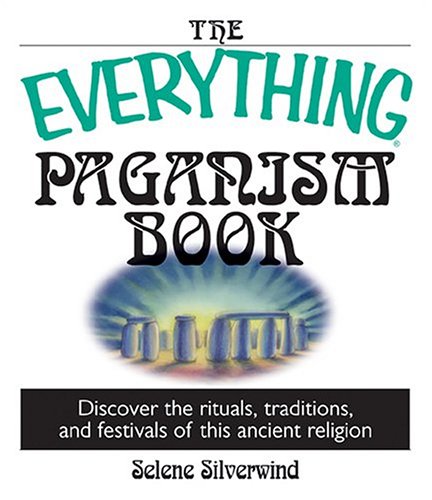
15. The Everything Paganism Book: Discover the Rituals, Traditions, and Festivals of This Ancient Religion (Everything Series)
by Selene Silverwind
Paperback: 305 Pages (2004-08-15)
list price: US$14.95 -- used & new: US$0.92
(price subject to change: see help)
Asin: 1593371187
Average Customer Review: 4.0 out of 5 stars
Canada | United Kingdom | Germany | France | Japan
Editorial Review

Book Description
The history and development of Paganism-all in one volume!

Although Pagans have endured centuries of persecution and condemnation, Paganism has risen to become the seventh-largest organized religion in the world-and is still growing.

The Everything( Paganism Book, written by Selene Silverwind-a practicing Pagan for more than ten years-uncovers the history and beliefs of this ancient faith. The author guides you through the ideology, tenets, and practices that make up Paganism, exploring its Celtic origins and showing how some Pagan rites and rituals have become mainstream today.

Learn all about:

  • Pagan ethics and belief structure
  • Paganism's modern offshoots, such as Wicca
  • The roots of Neo-Paganism
  • The history of Druidism, Shamanism, and more
  • Festivals and celebrations near you

    Supplemented with a glossary of Pagan terms, The Everything(r) Paganism Book is the ideal introduction for anyone with an interest in the ideals and traditions of this ancient religion. ... Read more

    Customer Reviews (4)

    1-0 out of 5 stars Definitely not Everything Paganism
    The book is a very light overview of Pagan religions. As a book targeted to the newbie attempting to discover information on the different Pagan religions and/or is seeking a path, this book is generally not useful. The information that is included is very weak and watered down. Information of the Reconstructionist religions such as Hellenismos, Religio Romana, CR, and Kemeticism is so generalized as to not have any value, and is nothing that a person could not imply from their names.

    The book also fails to do any substantial "compare and contrast" of the religions to give the reader an idea of the many substantial differences. Some chapters, such as those on ethics, magic, sexuality, et al, leaves the reader with the impression that there exists a universal doctrine that Pagans adhere to, and the different paths are nothing more then a different flavoring.

    Ultimately, while I cannot give the book a resounding "do not buy," I cannot recommend it.

    5-0 out of 5 stars Gives a great overview!
    I really love this book. It explains a lot about Neo-Pagainsm, and goes into some det