e99 Online Shopping Mall

Geometry.Net - the online learning center Help  
Home  - Religion - Pantheism (Books)

  1-20 of 100 | Next 20
A  B  C  D  E  F  G  H  I  J  K  L  M  N  O  P  Q  R  S  T  U  V  W  X  Y  Z  

click price to see details     click image to enlarge     click link to go to the store

$6.02
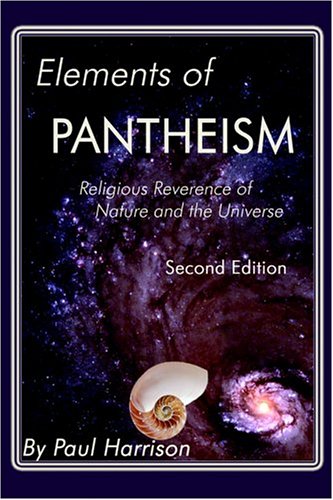
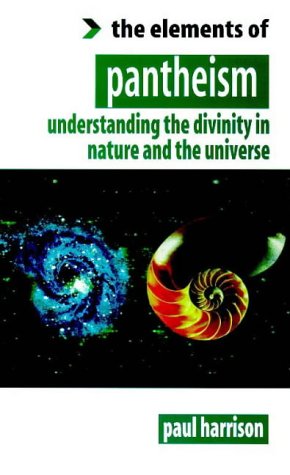
1. Elements of Pantheism
$0.69
2. Rainy Day People
$26.45
3. Pantheism
$80.00
4. Pantheism: A Non-Theistic Concept
$26.73
5. Apologetics in the New Age: A
$5.15
6. The Elements of Pantheism: Understanding
 
7. The Active Universe: Pantheism
$25.28
8. Catholicity And Pantheism: All
$19.95
9. Pantheism and Christianity
$13.32
10. Modern Pantheism
$25.48
11. Modern atheism under its forms
$9.35
12. Pantheism Its Story And Significance
 
$8.40
13. The pantheism of Alan Watts
$9.44
14. Pantheism And Nature
$25.11
15. A Manual Of Hindu Pantheism: The
$9.44
16. Pantheism And Poetry
$9.44
17. Pantheism And The Philosophy Of
$10.13
18. Pantheism And Modern Idealism
$10.13
19. The Philosophical And Scientific
 
20. CATHOLICITY AND PANTHEISM: All

1. Elements of Pantheism
by Paul Harrison
Paperback: 116 Pages (2004-06-24)
list price: US$10.95 -- used & new: US$6.02
(price subject to change: see help)
Asin: 1595263179
Average Customer Review: 4.0 out of 5 stars
Canada | United Kingdom | Germany | France | Japan
Editorial Review

Book Description
This accessible, clear and authoritative handbook is the only available introduction to the history, theory and practice of Pantheism. One of the most extraordinary books written in recent years about the subject of religion. ... Read more

Customer Reviews (5)

2-0 out of 5 stars A poor representation of pantheism
I am a philosophy major, and this book did not have what I was looking for.

4-0 out of 5 stars A very helpful, concise aid to Pantheism
Paul Harrison does an outstanding job of taking a vast subject and enabling the reader to acquire a remarkably complete understanding in a relatively few pages. Although written in very readable prose, this is not a book that one should sit down and read throughat one time. Rather read a chapter at a time. Give a chance for your mind to work.

As for me, I came away from the book with a much more positive attitude toward pantheism.

This book centers chiefly on what Harrison calls "natural" or "scientific" pantheism in contrast to a more religious form of pantheism, which is often referred to as panentheism, which believes that absolute reality contains the known universe but is more than the known universe. Panentheism, IMO, is more suitable for those who seek a belief in supernatural or "spiritual" power/being rather than just the material dimension.

4-0 out of 5 stars A "must read" for the metaphysically-minded
With the volume of pro-atheist books coming to market, most of which suggest that there are only two choices - atheism or the Christian/Judaism/Islam God, it is a real blessing to encounter a book which creates context for spiritual belief and reveals the complexity of alternatives to Western belief concerning deities.

Harrison does a credible job explaining pantheism, what it is and is not, and where it fits on the broad continuum of belief. I particularly liked his forthright manner of confronting the soul-less and desolate landscape of atheism.Panthiesm is an ancient philosophy which can satisfy thinking humans who recognize that there is more to themselves than just their bodies in this one life.

Harrison falls short, in my opinion, in only one area, which is why I would not give the book "5 stars". His own orientation is toward "physicalist pantheism", which views the physical world as its own spiritual experience, as the only reality, and chooses to not address the issues of soul, afterlife, and the progession of humankind back to its divine origins. He acknowledges that there is a "dualist school of thought" in panthism, which does believe in a soul, and which does see a purpose to life beyond just this one life we are currently living. Unfortunately, he stops with this acknowledgement and really doesn't explain it thoroughly, and does not explore Eastern thought in any significant depth.

Since the book is short (and very readible), adding another 25 or 30 pages to explore Eastern Thought and the play of pantehism in those cultures, would have been a wonderful inclusion to Harrison's book. Nevertheless, I would highly recommend the book to any spiritual seekers - especuially those not up to reading Spinoza, but who still want to consider all the alternatives.

5-0 out of 5 stars This is a great book!
I am a pagan and this book is one of my treasures. I read it over and over again. It covers all the pantheism basics on a very clearly stated form.

5-0 out of 5 stars A fine book
I've written a long review, but here's the summary: This book's author, Paul Harrison, is the president of the World Pantheist Movement, which has a web site at www.pantheism.net. If you are unfamiliar with pantheism, check out the website; and if you want more, this book is for you. It covers about the same material as the webpage, but in a bit more depth.

Nevertheless, don't imagine that this is a scholar's book: with about 100 pages of text, it is just a simple introduction--but a good one, accessible to average readers.

In the first chapter, "What is Pantheism?" Harrison explains that pantheism is a religious reverence for nature or the universe, embracing science and affirming life. He contrasts it so several other "isms," such as atheism, panentheism, and so on.

He writes that "when Pantheists refer to the Universe as their god, what they really mean is that they feel the same profound sense of awe and reverence that other believers feel towards their gods. ... Although it does not tell us anything extra about the Universe itself, it expresses the powerful emotions that Pantheists towards the universe." This alludes to high scholarly discussion and criticism of pantheism, but Harrison makes the discussion no more complicated than that.

Chapters two and three sketch a history of pantheism from ancient times to the twentieth century. He finds pantheism in the Hindu Upanishads and the Bhagavad Gita, in Mahayana Buddhism, especially the Hua-yen and Zen traditions, in Taoism (he quotes Chuang Tzu a few times in the book), in some pre-Soctratic philosophers, in the Stoics, Epicureans and Plotinus; he finds hints of it in the Hebrew Bible and Talmud, but especially in the Kabbalah; hints again in the Koran, but especially in the Sufis (he cites Al Hallaj and Ibn Arabi); hints in the New Testament and the Gospel of Thomas, and in a few heretics such as David of Dimant and Amalric of Bena, and also in Meister Eckhart. He regards Giordano Bruno as a post-Christian pantheist, and in this category he places John Toland, Spinoza, Goethe, Schelling, Hegel, the English Romantic poets (at least for parts of their lives), the American Transcendentalists, Richard Wagner, Gustav Mahler. He even admits that Ernst Haeckel was a pantheist. For twentieth century pantheists, he includes Frank Lloyd Wright, Robinson Jeffers, D. H. Lawrence, and Einstein.

The reader need not be intimidated: his discussion of these figures takes only 21 pages! Unfortunately, you will not taste the flavor of those spiritualities, but you will at least realize that pantheism is a "perennial heresy," as Harrison cleverly put it.

He could have included many more examples. For instance the recommended reading, in the appendix, mentioned Jakob Boehme as well. I'd love to see a book that explored these figures and movements further, from a pantheist point of view.

Chapters four and five outline the "core beliefs" of pantheists: reverence of the universe and sacred nature. He writes, "All pantheists feel that the Universe is in some sense worthy of the deepest reverence." Also, "And they accept that the Universe is in important senses a unified whole of which all individual things are interdependent parts."

I have a small objection in these chapters. One reason he considers the universe to be unified is because it is causally interconnected. But that's wrong. The horizons of our own universe (from our perspective) haven't been causally connected for billions of years. And distant galaxies are falling off the apparent edge of the universe because the space between them and us is increasing faster than the speed of light. Events that happen in our galaxy today will never effect them.

But does it matter? I doubt it. The universe (multiverse?) is yet wonderful to behold. But we need to drop references to the interrelatedness of the cosmos: it is not an ecosystem.

He makes a few interesting points in these chapters. For instance, he quotes the pantheist Spinoza, "He who loves God cannot endeavor that God should love him in return," juxtaposed with Richard Dawkins saying that nature is "nothing but blind, pitiless indifference." It's simple enough to say that those statements mean the same thing, but Harrison explores it: Dawkins' terms "seem as little justified as blaming a rock for not feeling compassion."

I imagine Dawkins agrees; he was describing, not blaming. But Harrison knows that this will be a sensitive point for traditional theists and fluffy New Agers; so he explains, "Do you expect the forest to love you back? ... Does it make you love the forest any the less?" I, the choir, was impressed and persuaded, but Harrison went further, getting aggressive with theism: "The question why God would allow pain and evil to exist is one of the most difficult of all for theists to answer. Pantheists do not have to answer it."

His discussion of human significance could be a little better, I think. "And although our lives have no external purpose, we can give them the noble purpose of observing and understanding and loving the universe [strangely switching to a lower-case U here] and nature, and of preserving nature on our planet, and of creating societies where all humans can have dignity and the opportunity for fulfilment."

If I anticipated a cricital audience I would try harder than that. Instead, Harrison moves on to criticize traditional monotheism's account of our significance. I think his criticism is right. But there are spiritualities and philosophies besides pantheism and monotheism. So what he really needs to do is explore pantheist accounts of human significance in greater depth, and more compellingly.

His discussion of sacred nature also has a fatal flaw: it's too glossy. I agree that nature is beautiful to behold, but we have to admit with Tennyson that she is "red in tooth and claw."

Dawkins deserves to be quoted again: "The total amount of suffering per year in the natural world is beyond all decent contemplation. During the minute it takes me to compose this sentence, thousands [thousands? he's underestimating! millions!] of animals are being eaten alive; others are running for their lives, whimpering with fear; others are being slowly devoured from within by rasping parasites; thousands of all kinds are dying of starvation, thirst and disease. It must be so. If there is ever a time of plenty, this very fact will automatically lead to an increase in population until the natural state of starvation and misery is restored." ("River of Life" 132-3.)

Nature may not love us; but indeed she loves none of her creatures.

Dening the violence of nature often includes denying the violence of human nature. But as ever, "Know thyself" means in part, "Face the awful truth." We are cut from the same cloth as the rest of nature.

A mature pantheist spirituality must acknowledge this explicitly, even if we choose to resist it. Whatever the results, we have to confront the beast within: its cage has a back door. A pantheism of denial is New Age kitsch, and it bites us when we're not looking.

Naive environmentalism is an example of the danger. He quotes a "1990 gathering of pscyhologists at Harvard" declaring, "If the self is expanded to include the natural world, behavior leading to the destruction of this world will be experienced as self-destruction."

At best, that is wishful thinking. The Bush and Saud families might approve, but the rest of us need more realism. I'm sure those pscyhologists strengthened their self-esteem, but they will never do anything for the Black Rhino or the Mountain Gorilla until they take a more realistic view of human motivation.

Until pantheism considers the dark side of human nature, and responds, it remains in this respect immature compared to traditional religions. This is important to me, but evidently not to Harrison.

The sixth chapter is on ethics; with conclusions basically similar to Secular Humanism. An in-depth exploration of morality is beyond the scope of an introduction to pantheism; and it would surely divide rather than unite its audience. I'd like to see it anyway, but Harrison is too wise to put it here.

The seventh chapter covered "celebration, meditation and mysticism." It wasn't bad; but again I wanted more.

Chapter Eight is on pantheist "controversies" such as whether some immaterial "spirit" exists, whether there is life after death, and so on. Clearly Harrison's sympathies (and mine) lie with the materialist skeptics, but he makes room for dualists and idealists.

The ninth chapter is about organized pantheism, and Harrison's optimism for its future.

There are some appendices as well: dates of the solstices and major meteor showers and so on; that information is also available on the website.

In all, the book is a fine introduction to pantheism, and I hope that this spirituality continues to flourish. I also hope that books with similar content but more depth appear in the coming years. ... Read more


2. Rainy Day People
by Susan C. Haley, Robert J. Delany
Paperback: 387 Pages (2006-07-01)
list price: US$19.95 -- used & new: US$0.69
(price subject to change: see help)
Asin: 0741428741
Average Customer Review: 5.0 out of 5 stars
Canada | United Kingdom | Germany | France | Japan
Editorial Review

Product Description
"Rainy Day People is a story of struggle and resilience. Its rooted in truth and woven into a fresh fictional tapestry that embraces all the ageless qualities and maladies innate in the human psyche. Widowed early, Amber is content, maybe complacent, in solitude. Soothed by a quirky affinity with Nature, and a trust in a larger purpose, she also has a reckless, belligerent side. Ben is an airline pilot turned successful writer caught up in the glitz of L.A. and its pitfalls at the cost of family, health, and direction. Hes brilliant, crotchety, and determinedly pragmatic in the face of lifes turns. They meet by chance (or was it?) and embark on a journey neither was seeking, or prepared for, culminating in an edge-of-the-seat ending that leaves the reader stunned." ... Read more

Customer Reviews (26)

5-0 out of 5 stars The Audio of this Riveting StoryBrings These Characters to Life
When viewing a Chuck Close canvas, one needs to step back a bit to appreciate it full essence. Such is the case with the power of this wonderful novel. A riveting story is only part of what makes Rainy Day People such a success. The artistry involved in crafting this work enticed me to move from audio to hard copy, then back to audio once again. Through these dual modalities of sight and sound, I was flooded with the very emotions this author's words were meant to evoke. All sensibilities were heightened: sight, sound, touch . . .but foremost, the all-to-human feelings surrounding the experiences of love and vulnerability. Susan Haley is one talented writer. Keep an eye on her. I know I will.

Lois W. STern
Author of SEX, LIES AND COSMETIC SURGERY

5-0 out of 5 stars RAINY DAY PEOPLE
The writer understands the meaning of life and how we are all connected and how to put that meaning into print to touch a person soul.This is a must read even if the author is currently maybe unknown will some day be a great author.After reading this book you become hungry for a new novel by this author. We read the book and listend to the audio and both were great.The book lets you stop and reflect on a certain part but the audio lets you paint a true picture in your mind.The narrator was excellent and a true story teller.I know that you will love it and you to will find your rainbow.

5-0 out of 5 stars A "magical" love story
This heartwarming story of love for all things living was like a hug from my mother. She was a horse whisper and introduced me to nature spirits many years ago. I identified with the magic of this story. When you open your eyes to what is really around you, you will see miracles every day. Ashley in the book claims that there are no coincidences. By the end of the book you realize that what she means is that they are really just God's little miracles.
Rainbows are signs of love and hope in this fantastic book. I saw a completely round rainbow. I happened to look straight up to the sky and there it was, above my head. It was so far away that it was a small circle but all the colors were clearly visible. It too gave me comfort as I was adjusting to widowhood.
Susan Haley is an outstanding writer. Her ability to capture you made the book one of those you can't set down. The clever way she wrote and wove the ending shows why this is an award-winning book. This love story is based on her life experiences. It touched my very soul. I look forward to reading this book again so I can take the time to reflect on the spiritual insights expressed in the conversations between Ashley and Ben.
I recommend this book of courage, love, and of being in touch with all that is. It's like a spiritual awakening.

5-0 out of 5 stars An Outstanding Love Story
Although Rainy Day People comes under the genre of fiction, this story is based on real-life happenstance. Susan Haley transports her readers on an incredible journey that runs the gauntlet of life's emotions and it does not stop until the story ends. Ms. Haley's love of the ocean and the majestic beauty of the land, her love of animals, whether it's a wild bear, a snake, or a six-week-old kitten is manifested in the persona of Amber, the main character. Very briefly, Amber, a widow, meets Ben Riley. Together they embark on a journey which takes them from the warm waters of Florida to the bone-chlling nights of Maine. Amber's love for Ben sustains him as he is dying from cancer, which is unbeknown to Amber. This heart-warming love story ends like a thriller novel. I strongly recommend it.

5-0 out of 5 stars Rainy Day People
The cycles of life can seem predictable and routine...until they AREN'T.The UNEXPECTED can and does reach from within the unseen forces of life and 'grab us' - 're-direct us' - 'unexpectedly TRANSFORMING us.' I think both of this book's main characters (Amber and Ben) discover that even in the deep trenches of life's experiences, NEWNESS is often un-preceived and 'just around the corner.'The surprises, joys, fears...and most importantly, the LOVE that manifests in such moments is what this story is all about.

Ms. Haley's amazing ability to NOTICE the LITTLE things of life that quietly surround us, always nudging us toward a greater awareness of the 'big things' in life, is a gift.This 'gift' she uses with great skill in weaving images of the 'ordinary' into feeling of profound insight and fullfillment. She weaves a tapestry of these 'life experiences' into a work of art that beautifully illustrates the Beauty of Life and the unexpected potential that directs our lives, even when we think we've 'seen it all'......

A JOY to read...Thank you Susan!

Tom Swain ... Read more


3. Pantheism
by J. Allanson Picton
Paperback: 96 Pages (2007-03-15)
list price: US$26.45 -- used & new: US$26.45
(price subject to change: see help)
Asin: 1406743607
Canada | United Kingdom | Germany | France | Japan
Editorial Review

Book Description
RELIGIONS ANCIENT AND PANTHEISM Its Story and Significance RELIGIONS ANCIENT AND MODERN. Foolscap Sto. is. net - per volume IT is intended in this series to present to a large public the SAL IENT FEATURES, first of the GREAT RELIGIONS, secondly of the GREAT PHILOSOPHIES, and thirdly of the . GREAT LITERARY and ARTISTIC REPUTATIONS of the Human Race. PANTHEISM ITS STORY AND SIGNIFICANCE. ByJ. ALLANSON PICTON, M. A. Author of The Religion of the Universe etc. RELIGION OF ANCIENT GREECE. By Miss JANE HARRISON, Fellow of Newnham College, Author of Prolegomena to the Study of Greek Religion, etc. ANIMISM. By EDWARD CLODD, Author of Pioneers of Evolution. RELIGIONS OF ANCIENT CHINA. By H. A. GILES, M. A., LL. D. Aberd., Professor ot Chinese at Cambridge University. The following Volumes are in preparation ISLAM. Mr. T. W. ARNOLD, Assistant Librarian, India Office. BUDDHISM, svols. Prof. RHYS DAVIDS, LL. D. HINDUISM. Mr. T. W. ARNOLD. FETISHISM AND MAGIC. Prof. ALFRED C HADDON F. R. S. THE MYTHOLOGY OF ANCIENT BRITAIN Mr CHARLES SQUIRE. CELTIC RELIGION. Prof. ANWVL. SCANDINAVIAN RELIGION. Mr. W. A, CRAIGIK. THE RELIGION OF ANCIENT EGYPT. Prof. FLIN DERS PETRIE. F. R. S. THE RELIGION OF BABYLONIA AND ASSYRIA Dr. THEOPHILUS Gv PINCHES, PANTHEISM Its Story and Significance BY J. ALLANSON PICTON AUTHOR OF U THE RELIGION JO F THK U N I V K R 5 F. T H E M V ST F. K Y t F MATT KM F. TC LONDON ARCHIBALD CONSTABLE CO LTD BUTLER TANNER, THE SELVTOOD PRINTING WORKS FROMB, AND LONDON, CONTENTS CHAP. PAGE FOREWORD 7 I. PRE-CHRISTIAN PANTHEISM. 1.6 II. POST-CHRISTIAN PANTHEISM ..... 47 III. MODERN PANTHEISM . 56 AFTERWORD 70 PANTHEISM FOREWORD. Pantheism PANTHEISM differs from the systems of to or even belief constituting the main religions Racial. O f the world in being comparatively free from any limits of period, climate, or race. For while what we roughly call the Egyptian Religion, the Vedic Religion, the Greek Religion, Buddhism, and others of similar fame have been necessarily local and temporary, Pantheism has been, for the most part, a dimly discerned back ground, an esoteric significance of many or all religions, rather than a denomination by it self. The best illustration of this characteristic of Pantheism is the catholicity of its great prophet Spinoza. For he felt BO little antagonism to any Christian sect, that he never urged any member of a church to leave it, but rather encouraged his humbler friends, who sought his advice, to make 7 PANTHEISM full use of such spiritual privileges as they appre ciated most. He could not, indeed, content him self with the fragmentary forms of any sectarian creed. But in the few writings which he made some effort to adapt to the popular understand ing, he seems to think it possible that the faith of Pantheism might some day leaven all religions alike. I shall endeavour briefly to sketch the story of that faith, and to suggest its significance for the future. But first we must know what it means. Meaning of Pantheism, then, being a term de-Pantheism. r ve j from two Greek words signifying all and God, suggests to a certain extent its own meaning. Thus, if Atheism be taken to mean a denial of the being of God, Pantheism is its extreme opposite because Pantheism declares that there is nothing but God. This, however, needs explanation. For no Pantheist has ever held that everything is God, any more urOCl 15 Ail than a teacher of physiology, in en forcing on his students the unity of the human organism, would insist that every toe and finger is the man. But such a teacher, at least in these days, would almost certainly warn his pupils against the notion that the man can be really 8 FOREWORD divided into limbs, or organs, or But not i Everything ties, or even into soul and body. In deed, he might without affectation adopt the language of a much controverted creed, so far as to pronounce that the reasonable soul M a and flesh is one man cc one alto-Analogy of the Human gether... ... Read more


4. Pantheism: A Non-Theistic Concept of Deity
by Michael Levine
Hardcover: 404 Pages (1994-08-19)
list price: US$80.00 -- used & new: US$80.00
(price subject to change: see help)
Asin: 0415070643
Average Customer Review: 4.5 out of 5 stars
Canada | United Kingdom | Germany | France | Japan
Editorial Review

Book Description
Spinoza's Ethics has long been considered the most complete attempt at explaining and defending pantheism. Historically, however, pantheism has had numerous forms. Michael P. Levine manages to disentangle the concept from Spinoza to present a broad philosophical and historical survey of pantheism.

The book deals with definitions of pantheism and examines critical distinctions between them. It analyzes both historical and contemporary concepts of pantheism. Levine compares pantheism to theism, discussing how some philosophical problems usually associated with theism can be recast in pantheism and how, if at all, they might be resolved. He also looks at the relationship between belief and practice in pantheism. ... Read more

Customer Reviews (2)

5-0 out of 5 stars "THE" book on Pantheism
I am an Elemental Pantheist and this book is the best book on Pantheism bar none.Mr. Levine has done his work with this well researched book.If you want to understand what real pantheism is - not the junk New Ageists and modern pagans label "pantheism" - please read this book.Pantheism is a viable religious system for the 21st century and beyond.It is very compatible with science and the progress we need to make in order to survive as a species.

4-0 out of 5 stars An excellent pantheology, but...
Pantheism is hardly a new phenomenon, counting among its official and unofficial exponents many renowned philosophers, poets, and artists.It is also an ingredient, often an undigestible one, in most of the world's religions.In recent years the rather diffuse pantheistic currents have gathered together in a number of formal and informal associations -- one, the World Pantheist Movement, is well organized and growing and represents a particular form known first as Scientific and now Naturalistic Pantheism.An excellent introduction to Naturalistic Pantheism as a religious movement can be found in Paul Harrison's ELEMENTS OF PANTHEISM.

Unlike Harrison's short and eminently readable book, Michael P. Levine's PANTHEISM is formal, philosophical, slower going, and more opinionated.He insists, for example, that pantheism is not atheism -- a point I agree with while acknowledging that many pantheists would not insist on that being true.Levine also states upfront that he himself is not a pantheist.I find it a fascinating conundrum that a "non-believer" would take such a hard line on what constitutes the conviction he himself doesn't hold.

Nevertheless, I really enjoyed this book and value it enormously.It is a philosophical and pantheological tour de force, and whether or not one agrees with its conclusions it is to date the best textbook on the subject in existence. ... Read more


5. Apologetics in the New Age: A Christian Critique of Pantheism
by David K. Clark, Norman L. Geisler
Paperback: 254 Pages (2004-06)
list price: US$27.00 -- used & new: US$26.73
(price subject to change: see help)
Asin: 1592447333
Average Customer Review: 5.0 out of 5 stars
Canada | United Kingdom | Germany | France | Japan

Customer Reviews (1)

5-0 out of 5 stars An Essential Christian Apologetics Text
This book, unfortunately, went out of print rather quickly.This was probably because of its specialized and intellectually-advanced treatment of an otherwise popular subject: The New Age Movement (NAM).The same thing happened to another valuable Christian book on the NAM by Tom Snyder called "Myth Conceptions: Joseph Campbell and the New Age" (Baker Books, 1995).The target audience for both books was Christian, but most Christians seem to prefer the more popular and less-specialized treatments on the subject.For those Christians, however, who want to exercise their minds with good, critical analysis of some of the principal intellectual influences on the NAM, then there is no better place to begin than with "Apologetics in the New Age," provided that you can find a copy.

After a general introduction to the topic and its importance, Part 1 expounds the thought of some of the primary historical roots (including those within the last century) that influenced the NAM.The first three thinkers (Suzuki, Shankara, and Radhakrishnan) are Eastern whereas the last two (Plotinus and Spinoza) are Western.Suzuki (1870 - 1966) is known for his key role in introducing Zen Buddhism to the West.Shankara (c. 788 - c. 820) and Radhakrishnan (1888 - 1975), on the other hand, were Hindu thinkers.Plotinus (A.D. 205 - 270) was a Greek philosopher whose influence was profound.As our authors point out, Christian theology felt the effects of his work through Augustine and, by way of Proclus, through an unknown monk known as Pseudo-Dionysius the Areopagite.Pseudo-Dionysius, because he was mistaken as the convert of Paul (Acts 17:34), has had a pervasive influence on medieval works of theology and devotion (mysticism).For further exposition on the thought and influence of Plotinus and Pseudo-Dionysius, see Bernard McGinn's "The Foundations of Mysticism".I must also add, since the authors don't, that Plotinus had a significant influence on Jewish Kabbalah (see Isaiah Tishby's The Wisdom of the Zohar, Volume 1, pg. 237).Kabbalah is highly regarded by occultists (and the NAM in general).Occult orders of the late 19th century such as The Theosophical Society and The Hermetic Order of the Golden Dawn utilized, with modification, its doctrines.Spinoza (1634 - 1677), a philosopher of Jewish descent, is known for his pantheistic naturalism with its anti-supernatural bias.The authors point out that Einstein said he believed in the God of Spinoza and both thinkers shared the belief that whatever happens in Nature happens by necessity.

Part 2 (Evaluation of New Age Pantheism) opens with Chapter 6 which "summarizes pantheism's common threads" and "ties together similar themes in pantheism and shows how these ideas manifest themselves in the thought of typical New Age advocates" (pg. 13).These themes are fleshed out and analyzed in Chapters 7 - 10.I particularly liked the authors' seven "presumably exhaustive" logical alternatives regarding evil (pgs. 204 - 205).Chapter 11 closes the book with a short review of the arguments and a positive (although too short) presentation of the strength of Christian theism.This chapter points out that one does not have to denigrate rationality to cultivate a sense of divine mystery.This is true, I might add, not only for pantheistic mystics but also theistic (and Christian) mystics.

Another book I recommend reading and critically comparing with this one is "The Mystical Languages of Unsaying" by Michael Sells.This book points out that apophasis (which literally means "speaking away") works as a mode of mystical discourse rather than as a negative theology.He points out that the radical claims of apophatic writers, which have usually been written off as hyperbolic or condemned as pantheistic, are essential to understanding the mystical languages of unsaying.Personally, I think that one of the keys to divine mystery is the doctrine of creation ex nihilo.The relationship between the Infinite and finite involves the paradox of nothingness which is essential to God's transcendence and immanence (not withstanding Moreland's analysis of "nothingness" as used by atheistic scientists to mean "zero energy," see "Scaling the Secular City," pgs. 38 - 41).One of the names that the French mystic Marguerite Porete (burned as a heretic by the Inquisition) attributed to God was "FarNear" (see chapter 84 of her book "The Mirror of Simple Souls").God is infinitely near and infinitely far away because of the nothingness that ontologically (and epistemologically via ignorance or "unknowing" - see "Mystical Theology" by Pseudo-Dionysius & "The Cloud of Unknowing" by an unknown English mystic) separates and unites us to God.Because God created us out of nothing, there is "nothing" that separates us from God.This "nothing" is not equivalent to space or mere emptiness (The Indian term for zero was sunya which meant empty or blank, but had no connotation of "void" or "nothing", see Dantzig's Number: The Language of Science).My point is that one doesn't have to be a pantheist (all is God) to appreciate some of the profound mysteries that ground Christian theism and can, in a significant way, contribute to a Biblical Christian Mysticism.As a closing note, I recommend replacing, in the Suggested Reading section, Arthur Johnson's "Faith Misguided: Exposing the Dangers of Mysticism" with Winfried Corduan's "Mysticism: An Evangelical Option?"The latter, although at times too critical or shallow in understanding, is at least more sympathetic than Johnson when it comes to acknowledging a mystical element in Biblical Christianity. ... Read more


6. The Elements of Pantheism: Understanding the Divinity in Nature and the Universe (Elements of)
by Paul A. Harrison
Paperback: 131 Pages (1999-08)
list price: US$9.95 -- used & new: US$5.15
(price subject to change: see help)
Asin: 1862044635
Average Customer Review: 4.5 out of 5 stars
Canada | United Kingdom | Germany | France | Japan

Customer Reviews (8)

5-0 out of 5 stars fine introduction
I've written a long review, but here's the summary: This book's author, Paul Harrison, is the president of the World Pantheist Movement, which has a web site at www.pantheism.net. If you are unfamiliar with pantheism, check out the website; and if you want more, this book is for you. It covers about the same material as the webpage, but in a bit more depth.

Nevertheless, don't imagine that this is a scholar's book: with about 100 pages of text, it is just a simple introduction--but a good one, accessible to average readers.

In the first chapter, "What is Pantheism?" Harrison explains that pantheism is a religious reverence for nature or the universe, embracing science and affirming life. He contrasts it so several other "isms," such as atheism, panentheism, and so on.

He writes that "when Pantheists refer to the Universe as their god, what they really mean is that they feel the same profound sense of awe and reverence that other believers feel towards their gods. ... Although it does not tell us anything extra about the Universe itself, it expresses the powerful emotions that Pantheists towards the universe." This alludes to high scholarly discussion and criticism of atheism, but Harrison makes the discussion no more complicated than that.

Chapters two and three sketch a history of pantheism from ancient times to the twentieth century. He finds pantheism in the Hindu Upanishads and the Bhagavad Gita, in Mahayana Buddhism, especially the Hua-yen and Zen traditions, in Taoism (he quotes Chuang Tzu a few times in the book), in some pre-Soctratic philosophers, in the Stoics, Epicureans and Plotinus; he finds hints of it in the Hebrew Bible and Talmud, but especially in the Kabbalah; hints again in the Koran, but especially in the Sufis (he cites Al Hallaj and Ibn Arabi); hints in the New Testament and the Gospel of Thomas, and in a few heretics such as David of Dimant and Amalric of Bena, and also in Meister Eckhart. He regards Giordano Bruno as a post-Christian pantheist, and in this category he places John Toland, Spinoza, Goethe, Schelling, Hegel, the English Romantic poets (at least for parts of their lives), the American Transcendentalists, Richard Wagner, Gustav Mahler. He even admits that Ernst Haeckel was a pantheist. For twentieth century pantheists, he includes Frank Lloyd Wright, Robinson Jeffers, D. H. Lawrence, and Einstein.

The reader need not be intimidated: his discussion of these figures takes only 21 pages! Unfortunately, you will not taste the flavor of those spiritualities, but you will at least realize that pantheism is a "perennial heresy," as Harrison cleverly put it.

He could have included many more examples. For instance the recommended reading, in the appendix, mentioned Jakob Boehme as well. I'd love to see a book that explored these figures and movements further, from a pantheist point of view.

Chapters four and five outline the "core beliefs" of pantheists: reverence of the universe and sacred nature. He writes, "All pantheists feel that the Universe is in some sense worthy of the deepest reverence." Also, "And they accept that the Universe is in important senses a unified whole of which all individual things are interdependent parts."

I have a small objection in these chapters. One reason he considers the universe to be unified is because it is causally interconnected. But that's wrong. The horizons of our own universe (from our perspective) haven't been causally connected for billions of years. And distant galaxies are falling off the apparent edge of the universe because the space between them and us is increasing faster than the speed of light. Events that happen in our galaxy today will never effect them.

But does it matter? I doubt it. The universe (multiverse?) is yet wonderful to behold. But we need to drop references to the interrelatedness of the cosmos: it is not an ecosystem.

He makes a few interesting points in these chapters. For instance, he quotes the pantheist Spinoza, "He who loves God cannot endeavor that God should love him in return," juxtaposed with Richard Dawkins saying that nature is "nothing but blind, pitiless indifference." It's simple enough to say that those statements mean the same thing, but Harrison explores it: Dawkins' terms "seem as little justified as blaming a rock for not feeling compassion."

I imagine Dawkins agrees; he was describing, not blaming. But Harrison knows that this will be a sensitive point for traditional theists and fluffy New Agers; so he explains, "Do you expect the forest to love you back? ... Does it make you love the forest any the less?" I, the choir, was impressed and persuaded, but Harrison went further, getting aggressive with theism: "The question why God would allow pain and evil to exist is one of the most difficult of all for theists to answer. Pantheists do not have to answer it."

His discussion of human significance could be a little better, I think. "And although our lives have no external purpose, we can give them the noble purpose of observing and understanding and loving the universe [strangely switching to a lower-case U here] and nature, and of preserving nature on our planet, and of creating societies where all humans can have dignity and the opportunity for fulfilment."

If I anticipated a cricital audience I would try harder than that. Instead, Harrison moves on to criticize traditional monotheism's account of our significance. I think his criticism is right. But there are spiritualities and philosophies besides pantheism and monotheism. So what he really needs to do is explore pantheist accounts of human significance in greater depth, and more compellingly.

His discussion of sacred nature also has a fatal flaw: it's too glossy. I agree that nature is beautiful to behold, but we have to admit with Tennyson that she is "red in tooth and claw."

Dawkins deserves to be quoted again: "The total amount of suffering per year in the natural world is beyond all decent contemplation. During the minute it takes me to compose this sentence, thousands [thousands? he's underestimating! millions!] of animals are being eaten alive; others are running for their lives, whimpering with fear; others are being slowly devoured from within by rasping parasites; thousands of all kinds are dying of starvation, thirst and disease. It must be so. If there is ever a time of plenty, this very fact will automatically lead to an increase in population until the natural state of starvation and misery is restored." ("River of Life" 132-3.)

Nature may not love us; but indeed she loves none of her creatures.

Dening the violence of nature often includes denying the violence of human nature. But as ever, "Know thyself" means in part, "Face the awful truth." We are cut from the same cloth as the rest of nature.

A mature pantheist spirituality must acknowledge this explicitly, even if we choose to resist it. Whatever the results, we have to confront the beast within: its cage has a back door. A pantheism of denial is New Age kitsch, and it bites us when we're not looking.

Naive environmentalism is an example of the danger. He quotes a "1990 gathering of pscyhologists at Harvard" declaring, "If the self is expanded to include the natural world, behavior leading to the destruction of this world will be experienced as self-destruction."

At best, that is wishful thinking. The Bush and Saud families might approve, but the rest of us need more realism. I'm sure those pscyhologists strengthened their self-esteem, but they will never do anything for the Black Rhino or the Mountain Gorilla until they take a more realistic view of human motivation.

Until pantheism considers the dark side of human nature, and responds, it remains in this respect immature compared to traditional religions. This is important to me, but evidently not to Harrison.

The sixth chapter is on ethics; with conclusions basically similar to Secular Humanism. An in-depth exploration of morality is beyond the scope of an introduction to pantheism; and it would surely divide rather than unite its audience. I'd like to see it anyway, but Harrison is too wise to put it here.

The seventh chapter covered "celebration, meditation and mysticism." It wasn't bad; but again I wanted more.

Chapter Eight is on pantheist "controversies" such as whether some immaterial "spirit" exists, whether there is life after death, and so on. Clearly Harrison's sympathies (and mine) lie with the materialist skeptics, but he makes room for dualists and idealists.

The ninth chapter is about organized pantheism, and Harrison's optimism for its future.

There are some appendices as well: dates of the solstices and major meteor showers and so on; that information is also available on the website.

In all, the book is a fine introduction to pantheism, and I hope that this spirituality continues to flourish. I also hope that books with similar content but more depth appear in the coming years.

5-0 out of 5 stars Great Book
Great book.I just found out it's not acutally out of print.You can buy it directly from the publisher here:

http://www.pantheism.net/elements/elements.htm

4-0 out of 5 stars An Atheistic version of Pantheism claimed to be Spiritual
This book is an excellent primer of the History of Pantheism, but, with an unfortunate, and a quite unnecessary, Atheistic bias by its' author, Paul Harrison. I am the only reviewer here, thus far, that is NOT a member ofthe authors' WPM or World Pantheist Movement, or its' members callingthemselves, Scientific Pantheists, therefore, my review here is unbiased.The book is an excellent overview of Pantheism, in general, and I dorecommend it highly. However, those that are actually looking for somethingeven remotely" Spiritual " and/or even remotely "Purposeful ", in Life, and/or, in Cosmos, will only come away quitedisappointed.

4-0 out of 5 stars An Atheistic version of Pantheism claimed to be Spiritual
This book is an excellent primer of the History of Pantheism, but, with an unfortunate, and a quite unnecessary, Atheistic bias by its' author, Paul Harrison. I am the only reviewer here, thus far, that is NOT a member ofthe authors' WPM or World Pantheist Movement, or its' members callingthemselves, Scientific Pantheists, therefore, my review here is unbiased.The book is an excellent overview of Pantheism, in general, and I dorecommend it highly. However, those that are actually looking for somethingeven remotely" Spiritual " and/or even remotely "Purposeful ", in Life, and/or, in Cosmos, will only come away quitedisappointed.

4-0 out of 5 stars An Atheistic version of Pantheism claimed to be Spiritual
This book is an excellent primer of the History of Pantheism, but, with an unfortunate, and a quite unnecessary, Atheistic bias by its' author, Paul Harrison. I am the only reviewer here, thus far, that is NOT a member ofthe authors' WPM or World Pantheist Movement, or its' members callingthemselves, Scientific Pantheists, therefore, my review here is unbiased.The book is an excellent overview of Pantheism, in general, and I dorecommend it highly. However, those that are actually looking for somethingeven remotely" Spiritual " and/or even remotely "Purposeful ", in Life, and/or, in Cosmos, will only come away quitedisappointed. ... Read more


7. The Active Universe: Pantheism and the Concept of Imagination in the English Romantic Poets
by H. W Piper
 Unknown Binding: 243 Pages (1962)

Asin: B0007ILXII
Canada | United Kingdom | Germany | France | Japan

8. Catholicity And Pantheism: All Truth Or No Truth: An Essay (1874)
by J. De Concilio
Paperback: 380 Pages (2007-11-03)
list price: US$33.95 -- used & new: US$25.28
(price subject to change: see help)
Asin: 0548730261
Canada | United Kingdom | Germany | France | Japan

9. Pantheism and Christianity
by John Hunt
Paperback: 408 Pages (1997-03)
list price: US$34.95 -- used & new: US$19.95
(price subject to change: see help)
Asin: 1564595692
Canada | United Kingdom | Germany | France | Japan
Editorial Review

Book Description
1884. Contents: Indian Religions; Persian, Egyptian, and Greek Religions; Greek Philosophy; Philosophy of the Jews; Neo-Palatonism; The Church; Heresy; Scholasticism; Mystics; Sufism; Transcendentalism; Poetry; Philosophy; Nature, and Christian Theology. ... Read more


10. Modern Pantheism
by Constance E. Plumtre
Paperback: 148 Pages (2005-12-08)
list price: US$20.95 -- used & new: US$13.32
(price subject to change: see help)
Asin: 1425459692
Canada | United Kingdom | Germany | France | Japan
Editorial Review

Book Description
THIS 146 PAGE ARTICLE WAS EXTRACTED FROM THE BOOK: A General Sketch of the History of Pantheism V1, by Constance E. Plumtre. To purchase the entire book, please order ISBN 0766154335. ... Read more


11. Modern atheism under its forms of pantheism, materialism, secularism, development, and natural laws. By James Buchanan ...
by Michigan Historical Reprint Series
Paperback: 436 Pages (2005-12-21)
list price: US$26.99 -- used & new: US$25.48
(price subject to change: see help)
Asin: 1425547877
Canada | United Kingdom | Germany | France | Japan
Editorial Review

Product Description
This volume is produced from digital images created through the University of Michigan University Library's preservation reformatting program. ... Read more


12. Pantheism Its Story And Significance
by Allanson J. Picton
Paperback: 48 Pages (2004-06-30)
list price: US$15.95 -- used & new: US$9.35
(price subject to change: see help)
Asin: 1419140086
Canada | United Kingdom | Germany | France | Japan
Editorial Review

Book Description
It has been the customary and perhaps inevitable method of writers on Pantheism to trace its main idea back to the dreams of Vedic poets, the musings of Egyptian priests, and the speculations of the Greeks. But though it is undeniable that the divine unity of all Being was an almost necessary issue of earliest human thought upon the many and the one, yet the above method of treating Pantheism is to some extent misleading; and therefore caution is needed in using it.Download Description
It has been the customary and perhaps inevitable method of writers on Pantheism to trace its main idea back to the dreams of Vedic poets, the musings of Egyptian priests, and the speculations of the Greeks. But though it is undeniable that the divine unity of all Being was an almost necessary issue of earliest human thought upon the many and the one, yet the above method of treating Pantheism is to some extent misleading; and therefore caution is needed in using it. ... Read more


13. The pantheism of Alan Watts
by David K Clark
 Unknown Binding: 118 Pages (1978)
-- used & new: US$8.40
(price subject to change: see help)
Asin: 087784724X
Canada | United Kingdom | Germany | France | Japan

14. Pantheism And Nature
by John Hunt
Paperback: 48 Pages (2005-12-08)
list price: US$15.95 -- used & new: US$9.44
(price subject to change: see help)
Asin: 1425313094
Canada | United Kingdom | Germany | France | Japan
Editorial Review

Book Description
THIS 24 PAGE ARTICLE WAS EXTRACTED FROM THE BOOK: Pantheism and Christianity, by John Hunt. To purchase the entire book, please order ISBN 1564595692. ... Read more


15. A Manual Of Hindu Pantheism: The Vedantasara
Hardcover: 152 Pages (2007-07-25)
list price: US$36.95 -- used & new: US$25.11
(price subject to change: see help)
Asin: 0548202656
Canada | United Kingdom | Germany | France | Japan

16. Pantheism And Poetry
by John Hunt
Paperback: 48 Pages (2005-12-08)
list price: US$15.95 -- used & new: US$9.44
(price subject to change: see help)
Asin: 1425313078
Canada | United Kingdom | Germany | France | Japan
Editorial Review

Book Description
THIS 22 PAGE ARTICLE WAS EXTRACTED FROM THE BOOK: Pantheism and Christianity, by John Hunt. To purchase the entire book, please order ISBN 1564595692. ... Read more


17. Pantheism And The Philosophy Of The Jews
by John Hunt
Paperback: 48 Pages (2005-12-08)
list price: US$15.95 -- used & new: US$9.44
(price subject to change: see help)
Asin: 1425313000
Canada | United Kingdom | Germany | France | Japan
Editorial Review

Book Description
THIS 22 PAGE ARTICLE WAS EXTRACTED FROM THE BOOK: Pantheism and Christianity, by John Hunt. To purchase the entire book, please order ISBN 1564595692. ... Read more


18. Pantheism And Modern Idealism
by John Hunt
Paperback: 52 Pages (2005-12-08)
list price: US$16.95 -- used & new: US$10.13
(price subject to change: see help)
Asin: 1425313051
Canada | United Kingdom | Germany | France | Japan
Editorial Review

Book Description
THIS 50 PAGE ARTICLE WAS EXTRACTED FROM THE BOOK: Pantheism and Christianity, by John Hunt. To purchase the entire book, please order ISBN 1564595692. ... Read more


19. The Philosophical And Scientific Aspects Of Pantheism
by Constance E. Plumtre
Paperback: 64 Pages (2005-12-08)
list price: US$16.95 -- used & new: US$10.13
(price subject to change: see help)
Asin: 1425459781
Canada | United Kingdom | Germany | France | Japan
Editorial Review

Book Description
THIS 62 PAGE ARTICLE WAS EXTRACTED FROM THE BOOK: A General Sketch of the History of Pantheism V2, by Constance E. Plumtre. To purchase the entire book, please order ISBN 0766155021. ... Read more


20. CATHOLICITY AND PANTHEISM: All Truth or No Truth, An Essay.
by Rev. J. DeConcilio.
 Hardcover: Pages (1873)

Asin: B000KILFHE
Canada | United Kingdom | Germany | France | Japan

  1-20 of 100 | Next 20
A  B  C  D  E  F  G  H  I  J  K  L  M  N  O  P  Q  R  S  T  U  V  W  X  Y  Z  

Prices listed on this site are subject to change without notice.
Questions on ordering or shipping? click here for help.

site stats