e99 Online Shopping Mall

Geometry.Net - the online learning center Help  
Home  - Religion - Quakers (Books)

  Back | 21-40 of 100 | Next 20
A  B  C  D  E  F  G  H  I  J  K  L  M  N  O  P  Q  R  S  T  U  V  W  X  Y  Z  

click price to see details     click image to enlarge     click link to go to the store

 
21. The Quakers and the English Revolution
$15.00
22. The Faith and Practice of the
$5.00
23. Quaker Testimony (Elizabeth Elliot
$26.53
24. Quaker Strongholds
$27.98
25. Quakers and Baptists in Colonial
$18.24
26. Quakers and the American Family:
 
27. From Quaker To Latter-day Saint
$25.18
28. Forgotten Philadelphia: Lost Architecture
 
$2.27
29. The Quaker Oats Treasury of Best
$17.77
30. Imagination & Spirit: A Contemporary
$39.95
31. Quakers and Nazis: Inner Light
$14.00
32. End Game / New Game: A Quaker
$27.00
33. The Quaker City, Or, the Monks
 
$41.17
34. Hidden in Plain Sight: Quaker
35. A Quaker Book of Wisdom: Life
$5.30
36. Why Friends Are Friends: Some
$8.07
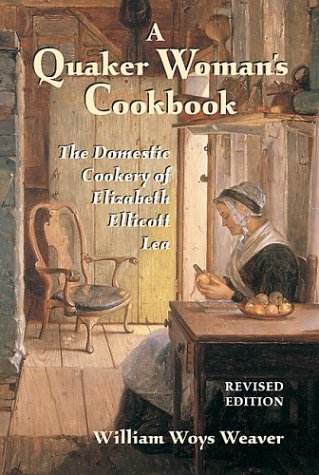
37. A Quaker Woman's Cookbook: The
 
38. Prophets and reconcilers: Reflections
 
39. The Quaker Family in Colonial
$14.39
40. William Penn and the Quaker Legacy

21. The Quakers and the English Revolution
by Barry Reay
 Hardcover: 184 Pages (1985-03)
list price: US$35.00
Isbn: 0312658087
Canada | United Kingdom | Germany | France | Japan

22. The Faith and Practice of the Quakers
by Rufus Jones
Paperback: 152 Pages (2007-03-01)
list price: US$15.00 -- used & new: US$15.00
(price subject to change: see help)
Asin: 0913408573
Canada | United Kingdom | Germany | France | Japan
Editorial Review

Book Description
In-depth discussion of the Quaker method of worship and business, sacraments as an attitude toward life, simplicity, peacemaking, education, and service to others. Reprint of 1927 edition. ... Read more


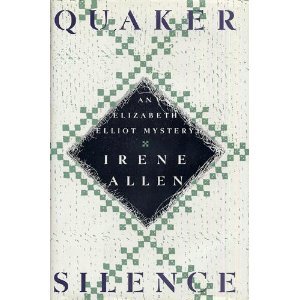
23. Quaker Testimony (Elizabeth Elliot Mysteries)
by Irene Allen
Mass Market Paperback: 272 Pages (1998-01-15)
list price: US$5.99 -- used & new: US$5.00
(price subject to change: see help)
Asin: 0312964242
Average Customer Review: 3.5 out of 5 stars
Canada | United Kingdom | Germany | France | Japan
Editorial Review

Book Description

A simple life...a deadly interruption.

Widow Elizabeth Elliot leads a modest life. As Clerk of the local Quaker meeting, she not only handles the congregation's daily activities, but also is their moral and inspirational leader. So when murder strikes this nonviolent community, suddenly Elizabeth's life gets very complicated.

Facing certain IRS eviction for refusal to pay war taxes, pacifist Quakers Sheldon and Hope Laughton had no idea their lives were in danger. Elizabeth finds herself in a real-life nightmare when she discovers Hope murdered...lying on the kitchen floor in a pool of her own blood. Shocked and horrified, Elizabeth has no time to mourn-- the police think she's the killer. Suspicion swirls in Cambridge, Massachusetts-- pitting Quaker against Quaker-- and only Elizabeth's quiet wisdom can find the murderer.
... Read more

Customer Reviews (6)

4-0 out of 5 stars After William Penn
Elizabeth Elliot of Cambridge, Massachusetts is Clerk of New England's largest Quaker Meeting.Elizabeth, age 67, and Neil Stevenson have been keeping each other company for several years and are at the point in their relationship where it needed to deepen or things would wither.

The clerk finds Hope Laughton dead in her own house.The house was about to become subject to forfeiture because Hope and her husband Sheldon are tax resisters.In the book it is noted that Daniel Boorstin, historian, has suggested that Quakers were hardened against the ordinary accommodations of the world and thus had minimal political influence.

After Elizabeth's entry to the house, federal agents appeared and summoned the police to attend to the matter of the dead woman.In a twenty four hour period Elizabeth is charged with murder and subject to jailing.Suspicion also falls upon Sheldon.As Clerk of the Meeting Elizabeth has a leadership position which she feels called upon to exercise.The result is that she runs down some investigative leads, thereby giving the reader a sense of the peculiarities of some of the individual members of the meeting. She feels overwhelmed by the burdens of the Quaker tesitmony to nonviolence.

Self-justification and rationalization are as deeply embedded in Quakers as in Baptists and Methodists.Elizabeth's correspondance with her college roommate details an instance of clergy abuse of considerable pain to the roommate.After much travail Elizabeth and Neil go to Walden Pond.The solution to the mystery is yielded to in the end as Sheldon discloses to Elizabeth his new faith in Catholicism.Neil and Elizabeth do become closer to each other as family visits and marriage are planned.

The author does a nice job describing a religious group.

1-0 out of 5 stars I am a Quaker
One of the things I like about the Society of Friends is that no one can claim to speak for it, and that includes me. However, I have found all this author's works to be different from any Quakerism I've experienced. It's possible that she's speaking from real experiences that I don't share, but I wince to think that we're being encountered through these books by people who will never encounter us in any other way.

3-0 out of 5 stars Excellent Quaker instruction, mediocre crime mystery
As a British Quaker, this book was of considerable interest to me. The picture it portrays of American Quaker life was a surprise in some ways - the intensity of the faith and the faithfulness of daily behaviour struckme as extremely 'other worldly'. Elizabeth is a likeable woman, and concernfor her kept me reading. However, the actual mystery was very predictablealmost from the first, and the somewhat contrived accumulation of accident,would-be suicide and ultimate detection is not especially well structured. It is, however, courageous to write about murder amongst Quakers, and thePeace Testimony is very well explored, in the light of imperfect humanbeings, and their capacity for sin and self-deception. Rebecca Tope

5-0 out of 5 stars A great mystery with morals!
This is the 3rd Quaker Mystery that I have read by Irene Allen!It is a wonderful book dealing with real life Quaker issues!I felt it was a refreshing twist on your typical mystery.I am looking forward to reading her next one - Quaker Indictment.I am Quaker and the religious aspects of the book are true to the religion!It also was a fun book to read!!I hope others will read Irene Allens Quaker Mysteries!

5-0 out of 5 stars Mystery for Serious Believers
I love reading mysteries, but am often troubled by the situations and the content.I stumbled on Irene Allen's book, Quaker Testimony, at MacIntyre's Fine Books and Bookends at the Village of Fearrington, near Chapel Hill, NC (a wonderful bookstore, by the way).This book tells a good story, reveals some very interesting and very deep characters, and touches on some extremely important issues for our time -- like the place of faith in our lives, the importance and role of faith communities, and the need to accept our brothers and sisters in faith at their word and support their convictions, even when we don't always share them ourselves.The main character, Elisabeth Elliot, is the Clerk of the Quaker Meeting in Cambridge, MA.She is in her 60s, a widow, and a very thoughtful, caring, yet sober and "good" character, in every sense of the word.She has strong convictions and isn't timid about sharing them when necessary.But she does so in a sensitive and compassionate way, with very positive results.I hope this books finds a wide readership among people who enjoy a good mystery but who can't stomach the harshness of writers like Patricia Cornwell all the time. ... Read more


24. Quaker Strongholds
by Caroline Emelia Stephen
Hardcover: 216 Pages (2007-07-25)
list price: US$39.95 -- used & new: US$26.53
(price subject to change: see help)
Asin: 0548180539
Canada | United Kingdom | Germany | France | Japan

25. Quakers and Baptists in Colonial Massachusetts
by Carla Gardina Pestana
Paperback: 211 Pages (2004-03-18)
list price: US$29.99 -- used & new: US$27.98
(price subject to change: see help)
Asin: 0521525047
Canada | United Kingdom | Germany | France | Japan
Editorial Review

Book Description
This book presents the history of two religious sects successfully established in seventeenth-century Massachusetts, where it was illegal to participate in any faith other than the legally established congregationalism of the Puritan founders of the colony.Taking a comparative approach, the author examines the Quaker meeting in Salem and the Baptist church in Boston over more than a century. The work opens with the dramatic events surrounding dissenters' efforts to gain a foothold in the colony, and goes on to locate sectarians within their families and communities, and to examine their beliefs and the changing nature of the organizations they founded and their interactions with the larger community and its leaders.The work deals with the religiosity of lay colonists, finding that men and women responded to these sects differently.It also analyzes sociological theories of sectarian evolution, the politics of dissent, and changes in beliefs and practices.Download Description
This book presents the history of two religious sects successfully established in seventeenth-century Massachusetts, where it was illegal to participate in any faith other than the legally established congregationalism of the Puritan founders of the colony.Taking a comparative approach, the author examines the Quaker meeting in Salem and the Baptist church in Boston over more than a century. The work opens with the dramatic events surrounding dissenters' efforts to gain a foothold in the colony, and goes on to locate sectarians within their families and communities, and to examine their beliefs and the changing nature of the organizations they founded and their interactions with the larger community and its leaders.The work deals with the religiosity of lay colonists, finding that men and women responded to these sects differently.It also analyzes sociological theories of sectarian evolution, the politics of dissent, and changes in beliefs and practices. ... Read more


26. Quakers and the American Family: British Settlement in the Delaware Valley
by Barry Levy
Paperback: 368 Pages (1992-03-12)
list price: US$42.00 -- used & new: US$18.24
(price subject to change: see help)
Asin: 0195049764
Average Customer Review: 4.5 out of 5 stars
Canada | United Kingdom | Germany | France | Japan
Editorial Review

Book Description
This brilliant study shows the pivotal role the Quakers played in the origins and development of America's family ideology. Levy argues that the Quakers brought a new vision of family and social life to America--one that contrasted sharply with the harsh, formal world of the New England Puritans. The Quakers stressed affection, friendship and hospitality, the importance of women in the home, and the value of self-disciplined, non-coercive childrearing. This book explains how and why the Quakers have had such a profound cultural impact on America and what the Quakers' experience with their own radical family system tells us about American families. ... Read more

Customer Reviews (2)

5-0 out of 5 stars An insightful study of early domesticity in American life
Exploring, in detail, the evolution of Quaker cohorts from the mid-seventeenth to the mid-eighteenth century, Levy produces a thorough and novel study of early Anglo-American culture in eastern Pennsylvania.His premise seeks to unravel traditional arguments, which advance the belief that New England served as the primary model, and the origin, for the modern American household.Levy convincingly argues that domestic systems developed through the Quaker families, and not New Englanders, who emigrated from northwestern England.There practices, he contends, shaped the modern American familial landscape and solidified the domestic household.The study, according to Levy, "of Quaker Farmers in the Delaware Valley is chiefly the study of the origins of an influential form of domesticity in American life." (21)

The opening chapters detail the subtle, but important, distinctions between Puritans and Quakers.The former, according to Levy, focused on patriarchy and institutions while the latter emphasized the importance of women in the household, child rearing, and "sanctifying human relations and domestic arraignments in households and meetings."(50)Levy continues to develop the aforementioned arguments throughout his work, and weaves a cohesive, but sometimes dense, narrative that adequately ties Quaker family practices to those adopted by American households today.

Most interesting is Levy's discussion of land in the Quaker community, which focused on the distribution of land to Quakers children, especially their sons.According to the author, about "three hundred acres would seem to ensure to their children's households protection from `the world' and enough peace to enjoy and exemplify the `Truth.'"(137)In a somewhat whimsical follow- up, the author noted that "Puritan farmers left land and not advice."(151)The importance of land in early Quaker culture underscores the national satisfaction that American contemporaries enjoy in land ownership.The author eloquently ties the aforementioned historical landscapes together, and provides a solid argument that Quaker's at least, in some fashion, molded American interest in private land ownership.

Another fascinating aspect of this work is Levy's careful attention to the role of females in Quaker communities.According to the author, women provided a pivotal familial dynamic which was central to the progression of Quakerism.In short, he noted that the Quaker social order "needed expert, hard- working female vessels of seemingly meek purity to embody and communicate `holy conversation' in intimate and public relations." (221) The evidence presented by the author is compelling, that Quaker woman shaped the nuclear family, and thus shaped contemporary American households.

The illustrations in the work supplement, and enhance the author's thematic concentration on Quaker domesticity, especially the oil and canvas sketches by Edward Hicks and Thomas Hillborn.The statistics, while adequate, are less supportive to the author's conclusion and their placement, along with the footnotes, at the end of the work prove to be a minor distraction to the reader.

This work is appropriate for both the colonial novices and experts, and those who have an appreciation for genealogical and religious studies.A really well written and well argued work that lends credence to the hypothesis that the modern American household was shaped more by the Quakers than the Puritans.

4-0 out of 5 stars Quaker Origins of U.S. Ideal of Family Life
First rate social history.

In spite of the mid-eighteenth-century crisis and subsequent decline of Quakerism in Pennsylvania after the American Revolution, the importance of domesticity in the lives of the Pennsylvania Quakers was fundamental to all other aspects of Quaker society, and has had a far-reaching impact on American family life well beyond the colonial era. Quakers (as opposed to New England Puritan emphasis on patriarchy, or the importance of public order and display for the Anglicans) intentionally created the model for the "modern" American family ideal of domesticity for the new republic. While this child-centered, economically and morally self-sufficient model thrived in Pennsylvania from 1681 until the 1750s, its influenceextended well beyond the eastern seaboard colonies and the eighteenth century. It became the model for the later and larger national expansion of the American republic.

Quaker domesticity shaped Pennsylvania's tendencies towards pluralism and republicanism. But it is ironic that the universalization of the Quaker family model coincided with the decline of Quakerism and the rise of a secular republican ideology lauded by various Enlightenment philosophes. "While the separation of church and state was the dominant trend in Anglo-American society, the Quakers actually increased the conflation of Quaker church and Pennsylvania state during the eighteenth century" (p. 155). While political Whigs held Quakers and their pacifism in contempt during the American Revolution, the fall of Quaker political hegemony in Pennsylvania led to a correlation between the private virtue embodied in their form of family life, and the non-authoritarian public virtue of republican political ideology.Pennsylvania's commercial economy and "liberal" society were touted as the model for the new American republic, and it was hoped that it would spread to both New England and the South.In essence, Quaker family ideals were distilled into a source for American culture in general. "The Pennsylvania Quakers originated and established the institution of the morally self-sufficient household in American society" (p. 22). Hence, the modern, Western, child-centered, conjugal, nuclear family as idealized and desperately needed today.

My 4 instead of 5 star rating (it rates a 4.5) is based on the
minor quibble that Levy ignores the downsides of 18th century Quaker family life, and does not explain why if everything was so nurturing and "free," so many Quaker children left the fold and out-married non-Quakers, and hence were banished from the Society of Friends.

For more on the long-term national cultural influence of colonial Quakerism readers should seek out David Hackett Fisher's book, "Albion's Seed." ... Read more


27. From Quaker To Latter-day Saint
by Leonard Arrington
 Hardcover: Pages (0000)

Asin: B000UD12YU
Canada | United Kingdom | Germany | France | Japan

28. Forgotten Philadelphia: Lost Architecture of the Quaker City
by Thomas H. Keels
Hardcover: 320 Pages (2007-09-28)
list price: US$40.00 -- used & new: US$25.18
(price subject to change: see help)
Asin: 1592135064
Average Customer Review: 5.0 out of 5 stars
Canada | United Kingdom | Germany | France | Japan
Editorial Review

Book Description

How does a landmark become, after just a few generations, a landfill?In Forgotten Philadelphia, Thomas Keels takes the reader through a lavishly illustrated journey through three centuries of Philadelphia's architecture: what was built, how the public perceived the value of certain buildings, and why those buildings were eventually demolished.In writing that celebrates Philadelphia past without ever being sentimental, Keels describes a city that was always reinventing itself, filled with people who always had a very measured view of the worth and beauty of its public architecture.
... Read more

Customer Reviews (3)

5-0 out of 5 stars LAMENTED LOST TREASURE OF THE CITY OF BROTHERLY LOVE
This is a great book.Philadelphia was blessed with some beautiful buildings and sad to say many did not service so called progress.The vintage images were very interesting and the text was very informative.Philadelphia did lose many buildings that never should have been destroyed, but many of the historic buildings on Society Hill or great buildings like Independence Hall and its annex buildings, survive and I do like what the park service did to house the Liberty Bell, it's sort of Modern Georgian.It's hard to believe that the iconic City Hall building was so close to being pulled down, it barely survived, I mean can you image Philadelphia without City Hall?!!! so it could have been worse...and Wannamakers is still extant, though it's now called Lord and Taylor and at least the greatest of department store buildings is still open and glorious, but i do wish they would get rid of that ridiculous steel stucture substituting for the great Franklins home..its awful..just rebuild it and let people know it's a reproduction..this is BEN FRANKLINS HOUSE, people!!!I do love how Philadelphia cherish's the great Franklin, he is the greatest of the founding father's and he gets his due respect in his home town..i still cant believe that he does not have a huge memorial in Washington, it's a travesty.Great book..if you have any love at all for architecture history of Philadelphia in general...oh and Philadelphians dont let them tear down Lynnewood Hall in Elkins Park, it's the last of the great Gilded age estates in Philadelphia, it's on it's last leg..dont let it go the way of the late, great Whitemarsh Hall.

5-0 out of 5 stars For all Philaphiles
Tom Keels has produced a treasure of a book.There are many compilations of photographs of old Philadelphia, but Keels supplies what others mostly lack -- a brief but rich history and context for each of the lost buildings he documents.Many of the photographs will be familiar to anyone interested in Philadelphia history, but this should not discourage you from buying the book.You will learn a great deal, thanks to Keels' perspicacious research.Moreover, his prose is graceful and witty, never stodgy.

5-0 out of 5 stars Matthew G. Rosenberger, Publisher, ABC Philadelphia: Travel Guides for Kids
This is an amazing book and concept!It's a guided tour of Philadelphia history like no other.The maps in the book are especially effective in highlighting the changes in the Philadelphia landscape over the years.I used the same Philadelphia based cartographers, NaZa, for ABC Philadelphia to highlight the best and most current places for Philadelphia families today, now I'm wondering about the best family places in Philadelphia from yesteryear.This will be on the top of my holiday list this year. ... Read more


29. The Quaker Oats Treasury of Best Recipes
by Smithmark Publishing
 Hardcover: Pages (1992-03)
list price: US$5.98 -- used & new: US$2.27
(price subject to change: see help)
Asin: 0831731974
Canada | United Kingdom | Germany | France | Japan

30. Imagination & Spirit: A Contemporary Quaker Reader
Paperback: 288 Pages (2003-04-01)
list price: US$19.00 -- used & new: US$17.77
(price subject to change: see help)
Asin: 0944350615
Average Customer Review: 5.0 out of 5 stars
Canada | United Kingdom | Germany | France | Japan
Editorial Review

Book Description
Chicken Soup for the Soul - Quaker style!Imagination and Spirit offers the "best of the best" by contemporary Quaker authors with a brief biography of each. Features work of Daisy Newman, Jessamyn West, Richard J. Foster, Douglas V. Steere, Thomas Mullen, D. Elton Trueblood, Elizabeth Gray Vining, Scott Russell Sanders, Irene Allen, Phil Gulley, James A. Michener, Thomas Kelly, Jan De Hartog, Elfrida Vipont Foulds, and David Yount. ... Read more

Customer Reviews (5)

5-0 out of 5 stars Splendid Anthology
Generally speaking, anthologies promise more than they can deliver.They are like "greatest hits" albums, that often don't contain an artist's best songs.This book, however, captures the width and breadth of Quaker literature.Just as the Catholic tradition has wonderful liturgy (at its best) and Baptists contribute moving gospel hymns, the Quakers have a literary profile second to none.Editor Brent Bill captures the excellence of Quaker literature with a wide variety of authors.The pieces included are diverse, sometimes funny, often moving.And Bill provides introductions that are clear, precise and organized to highlight what the reader should notice in the works.Literature teachers should include this volume in their curriculums.Faith communities should pick this one up and read, discuss, and enjoy.The book is a delight.

5-0 out of 5 stars A Quaker Reader Is Grateful for this Quaker Reader.
In Spirit and Imagination, Brent Bill assembles a wide variety of contemporary Quaker writing, and does so superbly.Though his selections cover the gamut, from fiction to non-fiction, each convey God's active and gracious presence in our world.What a hopeful, helpful book.

5-0 out of 5 stars what you didn't know about Quaker's
Imagination & Spirit is a great read and a wonderful education. I thought that I knew something about Quakerism and the Society of Friends. After reading Imagination & Spirit I have discovered that what I knew was only the surface of the wonderful traditions, practice and customs of Quakers.

Do not get the impression that this is a textbook on Quaker traditions; it is far from that. The educational component is presented stealthily, through Bill's accomplished selection of writings and his wonderful introductions to each author and each story. The book includes selections from a wide historical and style range of Quaker authors including D. Elton Trueblood, Jessamyn West, James A. Michener, Scott Russell Sanders, and Philip Gulley. The selections are marvelous, but it is Bill's introductions and explanations that really make this book shine.

Before each selection Bill gives a brief biography of the author with emphasis on his or her relationship to Quaker tradition. He also sets up each piece with its relevance to some aspect of Quaker life, such as wrestling with the issue of music or the particularities of a Quaker wedding. I came away from each piece feeling like a masterful teacher had just hoodwinked me into learning something about Quakers. Congratulations to Brent Bill for masterfully weaving together a collection of literature from the prolific Quaker tradition.

5-0 out of 5 stars Quiet Presence
This book is a perfect gift for anyone who loves good writing and memorable stories.The diversity of authors insures there is "something for everyone" here.The common thread, however, are essays and stories that celebrate the human spirit and call all of us to deeper reflection about our creative selves.

5-0 out of 5 stars Full of Imagination & Spirit
This collection is full of information and surprises.Did you know James Michenor was a Quaker.Or that some of these pieces were made into movies?With an introduction to Quakers and writing and biographies of each featured author, the book features essays and fiction by the likes of Jessamyn West, James Michener, Scott Russell Sanders, Richard Foster, Thomas Kelly, David Yount, Phil Gulley and more. The piece by Jessamy West is from her "Friendly Persuasion" -- which was just picked by Indianapolis for its "One Book, One City" reading project. C. Michael Curtis, senior editor of The Atlantic Monthly says it has, "Readings that offer both food for thought and surprise around every corner." ... Read more


31. Quakers and Nazis: Inner Light in Outer Darkness
by Hans A. Schmitt
Hardcover: 296 Pages (1997-09)
list price: US$39.95 -- used & new: US$39.95
(price subject to change: see help)
Asin: 0826211348
Average Customer Review: 4.5 out of 5 stars
Canada | United Kingdom | Germany | France | Japan
Editorial Review

Amazon.com
Hans Schmitt knows well the humanitarian work performed by German Quakers during World War II--he was a recipient of their kindness and faith. In a world torn by hate and war, the Society of Friends ministered to all people in pain--Jews and Nazis alike--while risking their lives during meetings in open opposition to Hitler's Reich. In this excellent historical account of both German Quakers and Germany itself, Schmitt details the lives of the Quakers, their fearless work of peace, and the criticism they received for not choosing sides. ... Read more

Customer Reviews (3)

4-0 out of 5 stars And
Schmitt repeatedly stresses in his book the title- Quakers *and* Nazis, not Quakers *verses* Nazis.And that is the beauty of this book.Schmitt writes of how the Quakers in WWII worked to protect people from the Nazis, to engage in feeding programs, clothing the hungry, serving those the Nazis were oppressing, working to release them from prison and concentration camps. All this they do before WWII, during the war, and afterward, throughout the world- Germany, Austria, Poland, Latvia, Holland, Denmark, and even Morocco.

But Schmitt also writes of how the Friends worked to free Nazis from prison, to feed the Nazis and German soldiers, and make sure they were clothed.They believed that no one should be imprisoned for the sake of their conscience, no one should be mistreated for what they believed- no matter how insiduous those beliefs.

There are times when the Quakers struggle with their missions, and times when they don't agree.Reflecting the standard Quaker doctrine that each individual should be guided by the internal Light of the Holy Spirit, some choose to fight for Germany, though most choose the ancient Quaker doctrine of pacifism.Some choose to work in England to try to appease Germany; others realize early on this will not happen.Some are willing to agree with Germany's Semitic separations in feeding the poor and oppressed, in order that they might at least help some; others refuse to be involved in anti-Semitism at all.

Schmitt writes with copious detail, which can lead to some boredom at times- there's a lot of research here, and sometimes you have to wade through it to get to the better parts.I was particularly impressed how, as one reads step by step in the history of the period, how easy it was to not realize the horrific nature of the Nazi regime, from the perspective of the time.Even the Quakers who disagree with the anti-Semitism, violence, and injustice of the Nazis, don't realize the full gamut of the evil of the Nazi regime until the stories come out at war's end.In the beginning, it is one's own country, which has taken a wrong turn, as every country does, in every age.And the wrong turn gets a little worse.And a little worse.And it is so easy to disagree with the actions of one's country, to fight them, but still not realize that that last turn was the one that went far, far too far.

The Friends respond to these wrong turns with love.They decided they would love the Jews, and their fellow Germans.And that they would love the Nazis, as brothers and friends.Just as they won slave-owners in the South to the cause of abolition by loving the slave-owners as brothers, they hoped to win over the Nazis.They succeeded in some small measure in gaining greater rights to care for the oppressed.But most of all, they remained a witness of love and peace, a light in a time of great darkness.

5-0 out of 5 stars A worthy read for both the historian and the faith seeker.
Though not the only source of knowledge about the Quakers during the Naziperiod, it is currently the best.It can also be a practical guide forthose confronting how pacificism and apolitical compassion may be appliedin the face of modern, often evil, totalitarianism.The books documentsthe mistakes, the triumphs, the ideals and tactics of the Friends duringone of their most trying of times.It is not surprising that the Quakerswere recognized via their Friends Service Committee the 1947 Nobel PeacePrize.Strongly recommended.

5-0 out of 5 stars The incredible work of a group of selfless, unsung heroes
Mr Schmidt extensively researched this book to not only reveal the work of the Quakers in Nazi Germany, but also to allow the reader inside the minds of so many of the participants. Though the book can become tedious because of its depth of detail, it also finds its power in those personal stories. Imagine a member of the Gestapo allowing the Quakers to feed the oppressed because he himself had been fed by the Quakers in post WWI relief efforts. This is a piece of history few if any know about, and Mr. Schmidt makes it all interesting. ... Read more


32. End Game / New Game: A Quaker Elder's Way of Peace
by Robert C. Murphy MD
Paperback: 160 Pages (2005-12-20)
list price: US$15.00 -- used & new: US$14.00
(price subject to change: see help)
Asin: 0976667819
Canada | United Kingdom | Germany | France | Japan
Editorial Review

Product Description
Robert C Murphy MD, Quaker, psychiatrist, and ninety years old, shares the joys of great old age, and his dream of peace for the world. One of the important gifts of this book is its invitation to sit still and see the beauty of the world and its perfections, small and large. Murphy gradually comes to an understanding of his journey toward happiness, through broken relationships, and LSD, and it leads finally to a place that his spirit can call home.He shares his passionate desire to see all weapons of mass destruction, especially nuclear ones, removed forever. ... Read more


33. The Quaker City, Or, the Monks of Monk Hall: A Romance of Philadelphia Life, Mystery, and Crime
by George Lippard
Paperback: 632 Pages (1995-07)
list price: US$29.95 -- used & new: US$27.00
(price subject to change: see help)
Asin: 0870239716
Average Customer Review: 4.0 out of 5 stars
Canada | United Kingdom | Germany | France | Japan

Customer Reviews (3)

4-0 out of 5 stars Sensationally wicked masterpiece!
A best-seller in its day, Quaker City is a violent and surreal look at the life of the citizens of Philadelphia in the 1840s. Anyone who likes Edgar Allen Poe or the Marquis de Sade will find this an interesting read; written off by critics as blatantly pulp, before such a term existed, they considered its mass appeal a sign of weakness, and by 1900, it had vanished from most lists of important American novels. I'm glad that critics are reconsidering its position, and I look forward to more of Lippard's novels coming back to print. Devil-bug, the mastermind of evil, is a great villain, and he looks ahead to Jarry's Pere Ubu, Faulkner's Popeye and many of the great surreal or superreal villains of the twentieth century.

4-0 out of 5 stars America's first best-seller.
Anybody who enjoyed Matthew Lewis' 'The Monk' will appreciate George Lippard's "You ain't seen nothin' yet" style. The plot revolvesaround an American version of England's famous 'Hellfire Club' located inPhiladelphia's Southwark region (Historians differ on rather or not 'MonkHall' actually existed. Some claim that such a club did exist from the late1700's until the 1820's. Other claim that the club sprang from Lippard'svery fertile imagination) and features such goodies as white slavery, trapdoors, and wanton booze & oyster abuse (now you know why theRepublicans picked Philly for their convention). This is one wild read.Lippard once attempted to produce it as a play, but angry protestersthreatened to burn down the theater.'The Monks of Monks Hall' wasAmerica's first, real best seller. Read, no doubt, by people who keptuttering "Immoral...shocking...filth..." as they eagerly turnedeach page. Pick up this piece of history now.

4-0 out of 5 stars A Peculiar, Enticing Novel
This is a long, sprawling, peculiar novel, but one that I always enjoy going back to.Iforget, every time I reread it, how wonderful and strange an adventure it is!Lippard is a minor figure in American letters,inspired by early American masters such as Charles Brockden Brown andpopular French novelists such as Eugen Sue.The Quaker City is certainly aflawed work, but it is only more human, engaging and approachable becauseof this fact.Lippard was no master of plot structure or narrativetechnique; in fact, he wasn't much of a craftsman at all, regarding thenuances and fine textures of language.However, he was a writer giftedwith a dizzingly original, and sometimes grotesque, imagination.TheQuaker City is the kind of book that you can't pot down, although part ofyou sometimes wants to.His tale of the intrigues and iniquities lurkingbeaneath the surface of Victorian Philadelphia will shock and amaze.Iespecially recommend this novel for fans of Caleb Carr, Egdar Allan Poe,and Robertson Davies. ... Read more


34. Hidden in Plain Sight: Quaker Women's Writings, 1650-1700
 Paperback: 540 Pages (1995-09)
list price: US$20.00 -- used & new: US$41.17
(price subject to change: see help)
Asin: 0875749232
Average Customer Review: 5.0 out of 5 stars
Canada | United Kingdom | Germany | France | Japan

Customer Reviews (1)

5-0 out of 5 stars Excellent, detailed account of 17th century Quakerism
"Hidden in Plain Sight: Quaker Women's Writings, 1650-1700" was an expensive purchase for me, but it certainly does live up to the cost.

As an anthology of Quaker women's writings in the seventeenth century, "Hidden in Plain Sight: Quaker Women's Writings, 1650-1700" does an excellent job of illustrating the lives and theological perspectives of numerous women who joined what was for its time very much a radical sect. The writings are explained with a clarity that would allow even a beginner to Quakerism to understnad very clearly the character of seventeenth century England.

Yet, at the same time many of the pitfalls undoubtedly present in modern Quakerism are utterly absent here. The theological reflection, the reflection of the presence of the sacred, is completely central throughout all these writings: this serves to ground them in a truly deep spirituality. The result is that we see exactly how the women felt they were being guided, rather than them being guided by outside sources.

Moreover, there is more than a peek into the past in the modern-looking text of the book, and the introductions and long lists of petitioners are a delightfor the historian.

Difficult to find (Pendle Hill have wanted to reprint it) but worth the money nonetheless. ... Read more


35. A Quaker Book of Wisdom: Life Lessons in Simplicity, Service, and Common Sense (Large Print)
Hardcover: Pages (1998)

Isbn: 0739400878
Canada | United Kingdom | Germany | France | Japan
Editorial Review

Product Description
Using illustrations from his own life, Robert Smith teaches us how Quakerism can help us lead simpler, more meaningful and more useful lives. ... Read more


36. Why Friends Are Friends: Some Quaker Core Convictions
by Jack L. Willcuts
Paperback: 98 Pages (1984-03)
list price: US$9.95 -- used & new: US$5.30
(price subject to change: see help)
Asin: 0913342459
Average Customer Review: 4.5 out of 5 stars
Canada | United Kingdom | Germany | France | Japan
Editorial Review

Book Description
What is worship? What do Friends/Quakers believe about baptism and communion? How does the Quaker business meeting work? Those acquainted with Friends, and some Friends themselves, find some of the doctrinal differences of Quakers troubling and confusing. Why Friends Are Friends is an attempt to examine the Quaker past and connect it with the present and the challenges of the future. "These connections," writes Willcuts, "become again our own convictions as we return to the revealed Word and the leadings of the Spirit. This is why Friends are Friends." Topics include worship, the sacraments, the Friends concept of ministry, peacemaking, the Friends business meeting, and living a powerful Christian life. ... Read more

Customer Reviews (2)

5-0 out of 5 stars Definitive Guide to Quaker Beliefs
This is a very definitive encapsulation of Quaker (Friends) beliefs written in a forthright, easy to understand format.Jack Willcuts wrote thisseveral years ago, but it stands the test of time and is a fantastic reference book to refresh Quakers on the core beliefs.I bought it for that purpose and found that it can also be an excellent reference for any church on how to work within the community in carrying out Jesus' ministry.

4-0 out of 5 stars Good Little Book
Willcuts is a clear writer, and was devoted to both Christ Jesus and to those of His servants who call themselves Friends (or Quakers).

What this book gives you is a clear, concise (6 chapters, totallying only about 100 pages) description and defense of some Evangelical Quaker distinctives.Specifically, he speaks of evangelical Quaker worship, the Quaker view of the sacraments, calling to ministry, pacifism, and rule by consensus (or "getting the sense of the meeting").So, if that's what you want, that's what you'll get.

If you're looking for a historical or comparative approach to these issues, this is not the book you want.Willcuts is specifically evangelical in his approach.You may want to try a book like A Living Faith, by Wilmer Cooper, if you want a historical comparative approach.

If you're looking for a history of Quakerism, this is also not the book you want.Willcuts is presenting the stance of evangelical Quakers of today.

If you're looking for a full-fledged defense of Quaker theology, you certainly won't get that here (try Barclay's Apology).Willcuts assumes basic Christianity as a background, and confines himself to talking about specifically evangelical Quaker issues.

As an Evangelical Friend who appreciates ecumenism, I found this book to be a good summary of what other Christians should be told if they want to know what is different about my denomination, and also provided a decent basis for them. ... Read more


37. A Quaker Woman's Cookbook: The Domestic Cookery of Elizabeth Ellicott Lea
by Elizabeth E. Lea, William Woys Weaver
Paperback: 384 Pages (2004-03)
list price: US$14.95 -- used & new: US$8.07
(price subject to change: see help)
Asin: 0811700739
Canada | United Kingdom | Germany | France | Japan
Editorial Review

Book Description
In this long-awaited paperback edition, food historian William Woys Weaver revises and expands the lengthy material that supplements a reprint of Elizabeth Ellicott Lea's 1845 cookbook Domestic Cookery. In his introduction, Weaver reveals new information on Lea, her Quaker world, and her cookbook. A glossary traces the origins and histories of the foods in Lea's book, placing them in cultural context. The cookbook is a quintessential example of rural American folk cookery of the nineteenth century, representing a mingling of southern Pennsylvania and Tidewater cuisine. Modern kitchen conversions are included. ... Read more


38. Prophets and reconcilers: Reflections on the Quaker peace testimony (Swarthmore lecture)
by Wolf Mendl
 Unknown Binding: 106 Pages (1974)

Isbn: 0852451156
Canada | United Kingdom | Germany | France | Japan

39. The Quaker Family in Colonial America: A Portrait of the Society of Friends
by J. William Frost
 Paperback: Pages (1973)

Asin: B000J0HQL2
Canada | United Kingdom | Germany | France | Japan

40. William Penn and the Quaker Legacy (Library of American Biography Series) (Library of American Biography)
by John Moretta
Paperback: 288 Pages (2006-12-31)
list price: US$20.67 -- used & new: US$14.39
(price subject to change: see help)
Asin: 0321163923
Average Customer Review: 3.5 out of 5 stars
Canada | United Kingdom | Germany | France | Japan
Editorial Review

Book Description

As the leader of one of the most progressive religious sects to emerge from England, William Penn envisioned Pennsylvania as an example of how a God-inspired society could succeed in the wilderness of North America.

However, once in the New World, Quakers pursued both wealth and power, proving that even the most devout could not resist the temptations of the New World.Despite this moral struggle, Pennsylvania , succeeded beyond anyone’s imagination. By Penn’s death in 1718, Pennsylvania was well on its way to becoming the most commercially successful colonial enterprise in English history.

This new addition to the Library of American Biography Series vividly follows Penn from his time in England, the son of a revered war hero, to his controversial conversion to the Quaker faith, to the realization of his dream: the holy experiment, Pennsylvania.

Quaker, Pennsylvania, American colonies, William Penn. United States Survey 1, Upper-level colonial history courses

... Read more

Customer Reviews (2)

3-0 out of 5 stars Intriguing and very all-encompassing
The biography, William Penn and the Quaker Legacy by John A. Moretta recounts the life of well-known pacifist, Quaker, and creator of Pennsylvania, William Penn.Penn impacted both American and English society by being an outspoken proponent of religious freedom and for reflecting his Quaker ideals in his political decisions.Moretta's biography takes one on a journey through Penn's turbulent political, spiritual, and emotional life.
William Penn was born in 1644, the son of a wealthy English sea captain, and lived a lonely childhood in a home with a father who was rarely present. He was put into both classical and practical schooling, however his true interest was intense reading of the Bible and pondering the Quaker messages of George Fox.As a young boy Penn became enraptured by Quaker practices and much to his father's chagrin, at age 23, he became a devoted follower.While father and son rarely understood each other, the relations his father's status allowed him to develop, like his friendship with King Charles and his brother James, would be how Penn was able to succeed throughout his life.
Penn created a stir in England and Ireland by preaching, debating, and, after being imprisoned, writing pamphlets extolling and validating the Quaker tradition.Some of his main arguments were that one should always live and dress in a plain way, people were naturally good, and that Jesus preached the brotherhood of man, meaning no wars or arms.Penn's family status, money, and his cunning use of words managed to get him out of jail the many times that he was imprisoned by the angry puritans.
As a young man Penn realized Quakers would never be free to worship in England and became fully dedicated to the development of a safe haven for Quakers and all other religious people in the New World.In 1676 Penn began the intense planning and negotiations for the colony which would meet many obstacles in the following decades.The colony was to be built on the idea that all men and women could own land and worship their own religion.While most of Penn's plans did not work out, one of the biggest things he accomplished was a peaceable relation with the Native Americans.Political disputes, personal debt, and constant pressure from the Crown and surrounding colonies kept William and Pennsylvania in a constant state of turmoil, having Pennsylvania's economic prosperity being one of the few things keeping the experiment alive.By 1700 Pennsylvania had become a state of 15,000 people, largely in part to internal emigration by people from other states wanting to worship freely and escape militia duty.Penn died in 1718 at the age of 73 having had two wives, numerous children, and many trials that he overcame using his prestige, support from the Friends, and his intelligence.He left the right to govern Pennsylvania, a state where people of different religions coexisted, with the Crown and gave the land to twelve people in American and England, including his wife.
This book was full of historical detail regarding Penn's life and gave tremendous insight in to William Penn as a person rather than just what he accomplished.Bringing in Penn's attitudes to issues allowed the book to read smoothly and allowed the reader to understand Penn on a deeper level.I particularly enjoyed how Moretta would tie a lot of events back to Penn's relationships with people important to him; his father, mother, wife, children.This put in perspective that Penn was still a human being and not just a machine who was constantly working to accomplish his next great thing.However, occasionally it would quickly skip over key historical events, requiring one to do further research into the time that Penn was living. Also, perhaps to make the book a smooth read, I frequently found myself wondering the date in which something had occurred.Oftentimes I was confused as to whether it was that in one particular year a tremendous number of events occurred or if that the writer was presenting information that spanned over a number of years.Even when I looked back to pages I had already read, this never became clear to me.
In my opinion the book made the key historical developments in Penn's life unclear because it gave a very similar amount of attention to things that seemed to be of varying importance.In that sense I wish the book had been more succinct in clearly elaborating or stating that certain events had a particularly large impact on history or Penn's life.Also, because there was so much detail about trivial events, I found the book could be repetitive and felt that the information could have been condensed.
Moretta's book left me with a deep respect for Penn and appreciation for the fact that he had been a far from perfect person but had still done tremendous good in his life.I was confused regarding certain historical developments that had been glossed over in the book (The Glorious Revolution, the Great Fire of London, the reign of William and Mary) and was curious to research more.In regards to Penn's development of the state of Pennsylvania, I did find myself wondering how much of his endeavor was a desire for religious freedom and how much was a desire to fulfill his need to wander and quest for economic prosperity.William Penn lived a determined life full of a quest for more and attaining a deeper understanding of these has made me have a strong appreciation for his strength to persevere through the tremendous opposition he met along the way.

4-0 out of 5 stars A Much Needed Book
I am very pleased to find a book on this topic.Although his writing sometimes seems a little more aimed at college/ history students than the general public, John Moretta does a good job of drawing a full, yet succinct, picture of the man and his times.The content and the topic make this book a very worthwhile purchase.
Besides being a valuable lesson on a significant part of our nation's history, there is much to learn from reflection on Penn's life. His journey from being a child of privilege, rejecting that heritage, embracing egalitarianism and eventually returning to a preference for privilege is a good representation of the way many people travel a full circle in their lives.His desire to both profit personally while at the same time helping others with the founding of a colony ended up benefiting others but not himself.The conflict of idealism and financial pragmatism is a dilemna countless individuals with an altruistic bent must confront as well.And there are many other valuable reflections as well.
For more information on the founding of the Quaker movement, see "First Among Friends: George Fox and the Creation of Quakerism" by H. Larry Ingle. ... Read more


  Back | 21-40 of 100 | Next 20
A  B  C  D  E  F  G  H  I  J  K  L  M  N  O  P  Q  R  S  T  U  V  W  X  Y  Z  

Prices listed on this site are subject to change without notice.
Questions on ordering or shipping? click here for help.

site stats