e99 Online Shopping Mall

Geometry.Net - the online learning center Help  
Home  - Religion - Rastafarianism (Books)

  1-20 of 50 | Next 20
A  B  C  D  E  F  G  H  I  J  K  L  M  N  O  P  Q  R  S  T  U  V  W  X  Y  Z  

click price to see details     click image to enlarge     click link to go to the store

$10.16
1. The First Rasta: Leonard Howell
$3.93
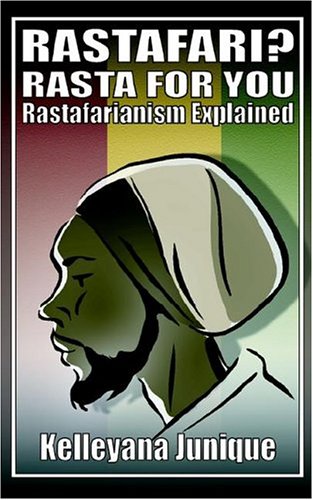
2. Rastafari? Rasta For You: Rastafarianism
 
3. The role of religion in Caribbean
 
4. Black Youth, Rastafarianism, and
 
5. Rastafarianism, an expanding Jamaican
 
6. Rastafarianism (Publication series
 
7. The philosophy of Bob Marley:
 
$5.95
8. Words, sounds, and power in Jamaican
$9.66
9. The Rastafarians
$12.84
10. The Kebra Negast: The Lost Bible
$31.96
11. Rastafari: From Outcasts to Culture
$8.08
12. Journeys to the Spiritual Lands:
$24.34
13. Chanting Down Babylon Pb
$15.48
14. From Garvey to Marley: Rastafari
15. A Modern Translation of the Kebra
 
$26.96
16. Umbanda
$24.95
17. Rastafari: A Universal Philosophy
$13.87
18. Rastafarian Journey
 
$5.40
19. The Rastafarians (Revised and
 
$199.00
20. Black Paradise: The Rastafarian

1. The First Rasta: Leonard Howell and the Rise of Rastafarianism
by Helene Lee
Paperback: 320 Pages (2004-01-01)
list price: US$16.95 -- used & new: US$10.16
(price subject to change: see help)
Asin: 1556525583
Average Customer Review: 4.5 out of 5 stars
Canada | United Kingdom | Germany | France | Japan
Editorial Review

Book Description

Going far beyond the standard imagery of Rasta—ganja, reggae, and dreadlocks—this cultural history offers an uncensored vision of a movement with complex roots and the exceptional journey of a man who taught an enslaved people how to be proud and impose their culture on the world. In the 1920s Leonard Percival Howell and the First Rastas had a revelation concerning the divinity of Haile Selassie, king of Ethiopia, that established the vision for the most popular mystical movement of the 20th century, Rastafarianism. Although jailed, ridiculed, and treated as insane, Howell, also known as the Gong, established a Rasta community of 4,500 members, the first agro-industrial enterprise devoted to producing marijuana. In the late 1950s the community was dispersed, disseminating Rasta teachings throughout the ghettos of the island. A young singer named Bob Marley adopted Howell's message, and through Marley's visions, reggae made its explosion in the music world.
... Read more

Customer Reviews (3)

3-0 out of 5 stars Good Intent, Needs Editing
I expected more from someone with Helen Lee's experience in Journalism.The book gives little actual information, and focuses instead on rambling conjecture.Though I respect the intent and agree with many of the sentiments, the structure of the book is poor and unfocused.I would recommend this book only as the most basic of introductions to rastafarianism; for anyone who knows even a little, I would suggest you look elsewhere to enhance your knowledge base.

5-0 out of 5 stars HAILE BLESS!!!
This book was very informative and the research done was astounding!!! I would like to thank the author for her taking the time to research such a delicate and profound subject matter as most of Howell's origins are obscure. This book answered many questions for InI on this topic of InI "calling" to Rastafari. Blessed thanks!!!

5-0 out of 5 stars Shockingly Informative
I absolutely love this book. Never really one for reading, this book has kind of enthused me to go back and actually READ some of the dozens of books I had purchased over the years but never really set down with.
As a descendant of Rastafarians (and a person whose family majority consists of Rastas, I found it very interesting, and answered some of the questions more distinctly than any of my family had in the past. Its mainly about Leonard Percival Howell, "The First Rasta", and talks mainly about his life and times, but the parts of this book that i find most interesting are the parts that deal with other figures in Rastafari culture i.e. Selassie and Marley.
As I said, I was never one for reading too much, so if this book got me re-interested in reading then there is definitely something to it. Written by the ex-wife of legend Alpha Blondy. If you're interested in the topic, not a bad place at all to start. ... Read more


2. Rastafari? Rasta For You: Rastafarianism Explained
by Kelleyana Junique
Paperback: 56 Pages (2004-06-30)
list price: US$7.95 -- used & new: US$3.93
(price subject to change: see help)
Asin: 1844012697
Average Customer Review: 1.0 out of 5 stars
Canada | United Kingdom | Germany | France | Japan
Editorial Review

Book Description
Kelleyana Junique blows the smoke away from the questions many people have in their minds about Rastafarians (Rastas) and their life in Jamaica. What do they believe in? Who is Jah? Why do they revere Haile Selassie and Bob Marley? How do they live? How do they raise families? Do they work? Why are ganja and reggae/ragga music so important to the Rastas? All in all, it's a peaceful picture that is presented here, of a people who acknowledge the differences in humanity but do not presume to judge. The author doesn't shy away from tricky issues like skylarkers, gargamels and single-parent families; but the image of rural joy in the middle of 'Babylon' abides, in this informative and entertaining guide to a misunderstood faith. ... Read more

Customer Reviews (2)

1-0 out of 5 stars This book STINKS
With each page being a chapter, and some chapters being 1 sentence long (truly!) and with there being NO cohesive rhyme or reason as to how the book is laid out and with the book being only 60 pages long, this is truly one of the most horrible books I've ever read!!

I wanted to learn about Rasta and instead got a few glimmers of confusion, a bit about Jamaican life, a bunch of negativity about people who are NOT Rastas.

If you want to learn about Rasta, do NOT buy this book!

1-0 out of 5 stars More Information Needed
I like to learn about beliefs of other cultures and people, and I was curious to learn about Rastafarianism.I was not satisfied with the information I obtained from this book.It touched on tidbits of Rastafarianism, and often swayed from the main topic.The point of view seems to be more opinionated rather than alot of hard solid facts.There would be mention of various topics apart from actual Rastafarianism and those other topics would be tied in with Rastafarianism by a quote or something.I really thought it would have been more in depth on Rastafarianism as a whole. ... Read more


3. The role of religion in Caribbean history: From Amerindian Shamanism to Rastafarianism
by Patrick C Hylton
 Unknown Binding: 375 Pages (2002)

Isbn: 0972605304
Canada | United Kingdom | Germany | France | Japan

4. Black Youth, Rastafarianism, and the Identity Crisis in Britain
by Len Garrison
 Hardcover: 54 Pages (1979-01)

Isbn: 0906626005
Canada | United Kingdom | Germany | France | Japan

5. Rastafarianism, an expanding Jamaican cult
by Roger Ringenberg
 Unknown Binding: Pages (1978)

Asin: B0007AV6TC
Canada | United Kingdom | Germany | France | Japan

6. Rastafarianism (Publication series of the University of Zululand. Series F)
by G. C Oosthuizen
 Unknown Binding: 50 Pages (1989)

Isbn: 1868180190
Canada | United Kingdom | Germany | France | Japan

7. The philosophy of Bob Marley: Lyrics of his songs : quotations, Rastafarianism, songs on staff notations for guitar and keyboard
by Vitalis Ibeh
 Unknown Binding: 112 Pages (1995)

Isbn: 9783067486
Canada | United Kingdom | Germany | France | Japan

8. Words, sounds, and power in Jamaican Rastafari.: An article from: MACLAS Latin American Essays
by Kasey Qynn Dolin
 Digital: 21 Pages (2001-03-01)
list price: US$5.95 -- used & new: US$5.95
(price subject to change: see help)
Asin: B0008IPXD8
Canada | United Kingdom | Germany | France | Japan
Editorial Review

Book Description
This digital document is an article from MACLAS Latin American Essays, published by Middle Atlantic Council of Latin American Studies on March 1, 2001. The length of the article is 6171 words. The page length shown above is based on a typical 300-word page. The article is delivered in HTML format and is available in your Amazon.com Digital Locker immediately after purchase. You can view it with any web browser.

Citation Details
Title: Words, sounds, and power in Jamaican Rastafari.
Author: Kasey Qynn Dolin
Publication: MACLAS Latin American Essays (Magazine/Journal)
Date: March 1, 2001
Publisher: Middle Atlantic Council of Latin American Studies
Page: 55(14)

Distributed by Thomson Gale ... Read more


9. The Rastafarians
by Leonard E. Barrett
Paperback: 306 Pages (1997-12-12)
list price: US$15.00 -- used & new: US$9.66
(price subject to change: see help)
Asin: 0807010391
Average Customer Review: 4.5 out of 5 stars
Canada | United Kingdom | Germany | France | Japan
Editorial Review

Book Description
The twentieth anniversary edition of the classic study of the culture, religion, history, ideology, and influence of the Rastafarians of Jamaica. "Barrett offers the most comprehensive study to date of the Rastafarians."-Bulletin of the Center for the Study of World Religions"The most thorough, careful consideration of the Rasta phenomenon available to the general reader." - The Boston Phoenix ... Read more

Customer Reviews (14)

4-0 out of 5 stars very interesting
I found this book to be a very interesting and informative book about the history of the slaves in Jamaica and the lifestyles of Rastafarians on the island

4-0 out of 5 stars A very good overview of Rastafarianism
A very good overview of Rastafarianism

Leonard E. Barrett, Sr., is graduate professor of religion at Temple University and the current printing of "The Rastafarians" is the twentieth anniversary edition of an important study of the society, culture, religion, history, ideology, and influence of the Rastafarians of Jamaica.

Professor Barrett has written a most comprehensive study of the Rastafarians, one perhaps deserving to be called a definitive study, spanning as it does the several decades of the movement's history. Professor Barrett is not a Rastaman, but is sympathetic to the movement and broadly if critically supportive of its aims.

I purchased this book for an introduction to to Rastafarianism, having been only very superficially acquainted with it.This is an ideal work for a reader to whom Rastafarianism is new as it provides a detailed yet brief history of Jamaica and the institution of slavery, the social cleavages that arose out of slavery, the lasting effects of colonialism and racial discrimination, and the history, doctrine, polity and ritual of the several Rastafarian groupings.

The book covers all the major doctrines of the religion, a history of it important personages, its social and political aims and contributions, and the various denominations within the tradition that have developed over the decades. I especially enjoyed the author's providing of some personal accounts of his interactions with Rastafarians in Jamaica.

Professor Barrett has made the Rastafarian religion and culture an object of fascination for me, and a subject of which I want to learn a great deal more.

I highly recommend this book.

5-0 out of 5 stars Want to start learning about Rastafarians?
This book was an excellent reference for my begining research on Rasta's, especially how they came about.If you don't know much about this culture & people, this is a good base.

5-0 out of 5 stars Rasta
I really enjoyed this book.What's so amazing about this book is that it is a history text AND totally readable. It goes into depth about various cultural aspects.When you finish reading you will feel you have a very good handle on Rastafarianism.
I have to admit the part about Haile Selassie being their prophet was a big reality check. Like a reality check into their religious world, which like all religions is delusional.I suppose, however, that everyone can take from it what they want.

5-0 out of 5 stars I found this book helpful
This is the first book I read on Rastafarianism.I chose it because the author is not a Rastafarian, but he is sympathetic to the religion.Consequently, as I had hoped the book was both objective and lacked any persuasive intent.

The author situates the Rastafarian religion in the history, culture and politics of Jamaica.I appreciated the author providing these connections because it gave the religion a rootedness in time and place that a work which only covered the doctrines of the religion would not afford.

The book covers all the major doctrines of the religion, a history of it principal religious figures, its hopes and aspirations, its cultural contributions, and the various "schools" or "denominations" within the religion that have developed over the years.I particularly enjoyed the author's ability to speak objectively about the religion as well as provide some personal accounts of his interactions with Rastafarians in Jamaica.He made the religion fascinating to me, something I want to study more.

I highly recommend this book.
... Read more


10. The Kebra Negast: The Lost Bible of Rastafarian Wisdom and Faith from Ethiopia and Jamaica
Hardcover: 208 Pages (1997-10-15)
list price: US$22.95 -- used & new: US$12.84
(price subject to change: see help)
Asin: 0312167938
Average Customer Review: 4.5 out of 5 stars
Canada | United Kingdom | Germany | France | Japan
Editorial Review

Amazon.com
What did Jamaican reggae singer Bob Marley and Emperor Haile Selassie I of Ethiopia have in common? A love for the Kebra Negast, holy book of Ethiopian Christians and Jamaican Rastafarians. Contemporary scholars date the Kebra Negast to the 14th century, but it retells the stories of much earlier Biblical times, one very important story in particular. According to the Kebra Negast, the Israelites' Ark of the Covenant was spirited away to the ancient kingdom of Ethiopia by wise King Solomon's own son, offspring of the union between Solomon and the exotic Queen Makeda of Ethiopia (a.k.a. the Queen of Sheba). Gerald Hausman, a consummate storyteller of native traditions, presents the core narrative of the Kebra Negast, from Adam to the rise of the Ethiopian Solomonid dynasty. On top of this, he injects his own encounters with Rastafarians during his travels in Jamaica--dreadlocked Rastas as modern-day Samsons, their unwavering faith in Jah, and a rare outsider's glimpse at the Nyabinghi ceremony. The combination of ancient tale and modern belief give Hausman's Kebra Negast the rich flavor of enduring truth. --Brian BruyaBook Description
The Lost Bible of Rastafarian Wisdom and Faith from Ethiopia and Jamaica. ... Read more

Customer Reviews (9)

4-0 out of 5 stars VERY INSPIRATIONAL!
This book is an excellent read.I did not want to put down.It explained alot of what I felt was a bit unexplained in the bible. I have not finished the book yet but i Highly recommend it.

5-0 out of 5 stars Decent Buy
I got this book a while back.It's a very nice book if you have a bad attention span, and you need what your reading to be simple.If your looking for the in depth historical version, then this probably won't be the book for you, but if you're looking for a real good Light reading, then this might be a good purchase.

5-0 out of 5 stars A must read
The Kebra Negast is a must read for anyone on the path of black consciousness and understanding the truth of our place in the Bible.Reading the Kebra Negast really helped me understand Rastafari, I hate that I completed the book I wanted more.I wished women played a larger role and that the interpretation of doing God's will was a bit less damning like in all religions.

1-0 out of 5 stars Let the reader beware
This version is not to be confused with the classic text of Ethiopian religion/mythology of the same name. This version contains excerpts from the classical ancient text and combines it with anecdotes and sayings of rasafarianism, which is itself a recent concept dating back to the days of Selassie's coronation in 1930 (another story altogther). Basically, this version tries to connect the classic text with modern rastafarianism. If you're interested in rastafarianism, you can go ahead with this. But if you're interested in an English translation of the actual Kebra Nagast (Glory of Kings), see the E.A. Wallace Budge translation or the Miguel Brooks translation.

5-0 out of 5 stars Interesting read
My husband bought this right after he heard about it. He is heavily into Rastafarianism and wanted to check it out. He read the book in two days and has since lent it to several friends. If you are into this kind of stuff, it offers a lot of info on the culture and outlook. ... Read more


11. Rastafari: From Outcasts to Culture Bearers
by Ennis Barrington Edmonds
Hardcover: 208 Pages (2002-12-26)
list price: US$60.00 -- used & new: US$31.96
(price subject to change: see help)
Asin: 0195133765
Average Customer Review: 4.0 out of 5 stars
Canada | United Kingdom | Germany | France | Japan
Editorial Review

Book Description
Since its emergence from the ghettoes of West Kingston, Jamaica in the 1930s, the Rastafarian Movement has been transformed from an obscure group of outcasts to a vibrant movement that has not only become firmly entrenched in Jamaican society, but has successfully expanded beyond the Caribbean to North America, the British Isles, and Africa. Ennis Barrington Edmonds provides a compelling portrait of the Rastafarian phenomenon and chronicles how a once-obscure group, much maligned and persecuted, became a dominant cultural force in the world today.Edmonds charts the evolution of the relationship between Rastafari and the wider Jamaican society.In the early years of the movement, there was outright confrontation and repression, as Rastas were seen as a threat to Jamaican society. This evolved into a grudging tolerance and eventually an aggressive appropriation of Rastafarian symbols in the 1970s and 1980s--as evidenced by the veritable coronation of reggae artist Bob Marley--resulting in the "culture tourism" of the late twentieth century. Edmonds focuses in particular on the internal development of Rastafarianism as a social movement, with its network of "houses" (small, informal groups that form around leading Rastas) and "mansions" (larger, more communal associations), to track the process of this strikingly successful integration.He further demonstrates how Rastafarian artistic creativity, especially in fashioning the music and message of reggae, was a significant factor in the transition of Rastas from the status of outcasts to the position of culture bearers.Rastafari presents an intimate account of a unique movement, which over the course of several decades had entrenched itself in Jamaican society and has become the international cultural and political force it is today. ... Read more

Customer Reviews (1)

4-0 out of 5 stars Thorough treatment
Rastafari: From Outcasts to Culture Bearers. New York: Oxford University Press, 1993. (Pp. x -194). By Ennis Barrington Edmonds.

The publication of Rastafari represents the author's maturing views on the birth and development of a powerful religious movement from the Majority World-a movement regarded by some as the only major religion having its genesis in the 20th century.
Here we learn of the humble beginning of the movement in the 1930s, its consolidation in the following two decades, its flowering in the 70s and 80s and of its global impact particularly in the final decade of the last century.
In seven chapters, Edmonds successfully argues his thesis that the entrenchment of Rastafari was made possible by ` (1) the internal development of the movement, (2) the gradual rapprochement between the movement and the wider society, and (3) the impact of Rastafari on the evolution of Jamaica's indigenous popular culture' (p.4).
The appendix, " A Review of the Literature on Rastafari," significantly updates the material found in the dissertation. One notices too that the writer has carried out his sociological analysis so rigorously that there is little or no evaluation of the theological and historical claims of Rastafari.For example, whereas others of pointed out the lack of documentary evidence for the Garvey prophecy concerning the crowning of Ras Tafari, Edmonds appears prepared to defend the prediction by invoking the reliability of the oral tradition that bears it (p. 147 n.34).
Edmonds is also optimistic that the movement has a bright future but also observes that"during the decade of the 1990s several notable Rastas, including Tommy Cowan and Judy Mowatt (of the I/Threes [sic]), converted to evangelical Christianity. This defection raises further questions about the possible demise of Rastafari.'"In fact, Ms. Mowatt, in an interview on Jamaica's CVM TV, even claims that the late Robert Nesta Marley made a deathbed profession of faith.A similar testimony is to be found in Hannah's book (p. 62). Interestingly, Marley's mother, turned biographer (Bob Marley: An Intimate Portrait), was a Christian before she was converted to the Rastafari by her famous `Jam-icon' son.
I have noticed just a single typo, something looking like an e-mail address on page 49: ` the lying. Preacher.' All in all, Rastafari is recommended as one of the most up-to-date and balanced treatments by a non-Rasta. For the student and scholar in particular, it should be read alongside Dr. Ikael Tafari's monograph, Rastafari in Transition, also from a sociological perspective.


... Read more


12. Journeys to the Spiritual Lands: The Natural History of a West Indian Religion
by Wallace W. Zane
Hardcover: 256 Pages (1999-06-17)
list price: US$83.00 -- used & new: US$8.08
(price subject to change: see help)
Asin: 0195128451
Canada | United Kingdom | Germany | France | Japan
Editorial Review

Book Description
Although much has been written on the Afro-Catholic syncretic religions of Vodou, Candomble, and Santeria, the Spiritual Baptists--an Afro-Caribbean religion based on Protestant Christianity--have received little attention. This work offers the first detailed examination of the Spiritual Baptists or "Converted". Based on 18 months of fieldwork on the Island of St. Vincent (where the religion arose) and among Vincentian immigrants in Brooklyn, Zane's analysis makes a contribution to the literature on African-American and African Diaspora religion and the anthropology of religion more generally. ... Read more


13. Chanting Down Babylon Pb
by Nathaniel Samuel Murrell, William D. Spencer, Adrian Anthony McFarlane
Paperback: 480 Pages (1998-03-23)
list price: US$36.95 -- used & new: US$24.34
(price subject to change: see help)
Asin: 1566395844
Average Customer Review: 5.0 out of 5 stars
Canada | United Kingdom | Germany | France | Japan
Editorial Review

Book Description
This anthology explores Rastafari religion, culture, and politics in Jamaica and other parts of the African diaspora. An Afro-Caribbean religious and cultural movement that sprang from the streets of Kingston, Jamaica, in the 1930s, today Rastafari has close to one million adherents. The basic message of Rastafari—the dismantling of all oppressive institutions and the liberation of humankind—even has strong appeal to non-believers who are captivated by reggae music, the lyrics, and the "immortal spirit" of its enormously popular practitioner, Bob Marley.

Probing into Rastafari's still evolving belief system, political goals, and cultural expression, the contributors to this volume emphasize the importance of Africana history and the Caribbean context. "Long before the term 'Afrocentricity' came into popular use in the United States, Jamaican Rastafarians had embraced the concept as the most important recipe for naming their reality and reclaiming their black heritage in the African diaspora." (From the Introduction: The Rastafarian Phenomenon) ... Read more

Customer Reviews (4)

5-0 out of 5 stars A fantastic, factual account on rastafari.
I found this work to be one of the most complete on the study of the the Rastafarian movement.The information is well presented and is cohesive and highly informaive. This work is ideal for the new convert or anyone who wants a thorough examination of the faith. I highly recommend it.

5-0 out of 5 stars The best of the best
A very large wealth of information on the rastafarian movement. A very scholarly anthology. Read it three times over and learn more each time! Will use for years.

5-0 out of 5 stars Best complete writing on Rastafari
This is the best book I've read on the subject. It is complete and gives the views of various scholars both Rasta and non-Rasta. I keep it as a resource and have read it 3 times.

5-0 out of 5 stars An excellent overview of Rastafari theology and ideology.
Chanting Down Babylon is a welcomed addition to the growing literature onRastafari.This reader sucessfully brings together most of the scholarsstudying Rastafari, as well as Rastafarians themselves, providing animportant insight into Rastafari.The inclusion of articles addressingbiblical hermeneutics as well as Rastafari theology begins to fill animportant gap in Rastafari scholarship.A real treasure for thoseinterested in learning about Rastafari for the first time, and for thosewho wish to expand their knowledge of this important religious movement. ... Read more


14. From Garvey to Marley: Rastafari Theology (History of African-American Religions)
by NOEL LEO ERSKINE
Paperback: 256 Pages (2007-04-22)
list price: US$24.95 -- used & new: US$15.48
(price subject to change: see help)
Asin: 0813030781
Average Customer Review: 3.5 out of 5 stars
Canada | United Kingdom | Germany | France | Japan
Editorial Review

Book Description

This history of the theology and rituals of Rastafarianism features accents of the reggae rhythms of Bob Marley and the teachings and philosophy of Marcus Garvey, the black nationalist who motivated many of his fellow Jamaicans to embrace their African ancestral roots. Written by a trained theologian who was raised in the Jamaican village in which the Rastafarian faith originated, the book offers both a serious inquiry into the movement and the perspective of an insider in conversation with elders of the faith who still live in the village.
Marley, who died in 1981, is the best known and one of the most articulate exponents of the themes of race consciousness that provide the core of Rasta hermeneutics. The poet and musician also made the faith appealing to the Jamaican middle class, which had turned away from the "Back to Africa" message that Garvey delivered in the 1930s.
Noel Leo Erskine isolates and defines the main tenets of Rastafarianism, which emerged toward the end of the 20th century as a way of life and as a new international religion. He includes biographical descriptions of the key players in the development of Rastafari theology, provides details of its organization and ethos, and discusses the role of women in the religion. He also discusses the significance of Ethiopia to the faith; practitioners view that country both as their homeland and as heaven on earth. Examining the religion's relationship to Christianity, Erskine relates the Rastas to 19th-century Native Baptist and Revivalist traditions on the island and to the black theology movement in the United States. The Rastas see the European and North American churches as representatives of an oppressive colonial class, he writes. The Rastafarian name for God--"Jah"--is derived from Yahveh, the God of the Hebrews, and members of the faith connect their struggle for dignity and solidarity in Jamaican society with the struggle of the oppressed Israelites. "Jah" and not the Bible is the decisive source of morality and truth for the Rastas.
Clearly written, sympathetic, and at times critical, the book will be important in the fields of African, African American, and Caribbean studies, especially to the cultural and religious dimensions in each discipline.
... Read more

Customer Reviews (2)

3-0 out of 5 stars Great Information and Lacking Overstanding of a "World Religion" in an Exclusively Jamaican Perspective
Having read a couple of books on RastafarI, it shows that this one - originally written in 2004 - was written by an Afro-Jamaican for once, not an Anglo-Western. However, it also shows that it was not written by a RastafarI. To begin with, expressions (and lacking capital spellings of "-I") such as "Rastafarianism", "Rastafari belief and doctrine", "Rastafarian" and "Rastafari church" obviously demonstrate that the author, as an "expert", intended to distance himself from RastafarI, not respecting that some of these blunders most likely are insulting to RastafarI or at least incorrect. In fact, Noel Leo Erskine served as a pastor in a church.

The wellcome part of the book is its embedment of RastafarI in the entire colonial religious-historical context (i.e. the religious liberation movements from the start of transatlantic Jamaican slavery leading up to RastafarI), including the neo-colonial economic power structures. The focus on Marcus Garvey is indeed dominating, also on Bob Marley. Which would not have been this intense with a Rasta author, who would have elaborated more on Leonard Percival Howell and Haile Selassie-I, both of whom of course are included in this book, yet rather marginally by comparison. Also the appreciation of RastafarI and the occasional statement that non-Rastas should learn one or the other thing from RastafarI is a positive facet of this book.

To my amazement, on the other hand, the author seems to have missed a more thorough overstanding of RastafarI in quite a few instances. Though it is true that in the beginning Black RastafarI preferred a non-mingling attitude towards white skinned, ever sin-ce it isn't so much about the whiteness of the skin, which gets rejected, but the whiteness of the mind, which may inflict ANYONE. Of course, white skinned are more likely to get conditioned white, yet ALL of I-and-I (us) descent from Ethiopia. So, Rastas are cautious and embracing at the same time.

"Rastas refuse to cover their locks, while they insist on women wearing a covering" (p.111). Monolithic treatment of Rastas is always problematic. The author makes the above point also specifically for the Bobo Rastas. Which amazes me, as the Bobos (and some other Rastas) I know usually wear locks coverings in public, i.e. ALL of the I-n-I (them), irrespective of "gender". While in "orthodox" groups, the above quote rings true, most certainly this is not the case among modern Rastas, especially on a global scale. In fact, there are very much matriarchally inclined Rastas, especially in Africa and also some Rastas who do not believe anymore in the construct of gender-separation at all, i.e. overtaking the author in terms of "women's" liberation.

Even though the author describes all the elements necessary to potentially overstand the concept of "I-n-I consciousness", he fails to fully succeed in it, e.g. when referring to it as "at its best is still steeped in individualism" (p.129). While the individual mind is most important for specific functions, individualism as such ("-ism" = belief in, doctrine of) is the diametrically opposed concept to "I-n-I".

Initially, the return to Africa was intended quite literally. Reading this book, one gets the impression, the most important shift to metaphor never happened. Today, it is about the return to Ethiopia or rather "Ithiopia". Which may be described as an Ithiopian mind bubble anywhere in Babylon, irrespective of geographics. It is about turning Babylon into Ithiopia, at least for the Rasta living in Babylon. By the way, colonial induced systems in Africa may be Babylonian as sick. Some Rastas do not believe in the construct of continental separation anyway. (At this point, I would like to add that "Ethiopia" as a term for a country isn't that old. Previously, it was used as a synonym for Africa, something the author doesn't clarify in certain historical contexts. The country's previous names include Abyssinia and Axum.)

So much for not quite overstanding Rasta concepts and/or neglecting the evolutionary processes of progressing concepts of various Rastas via reasonings. Which is a most important aspect of RastafarI in contrast to many other branches of religion, which instead are bound down by dogmas and hierarchy. The further one reads the book, the more critical the author gets. RastafarI are supposed to challenge each other; I-n-I most certainly challenge anybody else; I-n-I can take it to get challenged. I-n-I will not feel challenged all too much by this book, but rather criticized, which is a difference: I-n-I see that the author doesn't overstand yet some things, otherwise he wouldn't think, his criticisms are really challenging to RastafarI (who on purpose know better in these specific instances). In some of these cases, the author clearly crosses the line of acceptable attempts of challenges.

Let's begin with the more harmless "challenges": The author claims RastafarI would approach colonial exploitation inadequately in order to change it. In context that almost sounds as if that prevailing situation of colonialism would be the Rastas' fault. I may remind that obviously, by that logic, EVERYBODY approaches that inadequately, including the author, as in the short term at least, nothing really changes. Later, he specifies his challenge that Rastas should participate in the creation and administration of laws in order to change things and to build the nation. He even goes on to aver, for the Rastas' failure to get involved in politics and the government, RastafarI would be an un-African religion.

I will go into that briefly only: Nationalism is a construct. A quite recent one, by the way, only a few centuries old. Originating in Europe and the European-ruled Americas. Most certainly, it is not African. In fact, especially in Africa, those most artificial nations of them all are a major problem, not even mentioning that the nation construct is inherently most problematic anyway. The global ways of organizing government and the concept of political struggles (of parties, systems and other separations) are European failures. They are not traditional African ways of functioning democratic organizing ways. Please do not blame Rastas for the failure of those Babylon systems. These are not reformable in a sense of ever fully functioning. Feel free to listen to I-n-I thoughts and use them to translate them as band-aids for your systems. Life will get a bit better then, not more. Thanks for the invitation, but do not attempt to persuade I-n-I to engage in Babylon government politics.

Most certainly I refuse to tolerate non-Rastas meddling in Rasta religion. The author criticizes Rastas for venerating a "foreign" God, an African God. Instead, I-n-I should venerate a Jamaican God. That is nationalism as bad as it gets. A god for every country?! That even means to leave monotheism. It means to sever from Africa. It means that Rastas would have INVENTED Haile Selassie-I as divine instead of SIGHTING H.I.M. as Jah, if it is suggestable that I-n-I should now arbitrarily pick another one from Jamaica. On what basis exactly? Dear Noel Leo Erskine, please feel free to do, what I-n-I can't stop you from, but leave I-n-I out of that! With that suggestion of yours you are not only blasphemous, but disrespectfull to I-n-I RastafarI, rendering I-n-I religion arbitrary, an illusion and thereby void. It also means to separate/splinter RastafarI, as in accordance with your suggestion, Rastas in all countries would venerate a different national god. By the way, your description of the Rasta concept of Jah is flawed anyway. There are variated concepts around, none really matching the author's words.

The author falls for an inherent mistake: He's writing a book about a world religion, yet as if it was completely limited to Jamaica. That is utter non-sense on so many levels, I won't even begin here to elaborate on that. Also, it isn't as easy to write about RastafarI theology as it is with most other branches of religion, which have dogmas, hierarchies, maybe centralized power structures. RastafarI, even if looked at in the lacking Jamaican context only, is more like a tree with many branches. Monolithic descriptions, more or less applicable to other world religions (or their branches), simply distort any picture of RastafarI, even if written by an authentic Rasta. Do not forget that today more RastafarI live outside Jamaica than in Jamaica.

The book provides for a lot of good information I appreciated. Yet, it doesn't overstand some issues. And it doesn't go as much into theology concepts of RastafarI - which would have to be variating - as I hoped, it would. All the criticism the author hurls at RastafarI are dealt with by various theological answers, having resulted from reasonings. Even their existance gets completely ignored in this book, only because they are not applied/known by all the branches of Rastas. In other words, for general information, especially the historic one, this book is worth to get read (including Rastas), even if you have read other books on RastafarI before. Non-Rastas should be carefull not to take anything in this book at face value.

4-0 out of 5 stars From Garvey To Marley: Rastafari Theology: Dr Erskine at his best
Alas! A full length monograph on the theology of the only world religion having its genesis in the twentieth century.
The writer of this important pioneering piece-Dr Leo Erskine-sees his work as a continuation of the earlier "Deconolizing Theology" in which themes of struggle and salvation are explored. From "Garvey to Marley" develops these motifs against the back drop of Rastafari reflection on bibliology, Christology and redemptive eschatology, with H.I.M. Haile Selassie as as the focal point.
In reading this book, one could very easily get theimpression that it was written by an insider. This is how much the author's 'Jamaicaness' and understanding of the movement dominate; and this is how much his empathy with the Rastafari agitation for liberation from "Babylon" shines through.
My only disappointment is that the author did not interact with the programmatic work of Barbara Blake Hannah--the first Rasta to have put pen to paper on the movement. But otherwise Dr Erskine has done an excellent job in outlining the beliefs and praxis of Rastafari which have so far resisted any attempt at systematization.
Erskine's latest book is a must read for all students and scholars of Contemporay Theology. It comes complete with a helpful glossary of Rastafarian terms.

D V Palmer


... Read more


15. A Modern Translation of the Kebra Nagast: (The Glory of Kings)
Paperback: 193 Pages (1996-08-01)
list price: US$18.95
Isbn: 1569020337
Average Customer Review: 3.5 out of 5 stars
Canada | United Kingdom | Germany | France | Japan
Editorial Review

Book Description
Note from the Editor, This volume contains an English translation of the famous Ethiopian work, Kebra Nagast, The Glory Of Kings. This book has been held in the highest honour in Ethiopia for several centuries and has been, and still is, venerated by the people as containing the final proof of their descent from the Hebrew Patriarchs, and of the kinship of their kings of the Solomonic line with Jesus Christ, the Son of God.

In other words, the book proves:

1. That the lawful kings of Ethiopia were descended from Solomon, King of Israel.

2. That the Tabernacle of the Law of God, the Ark of the Covenant was brought from Jerusalem to Aksum by Menyelek, Solomon's firstborn son.

3. That the God of Israel transferred His place of abode on earth from Jerusalem to Aksum, the ecclesiastical capital of Ethiopia.

Menyelek was performing the Will of God in removing the Tabernacle of Zion from Jerusalem, as God was satisfied that the Jews were unworthy to be custodians of the Ark wherein His Presence was, and the Ark wished to depart. Ethiopia had stretched out her hands to God (Psalm 68:31) and He went to her with the Ark, to preside over Menyelek's kingdom, which was established in accordance with the commandments that He had given Moses and the prophets and priests of Israel.

The line of kings founded by Solomon continued to reign even after the Ethiopians became Christians under the teaching of Frumentius and Adesius, and that line continued unbroken until the tenth century of our era. God then permitted the line to be separated from the throne, and allowed the Zagwe Kings to rule over Ethiopia until the reign of Yekuno Amlak, who restored the Solomonic dynasty in A.D. 1270.

Ethiopian literature documents a legend to the effect that when god made Adam He placed in his body a "Pearl" or "Seed" which He intended should pass from Adam into the bodies of a series of holy men, one after the other, until the appointed time when it should enter the body of Mary, and form the substance of her firstborn son Jesus, the Christ. This "Pearl" had passed through the body of Solomon, an ancestor of Jesus Christ. Jesus Christ and Menyelek, the son of Solomon by the Queen of Sheba, were sons of Solomon, and so, they were akin to each other. But Christ is the Son of God, and therefore, being the kinsman of Christ, Menyelek was divine.

The Kebra Nagast asserts that the kings of Ethiopia who were descended from Menyelek were of divine origin, and that their words and deeds were those of gods.

The Ark of the Law which Menyelek removed from the Temple of Jerusalem was a rectangular box made of hardwood plated with gold, and measuring about four feet long, two feet six inches wide, and two feet six inches deep. It was provided with a cover upon which rested the Mercy seat and figures of the Cherubim. In the Kebra Nagast no mention is made of the Mercy sear and the Cherubim, but we read there that Moses made a case shaped like the "belly of a ship," and in this the Two Tables of the Law were placed. The case made by Moses carried the written Word in stone, and later on the Women carried the living Word Incarnate. Although western history is silent as to the place where the Tabernacle of the Law was finally deposited, Ethiopian tradition asserts that it survived all the troubles and disasters that came upon the Abyssinians in their wars with the Muslims, and that it was preserved at Aksum.

This complete, modern translation of the Kebra Nagast derives mainly from the Spanish version of the work which appeared in Toledo in 1528 and in Barcelona in 1547, with its French version published in Paris in 1558. Many subsequent translations and editions have been made into German, English, Italian and other languages.

This popular edition conforms to the classic literary style of Budge's Translation-Commentary, with its elegant Old English phraseology and syntax. After verifying and ... Read more

Customer Reviews (6)

3-0 out of 5 stars Excellent African text, poor edition
I do not want to comment on the truthfulness of the extraordinary medieval African text that appears in this book. The wonderful Kebra Nagast is a document that should be known and studied far more widely than it currently is. It is unfortunate, then, that this important text should be spoiled for so many readers by this extremely problematic edition by Brooks. First, Brooks' edition is not a new "modern translation"--the entire text is directly taken from Sir Wallis Budge's translation of 1922. Budge's translation is quite beautiful, but this is not due to Brooks. Further, Brooks' claim that his is a new translation may prevent a true new translation from being done from the actual African text (instead of from very problematic European translations in English and German). Such a true translation is long overdue. Second, Brooks' introduction has a number of factual inaccuracies, especially about when and where it appeared in Europe. He can argue what he wants and should, but to do some from errors is disrespectful of this important text. If you are interested in a real history of the Kebra Nagast, see Munro Stuary-Hay's last book, on the ark of the covenant. Ethiopia's extraordinary history, its important role in global history, and its magnificent texts have been ignored for too long to be treated in the cavalier fashion of this "translation". The only reason I give this edition three stars instead of one is because no other translation is easily available in print in English, although a free version of the entire Budge translation is in pdf on the web somewhere.

2-0 out of 5 stars doubtful edition
I must confess to owning two copies of Wallis Budge's translation, and therefore my review may be colored or spoiled by previous contact. It must be noted that Dr Brooks used a Spanish translation from the Ethiopian Ge'ez as his starting point, and there are several lacunae and editorial lapses in this edition. It was also noticeable that Dr Brooks apparently believes the claims in the original and advances scarcely-disguised notions of Africanist superiority, which would be rightly termed racialism as it had been with Budge's British Imperial conceits. The assertions in the editorial review above are noticeably absolute and categorical, despite the legend which it relates, and which may be found in differing versions within Ethiopia itself.

4-0 out of 5 stars Excellent text of Ancient Ethiopian Histroy/Mythology
Three cheers for Miguel Brooks for making available for English readers this text of classic Ethiopian History/mythology. This is an interesting account of the great love affair of Solomon and Sheba and the rise of their son King Menelik I.

Overall, it makes for a good read. Biblical lore is mixed with Ethiopian history and legends.

This is an important work, since Ancient African Mythology (aside from that of Egypt) are so litttle-known in the west. This holds up quite well even without comparisons to Greek Mythology and other European Epics.

This, the Egyptian Tale of Two Brothers, and the Sundiata Epic are the best Ancient African Epics I've read (so far). When John Hunwick's translation of the Tarikh Es Sudan is available at a lower price, I'll be on the hunt for that too!

5-0 out of 5 stars The Ark in Ethiopia
As a lover of biblical legends and a peripatetic scholar in the subject area, I encountered a copy of the "Kebra Nagast" while following some thoughts on the travels of the Ark of the Covenant.I have suspected that the Ark had made its way to Ethiopia some time in Israel's history.This was the thesis of Graham Hancock in "The Sign and the Seal," and I expected "The Glory of Kings" to reaffirm that belief.As is often the case with this sort of literature: it does and it doesn't.

Set down some time in the 11th Century, the "Kebra Nagast" is the history of the Queen of Sheba's visit to King Solomon, the birth of her son and the eventual removal of the Ark to Ethiopia.It is a remarkable document that shifts from testament style writing to Gnostic Christianity repeatedly.Its aim is to prove that the line of Ethiopian Kings is heir to the throne of David.This is certainly a possibility since there has been a significant Jewish presence (currently referred to as the Falashas) in Ethiopia for several thousand years.

There are several things to keep under consideration while reading the "Kebra Nagast" story of the travels of the Ark.The chiefest of these is that the "Kebra Nagast" was set down during a period of extreme turmoil in Ethiopian history.This was a time when Jewish and Christian and Moslem forces were vying for power, and the "Kebra Nagast" was of vital importance in establishing the legitimacy of the line of Kings that was eventually to include Haile Selassie.As such its real focus was on who was the rightful King of Ethiopia, and the story of the Ark is really an evidentiary tale.

Secondly, the "Kebra Nagast" is an effort to explain why the Falashas, who brought the Ark into Ethiopia, had lost control of it.Unfortunately,'The Glory of Kings' explains this as the result of the horrific sinfulness of the Jews.Written at a time when there was little sympathy for Jewry, the story has strongly anti-Jewish sentiments.I don't believe that this is true in modern Ethiopia, but it may make many readers quite uncomfortable with the text.

I mean no disrespect.The "Kebra Nagast" is an important text for members of the Rastafarians and should be treated with the same honor one would give to the sacred writings of any other group.The books mix of mysticism and explanation is a fascinating insight into the Medieval world in places other than Europe, and should help to convince many that culture was alive and well in many places that we often label otherwise.

Whether you decide to believe the "Kebra Nagast" instead of one of the other legends of the Ark is a personal decision.But I think this document contains much that would interest all those who seek more information on the Ark and its related legends, as well as the stories of Solomon and the Queen of Sheba. The quality of the translation is excellent.Also provided are two informative sections on the history of Ethiopia and to the Falasha themselves.

3-0 out of 5 stars WISDOM IS SWEETER THAN HONEY
I HAVE READ THIS BOOK, AND THERE IS NOTHING I WOULD SAY TO DISCREDIT IT, AS IT WILL ULTIMATELY BE HELPFUL TO SOMEONE WHO IS WILLING TO SETTLE FOR SECOND BEST. I CAN SAY THIS AS A PERSON WHO HAS HAD THE OPPORTUNITY TO READTHE ORIGINAL VERSION IN ENGLISH TWICE, ONE OF THE TWO WHICH THE BOYlordnapier STOLE FROM ETHIOPIA.THIS MODERN VERSION IS THE SKELETOL REMAINS OFTHE ORIGINAL, AND IS PORTRAYED IN A MORE ACADEMIC FORM WITH ALL THE ALLEGEMYTHS AND LEGENDS REMOVED, NO DOUBT THIS IS WAY THE AUTHOR WANTED TO WRITEIT. I AM OF THE OPINION THAT THE ORIGINAL WITH ALL IT'S MYTHS AND LEGENDSIS SWEETER THAN HONEY, ALSO TO ME IT IS THE SWEETEST BOOK I HAVE EVER READAND MY LIFE HAS BEEN ENRICHED HAVING READ IT . ... Read more


16. Umbanda
by Diana DeGroats Brown
 Paperback: 256 Pages (1994-10-15)
list price: US$29.00 -- used & new: US$26.96
(price subject to change: see help)
Asin: 0231100051
Average Customer Review: 4.0 out of 5 stars
Canada | United Kingdom | Germany | France | Japan
Editorial Review

Book Description

Diana DeGroat Brown explores the history and development of the syncretistic Brazilian religion of Umbanda, from its beginnings in Rio de Janeiro during the 1920's to the late 1970s, examining its changing spectrum of practices, followers, and beliefs. The defining features are an eclectic blend of Catholic belief and practice, Kardecism, Afro-Brazilian practices, aspects of Buddhism and Hinduism, and currents of mysticism.

The author describes the dramatic changes in ritual forms and geographic distribution, and the exponential increase in followers that have characterized the development of this religion. It has been transformed from extreme marginality to legitimacy and social acceptance. Emerging during a period of rapid urban growth, it is one of the few contemporary instances of endogenous religious formation in Latin America. In a new afterword Brown discusses the continued development and growth of Umbanda.

... Read more

Customer Reviews (1)

4-0 out of 5 stars An excellent reference...
A wonderful peice of scholarly work!This book researches Umbanda (as practiced in Southern Brazil) and the socio-politics associated with it from the 1930's to 1970's.

This book is wonderful for the seasoned and culturally competent person whom has a firm working knowledge of Brazil and Afro-Brazilian religions, but does not offer much for those interested in the various rites and rituals associated with the religion.

Overall, a good purchase......one of the very few works done on this most fascinating truly Brazilian religion. ... Read more


17. Rastafari: A Universal Philosophy in the Third Millennium
Paperback: 332 Pages (2005-12)
list price: US$24.95 -- used & new: US$24.95
(price subject to change: see help)
Asin: 9766372276
Average Customer Review: 3.0 out of 5 stars
Canada | United Kingdom | Germany | France | Japan
Editorial Review

Book Description
This volume brings together contributions from well known Rastafari practitioners and social scientists as a counter to the unilateral politics of outside definition, identification, and misrepresentation. They discuss Rastafari as an experiential philosophy; its history and contemporary global cultural dimensions and its contribution to issues such as decolonizatio, reparations and repatriation. ... Read more

Customer Reviews (1)

3-0 out of 5 stars Interesting Anthology
The project is an international venture with contributors from the Caribbean, Europe, North America and, appropriately, as far away as Africa. Prominent contributors include UWI professors Barry Chevannes and Rupert Lewis, as well as two of the most important writers from within the movement: Empress Barbara Makeda Blake Hannah and dub poet, Mutaburaka. The book is edited by an Austrian, Werner Zips, a professor of Social and Cultural Anthropology at the University of Vienna. Professor Zips is also a film director and author of not a few articles and monographs on Rastafari and other two-thirds world cultural phenomena.

Eight years ago members of the Rastafari community, some leading church men as well as a few writers who belonged to neither group collaborated in producing what is still considered by some to be the most important anthology on the movement. This latest work, edited by professor Zips,is quite similar to its late 20th century counterpart. In fact the two works are so much alike that is difficult to resist the urge to compare them. Both volumes are international collaborations and both bring together the creative energies of scholars and lay people alike. A refreshing feature of this latest volume is the contribution of popular dub-poet, Mutaburaka, formerly Allan Hope. Here we see that Muta is not only comfortable in writing poetry, but, as is expected, he is right at home in prose as well. Hannah's thought-provoking essay is entitled: `The Meaning of Rastafari for World Critique: Rasta within a Universal Context'. The essay tells the story of her journey from a TV news reporter working in London in the 60s to her conversion to the faith. In her own words: Rastafari became `a potent mix, easily and eagerly absorbed by me--constantly on the search for the true meaning of life . . . . I was constantly jeered at with slurs about Black inferiority. From being unable to answer questions such as: "If Black people are so great, how come they have never painted a Mona Lisa?", I learned about the great Black civilizations of Egypt, Zimbabwe . . . Timbuctoo . . . Zululand and of course Ethiopia. With Rastafari, I was reborn into a new way of looking at life.' Of interest here is that she was introduced to the faith by watching the Jamaican classic, The Harder They Come, starring Jimmy Cliff. Muta's article is also heavily experiential and quite revealing. For him `Rastafari is the evolution of the mind, of the consciousness in Haile Selassie, in Haile Selassie. . . . Because I transcend, I is not what you think I suppose to be. I am what I am. I have to just take I how I is.' In my opinion, both essays written from within the womb of Rastafari, simultaneously unveil the heartthrob of the movement as well as exemplify the radical changes taking place within. The Afro-centric focus and the centrality of Haile Selassie are difficult to miss.

But there are still some nagging questions that Muta, Barbara and the other contributors have left unanswered; one such is this: If both Selassie and Garvey were themselves professing Christians, why it is that Rastafari has become a new world religion? A question like this needs urgent attention. People like the late Robert Nesta Marley, just before he died, and former I-Three member, Judy Mowatt, have given their own verdict in favour of the Christ that died and was vivified. Others like Cedella Booker and Rita Marley have gone in the opposite direction.


... Read more


18. Rastafarian Journey
by Clyde Everton Brodber
Paperback: 156 Pages (2006-03-01)
list price: US$14.95 -- used & new: US$13.87
(price subject to change: see help)
Asin: 1857564316
Canada | United Kingdom | Germany | France | Japan
Editorial Review

Book Description

Though to many Rastafarianism means little more than dreadlocks and marijuana, this autobiography of a successful Jamaican businessman who spurned economic and social advancement to become part of the brethren illustrates that life within the Rastafarian's sacred community—the Twelve Tribes of Israel—requires incredible devotion. The author presents an honest and memorable picture of the complex religion he followed, as well an acccount of his departure as a poorer and sadder man.
... Read more

19. The Rastafarians (Revised and Updated Edition)
by Sr. Leonard E. Barrett
 Paperback: 302 Pages (1988-09-22)
list price: US$15.00 -- used & new: US$5.40
(price subject to change: see help)
Asin: 0807010278
Canada | United Kingdom | Germany | France | Japan

20. Black Paradise: The Rastafarian Movement (Black Political Studies, No. 5)
by Peter B. Clarke
 Paperback: 126 Pages (1994-02)
list price: US$19.00 -- used & new: US$199.00
(price subject to change: see help)
Asin: 0809580055
Canada | United Kingdom | Germany | France | Japan

  1-20 of 50 | Next 20
A  B  C  D  E  F  G  H  I  J  K  L  M  N  O  P  Q  R  S  T  U  V  W  X  Y  Z  

Prices listed on this site are subject to change without notice.
Questions on ordering or shipping? click here for help.

site stats