e99 Online Shopping Mall

Geometry.Net - the online learning center Help  
Home  - Religion - Sephardi (Books)

  1-20 of 86 | Next 20
A  B  C  D  E  F  G  H  I  J  K  L  M  N  O  P  Q  R  S  T  U  V  W  X  Y  Z  

click price to see details     click image to enlarge     click link to go to the store

$18.88
1. Sephardi Jewry: A History of the
 
2. Sephardi Jews in the Ottoman Empire:
$24.50
3. Sephardi Entrepreneurs in Jerusalem:
4. Moreshet Sepharad: The Sephardi
 
$14.95
5. A Liter of Soup and Sixty Grams
 
$5.00
6. A Sephardi Life in Southeastern
$33.95
7. Sephardi Religious Responses to
 
$19.85
8. The Holocaust in Salonika: Eyewitness
 
9. Rylands Haggahdah a Medieval Sephardi
$119.95
10. From the Rivers of Babylon to
 
11. Rylands Haggadah: A Medieval Sephardi
$20.29
12. Sephardi and Middle Eastern Jewries:
 
13. Sephardi Heritage:Essays on the
$205.99
14. An Alternative Path to Modernity:
 
15. Zion and Zionism among Sephardi
 
16. jewish law and sephardi studies
 
17. THE AMERICAN SEPHARDI VOLUME VI
 
$39.99
18. Moreshet Sepharad =: The Sephardi
 
19. The Sephardi heritage: essays
 
20. Sephardi Jews in occupied France:

1. Sephardi Jewry: A History of the Judeo-Spanish Community, 14th-20th Centuries (Jewish Communities in the Modern World)
by Esther Benbassa, Aron Rodrigue
Paperback: 377 Pages (2000-02-13)
list price: US$22.95 -- used & new: US$18.88
(price subject to change: see help)
Asin: 0520218221
Average Customer Review: 4.5 out of 5 stars
Canada | United Kingdom | Germany | France | Japan
Editorial Review

Book Description
Until the publication of this remarkably comprehensive history of the Sephardi diaspora, only limited attention had been given to the distinctive Judeo-Spanish cultural entity that flourished in the Balkans and Asia Minor for more than four centuries. Yet the great majority of Sephardi Jews, after their expulsion from Spain in 1492 and subsequently from Portugal, found their way to this region, drawn by the political stability and relatively tolerant rule of the Ottoman Empire, as well as by promising socioeconomic conditions. Esther Benbassa and Aron Rodrigue show how Sephardi society and culture developed in the Levant, sharing language, religion, customs, and communal life as they did nowhere else, both during prosperous times and during the declining fortunes of the seventeenth and eighteenth centuries. The impact of westernization, the end of Ottoman power, and the rise of fragmenting nation-states transformed this vital community in the modern era. And, like many other Jewish communities, the unique Judeo-Spanish culture was dispersed and destroyed by the Holocaust and the migrations of the twentieth century. Sephardi Jewry presents its vivid history in a readable, well-documented narrative. ... Read more

Customer Reviews (2)

4-0 out of 5 stars Sephardim Refugee Community in the Balkans
This book is truly informative if you're interested in what happened to the 15th century Jewish refugees from Spain and Portugal. The author begins by talking about the position and status of the Jews in Spain on the eve of their expulsion and the circumstances leading to their forced conversion and expulsion at the end of the 1400s. Many Jews were prosperous and held high positions in Spain (some continued to do so after converting to Christianity). The author states that many Jewish families were torn apart and separated as some chose conversion whilst other family members left so that they can remain Jewish.

These Sephardic Jews were dispersed all over : some to Southern France, Italy, Morrocco, Algeria, Egypt, Syria, the Balkans and Turkey...others to Holland and England, sometimes using them merely as transit points to the New World. This book discusses the Sephardim refugee community in the Balkans only and the rest of the Sephardic Jews who settled elsewhere are actually outside the scope of this book [which is quite disappointing]. I guess the number of Sephardim refugees must have been enormous as even those who settled in the Balkans (and those who chose to stay on in Spain and become Christians) were quite substantial in numbers.

The author does describe in fairly great detail the condition of the Sephardim in the Balkans under Ottoman rule, the organisation of their religious communities and their relationship with other communities; both Gentile (i.e. Armenians, Greeks, Turks) and other Jews (i.e. Greek-speaking Romaniots, Arab-speaking Mizrachim, the Yiddish-speaking Ashkenzaim) in the Ottoman Balkans. Sabbatai Zevi, the "Jewish Messiah" and the conversion of himself and his followers to Islam (hence the founding of the Donmeh community) is also briefly mentioned.

Although, quite a detailed book, I'm only giving it 4 stars because it can be quite a dry read at times, not unlike thesis done by professors which I think that's what the author is.

An excellent read would be "Jewish Communities in Exotic Place" by Ken Blady.

5-0 out of 5 stars Concise, researched thoughtful
an incredible journey into the history of a long forgotten and often neglected "sect" of Judaism

It is insightful and allows you to understand why it went into decline and project into the future. ... Read more


2. Sephardi Jews in the Ottoman Empire: Aspects of material culture
 Unknown Binding: 280 Pages (1990)

Isbn: 9652780650
Canada | United Kingdom | Germany | France | Japan

3. Sephardi Entrepreneurs in Jerusalem: The Valero Family 1800-1948
by Joseph B. Glass, Ruth Kark
Hardcover: 440 Pages (2007-12-20)
list price: US$29.95 -- used & new: US$24.50
(price subject to change: see help)
Asin: 9652293962
Average Customer Review: 5.0 out of 5 stars
Canada | United Kingdom | Germany | France | Japan
Editorial Review

Product Description
Here is the fascinating story of one of Jerusalem's founding families. The Valeros established the first private bank in Israel. They owned considerable real estate in Jerusalem and its environs, as well as properties throughout the country, many of which they donated for the public's needs.Members of the elite Jerusalem Sephardic community, which peaked in the beginning of the twentieth century, the Valeros were extremely active in public life. The book also serves as a cultural study of the life of a family from the higher echelons of Jerusalem in the nineteenth and the first half of the twentieth centuries. ... Read more

Customer Reviews (5)

5-0 out of 5 stars How the Valero Family Influenced Nearly 150 Years of Palestine's History
This book is astonishing in its scope and depth, exploring four generations of the Valero family who were an important and influential dynastic Jewish family living in Palestine during some of its most turbulent and significant transitional periods: the end of the Ottoman Empire's rule, life under the British Mandate, and the birth of the State of Israel. The importance of the Sephardic Jewish families during the Ottoman Empire's rule of Palestine has sometimes been overlooked but this book sheds light on the magnitude and influence which this one family wielded during this historical era. The book is encyclopedic in scope yet it often reads more like a novel which provides an engaging absorbing reading experience. It is very well organized, covering broad areas, such as family history and origins, the life experiences of four generations each with different challenges, the economic activities of the family which is mainly banking and real estate in the early years, their involvement in local society such as philanthropic activites and politics both in the local Jewish community. The Valeros had connections to the Ottoman Empire and as well as Western Europe indicating they were able to balance their interests on a world wide scale in all areas of interest: socially, politically and in business matters, not an easy accomplishment by any stretch of the imagination during any moment in history.

The book is well balanced in that it covers areas such as their cultural life and everyday home management, along with marriages, education, and social class activities. There are excellent photographs of various landmarks, everyday life, family members, andthe landscape of Palestine and Jerusalem as it looked during the turn of the century. The photos provide a much better and more vivid visual impact that words sometimes can not convey. Also of significance are some of the photo copies of business transactions, letter heads, contracts, cheques one of which includes a signature of S. M. de Rothschild of Vienna, a certificate from the Ottoman Empire, bank ledgers, andcopies of one and five Piastre paper notes, the astonishing real estate holdings of the Valero family in different regions of Palestine, and even wedding invitations.

The founding father of this family dynasty was Ya'akov Valero born on June 11, 1813 according to his son's diary. While initially his occupation was a ritual slaughterer and as of 1839 did not own property, he eventually became a money changer and also studied to be recognized as a learned scholar of the Talmud. In 1848 he established a private bank in Jerusalem and named it, Jacob Valero & Company. He developed contacts with banking houses in Europe and while an Ottoman subject until 1860, after that he and his sons were registered as subjects of Austria. He wanted his sons to continue in the family business after his death. His son Moshe was established as manager of the Jaffa branch and his son Haim Aharon, who could converse in Ladino, Arabic, and Hebrew headed the Jerusalem branch. Much of the book chronicles the rise of the Valero family's influence and wealth when Haim Aharon headed the bank because he was involved during some of the most turbulent and changing times of history ...

Of particular interest to this reader was how Haim Aharon wielded power in the Sephardic Jewish community due to his philanthropic activities, such as caring for the poor and needy, and also being entrusted by the Sephardic Community Council to help distribute funds from donations received from Western Europe and America which his bank managed. There were some conflicts in how to control funds as more Ashkenazi immigrated to Palestine ...cooperation for creation of housing, economic matters, education and religious and charitable activies was developing with his leadership and guidance. He also participated in helping fund the building of neighborhoods outside the city of Jerusalem. He funded the rebuilding of a Sepharidic synagogue after it was damaged in an earthquake of 1927. They even put up a plaque memorialzing his generosity and made a promise to conduct a memorial service yearly on the anniversay of his death and on all holidays and festivals of Israel.

Another fascinating aspect of this book are the descriptions of how banking was conducted and the wide range of connections with European and regional bankers. The connection to the Rothschilds of Paris, London, and Vienna was particularly interesting. Also the financial relationship with the Ottoman Empire, which included loans and purchases of government bonds was highly significant. Unfortunately some of the connections with the Ottomans was coerced, if Haim Aharon Valero refused to cooperate, there could be ramifications on his banking business. The relationship of the Valeros to the Austrian Empire was pivotal to their success, as the emperor's business in Palestine was directed to their bank. The Valeros even had connections to the Russian government. In 1886, the Valero bank provided a loan to build the Grand Prince Sergei Russian Hostel which received Russian Orthodox pilgrims by 1890. Haim Aharon was even given the decoration, The Order of St. Anne" from Grand Duke Sergins, who was the Czar's brother. He received a medal from the Austrian Emperor, and was bestowed decorations bhy the Ottoman government as well, including mejidyé and the title mutemeyyiz (Turkish for "distinguished").

The authors do a superb job in describing the changing economic and political times which eventually resulted in the closing of the Valero Bank. By that time, the Valero family had accumulated massive real estate holdings many in prime sections of Jerusalem and the growing port city of Jaffa. The authors also provide insight into the changing social and educational environment which resulted in several of Haim Aharon's sons obtaining college educations, Yoseph Moshe Valero obtained his doctorate in law at Lausanne, Switzerland, Gavriel Valero obtained a doctorate in medicine also in Lausanne and Nissim Valero planned to study pharmacology but ended up obtaining a degree in economics and commerce, also from Lausanne. He worked for the Anglo-Palestine Bank for over twenty years and later built two buildings in Jerusalem. In conclusion, the authors do a superb job of describing the social lives of the third and fourth generation of Valeros when the political climate of Palestine changed under the British Mandate and as the seeds of the birth of Israel were taking root. Overall, this is a highly recommended book to read for those interested in how Palestine transitioned into the country of Israel and how this family played such an outstanding role in the economic and social development of the country of Palestine. Erika Borsos [pepper flower]

5-0 out of 5 stars Afascinating history
life and culture of the people who lived there.There are, however, a great many books on the politics and the `origins' of the conflict (for instance Amy Marcus's Jerusalem 1913: The Origins of the Arab-Israeli Conflict).These books emphasize the present situation and project it backwards, trying to find the one morsel of `conflict' between one Fellah and one Jew so as to deduce the `trend' up until the present.In contrast, books such as this one that tell the story of people without the burden of the present foisted upon them, truly open the minds of the reader and give a more accurate description of the history of the region and the people that inhabited it.The Valero family were members of the Sephardic Jewish culture which came to exist in Spain in the 8th-15th centuries and was preserved after the expulsion in 1492.They came to Palestine around 1835 and their descendants live in Israel to this day.
Although originally the head of the family was a ritual slaughterer and studier of Talmud, Yaacov Valero was eventually able to break into the world of money-changing and banking so that by 1875 he was described on the Montefiore census as `wealthy'.His children, Haim Aharon being the most prominent, were trained in the art of banking like those of the Rothchilds.The Valero bank, founded in 1848, was influential in establishing the Valeros as a premier family in 19th century Palestine. The bank had connections with the Rothchilds and the Turkish government (which demanded money but did not repay it) and the Greek Patriarchate.

The book examines the origins of the family, the operations of the bank, real estate, local politics and the culture of the family in successive chapters devoted to each theme. The amount of information is vast and each chapter could itself be a book.The Valeros were at the forefront of many of the patterns affecting Jews in 19th and early 20th century Palestine.For instance they resided within the walls of the Old City until the 1870s. In the second half of the 19th century they began to emerge from the Old city and invest in property on Jaffa road and elsewhere in places such as Ein Karim, Hebron, Bethlehem and Wadi Hawarith.The Valeros had dealings with the Jewish National Fund and their land became the basis for the expansion of Jewish residential quarters in Jerusalem and elsewhere.


This book is more than a history of the Valero family, it is the history of a lost world of urban Jewish elites who played an intricate and essential part in 19th century Palestine and who were at the forefront of the economy of Ottoman Palestine.It is also the history of the Aliyot and the beginnings of Zionism and the growth of Jerusalem.It is the history of vanishing Jewish cultural traditions, when religious Jews were not relegated to the kollel but instead engaged in all facets of the economic life of the country, seeing no contradiction between their adherence to Torah and Talmud and their financial interests.It includes wonderful photos, maps, lists and genealogies.

Seth J. Frantzman

4-0 out of 5 stars Excellent "family biography"
Sephardi Entrepreneurs in Jerusalem:The Valero Family 1800-1948

A few words first about the form of the book itself:It is a study, hardbound book that looks like a textbook (in fact, it elicited the question of why I was reading a textbook from more than one person).It is, though, beautifully bound, and it is a sewn binding (rather than glued), a minor miracle in today's publishing world.The paper is high-quality glossy, much like you would expect in a pricy textbook.All photos and images are clear and show great detail on the page.In other words, as far as the text as a physical object goes, it is of highest quality.The layout of the text and of the images, as well as the appearance of the book, though, will have most people assuming that you are reading a textbook, which is neither a compliment or a criticism; it is merely an observation.
In my review, though, I am going to treat the book as a textbook because its layout so closely matches that of a textbook (chapters with subheads, which are further divided into subjects) and because the authors explicitly state in the introduction that they are defining more terms in the text for the benefit of an American audience.If this were a textbook, I would imagine that it would be for an advanced class in Palestinian or Israeli history.For a completely amuteur audience, such as myself (I am in my late 20s, I know basic post-1948 history, and I keep up with what I read in the newspapers), the background information of this pre-1948 period often assumes too much knowledge and familiarity.The ideal reader for this book would be a student or someone whose knowledge of Israel extends beyond the knowledge I just outlined as my own.This is not at all to say that I did not find the book fascinating, because I did.I only wish that my own learning had been sufficient to keep up with the book.
A few words about the book's introduction:it is the most difficult part of the book to get through, and some readers may end up discouraged before they ever plunge into the book itself.During the preface, you begin to see the authors' technique of defining a term unfamiliar English-speaking, non-Israeli audience (the book had already appeared in Hebrew in 2005) by giving the definition parenthetically, after a dashed line, set off in commas, and sometimes with footnotes.Certainly, that is a big rough-and-ready, but it's simple, and it works.I personally have no qualms here.Because I look at this more as a textbook, I am not looking for style and grace in integrating these definitions.
It is here, in the introduction, that the authors try to give the readers a sense of the Ottoman rule and pre-1948 environment, but in a culture where most readers will not remember a time of peace in Israel and Palestine, their historical explanation relies too much on theory and is not simple and down-to-earth enough.The writers do promise (and do fulfill the promise) to show the complex ethnic relationships in the area by showing the Valero's actions, but they have clearly set aside this introduction for broad historical strokes, and the strokes for pre-1948 history are simply inadequate.The English-speaking, non-Israeli audience that the authors acknowledge they're writing for will not find sufficient background here or in the rest of the book; one family will not answer the lingering questions you will no doubt have about interactions in the ever-complicated area.
No, the strength of this book lies in what it calls "family biography," a "micro-history."If this book is like a textbook, it is not for a 101 class; it is for something advanced.When you reach chapter 1, "Family History," the book hits its stride and becomes fascinating.The authors trace the name from 1492, though thankfully they spare us taking the genealogy back that far.They treat four generations of the family, which, as genealogical charts (very helpful and very through) in the back show us, is quite a lot of family!The authors have wisely limited themselves to a limited number of people; by the end of the family history chapter, I found that I could keep all of the major characters straight in my head without flipping back to remind myself who was whom.The family history chapter is thoroughly enjoyable, I found; it is also well-organized in a way that allows you to keep the generations straight.Flipping back through it now as I write this review, I find that the text has given me much information that I can attach to each family photograph:the writers are excellent at attaching specific information to specific people in a way that allows you to "personalize" the historical character.If this is a family biography, then I think this is quite well done.The chapter is not simply a collection of dry historical dates attached to a person but stories that make these people "real."The only complaint I have, and it is one that I will raise again, is that if any of these people had significant negatives attached to them (only one Valero woman's husband is mentionedas having drinking and gambling problems--but he was not a Valero by birth), they are not mentioned), they are not mentioned.Biography or hagiography?
The chapter following is "Economic Activities," which one might expect from the title to be as dry as dust.Fortunately, the authors surprise us--it's interesting!We trace the changes between the first and second generation to the break that occurred with the third and fourth generation in the world of banking.Some history and sociology does come into play here, and it was changing populations in Palestine and a move toward the British Mandate period that forced the changes the Valero family went through.The subject of banking is covered extensively, and we are given a brief (and helpful) history of banking in Jerusalem.Now would be a good time to pause and mention the many footnotes that pepper the pages of this text:if you want to feel that your history is well-researched and well-grounded, the authors do not disappoint.When describing this history of banking, for example, they cite a multitude of resources to support their factual claims.All of these sources are duly recounted in the bibliography; if you wanted to track down any citation, the authors have thoroughly mined the subject area, and their research trail can be easily followed.I cannot stress enough how well-researched this book is and what a diversity of resources it contains."Exhaustive" is the only word for it.
The "Economic Activities" section also covers banking, another Valero entrepreneurial activity.This, too, is quite interesting in that one gets a bit of a tour of Jerusalem at the time period of the family member in question.We also get some idea of law and justice in the legal disputes that arose because of land and land transactions.At the end of the chapter, though, the authors touch on a question that will remain with the reader to the end of the text:"there is no way of estimating the family's wealth" (165).From here I would say that we never have a true idea of how prominent the family actually was in its time.Certainly, it seems to have been important, but how important?Can this even be determined?We are told several times that the bank never moved from its home place of humble origins.This is another place in the book where we are missing a historical scale on which to weigh the relative importance of, not an event this time, but of a family.
Chapter 3, which deals with real estate, is again fascinating (and again, is a chapter you might not expect to find so interesting; the authors' enthusiasm for their subject is infectious).Photography, plans, maps, and diagrams abound.The authors also introduce, briefly, the popular theoretical concept of "space" so that they may talk about social space / private space, religious space, etc.Travel is also covered, as is the fashionable traveling for medical treatment (which gives the reader not familiar with this particular history a touchstone with European history).Chapter 4, "Society and Local Politics," is a place where more history would not have been amiss.Ottoman Rule and British Mandate become important in this chapter.The history is made more accessible, though, by focusing on the activities of the family members and not on larger changes (this is, after all, a family biography).However, even with the idea in mind that this is a Valero biography, the reader cannot help but wonder:what of ethnic relations?What of riots and conflict, these riots that are so casually mentioned?What of these fears that violence might erupt?They're mentioned, but there is no further detail.The reader senses the empty space and wonders what's missing.Certainly, it would be contrary to Glass and Kark's purpose to spell out these riots and fears in detail--once again, they're not writing a 101 introductory textbook--but to leave them untouched completely also seems to be a significant oversight.
Chapter 4 continues with charity work done by the family, of which there was much.It is entirely possibly that I am overly cynical, but, again, surely there were critics of the family?Glass and Kark's meticulous research, mentioned above, of course makes it clear that all these acts occurred, and I am not at all contesting their validity.But were there less charitable works?Poor decisions?Biographies are seldom all good, all praise, and it seems unlikely that this is the one exception.Pages upon pages, though, are reserved for philanthropy.The authors devote pages 291-294 to "The Valero Family Viewed by Outsiders" and include some negative remarks in there; however, they are negative remarks of the most mild sort ("thriftiness," for example) that are often balanced out by a counterclaim.It is hard to feel that the situation is balanced.
The final chapter, "Culture and Lifestyle," is comparable to the first in its high level of human interest.It, along with the first chapter, probably reads the most quickly.I like its placement at the back of the book:at the beginning, we are introduced to our cast of characters, and at the end, we wind down with look at their daily lives.Their businesses and politics are sandwiched in between.As a biography, though, the first and last chapter never let you forget that, above all, these were people, people who cared about the same things as most readers do:their families, their houses, fashion, furniture, schooling, children, religion, marriage, birth, jobs, etc.The last chapter goes through a discussion of how attitudes toward all of these changed over the years; while such a discussion might be expected, it is, of course, different for every time and place, and it is quite interesting here.A section on languages also fleshes out what these people's lives were like.There are even two recipes, should you care to attempt them!This final chapter shows us what people did besides be born, participate in business, and die.One can take away much about the Valero's class from this final chapter.
The conclusion is much livelier than the introduction (perhaps because we know more now?Though I must say, after rescanning the introduction, I don't think that's the case) and again reviews some history.This quick historical overview still leaves questions unanswered, but it would have been helpful earlier in the text--namely, in the introduction--nonetheless.In the conclusion, the authors bring up the discourse of "Arab versus Jew," and this lies at the heart of the text as an issue on which much more needed to be spoken.Yes, it is covered at some length that the Valeros had business relations with the Arab population, but, quite simply, what else was going on around there?Were their relations only with the elite?What are these "offstage" riots we hear about from time to time?In today's political environment, these questions can't not be addressed.I do realize that this is a family biography, and I think that the authors have done an excellent job of illuminating a period by focusing on one specific family:this was their stated goal, and they have succeeded admirably.
Glass and Kark had a goal in mind when they set out to write this text, this family biography, and accomplished it.Through a microcosm, we do begin to see a larger picture.The work is exhaustively researched; I can't imagine that they could have done more.Footnotes abound and are helpfully at the bottom of the page where they are referenced (it's a pet peeve of mine when I have to flip to the back to read the footnotes).Their bibliography is staggering.Helpful family trees also serve to enlighten the reader, and the index is good.Glass and Kark have also done well in defining unfamiliar terms for their audience.My chief complaint, which I have mentioned throughout, is that I still have difficulty placing this in the history of the era.Given that this book looks and appears to be a textbook, I can't imagine that it's introductory; it has to be more of an advanced book.However, if it's going to be read by the English-speaking, non-Israeli audience that Glass and Kark imagine, then turning attention somewhat outward to the larger historical picture (whether all along or in the introduction, or perhaps even in footnotes) will be necessary for this imagined reader.
Altogether, though, I enjoyed reading this book.I have that feeling one often has when putting down a good book, that, in closing it, one is saying good-bye to characters who are friends.I do feel as if I have gained some understanding of Jerusalem in the Ottoman / British Mandate period, and I understand better how a class of people operated at a particular time in history.Also, because this time period was unfamiliar to me, I appreciated the exposure to a timeframe hitherto unknown.I would like to see similar undertakings from Glass and Kark in the future.

5-0 out of 5 stars A mesmerizing real-life tale
I could not put it down.The authors blended together documented historical facts with real, larger-than-life personalities.The result was a fascinating story that made me forget I was reading a history book.I bought two copies - one for myself and another for my parents.Reading my copy of the book makes me eager and impatient to be able to deliver such a wonderful gift to my parents.

5-0 out of 5 stars Fascinating Book, Intertwined with Palestinian-Israeli History!
I found this book fascinating. I highly recommend it to anyone interested in Jewish life or culture, history of the Middle East or for those looking for a more scholarly approach to understanding Palestine in the 19th Century. Not only is the book about a remarkable, powerful, philanthropic and interesting family (who founded the first private bank in Palestine, which was the Rothschild correspondent bank,) but one learns what life was really like in that part of the world in the 1800s and early 1900s, for both Jews, Arabs and Christians. Remarkably, they all seemed to get along well together under the Turkish Ottoman Empire, until the British arrived on the scene in 1917. Then, there was a 'sea change,' politically and culturally. The Valero Family adapted to the changes, as did other elite Jewish families, by becoming more English-- sending their children to England to be educated and adopting English customs and modes of dress.

For anyone who thinks Israel came into being in the aftermath of World War II, this book will be a revelation. There was a tightly-knit ruling class of Jewish families who controlled life in Palestine for hundreds of years and well into the 20th Century. The Valero Family was a central part of this elite and married into other elite families: The Eliashars, Kokias, etc. These families only relinquished power, when they were overwhelmed by the huge influx of new immigrants in the 1930s-1950s, who brought with them differing cultural and religious backgrounds and rose to political power, as well. After the creation of the State of Israel in 1947, the new government needed a "White House" or "10 Downing Street" for its new leader. It was a Valero mansion which was purchased-- the first White House of Israel. It is still standing today and is now the Ben Zvi Institute in Jerusalem.

The chapters on society, culture and lifestyle in Palestine were among my favorites. Customs involving births, engagements, marriage and other aspects of life, I had never heard about, fascinated me. The advent of Western modernism brought with it many changes, which are depicted in the book. Electricty, new modes of dress, sports and automobiles. And, the Valeros were early-adopters, becoming the first owners of automobiles in Jerusalem and one, Simha Valero, becoming a championship tennis player.

Lastly, the book is full of pictures (from private collections, archives and family albums) and documents (land deeds, maps, wedding contracts, etc) They are all interesting and helpful in illuminating 'who-is-who', in the history of this remarkable family.A good read and recommended! ... Read more


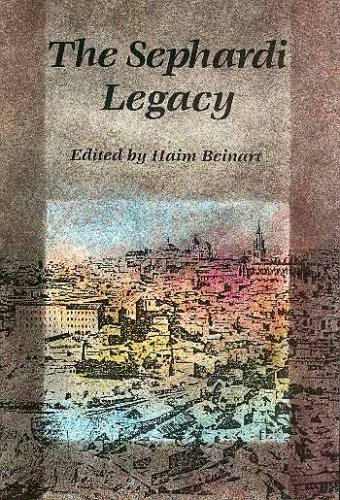
4. Moreshet Sepharad: The Sephardi Legacy (Moreshet Sephard)
Hardcover: 478 Pages (1996-10)
list price: US$45.00
Isbn: 9652238228
Canada | United Kingdom | Germany | France | Japan

5. A Liter of Soup and Sixty Grams of Bread: The Diary of Prisoner Number 109565 (The Sephardi and Greek Holocaust Library, 2)
by Chaints Salvator Kounio, Heinz Salvator Kounio
 Paperback: 230 Pages (2003-08)
list price: US$14.95 -- used & new: US$14.95
(price subject to change: see help)
Asin: 0819707635
Average Customer Review: 5.0 out of 5 stars
Canada | United Kingdom | Germany | France | Japan

Customer Reviews (1)

5-0 out of 5 stars must read
this book is a must read, very direct and tragic story of a greek-jewish (Sephardic) family who survived the awful concentration camps of the Nazis. ... Read more


6. A Sephardi Life in Southeastern Europe: The Autobiography and Journal of Gabriel Arie, 1863-1939
by Gabriel Arie
 Paperback: 317 Pages (1998-01)
list price: US$25.00 -- used & new: US$5.00
(price subject to change: see help)
Asin: 0295976748
Average Customer Review: 2.0 out of 5 stars
Canada | United Kingdom | Germany | France | Japan

Customer Reviews (1)

2-0 out of 5 stars A pre WWII peek into a Balkan family
This book, while perhaps not of general interest, was fascinating to me, since my husband was born in Sofia, Bulgaria and was a distant relative of the author.The blindness of the participants to the events swirling around them in Europe was startling.Their concerns with business and success overrode any concern with the outside world.Marriage between cousins, uncles and nieces, was common emphasizing the clannishness of the Jewish population.This world ended with the commencement of WW II. The book definitely has a limited audience. ... Read more


7. Sephardi Religious Responses to Modernity (The Sherman Lecture Series , Vol 1)
by Stillman
Hardcover: 99 Pages (1995-11-01)
list price: US$33.95 -- used & new: US$33.95
(price subject to change: see help)
Asin: 371865699X
Average Customer Review: 5.0 out of 5 stars
Canada | United Kingdom | Germany | France | Japan
Editorial Review

Book Description
The Sephardi religious leaders, who had been historically more open to general culture, reacted with neither the anti-traditionalism of Reform Judaism not the Ashkenazi ultra-Othodox's uncompromising rejection of everything new. Their response was rather one of active and creative halakhic engagement coupled with a tolerant attitude toward the growing secularized elements of their communities.
Much has been written on the social, economic, and political transformation of Sephardi and Oriental Jewry in the modern era. However, this is the first book devoted to the religious changes taking place in this important segment of Jewry which now constitutes the majority of Jews in the Jewish state.
Throughout the nineteenth century the entire structure of the Ashkenazi world crumbled. What remains of Askhenazi Jewry today is split into irreconcilable religious camps on the one hand, and a large body of secularized Jews of greater or lesser ethnicity on the other. The Sephardi and Oriental Jews, which ... Read more

Customer Reviews (1)

5-0 out of 5 stars Needs to be read by every Jew
This book really does a lot and goes a long way in breaking down various issues that exist in Jewish communities worldwide.The topic of how Sephardim responded to modernity is a topic that is timely and needed in this current time where non-Ashkeanzi history is but a stub in many areas of Jewish education, especially in the religious world.

This book essentially talks about how historically Sephardic Jews from southern Europe, North Africa and Jews of the Middle East have handled changes in society.It deals with the issue from the correct angle for the Sepphardic and Mizrahi communities in a way that doesn't separate religion from the culture.For example even secular Sephardic Jews interact with the religious elements of their culture.It also discusses the differences between Sephardic leadership and Ashkenazi leadership in this area of dealing with change in culture and society.

The book is a short read (86 pages of text), but it is an important educational tool that is needed in both the Ashkenazi and Sephardi communities.I believe that this is the kind of book that NEEDS to be an essential part of Jewish education.As a Sephardi Jew I feel this books helps me understand the positives and the issues in my own culture and understanding these things helps in determining what I should do for children I will have in the future in order for them to be proud of their culture. ... Read more


8. The Holocaust in Salonika: Eyewitness Account (The Sephardi and Greek Holocaust Library, 1)
 Paperback: 302 Pages (2002-04)
list price: US$19.95 -- used & new: US$19.85
(price subject to change: see help)
Asin: 0819707538
Canada | United Kingdom | Germany | France | Japan

9. Rylands Haggahdah a Medieval Sephardi Ma
by Raphael Loewe
 Unknown Binding: 192 Pages

Isbn: 0500235198
Canada | United Kingdom | Germany | France | Japan

10. From the Rivers of Babylon to the Whangpoo: A Century of Sephardi Jewish Life in Shanghai
by Maisie J. Meyer
Paperback: 350 Pages (2003-06)
list price: US$79.50 -- used & new: US$119.95
(price subject to change: see help)
Asin: 0761824898
Canada | United Kingdom | Germany | France | Japan
Editorial Review

Book Description
This book examines the interaction between the Baghdadi Jews and their Ashkenazi coreligionists, some 6-8,000 who escaped from religious persecution in Russia, and some 20,000 refugees from Nazi persecution. ... Read more


11. Rylands Haggadah: A Medieval Sephardi Masterpiece in Facsimile
by Raphael Loewe
 Hardcover: 114 Pages (1988-12)
list price: US$75.00
Isbn: 0810915685
Canada | United Kingdom | Germany | France | Japan

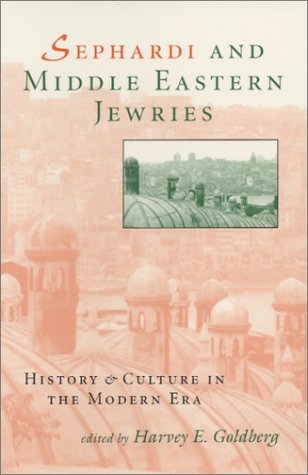
12. Sephardi and Middle Eastern Jewries: History and Culture in the Modern Era (History & Culture in the Modern Era)
Paperback: 368 Pages (1996-04)
list price: US$22.95 -- used & new: US$20.29
(price subject to change: see help)
Asin: 0253210410
Canada | United Kingdom | Germany | France | Japan

13. Sephardi Heritage:Essays on the Historical and Cultural Contribution ofthe Jews of Spain and Portugal: Volume 1: the Jews of Spain and PortugalBefore and After the expulsion of 1492
by R. D. (editor) Barnett
 Hardcover: Pages (1971)

Asin: B000VLGY1W
Canada | United Kingdom | Germany | France | Japan

14. An Alternative Path to Modernity: The Sephardi Diaspora in Western Europe (Brill's Series in Jewish Studies) (Brill's Series in Jewish Studies)
by Yosef Kaplan
Hardcover: 309 Pages (2000-11-01)
list price: US$206.00 -- used & new: US$205.99
(price subject to change: see help)
Asin: 9004117423
Canada | United Kingdom | Germany | France | Japan

15. Zion and Zionism among Sephardi and Oriental Jews
by W. Zeev et al. Harvey
 Hardcover: Pages (2002)

Isbn: 9652960470
Canada | United Kingdom | Germany | France | Japan

16. jewish law and sephardi studies
by a. z. kaddari
 Paperback: 71 Pages (1974)

Asin: B000N724NG
Canada | United Kingdom | Germany | France | Japan

17. THE AMERICAN SEPHARDI VOLUME VI NOS 1-2. JOURNAL OF THE SEPHARDIC STUDIES PROGRAM OF YESHIVA UNIVERSITY.
 Paperback: Pages (1973)

Asin: B000HHDUQC
Canada | United Kingdom | Germany | France | Japan

18. Moreshet Sepharad =: The Sephardi legacy
 Unknown Binding: Pages (1992)
-- used & new: US$39.99
(price subject to change: see help)
Asin: 965223799X
Canada | United Kingdom | Germany | France | Japan

19. The Sephardi heritage: essays on the historical and cultural contribution of the Jews of Spain and Portugal;
 Unknown Binding: 528 Pages (1971)

Isbn: 0948466111
Canada | United Kingdom | Germany | France | Japan

20. Sephardi Jews in occupied France: Under the tyrant's heel, 1940-1944
by Gitta Amipaz-Silber
 Unknown Binding: 419 Pages (1995)

Isbn: 9650900519
Canada | United Kingdom | Germany | France | Japan

  1-20 of 86 | Next 20
A  B  C  D  E  F  G  H  I  J  K  L  M  N  O  P  Q  R  S  T  U  V  W  X  Y  Z  

Prices listed on this site are subject to change without notice.
Questions on ordering or shipping? click here for help.

site stats