e99 Online Shopping Mall

Geometry.Net - the online learning center Help  
Home  - Science - Agriculture (Books)

  1-20 of 100 | Next 20
A  B  C  D  E  F  G  H  I  J  K  L  M  N  O  P  Q  R  S  T  U  V  W  X  Y  Z  

click price to see details     click image to enlarge     click link to go to the store

$12.06
1. Civic Agriculture: Reconnecting
$10.61
2. Sea Energy Agriculture
$12.46
3. Sustainable Agriculture and Resistance
$14.49
4. Ancient Agriculture: Roots and
$27.50
5. The Development of American Agriculture:
$14.76
6. Global Warming and Agriculture:
$30.30
7. A History of World Agriculture:
$23.77
8. Plant Growth Regulators in Agriculture
$13.75
9. Plowshares & Pork Barrels:
$32.29
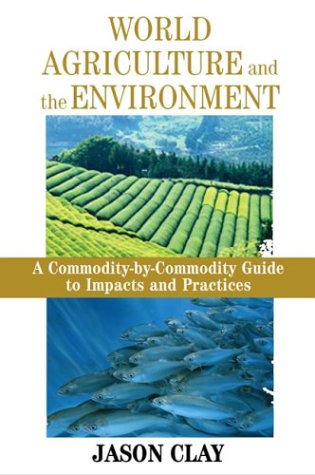
10. World Agriculture and the Environment:
 
$7.05
11. Genetic Engineering in Agriculture:
$16.95
12. Export Agriculture and the Crisis
$72.44
13. Methods of Teaching Agriculture
$164.25
14. Science in Agriculture: Advanced
$48.00
15. The Science of Agriculture: A
$21.81
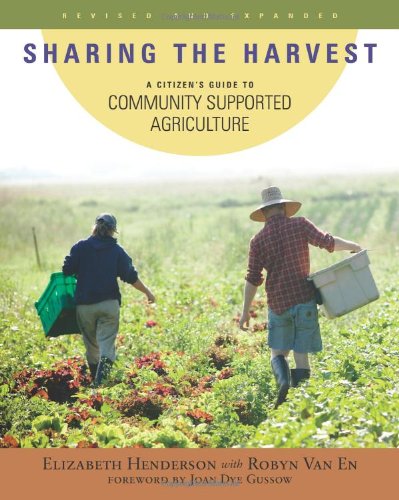
16. Sharing the Harvest: A Citizens
$12.55
17. From Asparagus to Zucchini: A
$6.70
18. Eating Fossil Fuels: Oil, Food
 
19. The Farmer"S Last Frontier: Agriculture,
$14.47
20. Biology Under the Influence: Dialectical

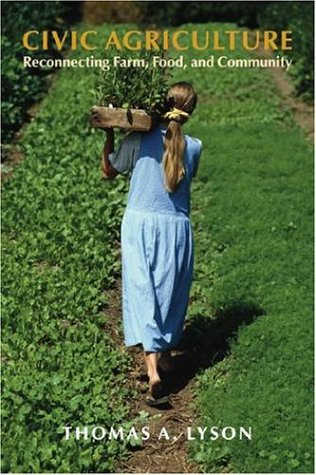
1. Civic Agriculture: Reconnecting Farm, Food, and Community (Civil Society Series)
by Thomas A. Lyson
Paperback: 160 Pages (2004-06-01)
list price: US$19.95 -- used & new: US$12.06
(price subject to change: see help)
Asin: 1584654147
Canada | United Kingdom | Germany | France | Japan
Editorial Review

Book Description
While the American agricultural and food systems follow a decades-old path of industrialization and globalization, a counter trend has appeared toward localizing some agricultural and food production. Thomas A. Lyson, a scholar-practitioner in the field of community-based food systems, calls this rebirth of locally based agriculture and food production civic agriculture because these activities are tightly linked to a community's social and economic development. Civic agriculture embraces innovative ways to produce, process, and distribute food, and it represents a sustainable alternative to the socially, economically, and environmentally destructive practices associated with conventional large-scale agriculture. Farmers' markets, community gardens, and community-supported agriculture are all forms of civic agriculture.

Lyson describes how, in the course of a hundred years, a small-scale, diversified system of farming became an industrialized system of production and also how this industrialized system has gone global. He argues that farming in the United States was modernized by employing the same techniques and strategies that transformed the manufacturing sector from a system of craft production to one of mass production. Viewing agriculture as just another industrial sector led to transformations in both the production and the processing of food. As small farmers and food processors were forced to expand, merge with larger operations, or go out of business, they became increasingly disconnected from the surrounding communities. Lyson enumerates the shortcomings of the current agriculture and food systems as they relate to social, economic, and environmental sustainability. He then introduces the concept of community problem solving and offers empirical evidence and concrete examples to show that a re-localization of the food production system is underway. ... Read more


2. Sea Energy Agriculture
by M.D. Murray Maynard
Paperback: 109 Pages (2003-01-01)
list price: US$16.00 -- used & new: US$10.61
(price subject to change: see help)
Asin: 091131170X
Canada | United Kingdom | Germany | France | Japan
Editorial Review

Book Description
Maynard Murray was a medical doctor who researched the crucial importance of minerals - especially trace elements - to plants and animals. Beginning in 1938 and continuing through the 1950s, Dr. Murray used sea solids - mineral salts remaining after water is evaporated from ocean water - as fertilizer on a variety of vegetables, fruits and grains. His extensive experiments demonstrated repeatedly and conclusively that plants fertilized with sea solids and animals fed sea-solid-fertilized feeds grow stronger and more resistant to disease.

Sea Energy Agriculture recounts Murray's experiments and presents his astounding conclusions. The work of this eco-pioneer was largely ignored during his lifetime, and his book became a lost classic - out-of-print for more than 25 years. Now this rare volume is once again available, with a new foreward and afterword by the founder of Acres U.S.A., Charles Walters. ... Read more


3. Sustainable Agriculture and Resistance
Paperback: 320 Pages (2002-01-15)
list price: US$18.95 -- used & new: US$12.46
(price subject to change: see help)
Asin: 0935028870
Average Customer Review: 3.5 out of 5 stars
Canada | United Kingdom | Germany | France | Japan
Editorial Review

Book Description
This is a story of resistance against all odds, of Cuba's remarkable recovery from a food crisis brought on by the collapse of trade relations with the former socialist bloc and the tightening of the U.S. embargo. Unable to import either food or the farm chemicals and machines needed to grow it via conventional agriculture, Cuba turned inward toward self-reliance. Sustainable agriculture, organic farming, urban gardens, smaller farms, animal traction and biological pest control are part of the successful paradigm shift underway in the Cuban countryside. In this book Cuban authors offer details-for the first time in English-of these remarkable achievements, which may serve as guideposts toward healthier, more environmentally friendly and self-reliant farming in countries both North and South. ... Read more

Customer Reviews (2)

5-0 out of 5 stars An amazing story that inpsires hope for the world
As a practitioner of sustainable agriculture and organic farming (I am a farmer, teacher and researcher) I found this story of how Cuba used organic farming to beat all odds and overcome a food crisis to be awe inspiring.Every professor, teacher, researcher, analyst, student, thinking farmer and advocate of sustainable agriculture MUST read this book.It will restore your hope.So should everyone interested in Cuba, Latin America, and Third World development.I loved to read it in the cuban's own, well-translated words.

2-0 out of 5 stars You can skip this one
Cuba has done an amazing job of switching over to organic, local food production. They did so to survive the assinine embargo of thier island, but in doing so they have shown the way for all of us to move to a sane mode of food production.You would want this book to be a delightful description of that process.You would be wrong.It is a leaden, tedious exercise in socialist writing with all the wit and charm of a phone book.Skip the book and just go to Cuba and see the results for yourself.Then come home and plant a garden. ... Read more


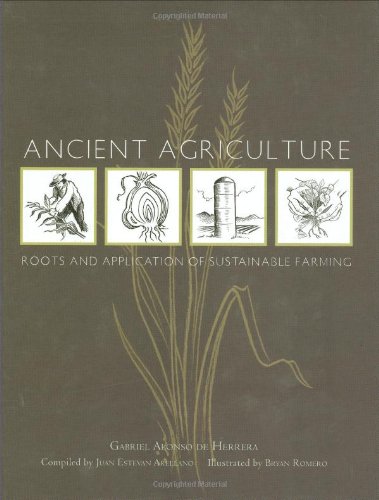
4. Ancient Agriculture: Roots and Application of Sustainable Farming
by Gabriel Alonso De Herrera
Hardcover: 168 Pages (2006-09-06)
list price: US$24.95 -- used & new: US$14.49
(price subject to change: see help)
Asin: 1423601203
Average Customer Review: 5.0 out of 5 stars
Canada | United Kingdom | Germany | France | Japan
Editorial Review

Book Description
The Art of Agriculture is the first English edition of Obra de Agricultura by Gabriel Alonso de Herrera, an agriculture instruction manual originally written in Granada, Spain, in 1513 and published there in 1539. Herrera, widely considered the Father of Modern Spanish Agriculture, wrote this treatise nearly five centuries ago, thoughtfully recounting traditional farming techniques of the Moors before their expulsion from Spain, the Spanish colonizers in the early 1600s, and the rural Indo-Hispano bioregion spanning northern New Mexico and southern Colorado. ... Read more

Customer Reviews (1)

5-0 out of 5 stars Insights into traditional farming techniques of the Moors
It'd be tempting to place this survey under 'Home and Garden' for this review - but really, ANCIENT AGRICULTURE: ROOTS AND APPLICATION OF SUSTAINABLE FARMING deserves so much more. It'll reach an audience of farmers, gardeners, and history buffs with the first English translation of Obra de Agricultura, offering an early agricultural instruction manual originally written in Spain in 1513 - and holding importance for modern times. Here are insights into traditional farming techniques of the Moors before their expulsion from Spain: techniques which hold surprising relevance to modern farmers facing global warming and water shortages.

Diane C. Donovan
California Bookwatch ... Read more


5. The Development of American Agriculture: A Historical Analysis
by Willard W. Cochrane
Paperback: 500 Pages (1993-06)
list price: US$27.50 -- used & new: US$27.50
(price subject to change: see help)
Asin: 0816622833
Canada | United Kingdom | Germany | France | Japan

6. Global Warming and Agriculture: Impact Estimates by Country
by William R. Cline
Paperback: 201 Pages (2007-06-30)
list price: US$21.95 -- used & new: US$14.76
(price subject to change: see help)
Asin: 0881324035
Canada | United Kingdom | Germany | France | Japan
Editorial Review

Product Description
How will global warming affect developing countries, which rely heavily on agriculture as a source of economic growth? William Cline asserts that developing countries have more at risk than industrial countries as global warming worsens. Using general circulation and agricultural impact models, Cline boldly examines 2070-99 to forecast the effects of global warming and its economic impact. This detailed study:outlines existing studies on the agricultural impact of climate change; estimates projected changes in temperature, precipitation, and agricultural capacity; and concludes with policy recommendations. Cline finds that agricultural production in developing countries may fall between 10 and 25 percent, and if global warming progresses unabated, India s agricultural capacity could fall as much as 40 percent. Thus, policymakers should address this phenomenon now before the world s developing countries are adversely and irreversibly affected. ... Read more


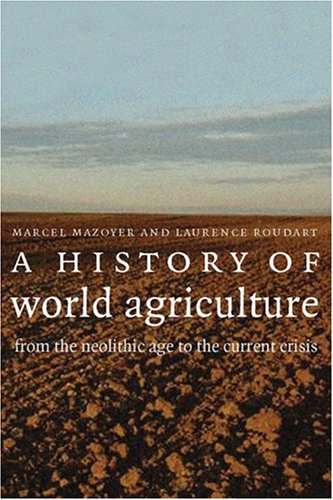
7. A History of World Agriculture: From the Neolithic Age to the Current Crisis
by Marcel Mazoyer, Laurence Roudart
Paperback: 469 Pages (2006-06-01)
list price: US$35.00 -- used & new: US$30.30
(price subject to change: see help)
Asin: 1583671218
Average Customer Review: 3.0 out of 5 stars
Canada | United Kingdom | Germany | France | Japan
Editorial Review

Book Description

Only once we understand the long history of human efforts to draw sustenance from the land can we grasp the nature of the crisis that faces humankind today, as hundreds of millions of people are faced with famine or flight from the land.From Neolithic times through the earliest civilizations of the ancient Near East, in savannahs, river valleys and the terraces created by the Incas in the Andean mountains, an increasing range of agricultural techniques have developed in response to very different conditions. These developments are recounted in this book, with detailed attention to the ways in which plants, animals, soil, climate, and society have interacted.

Mazoyer and Roudart's A History of World Agriculture is a path-breaking and panoramic work, beginning with the emergence of agriculture after thousands of years in which human societies had depended on hunting and gathering, showing how agricultural techniques developed in the different regions of the world, and how this extraordinary wealth of knowledge, tradition and natural variety is endangered today by global capitialism, as it forces the unequal agrarian heritages of the world to conform to the norms of profit.

During the twentieth century, mechanization, motorization and specialization have brought to a halt the pattern of cultural and environmental responses that characterized the global history of agriculture until then.Today a small number of corporations have the capacity to impose the farming methods on the planet that they find most profitable.Mazoyer and Roudart propose an alternative global strategy that can safegaurd the economies of the poor countries, reinvigorate the global economy, and create a livable future for mankind.

... Read more

Customer Reviews (2)

4-0 out of 5 stars Systematic Review of Agricultural Systems
I must say in brief that I disagree with the comment that denigrates the book because it does not cover the history of world agriculture in a complete matter.Though I am only a student of the subject, I would say this book is a systematic overview of the development of agriculture.To quote from the book (p. 21) "...one is not able to analyze a given agricultural system, formulate a diagnostic, and propose projects and policies of development without being grounded in a systematic knowledge of the organization, functioning, and dynamics of different sorts of agricultural systems.
This book attempts to build this type of knowledge, under the synthesized form of a theory of historical transformations and geographical differentiations of agrarian systems. ..."

The book covers agriculture as agricultural systems and not necessarily as specific manifestations.The chapters are roughly (and not completely) described as follows (p. 25):the second chapter recounts the origins of agriculture in the Neolithic epoch , third systems of slash and burn, fourth hydraulic agrarian systems in arid regions, fifth Inca (terraced) agrarian system, sixth animal drawn systems based on the ard, fallowing & accompanying animal herding in temperate regions of Europe, seventh animal drawn cultivation based on plow, fallowing, and accompanying animal herding in the cold temperate regions, eighth animal drawn cultivation using plow and without fallowing, ninth mechanization of animal traction and transport and ten being the motorized, mechanized specialized systems using mineral fertilizers.
Not being an expert in the subject, there may be other systems of agriculture not included that I don't know about.But it is a well-written book and is systematic.If one likes that approach, it is well worth to at least look it through if you can get access to it.

Also of note, there is a recommendation on the back of the book by Samir Amin, and, if you are appreciative of Amin's writings, then I think that you would like this book.

2-0 out of 5 stars misleading title
This book is not a history of "world" agriculture.It is rather an idiosyncratic history of agriculture in Western Europe, with a few peripheral discussions of some odd non-European topics.

It has a chapter on Inca agriculture and political structure, but extremely minimal discussion of any other precolumbian American systems (Aztecs, North American, etc.)It has a chapter on Egypt - which strictly speaking in antiquity is part of the West - but this chapter goes all the way up to the late 20th century!Yet he does not have any discussion of the Arab agricultural revolution, which has been well documented by American and other scholars.

Most problematic is that the book does not have any significant discussion of the history of the main agrarian societies in world history -- China and India.China at least needed a chapter, all it gets is a few passages or mentions, and India even less.

In general, the few sources he cites are almost all French.While there are certainly good scholars in France, this author's source base is clearly too narrow to allow him to be aware of recent developments in scholarship outside his own country and language and the new directions and priorities in research.

The way the book was written is also problematic.The author issues judgments about particular periods as though his evaluations of them are final and obvious, when in fact scholarly views about the conditions and social relations he describes are by no means definite and remain matters of dispute.In such a large book he should have been able to find some space to acknowledge uncertainties and alternative viewpoints.

The book is long and does have some valuable information on many points.But it is definitely not the book that its title claims it to be. ... Read more


8. Plant Growth Regulators in Agriculture and Horticulture: Their Role in and Commercial Uses
Paperback: 264 Pages (2000-01-15)
list price: US$39.95 -- used & new: US$23.77
(price subject to change: see help)
Asin: 1560228962
Canada | United Kingdom | Germany | France | Japan

9. Plowshares & Pork Barrels: The Political Economy of Agriculture (Independent Studies in Political Economy)
by Jr., E.C. Pasour, Randall R. Rucker
Paperback: 368 Pages (2005-09-01)
list price: US$22.95 -- used & new: US$13.75
(price subject to change: see help)
Asin: 0945999038
Average Customer Review: 5.0 out of 5 stars
Canada | United Kingdom | Germany | France | Japan
Editorial Review

Book Description

Agricultural subsidies in grains, cotton, milk, sugar, tobacco, honey, wool, and peanuts are analyzed in this examination of U.S. farm policy. Looking at such programs as food stamps, crop insurance, subsidized credit, trade credit, trade subsidies and import restrictions, conservation, agricultural research, and taxation, this historical perspective argues that these subsidies ultimately redistribute wealth to powerful agricultural interests who use their political clout to advance their economic interests at the expense of the general public. This analysis of government farm programs will appeal to professors and students who study agriculture; people affected by government farm policies; public officials, and businesses affected by agricultural policy such as those in food service, retail, and distribution.
... Read more

Customer Reviews (1)

5-0 out of 5 stars Ag policy would be funny if it were not so tragic
This book defines the terms "perverse incentives" and "unintended consequences."At virtually every turn, from subsidies and set-asides to tariffs and quotas, the authors show that U.S. agricultural policy is not only expensive and unproductive, but also economically damaging to farmers everywhere - domestic and foreign.

"Plowshares and Porkbarrels" is a must read for all who are concerned with the continued competitiveness of American industry, services, AND FARMING.

... Read more


10. World Agriculture and the Environment: A Commodity-By-Commodity Guide To Impacts And Practices
by Jason Clay
Paperback: 282 Pages (2004-03-01)
list price: US$49.50 -- used & new: US$32.29
(price subject to change: see help)
Asin: 1559633700
Average Customer Review: 4.0 out of 5 stars
Canada | United Kingdom | Germany | France | Japan
Editorial Review

Book Description

World Agriculture and the Environment presents a unique assessment of agricultural commodity production and the environmental problems it causes, along with prescriptions for increasing efficiency and reducing damage to natural systems. Drawing on his extensive travel and research in agricultural regions around the world, and employing statistics from a range of authoritative sources including the United Nations Food and Agriculture Organization, the author examines twenty of the world’s major crops, including beef, coffee, corn, rice, rubber, shrimp, sorghum, tea, and tobacco. For each crop, he offers comparative information including:

    • a “fast facts” overview section that summarizes key data for the crop
    • main producing and consuming countries
    • main types of production
    • market trend information and market chain analyses
    • major environmental impacts
    • management strategies and best practices
    • key contacts and references
With maps of major commodity production areas worldwide, the book represents the first truly global portrait of agricultural production patterns and environmental impacts.
... Read more

Customer Reviews (2)

3-0 out of 5 stars Quick review
World Agriculture and Environment in my opinion is a very interestig book, in which you can find, besides the basic information of agricultural production, techniques that help to reduce damage to natural systems, and also this book gives important evaluations of modern agriculture and its failure.

5-0 out of 5 stars Superb reference
This is a superb and unique reference.It provides an incredible amount of detail on crops that enter world trade, and their impact on the environment.
The very best thing about this book is that it is not strident and does not blatantly advocate a particular political agenda.It is written in a scientific, objective tone that makes it far more convincing than the rhetorical works.Only when he comes to tobacco (a crop that ruins the environment AND then ruins the consumers) does he use a few value-laden words!
The reader is struck by what a mess the world is in, and how easily we could fix a lot of that.The book provides enormous detail on soil erosion, chemical use, biodiversity reduction, and the rest of our woes, but it presents equal detail on how to prevent those problems.Only a few crops (notably cotton, salmon, chocolate) would be hard to manage well.
Two social themes stand out:first, the very rapid concentration of commodity trade in the hands of a very few firms; second, the degree to which governments subsidize production-at-any-cost as opposed to production-with-environmental-protection.(Subsidizing includes nonlegal subsidies, such as letting the rich get away with breaking environmental laws and dumping huge costs on poorer neighbors.)One cannot escape the conclusion that changing this subsidy structure would fix most of the damage, worldwide.
Environmentalists should think more about subsidies!
Meanwhile, what can a concerned reader do?The book tells how to seek out shade-grown coffee, responsibly raised beef and paper, and so on.It is much harder, at least in the US, to find decently-produced soybeans or corn or wheat, but you can do it.Cotton is a special problem, and the alternatives to it are mostly worse.The hemp advocates will be vocal!
We are in such a mess, and it would be so easy to do so much....This is not a time to lose hope or give up.By providing the big picture, this book should make every concerned citizen stop and think. The few errors I could spot in the book are trivial ones.
This is an absolute must-read and must-have for anyone who works on problems of production and environment or on problems of world food supply and health. ... Read more


11. Genetic Engineering in Agriculture: The Myths, Environmental Risks, and Alternatives
by Miguel A. Altieri
 Paperback: 110 Pages (2004-11)
list price: US$11.95 -- used & new: US$7.05
(price subject to change: see help)
Asin: 0935028935
Canada | United Kingdom | Germany | France | Japan
Editorial Review

Book Description
Those are not your grandfather's potato chips.

As debate rages over the costs and benefits of genetically engineered crops, noted agroecologist Miguel Altieri lucidly examines some of the issue's most basic and pressing questions:

* Are transgenic crops similar to conventionally bred crops?

* Are transgenic crops safe to eat?

* Does biotechnology increase yields?

* Does it reduce pesticide use?

* What are the costs to American farmers?

* Will biotechnology benefit poor farmers?

* Can biotechnology coexist with other forms of agriculture?

* What are the known and potential environmental and biological risks?

* What alternatives do we have to genetically modified crops? ... Read more


12. Export Agriculture and the Crisis in Central America
by Robert G. Williams
Paperback: 273 Pages (1986-05-30)
list price: US$20.00 -- used & new: US$16.95
(price subject to change: see help)
Asin: 0807841544
Average Customer Review: 4.5 out of 5 stars
Canada | United Kingdom | Germany | France | Japan
Editorial Review

Book Description
Before social unrest shook the region in the 1970s, Central America experienced more than a decade of rapid export growth by adding cotton and beef to the traditional coffee and bananas. Williams shows how the rapid growth contributed to the present social and political crisis, examines the causes of the export boom and who benefited from it, and shows the impact of the boom on land use, the ecology, and the conditions of life in the rural areas. ... Read more

Customer Reviews (2)

5-0 out of 5 stars University of California anthropologist, Carol A. Smith, reviews Williams' work
University of California anthropologist, Carol A. Smith, reviews Williams' work in the International Encyclopedia of the Social and Behavioral Sciences, "What took place in Central America calls for comparative research. The most useful and original comparisons have been done by Robert Williams, an economist who uses sociological, historical, and ethnographic methods in his research.Robert Williams's Export Agriculture (1986) observes that cotton and cattle production for export expanded hugely in all five countries and led to significant dispossession of peasants everywhere, including Costa Rica.But the five Central American states handled peasant protest quite differently, with both Costa Rica and Honduras carrying out land reform and expanding services while the three other states responded with repression and militarization-which led to war.In States and Social Evolution (1994), Williams examines the social and economic factors that led to two different kinds of states in Central America-the three revolutionary countries being controlled by rigid oligarchies, the other two being led by more open political groups. (Williams) finds an explanation in the social and political relations created by the coffee export economy, the first major post-colonial export in the region, which played a critical role in state formation."

4-0 out of 5 stars The environmental repercussions of export agriculture
Williams' book deals with the issue of export agriculture in Central America and its repercussions on the economic, ecological, and social well-being of this troubled region. Williams divides the book into three parts, according to the main exports of Latin America. First, Williams deals with cotton's emergence as a cash crop and its positive and negative aspects. Second, Williams deals with cattle and the effects it has had upon the land and the men who till it. This book is interesting in the way it views the cash crops in an economic light and in the ways they affect farmers, large
farmers, and the working class.

The environment has blessed Central America with some of the best land anywhere on earth. Central America's pacific coastal plain, for example, is ideal for growing cotton. The ecological consequences of growing cotton, however, are quite severe. The stress on the soil is severe, considering this crop is not for subsistence. While the law requires that the land be cleared as to protect the land, it is nearly inevitable to prevent the volcanic soils to be vulnerable from wind and water erosion. In the rainy season, however, thunderstorms take their toll on the soil since they make the land prone to flooding. This damage is in addition to the fact that the best lands are used for the production of cotton, while simultaneously polluting the coastal eco-system. The fertility of the soil was short lived in Central America, since after four or five years of consecutive cultivation the light soils of the coastal plain began to lose their natural fertility. This, in turn, led to the need to use chemicals to yield more crops per acre of land.

In regards to cattle, Williams argues that the emerging demand for beef in the United States as a result of the fast food business precipitated the need to make subsistence plots in Latin America land for cattle grazing. For institutions like the World Bank, AID and IADB cattle was seen as a pragmatic, quick way to achieve export led growth. By most accounts, this land was carved from Central American forests. Swidden agriculture (slash and burn) practiced by indigenous allowed for the land to be regenerated after the patch had been abandoned. Under modern methods of forest clearing, the land is almost always relegated to remaining fallow. Modern methods of clearing have allowed for flatlands below the grazing grounds to become subject to flooding. Williams concludes that for those privileged enough to gain access to bank credit, the beef export boom meant a quick way to expand their fortunes, while for those who planted for survival it spelled impending doom. ... Read more


13. Methods of Teaching Agriculture (3rd Edition)
by L. H. Newcomb, J. David McCracken, J. Robert Warmbrod, M. Susie Whittington
Paperback: 368 Pages (2003-06-19)
list price: US$85.40 -- used & new: US$72.44
(price subject to change: see help)
Asin: 0131134183
Canada | United Kingdom | Germany | France | Japan
Editorial Review

Book Description
This book deals with the foundations for methods of teaching agriculture, applications of learning, the special needs of unique populations, and the procedures for evaluating teaching and learning. It is the only comprehensive exploration of the teacher preparation curriculum in agricultural education.This comprehensive survey provides clear explanations and examples of learning applications to provide an in-depth study of planning for successful teaching. Topics include decisions about teaching, planning, group teaching techniques, managing student behavior, teaching special populations, and evaluating learning.This book about professional development is a useful reference tool for university professors, teacher educators, and inservice program educators. ... Read more


14. Science in Agriculture: Advanced Methods for Sustainable Farming
by Arden B. Andersen
Paperback: 376 Pages (2000-10)
list price: US$25.00 -- used & new: US$164.25
(price subject to change: see help)
Asin: 0911311351
Canada | United Kingdom | Germany | France | Japan

15. The Science of Agriculture: A Biological Approach
by Ray V Herren
Hardcover: 664 Pages (2006-04-19)
list price: US$132.95 -- used & new: US$48.00
(price subject to change: see help)
Asin: 1401898009
Canada | United Kingdom | Germany | France | Japan
Editorial Review

Book Description
This text focuses on the scientific principles of the agricultural industry. Designed for use in high school agriscience courses, the aim of the text is to provide students with a basic understanding of the concepts behind the agricultural industry.Traditionally, high school agriculture texts have concentrated on the "how" behind the industry.The Science of Agriculture: A Biological Approach, third Edition concentrates more on the "why" behind the industry.Topics include plant and animal systems, soils, cell functions, genetics, genetic engineering, plant and animal reproduction, entomology, the uses of biotechnology, and careers.The text also includes a thorough examination of the controversy and concerns over the use of genetic engineering, genetically modified organisms, cloning, and their perceived and potential dangers to humans and the environment.Each chapter begins with clearly-stated learning objectives, followed by key terminology.Chapters close with student learning activities intended to extend learning beyond the text material.end-of-Chapter test questions, in True/False; Short Answer/Discussion; and Multiple Choice formats help to evaluate students' understanding of the concepts presented in the text. ... Read more


16. Sharing the Harvest: A Citizens Guide to Community Supported Agriculture, Revised and Expanded
by Elizabeth Henderson, Robyn Van En
Paperback: 320 Pages (2007-11-01)
list price: US$35.00 -- used & new: US$21.81
(price subject to change: see help)
Asin: 193339210X
Average Customer Review: 3.5 out of 5 stars
Canada | United Kingdom | Germany | France | Japan
Editorial Review

Book Description
To an increasing number of American families the CSA (community supported agriculture) is the answer to the globalization of our food supply. The premise is simple: create a partnership between local farmers and nearby consumers, who become members or subscribers in support of the farm. In exchange for paying in advance—at the beginning of the growing season, when the farm needs financing—CSA members receive the freshest, healthiest produce throughout the season and keep money, jobs, and farms in their own community.
In this thoroughly revised and expanded edition of a Chelsea Green classic, authors Henderson and Van En provide new insight into making CSA not only a viable economic model, but the right choice for food lovers and farmers alike. Thinking and buying local is quickly moving from a novel idea to a mainstream activity. The groundbreaking first edition helped spark a movement and, with this revised edition, Sharing the Harvest is poised to lead the way toward a revitalized agriculture. ... Read more

Customer Reviews (3)

4-0 out of 5 stars Keeping a conscious connection to the land and your food
I've been a member of a CSA for the past several years and read this book because I wanted to become a more active participant in the movement. No, this book is not an operations manual on how to run a farm and distribute shares. I'd classify it more as an inspiration manual with examples and case studies of how other CSA formed (and failed), obtained financing and land, found shareholders and labor, all for the purposes of giving people an alternative to being dependent on big agribusiness and live a more sustainable lifestyle.

In the true spirit of a co-op, this book provides an introductory education to CSA newbies on the history of food co-ops, community-building and food systems. For those looking for more hands-on or operations-oriented guides to CSA farming, I'd encourage you to review the rather exhaustive reference section in this book and contact someone near you. For me, I found this book perfect for gaining a comprehensive understanding of CSAs overall, which is helping me increase me evolve from passive shareholder into a more active, participatory role.

1-0 out of 5 stars Heavy on philosophy, light on practicality
If you're new to market gardening and looking for solid info on how to run a CSA, this is *not* the book for you. For example, the chapter on harvesting and processing is only 2 1/2 pages long and boils down to "it can't be explained in a book, you need hands on experience". The majority of the book is self-congratulatory prose about how CSAs are saving the world. I support the CSA concept, but found this book a big disappointment. There are a few useful charts for determining share size and how much to grow, they are the only thing that prevents me from giving this book zero stars.

5-0 out of 5 stars A Solution to a Problem!!! - This book made me optimistic.
This book describes many problems of the current food production & distribution system.More importantly, it provides a solution using Community Supported Agriculture. The book outlines the steps necessary toset up a CSA, discusses options and issues for each step, and includesexamples from CSAs all over the country.Many references and a resourcelist guide readers to other sources of information in a variety of media.I am a CSA consumer, not a farmer or an organizer;I enjoyed the book andam much more optimistic about the power groups of individuals have tochange the system ... Read more


17. From Asparagus to Zucchini: A Guide to Cooking Farm-Fresh Seasonal Produce
by Madison Area Community Supported Agriculture Coalition
Paperback: 236 Pages (2004-09)
list price: US$19.95 -- used & new: US$12.55
(price subject to change: see help)
Asin: 0972121781
Average Customer Review: 5.0 out of 5 stars
Canada | United Kingdom | Germany | France | Japan
Editorial Review

Book Description
This informative and easy-to-use cookbook celebrates sustainable farming with a wide array of scrumptious recipes for seasonal, farm-fresh produce. From peas, peppers and potatoes to basil, bok choy, and burdock root, From Asparagus to Zucchini highlights the best of seasonal cuisine from around the country.

Revised and updated third edition features:420 recipes, 80% new, 100% are originalRecipes and information for more than 50 vegetables and herbsDishes from growers, farm members, and home cooks who love vegetablesSpecial sections on community supported agriculture, the benefits of eating locally, seasonal cooking, recipes for kids, and much, much more! ... Read more

Customer Reviews (11)

5-0 out of 5 stars From Asparagus to Zucchini: A Guide to Cooking Farm Fresh Seasonal Produce
From Asparagus to Zucchini: A Guide to Cooking Farm-Fresh Seasonal Produce This was a gift for my daughter, who is living in California and buying alot of fresh produce that she didn't know what to with. I overheard people talking about this book in a restaurant and bought it. My daughter loves it and uses it everyday. It gives alot of information about all different kinds of produce and simple, easy and good recipes.

5-0 out of 5 stars Easy to use!
I recently purchased a share in a local CSA and have been receiving a variety of vegetables that I haven't had a lot of experience preparing or storing.This book has been so easy to use!All produce is arranged alphabetically with a few pages of recipes for that particular vegetable.What I really like is that each produce listing has a page dedicated to information on short and long term storage options, as well as simple ideas for adding the vegetable to your own recipes.This book has been an invaluable resource!I highly recommend it.

5-0 out of 5 stars vegetavle convert
farm-fresh from A-Z...This book is a great partner to the farm fresh vegetables.We recently joined an organic CSA.I use this book religiously with each basket of fresh vegies.It's accessible, alphabetical format offers cooking tips, storage tips, and great recipe ideas.I love it!

5-0 out of 5 stars CSA Solution.
After joining a CSA we needed lots of idea's about how to use all of the new varieties of vegetables we were getting and this book provided the solution, very tastefully

5-0 out of 5 stars An invaluable reference book!
We recently began receiving produce from our CSA in Amherst, Massachusetts, and we would be lost without this book. It has helped us to identify and distinguish between the assortment of greens we receive, and has instructions for optimal storage, preparation and cooking techniques for an array of produce. Highly recommended! ... Read more


18. Eating Fossil Fuels: Oil, Food And the Coming Crisis in Agriculture
by Dale Allen Pfeiffer
Paperback: 127 Pages (2006-10)
list price: US$11.95 -- used & new: US$6.70
(price subject to change: see help)
Asin: 0865715653
Average Customer Review: 4.0 out of 5 stars
Canada | United Kingdom | Germany | France | Japan
Editorial Review

Book Description

The miracle of the Green Revolution was made possible by cheap fossil fuels to supply crops with artificial fertilizer, pesticides, and irrigation. Estimates of the net energy balance of agriculture in the US show that ten calories of hydrocarbon energy are required to produce one calorie of food. Such an imbalance cannot continue in a world ofdiminishing hydrocarbon resources.

Eating Fossil Fuels examines the interlinked crises of energy and agriculture and highlights some startling findings:

  • The world-wide expansion of agriculture has appropriated fully 40% of the photosynthetic capability of this planet.
  • The Green Revolution provided abundant food sources for many, resulting in a population explosion well in excess of the planet's carrying capacity.
  • Studies suggest that without fossil fuel based agriculture, the US could only sustain about two thirds of its present population. For the planet as a whole, the sustainable number is estimated to be about two billion.

Concluding that the effect of energy depletion will be disastrous without a transition to a sustainable, relocalized agriculture, the book draws on the experiences of North Korea and Cuba to demonstrate stories of failure and success in the transition to non-hydrocarbon-based agriculture. It urges strong grassroots activism for sustainable, localized agriculture and a natural shrinking of the world's population.

... Read more

Customer Reviews (8)

5-0 out of 5 stars We Need to Bring Back the Victory Garden
I wish I had read this book last year, I would already have prepared a vegetable garden to plant this spring. I know about Peak Oil, etc. but this book really got my attention. It provides a clear explanation of how dependent our food supply is on fossil fuels. Higher and higher food prices are in store for us, soon. And that's before we start to see food shortages. The agricultural land in the U.S. can only support about 200 million people, and we have almost 300 million. Plus this agriculture is heavily dependent on oil (to run the irrigation pumps, harvest, process and transport the products), and natural gas (to make fertilizer..who knew?). In a politically unstable world of rising fuel prices, not to mention a future without those fuels, do we really want to rely on imported food to feed our nation? Or go to war over food? This book outlines the problems and has an action plan and extensive list of resources to help solve the problems. Yes! There are things you can do to avert this crisis, whether you live in the city, suburbs, or country.
Spade up those (organic) Victory Gardens, folks, and learn how to provide and preserve at least some of your own food. Support your local food producers. This year. You'll be glad you did.

1-0 out of 5 stars Food Via Domestic Coal, If Necessary
This book creates a false alarm about our future limited by fossil energy availability, energy utilization, and its impact on food production. The author says the US population has already exceeds the level of long-term sustainability.Increased malnutrition and even starvation are possibilities. The author has selected data to support his own nightmare of a very dramatic food crisis within our lifetimes.

He appears to imply that the food and energy crisis in North Korea may be an example of what will happen to the world, without discussing North Korea's dictatorial government and its military expenditures, including preparations for nuclear weapon manufacture and their delivery. He says that the increased food productivity due to the Green Revolution is largely due just to increased fossil energy usage, but new plant varieties and agricultural technologies are most important for the successes of the green revolution.

The author, D. A. Pfeiffer, does not clearly acknowledge that domestic coal, and then shale can be processed, in an environmentally benign manner, into transportation fuels and nitrogen fertilizer with proven technologies, when oil and natural gas availability becomes a truly economy limiting energy constraint for our nation.

The author has his agenda to promote permaculture and similar agricultural technologies, and blames the government and agricultural industries for these technologies not being utilized now. He does not acknowledge that less that 2% of our US population are farmers, and that they feed us in a very economical manner, as a result of large-scale agriculture, use of considerable inanimate energy, and improved technologies. In contrast, the author advices, "Sustainable agriculture, for all intents and purposes, means a return to small scale farming, where the acreage can be managed by a family, and a horse or mule with a plow." (P. 69) Which option would you choose? This reviewer labored very hard on his father's medium-sized farm until college graduation, and then I chose not to return to the farm. This choice of not to farm is made by many rural youths.For this reason our rural population declines and increases in average age.

4-0 out of 5 stars Feast or famine without oil? (review by author of When Technology Fails)
Concerned about food and how a world economy fueled by oil will continue to feed over 6 ½ billion people when the oil squeeze comes? I suggest you read this book. Pfeiffer, a geologist and science journalist who has been intimately involved with peak oil issues for more than ten years, provides profound insight with his analysis of two parallel nations suffering from similar predicaments, but with radically different outcomes. He uses the powerful example of how Cuba and North Korea each dealt with nearly instantaneous loss of their supplies of oil after the Soviet Union dissolved. In the case of North Korea, their economy was shattered and millions of people died of starvation and disease. In the case of Cuba, people lost weight and made do with less, but a shift to sustainable agriculture and natural healing averted catastrophe. Cuba provides us with a glimpse of a possible future that avoids violent collapse and provides a good quality of life in spite of having to get by using less energy and buying less stuff.

4-0 out of 5 stars Great coverage of the issues of agriculture and oil
This book covers the coming problems in agriculture due to a shortage of oil and thus fertilizers and pesticides.But it covers more about what to do and how to cope with the return to locally grown foods.Highly recommended.

5-0 out of 5 stars This is an important book.
This book is a must read for everyone.It carries an important and sonewhat frightening message. ... Read more


19. The Farmer"S Last Frontier: Agriculture, 1860-1897.
by Fred A. Shannon
 Hardcover: Pages (1945)

Asin: B000RUXZEQ
Canada | United Kingdom | Germany | France | Japan

20. Biology Under the Influence: Dialectical Essays on Ecology, Agriculture, and Health
by Richard Lewontin, Richard Levins
Paperback: 400 Pages (2007-07-01)
list price: US$22.95 -- used & new: US$14.47
(price subject to change: see help)
Asin: 1583671579
Canada | United Kingdom | Germany | France | Japan
Editorial Review

Product Description

How do we understand the world? While some look to the heavens for intelligent design, others argue that it is determined by information encoded in DNA. Science serves as an important activity for uncovering the processes and operations of nature, but it is also immersed in a social context where ideology influences the questions we ask and how we approach the material world. Biology Under the Influence: Dialectical Essays on Ecology, Agriculture, and Health breaks from the confines of determinism, offering a dialectical analysis for comprehending our dynamic social and natural world.


In Biology Under the Influence, Richard Lewontin and Richard Levins provide a devastating critique of genetic determinism and reductionism within science while exploring a broad range of issues including the nature of science, biology, evolution, the environment, public health, and dialectics. They dismantle contemporary ideologies that attempt to naturalize social inequalities, unveil the alienation of science and nature, and illustrate how dialectical philosophy provides a basis for grappling with a world characterized by constant change. Biology Under the Influence brings together the incisive essays of two prominent scientists who are working to empower the public by demystifying science and nature.

... Read more

  1-20 of 100 | Next 20
A  B  C  D  E  F  G  H  I  J  K  L  M  N  O  P  Q  R  S  T  U  V  W  X  Y  Z  

Prices listed on this site are subject to change without notice.
Questions on ordering or shipping? click here for help.

site stats