e99 Online Shopping Mall

Geometry.Net - the online learning center Help  
Home  - Science - Alchemy (Books)

  1-20 of 100 | Next 20
A  B  C  D  E  F  G  H  I  J  K  L  M  N  O  P  Q  R  S  T  U  V  W  X  Y  Z  

click price to see details     click image to enlarge     click link to go to the store

$7.50
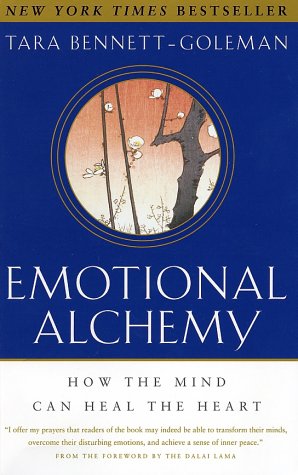
1. Emotional Alchemy: How the Mind
$20.06
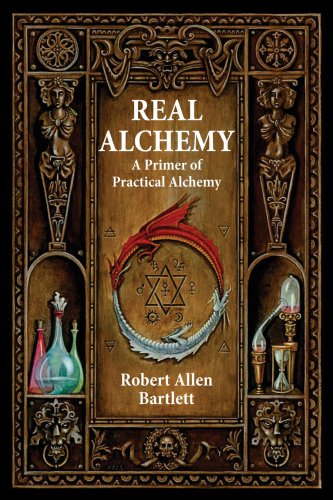
2. Real Alchemy, A Primer of Practical
$8.44
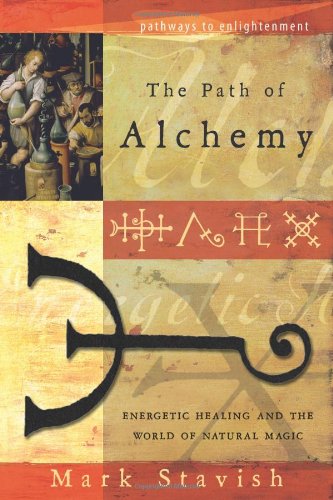
3. Path of Alchemy: Energetic Healing
$10.93
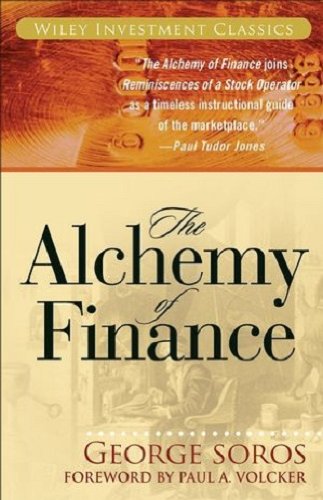
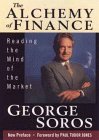
4. The Alchemy of Finance (Wiley
$24.76
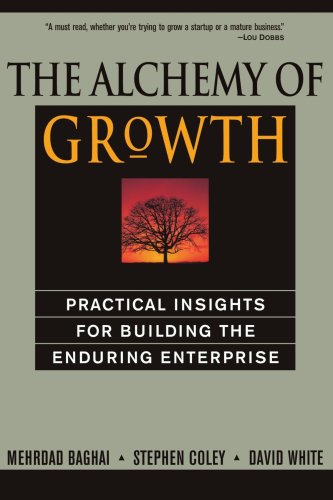
5. The Alchemy of Growth: Practical
$9.50
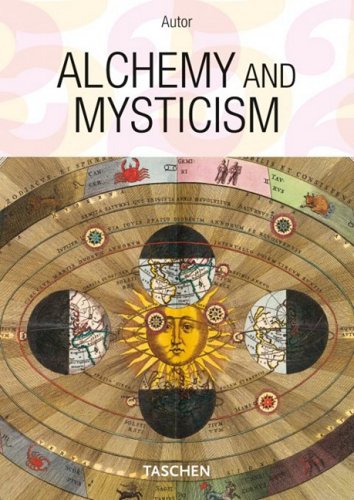
6. Alchemy & Mysticism: The Hermetic
$10.00
7. Alchemy of Race and Rights
$4.42
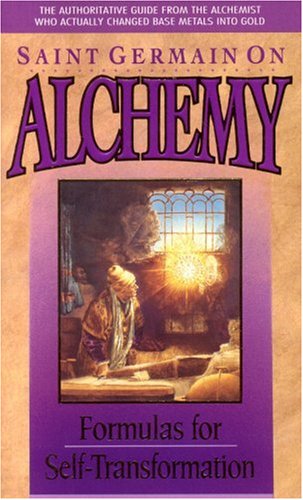
8. Saint Germain On Alchemy: Formulas
$10.32
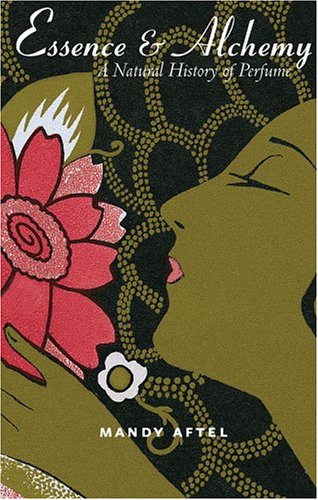
9. Essence and Alchemy
$16.50
10. Psychology and Alchemy (Collected
$7.63
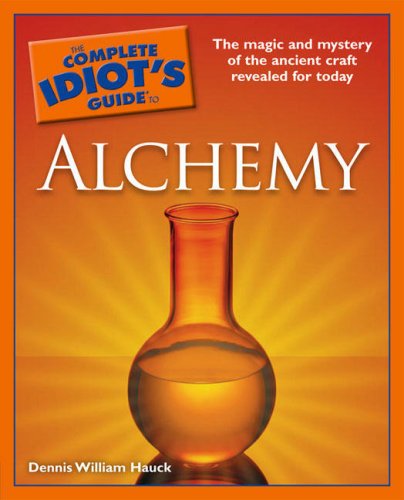
11. Sorcerer's Stone: A Beginner's
$18.45
12. Body Alchemy: Transsexual Portraits
$10.69
13. Dime-Store Alchemy: The Art of
$12.00
14. The Practical Handbook of Plant
$8.09
15. An Alchemy of Mind: The Marvel
$7.79
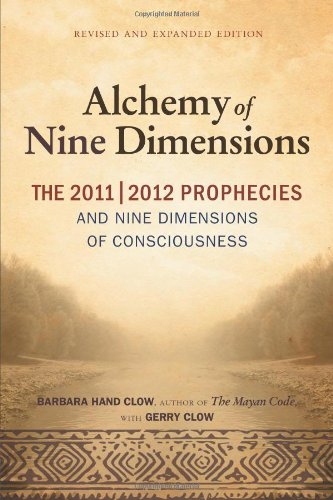
16. Alchemy of Nine Dimensions: Decoding
$11.08
17. Anarchy and Alchemy: The Films
$12.21
18. Alchemy of the Heart
$13.95
19. Fundamentals of Spiritual Alchemy
$24.95
20. Destination Alchemy

1. Emotional Alchemy: How the Mind Can Heal the Heart
by Tara Bennett-Goleman
Paperback: 432 Pages (2002-01-22)
list price: US$14.95 -- used & new: US$7.50
(price subject to change: see help)
Asin: 0609809032
Average Customer Review: 4.0 out of 5 stars
Canada | United Kingdom | Germany | France | Japan
Editorial Review

Amazon.com
According to ancient legends, alchemists use a magical philosopher's stone to transmute lead into gold. In Emotional Alchemy, Tara Bennett-Goleman shows readers how they can use this alchemist metaphor to transform emotional confusion (lead) into insightful clarity (gold). And what does the magic stone represent? "Mindfulness," a lifelong practice that can bring readers more joy and contentment than the gold, according to Bennett-Goleman."Mindfulness means seeing things as they are without trying to change them," she writes. "The point is to dissolve our reactions to disturbing emotions, being careful not to reject the emotion itself."

Those who have never entered this practice will find a concise and articulateteacher in Bennett-Goleman, who leads national workshops with her husband,author Daniel Goleman (EmotionalIntelligence). What make this book such an exciting breakthrough isBennett-Goleman's ability to apply Buddhist mindfulness to Western psychology.She shows how emotional alchemy can be used to address typical habits, such asmistrust, fear of rejection, feeling unlovable. Readers will also findfascinating scientific facts on how emotional alchemy affects brain chemistryand even cancer survival. --Gail HudsonBook Description
“May this very important and enticing book find its way into the hearts of readers near and far so that it can perform its mysterious and healing alchemy for the benefit of all.” —John Kabat-Zinn, author of Wherever You Go, There You Are and
Professor of Medicine, University of Massachusetts Medical School

The Transformative Power of Mindfulness

Alchemists sought to transform lead into gold. In the same way, says Tara Bennett- Goleman, we all have the natural ability to turn our moments of confusion or emotional pain into insightful clarity.

Emotional Alchemy maps the mind and shows how, according to recent advances in cognitive therapy, most of what troubles us falls into ten basic emotional patterns, including fear of abandonment, social exclusion (the feeling that we don’t belong), and vulnerability (the feeling that some catastrophe will occur).This remarkable book also teaches us how we can free ourselves of such patterns and replace them with empathy for ourselves and others through the simple practice of mindfulness, an awareness that lets us see things as they truly are without distortion or judgment. Emotional Alchemy provides an insightful explanation of how mindfulness can change not only our lives, but the very structure of our brains, giving us the freedom to be more creative and alive.

Here is a beautifully rendered work full of Buddhist wisdom and storiesof how people have used mindfulness to conquer their self-defeating habits. The result is a whole new way of approaching our relationships, work, and internal lives. ... Read more

Customer Reviews (48)

5-0 out of 5 stars Emotional Alchemy addresses all my issues
I became so excited about this book that I wanted to see what other people thought about it. While the reviews in the book itself were positive the ones I read here were disappointing. I wanted to write a review that would encourage people to read this book because I found a lot of answers for my personal dilemmas in Tara's book. I was so pleased with the information I got from the book that I bought the CD even though the review I read here for the CD was not positive. I loved her voice and the background music. I identified with the tea ceremony because some one once told me how concentrating on the act of making tea in a teapot added to the relaxation one is usually seeking when stopping to have a cup of tea. I am replaying the CD over and over because my mind wants to resist the enlightenment I experience each time I hear it. I even found a schema that is particularly troublesome for me when listening to the cd that I did not see when I was reading the book. That proved to me how my schemas want to keep me deluded about my true feelings. I have had similar experiences to most of the examples in the book and I got great ideas for addressing them.I particularly got the part about the quarter second opportunity to make a different choice. Now when I get a feeling of dis-ease I turn my awareness on it and begin dialoging with myself about what I am feeling. Now I find that most of the time if I will not react a better outcome will result. I am not willing to do long meditation retreats but i am very interested in meditating more in order to experience that gap where real peace resides. I know it is there and I have felt it in the past and hope to achieve it on a regular basis. I believe we all have the ability to experience it. I do not believe you have to be a Zen monk to achieve the tranquility she speaks of. I am glad I did not read the reviews until after I read the book. If you are co-dependent like I have been it is one of the best explanations for why we are co-dependant and what to do about becoming interdependent like we were supposed to be. I want to thank the Author for writing this book. I especially like the index and Notes. I am grateful to have found this book.

2-0 out of 5 stars Audio version is tedious
I have not read the book but tried to listen to the audiotape version and found it hopelessly tedious. Some of the problem may be as a reviewer of the CD version mentioned, that the author has no gift for narration.

The mix of Buddhism and psychology, two subjects I usually find interesting, doesn't work, at least as far as I got - two tapes on - before I stopped listening.

The Buddhism focused on the author's near obsession with the Zen tea ceremony, which she describes in a way that makes it sound about as spiritual as operating a Mister Coffee. Whatever she gets out of the tea ceremony, she is not communicating it here. And if you are not fascinated with the Zen tea ceremony this book may not be for you.

Meanwhile, the psychological bits are mostly based on case studies of the type that an old newspaperman used to call the "suspicious anecdote." The author always seems to be a heroic therapist, and the patient seems to attain Buddha-like insights within minutes of their encounter. The stories sound like outtakes from a "can-you-top-this" contest in the bar of a psychotherapists' convention.

In the end, listening to this book felt like having my teeth cleaned by a well-meaning but ham-handed dental hygienist. The best part was the Zen silence after I stopped listening.


5-0 out of 5 stars Worth your time and effort (and money)
Books have been written about mindfulness and they have been written about cognitive-behavioral therapy. The strength of this book is the way in which the author seamlessly combines them and convincingly shows how they complement and enhance one another. In short, mindfulness allows one greater access to experience, to one's own thoughts, emotions, sensations--including the troubling ones, which we so often suppress or avoid. In terms of therapy, awareness is invaluable. But even for someone not in therapy, it's equally essential. Mindfulness allows us to understand and break out of automatic, self-harming patterns. Bennett-Goleman gives a good roadmap of how to accomplish that.

1-0 out of 5 stars Audio CD review:not good. Read the book instead and don't buy this because you like her hubby's stuff
I bought this audio CD on the strength of my enjoyment of this woman's husband's books, which I keep in my library and re-read occasionally-the "Emotional Intelligence" series. This was a mistake; it's not at all like her husband's books. First of all, you really have to be into Buddhist philosphy and compassionate observation. If that's not your bag, you might not be happy with this purchase. Second, I found some of the examples of her patients to be a bit tortured. For instance, one patient has a breakthrough by recalling something from when she was an infant! Which seems hard to be believe....Finally, I think it was a mistake for the author to read the book. Her voice is okay, but she speaks incredibly slowly. I listen to a lot of audio CDs, and this is the slowest reading I have ever heard. I realize that if we are stressing soothing and zen, we might not want a rapid fire pace, but this goes too far.

3-0 out of 5 stars It's the other way around....
The heart heals the head. Overthinking is the fastest way to get yourself stuck. The heart sees and knows what the intellect cannot. The head serves the heart and only when the heart "gets" it ... can healing begin. A great book but I believe the reverse is true. Only the heart can heal a broken heart. Mental gymnastics can be a brilliant form of denial. The heart creates, the heart desires, and the heart is what does the healing. It is the seat of love. ... Read more


2. Real Alchemy, A Primer of Practical Alchemy
by Robert Bartlett
Paperback: 188 Pages (2007-07-13)
list price: US$20.95 -- used & new: US$20.06
(price subject to change: see help)
Asin: 0615150381
Average Customer Review: 5.0 out of 5 stars
Canada | United Kingdom | Germany | France | Japan
Editorial Review

Book Description
Real Alchemy is an easy to understand manual in Practical Alchemy. It explores the History of Alchemy to the present day, as well as practical techniques for beginning the Alchemical Work in the Laboratory. It is written by Modern Day Alchemist and Chemist, Robert Allen Bartlett. Robert was a student of Frater Albertus founder of the Paracelsus Research Society in Salt Lake City, Utah. Robert became the Chief Chemist at Paralab, the commercial offshoot of the PRS College. Robert Bartlett is currently an Adept member of the International Alchemy Guild, and teaches classes locally in the Seattle area as well as online at the crucible.org. He also produces a line of spagyric products. ... Read more

Customer Reviews (7)

5-0 out of 5 stars modern analysis
I bought several noted alchemical books (spagyric, hermetic) dating back to the 16th century. After reading each intro, this book is the one I chose to start with. Because it was wrtten in 2007, it expects a modern mindset from its audience, and so makes comparisons between alchmical undertandings and modern ways of thinking. It does this without being trite.
A great read.

5-0 out of 5 stars Real Alchemy
This second edition contains a bit more on the operations, the circulatum and has more working diagrams.

It is a true masterpiece, and will be a great addition to anyones collection!

-KB

5-0 out of 5 stars Real Alchemy
Although I may be a bit prejudiced, Robert is a brilliant alchemist as well as a scientist. He lives his life balanced between both worlds and has demanded that whatever he dedicates his energy to can be proven here in the physical world as well as the invisible realms.

I have been amazed by the healing effects of elixers that he has made.

I have seen the scientific records of his experiments in proving the actual physical changes that the operations of alchemy have on matter.

In his next book he presents the evidence that he has collected through the years that shows that this stuff really works!


And for those who wish to purchase the first book that is for sale here, know that there may be some gap due to problems with the publisher who has been fired. Robert is in the process of getting the book in a second edition back up on the market. Amazon may take a little while to get it on their site.


-Karen Bartlett


spirithorse322@aol.com

5-0 out of 5 stars Ascendng the Hermetic Pillars.
The 3 traditional pillars of the Hermetic arts are Alchemy, Astrology, and Qabalah. None of these are stagnant but are all living, growing and evolving arts which are completely compatible with both religion and science.

This amazing tome, written by one of the foremost living authorites on Alchemy, combines practical modern science with the ancient Alchemical sciences and gives working students a firm fondation on which to build their temples.

This book is truely a treasure which provides years of practicle work, and with it one could ascend to mastery in this both ancient and sacred art/scence/religion/philosophy (Magick.) For a deeper understanding of the philosophy I suggest "Sorcerer's Stone," by Hauck. And for a more guided introduction to the subject, especially for students with a background in other schools of magick, I suggest, "The Path of Alchemy," by Stavish.

These three books I have called (semi jokingly but still in truth) the "Holy Trinity of Modern Alchemy." They compliment one another perfectly, each focuses in a slightly different manner and the combined information is a very nice place to start your journey in preparation for the actual process. Read all three, make sure you understand them well, and then slowley and with utmost care begin your Great Work!

5-0 out of 5 stars Better than Best!
I loved this book! It takes you through a well researched history, basics and on to advanced practices, in an easy to understand way. Although there are no illustrations to aid in explaining the processes or equipment, it is very easy to understand. This is a excellent read on the subject, without all the antiquitated terms and cryptic words. Highly recommended! ... Read more


3. Path of Alchemy: Energetic Healing & the World of Natural Magic (Pathways to Enlightenment)
by Mark Stavish
Paperback: 229 Pages (2006-11-01)
list price: US$14.95 -- used & new: US$8.44
(price subject to change: see help)
Asin: 0738709034
Average Customer Review: 5.0 out of 5 stars
Canada | United Kingdom | Germany | France | Japan
Editorial Review

Book Description
Alchemy offers tremendous insight into alternative therapies, new medicines, and the depths of the human mind. Illuminating a truly esoteric practice, Mark Stavish reveals how to create and apply "medicines for the soul" in this remarkable guide to plant and mineral alchemy.

The Path of Alchemy introduces the history and basic laws of this ancient practice, and explains how it ties into Qabala, tarot, astrology, and the four elements. Safe, modern techniques-based on spagyrics (plant alchemy)-for producing distillations, stones, tinctures, and elixirs are given, along with their uses in physical healing, spiritual growth, psychic experiments, initiation, consecration, spellwork, and more. Each chapter includes meditations, projects, and suggested reading as aids to "inner transformation," an equally important aspect of alchemy. Tools, rituals, lunar and solar stones, and the elusive Philosopher's Stone are all covered in this comprehensive guide to alchemy.

Finalist for the Coalition of Visionary Resources Award for Best Magick/Shamanism Book ... Read more

Customer Reviews (11)

5-0 out of 5 stars An honest review
Unlike many people who pick up this title, I am not in search of the rumored Philosopher's Stone.I started reading this book to find ways to change myself for the better.Within its pages, I found not only philosophical alchemy, but practical alchemy as well.I took my time, created a few of the basic tinctures, used them over a period of time, and I have to say that I have indeed changed.Now, I'm not saying I sprouted a third arm or anything, and I'm certainly not going into specifics via this medium.But, I will say that my communication skills have improved, I'm more understanding and compassionate when dealing with everyday concerns, and I'm just generally more pleasant to be around.And yes, I am attributing much of that to this very book (and my own elbow grease of course.)You don't have to believe it can be this easy.Buy the book; read it; re-read it; perform the exercises, and you'll find out for yourself.

4-0 out of 5 stars The best of all possible beginnings
This book is a true gem. Before reading it I had little interest in laboratory alchemy and while I still have little interest in the path of mineral alchemy, my interest was more than just a little piqued by this book.

Plant Alchemy or spagyria is the application of alchemical theory to herbal products. By breaking up the plant into it's "Mercury" (alcohol product), "Sulfur" (essential volatile oils) and "Salt" (the white/gray ash left over from a slow, low temperature burn) these three principles are then recombined in various ways (even producing a plant "stone") to enhance and purify the occult, energetic properties of the plant.

The true value of this book is in the author's ability to make the work seem so possible, even easy. Mr. Stavish also has the courage to admit that he believes that plant alchemy can be more than just a healing art but alsohas the potential to be an initiatory path in and of itself (a claim usually reserved for the path of laboratory mineral alchemy). I agree with him with the caveat that a strong energetic bond must first be forged with the very plant whose product is being worked upon. The practice of "dieting" a plant as practiced in some South American shamanic traditions would seem to be a useful practice as a preliminary to such laboratory work (see Plant Shamanism by Heaven and Charing).

The only criticism I have for this book is that it would seem to make it all look too easy. In fact I would prefer to have more guidance in the actual temperatures at which to heat the product at various stages and for how long to expect each stage to take. I would also have liked to learn more about the distillation processes as the technique Mr. Stavish goes into is only for those on a shoe string budget. However, as the title of my review states, this book is the best of all possible beginnings.

Other sources to study are the works of Junius Manifred and the works of Jean DuBuis whose works expand upon and fill in the gaps of this brilliant primer.

5-0 out of 5 stars Excellent and practical alchemy
This book remedies one of the main problems in publications about alchemy - it is both understandable and practical! The basic practices and symbolism of alchemy are detailed, with emphasis on spagyrics (plant alchemy), including how to make various tinctures and plant stones. The author is to be commended for laying open so clearly this complex area of esoteric study.

This book is not for the lazy! It gives you material that will take years to work through, though it is all explained in a way that will encourage you to try things and see for yourself. It has certainly got me thinking about purchasing some of the equipment to give it a go!

A cautionary note, some of the alchemical symbolism differs from the classic Qabalistic symbolism. The author does explain this, so pay attention to these sections to avoid confusion. All in all this is an excellent practical and thought provoking book that I would recommend to everyone who is genuinely interested in magick. I hope the author will write a further book exploring the wealth of alchemical symbolism with a similar level of clarity to further the availability of the huge corpus of alchemical material which is largely ignored today. Now pass me that alembic!

5-0 out of 5 stars Very practical
I've been interested in Alchemy for years but could not find a practical approach until coming across this book. An added bonus for me was the way the author pulled together and linked concepts from alchemy, kabala, and tarot. Excellent book to get started with alchemy or at least get your arms around the topic from an easy to understand conceptual framework.

5-0 out of 5 stars A Solid Introduction to Alchemy
The Path of Alchemy - Energetic Healing and the World of Natural Magic, offers an interesting introduction into the philosophy and methods of alchemy as they apply to the Plant Kingdom of Nature. The author's suggested meditations are useful in that they reflect the laboratory work instead of replacing it. His techniques and ideas train the aspiring alchemist the think alchemically, and thereby better experience and understand the working of Nature.

The book also presents additional information on the stages of alchemy and its relation to the Major Arcana of the Tarot, dream work, and interpreting the Path of Flamel into an operative laboratory technique. I find all are interesting personal penchants of the author, and are aimed at those who wish to move from `spiritual' or `psychological' Alchemy into the real nuts and bolts of the Great Work by following such lines of thought. Overall, a very good read, and one that deserves the attention and effort of anyone who wants to call him or herself, "Alchemist." ... Read more


4. The Alchemy of Finance (Wiley Investment Classics)
by George Soros
Paperback: 416 Pages (2003-07-29)
list price: US$19.95 -- used & new: US$10.93
(price subject to change: see help)
Asin: 0471445495
Average Customer Review: 3.5 out of 5 stars
Canada | United Kingdom | Germany | France | Japan
Editorial Review

Book Description
New chapter by Soros on the secrets to his success along with a new Preface and Introduction.
New Foreword by renowned economist Paul Volcker
"An extraordinary . . . inside look into the decision-making process of the most successful money manager of our time. Fantastic." -The Wall Street Journal
George Soros is unquestionably one of the most powerful and profitable investors in the world today. Dubbed by BusinessWeek as "the Man who Moves Markets," Soros made a fortune competing with the British pound and remains active today in the global financial community. Now, in this special edition of the classic investment book, The Alchemy of Finance, Soros presents a theoretical and practical account of current financial trends and a new paradigm by which to understand the financial market today. This edition's expanded and revised Introduction details Soros's innovative investment practices along with his views of the world and world order. He also describes a new paradigm for the "theory of reflexivity" which underlies his unique investment strategies. Filled with expert advice and valuable business lessons, The Alchemy of Finance reveals the timeless principles of an investing legend.
This special edition will feature a new chapter by Soros on the secrets of his success and a new Foreword by the Honorable Paul Volcker, former Chairman of the Federal Reserve.
George Soros (New York, NY) is President of Soros Fund Management and Chief Investment Advisor to Quantum Fund N.V., a $12 billion international investment fund. Besides his numerous ventures in finance, Soros is also extremely active in the worlds of education, culture, and economic aid and development through his Open Society Fund and the Soros Foundation. ... Read more

Customer Reviews (17)

4-0 out of 5 stars This books deserves your attention
I have been reading Soros book for many weeks now and I still find myself in a world of confusion, realizing more but daunted by my obvious lack of understanding.
Let me first be clear that I am a student of economics and mathematics and the models that Soros 'debunks' are my departments bread and butter. I think many people have misunderstood the motive behind the work. Soros is perhaps struggling to come to terms with his own thought process (a task which is certainly not easy).
Having read a few reviews, it seems that many other readers have misunderstood the theory of reflexivity, and perhaps Soros motives for explanation.
Soros makes a great point that in natural science we prescribe laws that mimic nature as closely as possible i.e. F=ma will give us a consistent result each time, we can therefore move from theory to practice without great loss of accuracy (for lack of a better word). Soros says that the goal of science is to move ever closer to the truth. At the end of the day though nature does not care what equations we have crowbarred in to approximate nature. There is in essence a one way relationship.
In social science (and this is where reflexivity comes in) the same cannot be said. There is a dynamic relationship whereby each participant affects the other - a circular influential relationship.
Soros tries to debunk the economic models which govern our central banks, fiscal policy, social and economic constructs etc... by pointing to historical results. Underpinning all his philosophy is the fundamental belief that humans are fallible and that assumptions will be inaccurate, if this is the case then economic models will also be incorrect. He does not claim to hold the perfect knowledge, but believes current economic models are overly trusted.

The reason that I gave this book 4 stars is that I am honestly struggling to fully understand Soros thought process let alone his decision making. There certainly is a lot to take in, however having battled with the book, I really believe I am a more SOPHISTICATED investor. I cannot claim to be necessarily more successful after having read it, but that would be too easy.
Just as playing basketball with jordan will make you a better basketballer, one cannot necessarily expect to emulate Soros just by reading his book.
I am now more aware of the subtle philosophical ebb and flow which is'underground' and for that, this book alone is worth the price.

4-0 out of 5 stars Still good for 2007
I found this book to be exceptional at explaining how capital inflows and outflows into a country's market, create a bias in market pricing. He goes into GREAT DEPTH in explaining the speculative component of these in/outflows and how they behave over time. Sometimes - by stabilizing or re-inforcing pricing and markets; othertimes by creating negative feedback and true disequilibrium. In addition, his discussions on trade imbalances, budget deficits, and servicing of the debt (i.e. interest repayments) was outstanding. Given the week dollar in late 2007, this book was particularly good in learning just how much currency plays were a part of the Soros portfolio in previous times of US market weakness. It also gave me a better understanding of how to understand volatile changes in the exchange rate based on changes in regulatory and fiscal policies.

So, it definitely helped affirm my feelings about continuing to increase hard currency holdings in my portfolio in foreign currencies. It also helped me learn how to be more observant in finding inflection points in market pricing and exchange rates, so that you can anticipate boom-busts (drastic reversals) or more gradual changes. For that alone, I am glad I read the book. It is also quite interesting to step inside the mind of such a very smart person!

I was fascinated at Soro's background in philosophy, and depth of knowledge. I did not know this about him, and it increased my respect for him (and helped me understand why he might think as he does), though the section could have used tighter editing.

For those who are engineers as I am, you might find his discussions on circles and feedback loops remind you of discussions in control theory in physical systems, where you have stable and unstable systesm. Instead, Soros uses social and philosophical analogies instead, which accounts for a large part of the book...

Readers of this book might like the book Trading Catalysts by Robert Webb.

5-0 out of 5 stars Wizard of Finance
Soros explains here his key analytical principle of reflexivity - essentially a positive feedback loop - in the context of boom-bust cycles in financial markets and economies, and its applications in his extraordinarily successful "global macro" trading system during the 1970s, 80s, and early 90s.

He gives unique contrarian insights into our understanding of supposedly cut-and-dried economic and financial ideas, such as his trenchant denial of the efficient markets hypothesis and financial markets equilibria. He draws surprising links between economic phenomena which hitherto were supposed to be independent of each other, the best example being his emphasis on the propensity for bank lending to reflexively influence the collateral values of the financial assets which it finances in such a way as to lead to a boom-bust cycle.

That mainstream economists would quibble with Soros's ideas are to be expected, for economists are known for being unreasonably disputatious and uncommonly sensitive to outsiders' criticisms of their theoretical sacred cows. But in the analysis of market trends and dislocations, and trading opportunities, I know where I would put my money, given a choice between academic economists and Soros.

Success speaks for itself. Soros applied his theories so successfully that he became the most successful hedge fund manager ever, his flagship Quantum Fund generating an average annual return of 30%+ between 1969 and 1995.

One cannot but admire his tremendous courage, for example, in taking on the Bank of England and breaking its back, as it were, in his famous 10 billion dollar Sterling short trade in 1992 which netted him a cool billion, and made him a legend among traders and feared by central bankers worldwide. His honesty in admitting his missteps, and coolness with which he analysed his failures, is equally impressive, and sets an example for all professional investors.

George Soros is a not just a legend, but a genius with one of the finest analytical minds of his time. He elevated trading to a fine art, an alchemy of which he was an inimitable wizard.

1-0 out of 5 stars Poor
I was looking for a good read about finance and invesments (being a Finance student) and George Soros' book seemed a bible to me. Not after I bought it though...

I had a scan and never read it! Useless. It is neither a good biography nor a good read. Boring, should I say?

Anyway, it contains an in depth case study about a portfolio and how it changed through different periods. Other than that there isn't much interesting. I don't even know to whom to recommend. As a matter of fact, I wouldn't recommend it to anybody, unless you are a big fan of George...

If you want a good read about finance and investments, buy anything but not "The Alchemy of Finance"...


3-0 out of 5 stars not useful
if you're looking for soros' trading strategies, you will be disappointed. this book's theory has little practical application. it was written very poorly as well - incredibly verbose, unnecessarily complex in an attempt to wow you with it's 'brilliance.' similar to academic journals, which frequently explain simple concepts in a very complicated manner to try to make the author sound intelligent.

as a person, his political philosophy is at complete odds with his life. he's so far left into the socialist/communism realm that he's off the map.he's anti capitalist, anti free trade, pro welfare state, yet he made all his money through the free market - the purest form of capitalism there is, yet hardly recognizes how his trading has benefited society. it allowed him to be able to help others become financially free, made markets more efficiently priced, broke unfair control of the currency markets by governments (bank of england), let his family be set for life, allowed him to contribute billions to charities, etc. he acknowledges none of it.

i respect his success, but am not a fan of either his book nor him as a person. ... Read more


5. The Alchemy of Growth: Practical Insights for Building the Enduring Enterprise
by Mehrdad Baghai, Stephen Coley, David White
Paperback: 272 Pages (2000-05)
list price: US$8.99 -- used & new: US$24.76
(price subject to change: see help)
Asin: B0013VZK1Y
Average Customer Review: 4.5 out of 5 stars
Canada | United Kingdom | Germany | France | Japan
Editorial Review

Amazon.com
Why do some companies come and go while others endure? According to McKinsey & Company, Inc. consultants Mehrdad Baghai, Stephen Coley, and David White, the secret to a lasting enterprise is sustained growth. In The Alchemy of Growth, the authors offer a practical guide for jumpstarting expansion and keeping it going. "Growth is a noble pursuit. It creates new jobs for the community and wealth for shareholders. It can turn ordinary companies into stimulating environments where employees find a sense of purpose in their work," they write. "Growth's transformative power is akin to the alchemy of old."

The authors describe the approaches that have succeeded in helping their corporate clients around the world to step up the pace. For instance, companies must simultaneously focus on "three horizons" critical to growth. The first is the current bread-and-butter of the firm; the second, the fast-developing entrepreneurial ventures; and the third, the ideas that will germinate into tomorrow's profits. The best part of the book: the real-life examples of firms that have transformed themselves from laggards to supercharged growth companies. Take Disney, for example. After founder Walt Disney's death in 1966, the company stagnated, with its theme park and film business slipping. But after Michael Eisner took over in 1984, Disney boosted its average annual returns to 29 percent, on the strength of growth in such new avenues as Disney stores, ESPN, and resort development. The Alchemy of Growth is an instructive handbook for managers interested in spurring their companies to new heights. --Dan RingBook Description
From experts at McKinsey & Company's world-renowned growth practice comes a highly practical, field-tested approach to initiating and sustaining growth in companies of all sizes

Growth unleashes benefits beyond the economic. It revitalizes organizations and invigorates the people in them, creating energy, a sense of purpose, and the glow of being on a winning team. Like the alchemy of old, it seeks to transform the everyday into the exalted by means that seem little short of magical. Yet growth is often elusive, achieved at unacceptable costs, or managed in fits and starts. Based on over three years of research and application at high-performing companies around the world, The Alchemy of Growth is a comprehensive, practical approach to initiating, achieving, and sustaining profitable growth-today and tomorrow. As the book shows, the secret is to manage business opportunities across three time horizons at once: extending and defending core businesses, building new businesses, and seeding options for the future. The Alchemy of Growth offers managers at all levels the tools and concepts for investing in the right initiatives, capabilities, and talent to propel their companies into the future. ... Read more

Customer Reviews (12)

4-0 out of 5 stars Learn how to build growth into a business plan
Sustained growth is the motivation of any profit-making organization.As the authors point out, few organizations achieve sustained growth.Most have really good years, and those can be followed by really poor years.The authors see most firms faltering some point in their history unable to sustain growth.

By building growth into a business plan, the authors explain a method that will call for practical growth and help to build an enduring enterprise.Regardless of the size of a business, by following the authors' advice of managing across three "horizons" at once, the company will grow successfully and, most importantly, sustain that growth.

These three horizons reflect the company's present, short-term future, and long-term future.One must be able to manage these three horizons effectively by:
· defending and growing core businesses
· building up new core businesses for the future
· planting the seeds that may become potential businesses for the long term.

The authors point out that managing all three of these is no easy task.There will be areas where the priorities and requirements for these three horizons will conflict.This book will help leaders manage through these conflicts.

They will also learn how to:

· overcome a company's inertia
· build momentum for and through growth
· sustain growth

4-0 out of 5 stars Exhilarating and Exhausting
This book provides a easy-to-understand mental model for thinking about organizational growth. However, the concept of growing and managing three "horizons" of growth at the same time exhilarates and exhausts. This book could be enhanced by incorporating sustainable principles like the Triple Bottom Line: People, Planet, and Prosperity.

5-0 out of 5 stars A strategic stairway to business success
A perspective on corporate growth and change which works through the need to maintain a simultaneous focus on three 'horizons' - today's business, emerging businesses and longer term options and the implications forstrategy, management and structures.

As you would expect of a book out ofthe McKinsey stable, this is on an issue of importance to business, is wellresearched and analysed and very readable and well presented.As you wouldalso expect, it is focused on large corporates, and on strategies for theirbusiness success, as measured by exceptional growth and returns tostockholders.

It provides one important perspective on the issue ofcorporate growth and development, to be compared with otherperspectives.

There are obvious comparisons with Collins & Porras:'Built to Last' both in the concern with continuing exceptional performanceover an extended period and in the care taken to explain the research basefrom which the findings are derived.However, whereas Collins & Porrasare concerned primarily with values and culture, Baghai et al are primarilyinterested in strategies for the selection, development and management of aportfolio of businesses and the implications of those strategies forstructuring, staffing and operations.

The fundamental thesis is simpleand can be stated in a few propositions:

The companies that have beensuccessful in maintaining high rates of growth with superior profitabilityare those that have learnt to manage well to three different time horizonsat the same time - today's business, the next generation of emergingbusinesses, and the longer term options out of which the next generation ofbusinesses will arise.

In order to develop longer term options into 'coreprofit engines', a series of measured steps (concerned with finding ways ofprofitably building core capabilities and markets) are required, which theauthors call 'stairways'.In the nature of things, not all stairways willlead to future core businesses, so a variety of initiatives need to becarried forward together.Management of the 'stairways' should receivesignificant senior management attention.

The skills and temperamentsrequired to manage current business, to develop new business and to searchout viable future options are widely different one from the other.The keyto maximising the profitability of today's business is excellence ofexecution.Emerging businesses require business builders - the typicalentrepreneurial temperament, while the identification of future optionsrequires lateral thinkers and visionaries.

In consequence, the style oforganisation and internal culture most appropriate to each of these fociare also different.Large corporates tend to find difficulty inencompassing these very different cultures. The authors discuss in somedepth the resulting issues of internal culture, recruitment, structuringand transition, and their strategic management.

The strength of thebook is that the authors identify a key issue in business success - thedevelopment and maintenance of a vigorous portfolio of businesses over thelonger term - and work through the implications with clarity andthoroughness.

The cost of that approach is that other equallysignificant issues are assumed or left in the background.It is necessaryto balance the valuable perspective offered with others that are alsoimportant.It is also necessary to be aware of the underpinning tacitassumptions - for example, the underlying metaphor of organisation adoptedby the authors appears to me to be much nearer that of the organisation asa (money) machine, than that of the organisation as an organism.There isa marked contrast with the emphasis in, for example de Geus: 'The LivingCompany'.This is not to say that either is wrong, only that neither iscomplete.

4-0 out of 5 stars Very useful models and abstractions
It seems like a no-brainer that companies need to grow in order to survive or compete, and this book isn't interesting because it tells us what we already know. What's interesting about this book is that the authors do awonderful job of taking substantial research, abstracting the trends, andrendering their findings into very clear and usable models and messagesthat can help most managers who are thinking about growth. It wasparticularly interesting for me, as I work as an ebusiness consultant for alarge IT integrator and many of my customers are trying to start newstaircases (as described in the book) via Internet channels and I canimmediately see the applicability of Alchemy to what they're trying todo.

The book is a quick read (almost comically quick, given the price)and mercifully low on buzz words. Right now, I don't see the appendix asbeing particularly useful, but I may find it more so later. Annotating thebibliography would have added a lot of value.

5-0 out of 5 stars Good book to think about the future of your company
An useful book ! Surviving in the future requests perspectives and actions. Companies have a life cicle and gaining right to survive for a long time is not simple. So entrepreuners, directors and managers shouldthink and act carefully for ensuryng the future of their companies, becausethere's not certitude of existing for decades. ... Read more


6. Alchemy & Mysticism: The Hermetic Museum (25th)
by Alexander Roob
Paperback: 575 Pages (2006-08-02)
list price: US$14.99 -- used & new: US$9.50
(price subject to change: see help)
Asin: 3822850381
Average Customer Review: 4.5 out of 5 stars
Canada | United Kingdom | Germany | France | Japan
Editorial Review

Book Description
A fantastic journey through the history of esoteric lore: the great work of the alchemists (TASCHEN's 25th anniversary - Special edition) The Hermetic Museum takes its readers on a magical mystery tour spanning an arc from the mediaeval cosmogram and images of Christian mysticism, through the fascinating world of alchemy to the art of the Romantic era. The enigmatic hieroglyphs of cabbalists, Rosicrucians and freemasons are shown to be closely linked with the early scientific illustrations in the fields of medicine, chemistry, optics and colour theory. The author: Alexander Roob studied painting at the University of Fine Arts, Berlin. From 2000 to 2002, he was a professor at the University of Fine Arts, Hamburg. He has been teaching at the Academy of Fine Arts, Stuttgart since 2002. ... Read more

Customer Reviews (13)

4-0 out of 5 stars symbolism,
I'm an artist and have a large collection of reference books.
This is one of them,lots of good quality images.
Terrific value.

5-0 out of 5 stars Alchemy and Mysticism
A thick book of many pictures all very fascinating and informative. Great for a study group or bconversation starter.

5-0 out of 5 stars Great Quality Book
This book is full of hard to find alchemical art.

If you try to understand the book you will most likely get lost in the alchemical labyrinth, but you will not regret it.

5-0 out of 5 stars Alchemy & Mysticism: The Hermetic Museum
This book is a most excellent read for anyone who has an understanding of Spiritual Alchemy. It is fully illustrated with rare material which is extremely informative. This is a must for anyone who is interested in Spiritual Alchemy. This is so far the very best material on the subject I have seen.

5-0 out of 5 stars Fantastic collection of mystical and alchemical art
If you love the esoteric symbolism and art associated with alchemy then you are going to love this book.It is beautifully presented with a nice glossy finish to the pages and the colours are excellently reproduced.

There are brief bits of text that accompany the drawings/paintings and even though they are brief they can be quite illuminating.

This book has had pride of place in my collection and I have dipped into it on many occassions.It can be almost meditative looking at these painings and drawings and can broaden your spiritual understanding.

It is a fine collection of alchemical and mystical paintings and drawings and it is unlikely that you will find such a beautifully presented and exhaustively comprehensive collection anywhere else. ... Read more


7. Alchemy of Race and Rights
by Patricia J. Williams
Paperback: 272 Pages (1992-03-01)
list price: US$19.50 -- used & new: US$10.00
(price subject to change: see help)
Asin: 0674014715
Average Customer Review: 3.0 out of 5 stars
Canada | United Kingdom | Germany | France | Japan
Editorial Review

Amazon.com
In a personal and profound examination of the United States legal system and its effect on African Americans, Patricia J. Williams uses the term alchemy--the medieval, mysterious practice of turning base metal into gold--as a haunting metaphor for the nearly mystical process by which United States law emboldens and endangers blacks through arcane interpretation, as well as the heroic will of a people to make those laws manifest. "I'm interested in the way in which the legal language flattens and confines in absolutes the complexity of meaning inherent in any given problem," she writes. "I am trying to challenge the usual limits of commercial discourse by using an intentionally double-voiced and relational, rather than a traditionally legal black letter, vocabulary."

With an authorial voice that draws upon Williams's perspective as teacher, lawyer, black American, and woman, The Alchemy of Race and Rights uses a palette of court cases, educational encounters, and personal experiences--including her discovery of her slave ancestor and her interactions with school deans over how to teach law--to create a literary cubist portrait detailing the rhetoric and reality that color the complexion of American justice. --Eugene Holley Jr. Book Description
Patricia Williams is a lawyer and a professor of commercial law, the great-great-granddaughter of a slave and a white southern lawyer. The Alchemy of Race and Rights is an eloquent autobiographical essay in which the author reflects on the intersection of race, gender, and class. Using the tools of critical literary and legal theory, she sets out her views of contemporary popular culture and current events, from Howard Beach to homelessness, from Tawana Brawley to the law-school classrom, from civil rights to Oprah Winfrey, from Bernhard Goetz to Marth Beth Whitehead. She also traces the workings of "ordinary racism"--everyday occurences, casual, unintended, banal perhaps, but mortifying. Taking up the metaphor of alchemy, Williams casts the law as a mythological text in which the powers of commerce and the Constitution, wealth and poverty, sanity and insanity, wage war across complex and overlapping boundaries of discourse. In deliberately transgressing such boundaries, she persues a path toward racial justice that is, ultimately, transformative.

Williams gets to the roots of racism not by fingerpointing but by much gentler methods. Her book is full of anecdote and witness,vivid characters known and observed, trenchant analysis of the law's shortcomings. Only by such an inquiry and such patient phenomenology can we understand racism. The book is deeply moving and not so, finally, just because racism is wrong--we all know that. What we don't know is how to unthink the process that allows racism to persist. THis Williams enables us to see. The result is a testament of considerable beauty, a triumph of moral tactfullness, The result, as the title suggests, is magic.

... Read more

Customer Reviews (10)

5-0 out of 5 stars passionate diatribe
There is a lot to complain about regarding race and civil rights and this author questions how far we've come.

We have NOT arrived, she reminds us.

She is a downer and does not leave much hope, yet, somehow it is energizing to read.

1-0 out of 5 stars A Widely Read Manifesto of Regressive Race Relations
A great deal of discourse has come out of the use of this book in my law class on the interaction of law in society, but I find it's use counter-productive to the forward-thinking goals of most academic institutions. Prof. Williams cannot seem to make up her mind on anything. She attacks Marxist lawyers, while at the same time advocating an affront to the bourgeoise, especially those without black skin (whites, Hispanics and Asians are all vilified to some degree in this book). While masquerading as a socialist activist herself, she then advocates a very right-wing goal of keeping each other in our respective racial boxes to keep order, even refusing to accept that she herself can be at once black, female and educated -- these three identities always appear separately for her. Her book is a regressive look at the future that denies the possibility of progress in race and gender relations. She is sadly unable to employ the power in her rights and instead prefers to wallow in a viscious cycle that refuses to recognize nuance, and prefers rather to assume racial categories, because they are simpler. Very few new ideas are presented in this racist, ethnically intolerant and misandric text and it is hardly worth a read, beyond the fact that it may come up in discussion.

1-0 out of 5 stars More gibberish from the good professor
What a dreary tome. Ms. Professor Williams has a unique ability to obscure the most obvious and trite revelations in pedantic and turgid prose that she thinks is thrillingly poetic because the words are long-winded and flowery. and that's when she's making sense, which isn't very often. the rest of her writings tend to be either outright calls for more preferences for her preferred friends camouflaged as courageous iconoclasm, or just plain idiocy posing as intellectually daring originality. Sadly enough, if Thomas Kuhn is right, we'll have the likes of Professor Pat around for another couple of decades. (But hey, if you have the money, you can always sign up for the Nation's annual cruise and talk about the revolution with Pat and the gang for a mere 8 grand or so....)

5-0 out of 5 stars Fabulous Book for the Open-Minded
This is an extraordinary book.Through the use of a wide array of reasoning and writing methods, Williams makes it possible for us to get a glimpse of the dangerous and contradictory legal world that ethnic minorities must negotiate to survive.It may be a bit of a stretch for people unaccustomed to thinking outside the box as well as those unfamilar with literature and literary theory.But the insight Williams offers is well worth the effort.It also provides members of the privileged class with the unusual & valuable experience of not being the central focus of the text.A fabulous experience for readers with an open mind!

2-0 out of 5 stars Incoherent BROKEN Necklace of Thoughts
Williams style is more of a problem than her substance.She uses numerous anecdotal stories, told from one side, some of which are dubious in truth, and rare questionably-derived statistics, to demonstrate an invisible undercurrent of racism from whites against blacks, and these are the issues she addresses best.Her style could perhaps best be described as varying between insightful and incoherent, with I'm afraid more of the latter.
Williams argues in the beginning of her book against generalization, that "reconceptualizing from "objective truth" to rhetorical event will be a more nuanced sense of legal and social responsibility," (p.11) then proceeds to generalize and polarize whites and blacks and generalize about numerous other issues throughout the book:
"White women are prostitutes; black women are whores" p. 175
"To say that blacks never fully believed in rights is true" p. 163
"Blacks are thus, in full culturally imagistic terms, not merely unmothered but badly fathered, abused and disowned by whites." p. 163
Argues would probably be a bad choice of word, for logic is the study of arguments, and Williams is neither consistent nor logical.In style, Williams is neither clear nor concise, and in one word, rambles. ... Read more


8. Saint Germain On Alchemy: Formulas For Self-Transformation
by Saint Germain
Mass Market Paperback: 540 Pages (1988-01-01)
list price: US$9.95 -- used & new: US$4.42
(price subject to change: see help)
Asin: 0916766683
Average Customer Review: 3.0 out of 5 stars
Canada | United Kingdom | Germany | France | Japan
Editorial Review

Book Description
Saint Germain shows that miracles are nothing more than the natural outgrowth of the practice of spiritual alchemy. In this greatest of all self-help books, Saint Germain describes the principles of alchemy and how they can be used to effect spiritual, mental, emotional and physical transformation. ... Read more

Customer Reviews (14)

1-0 out of 5 stars Channeled Info - That should sumamarize it...
I found little or no background on how they came about this information, other than it being "Channeled" information.This is where all the red flags went straight up.Though it is possible to get important information from channeling the other side, it is rare at best. It is subject to many of the individual's thoughts.Knowing the background of the person, you see familiar patterns of thought.All of this book could have easily come from the mind of these 2 people.

I read the first few chapters actually thinking this was the word of St. Germain, and was impressed.It lined up with many current esoteric thoughts and the whole mainstream "woo woo" community.It did actually resonate with me until about page 25 or so.Then it became obvious this was just pandering to the reader and that this book was not real at all.

Will the real St. Germain stand up and be heard?

5-0 out of 5 stars Only if you are serious about self-transformation!

Reading the Ascended Masters is not easy; yet, hardly anything worthwhile is. This is a profound reading on true alchemy: transforming the lower metals of the human consciousness into the Gold of the Higher Self; the only alchemy that counts.

From reading this book, I see some of the reviews here seem to miss the point; the book is self-empowering: that your Higher Self (something inside you) be in control of your life.

Relating the word to "all chemistry" has nothing to do with the etymology of the word but rather with a play-on-words metaphoric meaning as already explained in the book: it takes chemical processes, heat, and other conditions to produce change.Transmutation (transformation) is what Alchemy is about.

Saint Germain refers to his and Jesus' Ascension as taking place in the physical.This can make some people uncomfortable but it doesn't take away from the knowledge in it.

And yes, the book is by The Summit Lighthouse and not by the earlier I AM or Bridge to Freedom.

It is a gift about the experiment in the laboratory of you own being on elevating the soul to spirit.Read it if you are serious about wanting self-transformation; it goes into a great deal that, if understood,studied and followed may very well transform your life.

5-0 out of 5 stars Great book!
This book does a good job introducing alchemy and it's purpose in every day life.It contains an interesting section on the spiritual history and destiny of the United States of America and includes a fairly easy to do meditation called "The Ritual of the Cloud."Not a book that you can sit down and read in two hours---but definitely worth getting if alchemy is something that interests you.

1-0 out of 5 stars Not by the Master
I concur with Msrs. Ali and Tseng (among other reviewers) in that this book was not discharged by beloved Master Saint Germain, and really doesn't do any honor to the name of the Master. In fact, I doubt that ANY of the books marketed by Summit Lighthouse (with the exception, perhaps, of Summit's first publications) was discharged by ANY Ascended Being.

One only needs to read ONE book really discharged by the Masters (take your pick, of the I AM Activity under Guy Ballard or of the Bridge to Freedom pre-1961 under Geraldine Innocente) to SENSE the difference.

1-0 out of 5 stars A disappointment
This book is not for me, but I can't justify saying that it's not for everyone. I will conclude, however, that only hardcore Christians will be able to practice this system and not feel foolish due to the outdated and ridiculous philosophies. The majority of this book deals with handing your life over to God, letting God take over your Self and allowing his divine Will to operate through you.

I personally am not interested in giving up my sovereignty regarding my ability to reason and make my own choices. But, if you are, this book might just be for you.

Also, just as a sidenote, this book has absolutely nothing at all to do with traditional Alchemy. True Alchemists need not concern themselves with the teachings of Mr and Mrs Prophet...er, I mean, "St Germain." ... Read more


9. Essence and Alchemy
by Mandy Aftel
Paperback: 256 Pages (2004-10-06)
list price: US$16.95 -- used & new: US$10.32
(price subject to change: see help)
Asin: 1586857029
Average Customer Review: 4.5 out of 5 stars
Canada | United Kingdom | Germany | France | Japan
Editorial Review

Book Description
Renowned perfumer Mandy Aftel explores the primal nature and fundamental importance of aroma in everyday life, teaching people about the nature of smell and the idea of "olfactory consciousness" in Essence and Alchemy: A Natural History of Perfume. ... Read more

Customer Reviews (21)

5-0 out of 5 stars Fascinating!Delightful!
Essence & Alchemy was a really wonderful adventure in reading.From the history of perfume to the process, old and new, involved in extracting essences, to the follow-along steps to creating your own perfume, I found this book to be entertaining and informative from the first page to the last.The comparison between perfumery and alchemy was insightful.The illustrations were charming and fun.I learned a lot and was engaged the whole way through!Highly recommended to any fan of unusual nonfiction subjects.

5-0 out of 5 stars A revelation about scent
This book is a very authoritative treatment of the subject, but that's not what makes it great. Aftel's passion for her subject, conveyed in lyrical, sensuous writing, is incredibly contagious.

5-0 out of 5 stars Unexpectedly Lyrical
I bought this book for information on how to make natural perfume, and was not disappointed, but what makes it so compelling is the elegance of the writing. Very evocative, really steeps you in the world of fragrance.

4-0 out of 5 stars good place to start
The book offers a lot of good basic information for the beginner.
The elaboration and profiles of ingredients are packed with history and
and well written. Perhaps a bit too much. By the end of the book,
the basic information I was seeking was over shadowed by page after page
of lofty literary reference that become rather redundent and tiresome.
Overall, a good place to start.

5-0 out of 5 stars a fantastic resource
This book is the best concise description of how to make perfumes an and colognes. Mandy Aftel loves her subject and is a real expert, and it shows.

If you are interested in making colognes, perfumes, soaps or lotions, buy this book. Or if you are just interested in perfumes and the different essential oils, also buy it.

Highly recommended! ... Read more


10. Psychology and Alchemy (Collected Works of C.G. Jung Vol.12)
by C. G. Jung
Paperback: 467 Pages (1980-10-01)
list price: US$29.95 -- used & new: US$16.50
(price subject to change: see help)
Asin: 0691018316
Average Customer Review: 4.0 out of 5 stars
Canada | United Kingdom | Germany | France | Japan
Editorial Review

Book Description

A study of the analogies between alchemy, Christian dogma, and psychological symbolism. Revised translation, with new bibliography and index.

... Read more

Customer Reviews (6)

4-0 out of 5 stars Only Four Stars For A Good Reason
In the first half of this book, Jung uses the dream analysis of a mentally ill patient to draw conclusions based on what he calls universal archetypes.Jung flagrantly filters this person's dream symbolism through his own alchemical bias, where personally I could come up with all kinds of different interpretations that seemed to me just as valid.But I'm no Jung.So moving on.The flip side to the coin, for the first half, is you do get a nice exposure to the tenets of alchemy along with it's rich symbolism.It is up to the reader to decide if the trade off is worth it.Learning about alchemy, while doing so through what many may consider questionable means.There are two principles Jung brings out that I happen to agree with.The first is concerning the psyche.In the beginning of the book, Jung categorically states the psyche is ancient and pagan.The second principle I agree with deals with archetypes.Jung makes pains to say that just because he is focusing on the archetype, which he defines as an image, he is not denying an imprinter.So the door to objectivity is left at least slightyly ajar.

In the second half, Jung focuses on alchemy as a science that predated christianity, and that though it was pagan, it's motifs were certainly congruous with christian ideals.Parallels are drawn between the Virgin Mary and Prima Materia.Between a metal's blackening, whitening and sublimation to the philosopher's stone as the state of the christian soul through it's stages of redemption.In this section of the book, Jung characterizes the royal art as being objective and practical, but also subjective and spiritual.The author can't rid himself of the possibility that the earliest philosophers were projecting their unconsiousnesses into their art.He also brings out the gnostic feel of alchemy in that the art attempts to separate the pure spirit out of foul matter.Some readers may question his veracity as he states in one of his footnotes christianity actually was subsumed into gnosticism due to the presence of Simon Magus.This reader said 'what'?Also, alchemy is monadic in that the philosopher's stone comes out of one, becomes few, and is returned to one, now ennobled, higher state.Philosophically, monadism can lead to problems of it's own, and again, it is left to the reader's discrimination as to what to accept and reject.

The capstone, of course, is the epilogue.Jung finally tips his hand that he is a modern through and through and relegates the art to a purely subjective level.He hints that it is the the breadth of the modern psyche that as Auguste Comte said, poses such endless need and endless danger to ourselves.And in this, the pieces all fall neatly into place.

4-0 out of 5 stars Difficult but impressive work
Jung explored alchemy as if it were a mystery novel--relishing every clue, interpreting (nominally) each symbol as it arose.His conclusion that it paralleled his psychological observations & model satisfied his incredible yearning to know that he wasn't crazy or a voice crying in the wilderness--yeah, verily, the alchemists pursued the same goal though in a slightly different way--vindicating Jung's quest for individuation=personal salvation.Thus, Jung's love for alchemy.It's unfortunate that even so-called scientists have ego's so wounded that they disavow their roots: chemists tend to downplay alchemy as astronomers downplay astrology--denigrating their roots.This shows an appalling lack of courage--something Jung had no lack of.Just think of what courage it must have taken for Jung to write about alchemy as having psychological truth embedded in its very heart.Yet he wrote 2 books worth on it CW12 & CW13.I'm in awe of his courage, let alone of his genius.Try reading some alchemy works yourself--if you think Jung is hard to read, think twice.Alchemical works are far more difficult.It took Jung's supreme effort to decipher them.So, if this work seems obtuse to you (& it is), consider how obtuse it was to Jung.Some of the best (& most profound) quotes in this work (from the hardback version) are:

p. 3 Even the most unqualified layman thinks he knows all about psychology as the psyche were something that enjoyed the most universal understanding.But anyone who really knows the human psyche will agree with me when I say that it is one of the darkest & most mysterious regions of our experience.

p. 117 paragraph 152.Only a fool is interested in other people's guilt, since he cannot alter it.The wise man learns only from his own guilt.He will ask himself: Who am I that all this should happen to me?To find the answer to this fateful question he will look into his own heart.

p. 222 Sense and nonsense are merely man-made labels which serve to give us a reasonably valid sense of direction.

2-0 out of 5 stars A poorly organized book about a fascinating topic
Psychology and Alchemy has a lot of interesting information, but it is not presented in any sort of organized fashion.Alchemy is well known for its perplexing symbols, but in the book these symbols are only referred to in passing.This book is not for anyone who is trying to understand how the symbolism of Alchemy relates to psychology.The descriptions of basic elements such as the planets, the caduceus, or birds are only 1-2 sentences in length and are scattered throughout the book.Trying to use the index won't help either, as the pages listed in the index as containing information about a topic are often incorrect as they contain no mention of the topic being looked up.

3-0 out of 5 stars beautiful work, but not historical
Jung has an exciting, compelling account of how to interpret alchemy in the light of his psychology, but is wrong when he tries to reduce alchemy to Jungian Psychology. for a good treatment of the problems with Jung's view, which is rooted in bad 19th century occult interpretations of alchemy, see

Lawrence M. Principe and William R. Newman, "Some Problems in the Historiography of Alchemy," in William R. Newman and Anthony Grafton (eds.), The Secrets of Nature: Astrology and Alchemy in Early Modern Europe

5-0 out of 5 stars a good companion to Jung's ALCHEMICAL STUDIES
Jung surpasses himself here by seeing in alchemical symbolism the psyche trying to discover itself to the artifex bent over his alchemical retort.Only one who'd discovered his own version of the fabulous Philosopher'sStone could have attempted such a work. ... Read more


11. Sorcerer's Stone: A Beginner's Guide to Alchemy
by Dennis William Hauck
Paperback: 240 Pages (2004-06-01)
list price: US$12.95 -- used & new: US$7.63
(price subject to change: see help)
Asin: 0806525452
Average Customer Review: 4.5 out of 5 stars
Canada | United Kingdom | Germany | France | Japan

Customer Reviews (7)

2-0 out of 5 stars Untrustworthy Beginner's Guide
I bought this beginner's guide because, obviously, I'm a beginner. So I need to be able to trust what the author is teaching me. Unfortunately, I can't.
Hauck's premise is that parallels can be drawn between alchemy and contemporary science. I don't know alchemy, but I found many sloppy references on the science track, and that makes me wonder if he's playing fast and loose with alchemy too.
For a small example, in his discussion of gold, he notes that it's used to protect "intersteller probes." Sounds plausible, except that humans have launched no intersteller probes; could this be some kind of metaphor, or is it just a mistake?
One example of a larger failure is his chapter on Saturn, in which he ascribes its characteristics to the fact that it's a failed sun: that, if only it had more mass, it would have succeeded in becoming a sun. That's true, but it's true of all the planets; in fact, Jupiter is more massive, and thus closer to being a sun. Why did Saturn derive its personality from this, but not the other planets? I feel in this example he has twisted contemporary science to suit the ancient attributions of alchemy.
As a beginner, I can't evaluate his presentation of the alchemy track, but his careless writing on the science side leaves me dissatisfied.

5-0 out of 5 stars A Really Nice Introduction to Alchemy
"Sorcerer's Stone - A Beginner's Guide to Alchemy" by Dennis William Hauck is a really nice book. It has something for everyone who is interested in alchemy and ties it all together. There is history, philosophy, theory, practical laboratory work for the novice, and psychological and inner exercises as well. Well written, illustrated, indexed, and with a very handy and detailed glossary, I recommend Hauck's "Sorcerer's Stone" to anyone interested in alchemy. You will be glad you read it, and re-read it again. On a personal level I have shared several lengthy emails with the author, and have spoken to several of his students (via the Flamel College with which he is affiliated), and everyone had kind and generous words to say about him. This alone says volumes.

5-0 out of 5 stars Thank you very much. ^_^
My order came within a short time of ordering it. :) It came in good condition and factory sealed. ^_^ Thank you very much. ^_^

Tammi

5-0 out of 5 stars Good Starting Point
I don't think I could have picked a better book to start scratching the surface of alchemy.This book really lays out the basics of the art and provides a very solid foundation.Most importantly, it is very easy to read and you'll really get into it (I read the whole thing in one night...one long night, but one night).

The book gives you a very good introduction to the history of alchemy, the basic theory behind it, and delves into the differences between spiritual alchemy (transforming yourself or your spirit) and physical alchemy (lab work), both of which he provides starting points to the reader to get them involved and experimenting.

I think its comforting to see Mr. Hauck's credentials as well.Do a google search on him, and it becomes obvious that he is very involved in the alchemy community.I couldn't have asked for a better starting point.Now I've just got to figure out where to go next, which he does kinda leave you out to dry on. :)

I cannot recommend it enough, one of the best buys I have made in awhile (and I buy a lot of books).

5-0 out of 5 stars Book Review from the Alchemy Journal (Fall 2004)
The author of this book, Dennis William Hauck, is a practicing alchemist versed in both Eastern and Western techniques of alchemy and widely recognized as one of the world's leading experts on the ancient art and the benefits it offers contemporary practitioners. Now, in Sorcerer's Stone, the first basic primer on the subject, he makes alchemy's secrets and powers accessible to everyone with the desire to experience physical, mental, and spiritual transformation. By providing clear explanations, moving meditations, and hands-on experiments making tinctures and elixirs, this beautifully illustrated guide passes on the knowledge and creative energy of alchemy's magnificent discipline-sending a golden arc of learning from thousands of years in the past into your life today.

Hauck present a fascinating history of alchemy - from the ancient Emerald Tablet to modern quantum chemistry - and elaborates on its arcane principles in an intimate, conversational way that anyone can understand. His portrayals of individual alchemists (like Flamel, Fulcanelli, and Isaac Newton) bring them alive and show how they built on each other's work through an "Underground River" of secret knowledge passed down through the ages.

Moreover, Hauck makes clear that alchemy is a means of personal transformation that enables you to meet your highest potential as a human being. Although the alchemists spoke in terms of vessels, furnaces, and chemicals, they were really talking about changes taking place in their own inner nature. They worked with the archetypal energies of metals to change their own "temperament" from lead to gold - to rejuvenate their bodies, integrate their personalities, and perfect the very essence of their souls. The bizarre drawings and cryptic writings of the alchemists refer to specific operations that work on all levels of body, mind, and spirit. Today, enlightened physicians and healers are demonstrating that alchemical methods can protect and rejuvenate the body and even heal brain and spinal cord injuries.

Complete with alchemical engravings from the Middle Ages as well as insightful charts and diagrams, this illuminating handbook will teach aspiring alchemists the true art of transformation. Chapters: What Is Alchemy? | The Golden Thread That Runs Through Time | The Principles of Alchemy | The Kitchen Alchemist: Making Tinctures and Elixirs | The Ladder of the Planets | Saturn's Child: The Base Metal Lead | Jupiter's Rule: The Courtly Metal Tin | Mars' Challenge: The Angry Metal Iron | Venus' Embrace: The Loving Metal Copper | Mercury's Magic: The Living Metal Mercury | The Moon's Reflection: The Lunar Metal Silver | The Sun's Brilliance: The Solar Metal Gold | The Operations of Alchemy | Personal Purification | Becoming an Alchemist. The book includes an extensive glossary and resource guide. ... Read more


12. Body Alchemy: Transsexual Portraits
Paperback: 100 Pages (1996-11)
list price: US$27.95 -- used & new: US$18.45
(price subject to change: see help)
Asin: 1573440620
Average Customer Review: 5.0 out of 5 stars
Canada | United Kingdom | Germany | France | Japan
Editorial Review

Amazon.com
The idea of gender is no long as fixed as it once was: Tootsie, La Cage aux Folles, and Milton Berle saw to that. But none of this has prepared us for Loren Cameron's amazing portraits of transsexuals. Beautifully reproduced and complemented with notes and short essays, these portraits of women who are now men may startle, but they will also make you marvel at the genuine complexities of life, sex, and desire. Body Alchemy might have been a curiosity, like Diane Arbus's photographs of those outside the physical and cultural mainstream, but Cameron's art is so empathetic, so precise, that we are left in awe and with a new understanding of the realities of being human.Book Description
Body Alchemy: Transsexual Portraits is a unique andextraordinary photographic collection by artist Loren Cameron. BodyAlchemy is Loren Cameron's intensely personal photo documentary offemale-to-male transsexuals (FTMs).A transsexual himself, Cameronbrings a sensitive, sophisticated insider's eye to his subject matter.Using documentary style, a series of before-and-after photographsdocumenting the transformation of a number of FTMs in Cameron'stranssexual community, his own striking self-portraits, and intimateautobiographical text, Loren invites the viewer to experience thistransformational rite of passage.Loren Cameron's work strikes a warm,familiar tone that invites the viewer's participation - even when thesubject matter is quite startling. ... Read more

Customer Reviews (16)

5-0 out of 5 stars This is a gorgeous book.
This book comes in a couple sections.First Loren writes about his personal history and shows photographs he has taken of himself.Some of the most interesting ones are the ones surrounded by things people have said about him, such as "Men are jerks, why would you want to become one?" and "I can't be with you: I'm not a lesbian."There are two sections with photographs of other transmen and their stories, and a section called "emergence" which shows transmen and their "before" pictures.There are also surgery and modification pictures, including two metoidioplasties, a phalloplasty, a set of piercings, and two mastectomies.The last section is Loren and his partner, Kayt, talking about their relationship with photos of them together.

The pictures are very nice, and I feel the writings and the photos are an accurate representation of trans life, especially considering diversity.Doctors, bodybuilders, surfers, an interesting story from a Jewish transman about the Bar Mitzvah, and of various sexual orientations rather than just transmen who love women.

5-0 out of 5 stars Amazing
Simply stunning collection of photographs and stories of men from every backround, and men who are willing to share this personal (yet public) journey.

5-0 out of 5 stars Just Great
What can I say that hasn't already been said before?
The photography is beautiful, the subject is very well presented and the amount of courage to open up like this is unbelievable.
I would recomend this book to anyone interested in photography and/or transgender issues.

5-0 out of 5 stars Empowering
This book was one of the greatest gifts I have ever gotten myself. When I finished reading and looking at the beautiful photographs, I hugged the book to my chest.
This book not only told me thru writings but also showed me that I wasn't alone. This book meant the world to me as a bigendered female. I had only read about others transgender people, but had never seen anyone besides myself.
Thank you Mr.Cameron.:)
I recomend this book to anyone dealing with transgender issues- whether they be trans themself, a realtive or friend of a trans person, or just plain curious.

5-0 out of 5 stars Green with envy
I'm a minority. I am very much outside this book's intended audience, to say the least. I am a straight bio-male. And I can say without any homosexual tension, that Mr. Cameron you are built like a god.

The photos border on Arbus-esque but offer a more compassionate less spectacle treatment of the subjects. I guess that's a point well demontsrated when the phographer spends as much time in front of the camera as well as behind. You are more inclined to look at these unusual subjects with reverence not repulsion.The book overall is beautifully put toether. Sparse and poignantly so.

Now the "green with envy" part. Even if Cameron is 5'3", for me to stand next to him would be totally emasculating. There aren't a lot of "real" men out there who are willing to go out to the gym to look that ripped. I feel so flabby. ... Read more


13. Dime-Store Alchemy: The Art of Joseph Cornell (New York Review Books Classics)
by Charles Simic
Hardcover: 116 Pages (2006-09-12)
list price: US$18.95 -- used & new: US$10.69
(price subject to change: see help)
Asin: 1590171705
Average Customer Review: 5.0 out of 5 stars
Canada | United Kingdom | Germany | France | Japan
Editorial Review

Book Description
In Dime-Store Alchemy, poet Charles Simic re?ects on the life and work of Joseph Cornell,
the maverick surrealist who is one of America’s great artists. Simic’s spare prose is as enchanting and luminous as the mysterious boxes of found objects for which Cornell is justly renowned.

In a work that is in various degrees biography, criticism, and sheer poetry, Simic tells the story of Cornell’s life and illuminates the hermetic mysteries of his extraordinary boxes–objects in which private obsessions were alchemically transformed into enduring works of art. Simic sees Cornell’s work as exemplifying a distinctively American aesthetic, open to the world, improvisatory, at once homemade and universal, modest and teasing and profound. Full of unexpected riches, Dime-Store Alchemy is both an entrancing meditation on the nature of art and a perfect introduction to a major American artist by one of his peers–a book that can be perused at length or dipped into at leisure again and again. ...